Mark Steyn: Trump hit a reset button for the world, Fox News via YouTube, April 7, 2017
Syrian-American Reformer Commends Syria Strikes, Urges Vigilance, American Islamic Forum for Democracy, Mischel Yosick, April 7, 2017
By reducing a dictator’s capacity to kill, we have a chance of re-establishing America’s position in the world as a moral authority, and we can begin again to re-commit ourselves to the sacred commitment of ‘never again,’ something Barack Obama failed to do.”
***********************
The American Islamic Forum for Democracy (AIFD) welcomes the news of targeted strikes in Syria, meant to send a message to Bashar al-Assad and his allies that the use of chemical weapons will not stand. Dr. M. Zuhdi Jasser, the son of Syrians who fled the regime of Bashar al-Assad’s father, today said:
“When news broke that the United States had begun a narrow campaign of targeted strikes against regime targets in Syria, I felt immediate gratitude – on behalf of my family members there, and for our country, which has watched in horror for six long years as the Assad regime has carried out mass torture and murder of its civilians. While I am hopeful that these strikes are indicative of a bolder, firm Syria strategy – I am under no illusion that they will end Assad’s murderous rule, or that any transition in Syria will happen swiftly or easily. In many ways, we who have loved ones in Syria, and we who care about the human condition – are taking what we can get here – with hope that there will be more, even bolder action in Syria. What this action by President Trump does indicate is that the needle of American policy in Syria is moving closer to being on the right side of history. To secure our place there, however, we must remain vigilant, remembering that a conflict with Assad is necessarily a conflict with Russia, with Iran, and with Hizbollah. These limited, targeted strikes should continue, focused on reducing Assad’s access to resources, especially weapons. Every reduction in his assets is a reduction in his capacity to murder and maim civilians. By reducing a dictator’s capacity to kill, we have a chance of re-establishing America’s position in the world as a moral authority, and we can begin again to re-commit ourselves to the sacred commitment of ‘never again,’ something Barack Obama failed to do.”
US strikes Syrian military airfield, DEBKAfile, April 7, 2017
(Please see also, Condemnation will not stop Assad’s chemical war. — DM)
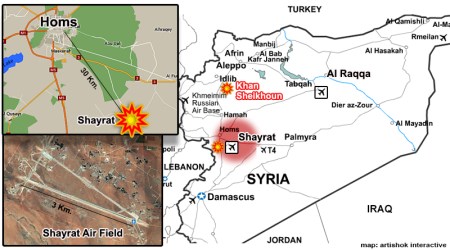
The US military launched 59 Tomahawk cruise missiles at a Syrian military airfield late on Thursday, April 6, in the first direct American assault on the government of President Bashar al-Assad since that country’s civil war began six years ago. The operation, which the Trump administration authorized in retaliation for a chemical attack killing scores of civilians this week, significantly expanded US military involvement in Syria.
The missiles were launched from two Navy destroyers — the USS Ross and USS Porter — in the eastern Mediterranean. They struck an airbase called Shayrat in Homs province, the site from which the planes that conducted the chemical attack in Idlib are believed to have originated. Syrian military aircraft, infrastructure and runways were hit
“Tonight, I call on all civilized nations to join us in seeking to end the slaughter and bloodshed in Syria and also to end terrorism of all kinds and all types,” president Donald Trump said to reporters from Mar-a-Lago, Florida, where he is hosting China President Xi Jinping and his wife…
“Assad choked out the lives of helpless men, women and children,” he said. He acted because of a “vital national security interest of the United States to prevent and deter the spread and use of deadly chemical weapons.”
DEBKAfile: Washington has no doubt that the Syrian SU-22 bomber which Tuesday dropped a sarin gas bomb on Khan Sheikhoun in Idlib province, killing up to 100 people, was a joint Russian-Iranian-Syrian gambit to divert the Trump administration from a comprehensive plan for Syria. As US President and commander-in-chief he could not ignore this provocation.
Our sources report that the new US administration’s plans for Syria center on an offensive to evict the Islamic State from its Syrian capital, Raqqa, a mission for which US military preparations have been going forward for the past two weeks at five centers. To this operation Moscow, Tehran and Damascus were not averse. But that operation was also designed to rid Syria of Iranian and Hizballah forces – to which they were.
Secretary of State Rex Tillerson said that despite previous agreements, Syria had not surrendered its chemical weapons stockpile, and accused Russia of “failing in its responsibility to deliver on its commitment” to supervise the surrender of those chemical weapons. “Either Russia has been complicit or simply incompetent in its ability to deliver,” Tillerson continued.
The question now is whether Vladimir Putin will decide to hit back at the US operation. Russia did not retaliate for the Israel air strike on March 17 over the northern Syrian T4 air base. If Putin chooses to sit on his hands once again, the same question may be addressed to Iran and Hizballah.
Very possibly, Trump and Putin reached accord on the limits of the US punitive attack in Syrian in long hours of debate during the day between the US State and Defense Departments and the Russian Foreign and Defense Ministries, which were first reported by DEBKAfile 24 hours ago. Pentagon sources report that Washington gave Moscow advance warning of the coming US attack on the Syrian Shayrat base where Russian air force units are also deployed.
Follow-up US military action may yet come after the US president asserted that for him, “many, many lines were crossed” by Assad’s chemical attack and his attitude towards Syria had changed..
Trump’s comprehensive plans for Syria our outlined in the latest DEBKA Weekly. If you are not yet a subscriber, click here for this and other exclusive revelations.
The Real War in ‘Syria’ and the Strategy for Long-Term Victory, PJ Media, Michael Ledeen, April 6, 2017
(Iran is ripe for regime change and the sooner the better. Please see also, Iran’s Elections: A Breaking Crisis? and All 15 Arab Summit resolutions blast Iran.– DM)
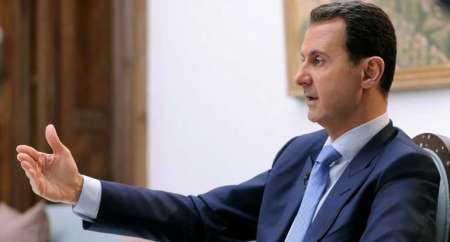 Syria’s President Bashar al-Assad (Reuters, RTX34BQA)
Punishing Assad would be satisfying, but we’ve got a big war to win. It’s smarter and more effective to go after the regime in Tehran. Not militarily, but rather supporting the tens of millions of Iranians who detest the Khamenei regime. Call it political warfare, or subversion, or democratic revolution. It worked against the Soviet Empire, and there are good reasons to believe it would work in Iran as well. Most Iranians, suffering under the failed regime, want a freely chosen government that will address their problems instead of dispatching their husbands and sons sent to the battlefield.
Regime change in Iran would be devastating to Assad and Putin, and its positive effects would be felt in North Africa and our own hemisphere, striking at the Revolutionary Guards and Hezbollah in Latin America. And it would remind the tyrants that America’s greatest weapon is political. We are the most revolutionary country in the world, and we should act like it.
****************************
Of course I loathe Assad. And of course I despise the Obamans for that phony red line and the subsequent retreat-and-bogus-Russian-deal. But just carrying out vengeance against Assad isn’t good enough. It fails to address the central problem of our time: the global anti-American alliance.
There is no Syria any more, and the enemy forces on the Middle Eastern battlefield come from various jihadi groups, and three regimes: Moscow, Tehran, and Damascus. We have to defeat them all, and other members of the enemy alliance, including Cuba and North Korea. Nikki Haley has it right: “The truth is that Assad, Russia and Iran have no interest in peace.”
Indeed, they are waging war, and the principal force driving that war is not Assad, but Iranian Supreme Leader Ali Khamenei. Khamenei’s killers have been alongside Assad’s from the very beginning, as the survival of the Syrian dictator is crucial to Iranian ambitions and quite likely also the survival of the Islamic Republic itself. Listen to Defense Secretary James Mattis a few days ago (from Reuters):
Asked about comments Mattis made in 2012 that the three primary threats the United States faced were “Iran, Iran, Iran,” Mattis told reporters that Iran’s behavior had not changed in the years since.
“At the time when I spoke about Iran I was a commander of US central command and that (Iran) was the primary exporter of terrorism, frankly, it was the primary state sponsor of terrorism and it continues that kind of behavior today,” Mattis said.
True, and Mattis’ characteristically strong language points the way to the best American action in the region, namely bringing down the Tehran regime. Lashing out at Assad isn’t nearly good enough. After all, what strategic objective would we accomplish by smashing, even removing, Assad? The Iranian and Russian fighters would still be there, as would the Islamist forces. The demands on our military would dramatically expand. We do not want to occupy a significant land mass in what used to be called Syria, nor do we seem to have sorted out what we want to do with the Turks and the Kurds.
Punishing Assad would be satisfying, but we’ve got a big war to win. It’s smarter and more effective to go after the regime in Tehran. Not militarily, but rather supporting the tens of millions of Iranians who detest the Khamenei regime. Call it political warfare, or subversion, or democratic revolution. It worked against the Soviet Empire, and there are good reasons to believe it would work in Iran as well. Most Iranians, suffering under the failed regime, want a freely chosen government that will address their problems instead of dispatching their husbands and sons sent to the battlefield.
Regime change in Iran would be devastating to Assad and Putin, and its positive effects would be felt in North Africa and our own hemisphere, striking at the Revolutionary Guards and Hezbollah in Latin America. And it would remind the tyrants that America’s greatest weapon is political. We are the most revolutionary country in the world, and we should act like it.
Pentagon drawing up options for military response to Syria chemical attack, Washington Examiner, Jamie McIntyre, April 6, 2017
The U.S. could use its existing deconfliction channel with the Russians to avoid targets that would cause Russian casualties.
*****************************
The Pentagon is drawing up options for a possible military response to Tuesday’s chemical weapons attack in Syria that killed more than 70 people, and hospitalized hundreds more.
“There are very senior level meetings underway,” said one Pentagon official, “but I have not seen a concrete plan.”
The meetings involve Defense Secretary Jim Mattis and Joint Chiefs Chairman Gen. Joseph Dunford at President Trump’s Mar-a-Lago resort in Florida, and involve consultations with other senior commanders, including Gen. Joseph Votel, head of U.S. Central Command. The meetings are taking place amid new reports of another chemical attack in Syria.
“Options yes. We are in the business of providing options,” a senior military official said. “I would watch this one closely.”
The first official could not say if Trump had specifically ordered the options, or if the meeting constituted “prudent planning,” considering Trump’s Rose Garden statements Wednesday.
“I have that flexibility,” Trump said, “and I will tell you, it’s already happened that my attitude toward Syria and Assad has changed very much. … What happened yesterday is unacceptable to me.”
The U.S. now has a high degree of confidence that the air force of Syrian President Bashar Assad dropped a chemical weapon from an aircraft on the unsuspecting citizens of Khan Sheikhoun, in Syria’s northwest Idlib province, Pentagon officials said.
The symptoms suffered by the victims, including foaming at the mouth and asphyxiation, are consistent with exposure to sarin, a deadly nerve agent.
Pentagon planners have to take into account the presence of Russian forces and Iranian militia if they contemplate airstrikes to punish the Assad regime.
Condemnation will not stop Assad’s chemical war, DEBKAfile, April 5, 2017
The task of locating destroying Assad’s stocks of pernicious weapon of war can only be performed by troops on the ground. And that is unlikely to happen.
****************************
Seven nations maintain elite military units in Syria – the US, Russia, Britain, Germany, France, Jordan and Israel. American, Russian and Turkish troops are backed by air support. Had those powers decided to destroy the Syrian dictator Bashar Assad’s poison chemical arsenal, they could have combined to do so and finished the job in a few days – and this week’s horrific tragedy possibly been averted.
The death toll from the Syrian chemical warfare bombardment of the rebel-held town of Kkhan Sheikhoun Monday, April 3, is now estimated at 150 with several hundred injured, cared for in totally inadequate medical facilities. The number of child victims has raised the pitch of world condemnation The total figure fluctuates according to source.
But the most tragic truth of all is that no one in Moscow, Washington or Ankara is ready go ahead with this operation, any more than they are focused on ending the six-year old Syrian war, which has claimed a death toll of more than 600,000 – most civilians – and the displacement of 12 million refugees. Instead, they are calling the UN Security Council into another emergency (useless) session.
The most cynical aspect of this international wringing of hands is the sorry record of the way Assad’s toxic warfare record has been handled.
On May 3, 2014, the US military reported that efforts to bring about the dismantling of the Syrian army’s chemical weapons had come to naught after Bashar Assad refused to hand over the 27 tons of sarin precursor chemicals, so long as the UN disarmament agency (OPCW) insisted on his destroying their underground storage sites..
According to DEBKAfile’s sources, 12 of those bunker facilities are still operational and barred to access by UN inspectors.
Five months later, OPCW reported that Assad’s chemical weapons stocks had been liquidated. US Secretary of State John Kerry and Russian Foreign Minister Sergey Lavrov shook hands in Geneva to flashing cameras to celebrate the successful outcome of their negotiations on the subject.
This turned out to a charade, staged to cover up President Barack Obama’s decision to dodge his own red lines and abstain from action against the Assad regime if he resorted to chemical warfare.
Careful reading of the final OPCW report gives the game away: “To date, nearly 95 percent of all chemical weapon stockpiles declared by the possessor states have been destroyed under OPCW verification.” For its extensive efforts in eliminating chemical weapons, the OPCW received the 2013 Nobel Prize for Peace.
So 5 percent of the poisonous substances remained intact. In the interim four years, the Syrian ruler was able to substantially build up his depleted stocks of poison gas, the use of which also spread to the war in Iraq. The Syrian air force meanwhile began unbridled air strikes with chlorine bombs. They were replenished by Iranian freight planes landing at the Damascus military airfield and the T4 military air base near Palmyra with fresh consignments of chlorine bombs custom-made at Iran’s military industry factories.
Neither the Obama administration in Washington nor the Kremlin in Moscow lifted a finger to stop these deliveries. In the opposition camp, certain Syrian rebel groups, ISIS and Al Qaeda’s Nusra Front branch started tests on homemade chemical weapons, some of them successfully building up stocks of primitive poison weapons. Other rebel groups simply purchased Syrian chemical weapons from Syrian army officers.
Today, no international inquiry commissions would be able to establish beyond doubt the source of the chemical substances that poisoned hundreds of people in Idlib this week or determine who was ultimately responsible for this atrocity. It must be said that only the Syrian military had the ability to carry out an aerial attack like the one that struck the rebel-held town of Khan Sheikhoun. The Russians will certainly try to use as a pretext for vetoing a condemnatory UN Security Council resolution the claim that Syrian warplanes had only struck an insurgent storehouse containing toxic substances.
The task of locating destroying Assad’s stocks of pernicious weapon of war can only be performed by troops on the ground. And that is unlikely to happen.
Astana floored by Russian pick as Assad successor, DEBKAfile, January 23, 2017
(The rift between Russia and Iran deepens. — DM)

Gen. Tlass, 53, son of the eminent Gen. Mustafa Tlass, defense minister under President Hafez Assad, was awarded high honors by his son Bashar as one of his closest friends. Although appointed commander of the prestigious 104thBrigade in the Syrian Republican Guard, Manas chose to defect and flee the country in 2012, not long after the outbreak of the Syrian uprising.
Iran threatens to be one of the main obstacles to any reduction in Assad’s powers. For Tehran, he stands as a bulwark against the expulsion of its own and Hizballah forces from the country. As long as he is in charge, Iran will have the use of a land bridge to Lebanon and its proxy, Hizballah, via Iraq and Syria.
**************
Syrian government and rebel groups launch a fresh peace conference in the Kazakh capital of Astana Monday, Jan.23 in freezing temperatures of minus 20 Centigrade. Although the event is jointly sponsored by Russia, Turkey and Iran, Moscow is the real power-broker.
DEBKAfile’s intelligence sources reveal that the delegations on both sides of the table were caught off-balance by the arrival of Bashar Assad’s former close friend, Gen. Manas Tlass, whom Russia flew in from his place of exile in a Gulf emirate to a prominent seat with the opposition delegation.
Gen. Tlass, 53, son of the eminent Gen. Mustafa Tlass, defense minister under President Hafez Assad, was awarded high honors by his son Bashar as one of his closest friends. Although appointed commander of the prestigious 104th Brigade in the Syrian Republican Guard, Manas chose to defect and flee the country in 2012, not long after the outbreak of the Syrian uprising.
Our sources report that Moscow has chosen him as lead player in Syria’s post-Assad era, initially in the transition government in Damascus which is scheduled to start evolving from the peace process kicked off at Astana this week. This does not imply that Bashar Assad will be gone in a day – only that a new mechanism will be put in place to start curtailing his powers.
How quickly and how far this process will unfold cannot yet be determined.
Iran threatens to be one of the main obstacles to any reduction in Assad’s powers. For Tehran, he stands as a bulwark against the expulsion of its own and Hizballah forces from the country. As long as he is in charge, Iran will have the use of a land bridge to Lebanon and its proxy, Hizballah, via Iraq and Syria.
At the same time, Russia, Turkey and the Syrian rebel groups backed by Turkey and Saudi Arabia are demanding the removal from Syrian soil of Iranian forces and pro-Iranian Afghan and Pakistani Shiite militias (30,000 fighters in all) as well as the 10,000 Hizballah combatants.
Neither Hizballah, nor the Shiite militias are represented at the Astana conference which leaves them deliberately at a disadvantage.
But Iran is preparing to make its removal from Syria as difficult as possible. One way is to start dominating Syria’s strategic infrastructure. And so, on Jan. 18. Syrian Prime Minister Emad Khamis, who was on a visit to Tehran, signed five accords granting Iran exclusive rights as the sole operator and developer of Syria’s country’s cell phone network.
And, according to our intelligence sources, a number of secret provisions were buried in those deals. One gave Iran permission to interlink the cell phone networks between Syria and Hizballah in Lebanon as a device to guarantee the Lebanese terror group’s permanent presence in Syria.
Deliberations at the Astana conference will focus at its first sessions Monday on stabilizing the ceasefire between government and Syrian rebel groups (excluding the jihadist ISIS and Nusra Front). This ceasefire has for the most part held up since it went into effect late last month.
The effort to turn the truce into a more permanent cessation of hostilities will be long and arduous, entailing negotiations on such tough issues as land swaps and rights to use main traffic and supply routes. Only when they are resolved, can the two sides approach the next stage, a discussion of Syria’s political future, i.e. the fate of the regime headed by Bashar Assad.
Although Moscow invited the new Trump administration to send a representative to the Kazakh conference, it was declined. Washington only sent the US ambassador to Kazakhstan to attend as an observer.
This does not mean that President Donald Trump has decided to leave the resolution of the Syrian issue solely in Russian hands. Washington and Moscow are still in the middle of discussing this and other critical questions and no final decisions have been reached in either capital.
Mystery blasts in Damascus: Syria accuses Israel, DEBKAfile, January 13, 2017
Some unknown hand struck into the heart of that regime in the space of a few hours – not once, but twice.The Assad regime used its standard scapegoat, Israel, for covering up embarrassing and inexplicable occurrences.
However, DEBKAfile’s military and intelligence sources disclose that the regime has reached an awkward crossroads. The Russians have taken charge of the Syrian war and no longer bother to consult with the Syrian president or Iran on its conduct. They are deeply immersed in preparing the Syrian peace conference they are sponsoring which is scheduled to open at Astana, Kazakhstan on Jan. 23.
If Moscow coordinates its Syrian strategy with anyone, it is Turkish President Tayyip Erdogan, but even then only to a limited extent.
***************************
There were two unclaimed explosions in Damascus overnight Thursday and early Friday (Jan.12-13) – one at an officers club in Damascus and the second at Mezzeh airport, which Syria alleged was the work of the new Israeli S-35 stealth aircraft firing across the border from a point over the Sea of Galilee.
There was no claim to either of the attacks.
The standard Israeli policy of striking any Iranian arms shipments for Hizballah in Lebanon when they cross through Syria would not longer be applicable to any such air strike, if indeed one was launched..
The Lebanese Shiite Hizballah deploys 9,000 elite fighters in Syria to fight for Bashar Assad. Its Iranian arms supplies no longer need to risk being trucked through Syria to Lebanon; they can be delivered directly to Hizballah bases in Syria without exposure to Israel air strikes.
Indeed, should the pro-Iranian Hizballah decide to go back to shooting missiles at Israel – or using Iranian-supplied unconventional weapon – it has new launching pads readily available in Syria from those very bases. They are located in the Qalamoun mountains in western Syria and at Zabadani, a Syrian ghost town near the Damascus-Beirut highway, which the Lebanese terror group has made its military center.
Both would be obvious targets for Israel to attack rather than Damascus’ Mezzeh airport.
Tehran, having grasped from bitter experience that Mezzeh is under close surveillance by Israeli intelligence, no longer uses its facilities. Instead Iran flies arms shipments for Hizballah to Beirut by commercial aircraft, which Israel prefers not to attack, or overland through Iraq to northwestern Syria, where the consignments are picked up and transferred to Lebanon by sea.
So if an Israeli F-35 air strike on the Damascus airport should be confirmed, its target would not have been Iranian and Hizballah military supplies. Mezzeh is the site of a sterile zone set aside for the exclusive use of President Bashar Assad, his family and his top military and intelligence chiefs. It also houses laboratories for developing and manufacturing unconventional weapons, as well serving as the main command center for the 4th Division, whose Republican Guard unit protects the president, his family and members of the ruling caste.
In the first attack, a suicide bomber blew himself up Thursday night at the officers’ club in the heavily policed Kafra Sousa district of Damascus. At least ten people were killed and dozens injured. Located there are the homes of many Assad loyalists in the security and military establishments, as well as top secret facilities.
The ability of a suicide bomber to penetrate one of the most heavily secured locations in Damascus and blow up at an exclusive regime watering hole raises questions about the inner workings of the Assad regime.
Some unknown hand struck into the heart of that regime in the space of a few hours – not once, but twice.The Assad regime used its standard scapegoat, Israel, for covering up embarrassing and inexplicable occurrences.
However, DEBKAfile’s military and intelligence sources disclose that the regime has reached an awkward crossroads. The Russians have taken charge of the Syrian war and no longer bother to consult with the Syrian president or Iran on its conduct. They are deeply immersed in preparing the Syrian peace conference they are sponsoring which is scheduled to open at Astana, Kazakhstan on Jan. 23.
If Moscow coordinates its Syrian strategy with anyone, it is Turkish President Tayyip Erdogan, but even then only to a limited extent.
The Syrian ruler and Iran, after being sidelined by the Russians, are following their example. Both have taken to holding their cards close to their vests and operating under in close secrecy.
In an attempt to pierce the resulting aura of mistrust spreading over the staunch Iranian-Syrian alliance, Ali Shamkhani, Secretary of the Supreme National Security Council of Iran and one of supreme leader Ayatollah Ali Khamenei’s closest confidants, was sent to Damascus Sunday, Jan 8, to find out what is going on there
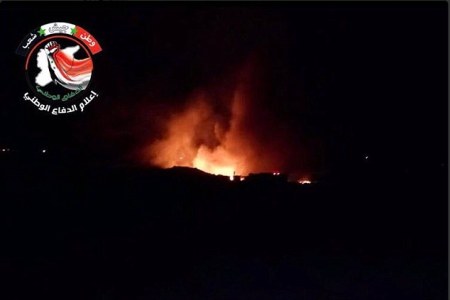
The mystery deepened further Friday morning, when Syrian state media ran photos of a big blaze – which may or may not be authentic – to illustrate the alleged Israeli attack on Mezzeh airport.
How Iran actually lost in Aleppo, American Thinker, Heshmat Alavi, December 26, 2016
For 16 years America has failed to adopt a correct policy in the Middle East despite having huge opportunities to make significant changes. The 2003 war literally gift-wrapped Iraq to Iran, parallel to the highly flawed mentality of preferring Shiite fundamentalism to Sunni fundamentalism. This allowed Iran take full advantage of such failures and resulting voids.
Aleppo will be a short-lived success story for Iran. The tides are changing across the globe and Iran will no longer enjoy opportunities from West rapprochement. Understanding this very well, this is exactly why Tehran has resorted to such atrocities and sought to massacre all in Aleppo.
In contrast to how the U.S. handed Iraq in a silver plate to Iran, Russia never entered the Syria mayhem to hand it over to Iran. The roots of Aleppo remain in the hearts of all Syrians. As world powers, especially the U.S. and Russia review their future objectives, Iran will be the first and ultimate party to suffer.
***********************************
Following a historic period of perseverance, Syrian rebels and their families were forced to evacuate eastern Aleppo after its liberation back in 2012. An unjust, intense war was launched upon Aleppo by Iran’s Revolutionary Guards (IRGC) and its proxy forces on the ground: Russia with its indiscriminate air strikes, and a lame-duck Syrian army of less than 20,000 deployable forces.
After more than 15 months continuous air raids and a long-lasting inhumane siege, Syrian rebels and civilians sealed an international agreement to depart Syria’s once economic and cultural hub.
In the past few weeks widespread bombing campaigns continued relentlessly on civilian areas. No Aleppo hospital was spared. The IRGC and its foot-soldiers, numbering at the tens of thousands, spearheaded the military of Syrian dictator Bashar Assad in horrific mass executions of innocent people. The United Nations reported 82 individuals, including women and children, were murdered on the spot in the streets and in their homes. God knows how many more incidents have gone unreported.
The amazing perseverance shown by Aleppo locals for years now in the face of atrocious airstrikes and artillery shelling is unprecedented to say the least. Amidst all this, the silence and inaction seen from the West, especially the United States, will remain forever a source of shame.
Conflict of Interests
The West and Turkey became frantic for a ceasefire in Aleppo in the early days of the war due to the negative public opinion resulting from shocking crimes. They sought to have the rebels and remaining civilians transferred to other Syrian opposition controlled areas.
On December 13th, Washington and Moscow reached what can be described a ceasefire agreement. Intense negotiations between Turkey and Russia were started afterwards, resulting in an agreement between the Syrian opposition with Russia and Turkey to evacuate Aleppo. Practically, the parties involved in the talks were Aleppo representatives and Russia, hosted by Turkey. All necessary preparations were made to begin evacuating the city from the morning of Wednesday, December 14th.
However, Iran disrupted this agreement and the IRGC hindered the evacuation process. It was crystal clear Russia and Iran were pursuing different objectives and sets of interests. Iran sought not to have Aleppo evacuated but to exterminate all Syrian rebels and civilians.
Twenty-four hours later, pressure from the international community forced the implementation of the Russia-Syrian rebel agreement on December 15th. On the morning of that day the first convoy carrying the wounded exited Aleppo, only to face roadblocks imposed by Iran-backed forces and the Assad military.
Iran raised certain conditions for the evacuation. Russia later threatened to airstrike any party hindering the evacuation, an obvious warning to Iran. Tehran was forced to wind back under Moscow pressure.
As a result, the last phase of this war and the method chosen to evacuate Aleppo was a defeat for Iran and a victory for the Syrian opposition. Especially since the conflict of interest between Iran/Assad and Russia became crystal clear. Politically speaking, Iran has become a secondary party in Syria.
“For Putin, a political settlement now makes sense. Staying involved in an ongoing insurgency does not. But for that, he needs the opposition — which is fractured — to accept a political outcome, and there is little prospect of that so long as Assad remains in power,” as explained by Dennis Ross, who served as the Director of Policy Planning in the State Department under President George H. W. Bush, the special Middle East coordinator under President Bill Clinton, and was a special adviser for the Persian Gulf and Southwest Asia (which includes Iran) to the former Secretary of State Hillary Clinton.
Is this the end?
The turn of events does not spell the end of the Syrian opposition. The opposition controls large swathes of Syria, with areas over ten times larger than Aleppo and millions of residents. Idlib Province has at a three million strong population; the western coast of the Euphrates in the Turkish border, recently liberated by the Free Syrian Army from Daesh (ISIS/ISIL); large portions of Deraa Province neighboring Jordan; a strategically important section in the north in Latakia Province on the Turkish border; large portions of areas in the Damascus vicinity and large portions in the Aleppo vicinity.
In contrast to Western mainstream media reporting, the Syrian opposition enjoys the capability to rise once again.
Despite all its differences, a comparison made to the Iran-Iraq War may help. In 1986, Iran made significant advances taking control over the Faw peninsula in southern Iraq. Western media and think-tanks all forecasted further advances by Iran and a defeat for Iraq. In 1988 Iran was forced into a U.N.-brokered ceasefire agreement.
Deep divisions between the Syrian nation and the Assad regime have reached the point of no return. Nearly 500,000 have been killed and more than half of the Syrian population displaced. The Syrian nation will never accept the continuation of this regime. Despite sporadic military advances, Assad has no place in Syria’s future.
Where Iran stands in Syria
Iran will not be the final victor in Syria.
First — For Iran, it is vital to maintain Assad in power. His fall will mark the end of Iran’s crusades in Syria. Even if the Syrian opposition becomes weaker, the overall crisis will continue while Assad remains in power. Assad is no longer acceptable in the international stage with an international consensus over his resort to war crimes and crimes against humanity.
Second — While Iran is financing and providing the ground forces, in this war, it no longer enjoys the first and final word. Russia calls the shots now with stark differences in interest, as seen in Aleppo.
Trump’s America
U.S. President Barack Obama’s weak foreign policy, especially the failed engagement with Iran, prolonged the Syrian crisis, allowed Tehran to take advantage, Russia to take the helm and America be sidelined.
Where will developments lead with Donald Trump in the White House? What will be the new U.S. foreign policy vis-à-vis Syria, Iran and the Middle East? How can we define Washington’s relationship with Moscow, and what practical measures will Trump take against Daesh (ISIS/ISIL)? Time will tell.
Good relations between the U.S. and Russia will at least not have a negative impact on the region, and this is good news for the Syrian opposition. Russia has weighable interests in Syria. However, what will Trump do with Iran? Considering Trump’s harsh tone on Iran to this day, far more positive outcomes can be forecasted for the Syrian opposition.
Second, Trump and secretary of state nominee Rex Tillerson have the potential of eventually convincing Russia to provide concessions. This is not in Iran’s interests, as Tehran remembers Russia ditching Libyan the dictator Muammar Qaddafi.
Lesson learned in Syria
For 16 years America has failed to adopt a correct policy in the Middle East despite having huge opportunities to make significant changes. The 2003 war literally gift-wrapped Iraq to Iran, parallel to the highly flawed mentality of preferring Shiite fundamentalism to Sunni fundamentalism. This allowed Iran take full advantage of such failures and resulting voids.
Aleppo will be a short-lived success story for Iran. The tides are changing across the globe and Iran will no longer enjoy opportunities from West rapprochement. Understanding this very well, this is exactly why Tehran has resorted to such atrocities and sought to massacre all in Aleppo.
In contrast to how the U.S. handed Iraq in a silver plate to Iran, Russia never entered the Syria mayhem to hand it over to Iran. The roots of Aleppo remain in the hearts of all Syrians. As world powers, especially the U.S. and Russia review their future objectives, Iran will be the first and ultimate party to suffer.
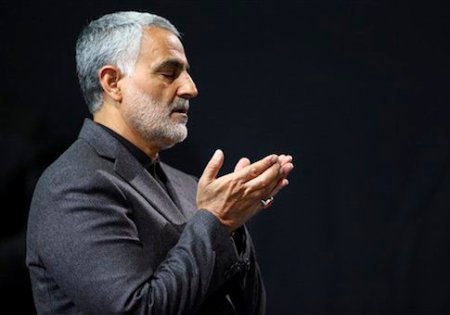
Qassem Soleimani, (AP Photo/Office of the Iranian Supreme Leader)
Multiple sources who spoke with the Washington Free Beacon about the matter disclosed that the Obama administration is taking a soft approach with Iran, including not enforcing sanctions, in order to preserve the nuclear deal and diplomacy with Tehran, which has threatened repercussions for any new sanctions.
Soleimani’s visit to Syria is viewed as a sign that Iran is not worried about facing repercussions for its continued military presence in Syria in support of embattled leader Bashar al-Assad.
Iran has breached international laws for some time without facing consequences. The Obama administration repeatedly assured Congress it would enforce sanctions on Iran when lawmakers expressed doubt about the viability of the Iran nuclear deal.
********************************
A top Iranian commander responsible for the deaths of Americans was photographed touring the war-torn city of Aleppo in Syria over the weekend, in violation of a United Nations travel ban that the Obama administration swore to enforce while selling the landmark nuclear deal with Iran to Congress, according to multiple sources and photographs.
Iranian Quds Force Commander Qasem Soleimani—a top general who leads Iranian militants across the globe and is directly responsible for the death of Americans—was recently photographed touring Aleppo in a demonstration of Iran’s waxing influence in Syria and disregard for international resolutions barring such behavior. Soleimani’s presence in Syria is a direct violation of the United Nations resolution governing the nuclear deal.
Soleimani’s visit coincided with moves by the terror group Hezbollah, which is controlled by Iran, to establish its own claim in Syria, according to regional reports and footage.
Mutliple sources who spoke with the Washington Free Beacon about the matter disclosed that the Obama administration is taking a soft approach with Iran, including not enforcing sanctions, in order to preserve the nuclear deal and diplomacy with Tehran, which has threatened repercussions for any new sanctions.
Soleimani’s visit to Syria is viewed as a sign that Iran is not worried about facing repercussions for its continued military presence in Syria in support of embattled leader Bashar al-Assad.
Iran has breached international laws for some time without facing consequences. The Obama administration repeatedly assured Congress it would enforce sanctions on Iran when lawmakers expressed doubt about the viability of the Iran nuclear deal.
The absence of consequences for Iran’s behavior has paved the way for Hezbollah to stake it own claim in Syria, according to congressional and foreign policy insiders who told the Free Beacon that the Obama administration is working behind the scenes to prevent any new sanctions against Iran.
“The Obama administration has been working overtime to prevent any U.S. official from doing anything new to punish the butchers of Syria, because they know that would force them to take action against Iran, and then Iran would walk away from the deal,” said one veteran insider who consults with Congress on the issue. “Now they’re ignoring even old sanctions against the Iranians. They’ll do anything to keep the Iranians in the deal for just a couple more weeks, so they can blame the inevitable collapse on Trump.”
A senior congressional aide apprised of the situation said the administration would continue to turn a blind eye to blatant violations in order to preserve diplomacy with Iran.
“This administration’s refusal to enforce sanctions explicitly allowed under the nuclear deal is not only cowardice—it’s dangerous,” said the aide. “What does it say about U.S. leadership when a terrorist like General Soleimani—someone with American blood on his hands—can freely travel to the ground zero of genocide in Syria without penalty? President Obama knows his nuclear deal is on thin ice, so he’s willing overlook blatant sanctions violations like this one even if it means more carnage in Aleppo.”
A second senior congressional source warned that refusal to enforce sanctions was empowering Iran’s radical regime, which has increasingly taken hold in Iraq as well, where the U.S. military has been accused of training Iranian-backed militias.
“The outgoing Obama administration struck a Faustian bargain with Iran, the world’s biggest state sponsor of terrorism, and Soleimani, head of the IRGC terrorist organization that’s responsible for the death of many hundreds of Americans, continues to do victory laps throughout the Middle East” the source said. “Unless the Trump administration changes course, this short-sighted Iran policy cannot and will not end well.”
Troops in Aleppo, as well as an Iranian reporter, have been spotted raising Hezbollah’s flag in recent days, calling into question the Obama administration’s claim that it has been working to constrain the terror group.
Michael Rubin, a former Pentagon adviser and expert on radical regimes, told the Free Beacon that Iran sees the nuclear deal as a vehicle to advance its regional aspirations.
“For Obama, diplomacy’s goal was to affirm his brilliance,” Rubin said. “For Iran’s leadership, it was an asymmetric warfare tactic meant to distract from a continuous geopolitical goal.”
“Red lines matter. Over 25 years, both Republicans and Democrats signaled to Iran about what they were,” Rubin explained. “Obama, however, believed himself wiser than Reagan, Clinton, and Bush—at least that’s what the man in the mirror told him every morning. Once Iran realized there were no real red lines, it concluded it could bust sanctions with impunity. Soleimani is the personification of that conclusion.”
The State Department conceded on Monday that Soleimani’s visit to Syria violated United Security Council resolutions government the nuclear deal, but would not lay out steps meant to address the behavior.
“We do intend to consult with our partners on the security council about how to address our concerns with this,” State Department Spokesman John Kirby said during a press briefing. “We’ve long said that Iran needs to choose whether it’s going to play a positive role in helping peacefully resolve conflicts, such as in Syria, or whether it will choose to prolong them. And you’re absolutely right, his travel was a violation.”
Update 3:05 P.M.: This post has been updated to reflect comment from the State Department.




 anneinpt
 artaxes
 danmillerinpanama
 davidking1530
 Peter Hofman
 Joseph Wouk
 Peter
Peter Louisiana Steve
 WarSclerotic
Recent Comments