Posted tagged ‘Arab media’

How the Media Glorifies Palestinian Female Terrorists

April 26, 2017

How the Media Glorifies Palestinian Female Terrorists, Clarion ProjectRachel Avraham, April 26, 2017

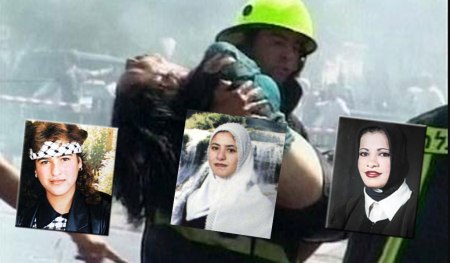
Inset Photos (L-R): Suicide bombers Wafa Idris, Ayat al-Akhras and Hanadi Jaradat

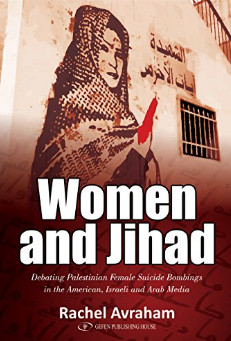
JerusalemOnline news editor and political analyst Rachel Avraham, who recently published a book titled Women and Jihad: Debating Palestinian Female Suicide Bombings in the American, Israeli and Arab Media, explains how the international media continues to justify Palestinian female terrorism from the Second Intifada to our times.

Brian Jenkins proclaimed, “Terrorism is theater.” According to my recently published book titled “Women and Jihad: Debating Palestinian Female Suicide Bombings in the American, Israeli and Arab Media,” terrorists do not engage in meaningless violence. Each terrorist act is carefully choreographed in order so that they can obtain maximum publicity for their cause. For the terror organizations, the goal is not to harm the immediate victims although that is certainly a bi-product of their wanton destruction but rather to solicit the attention of the wider spectators via the international press.

Women and Jihad argues that during the Second Intifada in Israel (September 2000 – February, 2005), the Arab, American and even the Israeli media gave into the publicity objectives of the Palestinian terror groups.  The media in the Arab world for the most part glorified Palestinian terrorism, thus rallying the Arab masses behind the Palestinian cause.

For example, the first Palestinian female suicide bomber Wafa Idris was compared to the Mona Lisa, Jesus Christ, Joan D’Arc and Khadija (the first wife of the Prophet Mohammed).  Suicide bomber Ayat Al Akhras was described to be “as tender and beautiful as a rose” and her suicide bombing was deemed to be “the height of bravery.”

Meanwhile, media outlets in the United States and sometimes even in Israel justified Palestinian terrorism in the name of covering the news objectively.   For instance, following the suicide bombing of Andaleeb Takafta, ABC’s Nightline interviewed a number of Palestinian officials, a Palestinian psychiatrist and an Israeli official.  Despite the asymmetrical nature of the Palestinian-Israeli conflict, Nightline related to them all as sources with equal credibility.

This worked to the benefit of the Palestinian terror groups.  On the program, Palestinian psychiatrist Dr. Iyad Sarraj declared, “We are so desperate.   We have nothing left except our bodies to turn into bombs.”  And following the suicide bombing of Hanadi Jaradat, Israeli newspaper Yedioth Achronot described the terrorist as “a pretty girl dressed in Western clothes like young Israeli girls.”   By describing the terrorist in this way, the terrorist was humanized.

My book argues that if the terrorist is a female, the media is eight times more likely to give the Palestinian terror group positive publicity. The atmosphere that existed in the American press following each Palestinian female terror attack during the Second Intifada also affects Israel during this present wave of terror as the American media relates to the female terrorists of our times in a similar manner.

This helps to create an atmosphere abroad where BDS motions, lawfare against Israeli officials, anti-Israel resolutions at the UN, anti-Israel reports by human rights organizations and other anti-Israel actions flourish.

Under this atmosphere of intense international pressure, the Palestinian terror groups hope that Israel will be forced into withdrawing to the 1967 Armistice Lines without the Palestinian Authority having to give Israel much in return and this will make it easier for the Palestinian terror groups to obtain their ultimate goal, which is the destruction of the State of Israel.

On Boycotting Radical Islamic Nations

January 31, 2017

On Boycotting Radical Islamic Nations, Gatestone InstitueNonie Darwish, January 31, 2017

The interviewer seemed shocked to hear that I do not have any Arab or Muslim friends who are protesting President Trump’s ban, and that many immigrants of Islamic origin support the ban and are fed up and embarrassed by what jihadists are doing.

The lesson America needs to know is that the West is not doing Muslims a favor by constantly treating them as children who should be shielded from reality. They hungry for the truth: that their educational system and mosque preaching are full of incitement, are abhorrent, hate-filled and the foundation upon which violent jihad is built.

Muslims need to know that the world does indeed have a justifiable and legitimate concern about Islam and actions done in the name of Islam by Muslims.

Muslims need to look at themselves in the mirror and see the world from the point of view of their victims. Instead, the West is sacrificing its culture, values, laws, pride and even self-respect.

It might compassion that leads the West to take in millions of Muslim refugees but it is reckless compassion. Do Westerners question the motivation of Islamic theocracies as to why ultra-rich Arab nations are sending us their refugees but taking in none?

Some “tough love” is urgently needed if Muslims are to be motivated to change and reform.

Early this morning an Arabic radio station in the Middle East called asking my opinion about President Trump’s ban on refugees and citizens of seven Muslim nations. The radio host, who sounded angry over the ban, was a Christian Arab. She was surprised to hear that I supported the ban and think that it should have taken place the day after 9/11.

She then asked me if I knew any Arab American activist who was against the ban because she wanted to interview someone against the ban. She seemed shocked to hear that I do not have any Arab or Muslim friends who are protesting the ban, and that many immigrants of Islamic and Middle East origin support the ban and are fed up and embarrassed by what jihadists are doing.

She said that all she sees on CNN and other channels are riots that portray almost all Americans supporting Muslims and against Trump. I am upset over the success of the leftist propaganda all over the Middle East. It brings back memories of the life of the hate indoctrination and misinformation I lived under for most of my life.

What would Muslim countries do to the West, I asked, if 19 American terrorists flew airplanes into Arab capitals and their government and military headquarters? What did she think Arabs would do if every week or so American terrorists would conduct synchronized killing sprees all over the Muslim world, gunning Muslims down, blowing them up with homemade pressure cookers, ramming into crowds with trucks? There was silence.

She then started calming down and said that of course she is against terrorism, “but”. I asked: “Do you see what jihad did to your Christian community in the Middle East?” She was silent for a minute, then it occurred to me that she might be afraid to continue the conversation because her bosses were probably Muslims.

I was sure she was going to hang up on me, but to my surprise she asked me to please hold. Then she was back, live from the studio, and started interviewing me and asked the same questions on air. I poured my heart out in Arabic to the Arab listeners.

The lesson here is that Arabs are hungry to hear the truth; this Arab station, instead of rejecting these ideas, ended up putting them on air. The lesson America needs to learn is that the West is not doing Muslims (especially the reformists) a favor by constantly treating them as children who should be shielded from reality.

Muslims need to know that the world does indeed have a justifiable and legitimate concern about Islam and actions done in the name of Islam by Muslims. Muslims need to look at themselves in the mirror and see the world from the point of view of their victims. Instead, the West is sacrificing its culture, values, laws, pride and even self-respect. Muslim culture needs a wake-up call telling them that, sooner or later, non-Muslim nations will close their doors to any kind of Muslim immigration if the jihad culture continues. That will also be a strong message to Muslims already in the West who still believe in jihad.

2256President Donald Trump signs an executive order restricting immigration, January 27, 2017. (Image source: Reuters video screenshot)

The Muslim people are hungry for the truth: that their educational system and mosque preaching are full of incitement, abhorrent, hate-filled and the foundation upon which violent jihad is built. The Islamic commandment to do jihad sacrifices Muslim men, women and children to kill and get killed.

As long as the West continues its appeasement of Islamic jihad, Islam will never reform and the West will lose. So far, the West has continued to extend a lifeline to the religion of Islam; a religion for which the number one enemy is the truth, and which struggles to suppress the truth.

It might be compassion that leads the West to take in millions of Muslim refugees, but it is reckless compassion. Why isn’t Saudi Arabia taking refugees temporarily until things settle down in Syria and Iraq? Do Westerners question the motivation of Islamic theocracies, as to why ultra-rich Arab nations are sending us their refugees but taking in none?

Who is really benefiting from the policy of appeasement, the acceptance of Sharia-stricken theocracies and their jihadist, hate-filled education? Some “tough love” is urgently needed if Muslims are to be motivated to change and reform.

Fake News: Trump Caved to Arab Pressure on Jerusalem Embassy Move

January 25, 2017

Fake News: Trump Caved to Arab Pressure on Jerusalem Embassy Move, The Jewish PressLori Lowenthal Marcus, January 25, 2017

us-consulate-in-jerusalemUS Consulate in Jerusalem
Photo Credit: Magister via Wikimedia

Several Israeli-based media outlets are repeating a story from an Arab media outlet that the U.S. Embassy move from Tel Aviv to Jerusalem is “off the table” due to Arab pressure.

But let’s look at the evidence thus far produced and line it up against reality.

The reports claiming the Trump administration has backed down from its stated commitment to move the embassy assert the reason that is happening is because of pressure placed on the new administration by the Palestinian Arab leadership.

A story in the Times of Israel quoted a report in the Arabic media outlet Asharq Al-Awsat. That report mentioned that assurances were given to Palestinian Arab leader Mahmoud Abbas and the PA’s perennial negotiator Saeb Erekat in a meeting held on Tuesday with “David Blum,” of the US Consulate in Jerusalem.

But there is no David Blum in the US Consulate in Jerusalem.

The US Consul General in Jerusalem (serving “Jerusalem, Gaza and the ‘West Bank,’ that is, not Jewish Israelis) is Donald Blome. In other words, there must have been a mistranslation going from Arabic to either Hebrew or English.

A quick search of the actual American diplomat in Jerusalem, Donald Blome, reveals that he was appointed in July, 2015 by President Barack Obama, not by President Donald Trump. Given that Blome’s alleged message of reassurance to the Palestinian Arabs that the new administration was bowing to their pressure, it beggars the imagination that Blome was speaking on behalf of Trump.

There is still more evidence that this explosive “evidence” is, at best, an unofficial remark from a sympathetic holdover from the last – exceedingly hostile – administration. In an updated version of the report on the matter from the very source of the rumor, there have been significant substantive changes in the report.

The first difference is that the name of “David Blum” no longer appears in the report. There is no longer any name associated with any American government office as the source of the claim. This is what the report now says:

A senior Palestinian official told Asharq Al-Awsat newspaper that the Palestinian leadership has received reassurances that a plan to move the U.S. embassy from Tel Aviv to Jerusalem has been suspended.

The sources added that based on official information, the plan to move the U.S. embassy was no longer under consideration.

While the sources declined to disclose the party that conveyed the reassurance message to the Palestinian leadership, they stressed that authorities in Ramallah were now relieved from the pressure that was caused by such threat.

So Erekat and Abbas’s names are gone, Blum’s name is gone, and the meeting on Tuesday is no longer mentioned.

This latest rumor, especially one boasting that Arab pressure led the Trump administration to cave on a significant campaign promise should be treated as merely the latest ephemera intended to create divisions between the Trump administration and its Israeli and pro-Israel supporters. That, and the effort to make Arab threats of violence seem all-powerful, thereby becoming a self-fulfilling prophecy.

Any statements about whether and when the U.S. Embassy is moved to Jerusalem should only be given credence when made by a Trump administration official whose jurisdiction extends to this matter.

Reports In Arab Press: ‘Abbas Resisted Arab League Pressure To Appoint Successor – Despite Threats Of Sanctions Against Him

November 18, 2016

Reports In Arab Press: ‘Abbas Resisted Arab League Pressure To Appoint Successor – Despite Threats Of Sanctions Against Him, MEMRI, November 18, 2016

The Arab Quartet (Egypt, Saudi Arabia, Jordan and the UAE) is continuing its efforts to effect a reconciliation within Fatah and to have a successor to Palestinian President Mahmoud ‘Abbas appointed. Recently, ‘Abbas rejected a Quartet initiative for such an appointment, on the grounds that he would not accept Arab intervention in Palestinian affairs.[1]

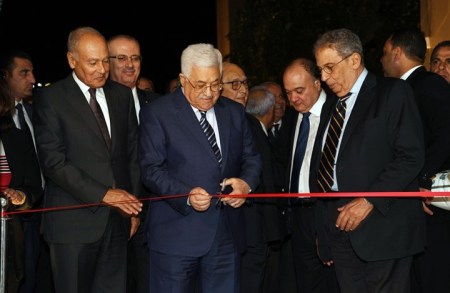
Several Arab media reports stated that recently, in order to resolve this issue, a high-level Arab League delegation visited ‘Abbas in Ramallah on November 9, 2016. The delegation, comprising Arab League Secretary-General Ahmad Abu Al-Gheit and his two predecessors, ‘Amr Moussa and Nabil Al-Arabi, came to the city on the pretext of attending the opening of the Arafat Museum. According to the reports, the three attempted to pressure ‘Abbas to choose a successor, and also tried to persuade him to reconcile with Muhammad Dahlan – who previously served as Palestinian Legislative Council (PLC) member from Fatah and head of Preventive Security in Gaza, and who is now a proposed successor – as well as to allow him to return to the political scene after his 2011 expulsion from Fatah, and to stop persecuting him and his supporters.

The Arabi21 website, which is close to the Muslim Brotherhood, noted in a November 12 report that the delegation’s visit to Ramallah and its meeting with ‘Abbas had been conducted “far from the eyes of the media” in order to avoid the appearance of normalization with Israel, and also due to the sensitive nature of the meeting’s goal – that is, appointing a successor to ‘Abbas.[2]

On November 16, the independent Egyptian Islamic daily Al-Misriyyoun published a lengthy report on this matter, according to which Abu Al-Gheit presented ‘Abbas with the names of three possible successors: former PA foreign minister and Arafat nephew Nasser Al-Qidwa; senior Fatah member Marwan Al-Barghouti, who is serving five life sentences in Israel for orchestrating terrorist attacks during the second intifada; and Dahlan. The newspaper explained that the Arab countries, and particularly Egypt, were so insistent on lining up a successor to ‘Abbas because if ‘Abbas left the political scene without naming one, the post of PA president could go to PLC Speaker and Hamas official ‘Aziz Dweik, giving Hamas a foothold in the PA leadership.[3]

Both Arabi21 and Al-Misryyoun reported that ‘Abbas had rejected the delegation’s demands, despite its threats that he would face sanctions and would lose his legitimacy in the eyes of the Arab League.

It should be mentioned that in recent weeks there have been articles in the Egyptian press harshly criticizing ‘Abbas for his response to the Arab Quartet’s mediation efforts.[4]

The following are translated excerpts from the Al-Misriyyoun article.[5]

30729‘Abbas and the Arab League delegation at the opening of the Arafat Museum (arabi21.com, November 12, 2016)

Al-Misriyyoun: ‘Abbas Determined To Prevent Dahlan’s Return To Political Scene

The Al-Misriyyoun article stated: “Egypt’s relations with PA President Mahmoud ‘Abbas have entered a dark tunnel, after a visit by a high-level delegation, headed by Arab League Secretary-General Ahmad Abu Al-Gheit and also including two former secretary-generals of the Arab League, ‘Amr Moussa and Nabil Al-Arabi, failed [to achieve the desired results]. The delegation discussed [with ‘Abbas] ways to resolve the crisis within Fatah and pump new blood into the reconciliation between the West Bank and Gaza. Knowledgeable sources reported that Ahmad Abu Al-Gheit demanded that ‘Abbas agree to the return of Fatah official Muhammad Dahlan to the political scene, and that he stop persecuting [Dahlan’s] supporters in the movement and maligning him, after ‘Abbas accused him of involvement in the assassination of the late Palestinian president Yasser Arafat. ‘Abbas did not agree to the demands, and expressed his determination to convene the Fatah General Assembly that will consolidate [his position] as both Fatah chairman and PA president.

“The sources claimed that the high-level Egyptian delegation was surprised by ‘Abbas’s inflexible positions on all issues. Moreover, ‘Abbas also criticized the Arab states’ intervention in a Palestinian matter, while rejecting all the demands, especially the demand to appoint a successor for the role of PA president who will be acceptable to the Arab states, in light of his own failing health.”

Al-Misriyyoun: Three Candidates To Succeed ‘Abbas Were Proposed – Nasser Al-Qidwa, Marwan Al-Barghouti, And Muhammad Dahlan

According to the Al-Misriyyoun report, “Ahmad Abu Al-Gheit proposed three candidates to succeed ‘Abbas: former [PA] foreign minister and Arafat’s nephew Nasser Al-Qidwa, [former] Fatah secretary in the West Bank Marwan Al-Barghouti, and [former] head of Preventive Security in Gaza, Muhammad Dahlan. ‘Abbas refused, and informed [Abu Al-Gheit] of his intention to remove Dahlan from all Fatah institutions so as to prevent him from attaining any political position in the future, and also [of his intention] to gain the support of Fatah’s next [i.e. seventh] General Assembly for his decision. ‘Abbas’s stubbornness on the Dahlan issue enraged the Arab states, headed by Egypt, who are very interested in naming ‘Abbas successor, so as to be prepared for a deterioration in the state of his health or any possibility of his disappearance from the political scene. [The absence of a successor] will enable [Palestinian] Legislative Council Speaker ‘Aziz Al-Dweik, a Hamas leader, to take ‘Abbas’s place, giving Hamas a foothold in Palestinian decision-making, a possibility to which Egypt strongly objects.”

Al-Misroyyoun: Cairo Threatened Sanctions Against ‘Abbas Should He Refuse To Appoint A Successor

The report stated further that “Cairo threatened to take sanctions against ‘Abbas if he rejected its efforts to appoint a successor, and expressed willingness to reach an agreement with Israel in order to release Marwan Barghouti [from prison], should ‘Abbas accept him as the successor – and this as a signal to ‘Abbas that the successor does not necessarily have to be Dahlan, whom he still rejects…

“According to observers, ‘Abbas’s rejection of the Arab states’ mediation in resolving the crisis with Dahlan or appointing a successor will lead to a deep crisis with the Arab Quartet (Egypt, Saudi Arabia, Jordan and the UAE). He will be bereft of Arab support and will be isolated, as [the late] Palestinian president Yasser Arafat was isolated before his death.”

International Relations Expert To Al-Misriyyoun: ‘Abbas Is Irrelevant; Dahlan Is Popular

According to the daily, Sa’id Al-Lawandi, an expert in international relations at Al-Ahram Center for Political and Strategic Studies, “believes that ‘Abbas became irrelevant in the eyes of all Arab states after he refused every compromise proposed by the Arab Quartet regarding naming his successor, while Dahlan enjoys overt Arab support, since he is one of the few people able to restrain Hamas and keep it from taking over the [Palestinian] Authority. Al-Lawandi said in exclusive statements to Al-Misriyyounthat Dahlan has good relations with Israel, he is highly popular within Fatah, and he has close ties with the Arab states. In fact, he remains the top candidate to succeed ‘Abbas should [the latter] vanish from the Palestinian scene. He noted that some Arab states were grooming Dahlan as ‘Abbas’s successor, and this was the cause of the crisis between ‘Abbas and the Arab states that have influence in the Palestinian arena and have been long [pushing] Dahlan as an alternative to ‘Abbas.”

Former Arab League Assistant Secretary-General To Al-Misriyyoun: There Are Indications That Dahlan Will Be PA President

The daily also presented statements by Sa’id Kamal, a former Arab League assistant secretary-general, who “revealed that PA President Mahmoud ‘Abbas is expected to quit politics due to a deterioration in his health, and that Dahlan is slated to take his place due to his considerable popularity. In exclusive statements to Al-Misriyyoun, Kamal noted that there have long been indications that Dahlan will be the [next] PA president, but that he will face the same fate [as ‘Abbas], namely the Gaza-West Bank conflict. [Kamal] noted that the next Fatah Assembly, scheduled to take place in a few weeks, will discuss various political issues, including ‘Abbas’s future and the future of Fatah and the PA, due to the Arab [states’] desire to settle matters to the satisfaction of the mother Palestinian movement [i.e. Fatah].”

Former Egyptian Assistant Foreign Minister To Al-Misriyyoun: Barghouti Is Unlikely To Be ‘Abbas’s Successor

“In a different context, former [Egyptian] assistant foreign minister Ahmad Al-Qweisni [also] said that whoever succeeds ‘Abbas as PA president will face the same problems ‘Abbas faced. In exclusive statements to Al-Misriyyoun, Al-Qweisni stressed that, if ‘Abbas dies, Fatah’s policy will change, and many other aspects of the movement could change as well. He noted that there are several candidates for successor to ‘Abbas, one of them Dahlan, despite the rivalry between the two. However, he rejected the possibility of Marwan Barghouti holding public office, [noting] that he will certainly not be [the PA president], unless the Palestinian people insist on this.”
Endnotes:

[1] See MEMRI Inquiry & Analysis No. 1270, Tension Between Mahmoud ‘Abbas, Arab Quartet Over Initiative For Internal Reconciliation In Fatah, September 27, 2016.

[2] Arabi21.com, November 12, 2016.

[3] Al-Misriyyoun (Egypt), November 16, 2016.

[4] See for example Al-Ahram (Egypt), October 27, 2016, November 13, 2016; Al-Yawm Al-Sabi’(Egypt), November 8, 2016.

[5] Al-Misriyyoun (Egypt), November 16, 2016.

How Terrorists and Dictators Silence Arab Journalists

May 19, 2016

How Terrorists and Dictators Silence Arab Journalists, Gatestone InstituteKhaled Abu Toameh, May 19, 2016

♦ That is the sad state of journalism in the Arab world: “If you’re not with us, then you must be against us and that is why we need to shut your mouth.” A journalist who does not agree to serve as a governmental mouthpiece is denounced as a “traitor.”

♦ Hamas shut the Gaza offices of Al-Arabiya in July 2013, under the pretext that the station broadcasted “incorrect news” about the situation in the Gaza Strip. The closure did not receive much attention from the international community and human rights organizations. Had the office been closed by Israel, there would have been an international outcry, with journalists screaming about Israeli “assaults on freedom of the media.”

♦ Al-Arabiya, like many other Arab TV stations, has a bureau in Israel, and its reporters enjoy more freedom reporting out of Jerusalem and Tel Aviv than they do in the Arab world. Today, the only free and independent Arabic newspapers in the Middle East can be found inside Israel.

Thirty-five Arab journalists have been fired since the beginning of April as a result of a campaign of intimidation and terrorism waged against them by Hamas and Hezbollah.

The journalists were working for the Saudi-owned pan-Arab Al-Arabiya television news channel, based in Dubai Media City in the United Arab Emirates. The network was previously rated by the BBC among the top pan-Arab stations.

But life for Al-Arabiya reporters has never been easy. Like most Arab journalists covering the Arab and Islamic countries, they too have long faced threats from various parties and governments.

That is the sad state of journalism in the Arab world: “If you’re not with us, then you must be against us and that is why we need to shut your mouth.” A journalist who does not agree to serve as a governmental mouthpiece is denounced as a “traitor.”

The absence of democracy and freedom of speech in most Arab and Islamic countries has forced many Arab journalists to relocate to the West. In the past four decades, some of the Arab world’s best journalists and writers moved to France and Britain, where they could work without fearing for their lives.

But in the Arab world, freedom of the media remains a far-fetched dream. There, if you are not threatened by the government, there is always someone else who will find a reason to target you.

The case of the Al-Arabiya journalists is yet another example of the dangers facing media representatives who do not toe the line or who dare to challenge a government or a terrorist group.

Earlier this week, Al-Arabiya announced that it was firing its eight workers in the Gaza Strip — three years after the Hamas government decided to shut the station’s offices there. The workers are Mohamed Jahjouh, Jamal Abu Nahel, Hanan al-Masri, Rula Elayan, Mahmdouh al-Sayed, Sha’ban Mimeh, Ala Zamou and Ahmed al-Razi.

In an email to the workers, the Al-Arabiya management wrote:

“We appreciate your work with us during the previous period. You were all an example of professional performance, but the time has come for the hard decision after we exhausted all attempts to reopen the offices, which were forcibly closed, as you know, by the party that controls the street in the Gaza Strip.”

Hamas shut the Gaza offices of Al-Arabiya in July 2013, under the pretext that the station had been broadcasting “incorrect news” about the situation in the Gaza Strip. In addition to the closure, Hamas also confiscated the equipment and furniture with an estimated value of $500,000, and prevented the employees from entering the offices.

1609Hamas shut the Gaza offices of Al-Arabiya in July 2013, under the pretext that the station had been broadcasting “incorrect news” about the situation in the Gaza Strip. (Image source: JN1 video screenshot)

The closure of the Al-Arabiya offices in the Gaza Strip did not receive much attention from the international community and human rights organizations. Had the office been closed by Israel, of course, there would have been an international outcry, with journalists around the world screaming about Israeli “assaults on freedom of the media.”

Here is an unpleasant fact: Al-Arabiya, like many other Arab TV stations, has a bureau in Israel, and its reporters enjoy more freedom reporting out of Jerusalem and Tel Aviv than they do in the Arab world. Today, the only free and independent Arabic newspapers in the Middle East can be found inside Israel.

In the West Bank and Gaza Strip, the only newspapers available are those that serve as an organ for the Palestinian Authority (PA) and Hamas. Many Arab journalists feel unsafe working under the PA in the West Bank. For the PA and Hamas alike, criticism is a crime.

Just this week, for example, Palestinian Authority security officers arrested journalist Tareq Abu Zeid in Nablus after confiscating his personal computer and mobile phone. No reason was given for Abu Zeid’s arrest. He joins scores of other journalists and bloggers who have been arrested or interrogated by the PA in recent years.

Even Arab countries that once used to boast of being a base for free media, such as Lebanon, are no longer able to defend journalists from threats and violence.

Last month, Al-Arabiya also closed its offices in Beirut, citing “security concerns.” In a statement, the Saudi-owned station said that the decision to quit Beirut was taken “out of concern for the safety” of its 27 employees.

The decision is believed to be the direct result of threats by the Iranian-backed Hezbollah militia. Hezbollah is furious with Saudi Arabia and other Arab countries for their recent decision to label the Shiite militia as a terrorist group.

Al-Arabiya’s decision to close its bureau in Beirut came shortly after suspected Hezbollah thugs went on the rampage inside the offices of the Saudi-owned newspaper Asharq Al-Awsat, destroying equipment and furniture.

The attack came after the pan-Arab newspaper published a cartoon marking April Fool’s Day, which was deemed “offensive” to Lebanon and its flag. The message behind the cartoon was that Lebanon has become a failed state because of the growing power of Hezbollah and Iranian meddling in the internal affairs of the country — something that has prevented the election of a new Lebanese president.

The crackdown on Arab journalists and media outlets by Hamas, Hezbollah and many Arab governments (including the Palestinian Authority) is not only aimed at silencing critics, but also at hiding from the world what life is like under dictators and terrorists. In light of the fact that Al-Arabiya’s staff has been recently decimated, advocates of freedom of the media might wish to tune in.

Arab Press Reports On U.S.-Russia Understandings Allowing Assad To Remain In Power In Syria During Transitional Phase

April 22, 2016

Arab Press Reports On U.S.-Russia Understandings Allowing Assad To Remain In Power In Syria During Transitional Phase, MEMRI, N. Mozes*, April 22, 2016

(The analysis does not mention the Arab press’ reaction to the Putin – Obama agreement to turn Golan over to Syria. — DM)

According to many reports in the Arab press in recent days, alongside the indirect talks in Geneva between the Syrian regime and opposition that are being mediated by UN Special Envoy Staffan de Mistura, the U.S. and Russia have been conducting separate secret talks to draw up understandings on resolving the crisis. The reports state that the U.S. is inclined to accept the position of the Syrian regime and its Russian ally, namely, that the idea of a transitional governing body should be abandoned in favor of a joint regime-opposition body, and that the Syrian regime should remain in the hands of President Bashar Al-Assad, at least in the transitional phase.

Concurrently, during his talks with the regime and opposition delegations, de Mistura presented an idea that he claims he did not initiate, which involves Assad remaining as a figurehead president and appointing deputies to whom he would delegate his political and military authority. It is hard to imagine that the U.S. and Russia were unaware of this proposal, which is in line with what has been reported on their own understandings regarding Assad’s remaining president during the transitional period. These reports, if true, show that the U.S. has backed down even further from its position vis-à-vis Assad and the Syrian opposition, and that it is disregarding the clause in the 2012 Geneva I communique calling for the establishment of a transitional body with full authority.

Arab press reports on these U.S.-Russia efforts increased greatly after Secretary of State John Kerry’s March 24, 2016 meetings with Russian Foreign Minister Sergey Lavrov and President Vladimir Putin. Following the meetings, Kerry said that both sides had agreed to step up their efforts to achieve a political transition in Syria and had agreed on a timetable and that a draft constitution would be submitted in August 2016.[1] On April 8, Kerry confirmed reports that the U.S. was further backing down from its previous position when he told the Saudi Al-Arabiya TV channel that while Assad can no longer lead his country in light of the many crimes he had committed, he would still be present at the start of the transitional phase. He added that if Assad would facilitate this phase, then a safe exit for him could be discussed.[2]

According to the Arab reports, the U.S.-Russia understandings would be imposed on the parties involved, as with the February 12, 2016 agreement on cessation of hostilities. In another similarity to that agreement, the Assad regime will be the main one to benefit.

This paper will review the reports on U.S.-Russia understandings on the Syrian crisis:

27751U.S. Secretary of State John Kerry and Russian Foreign Minister Lavrov (image: Orient-news.net, April 17, 2016)

Anti-Assad Media: American-Russian Deal Includes Assad Remaining In Power

On April 16, 2016, three days after the start of the third round of indirect talks in Geneva between the Syrian regime and opposition under the mediation of UN Special Envoy Staffan de Mistura, the London-based Saudi daily Al-Sharq Al-Awsat reported that Western diplomats “are warning that there will be a U.S.-Russia deal on Syria before the summer.” According to the report, it is the Americans who are pressuring the Russians to arrive at understandings that are to be “very close to the Russia proposal regarding the nature of the transitional phase, the regime, the constitution, and the elections.” The diplomats cited in the report said that the U.S. is trusting Moscow to find a solution for the Syrian crisis while ignoring Western and regional elements.[3]

The following day, the newspaper reported that the U.S. and Russia were discussing not only “regime leader Bashar Al-Assad’s remaining in power during the transitional phase, but also the central role he would play in it, including in drafting a constitution and in the elections set for 18 months after the start of negotiations between the sides.”[4] In a later report, the paper cited Western sources who warned against recycling “the Yemen model” under which Yemen president ‘Ali ‘Abdallah Saleh had officially been removed but had in effect remained in control of the armed forces and in possession of many political cards.[5]

On April 17, the London-based Saudi daily Al-Hayat also reported on the U.S.-Russia talks. According to the daily, Robert Malley, the White House Coordinator for the Middle East and chief advisor to President Obama on Syria, and Putin’s Syria envoy Alexander Lavrentiev were holding intensive talks behind the scenes with the aim of drawing up “constitutional and political principles” based on a “political partnership” between the regime and the opposition, “in accordance with an improved Lebanese model.”[6] Under this proposal, the regime and opposition would share executive, military, security, legal, and constitutional authority. The newspaper also stated that Obama would present these understandings during his visit to the Gulf states on April 21, and that the Russians would present them to Qassem Soleimani, commander of the Qods Force of Iran’s Islamic Revolutionary Guard Corps (IRGC), who recently visited Moscow. The understandings would then be brought before Syrian regime representatives, and a “select list” of oppositionists who agree to a political solution.[7]

On April 18, 2016, the London-based daily Al-Arabi Al-Jadid reported that in light of the Geneva talks’ failure so far to bring the sides closer together, representatives of presidents Obama and Putin are working in Geneva to formulate an alternative plan in the event that the negotiations fail; this plan would be imposed on the sides via a UN Security Council resolution, under Chapter VII of the United Nations Charter. Two main proposals to resolve the crisis were presented at these U.S.-Russia Talks: The first is based on the principle of a “political partnership” among all elements of Syrian society, which would be more comprehensive than the 1989 Taif Agreement and would include leaving Assad in power, because he controls the main power base in Syria. The second proposal includes the establishment of a transitional council comprising eight technocrats; this council would lead the transitional phase.[8]

Russian Foreign Minister Lavrov denied the reports about secret U.S.-Russia talks, stressing that they were “routine consultations.”[9] However, during the regime-opposition Geneva talks, de Mistura brought the delegations a proposal “from an expert” that also involved Assad’s remaining in power, at least temporarily. Under this proposal, he would continue to serve as president and would appoint three deputies to whom he would delegate his political and military authority and who would manage the country during the transitional phase.[10] It is hard to imagine that the U.S. and Russia, who sponsor the Geneva talks, were unaware of this proposal, which is in line with what has been reported on their own understandings regarding Assad’s remaining president during the transitional period.

As noted, these reports come in addition to similar reports in the Arab press following Kerry’s March 24 visit to Moscow that focused on a U.S.-Russia convergence on the issue of the Syrian crisis. Thus, the London-based Qatari daily Al-Quds Al-Arabi reported on March 29, 2016 that the U.S. and Russia had drawn up the general details of a three-point plan that includes general parliamentary elections under UN auspices, a new constitution, and creation of a presidential election mechanism allowing Assad to run “even though the U.S. would prefer that Russia persuade him not to do so.” The report also added that the president’s authority would be downgraded.[11]  Al-Hayat reported on March 31 that Kerry had informed Arab countries that the U.S. and Russia had arrived at understandings that included Assad’s exit to another country, but not a timetable for it.[12]

On April 11, 2016, a Syrian oppositionist website reported that Russia had prepared an alternative plan in case the Geneva talks failed; it dictated the establishment of a military council comprising both regime and opposition elements; this council would rule the country and prepare for parliamentary and presidential elections. Under this plan, there would be no transitional phase and no interim ruling body, as neither are compatible with the current Syrian constitution. Russia reportedly presented this plan to Kerry during the latter’s Moscow visit, and Kerry assured his hosts that the U.S. would not oppose it but that Russia would have to persuade the opposition to accept it.[13]

Kerry: Assad Should Remain For Start Of Transitional Phase

The American administration’s statements on resolving the Syrian crisis are rife with internal contradictions. For example, officials repeatedly state that Assad is illegitimate because of his crimes against his people, and that he cannot unite Syria, but at the same time Kerry said that Russia and the U.S. have agreed that he should remain for the start of the transitional phase. This effectively confirms reports that the American position is moving closer to the Russian one, and that the former no longer objects to Assad’s remaining in power during the transitional phase.

In an April 8, 2016 interview, Kerry told the Saudi Al-Arabiya TV: “During the transitional phase, Assad will remain in power in accordance with the Geneva [I] communique, since this communique required joint [regime and opposition] consensus regarding the phase. This means that both Assad and the opposition must join this consensus… The U.S. and Russia have reached an agreement that was reached also with many other countries, that is, there is no escaping a transitional phase followed by a united, secular, and non-sectarian Syria… Likewise, we agreed that Assad should be present at the start of the transitional phase…

“The Russians have made it clear that Assad has assured them that he will participate in the transitional phase and support the drafting of a new constitution and the holding of presidential elections. If he does not meet his commitments, I do not believe the Russians will continue to support him.”

In response to the question of whether Assad would be allowed safe passage out of Syria if he agreed to step down, Kerry responded: “… If Assad is willing to be a constructive factor in the efforts to make peace in Syria, this safe passage would receive significant attention, and the sides should seriously consider this effort and enable Assad to live safely, which is what I wish for him…”[14]

On April 16, a Syrian opposition website also reported that the U.S. had agreed to postpone the debate on Assad’s fate, and stated that Kerry, on his April 7 visit to Bahrain, had told the Gulf Cooperation Council foreign ministers that Assad’s withdrawal from power should not be discussed at this time.[15]

U.S.-Russia Military Coordination

Although U.S. administration officials reject the prospect of military coordination with Russia and the Syrian regime against the Islamic State (ISIS), there are indications of U.S.-Russia coordination regarding military activity in Syrian territory. Thus, the Syrian Democratic Forces – an umbrella organization of Kurdish and Sunni Arab forces fighting ISIS, Jabhat Al-Nusra, and Islamist opposition factions – received aerial support from both the U.S.-led international coalition and the Russian air force during its takeover of the city of Al-Shaddadi in southern Al-Hasakah in northwest Syria.[16] On March 24, the Pentagon reported that international coalition jets had bombed an ISIS post near Tadmur.[17]  A Syrian oppositionist website reported that this attack was carried out as regime forces, backed by the Russian air force, reached the outskirts of the city.[18]

The Syrian Opposition Fears That The U.S. Will Back Down Still More From Its Original Position

The Syrian opposition, represented by the High Negotiations Committee (HNC) that was established in Riyadh, expressed grave concern at the reports of an imminent U.S.-Russia deal enabling Assad to remain in power, and displeasure at the U.S. for not updating it on the details of such a deal. [19] On April 2, 2016, HNC general coordinator Riyad Hijab said: “It is clear that the U.S. has agreed with Russia on vague matters of whose nature we are not being informed… We do not fear rapprochement between the U.S and Russia, but rather the vagueness and opaqueness of these relations.”[20] Basma Qadmani, a member of the HNC delegation to the Geneva talks, stressed: “The American ambiguousness is disturbing to the Syrian opposition… We do not know what the U.S. discussed with Moscow. There are all sorts of rumors, and we are waiting for the U.S. to confirm that it still opposes leaving Assad in power.”[21]

In light of this ambiguity, HNC officials stressed that the purpose of the current Geneva talks was to establish a transitional governing body with full authority in accordance with the Geneva I communique, which they interpret as including Assad’s departure and a replacement of the existing regime.

* N. Mozes is a research fellow at MEMRI.

Endnotes:

[1] Nytimes.com, March 24, 2016.

[2] Alarabiya.net, April 8, 2016.

[3] Al-Sharq Al-Awsat (London), April 16, 2016.

[4] Al-Sharq Al-Awsat (London), April 17, 2016.

[5] Al-Sharq Al-Awsat (London), April 18, 2016.

[6] A reference to the 1989 Taif Agreement that ended the Lebanese civil war and distributed political, civil, and military authority in the country along sectarian lines. Past reports indicated an intention to implement the Lebanese model in Syria as well.

[7] Al-Hayat (London), April 17, 2016.

[8] Al-Arabi Al-Jadid (London), April 18, 2016.

[9] Sputniknews.com, April 18, 2016.

[10] Webtv.un.org, April 18, 2016.

[11] Al-Quds Al-Arabi (London), March 29, 2016.

[12] Al-Hayat (London), March 31, 2016.

[13] Orient-news.net, April 11, 2016.

[14] Alarabiya.net, April 8, 2016.

[15] Alsouria.net, April 16, 2016.

[16] Orient-news.net, February 19, February 20, 2016.

[17] Defense.gov, March 24, 2016.

[18] Zamanalwsl.net, March 24, 2016.

[19] See MEMRI Special Dispatch No. 6280, Syrian Opposition On Eve Of Geneva Talks: U.S. Made ‘A Scary Retreat’ From Its Former Position, January 27, 2016.

[20] Etilaf.org, April 2, 2016.

[21] Orient-news.net, April 3, 2016.