China-N. Korea ties under Trump

Posted January 24, 2017 by danmillerinpanama
Categories: China, China - North Korea sanctions evasion, North Korean nukes, President Trump

Tags: , , ,

China-N. Korea ties under Trump, North Korea Times, Lee Seong-hyon, January 24, 2017

With “Trump America” in place now, one of the areas that the East Asian geopolitical analysts pay attention to is how the Trump variable would enter into Sino-North Korea relations. First, China is wary that the tough-talking Trump may take a much harder line toward North Korea that may, in turn, “destabilize” China’s strategic neighborhood environment.

Beijing has a habit of suspecting that Washington gets tougher on North Korea when it wants to warn China. This might sound odd to outside observers, but “this pattern” is a well-entertained item among regional strategists. It also reveals how China identifies its geopolitical vulnerability more aligned with North Korea, than with the United States. At the extension of the logic, it also underscores the potential limitation of cooperation Washington wants to have from China, so as to jointly deal with the regional pariah. That won’t happen, however, to borrow Trump’s New Year’s resolution on North Korea.

In fact, when Trump blurted “That won’t happen” as a reaction to North Korean leader Kim Jong-un’s threat of test-launching an ICBM (with an obvious connotation that its reach could hit continental America), it was China that was also alarmed. Trump’s swift Twitter warning against North Korea’s seemingly unstoppable ICBM libido was perceived by China as a firm deterrence posture by Washington on the matter.

A North Korea-fired ICBM landing on American soil is tantamount to hurting U.S. “core interest,” a Chinese analyst observed. The term, “core interest,” is jargon with a specific definition when it is used in the Chinese security context. According to the Chinese Communist Party, “core interest” is the top-level national interest among the three interests (core, major and general). Specifically, it is an interest the “nation’s survival” (guojia de shengcun) depends on, and therefore there can be “no room for compromise” (burong tuoxie).

So, China’s perception of attaching a cardinal graveness to North Korea’s possible ICBM launch and America’s possible retaliation makes Beijing jittery, as it destabilizes China’s backyard. Furthermore, this warning came from the mouth of Trump – a human being China finds inhumanly challenging to pin down, let alone predict.

China expects the Trumpian push on Beijing to restrain Pyongyang, to be more demanding than Obama’s. Trump said China has “total control” over North Korea. “China should solve that problem,” he declared.

Whether China really has that level of leverage over North Korea is debatable, but what matters is Trump’s “thinking” on the matter. He is now the president of the United States (despite some Americans’ denial). Trump’s thinking will have decisive policy implications regarding how the U.S. government will approach the topic from now on. Supportive of this interpretation, Trump’s pick for U.S. ambassador to the United Nations, Nikki Haley, said China can “make magic” on the North Korean issue. The question is, will China make that magic?

As things stand now, and based on how China has been implementing the latest U.N. sanctions, China appears to be on a course that cannot afford to meet American expectations. The latest U.N.-approved sanctions, which China also signed, have been rolling in the aftermath of North Korea’s successful fifth nuclear test – reportedly its biggest yet.

While giving its nod behind the international body’s move, China yet insisted the sanctions not hurt the North Korean people’s “livelihood” (minsheng). The defining feature of “minsheng” is that, it is China that defines it, and it is China that enforces it. When the Chinese Foreign Minister Wang Yi was asked to define it, Wang circumscribed it by saying: “People know what it means when they hear it,” during a press conference last year. Wang’s Zen-like answer was masterful, but the “minsheng” clause serves to remain as one of the two main challenges to the task of implementing the sanctions, in both spirit and flesh.

The other challenge in the sanctions scheme is the so-called “conflict of interest” between the local governments and the central government. The local economy of a city such as Dandong, a Chinese city that borders North Korea, relies largely on its trade with North Korea. Sanctions naturally hurt the city’s economy. Therefore, enforcing sanctions goes against the local interests. Moreover, the provincial officials’ job evaluation is also significantly based on the local economy’s growth. The official’s local popularity also suffers when he strictly enforces the sanctions. “So, what would you do about the sanctions if you were the mayor of Dandong?” a Chinese interlocutor asked.

China also bemoans the lack of “incentives” from the United States for Beijing’s enforcing the sanctions. As the U.S.-China relations are expected to enter into a “conflict phase” under the Trump administration, China may find itself much less enthused to play the role of a “hit man” against its problematic neighbor. On the contrary, as North Korea is one of the few countries in the world that openly challenges the U.S. leadership, China will find Pyongyang more useful than before, in corroborating China’s geopolitical interests. Taken together, Sino-North Korea relations in 2017 will not only depend on their mutual mojo (a topic we’ll cover later), but also largely leveraged by the U.S.-China relationship.

Has the Time Come for Amexit From the UN?

Posted January 24, 2017 by danmillerinpanama
Categories: United Nations, United Nations and Islamists, United Nations and Israel, United Nations and Western Civilization, United States

Tags: , , , ,

Has the Time Come for Amexit From the UN? Algemeiner, Kenneth L Marcus, January 23, 2017

(The UN is rotten to the core. But what effect would a UN Security Council resolution have on America and her allies if America were no longer a member of the UN, hence of the Security Council and hence unable to veto the resolution? — DM)

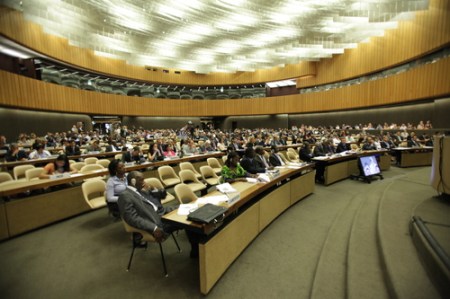
unhrc1The United Nations Human Rights Council, in the Palace of Nations (Geneva). Photo: Wikimedia Commons.

Governor Nikki Haley, the US Ambassador-nominee, recently observed, “The United States is the indispensable voice of freedom. It is time that we once again find that voice.” When we do find that voice, we may need to find a better venue in which it should be heard.

****************

As British Prime Minister Theresa May plans a Brexit from the EU, Americans may soon ask what kind of exit we want from another international institution.

In our case, the organization is not the European Union, but the United Nations. Earlier this month, Senators Lindsey Graham (R-SC) and Ted Cruz (R-TX) introduced a bill to block taxpayer dollars from going to the UN. These senators, like many Americans, are incensed by a recent anti-Israel resolution adopted by the world body. But the US’ problems with the UN run deeper than one bad resolution. They are endemic to the institution. At some point, our elected leaders will ask whether the time has come not just to defund, but also to depart — and then replace the UN with something better.

That point may come sooner rather than later.

Today — Monday, January 23 — journalist Edwin Black is launching a national conversation about United Nations reform. At a major noon-time event in the Rayburn House Office Building on Capitol Hill, I will be pleased to join Black, US Representative Trent Franks and other concerned leaders in the launch of a new project called “The Covenant of Democratic Nations” (CDN). The event coincides with the first full workday of a new presidential administration. Additional events are planned for New York, Los Angeles, San Francisco, Berlin, London, Ottawa and many other cities.

More of a conversation than an institution or a treaty, the CDN asks us to consider whether the time has arrived to fundamentally rethink our involvement with international institutions.

The United Nations was established seven decades ago, in the aftermath of the Nazi horrors, to free the world from the scourge of war, to promote social progress, to encourage treaty compliance and, in the language of the United Nations Charter, “to reaffirm faith in fundamental human rights, in the dignity and worth of the human person, in the equal rights of men and women and of nations large and small.”

Yet, in the ensuing years, this corrupt, ineffective and biased body has failed at all of these goals  — but none more sadly than its pursuit of fundamental human rights.

In retrospect, the UN’s basic problems were probably unavoidable from the start, given that the institution is by design primarily a congress of undemocratic, corrupt and ineffective nations. Consider that the 2017 elected membership of the UN Human Rights Council includes Burundi, China, Cuba, Iraq, Qatar, Saudi Arabia, Venezuela and the United Arab Emirates.

In its one-sided obsession with Israel, the United Nations has largely disregarded serious human rights violations the world over. The UN, founded with such high hopes, has responded year after year with silence and indifference to persecution, torture and violence. It has done little to nothing to respond to global brutalities and genocides. From the Cambodian genocide to the bloodbath in Syria, the United Nations has proven peculiarly unfit to the task for which it was founded.

The problem with the United Nations is not just its abject failure to accomplish its mission, but also its affirmative wrongdoing. It has condemned one single state in resolution upon resolution. That state is democratic Israel. And through it all, tyrants throughout the rest of the world continue to go ignored.

To paraphrase Hillel Neuer, the UN has become the forum at which those who condone rape lament the rights of Palestinian women; the occupiers of Tibet bemoan the disputed territories West of the Jordan River; the bombers of Yemen castigate the treatment of Gaza; and the murderers of Muslims in Syria claim to care about Muslims in little Israel.

The UN’s failings were on display last month with passage of Security Council Resolution 2334, just as those failings were previously on display when the UN passed the infamous 1975 resolution equating Zionism with racism. As then-US Ambassador to the UN Daniel Patrick Moynihan said at the time, “If there were no General Assembly, this could never have happened.”

Even the UN’s boldest critics agree that the UN does some important work. The question is whether other institutions could do it better. In Black’s vision, the CDN will review all of the United Nations’ treaties and actions. Some could be repealed, others continued and still others strengthened. The result could be a long-overdue rethinking of international law.

This doesn’t need to happen all at once. In England, Prime Minister May has chosen a “hard Brexit.” When it comes to the UN, we may have other options, and we may be well-advised to put strong new institutions in place before we withdraw from the old ones. The key however is that we should permit ourselves to think boldly and not feel imprisoned by the international status quo.

Governor Nikki Haley, the US Ambassador-nominee, recently observed, “The United States is the indispensable voice of freedom. It is time that we once again find that voice.” When we do find that voice, we may need to find a better venue in which it should be heard.

U.K. government loses Brexit case, must consult Parliament

Posted January 24, 2017 by danmillerinpanama
Categories: BREXIT, Britain, British Parliament, British Supreme Court, Theresa May

Tags: , , , ,

U.K. government loses Brexit case, must consult Parliament, Washington Times, Danica Kirka, January 24, 2017

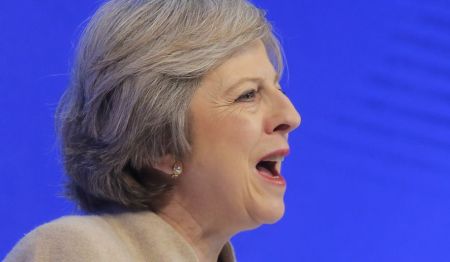
pmmayBritish Prime Minister Theresa May speaks on the third day of the annual meeting of the World Economic Forum in Davos, Switzerland, Thursday, Jan. 19, 2017. (AP Photo/Michel Euler)

LONDON (AP) — Britain’s government must get parliamentary approval before starting the process of leaving the European Union, the Supreme Court ruled Tuesday, potentially delaying Prime Minister Theresa May’s plans to trigger negotiations by the end of March.

The 8-3 ruling forces the government to put a bill before Parliament, giving pro-EU politicians a chance to soften the terms of Brexit — Britain’s exit from the EU. “Leave” campaigners had objected, saying Parliament shouldn’t have the power to overrule the electorate, which voted to leave the bloc in a June 23 referendum.

May had said she would use centuries-old powers known as royal prerogative to invoke Article 50 of the EU treaty and launch two years of exit talks. The powers — traditionally held by the monarch — permit decisions about treaties and other issues to be made without a vote of Parliament.

“The referendum is of great political significance, but the act of Parliament which established it did not say what should happen as a result, so any change in the law to give effect to the referendum must be made in the only way permitted by the U.K. Constitution, namely by an act of Parliament,” the president of the Supreme Court David Neuberger said in reading the judgement.

“To proceed otherwise would be a breach of settled constitutional principles stretching back many centuries,” he said.

The case was considered the most important constitutional issue in a generation, clarifying who ultimately wields power in Britain’s system of government: the prime minister and her Cabinet, or Parliament.

Financial entrepreneur Gina Miller sued to force the government to seek Parliamentary approval before invoking Article 50. Leaving the EU will change the fundamental rights of citizens and this can’t be done without a vote of lawmakers, she argued.

May had argued the referendum gave her a mandate to take Britain out of the 28-nation bloc and that discussing the details of her strategy with Parliament would weaken the government’s negotiating position.

Significantly, the court also ruled that parts of the United Kingdom — Scotland, Wales and Northern Ireland — do not need to be consulted. Had the court ruled that the “devolved” Parliaments needed a say, a significant delay to the process would have been likely as lawmakers from the regions piled in with concerns.

The decision doesn’t mean that Britain will remain in the EU. But it could delay the process — though May’s Downing Street office said its timetable remained on track.

The government moved quickly to say it would offer its plans in detail to the House of Commons on Tuesday afternoon. Legal experts suggest that May will try to keep the scope of the legislation narrow — focusing solely on triggering Article 50 — in order to limit the chance for amendments that could delay a vote.

But opposition became evident immediately. Opposition Labour leader Jeremy Corbyn said the party would seek to amend the legislation to make sure the government is “accountable.” The Scottish National Party, the third largest party in the House of Commons, promised to offer 50 amendments.

“Today’s result comes as a surprise to no one. Unfortunately for businesses and other institutions, Brexit still means uncertainty,” said Phillip Souta, head of U.K. public policy at law firm Clifford Chance. “Parliament remains divided and the outcome of the negotiations remain unknown.”

The bill could also be subject to delay in the unelected House of Lords.

“Defeat in the House of Lords would not stop Brexit from happening, but it could delay it until mid-2020,” Souta said.

Miller, an online investment manager, had argued the case wasn’t about blocking Brexit. Instead, she said, it was about “democracy” and the “dangerous precedent” that a government can overrule Parliament.

For Miller, who brought the case with hairdresser Deir Dos Santos, the Supreme Court judges brought vindication after months of threats to her security that followed her involvement in the case.

“No prime minister, no government can expect to be unanswerable or unchallenged,” she said. “Parliament alone is sovereign.”

The case revolved around an argument that dates back almost 400 years to the English Civil War as to whether power ultimately rests in the executive or Parliament.

Underscoring the importance of the case, May put Attorney General Jeremy Wright in charge of the legal team fighting the suit. Wright had argued the suit is an attempt to put a legal obstacle in the way of enacting the referendum result.

The decision is a bad defeat for the government and means that the government “still does not have control of the Brexit timetable,” said David Allen Green, lawyer at London legal firm Preiskel & Co.

“The appeal decision is, however, a victory for the doctrine of parliamentary sovereignty and a vindication of an independent judiciary,” Green said. “The Supreme Court has told the government to get back into its box: A proper process has to be followed.”

Germany’s New ‘Ministry of Truth’

Posted January 24, 2017 by Peter Hofman
Categories: Uncategorized

Tags:

Germany’s New ‘Ministry of Truth’War against Free Speech

by Stefan Frank

January 24, 2017 at 5:30 am

Source: Germany’s New ‘Ministry of Truth’

  • It seems that all ideas suspected of being “populist” — or simply those ideas without the blessing of the elites — will now be banned in Germany. This restriction applies to criticism of the government (especially regarding immigration and energy policies), of the EU, of Islam, of government officials and of the media.
  • As in communist dictatorships, the more obvious the failings of the government, the more aggressively the establishment attacks those who speak out about them.
  • Large companies such as Deutsche Telekom (T-Mobile), BMW, Mercedes-Benz and the supermarket chain REWE obeyed straightaway and promised to place Breitbart on the blacklist immediately, and never to advertise there again.
  • A plucky little pizza delivery service responded to the blacklisting demand by declaring that it was “not the morality police”. The company was denounced by Der Spiegel as “inept”, and after “protests from customers”, it ended up capitulating, as the newspaper reported with much satisfaction.

The elites and intellectuals are apparently now counted among the German minorities in need of protection.

Toward the end of last year, Germany experienced a previously unheard-of boycott campaign – funded by the German government, no less — against several websites, such as the popular “Axis of Good” (“Achse des Guten“). The website, critical of the government, was suddenly accused of “right-wing populism”.

The German government’s efforts at thought control seem to have begun with the victory of Donald J. Trump in the US presidential election — that seems to set the “establishment” off. Germany’s foreign minister and the probable future federal president, Frank-Walter Steinmeier — one of the first to travel to Iran after the removal of sanctions there to kowtow to the Ayatollahs — called America’s future president a “hate preacher“.

Germany’s newspapers were suddenly littered with apocalyptic predictions and anti-American fulminations.

For hard-core Trump-haters, however, a witch hunt by itself is insufficient; they want activism! Since November, Germany’s left-wing parties have had a strong increase in membership, as reported by Der Spiegel. At the same time, the federal government evidently decided, at least regarding the federal elections taking place in 2017, that it would no longer count on journalists’ self-censorship. The German government, instead of merely hoping that newspapers would voluntarily — or under pressure from the Press Council — refrain from criticising the government’s immigration policies, decided that it, itself, would inaugurate censorship.

The Federal Government’s “Ministry of Truth”

To this effect, as reported by Der Spiegel, the Federal Interior Ministry, intends to set up a “Defense Center against Disinformation (“Abwehrzentrum gegen Desinformation“) in the fight against “fake news on social networks”. “Abwehr” — the name of Nazi Germany’s military intelligence agency — is apparently meant to demonstrate the government’s seriousness regarding the matter.

“It sounds like the Ministry of Truth, ‘Minitrue,’ from George Orwell’s dystopian novel 1984“, wrote even the left-leaning daily, Frankfurter Rundschau.

Frank Überall, national head of the German Association of Journalists (DJV), bluntly stated: “This smells like censorship.”

It seems that all ideas suspected of being “populist” — or simply those ideas without the blessing of the elites – will now be banned in Germany. This restriction applies to criticism of the government (especially regarding immigration and energy policies), of the EU, of Islam, of government officials and of the media.

The Federal Agency for Political Education — the information agency of the Interior Ministry – is quite open about it: “Anti-elitism”, “anti-intellectualism”, “anti-politics” and “hostility toward institutions” are the “key characteristics of populism”.

“Fat, Stupid White Men”

Toward the end of 2016, one of the biggest German media scandals in recent memory erupted when Gerald Hensel, undoubtedly a member of Germany’s elite, tried to introduce a new form of internet censorship with the help of a team of media agencies and political players. Until recently, Hensel was “Director of Strategy” at Scholz & Friends, one of Germany’s two big advertising agencies. The firm counts among its clients multinational corporations such as General Motors, the German federal government and the European Commission; so one might say the company is close to the state.

Apparently in anger over Trump’s election victory, Hensel demanded: “Let us freeze the cash flow of the right-wing extremist media!” He had previously written a strategy brief declaring debate to be useless; instead, the political enemy — the “populists” – needed to be fought, even with questionable methods:

“The liberal center must, especially in these new digital and information-based wars, take off the kid gloves. We have to turn the tables and learn about populism, particularly on the Internet… Thus, we have to respond in a more wide-spread digital manner and with explicitly less sympathy to those people who want to force their own future on us — and do this long before the next federal election… Political storytelling, targeting the political enemy, influencers, forums, rumours…”

“Measures,” he added, have to be taken against the “new right” – measures that:

“are ‘Below the Line’ and also digital. We need ‘good’ troll factories in our fight against Frauke Petry, Beatrix von Storch, Geert Wilders, Marine Le Pen and the fat stupid white men behind them. Ideally, as quickly as possible. Starting in 2017, they will continue to dismantle the EU and thus our future and that of our children.”

Advertising Agency as Thought Police

Toward the end of November, Hensel appealed to his colleagues in various advertising agencies, under the banner of “no money for the right“, to boycott all those who fit the description of his bogeyman — because they were “hostile towards the EU,” or because they might even harbour sympathies for Donald Trump. He was jumping on a bandwagon. A witch hunt was already under way against the American website Breitbart, due to the closeness of its former executive chair, Steve Bannon, to Donald Trump. Without providing any kind of proof, countless German newspapers and broadcasters claimed that Breitbart was “racist”, “sexist”, “xenophobic”, “anti-Semitic” and “Islamophobic”, and a “hate site”. The state-owned German television station ARD described Breitbart as an “ultra right-wing” platform for “white supremacy”. Other journalists followed suit.

Those Not Reading Newspapers are Suspect

Hensel went one step farther. In the style of a prosecutor during the Inquisition, he called to break the “dominance of right-wing micro media”. He seems to consider particularly dangerous and subversive, anyone who reads articles that do not originate from one of Germany’s media empires:

“While I may satisfy my thirst for information with my subscriptions to ZEIT or Le Mode Diplomatique, the brave new-right freedom-fighter likes to stay informed via online media such as the Axis of Good or Breitbart News.”

This alone raises several suspicions. Hensel, whose website (which since December can only be accessed with a password) is graced by the display of a Soviet red star, likes to eliminate his opponents swiftly. Breitbart, for example, is deemed fascist (“salon-fascists”). Why? Because the blog — and here he, supposedly for simplicity’s sake, quotes an article from the Süddeutsche Zeitung — “covers all the topics of German right-wing populism”; Breitbart reports about “the migrant and refugee policies of the German federal government, as well as of supposed criminal acts conducted by migrants and Islamic activities.”

Hensel’s solution? Boycott!

“There is freedom of speech in my stupid little world. Undoubtedly, websites such as Breitbart News and the Axis of Good… are legal media. Nevertheless, one could ask brand names whether they… are aware that their banner ads appear on these particular websites and represent their brand there.”

This type of “asking”, of course, roughly corresponds to the mafia “asking” the pizzeria owner if he has fire insurance.
(Image source for Hensel: Internet Archive screenshot)

Alliance for Censorship

Hensel also considerately provided detailed instructions for his readers. Those employed by an enterprise should check whether the websites that he deemed “right-wing” are registered on a blacklist. Employees of advertising agencies should form a team, with Hensel and other authoritarians, for internet censorship:

“If your career in a media agency has propelled you a little higher up the hierarchy, you might be able to bring up the topic at the next media get-together with colleagues. 2017 is an election year. You, dearest colleagues, clearly have a part in determining who receives our advertising dollars.”

Hensel also suggests that consumers put direct pressure on companies or approach them via social media, to dissuade them from advertising on “hate publishers” and “destroyers of the future”.

This manifesto was only published on a private blog — one that barely anyone had ever heard of before. But the power of which Hensel boasted — the networks in the advertising agencies and editorial offices — is real. On Hensel’s command, big newspapers and websites reported on the operation with much sympathy, along with the hashtag #NoMoneyForTheRight.

Companies Submit to Pressure

Large companies such as Deutsche Telekom (T-Mobile), BMW, Mercedes-Benz and the supermarket chain REWE obeyed straightaway, and promised to place “Breitbart” on the blacklist immediately and never to advertise there again. Der Spiegel cited Hensel’s “resistance” (!) and pilloried one business that did not follow suit: A plucky little pizza delivery service that responded to the blacklisting demand by declaring that it was “not the morality police”. The company was denounced by Der Spiegel as “inept”, and after “protests from customers”, it ended up capitulating, as the newspaper reported with much satisfaction.

Breitbart will cope with missing out on a few hundred dollars of advertising revenue from Germany. Hensel, however, was successful in his attempt to motivate his ad agency colleagues against German websites such as the Axis of Good. Within a few days, none of them advertised there anymore. Advertising revenue, equally important for websites as it is for newspapers, came to a halt. Hensel had achieved his goal.

State-Financed Boycott

For this campaign, Hensel also received support from the group Network Against Nazis (“Netz gegen Nazis“), which receives financing from by Germany’s federal government, the German Football Association and the newspaper Die Zeit, and which, until recently, also counted Scholz & Friends among its supporters. In the tried and true Orwellian fashion of calling things their opposite, the definition of “Nazi”, for Network Against Nazis, encompasses anyone who is “Islamophobic” or “hostile toward the media“.

Shortly after Hensel’s call for boycotts, the Axis of Good was place on a list of “popular right-wing blogs” by Network Against Nazis — together with the liberal publisher Roland Tichy and the evangelical civil rights activist Vera Lengsfeld (who is a thorn in the side of communists, because she fought against the East Germany’s dictatorship in the 1980s). The Amadeu-Antonio Foundation, which runs the Network Against Nazis website, receives almost a million euros per year from the federal government. Not surprisingly, it demonstrates its gratitude with character assassinations of critics of the government.

“The Trend of Denouncing People as Right-Wingers”

Within a short time, Hensel had put together a kind of mafia, bent on economically ruining whoever rejected his ideological commands, by using libel and slander to scare away their customers.

As the Frankfurter Allgemeine daily newspaper commented:

“It is very fashionable right now to stigmatize people and denounce them as ‘right-wing’ if they do not share your views. Companies want nothing to do with that label, and, as you can see on Twitter, they quickly change direction if they are aggressively made aware that they support the wrong side with their ads (which are often automatically activated and run on the internet).”

In response to the boycott campaign against it, the Axis of Good showed how a business can defend itself: the editors raised a public alarm about Hensel’s campaign in a series of reports and commentaries. Thousands of readers complained on the Facebook page of Hensel’s employer, Scholz & Friends, which, after its initial support, began to distance itself from its employee’s campaign and finally severed ties with him.

According to Hensel’s version, his campaign was “so successful” that he wanted to take his employer “out of the line of fire”.

“My former employer and I became the victims of a massive hate storm consisting of countless of tweets, emails and comments on social media… This is a systematic campaign.”

Propaganda Offensive ahead of the Federal Election

Of course, it was Hensel himself who initiated a systematic campaign, including dirty tricks, which were waged with an eye to the government’s apparent plans to consolidate the population ideologically. As research by the Axis of Good has revealed, Hensel’s boycott operation was closely tied to the plans by the Federal Ministry of Family Affairs to conduct an advertising campaign in support of an open-door immigration policy in 2017. For this, an advertising agency was necessary, as reported in September by an industry journal:

“As revealed by a Europe-wide announcement, the Federal Minister of Family Affairs, Senior Citizens, Women and Youth is looking for an agency to advertise the brand ‘Living democracy! Actively against right-wing extremism, violence and inhumanity’.”

Ad agencies were invited to submit their suggestions by the middle of December. The Axis of Good concluded:

“There is a suspicion that this [boycott] operation was a hurried pilot project for the bid for the million-euro project by Schwesig’s Family Ministry. A free trial run for the so-called ‘advertising pitch’.”

Regarding the question of how much economic damage was caused to the Axis of Good by the boycott campaign, Henryk M. Broder, the website’s publisher, told Gatestone:

“It is significant, but how big it really was, we will only know in a few months. After all, it is not the companies themselves that stopped advertising, but the agencies. The damage for Scholz & Friends could be even bigger, but they do not talk about it.”

The Hamburger Abendblatt daily referred to Hensel’s campaign as an “attack on the freedom of the press,” adding: “It seems as if the shot from the activists backfired.”

As in communist dictatorships, the more obvious the failings of the government, the more aggressively the establishment attacks those who speak out about them.

Stefan Frank, a journalist and writer, is based in Germany.
Trump Must Reverse Obama’s ‘Disconnected’ Iran Regional Policy

Posted January 24, 2017 by Joseph Wouk
Categories: Uncategorized

Source: Trump Must Reverse Obama’s ‘Disconnected’ Iran Regional Policy – Middle East – News –

Opinion: Four steps that will be the basis for a new US policy on Iran.

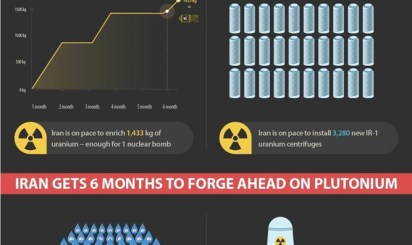
Infographic on good vs bad Iran deal

Infographic on good vs bad Iran deal

The Israel Project

Beyond the rhetoric of “tearing up” or “abiding by” Obama’s Iranian Nuclear deal, lies the question of what President Trump should actually do with it. The fact is that the Middle East is on fire. And, it’s on fire mostly as a result of Obama’s Iran deal.

What’s the connection? Because in order for Obama to “make” the deal (that was never signed by anybody, and is “voluntary”), Obama agreed to “disconnect” all of Iran’s conventional warfare Middle-East actions from its nuclear dossier. In effect, Obama put the nuclear cart before the conventional warfare horse.

Iran is exhibiting purely malign motives and actions in its conventional action, so how can it ever be trusted when it comes to nuclear actions? Obama used the pretext of the Iran deal to ignore all of Iran’s genocidal actions after the deal was struck. Hence, President Trump shouldn’t start by tearing up Obama’s deal, he should first reverse all the conventional regional policies that have let Iran turn the entire Middle East into a towering inferno.

First of all, box Iran out of Syria, and buy the Sunnis into Syria. Trump needs to triangulate Putin, Erdogan, and the Sunni countries to stabilize Syria, and to box Iran out of Syria. In 2013, General Mattis testified that if Assad falls, it would be the “biggest strategic setback in 25 years” for Iran.

What was General Mattis referring to that was “25 years” ago in 1988? Operation Praying Mantis was the American armed attack on Iranian oil facilities and military facilities on 18 April 1988 in response to Iran’s mining the Straits of Hormuz. Also, Syria is the driver of the Muslim refugees to Europe. Stabilize Syria and you stabilize the Muslim refugee “soft” invasion of Europe. Hence, it is in Russia’s, Turkey’s, America’s, the Sunnis, Europe, and the Israelis’ best interests to stabilize Syria and lock Iran out of the Levant. Stabilize Syria and Trump will actually earn the Nobel Prize.

Second, partner with the Saudis to eradicate the Shiite Houtis from Northern Yemen, and destroy al Qaeda in Eastern Yemen.

The weakest link in the Iranian malignant chain of evil is Yemen. President Trump should enforce a solid impregnable weapons blockade of Yemen against Iranian weapons. Obama has been letting the Saudis struggle and bleed in Yemen.

To America, an Iranian Yemen would mean Iranian control of the Bab el-Mandab Straits that exit the Red Sea into the Indian Ocean. This choke-point transits 3 million barrels of oil a day. This would mean that in addition to the Straits of Hormuz that transit 17 million barrels, Iran will control the additional 3 million. Not only that, with both the Bab el-Mandab and Hormuz Straits under Iranian control, the Iranians could paralyze any emergency defense of Saudi Arabia from Iranian attack.

Third, expose Iran’s game of using the sectarian Shiite Flag to divide and conquer the Arabs to enable the Iranians to steal the Arab “Black Gold Triangle” oil resources.

President Trump has to simply tweet that Iran is playing the Sunni and the Shiite Arabs for fools by instigating their intra-Muslim genocide. President Trump can earn the high praise of the McCain/Graham contingent of the Republican party and the world by exposing Iran as the purveyor and instigator of intra-Arab genocide, as well a bring peace to Iraq and Syria. By raising the Arab flag, President Trump can drain Iraq of its Iranian and al Qaeda sectarian swamp, and bring peace to the area.

Fourth, openly support Iranian democratic forces and demand the release of the imprisoned Iranian presidential candidates that Obama has allowed to remain imprisoned.

Unless and until the Iranian theocracy is displaced by a non-sectarian government, the world will suffer from Iran’s malignant actions. President Trump should correct Obama’s tragic mistake of ignoring the forces of democratic change in Iran. Obama’s Iranian policy was ludicrous on its face: by appeasing the Iranian mullahs, and ignoring the home-grown democratic Iranians he thought he would bring positive democratic change to Iran. That’s like saying that by appeasing Hitler with 150 billion dollars and betraying a nascent German democratic revolution, Roosevelt would have empowered the liberal Germans to overthrow Hitler.

Every one of Obama’s catastrophic regional conventional Iranian policies must be reversed. Otherwise, Iran will continue to set the Middle East, and beyond, afire. President Trump must void Obama’s Iranian policy of sanctioning Iran’s malignant regional mode of conventional warfare and his past attempts to curry nuclear favors with a genocidal Iranian Shiite regime bent on regional and global hegemony.

The writer is Chairman of Americans for a Safe Israel (AFSI) and specializes in security issues, has created an original educational 3d Topographic Map System of Israel to facilitate clear understanding of the dangers facing Israel and its water supply. It has been studied by US lawmakers and can be seen at http://www.marklangfan.com.

Issue an International Arrest Warrant for George Soros

Posted January 24, 2017 by Peter Hofman
Categories: Uncategorized

Tags:

We the People: Your Voice in Our Government

Issue an International Arrest Warrant for George SorosCreated by A.B. on January 21, 2017

Source: Issue an International Arrest Warrant for George Soros | We the People: Your Voice in Our Government

George Soros is a menace to the free world and stands in the way of making America great again. He is guilty of the following crimes:

1) Financially supports open sedition in major American cities resulting in millions of dollars of property damage as well as loss of life.

2) Attempts to manipulate democratic elections by donating millions of dollars to his preferred candidates.

3) Seeks to curtail American sovereignty. In his own words: “The main obstacle to a stable and just world order is the United States … Changing [the] attitude and policies of the United States remains my top priority.”

4) Is a currency manipulator. Soros initiated a British financial crisis by dumping 10 billion sterling, forcing the devaluation of the currency and gaining a billion-dollar profit.

Go here !

Stop Operation Soros (SOS): Massive Movement To Overthrow George Soros Explodes In Macedonia

Posted January 24, 2017 by Peter Hofman
Categories: Uncategorized

Tags: ,

Stop Operation Soros (SOS): Massive Movement To Overthrow George Soros Explodes In Macedonia

By Pamela Geller – on January 22, 2017

Source: Stop Operation Soros (SOS): Massive Movement To Overthrow George Soros Explodes In Macedonia – The Geller Report

A major new initiative called Stop Operation Soros (SOS), a movement dedicated to stopping the evil machinations of Nazi collaborator billionaire George Soros, has taken off in Macedonia.

The SOS founders called on citizens around the world to “fight against one-mindedness in the civil sector, which is devised and led by George Soros.” The movement has been set up to expose the ‘subversive activities of all of George Soros’s organizations. Hungary has also taken to steps to clamp down on Soros funded organizations by banning them from the country.

‘Stop Operation Soros’ movement begins in Macedonia

RT, 19 Jan 2017 15:36

A new initiative, Stop Operation Soros (SOS), dedicated to countering the influence of American billionaire activist George Soros, has been launched in Macedonia.

In a press conference on Tuesday, the founders of the group called on all “free-minded citizens,” regardless of ethnicity or religion, to join them in the “fight against one-mindedness in the civil sector, which is devised and led by George Soros,” the Vecer newspaper reported. The movement says it will first focus on uncovering ‘subversive’ activities by Soros-funded NGOs.

According to Nikola Srbov, a columnist for pro-government news portal Kurir and co-founder of SOS, Soros-funded NGOs have monopolized civil society in Macedonia and used their position to suppress dissenting views.

“We’ve witnessed the takeover of the entire civil sector and its abuse and instrumentalization to meet the goals of one political party. That is unacceptable and goes beyond the principles of civic organizing,” Srbov said at the press conference.

“The Open Society Foundation, operating under the Soros umbrella, used its funding and personnel to support violent processes in Macedonia. It has monopolized the civil society sector, pushing outside any organization which disagrees with the Soros ideology,” he stated.

Another co-founder, Cvetin Cilimanov, editor-in-chief of the state-run MIA news agency, accused Soros’s Open Society Foundations of undermining Macedonian sovereignty by working not only with the opposition center-left SDSM party, but also with outside interests. By cooperating with foreign embassies and organizations such as USAID, Cilimanov believes Soros-backed groups have interfered in the political process of Macedonia.

“This is unacceptable and has largely contributed to a feeling in the public that the traditional relations of partnership Macedonia enjoyed with some countries are being undermined,” Cilimanov told journalists.

A third founder of the initiative and editor-in-chief of the Republika news portal, Nenad Mircevski, declared that the group would work towards the “de-Soros-ization” of Macedonia, echoing a speech made by former prime minister and leader of the ruling VMRO-DPMNE party Nikola Gruevski in December. In the speech, Gruevski accused foreign powers and Soros-backed organizations of meddling in Macedonian politics.

Opposition figures have expressed concern at the rhetoric used by Gruevski, fearing the start of a crackdown on dissent and advocacy groups.

The Open Society Foundation (OSF) was set up by Hungarian-born Soros between the mid-1980s to early 1990s with the stated aim of helping former Eastern bloc countries transition from communism. However, aside from its support for progressive causes such as drug policy reform, the OSF has also been involved in political activities and Soros publically supported the violent overthrow of the legitimately-elected government in Ukraine during the ‘Euromaidan’ revolution. This has earned him the ire of Russian authorities, which in 2015 banned Soros and his foundations as a threat to national security.

Soros and his foundations have come under scrutiny elsewhere as well. In an interview with the internet portal 888.hu in December, Hungarian Prime Minister Viktor Orban said that 2017 would bring about “the extrusion of George Soros and the forces symbolized by him.” Orban has accused Soros of undermining European borders and values by helping facilitate the flow of refugees and asylum seekers from the Middle East and elsewhere. During a Reddit AMA (Ask Me Anything), WikiLeaks’ Julian Assange also blasted the Organized Crime and Corruption Reporting Project, funded by Soros, for focusing “exclusively on negative stories about Russia and former Soviet states.”

Trump taps net neutrality foe for FCC chairman

Posted January 24, 2017 by danmillerinpanama
Categories: Ajit Pai, Federal Communications Commission, Internet, Trump appointments

Tags: , , ,

Trump taps net neutrality foe for FCC chairman, Washington Examiner, Gabby Morrongiello, January 23, 2017

Pai has been a steadfast critic of Democrat-led efforts to regulate the internet and is a notable opponent of net neutrality.

******************

President Trump has made Ajit Pai the new chairman of the Federal Communications Commission, following Tom Wheeler’s departure last Friday.

Pai had previously served as Republican member of the FCC before he was chosen to lead the agency under the next administration.

“This afternoon, I was informed that [President Trump] designated me the 34th chairman of the FCC. It is a deeply humbling honor,” he tweeted Monday afternoon, adding in a statement that he intends to “bring the benefits of the digital age to all Americans.”

Before joining the FCC in 2012, Pai served as associate general counsel of Verizon Communications Inc. and as a staffer in the Senate and Justice Department. He and Trump had met at Trump Tower earlier this month.

Pai has been a steadfast critic of Democrat-led efforts to regulate the internet and is a notable opponent of net neutrality.

DHS rushing faulty citizenship system that could miss ‘national security threats’: IG

Posted January 24, 2017 by danmillerinpanama
Categories: Citizenship, Department of Homeland Security, Vetting immigrants

Tags: , ,

DHS rushing faulty citizenship system that could miss ‘national security threats’: IG, Washington Times, 

(President Trump’s new Director of Homeland Security seems likely to fix that problem as well as many others promptly. — DM)

The government’s new system that grants citizenship has “alarming” security breaches, including allowing immigrants to be approved without a full FBI background check, the Homeland Security inspector general said Monday in an “urgent” warning telling the government to put everything on hold.

Inspector General John Roth said he got wind  that U.S. Citizenship and Immigration Services was about to take the troubled system online later this month, and said he was compelled to issue the extraordinary alert to try to prevent a massive mistake.

He said that as of Jan. 11, about 175 citizenship applications were approved despite never having completed the background checks.

“Without sufficient vetting, immigrants could potentially be granted U.S. citizenship although they are ineligible or pose national security threats,” Mr. Roth said in his alert.

He first made his appeal to USCIS on Jan. 19, the day before the change in administrations. He released his public “urgent” appeal at noon Monday.

Mr. Roth said after the agency was alerted to the 175 applications it had wrongly approved, it started to redo them.

Dubbed ELIS, or the Electronic Immigration System, the new process was deployed last April, and quickly ran into problems.

The inspector general said it failed to make “core” checks it was required to make, kept canceling applicants’ appointments and ruined the workflow, forcing officers to end up processing applications manually anyway.

The entire system was halted last year as the problems became clear.

Mr. Roth said USCIS was prematurely rushing to get it back up and running this month.

He’d planned to issue a full report later in the year, but said USCIS’s moved forced him to issue his immediate warning.

“Although we are only in the beginning phases of our review, we have already identified significant operational and security issues that pose grave concern,” Mr. Roth said.

USCIS didn’t immediately respond to a request for comment on the new warning.

But an internal email obtained by House Judiciary Committee Chairman Robert W. Goodlatte last year showed how deep the concerns ran.

“At this point we are not confident that proper FBI Name Checks have been run on certain ELIS cases. At this point we are uncertain of the scope of the problem,” Daniel M. Renaud, USCIS associate director, said in an email.

Mr. Goodlatte demanded answers on when USCIS learned of the problem and how many cases it affected.

He said the agency should move to strip citizenship from anyone who was wrongly approved.

Trump stressed bilateral commitment when he talked to Egypt’s El-Sisi

Posted January 24, 2017 by danmillerinpanama
Categories: Egypt, President Trump, Sisi, Trump and Egypt

Tags: , , ,

Trump stressed bilateral commitment when he talked to Egypt’s El-Sisi , DEBKAfile. January 23, 2017

President Donald Trump assured Egypt’s Abdel El-Sisi that the US remains committed to bilateral relations with Cairo and is ready to offer Egypt economic assistance in the phone conversation they held Monday on economic issues and terrorism.

DEBKAfile: This was Trump’s second phone conversation with a Middle East leader after he talked to Israel’s Binyamin Netanyahu Sunday.