Israeli, UAE officials reportedly met in secret in US to discuss countering Iran

Posted February 5, 2020 by Joseph Wouk
Categories: Uncategorized

Source: Israeli, UAE officials reportedly met in secret in US to discuss countering Iran | The Times of Israel

National Security Adviser Meir Ben-Shabbat, Emirati envoy to DC said to have held talks at White House in December on Tehran, non-aggression pact between Abu Dhabi and Jerusalem

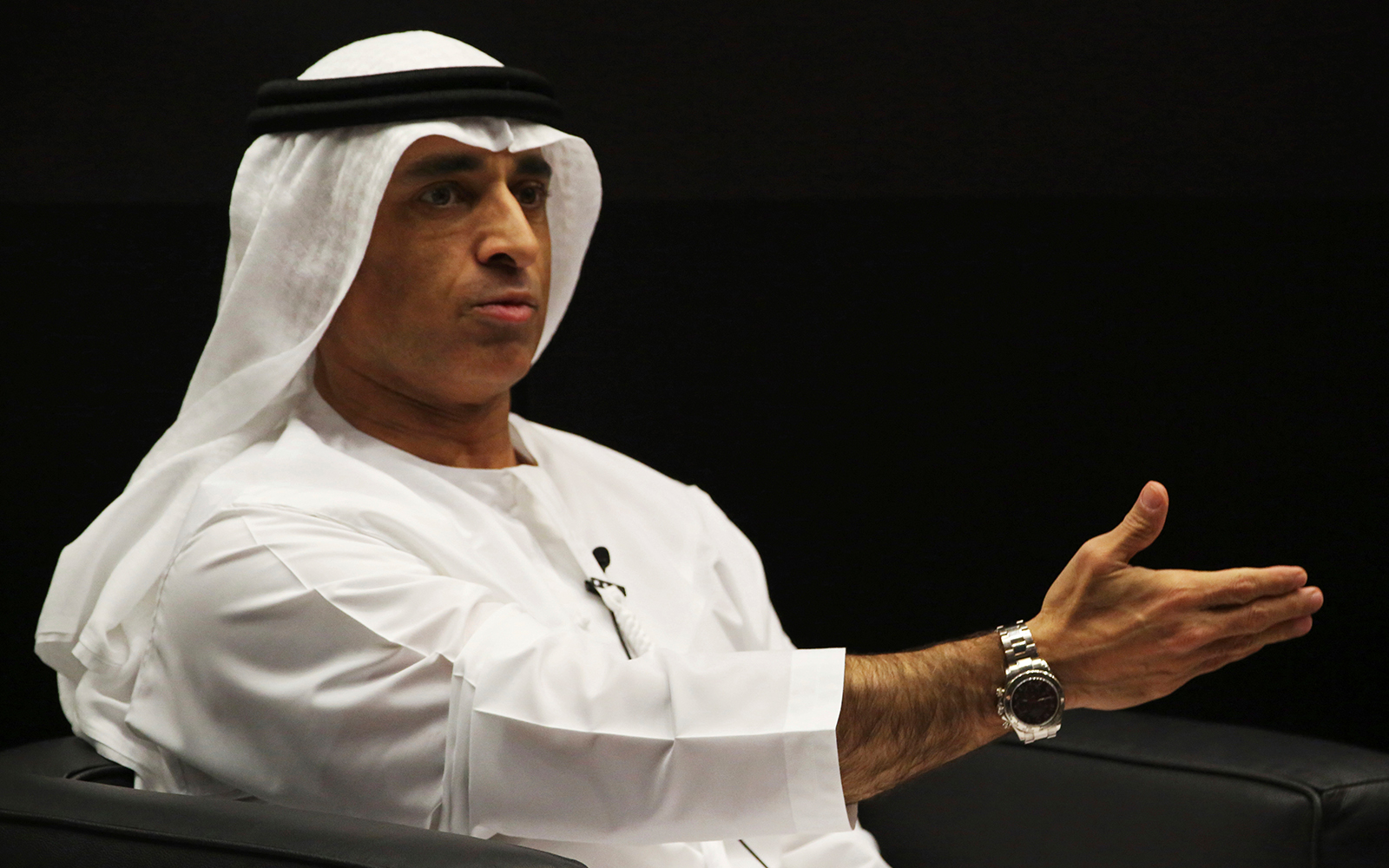
Emirati Ambassador to the US Yousef al-Otaiba at an event with then-US House Speaker Paul Ryan, at the Emirates Diplomatic Academy, in Abu Dhabi, United Arab Emirates, Jan. 25, 2018. (AP Photo/Jon Gambrell)

Emirati Ambassador to the US Yousef al-Otaiba at an event with then-US House Speaker Paul Ryan, at the Emirates Diplomatic Academy, in Abu Dhabi, United Arab Emirates, Jan. 25, 2018. (AP Photo/Jon Gambrell)

The White House in December hosted a secret meeting last December with officials from Israel, the US and the United Arab Emirates to discuss countering Iranian influence in the Middle East.

The officials discussed better coordinating their positions against Iran, and the possibility of advancing a non-aggression pact between Israel and the UAE, which could mark a possible step toward normalizing relations between the countries.

Attending the December 17 meeting were Israeli National Security Adviser Meir Ben-Shabbat, US National Security Adviser Robert O’Brien, and the Emirati ambassador to the US Yousef al-Otaiba, who is considered close to the UAE Crown Prince Mohammed bin Zayed Al Nahayan.

The US special envoy for Iran, Brian Hook, and Deputy National Security Adviser Victoria Coates also attended.

Israel’s Channel 13 and the US news site Axios first reported the meeting on Tuesday, citing senior Israeli and American officials as sources.

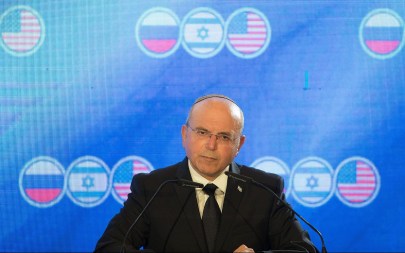
Meir Ben-Shabbat, the head of the National Security Council, speaks at a trilateral meeting in Jerusalem of the Israeli, US and Russian national security advisers on June 25, 2019. (Noam Revkin Fenton/Flash90)

The reports said that the meeting spurred a tweet several days later by the Emirati foreign minister Abdullah bin Zayed Al Nahyan apparently in support of warming Israel-UAE ties.

Al Nahyan, the UAE’s top diplomat, tweeted a link to an article titled “Islam’s reformation: an Arab-Israeli alliance is taking shape in the Middle East.”

Prime Minister Benjamin Netanyahu responded, writing “I welcome the closer relations between Israel and many Arab states. The time has come for normalization and peace.”

Jerusalem is said to have developed clandestine ties with numerous Arab countries in recent years over the countries’ shared antipathy toward Iran and the need to counter jihadism.

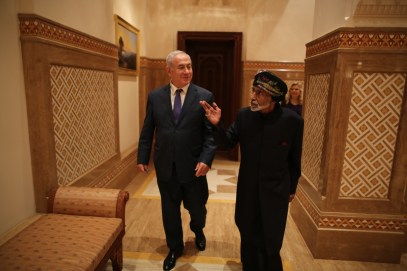
Israeli officials have also openly visited several such countries recently. In October 2018, Netanyahu was welcomed to Oman by the country’s then-ruler Sultan Qaboos bin Said. That same month Culture and Sports Minister Miri Regev traveled to Abu Dhabi for the Abu Dhabi Grand Slam judo tournament, where Israel’s national anthem was played for the first time in the Arabian peninsula following Israeli judoka Sagi Muki’s first place win.

i

Israel has also been invited to participate at the Expo 2020 in the UAE city of Dubai.

In June, Bahrain’s foreign minister told the Times of Israel his country wished for peace with the Jewish state.

In October, Foreign Minister Israel Katz said he was advancing non-aggression treaties with several Arab nations in the Gulf, a “historic” démarche he said that could end the conflict between Jerusalem and those states.

Arab leaders, however, have also indicated that true normalization can not take place so long as the Israeli-Palestinian conflict is not resolved.

The UAE ambassador to Washington, along with envoys from Bahrain and Oman, attended the January 28 unveiling of the Trump administration’s Israeli-Palestinian peace proposal in a tacit sign of support for the US initiative.

The UAE issued the most complimentary statement on the plan of any Arab state, calling it “a serious initiative” and stating that it “offers an important starting point for a return to negotiations within a US-led international framework.”

The UAE also signed on to an Arab League rejection of the plan, however.

Arab countries in the Gulf, especially Saudi Arabia, the UAE and Bahrain, view Iran as a major regional foe and strongly oppose its support for armed groups throughout the Middle East.


Pro-Hizballah prime minister’s appointment in Iraq brings top US general to Baghdad – DEBKAfile

Posted February 5, 2020 by Joseph Wouk
Categories: Uncategorized

Source: Pro-Hizballah prime minister’s appointment in Iraq brings top US general to Baghdad – DEBKAfile

US Marine Gen. Frank McKenzie, US Mid-East commander, paid a quiet visit to Baghdad on Tuesday, Feb. 4, after Mohammed Tawfiq Allawi was named by the Iraqi president to form a new Iraqi government. This was the first visit to Baghdad by a high-ranking American commander since the killing of Iran’s Al Qods chief Qassem Soleimani in a US air strike last month.

Allawi is known to be close to the Lebanese Hizballah’s chief Hassan Nasrallah, whom Tehran has entrusted with consolidating its influence in Baghdad in the wake of the assassination. There is therefore a high risk that the incoming Iraqi prime minister will push harder than his short-lived predecessors to evict US forces from the country. The Iraqi parliament had previously made this demand, but it was not binding on the government. Allawi, egged on by Nasrallah, is expected to rephrase the resolution in a way that forces government action, DEBKAfile’s military and intelligence sources report.

Gen. McKenzie’s mission in meetings with top Iraqi generals was to caution them against the prime minister going through with this step. He then traveled to the big US air base of Ain Al-Asad near the Iraqi-Syrian border. The consequences of Gen. McKenzie’s meetings in Baghdad are tensely awaited before determining whether Washington will respond to a fresh Iraqi demand to withdraw US forces (more than 5,000 military personnel) or continue to ignore it.

Iraq has been in uproar for the past four months over violent Shiite anti-government demonstrations – mostly in the Shiite south and Baghdad. An estimated 556 have been killed and thousands injured in brutal crackdowns by pro-Iranian militia thugs. The demonstrators are also protesting excessive Iranian influence in Baghdad. Incoming PM Allawi said publicly that the protesters were right and promised to meet their demands. However, the Hizballah chief is now running the show in Baghdad. He is armed by Tehran with the authority both to intensify the crackdown on the demonstrators and continue to deploy the powerful armed pro-Iraqi militias against  American military and other interests in Iraq, as well as US allies, such as Israel, by their Syria-based contingents.

Palestinian ties with Israel continue despite Abbas’ rhetoric. Hamas to attack Israel until Cairo lets its leaders return to Gaza – DEBKAfile

Posted February 3, 2020 by Joseph Wouk
Categories: Uncategorized

Source: Palestinian ties with Israel continue despite Abbas’ rhetoric. Hamas to attack Israel until Cairo lets its leaders return to Gaza – DEBKAfile

The Palestinians are not really breaking off economic and security ties with Israel and the US, according to discreet messages passing from Ramallah to Jerusalem on Sunday, Feb.2.

Those ties are still alive and well, despite the orders publicly issued by Palestinian Authority Chairman Mahmud Abbas in his furious response to the Trump peace plan. Those messages further explained that Abbas’ fiery rhetoric was mainly meant for the ears of Arab rulers – not practical execution.

The day after the peace plan was launched in Washington, Abbas allowed his senior lieutenants to receive CIA director Gina Haspel in Ramallah – hardly evidence of a Palestinian boycott of ties with the Americans. DEBKAfile’s Washington sources report that administration officials were furious with the Palestinians for leaking word of her visit, despite a commitment to keep it dark.

The same officials continue to press Israel to hold back from declaring sovereignty over West Bank settlements before its general election on March 2, contrary to the wording of the Trump plan. Prime Minister Binyamin Netanyahu, who had planned an immediate announcement, therefore reversed his decision and will not declare the annexation of the town of Maele Adummim near Jerusalem or the Jordan Valley in the coming days. He may just go for a smaller target as a token gesture with a promise to do more after the election. A decision on this is still being weighed in Jerusalem.

As for the Palestinians, Egyptian President Abdel-Fatteh El-Sisi has firmly rejected appeals by Muslim nations, led by Indonesia, to allow Hamas leader Ismail Haniyeh to return home to the Gaza Strip. He is stranded away from home with 12 senior Hamas officials because Cairo is refusing to grant him entry. Hamas’ current multiple rocket and balloon barrages against Israel are intended as pressure on Sisi to relent. Haniyeh and his party are being punished for violating a written pledge to Cairo not to include Iran in their foreign tour as the condition for permission to travel aboard. This group was, however, filmed in Tehran embracing Iranian officials at the funeral of the Iranian general Qassem Soleimani assassinated by the US.

So long as the Egyptians keep the door shut against Haniyeh’s return home Hamas intends to keep up the barrages against Israeli communities. This leaves it up to the caretaker government in Jerusalem to sort out a predicament generated elsewhere.


After peace plan rejected, US laments Arab League’s approach as outdated

Posted February 2, 2020 by Joseph Wouk
Categories: Uncategorized

Source: After peace plan rejected, US laments Arab League’s approach as outdated | The Times of Israel

Senior official says Palestinian fate won’t change if group of 22 countries doesn’t alter methods; CIA chief said to visit Ramallah, assure PA of opposition to snap annexation

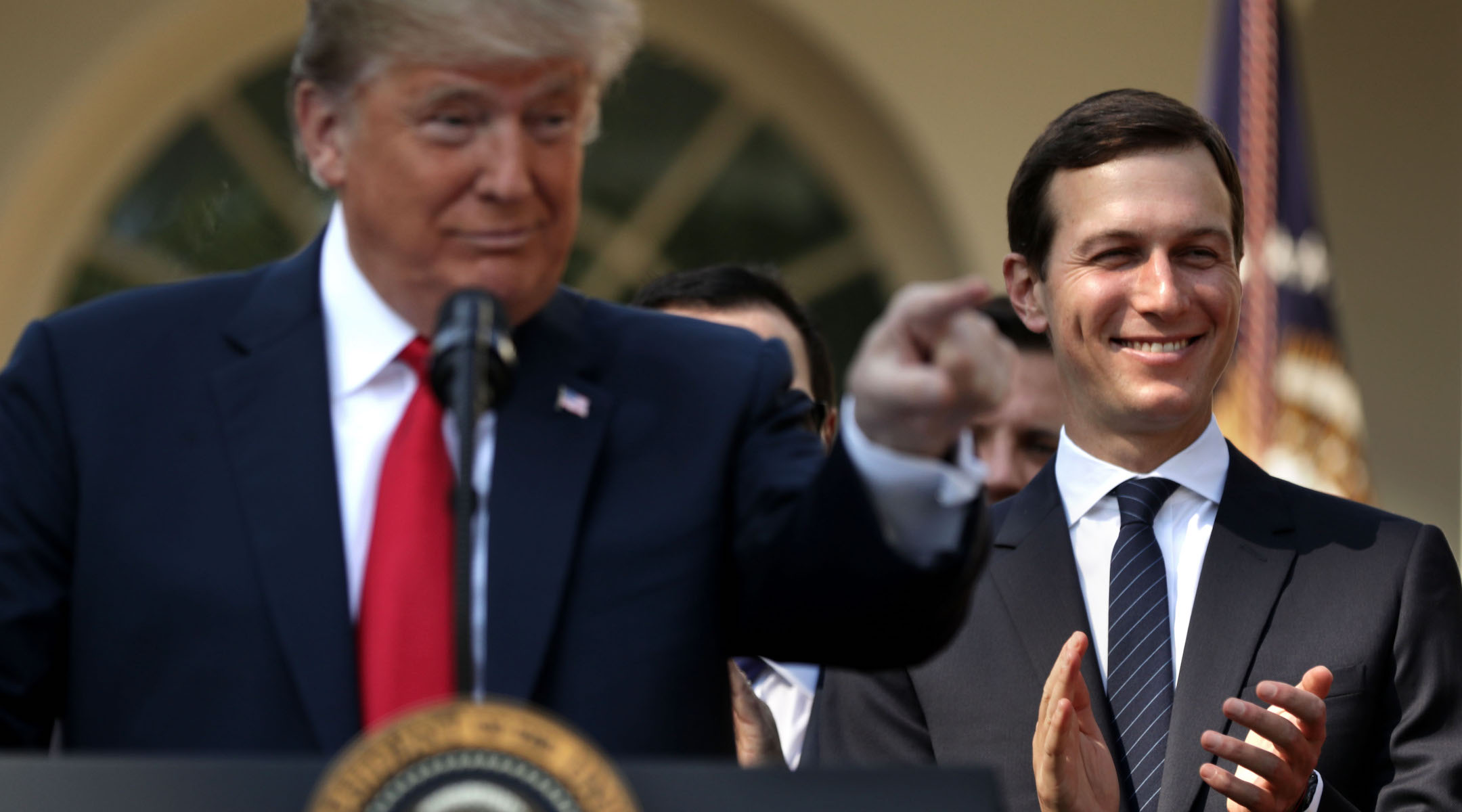
Jared Kushner (R) joins US President Donald Trump as he holds a press conference in the Rose Garden of the White House on October 1, 2018. (Chip Somodevilla/Getty Images via JTA)

A senior US official on Saturday lambasted the Arab League’s rejection of the recently released Trump peace plan, saying in a statement that such dismissals would not benefit the Palestinian people.

“It is only by having a wiliness [sic] to try a new approach that we will make a breakthrough in a conflict that has left the Palestinian people to suffer for decades,” a senior administration official said in a written statement.

“Past Arab League resolutions have placated Palestinian leadership and not led to peace or progress and it is important to try a new approach or the Palestinian people’s fate will not change.” the official added.

The comments from Washington came after the Arab League voted during an emergency meeting in Cairo to unanimously rejected US President Donald Trump’s controversial Middle East plan, calling it “unfair” to Palestinians.

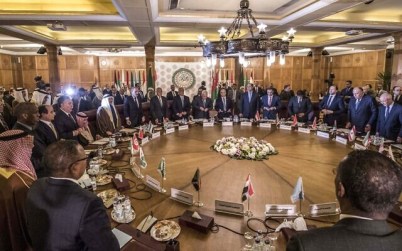
This picture taken on February 1, 2020 shows a view at an Arab League emergency meeting discussing the US-brokered proposal for a settlement of the Middle East conflict, at the league headquarters in the Egyptian capital Cairo, as delegates take to their seats (Khaled DESOUKI / AFP)

The official attempted to highlight “positive remarks” from some Arab foreign ministers who did not dismiss the peace plan out of hand in speeches before the unanimous vote to totally reject the proposal.

“It is important … to come out with a constructive stance, a realistic stance and a positive strategy that goes beyond just condemnation,” UAE Minister of State for Foreign Affairs Anwar Gargash said, according to Riyadh-based Arab News.

Nonetheless, the Arab League, a pan-Arab bloc of 22 countries, said in its statement Saturday that it “rejects the US-Israeli ‘deal of the century’ considering that it does not meet the minimum rights and aspirations of Palestinian people.”

Arab leaders also vowed “not to… cooperate with the US administration to implement this plan.”

The League warned that Israel must not act on the plan unilaterally — a reference to Israel’s stated intention to move on annexation as soon as possible.

The US proposal would grant the Palestinians a state with restricted sovereignty in Gaza and in parts of the West Bank, while allowing Israel to annex all its settlements and keep nearly all of East Jerusalem.

The Palestinians would control scattered chunks of the West Bank and some neighborhoods on the outskirts of Jerusalem, all linked together by a new network of roads, bridges and tunnels. Israel would control the state’s borders and airspace and maintain overall security authority. Critics of the plan say this would rob Palestinian statehood of any meaning.

Immediately after, Prime Minister Benjamin Netanyahu pledged to bring the issue for a vote in the cabinet on Sunday, but has since backtracked after the US administration indicated that while it does not oppose annexation, it was not ready to see it happen until at least after the coming Israeli elections on March 2.

After initial mixed messages, senior White House adviser Jared Kushner clarified on Thursday that the US would not approve of Israeli annexation efforts before the March election.

Reports on major Israeli television networks Saturday said CIA Director Gina Haspel had secretly visited Ramallah in recent days and met with Palestinian officials.

Channel 12 news reported that Haspel assured them Washington would seek to prevent Israel from annexing West Bank land before the March 2 election, as Netanyahu has indicated he would like to do.

CIA Director Gina Haspel testifies at a Senate Intelligence Committee hearing on “Worldwide Threats” on January 29, 2019 in Washington, DC. (Win McNamee/Getty Images/AFP)

According to Kan TV, Palestinian officials told Haspel they would not cut security ties with US agencies. The network also reported that Haspel met with Israeli officials during her visit but did not provide further details.

There was no official confirmation of Haspel’s visit from Israel, the US or the PA.

Channel 13 on Saturday reported White House officials were surprised by the unanimous rejection of the plan by the Arab League, as several Arab nations had initially voiced cautious support for the proposal.

Oman, Bahrain, Saudi Araba, the United Arab Emirates, Qatar, Egypt and Morocco all issued statements following the release of the plan calling it a welcoming step. But on Saturday all backed the Arab League rejection.

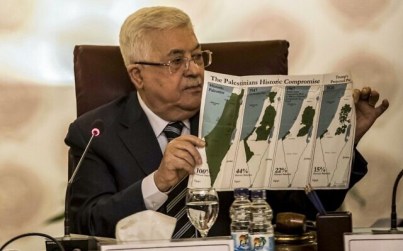
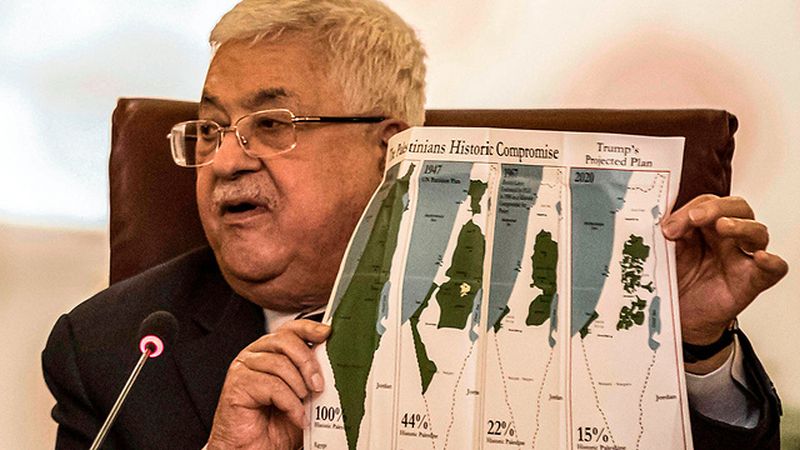
Palestinian Authority President Mahmoud Abbas holds a placard showing maps of (L to R) “historical Palestine,” the 1947 United Nations partition plan on Palestine, the 1948-1967 borders between the Palestinian territories and Israel, and a current map of the Palestinian territories without Israeli-controlled areas and settlements, during an Arab League emergency meeting discussing US President Donald Trump’s peace proposal, at the league headquarters in the Egyptian capital Cairo on February 1, 2020. (Khaled Desouki/AFP)

An unnamed Arab diplomat told the Haaretz daily that the US had not fully briefed envoys from Bahrain, the UAE and Oman on the details of the plan before they agreed to attend its unveiling ceremony on Tuesday.

The disappointment with the details of the plan led the three countries to join the other Arab League member states in voting Saturday to reject the plan, he said.

The proposal unveiled Tuesday by US President Donald Trump at the White House on Tuesday recognizes Israel’s rights to the Jordan Valley, all West Bank settlements and their surroundings — some 30% of the West Bank in total.

US President Donald Trump, left, listens as Prime Minister Benjamin Netanyahu, right, speaks during an event in the East Room of the White House in Washington, January 28, 2020, to announce the Trump administration’s much-anticipated plan to resolve the Israeli-Palestinian conflict. (AP Photo/Susan Walsh)

Channel 12 reported Saturday that Washington wants Israel to accept the plan in its entirety before it goes ahead with any annexation push — a possibly difficult request, given much of the Israeli right’s refusal to accept the notion of a Palestinian state, no matter how small and non-contiguous it might be.

Nonetheless, the network reported that Netanyahu is planning on bringing the plan before the cabinet soon for a symbolic vote. The measure would be strictly declarative in nature, but Netanyahu is hoping to use the government’s approval to convince Washington to green-light a measure of limited annexation in the West Bank before the election.

On Friday the network reported that Netanyahu is eager to secure backing for a symbolic “mini annexation” in the coming days to appease his right-wing voters after his plans to quickly annex the Jordan Valley and West Bank Jewish settlements were stymied by US opposition.


Arab League rejects Trump Mid-East peace plan. Not all members agree – DEBKAfile

Posted February 2, 2020 by Joseph Wouk
Categories: Uncategorized

Source: Arab League rejects Trump Mid-East peace plan. Not all members agree – DEBKAfile

Arab League foreign ministers rejected President Donald Trump’s Israel-Palestinian peace plan at an emergency meeting in Cairo, on Feb.1, called by the Palestinian leader.

They said “it does not satisfy the minimum rights and aspirations of the Palestinian people” and warned Israel against “implementing it by force.” The US and Israel will be responsible for the consequences of Israel annexing any part of the West Bank. The closing statement said that the Arab countries “will not engage with the US on the plan” and will not cooperate with the Trump administration in its implementation.”

Sources in Cairo add, however that the Arab foreign ministers were not of one mind on this statement. Some of them pointed out that the Trump plan contained some positive elements and it should not be summarily rejected but rather the subject of negotiations..

President Trump and the plan’s co-authors, senior adviser to the president Jared Kushner and Jason Greenblatt, did not expect all Arab governments to buy the new Israel-Palestinian peace plan as a seamless, non-negotiable product, but rather as a framework with movable parts.

What the White House tried to achieve with the plan’s formal unveiling on Tuesday, Jan. 28, was: –

  1. To loosen up with practical ideas the most intractable issues between Israelis and Palestinians held in deep freeze for too many years.
  2. To lay down the Trump administration’s positions on the fundamental issues of the dispute and chart a framework for resolving them. The White House would feel vindicated, if only by a small step forward, if the Arabs and/or the Palestinians came forward with demands for changes in the plan.
    They were encouraged in this hope when Egypt, Saudi Arabia and the UAE advised the Palestinians before the Cairo session not to reject the Trump plan forthwith but to first study it in detail. On Friday, Jan. 31, the UAE’s Foreign Minister Sheikh Abdulla bin Zayed Al- Nahyan made this advice public when he quoted a NYT article with this heading: “Refusal today will almost inevitably lead to getting less tomorrow.”

The UAE, Oman and Bahrain sent their ambassadors to the plan’s formal presentation at the White House. And the foreign ministers’ communique fell short of going all the way to meet the all-or-nothing demand from Ramallah: “Tell the Americans, ‘What the Palestinians accept, we accept. And what the Palestinians reject, we reject.’”

This demand was laid down by Hussein a-Sheikh, the Palestinian minister in charge of interrelations between the Palestinian Authority and Israel. Therefore, from Washington’s point of view, the Trump plan could have fared worse than it did in Cairo on Saturday.

To that end, Trump’s “peace envoys” went out of their way to pour cold water on Prime Minister Binyamin Netanyahu’s eagerness to immediately announce the extension of Israeli sovereignty to all Jewish settlements in Judea and Samaria, as provided for in the new peace plan. Those envoys, led by Kushner, explained that a unilateral Israeli move for large-scale annexations would shut the door against negotiations, which were likewise an integral element of the Trump plan. Therefore, it is to be expected that the Israel chapter in this plan will be open for dialogue like all its other sections.

Meanwhile, following intense discussions between Washington and Jerusalem over the timing of the annexation process. The Americans urged its delay until after Israel’s general election on March 2. The upshot of these talks is that the Netanyahu will have to be satisfied for the moment with a token step, such as extending sovereignty to one place. The small town of Maale Adummim, east of Jerusalem, tops the list.


Golda Meir on Israel’s right to exist… 

Posted February 1, 2020 by Joseph Wouk
Categories: Uncategorized


Trump Takes Out Another Top Terrorist In The Middle East

Posted February 1, 2020 by Joseph Wouk
Categories: Uncategorized

Source: Trump Takes Out Another Top Terrorist In The Middle East | The Daily Wire

DailyWire.com
WASHINGTON, DC - JANUARY 31: U.S. President Donald Trump and First Lady Melania Trump walk along the South Lawn to Marine One as they depart from the White House for a weekend trip to Mar-a-Lago on January 31, 2020 in Washington, DC. Senators are expected to debate and then vote on whether to include additional witnesses and documents today in the Senate impeachment trial of President Trump.
Sarah Silbiger/Getty Images

President Donald Trump appears to have added another name to the list of terrorists that his administration has killed as the Central Intelligence Agency (CIA) reportedly launched a drone strike that killed the leader of Al Qaeda’s affiliate in Yemen.

“The officials expressed confidence that the Qaeda leader, Qassim al-Rimi, was killed in a January airstrike in Yemen but were awaiting confirmation before making a public announcement,” The New York Times reported. “If confirmed, his death could represent a significant blow to the Qaeda affiliate, which remains one of the most potent branches of the terrorist group. The Yemen branch, Al Qaeda in the Arabian Peninsula, has tried to attack the United States and Europe and is thought to still want to.”

The Times reported the CIA learned about al-Rimi’s location in November from an informant in Yemen and then started to track him using drones and other technology.

Thomas Joscelyn, a senior fellow at the Foundation for Defense of Democracies, told The Times: “He was an Al Qaeda veteran whose career started in the camps in pre-9/11 Afghanistan. After he was busted out of prison, he was part of Al Qaeda in the Arabian Peninsula’s relaunch management team, becoming their military commander.”

The news comes after a Trump-authorized drone strike killed Iranian terrorist leader Qassem Soleimani, Commander of the Islamic Revolutionary Guard Corps-Quds Force (IRGC-QF), in early January.

In October, Trump authorized a raid targeting ISIS leader Abu Bakr al-Baghdadi in Syria which resulted in al-Baghdadi’s death when he detonated a suicide vest as he was running from U.S. forces.

The day after al-Baghdadi was killed, U.S. forces conducted another attack that resulted in the death of al-Baghdadi’s likely successor, Abu Hassan al-Muhajir, when an airstrike took him out as he was being “smuggled across northern Syria in the back of an oil tanker truck,” The Times reported.

Another terrorist that the Trump administration took care of was Osama bin Laden’s son, Hamza bin Laden, who had repeatedly threatened to attack the U.S. and who was believed to be in line to taking over Al Qaeda.

“Details of the strike that killed him were scarce, including when and where,” The Times reported. “The United States government played a role in the operation, but it was not clear how, according to the officials, who discussed his death on the condition of anonymity because it involved sensitive operations and intelligence gathering. Mr. bin Laden was killed sometime during the first two years of the Trump administration, officials said.”

Not quite making the list was Abdul Reza Shahlai, an official with Iran’s Quds Force, who the Trump administration attempted to take out with a drone strike on the same day that they took out Soleimani.

“The disclosure of a second mission indicated that the Trump administration was attempting to target a larger set of Iranian military and paramilitary leaders than was previously known,” The New York Times reported. “The unsuccessful airstrike in Yemen was aimed at Abdul Reza Shahlai, an official with Iran’s Quds Force, a potent paramilitary organization. He was known as a key financier for Iran’s proxy wars.”

The Washington Post reported that the details surrounding the plan remained “highly classified” and suggested that Shahlai could be re-targeted again in the future.

“Another senior official said the two strikes were authorized around the same time and that the United States did not disclose the Shahlai mission because it did not go according to plan,” The Post reported. “The official said Shahlai may be targeted in the future, though both countries have signaled an interest in de-escalating the crisis.”


Trump’s game-changing speech of the century 

Posted February 1, 2020 by Joseph Wouk
Categories: Uncategorized

Source: Trump’s game-changing speech of the century – The Jerusalem Post

Those of us who trusted Trump not to pull such a stunt – since nothing in his behavior indicated he would – were not worried about the contents or upshot of the deal.

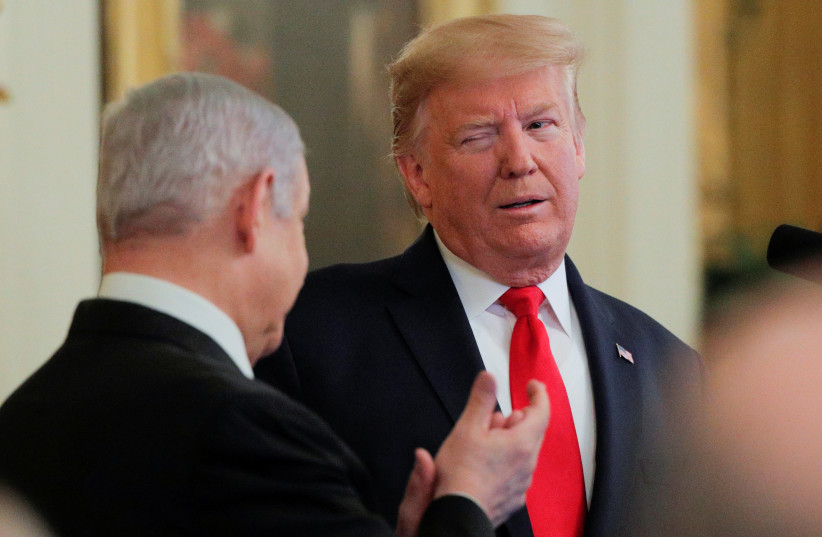
U.S. President Donald Trump winks at Israel’s Prime Minister Benjamin Netanyahu as they discuss a Middle East peace plan proposal during a joint news conference in the East Room of the White House in Washington, U.S., January 28, 2020
(photo credit: REUTERS/BRENDAN MCDERMID)
US President Donald Trump’s speech on Tuesday in which he outlined the “Deal of the Century” that has been three years in the making, was nothing short of Earth-shattering. The fact that Israelis across the political spectrum have been arguing over the proposal – called “Peace to Prosperity” – is thus as understandable as it was inevitable.

Unfortunately, however, much of the debate has been focused on the details and viability of the plan, rather than on the significance of how Trump presented it, and why his words were revolutionary. In an effort to downplay the momentousness of the event, his left-wing detractors ridiculed his mispronunciation of “al-Aqsa Mosque” and “United Arab Emirates” with memes and tweets.

These are the same haters who have been accusing Trump and Prime Minister Benjamin Netanyahu of conspiring to bolster each other’s chances of electoral success, the former in November and the latter on March 2.

These are the Israelis with the moral and occasional financial support of their counterparts abroad who blame the Jewish state for the plight and antisemitism of the Palestinians. Luckily, such people are in the minority, albeit a vocal one.

The majority of the populace came to realize long ago that the “land for peace” formula is nothing but a recipe for an escalation of the ongoing war against the very Jews begging to resolve the conflict through self-flagellation and appeasement.

This grasp of reality is but one reason that Netanyahu recently surpassed founding father David Ben-Gurion as the longest-serving prime minister in Israel’s history.

Another is the way in which he has been able to keep the country moving forward at a meteoric pace, while staving off regional and global enemies – those literally wielding axes and launching missiles – and their apologists at the UN, in the halls of academia and in the bowels of the Boycott, Divestment and Sanctions (BDS) movement.That Netanyahu managed to navigate the ship through shark-infested waters even when Barack Obama occupied the Oval Office is particularly noteworthy. Obama’s mission from the outset was to undermine American power and particularism. This included signaling to radical Muslims, especially the regime in Tehran, that his version of being the “new sheriff in town” entailed handing his badge, holster and wallet over to the bandits.

That worked out really well for the ayatollahs and their proxies. Not so wonderfully for Israel, though, which Obama held responsible for all the ills of the Middle East.

Indeed, Obama bought and perpetuated the joint Arab and Western leftist lie that the absence of peace between Israel and the Palestinians was the root cause of turmoil throughout the region.

ENTER TRUMP.

In a complete about-face from Obama – who made good on his campaign promise to woo the Islamic world and delivered a pandering address at Cairo University to a Muslim Brotherhood-heavy audience – “The Donald” went to Israel.

This turned out to be more than symbolic, as Trump proceeded to undertake a series of unprecedented moves that served what he saw, rightly, as mutually beneficial to America and Israel, and healthy for the world at large.

He moved the US Embassy from Tel Aviv to Jerusalem; withdrew from the Iran nuclear deal; recognized Israeli sovereignty over the Golan Heights; halted funding to UNRWA; demanded that the Palestinian Authority cease its pay-for-slay policy; declared that Israeli settlements were not illegal; and never once called Israel to task for defending itself through strikes on targets in Gaza and Syria.

To describe this as a breath of fresh air following eight years of the polluted atmosphere created by the Obama administration would be a gross understatement. So incredulous were Israelis at the steady flow of gifts from Washington that some began to fear a heavy price was going to be exacted in the future.

The suspicion was that the oft-touted and delayed “Deal of the Century” would reveal the real cost of the friendship. You know, along the lines of a demand for massive Israeli territorial withdrawals and other untenable compromises, all in the name of “peace” with the Palestinians.

Those of us who trusted Trump not to pull such a stunt – since nothing in his behavior indicated he would – were not worried about the contents or upshot of the deal. We knew that no overture of any kind would be accepted by the Palestinian leadership. Furthermore, PA President Mahmoud Abbas already had declared the plan to be a non-starter before he even knew what it contained, and he shunned meetings with US administration officials.

For the first time in his career, Abbas’s tantrums didn’t work. Team Trump responded to his snub by shrugging and treating him like the tiny fish in the miniature pond he actually is.

The affront to his ego, which gets a far greater boost from the international community than it does among his own disgruntled people, has been so enormous that he doesn’t know what to do with his rage, other than call for “days of rage,” which is his default position when faced with any situation relating to Israel.

But even Abbas wasn’t prepared for what Trump had to say this week in the East Room of the White House, with a beaming Netanyahu at his side and a roomful of adoring Republican and Jewish dignitaries punctuating each of his sentences with a standing ovation.

To be fair to Abbas, he wasn’t the only one who couldn’t believe his ears. In fact, the jaw-dropping that ensued crossed all ethnic, religious and geographical lines.

The explanation for this is simple. In one fell swoop, Trump reversed the rhetoric associated with the Palestinian-Israeli conflict. In doing so, he not only exposed the falsehood of the accepted narrative; he made a moral case for the Jewish state based on history and heritage, not Holocaust victimhood, as Israel’s sole and long-gone legitimacy.

Highlighting his amazement at “what this small country ha[s] achieved in the face of overwhelming odds and never-ending threats,” Trump said, “The State of Israel comprises only a minuscule amount of land in the Middle East, and yet it has become a thriving center of democracy and of ancient culture and commerce. Israel is a light unto the world; the hearts and history of our people are woven together. The Land of Israel is an ancient home, a sacred place of worship and a solemn promise to the Jewish people that we will never again repeat history’s darkest hour.”

CALLING JERUSALEM a “safe, open, democratic city that welcomes people of all faiths and all places,” he announced that the time had come for the Muslim world “to fix the mistake it made in 1948 when it chose to attack instead of recognize the new State of Israel… since then, the amount of needless bloodshed and… so many squandered opportunities in the name of senseless causes is beyond measure.”

He then stressed that Jerusalem would remain Israel’s undivided capital and that the US would recognize Israeli sovereignty over the areas specified in the plan (i.e. the Jordan Valley, the northern Dead Sea and settlements in Judea and Samaria).

In a message to the Palestinians, he said, “We will not allow a return to the days of bloodshed, bus bombings, nightclub attacks and relentless terror…. Peace requires compromise, but we will never ask Israel to compromise its security.”

He also gave a partial rundown of the conditions that the Palestinians would have to fulfill before meeting the criteria for statehood: “adopting basic laws protecting human rights, protecting against financial and political corruption; stopping the malign activities of Hamas, Islamic Jihad and other enemies of peace; ending the incitement of hatred against Israel; and permanently halting the financial compensation to terrorists.”

If they accomplish all of the above, according to the deal, they will be granted $50 billion in investments with which to build a flourishing economy in their demilitarized state, four full years from now. In other words, when apples grow on cherry trees; or when the Palestinians relinquish their goal of annihilating Israel, whichever comes first.

The mere mention of Palestinian statehood has elicited as strong an aversion to Trump’s deal on the Right as it has on the part of leftists claiming that Abbas could never accept its pro-Israel slant.

In this case, the Left is right: Abbas does not and never will accept it. But the Right is wrong precisely for the same reason. In the meantime, while the Palestinians remain intransigent in their self-imposed misery, Israel can go about the business of extending sovereignty over the settlements.

In the event that Palestinian society ever does undergo the kind of fundamental change necessary for peaceful coexistence with Israel, it is a development that should be embraced. A small, non-belligerent autonomous entity would not pose a threat to Israel’s Jewishness or historical rights.

As Caroline Glick correctly concluded, Trump “didn’t offer us a perfect plan, but he offered us a plan that we can live with.”
 

IDF strikes Hamas in Gaza in response to rocket, mortar fire 

Posted February 1, 2020 by Joseph Wouk
Categories: Uncategorized

Source: IDF strikes Hamas in Gaza in response to rocket, mortar fire | The Times of Israel

Attack on ‘terror targets’ in Strip follows several launches into Israeli territory on Friday that sent thousands running for shelter, caused light damage to homes

An explosion caused by Israeli airstrikes is seen on Gaza City, Wednesday, Jan. 15, 2020. (AP/Adel Hana)

Illustrative: An explosion caused by Israeli airstrikes is seen on Gaza City, Wednesday, Jan. 15, 2020. (AP/Adel Hana)

The Israeli Air Force carried out strikes on Hamas targets in Gaza overnight Friday-Saturday in response to several attacks launched across the border earlier Friday.

Fighter jets hit “terror targets” belonging to Hamas following the rocket, mortar and explosives attacks, the Israel Defense Forces said in a statement.

“A short time ago IDF warplanes and aircraft attacked several additional terror targets belonging to the Hamas terror organization in the northern Gaza Strip. Among the targets that were attacked were warehouses for the storage of weapons, and underground infrastructure,” the IDF said in a statement.

The attack on the targets will hamper Hamas’s ability to further build up its capabilities, the statement said.

“We hold Hamas responsible and will continue operating against any attempt to harm Israeli civilians,” the IDF said.

Earlier Friday, Palestinians in Gaza fired two rockets into Israel, one of which was intercepted by the Iron Dome missile defense system, the Israel Defense Forces said in a statement.

Rocket warning sirens wailed in the southern town of Sderot and nearby communities, sending thousands of Israelis running to bomb shelters during their Shabbat dinner.

Hebrew media reports said several homes were lightly damaged by falling shrapnel from the interception. there were no reports of injuries.

About two hours later warning sirens sounded again in Kibbutz Nir Yitzhak and Kibbutz Sufa.  The IDF said it identified a further rocket launch toward Israel. The projectile fell into an open area, causing no damage or injuries.

Israel Defense Forces

@IDF

We hold Hamas responsible and will continue operating against any attempt to harm Israeli civilians.

The IDF warned Hamas, which controls Gaza, that if the recent spate of violence is not halted the military will respond with increasing force, Channel 13 quoted military officials as saying.

Earlier Friday, three mortar shells were fired from the Gaza Strip into southern Israel, the IDF said. The Iron Dome missile defense system intercepted one of the projectiles, while the other two struck open areas.

There were no reports of casualties or damage.

In response to the attack, an IDF tank fired a shell at a Hamas observation post near the border in southern Gaza, the military said.

The mortar attack did not trigger sirens inside Israeli communities as it was heading for an unpopulated area, but it did set off alarms on smartphone applications in the area, the military said.

Early Friday, the Israel Air Force carried out strikes in Gaza in response to three rockets fired from the Palestinian enclave at Israel on Thursday night.

The army said among the targets hit was an underground facility used to manufacture weapons. No injuries were reported as a result of the strikes. Widespread power outages were reported in Rafah.

Defense Minister Naftali Bennett has not commented on the recent round of violence. The Blue and White party on Friday called for a Knesset debate on Sunday to address the situation.

Tensions between Israel and Gaza have been steadily rising over the past two weeks after several months of relative calm. Fears have mounted in recent days of an escalation of violence in Gaza and the West Bank following the release of a US peace plan that is seen as heavily favoring Israel.

Two of the rockets fired at Israel late Thursday were shot down by the Iron Dome missile defense system. The third landed in an open area. There was no claim of responsibility but the army said it holds Hamas, the de facto ruler in the Strip, responsible for any violence emanating from the enclave.

A bunch of balloons attached to an incendiary device is prepared to be flown into Israel, near the Israel-Gaza border east of Al-Bureij refugee camp in the central Gaza Strip, January 22, 2020. (Ail Ahmed/Flash90)

A three-week-old girl was hospitalized with moderate head injuries after being hurt during a rush to a bomb shelter in Sderot. The girl’s mother, 30, was also hospitalized with light injuries, according to emergency services. Officials said the girl’s condition improved Friday morning.

Israel carried out airstrikes in southern Gaza on Thursday afternoon in response to cross-border sniper fire at an IDF post and after a bundle of balloons connected to an explosive device were found in the area of the Hof Ashkelon Regional Council.

On Wednesday night a mortar was fired from Gaza at Israel, prompting retaliatory airstrikes.

On Wednesday evening, the military announced it was deploying additional troops to the Gaza border and West Bank amid concerns that Palestinians may respond violently to the peace plan, which was released on Tuesday.

Palestinian leaders have rejected the plan.


Iran’s ideological aspirations and hurdles – Jerusalem Studio 484

Posted January 31, 2020 by Joseph Wouk
Categories: Uncategorized