Tehran warns Israel of ‘crushing response’ to aggression 

Posted February 13, 2020 by Joseph Wouk
Categories: Uncategorized

Source: Tehran warns Israel of ‘crushing response’ to aggression | The Times of Israel

Threat follows reported Israeli airstrikes outside Damascus, and warning from Iran that it could raze Tel Aviv
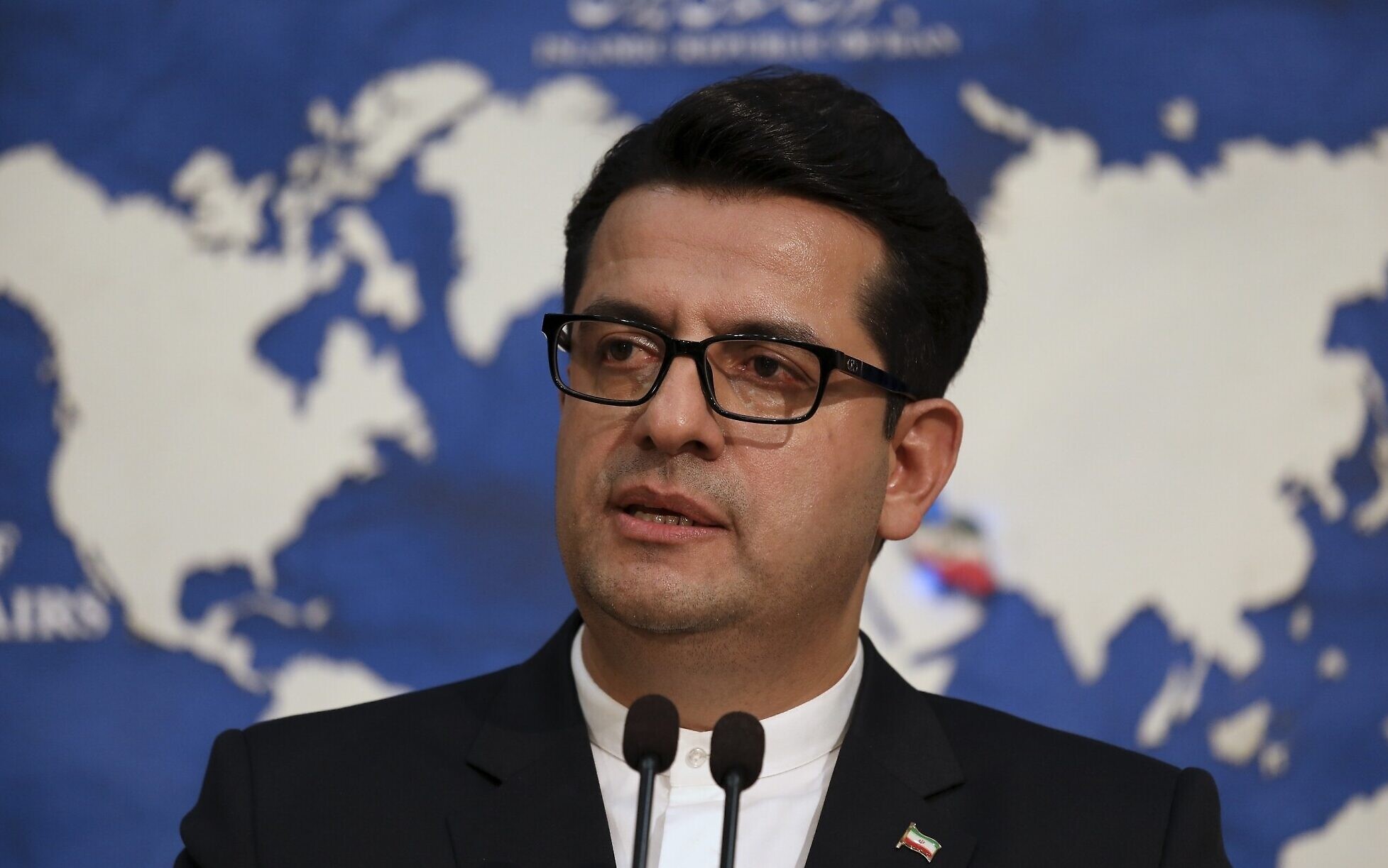
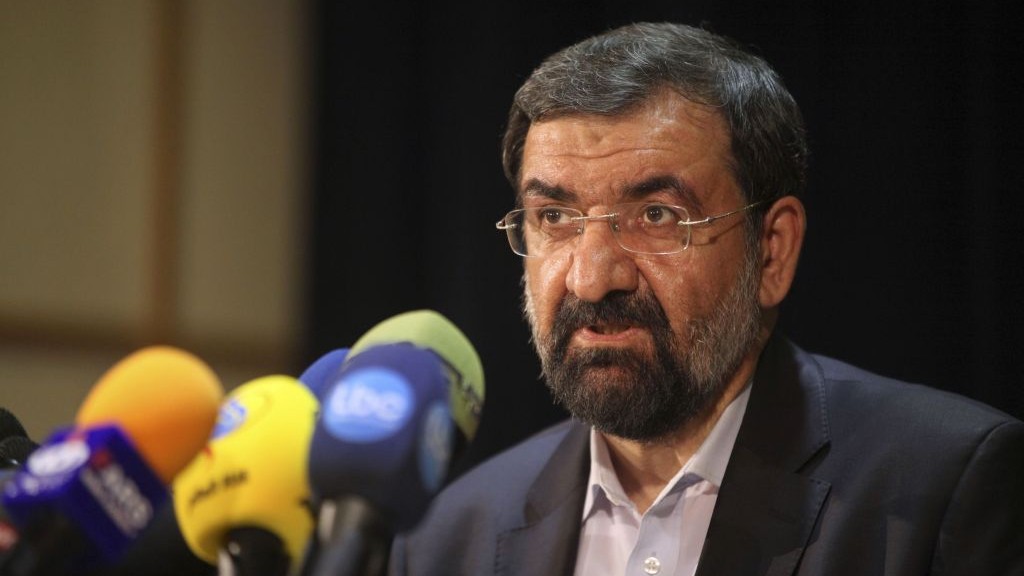
In this May 28, 2019 photo, Iran's Foreign Ministry spokesman Abbas Mousavi speaks at a press conference in Tehran, Iran (AP Photo/Vahid Salemi)

In this May 28, 2019 photo, Iran’s Foreign Ministry spokesman Abbas Mousavi speaks at a press conference in Tehran, Iran (AP Photo/Vahid Salemi)

The Islamic Republic will provide a “crushing response” to any Israeli aggression against its regional interests, a senior Iranian official said on Wednesday.

“The Islamic Republic of Iran will give a crushing response that will cause regret to any kind of aggression or stupid action from this regime against our country’s interests in Syria and the region,” Reuters quoted foreign ministry spokesman Abbas Mousavi as saying.

The statement was first published by the semiofficial Mehr news agency.

Last week, Syrian state media reported (and Defense Minister Naftali Bennett later confirmed) that Israel launched strikes against several targets near Damascus, triggering the country’s air defense systems.

Over the weekend, a former leader of Iran’s Revolutionary Guards warned that Iran is just looking for an excuse to attack Israel and “raze Tel Aviv to the ground,” blaming Israel for allegedly helping the US kill top commander Qassem Soleimani.
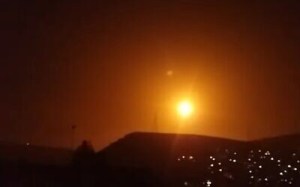
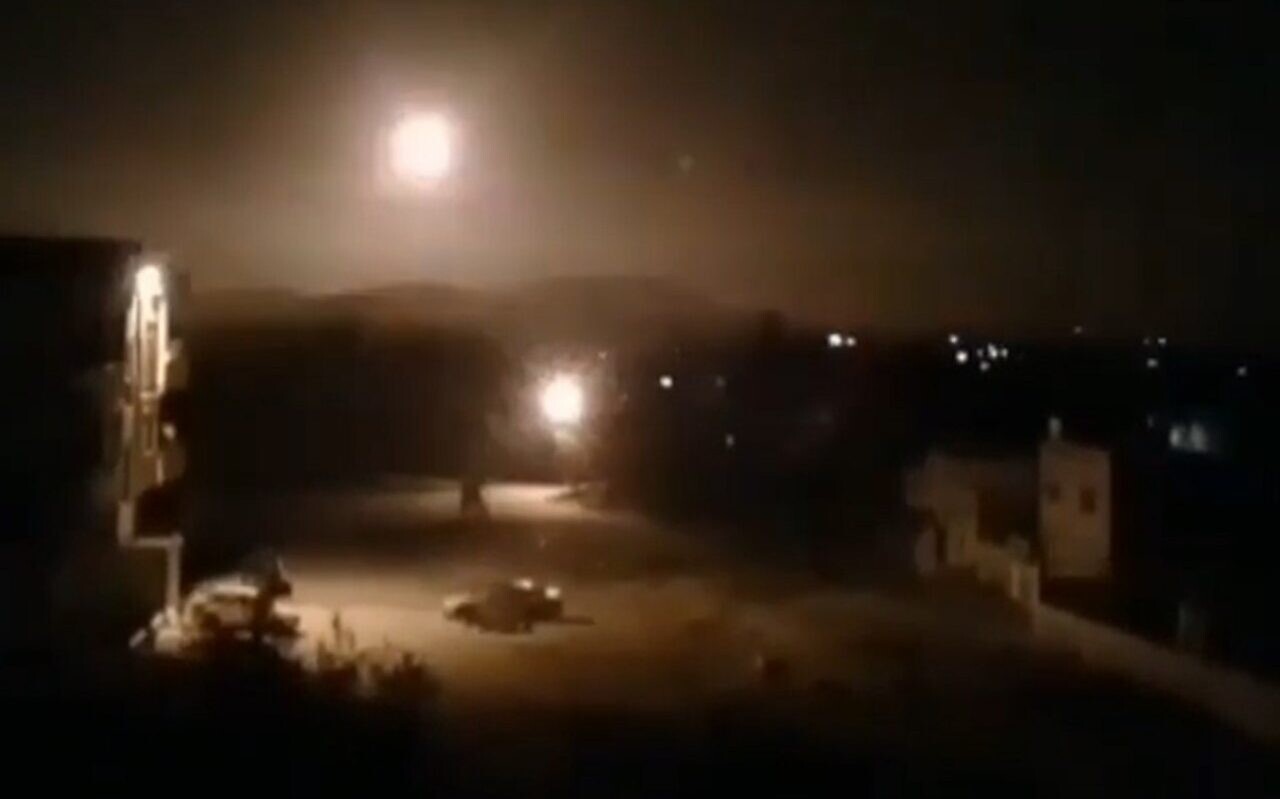
Explosions are seen in the skies over Damascus as the Syrian military fires anti-aircraft weapons at incoming missiles during an attack attributed to Israel on February 6, 2020. (SANA)

Israel has long maintained that it would not tolerate efforts by Iran — a major ally of Syrian dictator Bashar Assad — to establish a permanent military presence in Syria and would take steps to thwart such entrenchment.

Israel accuses Iran of seeking to set up a military presence in Syria that could be used as a launchpad for attacks against the Jewish state. Jerusalem has also vowed to retaliate to any attacks on Israel from Syria.

Israeli officials have acknowledged conducting hundreds to thousands of raids in the country since the start of the Syrian civil war in 2011.

These have overwhelmingly been against Iran and its proxies, notably the Lebanese Hezbollah terror group, but the IDF has also carried out strikes on Syrian air defenses when those batteries have fired at Israeli jets. In recent months, the IDF has also confirmed conducting operations in Iraq against Iranian entrenchment efforts there as well.

Earlier this week, Bennett said that Jerusalem and Washington have divided up the fight against Iran, with Israel taking responsibility for countering the Islamic Republic in Syria and the United States in Iraq.

Russian Ambassador to Syria Alexander Yefimov on Monday condemned Israel for its alleged strikes in Syria, the latest of which was reported to have killed more than 20 Syrian and Iranian military officials.

“The Israeli raids are, of course, provocative and very dangerous for the situation in Syria,” Yefimov said in an interview with Sputnik Arabic, according to an English translation by Syrian news site Al-Masdar. “The [Israeli] missiles are falling not only in the areas bordering Israel, but also reaching areas deep in Syria, in the eastern part of the country and even in residential areas in Damascus. It is regrettable that civilians become victims of these raids.”

Israel and Russia have coordinated their military efforts in Syria in recent years, in order to avoid friction and accidental conflict. Israeli officials do not generally discuss the full extent of that coordination, but they stress that the Israeli military does not seek Russian permission before carrying out operations.

Judah Ari Gross contributed to this report.
 

US envoy explains deal’s asymmetry: We trust Israel, but PA can’t keep a bargain 

Posted February 12, 2020 by Joseph Wouk
Categories: Uncategorized

Source: US envoy explains deal’s asymmetry: We trust Israel, but PA can’t keep a bargain | The Times of Israel

Why does Trump’s plan allow the Israelis to annex soon but have a Palestinian state only arise in four years? To ‘bridge the asymmetry’ between the two sides, David Friedman says

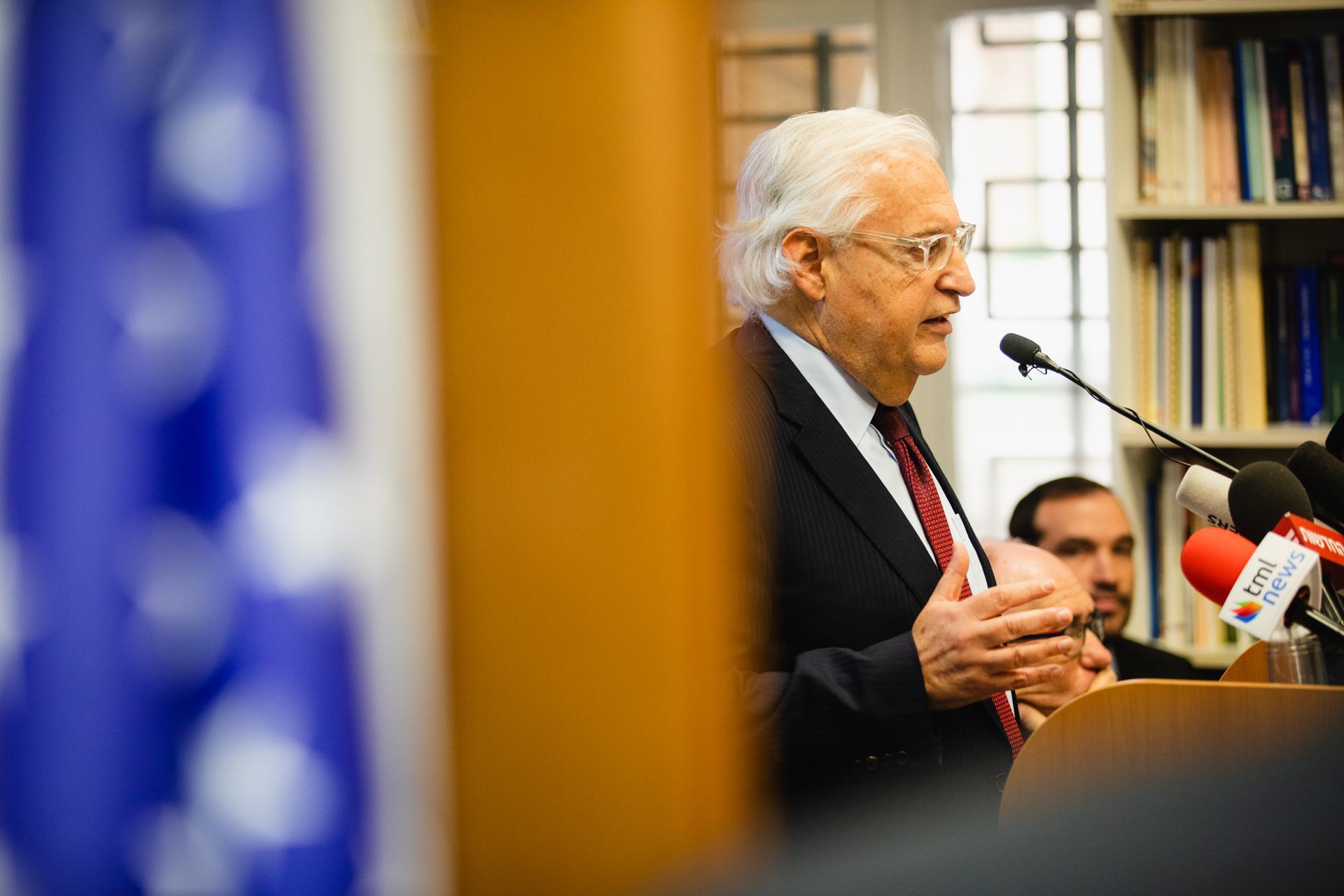
US Ambassador to Israel David Friedman addressing a briefing hosted by the Jerusalem Center for Public Affairs, February 9, 2020 (Reouven Ben Haim/JCPA)

US Ambassador to Israel David Friedman addressing a briefing hosted by the Jerusalem Center for Public Affairs, February 9, 2020 (Reouven Ben Haim/JCPA)

The White House’s so-called “Deal of the Century” strongly favors Israel because it is a democracy that can be relied upon to uphold any agreement, whereas the Palestinians have a long way to go before they are trustworthy partners, US Ambassador to Israel David Friedman said Sunday.

Critics of US President Donald Trump’s peace plan often complain that it grants Israel the right to soon annex the parts of the West Bank that the proposal earmarks for Israel to retain, while the Palestinians would only get their state at the end of four years — and then, only if a long list of conditions have been meet.

If the plan is meant to eventually lead to peace between Israelis and Palestinians, why is one side allowed to take the spoils right away, while the other side has to wait four years, The Times of Israel asked Friedman during a briefing Sunday at the Jerusalem Center for Public Affairs.

In his answer, the US envoy spoke of the need to bridge the “asymmetry” between the State of Israel, which is a dependable ally, and what he described as the failed wannabe state that is the Palestinian Authority. He also argued that Jerusalem would have never have made the concessions it did upon accepting the plan’s outline — including agreeing not to build any new settlements in the areas designated for a future Palestinian state — if it had not been granted the right to quickly annex the parts envisioned to be part of Israel.

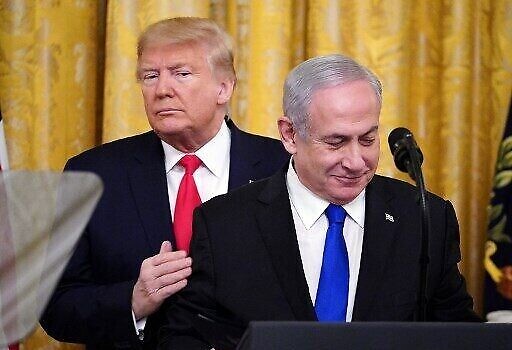
US President Donald Trump, left, and Prime Minister Benjamin Netanyahu take part in an announcement of Trump’s Middle East peace plan in the East Room of the White House in Washington, DC on January 28, 2020. (Mandel Ngan/AFP)

“This is a completely asymmetric relationship,” Friedman said of Israel and the Palestinian Authority. “Israel is a democracy. You can hold it to its word. It has an enormous relationship with the United States on multiple levels and that relationship is very solid. It is in a position today to keep its part of the bargain.”

By contrast, the Palestinians are currently “not in a position to keep any bargain,” Friedman said. “The Palestinians are not united. Their government is not democratic. Their institutions are weak. Their respect for all types of norms that we hold dear — not just democracy but human rights, freedom of religion, freedom of the press — is nonexistent.”

Palestinian Authority President Mahmoud Abbas holds a placard showing maps of (L to R) ‘historical Palestine,’ the 1947 United Nations partition plan on Palestine, the 1948-1967 borders between the West Bank and Gaza Strip and Israel, and a current map of the Palestinian-controlled territories without Israeli-controlled areas and settlements, during an Arab League emergency meeting discussing US President Donald Trump’s peace proposal, at the league headquarters in the Egyptian capital Cairo on February 1, 2020. (Khaled Desouki/AFP)

The White House felt the need to “bridge that asymmetry,” he went on. “If Israel is ready today, why shouldn’t they get what they’re agreeing to today? If the Palestinians are going to be ready in four years, well, then they can get what they can get in four years.”

The only way to encourage the Israelis into agreeing to adopt the Trump plan and to freeze settlement building in the area earmarked for a future Palestine was to “provide them today with what they’re entitled to in exchange for that,” Friedman posited.

“I have no doubt that Israel would never agree to a naked freeze of four years just on the possibility that the Palestinians might a) be willing to negotiate and b) achieve the milestones [required of them by the plan]. We just couldn’t have gotten it,” he said.

The administration took great care to tell the Palestinians that they don’t have to say yes or no to the plan right away, Friedman said.

US Ambassador to Israel David Friedman addressing a briefing hosted by the Jerusalem Center for Public Affairs, February 9, 2020 (Matty Stern/U.S. Embassy Jerusalem)

“We understand that you’re in a very difficult position — you’re not united, you have numerous streams of conflict that weaves around your body politic. So take your time, digest it, and you will not be penalized by the passage of time,” he said, addressing the Palestinian leadership.

“If it takes you three or four years to get there, the territory that is earmarked for you, the integrity of that territorial opportunity, will be preserved.”

Israel has never agreed to a four-year freeze of settlement construction, Friedman stressed. The only previous moratorium of settlement expansions — for 10 months — took place during the Obama administration and “was a waste of time,” he claimed, since it did not succeed in bringing the Palestinians back to the negotiating table.

For Israel to annex the part it will keep now in exchange for refraining from taking more of the territory reserved for Palestine is a formula that “seemed like a very fair trade — for us, for the Palestinians and for Israel,” Friedman said.

The Times of Israel also asked Friedman what happens after four years — will Israel get a green light to apply sovereignty over the remaining parts of the West Bank if the Palestinians have still not engaged on the proposal?

Not necessarily, Friedman replied.

“At the end of four year years, if there is no progress and no basis to extend that period of time — and that would be an extension the parties themselves would have to agree to — then it would return to what it is today,” the ambassador said.

The areas Israel will not have annexed by then would continue to be administered by COGAT, the Defense Ministry unit currently in charge of implementing Israeli government policies in the West Bank, according to Friedman.

There is no specific event that would automatically occur at the end of the four years that started on January 28, when the peace plan was unveiled at the White House, he said. “Hopefully there would be another initiative,” he added.


PM threatens Hamas with dire ‘surprise’; Gaza answers with fresh rocket attack 

Posted February 12, 2020 by Joseph Wouk
Categories: Uncategorized

Source: PM threatens Hamas with dire ‘surprise’; Gaza answers with fresh rocket attack | The Times of Israel

Israel’s response to wave of rocket, balloon attacks ‘will be different from anything that came before,’ Netanyahu warns in TV interview; no injuries in attack

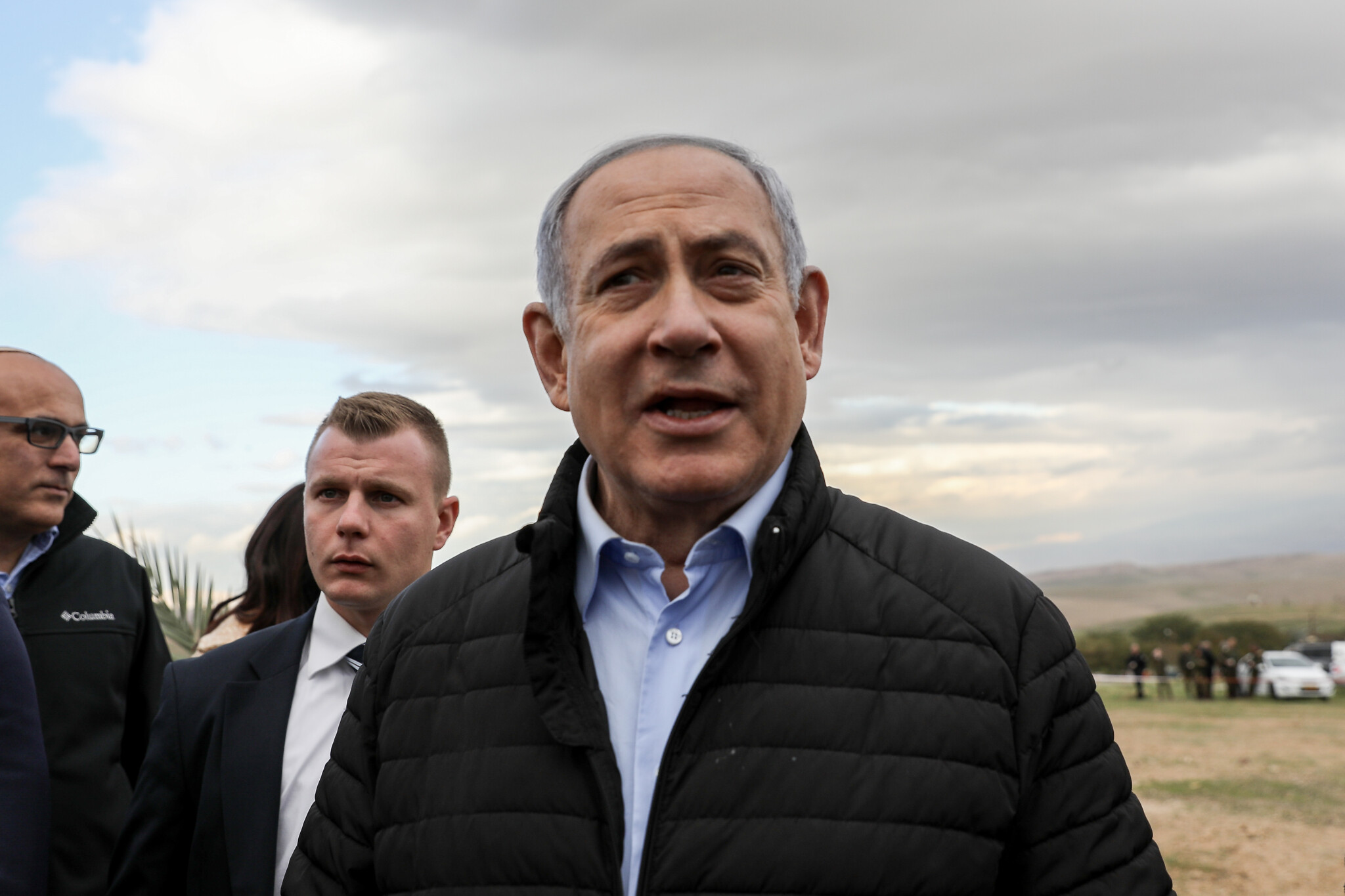
Prime Minister Benjamin Netanyahu at a tree planting event for the Jewish holiday of Tu Bishvat in the West Bank settlement of Mevo'ot Yericho, in the Jordan Valley, February 10, 2020. (Flash90)

Prime Minister Benjamin Netanyahu at a tree planting event for the Jewish holiday of Tu Bishvat in the West Bank settlement of Mevo’ot Yericho, in the Jordan Valley, February 10, 2020. (Flash90)

Prime Minister Benjamin Netanyahu on Tuesday threatened Hamas leaders with “the surprise of their lives” if a spate of attacks from the Gaza Strip didn’t come to an end. Minutes later, yet another rocket was fired from Gaza at Israel’s south.

“I’m telling you as prime minister, I don’t rush to war,” Netanyahu said in an interview with Channel 20 on Tuesday night. “I don’t puff out my chest, bang drums and blow trumpets. But we’re preparing for Hamas the surprise of their lives. I won’t say what it is, but it will be different from anything that came before.”

Whether Israel carries out its “surprise,” he added, “is entirely up to them. If they don’t come to their senses with the rockets and don’t stop the balloons, it’s only a matter of time before we deploy it. Remember what I’m telling you,” he said.

The last several weeks have seen a marked uptick in rocket and incendiary balloon attacks from the Strip, raising tensions and threatening fragile truce talks.

Shortly after Netanyahu finished speaking, the IDF reported a mortar shell had been fired from Gaza and landed in an open area in Israel’s south. No one was hurt in the attack.

Netanyahu’s was the latest in a series of warnings from Israeli leaders that rocket and incendiary balloon attacks from Gaza would be met with a dramatic military escalation. Thus far Israel has made do with tit-for-tat airstrikes on usually empty Hamas posts.

On Sunday, Netanyahu warned Gazan terror groups that Israel was prepared to take “crushing action.”

Prime Minister Benjamin Netanyahu (2nd-R) attends the weekly cabinet meeting in Jerusalem on February 9, 2020. (Ronen Zvulun/Pool/AFP)

“I want to make this clear: We won’t accept any aggression from Gaza. Just a few weeks ago, we took out the top commander of Islamic Jihad in Gaza, and I suggest that Islamic Jihad and Hamas refresh their memories,” Netanyahu said at the opening of the weekly cabinet meeting at his office in Jerusalem.

“I won’t lay out in detail all our actions and plans in the media, but we’re prepared for crushing action against the terror groups in Gaza. Our actions are powerful, and they’re not finished yet, to put it mildly.”

Defense Minister Naftali Bennett similarly issued a warning to Hamas leaders in Gaza, warning on Sunday that Israel would take “lethal action against them” if their “irresponsible behavior” didn’t cease.

He warned that Israeli military action would be “unbearable” for Hamas.

Screen capture of Defense Minister Naftali Bennett from a video he produced in which he warns of an Israeli response to Gaza rocket and incendiary balloon attacks, February 9, 2020. (Channel 12 screen capture)

“We won’t announce when or where. This action will be very different from those taken in the past. No one will be immune. Hamas faces a choice: choose life and economic prosperity, or choose terror and pay an unbearable price. Their actions will determine [which it will be].”

Observers see the return of rocket fire after several months of calm as an attempt by Gazans to press their demands that Israel ease or lift its blockade of the enclave in exchange for calm. Both sides insist they are not seeking a return to war.

An Egyptian security delegation that visited the Gaza Strip on Monday conveyed a message from Netanyahu to Hamas in which he demanded “a return to calm,” the Lebanese pro-Hezbollah Al-Akhbar newspaper reported, citing unnamed Palestinian sources.

Netanyahu’s message, which the Egyptian delegation received from Israeli security officials in Tel Aviv on Sunday, included a threat that Israel would “deliver a major blow to Hamas with American and international cover” if calm does not resume, the sources told the daily.

Hamas officials told the Egyptian delegation in response to Netanyahu’s message that it “does not seek an escalation,” but “the economic pressure that Gazans are experiencing and the failure to implement calming understandings will create greater pressure on the border region,” the sources said.

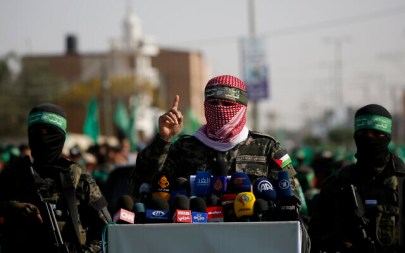
A spokesman for the armed wing of Gaza-ruling Hamas terror group talks to the press in the town of Khan Younis, southern Gaza Strip, November 11, 2019. (AP Photo/ Hatem Moussa)

“There will be no free calm as long as there is procrastination, delay and tightening [of restrictions],” the sources also quoted the Hamas officials as saying.

Since the second half of 2018, Egypt, alongside the United Nations and Qatar, has played a key role in brokering informal ceasefire understandings between Hamas, which controls Gaza, and Israel.

The understandings have largely entailed Israel lifting restrictions on the movement of goods and people into and out of Gaza, in exchange for Hamas maintaining relative quiet in the border region between the Strip and the Jewish state.

The Hamas officials also told the Egyptians that “the occupation doing anything stupid or assassinating resistance leaders would unleash a major war that would significantly impact the occupation’s state and leaders,” the sources added.

Illustrative: An Israeli missile launched from the Iron Dome missile defense system, designed to intercept and destroy incoming short-range rockets and artillery shells, is seen above Gaza City on November 13, 2019. (Mahmud Hams/AFP)

Palestinian terrorists in the Gaza Strip began flying explosive and incendiary devices into Israel using clusters of balloons and kites beginning in 2018. The practice has waxed and waned over time, but has picked up considerably in recent weeks, with dozens of these balloon-borne bombs landing in towns and farming communities adjacent to the Palestinian enclave.

The Israel Defense Forces’ Home Front Command on Friday released a poem for children warning them against the dangers of the balloon-borne bombs flown from Gaza.

חדשות 13

@newsisrael13

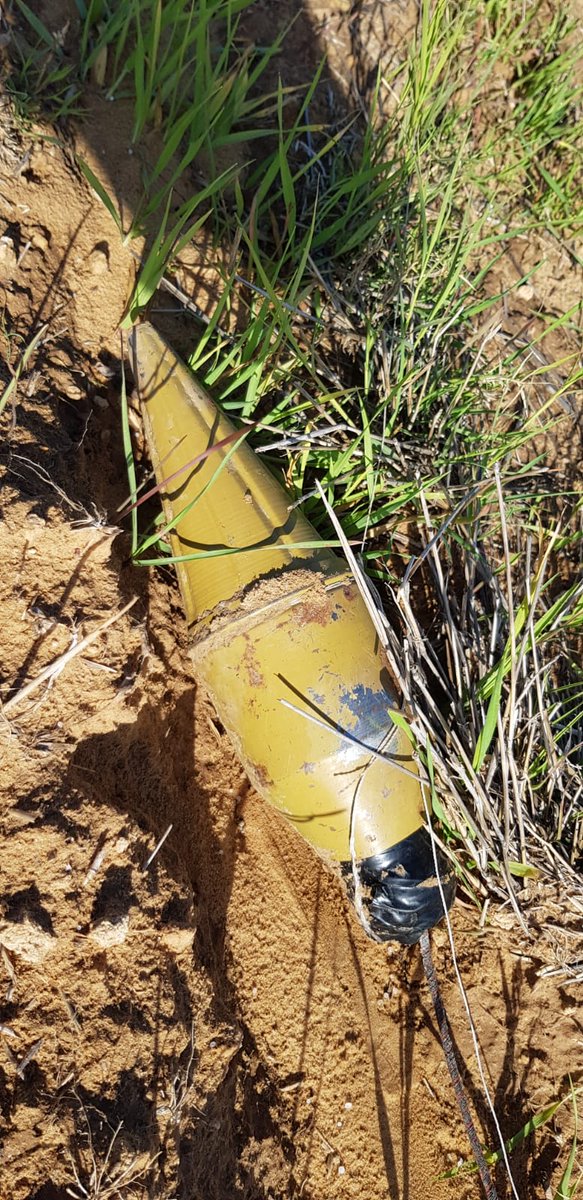
מתיחות בדרום | ראש נפץ של RPG מחובר לבלונים נחת בשדות של קיבוץ רוחמה שבמועצה אזורית שער הנגב. מדובר בצרור בלוני הנפץ השישי שנחת היום בעוטף @bokeralmog

(צילום: יובל קניגספלד)

View image on TwitterView image on TwitterView image on Twitter
In addition to being attached to colorful balloons, some of the explosive devices have been disguised as other child-friendly objects such as books and soccer balls.

Few injuries have been caused by these airborne attacks, but they have caused extensive damage to Israeli agricultural fields, parks and forests, especially during the country’s dry summer months.


Israeli laser defense system successfully intercepts multiple drone targets

Posted February 12, 2020 by Joseph Wouk
Categories: Uncategorized

Source: Israeli laser defense system successfully intercepts multiple drone targets | The Times of Israel

Rafael says its Drone Dome C-UAS had 100% success in all scenarios, including stopping maneuvering quarries; can address threats at military and civilian sites

An Israeli-developed drone defense system successfully intercepted multiple targets and shot them down with a laser beam, aerospace company Rafael said Wednesday.

Rafael’s Drone Dome C-UAS was also able to track and hit small drones that were maneuvering in flight, a more challenging target.

“The system achieved 100% success in all test scenarios,” Rafael said in a statement.

Drome Dome provides “effective detection, full identification and neutralization of multiple Micro and Mini UAV threats,”it said.

In a video of the tests, a vehicle-mounted system was shown engaging the targets, including drones that were sharply changing direction. In one test, three drones flying in formation were shot down in succession.

“Drone Dome is designed to address threats posed by hostile drones both in military and civilian sites, offering advanced solutions for maneuvering forces and military facilities, critical border protection, as well as civilian targets such as airports, public facilities, or any other sites that might be vulnerable to the increasing threat of both terror and criminal drones,” the company said.

The Drone Dome air defense system mounted on a vehicle. (Rafael – Advanced Defense Systems)

Previous reports have said that in addition to melting drones with its laser for a “hard kill,” Drone Dome has sophisticated electronic systems that enable operators to interfere with the signals of a hostile drone and even take control of the device, bringing it to ground in a “soft kill” interception.

In 2018 the British Daily Mail newspaper reported that the British military used Drone Dome to ground an intruding unmanned aerial vehicle that shuttered the airfield at London’s Gatwick Airport for over 36 hours, stranding tens of thousands of passengers.

Six of the Refael systems were sold to the UK Ministry of Defense in an estimated $20 million deal, according to Israel’s Globes financial daily.

Later reports said Drone Dome was not used at Gatwick, as the system had not yet been delivered to the UK military.

In December 2019 Israeli security forces revealed details about another new laser system they hope will help quash the scourge of airborne incendiary devices launched from the Gaza Strip — carried by balloons, kites and drones — which have started countless fires and burned large swaths of Israeli land since they began being widely used nearly two years ago.

The system, dubbed Light Blade, is intended to shoot the threats out of the sky before they can enter Israeli territory. It was developed for police and the Israel Defense Forces by three engineers from the private sector who worked with Ben Gurion University researchers and technological departments of the Israel Police and IDF.


Top Iranian official: We’re looking for a pretext to raze Tel Aviv to the ground 

Posted February 11, 2020 by Joseph Wouk
Categories: Uncategorized

Source: Top Iranian official: We’re looking for a pretext to raze Tel Aviv to the ground | The Times of Israel

Former leader of Revolutionary Guards also says Tehran has ‘precise information’ on all US military and civilian activity in the region, from ships to individual soldiers

Former chief of Iran's Revolutionary Guard, Mohsen Rezaei. (photo credit: AP Photo/Vahid Salemi)

Former chief of Iran’s Revolutionary Guard, Mohsen Rezaei. (photo credit: AP Photo/Vahid Salemi)

A former leader of Iran’s Revolutionary Guards has warned that Iran is just looking for an excuse to attack Israel and “raze Tel Aviv to the ground,” blaming Israel for allegedly helping the US kill top commander Qassem Soleimani.

Speaking to Lebanon’s Hezbollah-affiliated al-Mayadeen TV station on Saturday, Mohsen Rezaei was asked if Iran would carry out its previous threats to attack Israel in the event of a war with the US.

“You should have no doubt about this. We would raze Tel Aviv to the ground for sure. We have been looking for such a pretext,” Rezaei said in remarks translated by the Middle East Media Research Institute (MEMRI) and released Monday.

Rezaei, the secretary of Iran’s powerful Expediency Council, is considered a top politician and an adviser to Supreme Leader Ayatollah Ali Khamenei.

“If they (the US) do something, we can use it as a pretext to attack Israel, because Israel played a role in the martyrdom of General Soleimani,” he said, blaming Israel for tipping off the Americans to Soleimani’s location.

“We were waiting for the Americans to give us a pretext to strike Tel Aviv, just like we attacked Ayn Al-Assad,” he said referring to the US military base in Iraq, which Iran hit with several missiles in response to Soleimani’s killing.

This is not the first time Rezaei has threatened to destroy Israeli cities.

“Iran’s revenge against America for the assassination of Soleimani will be severe… Haifa and Israeli military centers will be included in the retaliation,” he said in January.

Following the Iranian attack on the US base and repeated Iranian threats, Prime Minister Benjamin Netanyahu warned Iran against attacking Israel.

“We’re standing steadfast against those who seek our lives. We’re standing with determination and with force. Whoever tries to attack us will receive a crushing blow in return,” he declared at a conference in Jerusalem.

Worshipers in Iran chant slogans during Friday prayers ceremony by a banner showing slain Iranian Revolutionary Guard general Qassem Soleimani, left, and Iraqi Shiite senior militia commander Abu Mahdi al-Muhandis, who were killed in Iraq in a US drone attack on January 3, and a banner which reads in Persian: ‘Death To America,’ at Imam Khomeini Grand Mosque in Tehran, Iran, January 17, 2020. (Office of the Iranian Supreme Leader via AP)

In his interview Saturday,  Rezaei also said Iran was extensively monitoring US troops and shipping in the Middle East and could easily target them in a conflict.

“Naturally, we have precise information, thanks be to Allah. All the American bases are under our surveillance now. All the American aircraft carriers are under our control,” he said.

“We know the number of American ships in the Indian Ocean and the Sea of Oman, and where they are in the Persian Gulf, and what they have in Qatar and Bahrain, and [we know about] their activity in Iraq,” Rezaei said.

He said Iran even tracked individual US soldiers, and had information on hotels they stayed at, who their friends were and even “where they get their meat and food.”

“Our information is very precise. We bombed the Ayn Al-Assad base on the basis of detailed calculations. We knew that it was a very important site for the Americans that we had to strike,” he said.

The Pentagon said Monday that the number of US service members diagnosed with traumatic brain injuries has shot up to more than 100 as more troops suffer the aftereffects of the Iranian ballistic missile attack early last month in Iraq.


Israel’s NEW LASER anti missile system in action !

Posted February 10, 2020 by Joseph Wouk
Categories: Uncategorized

Israel’s defense establishment has unveiled a laser-based system on Wednesday. The system is designed to provide protection from different kinds of projectiles like unguided rockets that are launched against Israel by knocking them out of the air.

The new system will complement the country’s existing layered air defense which consists of several air defense systems like Iron Dome, Arrow.

As per reports, the new system will undergo testing in the coming months and is likely to be operational within a year and a half.

Laser-based systems are being developed by several countries and are seen as a future of air defense.

In this video Defense Updates reports on Israel unveiling of Laser-based Interception System.

#DefenseUpdates #Laser #IronDome

Death toll in alleged Israeli strikes near Damascus up to 23 fighters — monitor 

Posted February 7, 2020 by Joseph Wouk
Categories: Uncategorized

Source: Death toll in alleged Israeli strikes near Damascus up to 23 fighters — monitor | The Times of Israel

Syrian Observatory for Human Rights says three Iranians, eight Syrians and 12 Tehran-backed operatives killed in air attack; no word from Israel

Explosions are seen in the skies over Damascus as the Syrian military fires anti-aircraft weapons at incoming missiles during an attack attributed to Israel on February 6, 2020. (SANA)

BEIRUT, Lebanon — Air strikes killed 23 Syrian and foreign fighters in Syria Thursday, a monitor said.

Syria has said the attacks were carried out by Israel. There was no confirmation from Israel.

Israel has in recent years carried out multiple strikes targeting the Iranian military presence on its doorstep. It has pledged to prevent its main enemy from entrenching itself militarily in Syria, where Tehran is backing President Bashar Assad’s government alongside Russia and Lebanese terror group Hezbollah.

The pre-dawn raids killed three Iranians and seven Tehran-backed foreign fighters near Kisweh south of the capital, the Syrian Observatory for Human Rights said.

Eight Syrian air defense forces also lost their lives in both Mezzeh and Jisr Baghdad, west of the capital, the Britain-based war monitor said.

Five Syrian members of a pro-Iran group were killed in the Ezra area in the southern province of Daraa.

A Syrian army source quoted by state news agency SANA said air defenses responded to two waves of Israeli strikes after midnight that targeted the Damascus area and then positions in Daraa and the adjacent province of Quneitra.

“The attack wounded eight fighters,” the source said, without elaborating on where they had been stationed or their nationality.

He said the raids were carried out from the airspace above the Golan Heights and southern Lebanon.

Loud explosions

AFP correspondents in Damascus heard loud explosions around 1:15 a.m.

State television broadcast images showing explosions in the sky.

An Israeli army spokesman declined to comment on the strikes when contacted by AFP.

Illustrative photo of Syrian soldiers preparing an anti-aircraft gun. (AP/File)

Israel has carried out repeated strikes in Syria since the civil war erupted in 2011, mainly targeting government forces and their Iranian and Hezbollah allies.

Israel’s political leadership has spoken publicly of the bombing campaign, although the army rarely comments on individual strikes.

Last month, Damascus accused the Israeli air force of carrying out an attack on the T4 airbase in central Syria, which the Observatory said killed at least three Iran-backed militiamen.

In December, the Observatory said Israeli air strikes killed three foreigners fighting alongside government forces south of the capital.

The previous month, the Israeli army claimed responsibility for a wave of air strikes against Syrian military sites and Iranian forces that killed 23 people including 16 foreigners.

Prime Minister Benjamin Netanyahu said positions of the Iranian Revolutionary Guards foreign operations arm, the Quds Force, were among the targets.

Illustrative. An explosion reportedly caused by an Israeli strike is seen at the Mazzeh military base near Damascus, Syria, on September 2, 2018. (Screen capture: Twitter)

‘Will not save’ Idlib

The war in Syria has killed more than 380,000 people and displaced millions since it started in 2011 with the brutal repression of pro-democracy protests.

The reported Israeli strikes come as government forces press a blistering offensive against Syria’s last major rebel bastion, in the Idlib region in the northwest.

The Syrian army source said the strikes would not deter government forces from retaking the region, which is dominated by jihadists of Syria’s former Al-Qaeda affiliate.

“This escalation will not save the armed terrorist groups that are collapsing in Idlib and western Aleppo under the strikes of the Syrian Arab Army,” the source said.

The bombardment has killed around 300 civilians since mid-December, the Observatory says.

The violence has seen more than 500,000 civilians flee their homes over the past two months, the United Nations says.


Back-to-back Palestinian terror in Jerusalem. Gunshots injure Israeli policeman after ramming attack injures 14 troops – DEBKAfile

Posted February 7, 2020 by Joseph Wouk
Categories: Uncategorized

Source: Back-to-back Palestinian terror in Jerusalem. Gunshots injure Israeli policeman after ramming attack injures 14 troops – DEBKAfile

A border police officer on guard near Temple Mount was shot in the arm by a Palestinian at midday Thursday, Feb. 6, just hours after a vehicle crashed into a group of Golani Brigade recruits injuring 14.

The Palestinian gunman was shot dead by police officers while the car-rammer is still the subject of a manhunt south of Jerusalem.
Opening fire in broad daylight indicates that the Palestinian terrorists are getting bolder. Since the Trump peace plan was released, youthful rioters across the West Bank have upgraded their weapons for attacking Israeli troops and vehicles from rocks and primitive devices to petrol bombs – and now the first cases of gunfire in and outside the capital.

DEBKAfile reported earlier: One of the 14 soldiers injured is in serious condition, the rest suffered light to moderate wounds, after a car crashed into the group outside Jerusalem’s popular “Tahana” center on Wednesday night, Feb. 5, and fled the scene. The soldiers were new recruits to the Golani Brigade on a heritage tour of Jerusalem and on their way to the Western Wall. The Palestinian driver rammed the group at high speed and drove off before the soldiers could open fire on their assailant. He headed south.

The hunt early Thursday focused on the Palestinian towns of Bethlehem and Beit Jala just south of the capital. The vehicle used in the attack was quickly found in Beit Jala. The attacker is still at large but his identity is known to security forces.

The families of the injured troops were notified. The IDF has launched an investigation into the incident to discover why the group did not observe regulation security measures.


12 pro-Iran fighters said killed in Syria strikes attributed to Israel 

Posted February 6, 2020 by Joseph Wouk
Categories: Uncategorized

Source: 12 pro-Iran fighters said killed in Syria strikes attributed to Israel | The Times of Israel

UK-based group says at least 3 government and Iranian positions targeted in raids around Damascus; IDF mum on the matter

Explosions are seen in the skies over Damascus as the Syrian military fires anti-aircraft weapons at incoming missiles during an attack attributed to Israel on February 6, 2020. (SANA)

Explosions are seen in the skies over Damascus as the Syrian military fires anti-aircraft weapons at incoming missiles during an attack attributed to Israel on February 6, 2020. (SANA)

Twelve pro-Iranian fighters were killed in strikes against several targets near Damascus in the predawn hours of Thursday morning, which Syrian state media blamed on Israel, according to a Britain-based monitoring group.

Syrian state news agency SANA claimed the country’s air defenses downed a number of missiles during the strikes. Defense analysts routinely dismiss such claims by the Syrian regime as empty boasts.

“Our air defenses confronted an Israeli attack” west of the capital, said state news agency SANA, adding that the attack was carried out from airspace in the Israeli Golan Heights.

AFP correspondents in several districts of Damascus heard loud explosions around 1:15 a.m.

State television broadcast images showing explosions in the sky as Syrian anti-aircraft missiles detonated in the air.

According to SANA, the Israeli strikes targeted the al-Kiswah district — an area outside of Damascus that Israel has acknowledged striking in the past due to its use as an Iranian base of operations — as well as Marj al-Sultan and Jisr Baghdad.

In total, at least three government and Iranian positions near Damascus and west of the capital were targeted, according to the Syrian Observatory for Human Rights (SOHR), which said a fire broke out in one of the areas.

IDF Spokesperson Hidai Zilberman said he was aware of the “foreign reports” about airstrikes in Syria but declined to comment on the matter in accordance with longstanding Israeli policy.

Israel has long maintained that it would not tolerate efforts by Iran — a major ally of Syrian dictator Bashar Assad — to establish a permanent military presence in Syria and would take steps to thwart such entrenchment. Israel accuses Iran of seeking to set up a military presence in Syria that could be used as a launchpad for attacks against the Jewish state. Jerusalem has also vowed to retaliate for any attacks on Israel from Syria.

Though Israeli officials generally refrain from taking responsibility for specific strikes in Syria, they have acknowledged conducting hundreds to thousands of raids in the country since the start of the Syrian civil war in 2011.

These have overwhelmingly been against Iran and its proxies, notably the Lebanese Hezbollah group, but the IDF has also carried out strikes on Syrian air defenses when those batteries have fired at Israeli jets. In recent months, the IDF has also confirmed conducting operations in Iraq against Iranian entrenchment efforts there as well.

The reported strikes in the early hours of Thursday morning came just over a month after the killing of Iranian Quds Force head Qassem Soleimani in a US drone strike earlier this month.

Protesters demonstrate over the US airstrike in Iraq that killed Gen. Qassem Soleimani, in Tehran, Iran, January 4, 2020. (AP Photo/Ebrahim Noroozi)

Soleimani was seen as the architect of Iran’s project to carve out a foothold in Syria, which Israel sees as a threat and has vowed to stymie.

An IDF Military Intelligence assessment handed to the government last month said the removal of Soleimani could give Israel an opportunity to curb or halt Iran entrenchment in Syria and elsewhere.

Shortly after this assessment was released, Damascus accused the Israeli Air Force of carrying out an attack on the T-4 military airport in central Syria near Homs. The base has long believed to be used by Iranian forces and allied Shiite militias and has been targeted by Israeli airstrikes in the past.

According to the SOHR, the strike on January 14 targeted a weapons storehouse, as well as a building that was under construction and two military vehicles on the T-4 air base, killing three pro-Iranian fighters.

Last November, four rockets were fired at northern Israel from Syria, all of which were shot down by the Iron Dome missile defense system. In response, the Israeli army conducted a series of air strikes against Iranian forces and government military sites, killing several pro-Iranian fighters.

AFP contributed to this report.

 

Khamenei calls for Palestinian jihad on Israel after Trump peace plan 

Posted February 5, 2020 by Joseph Wouk
Categories: Uncategorized

Source: Khamenei calls for Palestinian jihad on Israel after Trump peace plan – The Jerusalem Post

The Iranian leader called on all other Muslims to support the Palestinian war on Israel.

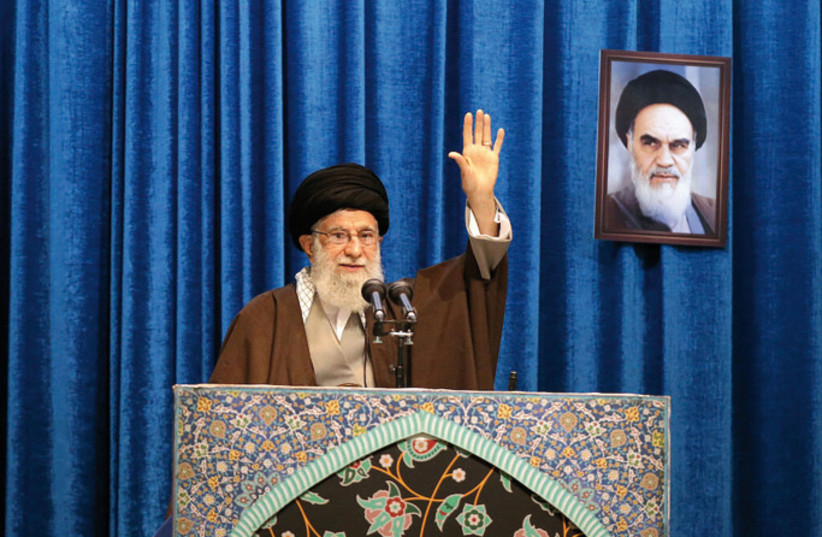
Iran’s Supreme Leader Ayatollah Ali Khamenei gestures as he delivers a Friday prayer sermon in Tehran on January 17 (photo credit: REUTERS)
Iran’s Supreme Leader Ayatollah Ali Khamenei gestures as he delivers a Friday prayer sermon in Tehran on January 17
(photo credit: REUTERS)
Palestinians start a war against Israel, Iranian Supreme Leader Ali Khamenei said in response to the Trump administration’s peace plan for Israel and the Palestinians in a tweet on Wednesday.

The “remedy” for the plan is “bold resistance by the Palestinian nation and groups in order to force out the Zionist enemy and the US through jihad,” Khamenei tweeted.

The Iranian leader called on all other Muslims to support the Palestinian war on Israel.

Khamenei called Arab states willing to consider the plan in a positive light – such as the United Arab Emirates, Saudi Arabia, Egypt and others – traitorous and incompetent.

The ayatollah of Iran slammed the US plan, writing: “The so-called plan of the ‘Deal of the Century’ is #foolish, because it will definitely NOT have any result.”

Khamenei added that it was foolish for the US to “sit, spend money, invite, create and uproar and unveil a plan that is doomed to failure.”

The US will “try to further their plot with bribes, weapons and enticements,” he stated.The Iranian leader also said “Palestine belongs to the Palestinians” and questioned how US could try to make decisions on the matter.

He also saw a positive side in the matter, that the US plan called attention to “Palestine and the rights of its oppressed people.”