Trump Admin Rescinds DAPA Amnesty Program

Posted June 16, 2017 by danmillerinpanama
Categories: DACA, DAPA, Dept. of Homeland Security, Illegal immigrants, Trump and illegal immigration

Tags: , , , ,

Trump Admin Rescinds DAPA Amnesty Program, Daily Caller, Peter Hasson, June 15, 2017

The Trump administration has fulfilled another one of Donald Trump’s campaign promises by rescinding the Deferred Action for Parents of Americans and Lawful Permanent Residents (DAPA) program implemented under Barack Obama that could have allowed as many as five million illegal aliens with children who are citizens or lawful permanent residents to remain in the country if they met certain criteria.

DAPA was blocked by the courts from implementation, which the Department of Homeland Security cited as a reason for rescinding the program. A DHS press released said Homeland Security Secretary John Kelly signed a memorandum rescinding DAPA on Thursday because “there is no credible path forward to litigate the currently enjoined policy.” (RELATED: Texas AG Says Trump Has Done More To Stop Illegal Immigration Than Anyone In World History)

The program had been challenged by 26 states after Obama issued it in November 2014. The Supreme Court deadlocked when ruling on the constitutionality of the program in June 2016, splitting the vote 4-4 due to the empty seat at the time left by late Supreme Court Justice Antonin Scalia.

One of Trump’s signature campaign promises was that he would rescind both DAPA and the Deferred Action for Childhood Arrivals (DACA) program if elected president.

The DHS press release added, however, that the June 2012 Obama memorandum creating DACA will remain in effect. That program applies to certain illegal aliens in the U.S. who arrived as children and met specific criteria.

Obstruct This (2)

Posted June 16, 2017 by danmillerinpanama
Categories: Anonymous sources, Leaks, Mueller, Special counsel, Speculation, Washington Post

Tags: , , , ,

Obstruct This (2), Power Line, Scott Johnson, June 16, 2017

(I am reminded of the little optimist whose bedroom his parents had filled with horse manure on Christmas Eve while he was sleeping. Early in the morning, he was found joyfully digging through it, sure that there must be a pony somewhere in the pile. — DM)

The investigators have no evidence of Trump campaign coordination with Russia and, if it is possible, they have even less cause to believe there was a bribe (for the coordination that did not happen), and less still to believe the bribe (that there’s no reason to believe happened) was conveyed in a deceptive manner that amounted to a felony money-laundering violation.

************************

Today’s word from anonymous, unnumbered “official sources” — that is some deep cover they’ve got going there — to Washington Post reporters Sari Horwitz, Matt Zapotosky and Adam Entous (count ’em) goes like this:

Special counsel Robert S. Mueller III is investigating the finances and business dealings of Jared Kushner, President Trump’s son-in-law and adviser, as part of the investigation into Russia’s interference in the 2016 presidential election, according to U.S. officials familiar with the matter.

FBI agents and federal prosecutors have also been examining the financial dealings of other Trump associates, including former national security adviser Michael Flynn, former campaign chairman Paul Manafort and Carter Page, who was listed as a foreign-policy adviser for the campaign.

The Washington Post previously reported that investigators were scrutinizing meetings that Kushner held with Russians in December — first with Russian ambassador Sergey Kislyak, and then with Sergey Gorkov, the head of a state-owned Russian development bank. At the time of that report, it was not clear that the FBI was investigating Kushner’s business dealings.

The officials who described the financial focus of the investigation spoke on the condition of anonymity because they were not authorized to speak publicly.

Let’s pause here for a brief moment with Professor Glenn Reynolds. Glenn translates the journalese for the untutored reader. “Not authorized to speak” means “unprofessional” and/or “illegal.”

Round about paragraph seven the Post reporters concede this much:

Mueller’s investigation is in a relatively early phase, and it is unclear whether criminal charges will be brought when it is complete.

Now this is rich. We have no evidence of wrongdoing by the president or his campaign. By contrast, however, the air of criminality injected by “official sources” and their media conduits itself constitutes a gross form of wrongdoing.

Again, however, translation is required. Here we can draw on the expertise of former Assistant United States Attorney Andrew McCarthy, whose translation also addresses the parallel New York Times version of the leak (“A former senior official said Mr. Mueller’s investigation was looking at money laundering by Trump associates. The suspicion is that any cooperation with Russian officials would most likely have been in exchange for some kind of financial payoff, and that there would have been an effort to hide the payments, probably by routing them through offshore banking centers”):

Allow me to translate. The investigators have no evidence of Trump campaign coordination with Russia and, if it is possible, they have even less cause to believe there was a bribe (for the coordination that did not happen), and less still to believe the bribe (that there’s no reason to believe happened) was conveyed in a deceptive manner that amounted to a felony money-laundering violation.

Get it? In the absence of an evidentiary predicate for a criminal investigation, a bunch of smart lawyers are theorizing that if there had been some kind of collusion, there might have been a money trail. On that pretext, they have moved on to a new crime they speculate, but have no evidence, may have occurred. This enables them to start poking around people’s banking records, business ledgers, tax returns and the like.

Inevitably, it will be forgotten that there was no evidence of the collusion, of the bribery for the collusion, or of the money laundering for the bribery for the collusion – i.e., no evidence supporting the rationale for the fishing expedition. Instead, Mueller’s team will be on to theorizing financial irregularities that have utterly no connection to Russia, the election, collusion, or anything that the investigation was supposed to be about in the first place.

We have entered a zone of what Hunter Thompson would call deep weirdness. Deputy Attorney General Rod Rosenstein — the man responsible for Mueller’s appointment and supervision of the investigation — issued this statement Thursday night:

Americans should exercise caution before accepting as true any stories attributed to anonymous “officials,” particularly when they do not identify the country — let alone the branch of agency of government — with which the alleged sources supposedly are affiliated. Americans should be skeptical about anonymous allegations. The Department of Justice has a long established policy to neither confirm nor deny such allegations.

Well, thanks. We’re cynical out here in flyover country without the advice. The last thing we need from Rosenstein is this particular encouragement. We need him to raise holy hell to find out who’s doing what under his nose.

Russia: We Believe We Killed ISIS ‘Khalif’ Abu Bakr al-Baghdadi

Posted June 16, 2017 by Peter Hofman
Categories: Uncategorized

Source: Russia: We Believe We Killed ISIS ‘Khalif’ Abu Bakr al-BaghdadiThe Jewish Press | David Israel | 22 Sivan 5777 – June 16, 2017 | JewishPress.com

Ibrahim Abu Bakr al-Baghdadi

Russia’s Defense Ministry announced that it is still verifying reports that the Islamic State’s self-appointed Khalif, Ibrahim Abu Bakr al-Baghdadi, was killed by a Russian airstrike on the southern suburb of Syria’s Raqqa in late May, TASS reported Friday morning.

The airstrike was carried out overnight, May 28, against a command post where ISIS leaders were meeting, ostensibly to discuss the routes for the terrorists’ exit from Raqqa through the so-called southern corridor, the Defense Ministry’s statement said.

 “According to information, which is being verified via different channels, the meeting was also attended by the ISIS leader Ibrahim Abu Bakr al-Baghdadi, who was eliminated in the strike,” the announcement stated.

One of the reasons the Russians are being so careful with their announcement, which, if true, could usher in a sea change in US and Russian foreign policy, may have to do with past announcements made by the US Army that they had killed the ISIS leader – which culminated in al-Baghdadi releasing videos saying news of his demise had been premature.

According to the Defense Ministry, Russia’s Aerospace Forces killed a number of high-ranking ISIS commanders, including 330 field commanders and others in the southern suburb of Syria’s Raqqa in late May.

“The strike, carried out by Su-35 and Su-34 jets, destroyed high-ranking commanders of the terrorist group, who were part of the so-called military council of the IS, and also some 30 middle ranking field commanders and up to 300 militants who were their bodyguards,” the ministry said.

Among those killed,, according to the Defense Ministry, was Raqqa Emir Abu al-Hadji al-Mysri and Emir Ibrahim al-Naef al-Hadj, who controlled an area between Raqqa and Es-Suhne, as well as ISIS security chief Suleiman al-Shauah.

The Russian Defense Ministry emphasized that “the American side was notified in advance through interaction channels about the time and place of the Russian airstrike.”

Germany, Austria hit out at US over new anti-Russian sanctions

Posted June 15, 2017 by Peter Hofman
Categories: Uncategorized

Source: Germany, Austria hit out at US over new anti-Russian sanctions — RT News

“Unacceptable” new anti-Russian sanctions approved by the US Senate violate international law, affect European companies and have a real aim of benefitting the US oil and gas sector, Berlin and Vienna said in an angry joint statement.

The new anti-Russian sanctions are outlined in an amendment to a bill imposing sanctions against Iran. It was approved by the US Senate on Thursday by a majority of 98 to 2, but still needs to pass the House of Representatives and be signed by the US president to become law.

Read more

© Jim Young

The anti-Russian measures in the amendment involve imposing penalties on enterprises that cooperate with Russian oil and gas companies. A number of European companies are doing just that, participating for example in the Nord Stream 2 pipeline project.

“Europe’s energy supply is a matter for Europe, and not the United States of America!” said the joint statement by German Foreign Minister Sigmar Gabriel and Austrian Chancellor Christian Kern, published on Thursday.

“We cannot accept threatening European companies that contribute to the development of the European energy supply [system] with extraterritorial sanctions that violate the international law.”

“Sanctions as a political instrument should not be linked to economic interests,” the statement says. It adds that “threatening German, Austrian and other European enterprises, which take part in the gas supply projects such as the Nord Stream II together with Russia or finance them, with penalties on the US market would add an absolutely new and highly negative aspect in relations between the US and Europe.”

The statement went on to say that Washington’s intention to impose new sanctions against Russia is guided not by some political or humanitarian reasons but rather by economic interest.

“This issue is all about the sales of the US condensed gas [to Europe] and pressing the Russian energy supply companies from the European market. The actual goal [of such sanctions] is to provide jobs for the US gas and oil industry,” the statement says, citing the US bill on the new sanctions.

Read more

US Secretary of State Rex Tillerson © Aaron P. Bernstein

Gabriel and Kern also expressed their concerns over the fact that the US is actually trying to boost its own competitiveness at the expense of its European allies that the new measures would eventually negatively affect “competitive positions of our [European] energy intensive industries and thousands of jobs.”

They also accused the US of attempts to interfere in Europe’s internal affairs and impose its will on its allies by undermining the principle of “open and fair market competition.”

“It would be not only highly regrettable but also detrimental to the effectiveness of our position in the context of the Ukrainian conflict, if some unrelated issues such the US economic interests in exporting gas gain the upper hand in this matter,” the statement warns.

The two politicians then urged the US authorities to back away from these plans and said that they “very much support” the efforts of the US Department of State aimed at changing the bill concerning the sanctions.

The amendment on anti-Russian sanctions stipulates “broad new sanctions on key sectors of Russia’s economy, including mining, metals, shipping and railways”. The bill also prohibits lifting any executive sanctions imposed on Russia by the Obama administration without congressional review.

The amendment states that the goal of US policy in this particular case is to “oppose the Nord Stream II pipeline given its detrimental impacts on the European Union’s energy security… and energy reforms in Ukraine.”

According to the amendment, the US president can impose sanctions against entities and individuals that either make an investment “that directly and significantly contributes to the enhancement of the ability of the Russian Federation to construct energy export pipelines” or provides Russia with “goods, services, technology, information, or support that could directly and significantly facilitate the maintenance or expansion of the construction, modernization, or repair of [its] energy pipelines.”

Read more

The Dirksen Senate Office Building © US Capitol

Russian President Vladimir Putin on Thursday said that Russia has been historically living under some form of sanctions from the West, which are used as a tool of economic competition as well as a means of containment.

“If there were no situation with Crimea and other problems, they would have invented something else to contain Russia,” he said.

US Secretary of State Rex Tillerson called for a more “flexible approach” to the issue of anti-Russian sanctions. He particularly said that he would not like to see Washington “handcuffed” to the progress in the implementation of the Minsk agreements as Moscow and Kiev could eventually find some other way to resolve the crisis in eastern Ukraine.

Earlier, Tillerson also said that virtually all US partners and allies were calling on Washington to improve its relations with Russia and warned that a new set of restrictive measures against Moscow might further worsen relations with Russia.

The Nord Stream II project will give Russia’s Gazprom additional capacity in supplying Europe with gas through a pipeline that would go under the Baltic Sea to Germany.

The project is operated by the Nord Stream II company, which is fully owned by Gazprom. However, half of the project’s cost, amounting to €9.5 billion, is financed by several European energy as well as oil and gas companies, including Shell, Uniper, Wintershall, Engie and OMV, which thus can be affected by the new US sanctions.

Some of these companies already suffered from the US Senate’s decision to approve the sanctions bill as the shares of the OMV fell 3.7 percent Thursday, while Engie was down 1.3 percent, Shell 1.1 percent and Uniper 0.9 percent, according to the Financial Times.


US drone strikes ‘against spirit of ongoing cooperation,’ Pakistani Army chief says

Posted June 15, 2017 by danmillerinpanama
Categories: al-Qaida, Haqqani Network, Pakistan, U.S. Military

Tags: , , ,

US drone strikes ‘against spirit of ongoing cooperation,’ Pakistani Army chief says, Long War Journal, , June 15, 2017

Bajwa insists that all the US needs to do is share intelligence, and the Pakistan military will handle the problem on its own. Yet it is well documented that when the US has given intelligence on groups such as the Haqqani Network, Pakistani officials have passed it along to the terrorists.

Pakistan often views many of these strikes as counterproductive because the US is killing leaders from their pet jihadist groups, such as the Afghan Taliban and the Haqqani Network, the Hafiz Gul Bahadar group, and the Mullah Nazir Group. Pakistani government and military officials have denounced strikes that have killed top leaders from these groups, which are known as “good Taliban” because they don’t actively oppose the Pakistani state. The irony is the good Taliban support the “bad Taliban,” which do fight the Pakistani state.

****************

Pakistan’s Chief of Army Staff General Qamar Javed Bajwa said today that US drone strikes and other unilateral actions “are against spirit of ongoing cooperation” and that any intelligence on terrorist whereabouts should be forwarded to the army for action. Bajwa made the statement despite the fact that Pakistani officials have routinely passed along actionable intelligence to terrorists to help them avoid raids, as well as supposed “counterproductive” drone strikes have historically been effective in killing scores of top tier terrorist leaders.

Bajwa’s view on drone strikes were summarized in an Inter-Services public relations press release that was issued on June 14, just one day after the US killed a Haqqani network leader and two of his deputies in an attack in Pakistan’s northwestern district of Hangu. From the ISPR press release:

COAS [Chief of Army Staff Bajwa] said that unilateral actions like drone strike etc are counterproductive and against spirit of ongoing cooperation and intelligence sharing being diligently undertaken by Pakistan. Pakistan Army is capable of taking effective measure if actionable intelligence is shared. He said that our focus now is to transform our operational achievements in FATA into enduring peace and stability for which early mainstreaming of FATA through reforms is essential and Pakistan Army fully supports all efforts towards that end.

Bajwa’s statement is astounding for many reasons, two of which will be addressed below:

When the US shared “actionable intelligence,” it has been passed along to jihadist leaders

Bajwa insists that all the US needs to do is share intelligence, and the Pakistan military will handle the problem on its own. Yet it is well documented that when the US has given intelligence on groups such as the Haqqani Network, Pakistani officials have passed it along to the terrorists. The Washington Post detailed two such incidents, when, in June 2011, the US passed along information to Pakistani officials on an al Qaeda facility in South Waziristan and a Haqqani Network bomb factory at a girls school in North Waziristan. Unsurprisingly, when Pakistani forces arrived, the two locations were empty.

The US has continued its drone program because the Pakistani military and its intelligence service, the Inter-Service Intelligence Directorate, could not be trusted.

Pakistan’s duplicity when it comes to supporting terrorist organizations in the region is well known. The Afghan Taliban would be a shadow of itself without the support and safe haven provided by the Pakistani government.

“Counterproductive” strikes have killed far more top tier leaders in the Movement of the Taliban in Pakistan than the Pakistani military

US drone strikes in Pakistan have killed more than 120 top tier jihadist leaders and operatives in the 396 recorded strikes in Pakistan since the program began in 2004. The jihadists killed come from a host of groups, including al Qaeda, the Afghan Taliban its subgroup, the Haqqani Network, the Movement of the Taliban in Pakistan, the Islamic Movement of Uzbekistan, Turkistan Islamic Party, Hizb Mujahideen, Lashkar-e-Jhagvi, the Hafiz Gul Bahadar group, and the Mullah Nazir Group (FDD’s Long War Journal maintains a list, here).

Pakistan often views many of these strikes as counterproductive because the US is killing leaders from their pet jihadist groups, such as the Afghan Taliban and the Haqqani Network, the Hafiz Gul Bahadar group, and the Mullah Nazir Group. Pakistani government and military officials have denounced strikes that have killed top leaders from these groups, which are known as “good Taliban” because they don’t actively oppose the Pakistani state. The irony is the good Taliban support the “bad Taliban,” which do fight the Pakistani state.

Oddly enough, Pakistani officials even protest when the US kills members of the Movement of the Taliban in Pakistan, which has killed tens of thousands of Pakistani civilians and soldiers in terrorist attacks and during its decade long insurgency in Pakistan’s northwest. Despite the fact that the Movement of the Taliban in Pakistan is a mortal enemy of the state, the Pakistani military has a paltry record in killing top tier leaders of the group. But US drone strikes have taken out key leaders of the Movement of the Taliban in Pakistan, including:

Hakeemullah Mehsud: Baitullah’s successor
Waliur Rehman Mehsud: Hakeemullah’s deputy and head of the Movement of the Taliban in Pakistan in South Waziristan
Qari Hussain Mehsud: the head of the Movement of the Taliban in Pakistan’s suicide operations and director of suicide camps
Wali Mohammed: the head of the Movement of the Taliban in Pakistan’s suicide operations
Ibn Amin: a Movement of the Taliban in Pakistan military commander in Swat who was also a senior al Qaeda leader

These men were directly responsible for murdering numerous Pakistani civilians and soldiers, and had eluded Pakistani intelligence and military operations for years before they were killed by the US drone program. The killing of these top leaders even led to a schism within the Movement of the Taliban in Pakistan for more than a year before the group could reorganize, with divisions that remain to this day.

Pakistani military and government officials have showed their gratitude by condemning most of these strikes.

However, despite Pakistan’s denouncement of the strikes, there is little the nation can do to halt them, short of deploying its air force and shooting down the US aircraft. In the past, the Pakistani government shut down NATO supply lines into Afghanistan in protest of the US raids. However, the US continued to target and kill top level jihadist leaders in cross-border attacks. The number of US drone strikes have decreased drastically from 117 during the peak year of 2010 to just three in 2016 and four so far this year.

Pakistani objections and international criticism have at times caused the US to halt the strikes, but only for a short period of time. Even though the US hates the optics of unilateral strikes on foreign territory without warning, the US has not reduced the number of strikes in 2016 and 2017 because of fear of retribution from Pakistan or international condemnation. Instead, the reduction can be attributed to several things: the US has shifted some resources and assets to other theaters to target al Qaeda in Somalia and Yemen, as well as the Islamic State in Iraq and Syria; and US intelligence incorrectly assessed al Qaeda’s presence in the region as diminished.

Powder-Filled Letters With Threatening Notes Shut Down Georgia Republican’s Neighborhood

Posted June 15, 2017 by danmillerinpanama
Categories: Democrat incitement to murder, Karen Handel

Tags: ,

Powder-Filled Letters With Threatening Notes Shut Down Georgia Republican’s Neighborhood, Washington Free Beacon, , June 15, 2017

(Please see also, Killing Republicans to Save Health Care and the Planet. — DM)

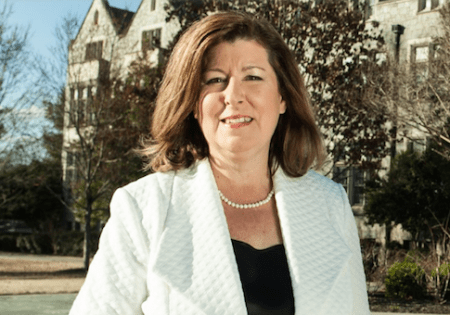
Karen Handel

Among the Republicans targeted by the shooter’s social media rants was Handel, who was labeled by the man as a “Republican bitch.”

“Republican Bitch Wants People to Work for Slave Wages, when a Livable Wage is the Only Way to Go! Vote Blue, It’s Right for You!” James Hodgkinson wrote on Facebook.

******************** 

Police have blocked off Georgia Republican Karen Handel’s neighborhood after reports that letters containing a white powdery substance and calling Handel a “dirty fascist” were left at homes of her neighbors.

Cops have been going from mailbox to mailbox after finding the “suspicious package,” according to local reports, which also indicate that Roswell police continue to flood to the area.

A neighborhood resident posted a picture of the contents of the envelope. She told the Washington Free Beacon that several letters were distributed and that they contained white powder.

The content of the threatening letter, posted below, contains graphic language.

“Your neighbor Karen Handel is a dirty fascist cunt but I’m sure you already knew that,” the letter says, according to a picture. “Take a whiff of the powder and join her in the hospital you Bourgeoisie motherfuckers.”

“RESIST THE FASCIST TAKEOVER!!!!,” it says. ” STRING UP THE COLLABORATORS!”

The situation is being monitored by local WSB-TV by a helicopter.

(Video at the link — DM)

Handel acknowledged the reports and said her campaign was coordinating with local law enforcement.

“This afternoon we had some suspicious packages delivered to our house and to our neighbors,” Handel said. “The packages contained threatening letters and a suspicious substance. The police were quickly notified and street is now being blocked off. We will continue to coordinate with law enforcement as necessary.”

The incident comes a day after a politically motivated shooting on Republicans practicing for Thursday’s congressional baseball game.

Among the Republicans targeted by the shooters social media rants was Handel, who was labeled by the man as a “Republican bitch.”

“Republican Bitch Wants People to Work for Slave Wages, when a Livable Wage is the Only Way to Go! Vote Blue, It’s Right for You!” James Hodgkinson wrote on Facebook.

Handel responded to the information about Hodgkinson by saying that it is time to “work together in a civil and productive way.”

“I am aware that the suspect recently made vile comments about me on social media,” Handel said in her statement. “It also appears that the suspect targeted members of Congress specifically because he disagreed with their views.”

“We should not allow our political differences to escalate to violent attacks. We must all refuse to allow the politics of our country to be defined in this way,” she said. “Now more than ever, we must unite as a one nation under God. It is incumbent upon all of us to work together in a civil and productive way, even when we disagree.”

Update 4:04 p.m.: This piece was updated to reflect comment from Handel.

Will Trump make a peace breakthrough in 2018?

Posted June 15, 2017 by danmillerinpanama
Categories: Arab nations, Gaza, Hamas, Israel and Middle East, Israel and Saudi Arabia, Palestinian Authority, Peace process, Qatar, Trump agenda, Trump and Israel, Trump and Middle East, Trump and Palestinians, Trump and the art of the possible, Two state solution

Tags: , , , , , , , , , , , , ,

Will Trump make a peace breakthrough in 2018? DEBKAfile, June 15, 2017

(Lots of speculation about future events, but an interesting piece nevertheless. — DM)

US President Donald Trump’s goal of generating a rapid improvement of Israel’s ties with the Arab world, including the Palestinians in 2018, is not just up to Prime Minister Binyamin Netanyahu and Palestinian Authority Chairman Mahmoud Abbas, but depends largely on how the Trump administration handles the continuing conflict between Qatar and its powerful Arab opponents, Egypt, Saudi Arabia and the UAE.

Up until the end of this week, Trump had turned down the efforts of Secretary of State Rex Tillerson and Secretary of Defense James Mattis to resolve the Gulf conflict by diplomacy. Instead of heeding them, the president took the advice of the Saudi defense minister, Prince Mohammed bin Salman, and Saudi Foreign Minister Adel Al-Jubeir, who visited Washington this week. Tillerson and Mattis tried to arrange a conference between Saudi Arabia and Qatar so as to gradually ease the tensions, but Trump torpedoed the initiative by adopting Riyadh’s tough line.

A complex situation has arisen in the last few days regarding the US diplomacy for bringing Israel and the Palestinians aboard a peace process. The signs of movement on this score fluctuate between crises and some progress:

1. The Gaza electricity row falls under the first heading. Some circles contend that the crisis is artificial, since the Palestinian enclave is receiving as much power now as before. What is different is the new, intensified pressure by Egypt on the one hand and the Palestinian Authority on the other in the hope of toppling Hamas rule in the Gaza Strip or squeezing its leaders into toeing their lines. Neither Egyptian President Abel Fatteh El-Sisi nor the Palestinian Authority chairman has made headway. Hamas stubbornly refuses Cairo’s demand to sever ties with Qatar, while launching a counteroffensive to draw Israel into the dispute by making an empty threat of an “explosion.”

Israel responded with a counter-threat on Thursday, June 15: a proposal to transfer one hour’s worth of power from West Bank Palestinian towns to boost the supply to Gaza.

This maneuver kept the entire electricity issue in the court from it was tossed, Ramallah.

2. A shower of Israeli concessions is landing on the Palestinians judging by almost daily reports. Some are true and others false. But in sum, they are designed to impress President Trump with the Netanyahu government’s good will towards his peace initiative and readiness to take steps in its support. In fact, the prime minister is preparing the ground for the forthcoming arrival of Jason Greenblatt, Trump’s envoy on the Israel-Palestinian issue.

3. US Secretary of State Tillerson this week informed the Senate that the Palestinian Authority had agreed to  halt its payments to the families of Palestinian terrorists who were killed while carrying out attacks against Israelis. Palestinian officials no doubt let this be understood to demonstrate their willingness to go along with Trump’s peace initiative, without, however, have any real intention of following through.

4. Media reports and the findings of Arab research institutes add up to the following predictions on the fate of the negotiations generated by the Trump administration between Israel and the Arab world:

A. Some time during 2018, a showcase summit will be staged for Trump, Netanyahu and leading Arab rulers like Saudi King Salman, Egyptian President El-Sisi and the UAE’s Crown Prince Mohammed bin Zayed al-Nahyan.

They will publish a joint declaration signaling the phased normalization of relations with Israel by such preliminary steps as the exchange of economic and business delegations, the opening of trade offices and of Arab skies to Israeli commecial flights. None of these researchers is clear about the Palestinian role in this event.

B. Meanwhile, Israel will make concessions towards improving the lives of ordinary Palestinians, such as removing checkpoints, issuing building permits for Palestinian towns and more jobs in Israel.

C. Israel and the Palestinian Authority will expand their security cooperation. The Palestinians will be persuaded to cease their incitement against the Jewish State and stop payouts to the families of convicted Palestinian terrorists and other security offenders.

D. Direct Israeli-Palestinian negotiations will ensue, without preconditions on either side, and expand. with Arab governments sitting in.

E. At the end of a period of some years, this process will mature into a discussion of the core issues of the dispute, Palestinian statehood, future borders, settlements, Jerusalem and refugees.

In other words, the year 2018 will see the building of normal relations between Israel and Arab countries to be followed at a later date by the Israeli-Palestinian peace process. President Trump has clearly seized on relations with Riyadh, Cairo and Abu Dhabi as a lever for pushing Israel and the Palestinians into peace talks.

The idea is simple. Israel’s improved ties with the Arab world will resonate positively on Israeli-Palestinian relations. That appears to be Trump’s formula for peace. But there is a catch. It depends heavily on the US President maintaining good relations with the Arab world in the long term.

Putin quips he’s ready to grant asylum to ex-FBI chief Comey

Posted June 15, 2017 by danmillerinpanama
Categories: 2016 elections and Russia, Comey - asylum in Russia?, Comey leaks, Comey testifies, Putin, U.S. interference in foreign elections

Tags: , , , , ,

Putin quips he’s ready to grant asylum to ex-FBI chief Comey, Reuters, Dmitry Solovyov and Vladimir Soldatkin, June 15, 2017

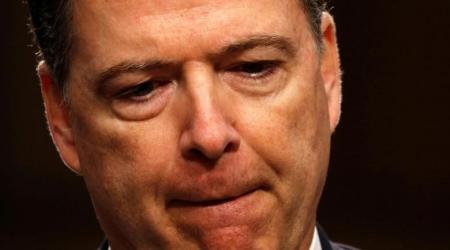
Former FBI Director James Comey pauses as he testifies before a Senate Intelligence Committee hearing on Russia’s alleged interference in the 2016 U.S. presidential election on Capitol Hill in Washington, U.S., June 8, 2017. REUTERS/Jonathan Ernst

Russian President Vladimir Putin joked on Thursday that if former FBI director James Comey suffers persecution because of his falling-out with U.S. President Donald Trump, Russia is ready to grant him asylum.

The offer, made with Putin’s trademark sardonic humor, came as the Russian president poured scorn on Comey for his role in a row in Washington over alleged Russian meddling in last year’s U.S. presidential election.

At a congressional hearing this month, Comey said Trump asked him to drop an investigation into contacts between Trump associates and Russian officials, while the U.S. president has accused Comey of not telling the truth.

Asked about Comey at a question-and-answer session with Russian voters, Putin said it was “strange” that, while still FBI director, Comey had passed the contents of a conversation he had with Trump to the media via a friend.

“What is the difference then between the FBI director and Mr. Snowden?” Putin said, referring to former U.S. National Security Agency contractor Edward Snowden, who was granted asylum in Russia in 2013 after leaking classified information about U.S. spy operations.

“In this case, he (Comey) is not the head of a special service but a human rights activist who defends a certain position,” Putin said.

“By the way, if he is subject to any sort of persecution in connection with this, we will be ready to give him political asylum in Russia. And he should know about this.”

Striking a more serious note, Putin said Comey, in his congressional testimony, had produced no proof that Russia had meddled in the U.S. election.

“I am not familiar in detail with the testimony given by former FBI director Comey,” Putin said. “Again, he gave no evidence of this (Russian interference).”

“And what about constant U.S. propaganda, constant U.S. support of America-oriented non-governmental organizations by giving them money directly? Isn’t it an impact on our minds? Isn’t it an attempt to influence how we should behave during election campaigns? This continues year after year,” he said.

Putin said many heads of state around the world had told him of similar U.S. meddling in their internal affairs. But they would not voice their concerns openly, fearing they would “spoil relations” with Washington, he said.

As for Russia, “we have an opinion of our own, we express it openly. But this is not any sort of underground, subversive activity”, Putin said.

Congress Seeks Embargo on Iran Airline Linked to Terrorism as Tehran Targets U.S. Forces

Posted June 15, 2017 by danmillerinpanama
Categories: Iran - American relations, Iran - sanctions, Iran scam, Mahan Airlines, National secuity, U.S. Congress

Tags: , , , , ,

Congress Seeks Embargo on Iran Airline Linked to Terrorism as Tehran Targets U.S. Forces, Washington Free Beacon, , June 15, 2017

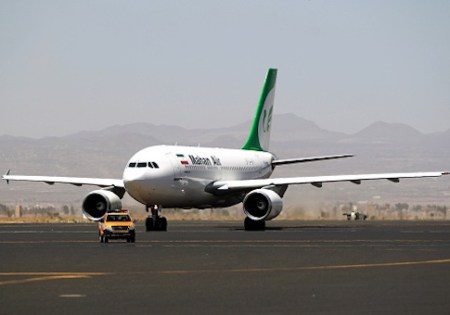
An airplane of Mahan Air sits at the tarmac / Getty Images

The legislation would grant the Department of Homeland Security increased power to boost security at U.S. airports that host flights arriving from countries where Mahan operates. It also instructs the Trump administration to prepare reports outlining every airport where a Mahan-operated flight has landed.

At this point, the deal between Boeing and Iran remains on track, though that could change if the Trump administration decides to block licenses that would permit the U.S. company to engage in business with Tehran.

Iran has already threatened to take action against the United States if Congress approves the new package of sanctions. This includes leveling its own sanctions on American entities.

******************************

Congress is seeking new authorities that would enable it to expose and crack down on an Iranian state-controlled commercial airline known for transporting weapons and terrorist fighters to hotspots such as Syria, where Iranian-backed forces have begun launching direct attacks on U.S. forces in the country, according to new legislation obtained by the Washington Free Beacon.

Congressional efforts to expose Iran’s illicit terror networks more forcefully come as U.S. and European air carriers such as Boeing and AirBus move forward with multi-billion dollar deals to provide the Islamic Republic with a fleet of new airplanes, which lawmakers suspect Iran will use to amplify its terror operations.

The new sanction legislation targets Iran’s Mahan Airlines, which operates commercial flights across the globe while transporting militants and weapons to fighters in Syria, Yemen, and other regional hotspots.

Sen. John Cornyn (R., Texas) is spearheading an amendment to a larger Iran sanctions bill that would increase security at U.S. airports and help expose Mahan’s use of commercial flights to ferry weapons abroad, according to a copy of the measure obtained by the Free Beacon.

The legislation would grant the Department of Homeland Security increased power to boost security at U.S. airports that host flights arriving from countries where Mahan operates. It also instructs the Trump administration to prepare reports outlining every airport where a Mahan-operated flight has landed.

Mahan’s “very presence is a security risk to Americans flying in and out of airports where a Mahan aircraft may land,” Cornyn said earlier this week on the Senate floor.

The amendment, if passed, could complicate efforts by Boeing and others to move forward with multi-billion dollar deals with Iran, a portion of which would likely benefit Mahan.

The State and Homeland Security departments declined to comment on the new sanctions when asked by the Free Beacon, citing a policy of not discussing pending legislation.

The renewed focus on Mahan and Iran’s use of commercial airlines to support terror activities comes as the Islamic Republic amps up operations in Syria directly targeting U.S. forces, a new front that has cast a spotlight on the growing proxy war between Iran and the United States in the region.

An Iranian drone recently attacked U.S. forces in Syria, and Hezbollah—an Iranian-backed terror organization—also has taken steps to counter American forces in the region.

A crackdown on Mahan could indicate that Congress is more seriously eyeing ways to thwart Iran’s mainly unchecked terror pipeline in the region.

Iranian officials have separately expressed anger over Congress’s efforts to impose new sanctions, threatening to walk away from the landmark nuclear deal if the United States does not uphold its end of the bargain.

At this point, the deal between Boeing and Iran remains on track, though that could change if the Trump administration decides to block licenses that would permit the U.S. company to engage in business with Tehran.

Iran has already threatened to take action against the United States if Congress approves the new package of sanctions. This includes leveling its own sanctions on American entities.

“Today, 23 American people and firms are in the list of our sanctions as a reciprocal move and we will take such measures in the future too,” Iranian Foreign Minister Javad Zarif was quoted as saying this week in comments that also took aim at Trump.

Iranian officials have also accused the United States under Trump of breaching its end of the nuclear deal, though officials did not outline what the specific violations are.

“Implementation of the nuclear deal undertakings by the U.S. has not been acceptable to Iran so far and the U.S. should comply with its undertakings,” Reza Najafi, Iran’s ambassador to the International Atomic Energy Organization, or IAEA, said this week during a meeting with the group in Vienna.

New Blasphemy Laws for Canada?

Posted June 15, 2017 by danmillerinpanama
Categories: Blasphemy laws, Canada, Canadian anti-Islamophia law, Canadian government and Islam, Islamists in Canada, Sharia law

Tags: , , , , ,

New Blasphemy Laws for Canada? Clarion Project, Shabnam Assadollahi, June 15, 2017
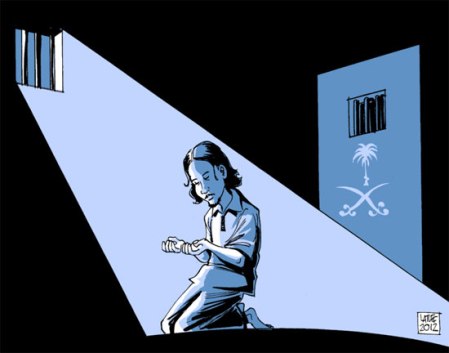
Wikimedia Commons/Carlos Latuff)

Criticizing Islam in Canada should not be illegal or disliking it should not be classified as a phobia. A “phobia” is a type of mental disorder. Isn’t the “Islamophobia” motion, which was unanimously passed by the Canadian government and calls for limiting the rights of Canadians to criticize Islam, contrary to Canada’s Charter of Rights and Freedoms? What is the purpose of the Charter of Rights and Freedoms then?

The definition of Islamophobia from a Google search is “dislike of or prejudice against Islam or Muslims, especially as a political force.” What exactly has the Parliament of Canada made a motion against? Criticism of Islam? Criticism of Mohammed? Criticism and condemnation of the Islamic State and all Islamic terrorist groups affiliated with radical Islamic ideology? Petitioning against those Canadians who condemn Sharia law? If Canadians criticize Islam or convert from Islam, will they now be considered “Islamophobes” by Canada?

What’s next? Sending Iran and Hamas type morality police to the doorsteps of Canadians critical of Islam, while radical imams in the country continue to spew openly hateful and radical ideas in schools and mosques? What about Canadians who are suspicious of others plotting possible terrorist activities – will they be afraid to report it to authorities in case they are wrong?

The motion (M-103) which the Canadian government recently passed was initiated on June 8, 2016, by Samer Majzoub, president of the Canadian Muslim Forum. It condemns Islamophobia in “all” forms.

The details of the motion, which was sponsored by a member of parliament from the Liberal party, are extremely sketchy to say the least. The motion states:

“We, the undersigned, Citizens and residents of Canada, call upon the House of Commons to join us in recognizing that extremist individuals do not represent the religion of Islam, and in condemning all forms of Islamophobia.”

It seems that many Western politicians, the mainstream media and our intellectual elites use the term “Islamophobia” without even knowing what is in Islam. There might be a lot of things about which one could be rationally “phobic,” or simply fearful of, in Islam.

For example, political Islam is known to be an ideology that produces Islamist terrorists. Islamic Republic of Iran is a prime example of it.

Since Trudeau Liberals came to power, Canadians have been constantly reminded that to speak negatively about Islam is supposedly acting as a fear-mongering, racist, xenophobic, “Islamophobe.”

Yet, many people are rightfully afraid of harm coming to them from Islamic (sharia law) and radical or political Islam. I am a living example of one who has experienced harm from radical Islam.

I was imprisoned at age 16 by the Iranian regime for simply expressing my disagreement with their policies (which now might be viewed as Islamophobic in Canada). They held me prisoner for 18 months in their notorious Evin Prison; I miraculously escaped the murder and rape I heard about every day in that dark place.

Read Shabnam Asadollahi’s story here

The memories of my imprisonment still haunt me. And the regime’s threats still follow me today in Canada. Therefore, I have a reasonable fear of radical Islam. To call my fear a phobia, an irrational fear, lacks compassion and fails to recognize the true reality of the present danger living close to me once again.

It was reported that the highest commander of the Iranian Revolutionary Guards recently said they would soon kill all dissidents living abroad. That means I am on their hit list.

People are jittery about radical Islam and sharia law for many justifiable reasons: They look at how shariais practiced in Saudi Arabia, Iran, by the Islamic State and Nigeria’s Boko Haram.

The Islamic Cairo Declaration of 1990, written as a direct refutation to the Universal Declaration of Human Rights, states that all human rights are defined under Islamic sharia law. Therefore, beheading, stoning, flogging, slavery, child marriage, wife-beating, amputations and a woman’s worth considered half of a man’s are all human rights.

Is that what we want for or in Canada? Or in any country?

To those of us who have experienced Islamic Sharia law first-hand, protecting Western values – free speech, common law, equal justice under the law, democratic (“man-made”) governance; individual freedoms, separation of church and state, an independent judiciary, to name just a few – is indeed a cause for concern. Every single one of them is contradicted by Islamic Sharia law or radical Islam.

Why should it be against the law to outspokenly disagree with aspects of a different political ideology, religion or culture? Especially if it outspokenly threatens one’s own?

It is interesting to note that there are no comparable terms for other religions, such as Christianophobia or Judeophobia that define a dislike or prejudice against Christianity, Judaism or the Judeo-Christian worldview.

What is true is that Christians and Jews would never be allowed to call for a similar motion in any Middle Eastern country in the world.

While M-103 has been stirring in our halls of government, there is also another trend sweeping through these same halls to rid the Canadian Charter of obsolete, unconstitutional or redundant laws, thanks to other Liberal MPs.

On Tuesday, June 6, 2017, the liberals unveiled Bill C-51 that would clean up the Canadian Criminal Code. This Bill would remove the outdated blasphemy law that has existed in Canada since 1892. Government feels this would clean up old law that isn’t consistent with freedom of speech and religion in Canada.

Strangely, C-51 and M-103 seem to contradict one another. While M-103 condemns Islamophobia in all forms, including speaking against Islam, C-51 is loosening law to allow anyone to freely express themselves concerning anyone’s religion without fear of reprisal or imprisonment. Will C-51 only apply to every religion except Islam?

“Intolerance of Intolerance” is the de-facto blasphemy law of the secular state. Is the Government of Canada scrapping one blasphemy law, only to replace it with another?

A complete version of this article appeared on Mackenzie Institute.