A Month of Islam and Multiculturalism in Germany: June 2017

Posted July 11, 2017 by danmillerinpanama
Categories: German values, Germany open borders, Islamic invasion, Islamic Jihad, Islamic perversions, Islamic terrorism, Islamisation of Germany, Islamists in Europe, Multiculturalism

Tags: , , , , , , , ,

A Month of Islam and Multiculturalism in Germany: June 2017, Gatestone Institute, Soeren Kern, July 11, 2017

A 10-year-old girl from a former republic of the Soviet Union was raped by an asylum seeker from Ghana, but police and the local government allegedly suppressed information about the crime for more than two weeks.

A student sexually assaulted an 11-year-old girl and punched another boy in the face, breaking his glasses. At least six other students have been beaten bloody. The school’s leadership has refused to discipline the child, apparently because of his migrant background, and instead has lashed out at the parents for demanding a safe environment for their children.

Police in Lübeck suspect that refugees are taking over illegal drug trade in the city.

June 1. A Syrian migrant was stabbed to death in Oldenburg by another Syrian because he was eating ice cream during Ramadan. The murder, which occurred in broad daylight in a busy pedestrian shopping area, was just the latest example of Islamic law, Sharia, being enforced on German streets.

June 2. Around one million non-Europeans living in Germany are now on welfare, an increase of 124% in just one year, according to new statistics from the Federal Employment Agency (Bundesagentur für Arbeit). The top welfare beneficiaries are from: Syria (509,696); Turkey (276,399); Iraq (110,529) and Afghanistan (65,443).

June 2. Police temporarily halted the annual Rock am Ring music festival in Nürburg because of a possible jihadist threat. Authorities asked the 90,000 visitors to leave the concert grounds in a “controlled and calm” manner. The move was based on “concrete leads which do not allow us to eliminate a possible terror threat,” the police said.

June 3. Bavarian Interior Minister Joachim Herrmann called on Germany’s BfV domestic intelligence agency to begin surveilling minors suspected of being involved with Islamist groups:

“I would strongly urge for the age limit for surveillance to be lowered throughout Germany. Minors have already committed serious acts of violence. Normally, the domestic intelligence agency in Bavaria would not place children under surveillance. But if there is concrete evidence that a 12-year-old is with an Islamist group, we have to be able to monitor them, too.”

June 4. Mostafa J., a 41-year-old asylum seeker from Afghanistan, stabbed to death a five-year-old Russian at a refugee shelter in Arnschwang. The Afghan, who had been arguing with the boy’s 47-year-old mother, was shot to death by police after a standoff. It later emerged that the man had a criminal history in Germany and should have been deported but was not. In October 2009, for example, a court in Munich sentenced Mostafa J. to six years in prison for arson. In July 2011, he received a deportation order, but in 2014 he fooled a judge into believing that he had converted to Christianity and would be killed if he were deported to Afghanistan.

June 5. A study conducted by the Hanns Seidel Foundation, a think tank affiliated with Bavaria’s Christian Social Union, found that half the asylum seekers in Bavaria subscribe to classic anti-Semitic views about Jewish power. Around 60% of Afghans, 53% of Iraqis and 52% of Syrians said Jews wield too much influence.

June 7. A 27-year-old migrant from Syria stabbed and killed a Red Cross mental health counselor in Saarbrücken. The attacker and the psychologist allegedly got into an argument during a therapy session at a counselling center for traumatized refugees.

June 9. A court in Cottbus sentenced a 32-year-old Chechen migrant named Rashid D. to 13 years in prison for slitting his wife’s throat and throwing her out of the second-floor window of their apartment. The couple’s five children now live in Chechnya with their grandparents. The man was charged with manslaughter rather than murder because, according to the court, the “honor killing” was done in the heat of passion: the man thought that his wife had been unfaithful.

June 12. A 44-year-old migrant from Syria named Sultan K. was arrested at his home in Bullenhausen on charges of being a member of the Jabhat al-Nusra terrorist group. Police said that the man’s three brothers, Ahmed K. (51), Mustafa K. (41) and Abdullah K. (39), were also suspected of being members of al-Nusra. The arrest confirmed fears that jihadists posing as refugees have gained access to Germany.

June 12. Bavarian Interior Minister Joachim Herrmann called on three German states — Berlin, Bremen and North Rhine-Westphalia — to introduce random police spot checks. Local laws against “racial profiling” prohibit police in the three states from stopping and identifying individuals. Hermann called it a “blatant security gap that urgently needs to be closed.” He also said he wanted to see random checks extended in border areas, around airports, railway stations and rest-stops, as well as on highways that lead in and out of the country. At the moment, such checks are only allowed within 30 kilometers (20 miles) of German borders. Parliamentary spokesman Stephan Mayer said:

“The demand of Bavarian Interior Minister Joachim Herrmann to finally introduce so-called spot-checks in the states of Berlin, Bremen and North Rhine-Westphalia is completely and utterly justified. Given the basically open borders in Europe, random checks are a necessary instrument for preventing terrorists, criminals and illegal immigrants from entering the country.”

June 13. The newspaper, Bild, posted on its website a film — “Chosen and Excluded: Jew Hatred in Europe” — that was censored by the Franco-German television outlet ARTE because it showed Islamic-animated anti-Semitism and Jew-hatred in all walks of European life. Julian Reichelt, Bild‘s online editor-in-chief, said:

“The TV documentary proves the rampant, in part socially acceptable Jew-hatred, for which there are only two words: disgusting and shameful. It is suspected that the documentary is not being shown on television because it is politically unsuitable and because the film shows an anti-Semitic worldview in wide parts of society that is disturbing. Our historical responsibility requires us to decisively counter the unspeakable truth that this film establishes.”

June 14. A 33-year-old migrant from Syria stabbed and seriously injured his ex-wife at a supermarket in Cologne. He also stabbed his 13-year-old son after the boy intervened to protect his mother.

June 15. A 21-year-old migrant from Nigeria went on a rampage after the manager of a public swimming pool in Rosenheim repeatedly told him that hygiene regulations prohibited him from swimming in his underwear. After police arrived, the Nigerian attacked an officer. He was arrested for refusing to obey a police officer.

June 16. Germany’s first “liberal mosque” opened in Berlin. The Ibn Rushd-Goethe Mosque, which holds its services inside the St. Johannis Church in the Moabit district, was founded by Seyran Ates, a women’s rights activist who has been hailed by some as the “champion of modern Islam.” The mosque allows men and women to pray together and the Koran to be interpreted “historically and critically.” The mosque, which is open to everyone, including Alawite and Sufi Muslims, as well as homosexuals, has caused outrage in the Muslim world. Al-Azhar University in Cairo, Egypt, generally considered the leading authority on Sunni Islam, issued a fatwa warning against “religious innovation that is not approved by Islamic Sharia.” Turkey’s religious affairs agency, Diyanet, said that the mosque’s practices “do not align with Islam’s fundamental resources, principles of worship, methodology or experience of more than 14 centuries, and are experiments aimed at nothing more than depraving and ruining religion.” Ates, the mosque’s female imam, is now under 24-hour police protection.
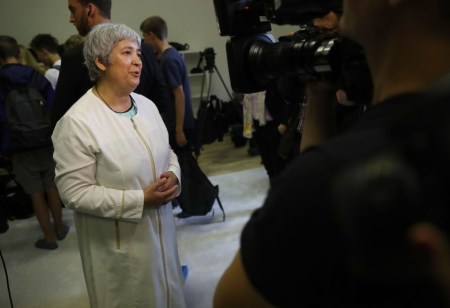
Seyran Ates, a women’s rights activist who has been hailed by some as the “champion of modern Islam,” recently opened Germany’s first “liberal mosque” in Berlin, and serves as its imam. Due to the outrage this caused in the Muslim world, Ates is now under 24-hour police protection. (Photo by Sean Gallup/Getty Images)

June 17. In Cologne, a peace march organized by German Muslim groups to condemn terrorism and violence in the name of Islam had an extremely low turnout. Organizers had expected at least 10,000 participants, but actual turnout was estimated at between several hundred to about 3,500. Germany’s largest Islamic association, the Turkish-Islamic Union (DITIB) refused to take part in the march because it would “send the wrong signal to suggest that Muslims were mainly responsible for international terrorism.”

June 18. The parents of student at the Kronwerk Gymnasium, a school in Rendsburg, have been ordered to appear in court because they refused to allow their child to visit a nearby mosque as part of a geography class. The parents, who are not religious, said they did not want their child to be exposed to “religious indoctrination.” No one could be compelled to enter a sacred building against his or her own free will, they argued. The school insisted that the visit to the mosque was compulsory: “The school is designed to promote the openness of young people to cultural and religious diversity, the desire for international understanding and peace.” Each parent was fined €150 ($175), which they refused to pay. They are now being sued. The mosque in question belongs to the Milli-Görüs movement (IGMG), one of Europe’s largest Islamist organizations. According to Germany’s BfV domestic intelligence agency, the movement is extremist and virulently anti-Semitic.

June 18. Local authorities in Hereford reportedly covered up information about the rape of a ten-year-old girl at a refugee shelter in the city. The girl, who is from a former republic of the Soviet Union, was raped by an asylum seeker from Ghana, but police and the local government allegedly suppressed information about the crime for more than two weeks.

June 18. Muslims in Freiburg launched an online petition demanding that the city prohibit male supervisors from working at a female-only swimming pool in the city. The petition says that Muslim women who want a “break from everyday gazes” are unable to use the pool. The petition adds that the “presence and supervision of male staff is deeply reactionary and sexist” and calls for the “creation of a dialogue to promote mutual understanding and acceptance.” Facility managers at the Lorettobad said that it hired male supervisors because of a shortage of female personnel. The pool has been rocked by disputes between Muslims and managers who have been trying to enforce hygiene regulations at the facility: Muslim women have been angered after being told that they are not allowed to wear jeans and other street clothing while swimming, and also that they cannot consume food while in the pool. Some Muslim women have also been told that they have “too little control over their offspring” and that their children are “too wild” and are disturbing other guests. Muslims have reacted with such aggression that police repeatedly have been called to restore order at the pool.

June 19. Jakob Augstein, a German newspaper editor well known for his anti-Israel tirades, wrote an essay for Der Spiegel in which he expressed glee that so few Muslims attended an anti-terrorism rally in Cologne. He said that those Muslims who did attend were “Uncle Toms” and excessively subservient to their German “overseers.” He wrote:

“Terror is not a question of civil society, but one of politics. What is more important, however, is that the demonstration call was addressed to the Muslims in Germany. This is an impertinence. What does the average German Muslim have to do with terrorism? Nothing.

“Just because terrorists justify their crimes with Islam, there is still no special obligation for people of the Muslim faith to distance themselves from these crimes. On the contrary, the terrorists would be given an honor that is not theirs: they are taken seriously as representatives of Islam. But they are not…. Terrorism is a political and social phenomenon, not a religious one. There are more than 1.5 billion Muslims in the world. Should all of them demonstrate? If I were a Muslim, I would refuse such requests.”

June 20. Police in 14 German states raided the homes of three dozen people accused of posting hateful comments on social media. Most of the raids were said to have involved “right-wing incitement” while two of the raids involved “left-wing agitators.” The head of the Federal Criminal Police (BKA) Holger Münch said: “Our free society must not allow a climate of fear, threats or criminal violence to be found either on the street or on the internet.” Critics say the crackdown is part of an effort to suppress criticism of Chancellor Angela Merkel’s open door migration policy ahead of federal elections set for September 24, 2017.

June 20. In an essay published by Süddeutsche Zeitung, Benjamin Idriz, an imam in Bavaria, called on the German government to provide language training for imams so that they can become the “driving force behind integration and dialogue” in Germany:

“The demand for imams from around 2,700 municipalities in Germany is usually supplied by imams from abroad. Many of them are thus directly connected with foreign religious authorities and under foreign influence. Imams from abroad also hardly have sufficient language and cultural competence. They are therefore not conducive to the integration of the Muslims, nor do they meet the needs of the Muslim communities, especially among the younger generation. The demand for imams is enormous, and too much time has already been lost. We must begin before we lose the next generation.”

June 21. The parents of more than 20 fifth-graders at the Herder-Gymnasium, a school in Charlottenburg district of Berlin, initiated a boycott of the school over accusations that the school was not dealing with discipline and violence in class. The problem revolves around one male student who has been bullying his classmates since he arrived at the school last fall. The student has sexually assaulted an 11-year-old girl and punched another boy in the face, breaking his glasses. At least six other students have been beaten bloody. “Our concern is that our children be protected,” a father said. The school’s leadership has refused to discipline the child, apparently because of his migrant background, and instead has lashed out at the parents for demanding a safe environment for their children: “We deeply regret the fact that because of a single populist exception among the parents such serious damage has been done to the reputation of our school.”

June 22. Aydan Özoğuz, Germany’s commissioner for immigration, refugees and integration, admitted that “there has been a shift in perceptions” and that only a quarter to a third of the so-called refugees in Germany will enter the labor market over the next five years, and “for many others we will need up to ten.” In an interview with the Financial Times, she said that many of the first Syrian refugees to arrive in Germany were doctors and engineers, but they were succeeded by “many, many more who lacked skills.” The Times, citing statistics from the Federal Employment Agency, revealed that only 6,500 refugees of the more than two million who have been allowed into Germany during the past two years are enrolled in work training programs. “We don’t take in refugees according to their skills set,” Özoğuz said. “The only criteria should be to help people fleeing war and political persecution.”

June 22. Police in Lübeck suspect that refugees are taking over illegal drug trade in Schleswig-Holstein, the northernmost state in Germany. Since May there have been more than a dozen mass brawls involving Afghans, Iraqis, Syrians and North Africans armed with knives and batons. Some of those involved are known drug traffickers. “The middle level of drug trafficking is targeting migrants in the refugee shelters, promoting them as street vendors or couriers,” said Christian Braunwarth, spokesman for the Lübeck public prosecutor’s office. “Unfortunately, the economically weaker parts of society are vulnerable to such offers.”

June 23. A 37-year-old migrant from Syria sexually assaulted a ten-year-old girl in Tübingen. The girl was riding her bicycle when the man ambushed her from behind. Passersby who heard the girl scream rushed to her aid. Police said the man was a “prior offender” and was known to them. A “southern-looking” (südländisches Erscheinungsbild) sexually assaulted a 23-year-old woman in broad daylight in Voerde. A 17-year-old German-Turk raped a 17-year-old woman in Stuttgart.

June 24. An 18-year-old Syrian asylum seeker shouting Allahu Akbar injured four people with a metal chain at the central bus station in Lünen. The initial police report described the perpetrator only as “an 18-year-old” and failed to mention that he had dedicated his attack to Allah. Dortmund police provided more details only after being pressed by a local newspaper.

June 25. A police officer in Duisburg asked a man to move his car, which was illegally parked. The man refused and began shouting at the officer. Within minutes, more than 250 people appeared at the scene and began harassing the police officer, who called for backup. More than 50 policemen and 18 police vehicles were required to resolve what began as a routine traffic procedure.

June 25. Four Iraqi men sexually assaulted three girls, aged 13, 15 and 16, at a public swimming pool in Kassel. A 35-year-old migrant from Romania sexually assaulted two girls, aged 12 and 13, at a public swimming pool in Stuttgart. The man was questioned and released.

June 26. The Berlin Labor Court ordered the city-state of Berlin to pay €6,900 ($7,900) — the equivalent of two months’ pay — to a Muslim teacher whose job application at a grammar school was rejected because she wears a headscarf. Berlin’s Neutrality Law (Neutralitätsgesetz) prohibits teachers from wearing conspicuous religious symbols at state schools, but the Federal Constitutional Court (Bundesverfassungsgericht) has ruled that a general prohibition of Muslim headscarves is unconstitutional unless there is a concrete threat to security. In February, the National Labor Court of Berlin-Brandenburg awarded a Muslim woman compensation of almost €8,600 ($9,800) after her job application was rejected because she wore a headscarf. The judges ruled that it was a violation of the Equal Treatment Act (Gleichbehandlungsgesetz).

June 27. A “southern-looking” (südländisch aussehenden) man raped a woman at a park in downtown Cologne. Two “dark-skinned” men (dunkelhäutigen Männer) sexually assaulted a 52-year-old woman in Hüfingen.

June 28. A 23-year-old migrant from Iraq was arrested in Immenstaad on Lake Constance on charges of being a war criminal. After the man — who arrived in Germany as a refugee at the height of the migrant crisis in late 2015 — reportedly threatened to kill a roommate at a migrant shelter in Böblingen, police found three mobile phones in his room. One of the phones contained a picture of him posing alongside the decapitated heads of six jihadists from the Islamic State. The photo was created sometime between December 2013 and September 2015 when the man was an Iraqi soldier. The Attorney General’s office in Stuttgart said the man was guilty of “mocking the slain combatants and degrading them in their death” which “should be seen as a war crime…according to the criminal code (Völkerstrafgesetzbuch and Strafgesetzbuch).”

June 29. Mohammad Hussain Rashwani, a 38-year-old migrant from Syria tried to behead 64-year-old Ilona Fugmann at a beauty salon in Herzberg. Less than a year earlier, Fugmann had offered Rashwani a job as a hair stylist at her salon and German media praised him as an exemplar of successful integration. Fugmann and her husband Michael were said to have bestowed “infinite goodness and magnanimity” toward Rashwani. In the weeks leading up to the attack, however, Mohammad reportedly had found it difficult to subordinate himself to his female boss. “I am still convinced that it is 100% correct to help other people, but we have to admit that in this case our attempts at integration have failed,” Michael concluded.

June 30. The German Parliament approved a controversial law to fine social media networks up to €50 million euros ($57 million) if they fail to remove so-called hate speech. The Network Enforcement Act (Netzwerkdurchsetzungsgesetz, NetzDG), commonly referred to as the “Facebook law,” gives social media networks 24 hours to delete or block “obviously criminal offenses” (offenkundig strafbare Inhalte) and seven days to deal with less clear-cut cases. German Justice Minister Heiko Maas said the measure to “end the internet law of the jungle.” Critics say the law will restrict free speech because social media networks, fearing high penalties, will delete posts without checking whether they are within the legal limits and should actually remain online. Others say the real purpose of the law is to silence criticism of the government’s open door migration policy, as well as multiculturalism and the rise of Islam in Germany, ahead of the federal elections on September 24, 2017.
U.S. Missile Defense System Completes Successful Test

Posted July 11, 2017 by danmillerinpanama
Categories: Missile destruction, THAAD

Tags: ,

U.S. Missile Defense System Completes Successful Test, Washington Free Beacon, , July 11, 2017

(Please see also, How to neutralize the North Korea threat, — DM)

Getty Images

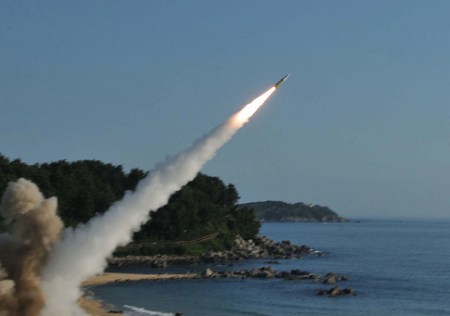
The Terminal High Altitude Area Defense (THAAD) missile defense system was able to shoot down a target over Alaska during a test-run Tuesday, according to a news release published by the U.S. Missile Defense Agency.

The THAAD system was able to successfully intercept the target during the test-run, although a Department of Defense official told CNN that the test over Alaska was not related to the recent North Korea intercontinental ballistic missile (ICBM) launch.

This system targets and shoots down short, medium, and intermediate ballistic missiles—all of which have shorter ranges than the North Korean ICBM that was launched on July 4.

Escalation of Pyongyang’s nuclear program has spurred U.S. motivation in assessing the effectiveness of the missile defense systems in the U.S. and allied countries.

Earlier this year, much to the opposition of China, Russia, and North Korea, the U.S. military deployed the THAAD system to South Korea. These three countries say THAAD is threatening an arms race.

“I couldn’t be more proud of the government and contractor team who executed this flight test today,” said Missile Defense Agency Director Lt. Gen. Sam Greaves.

“This test further demonstrates the capabilities of the THAAD weapon system and its ability to intercept and destroy ballistic missile threats,” Greaves said.

This successful intercept was the 14th of 14 attempts for the THAAD weapon system.

The New Meaning of Collusion

Posted July 11, 2017 by danmillerinpanama
Categories: 2016 elections and Russia, Collusion, Democrat agenda, Democrat Party and media, Great Trump - Russia conspiracy, Media and Trump, New York Times

Tags: , , , , , ,

The New Meaning of Collusion, Power Line,  Scott Johnson, July 11, 2017

There is no evidence that the Russian lawyer had damaging information to deliver. There is no evidence that the Russian lawyer delivered damaging information. There is no evidence that Trump Jr. asked the Russian lawyer to come back with damaging information. There is no evidence that Trump Jr. would have promised the Russian lawyer anything if she had agreed to return with damaging information. There is no evidence that Trump Jr. came away from the meeting with anything but disappointed expectations.

Is this some kind of a joke?

********************************

Today the New York Times credits four reporters with the story advancing the latest installment of the “collusion” story involving the Trump campaign and a mysterious Russian lawyer. We are colluding in comedy.

In today’s episode the Times reports that before Donald Trump, Jr. arranged a meeting with “a Kremlin-connected Russian lawyer he believed would offer him compromising information about Hillary Clinton, Donald Trump Jr. was informed in an email that the material was part of a Russian government effort to aid his father’s candidacy, according to three people with knowledge of the email.” The Times has posted related stories here on the pageant angle to provide context.

In today’s installment of the collusion comedy none of the four Times reporters has seen the email. The Times does not report that anything was delivered in the meeting. So far as we can tell from the story, the thing was some kind of a hoax.

With the reporters’ heavy breathing and the anticlimactic plot, we have a laugh riot on our hands.

Commence the heavy breathing:

The email to the younger Mr. Trump was sent by Rob Goldstone, a publicist and former British tabloid reporter who helped broker the June 2016 meeting. In a statement on Sunday, Mr. Trump acknowledged that he was interested in receiving damaging information about Mrs. Clinton, but gave no indication that he thought the lawyer might have been a Kremlin proxy.

Mr. Goldstone’s message, as described to The New York Times by the three people, indicates that the Russian government was the source of the potentially damaging information. It does not elaborate on the wider effort by Moscow to help the Trump campaign.

Now comes the approach to the anticlimax:

There is no evidence to suggest that the promised damaging information was related to Russian government computer hacking that led to the release of thousands of Democratic National Committee emails. The meeting took place less than a week before it was widely reported that Russian hackers had infiltrated the committee’s servers.

The story continues, but the Times’s four reporters do not pause to itemize other blanks or holes. This is the true anticlimax. “There is no evidence” for much more. The reader is left on his own to draw the relevant inferences.

There is no evidence that the Russian lawyer had damaging information to deliver. There is no evidence that the Russian lawyer delivered damaging information. There is no evidence that Trump Jr. asked the Russian lawyer to come back with damaging information. There is no evidence that Trump Jr. would have promised the Russian lawyer anything if she had agreed to return with damaging information. There is no evidence that Trump Jr. came away from the meeting with anything but disappointed expectations.

Is this some kind of a joke?

How to neutralize the North Korea threat

Posted July 11, 2017 by danmillerinpanama
Categories: EMP attack, EMP missile technology, North Korea - new option, North Korea intercontinental ballistic missile, North korean EMP attack, North Korean nukes

Tags: , , , , ,

How to neutralize the North Korea threat, Washington Times,  Ronald Kessler, July 10, 2017

(Here’s a May 16th video about the capabilities of the technology:

The new technology is similar to EMP but more selective and therefore more accurate. It seems excellent. — DM)

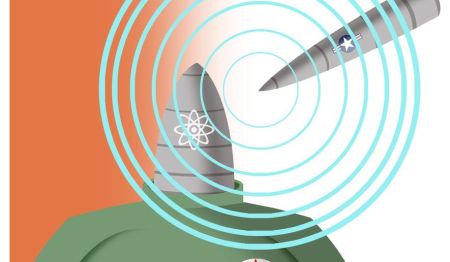
Illustration on way to neutralize the North Korean threat by Alexander Hunter/The Washington Times

They may sound like science fiction, but no doubt Mr. Trump has both HPM and robotic weapons in mind when he says he is contemplating “pretty severe things” to counter the North Korean threat.

**********************************

ANALYSIS/OPINION:

Whenever we hear about viable options for stopping North Korea’s nuclear ambitions, the answer is always the same: There are none. Any military strike against that country would result in retaliation against South Korea, we are told.

But what has gone largely unnoticed in the media is that there are viable alternatives to waiting passively until North Korea has the capability of wiping out millions of Americans with nuclear weapons. The first is the U.S. Air Force’s development of missiles that zap electronics with high-power microwaves (HPM).

That capability, which is entirely different from cyberwarfare designed to confuse computers, has been advancing secretly ever since the Air Force successfully tested use of a missile equipped with HPM in 2012.

Called the Counter-Electronics High Power Microwave Advanced Missile Project (CHAMP), the missile was built by Boeing’s Phantom Works for the U.S. Air Force Research Laboratory at a cost of $38 million. The Boeing missile emits high power microwaves that fry computer chips so that no electronic devices targeted by the missile can operate.

On Oct. 16, 2012, the CHAMP missile flew over a two-story building on the Utah Test and Firing Range. The building in the west Utah desert was crammed with computers and security and surveillance systems. The microwaves took down the compound’s entire spectrum of electronic systems, including video cameras set up to film the test, without damaging anything else.

“We hit every target we wanted to,” Boeing’s CHAMP Program Manager Keith Colman said in a company press release. “Today we made science fiction into science fact.”

Until the announcement of the successful test, the project had been top secret. When it was announced, only a few trade publications ran the story, and since then, beyond a few mentions, the media have ignored the story. Instead, they have focused on how impossible it is to deal with the North Korea threat.

The beauty of the HPM missile is that its microwave beam can penetrate bunkers where facilities are hidden without harming humans inside. Even if a bunker is buried inside a mountain, HPM penetrates the facilities through its connections to power cables, communication lines and antennas. Thus, HPM can penetrate any underground military facility and fry its electronics.

While North Korea may attempt to shield its equipment, U.S. officials doubt that would be effective against CHAMP.

Most amazing of all, the missile renders inoperable any radar that might detect it as it flies to and from a target. Thus, a country cannot take out CHAMP before it strikes and has no way of knowing why its facilities have suddenly gone dead.

Besides underground bunkers, HPM can quickly disable fighter planes, tanks, ships and missile systems. And it can wipe out facilities for developing and testing nuclear weapons.

Unlike an electromagnetic pulse (EMP) created by detonating a nuclear weapon in the atmosphere, because it is targeted, HPM leaves intact civilian facilities needed to sustain life. Unlike any other existing system like cyber-attacks, CHAMP permanently destroys electronic equipment.

America’s national laboratories operated by the Department of Energy have been working on these capabilities for decades. Equally impressive, one of those laboratories, Sandia National Laboratories, has been developing robots the size of insects that could assassinate the North Korean leader with deadly toxins.

These robotic weapons using nanotechnology employed in surgical operations in hospitals are being developed secretly with funding by the Defense Advanced Research Projects Agency.

While President Ford banned assassinations with an executive order, that order was based on the assumption that other world leaders are rational and would refrain from trying to assassinate our president unless we tried to assassinate them. But we are dealing today with terrorist organizations and world leaders who are not rational and do not care if they are killed.

President Trump could reverse Ford’s obsolete executive order with the stroke of a pen. With robotlike weapons using nanotechnology, the CIA could wipe out Kim Jong-un without risking American lives.

They may sound like science fiction, but no doubt Mr. Trump has both HPM and robotic weapons in mind when he says he is contemplating “pretty severe things” to counter the North Korean threat.

While President Obama preached “strategic patience” in dealing with North Korea, Mr. Trump has made it clear he will not stand by while the North Korean leader threatens our survival.

Trouble among America’s Gulf Allies

Posted July 11, 2017 by Peter Hofman
Categories: Uncategorized

by John R. Bolton
July 11, 2017 at 8:30 am

Source: Trouble among America’s Gulf Allies


  • The State Department should declare both the Muslim Brotherhood and Iran’s Islamic Revolutionary Guards Corps (IRGC) as Foreign Terrorist Organizations (FTOs), thus triggering the penalties and sanctions required by law when such a declaration is made.
  • Those “affiliates” of the Muslim Brotherhood that, in whole or part, meet the statutory FTO definition should be designated; those that do not can be spared, at least in the absence of new information.
  • Qatar can legitimately complain that it is being unfairly singled out. The proper response is not to let Qatar off the hook but to put every other country whose governments or citizens are financing terrorism on the hook.

In recent weeks, governments on the Arabian Peninsula have been having a diplomatic brawl. Saudi Arabia, the United Arab Emirates and Bahrain (together with Egypt and other Muslim countries) have put considerable economic and political pressure on Qatar, suspending diplomatic relations and embargoing trade with their fellow Gulf Cooperation Council (GCC) member. Kuwait and Oman, also GCC members, have been mediating the dispute or remaining publicly silent.

The Saudis and their supporters are demanding sweeping changes in Qatari policies, including suspending all financial support to the Muslim Brotherhood and other terrorist groups; joining the other GCC members in taking a much harder line against the nuclear and terrorist threat from Shia Iran and its proxies; and closing Al Jazeera, the irritating, radical-supporting television and media empire funded by Qatar’s royal family.

The United States’ response so far has been confused. President Trump has vocally supported the Saudi campaign, but the State Department has publicly taken a different view, urging that GCC members resolve their differences quietly.

As with so many Middle East disputes, the issues are complex, and there is considerable underlying history. Of course, if they were easy, Saudi Arabia and Qatar would not be nearly at daggers drawn seemingly overnight.

Washington has palpable interests at stake in this dispute and can make several critical moves to help restore unity among the Arabian governments, even though the issues may seem as exotic to the average American as the Saudi sword dance Trump joined during his recent Middle East trip.

Twin issues to confront

Confronting the twin issues of radical Islamic terrorism and the ayatollahs’ malign regime in Iraq are central not only to the Arab disputants but to the United States as well. In addition to providing our good offices to the GCC members, the Trump administration should take two critical steps to restore unity and stability among these key allies.

First, the State Department should declare both the Muslim Brotherhood and Iran’s Islamic Revolutionary Guards Corps (IRGC) as Foreign Terrorist Organizations (FTOs), thus triggering the penalties and sanctions required by law when such a declaration is made. Both groups meet the statutory definition because of their violence and continuing threats against Americans. The Obama administration’s failure to make the FTO designation has weakened our global anti-terrorist efforts.

The Muslim Brotherhood’s defenders argue that it is far from monolithic; that many of its “affiliates” are in fact entirely harmless; and that a blanket declaration would actually harm our anti-jihadi efforts. Even taking these objections as true for the sake of argument, they counsel a careful delineation among elements of the Brotherhood. Those that, in whole or part, meet the statutory FTO definition should be designated; those that do not can be spared, at least in the absence of new information. The Brotherhood’s alleged complexity is an argument for being precise in the FTO designations, not for avoiding any designations whatever.

Saudi Arabia, Egypt and other Arab governments already target the Brotherhood as a terrorist organization but Qatar does not. That may sound suspicious, but as of now, of course, the United States hasn’t found the resolve to do it either. Once Washington acts, however, it will be much harder for Qatar or anyone else to argue that the Brotherhood is just a collection of charitable souls performing humanitarian missions.

A direct terrorist threat

Similarly, Iran’s Revolutionary Guards Corps is a direct terrorist threat that has been killing Americans ever since the IRGC-directed attack on the Marine barracks in Beirut, Lebanon, in October 1983. The only real argument against naming the IRGC is that so doing would endanger Obama’s 2015 nuclear agreement, given Tehran’s expected response to an FTO determination.

Second, Trump should follow up his successful Riyadh summit by insisting on rapid and comprehensive implementation of the summit’s principal outcome, the Global Center for Combating Extremist Ideology (GCCEI). This center can provide governments across the Muslim world a face-saving mechanism to do what should have been done long ago, namely taking individual and collective steps to dry up terrorist financing.

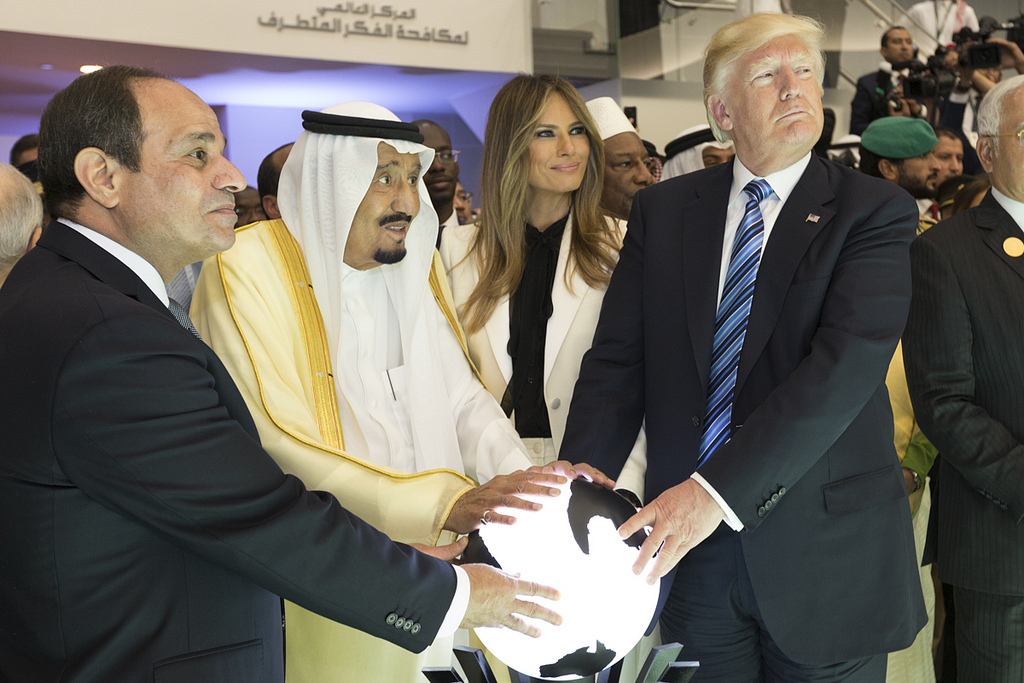
U.S. President Donald Trump and First Lady Melania Trump join King Salman bin Abdulaziz Al Saud of Saudi Arabia, and the President of Egypt, Abdel Fattah al-Sisi, in the inaugural opening of the Global Center for Combating Extremist Ideology, May 21, 2017. (Official White House Photo by Shealah Craighead)

One could write books on the intricate financing that supports international terrorism, and finger-pointing at those responsible could take years. But whether terrorists are financed by governments, directly or indirectly, or by individuals or groups, with or without government knowledge or encouragement, it must all stop. Qatar can legitimately complain that it is being unfairly singled out. The proper response is not to let Qatar off the hook but to put every other country whose governments or citizens are financing terrorism on the hook.

Although superficially the ongoing crisis among the oil-producing monarchies may seem a setback to American efforts in the war again terrorism and the struggle to eliminate the Iranian threat, in fact it provides a rare opportunity to make considerable progress on two of our top priorities. The Trump administration should not miss its chance.

John R. Bolton, former U.S. Ambassador to the United Nations, is Chairman of Gatestone Institute, a senior fellow at the American Enterprise Institute, and author of “Surrender Is Not an Option: Defending America at the United Nations and Abroad”.

This article first appeared in the Pittsburgh Tribune-Review and is reprinted here with the kind permission of the author.


“Confirmed Information” that ISIS leader is dead

Posted July 11, 2017 by Peter Hofman
Categories: Uncategorized

Syrian Observatory: “Confirmed information” that al-Baghdadi has been eliminated

A Syrian human rights organization claims that it has “confirmed information” that the leader of ISIS, Abu Bakr al-Baghdadi, has been eliminated. This confirms the claim made by the Russian Foreign Ministry a month ago that al-Baghdadi was killed in an air strike, but the Pentagon still insists that they do not have enough information to confirm his death.

Jul 11, 2017, 5:17PM Chelsea Mosery Birnbaum

Source: “Confirmed Information” that ISIS leader is dead | JerusalemOnline

Abu Bakr al-Baghdadi in Mosul, 2014 Photo Credit: Channel 2 News

A member of the Syrian Observatory for Human Rights said on Tuesday that it has “confirmed information” that ISIS leader Abu Bakr al-Baghdadi has been killed. Rumors of his death have been making their rounds since his first and only public appearance in 2014 in which he announced the establishment of the terrorist organization. In June, the Russian Foreign Ministry reported that Baghdadi and other senior level members of ISIS had been killed in an air strike in Syria, but US intelligence said it could not substantiate the claims.

https://twitter.com/syriahr/status/884741013549527040?ref_src=twsrc%5Etfw&ref_url=http%3A%2F%2Fwww.jerusalemonline.com%2Fnews%2Fmiddle-east%2Fthe-arab-world%2Fconfirmed-information-that-isis-leader-is-dead-29643

In Washington, however, senior Pentagon officials told Reuters that it was impossible to say for sure that al-Baghdadi, who was on the Trump administration’s hit list along with other members of the organization, had indeed been eliminated. “We take any report of this nature with a large dose of salt,” said Sebastian Gorka, deputy assistant to US President Donald Trump. “We will verify it. We will look at the intelligence available…we will give a statement when we have the requisite facts.”

‘Don’t shift responsibility’: China says pressuring N. Korea isn’t solely up to Beijing

Posted July 11, 2017 by Peter Hofman
Categories: Uncategorized

Source: ‘Don’t shift responsibility’: China says pressuring N. Korea isn’t solely up to Beijing — RT News

North Korean Leader Kim Jong Un © Reuters

China has responded to repeated calls for Beijing to put pressure on North Korea, stating that such responsibility does not rest solely on China. President Trump has repeatedly urged for Beijing to use its influence as Pyongyang’s sole economic lifeline.
Read more

US President Donald Trump and Chinese President Xi Jinping (R) meet on the sidelines of the G20 Summit in Hamburg, Germany, July 8, 2017 © Saul Loeb ‘

“Recently, certain people, talking about the Korean Peninsula nuclear issue, have been exaggerating and giving prominence to the so-called ‘China responsibility theory’,” Foreign Ministry spokesman Geng Shuang told a daily news briefing on Tuesday, as quoted by Reuters.

“I think this either shows lack of a full, correct knowledge of the issue, or there are ulterior motives for it, trying to shift responsibility.

“Asking others to do work, but doing nothing themselves is not OK,” he added. “Being stabbed in the back is really not OK.”

“The ‘China responsibility theory’ on the peninsula nuclear issue can stop,” Geng said.

Although Geng did not mention any names during his Tuesday remarks, they come after repeated calls from the US for Beijing to put more pressure on North Korea over its nuclear and ballistic missile programs.

It also comes after Donald Trump met with Chinese President Xi Jinping at the G20 summit in Hamburg on Saturday, with the US president calling it an “excellent” meeting in which the two spoke about trade and North Korea.

US Treasury Secretary Steven Mnuchin said following the meeting that “substantive discussions” had taken place between the two leaders.

“In regards to China, we had very direct discussions about North Korea. We had very direct discussions about military and security cooperation,” Mnuchin said.

READ MORE: US & S. Korea fire tactical missiles, demonstrate ‘deep strike capability’ to Pyongyang (VIDEO)

“I think that President Trump made very clear to President Xi that he is focused on this issue, and wants to move forward and make progress. And I think President Xi gave a very interesting perspective from their standpoint,” he added.

The talks followed public discontent by Trump over China’s continued trade with Pyongyang, with the US leader tweeting last week that any cooperation between Washington and Beijing was unlikely when it came to the North Korea issue.

However, as Trump continues to express a desire to work alongside China when it comes to North Korea, Beijing has accused Washington and Seoul of worsening tensions in the region with joint military exercises.

The US and China are also in the midst of tense relations over Washington’s decision to deploy the Terminal High Altitude Area Defense (THAAD) system to South Korea, with Beijing saying it threatens China’s security and will do nothing to ease tensions.

READ MORE: Russia, China: N. Korea must freeze nuclear activities, US halt THAAD deployment

Although Washington has called for North Korea to end all missile testing and for the ‘de-nuclearization’ of the Korean Peninsula, Pyongyang has ignored those calls and has continued to launch missile tests – including one on the Fourth of July which it said was for the “American bastards.”

North Korea says its nuclear and ballistic missile programs are non-negotiable, “unless the US hostile policy and nuclear threat to the DPRK are definitely terminated,” according to the official state news outlet KCNA.

Trump’s challenge: N. Korea

Posted July 11, 2017 by Joseph Wouk
Categories: Uncategorized

Source: Israel Hayom | Trump’s challenge: N. Korea

Prof. Abraham Ben-Tzi

During the Cold War era, particularly during severe crises, the United States and the Soviet Union still managed to conduct the tense and charged conflicts between them in a fairly controlled and balanced manner. They did this by making an effort to establish new and reliable communication channels and patterns between them, even before the establishment of the Moscow-Washington hotline, also known as the “red telephone,” in 1963.

These efforts enabled Soviet Premier Nikita Khrushchev and U.S. President John F. Kennedy, in the midst of the Cuban missile crisis in October 1962, to draw the red lines that, if crossed, would bring the entire international community to the brink. This demarcation helped neutralize the possibility that a distorted perception or misunderstanding would set things off.

But unlike the clear lines drawn in a world with two superpowers, the current crisis with North Korea faces the world’s only superpower with a new, unchartered challenge. The challenge stems from the fact that the motivation behind North Korean leader Kim Jong-Un’s decision to test-fire intercontinental ballistic missiles, in flagrant disregard of clear American warnings, remains unclear. Is this nothing more than saber-rattling — Kim’s rational effort to terrorize the international arena by projecting an image of an irrational leader — or is it a reflection of delusions of grandeur and a dangerous predilection for unexpected moves?

It seems that the rules that enabled the international community to survive the Cold War era, anchored in the shared desire of the White House and the Kremlin to avoid mutual destruction, are now invalid, faced with the brazen challenge by the tyrant of North Korea. Moreover, the Trump administration’s working assumption — that the key to restraining North Korea is China — has not yet proved itself. This is not only because China is categorically opposed to a policy of brinkmanship or conducting economic warfare against North Korea, but also because it is unclear if it really has the ability to force Kim (despite his great dependence on trade with China) onto a less provocative path.

And so Kim continues to be defiant. The latest example could be heard in his threatening remarks last weekend: In response to a recent aerial show of power by the U.S. and its allies South Korea and Japan, which held war games not far from the North Korean border, the leader warned against “playing with fire,” which would increase the chances of a nuclear war. Indeed, in light of the difficulty in enlisting Chinese (and Russian) support for expanded sanctions against North Korea, the range of non-violent options available to U.S. President Donald Trump appears to be shrinking.

The problem is that even the most surgical strike against North Korea’s nuclear facilities is likely to have the opposite of the desired effect, exacerbating an already tense situation on the Korean peninsula even further. North Korea has significant conventional military power, and it could easily shed South Korean blood within range of its murderous artillery and missile barrages in immediate response to any military move by the U.S.

In summary, the current crisis proves the inherent difficulty in deterring rivals who behave like pyromaniacs at a gas station displaying an insatiable urge to light a fire, regardless of the consequences. In recent days, a new, complex challenge has cropped up right before the eyes of the American administration and the question is how willing Trump will be to incorporate aspects of former President Bill Clinton’s plan from 20 years ago into his own efforts to curb these nuclear aspirations.

But the Clinton policy, based on the carrot and stick method — humanitarian aid and sanctions — ultimately failed in the face of North Korea’s strategy of deception. At this time, it would be unwise to rule out a resumption of aggressive diplomacy that also incorporates incentives and rewards. After all, even a policy of economic strangulation may not topple the merciless North Korean tyrant, because his people, hungry and helpless, don’t factor into his considerations in any way.

The US is still the leader

Posted July 11, 2017 by Joseph Wouk
Categories: Uncategorized

Source: Israel Hayom | The US is still the leader

Zalman Shoval

The recently concluded G-20 summit in Hamburg once again poses the question of who will lead the Western world. At every point since the end of World War II, the answer to that question was obvious: the United States. But since the beginning of the Obama administration with its isolationist tendencies, and through the election of President Donald Trump and his declarations — which were interpreted as an attempt to shake off U.S. obligations to NATO and other international commitments — the answer now is not as clear-cut.

If not America, then who? Many people would answer: Germany under Chancellor Angela Merkel, who is seen as a balanced, level-headed leader who has successfully handled the euro crisis and other internal and foreign issues. But it’s not obvious that Merkel herself desires to be the official or even unofficial leader of the free world. One possible reason is that she knows that such a status would require a major build-up of Germany’s military capabilities, and she understands all that would entail in terms of economics and her worldview.

This weekend’s G-20 summit brought to light not only the conflict of interests between the West and China and Russia, but also the different approaches and friction within the Western camp itself, a situation that China and Russia are doing their utmost to exploit. The summation highlighted the very general agreements reached on global trade and the war on terrorism (although not on climate change), and Merkel issued a conciliatory statement of her own in which she said that America had not been isolated at the summit.

But her words carried no answer to the question of who will lead, or which principles and values will lead the Western world forward in the critical years ahead. After the fall of the Soviet Union, some believed that the “end of history” had arrived and the world would sail forward on clear moral waters in the spirit of philosopher Immanuel Kant. But the rise of the Islamist threat and waves of global terrorism, Iran’s and North Korea’s races to a nuclear bomb, Russia’s diplomatic gambits, and, in particular, China’s astonishing growing strength in all fields, including the military, are showing the West that this is not a Kantian world.

Whether it wants to or not, only the U.S. can lead the free world in the face of the current dangers, the ones that Trump himself mentioned in Warsaw last week when he spoke about “dire threats” to Western security and way of life.

In the end, it is not only a question of values, but of who will control the world. Various European leaders can kick around ideas of a “European answer” to current and future threats, resting on Britain’s and France’s nuclear capabilities, but they also know that nothing can replace American power as a main element of deterrence against any potential aggression.

Israel is also an integral part of the Western world. If Israel had its way, there would be no doubt that the U.S. should be at the helm. Not only because no other player can objectively match up to the U.S., and not only because of the alliance of practicalities and values between the two nations, but because the European alternative, even Merkel’s generally supportive and positive image, seems very disheartening given Europe’s well-known official positions on various matters having to do with Israel boycotts, Jerusalem, and the whole Palestinian issue. French President Emmanuel Macron’s negative announcement last week about Israeli settlements and a Palestinian state should be all the proof anyone needs.

ISIS: The beginning of the end

Posted July 11, 2017 by Joseph Wouk
Categories: Uncategorized

Source: Israel Hayom | ISIS: The beginning of the end

Oded Granot

Israel should welcome Islamic State’s defeat in Mosul, but it should also bear in mind that the Jewish state was never one of its primary targets. The main threat is still Iran.

Iraqi Prime Minister Haider al-Abadi rushed to Mosul on Sunday to congratulate his armed forces for their great victory over Islamic State. But considering the balance of power on the ground, that should have happened a long time ago.

For nine months, tens of thousands of Islamic State combatants in Mosul managed to survive a massive ground assault carried out by hundreds of thousands of Iraqi soldiers and special forces units, fighting alongside Kurdish regiments and Shiite militias, as well as devastating aerial bombardments launched by coalition aircraft. American military advisers supervised this offensive while Washington delivered a steady stream of weapons, equipment, intelligence and considerable funds to the Iraqi army.

Islamic State fighters put up a fight almost to the end with car bombs and suicide attacks. Women and children were strapped with suicide vests and sent out to greet the advancing Iraqi forces. Fighters’ corpses are still strewn in the alleyways of the Old City of Mosul.

The cost of defeating Islamic State in Mosul was unfathomable. Cautious estimates indicate a 40% casualty rate among the Iraqi army’s counterterrorism units, which spearheaded the campaign. Alongside Islamic State fighters, thousands of civilians also perished in the battle for Mosul, some of them in their homes in airstrikes and others while attempting to flee the besieged city.

But the war against Islamic State in Iraq is not over yet. There are still several active pockets of resistance in Mosul, as well as in other areas in the country’s west. The main concern now pertains to suicide bombers embedded in groups of fleeing civilians who will continue trying to inflict damage on Iraqi forces.

On the other hand, the fall of Mosul is undoubtedly a severe morale blow for the jihadi group. In the summer of 2014, in the Old City’s ancient al-Nuri mosque, Islamic State leader Abu Bakr al-Baghdadi declared a caliphate in territory seized by the group in Iraq and Syria. The mosque no longer exists, and apparently neither does Baghdadi.

In many respects, this is the beginning of the end for Islamic State in its current form. After Mosul, Raqqa, the group’s “capital” in Syria, will fall too. While the infrastructure will crumble, its extremist, murderous ideology will continue to fuel jihadists in Europe, the Middle East and elsewhere.

Israel, of course, should welcome the defeat of Islamic State in Mosul, but it should also bear in mind that the Jewish state was never one of its primary targets. The main threat to Israel is still posed by Iran and its proxies, Hezbollah and the Shiite militias beholden to Tehran. These groups continue to operate in Syria, Lebanon, and to some degree could potentially grow stronger in Iraq in the post-Islamic State era.