Almost all of Iran’s diplomats in Kuwait to be expelled following terror ruling

Posted July 20, 2017 by danmillerinpanama
Categories: Iran, Iran and Hezbollah, Iranian "diplomats", Iranian Revolutionary Guard, Iranian spies, Kuwait

Tags: , , , , ,

Almost all of Iran’s diplomats in Kuwait to be expelled following terror ruling, DEBKAfile, July 20, 2017

Kuwait has shut down Iran’s cultural and other missions in the country and ordered the expulsion of almost all Iranian diplomats, including the ambassador, after the Kuwaiti supreme court reaffirmed the conviction of the members of a terror cell that spied for Tehran, smuggled explosives and was preparing to carry out terrorist attacks. The members of the cell are said to have acted as operatives for Hizballah and the Iranian Revolutionary Guard Corps.

The mastermind of the cell, which was broken up in August 2015, has been sentenced to life in prison. However, Kuwait’s Interior Ministry said Wednesday that 16 out of the 26 cell members are on the run. On Monday, a Kuwaiti newspaper claimed that 14 have fled by boat to Iran.

The Iranian ambassador, Alireza Enayati, was summoned to the Kuwaiti Foreign Ministry where he was told that the military and cultural missions had been closed, and that 15 out of the 19 Iranian diplomats in Kuwait are being expelled, according to Iran’s state-run television. Enayati himself was given 48 days to leave the country, Iran’s ISNA news agency said.

Girl in Saudi Gone Wild: There she was just a ’walkin’ down the mud-caked alley

Posted July 20, 2017 by danmillerinpanama
Categories: Saudi Arabia and females, Saudi media

Tags: ,

Girl in Saudi Gone Wild: There she was just a ’walkin’ down the mud-caked alley, Al Arabiya, Fatimah S. Baeshen, July 20, 2017

(An article of this sort probably would not have been published by Saudi media, and the young lady probably would not have been released, before President Trump’s Arab Summit and the elevation of the current, reform-minded, crown prince. — DM)

This op-ed was written before Khuloud was released.

A strut and a milliseconds-long backwards glance has captured the world’s attention.

The strut and glance in question were made by Khulood Al-Yafie, a beautiful miniskirt and crop top clad Yemeni woman visiting Saudi Arabia’s Ushaiger cultural heritage site. Her tour, recorded on video (which has since gone viral) has not only invoked the wrath of the Kingdom’s religious police and sizable conservative population but indirectly expanded the scope of social and cultural discourse inside the Kingdom.

I have visited Ushaiger. It is a sleepy historical site just outside the Saudi capital, Riyadh; a labyrinth of mudhuts and alleys that speaks to the country’s centuries-old heritage. For generations, the same families have occupied this religiously-conservative part of the country. So, a stunt like this tends to attract a tremendous amount of (possibly unwanted) publicity (despite the potentially positive ramifications for Saudi tourism – but I digress).

The moral issue

Questions as to the rightness or wrongness of Khulood’s actions aside, I want to spotlight the range of responses this incident elicited, rather than the incident itself, to highlight an important point about the role social media is playing in expanding the Kingdom’s public sphere (and the diversity of opinions contained within). After all the only reason we are talking about a beautiful woman’s stroll down a mud-caked alley is because said stroll occurred in a country popularly known in Western culture for autocracy, repression, and austere religious practices.

Historically, the Royal Court, the Council of Ministers, and the Shoura Council—have dominated decision making in the Kingdom. However, over the last ten years, the government has increasingly moved to allow for extended periods of public discourse on social, cultural, economic, and on very rare occasions, political moves.

This has occurred for several reasons; most importantly, either to normalize a controversial change through prolonged discussion or to hear the array of opinions that exist as they pertain to potential critical reforms in the hope of building a broader consensus. The key point is that once the public debate plays out it culminates into policy-change.

With this latest event we are witnessing, live and in real time, the expansion of social and cultural discourse in the Kingdom. And as with previous expansions, this incident may also come to impact policy; in this case, by further advancing women’s rights.

The fact that a women was bold enough to walk through Ushaiger, a traditional heritage site in the heart of Najd (the Kingdom’s conservative central region) without an abayah while wearing a mini-skirt and crop top speaks volumes as to where the Kingdom is heading with respect to social and cultural change. For this bold move to be captured and disseminated is one measure of progress but for the public – men and woman, conservatives and progressives – to freely debate this matter on social media is another sign of advancement in and of itself.

Oh, the times they are a’changin’…

I recently published Freedom of Tweet and Freedom to Seat, a report reviewing what the 1st amendment looks like in Saudi Arabia. In it, I discuss how a localized form of freedom of speech has not only been tolerated, but expanded, accommodated, and used to inform policy-decisions.

“In June 2013, Saudi Arabia changed from a Thursday–Friday to a Friday– Saturday weekend to align itself with other Middle Eastern economies, this despite pushback from the conservative base arguing that to do so would mimic the Western lifestyle. However, the government publicly floated the idea several years prior to instituting the change.

They allowed the Saudi public to openly debate the issue via informal channels such as Twitter, op-eds, and coffee shop conversations. Actual implementation of the transformation was quick—Saudis received one week’s notice— but, because this followed years of frank discussion, opposition to the change was limited.”

Khulood’s action, and the debate surrounding it, may well yield a similar result.

As for Khulood herself, she has been taken in for questioning by police and will likely be asked to sign a pledge not to repeat her actions, in order to placate Saudi’s more conservative elements, before ultimately being released.

____________________

Fatimah S. Baeshen is a director at the Arabia Foundation. A Saudi national, she joined the Arabia Foundation after having worked with the Saudi Ministry of Labor and the Saudi Ministry of Economy and Planning in Riyadh between 2014 and 2017. Her focus areas include the labor market, private sector development, and women’s economic empowerment.

Jeh Johnson: Trump’s ‘Rhetoric’ Has ‘Scared Off’ Illegal Immigrants

Posted July 20, 2017 by danmillerinpanama
Categories: Department of Homeland Security, Illegal immigration, Jeh Johnson, Trump and illegal immigration

Tags: , , ,

Jeh Johnson: Trump’s ‘Rhetoric’ Has ‘Scared Off’ Illegal Immigrants, Newsmax, Mark Swanson, July 20, 2017

(Good! — DM)

Former head of Homeland Security Jeh Johnson said President Donald Trump’s “rhetoric” has led to a decrease of “illegal migration on our southern border.”

Trump has “scared off” a lot of illegal immigrants, Johnson told CNN’s “New Day” morning program.

“Basically because, through his rhetoric he’s scared off a lot of women and children in central America who would rather stay in their desperate circumstances or just migrate to Mexico and stop there,” Johnson said.

Though Johnson worked for a president many called the “deporter-in-chief,” he said Trump and his administration should bring more compassion to fighting illegal immigration.

“We have to enforce our immigration laws consistent with our values and consistent with humanity,” Johnson told CNN.

“At the end of the day, when you enforce immigration laws, you have to be able to look yourself in the mirror, look your own family in the eye, recall the women and children who are desperate, to say, ‘I did my best to enforce the law consistent with our priorities and consistent with our values,'” Johnson said.

“And I hope that the current administration does not lose sight of that.”

Jordan’s intel tags Hizballah for Temple Mt. terror

Posted July 20, 2017 by danmillerinpanama
Categories: Hezbollah, Iran and Israel, Israeli security, Jordanian intelligence, Saudi intelligence, Temple Mount terrorist attack

Tags: , , , , ,

Jordan’s intel tags Hizballah for Temple Mt. terror, DEBKAfile, July 20, 2017

Jordanian and Saudi intelligence services have come to the conclusion that the attack was the work of a Hizballah-run cell on orders from Iran. One of Hizballah’s signatures is the absence of any claim of responsibility.

Jordanian intelligence circles suspect that the Temple Mount attack was linked to the US-Russian deal for ceasefire zones in southwest Syria right up to the borders of Jordan and Israel. Both governments have demanded the exclusion of Iranian and Hizballah forces from those zones.

Hizballah not only maintains a presence in Daraa and the Syrian Golan, but has planted terrorist networks inside Israel and Jordan. The pro-Iranian terror group has long been suspected of recruiting networks in some Israeli Arab communities. By striking Temple Mount, Iran and Hizballah targeted both Israel and Jordan, which claims religious custodianship of its mosques.

************************

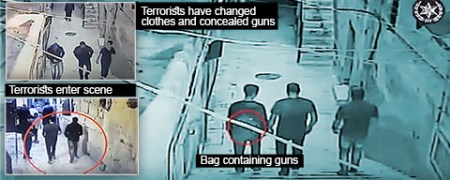
The Israeli police Thursday, July 20, released a video tape recording the movements of the terrorists heading for the murderous attack they committed on Temple Mount six days ago, when they shot dead two Israeli border guard police officers.

The film shows not three but four men who carefully stepped away from each other before entering the Al Aqsa Mosque. There, the three gunmen were handed their weapons by the fourth confederate, who made his escape among the crowds of worshippers exiting the mosque.

The police published the video Thursday ahead of Muslim Friday prayers – which brings tens of thousands of worshippers to Al Aqsa – as a reminder that the crime committed was a terrorist attack staged by Muslims at Islam’s third most sacred site – not the metal detectors Israel which installed for its safety. To drown this truth out, the Palestinians and Waqf officials have been raising a worldwide uproar over those detectors, as though nothing else happened to make them necessary.

The investigation going forward has established that the terrorists were far from amateurs. They acted coolly, with professional precision and were clearly highly trained and familiar with the terrain. It was a skilled terrorist cell that assaulted a shrine holy to three world faiths.

Even the absence of any claim of responsibility for the attack is a clue, especially since none of Israel’s investigators, be they police, security authorities or intelligence agencies, have so far thrown any light on the identity of the hand behind that cell.

However, DEBKAfile’s intelligence and counterterrorism sources report that Jordanian and Saudi intelligence services have come to the conclusion that the attack was the work of a Hizballah-run cell on orders from Iran. One of Hizballah’s signatures is the absence of any claim of responsibility.

On July 18, 2012, a suicide bomber blew himself up on a bus carrying Israeli tourists at the Bulgarian resort of Burgas, killing five Israelis and the Bulgarian driver and injuring 32. No organization has ever claimed this attack. Israeli intelligence uncovered evidence that it was orchestrated by Hizballah, but was never able to lay hands on the perpetrators.

The difference this time was that the three gunmen on Temple Mount had no intention of committing suicide. They did not expect the Israel police detail to react quickly enough to gun them down, but had meant to elude pursuit by fleeing to safety into Al Aqsa mosque. There they planned either to escape through ancient subterranean tunnels leading outside the Old City walls, or barricade themselves inside the cavernous mosque for a long shootout with Israel police.

Jordanian intelligence circles suspect that the Temple Mount attack was linked to the US-Russian deal for ceasefire zones in southwest Syria right up to the borders of Jordan and Israel. Both governments have demanded the exclusion of Iranian and Hizballah forces from those zones.

Tehran found an answer to this demand by demonstrating that its Lebanese proxy is capable of reaching deep inside Israel without recourse to external territory, because Hizballah not only maintains a presence in Daraa and the Syrian Golan, but has planted terrorist networks inside Israel and Jordan. The pro-Iranian terror group has long been suspected of recruiting networks in some Israeli Arab communities. By striking Temple Mount, Iran and Hizballah targeted both Israel and Jordan, which claims religious custodianship of its mosques.

Saudi-led bloc drops the list of 13 demands; now calls for six principles

Posted July 20, 2017 by danmillerinpanama
Categories: Arab-US summit, Qatar, Qatar and Israel's enemies, Qatar and terrorism funding

Tags: , , ,

Saudi-led bloc drops the list of 13 demands; now calls for six principles, World Affairs Journal, July 19, 2017

(Round and round it goes; where it stops nobody knows. — DM)

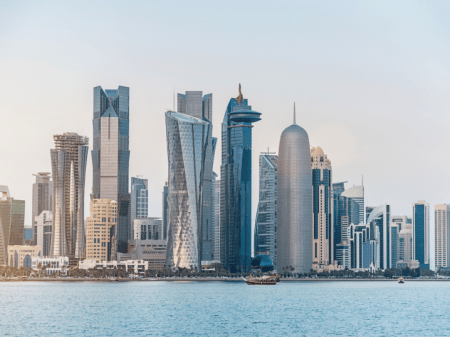
Doha skyline

The Peninsula / AP

UNITED NATIONS: Four Arab nations that are blockading Qatar have dropped their list of 13 demands to lift the siege.

Now the Saudi-led countries are urging Qatar to commit to six principles on combatting extremism and negotiate a plan to implement them.

Saudi Arabia, the United Arab Emirates, Egypt and Bahrain broke relations with Qatar in early June largely over their allegations that it supports extremist groups — a charge Qatar rejects. They initially made 13 demands, which Qatar said are “unrealistic and is not actionable”.

Saudi Arabia’s UN Ambassador Abdallah Al-Mouallimi told a briefing for a group of UN correspondents that the four nations are now committed to the six principles agreed to by their foreign ministers at a meeting in Cairo on July 5.

According to Al Jazeera the six principles are:

Commitment to combat extremism and terrorism in all their forms and to prevent their financing or providing havens.

Suspending all acts of provocation and speeches inciting hatred or violence.

Full compliance with the Riyadh Agreement of 2013 and the supplementary agreement and its implementation mechanisms of 2014 within the framework of the Gulf Cooperation Council.

Adherence to all the outcomes of the Arab Islamic American Summit held in May 2017 in Riyadh.

Refraining from interfering in the internal affairs of states and from supporting illegal entities.

The responsibility of all states of the international community to confront all forms of extremism and terrorism as a threat to international peace and security.

Al-Mouallimi said both sides can talk about details of “the tactics” and “the tools” to implement them — “and that’s where we can have discussion and compromise.”

The list of first 13 demands handed to Qatar on 22 June included shutting down the Al Jazeera news network, closing a Turkish military base, cutting ties with the Muslim Brotherhood and downgrading relations with Iran.

Al-Mouallimi said closing Al-Jazeera might not be necessary.

“If we can achieve that (the principles) without closing down Al-Jazeera, that’s also fine. The important thing is the objective and the principle involved.”

UAE Minister of State for International Cooperation Reem Al Hashimy said all the countries involved have strong relations with the United States “and we believe that the Americans have a very constructive and a very important role to play in hopefully creating a peaceful resolution to this current crisis.”

“We hope to be able to resolve this internally and among ourselves with the assistance of strong mediation, whether it’s from the U.S. or the Kuwaitis,” she said.

Diplomats from the four countries who attended the briefing said there have been discussions about possible next steps.

UAE Ambassador Lana Nusseibeh said that “if Qatar is unwilling to accept core principles around what defines terrorism or extremism in our region, it will be very difficult” for it to remain in the Gulf Cooperation Council with Saudi Arabia, the UAE and Bahrain.

“So it may be a parting of ways for a little while in order to work things out,” she said.

The Worst Ideological Enemy of the US is Now Europe

Posted July 20, 2017 by danmillerinpanama
Categories: Europe and Islam, Europe and Islamic terror, Europe and Islamists, European "democracy", European establishment, European left, European populism, European values, European weakness, Islamic integration, Islamic invasion, Islamisation of Europe, Merkel, Multiculturalism

Tags: , , , , , , , , , , , , ,

The Worst Ideological Enemy of the US is Now Europe, Gatestone Institute, Drieu Godefridi, July 20, 2017

The vast majority of these European courts — whether the European Court of Human Rights (ECHR) or the Court of Justice of the European Union (CJEU) — in their attempt to be moral and just, have dismissed the sovereign laws of Italy as irrelevant, and trampled the rights of the Italian state and ordinary Italians to approve who enters their country.

In Europe, Amnesty International and the like are, it seems, a new source of law.

Those who gave the Statue of Liberty to America in 1886 “to commemorate the perseverance of freedom and democracy in the United States” are willingly trampling their own people’s liberties today through courts of appointed, unelected, unaccountable ideologues. The danger is that, with the help of many doubtless well-intentioned, international NGOs, the EU will not stop at its shores.

Europe is the worst enemy of the US? You cannot be serious. Islamism, Russia, illegal immigrants… whatever, but surely not Europe! Are we not still together in NATO? Do we not conduct huge amounts of trade every day? Do we not share the same cultural roots, the same civilization, the same vision of the future? Did France not give the US her famous Statue of Liberty – “Liberty Enlightening the World?”

Not anymore. In a sense, Europe looks like a continent where American Democrats have been in power for 30 years, not only in the European states, but also at the level of the European Union.

In the US, the political spectrum still spans a vast range of views between Democrats and Republicans, globalists and nationalists, pro-lifers and pro-choicers, pro-government control and pro-individuals’ control, and pro-whatever. Even today with a president and a Supreme Court clearly on the political “Right” these divisions, and the all-important separation of powers, allow for and encourage vigorous debate. By contrast, in Europe, at the “official” level, such a spectrum of views no longer exists.

In Western Europe, politically speaking, in the press and in universities, either you are on the “Left,” or you are a pariah. If you are a pariah, you are most likely to be prosecuted for “Islamophobia”, “racism”, discrimination or some other “trumped up” charge.

There are several reasons for this imbalance. One is the difference in political maturity between Europeans and Americans. Whereas “ordinary” American voters (not just the “elites”) understand that their Supreme Court is key to ensuring that fundamental constitutional freedoms are maintained for all, the Europeans have done the opposite. In the US, the constitutional right to “Life, Liberty and the pursuit of Happiness” is derived from the people — “from the consent of the governed.”

Consequently, when Justice Antonin Scalia of the US Supreme Court died, the US press wrote about him for weeks. “Ordinary citizens” in the US are deeply aware of judicial roles and their effect on judgements and legal precedents.

By contrast, in Europe, we now have two Supreme Courts: the European Court of Human Rights (ECHR) in Strasbourg, and the Court of Justice of the European Union (CJEU) in Luxembourg, in addition to national courts. There is, however, not one citizen in a million who can name a single judge of either the ECHR or the CJEU. The reason is that the nomination of those judges is mostly opaque, purely governmental and, in the instance of the ECHR, with no public debate. With the CJEU, appointments are also essentially governmental, with the sanction of the European Parliament, which is ideologically dominated by the Left.

In Europe, there are now two Supreme Courts: the European Court of Human Rights (ECHR) in Strasbourg, and the Court of Justice of the European Union (CJEU) in Luxembourg (pictured above), in addition to national courts. (Image source: Transparency International/Flickr)

The US has always welcomed immigrants, most of whom came to her shores via Ellis Island and went through a legal process for entry, led by the light of the torch of Lady Liberty. In recent years, especially since the advent of increased terrorism, the subject of illegal immigrants, migrant workers and the vetting of immigrants has become hotly debated.

By contrast, in Europe, the topic of “illegal” migrants is effectively forbidden. The continent has recently been invaded by millions of migrants — many apparently arriving under the false pretense of being refugees, even according to the United Nations.

One of the reasons is the open-door policy of German Chancellor Angela Merkel, who allowed over a million mostly Muslim migrants to enter Germany, not only without extreme vetting, but with no vetting at all.

There is, however, another, more structural cause for the current situation. In 2012, the ECHR enacted the so-called “HIRSI” ruling, named after the court case of Hirsi Jamaa and Others v. Italy, which states that the European states have the legal obligation to rescue migrants wherever they find them in the Mediterranean Sea — even just 200 meters away from the Libyan coast — and ferry them to the European shores, so that these people can claim the status of refugee.

When the Italian Navy intercepted illegal migrants in the Mediterranean Sea and sent them back to their point of origin, Libya, not only did the ECHR condemn Italy for this “obvious” breach of human rights; the Italians had to pay 15,000 euros ($17,000 USD) to each of these illegal migrants in the name of “moral damage”. This kind of money is equivalent to more than 10 years of income in Somalia and Eritrea (the countries of origin of Mr. Hirsi Jamaa and his companions). In 2016, Somalia’s GDP per capita was an estimated $400 USD; Eritrea’s $1,300.

Everyone, of course, heard about the HIRSI ruling. In Africa, especially, many understood that if they could reach the Mediterranean, Europe’s navies would now be obliged to ferry them directly to Europe. Before the HIRSI ruling, when people tried to reach the shores of Europe, hundreds every year tragically died at sea. After HIRSI, the objective is now simply to be intercepted. Consequently, hundreds of thousands attempt this journey — often with the help of non-governmental organizations (NGOs) such as Médecins Sans Frontières, whose activists wait for boats to appear at sea, just off the Libyan coast. We therefore presently have 5,000 unintercepted people dying at sea every year.

While Italy is “drowning” in refugees, Austria has deployed armored vehicles close to its border with Italy, to stop more migrants from coming north.

The vast majority of these European courts — whether the ECHR or the CJEU — in their attempt to be moral and just, have dismissed the sovereign laws of Italy as irrelevant, and trampled the rights of the Italian state and ordinary Italians to approve who enters their country.

Americans would do well to read the HIRSI decision; it is rather short and a perfect summary of current European jurisprudence. They will find that the ECHR does not hesitate to accept NGOs as an authoritative part of the process; the ECHR even quotes their statements as if fact or law. In Europe, Amnesty International and the like are, it appears, a new source of law.

The European people, of course, still share the common values of Western civilization. The “Visegrad Group” of countries in Central Europe, for instance — the Czech Republic, Hungary, Poland and Slovakia — do not accept the German diktat to relocate Muslim refugees. Parts of Western Europe, such as the northern Flemish-speaking part of Belgium, are also pretty tired of the whole European mess, and Merkel will not embody the leadership of Germany forever.

Americans, therefore, would do well to understand that for the time being the “Cultural Left” is so deeply entrenched in Western Europe and the EU, that their worst ideological enemy is not the Middle East or Russia: it is Europe.

Those who gave the Statue of Liberty to America in 1886 “to commemorate the perseverance of freedom and democracy in the United States” are willingly trampling their own people’s liberties today through courts of appointed, unelected, unaccountable ideologues. The danger is, with the help of many, doubtless well-intentioned, international NGOs, the EU will not stop at its shores.

Drieu Godefridi, a classical-liberal Belgian author, is the founder of the l’Institut Hayek in Brussels. He has a PhD in Philosophy from the Sorbonne in Paris and also heads investments in European companies.
Trump ends program to arm anti-Assad jihadis in Syria

Posted July 20, 2017 by danmillerinpanama
Categories: Russia - Syrian war, Syrian militias, Trump and Russia, Trump and Syria

Tags: , , ,

Trump ends program to arm anti-Assad jihadis in Syria, Jihad Watch, 

(Please see also, Trump to end lavish CIA support for ‘moderate’ anti-Assad forces in Syria. — DM)

The Washington Post casts this story as evidence that President Trump is a pawn of the Russians, which is more of the Left’s ridiculous campaign to portray the 2016 election as having been stolen by Vladimir Putin. But this is the right decision. These “rebels” are mostly jihadis; arming and aiding them is arming and aiding enemies of the United States.

“Trump ends covert CIA program to arm anti-Assad rebels in Syria, a move sought by Moscow,” by Greg Jaffe and Adam Entous, Washington Post, July 19, 2017:

President Trump has decided to end the CIA’s covert program to arm and train moderate Syrian rebels battling the government of Bashar al-Assad, a move long sought by Russia, according to U.S. officials.

The program was a central plank of a policy begun by the Obama administration in 2013 to put pressure on Assad to step aside, but even its backers have questioned its efficacy since Russia deployed forces in Syria two years later.

Officials said the phasing out of the secret program reflects Trump’s interest in finding ways to work with Russia, which saw the anti-Assad program as an assault on its interests. The shuttering of the program is also an acknowledgment of Washington’s limited leverage and desire to remove Assad from power.

Just three months ago, after the United States accused Assad of using chemical weapons, Trump launched retaliatory airstrikes against a Syrian air base. At the time, U.N. Ambassador Nikki Haley, said that “in no way do we see peace in that area with Assad at the head of the Syrian government.”

Officials said Trump made the decision to scrap the CIA program nearly a month ago, after an Oval Office meeting with CIA Director Mike Pompeo and national security adviser H.R. McMaster ahead of a July 7 meeting in Germany with Russian President Vladimir Putin.

Spokesmen for the National Security Council and the CIA declined to comment….

‘It takes 2 to tango’: Germany threatens Turkey with major policy overhaul

Posted July 20, 2017 by Peter Hofman
Categories: Uncategorized

Published time: 20 Jul, 2017 13:57

Source: ‘It takes 2 to tango’: Germany threatens Turkey with major policy overhaul — RT News

FILE PHOTO German Chancellor Angela Merkel and Turkish President Recep Tayyip Erdogan © Tobias Schwarz / Reuters

Berlin said it is losing its temper with Ankara, urging Turkey to release Germans detained on terrorism charges and “return to European values,” or face shrinking investment, restrictions on tourism and curbs to EU financial aid.

Speaking in Berlin on Thursday, Foreign Minister Sigmar Gabriel promised a major overhaul of Germany’s policy toward Turkey, threatening to further strain the already-tense ties between the two NATO members.

Read more

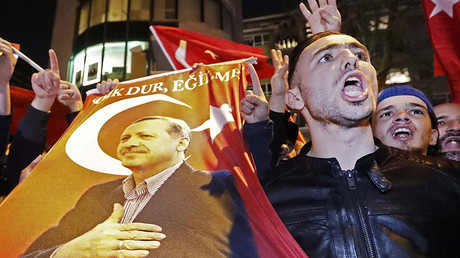
Demonstrators gather outsidethe Turkish consulate, Rotterdam, Netherlands March 11, 2017. © Yves Herman

“We cannot continue on as before,” Gabriel said, according to a Foreign Office press release. “We have to be clearer than before, so the authorities in Ankara understand that their policies are not without consequences.” 

“It takes two to tango!” he said. “I cannot see that the Turkish government is ready at the moment to go this way with us. It’s pitiful!”

The latest flare-up was triggered by the arrest of Peter Steudtner, a German human rights activist who was charged by Turkish authorities with supporting a terrorist organization. Demanding his immediate release, Gabriel said Steudtner had been invited to speak at a local human rights workshop and had no contacts among the Turkish opposition or civil society.

Mentioning other Germans, including Die Welt reporter Deniz Yucel, who were charged with alleged links to terrorist groups, the foreign minister announced stricter travel warnings for tourists planning to visit Turkey.

The cases of Steudtner and Yucel were a clear enough example “that German citizens are no longer safe from arbitrary arrests in Turkey,” Gabriel said. “We have no other choice – as we are responsible for the safety of our country’s citizens – but to adapt our travel and safety advice to Turkey and let Germans know what can happen to them when they travel [there].”

Earlier in the day, the German Foreign Office website updated its travel section. The revised travel advice stopped just short of a formal warning, but stated that “people traveling on private or business purposes to Turkey are advised to exercise elevated caution” and to register with the German embassy or consulate even in cases of a short stay.

Read more

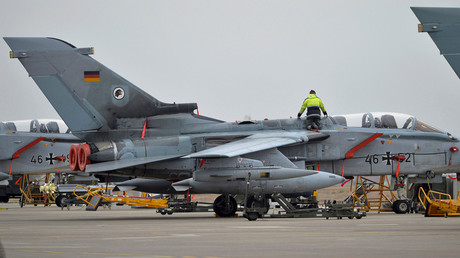
FILE PHOTO A technician works on a German Tornado jet at the air base in Incirlik, Turkey © Tobias Schwarz

“On and on, we showed patience and restrained ourselves,” Gabriel went on, adding that “the next stage of escalation has been reached.” Accusing Turkey of “departing the basis of European values,” the top diplomat also vowed economic retaliation.

“I therefore cannot see how we, as the government, can still guarantee corporate investments in Turkey when we are seeing arbitrary, politically-motivated confiscations [of property] there and arbitrary deportations for political reasons,” he underlined.
Berlin will also contact its European partners to discuss possible curbs on EU financial aid to Turkey “in the coming days and weeks,” Gabriel announced.

Germany was Turkey’s top export destination in 2016, according to Reuters, citing IMF data, and was also the second biggest source of Turkish imports, at $21.5 billion. The Association of German Chambers of Commerce (DIHK) has already commented on Gabriel’s speech, saying current developments in Turkey are likely to affect doing business in the country.

“In this environment it is hard to think about German companies making new investments in Turkey,” Volker Treier, DIHK foreign trade chief, told Reuters. Germany bought $14 billion worth of Turkish exports in 2016, according to IMF direction of trade statistics.

In order to prevent retaliatory measures, Ankara has to engage in a “decent dialogue” and provide consular access and “speedy, fair trials” for Steudtner, Yucel and other Germans facing political charges. “We expect [Turkey] to return to European values, respect freedom of expression, freedom of press and freedom of art,” Gabriel reiterated.

Turkey accuses Germany of ‘great political irresponsibility’

Turkey has responded that it is impossible for the government to bow to German demands. “It is not possible for us to accept statements aiming to blur the economic environment based on political motivation, we hope they turn back from this,” Ibrahim Kalin, Turkish President Recep Tayyip Erdogan’s spokesman, told reporters.

He also said it was “great political irresponsibility” to warn German citizens against traveling to Turkey. In turn, Mehmet Simsek, Turkey’s deputy prime minister, said in a tweet that the country welcomes German investors. The minister also dismissed media reports alleging some major German companies, including Daimler AG and BASF, were investigated by Turkey over “supporting terrorism.”

Over the past year, German-Turkish ties have deteriorated rapidly. After the foiled 2016 military coup, Ankara accused Berlin of harboring followers of Fethullah Gulen, a self-exiled Muslim cleric said to have orchestrated the uprising. Turkish pro-coup officers being granted asylum in Germany have also added more strains to the two countries’ relations.

Turkey repeatedly blocked access for German MPs to NATO’s air base at Incirlik, once home to some 300 Bundeswehr soldiers and several reconnaissance jets. In June, Berlin authorized troop withdrawal, relocating its contingent to Jordan.

Germany, for its part, sparked anger in Turkey’s government by barring top officials from speaking at political rallies on German soil.

Trump to end lavish CIA support for ‘moderate’ anti-Assad forces in Syria

Posted July 20, 2017 by Peter Hofman
Categories: Uncategorized

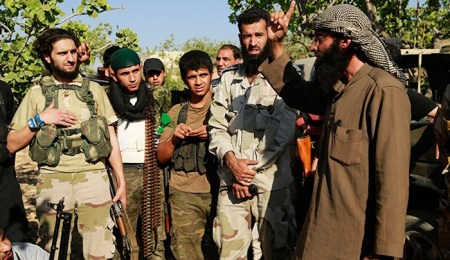
The White House and CIA have reportedly decided to end a covert operation to arm the so-called moderate Syrian rebels. The US has allegedly pumped some $1 billion into train-and-equip efforts with questionable outcomes.

Source: Trump to end lavish CIA support for ‘moderate’ anti-Assad forces in Syria – reports — RT News

Alaa Al-Faqir / Reuters

On Wednesday, US officials told the Washington Post (WP) and Reuters that Trump has decided to put an end to the covert CIA plan which began arming and training the so-called moderate Syrian rebels in 2013.

Authorized by President Barack Obama, the secret Timber Sycamore weapons supply and training initiative has served as the backbone of Washington’s strategy to topple the Syrian President Bashar Assad.

Two US officials, who spoke on condition of anonymity with Reuters, said the covert CIA scheme has produced little results.

The Washington Post meanwhile claimed, based on their sources, that Trump’s reported intention to stop arming the rebels is the American president’s way of finding common ground with Russia on Syria.

Moscow has always warned against arming the so-called moderate rebel groups in Syria, pointing out that weapons supplied to them often fall into the hands of jihadist groups such as Jabhat al Nusra and Islamic State.

“Of course it’s been a tremendous waste of money … to train rebels who immediately turned weapons over and joined Al-Nusra [Front] or Al-Qaeda,” Rick Sterling, an investigative journalist and member of the Syria Solidarity Movement, told RT.

“The money in the training that the CIA has provided has primarily helped Al-Qaeda,” Sterling said. He described Trump’s decision was a positive step, but added it is likely “to come under attack now, and the decision may be undermined or sabotaged.”

Trump’s decision to end the CIA program was reportedly taken in consultation with CIA Director Mike Pompeo and national security adviser H.R. McMaster ahead of his meeting with President Vladimir Putin in Hamburg earlier this month. During that meeting, on the sidelines of the G20 summit, Trump and Putin reached a ceasefire agreement for southwest Syria.

The scrapping of the CIA’s Timber Sycamore program was not a precondition for the ceasefire negotiations, the US officials insisted.

Without sharing the details of the program’s demise, the unnamed US officials claimed that Timber Sycamore would be phased out over a period of months. The WP report also said the decision to end the operation is being supported by the Jordanians, where some of the CIA training has been taken place.

Varied US arms and training strategies to bolster rebel groups in Syria under the Obama administration have been notoriously underwhelming. In 2015, General Lloyd Austin, CENTCOM commander at the time, told Congress that only four or five of US-trained fighters have gone to Syria of the 5,000 the Pentagon envisaged.

Earlier that year, the then Defense Secretary Ash Carter told the Senate Armed Services Committee Carter that less than 1 percent of the pool of 7,000 Syrian volunteers for the US-funded train-and-equip program had made it through the vetting process.

“As of July 3, [2015] we are currently training about 60 fighters,” Carter said. “I can look out at your faces and you have the same reaction I do, which is that that’s an awfully small number.”

The Reuters report notes that the US will continue to support select Syrian rebel groups with airstrikes and guidance as part of a separate effort.

The White House declined to comment on the reports at their daily briefing. The CIA has also refused to comment when reached out to by Reuters.

In February, Reuters reported that the US had frozen the CIA-run program after rebels in northwest Syria came under major attack by Islamists. The alleged suspension of the program, which included salaries, training, ammunition, had nothing to do with Trump replacing Barack Obama as president, two US officials familiar with the CIA program told Reuters at the time.

The CIA declined to comment on the reported freeze, while officials in Qatar, Turkey and Saudi Arabia – the other three countries funneling support to Syrian anti-government rebels – also refused to discuss the matter.

Chinese Army Mobilizes Military Assets to Tibet Following Live Fire Drills

Posted July 20, 2017 by danmillerinpanama
Categories: Bhutan, China vs India, Tibet

Tags: , ,

Chinese Army Mobilizes Military Assets to Tibet Following Live Fire Drills, Sputnik News via Global Security org, July 20, 2017

The Chinese People’s Liberation Army (PLA) mobilized thousands of ground vehicles and other military equipment as the standoff between Chinese and Indian troops near the disputed area of Sikkim continues, according to a report from the PLA Daily.

PLA Daily is widely considered the main outlet the Chinese army uses for external communications, LiveMint notes.

The report did not specify the exact date the military assets were relocated to Tibet but said it occurred at the end of June. The unspecified military “hardware” was transported via rail and conventional roads.

It’s not entirely clear where in Tibet the chess pieces have been placed. The report also failed to indicate whether the military equipment would be used in tandem with a Chinese battalion that recently completed drills in Tibet, China’s second-largest province.

Last weekend, the PLA conducted live fire exercises in the province. Video footage of the drills was broadcast over CCTV. Analysts said the move would show the people of China the government is ready to protect them in the event that the standoff becomes more heated and violent.

Reinforcing the western front with personnel and hardware makes it much easier for commanders to defend Chinese borders, Wang Dehua of the Shanghai Institutes for International Studies told LiveMint on Wednesday. Offensive and defensive maneuvers are “all about logistics,” Wang said, and “now there is much better logistics support to the Tibet region.”

The dispute in Sikkim originated in mid-June when Indian troops stopped Chinese workers from building a road that Beijing said was on its territory. Bhutan claimed that the particular area where construction took place was actually its territory, and India sided with Bhutan.

The area where the road was being built is of significant strategic importance to New Delhi. A finished road could provide Chinese troops with an avenue to sever India’s access to its northeastern states.

A recent article in the Indian Defense Review argued that further espionage between India and China might actually be key to resolving the crisis. “The two countries are ignorant of each other’s strategies,” Nicolas Groffman wrote. As a result, suspicion is “taking the place of intelligence just when understanding is critical.”

Vasily Kashin told Sputnik China, however, that such activities ought to have strict limits if stabilizing effects are to be achieved. Intelligence operations would cross a critical threshold if “active intervention in the internal affairs or acts of sabotage” were used, Kashin emphasized.