Israel expands lockdown amid forecast of 10,000-coronavirus victims. Idle hotels turn into quarantine hospitals – DEBKAfile

Posted March 17, 2020 by Joseph Wouk
Categories: Uncategorized

Source: Israel expands lockdown amid forecast of 10,000-coronavirus victims. Idle hotels turn into quarantine hospitals – DEBKAfile

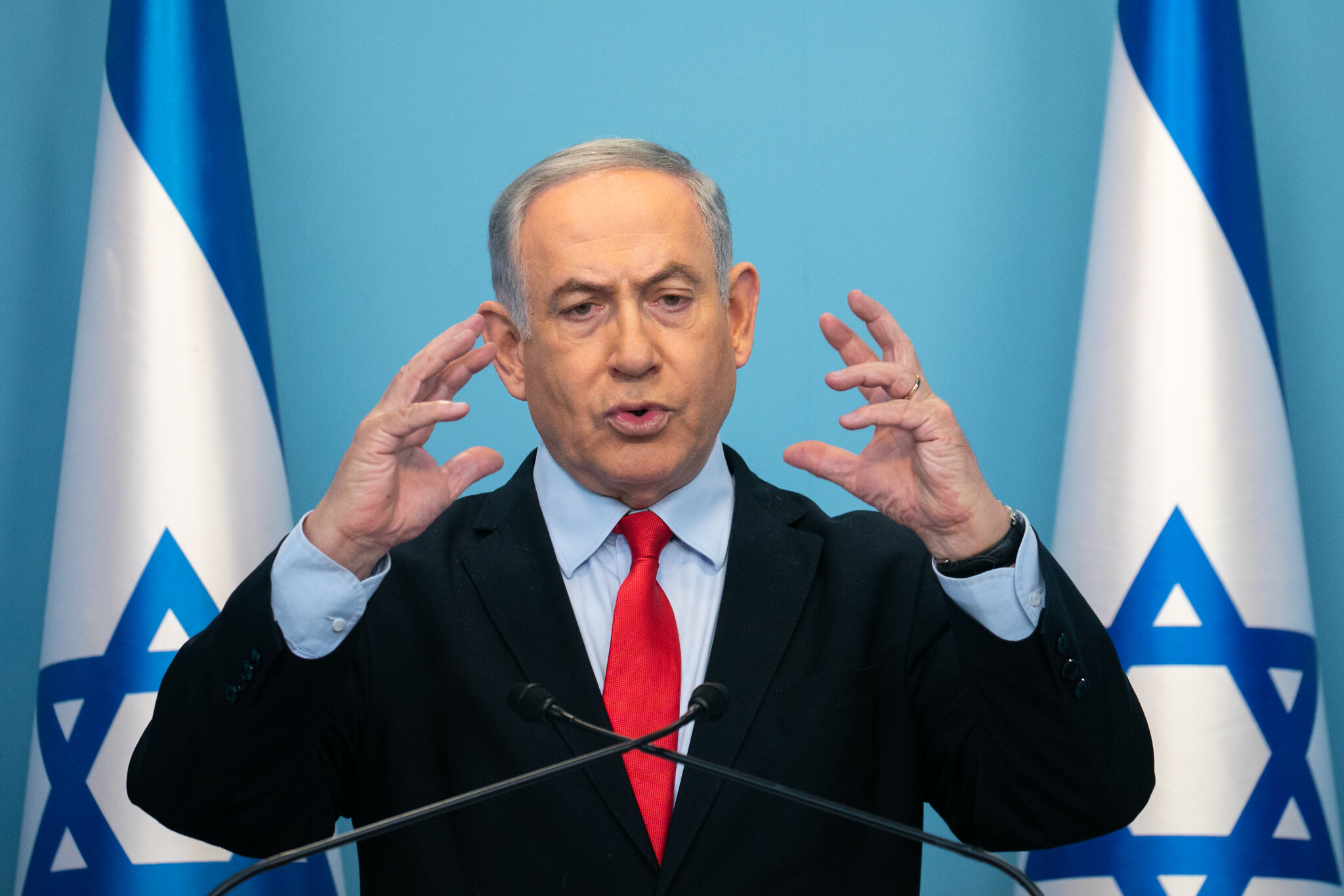
More population groups will be confined to their homes in the expanded lockdown announced by Prime Minister Binyamin Netanyahu on Monday night, March 16 after the number of coronavirus victims rose to 277.

 Health Ministry director Moshe Bar Simantov warned that the rate of infections was gaining momentum and doubling itself at high speed. If Israel fails to declare a total lockdown on the country, he warned that the number of covid-19 cases forecast will reach 10,000 in 10 days to two weeks.

The IDF has been enlisted for the first time to help deal with the emergency. The Homeland Defense Command has taken over hotels in the main cities – idle for lack of tourists – for use as centers for the treatment of quarantined coronavirus patients to ease the burden on the hospitals.

While abstaining from a comprehensive national lockdown at this time, the prime minister nonetheless announced more steps in addition to the stringent restrictions already in place.

Economic activity already reduced will be shrink further by placing the public sector on emergency footing. Most of the work force in government ministries is to be put on unpaid leave until after the Passover holiday. Public institutions including banks will cut down on staff at their desks and public transport scaled down. This latest package is in effect a compromise between the demands of the health authorities and the determination by the ministry of finance that the economy cannot withstand a complete lockdown. Furthermore, digital surveillance of confirmed cases will be in force for 30 days.

The crisis took another sharp turn on Monday with a flood of complaints from hospitals and medical institutions of a severe shortage of equipment for coping with the disease, and lack of protective gear for medical staff.


Israel expands lockdown amid forecast of 10,000-coronavirus victims. Idle hotels turn into quarantine hospitals – DEBKAfile

Posted March 17, 2020 by Joseph Wouk
Categories: Uncategorized

Source: Israel expands lockdown amid forecast of 10,000-coronavirus victims. Idle hotels turn into quarantine hospitals – DEBKAfile

More population groups will be confined to their homes in the expanded lockdown announced by Prime Minister Binyamin Netanyahu on Monday night, March 16 after the number of coronavirus victims rose to 277.

 Health Ministry director Moshe Bar Simantov warned that the rate of infections was gaining momentum and doubling itself at high speed. If Israel fails to declare a total lockdown on the country, he warned that the number of covid-19 cases forecast will reach 10,000 in 10 days to two weeks.

The IDF has been enlisted for the first time to help deal with the emergency. The Homeland Defense Command has taken over hotels in the main cities – idle for lack of tourists – for use as centers for the treatment of quarantined coronavirus patients to ease the burden on the hospitals.

While abstaining from a comprehensive national lockdown at this time, the prime minister nonetheless announced more steps in addition to the stringent restrictions already in place.

Economic activity already reduced will be shrink further by placing the public sector on emergency footing. Most of the work force in government ministries is to be put on unpaid leave until after the Passover holiday. Public institutions including banks will cut down on staff at their desks and public transport scaled down. This latest package is in effect a compromise between the demands of the health authorities and the determination by the ministry of finance that the economy cannot withstand a complete lockdown. Furthermore, digital surveillance of confirmed cases will be in force for 30 days.

The crisis took another sharp turn on Monday with a flood of complaints from hospitals and medical institutions of a severe shortage of equipment for coping with the disease, and lack of protective gear for medical staff.


Six new coronavirus patients in Israel – number jumps to 304

Posted March 17, 2020 by Joseph Wouk
Categories: Uncategorized

Source: Six new coronavirus patients in Israel – number jumps to 304 – The Jerusalem Post

Three people who work in the Central Laboratory for Detecting Coronavirus of the Ministry of Health at Sheba Medical Center in Tel Hashomer tested positive. An IDF soldier is also infected.

Workers wearing protective clothes disinfect a shop in Jerusalem, on March 15, 2020, as part of measures to prevent the spread of the Coronavirus. (photo credit: YONATAN SINDEL/FLASH90)
Workers wearing protective clothes disinfect a shop in Jerusalem, on March 15, 2020, as part of measures to prevent the spread of the Coronavirus.
(photo credit: YONATAN SINDEL/FLASH90)
The number of Israelis infected by the novel coronavirus, COVID-19, rose Tuesday morning by six people to 304, according to the Health Ministry.

Among the infected are three people who work in the Central Laboratory for Detecting Coronavirus of the Ministry of Health at Sheba Medical Center in Tel Hashomer. On Monday, the lab was shut down because its deputy director-general became infected. The new diagnoses include two additional staff members, Kan news reported.

There are four patients in critical condition, 11 in moderate and 284 that have mild cases of the virus, according to the ministry report.

So far, five Israelis have become infected with but recovered from COVID-19.

Some 223 people are hospitalized, 15 are in the check-in process and will be hospitalized by the end of the day, and 46 patients are being treated in home-isolation.

On Sunday night, a senior doctor at Ichilov Hospital was reported by Ynet to have contracted the virus. All of the patients in her unit – many of them senior citizens – had to be tested and transferred to another unit, and her staff was sent home to self-isolate. The next morning, an intern in the hospital’s urology department also tested positive for coronavirus.

In addition, the IDF confirmed that patient No. 273 is a 19-year-old soldier from the north of the country. She is in mild condition. The IDF Medical Corps. and the Ministry of Health are together conducting a comprehensive epidemiological investigation and will share that information soon.

צבא ההגנה לישראל

@idfonline

חולה מספר 273 היא חיילת בצה”ל, בת 19 מצפון הארץ. מצבה של החולה קל והיא פונתה לבית חולים. מדובר בחולה השישית בצה״ל.
חיל הרפואה, בשיתוף משרד הבריאות, מבצע חקירה אפידמיולוגית מקיפה שממצאיה יפורסמו בהמשך. למגעים קרובים נמסרה הודעה ומגעים נוספים מאותרים כעת

MK Tzachi Hanegbi refrained from attending the Knesset swearing in ceremony on Monday because he feared he had been in contact with someone who might have coronavirus. Hanegbi is waiting for the individual’s test results. In the interim, he is self-isolating.

Further more, a report disseminated by Hadassh Ein Kerem hospital in Jerusalem shared that the condition of an 89-year-old woman who was infected with coronavirus deteriorated overnight and she is considered critical condition.

So far, Israel has not had any person die from the coronavirus.

Prime Minister Benjamin Netanyahu continues to roll out new restrictions on the public to help stop the spread of the virus across the country. Most of the new instructions presented Monday night will impact the public and private business sectors.


COVID-19 cases in Israel jump to 298; nearly 1/4 showed no symptoms

Posted March 17, 2020 by Joseph Wouk
Categories: Uncategorized

Source: COVID-19 cases in Israel jump to 298; nearly 1/4 showed no symptoms | The Times of Israel

Less than one-third of cases display both fever and respiratory symptoms, Health Ministry data shows; 98 of sick contracted disease in Israel; 21 recently returned from Spain

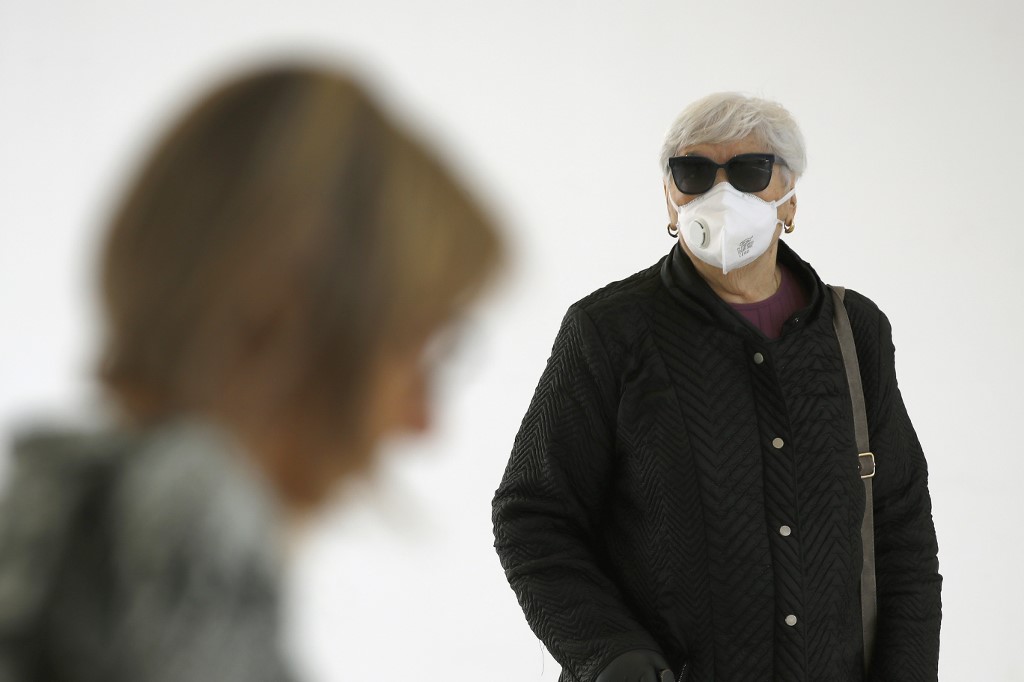
People wearing protective masks arrive at Samson Assuta Ashdod University Hospital on March 16, 2020, in the southern Israeli city of Ashdod. (JACK GUEZ / AFP)

People wearing protective masks arrive at Samson Assuta Ashdod University Hospital on March 16, 2020, in the southern Israeli city of Ashdod. (JACK GUEZ / AFP)

The Health Ministry on Monday night said the number of COVID-19 cases in Israel has climbed to 298, as data shared by the authorities showed that one-quarter of those infected by the coronavirus showed no symptoms.

Four of the cases were in serious condition and nine were showing moderate symptoms.

The data, based on 250 confirmed cases in Israel, underlined that 59 (24 percent) were asymptomatic upon diagnosis, 66 (26%) experienced respiratory symptoms, but no fever, while 41 (16%) ran a fever, but had no breathing difficulties or cough.

A plurality (74 cases, 29%), though still under one-third, had both a fever and respiratory symptoms — the conditions under which Israel’s emergency services are most likely to grant a COVID-19 test to those who have not returned from abroad or been in direct contact with someone infected. The symptoms in 11 other cases were classified as “unknown.”

The ministry did not specify how those who were asymptomatic were identified as carrying the virus, but health authorities have been testing those exposed to confirmed cases.

A man walks by closed shops and restaurants in Tel Aviv, on March 15, 2020. (Miriam Alster/FLASH90)

According to the Health Ministry figures, most of those carrying the virus had recently returned from abroad, though spread within Israel was catching up (98 cases).

The country with the largest numbers of Israeli travelers who were later diagnosed with COVID-19 was Spain, with 21 cases. Sixteen had recently returned from Italy and Austria, respectively, followed by 14 who came from France. Twelve of the cases had entered Israel from the United States, and another dozen from the United Kingdom. Eight each of those sick with the coronavirus had returned from Germany and Egypt.

Israel also saw two cases each among recent travelers to the Netherlands and Bulgaria, and a single case each from Belgium, Azerbaijan, Tunis, Japan, Malta, and Denmark.

Another 26 cases are still under investigation, the ministry said.

A plurality of those confirmed to be carrying the virus are in their 30s (23%), with the next common age group those in their 40s (18%) and their 20s (13%). Children and teenagers accounted for just 10% of the infections.

Some 22% of those who have fallen ill are over 60 (12% between 60 and 69; 10% over 70).

Over 50,000 Israelis are currently in quarantine.

Passengers wear masks at Ben Gurion Airport near Tel Aviv, Israel, March 10, 2020. (AP Photo/Ariel Schalit)

The Health Ministry said earlier that it was considering dramatically increasing its restrictions on movement in a bid to further slow the spread of the coronavirus.

“We may ask people to leave the house less, and only for necessary errands. The government is considering a general closure on all citizens, and if that happens it would mean all age groups will be asked to stay home until further notice,” the ministry’s deputy director general, Itamar Grotto, said Monday.

On Saturday, the government announced the latest wave of restrictions, saying all educational institutions would be shuttered and gatherings limited to no more than 10 people at any one time.

On Sunday, all “non-essential” businesses, including malls, restaurants, and most stores, were shut down.


Blue and White Head Benny Gantz Receives Mandate to Form Government 

Posted March 16, 2020 by Joseph Wouk
Categories: Uncategorized


IDF indicates Iran scaling back terror activity in light of coronavirus

Posted March 16, 2020 by Joseph Wouk
Categories: Uncategorized

Source: IDF indicates Iran scaling back terror activity in light of coronavirus | The Times of Israel

Military says it is seeing decrease in terrorist activities across the Middle East as countries instead fight pandemic

An explosion seen near the city of Homs in Syria attributed to Israeli airstrikes on March 5 2020 (Screencapture/Twitter)

An explosion seen near the city of Homs in Syria attributed to Israeli airstrikes on March 5 2020 (Screencapture/Twitter)

The Israel Defense Forces indicated Monday its primary foe in the region, Iran, was curbing its activities as it grapples with a major outbreak of the coronavirus.

IDF Spokesperson Hidai Zilberman told reporters that the military noted a decrease in the amount of activity in the region by Israel’s enemies, without specifically naming Iran.

“There are countries who have gotten it way worse than us with this corona[virus] story, and as a result their activities are at a slower pace,” Zilberman said.

Iran is among the countries hardest hit by the coronavirus, with hundreds of people reported killed, including a senior cleric on Monday, and at least another 14,000 people infected with the disease.

The real numbers may be even higher, as some have questioned the government’s reporting.

Cabinet ministers, members of parliament, Revolutionary Guard members and Health Ministry officials have been infected, compounding fears about Iran’s response to the global pandemic, which has infected nearly 170,000 people worldwide and killed more than 6,500.

Iran is widely considered Israel’s main enemy in the region, controlling and funding terror groups across the Middle East, notably the powerful Hezbollah terrorist militia in Lebanon.

In recent years, Tehran has worked to establish a permanent military presence to Israel’s north in Syria, both for its own forces and for proxy militias. Israel has stated that it will not tolerate this effort and has launched hundreds of airstrikes against Iranian and Iranian-backed forces in Syria.

AP contributed to this report.


Israel ups number of virus cases to 255, with 5 in serious condition 

Posted March 16, 2020 by Joseph Wouk
Categories: Uncategorized

Source: Israel ups number of virus cases to 255, with 5 in serious condition | The Times of Israel

13 patients listed as moderate, while majority of those infected have light symptoms; 4 people no longer ill, Health Ministry says; IDF says 5th soldier diagnosed

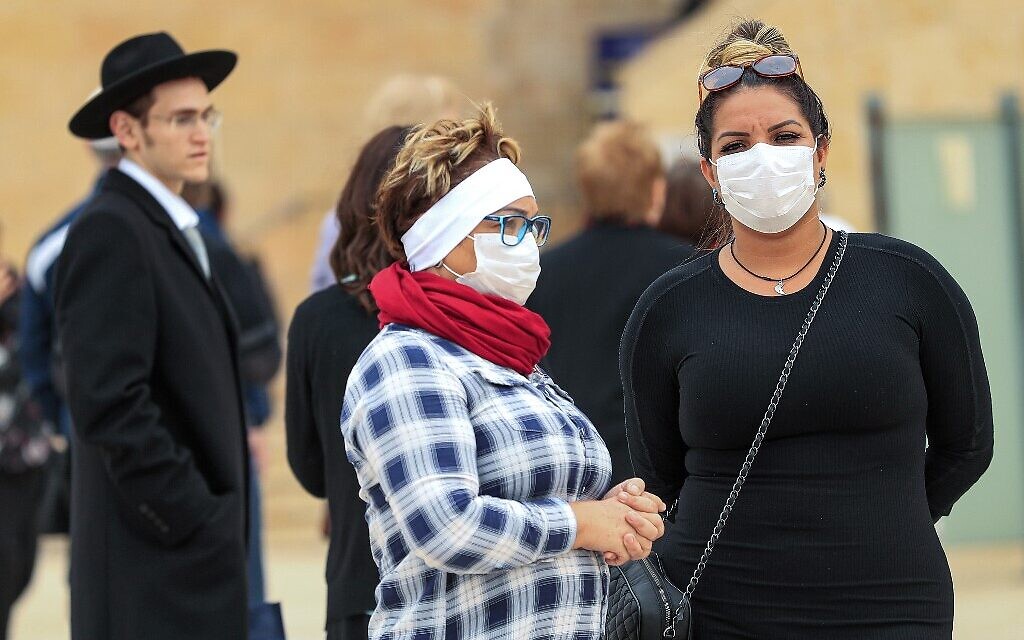
Women wearing protective masks visit the nearly deserted Western Wall in Jerusalem's Old City on March 12, 2020, after Israel imposed some of the world's tightest restrictions to contain the new coronavirus. (Emmanuel Dunand/AFP)

Women wearing protective masks visit the nearly deserted Western Wall in Jerusalem’s Old City on March 12, 2020, after Israel imposed some of the world’s tightest restrictions to contain the new coronavirus. (Emmanuel Dunand/AFP)

The Health Ministry on Monday reported an additional 42 cases of the novel coronavirus in Israel, bringing the total number of confirmed infections up to 255.

The majority have light symptoms, while 13 are listed in moderate condition and five are seriously ill, the ministry said, adding that 8,325 tests have been carried out.

Another four people no longer display any symptoms and are recuperating, according to the ministry.

Tens of thousands more were in quarantine after either traveling to countries with high incidences of the virus or coming into contact with a carrier. The ministry said 50,337 were in self-isolation. Due to the relatively long time it takes for symptoms to develop, health officials believe that more people have contracted the virus, but haven’t yet been diagnosed.

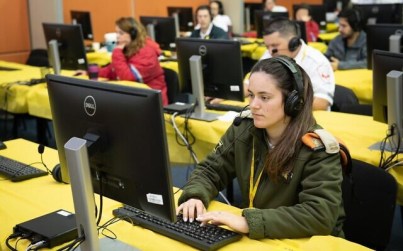
Soldiers and medics operate a call center specifically meant to respond to cases of the COVID-19 coronavirus on March 15, 2020. (Israel Defense Forces)

The Israel Defense Forces said a fifth soldier has been diagnosed with COVID-19.

“An epidemiological study was conducted, and all those who were in close contact with him have been sent to home quarantine. Additional people who were in contact with him are being located now,” the military said.

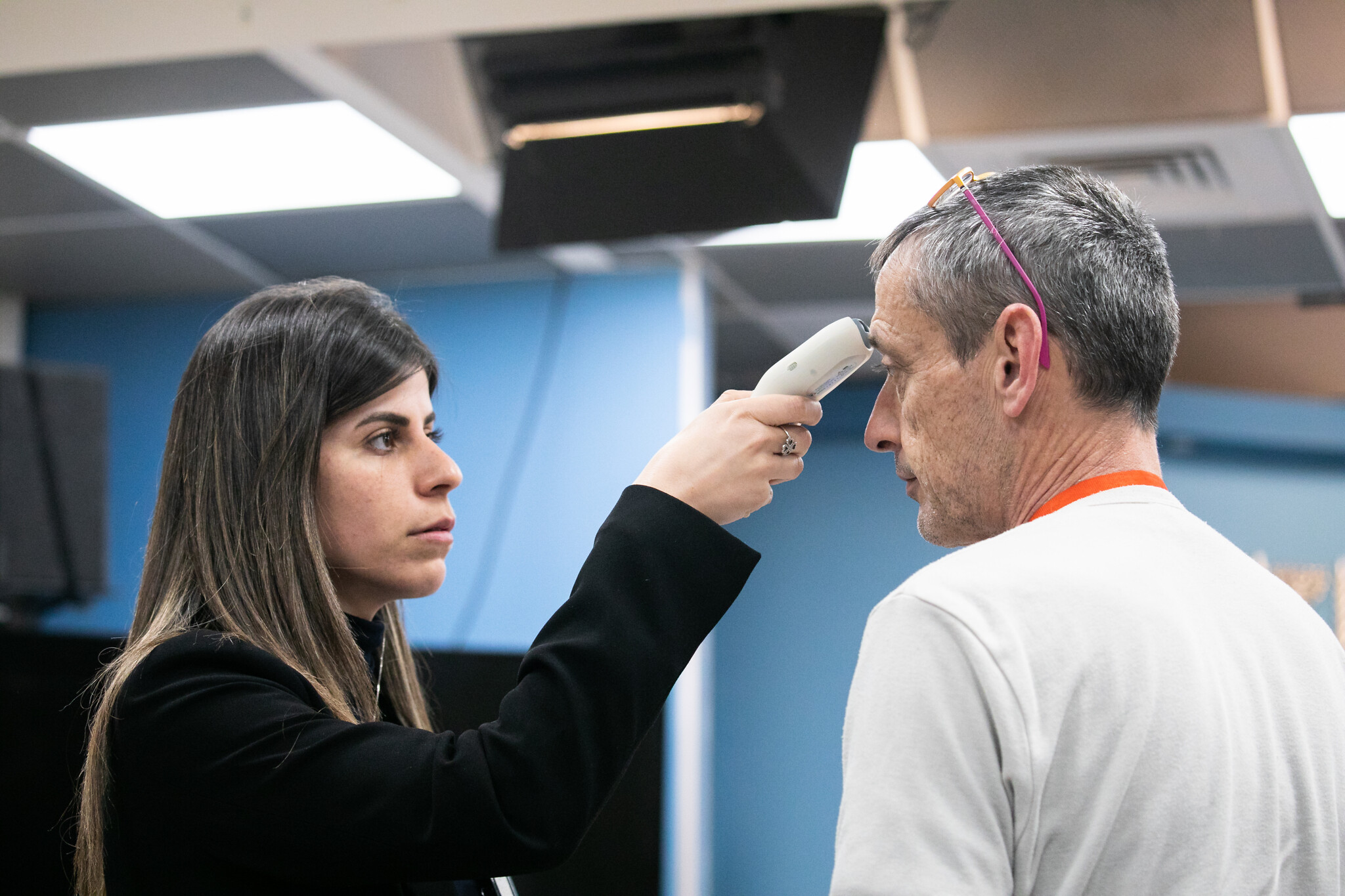
Knesset staff check people’s temperature entering the parliament, March 16, 2020. (Knesset/Adina Velman)

Meanwhile, the swearing in of the 23rd Knesset was set to begin on Monday. In place of the usual mass swearing-in ceremony, the Knesset is swearing in lawmakers in 40 rounds of three lawmakers each, adhering to Health Ministry orders prohibiting gatherings of more than 10 people in an enclosed space.

Doctors complained on Monday that they had insufficient protective equipment for treating patients with the deadly virus, after 19 medical professionals contracted the disease.

“For days we have been warning of oversights, of protocols and instructions for checks that do not fit with the situation — all of these are leading to infiltrations, ticking time bombs in the wards, where [patients] are being received by teams lacking protective equipment, who are becoming infected and infecting others,” Dr. Rey Biton, of the medical residents organization Mirsham, wrote on Facebook.

Illustrative: Workers inside a building at Tel Aviv’s Tel Hashomer Hospital, which was converted into a coronavirus isolation unit, February 20, 2020. (Avshalom Sassoni/Flash90)

An anonymous senior official in the Health Ministry criticized his agency for what he described as a failure to ensure a sufficient supply of protective equipment — masks, gloves and hazmat suits — for such an outbreak.

“It is confounding what the Health Ministry has been doing in recent years. If it hasn’t been preparing for things like this — what has it been doing?” he asked the Walla news site.

Israel shuttered schools and most businesses over the past week in a bid to stem the spread of the virus in order to avoid overwhelming the country’s health infrastructure.

Similar efforts are underway around the world, especially in the hardest-hit nations of China, Italy, Iran, South Korea and Spain.

The Gran Via remains empty in Madrid on March 14, 2020, after regional authorities ordered all shops in the region be shuttered through March 26, save for those selling food, medicine and gas, in order to slow the coronavirus spread. (Javier Sobriano/AFP)

For most people, the coronavirus causes only mild or moderate symptoms, such as fever and cough. For some, especially older adults and people with existing health problems, it can cause more severe illness, including pneumonia.

Italy, the worst-hit European country, reported its biggest day-to-day increase in infections on Sunday — 3,590 more cases in a 24-hour period — for a total of almost 24,747.

Dalia Samhouri, a regional official with the World Health Organization, said both Iran and Egypt, two of the most populous countries in the Mideast, were likely underreporting cases because infected people can still show no visible symptoms. Iran said it had nearly 14,000 virus cases and 724 deaths, while Egypt has reported 110 cases, including two fatalities.

As part of its measures to combat the spread, Israel’s government on Sunday approved a proposal to allow the Shin Bet security service to perform mass surveillance on Israelis’ phones without requiring a court order, prompting major concerns over privacy and civil liberty violations.

The measure still requires final approval from the Knesset’s subcommittee on clandestine services before it can be put into action.


Will a microbe seal the fate of Iran’s virulent regime?

Posted March 16, 2020 by davidking1530
Categories: Uncategorized

Here’s hoping…

P.S. First I’ve heard about Nasrallah catching it – LOL if true.

https://www.israelhayom.com/opinions/will-a-microbe-seal-the-fate-of-irans-virulent-regime/

The problem with events that catch us off-guard is that we are never prepared for the unexpected to happen. Who would have thought that the entire world would suddenly be destabilized by one microbe?

It will take some time before people grasp the social, political and economic impact of the coronavirus pandemic. But it is already altering our landscape and knocking previous assumptions off-course.

Until a few days ago, attention in the United States was focused on whether the Democrats could find a plausible candidate to beat President Donald Trump. Now Trump’s main political opponent is the coronavirus.

During the rackety first few weeks, the administration behaved with impressive speed and resolution in banning flights from China, but then Trump unwisely minimized the severity of the threat of the coronavirus. Now America has banned all flights from mainland Europe, while states of emergency in epidemic hotspots are spreading.

Trump has given the damaging impression that he’s been thrown off-guard by the virus because he can’t make a deal with it. If America goes into coronavirus lockdown, the president stands to pay a heavy political price.

In Britain, the Chancellor of the Exchequer has just delivered a budget with an eye-watering and, in normal times, reckless increase in public spending to stave off the worst effects of the probable virus fueled recession. In London, events are being canceled, shops are empty, and the normally packed Tube has plenty of space – even at rush hour.

In Israel, where thousands are now quarantined at home, the government took the earliest and most draconian decisions to bar flights from the most affected countries and is now quarantining all arrivals, including Israeli citizens

As a result of its proactive and uncompromising approach, at present Israel is in better shape than most countries. Even so, Israelis are facing inconvenience and worse.

Synagogues are staggering service times for small batches of congregants. Bus drivers are taped off from passengers who are being waved on board without paying. El Al, with massively reduced flights, is on the brink of bankruptcy. Schools nationwide have been closed.

Relatively few in the preoccupied West are taking proper notice of how this unprecedented crisis is playing out in Iran.

After China, Iran has become the second global hub of the disease. So far, even according to doctored official figures, at least 9,000 have been diagnosed with the virus, and 429 have died from it. Unofficial estimates suggest a figure of 1 million or more who have been affected, with thousands of deaths.

In the beginning, the regime concealed the truth and pretended the virus was not affecting the country. Then senior members of the regime fell ill, some of them displaying visible signs during public appearances. Five current lawmakers are known to have the virus, and two representatives elected in the parliamentary elections last month have died of the disease.

Hassan Nasrallah, the leader of the Lebanese terror organization Hezbollah, is also reported to have been infected and has been placed under quarantine along with several of his senior circle. Doubtlessly, they were infected through their close contacts with the Iranian regime. Another reason why so many regime members have been infected is through their close relations with China.

The regime has not only failed to contain the spread of the disease but seems to have made virtually no attempt to do so. It still has no plans to quarantine the city of Qom – the principal shrine of Iranian Shia religious devotion and the epicenter of the Iranian outbreak, from where the virus has massively spread.

The regime also hasn’t halted flights from Iran to other countries. And it has failed to provide testing for its citizens across the country.

As a result of this striking level of inaction, Iran has acted as a global virus super-spreader. And at least one Iranian commentator has suggested that the regime is doing this deliberately.

Pointing out that Supreme Leader Ayatollah Ali Khamenei recently called the virus “a blessing,” Dr. Majid Rafizadeh, president of the International American Council on the Middle East, wrote on the Gatestone Institute website: “Are the ruling mullahs attempting purposefully to spread the coronavirus to other countries as a form of global jihad?”

Those who might find this suggestion too fanciful to be believed are those who fail to fathom the regime’s depths of fanaticism and evil.  Such as, Britain and Europe, along with US Democrats, who reacted with horror when Trump pulled America out of the Iran nuclear deal.

Whatever the president’s faults, he deserves enormous credit for doing just that. He restored sanctions – and a measure of sanity – against a regime that remains hell-bent on developing nuclear weapons to destroy Israel and the West – an infernal agenda the Iran deal would enable with only a few years’ delay.

This week, the International Atomic Energy Authority has reported that Iran is accelerating its production of enriched uranium and is blocking its nuclear inspectors from inspecting Iranian activities. Some analysts suggest that Iran has dramatically shrunk its theoretical “breakout” time to acquire a bomb’s worth of weapons-grade uranium to less than four months.

The regime’s failure to protect Iranians against the virus has provided a fresh outbreak of public protests. More ominously for the regime, the people are openly mocking it. Since mockery is a sign of condign disapproval in Iran, the regime will be well aware that its already fragile hold on power over the public is slipping further.

This all adds to the increasing pressure the regime has been under through the resumption of sanctions, not to mention the grievous blow it suffered from the US drone killing of its principal military strategist, Gen. Qassem Soleimani.

In addition to all of the above, having empowered the Shia from Beirut to Baghdad, the regime is now finding that these people are also turning against it. They are blaming its corruption, ineptitude and foreign adventurism for causing their many woes. In Iraq, the Shia are literally praying for the coronavirus to kill the mullahs.

This week, two Americans and one British soldier were killed after the Taji military camp hosting US and UK troops in Iraq was hit by a rocket attack. No one has claimed responsibility, but the most plausible suspect is Iran.

If so, this suggests that the regime is panicking. For when fanatics feel cornered, they are likely to lash out on the basis that if they’re going down, they’ll take down with them the enemies they believe are their Divine mission to destroy. Perhaps that’s also why it’s not fanciful to suggest that the coronavirus is “a blessing” they wish to magnify.

This microbe might just achieve what humankind has failed to do and seal the fate of the regime itself. With the pandemic predicted to reach its peak around Passover, the coronavirus may thus lay claim to becoming the 11th plague.

Thriving in a crisis, Netanyahu urges Israelis to wage ‘war on invisible enemy’

Posted March 16, 2020 by Joseph Wouk
Categories: Uncategorized

Source: Thriving in a crisis, Netanyahu urges Israelis to wage ‘war on invisible enemy’ | The Times of Israel

Exuding indispensability, PM in latest broadcast to nation unveils new raft of restrictions, far-reaching though less drastic than many had expected, to tackle coronavirus pandemic

Prime Minister Benjamin Netanyahu holds a press conference at the Prime Minister's Office in Jerusalem on March 12, 2020. (Olivier Fitoussi/Flash90)

Prime Minister Benjamin Netanyahu holds a press conference at the Prime Minister’s Office in Jerusalem on March 12, 2020. (Olivier Fitoussi/Flash90)

After hours of fevered speculation, innumerable false reports flashing out across social media, and a post-Shabbat run on supermarkets nationwide, the raft of new measures to try to fight the coronavirus pandemic announced by Prime Minister Benjamin Netanyahu on Saturday night was dramatic indeed — closing down Israel’s shopping malls, bars, restaurants, cinemas, health clubs and much more.

But it was still less drastic than had been widely anticipated.

Netanyahu and his colleagues, speaking at a delayed presentation to the nation that hinted at disagreements between various officials, did not declare a state of emergency. They did not impose a lockdown, barring Israelis from leaving their homes. They did not shut down the private sector.

But they emphatically reserved the right to do any of those things in the near future. And Moshe Bar Siman-Tov, the Health Ministry director-general who is widely believed to have been pushing for a complete private sector shutdown, stated adamantly immediately after the live broadcast that more stringent measures will indeed be imposed “in the next few days.”

With this virus infecting exponentially, Bar Siman-Tov said, “you can lose control in a second, and then there’s no going back. Look at Italy.”

As of this writing late Saturday night, Israel — its borders essentially closed, its gatherings limited, some 40,000 citizens in self-quarantine — has avoided even a single death from the coronavirus, and is aware of “only” some 200 people who are infected with it.

Had those numbers been markedly higher, Siman-Tov intimated, greater restrictions on public movement and social interaction would already be in force. If those numbers do go significantly higher, some of the mooted but thus far rejected measures will doubtless come into force.

Israelis line up outside Rami Levy supermarket in Ashdod on March 14, 2020. (Flash90)

Many of the specific new restrictions introduced last night were set out not by Netanyahu but by Shai Babad, the director-general of the Treasury, in a single breathless sentence. Not only would school closures announced last week be extended to the entire educational network, but the entire entertainment and cultural sector was shutting down from Sunday morning, Babad said, speedily specifying malls, cinemas, hotels, weddings, group trips, conferences, health clubs and more. Doubtless a more orderly presentation of what is being closed will follow, and be made available online.

What Netanyahu chose to highlight was the new reality of “social distancing” that lies at the core of Israel’s battle against the virus. Having asked Israelis last week to stop kissing, hugging and shaking hands and generally “keep your distance” from each other, the prime minister now specified a two-meter minimum to prevent contagion.

The calculation that the virus, coughed or sneezed out, won’t be able to leap that two-meter gap is central to the restrictions Israel is imposing, he said — restrictions that also now bar any gatherings of more than 10 people. The key in what he called “a war against an invisible enemy… is not to infect, and not to be infected.” But, he indicated, even all these changes to the normal social routine might not be sufficient. “We are still learning about this virus,” he stressed.

Maintain your hygiene, wash your hands, clean off surfaces, and stay those two meters apart, he stressed, and Israel will come through the worst pandemic in a century. Ignore those basics, he cautioned, “and it could get a lot worse before it gets better.”

A man being tested for fever as he arrives for Prime Minister Benjamin Netanyahu’s press conference at the Prime Minister’s Office in Jerusalem on March 12, 2020. (Olivier Fitoussi/Flash90)

Netanyahu also announced that Israel will be using highly invasive digital tech to “locate the enemy,” by which he meant track the movements of infected Israelis — in order to test and impose quarantine where necessary on those with whom they have come into contact, and avoid having to send the entire nation into isolation. He said he had refrained from utilizing this kind of technology in the civilian environment throughout his years of prime minister, but amid this crisis, the wider public interest required it, and thus he had obtained approval from the Justice Ministry.

He clarified that all essential services would continue to function, that supermarkets would stay open, so too pharmacies, banks and gas stations. In the private sector, he and his colleagues urged bosses to use their discretion — not to compel workers to come in if not absolutely necessary; to do everything to ensure that two-meter distance.

Netanyahu has been briefing the nation almost nightly of late, peppering his remarks with mentions of this and that foreign leader who has complimented his policies, praising the public for its discipline, trying to deepen the sense of his indispensability to Israel’s well-being — the crucial asset his leadership rival Benny Gantz has been trying for a year to shatter.

On Saturday, too, Netanyahu allowed himself to boast several times that the policies he has introduced these past few weeks have been “ahead of all other countries worldwide,” and thus Israel currently has “one of the best situations in the world.”

His handling of this crisis has indeed been widely praised, including from such unlikely sources as Ofer Eini, the former head of the nationwide Histadrut labor federation. A longtime foe of the prime minister’s, Eini said in a television interview Saturday afternoon that Netanyahu’s experience was self-evidently working to Israel’s advantage as it grapples with the pandemic, and urged the prime minister’s rivals to join him in a unity government.

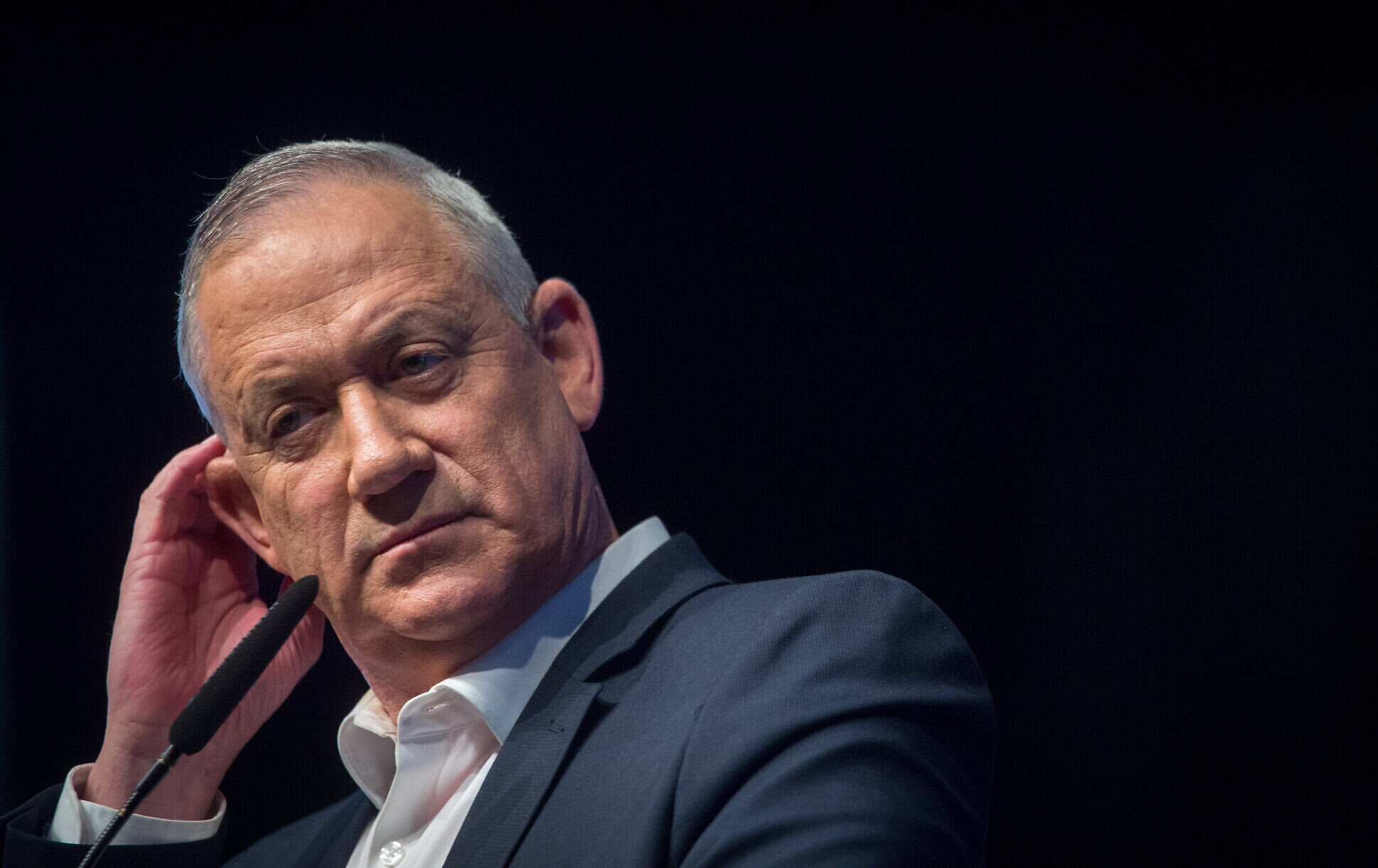
Blue and White party leader MK Benny Gantz at an election rally in Ramat Gan on February 25, 2020. (Miriam Alster/Flash90)

Netanyahu reiterated a similar appeal Saturday night, and the Blue and White party of his main rival, former IDF chief Gantz, responded with wary assent — provided, it said, that responsibilities are equally shared. But Gantz, who until a week ago was hoping he might somehow pull together a Knesset majority to supplant Netanyahu after March 2’s third successive election deadlock, is now in no position to issue hardball demands.

Manifestly thriving in the crisis, Netanyahu is assuring Israelis that he and they are leading much of the world in battling a deadly, invisible enemy. “King Bibi,” the “magician,” to use two of his nicknames, was on the political ropes not many weeks ago. To what must be the intense frustration of his opponents, a global pandemic has enabled him to bounce back. His corruption trial may be due to begin on Tuesday, but the veteran prime minister isn’t about to be dislodged, by Gantz or anybody else.


The IDF’s Coronavirus Guidelines 

Posted March 16, 2020 by Joseph Wouk
Categories: Uncategorized