Four more Israelis die of virus, bringing COVID-19 death toll to 12

Posted March 28, 2020 by Joseph Wouk
Categories: Uncategorized

Source: Four more Israelis die of virus, bringing COVID-19 death toll to 12 | The Times of Israel

Man, 93, succumbs hours after diagnosis; other casualties in their seventies; 3,035 infected with virus in Israel, including 49 in serious condition

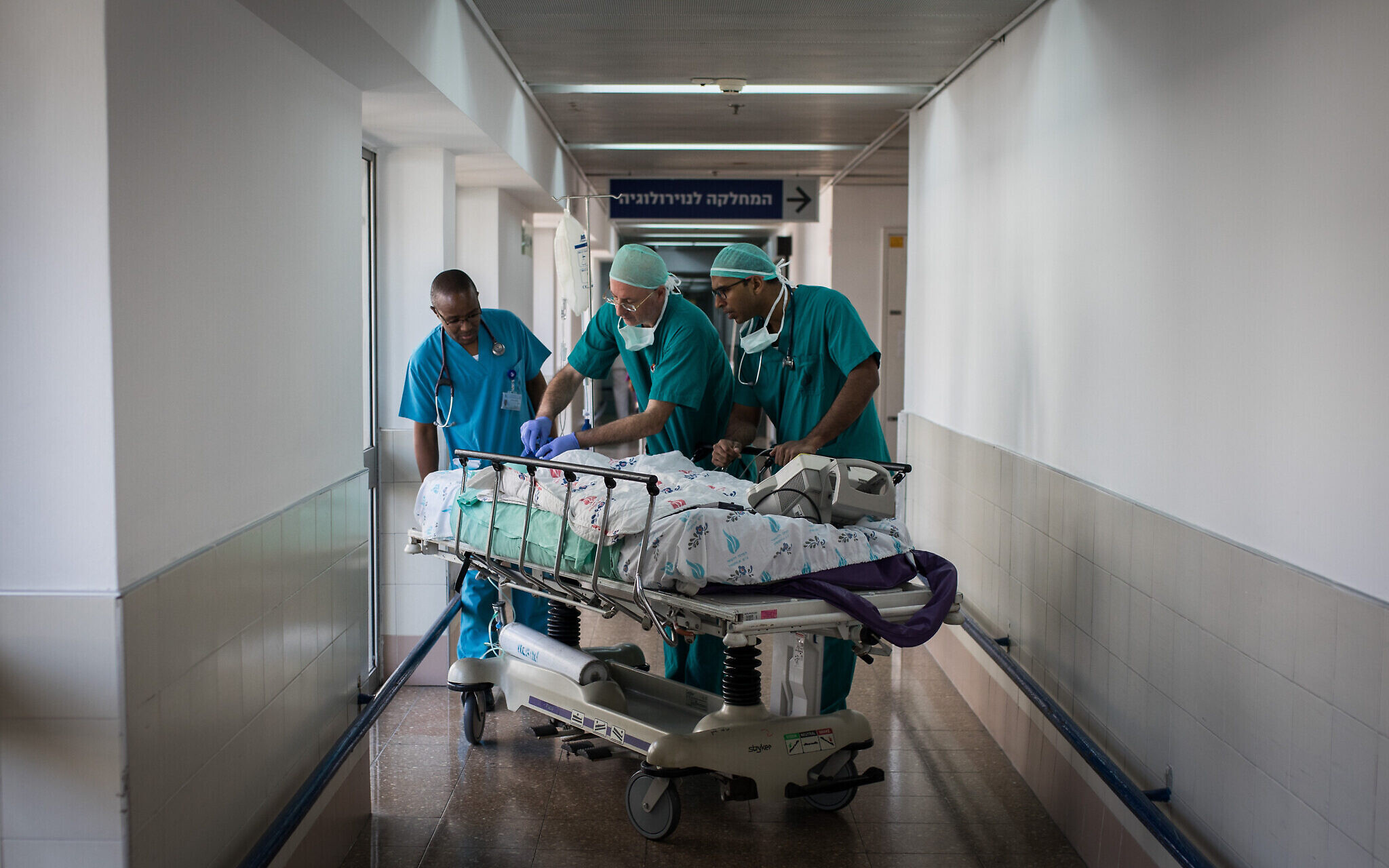
Illustrative: An Israeli medical team member is cleaning and disinfecting an ambulance at Tel Aviv’s Dan Panorama hotel which was turned into quarantine facility in Tel Aviv, on March 26, 2020. (Gili Yaari /Flash90)

Illustrative: An Israeli medical team member is cleaning and disinfecting an ambulance at Tel Aviv’s Dan Panorama hotel which was turned into quarantine facility in Tel Aviv, on March 26, 2020. (Gili Yaari /Flash90)

Four more Israelis have died of the coronavirus, bringing the country’s death toll to 12, as the number of infections nationwide climbed to 3,035.

The Soroka Medical Center on Friday morning said 93-year-old Avraham Aroshas was brought to the hospital from the nursing home where he lived. He had a fever and shortness of breath and had “complicated and difficult underlying illnesses,” the Beersheba-based hospital said. He tested positive for the virus and hours later succumbed to the illness, according to the statement.

A 76-year-old woman with preexisting health conditions also died of the virus, the Sharon Hospital in Petah Tikva announced Friday morning.

She was identified as Dalia Edelsborg from the Tel Aviv suburb of Ramat Gan. She recently returned from a trip to Egypt and appeared to have contracted the virus there, the Ynet news site reported.

Shaul Fari, 73, who died of the coronavirus on March 27, 20202 (Courtesy)

Hours later, a 73-year-old man was pronounced dead as a result of the virus at Rambam Medical Center in Haifa. He was identified as Shaul Farhi. He reportedly caught the virus on a trip to Tenerife in Spain.

On Friday afternoon, the Wolfson Medical Center in Holon said that an 80-year-old man had died. He had been in a serious condition for several days.

The number of Israelis diagnosed with the coronavirus has risen to 3,035, the Health Ministry said Friday morning. Of them, 49 are in serious condition and 60 are in moderate condition.

Some 45 Israel Defense Forces soldiers have been diagnosed with COVID-19, the illness caused by coronavirus, while 4,156 are in quarantine, the IDF said on Thursday.

Of the 12 fatalities in the country, three died on Thursday.

One of the three was an 89-year-old woman being treated at Jerusalem’s Hadassah Hospital Ein Kerem.

“This is a patient with preexisting conditions who a week ago already was categorized as being in critical condition and was treated with devotion during her entire hospitalization by the department staff, who did everything possible to ease her suffering,” the hospital said in a statement.

Another was an 83-year-old man from Bnei Brak who had preexisting conditions. Wolfson Medical Center in Holon said earlier that the third victim was a 91-year-old woman.

Moshe Bar Siman-Tov, the director-general of the Health Ministry, told the Knesset’s coronavirus committee on Thursday that he believes that in a week from now Israel will have 200 people in serious condition from COVID-19.

Health Ministry Director-General Moshe Bar Siman-Tov is seen at a coronavirus drive-through testing site in Tel Aviv on March 20, 2020. (Tomer Neuberg/Flash90)

The next two weeks will be “critical,” Bar Siman-Tov said Thursday, warning there is high potential for further spread of the virus. “We’re really scared of Passover and Ramadan,” he said. “These crowds are the most dangerous.”

Israel has been placed under lockdown to stem the virus, with Israelis permitted to leave their homes only for essential reasons, such as buying food and medicine or seeking medical care.


With 425 new cases, number of patients in Israel rises to 3,460 

Posted March 28, 2020 by Joseph Wouk
Categories: Uncategorized

Source: With 425 new cases, number of patients in Israel rises to 3,460 | The Times of Israel

50 of the diagnosed are in serious condition, 73 moderate; majority are staying at home under monitoring; country preparing for potential full closure this week

Illustrative: Doctors and nurses treat a patient at Wolfson Medical Center in Holon. ( Hadas Parush/Flash90)

Illustrative: Doctors and nurses treat a patient at Wolfson Medical Center in Holon. ( Hadas Parush/Flash90)

The number of confirmed coronavirus cases in Israel rose by 425 Saturday morning, for a total of 3,460 diagnosed patients, the Health Ministry announced. Fifty were in serious condition, 73 were in moderate condition and 89 had recovered. The rest were experiencing mild symptoms.

Twelve people have died of the pathogen.

The ministry said a majority of patients, 1,828, were isolating in their homes under monitoring, with 1,062 staying at various care centers including specially converted hotels. Only 469 were currently hospitalized.

Prime Minister Benjamin Netanyahu warned Friday that the country could enter into a complete shutdown if there is not an improvement in the number of confirmed virus cases in the next two days.

Netanyahu held a series of discussions with top ministers regarding additional steps the country can take to manage the ongoing crisis, “including preparations for a closure,” the Prime Minister’s Office said in a statement.

He said that authorities would bring the additional movement restrictions before the cabinet in 48 hours.

The Sharon Hospital in Petah Tikva, which has been converted into the country’s first facility exclusively used to treat coronavirus patients (screenshot: YouTube)

Hebrew-language media reported serious disagreements between Netanyahu and other ministers over the need to shut down the economy amid Health Ministry fears that the upcoming Passover holiday will lead to an explosion of infections as people try and shop for the festive meal or spend time with relatives.

During the discussions Netanyahu requested the Finance Ministry give him answers by Saturday night on the possibility of reducing economic activity in Israel to just 10%, down from the current 30%, Channel 13 reported, saying that Netanyahu wants to enforce the harsh restrictions in the next three weeks until the end of the Passover holiday.

“From an economic perspective it will be OK. We can revive the economy with artificial respiration. That won’t be the problem,” Chanel 13 quoted Netanyahu as saying in leaked remarks from the meeting.

“The problem will be if we can’t stem the pandemic and we have thousands of seriously ill people in the next few weeks,” Netanyahu said.

Finance Minister Moshe Kahlon, who will likely be leaving his post in the next few weeks if a unity government is formed, warned further lockdown steps would lead Israel to an “economic catastrophe.”

Defense Minister Naftali Bennett also reportedly expressed opposition to a full closure, while Interior Minister Aryeh Deri called for only those over 65 to be put under lockdown. “Don’t let them out of the house, let their children take care of them and in the meantime we can return the economy to life.”

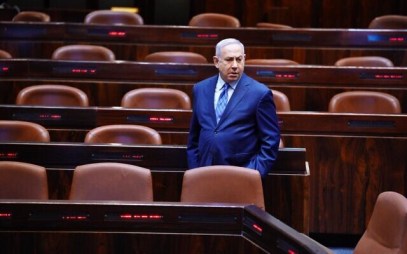
Prime Minister Benjamin Netanyahu at the Knesset on March 26, 2020. (Knesset)

The Finance Ministry will formulate a plan to further scale back the workforce, the Prime Minister’s Office added.

On Saturday night, Netanyahu will hold a meeting with Finance Ministry officials in order to produce a “comprehensive plan” to provide further “assistance to the economy,” his office said.

However, ministry officials said they were looking to present Netanyahu with alternatives. Israel Radio reported that officials were hoping to only reduce economic activity to 25%.

Since Wednesday at 5 p.m., Israelis have been ordered to remain in their homes unless they are taking part in a small number of specially designated approved activities, including purchasing food and medicine or a short walk of no more than 100 meters (328 feet) from one’s home. Those found violating those regulations are subject to large fines of upwards of NIS 500 ($140) and even imprisonment.

A general view of closed stores on Jaffa street in downtown Jerusalem on March 26, 2020 (Yonatan Sindel/Flash90)

Some 500 soldiers will be deployed across the country beginning Sunday to assist police in enforcing the government’s latest restrictions on movement to stem the coronavirus pandemic, the IDF announced Friday.

Four more Israelis died of the coronavirus on Friday, bringing the country’s death toll to 12.

The Prime Minister’s Office also released a list of “emergency regulations” that cabinet ministers had approved for employment in a telephone vote on Friday.

These included allowing civil service volunteers to be placed in government offices that are not typically allowed to employ such volunteers, shortening from six months the amount of time one must wait to receive unemployment benefits and providing additional financial services to Israelis above the age of 67 who were forced to stop working because of the outbreak. In addition extensions will be given for Israelis to pay their taxes.

Jacob Magid contributed to this report.


Likud,Kahol Lavan near unity. Netanyahu to lead joint government, Gantz – Knesset Speaker then Acting PM – DEBKAfile

Posted March 27, 2020 by Joseph Wouk
Categories: Uncategorized

Source: Likud,Kahol Lavan near unity. Netanyahu to lead joint government, Gantz – Knesset Speaker then Acting PM – DEBKAfile

Kahol Lavan leader Benny Gantz crossed the Rubicon on Thursday, March 26 when he agreed to join Likud in a national emergency government to be headed by Binyamin Netanyahu up until Sept 2021

The deal is still a work in progress. Gantz will initially take the post of Knesset Speaker and then move into government as acting premier and foreign minister. Gaby Ashkenazi is slated for defense. Even before the deal was sealed, Gantz’s two other partners, Yair Lapid and Moshe Ya’alon,  broke away from Kahol Lavan in protest over Gantz’s willingness to share power with Netanyahu.

With 18 MKs, Lapid and Ya’alon will keep the combined party name of Kahol Lavan, while Gantz who remains with a faction of 15, will revert to his own party’s first name of Hosen Yisrael.

The Yemina party’s leader Naftali Bennett returns to Education, Finance goes to either to Nir Barkat or Yisrael Katz (Likud) and the hotly disputed Justice Ministry to a Gantz associate, either Hilik Troper or Avi Nissenkorn.

Interior is to stay with Aryeh Deri of Shas and Health with Yakov Litzman (Torah Judaism), Likud’s partners.

With the support of left-of-center Labor-Meretz, the unity government will command a solid majority of 78 in the 120-member House.

Gantz is taking on the Speaker’s role to prevent his former partners-turned-rivals, Lapid and Ya’alon, from filling the post with their candidate, Meir Cohen. Once that is accomplished, he will make way for Likud MK Yuli Edelstein to pick up the gavel once again. Edelstein resigned as Speaker on Wednesday after being ordered by the Supreme Court to call a vote on his replacement.
If this deal is finally sealed, Netanyahu can congratulate himself. Instead of being overthrown by the opposition, he will be assured of another 18 months in power as premier. He also saw a major split in Kahol Lavan, the party that was created a year ago for the express purpose of obliterating him.


Dramatic political maneuver heralds end to Jerusalem’s political deadlock – TV7 Israel News 27.03.20

Posted March 27, 2020 by Joseph Wouk
Categories: Uncategorized


As deaths soar, Iran’s military sets up 2,000-bed hospital in exhibition center

Posted March 27, 2020 by Joseph Wouk
Categories: Uncategorized

Source: As deaths soar, Iran’s military sets up 2,000-bed hospital in exhibition center | The Times of Israel

ITehran field hospital completed in 48 hours, Tehran says, as toll of virus dead nears 2,400 in the region’s worst outbreak

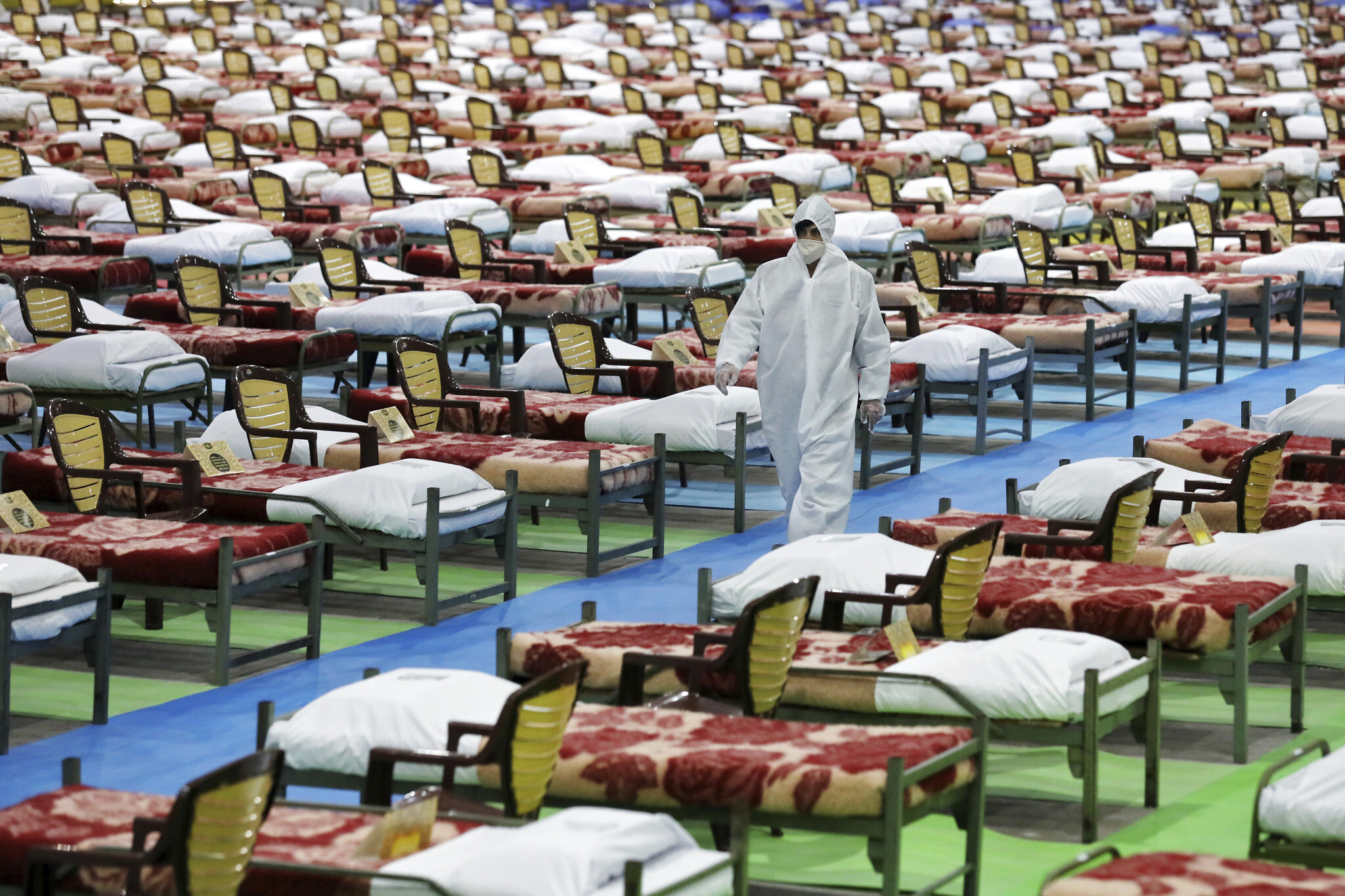
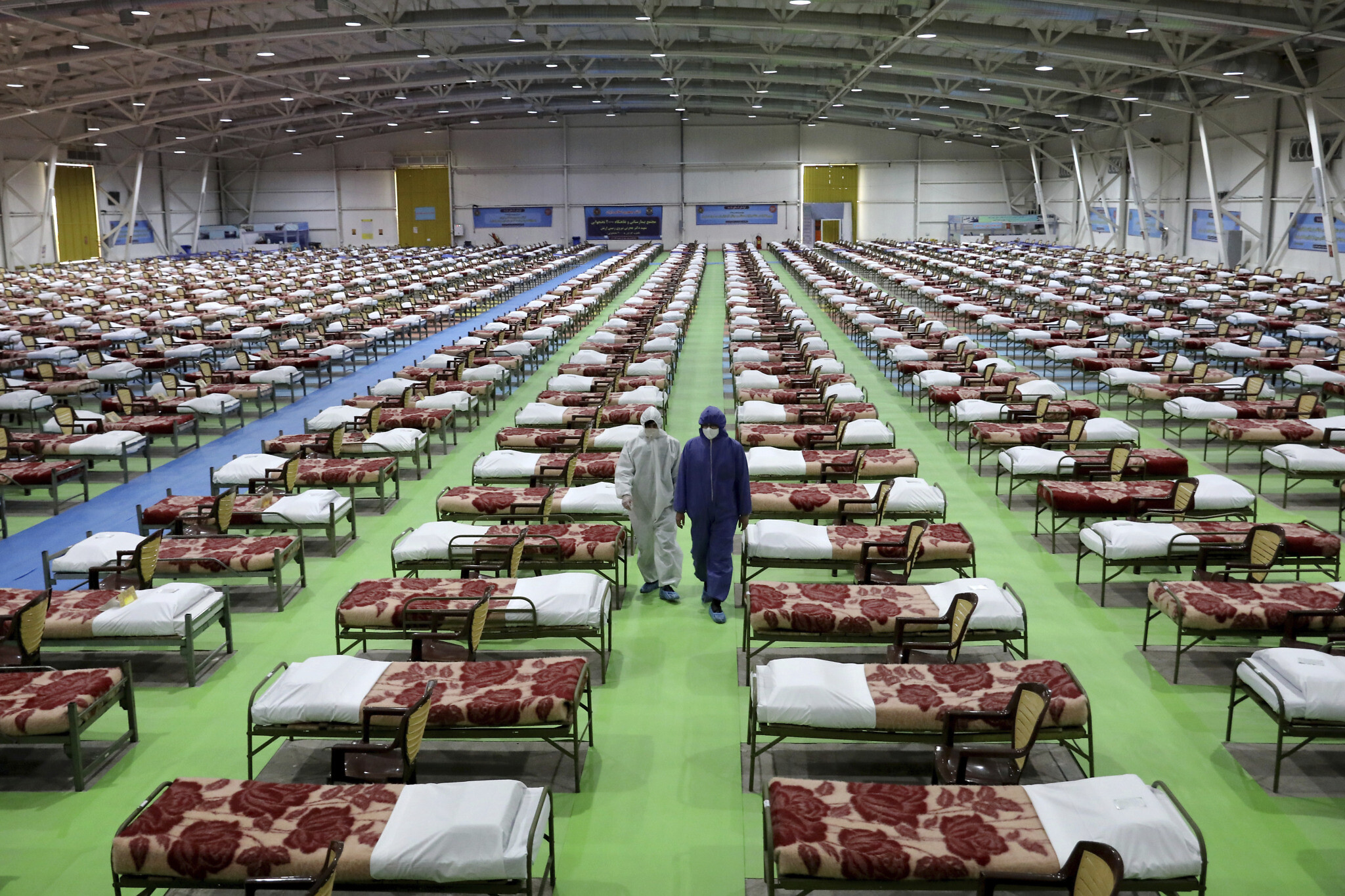
Main image by AP’s Ebrahim Noroozi, shows people in protective clothing walking past rows of beds at a temporary 2,000-bed hospital for COVID-19 coronavirus patients set up by the Iranian army at the international exhibition center in northern Tehran, Iran, on Thursday, March 26, 2020.

TEHRAN(AP) — Iran announced another 144 deaths from the coronavirus on Friday and said thousands more were in critical condition as the military completed work on a 2,000-bed field hospital in an exhibition center in the capital.

Iran has reported nearly 2,400 deaths among more than 32,000 cases. Iranian officials have repeatedly insisted they have the outbreak under control despite concerns it could overwhelm the country’s health facilities.

In Yemen, meanwhile, the US Agency for International Development began scaling back aid efforts in areas controlled by the Iran-backed Houthi rebels over their resistance to allowing measures that ensure aid goes to those who most need it. Yemen has yet to record any coronavirus cases, but an outbreak in the war-torn country could be catastrophic.

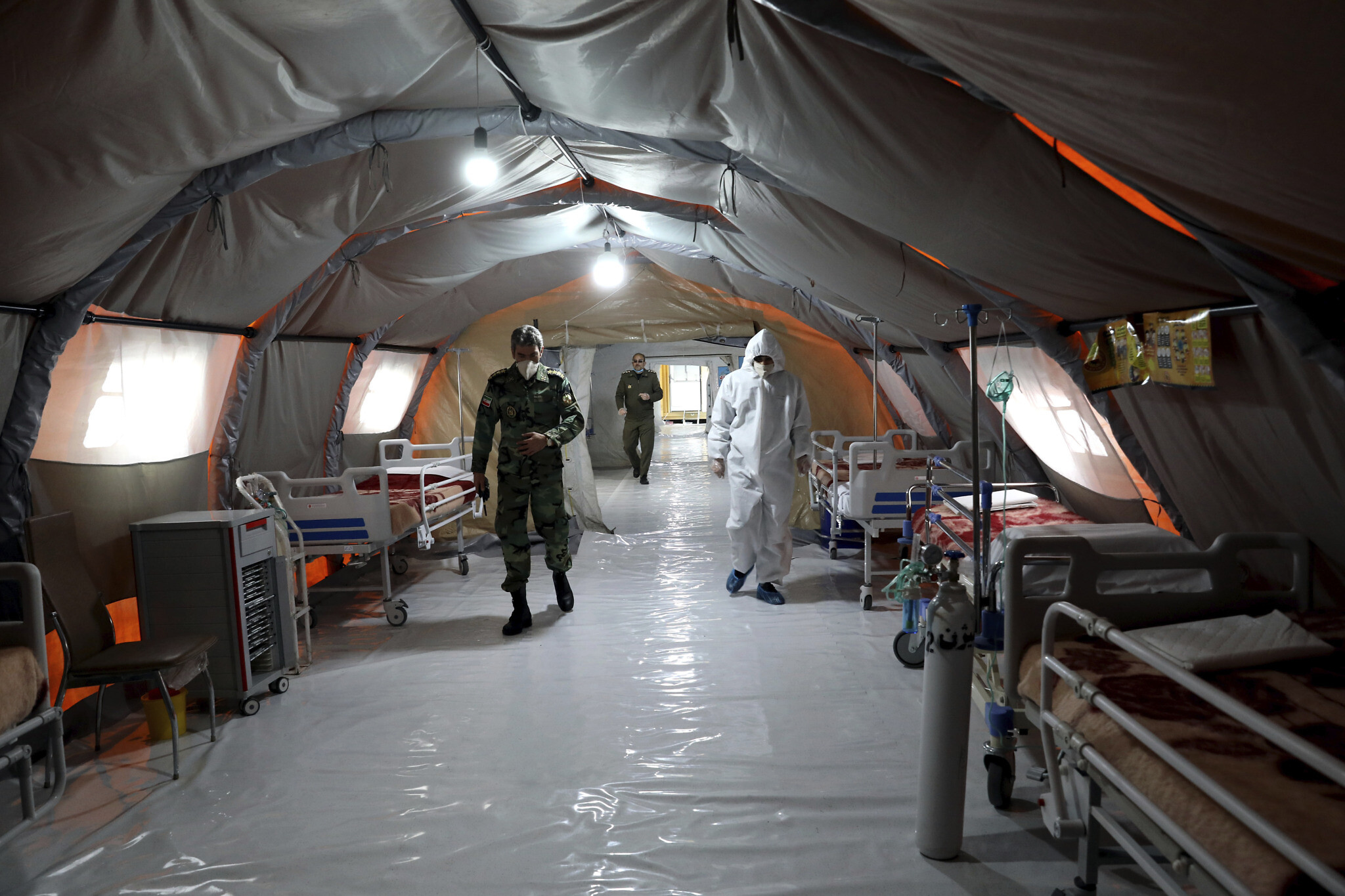
Iran’s military said the new facility, which includes three units and several isolation wards, was set up in just 48 hours. It will be used for patients who are recovering from the COVID-19 illness caused by the virus.
A person in protective clothing walks through a temporary 2,000-bed hospital for COVID-19 coronavirus patients set up by the Iranian army at the international exhibition center in northern Tehran, Iran, on Thursday, March 26, 2020. (AP Photo/Ebrahim Noroozi)

State TV on Thursday quoted Gen. Ali Jahanshahi as saying the hospital has been handed over to medical staff and will begin receiving patients next week.

Most people infected by the virus only experience mild symptoms, such as fever and cough, and recover within a few weeks. But the virus can cause severe illness and death, particularly in older patients or those with underlying health problems. It is highly contagious and can be spread by otherwise healthy people showing no visible symptoms.

The virus has infected more than half a million people worldwide and killed more than 24,000. More than 120,000 people have recovered, according to the Johns Hopkins University Center for Systems Science and Engineering.

Iran is battling the worst outbreak in the region. Health Ministry spokesman Kianoush Jahanpour announced the latest deaths on Friday, bringing the total number of fatalities to 2,378 amid 32,332 confirmed cases.

He said nearly all of the approximately 2,900 newly confirmed cases are in critical condition. More than 11,000 people have been released from hospitals, according to the ministry.

A person in protective clothing walks through a temporary 2,000-bed hospital for COVID-19 coronavirus patients set up by the Iranian army at the international exhibition center in northern Tehran, Iran, on Thursday, March 26, 2020. (AP Photo/Ebrahim Noroozi)

Authorities have urged people to stay home but have not imposed the sweeping lockdowns seen elsewhere in the region.

Iran has been under severe US sanctions since President Donald Trump withdrew his country from Iran’s 2015 nuclear agreement with world powers. The US has offered humanitarian aid to Iran but authorities have refused.

Earlier this week, Iran’s supreme leader, Ayatollah Ali Khamenei, refused American aid and seized on a conspiracy theory that the United States created the virus, something for which there is no scientific evidence.

People in protective clothing walk past rows of beds at a temporary 2,000-bed hospital for COVID-19 coronavirus patients set up by the Iranian army at the international exhibition center in northern Tehran, Iran, on Thursday, March 26, 2020. (AP Photo/Ebrahim Noroozi)

Hundreds of Iranians have meanwhile been sickened or died from drinking methanol in the mistaken belief that it offers protection from the virus. Word of fake remedies has spread across social media in Iran, where many are deeply suspicious of the government after it initially downplayed the crisis.

Lebanon, which has reported 391 infections and seven deaths, will impose a nighttime curfew starting Friday. The country of nearly 5 million has been under lockdown for two weeks, with only essential businesses allowed to remain open, a measure that will remain in place for at least another two weeks.

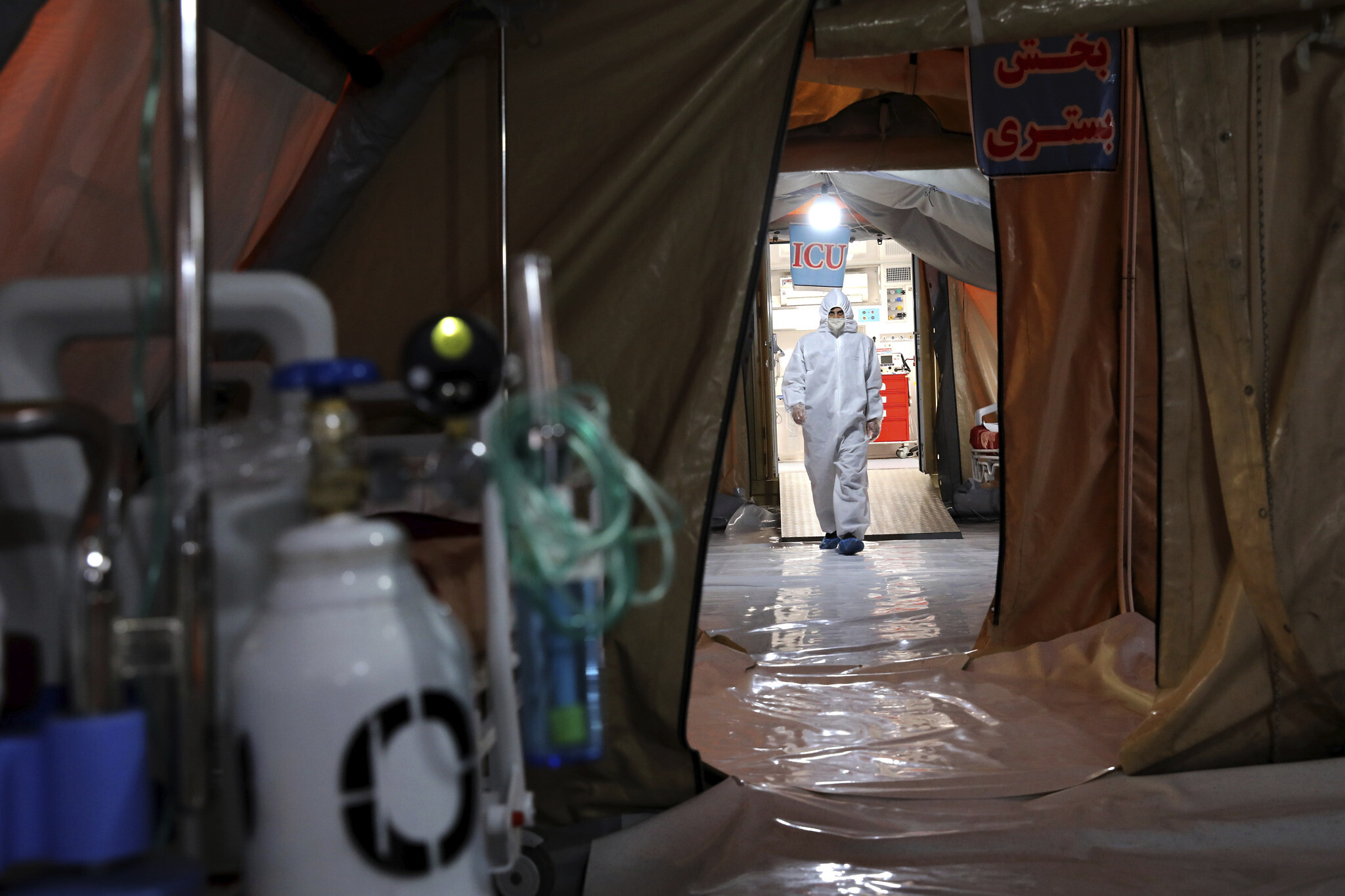
Iranian army soldiers work in a temporary 2,000-bed hospital for COVID-19 coronavirus patients set up by the army at the international exhibition center in northern Tehran, Iran, on Thursday, March 26, 2020. (AP Photo/Ebrahim Noroozi)

Israel, meanwhile, has seen a surge in infections in recent days. It has reported 3,035 cases and 11 fatalities, mainly older patients with pre-existing conditions. The Palestinian Authority has reported 84 cases.

Authorities in the Gaza Strip have reported nine cases.

Gaza’s health care infrastructure has been severely eroded by years of conflict and isolation. A major outbreak in the Hamas-run territory, which is home to more than 2 million Palestinians, could be extremely difficult to contain.

Another major areas of concern is Yemen, where the Houthis have been at war with a Saudi-led coalition for five years. The war has killed more than 100,000 people, displaced millions more and driven the Arab world’s poorest country to the brink of famine.

A USAID spokesperson said it was suspending nearly $73 million in aid “in the face of long-standing Houthi interference in humanitarian operations.” The Houthis control the capital, Sanaa, and much of northern Yemen, areas home to 70% of the country’s population.

The spokesperson said USAID will continue to provide life-saving assistance in areas at risk of famine. It will also support U.N. flights, water and sanitation programs which are essential to preventing the spread of the virus. It will also continue providing aid in southern Yemen.

The spokesperson spoke to The Associated Press on condition of anonymity in keeping with regulations.

The Houthis have long sought to divert aid to their fighters and supporters. Last year, the rebels blocked half of the U.N.’s aid programs and resisted efforts to expand biometric registration and other measures to ensure aid was delivered to civilians.

But Samah Hadid, director of advocacy for Oxfam Yemen, expressed concern that USAID’s pullback could leave the country even more vulnerable to the pandemic.

“With the start of the rainy season, we are projecting that Yemen could face over one million cases of cholera this year,” she said. “Coupled with coronavirus, this would spell a catastrophe for Yemen.”


 

Netanyahu: If cases don’t dip in 2 days, full lockdown will be only option

Posted March 27, 2020 by Joseph Wouk
Categories: Uncategorized

Source: Netanyahu: If cases don’t dip in 2 days, full lockdown will be only option | The Times of Israel

PM said to want to reduce economic activity to 10%, warns there could be thousands of seriously ill; finance minister objects, says Israel could be headed to economic catastrophe

The empty promenade and beach along the shore of the Mediterranean Sea in the city of Tel Aviv on March 27, 2020. (Tomer Neuberg/Flash90)

Prime Minister Benjamin Netanyahu warned Friday that if there is not an improvement in the number of confirmed coronavirus cases in the next two days, he will have no choice but to order the country into a complete shutdown.

Netanyahu held a series of discussions with top ministers regarding additional steps the country can take to manage the ongoing crisis, “including preparations for a closure,” the Prime Minister’s Office said in a statement.

“Prime Minister Benjamin Netanyahu ordered preparations to significantly tighten restrictions on transport, to even further minimize those traveling outside in order to prevent the spread of the disease,” his office said.

He said that authorities would bring the additional movement restrictions before the cabinet in 48 hours.

“The prime minister also stated in the discussions that if we do not see a reduction in the numbers of infected in the next two days we will have no choice but to impose a full closure,” the statement said.

Hebrew-language media reported serious disagreements between Netanyahu and other ministers over the need to shut down the economy amid Health Ministry fears that the upcoming Passover holiday will lead to an explosion of infections as people try and shop for the festive meal or spend time with relatives.

Prime Minister Benjamin Netanyahu (R) holds the weekly cabinet meeting via video conference call from the Prime Minister’s Office in Jerusalem due to coronavirus regulations, March 15, 2020. (Haim Zach/GPO)

During the discussions Netanyahu requested the Finance Ministry give him answers by Saturday night on the possibility of reducing economic activity in Israel to just 10%, down from the current 30%, Channel 13 reported, saying that Netanyahu wants to enforce the harsh restrictions in the next three weeks until the end of the Passover holiday.

“From an economic perspective it will be OK. We can revive the economy with artificial respiration. That won’t be the problem,” Chanel 13 quoted Netanyahu as saying in leaked remarks from the meeting.

“The problem will be if we can’t stem the pandemic and we have thousands of seriously ill people in the next few weeks,” Netanyahu said.

Finance Minister Moshe Kahlon, who will likely be leaving his post in the next few weeks if a unity government is formed, warned such steps would lead Israel to an “economic catastrophe.”

“I probably won’t be here in the next few weeks so I come from a neutral position,” he said. “You are doing the good, the bad and the ugly here. Everyone wants to save souls and the economy, but I’m telling you we are heading to an economic catastrophe,” the report quoted him as saying.

Defense Minister Naftali Bennett also reportedly expressed opposition to a full closure, while Interior Minister Aryeh Deri called for only those over 65 to be put under lockdown. “Don’t let them out the house, let their children take care of them and in the meantime we can return the economy to life.”

The Finance Ministry of Finance will formulate a plan to further scale-back the workforce, the Prime Minister’s Office added.

Prime Minister Benjamin Netanyahu speaks during a press conference about the coronavirus outbreak, at the Prime Minister’s Office in Jerusalem on March 25, 2020. (Olivier Fitoussi/Flash90)

On Saturday night, Netanyahu will hold a meeting with Finance Ministry officials in order to produce a “comprehensive plan” to provide further “assistance to the economy,” his office said.

However, ministry officials said they were looking to present Netanyahu with alternatives. Israel Radio reported that officials were hoping to only reduce economic activity to 25%.

Netanyahu also directed  authorities to increase enforcement in supermarkets to prevent more than 10 people from congregating inside in violation of Health Ministry guidelines.

Since Wednesday at 5 p.m., Israelis have been ordered to remain in their homes unless they are taking part in a small number of specially designated approved activities, including purchasing food and medicine or a short walk of no more than 100 meters from one’s home. Those found violating those regulations are subject to large fines of upwards of NIS 500 and even imprisonment.

Some 500 soldiers will be deployed across the country beginning Sunday to assist police in enforcing the government’s latest restrictions on movement to stem the coronavirus pandemic, the IDF announced Friday.

This appeared to be a first step toward preparing for a full national lockdown, in which the military would deploy an additional 2,000-3,000 troops to assist police.

The soldiers will come from the military’s various training bases and will assist police by performing patrols, ensuring people remain in quarantine, blocking roads and protecting the officers, according to the military.

View of the empty Mahane Yehuda market in Jerusalem on March 26, 2020 (Yonatan Sindel/Flash90)

Four more Israelis died of the coronavirus on Friday, bringing the country’s death toll to 12, as the number of infections nationwide climbed to 3,035. Of them, 49 are in serious condition and 60 are in moderate condition.

The Prime Minister’s Office also released a list of “emergency regulations” that cabinet ministers had approved for employment in a telephone vote on Friday.

These included allowing civil service volunteers to be placed in government offices that are not typically allowed to employ such volunteers, shortening from six months the amount of time one must wait to receive unemployment benefits and providing additional financial services to Israelis above the age of 67 who were forced to stop working because of the outbreak. In addition extensions will be given for Israelis to pay their taxes.

Urgent criminal trial hearings will be allowed to be held over the Zoom conference call service in both Israeli military courts.

The cabinet also approved the release of some 500 inmates to house arrest for a month to reduce the risk of a coronavirus outbreak in jails.

The measure applies only to Israeli residents serving time for criminal activities, and not for security or terror inmates or sex offenders. They have to have been serving less than four-year sentences and due for release in less than 30 days, the Israel Prisons Service clarified.


God will help Israel persevere amid corona crisis, Netanyahu says – TV7 Israel News 26.03.20

Posted March 26, 2020 by Joseph Wouk
Categories: Uncategorized


🔴 HAPPENING NOW: Israel’s PM Netanyahu addresses citizens regarding coronavirus 

Posted March 25, 2020 by Joseph Wouk
Categories: Uncategorized


The Iranian nuclear program- Jerusalem Studio 499 –

Posted March 25, 2020 by Joseph Wouk
Categories: Uncategorized


Israel faces full lockdown as coronavirus rate mounts to 200-300 a day – DEBKAfile

Posted March 24, 2020 by Joseph Wouk
Categories: Uncategorized

Source: Israel faces full lockdown as coronavirus rate mounts to 200-300 a day – DEBKAfile

The coronavirus task force lead by PM Binyamin Netanyahu decided on Monday, March 23, to tighten the lockdown on the population after an 8-hour debate. With the number of confirmed cases increasing by 200-300 a day, the health authorities warned that failing a full lockdown, Israel would soon risk hundreds of fatalities on the scale of the calamities in Italy and Spain.

Up until Monday night, there were 1,238 confirmed cases, 24 in serious condition and one death. The figure then jumped to 1,442.

According to the new regulations, to be released by the prime minister on Tuesday, people will be allowed to leave home only to shop for food and medication – all other shops will be shut – and stay within walking distance of their homes while carrying ID. Still to be decided is a measure to confine all people over the age of 65 to their homes indefinitely as the group most vulnerable to life-threatening infection from the virus. If approved, this measure would apply to 1.4 million people. Public transport will moreover be further scaled down with mainline transport operating at a minimum.  Banks will continue to function and provide services, and restaurants to offer takeaway or deliveries – but no seating.

Some of the participants in the discussion suggested that schools would not be able to go back to normal after the Passover holiday as first estimated and may remain closed for the summer up until the next school year in September.

Discussions on how to cope with the next stage of the pandemic’s spread took place under the shadow of the lingering political crisis, which was complicated by a sharp constitutional dispute further disrupting efforts to establish an emergency government for the covid-19 crisis. On Monday, as the new Knesset was about to hold its first session, the Supreme Court ordered Speaker Yuli Edelstein (Likud) to announce by the end of the day that he would hold a vote on Wednesday on the opposition Kahol Lavon’s motion to displace him with one of their lawmakers.

Likud ministers condemned this step as unconstitutional judicial intervention in the workings of the legislature and urged Edelstein to reply to the court in the negative.