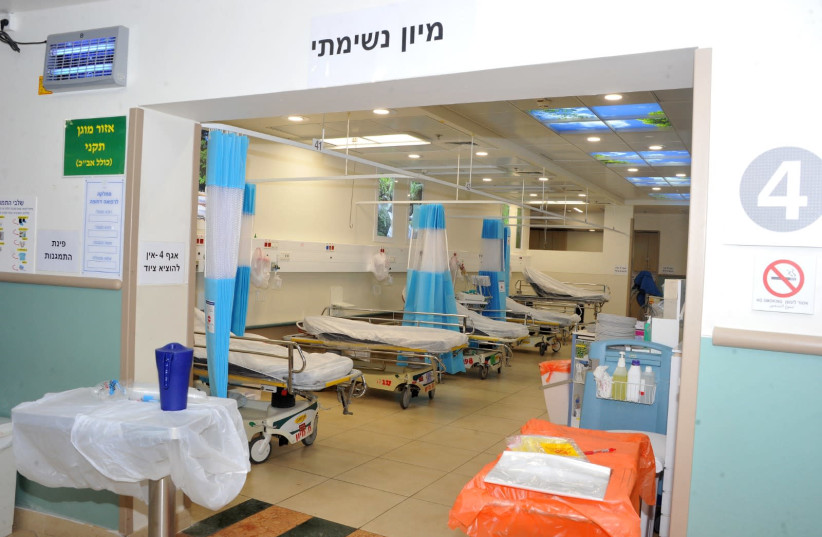
Fears of redoubled coronavirus assault in April. No remedy yet in sight – DEBKAfile

Posted March 30, 2020 by Joseph Wouk
Categories: Uncategorized

Source: Fears of redoubled coronavirus assault in April. No remedy yet in sight – DEBKAfile

Most experts forecast a second global assault by the coronavirus pandemic in April along with an unprecedented surge in infections and deaths. T

he global figure of coronavirus infections stood at 750,000 on Monday, March 20, including 33,000 fatalities. China, the first epicenter of the covid-19’s global offensive, has passed this dubious honor to the United States, Italy and Spain. An ominous silence hangs over the city streets of America and world capitals, such as London, Moscow, Paris, Rome, Madrid, Jerusalem, Berlin and others. Storefronts are darkened as people confined to home live in dread for their livelihoods.

As the US became the world coronavirus capital with more than 120,000 cases. Dr. Anthony Fauci, head of the US National Institute for Infectious Diseases, warned that millions of infections lie ahead of America with more than 100,000 deaths. President Donald Trump had to back away from his forecast that the nightmare would be over by Easter (in two weeks) and extend restrictions for combating the virus’ spread until the end of April. A field hospital has gone up in New York’s landmark Central Park and the US Navy’s “New York” hospital ship is heading for port with 1,000 beds.

Italy’s death toll rose by almost 900 deaths in one day to 10,000 on Sunday night, a figure that may double by the end of April. Spain also reported more than 800 deaths in a 24-hour span. The UK is bracing for 20,000 covid-19 deaths.

Russia has sealed its borders by land, air and sea to non-residents; the mayor of Moscow ordered all residents to self-isolate. Germany, with 57,000 confirmed cases and 455 deaths, is putting its trust in extensive testing and quarantining to break the infection chain, a strategy borrowed from South Korea.

In Israel, which has suffered 15 deaths from covid-19, infected cases rose on Monday to 4,347 with the number of serious cases requiring hospital care climbing to 80. New measures were introduced this week to tighten the near complete lockdown even further. It was coupled with expanded testing by region. The thinking is that  mapping the affected areas geographically to pinpoint the hotbeds of infection will eventually help lift the lockdown on infection-free parts of the country for returning to normal.

Health specialists and economists are locked in the same heated tug-o’-war over the need for total lockdowns for halting the spreading virus versus the likely irreversible economic damage they generate. The latter argue that the shutdown while possibly halting the disease would kill the victim’s economic life support.
The argument rages amid fears that giving into the economic arguments in response to a temporary ebbing of coronavirus infection would bring forth a redoubled outbreak in April going into May. This second wave could be even more ferocious than the first. Signs of this second covid-19 assault moving in are visible in China, Taiwan and Singapore, who relaxed restrictions after successful efforts to contain the spread of the plague.

Hanging over these debates is the fact that too little is known about the nature of coronavirus and its responses. The search for a remedy or vaccine may take years before one is certified for use and manufactured in sufficient quantity to beat a plague that knows no borders.

Two experimental anti-virus remedies for coronavirus are being tested in Israel’s hospitals. At the Sheba Medical Center, Prof Galia Rahav is supervising the use of  anti-bodies contained in blood drawn from volunteers who have recovered from covid-19. The plasma which contains the antibodies is being separated from the blood samples and injected in critical cases in hospital. The US FDA has approved the experiment. Remdesivor, a drug developed by the American company Gilead, which successfully stemmed the ebola outbreak, is being extensively used in the corona intensive units of Israeli hospitals, likewise in critical cases. Evaluating the results of both experiments calls for tests to be conducted on large, monitored groups for regulated periods.


UN praises ‘excellent’ Israeli-Palestinian cooperation in fight against pandemic

Posted March 30, 2020 by Joseph Wouk
Categories: Uncategorized

Source: UN praises ‘excellent’ Israeli-Palestinian cooperation in fight against pandemic | The Times of Israel

But officials in Ramallah, while acknowledging coordinating emergency response with Jerusalem, continue to slam Israel, say ‘occupation knows nothing of humanity’

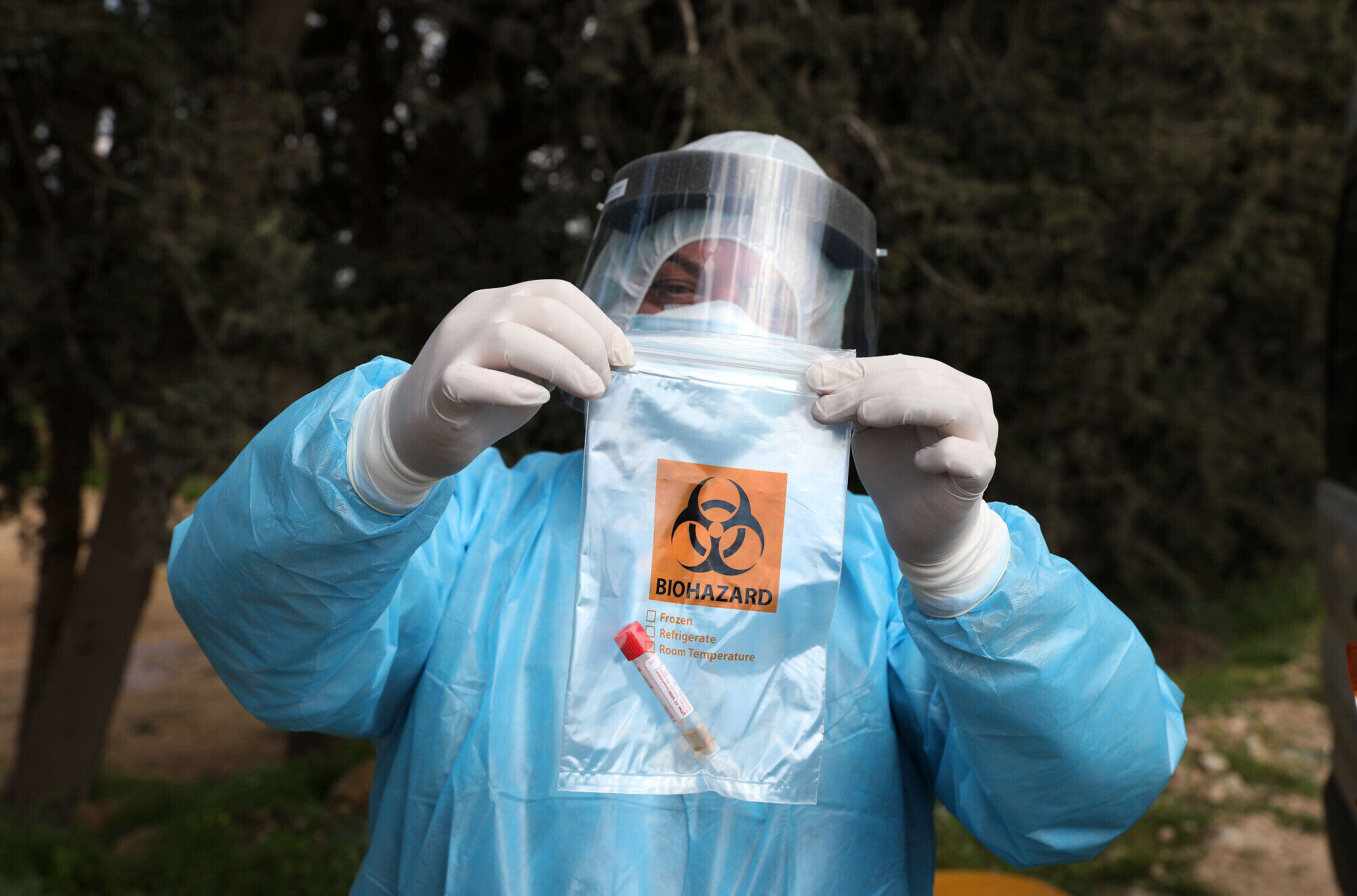
Palestinian health workers handle a Coronavirus test sample of Palestinian workers as they cross back from Israel at a checkpoint near Hebron, March 25, 2020. (Wisam Hashlamoun/Flash90)

Palestinian health workers handle a Coronavirus test sample of Palestinian workers as they cross back from Israel at a checkpoint near Hebron, March 25, 2020. (Wisam Hashlamoun/Flash90)

Perhaps uncharacteristically, the United Nations has showered praise on Israel for its “excellent” cooperation with the Palestinian Authority in fighting the coronavirus.

PA government spokesman Ibrahim Milhem has repeatedly mentioned working together with Israel in his daily press briefings. However, other Palestinian top officials have continued to condemn the Jewish state, accusing it of cruelly abusing the health crisis to violate Palestinian human rights.

“We hold discussions and consultations every day with the relevant UN officials. We hear from them praise for the State of Israel for the coordination and good cooperation in dealing with the coronavirus crisis, which in our view is essential and necessary for an effective response to the spread of the virus,” Alon Bar, deputy director-general for the UN and international organizations at the Israeli Foreign Ministry, said Sunday.

Israeli and Palestinian officials, having long worked together on security and civil matters, recently set up a special mechanism to communicate “moment by moment” on all issues related to the virus, a senior Palestinian official told The Times of Israel.
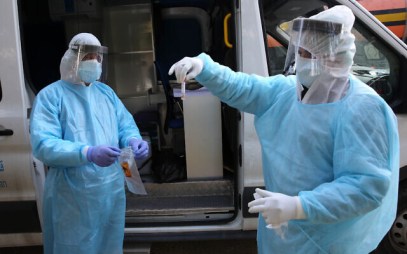
Palestinian health workers handling a coronavirus test sample of Palestinian workers as they cross back from Israel at a checkpoint in Tarqumiya on March 25, 2020 (Wisam Hashlamoun/Flash90)

But while the Palestinians don’t generally talk too much about their coordination with Israel, various UN officials went out of their way over the past week to highlight it.

Last Tuesday, the Palestine branch of the UN Office for the Coordination of Humanitarian Affairs — which is not known for its praise for Israeli government activities — published its first “emergency situation report,” noting “unprecedented cooperation on efforts aimed at containing the epidemic” between Israeli and Palestinian authorities.

“Representatives from both ministries of health, as well as from Israel’s Coordinator for Government Activities in the Territories (COGAT) have been meeting on a regular basis to agree on matters of mutual concern, such the understandings concerning Palestinian workers employed in Israel,” the report stated.

“As part of this efforts, COGAT is facilitating four trainings for Palestinian medical teams, while the Israeli [Health Ministry] donated over 1,000 testing kits and thousands of PPEs [Personal Protective Equipment] to the West Bank and Gaza.”

A Palestinian Authority policeman delivers supplies to the hotel staff who tested positive to coronavirus in Bethlehem, West Bank, March 6, 2020. (AP Photo/Majdi Mohammed)

The PA last week also acknowledged that Israel had transferred $25 million in previously withheld tax money, after PA Finance Minister Shukri Bishara and his Israeli counterpart, Moshe Kahlon, met — according to the PA Finance Ministry — to discuss the economic impact of the coronavirus on Israel and the Palestinians.

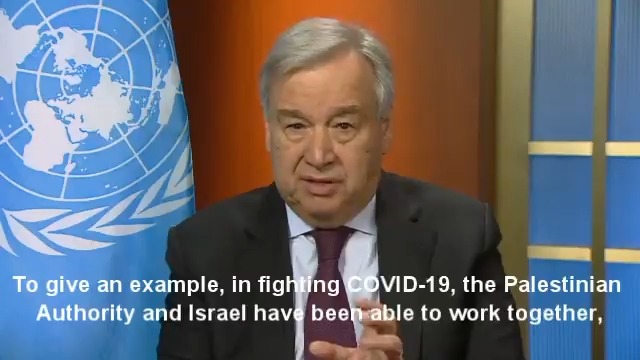
UN Secretary-General Antonio Guterres mentioned the close cooperation between Jerusalem and Ramallah on Wednesday during a press conference announcing the launch of the “COVID-19 Global Humanitarian Response Plan.” All UN special envoys in volatile areas have been urging warring parties to agree on a ceasefire, he said, adding that he was encouraged by the fact that these calls have resonated in some areas.

“I see… different parties to a conflict cooperating in order to respond to this dramatic situation,” he said. “To give an example, in fighting COVID-19, the Palestinian Authority and Israel have been able to work together, even if we know the extreme division that exists politically between the two.”

Israel Foreign Ministry

@IsraelMFA

Watch the Secretary General @antonioguterres commending Israel and the Palestinian Authority for their joint efforts to minimize the spread of in Judea & Samaria and prevent its outbreak in the Strip.

Embedded video

Also on Wednesday, President Reuven Rivlin phoned PA President Mahmoud Abbas to discuss the pandemic.

“The world is dealing with a crisis that does not distinguish between people or where they live,” Rivlin told Abbas, adding “the cooperation between us is vital to ensure the health of both Israelis and Palestinians.”

He added that “our ability to work together in times of crisis is also testament to our ability to work together in the future for the good of us all.”

Two days later, UN Special Coordinator for the Middle East Peace Process Nickolay Mladenov briefed members of the Middle East Quartet (the UN, the European Union, the United States and Russia) about the effects of the coronavirus on the already tense situation in Gaza. In his remarks, he stressed the “excellent coordination and cooperation that has been established with all Israeli and Palestinian interlocutors,” according to a readout of the briefing.

United Nations Special Coordinator for the Middle East Peace Process Nickolay Mladenov at a press conference at the (UNSCO) offices in Gaza City, September 25, 2017. (Adel Hana/AP)

“Israeli and Palestinian authorities continue to coordinate their responses closely and constructively, a major factor in the containment achieved so far,” the readout added, stressing that Israel has also facilitated the entry of “critical supplies and equipment” into the Hamas-controlled coastal enclave.

“Examples of critical supplies include swabs for collection of samples and other laboratory supplies required for COVID-19 testing and Personal Protective Equipment to protect health workers. This is in addition to Israel’s cooperation to allow for the movement and access of personnel involved in the COVID-19 response to and from both the West Bank and Gaza,” the readout stated.

On Saturday, the UN released a detailed press release about the briefing, stressing Mladenov’s praise of the Israeli-Palestinian coordination in the fight against the pandemic.

A UN press release saying good things about Israel was yet “more proof aliens have taken over,” joked Hillel Neuer, the executive director of UN Watch, a pro-Israel watchdog based in Geneva.

Hillel Neuer

@HillelNeuer

World is now so upside down that the U.N. just issued a statement on Palestinians that does NOT condemn Israel.https://news.un.org/en/story/2020/03/1060572 

Nickolay Mladenov, UN Special Coordinator for the Middle East Peace Process and Personal Representative of the Secretary-General to the Palestine Liberation Organization and the Palestinian Authority

COVID-19: UN envoy hails strong Israel-Palestine cooperation

Nickolay Mladenov, the UN Special Coordinator for the Middle East Peace Process, has praised the coordination between the Israeli and Palestine authorities in reacting to the COVID-19 pandemic.

news.un.org

But it didn’t stop there. On Sunday, Mladenov’s deputy, Jamie McGoldrick, who coordinates the UN’s humanitarian assistance to the Palestinians on the ground, took to Twitter to “commend the Palestinian and Israeli authorities for their efforts to deal with COVID19 and for the exemplary levels of collaboration.

“Their close coordination and prompt actions will save lives,” he added.

Jamie McGoldrick@jamiemcgoldric8

I commend the and authorities for their efforts to deal with and for the exemplary levels of collaboration. Their close coordination and prompt actions will save lives.

The only UN-affiliated body that was critical of Israel regarding coordinating the COVID-19 crisis was the World Health Organization, whose Palestine branch’s latest monthly report accused Israel of obstructing Palestinians’ access to vital medicine.

It quoted a Gazan mother of five named Itidal who said she feared to travel to East Jerusalem, where she usually goes to pick up her prescription of Herceptin, which she takes to fight breast cancer. In order to leave the Gaza Strip, she needs to apply for a special permit from the Israeli authorities, which is sometimes granted and sometimes denied, according to the report.

“Despite my fear and confusion from the new situation of coronavirus, I persisted to apply because I felt that if I don’t get the treatment my health will just deteriorate,” Itidal was quoted as saying. Why can’t the drugs simply be shipped to Gaza? she wondered.

Workers wearing protective gear spray disinfectant as a precaution against the coronavirus, at the main market in Gaza City, March 19, 2020. (Adel Hana/AP)

“As patients, why should we suffer to receive treatment? I appeal to the authorities to provide the drugs we need in Gaza at this difficult time,” she went on, according to the WHO report. “That will eliminate needless suffering of cancer patients, support our efforts and reduce costs.”

‘The hateful occupation continues its aggressive practices’

Palestinian officials were less subtle than Itidal in their criticism of Israel, attacking the government in Jerusalem in the harshest terms.

Last Tuesday, Milhem, the PA government spokesman, accused Israel of “dumping” an ill Palestinian worker — who he said had been suspected of carrying coronavirus — at a checkpoint in the central West Bank a day earlier.

“They dumped him in the middle of the road while he was experiencing pain,” he said. “They welcome us as healthy people and then throw us in the middle of the road as sick people. This is in contravention of human rights.”

PA Prime Minister Mohammad Shtayyeh bewailed Israel’s “hateful occupation [that] continues its aggressive practices against our people.

“This occupation knows nothing of humanity, and the international community is required to curb its illegal practices,” he said.

Dr. Mohammad Shtayyeh د. محمد اشتية

@DrShtayyeh

At such trying times for the whole world, we in are facing as this hateful occupation continues its aggressive practices against our people. This occupation knows nothing of humanity, and the international community is required to curb its illegal practices.

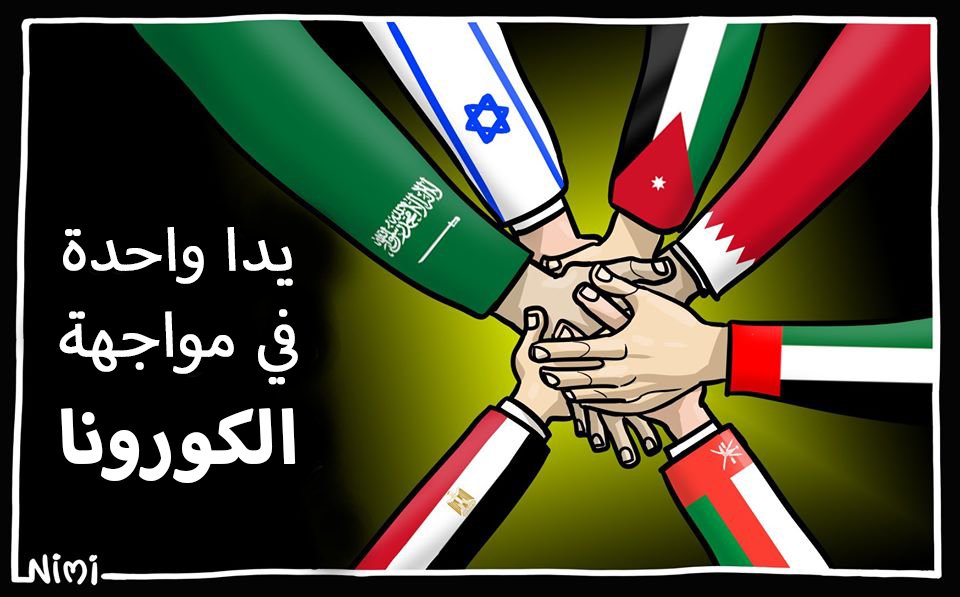
On Sunday, senior Palestinian official Saeb Erekat angrily pointed out that the Israeli Foreign Ministry’s Arabic Twitter account posted a call for regional cooperation with several Arab states in the region — but not Palestine.

“As someone who knows well the extent of cooperation between Israel & the PA on #Corona, it’s unfortunate that you choose to sow division during this time of crisis,” the ministry tweeted in response.

Dr. Saeb Erakat الدكتور صائب عريقات@ErakatSaeb

Israeli Foreign Ministry sharing tweet in Arabic that excludes Palestine from regional cooperation on Corona https://twitter.com/israelarabic/status/1244174021731717123?s=21 

View image on Twitter
إسرائيل بالعربية

@IsraelArabic

في أجواء الكورونا التعاون هو افضل الحلول#كورونا

View image on Twitter

إسرائيل بالعربية

As someone who knows well the extent of cooperation between Israel & the PA on , it’s unfortunate that you choose to sow division during this time of crisis

You’re welcome to follow our account to see just how well this cooperation is reflected.

Adam Rasgon contributed to this report.

Coronavirus cases in Israel rise to 4,347, with 80 in serious condition

Posted March 30, 2020 by Joseph Wouk
Categories: Uncategorized

Source: Coronavirus cases in Israel rise to 4,347, with 80 in serious condition | The Times of Israel

Health Ministry adds 100 patients to Sunday night’s tally; says 81 in moderate condition, 134 have recovered

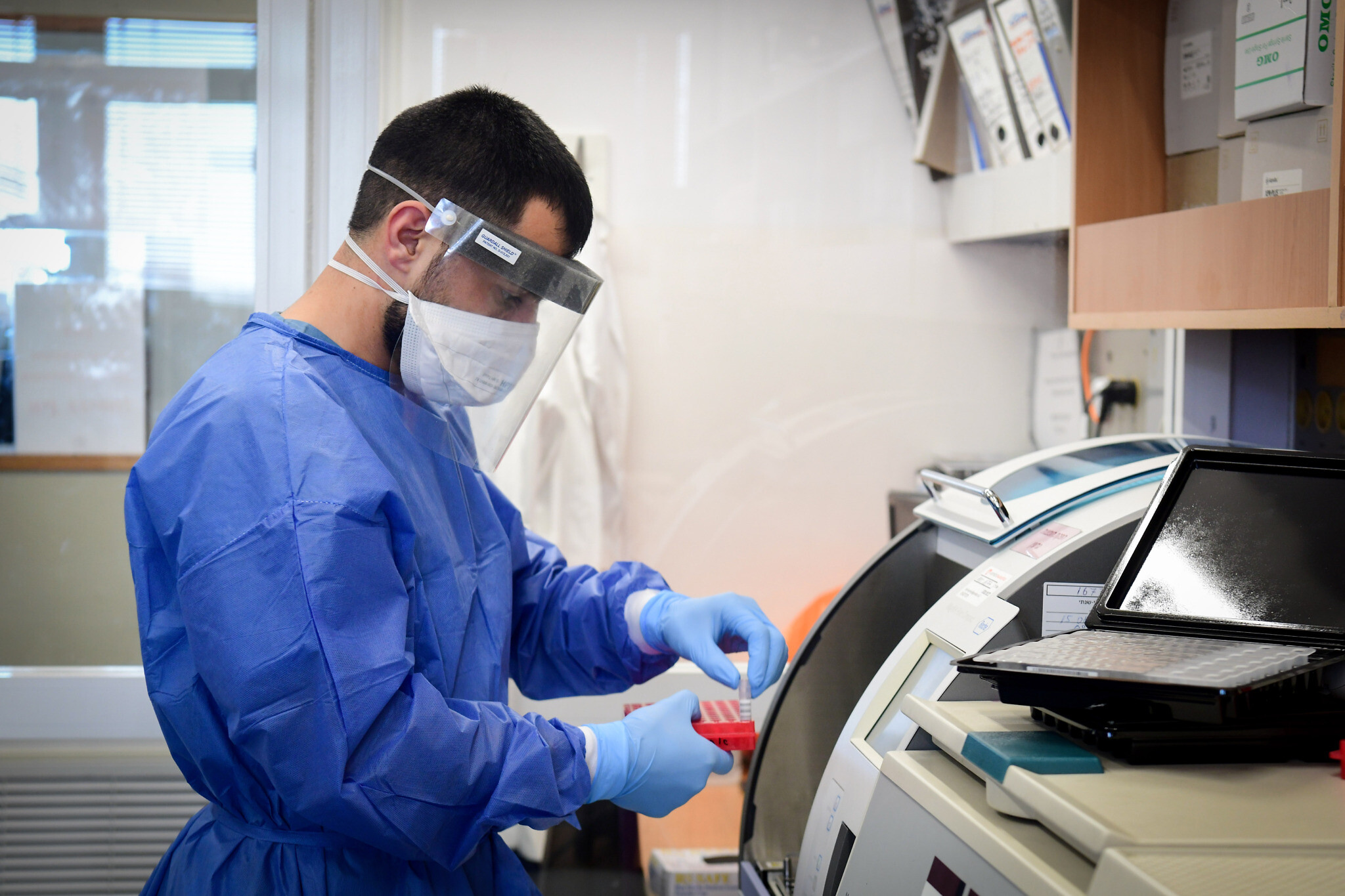
Medical team members at the Barzilay hospital, in the southern Israeli city of Ashkelon, wear protective gear, as they handle a coronavirus test sample on March 29, 2020. (Flash90)

Medical team members at the Barzilay hospital, in the southern Israeli city of Ashkelon, wear protective gear, as they handle a coronavirus test sample on March 29, 2020. (Flash90)

The Health Ministry said Monday morning that the number of Israelis infected with the coronavirus was 4,347, a rise of 100 cases since Sunday night.

The cases included 80 in serious condition, of whom 63 were attached to ventilators, the ministry said. Another 81 were in moderate condition, 134 had recovered, and the rest had mild symptoms.

The daily increase had been the single largest since the first coronavirus case was recorded in the country, and put it in 17th place in terms of infection numbers worldwide.

The death toll in Israel from the coronavirus is 15, with three new fatalities recorded on Sunday. Of the 15 people to die in Israel from COVID-19, the disease caused by the coronavirus, 13 were over the age of 70. An 82-year-old Israeli man in Italy also died of the disease.

One of those in serious condition is a man in his 20s who had no preexisting medical issues. Due to increasing difficulty breathing, he was sedated and hooked up to a ventilator, Samson Assuta Ashdod University Hospital said Sunday.

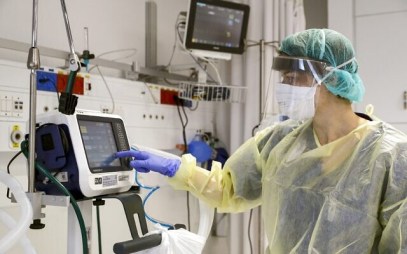
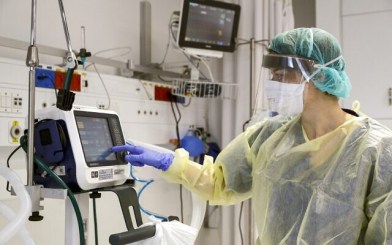
Illustrative: A doctor checks a medical ventilator control panel while wearing protective clothing at the Samson Assuta Ashdod University Hospital, March 16, 2020. (JACK GUEZ / AFP)

The continued rise in virus cases came as a top Health Ministry official reportedly warned that Israel needed to prepare for a situation in which 5,000 people infected with the virus needed ventilators.

“This is a difficult scenario, but we can endure it,” Dr. Vered Ezra, head of medical management at the ministry, was quoted as saying by Channel 12 news in a briefing.

According to a report prepared last week for the Knesset’s Special Committee on Dealing With the Coronavirus, there are at most 1,437 ventilators in the country still available to treat patients. The Health Ministry disputed that figure, saying there were 2,864 available ventilators.

There have been growing concerns there may not be enough ventilators to treat all of the most seriously ill, leaving doctors with life and death decisions on whom to keep alive.

Israelis were ordered starting last Wednesday to remain in their homes unless they are taking part in a small number of approved activities, including purchasing food and medicine or taking a short walk no more than 100 meters (328 feet) from their home. Those found violating those regulations are subject to fines of upwards of NIS 500 ($140) or imprisonment.

The government was set to weigh imposing further restrictions.


Man, 58, is Israel’s youngest COVID-19 victim as death toll hits 16

Posted March 30, 2020 by Joseph Wouk
Categories: Uncategorized

Source: Man, 58, is Israel’s youngest COVID-19 victim as death toll hits 16 | The Times of Israel

Patient, who is not immediately identified, had ‘significant’ preexisting medical conditions, Tel Aviv-area hospital says

The Assaf Harofeh hospital (CC BY-SA, Wikipedia)

Illustrative: Surgeons at Israel’s Yitzhak Shamir Medical Center, formerly the Assaf Harofeh hospital, performing the artificial meniscus implant on November 11, 2019. (Courtesy)

A 58-year-old man with “very significant preexisting conditions” died of the coronavirus in central Israel’s Assaf Harofeh Medical Center, making him the 16th and youngest person in Israel to succumb to the disease, the hospital said Monday.

According to the medical center, located in the Tel Aviv suburb of Be’er Yaakov, the patient was brought into the hospital from Holon on Sunday night.

“Unfortunately, he passed away this morning,” the hospital said in a statement. “We share the family’s grief and send our condolences.”

There were no immediate details on his identity.

Three fatalities were recorded on Sunday. Of the 16 people to die in Israel from COVID-19, the disease caused by the coronavirus, 13 have been over the age of 70. An 82-year-old Israeli man in Italy also died of the disease.

Medical team members at the Barzilay hospital, in the southern Israeli city of Ashkelon, wear protective gear, as they handle a coronavirus test sample on March 29, 2020. (Flash90)

The Health Ministry said Monday morning that the number of Israelis infected with the coronavirus was 4,347, a rise of 100 cases since Sunday night.

The cases included 80 in serious condition, of whom 63 were on ventilators, the ministry said. Another 81 were in moderate condition, 134 had recovered, and the rest had mild symptoms.

The tally soared beyond the 4,000 mark on Sunday, with an increase of 628 cases in 24 hours. The daily increase was the single largest since the first coronavirus case was recorded in the country, and put it in 17th place in terms of infection numbers worldwide.

One of those in serious condition is a man in his 20s who had no preexisting medical issues. Due to increasing difficulty breathing, he was sedated and hooked up to a ventilator, Samson Assuta Ashdod University Hospital said Sunday.

Illustrative: A doctor checks a medical ventilator control panel while wearing protective clothing at the Samson Assuta Ashdod University Hospital, March 16, 2020. (JACK GUEZ / AFP)

The continued rise in virus cases came as a top Health Ministry official reportedly warned that Israel needed to prepare for a situation in which 5,000 people infected with the virus needed ventilators.

“This is a difficult scenario, but we can endure it,” Dr. Vered Ezra, head of medical management at the ministry, was quoted as saying by Channel 12 news in a briefing.

According to a report prepared last week for the Knesset’s Special Committee on Dealing With the Coronavirus, there are at most 1,437 ventilators in the country still available to treat patients. The Health Ministry disputed that figure, saying there were 2,864 available ventilators.

There have been growing concerns there may not be enough ventilators to treat all of the most seriously ill, leaving doctors with life and death decisions on whom to keep alive.

Israelis were ordered starting last Wednesday to remain in their homes unless they are taking part in a small number of approved activities, including purchasing food and medicine, going to work, or taking a short walk no more than 100 meters (328 feet) from their home. Those found violating those regulations are subject to fines of upwards of NIS 500 ($140) or imprisonment.

The government was set to weigh imposing further restrictions.


Israel’s war-between-wars campaign against Iran continues 

Posted March 29, 2020 by Joseph Wouk
Categories: Uncategorized

Source: Israel’s war-between-wars campaign against Iran continues – The Jerusalem Post

IDF troops patrolling Israeli cities to enforce the nation-wide semi lockdown

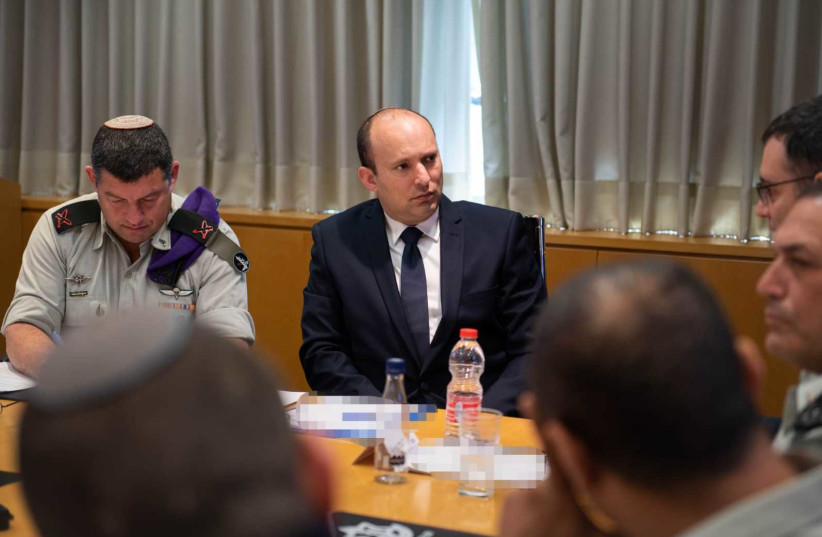
Defense Minister Naftali Bennett during a special meeting discussing what will happen if a national state of emergency is declared due to coronavirus, March 2020 (photo credit: Courtesy)
Defense Minister Naftali Bennett during a special meeting discussing what will happen if a national state of emergency is declared due to coronavirus, March 2020
(photo credit: Courtesy)
Israel’s “war-between-wars” campaign against Iran is continuing despite the spread of the coronavirus, Defense Minister Naftali Bennett said Sunday.

“The Iranian leadership insisted for many years to invest its monetary and human resources in exporting terror instead of on its own people and today the Iranian people are paying the price. Iran should start taking care of its people,” he said.

Earlier in the day Israel Air Force Commander Maj.-Gen. Amikam Norkin said the IAF will continue its routine and maintain operational readiness despite the outbreak of the virus.

“This is a historic event that happens once in a 100 years. The [air] force has gone into a state of emergency,” Norkin told senior air force officers by video conference. “We have made significant adaptations and changes in how we operate. We are aware of our people and we will take care of their health and we will help as much as necessary in the national and civilian effort to deal with this virus. We will continue to defend the skies of the nation. And we will be operationally prepared to protect the skies.”

Iran is among the countries hardest hit by the coronavirus, with thousands of people dying from the deadly virus, including several senior government officials.

In early March IDF Spokesperson Brig.-Gen. Hidai Zilberman told reporters that there’s been a decrease in hostile enemy activity targeting Israel due to the continued spread of the coronavirus.

Speaking to reporters by phone, Zilberman said the spread of the virus has affected Israel’s enemies, who have decreased their hostile activities to focus on containing the pandemic.While he did not refer to Iran by name, the spokesman said “there are enemy countries that have been hit much stronger than us by the coronavirus and therefore their activities have decreased.”

Also on Sunday IDF troops began patrolling cities alongside police officers to enforce the Health Ministry’s restrictions meant to stop the continued spread of the coronavirus.

The 650 troops will act as an auxiliary force to the police, which has the legal authority to enforce the lockdown, which requires residents to remain at home except under specific circumstances such as buying food or going to a pharmacy.

Should a full nationwide lockdown be imposed, an additional 3,600 troops from the Ground Forces training bases will be allocated to the police.

According to Haaretz, the troops deployed alongside the police will not be stationed inside Arab cities and villages.

The number of individuals diagnosed with the virus climbed to over 3,865 cases by Sunday morning. There are 58 soldiers confirmed to have the virus and another 3,697 in quarantine, many of them at two quarantine facilities run by the IDF and Yahad-United for Israel’s Soldiers. The soldiers who have been diagnosed with the virus have been placed at the military’s coronavirus treatment center in Ashkelon, which is also run by the association.

Col. (res) Sharon Harmon, deputy CEO of Yahad-United for Israel’s Soldiers, told The Jerusalem Post that in addition to the hundreds of soldiers who are quarantined, there are thousands more who must remain on base that are being helped by Yahad.

“The IDF wants to keep the troops separate from civilians so they can return to their duty as soon as possible,” Harmon said, explaining that “even with all the chaos that we have because of the virus, the IDF needs to be strong because this could be an opportunity for our enemies to attack us.”

On Friday night a rocket was fired from northern Gaza towards southern communities leading the IDF to carry out retaliatory strikes on Hamas targets later that night.

According to Harmon, thanks to donations, more than 80,000 troops (both men and women) were given packages of hygiene products as well as games and other care products. The association will also provide care packages with food and games for Passover to troops, including 17,000 lone soldiers.

“Usually soldiers have families who can help them, but lone soldiers don’t have that,” Harmon said adding that “we will make sure that the thousands of troops on base will celebrate the Passover holiday, and those who remain in their apartments will get these care packages as well.”

The association plans to hold a Seder for all troops in their quarantine facilities with a high-ranking IDF officer to lead the service.

Harmon said that despite the hard economic hit caused by the virus, donors in Canada, the United States, Mexico, Brazil, France and England have given the association a total of NIS 8 million.

“Everyone is in a hard place and it’s not easy to give but this is for soldiers and we will continue to support them,” she said.


Seeking the Elusive “Herd Effect” to Beat back Coronavirus – DEBKAfile

Posted March 29, 2020 by Joseph Wouk
Categories: Uncategorized

Source: Seeking the Elusive “Herd Effect” to Beat back Coronavirus – DEBKAfile

Is the coronavirus playing games with the world? Do lockdowns have a lasting effect? Hong Kong was a rare success story in the global war on coronavirus.

But it also showed what happens when such measures as social distancing, hygiene and protective gear are relaxed too soon. In the past week, confirmed cases in Hong Kong suddenly doubled, mainly due to overseas imports, prompting Hong Kong Chief Executive Carrie Lam on Wednesday, March 25 to bar all non-residents from the territory.

This pattern of ebb and surge, which is unfolding also in China, Singapore and Taiwan, begs questions. Is the lockdown model for containing coronavirus at fault? After all, people do get fed up staying at home. Or was the lifting of restrictions premature? These questions lead to another: Maybe the virus did not in the first wave reach what epidemiologists call “critical mass” i.e., infecting enough people for the “herd effect” to kick in. It therefore returned for a second visit.

The “herd effect” or “herd immunity” – another term used by those scientists – happens when a large proportion of a population develops an immune response to a certain disease, forcing the virus to run out of hosts and retreat. Large-scale vaccinations may trigger this effect by disrupting the chain of infection.

But the size of this proportion – and therefore critical mass – varies from virus to virus and has not been discovered yet in the case of covid-19.

An ordinary flu vaccination program counts 70pc as critical mass since it is enough to protect the remaining, unvaccinated 30pc. That’s how you get “herd immunity.”  It is hard to determine how this works case by case. And no one knows whether the proportion of recovered cases from the covid-19 pandemic has become large enough to beat the virus into retreat.

Because of these imponderables, total closure of a population is counter-productive, Sharon Mikhailov, biologist and former researcher at the Sheba Medical Center, tells DEBKA Weekly. Partial closures are preferable when conducted in controlled stages. They permit the disease to advance in controlled clusters in stages, thereby avoiding overtaxing the hospitals, while contributing to the build-up of a critical mass of immune subjects. By this method, if closely controlled, the entire population may eventually become immune to infection.

The formula of partial lockdown should enable health authorities to keep the outbreak and the death toll sustainable. The supermarket is a good venue for controlled clusters. It is virtually the only public place where people may move away from home and within their neighborhoods. There, they may touch products and mingle, inevitably encountering some covid-19 carriers in a controlled, identifiable environment.

However, the trouble is that the Israeli Health Ministry’s program, while seeking to establish the point at which covid-19 reaches critical mass for generating the elusive “herd immunity,” holds to strict criteria for testing. They exclude from the testing program the priceless input available from local family practitioners and district medical centers. The criteria are limited to testing patients rushed to hospital with acute symptoms and put on respirators, although some will die regardless; those patients’ contacts; and travelers returning from overseas.

However, doctors working in the community are not authorized to refer patients suspected of contracting coronavirus for testing. Such an undocumented suspect will be free to visit the local supermarket and infect large numbers. This venue then ceases to be a controlled environment.

Because this regional category is excluded, the national testing program is short of the data for documenting the virus’ extent. The authorities are therefore caught off guard by unforeseen local outbreaks. Their stage-by-stage buildup towards the critical mass for herd immunity is quickly blown off course, with disastrous effect on the overburdened hospital staff and equipment. The doubling of the numbers of confirmed cases in Israel every three days – which began to happen this week – is way outside the authorities’ plan for a controlled progression of the infection.

Universal testing is unfeasible. But its application in communities, based on local medical data, would document such outbreaks and offer more credible figures. It would also present a true regional picture for fitting into a comprehensive geographic survey to map the pandemic. Districts free of the disease could then return to normal and so begin to relieve some of the economic pain suffered by so many.

This week, two months into the pandemic, Israel’s health authorities finally launched a program to divide the country into 16 closed regions. In each, a battalion of IDF Homeland Command reservists will help the police monitor the tightened lockdown ordered by the national task force for the war on coronavirus.

This article was contributed to DEBKA by Sharon Mikhailov, biologist and former researcher at the Sheba Medical Center

But it also showed what happens when such measures as social distancing, hygiene and protective gear are relaxed too soon. In the past week, confirmed cases in Hong Kong suddenly doubled, mainly due to overseas imports, prompting Hong Kong Chief Executive Carrie Lam on Wednesday, March 25 to bar all non-residents from the territory.

This pattern of ebb and surge, which is unfolding also in China, Singapore and Taiwan, begs questions. Is the lockdown model for containing coronavirus at fault? After all, people do get fed up staying at home. Or was the lifting of restrictions premature? These questions lead to another: Maybe the virus did not in the first wave reach what epidemiologists call “critical mass” i.e., infecting enough people for the “herd effect” to kick in. It therefore returned for a second visit.

The “herd effect” or “herd immunity” – another term used by those scientists – happens when a large proportion of a population develops an immune response to a certain disease, forcing the virus to run out of hosts and retreat. Large-scale vaccinations may trigger this effect by disrupting the chain of infection.

But the size of this proportion – and therefore critical mass – varies from virus to virus and has not been discovered yet in the case of covid-19.

An ordinary flu vaccination program counts 70pc as critical mass since it is enough to protect the remaining, unvaccinated 30pc. That’s how you get “herd immunity.”  It is hard to determine how this works case by case. And no one knows whether the proportion of recovered cases from the covid-19 pandemic has become large enough to beat the virus into retreat.

Because of these imponderables, total closure of a population is counter-productive, Sharon Mikhailov, biologist and former researcher at the Sheba Medical Center, tells DEBKA Weekly. Partial closures are preferable when conducted in controlled stages. They permit the disease to advance in controlled clusters in stages, thereby avoiding overtaxing the hospitals, while contributing to the build-up of a critical mass of immune subjects. By this method, if closely controlled, the entire population may eventually become immune to infection.

The formula of partial lockdown should enable health authorities to keep the outbreak and the death toll sustainable. The supermarket is a good venue for controlled clusters. It is virtually the only public place where people may move away from home and within their neighborhoods. There, they may touch products and mingle, inevitably encountering some covid-19 carriers in a controlled, identifiable environment.

However, the trouble is that the Israeli Health Ministry’s program, while seeking to establish the point at which covid-19 reaches critical mass for generating the elusive “herd immunity,” holds to strict criteria for testing. They exclude from the testing program the priceless input available from local family practitioners and district medical centers. The criteria are limited to testing patients rushed to hospital with acute symptoms and put on respirators, although some will die regardless; those patients’ contacts; and travelers returning from overseas.

However, doctors working in the community are not authorized to refer patients suspected of contracting coronavirus for testing. Such an undocumented suspect will be free to visit the local supermarket and infect large numbers. This venue then ceases to be a controlled environment.

Because this regional category is excluded, the national testing program is short of the data for documenting the virus’ extent. The authorities are therefore caught off guard by unforeseen local outbreaks. Their stage-by-stage buildup towards the critical mass for herd immunity is quickly blown off course, with disastrous effect on the overburdened hospital staff and equipment. The doubling of the numbers of confirmed cases in Israel every three days – which began to happen this week – is way outside the authorities’ plan for a controlled progression of the infection.

Universal testing is unfeasible. But its application in communities, based on local medical data, would document such outbreaks and offer more credible figures. It would also present a true regional picture for fitting into a comprehensive geographic survey to map the pandemic. Districts free of the disease could then return to normal and so begin to relieve some of the economic pain suffered by so many.

This week, two months into the pandemic, Israel’s health authorities finally launched a program to divide the country into 16 closed regions. In each, a battalion of IDF Homeland Command reservists will help the police monitor the tightened lockdown ordered by the national task force for the war on coronavirus.

This article was contributed to DEBKA by Sharon Mikhailov, biologist and former researcher at the Sheba Medical Center


Woman dies of coronavirus, 15th Israeli fatality overall and 3rd in a day

Posted March 29, 2020 by Joseph Wouk
Categories: Uncategorized

Source: Woman dies of coronavirus, 15th Israeli fatality overall and 3rd in a day | The Times of Israel

Jerusalem’s Shaare Zedek Medical Center says Rosa Sherman Arbel, 84, died after six days of serious illness

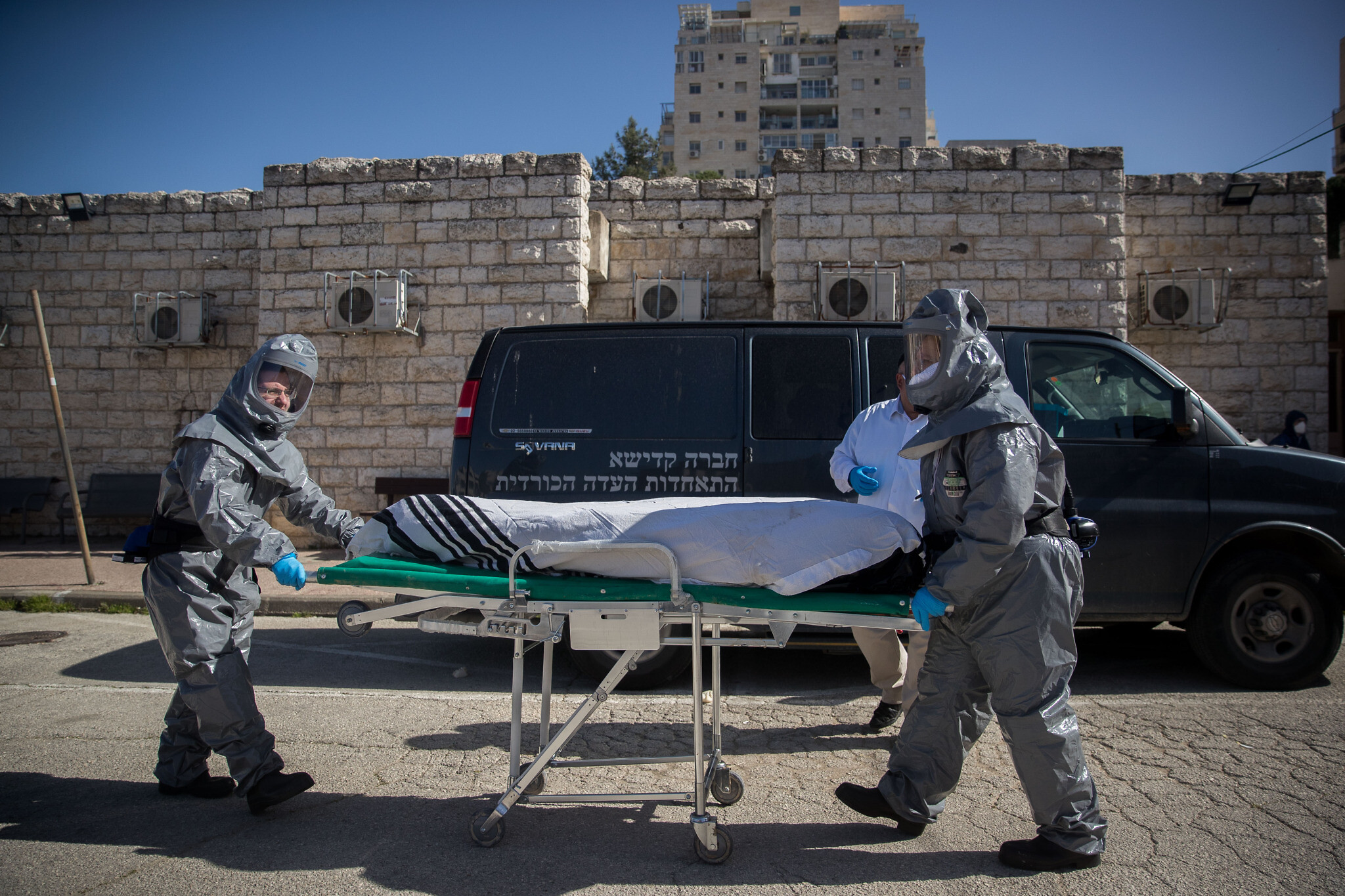
Illustrative: Funeral workers wearing protective clothes carry the body of a patient who died from the coronavirus (COVID-19), at the Shamgar Funeral Home in Jerusalem on March 29, 2020. (Yonatan Sindel/Flash90)

Illustrative: Funeral workers wearing protective clothes carry the body of a patient who died from the coronavirus (COVID-19), at the Shamgar Funeral Home in Jerusalem on March 29, 2020. (Yonatan Sindel/Flash90)

The toll in Israel from the coronavirus rose to 15 Sunday with the death of Rosa Sherman, 84, in Jerusalem.

The capital’s Shaare Zedek Medical Center announced her death in a statement, saying she was hospitalized six days ago in very serious condition.

Sherman was the third person to die from the virus since Sunday morning. Earlier a person died in Bnei Brak and another in Jerusalem, both in their 90s.

Of the 15 people to die so far in Israel from COVID-19, the disease caused by the coronavirus, 13 were over the age of 70. An 82-year-old Israeli man in Italy also died of the disease.

As of Sunday morning, there have been 3,865 confirmed coronavirus cases in Israel. According to the Health Ministry, 66 people are in serious condition, including 54 who were breathing with the help of ventilators. Another 82 people were in moderate condition, while the rest had minor symptoms.

One of those in serious condition is a man in his 20s who had no preexisting medical issues. Due to increasing difficulty in breathing, he was sedated and hooked up to a ventilator, Samson Assuta Ashdod University Hospital said Sunday.

The continued rise in virus cases came as a top Health Ministry official reportedly warned that Israel needed to prepare for a situation in which 5,000 people infected with the virus needed ventilators.

“This is a difficult scenario, but we can endure it,” Dr. Vered Ezra, head of medical management at the ministry, was quoted saying by Channel 12 news as saying in a briefing.

According to a report prepared last week for the Knesset’s Special Committee on Dealing With the Coronavirus, there are at most 1,437 ventilator machines in the country still available to treat patients. The Health Ministry disputed that figure, saying there were 2,864 available ventilators.

There have been growing concerns there may not be enough ventilators to treat all of the most seriously ill, leaving doctors with life and death decisions on whom to keep alive.

Israelis were ordered starting on Wednesday to remain in their homes unless they are taking part in a small number of approved activities, including purchasing food and medicine or going a short walk of no more than 100 meters (328 feet) from their home. Those found violating those regulations are subject to fines of upwards of NIS 500 ($140) or imprisonment.

The government was set to weigh imposing further restrictions.


Coronavirus: 3,460 Israelis diagnosed, Netanyahu to increase restrictions 

Posted March 28, 2020 by Joseph Wouk
Categories: Uncategorized

Source: Coronavirus: 3,460 Israelis diagnosed, Netanyahu to increase restrictions – The Jerusalem Post

Death toll at 12, more than 3,400 infected with coronavirus * Israel to increase tests to 30,000 daily * ‘Number of dead or in critical condition is less than expected’

THE NEW coronavirus ward was completed in three days last week (photo credit: RONI ALBERT)
THE NEW coronavirus ward was completed in three days last week
(photo credit: RONI ALBERT)
Prime Minister Benjamin Netanyahu ordered authorities over the weekend to prepare to significantly tighten restrictions on movement starting Sunday, aiming to further reduce the number of people leaving their homes and, to hopefully, contain the spread of the novel coronavirus.
Should there not be a change in the trend of infections over the weekend, Netanyahu warned, a full shutdown of the country will be necessary. The warning followed a meeting with ministers and ministry director-generals, during which the Finance Ministry was tasked with developing a plan for a further reduction of the country’s labor force.
The prime minister also ordered stepped up enforcement in supermarkets and pharmacies to ensure that the Health Ministry’s directives on crowding are adhered to.

However, according to Health Ministry officials, as of Saturday there was slower than expected growth in the number of infected Israelis: Some 3,460 people have been diagnosed with coronavirus – an increase of 794 cases during the weekend. Twelve individuals have died to date – all elderly individuals with underlying conditions. Among the confirmed cases, 50 are in serious condition, and 89 individuals have recovered.

The greatest challenge seems to be within the Haredi (ultra-Orthodox) neighborhoods where the numbers per 10,000 people are among the highest: Kiryat Ye’arim 53, Kfar Chabad 38, Bnei Brak 13 in comparison to four in Tel Aviv or 1.5 in Haifa.

Netanyahu’s proclamation came on the backdrop of an announcement by the Health Ministry that it will increase the number of people it tests for coronavirus to 30,000 per day within the next month. On Friday, some 6,000 tests were taken, and that number is expected to increase to 10,000 by mid-week, a decision that Defense Minister Naftali Bennett called “tremendous news.”
Due to a technical problem, however, the Health Ministry said test results from the country’s 27 laboratories were delayed on Saturday.
Morris Dorfman, head of Regulation, Digital Health & Information Systems Directorate at the Health Ministry, said that the results of eight tests were reported incorrectly by two laboratories to the ministry. The results had not yet been transferred to the patients in question, he said, and operations at the laboratories were continuing as normal.
On Saturday evening, Netanyahu is set to convene a meeting with finance officials to finalize a delayed plan to support the economy and businesses struggling as a result of measures to contain the coronavirus.
The scope of the financial aid package requested by Netanyahu is set to be about NIS 80 billion, or 6% of GDP, including increased government-backed loans, deferred compulsory business payments and deferred taxation. It was also decided to include an NIS 5b. fund to bail out large businesses.
The plan, which will likely be presented for approval at Sunday’s cabinet meeting, will be in addition to NIS 8b. in support already allocated to businesses, primarily in the form of low-interest, government-backed loans.
On Friday, the government approved a series of emergency financial support regulations, including the provision of unemployment benefits for citizens over the age of 67 – estimated to stand at some 135,000 individuals. Individuals will receive up to NIS 4,000 if they were forced to leave work due to the outbreak.
“This is a significant and unprecedented step that shows the ongoing assistance of elderly citizens, especially those in the employment sector over retirement age,” Labor Minister Ofir Akunis said.
Among the latest casualties of the coronavirus was a 73-year-old man from Haifa with underlying conditions. His wife, 71, remains hospitalized at Haifa’s Rambam Medical Center with coronavirus.
A 93-year-old man hospitalized at Soroka Medical Center, an 80-year-old man admitted to Wolfson Hospital and a 76-year-old woman treated at Rabin Medical Center also died at the weekend.
Jerusalem and Bnei Brak – home to many haredi (ultra-Orthodox) residents – lead the nation in numbers of coronavirus patients, with 352 and 267 cases respectively, Channel 12 reported. The largely secular city of Tel Aviv, home to more than double the number of residents living in Bnei Brak, also has 267 cases of the virus.
As of Saturday afternoon, police said they had issued 1,296 fines to date to individuals and businesses for defying Health Ministry directives.
A total of 849 fines were issued for prohibited activities in public; 152 fines for being present in a banned location; 108 for refusing to disperse from crowded locations; 105 for operating a forbidden business; and 73 for defying self-isolation orders.

Idan Zonshine contributed to this article.


Israel security challenges amid COVID-19 (part I)- Jerusalem Studio 500 

Posted March 28, 2020 by Joseph Wouk
Categories: Uncategorized


Trump phones Netanyahu to congratulate him that he’ll form, head next government

Posted March 28, 2020 by Joseph Wouk
Categories: Uncategorized

Source: Trump phones Netanyahu to congratulate him that he’ll form, head next government | The Times of Israel

Leaders also discuss steps needed to manage coronavirus pandemic; call comes day after Benny Gantz indicates he will enter unity government with PM

US President Donald Trump participates in an expanded bilateral meeting with Israeli Prime Minister Benjamin Netanyahu, January 27, 2020, in the Oval Office of the White House. (Official White House Photo by D. Myles Cullen)

US President Donald Trump called Prime Minister Benjamin Netanyahu on Friday to congratulate him that he’ll be forming Israel’s next government, the Prime Minister’s Office said.

The call came a day after Netanyahu closed in on a unity government with rival Benny Gantz.

“The president of the United States telephoned Prime Minister Benjamin Netanyahu and congratulated him that he will form and head the next government,” the Prime Minister’s Office said in a statement.

“During the conversation, which was warm and friendly, the leaders discussed the various steps needed to deal with the spread of the coronavirus pandemic,” the statement said.

The White House said in a statement that Trump and Netanyahu “discussed the latest developments on the coronavirus pandemic, and the president thanked the prime minister for his strong action to stop its spread.”

“The two leaders agreed to cooperate closely to combat the virus and minimize its global impact,” The White House statement said, without mentioning the premiership.

As things formally stand, it is Gantz who has been charged by President Reuven Rivlin with forming Israel’s next government, having been recommended as prime minister by 61 MKs. But the anticipated unity deal would see Netanyahu stay on as prime minister for the next 18 months, at which point he would hand over to Gantz, in a “rotation” deal that many observers believe will not play out.

Since the March 2 election, in which Netanyahu’s Likud party won the most seats but his right-wing bloc fell three seats shy of forming a majority coalition, only Austria’s Chancellor Sebastian Kurz had phoned the premier to offer congratulations.

After elections in April 2019, which Netanyahu initially appeared to have won but ultimately proved unable to form a coalition, Trump called the Likud leader the next day from Air Force One with congratulations.

Gantz was handed the mandate to form a government on March 16, but appeared to have no clear path to forging a stable coalition. Both he and Netanyahu, who has run Israel for over a decade but is facing criminal charges, had publicly touted the need for a national emergency unity government in light of the coronavirus crisis, but neither had appeared to make any meaningful steps toward that goal before a Wednesday night phone call between the two.

Gantz was elected Knesset speaker Thursday evening as part of the emerging unity deal.

Benny Gantz (R) at the Knesset on March 26, 2020, after being elected Knesset speaker. (Knesset)

According to the reported pact taking shape, Gantz is set to partner with Netanyahu in a unity coalition, serving initially as foreign or defense minister and then taking over as prime minister in September or October 2021.

Furious at Gantz’s move, and accusing him of stealing the votes of their supporters and handing them to Netanyahu, the Yesh Atid and Telem factions filed a formal request to break away from Gantz late on Thursday afternoon, leaving only Gantz’s Israel Resilience faction to join forces with Netanyahu’s Likud. Lapid had reportedly told Gantz he preferred that Israel go to fourth elections than see Blue and White partner with Netanyahu.

Gantz and his Blue and White colleagues had vowed through election campaigns in the past year not to sit in a government with Netanyahu so long as he is facing criminal charges. But Gantz said Thursday and Friday that the pandemic and the electoral deadlock necessitated atypical behavior to drag Israel out of crisis. (The prime minister’s trial was supposed to begin on March 17 but has been postponed to May amid the coronavirus-related emergency restrictions that have shut down most Israeli court activity.)

Gantz is expected to resign the speakership after a unity government is formed, to be replaced by a Likud MK, potentially even the previous Knesset speaker, Yuli Edelstein, who refused to carry out a Supreme Court order to hold a vote on who would succeed him, and resigned.