Source: Iran’s Pres says US sanctions are not impeding fight against coronavirus – The Jerusalem Post
Rouhani’s statements contradict Zarif who has said that the US is waging “medical terrorism” against the Islamic Republic.
Source: Iran’s Pres says US sanctions are not impeding fight against coronavirus – The Jerusalem Post
Rouhani’s statements contradict Zarif who has said that the US is waging “medical terrorism” against the Islamic Republic.
Health Ministry chiefs, Mossad boss, national security adviser, all handling response to pandemic, enter isolation along with PM, who just emerged; IDF head already quarantined
Prime Minister Benjamin Netanyahu and some of Israel’s other top officials in managing the country’s response to the coronavirus crisis will enter quarantine after Health Minister Yaakov Litzman was confirmed to have contracted COVID-19, amid concerns that other senior officials could also be forced into isolation.
Netanyahu will work from his Jerusalem residence until Wednesday in accordance with Health Ministry instructions and the advice of his personal physician, Dr. Tzvi Berkowitz, the Prime Minister’s office said in a statement.
Health Ministry head Moshe Bar Siman-Tov, who has become the face of Israel’s management of the crisis with near daily briefings and media appearances, announced on Thursday morning that he would self-quarantine, due to the contact he had with Litzman in recent days.
Sigal Sadetzki, head of public health at the Health Ministry, will also enter a two-week period of home isolation, since she recently met with Litzman.
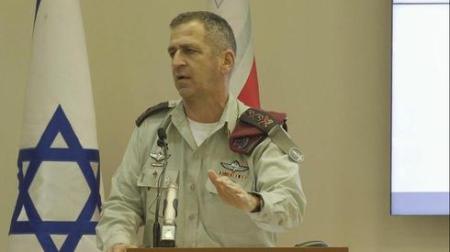
Mossad Chief Yossi Cohen, whose spy agency has been instrumental in obtaining medical equipment for Israel, and National Security Adviser Meir Ben-Shabbat, who has been coordinating the government’s response to the pandemic, will also be sent into isolation, according to Hebrew news reports. IDF chief of staff Aviv Kohavi is already working from quarantine, due to exposure to an infected officer, but has tested negative for the virus.
Under Health Ministry orders, tens of thousands of Israelis are in self-quarantine due to possible exposure to the virus and the entire country is in an almost total lockdown that has seen most of the population confined to their homes, only allowed out for essential needs.
The number of COVID-19 deaths in Israel rose Thursday to 31, and the number of people diagnosed with the coronavirus increased to 6,211.
Last week, Litzman attended a Knesset session, and staff at the parliament are said to be checking the footage of security cameras to see who came in direct contact with the minister. It is expected that several lawmakers, and possibly some ministers as well, will have to self-quarantine.
Netanyahu had just emerged from self-quarantine on Wednesday evening, 14 days after he last met with one of his advisers, who also contracted the virus. He, his family and several close advisers were tested on Monday and were found to not be carriers.
Both Litzman and Bar Siman-Tov will continue to manage the country’s fight against the disease while in isolation, according to the Health Ministry.
“Bar Siman-Tov will remain in quarantine in a specialized facility that includes a work space and the relevant communication equipment,” the ministry said in a statement issued Thursday morning.
“We planned for a possibility like this and prepared accordingly,” the ministry’s director-general said. “I will continue to manage this event together with my managerial colleagues with digital tools.
“Needing to go into quarantine can happen to anyone, and we must abide by the orders. I continue to call for citizens of Israel to abide by the Health Ministry’s directives,” Bar Siman-Tov added.
Litzman, 71, and his wife Chava were both found to have contracted the disease, which is especially dangerous to people above the age of 65.
“His condition at this time is mild. He is not asymptomatic, there are some symptoms, but no more than that,” Dr. Itamar Grotto, deputy director-general of the ministry, told Channel 12 on Thursday.
The ministry is investigating from whom Litzman contracted the disease and is informing people who have been in contact with the minister to go into quarantine, Grotto added.
Grotto himself will not have to go into quarantine, he said, since all his recent meetings with Litzman have been held over the phone or through videoconferences.
It is possible that the health minister may have contracted the virus from another senior government official, according to Grotto, though he may also have caught the disease from someone within his ultra-Orthodox community in Jerusalem.
“There’s a high rate of the illness in the Haredi community, so it’s reasonable to think that it happened there,” he said.
Litzman, the head of the ultra-Orthodox United Torah Judaism party, has played a prominent role in handling the pandemic crisis alongside Netanyahu, attending key meetings with him, though the prime minister has been careful to maintain social distancing regulations.
Litzman has been frequently criticized for his handling of the virus outbreak in Israel.
Some have alleged he put the interests of the ultra-Orthodox community ahead of the general public in his handling of the fight against the pandemic. He reportedly pushed to delay stringent restrictions on public gatherings that would have affected observance of the Purim festival last month, and fought bitterly against last week’s closing of synagogues.
A group of senior medical officials in major hospitals have written to Netanyahu with an urgent demand to appoint a professional figure as health minister instead.
The doctors wrote in the letter that the coronavirus pandemic “has exposed and caught the healthcare system at a low point from an organizational and operational point of view, which everyone had been aware of.”
They laid out problems in the system, including widening gaps between the quality of health services in the center of the country and in the north and south.
“At this time… it is right for a professional to be appointed to head the Health Ministry — a doctor with a rich experience in Israeli healthcare,” they wrote. “Health comes before anything else, definitely before politics.”
Times of Israel staff and Judah Ari Gross contributed to this report.
Source: Israelis told to wear face masks in public, mark religious holidays with close family only – Reuters
JERUSALEM (Reuters) – All Israelis should wear face masks while in public as a precaution against the coronavirus, and upcoming Jewish, Muslim and Christian holidays should be marked only with immediate family, Prime Minister Benjamin Netanyahu said on Wednesday.
In televised remarks, Netanyahu also announced curbs on movement around an ultra-Orthodox Jewish town that has experienced a disproportionately large outbreak.
Israel has taken stringent measures to try to halt the spread of the virus, after recording more than 6,000 cases. At least 25 Israelis have died of COVID-19, according to Health Ministry data.
“We ask you, citizens of Israel, all of you, to wear masks in the public sphere,” Netanyahu said in televised remarks, adding that people could improvise “with a scarf or any other facial covering” in the absence of factory-produced masks.
Increasingly tight restrictions have largely confined Israelis to their homes, forcing businesses to close and causing unemployment to skyrocket to 24.4%.
Netanyahu on Wednesday said the government would give Israeli families 500 shekels per child, up to a maximum of four children. The elderly would also receive 500 shekels, Netanyahu said, terming all the payments a “Passover gift”.
Those stipends would cost the state a total of 1.5 billion shekels, public broadcaster Kan estimated.
Netanyahu also said Israel’s majority Jews must mark Passover “with the nuclear family only,” adding that including elderly relatives in celebrations “would be to endanger them”.
Those same restrictions apply to Muslims and Christians, Netanyahu said, who make up most of Israel’s 21% Arab minority and will mark Easter and the beginning of Ramadan, respectively, later this month.
“We have decided to reduce to the minimum necessary the access and egress from the city,” Netanyahu said, while adding that residents would still be allowed to move around within the city if required.
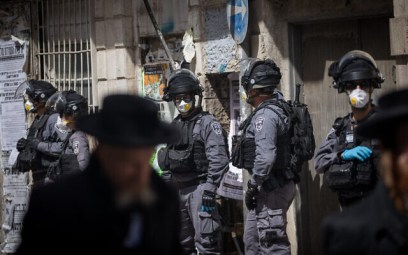
Israeli officials describe the ultra-Orthodox as especially prone to contagion because their districts tend to be poor and congested, and in normal times they are accustomed to holding thrice-daily prayers with often large congregations. Some ultra-Orthodox rabbis have also cast doubt on the coronavirus risk.
Reporting by Rami Ayyub; Additional reporting by Dan Williams, Steve Scheer and Tova Cohen; Editing by Chizu Nomiyama and Hugh Lawson
Note: This story has been updated with comments from the U.S. Navy and other developments.
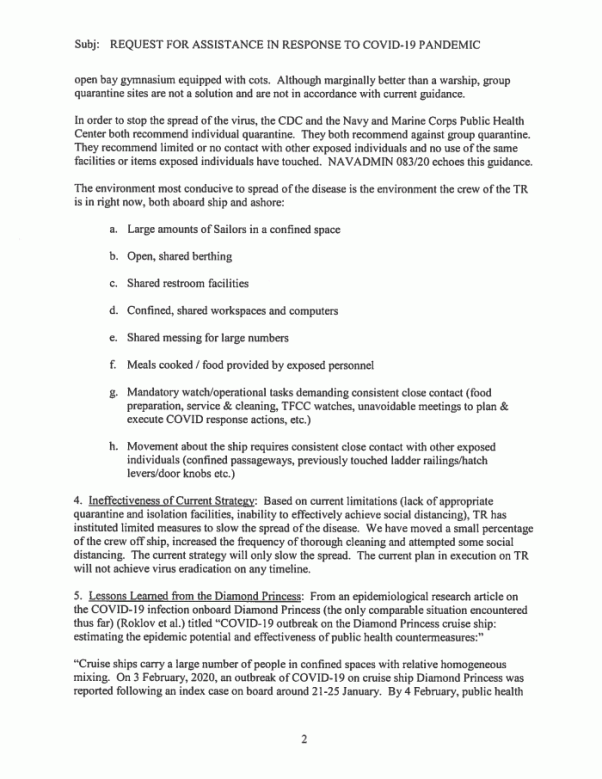
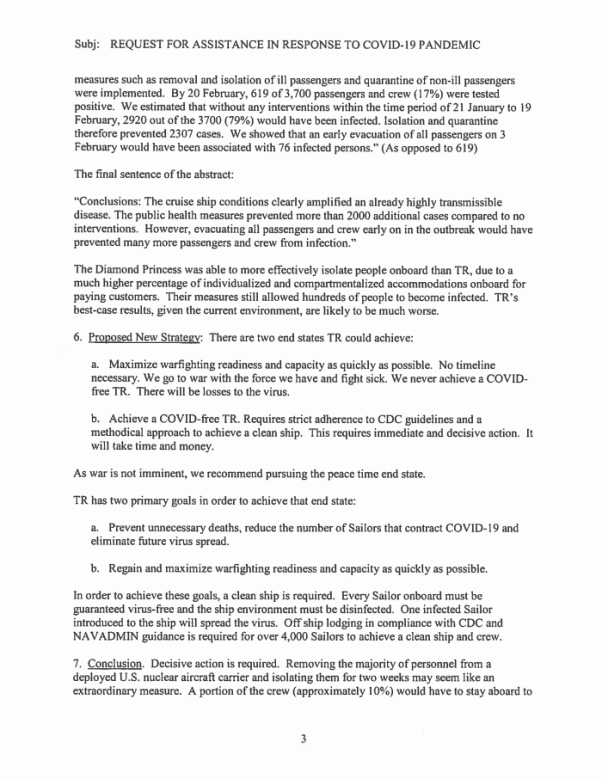
The captain of a nuclear aircraft carrier with more than 100 sailors infected with the coronavirus pleaded Monday with U.S. Navy officials for resources to allow isolation of his entire crew and avoid possible deaths in a situation he described as quickly deteriorating.
The unusual plea from Capt. Brett Crozier, a Santa Rosa native, came in a letter obtained exclusively by The Chronicle and confirmed by a senior officer on board the aircraft carrier Theodore Roosevelt, which has been docked in Guam following a COVID-19 outbreak among the crew of more than 4,000 less than a week ago.
“This will require a political solution but it is the right thing to do,” Crozier wrote. “We are not at war. Sailors do not need to die. If we do not act now, we are failing to properly take care of our most trusted asset — our Sailors.”
In the four-page letter to senior military officials, Crozier said only a small contingent of infected sailors have been off-boarded. Most of the crew remain aboard the ship, where following official guidelines for 14-day quarantines and social distancing is impossible.
“Due to a warship’s inherent limitations of space, we are not doing this,” Crozier wrote. “The spread of the disease is ongoing and accelerating.”
He asked for “compliant quarantine rooms” on shore in Guam for his entire crew “as soon as possible.”
“Removing the majority of personnel from a deployed U.S. nuclear aircraft carrier and isolating them for two weeks may seem like an extraordinary measure. … This is a necessary risk,” Crozier wrote. “Keeping over 4,000 young men and women on board the TR is an unnecessary risk and breaks faith with those Sailors entrusted to our care.”
The Navy did not respond to The Chronicle’s requests for comment Monday, but on Tuesday morning as the news spread, the Acting Navy Secretary Thomas Modly spoke to CNN.
“I heard about the letter from Capt. Crozier (Tuesday) morning, I know that our command organization has been aware of this for about 24 hours and we have been working actually the last seven days to move those sailors off the ship and get them into accommodations in Guam. The problem is that Guam doesn’t have enough beds right now and we’re having to talk to the government there to see if we can get some hotel space, create tent-type facilities,” Modly said.
“We don’t disagree with the (captain) on that ship and we’re doing it in a very methodical way because it’s not the same as a cruise ship, that ship has armaments on it, it has aircraft on it, we have to be able to fight fires if there are fires on board the ship, we have to run a nuclear power plant, so there’s a lot of things that we have to do on that ship that make it a little bit different and unique but we’re managing it and we’re working through it,” he said.
“We’re very engaged in this, we’re very concerned about it and we’re taking all the appropriate steps,” Modly said.
So far, none of the infected sailors has shown serious symptoms, but the number of those who have tested positive has jumped exponentially since the Navy reported infections in three crew members on March 24, the first time COVID-19 infections had been detected on a naval vessel at sea.
Asked Tuesday what should be done about the Roosevelt, President Trump said he would “let the military make that decision.”
Retired Admiral James Stavridis, former NATO Supreme Allied Commander Europe, told The Chronicle Tuesday in an e-mail that “we should expect more such incidents because warships are a perfect breeding ground for coronavirus.”
“Unfortunately, naval vessels are ideal breeding grounds for the spread of viruses because it is impossible to do social distancing on one” because of the tight quarters on board, Stavridis said.
The ship’s problems will “compound,” Stavridis said, because you can’t tie the vessel up “and send everyone ashore. It is full of weapons, billions of dollars of equipment, fire hazards, and nuclear reactors.”
Source: Syrian media says Israeli war planes attack near Homs | The Times of Israel
No immediate comment from Israel; Syrian opposition says target of strike was al-Sharyat military airport used by Iran
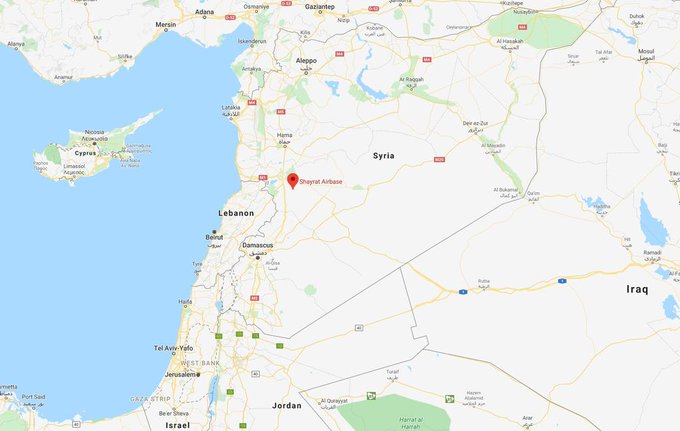
Syrian air defenses in the central province of Homs opened fire Tuesday night on missiles launched from what state media claimed were Israeli warplanes.
Syrian State TV said the warplanes fired the missiles while flying in Lebanese airspace. The outlet said the warplanes targeted a Syrian army position without saying where exactly. It said some of the missiles had been shot down, though Syrian media has been known to make such claims falsely.
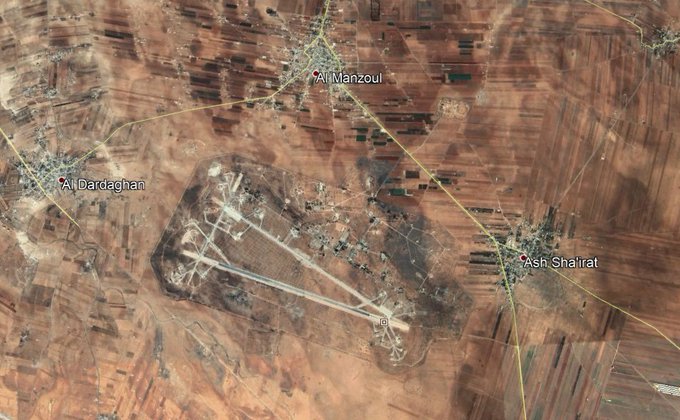
The UK-based Syrian Observatory for Human Rights (SOHR), an opposition war monitor, said Israeli warplanes fired eight missiles at al-Shayrat air base in Homs province. It said explosions were heard and believed to have been caused by anti-aircraft defenses while intercepting these strikes, but gave no further details.
There was no immediate comment from Israel.
If the target was al-Shayrat base it would be the second time this month that the Israel Defense Forces has reportedly struck the site which is said to be used by Iran as a forward base for bringing weapons into the country.
On March 5, according to Syrian opposition sources, a series of Israeli airstrikes targeted four Hezbollah-linked sites in central and southern Syria.
SOHR said the Israeli attack targeted two military airports near the city of Homs in western-central Syria — al-Shayrat and al-Dabaa — as well as two locations in the area of Quneitra, across from Israel’s Golan Heights.
On March 2, as Israel held elections, the IDF bombed a Syrian vehicle that the military said was used in an attempted sniper attack on Israeli troops near the Golan border.
The IDF acknowledged the strike.
SOHR said the vehicle belonged to members of a militia loyal to Syrian President Bashar Assad.
#BREAKING: It’s the second time this month #Israel targets the #Al_Shayrat airbase. This site has reportedly become #Iran‘s air base in #Syria used to store weapons & operations command.#BreakingNews #Military #COVID
In recent years, Israel has repeatedly carried out airstrikes in Syria against targets belonging to Iran and its regional proxies Hezbollah and other Shi’ite militias.
Though Israeli officials generally refrain from taking responsibility for specific strikes in Syria, they have acknowledged conducting hundreds to thousands of raids in the country since the start of the Syrian civil war in 2011.
These have overwhelmingly been directed against Iran and its proxies, notably the Lebanese Hezbollah terror group, but the IDF has also carried out strikes on Syrian air defenses when those batteries have fired at Israeli jets.
Israel has in the past accused Iran of attempting to set up rocket launching crews and other “terror infrastructure” in the Syrian Golan Heights, to be used against Israel, as well as of trying to entrench a military presence in the country.
Judah Ari Gross contributed to this report.
Source: IDF chief in quarantine after contact with coronavirus sufferer
Aviv Kochavi attended debate 10 days ago with individual later confirmed to have been infected; heads of Home Front Command and Operations Directorate also present and also in isolation until the weekend
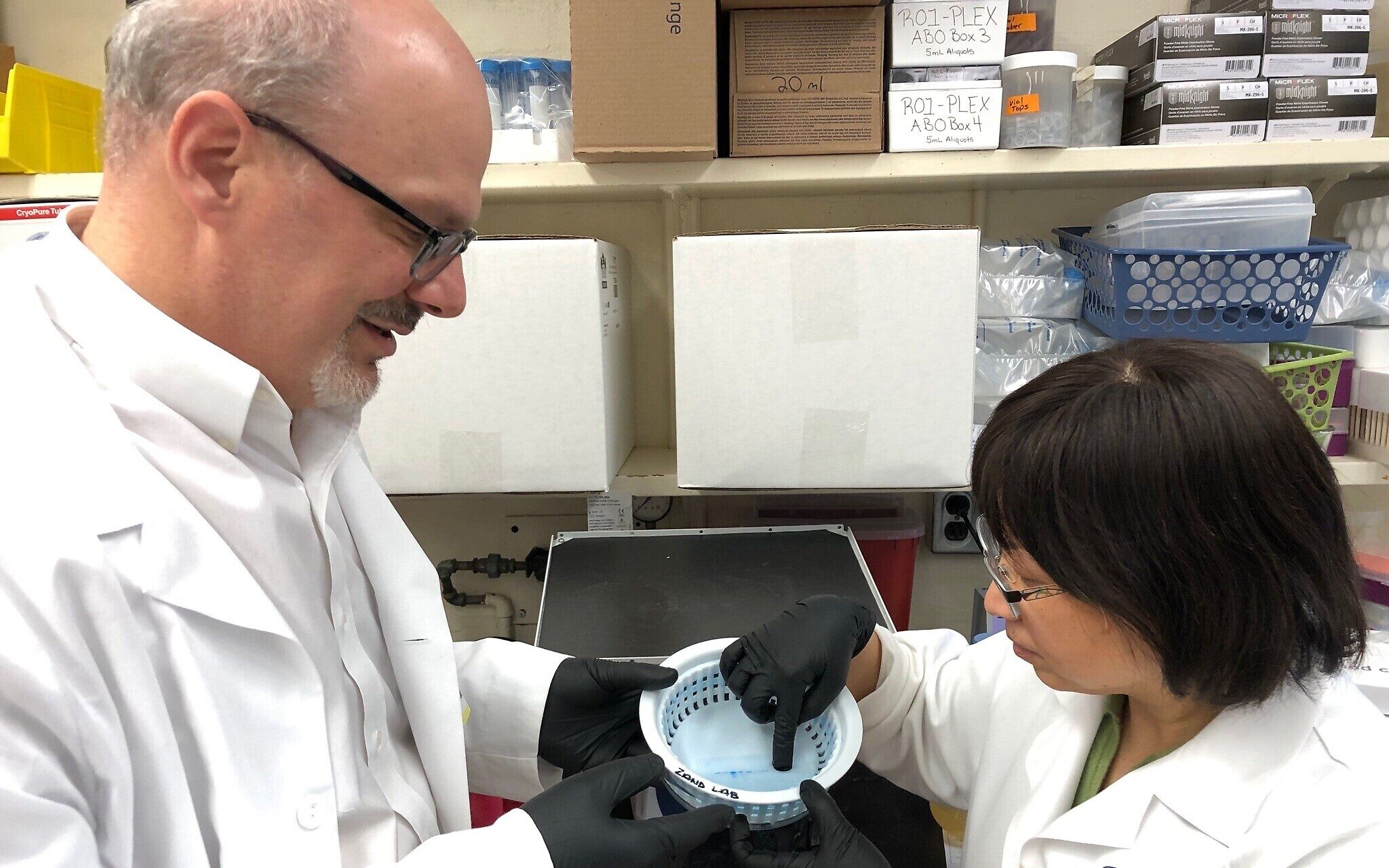
Source: US expert: Israeli response to coronavirus crisis is ‘right on target’ | The Times of Israel
Compared with the decentralized health system in the US, the Jewish state’s reaction to COVID-19 has been relatively swift and well-organized, says data scientist Dr. Martin Zand
Source: Israel and the demise of the global village – www.israelhayom.com
Israel’s ability to protect itself and adapt its economy to the new post-global village reality will in large part determine how it survives and prospers in the post-global village world now taking shape.
In the face of the steeply rising number of coronavirus patients and the breakneck speed of political changes in Israel, few people have stopped to notice that the world we have grown accustomed to living in for the past generation is falling apart. The global village is collapsing under the weight of the pandemic.
How Israel deals with this dramatic turn of events today, and in the coming weeks, months and years will determine both how we emerge from the present crisis and how we manage in the new world now taking form.
Israel’s food supply system is a perfect example of the global changes to being wrought by the virus. In Israel, five basic foodstuffs are produced locally: fruits, vegetables, eggs, poultry, and milk. Most grains, sugar, rice, salt, meat, and other foodstuffs are imported.
Out of a total agricultural workforce of 70,000, 25,000 are migrant workers from Thailand and another 25,000 are from the Palestinian Authority. According to Agriculture Minister Tzachi Hanegbi, concerns over the coronavirus prevented 1,500 workers from Thailand scheduled to arrive at the beginning of the month from entering the country. The Palestinian workforce is down to 18,000 and dropping due to the quarantine the PA has placed on its population.
The labor shortages couldn’t come at a worse time. Currently, there are a half billion shekels worth of fruit and vegetables ready for harvest. If they aren’t picked in the next three weeks, they will rot on the trees and in the fields.
Three weeks ago, the HaShomer HaHadash organization began getting flooded with calls from farmers for help. HaShomer HaHadash is a volunteer agricultural support organization founded in 2007 to protect Israeli farmers from Arab and Bedouin criminal gangs who extort farmers and ranchers and carry out agricultural theft and sabotage on a massive level.
“These calls were different,” explains HaShomer HaHadash’s leader Yoel Zilberman. “We are used to receiving calls about sabotage, and extortion and sending our volunteers to guard and herd. These calls were about the harvest, the national food supply.”
Zilberman and his colleagues realized the implications of the loss of a harvest for Israel’s food supply and began drawing up a plan to help the distressed farmers. Two weeks ago, Zilberman approached Hanegbi and offered to organize a corps of volunteers to save the harvest. Comprised of the organization’s roster of volunteers, cadets at pre-military leadership academies, youth movement alumni and from twelfth graders, Zilberman’s volunteers would work in shifts in the fields. With government finance, Hashomer Hahadash would provide for all their needs. Hanegbi agreed.
Last week, the government approved an emergency order to organize the corps of volunteers. The first hundred young people arrived in the fields on Tuesday. Operating in compliance with Health Ministry guidelines, HaShomer HaHadash launched a smartphone application called “Sundo” where prospective volunteers can join the operation. Zilberman plans to expand his roll of volunteers to include foreign students stranded in Israel with nothing to do after the coronavirus caused their programs to be canceled. He assesses there are up to twenty thousand foreign youth in Israel who could potentially join in the effort.
To be sure, this initiative, which will hopefully enable Israel to surmount the coronavirus-induced international labor shortage, is intended to be a short-term fix. All parties to the initiative assume that once the crisis abates, labor flows will return to their pre-coronavirus levels. But there is no way to know whether this assessment is correct. The coronavirus-induced shortage in migrant, agricultural laborers points to a much wider phenomenon that is unlikely to disappear when the quarantines are over.
The coronavirus pandemic won’t destroy global markets. But it will change them radically and reduce their size and scope. In the case of agriculture, the coronavirus has exposed large-scale vulnerabilities in both agricultural import models and domestic production. At the outset of the crisis, cargo ships laden with foodstuffs from China and Italy were laid up in the ports for weeks until port workers and the Health Ministry could develop protocols for safely offloading them. Dozens of shipments were diverted to Cyprus, at great cost to importers.
Who is to say that food supplies in China or other countries won’t be compromised again in the future? And what happens in the event of war? Naval warfare can easily endanger food imports to Israel over a prolonged period. The model of dependence on foreign suppliers needs to be adapted in the face of what we are learning.
As to domestic production, according to Hanegbi, over the past decade, the number of Israelis engaged in agriculture has decreased by 60 percent as the children of farmers are choosing other professions. Obviously, this is a major vulnerability. Israel needs food security and food security means expanding our domestic agricultural capacity. The incoming government needs to develop a national plan to support domestic agriculture and inspire young people to choose agriculture as a profession and way of life. In Israel, the next crisis is always just around the corner. And the next war or pandemic may make our current endangered harvest look like child’s play.
What is true in relation to agriculture is doubly true in relation to manufacturing. As we are finding in our race to purchase more respirators, it is ill-advised in the extreme to depend on foreign suppliers for food, medical equipment, and medicines in times of crisis. Until January 2020, it seemed perfectly rational to outsource manufacturing to China. Now, as we face global shortages in respirators and other medical equipment, it is obvious that China is not a trustworthy supplier.
This week Jim Geraghty published a timeline of China’s deception of the world regarding the nature of the coronavirus in the National Review. Geraghty showed that Chinese authorities in Wuhan realized the virus was spread between humans in the first week of December. But it wasn’t until January 20 that the Chinese admitted that this was the case.
In the intervening six weeks, the Chinese lied repeatedly about the infectiousness of the virus and jailed doctors and citizen journalists who tried to warn the Chinese people and the world of the danger. Also during those six weeks, five million people left Wuhan. Scores of thousands of them got on airplanes and flew to Europe and the US bringing the virus with them.
Still today, the Chinese are apparently hiding critical information about the virus from the world. While the Western media heralds the Chinese success in bringing the infection rate down to zero inside China, Japan’s Kyodo News Agency reported this week that the Chinese data are phony. Physicians in Wuhan told the agency’s reporters that the reason the rate of infection has dropped to zero is because the Chinese authorities have banned testing.
The coronavirus exposed a truth that global village fans have spent the past generation denying: Borders are important.
From 1997 until the coronavirus, Europe’s internal national borders were all open. Over the past few weeks, 15 EU member states have shut their doors and thrown away the key. Germany – the birthplace of the vision of the European common market and nation – initially banned the export of protective medical equipment to its European “brethren.”
When the Italians begged for help, no EU member state sent in medical teams to save their fellow Europeans.
If just last month, the heads of the European Commission had the last word in all discussions among EU member states, today no one cares what they have to say. As Professor Thomas Jaeger from the University of Cologne told the Los Angeles Times, “We’re seeing an enormous delegitimation of the authority of the EU government in this crisis. The longer the crisis lasts, the more nationalism will return.”
In many ways, regardless of how long it lasts, the pandemic has already taken a permanent toll on the European Union. EU members have taken one another’s measure and realized that when push comes to shove, they have only their own peoples and governments to rely on. The Italians and Spaniards aren’t likely to care what the feckless bureaucrats in Brussels or the selfish Germans have to say about their national policies after this is over.
The same goes for the UN and other major international governing institutions.
UN Ambassador Danny Danon wrote Wednesday in Israel Hayom that this is the UN’s finest hour. In his words, “UN institutions, particularly the World Health Organization, are proving that the organization remains the main body that the world needs in its struggle with Corona.”
Danon is mistaken, however. The WHO has played an unhelpful, indeed destructive role in this crisis. As Geraghty and others have shown, the WHO was a full partner in China’s dissimulation efforts. The WHO waited until January 21, after the first coronavirus patient was diagnosed in the US, to admit that it is transferred between people despite the fact that WHO officials knew that humans infected one another in early January. This week an Oxford-based research group announced it will no longer base its coronavirus assessments on WHO data, which it considers not credible.
This week Walter Russell Mead noted in the Wall Street Journal that international organizations like the World Bank, the International Monetary Fund and the World Trade Organization are playing no significant role in the global fight against the coronavirus. National leaders and agencies, who are directly responsible for protecting their people are calling the shots irrespective of WHO rules and IMF spending guidelines.
The coronavirus pandemic has exposed the critical failings of the global village model for international integration. International labor markets, global trade and international governing institutions have proven vulnerable to shocks, unreliable and of limited use. It has also reminded us of foundational truths that have been shunted aside since the end of the Cold War. National borders protect nations. National authorities and fellow citizens are far more reliable and helpful in times of crisis than transnational, and international organizations.
To survive and protect themselves from global shocks, nations must have autarkic agricultural and manufacturing capabilities. China is not a reliable industrial base.
Israel’s ability to protect itself today, and adapt its economy to the new post-global village reality will in large part determine how it survives and prospers in the post-global village world now taking shape.

Source: PM to self-isolate after aide turns out to be coronavirus carrier – www.israelhayom.com
Although it is unlikely that Netanyahu was infected, his advisers say he is taking the precaution until this can be ruled out.

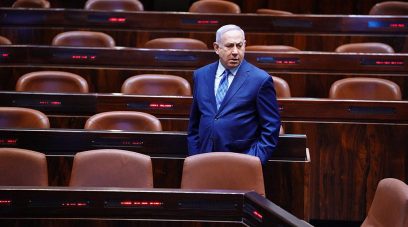
Prime Minister Benjamin Netanyahu stands in the Knesset plenum | Photo: The Knesset Press Office
Prime Minister Benjamin Netanyahu began self-isolating on Monday after one his aides tested positive for coronavirus, though an initial investigation determined the 70-year-old was unlikely to have been infected, officials said.
Netanyahu is scheduled to undergo a coronavirus test by Tuesday, the officials said. A previous test, on March 15, came back negative.
Israel’s Health Ministry regulations generally require a 14-day self-isolation for anyone deemed to have been in proximity with a carrier, with the duration reduced for the number of days that have passed since the suspected exposure.
The infected aide had been present at an event last week in the Knesset attended by Netanyahu as well as opposition lawmakers with whom he is trying to build an emergency coalition government to help address the coronavirus crisis.
“The preliminary assessment is that there is no need for the PM to self-isolate as he was not in close contact with the patient, nor did he meet with her,” an Israeli official initially said. But later on Monday, the official said Netanyahu had “decided that he and his personal staff will be in isolation until the epidemiological investigation is completed”.
Israel has reported more than 4,000 cases and 16 fatalities as of Monday morning. With the Health Ministry warning that the dead could eventually number in the thousands, Netanyahu was due to convene officials on Monday to discuss a proposed total lockdown of clusters of coronavirus carriers to make sure they remain isolated from the rest of the country.
The Israeli official said Netanyahu has been following medical advice and holding most meetings by video-conference.
Recent Comments