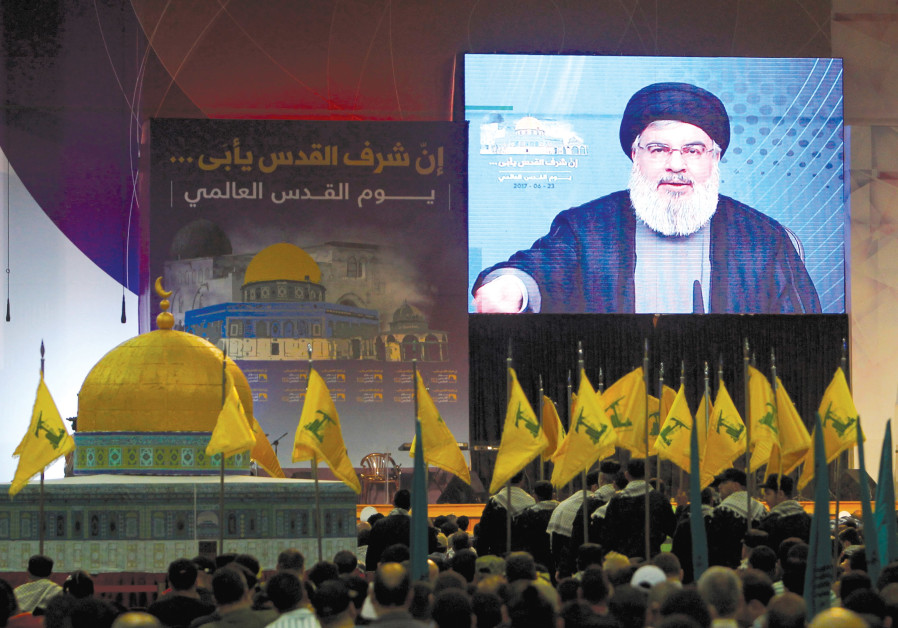
Former Western defense chiefs warn Hezbollah war ‘a matter of time’ 

Posted October 26, 2017 by Joseph Wouk
Categories: Uncategorized

Source: Former Western defense chiefs warn Hezbollah war ‘a matter of time’ – Israel News – Jerusalem Post

Hezbollah would prioritize bringing the next war onto Israeli soil – potentially holding ground deep inside the country for a period.

Former Western defense chiefs warn Hezbollah war ‘a matter of time’

Writing as members of the High Level Military Group, the former defense chiefs say Hezbollah has stockpiled roughly 100,000 rockets and missiles since its last conflict with Israel in 2006; acquired anti-tank and unmanned aerial equipment; trained its men in combat alongside Bashar Assad in Syria; and spread its military assets among virtually every Shi’ite town in southern Lebanon.

Hezbollah, they say, “has begun engaging in operations along the border and started preparations inside Lebanon which may force Israel to react.

“A new and grave conflict is only a matter of time,” they continue.

The group, which includes several former army chiefs of staff from Western nations, originally was formed in 2015 to assess Israel’s asymmetrical war in 2006 with Hezbollah, a pseudo-state actor.

Included in the group are: Gen. Lord Richard Dannatt, former chief of staff of the British Army and member of the House of Lords; Gen. Klaus Naumann, former chief of staff of the German Bundeswehr and chair of the NATO committee; and Col. Richard Kemp, former commander of the British forces in Afghanistan and leader of the British Joint Intelligence Committee.

“Hezbollah’s massively expanded military capabilities are embedded among the civilian population of Lebanon in what amounts to a war crime. This is also a grave indictment of the inadequacy of the UNIFIL mechanism,” stated Dannatt. “With a leadership that controls decisions of war and peace for all of Lebanon, emboldened by Iran’s backing and battlefield experience in Syria, we must work urgently to curtail Hezbollah’s activities to help avert a potentially imminent new Lebanon war.”

Naumann characterized Hezbollah as “the crown jewel in Iran’s strategy of regional warfare by terrorist proxy.”

“We need urgent pressure – not least from Europe – on all aspects of Hezbollah’s activities and on the governments of Iran and Lebanon, or we will likely see a new Lebanon war of much worse proportions than the last conflict,” Naumann said.

Their report, released at an event at the Washington Institute for Near East Policy on Wednesday, theorized that Hezbollah would prioritize bringing the next war onto Israeli soil – potentially holding ground deep inside the country for a period.

Israeli officials have warned that the next war will escalate quickly because Israel will be forced to preemptively strike at Hezbollah’s massive rocket stockpiles before facing an overwhelming barrage.

The report notes that Israel’s defense forces faced broad international criticism for their conduct in 2006 despite the unique challenges they faced in that conflict.

But “the international environment has changed since the previous war,” it continues, “and a defensive assault on Hezbollah, a terror organization now strongly associated with Bashar Assad’s regime in Syria, will generate initial support not only from the United States, but also from other Western countries, in addition to tacit but increasing support from the Sunni Arab world.”

US drone strike kills 13 ‘IS fighters’ in Yemen

Posted October 26, 2017 by Joseph Wouk
Categories: Uncategorized

Source: US drone strike kills 13 ‘IS fighters’ in Yemen | The Times of Israel

Bombing in Bayda province marks second attack in just over a week by the US, as it supports government against jihadists

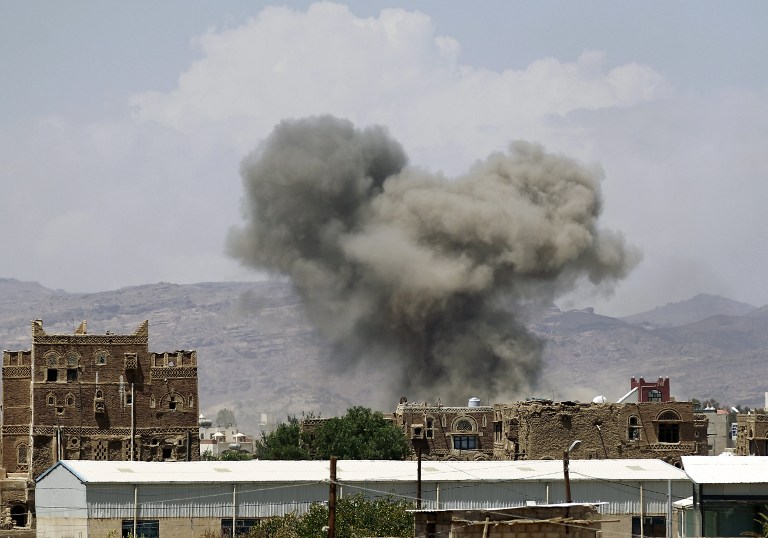
Illustrative image of smoke billowing from buildings after reported air strikes by the Saudi-led coalition on arms warehouses at Al-Dailami air base, on September 29, 2015, north of the Yemeni capital Sanaa. (AFP/Mohammed Huwais)

Illustrative image of smoke billowing from buildings after reported air strikes by the Saudi-led coalition on arms warehouses at Al-Dailami air base, on September 29, 2015, north of the Yemeni capital Sanaa. (AFP/Mohammed Huwais)

ADEN, Yemen — A US drone strike has killed 13 suspected Islamic State group militants in central Yemen, security sources said Wednesday.

The strike in Bayda province would be the second known US strike against IS in Yemen.

The first came just over a week ago, when the US military said it had killed dozens of jihadists at IS training camps in the same province.

The United States is the only country known to operate armed drones over Yemen, but its previous known strikes have targeted Al-Qaeda.

IS has however risen to prominence in the country’s civil war, targeting both government forces and Shiite Huthi rebels, which it considers heretics.

Washington has intensified its drone war against Yemen-based jihadists since US President Donald Trump took power in January.

A Saudi-led coalition, which entered Yemen’s conflict in March 2015 to prop up the government of President Abedrabbo Mansour Hadi against the Iran-backed Huthis, has also turned its firepower on Sunni jihadists.

The Yemen war has killed 8,673 people and wounded 58,636 since 2015, including many civilians, according to the United Nations.

Another 2,100 have died of cholera this year.

The top UN aid official arrived in Yemen Tuesday on a five-day trip aimed at drawing attention to what his organisation has called the world’s top humanitarian crisis.

Ex-CIA chief: Let Israel buy bunker busters to deter Tehran 

Posted October 26, 2017 by Joseph Wouk
Categories: Uncategorized

Source: Ex-CIA chief: Let Israel buy bunker busters to deter Tehran – Israel News – Jerusalem Post

BY YONAH JEREMY BOB
 OCTOBER 26, 2017 00:18
‘We are defeating ISIS, but leaving Iran, Russia and their friends in stronger position’.

Ex-CIA chief: Let Israel buy bunker busters to deter Tehran

MICHAEL HAYDEN. (photo credit:REUTERS)

WASHINGTON – Israel should be allowed to buy bunker-buster bombs – with certain restrictions – to deter Iran, former CIA and NSA director Michael Hayden told The Jerusalem Post.

“I’ve talked about that thought…I can imagine circumstances where the US might want to take steps to convince Iran of its seriousness,” he said in a recent interview in his Washington office, in which he did not reject the idea out of hand when questioned. “Allowing Israel to purchase them [bunker-busters] in gradations, training on them, but keeping them here” in the US.

In a worst-case scenario – to prevent Iran bringing out a nuclear weapon – giving Israel bunker-buster bombs could allow it to take out underground aspects of the program and perhaps deter Iran from trying to break out with such a weapon.

Hayden’s statement on the issue displayed significant nuance.

On one hand, his qualified support of selling Israel the game-changing weapons – which can destroy even deep underground bunkers and which the US has refused to sell Israel to date – is a substantial statement.

It is an acknowledgment by one of the US’s top former intelligence officials, one who has sized up the threat of an Iranian nuclear weapon, post-nuclear deal, and who thinks that at some point the US may want Israel to have an ability it thought too risky to provide until now.

On the other hand, the former CIA director still wanted to maintain a check on Israeli use, by not yet physically delivering the weapons to Israel.

He explained that Israel might otherwise “be more aggressive and pull us into something we do not want to be pulled into.” His plan would maintain US control over the weapon’s use, even as it would signal the reality to Iran of a potential Israeli air strike.

By no means does this forward thinking mean Hayden has no opinion about US President Donald Trump’s approach in decertifying the Iran nuclear deal or other decisions of his that affect the Middle East.

To help visualize Trump’s decertification strategy, Hayden drew a diagram of three boxes summarizing three Iran-related threats, labeling them “nuclear now,” “nuclear tomorrow” and “all else.”

The former spy chief said that Trump’s decertification might risk “making a big deal about the nuclear now, but missing the boat about the other two things.”

In other words, if Trump were not so stuck on the “nuclear now,” then “maybe Europe might be more serious about nuclear tomorrow,” and the West could avoid “freeing up Iran about everything else” – particularly its terrorism across the Middle East.

Hayden’s perspective on the Iran nuclear agreement is highly nuanced.

“Leave it there. It is what you’ve got.

I was never a fan of the deal, but we’ve got the deal. It has had some positive effects. But there are a whole bunch of other things Iran is doing that we have quite legitimate concerns about.

I do criticize Obama for not pushing back harder about other issues,” he said.

Hayden was concerned that Trump would completely scrap the accord, but said it appeared, ultimately, that Secretary of Defense James Mattis and Secretary of State Rex Tillerson, along with US armed forces chief Gen.

Joseph Dunford Jr., convinced him to “leave the nuclear deal alone” and pass the issue on to Congress.

“But the president wanted to make a speech – so he made a speech,” said Hayden, a glimmer in his eye in his typical satirical manner.

One risk of Trump’s decertification that he noted: “The president may set in motion events giving more control to Congress, Europe or even Iran, which might lead to dynamics where US interests are in a less good place.”

Connecting some of his comments to Mattis, Hayden said another longer- term risk if Trump or Congress were to completely scrap the deal is that it would hurt the ability of the US to reach complex deals in the future.

“The word of the US must mean something. If Iran is not in material breach… and Iran is not in material breach… I agree with [ex-IDF intelligence chief] Amos Yadlin that the deal is so good, why would the Iranians cheat?… then we should stay in the deal,” while simultaneously trying to raise global pressure on Iran’s ballistic missile and terrorist activities in parallel.

Hayden complimented Trump, saying it was “quite remarkable that he got [US Sen.] Tom Cotton’s agreement not to do anything dramatic for a while” in Congress so that the accord is not in immediate danger.

He also reiterated his support for pressuring Iran on a variety of nuclear and nonnuclear issues, as well as strengthening the nuclear inspections regime to have more “anytime, anywhere” authority, including the inspection of Iranian military facilities to which the International Atomic Energy Agency has had little access.

Hayden responded to comments made to the Post by former US ambassador to the UN John Bolton, in which he said that as soon as the deal expires – or even before – Iran can simply get Pyongyang to transfer its ICBM-ready nuclear technology, thereby giving Iran the wherewithal to leap forward in its nuclear abilities.

Hayden said, “This is all true, but it is not a prima facie case to walk out of the deal. I get Bolton’s argument, but he is very skilled at painting the darkest picture.”

Regarding Syria, Hayden said the victory over ISIS in Raqqa was good, but that Hezbollah-Iranian-Alawite- Russian forces were piggybacking on wins by the US and its allies “to fill space in east Syria, and we seem to be indifferent to that.”

Echoing warnings by top Israeli officials about Trump’s Syria policy, he said the US administration’s indifference seemed to be “allowing not just a Shi’a arc metaphorically, but also physically on the ground [to develop from Iran through Iraq, Syria and Lebanon],” adding, “This is very important.”

Hayden elaborated: “As Raqqa falls, two American-trained armies are fighting each other in Kirkuk [the Kurds against the Shi’ites]. One of them has a very strong Iranian mobile presence. Not that this is easy [to deal with]. There are no good options. But I do not see an adequate sense of concern about those developments. We are defeating ISIS, but leaving Iran, Russia and friends in a much stronger position.”

Honing in on the intelligence community debate about whether new cyber and data mining tools or traditional human spying is more important in the new technology age, he said, “there are different intelligence inputs. All of it is important. The best intelligence is almost always produced by a combination of all of them.”

He added, “I am fearful we will become captives to big data, rather than its masters. Somethings that are important cannot be counted. I recommend to the intelligence community to master big data, but do not forget that history, culture and context really matter.”

Regarding US and Israeli intelligence cooperation, he said, “different countries have different strengths in the enterprise. The US technology is very strong. Our Israeli friends have other strengths, that in combination, make us better off.”

Wanting to show respect to a fellow CIA director, Hayden did not want to make many comments about debates relating to current CIA Director Mike Pompeo’s running of the CIA.

However, he did say that, “the agency kind of exhaled when Pompeo was selected. One element they are very happy about is that he has secured a seat at the table for the agency in Trump administration deliberations.”
How Trump’s tweets and three fleets can help move the North Korea needle

Posted October 26, 2017 by danmillerinpanama
Categories: China and North Korea, North Korea - military options, North Korean missiles, North Korean nukes, South China Sea, U.S. Navy, Western Pacific Ocean

Tags: , , , , , ,

How Trump’s tweets and three fleets can help move the North Korea needle, Washington ExaminerTom Rogan, October 25, 2017

OPINION

The Nimitz transit route will translated in Beijing as: “if you don’t help us with North Korea, we are going to escalate against your interests.”

President Trump’s public skepticism about diplomacy lends threat credibility to this CSG posture. Under Trump’s authority, the international community cannot assume these CSGs are just for show. At the strategic level, Trump’s potential to move the diplomatic needle rests in external perceptions that he will use military force absent that movement. Again, this is especially important in Beijing, which is reflexively predisposed against making concessions to the United States.

I recognize that sending three CSGs into potential conflict zones isn’t without risk. Still, considering that we only have a few months to reach a diplomatic agreement with North Korea, a show of muscle with these deployments is the right call.

Put simply, Trump must roll the dice, and CSGs roll well.

******************************

In a rare occurrence, three U.S. Navy carrier strike groups (CSGs) are now in the Indian Ocean or western Pacific Ocean. While the Navy claims these deployments were pre-planned, its heavy publicity of this news suggests it was told to make a show of its presence.

As such, I suspect the Trump administration is attempting to raise Chinese and North Korean concerns that the U.S. is preparing to use force against the latter.

In specific terms, Trump wants China to put additional economic pressure on North Korea. While President Xi of China has made some limited efforts in this regard, he could do much more to restrict the financial intermediaries that deliver Kim Jong Un his foreign capital. And whether coincidental or not, these three arrivals align well with the news that diplomats are struggling to make headway. The timing and contrast between diplomats and carriers allows the U.S. to present a binary choice between the carrot of diplomacy and the stick of military power.

Still, the pressure on China is also extended by basic geography. After all, unless it takes a big detour, the Nimitz CSG will navigate past China’s artificial islands in the East and South China Seas in order to get to the Korean Peninsula. We know this because the Navy’s press release makes clear the Nimitz is sailing from the Middle East and asserts that the CSG “will be ready to support operations throughout the [Western Pacific area of operations].” Seeing as North Korea is the primary threat contingency in that area, we should assume the Nimitz will head towards the peninsula.

The Nimitz transit route will translated in Beijing as: “if you don’t help us with North Korea, we are going to escalate against your interests.”

Yet Trump himself is also crucial here.

That’s because President Trump’s public skepticism about diplomacy lends threat credibility to this CSG posture. Under Trump’s authority, the international community cannot assume these CSGs are just for show. At the strategic level, Trump’s potential to move the diplomatic needle rests in external perceptions that he will use military force absent that movement. Again, this is especially important in Beijing, which is reflexively predisposed against making concessions to the United States.

Don’t get me wrong, I recognize that sending three CSGs into potential conflict zones isn’t without risk. Still, considering that we only have a few months to reach a diplomatic agreement with North Korea, a show of muscle with these deployments is the right call.

Put simply, Trump must roll the dice, and CSGs roll well.

FEC complaint accuses Clinton campaign, DNC of violating campaign finance law with dossier payments

Posted October 26, 2017 by danmillerinpanama
Categories: "Trump dossier", 2016 elections, Clinton campaign, Democrat National Committee, Federal Election Commission

Tags: , , , ,

FEC complaint accuses Clinton campaign, DNC of violating campaign finance law with dossier payments, Washington TimesDave Boyer, October 25, 2017

(But what difference does it make now! — DM)

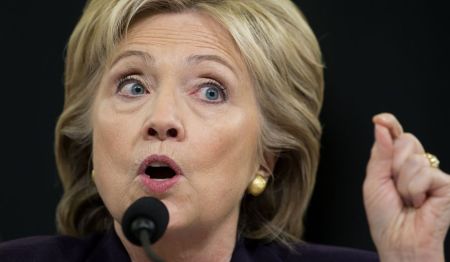
FILE – In this Oct. 22, 2015, file photo, then-Democratic presidential candidate, former Secretary of State Hillary Clinton testifies on Capitol Hill in Washington, before the House Benghazi Committee.

Hillary Clinton’s campaign and the Democratic National Committee violated campaign finance law by failing to disclose payments for a dossier on Donald Trump, according to a complaint filed Wednesday with the Federal Election Commission.

The complaint from the nonprofit Campaign Legal Center said the Democrats effectively hid the payments from public scrutiny, contrary to the requirements of federal law. By law, campaign and party committees must disclose the reason money is spent and its recipient.

“By filing misleading reports, the DNC and Clinton campaign undermined the vital public information role of campaign disclosures,” said Adav Noti, senior director of trial litigation and strategy at CLC and a former FEC official. “Voters need campaign disclosure laws to be enforced so they can hold candidates accountable for how they raise and spend money. The FEC must investigate this apparent violation and take appropriate action.”

Media reports on Tuesday alleged that a lawyer for the Clinton campaign hired Fusion GPS to investigate Mr. Trump in April 2016. The private research firm reportedly hired Christopher Steele, a former British spy with ties to the FBI, to conduct the opposition research, and he compiled a dossier containing allegations about Mr. Trump’s connections to Russia.

The Clinton campaign and the DNC funded the effort until the end of October 2016, just days before the election.

“Questions about who paid for this dossier are the subject of intense public interest, and this is precisely the information that FEC reports are supposed to provide,” said Brendan Fischer, director of federal and FEC reform at CLC. “Payments by a campaign or party committee to an opposition research firm are legal, as long as those payments are accurately disclosed. But describing payments for opposition research as ‘legal services’ is entirely misleading and subverts the reporting requirements.”

Iran Paving Way to Abandon Nuclear Deal, Fortify Missile Program

Posted October 25, 2017 by danmillerinpanama
Categories: Iranian abandonment of JCPOA, Iranian claims of US violation of JCPOA, JCPOA - renegotiation, JCPOA decertification

Tags: , , ,

Iran Paving Way to Abandon Nuclear Deal, Fortify Missile Program, Washington Free Beacon , October 25, 2017

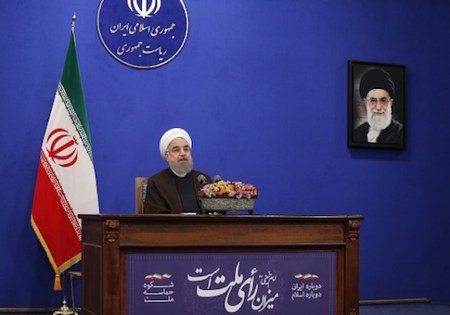
Iranian President Hassan Rouhani / Getty Images

“I’m not going to comment on every statement by an Iranian official,” a State Department official told the Free Beacon after reviewing Iran’s accusations.  “The United States continues to meet its commitments under the JCPOA and will hold Iran strictly accountable for its commitments.”

One veteran congressional adviser who has helped craft Iran policy during the last two administrations told the Free Beacon the Islamic Republic’s latest moves are meant to distract from its widespread cheating on the nuclear accord.

“Iran was never going to stay in the deal the full time,” the source said. “They were going to cheat as much as they could, pocket as much as they could, and then bail as soon as anyone tried to enforce the deal.”

As the Trump administration works to tighten the deal and hold Iran accountable for its continued nuclear endeavors, Tehran may see an opportunity to abandon the deal before its clandestine activities are exposed.

**********************************

Iran has taken steps in recent days to file what it claims are 18 instances in which America violated the landmark nuclear agreement, a move that could set the stage for Tehran to abandon the deal and lay blame on the Trump administration, according to regional reports and sources familiar with the matter.

On the heels of an effort by the Trump administration to tighten the nuclear accord while still upholding U.S. commitments under it, the Iranian Foreign Ministry has submitted to European Union leaders a plethora of information recounting what it claims are 18 separate violations of the deal by the United States, according to Iran’s state-controlled media.

The latest move is said to be part of an effort by Iran to abandon the nuclear agreement and save face by blaming the United States for its decision, according to national security insiders closely tracking the situation.

As the Trump administration makes moves to sanction Iran for its ballistic missile program and regional support of terrorism, Iran is increasingly frustrated with the United States’ aggressive stance, which is being spearheaded by President Donald Trump and his congressional allies.

Iran’s foreign ministry submitted a report to the country’s Parliament outlining what it claims are at least 18 instances of the United States violating the agreement. The accusations come just days after Trump decertified Iranian compliance with the nuclear deal.

“The recent report is specifically about the Americans’ efforts to derail the JCPOA [Joint Comprehensive Plan of Action], so much so that the foreign ministry has delineated 18 blatant cases of breach of the agreement made by U.S.,” Heshmatollah Falahatpisheh, an Iranian member of parliament, told the country’s state-controlled media organs on Tuesday.

Iran’s foreign ministry is said to have forwarded this information to Federica Mogherini, the EU’s high representative of the Union for Foreign Affairs and Security Policy, one of the international organizations monitoring compliance with the agreement.

“The foreign ministry has forwarded ten letters to Ms. Mogherini in this regard, and the base of the report is on the continuation of sanction-era situation in areas of maritime transportation, oil and gas export, and the return of the revenues,” according to Falahatpisheh.

While the Trump administration has withheld from commenting on Iran’s increasingly aggressive rhetoric, officials told the Washington Free Beacon that the United States continues to uphold its commitments under the deal and will continue to do so.

“I’m not going to comment on every statement by an Iranian official,” a State Department official told the Free Beacon after reviewing Iran’s accusations.  “The United States continues to meet its commitments under the JCPOA and will hold Iran strictly accountable for its commitments.”

One veteran congressional adviser who has helped craft Iran policy during the last two administrations told the Free Beacon the Islamic Republic’s latest moves are meant to distract from its widespread cheating on the nuclear accord.

“Iran was never going to stay in the deal the full time,” the source said. “They were going to cheat as much as they could, pocket as much as they could, and then bail as soon as anyone tried to enforce the deal.”

As the Trump administration works to tighten the deal and hold Iran accountable for its continued nuclear endeavors, Tehran may see an opportunity to abandon the deal before its clandestine activities are exposed.

“Now they see the Trump administration is working to fix the verification loopholes in the agreement, so they know the clock is ticking on how much longer they can cheat with impunity,” the source said. “So of course they’re already making up excuses to leave and fabricating U.S. violations.”

The Trump administration’s efforts to hold Iran accountable for its repeated violations of the deal, as well as its support for regional terrorism, has sparked outrage among Iranian leaders, who have lashed out at the U.S. president in vitriolic terms and vowed that Iran will continue its massive military buildup.

“We have previously declared, and once again we declare that the defense capabilities of the country are non-negotiable and not to be bargained for,” Iranian Supreme Leader Ali Khamenei said on Wednesday.

Khamenei promised to continue building Iran’s ballistic missile program, which has been an ongoing source of international tension.

“That they ask, why we have some defense facility, why we produce them, or why do we conduct research; these matters are non-negotiable!” Khamenei was quoted as saying. “We won’t negotiate with the enemy on matters that provide us with our national sovereignty.”

The Best University Chancellor in America

Posted October 25, 2017 by danmillerinpanama
Categories: Academia and antisemitism, Antisemitism and the left, Carol Christ, UC Berkeley

Tags: , , ,

The Best University Chancellor in America, Power LineSteven Hayward, October 25, 2017

Of all the minority populations considered “marginalized” or “vulnerable” on college campuses, Jews are probably the most in danger of “hate speech” attacks and discrimination. Keep in mind that the “alt-right” white supremacists who marched in Charlottesville chanted “Jews will not replace us!”

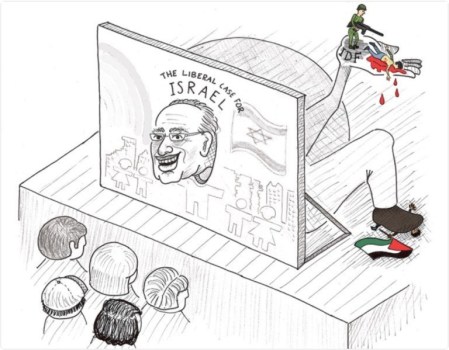
But Jews also face severe animosity from the campus left. For example, here’s the cartoon the Daily Cal student paper printed about Alan Dershowitz’s recent lecture at Berkeley on “The Liberal Case for Israel.”

And as previously mentioned, a poster promoting Dershowitz’s visit was defaced with a swastika, almost certainly by a leftist.

Berkeley’s new chancellor, Carol Christ, has written to the Daily Cal to condemn this cartoon in no uncertain terms:

Your recent editorial cartoon targeting Alan Dershowitz was offensive, appalling and deeply disappointing. I condemn its publication. Are you aware that its anti-Semitic imagery connects directly to the centuries-old “blood libel” that falsely accused Jews of engaging in ritual murder? I cannot recall anything similar in The Daily Californian, and I call on the paper’s editors to reflect on whether they would sanction a similar assault on other ethnic or religious groups. We cannot build a campus community where everyone feels safe, respected and welcome if hatred and the perpetuation of harmful stereotypes become an acceptable part of our discourse.

I’m generally not fans of university administrators, and had some sharp words for the previous Berkeley chancellor, Nicholas Dirks. I typically joke that the job description for college administrators specifies that a spine removal is a job requirement. But Christ is showing not only a spine, but considerable shrewdness in defending free speech from the assault of the Antifa left that held the Berkeley campus hostage most of the last year. If you want a hint of how well she is doing this, consider that she’s drawn praise from the Wall Street Journal editorial page, and is being attacked by leftist students on campus.

Incidentally, I sent word to the chancellor’s office that as I know the Wall Street Journal editorial page staff a bit, I could try to get them to rescind their editorial and attack her instead if that would be more useful. But fortunately most campus leftists don’t read the Journal (enjoy The Onion parody, “Berkeley Campus on Lockdown After Loose Pages of the Wall Street Journal Found on Campus“), and so she’s at little risk of blowback from it.

Article In Saudi Daily Slams Hamas: It Has Founded An ‘Iranian Emirate’ In Gaza And Is Completely Subordinate To Iran’s Ayatollahs

Posted October 25, 2017 by danmillerinpanama
Categories: Hamas - Palestinian Authority reconciliation, Hamas vs Israel, Iran and Hamas, Iran and Israel, Saudi media

Tags: , , , ,

Article In Saudi Daily Slams Hamas: It Has Founded An ‘Iranian Emirate’ In Gaza And Is Completely Subordinate To Iran’s Ayatollahs, MEMRI, October 25, 2017

(Please see also, The Iran-Hamas Plan to Destroy Israel. — DM)

In an October 23, 2017 article in the Saudi daily Al-Riyadh, Saudi journalist and academic Baina Al-Mulhim leveled scathing criticism at Hamas. The article was written against the backdrop of the recent rapprochement between Hamas and Iran, reflected in a visit by a high-ranking Hamas delegation to Tehran and in statements by Hamas officials on the importance of tightening relations with Iran and of this country’s financial and political support of Hamas.[1] Al-Mulhim wrote that Hamas is experiencing a crisis of identity because, despite being a Sunni movement, it follows the Shi’ite Iranian model and has established an Iranian emirate in Gaza, and its leaders are completely subordinate to Iran’s ayatollahs. She added that Hamas, like Hizbullah, is not a resistance movement but rather a “contractor” implementing the Iranian agenda, and is exploiting the problems of the Palestinian people for political purposes.

The following are excerpts from her article:

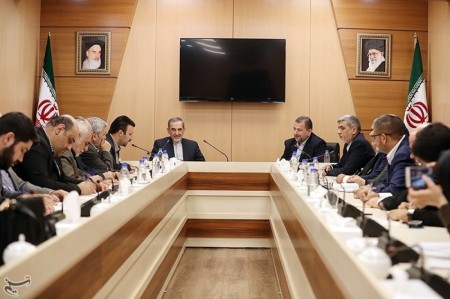
The Hamas delegation meets with Iranian officials in Tehran (image: alray.ps, October 22, 2017)

“It has been only a short while since the Hamas-Fatah reconciliation [agreement] was signed, [during which] I wondered, in another article, if Hamas was really serious, and if the reconciliation would cause it to return to its sanity and Arabhood… [yet] behold, just days ago [a report] was published about a Hamas delegation headed by Salah Al-‘Arouri, deputy chairman of Hamas’s political bureau, that arrived in Tehran last Friday [October 20, 2017] for a meeting with Iranian officials, as confirmed by a Hamas official… The official, who asked to remain unnamed, disclosed that the high-ranking delegation included several [other] members of Hamas’s political bureau, and that it was to meet with several Iranian officials over several days. He stated that the purpose of the visit was ‘to inform the Iranian officials about the reconciliation agreement signed by Hamas and Fatah, and about [recent] political developments,’ adding that the delegation would also discuss ‘ways to strengthen and develop the bilateral relations between Hamas and Iran and ensure Iran’s financial and political support of the movement, as well as [its assistance in] weapons.’ Hamas’s leader in Gaza, Yahya Al-Sinwar, likewise stressed that ‘Iran is the greatest supporter of the Al-Qassam Brigades,’ Hamas’s military wing, ‘in terms of weapons, money and training.’

“As is known, Iran is patron, for political purposes, of Sunni movements that maintain views that are radical in nature, among them Hamas. No one disagrees that political support is one thing and sectarian support is another. One of the paradoxes that should give pause to anyone who has tried in the past to justify Hamas is that Iran is supporting the [Sunni] Muslim Brotherhood in Egypt more than it is supporting the Shi’ite Da’wa Party in Iraq.

“In Gaza, Hamas has established an Iranian emirate that is completely subject to the Ayatollah [i.e. Iranian Supreme Leader Ali Khamenei]. We have not forgotten [Hamas leader] Khaled Mash’al’s October 1, 2011 speech at Khamenei’s palace, which was basically a reiteration his loyalty and obedience [to Iran]. Mash’al was, after all, no more and no less than a clerk to Iran’s ayatollahs!

“The problem of ideological movements, such as Hizbullah and Hamas – which have marketed themselves as resistance movements while, according to the political path both have taken… are nothing but ‘contractors’ [for Iran] – is that their leveraging of in their people’s problems for political, economic, and material purposes is the dominant pattern of behavior in their activity and positions. This is proven by their position on the revolution in Syria – which corresponds to that of their patron, Iran!

“Hamas is experiencing an internal crisis – a crisis more of identity than political – vis-à-vis the Arabs or vis-à-vis several Arab countries, headed by Saudi Arabia and Egypt. [Hamas] fears both these countries, [and] chose Iran not because it [Hamas] is an outcast – as those who defend its [pro-]Iran position try to claim – but because Hamas considers Iran a model it aspires [to emulate] when it establishes an Islamic emirate in Gaza.

“Hamas’s return to the [bosom of the] Iranian regime, as evident from its visit [to Tehran] – when it knows full well that the path of return to the Arab [fold] passes only through Saudi Arabia – sends a message, that Hamas is still ‘marching in place.'”[2]

___________________________

[1] On the recent rapprochement between Hamas and Iran, see MEMRI Special Dispatch No.7144, Alongside Reconciliation With Fatah, Hamas Officials Tighten Relations With Iran, Call To ‘Wipe Israel Off The Map’, October 23, 2017.

[2] Al-Riyadh (Saudi Arabia), October 23, 2017.

The EU Lectures Journalists about PC Reporting

Posted October 25, 2017 by danmillerinpanama
Categories: European Union, European Union and Islamic invasion, European Union and political correctness, European Union and the media, Islamisation of Europe

Tags: , , , ,

The EU Lectures Journalists about PC Reporting, Gatestone InstituteBruce Bawer, October 25, 2017

At least the report’s authors do not have the audacity to maintain that there is no connection between Islam and terrorism. But they do urge us to remember that Islam is “diverse.” The notion that it is inherently violent is — what else? — a “stereotype.” So is depicting Islam as “grounded in a different reality and lacking common value with other cultures” or portraying Muslim immigrants as being “fundamentally different from the citizens of the host country.” And it is just plain wrong, needless to say, to encourage “the widespread perception that there is a ‘cultural clash’ between Islam and the West with religion at the heart of the ‘problem.'” (On the contrary: Islam is, the report tells us, “a belief system that can exist alongside others.”) And do not dare to suggest that Islamic culture is in any way “inferior to Western culture.” Or that Muslim men are “highly patriarchal.” (Repeat after me: “Many societies around the world remain highly patriarchal, independent of religion.”) And do not pay too much attention to Muslim women’s “clothing styles.” Why? Because doing so tends to “homogenise” them. (Banish from your mind the thought that it is the clothing itself that homogenizes them.)

The only surprising thing about this document is that it actually includes a brief section on anti-Semitism, in which it suggests — believe it or not — that equating Israel and Nazi Germany may not be a good idea. For the most part, however, the report is one long taxpayer-funded catalog of politically correct protocols which — if adhered to by everyone in Europe who is professionally involved in reporting on events concerning Islam and immigration — would guarantee a full-scale whitewash of the alarming developments currently underway on this unfortunate continent. It is interesting to note that while many people fulminate over President Trump’s complaints about “fake news,” they are silent when an instrument of the EU superstate presumes to tell the media exactly what kind of language should and should not be used when reporting on the most important issue of the day.

*****************************

Nor, we are told, should we associate “terms such as ‘Muslim’ or ‘Islam’… with particular acts,” because to do that is to “stigmatize.” What exactly does this mean? That when a man shouts “Allahu Akbar” after having gunned down, run over with a truck, or blown to bits dozens of innocent pedestrians or concertgoers, we are supposed to ignore that little detail?

But that is what this document is all about: advising reporters just how to misrepresent reality in EU-approved fashion.

It is interesting to note that while many people fulminate over President Trump’s complaints about “fake news,” they are silent when an instrument of the EU superstate presumes to tell the media exactly what kind of language should and should not be used when reporting on the most important issue of the day.

“Respect Words: Ethical Journalism Against Hate Speech” is a collaborative project that has been undertaken by media organizations in eight European countries – Austria, Germany, Greece, Hungary, Ireland, Italy, Slovenia, and Spain. Supported by the Rights and Citizenship Programme of the European Union, it seeks, according to its website, to help journalists, in this era of growing “Islamophobia,” to “rethink” the way they address “issues related to migratory processes, ethnic and religious minorities.” It sounds benign enough: “rethink.” But do not kid yourself: when these EU-funded activists call for “rethinking,” what they are really doing is endorsing self-censorship.

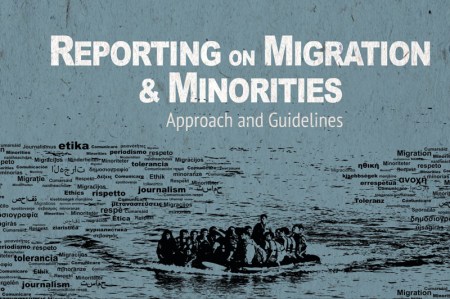
In September, “Respect Words” issued a 39-page document entitled Reporting on Migration & Minorities: Approach and Guidelines. Media outlets, it instructs, “should not give time or space to extremist views simply for the sake of ‘showing the other side.'” But which views count as “extremist”? The report does not say – not explicitly, anyway. “Sensationalist or overly simplistic reporting on migration,” we read, “can enflame existing societal prejudices” and thus “endanger migrants’ safety.” Again, what counts as “sensationalist” or “overly simplistic”? That is not spelled out, either. Nor, we are told, should we associate “terms such as ‘Muslim’ or ‘Islam’… with particular acts,” because to do that is to “stigmatize.” What exactly does this mean? That when a man shouts “Allahu Akbar” after having gunned down, run over with a truck, or blown to bits dozens of innocent pedestrians or concertgoers, we are supposed to ignore that little detail?

Or perhaps we should entirely avoid covering such actions? After all, the document exhorts us not to write too much about “sensationalist incidents involving migrants,” as “[v]iolent individuals are found within every large group of people.” If, however, we do feel compelled to cover such incidents, we must never cease to recall that the “root causes” of these incidents “often have nothing to do with a person’s ethnicity or religious affiliation.” What, then, are those root causes? The report advises us that they include “colonialism, racism, [and] general social inequality.” Do not forget, as well, that there is “no structural connection between migration and terrorism.”

When the EU-funded activists behind the document “Reporting on Migration & Minorities” call for “rethinking,” what they are really doing is endorsing self-censorship.

At least the report’s authors do not have the audacity to maintain that there is no connection between Islam and terrorism. But they do urge us to remember that Islam is “diverse.” The notion that it is inherently violent is — what else? — a “stereotype.” So is depicting Islam as “grounded in a different reality and lacking common value with other cultures” or portraying Muslim immigrants as being “fundamentally different from the citizens of the host country.” And it is just plain wrong, needless to say, to encourage “the widespread perception that there is a ‘cultural clash’ between Islam and the West with religion at the heart of the ‘problem.'” (On the contrary: Islam is, the report tells us, “a belief system that can exist alongside others.”) And do not dare to suggest that Islamic culture is in any way “inferior to Western culture.” Or that Muslim men are “highly patriarchal.” (Repeat after me: “Many societies around the world remain highly patriarchal, independent of religion.”) And do not pay too much attention to Muslim women’s “clothing styles.” Why? Because doing so tends to “homogenise” them. (Banish from your mind the thought that it is the clothing itself that homogenizes them.)

During the last couple of years, many countries in Europe have experienced a veritable tsunami of Islamic migration. But responsible journalists, according to “Respect Words,” must never, ever put it that way: “When describing migration, don’t use “phrases such as ‘tide,’ ‘wave’ and ‘flood'” (or, the authors later add, “horde” or “influx”) because such language can “evoke the sense of a ‘mass invasion.'” It “dehumanises migrants,” you see, and “constructs a false sense among the audience of being ‘under siege’ by an ‘enemy’ that must be repelled.” Of course, much of Europe is “under siege”; this fact is becoming clearer by the day; to use milder terms when discussing this topic is to do nothing less than misrepresent reality. But that is what this document is all about: advising reporters just how to misrepresent reality in EU-approved fashion.

“Inform your audience,” the report urges journalists, “about the reasons why people feel compelled to leave their homelands, and investigate what connections there may be to policies and practices of European states.” Possibly, however, a massive percentage of the Muslims pouring into certain European states are doing so because of those states’ “policies and practices” — namely, their readiness to start handing immigrant families large sums of cash the minute they arrive, to set them up with free housing, furnishings, etc., and to allow them to stay on the dole for the rest of their lives. Many of those countries are more generous to Muslim newcomers than they are to their own citizens who have fallen on hard times; immigrants often go to the front of the line, while elderly citizens of some of these countries – people who have worked hard and paid into the welfare system since the world was young – have been turned out of their homes in order to accommodate newly-arrived Muslim families.

But these obviously are not the “policies and practices” to which the “Respect Words” document is referring. Quite the opposite. The transparent implication here is that Muslim refugees and asylum seekers are fleeing conditions for which they and others in their countries of origin hold no responsibility whatsoever and that can, in fact, ultimately be traced back to Western wrongdoing, whether in the last generation or centuries ago. Never mind that Muslims took over Persia, the Byzantine Empire, all of North Africa and the Middle East, Greece, Northern Cyprus, much of Eastern Europe, and Southern Spain. Ultimately, everything that is wrong with the Muslim world is seemingly the fault of the West, so Europeans owe all incomers a new life — and perhaps even a new country — peaceably handed over to them so that they can import sharia law?

No, the report does not quite go so far as to make this argument. But the report does caution that even to touch on the question of “whether asylum seekers’ claims are genuine” or “whether migrants have a right to be in the country” is thoroughly inappropriate: it places the focus on “law and order” rather than on such things as “the fundamental right of asylum.” Yes, you read that correctly: “the fundamental right of asylum.” Never mind that under international law not everyone is entitled to asylum — and that a huge proportion of self-styled asylum seekers in Europe today have no legitimate grounds for such a claim but are, like many of us, seeking better economic opportunities.

But such facts are inimical to the authors of the “Respect Words” document. In their view, no human being can be “illegal”; therefore, the word “illegal,” they admonish, should be used to describe actions, not people.

The only surprising thing about this document is that it actually includes a brief section on anti-Semitism, in which it suggests — believe it or not — that equating Israel and Nazi Germany may not be a good idea. For the most part, however, the report is one long taxpayer-funded catalog of politically correct protocols which — if adhered to by everyone in Europe who is professionally involved in reporting on events concerning Islam and immigration — would guarantee a full-scale whitewash of the alarming developments currently underway on this unfortunate continent. It is interesting to note that while many people fulminate over President Trump’s complaints about “fake news,” they are silent when an instrument of the EU superstate presumes to tell the media exactly what kind of language should and should not be used when reporting on the most important issue of the day.

Hillary Clinton’s disingenuous dossier outrage

Posted October 25, 2017 by danmillerinpanama
Categories: Clinton lies, Democrat National Committee and "Trump dossier", Hillary Clinton and the "Trump dossier", Media and Hillary Clinton, Washington Post

Tags: , , , ,

Hillary Clinton’s disingenuous dossier outrage, Washington PostCallum Borchers, October 25, 2017

(Please see also, The Hunt for Red November, about the Washington Post and possibly other leftist media outlets going “rogue” on Hillary Clinton. — DM)


The Washington Post’s Adam Entous looks at the role that Hillary Clinton’s campaign and the Democratic National Committee played in funding the research that led to a dossier containing allegations about President Trump’s links to Russia. (Video: Bastien Inzaurralde, Patrick Martin/Photo: Melina Mara/The Washington Post)


When BuzzFeed published that now-infamous dossier of unproven claims about Donald Trump and Russia, in January, former Hillary Clinton campaign aides expressed outrage that news outlets that had obtained the dossier before Election Day did not make its contents public in time to influence voters, and Clinton later aired the same grievance in her book about the presidential race.

It turns out that the reaction of the Democratic presidential nominee and her team was disingenuous. The Washington Post reported on Tuesday night that the Clinton campaign and the Democratic National Committee helped fund the dossier, compiled by a former British intelligence officer, through a law firm hired to conduct opposition research.

The Clinton camp left out its own role in the dossier’s creation, as it ripped the media for sitting on information that journalists had been unable to verify. What Clinton and her advisers presented as their judgment that the media had made the wrong call was, in fact, their frustration at having failed to plant negative news reports before ballots were cast.

Recall that BuzzFeed published the dossier in full on Jan. 10, after CNN reported that the FBI had briefed President Barack Obama and then-President-elect Trump on its contents. Many journalists criticized BuzzFeed’s decision, arguing that news outlets should not spread claims they can’t corroborate, even if the FBI considers the claims significant enough to share with the president and his soon-to-be successor.

But Clinton press aides Brian Fallon and Nick Merrill contended, on Twitter, that the real journalistic malpractice was not publishing information contained in the dossier earlier.

This was long rumored during the campaign, and many reporters know at least some of what Russia was alleged to have https://twitter.com/jeneps/status/818943951185055744 

Today has brought a gush of reporting that outlets knew about and sat on prior to November 8
cc: @GlenCaplin1https://twitter.com/PaulBlu/status/818985935450894337 

I repeat: certain media outlets were told this prior to November 8.https://twitter.com/politicalwire/status/818987542527741952 

In fact, if we want to get specific, one outlet, a very very prominent outlet, threw cold water on this when Slate beat them to the punch. https://twitter.com/brianefallon/status/818987726133399552 

Merrill was referring to the New York Times, which reported on Oct. 31, 2016, that the FBI had “chased a lead — which they ultimately came to doubt — about a possible secret channel of email communication from the Trump Organization to a Russian bank.” Journalist Franklin Foer had reported on the possible secret channel in Slate earlier that day.

Also that day, Mother Jones magazine reported that a “former senior intelligence officer for a Western country” had “provided the [FBI] with memos, based on his recent interactions with Russian sources, contending the Russian government has for years tried to co-opt and assist Trump — and that the FBI requested more information from him.” The memos comprised the dossier that BuzzFeed later published.

Consistent with the Mother Jones report, the Times reported that “intelligence officials have said in interviews over the last six weeks that apparent connections between some of Mr. Trump’s aides and Moscow originally compelled them to open a broad investigation into possible links between the Russian government and the Republican presidential candidate.”

“Still,” the Times added, throwing the “cold water” Merrill spoke of, “they have said that Mr. Trump himself has not become a target. And no evidence has emerged that would link him or anyone else in his business or political circle directly to Russia’s election operations.”

Clinton complained about the Times report in her post-election book, “What Happened”:

In the summer of 2016, according to The Washington Post, the FBI convinced a special Foreign Intelligence Surveillance Court that there was probably cause to believe that Trump adviser Carter Page was acting as a Russian agent, and the received a warrant to monitor his communications. The FBI also began investigating a dossier prepared by a well-respected former British spy that contained explosive and salacious allegations about compromising information the Russians had on Trump. The intelligence community took the dossier seriously enough that it briefed both President Obama and President-elect Trump on its contents before the inauguration.

. . .

Sources within the FBI also convinced the New York Times to run a story saying they saw “no clear link to Russia,” countering Franklin Foer’s scoop in Slate about unusual computer traffic between Trump Tower and a Russian bank.

Note that Clinton described the dossier only as having been “prepared by a well-respected former British spy” — as if the spy, Christopher Steele, had acted on his own. Clinton certainly gave no indication that her campaign helped finance his work.

There is a fundamental contradiction here: Clinton wanted the dossier to be viewed as credible yet she did not want to be connected to it. She hoped the media, before Election Day, would publish claims about Trump to which she was unwilling to attach her own name.

Update: Appearing on CNN Wednesday morning, Fallon said he personally did not know that the Clinton campaign helped fund the dossier and said he was unsure whether Clinton did.

“How could you not know that the Clinton team was paying for it?” CNN’s John Berman asked. “And didn’t someone in the Clinton campaign know this?” 

“I’m sure that there’s a small group of folks that were aware,” Fallon replied, “but it was kept, for reasons that I can understand, to a very select group.”

According to Fallon, Clinton “may have known, but the degree of exactly what she knew is beyond my knowledge.”

Fallon might be right, but ignorance is a pretty weak excuse here. At minimum, some people within the campaign were aware of funding the dossier, yet the campaign allowed spokesmen and the candidate herself to make public statements that were misleading by omission.