Netanyahu warns enemies ‘not to test our will’

Posted October 31, 2017 by Joseph Wouk
Categories: Uncategorized

Source: Ynetnews News – Netanyahu warns enemies ‘not to test our will’

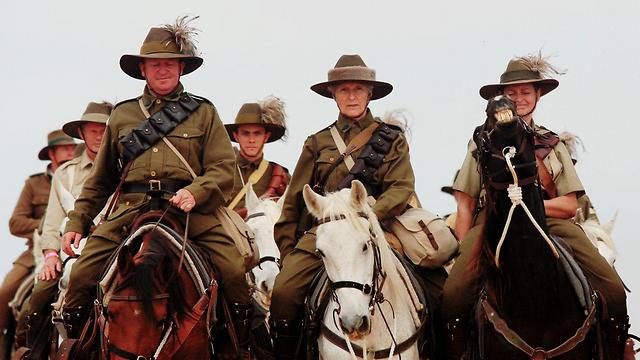
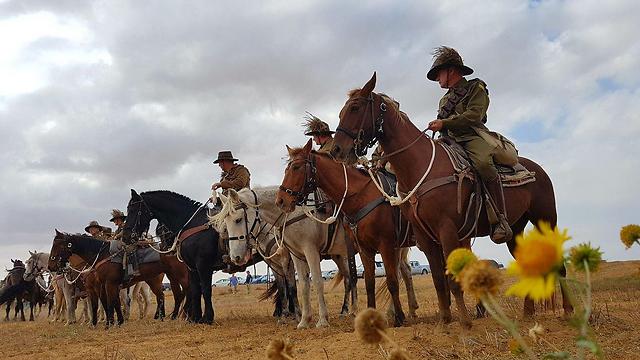
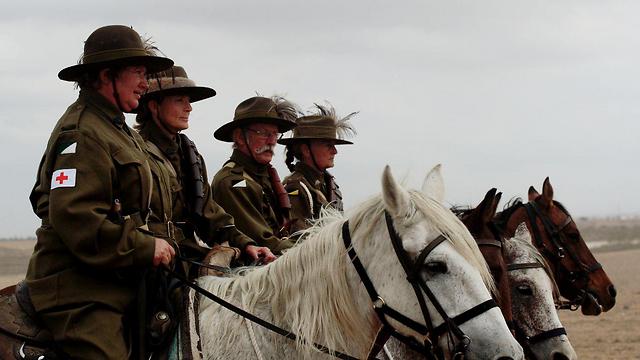
Speaking at ceremony to pay homage to Australian and New Zealand soldiers for their role in liberating Be’er Sheva, Netanyahu tells audience Israel seeks ‘peace with all our neighbors, but we will not tolerate any attacks on our sovereignty, on our people, on our land, whether from the air, from the sea, from the ground or below the ground.’
Prime Minister Benjamin Netanyahu attended a ceremony Tuesday to pay homage to Australian and New Zealand soldiers for their role in liberating the city of Be’er Sheva from Turkey a century ago, where he also used his speech to deliver a stern warning against Israel’s enemies not “to test the will of the State of Israel or the army of Israel.”Speaking at the ceremony attended by Australian Prime Minister Malcolm Turnbull and his wife and New Zealand Governor General Patsy Reddy and her husband, Netanyahu linked the themes of battle from World War I to celebrate agreements recently signed by Israel and Australia.

“When the Light Horse were charging here, their commanders were worried about the absence of water. Today we do not worry about that. A few months ago, we signed an agreement on water between Australia and Israel. It can apply to New Zealand. We can make water. We can change the world,” Netanyahu said.

 (Photo: AP)

(Photo: AP)

“What we established here with the rise of Israel, the rise of technology, the rise of ingenuity, is that we can cooperate to better the lives of our peoples and of all people everywhere. That too we should remember at the Battle of Beer Sheba,” he continued.

 (Photo: Tomer Appelbaum)

(Photo: Tomer Appelbaum)

 (Photo: Tomer Appelbaum)

(Photo: Tomer Appelbaum)

“I believe that those soldiers who fell here would be proud of the deep and enduring alliance between our countries today.”  (Photo: Tomer Appelbaum)

(Photo: Tomer Appelbaum)

Lauding the “natural kinship between between our peoples,” the Israeli premier went on to praise the “ANZAC soldiers went on to capture Jerusalem, Tiberias, Megiddo, then continued northward.

 (Photo: AP)

(Photo: AP)

“We saw here in Beer Sheba 800 cavalry go against 4,000 embedded Turks with machine guns, with bunkers. The few won against the many.”

Turning to Israel’s battle against terror movements, Netanyahu stated that while peace was the overarching policy, Israel would not hesitate to deploy force when necessary.

 (Photo: Roee Idan)

(Photo: Roee Idan)

“We set out a simple policy: We seek peace with all our neighbors, but we will not tolerate any attacks on our sovereignty, on our people, on our land, whether from the air, from the sea, from the ground or below the ground,” he said in reference to Israel’s controlled explosion Monday of a terror tunnel that had crossed from Gaza into Israeli territory.

 (Photo: Roee Idan)

(Photo: Roee Idan)

“We attack those who seek to attack us. And those who contemplate that, I strongly advise you: Do not test the will of the State of Israel or the army of Israel.”

Concluding his remarks, Netanyahu highlighted the values that he said united Israel, New Zealand and Australia.

 (Photo: Roee Idan)

(Photo: Roee Idan)

“As then, today we stand on the same side of history, on the right side of history. We stand for progress; we stand for peace; we stand for democracy. We stand against tyranny and terror. Israel salutes the sacrifice of these brave soldiers. We will never forget them. We will forever honor and treasure their memory.”

Tensions rise after Israel blows up tunnel from Gaza 

Posted October 31, 2017 by Joseph Wouk
Categories: Uncategorized

Source: Tensions rise after Israel blows up tunnel from Gaza | Daily Mail Online

( Indeed, lets all mourn theses “heros” who were digging a tunnel to kill women and kids in Israel. – JW )

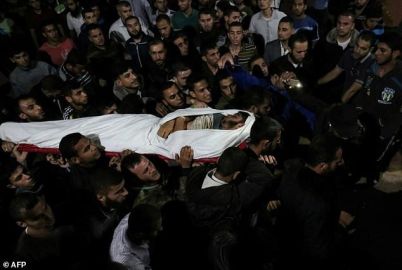
The body of Palestinian Marwan Alagha, 22, is carried by mourners in the Gaza Strip after he was killed when Israel blew up what it said was a tunnel stretching from Gaza into its territory

Tensions rose Tuesday after an Israeli operation to blow up a tunnel from the Gaza Strip killed seven Palestinian militants in one of the deadliest incidents since a devastating 2014 war.

The seven men, from the armed wings of Gaza’s rulers Hamas and allied group Islamic Jihad, were killed Monday when Israel blew up the tunnel it said had crossed into its territory and was intended for attacks.

They were being buried Tuesday in their respective neighbourhoods in the Gaza Strip.

Hamas leader Ismail Haniya appeared at a funeral in central Gaza attended by a few thousand people, witnesses said, while senior Hamas figure Khalil al-Hayya spoke at one in the southern part of the strip.

“(Hamas) knows how to manage the conflict with the enemy and how to get revenge and strike at the time and place that hurts the enemy,” Hayya said, according to a statement.

Hamas and Israel have fought three wars since 2008 and the last conflict in 2014 was waged in part over tunnels from Gaza that were used to carry out attacks.

Israel said it had been monitoring the digging of the tunnel for an unspecified length of time and was forced to act after “the grave and unacceptable violation of Israeli sovereignty.”

It said the operation was carried out on the Israeli side of the border and stressed it was not seeking a further escalation.

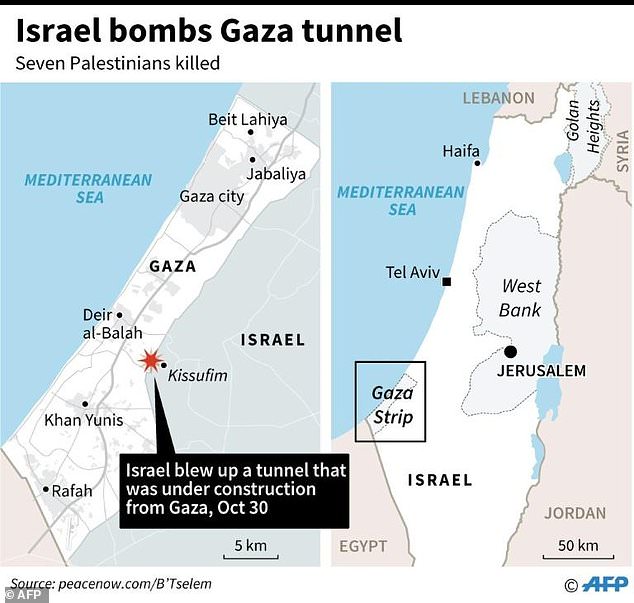
No tunnel opening had been found on the Israeli side of the border. It had come from the vicinity of the city of Khan Younis in the Gaza Strip, Israeli’s military said.

Israeli Prime Minister Benjamin Netanyahu said Tuesday his country would “not tolerate any attacks on our sovereignty, on our people, on our land, whether from the air, from the sea, from the ground, or below the ground,” he said.

“We attack those who seek to attack us.”

– Sensitive moment –

The operation comes at a sensitive time, with rival Palestinian factions Fatah and Hamas pursuing a reconciliation accord aimed at ending their 10-year rift.

Hamas is due to hand over control of the enclave’s borders to the Palestinian Authority on Wednesday under the deal mediated by Egypt and signed on October 12.

It is due to return the Gaza Strip to full PA control by December 1.

Both Haniya and Palestinian prime minister Rami Hamdallah spoke of ensuring the reconciliation pact remains on track.

“The response to this massacre… is to move forward towards the restoration of national unity because the enemy realises our strength is our unity,” Haniya said.

Senior PA official Mustafa Barghouti accused Israel of trying to disrupt the reconciliation bid.

Israel bombs Gaza tunnel

Separately in the West Bank on Tuesday, Israeli forces opened fire on a “suspect” vehicle, killing one Palestinian and wounding another, Israel’s army and the Palestinian health ministry said. There did not appear to be any connection.

Hamas forces have used tunnels in the past to enter Israel and carry out attacks, but discoveries of those stretching into Israeli territory since the end of the 2014 war have been rare.

In April 2016, Israel’s military said it had located and destroyed a tunnel extending from the Gaza Strip into Israel in the first such discovery since the 2014 conflict.

– First test of unity –

An army spokesman said Monday that Israel used advanced technology to locate the tunnel but declined to elaborate.

The army has been seeking to build an underground wall surrounding Gaza that would block such tunnels, among other methods it has been developing.

Israeli leaders have been keen to show they are addressing the threat of tunnels from the Gaza Strip.

A state inquiry in February accused Prime Minister Benjamin Netanyahu and top army brass of being unprepared for the tunnels used by Hamas during the 2014 conflict.

Hamas has ruled Gaza since a near civil war with Fatah, based in the occupied West Bank, in 2007.

Since then the Islamists have fought three wars with Israel, while Gaza’s two million citizens have suffered as Israel has blockaded the strip.

Egypt’s border with the enclave has also remained largely closed in recent years.

Wednesday’s scheduled handover of the border crossings is a first key test of the Hamas-Fatah reconciliation deal.

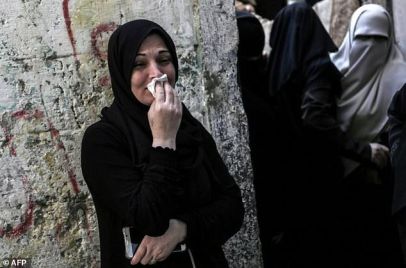
Relatives mourn in Khan Yunis, in the southern Gaza Strip, on October 31, 2017, during the funeral of Palestinians who were killed the previous day in an Israeli operation to blow up a tunnel stretching from the Gaza Strip into Israel

Israel has said it will reject any unity government that includes Hamas if the Islamist group does not disarm and recognise the country, among other demands.

During the 2014 war, 32 tunnels were discovered, including 14 that extended into Israel, according to a UN report on the conflict.

The devastating conflict killed 2,251 Palestinians, while more than 10,000 were wounded and 100,000 were left homeless.

On the Israeli side, 74 people were killed, all but six of them soldiers.

Europe Will Reap What Spain Has Sown

Posted October 31, 2017 by Peter Hofman
Categories: Uncategorized

 29.10.2017

Source: Europe Will Reap What Spain Has Sown

The Spanish government decided to reach back into its history and borrow from the playbook of longtime Spanish fascist dictator Francisco Franco in dealing with Catalonia’s decision to declare independence from the Spanish Kingdom as the Republic of Catalonia. The Catalan government’s decision to declare independence followed an October 1 referendum in the region that resulted in a “yes” for independence.

Spanish Prime Minister Mariano Rajoy, whose Popular Party is a direct political descendant of Franco’s fascist Falangist Party, wasted no time in invoking, for the first time, Article 155 of the Spanish Constitution, which allows the Spanish Kingdom to impose direct rule on regions not adhering to the whiplashing from Madrid. Catalonia is the first, but possible not the last victim, of Spain’s neo-fascism on display for the entire world.

During the Spanish Civil War, the Catalans and Basques fought with bravery on behalf of the Spanish Second Republic against the fascist forces of Franco and his fascists. Adolf Hitler and Benito Mussolini provided all-out support for Franco, much like the European Union, NATO, and the United States have fully backed Rajoy in his confrontation with Catalonia. Spain’s King Felipe VI October 3 speech, in which he condemned the Catalan referendum’s pro-independence results, was seen by many Catalans, as well as other groups like the Basques, Galicians, and Andalusians, as an unnecessary involvement in politics. Not only Catalans, but others across Spain, began calling for the scrapping of the Bourbon family’s monarchy and the establishment of the Spanish Third Republic. The Bourbons have little respect among the working peoples of Spain and France. After all, it was an ancestor of Felipe VI, Louis XVI of France, who lost his head to a French revolutionary guillotine after ignoring the poverty of the French people.

Spain’s reaction to Catalonia’s independence was swift and reminiscent of Hitler’s extinguishment of Austria’s independence in his infamous “Anschluss” (union) between Nazi Germany and Austria. Rajoy ordered the sacking of Catalan First Minister Carles Puigdemont; his entire Cabinet, chief of the Catalan Mossos d’Esquadra police Jose Luis Trapero, Catalan representatives in Madrid, Brussels, Strasbourg, London, Paris, Copenhagen, Rome, Berlin, Vatican City, Lisbon, Rabat, Warsaw, Vienna, Zagreb, and Geneva; and even Catalan schoolteachers. Catalan government ministers were replaced with lisp-talking Castillian apparatchiks sent to the Catalan capital of Barcelona to administer, by fiat, all Catalan government institutions. Spanish Deputy Prime Minister Soraya Saenz de Santamaria took over Puigdemont’s job, while Spanish Interior Minister Juan Ignacio Zoido took over the Catalan police functions from Trapero. Police duties in Catalonia were largely transferred from the Mossos d’Esquadra to the feared “Guardia Civil,” the notorious political enforcers for Franco’s fascist regime that were created by Franco as a Spanish version of Nazi Germany’s Gestapo.

The Madrid regime announced that new Catalan elections would be held on December 21 of this year, however, it is far from clear whether Catalonia’s pro-independence parties will be permitted to field candidates. Madrid may proscribe all of Catalonia’s pro-independence parties and groups, including “Junts Pel Sí” (“Together For Yes”) and the Popular Unity Candidacy (CUP), leaving only pro-Spanish parties like Rajoy’s neo-fascist Popular Party and the accommodationist Socialists, Ciudadanos, and George Soros-financed Podemos on the ballot. Moreover, Madrid has threatened to put on trial all of Catalonia’s independence leaders for sedition. Sedition convictions under Spanish law carry a maximum 15-year prison term.

Madrid also ordered shut down a Catalan government special commission that was investigating Spanish police brutality against Catalan citizens during pro-independence demonstrations following the October 1 referendum. Ominously, the Madrid authorities ordered sacked police chief Trapero to turn in his passport, a sign that Madrid is contemplating seizing the passports of all of Catalonia’s independence leaders to prevent them from operating a Republic of Catalonia government-in-exile. The precedent for such action was the anti-Franco Spanish Second Republic’s government-in-exile established in Paris in 1939 after Franco’s seizure of Spain. After Nazi Germany’s invasion of France in 1940, the government-in-exile moved to Mexico City, where it was recognized by Mexico, Panama, Guatemala, Venezuela, Poland, Czechoslovakia, Hungary, Yugoslavia, Romania, and Albania until its dissolution in 1977 after Spain’s so-called “constitutional monarchy” was restored after Franco’s death. The seizure of passports from Catalan officials and the closure of Catalan foreign missions abroad by Madrid is clearly aimed at preventing a Catalan government-in-exile from being formed.

Today, Rajoy and his junta have the support of all the major corporate periodicals in Spain, El PaísEl MundoABCEl Razón, and Barcelona’s quisling newspaper La Vanguardia. However, no newspaper endorsements or messages of support from Donald Trump, Angela Merkel, Theresa May, and Jean-Claude Juncker that will enable Rajoy’s thugs to keep Catalonia under his boot heel. Catalonia’s future will be determined by its own people and their friends abroad, many of whom have rallied to Catalonia’s cause.

No sooner had Catalonia declared its independence, messages of support began streaming into Barcelona. Jean-Guy Talamoni, the president of the National Assembly of Corsica, a French island where independence sentiment is strong, praised the “birth of the Republic of Catalonia.” Carole Delga, the president of the French region of Occitania, where Catalan is spoken in the Pyrenees-Orientales department, recognized Occitania’s strong ties to Catalonia and called for urgent talks between Spanish and Catalan authorities to maintain the civil peace.

Scotland’s First Minister Nicola Sturgeon, who has promised a second Scottish independence referendum, voiced support for Catalonia. The leader of the Scottish National Party government in Edinburgh said, “The right to self-determination is an important international principle, and I hope very much it will be respected in Catalonia, and everywhere else.” There is every reason to believe that Rajoy is seizing the Spanish European Union passports of Catalan leaders to prevent them from establishing a government-in-exile in either Edinburgh or Glasgow, two cities from which they could have at their service satellite communications links and direct air access to Europe’s major cities. There is a great degree of support among Scots for Catalan independence. The new Catalan Defense Committee Scotland is organizing opposition to Madrid’s aggression against Catalonia. It has stated, “The brutality and repression that has been visited upon the people of Catalonia cannot be allowed to continue, or to be legitimized.” The committee is not only confining its activities in Scotland and is vowing to spearhead a Europe-wide movement.

Catalonia’s cause is also supported by Jan Peumans, the speaker of the Flemish regional parliament. Citing the example of Scotland, Peumans said of Catalonia and his own region of Flanders, that independence of such regions is an “evolution that no European government can avoid.”

Regional leaders in Italy’s Lombardy and Veneto regions, which both voted in favor of more autonomy in recent referendums, rallied to Catalonia’s side and condemned Spain’s arrest and intimidation of Catalan leaders. Separatist leaders in the Faroe Islands, which voted in 1946 for independence from Denmark only to see the Danish government bow to pressure from Washington to keep the islands Danish, hope to repeat the 1946 vote in an April 2018 referendum for a new constitution for an independent Faroes. The declaration of the Republic of Catalonia has provided encouragement to not only the Faroese but those in Greenland who want to see a total break from Danish (and NATO) control.

Rajoy’s junta’s crackdown in Catalonia could also re-ignite the Basque region’s desire for independence. The Basque guerrilla group ETA declared a unilateral cease fire in 2010 but it never fully disarmed. If the Spanish suppression of Catalonia succeeds, the Basques may see themselves as next on Rajoy’s list. Unlike the Catalans, the Basques have shown Madrid that they are quite capable of bringing a war home to the very center of the Spanish state in Madrid. The Galicians may also see their autonomy at risk and a mobilization of the armed “Restistencia Galega” would force Madrid to face multiple fronts in not only Catalonia and the Basque region, but Galicia, as well.

Señor Rajoy and his proto-fascists would do well to listen to the Catalan protesters singing from the streets of Barcelona their traditional Catalan songs and one from the musical “Les Misérables” that should worry the puppet minister for the Bourbon king of Spain: “Do you hear the people sing? Singing a song of angry men? It is the music of a people Who will not be slaves again!.. Will you join in our crusade? Who will be strong and stand with me? Beyond the barricade. Is there a world you long to see? Then join in the fight. That will give you the right to be free!”

Al-Nusra terrorists may have received Syria ‘aid’ sent to rebels by Qatar, US, Saudis – Qatari ex-FM

Posted October 31, 2017 by Peter Hofman
Categories: Uncategorized

Source: Al-Nusra terrorists may have received Syria ‘aid’ sent to rebels by Qatar, US, Saudis – Qatari ex-FM — RT World News

© Ammar Abdullah / Reuters

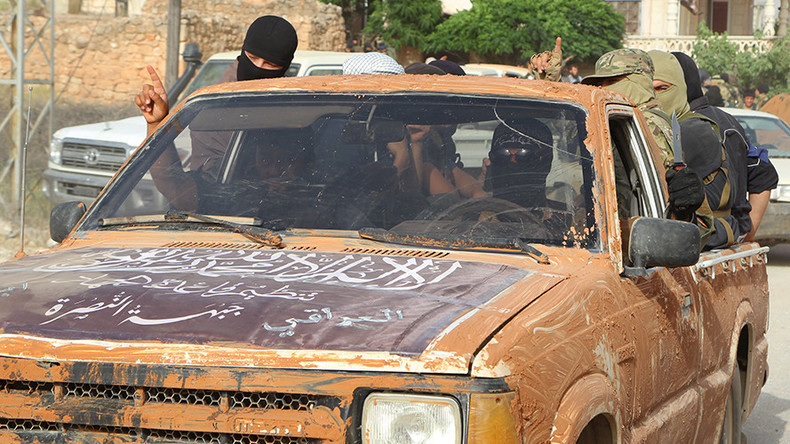
Some of the military aid sent to the Syrian opposition by Qatar, Turkey, Saudi Arabia and the US may have ended up in the hands of Al-Qaeda-affiliated Al-Nusra terrorists, the Qatari foreign minister has admitted.

According to the former minister, all aid destined for the Syrian rebels passed via Turkey and was coordinated with the US forces. “All aid distributed on Syrian territory was also coordinated by the US forces,” said Hamad bin Jassim who also served as Qatari prime minister between 2007 and 2013.

He did not specify who exactly was to receive the aid, but the US – together with Qatar, Saudi Arabia and Turkey – have repeatedly voiced their support for Syrian opposition and issued both humanitarian and military aid to anti-government militants.

READ MORE: US using Al-Nusra terrorists to undermine Astana peace talks progress – Syrian FM

Distributing aid wasn’t always smooth and on at least one occasion the shipment might have fallen into the hands of terrorists, which the former official suggested were from the group formerly known as Al-Nusra Front.

“Maybe there was some ‘interaction’ with Al-Nusra militants,” Hamad bin Jassim said. He did state that Islamic State (IS, formerly known as ISIS/ISIL) terrorists were not the ones who received this unspecified aid.

At the same time, he stressed that Qatar “stopped” all interactions with Al-Nusra Front after the group was formally recognized as a terrorist organization by the international community. However, he did not specify whether the group had been supported by Doha and its allies prior to this decision.

The politician apparently likened Assad and his government to “prey” that was hunted by the Gulf monarchies and their allies but eventually got away: “We’ve all focused on liberation of Syria, but we all were fighting over the prey [Syria] and now the prey is gone. And many people in Syria died,” he said.

Read more

© Alaa Al-Marjani

With Syrian President Bashar Assad still in power after years of war, many countries have suggested that he should remain, the Qatari ex-minister said. He voiced his frustration that the then-allies did not coordinate their policy shift with Doha: “I don’t object to one changing his mind if he finds that he was wrong, but at least inform your partner.”

The Syrian war, which triggered a major refugee crisis, entered its sixth year last March. The Damascus government has repeatedly dubbed the US-led campaign in the region as “illegitimate.” In September, Syrian Foreign Minister Walid Muallem said that the US was enabling former Al-Nusra jihadists to subvert the Astana peace process.

According to data from Russian Defence Ministry, an offensive launched by Al-Nusra terrorists and their allies in Syria in September was orchestrated by US security services, aimed at derailing the Syrian Army operation near Deir ez-Zor.

READ MORE: US security services behind Al Nusra offensive in Syria’s Idlib – Russian MoD

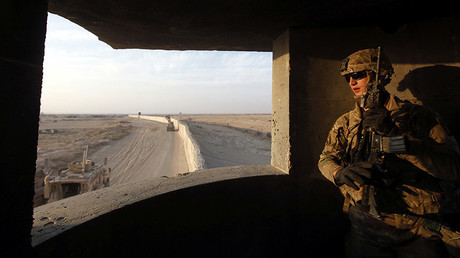
This is not the first time that US aid has been found to have ended up in the wrong hands. In May, a declassified audit from the US Department of Defense showed that negligent accounting by the US military had resulted in the Pentagon not knowing what happened to more than $1 billion in arms and equipment meant for the Iraqi Army. The findings were made public as a result of a Freedom of Information Act (FOIA) request from human-rights group Amnesty International.

Saudi Arabia to Extract Uranium for ‘Self-Sufficient’ Nuclear Program

Posted October 31, 2017 by Peter Hofman
Categories: Uncategorized

BY:

Source: Saudi Arabia to Extract Uranium for ‘Self-Sufficient’ Nuclear Program

By Sylvia Westall

ABU DHABI (Reuters) — Saudi Arabia plans to extract uranium domestically as part of its nuclear power program and sees this as a step towards “self-sufficiency” in producing atomic fuel, a senior official said on Monday.

Extracting its own uranium also makes sense from an economic point of view, said Hashim bin Abdullah Yamani, head of the Saudi government agency tasked with the nuclear plans, the King Abdullah City for Atomic and Renewable Energy (KACARE).

In a speech at an international nuclear power conference in Abu Dhabi, he did not specify whether Saudi Arabia seeks to also enrich and reprocess uranium—steps in the fuel cycle which are especially sensitive as they can open up the possibility of military uses of the material.

The world’s top oil exporter says it wants to tap atomic power for peaceful purposes only in order to diversify its energy supply and will award a construction contract for its first two nuclear reactors by the end of 2018.

“Regarding the production of uranium in the kingdom, this is a program which is our first step towards self-sufficiency in producing nuclear fuel,” Yamani told a conference organized by the International Atomic Energy Agency (IAEA). “We utilize the uranium ore that has been proven to be economically efficient.”

Atomic reactors need uranium enriched to around 5 percent purity but the same technology in this process can also be used to enrich the heavy metal to higher, weapons-grade levels.

This issue has been at the heart of Western and regional concerns about the nuclear work of Iran, Saudi Arabia‘s foe, and led to the 2015 deal in which Iran agreed to freeze the program for 15 years for sanctions relief.

On Monday, IAEA chief Yukiya Amano said Iran was complying with the nuclear deal signed with world powers and which U.S. President Donald Trump has called into question.

Under the agreement, Iran can enrich uranium to 3.67 percent purity, around the normal level needed for commercial power-generation.

MOMENTUM

Saudi Arabia would be the second country in the Gulf Arab region to tap nuclear after the United Arab Emirates, which is set to start up its first, South Korean-built reactor in 2018. The UAE has committed not to enrich uranium itself and not to reprocess spent fuel.

Industry sources have told Reuters Saudi Arabia is reaching out to potential vendors from South Korea, China, France, Russia, Japan, and the United States for its first two reactors.

The plans have received extra momentum as part of Saudi Arabia‘s Vision 2030, an ambitious economic reform program launched last year by Crown Prince Mohammed bin Salman.

Yamani said Saudi Arabia will soon pass laws for its nuclear program and will have set up all of the regulations for its nuclear regulator by the third quarter of 2018.

“The IAEA also has been requested to conduct an integrated review of our nuclear infrastructure during the second quarter of 2018,” he said, which will allow the agency to assess efforts to prepare Saudi infrastructure “to introduce nuclear power for peaceful purposes.”

Saudi Arabia is considering building some 17.6 gigawatts of nuclear capacity by 2032, the equivalent of about 17 reactors, making it one of the strongest prospects for an industry struggling after the 2011 nuclear disaster in Japan.

Preliminary studies have estimated Saudi Arabia has around 60,000 tons of uranium ore, Maher al Odan, the chief atomic energy officer of KACARE said at an electricity forum in Riyadh on Oct 11.

Secret visit to Saudi Arabia by Trump’s son-in-law focused on Israeli-Arab peace

Posted October 31, 2017 by Peter Hofman
Categories: Uncategorized

Source: Secret visit to Saudi Arabia by Trump’s son-in-law focused on Israeli-Arab peace

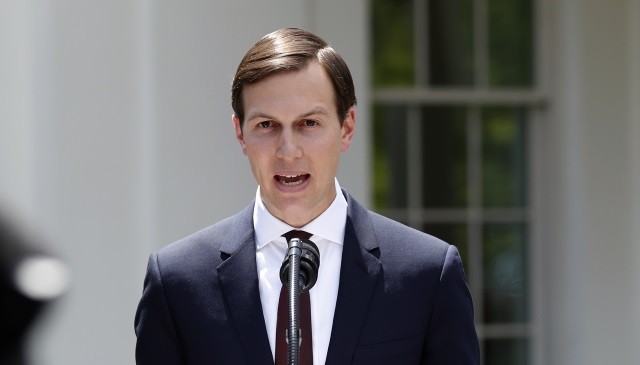
White House senior adviser Jared Kushner (AP/Alex Brandon)

A senior White House official confirmed reports Monday that President Trump’s son-in-law Jared Kushner and fellow envoy Jason Greenblatt secretly visited Saudi Arabia last week to further the Israeli-Palestinian peace process.

In a statement, the source said the visit is part of President Trump’s efforts to broker a deal between Ramallah and Jerusalem and repeated that President Trump “is personally committed to achieving a peace deal between Israelis and Palestinians that would help usher in an era of greater regional peace and prosperity.

The talks followed meetings between U.S. representatives and counterparts from Egypt, the United Arab Emirates, and “other regional partners” on the sidelines of last month’s United Nations General Assembly, the State Department said.

Following the talks in Saudi Arabia, which Deputy National Security Adviser for Strategy Dina Powell also reportedly attended, Kushner is believed to have returned to the United States while Greenblatt remained in the region to visit Cairo, Amman, and Ramallah, and met with US Ambassador to Israel David Friedman and Prime Minister Binyamin Netanyahu Sunday.

Also Sunday, Palestinian officials said they believed the White House was moving towards a “dramatic announcement” that the Trump administration has adopted the two-state solution as its preferred option for solving the Israel-Palestinian stand-off, Israel Broadcast Corporation (Kan) reported. State Department officials in Jerusalem refused to comment on the report.

Apart from acknowledging that the talks had taken place, State Department officials in Israel and Washington declined to give details of the talks but reaffirmed the president’s view “that peace between Israelis and Palestinians can only be negotiated directly between the two parties and that the United States will continue working closely with the parties to make progress toward that goal.”

“No deal will be imposed on Israelis and Palestinians; We are committed to facilitating a deal that improves conditions for both parties,” the statement said.

By: TPS


Iran’s president turned down Trump invitation to meet

Posted October 31, 2017 by Peter Hofman
Categories: Uncategorized

October 30, 2017

Source: Iran’s president turned down Trump invitation to meet

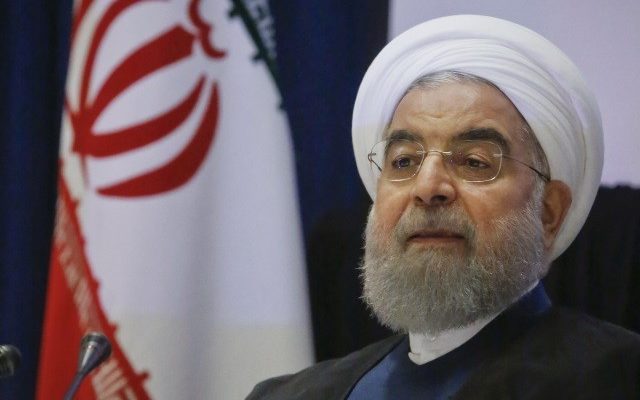
Iran’s President Hassan Rouhani (AP/Bebeto Matthews)

A spokesman for the Islamic Republic confirmed Iranian reports that Trump allegedly tried to meet Rouhani for a face-to-face meeting. 

Iranian President Hassan Rouhani rejected an invitation by US President Donald Trump for a face-to-face meeting on the sidelines of the UN General Assembly conference in New York last month, a senior Iranian analyst disclosed on Sunday.

“US President Trump has invited President Rouhani to a face-to-face meeting during Mr. Rouhani’s visit to New York to participate in the UN annual conference in September but our president has turned down the offer,” Mahdi Faza’eli wrote on Sunday, according to Iran’s Fars news service.

Faza’eli said Trump extended the invitation a day after Trump’s powerful speech at the United Nations, during which he stated that the Iran nuclear deal was “one of the worst and most one-sided transactions the US has ever entered into. Frankly, that deal is an embarrassment to the United States, and I don’t think you’ve heard the last of it. Believe me.”

Iranian media perceived Trump’s address as an insult.

Faza’eli also said that French President Emanuel Macron had also tried to persuade Rouhani to accept the meeting, but failed.

Faza’eli claimed that US efforts to hold talks with Iran are nothing new, saying that “the Americans are sure that such negotiations will benefit them, but they will have no achievements for Iran but harm.”

Iranian Foreign Ministry Spokesman Bahram Qassemi confirmed Faza’eli’s revelation, saying that the willingness to meet was exclusively American, “but was rejected by the Islamic Republic of Iran’s president”.

However, Qassemi denied that Macron made efforts to mediate.

In 2013, then President Barack Obama and Rouhani spoke by telephone, the highest-level contact between the two countries in decades.

By: World Israel News Staff


Nunes’ investigating digs up trove of Democrat connections to Russia dossier

Posted October 30, 2017 by danmillerinpanama
Categories: "Trump dossier", Clinton campaign, Democrat National Committee, Devin Nunes, Fusion GPS, House Permanent Select Committee on Intelligence, Leon Panetta, Unmasking

Tags: , , , , , , ,

Nunes’ investigating digs up trove of Democrat connections to Russia dossier, Washington Times,  Rowan Scarborough, October 29, 2017
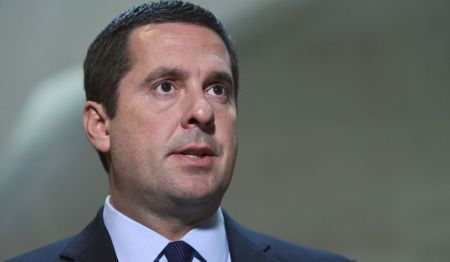
Rep. Devin Nunes, California Republican and chairman of the House Permanent Select Committee on Intelligence, exposed the practice of “unmasking” by Obama aides and flushed out the source of payments for the scandalous anti-Trump dossier that drove the Russia collusion

Mr. Panetta told CNN that Congress needs to find out who funded the dossier.

“Well, it’s obviously something that the intelligence committee is going to have to look at,” Mr. Panetta said. “You know, knowing presidential campaigns, they’re big operations and somehow the left hand may not know what the right hand is doing. And that could be the case here, but I really do think that the committee is going to have to get into this, determine just exactly what happened. Who knew what and when.”

On Saturday, the House intelligence committee said it had reached a deal to inspect Fusion’s banking records.
***********************************

On two fronts, Rep. Devin Nunes has shifted the Russia debate in Washington further away from President Trump and closer to Democrats.

He exposed the practice of “unmasking” by Obama aides and flushed out the source of payments for the scandalous anti-Trump dossier that drove the Russia collusion narrative.

The California Republican’s first tactic: He traveled to the Executive Office Building and viewed evidence that the Obama administration had “unmasked” the concealed names of Trump associates in highly classified intelligence reports during the election campaign.

The chairman of the House Permanent Select Committee on Intelligence talked publicly about his discovery to much derision from Democrats and Washington’s press corps. The unmasking suggested that the Obama White House was spying on a political foe through its legal right to unmask the identities of people unintentionally swept up in surveillance operations.

An advocacy group filed a complaint about his disclosure with the Office of Congressional Ethics. Mr. Nunes responded by removing himself as the overseer of the committee’s Russia probe.

But his legacy lives on. Both the Senate and House intelligence committees have summoned former Obama aides as witnesses. It turns out that Samantha Power, as ambassador to the United Nations, made hundreds of unmasking requests, Fox News reported.

Adding intrigue to her research, she told the committee that other people did some of the unmaskings in her name.

The committee subpoenaed documents concerning Ms. Power, former National Security Adviser Susan E. Rice and former CIA Director John O. Brennan. All deny that they were spying on Mr. Trump.

Mr. Nunes‘ second tactic brought the most immediately result: He flushed out the identities — long kept secret — of some of the financial backers for the notorious Trump dossier that has fed the Democrats’ Russia collusion charges for months.

He did it by signing a subpoena for the bank records of Fusion GPS, the liberal opposition research firm that hired the dossier writer, former British spy Christopher Steele.

The Nunes subpoena touched off a chain of events.

Fusion GPS went to U.S. District Court on Oct. 20 and asked a judge to block the subpoena. That move triggered the first unmasking of the dossier’s financier.

On Tuesday, the law firm Perkins Coie decided it was time to fess up. It filed a letter, written to Fusion’s attorneys, acknowledging that Perkins had hired Fusion with money from the Democratic National Committee and the Hillary Clinton campaign.

Perkins, whose attorney Marc E. Elias is the Clinton campaign’s general counsel, urged Fusion to lift the confidentiality of other clients who funded the dossier.

The letter said the flow of money to Fusion started in April 2016 and ended before the Nov. 8 presidential election. Mr. Steele began writing his memos in June. He continued to write and submit dossier memos up until December, meaning there are other moneymen for whom Mr. Nunes would like names.

Because Fusion also has Russian clients, some Republicans have wondered whether anyone in Moscow also paid Mr. Steele’s bills. There has been no proof, to date.

Washington learned of another funder. For months, news reports said the first entity to hire Fusion to conduct Trumpopposition research was a Republican.

The Washington Free Beacon on Friday acknowledged that it had hired Fusion to collect information from publicly available sources. It said the arrangement stopped well before Fusion went to Democrats and received money to pay Mr. Steele.

The Free Beacon, a snappy conservative news website filled with investigative and humorous postings, is funded by Paul Singer, a Republican and big campaign donor. He is also anti-Trump. He backed Sen. Marco Rubio of Florida in the Republican presidential primary race.

Mr. Nunes‘ moves have clearly irked Democrats, who want the investigation confined to suspected Republican coordination with Russian election interference. The Senate and House intelligence committees so far have found no confirmed evidence of Trump collusion.

Fusion’s attorneys, the Washington firm Zuckerman Spaeder LLP, filed court arguments attacking the congressman’s “fishing expedition.”

They said he had no power to act because he recused himself from the Russia investigation. They called his subpoena signature “not part of legitimate legislative activity” and an exercise of “coercive power.”

“The Trump dossier appears to have deeply upset President Trump and some of his allies, including Mr. Nunes, who served on President Trump’s campaign,” the Fusion attorneys said.

Posted in full by BuzzFeed, the dossier accuses Mr. Trump of salacious conduct with prostitutes in a Moscow hotel, a long quid pro quo relationship with Russian intelligence and bribe-paying in Asia. None of those charges has been confirmed publicly.

Mr. Nunes‘ chief congressional critic is Rep. Adam B. Schiff of California, the House intelligence committee’s top Democrat. Mr. Schiff is a big fan of Mr. Steele’s and has repeated his charges in Congress and on TV.

Interviewed last week by CNN’s Chris Cuomo, Mr. Schiff said Mr. Nunes is just trying to change the subject.

“I think, Chris, at the end of the day, what this is about is a technique you see often in criminal cases where the facts are really bad for the defendant, there’s an effort to put the government on trial,” Mr. Schiff said. “So I think Mr. Nunesand the president want to put the government on trial because they don’t want to look at the facts implicating the White House.”

Mr. Cuomo: “That’s problematic when the man that you’re defining that way is in charge of the investigation, is the head of your committee. And it raises the question of when are we going to see what you guys have.”

Mr. Schiff: “It is problematic, Chris, because he had committed to stepping aside and recusing himself from the investigation but has not done that. And so that is a real problem that we have to grapple with every day.”

Mr. Nunes picked up an unlikely supporter in Leon E. Panetta, a Democrat who has served as a congressional representative from California, director of the CIA and secretary of defense.

Mr. Panetta told CNN that Congress needs to find out who funded the dossier.

“Well, it’s obviously something that the intelligence committee is going to have to look at,” Mr. Panetta said. “You know, knowing presidential campaigns, they’re big operations and somehow the left hand may not know what the right hand is doing. And that could be the case here, but I really do think that the committee is going to have to get into this, determine just exactly what happened. Who knew what and when.”

On Saturday, the House intelligence committee said it had reached a deal to inspect Fusion’s banking records.
Democrats demand Congress move to protect Mueller from Trump ire

Posted October 30, 2017 by danmillerinpanama
Categories: Indictment, Nancy Pelosi, Paul Manafort, Robert Mueller, Trump and Manafort, US Congress

Tags: , , , , ,

Democrats demand Congress move to protect Mueller from Trump ire, Washington TimesSally Persons and Stephen Dinan, October 30, 2017

(Rumors are also being spread that Henny Penny will soon announce the imminent fall of the sky. Congress must immediately pass legislation to silence Henny Penny. Please see also, Manafort surrenders…What has this got to do with Trump? –DM)

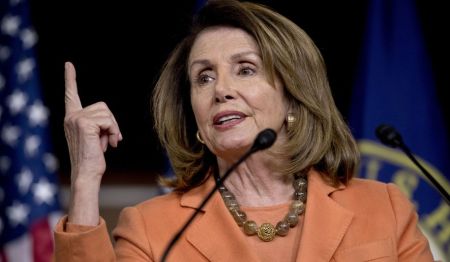
House Minority Leader Nancy Pelosi, California Democrat, speaks during her weekly press conference on Capitol Hill on Oct. 26, 2017. (Associated Press)

Democrats demanded Monday that Congress approve a bill preventing the special counsel from being fired after Robert Mueller unsealed charges against three former Trump campaign officials concerning their work with or on behalf of Russian interests.

Sen. Mark R. Warner, Virginia Democrat and vice chairman of the Senate intelligence committee, said the charges against Mr. Trump’s former campaign chairman and top deputy, and the guilty plea from a foreign policy advisor, are reasons to quickly protect Mr. Mueller from interference by an angry president.

“Members of Congress, Republican and Democrat, must also make clear to the president that issuing pardons to any of his associates or to himself would be unacceptable, and result in immediate, bipartisan action by Congress,” Mr. Warner said in a statement.

Mr. Mueller, the special counsel, unsealed indictments against Paul Manafort, who served as Trump campaign chairman from March to August, and against his deputy Rick Gates, charging them with a long-running scheme to represent pro-Russian interests in Ukraine, laundering money and avoiding taxes for the operation, then lying to investigators to cover it up.

The crucial activity appeared to take place before 2014, or well before the campaign.

But Mr. Mueller also unsealed a guilty plea entered earlier this month by George Papadopoulos, a foreign policy advisor, who admitted to lying to cover up contacts he had during the campaign with someone promising dirt on Democratic nominee Hillary Clinton.

Democrats said the charges showed there were live targets for Mr. Mueller’s investigation within the Trump campaign operation, and said it’s a reason to defend the special counsel against interference.

Senate Minority Leader Charles E. Schumer, New York Democrat, warned Mr. Trump not to intervene to help his two former associates.

“The president must not, under any circumstances, interfere with the special counsel’s work in any way. If he does so, Congress must respond swiftly, unequivocally, and in a bipartisan way to ensure that the investigation continues,” he said.

Multiple congressional committees are probing Russian activities during the election, including Mr. Warner’s panel.

House Minority Leader Nancy Pelosi said she still wants to see yet another investigation launched.

“Even with an accelerating Special Counsel investigation inside the Justice Department, and investigations inside the Republican Congress, we still need an outside, fully independent investigation to expose Russia’s meddling in our election and the involvement of Trump officials,” Ms. Pelosi said in a statement.

Hamas Claims Several Deaths as IDF Bombs Gaza Tunnel that Exited Near Kibbutz Kissufim

Posted October 30, 2017 by Peter Hofman
Categories: Uncategorized

Source: Hamas Claims Several Deaths as IDF Bombs Gaza Tunnel that Exited Near Kibbutz Kissufim | The Jewish Press – JewishPress.com | David Israel | 10 Heshvan 5778 – October 30, 2017 | JewishPress.com

IDF tunnel detonation

Hamas has issued a claim that several of its terror tunnel diggers perished in an IDF Monday afternoon bombing of a terror tunnel that had been dug from inside the Gaza Strip into Israeli territory near Kibbutz Kissufim, 0404 News reported.

IDF Spokesperson Brig. Gen. Ronen Manelis told reporters that the tunnel was discovered in Israeli territory, near the border fence, opposite the city of Khan Younis. The tunnel was still under construction, according to Manelis, which would support the Hamas claim regarding losing its men.

 Ma’an reported that Israeli Air Force planes were flying from east to west in the vicinity of Khan Younis when the bombing was heard, but it is not clear how the tunnel demolition was carried out.

Iron Dome batteries were deployed in southern Israel in case Hamas retaliated for the destruction of the tunnel.

The tunnel was located by technological means in an area where the security wall has not yet been erected to block the tunnels. The defense establishment has been busy building the tunnel blocking wall in recent months.

Manelis called the digging of the tunnel a “blatant violation of Israeli sovereignty” that necessitated a military response. He said that the IDF views Hamas as responsible for any activity in the Gaza Strip and believes that the organization was aware of the digging of the tunnel.

Manelis stressed that Israel is not seeking an escalation in Gaza and has no interest in a military confrontation there. He added that the IDF had good intelligence on the tunnel’s outline and it did not pose an immediate danger, however, in the end, it was decided it would be preferable to attack it.

Manelis refrained from answering whether the tunnel was dug by Hamas or Islamic Jihad.