Israel behind cyberattack that caused ‘total disarray’ at Iran port – report 

Posted May 19, 2020 by Joseph Wouk
Categories: Uncategorized

Source: Israel behind cyberattack that caused ‘total disarray’ at Iran port – report | The Times of Israel

Washington Post cites officials saying Jerusalem carried out ‘highly accurate’ hack, apparently in retaliation for Iranian attempt to target Israeli water infrastructure

The Shahid Rajaee port facility in the Iranian coastal city of Bandar Abbas (Iran Ports and Maritime Organization)

Israel carried out a recent sophisticated cyberattack on an Iranian port facility, causing widespread chaos, apparently in retaliation for an attempt by Tehran to target Israel’s water infrastructure, the Washington Post reported Monday.

The report, citing foreign and US officials, said Israel was likely behind the hack that brought the “bustling Shahid Rajaee port terminal to an abrupt and inexplicable halt” on May 9.

“Computers that regulate the flow of vessels, trucks and goods all crashed at once, ­creating massive backups on waterways and roads leading to the facility,” the Post reported, adding that it had seen satellite photos showing miles-long traffic jams leading to the port and ships still waiting to offload several days later.

Iran later acknowledged that an unknown foreign hacker had briefly knocked the port’s computers offline.

“A recent cyber attack failed to penetrate the PMO’s systems and was only able to infiltrate and damage a number of private operating systems at the ports,”  Mohammad Rastad, managing director of the Ports and Maritime Organization, said in a statement carried by Iran’s ILNA news agency.

The port is a newly constructed shipping terminal in the Iranian coastal city of Bandar Abbas, on the Strait of Hormuz.

But the damage was far more severe than Iran acknowledged and was apparently carried out by Israeli operatives, the Post said, quoting a security official with a foreign government that monitored the incident.

The official, who spoke on the condition that his identity and national affiliation not be revealed, called the attack “highly accurate,” the Post said.

“There was total disarray,” said the official. A US official with access to classified files also said that Israelis were believed to have been behind the attack. The officials said it was apparently carried out in retaliation for an Iranian cyberattack that targeted Israel’s water infrastructure.

There was no comment from the Israeli embassy in Washington or the Israel Defense Forces, the report said.

Israel was reportedly aghast at the Iranian attack on its water infrastructure.

A May 7 meeting of the high-level security cabinet, the first to be held in months, dealt in part with the Iranian attempt, Israeli television reported.

Quoting unnamed senior officials, Channel 13 news said on May 9 that the attack in late April was viewed as a significant escalation by Iran and a crossing of a red line because it targeted civil infrastructure.

“This is an attack that goes against all the codes of war. Even from the Iranians we didn’t expect something like this,” an official was quoted as saying.

The attack did minimal damage, though problems were reported at some facilities in local councils, the officials said.

Israel was weighing how and if to respond, the network said at the time.

According to the report, ministers who took part in the security cabinet meeting had to sign nondisclosure agreements.
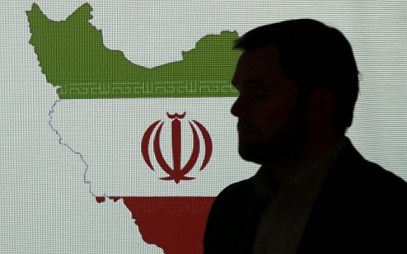
Illustrative: A cybersecurity expert stands in front of a map of Iran as he speaks to journalists about the techniques of Iranian hacking, September 20, 2017, in Dubai, United Arab Emirates. (AP/Kamran Jebreili)

Earlier that day Fox News reported that Iran was behind the attack, with hackers using American servers to carry out the breach.

A senior US Department of Energy official told Fox News that the Trump administration was committed to protecting allies from cyberattacks but would not comment on the specific incident, saying an investigation was ongoing.

There was no official confirmation of the report by Israeli or US officials.

The attack took place on April 24-25 on numerous water and sewage facilities across the country, according to the Ynet news site.

The Water Authority and Israel National Cyber Directorate confirmed an “attempted cyber breach on water command and control systems.”

“The attempted attack was dealt with by the Water Authority and National Cyber Directorate. It should be emphasized that there was no harm to the water supply and it operated, and continues to operate, without interruption,” it said.

Iran — whose regime avowedly seeks Israel’s destruction — and Israel have engaged in covert cyber-warfare for over a decade, including reported efforts by the Jewish state and US to remotely sabotage the Islamic Republic’s nuclear program.

Israel has also in recent weeks appeared to step up a bombing campaign on Iran-linked forces in Syria, concerned at Iran’s ongoing efforts to establish a potent military presence there from which to attack Israel. The Iranian-funded and -armed Hezbollah terror group faces off against Israel from Lebanon, and Iran backs Palestinian terror groups in the West Bank and Gaza.

The Islamic Republic is smarting from one of the world’s most severe COVID-19 outbreaks. Experts have recently warned that the coronavirus pandemic has created a perfect storm for cyberattacks, with millions of people working in unfamiliar, less secure circumstances and eager for information about the virus and with new organizational policies being implemented.

Agencies contributed to this report.
 

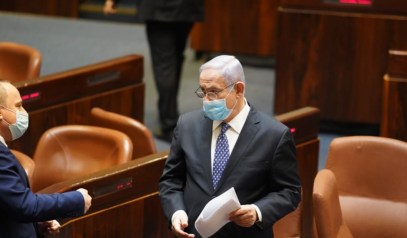
Benjamin Netanyahu Addresses Knesset, Presents 35th Government

Posted May 18, 2020 by Joseph Wouk
Categories: Uncategorized


Holy Jewish site of Esther and Mordechai set ablaze in Iran – reports 

Posted May 16, 2020 by Joseph Wouk
Categories: Uncategorized

Source: Holy Jewish site of Esther and Mordechai set ablaze in Iran – reports – The Jerusalem Post

‘Disturbing reports from Iran that the tomb of Esther & Mordechai, a holy Jewish site, was set afire overnight,’ ADL National Director Jonathan Greenblatt tweeted.

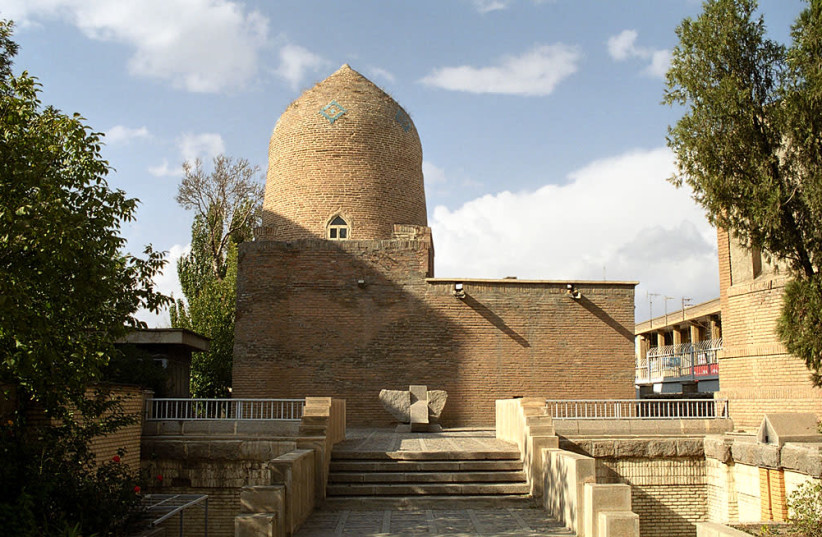
The Tomb of Esther and Mordechai (photo credit: WIKIMEDIA COMMONS/PHILIPPE CHAVIN)
The Tomb of Esther and Mordechai
(photo credit: WIKIMEDIA COMMONS/PHILIPPE CHAVIN)

“Disturbing reports from Iran that the tomb of Esther & Mordechai, a holy Jewish site, was set afire overnight. We hope that the the authorities bring the perpetrators of this antisemitic act to justice & commit to protecting the holy sites of all religious minorities in Iran,” Greenblatt tweeted.

Jonathan Greenblatt

@JGreenblattADL

BERLIN – National Director of Anti-Defamation League (ADL) Jonathan Greenblatt announced Friday on Twitter that the tomb of Esther and Mordechai in Iran was torched.

The Jerusalem Post is seeking to obtain the reports cited by Greenblatt in his tweet. Greenblatt has termed Iran’s regime the top state-sponsor of antisemitism and Holocaust denial.

Prior to the arson of the tomb, one Twitter user named Mohammad Mahdi Akhyar threatened to destroy the holy site on May 14 in response to a tweet by the Israel’s Foreign Affairs’ Farsi Twitter page.

اسرائیل به فارسی

@IsraelPersian

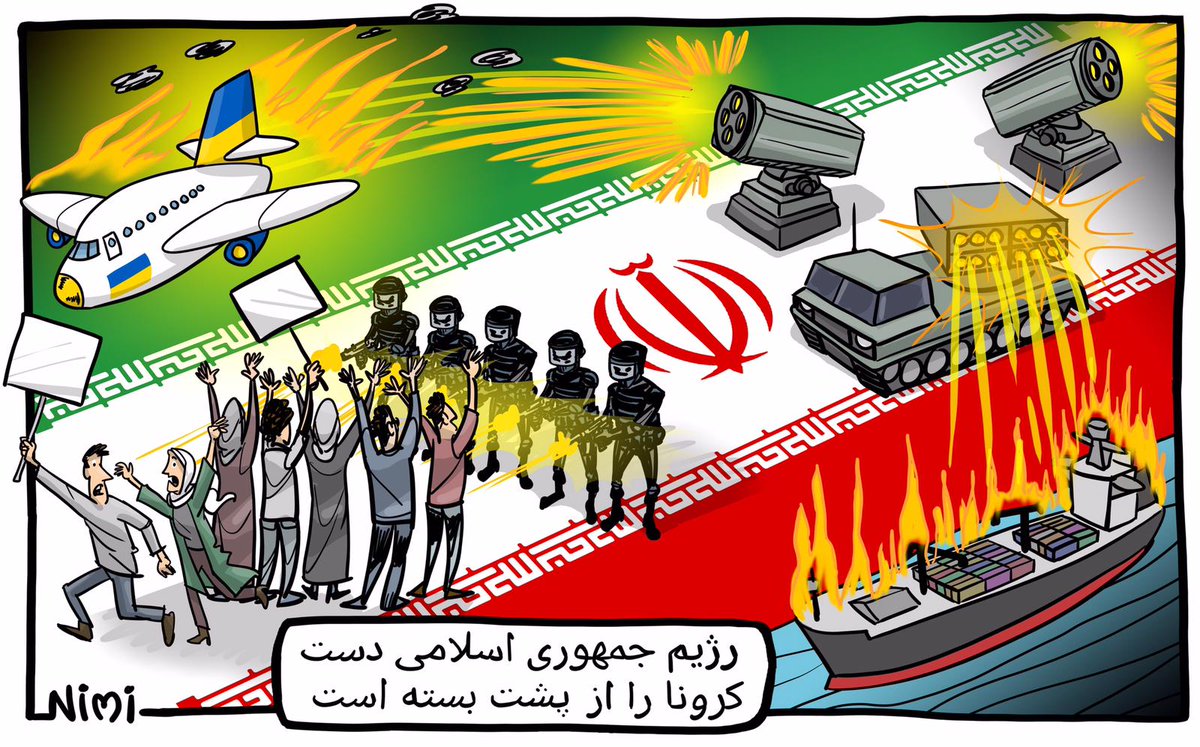
رژیم جمهوری اسلامی در هوا، زمین و دریا ُُُکشنده است، حتی بیشتر از کرونا.

View image on Twitter

mohammad mahdi akhyar@mamad0939

ببین لجن
اینو یکی میگه که تو تاریخشون به دستور و فقط چند هزار نفر ایرانی رو تو یه روز نکشته باشن
از همین تریبون‌ اعلام کنم اگر دوباره بیش از دهنتون حرف بزنیند و جفتک بندازید جوونای اتیش به اختیار همدان مزار استوره هاتونو ( و )باخاک یکسان میکنن

It is unclear if the arson is connected to Israel’s independence day.

US Envoy to Monitor and Combat Anti-Semitism Elan Carr strongly condemned the attack on the Tomb of Esther and Mordechai and said “Iran’s regime is the world’s chief state sponsor of antisemitism.”

U.S. Envoy to Monitor and Combat Anti-Semitism@USEAntiSemitism
The Iranian American Jewish Federation of New York and Los Angeles, and the members of the Iranian Jewish community in the United States said in a statement that they “are shocked and truly saddened by the news of fire in the ancient and official Iranian Heritage Site, the Tomb of Esther and Mordechai in Hamedan.
The statement continued that “We hereby ask the responsible members of the government of Islamic Republic of Iran to apprehend the perpetrators and bring them to justice for this barbaric act of insult to this holy site and take steps to protect other sites of religious and historic significance.”

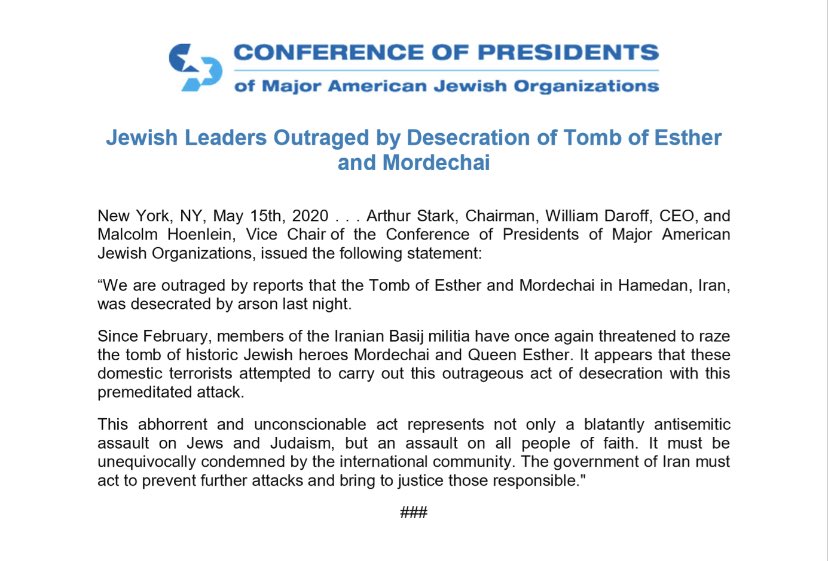
Arthur Stark, Chairman, William Daroff, CEO, and Malcolm Hoenlein, Vice Chair of the Conference of Presidents of Major American Jewish Organizations, issued a joint statement on the incident.

“This abhorrent and unconscionable act represents not only a blatantly antisemitic assault on Jews and Judaism, but an assault on all people of faith. It must be unequivocally condemned by the international community. The government of Iran must act to prevent further attacks and bring to justice those responsible,” the statement said.

Conf Of Presidents@Conf_of_Pres

View image on Twitter

“As Chair of Muslims Against Anti Semitism, I unequivocally condemn such barbaric acts by the Tehran regime. The international community must immediately move to investigate & hold the regime responsible for any damage that may happen to the site of the Tzadikkim,” prominent human rights activist, Ghanem Nuseibeh, tweeted.

Ghanem Nuseibeh

@gnuseibeh

Benjamin Weinthal@BenWeinthal

Breaking: Holy Jewish site of Esther and Mordechai set ablaze in Iran – reports.
‘Disturbing reports from Iran that the tomb of Esther & Mordechai, a holy Jewish site, was set afire overnight,’ ADL @adl National Director @JGreenblattADL said. https://www.jpost.com/Middle-East/Holy-Jewish-site-of-Esther-and-Mordechai-set-ablaze-in-Iran-reports-628165 

The  Post reported in February that the United States Commission on International Religious Freedom condemned the Iranian regime for its reported threats to raze the tomb of Esther and Mordechai in Hamadan.

Karmel Melamed, an Iranian-American expert on the Jewish community in the Islamic Republic of Iran, tweeted: “My sources who have contacts with Iran’s Jewish community have confirmed that there was an ‘attempt’ to burn the synagogue at the Tomb. Some smoke damage but the fire was minimal. No arrests of suspects have been made yet by Ayatollah regime.”

Karmel Melamed@KarmelMelamed

Holy Jewish site of Esther and Mordechai set ablaze in Iran – reports

‘Disturbing reports from Iran that the tomb of Esther & Mordechai, a holy Jewish site, was set afire overnight,’ ADL National Director Jonathan Greenblatt tweeted.

jpost.com

The Iranian regime-controlled The Islamic Republic News Agency (IRNA) reported on Satuday that a suspect sought to enter the tomb. Radio Farda, the US government-funded news outlet that reports on Iran, wrote that IRNA “confirmed that there had been an attempt to break into the tomb of Esther and Mordechai, a holy Jewish site in Hamedan, but removed the report from its website two hours after its publication.”
IRNA said  the perpetrator  tried to enter the building through an adjacent bank but was not successful, wrote Radio Farda, adding that IRNA claimed that the shrine did not suffer damages and that the suspect’s faced was captured on CCTV video. IRNA said the police are searching for the perpetrator.
The Voice of America reporter Michael Lipin tweeted: “BREAKING: An eyewitness in #Iran’s Hamadan city told @VOAIran/@VOANews he saw several fire trucks going to the Tomb of Esther and Mordechai after an apparent arson attack on Jewish holy site Thursday night, but authorities didn’t allow people to get close.”

Michael Lipin

@Michael_Lipin

BREAKING: An eyewitness in ‘s Hamadan city told @VOAIran/@VOANews he saw several fire trucks going to the Tomb of Esther and Mordechai after an apparent arson attack on Jewish holy site Thursday night, but authorities didn’t allow people to get close https://bit.ly/3626mXg 

واکنش چند سازمان یهودی در آمریکا به آتش‌زدن مقبره «استر و مردخای» مکان مقدس یهودیان ایران و جهان در…

رهبران چند سازمان یهودی در آمریکا، به آتش کشیده‌شدن مقبره «استر و مردخای» مکان مقدس یهودیان ایران و جهان را محکوم کرده و خواستار برخورد مقامات ایران با عوامل این اتفاق شدند. آرتور استارک، ویلیام دارir.voanews.com

“USCIRF is troubled by reported threats to the tomb of Esther and Mordechai in Hamadan, Iran, and emphasizes the Iranian government’s responsibility to protect religious sites,” tweeted the US agency.

The United States Commission on International Religious Freedom (USCIRF) is an independent, bipartisan, federal government entity that monitors, analyzes and reports on threats to religious freedom.

The Alliance for Rights of All Minorities (ARAM) in Iran tweeted on Sunday that, “according to covering reports, members of the Iranian Basij attempted to raid the historic [tomb of Esther and Mordechai] site yesterday in an act of revenge against the [Israeli-Palestinian] peace plan by US President Donald Trump.”

ARAM noted that “Iranian authorities are threatening to destroy the historic tomb of Ester and Mordechai in Hamadan and convert the site to a consular office for Palestine.”

The Post could not confirm the “covering reports” cited by ARAM.

Esther and Mordechai “were biblical Jewish heroes who saved their people from a massacre in a story known as Purim. Their burial site has been a significant Jewish landmark for Jews and history buffs around the world,” wrote ARAM.

The Iranian Christians News Agency (Mohabat) reported in early February that the Basij issued threats to the tomb. “The Council for the Exploration of Student Mobilization of Hamadan Universities said in a statement to the United States, Israel and the Arab countries in the region that they will turn the tomb into a Palestinian Consulate if any action is taken.”

ARAM promotes equal rights for women and religious and ethnic minorities in Iran, as well as the Iranian LGBT community.


U.S. regional challenges and interests – Jerusalem Studio 514

Posted May 16, 2020 by Joseph Wouk
Categories: Uncategorized


Iran & Hezbollah vow to remain in Syria despite Israeli attacks – TV7 Israel News 15.05.20 

Posted May 16, 2020 by Joseph Wouk
Categories: Uncategorized


Israel’s regional security challenges – Jerusalem Studio 513 

Posted May 13, 2020 by Joseph Wouk
Categories: Uncategorized


Iran threatens U.S.; Israel Court rejects petitions vs Netanyahu – TV7 Israel News

Posted May 12, 2020 by Joseph Wouk
Categories: Uncategorized


Iran Accused of Spreading Coronavirus Throughout the Middle East

Posted May 11, 2020 by davidking1530
Categories: Uncategorized

https://www.gatestoneinstitute.org/15992/iran-spreading-coronavirus

  • At the same time that the airline [Iran’s Mahan Air] was flying to China, it also continued operations to other countries in the Middle East, with the result that it has now been accused of spreading the virus to a number of countries including Iraq, the United Arab Emirates, Syria and Lebanon. Mahan Air has so far declined to comment on the allegations
  • Sources within the airline are said to have told the BBC that dozens of Mahan Air’s cabin crew were showing symptoms of Covid-19 after the flights to China, but that when staff tried to raise concerns about the airline’s management of the crisis and provision of safety equipment, they were silenced.
  • Claims that Iran has been responsible for spreading the virus throughout the Middle East could also have a negative impact on Tehran’s hopes of persuading the International Monetary Fund to provide a $5 billion bailout package. The IMF says the request is still under consideration, but it is unlikely the organisation will be prepared to provide funding to a regime whose irresponsible behaviour threatens the well-being of other countries.

Mounting evidence that Iran has been instrumental in spreading the Covid-19 virus throughout the Middle East adds a whole new dimension to the regime’s already well-established reputation for being a malign influence in the region.

Iran has already acquired the unwelcome distinction of becoming the country in the Middle East that has been worst affected by the coronavirus pandemic, registering more than 6,000 deaths according to official figures. There have, however, been repeated accusations that the Iranian authorities have sought to cover up the true extent of the outbreak, and that the death toll may be twice that number.

Now it has emerged that Iran may have contributed to the spread of coronavirus around the Middle East, after allegations that Iranian passenger jets continued to make regular flights to a number of Chinese cities despite a ban being imposed by the Iranian government at the end of January.

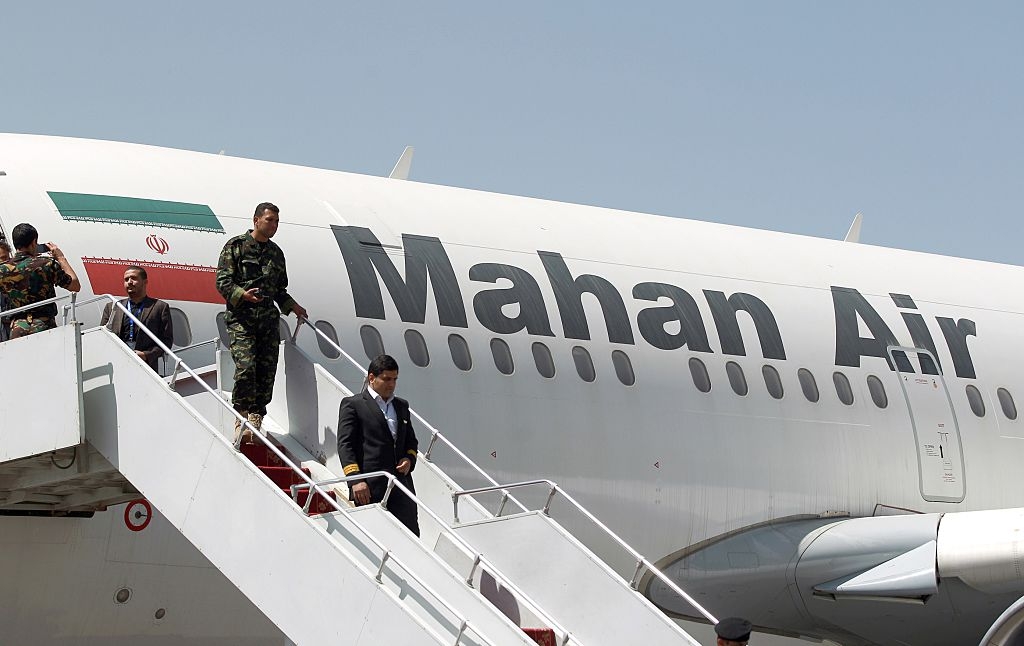
According to research undertaken by the BBC’s Arabic news channel, which analysed flight tracking data, Mahan Air, an Iranian airline with close links to the Islamic Revolutionary Guard Corps (IRGC), flew between Iran and a number of Chinese destinations more than 100 times during February and March after Tehran had imposed a ban on such journeys.

One flight, a repatriation effort carried out for the government on February 6, brought 70 Iranian students living in Wuhan back to Tehran before flying the same day to Baghdad. At the same time that the airline was flying to China, it also continued operations to other countries in the Middle East, with the result that it has now been accused of spreading the virus to a number of countries including Iraq, the United Arab Emirates, Syria and Lebanon. Mahan Air has so far declined to comment on the allegations.

Several Gulf states have accused of Iran of responsibility for spreading coronavirus in their countries, and the revelations about Mahan Air will only add to the view in the region that Iran is behind many of the infections.

Mahan Air is a private company with well-documented links to the IRGC, a fact which has resulted in the airline being subjected to sanctions by the Trump administration for helping to transport IRGC personnel and arms to Bashar Assad in Syria during the country’s brutal civil war. More recently, the airline repatriated the body of slain IRGC commander Qassem Soleimani, after he was killed by a US missile outside Baghdad airport in the New Year.

The airline was first subjected to U.S. Treasury sanctions in October 2011 after it was accused of “providing financial, material and technological support to the Islamic Revolutionary Guard Corps-Qods Force (IRGC-QF)” — the organisation headed by Mr Soleimani. It has also been accused of providing transportation services to Iran’s Lebanese terror proxy, Hezbollah.

Sources within the airline are said to have told the BBC that dozens of Mahan Air’s cabin crew were showing symptoms of Covid-19 after the flights to China, but that when staff tried to raise concerns about the airline’s management of the crisis and provision of safety equipment, they were silenced.

Accusations concerning Iran’s role in spreading the infection around the Middle East come at a time when the government of Iranian President Hassan Rouhani is already under enormous pressure of his handling of the pandemic.

Tehran initially tried to downplay reports of the virus, with Mr Rouhani claiming that February 19 was the first time the government knew coronavirus was in the country. This claim has been undermined by reports that Iran experienced its first outbreak in January in the holy city of Qom – where thousands of Chinese students are studying.

Mr Rouhani is now facing fresh criticism following his recent decision to allow Iranian businesses to resume trading at a time when the country is still coming to terms with the outbreak. Critics of the regime have warned that the decision could result in Iran suffering a second wave of the coronavirus outbreak.

Claims that Iran has been responsible for spreading the virus throughout the Middle East could also have a negative impact on Tehran’s hopes of persuading the International Monetary Fund to provide a $5 billion bailout package. The IMF says the request is still under consideration, but it is unlikely the organisation will be prepared to provide funding to a regime whose irresponsible behaviour threatens the well-being of other countries.

How does Israel keep getting past Syria’s air defenses?

Posted May 11, 2020 by davidking1530
Categories: Uncategorized


https://syriadirect.org/news/how-does-israel-keep-getting-past-syria%e2%80%99s-air-defenses/

AMMAN — On Friday, May 1, an alleged Syrian military source criticized the S-300 air defense systems supplied by Russia as incapable of stopping Israeli airstrikes and as “backwards,” reported Middle East Monitor, citing Avia.pro, a Russian media outlet.

It is worth noting that Middle East Monitor did not link to a specific report on the Avia.pro website, casting some doubt on the source’s comments.

Three days later, likely Israeli jets carried out two back-to-back airstrikes on a munitions factory in northern Aleppo province and on Iranian targets near al-Abukamal border crossing with Iraq in Deir e-Zor province, killing at least 14 Iranian-backed fighters.

The comments by the alleged Syrian military official reveal a deep frustration in Damascus at what seems to be a never-ending string of Israeli airstrikes and humiliating attacks by Turkish airpower in Idlib just two months earlier.

If the semi-public criticism is to be taken at face value, it appears the Syrian government has decided that Russia’s air-defense systems, rather than its Syrian operators, are to blame for the failure to stop these strikes.

Faulty equipment or a dysfunctional military?

In October 2018, Moscow gifted Damascus the S-300 air defense system in spite of vocal protests from numerous western countries. The S-300— first produced by the Soviet Union in the 1970s—became the most sophisticated piece of technology in Syria’s aging air defense arsenal.

The S-300 is a long-range missile defense system which acts as the outermost layer for a more complex air defense network. On paper at least, the S-300 compliments Syria’s already existing system of medium-to-short-range missile defense systems.

However, the S-300 has an inherent limitation, Sitki Egeli, an assistant professor at Izmir University of Economics and the former Director of International Affairs for Turkey’s Undersecretariat for Defense Industries, told Syria Direct.

“As a long-range system, the S-300 suffers from the problem of radar horizon, meaning targets cannot be detected if they’re lying low due to the curvature of the earth. Strike aircraft, such as F-16s fly relatively close to the surface of the earth, and by the time they’re detected, they have already launched their munitions, so it’s too late,” Egeli explained.

In the past, Israeli airstrikes are believed to have been conducted by low-flying F-16s and helicopters.

Typically, this blind spot is compensated by other components of an integrated air defense system, such as airborne early warning aircraft and passive ground-based sensors.

In the case of Syria, however, equipment is either too dilapidated to detect more advanced Israeli technology in time, or personnel is too thinly-stretched and poorly-trained to operate the necessary equipment. As a consequence, there has been an overreliance on the S-300 and Syrian air defense operators often use it for tasks for which it was not designed.

The results of such a policy have ranged from unsuccessful to catastrophic, such as in July 2019 when Syria shot an older S-200 missile at an attacking Israeli jet and instead hit Nicosia, Cyprus.

“It’s not a problem of the S-300 or S-400, it is a limitation of long-range air defense systems,” Egeli said. “They fit in a certain spot in a larger air defense architecture, on the outer fringes. They’re not built for aircraft coming low and launching standoff missiles.”

The fragmented structure and lack of professionalism of the Syrian air force further compounds equipment issues.

“There is no ‘layered air defense’ in Syria; there’s a big mess,” Tom Cooper, a warfare analyst and the editor of the Middle East at War book series, told Syria Direct.

“The Syrian Arab Air Defense is staffed by the last few professional officers one can find in Syria, and then a mass of ‘VIP-sons.’ These are sons of Assad’s favorites or chiefs of different intelligence agencies. Some of them can fight, the rest are useless,” Cooper explained.

Syria’s air defense batteries are split among seven divisions and regiments, with four divisions responsible for the long-range S-200 and S-300 systems and three regiments responsible for the medium-to-short-range systems, according to the Military Balance 2020 report.

The distributed command structure of the air defense network could create problems in coordination, something which the Israeli air force would be eager to exploit to minimize risk to its aircraft.

“There is little doubt that [Israel] is using cyber attacks and electronic countermeasures in parallel with its airstrikes,” Egeli said.

“It’s always possible to jam and deceive [air defense] systems via decoys and fake targets. The Syrian air defender might think you are 50 kilometers from where you are or fire their missiles at targets that never actually existed,” he added.

All of these tactics could prevent Syria’s early detection systems from spotting incoming foreign aircraft or missiles, leaving little time for even short-range missile defense systems to respond.

As a result, the videos released by Syrian state media showing Syrian air defenses firing to meet Israeli missiles mid-air could actually just be fired at fabricated radar signals or decoys.

Is Beijing trying to cash in? 

In addition to specifically naming the S-300 as “ineffective,” the Syrian military source noted that Chinese radars had “worked successfully” in detecting Israeli missiles.

This is an unusual statement to make, as it would mean that Syria is either using Chinese radars simultaneously, but separately from the S-300, or that it had integrated the radars into the S-300 system.

Both possibilities seem less than optimal. Chinese radars could provide the first warning for incoming targets, but the S-300 would still need to rely on its own radar for targeting and engagement purposes. In addition, further integration of Chinese radars into the Russian system would have to be done custom by the respective Chinese and Russian manufacturers, which would not be an easy feat, according to Egeli.

What was the purpose of the Syrian military source’s alleged comments then? Among other possibilities, it could be Chinese opportunism attempting to promote its own missile defense system at the expense of Russia.

The Chinese media outlet, Sina, republished the Syrian military source’s comments, part of a longer pattern of Chinese media openly criticizing Russian air defense technology.

In late February, for example, Sina published a report which urged Syria to replace the “failed” S-300 system with a Chinese air defense system, the HQ-9. The HQ-9 is a Chinese-produced medium-to-long-range missile defense system that performs a similar function to the Russian S-300 systems.

China has struggled to find buyers for the air defense system. A deal to sell the system to Turkey was scuttled in 2015, with Ankara instead opting to buy Russia’s S-400.

Syria has been used as both a testing ground and a showroom for Russian military technology and has been largely credited with spurring a boom in Russian defense exports to the developing world. China could be looking to use Syria to showcase its arms to a global market in much the same way.

The Syrian military source’s comments then, whether intentional or not, aid Beijing’s attempt to nudge its way into Syria’s military imports and further promote the reputation of its military technology.

The comments also come after a highly-publicized series of articles in Russian newspapers which criticized the Assad government for endemic corruption and incompetence.  The quote from the Syrian military source could be an attempt to publicly undermine Moscow’s military’s reputation as a form of under-the-table retaliation.

Masks, virus tests, closed meetings: How Pompeo will visit Israel amid pandemic 

Posted May 9, 2020 by Joseph Wouk
Categories: Uncategorized

Source: Masks, virus tests, closed meetings: How Pompeo will visit Israel amid pandemic | The Times of Israel

US secretary of state and entourage exempt from entry restrictions, will confine movements to airport and strictly controlled work settings during brief visit next week

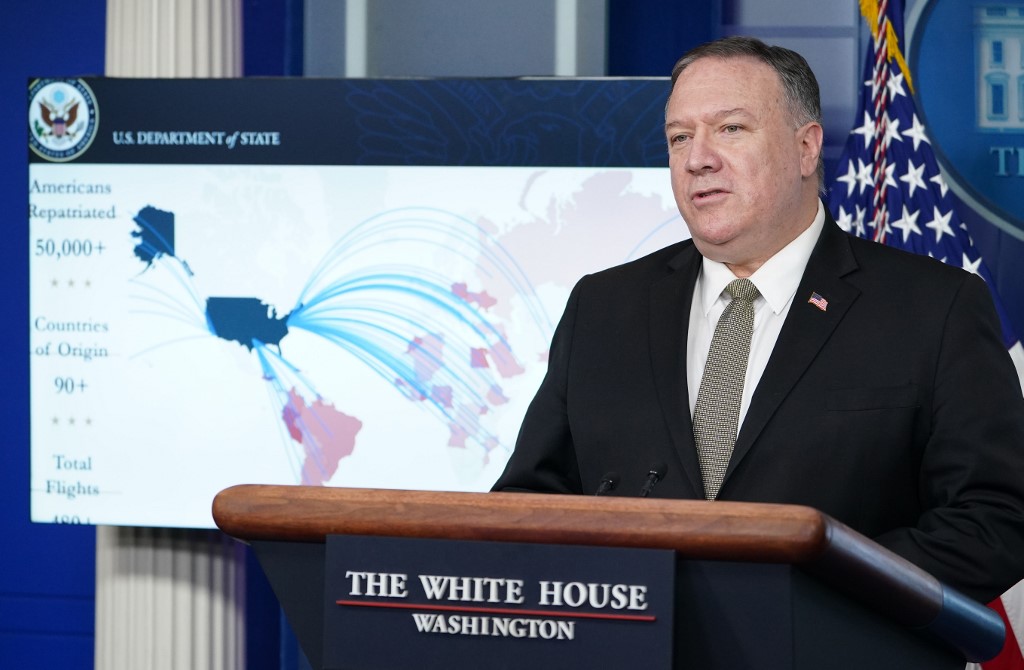
US Secretary of State Mike Pompeo speaks during a briefing on April 8, 2020 in the Brady Briefing Room at the White House, in Washington, DC. (Mandel Ngan/AFP)

US Secretary of State Mike Pompeo next week will become the first senior foreign official to visit Israel since it put in place strict travel restrictions to stem the spread of the coronavirus.

Pompeo’s visit will require medical precautions to prevent infections, which were coordinated with Israeli officials, Israel’s Channel 13 reported Friday.

Dr. William Walters, the US State Department’s deputy chief medical officer, said Friday that everyone flying with Pompeo will be tested for the virus one or two days before the flight, will be checked for symptoms before boarding, and will wear face coverings during the trip.

Pompeo and his small traveling party will be exempt from Israel’s virus restrictions that bar foreign visitors from entering and require returning Israelis to self-quarantine for 14 days. Pompeo is currently undergoing daily checks by medical personnel, Walters said.

Pompeo will be on the ground in Israel for only several hours on Wednesday before returning to Washington from his first overseas trip since making an unannounced visit to Afghanistan in March.

Everyone who meets with the US team during the trip will be checked for COVID-19 symptoms. Pompeo’s movements will be strictly controlled and limited to working meetings and the airport, and he will not meet with anyone in public settings.

People wear protective face masks as they shop at the Carmel market in Tel Aviv, May 8, 2020. (Miriam Alster/FLASH90)

The visit announcement comes amid concerns over the virus spreading in the White House. Katie Miller, US Vice President Mike Pence’s press secretary, tested positive for COVID-19 on Friday. On Thursday, White House officials confirmed that a member of the military serving as one of  US President Donald Trump’s valets had tested positive for the virus.

The trip is expected to focus on Prime Minister Benjamin Netanyahu’s plans to annex portions of the West Bank, the US State Department said Friday.

Pompeo will see Netanyahu and his new coalition partner Benny Gantz as the Trump administration tries to return to business as normal by resuming governmental travel and reopening an economy devastated by the COVID-19 outbreak.

Pompeo will “discuss US and Israeli efforts to fight the COVID-19 pandemic, as well as regional security issues related to Iran’s malign influence,” spokeswoman Morgan Ortagus said in a statement.

The top US diplomat for the Middle East, David Schenker, declined to comment on the status of the annexation discussions, noting that a joint US-Israeli mapping committee had not yet completed its work in determining the specific boundaries that might be proposed by Israel or accepted by the United States.

Alone among most governments, the Trump administration has said it will support the annexation of West Bank territory claimed by the Palestinians for an eventual state as long as Israel agrees to enter peace talks with the Palestinians.

Prime Minister Benjamin Netanyahu in the Knesset, April 30, 2020 (screen capture via Knesset website)

Pompeo’s arrival will coincide with the swearing-in of Israel’s new government, which is expected to be formally installed on May 13. Schenker said the trip to Israel was in the works before it became clear that the swearing in ceremony would happen on the same day.

After battling to a stalemate in three inconclusive elections over the past year, Netanyahu and his chief rival, former army chief Gantz, last month agreed to form a joint government.

Under the deal, Netanyahu will serve as prime minister while Gantz will hold the new position of “alternate prime minister,” giving each side effective veto power over the other. The pair agreed to trade positions after 18 months.

Their “emergency” government is meant to focus on the coronavirus crisis during its first six months. But their coalition agreement also permits Netanyahu to introduce an annexation proposal to the government after July 1, even if Gantz objects.

Annexation advocates believe they have a narrow window to redraw the Mideast map before November’s US presidential election. They also believe it would give Trump a boost with pro-Israel voters, particularly the politically influential evangelical Christian community. The presumptive Democratic nominee, Joe Biden, has said he opposed unilateral moves by Israel in keeping with what had been decades of US policy prior to Trump.

The annexation agreement says that any step must be coordinated with the US while also keeping regional stability and peace agreements in consideration.

Netanyahu’s plan to annex portions of the West Bank has been met with harsh criticism from nearly the entire international community, including Washington’s European allies and key Arab partners, with the prominent exception of the United States. Trump’s much-vaunted Mideast peace plan allows for the possibility of US recognition of such annexations provided Israel agrees to negotiate under the framework of the proposal that was unveiled in January.

That plan calls for the creation of a Palestinian state but gives it limited autonomy on a fraction of the land it has sought. The Palestinians have rejected the proposal outright.