Israel And Egypt Form Secret Alliance To Wipe Out Egyptian Jihadists

Posted February 5, 2018 by Louisiana Steve
Categories: Israel and Egypt

Tags:

by Tyler Durden Mon, 02/05/2018 – 01:00 Zero Hedge

Source: Israel And Egypt Form Secret Alliance To Wipe Out Egyptian Jihadists

{The enemy of my enemy is my friend…or something like that. – LS}

Israel has been conducting bombing raids on jihadists within Egypt’s borders since at least late 2015 as part of a secret two-year alliance. For more than two years, unmarked Israeli drones, helicopters and jets have carried out a covert air campaign, conducting more than 100 airstrikes inside Egypt, frequently more than once a week — and all with the approval of President Abdel Fattah el-Sisi, the NYT reported on Sunday.

Once enemies in three wars, and having struggled to reach peace agreements for decades, Egypt and Israel are now (not so) secret allies against a common foe.

In late 2015, jihadists in Egypt’s Northern Sinai moved in, killing hundreds of soldiers and police officers and briefly seizing a major town – setting up armed checkpoints as they established control over the area. On October 31, 2015, the Islamic State of Iraq and the Levant’s Sinai branch, formerly known as Ansar Bait al-Maqdis, brought down a Russian passenger flight with an explosive device – killing all 224 people aboard.

With Egypt seemingly unable to stop the jihadists, Israel – alarmed by the threat just over the border, began taking action – sending a barrage of airstrikes into the neighboring Arab country whose officials and media continued to vilify the Jewish state in public.

In order to conceal their involvement, Israel’s drones, jets and helicopters have covered up their markings. “Some fly circuitous routes to create the impression that they are based in the Egyptian mainland,” according to American officials briefed on the operations.

It is unclear whether any Israeli troops have actually set foot inside Egyptian borders.

Despite efforts by both Israel and Egypt to hide the origin of the strikes and censor public reports, Egypt and Israel’s two-year alliance has become somewhat of an open secret in intelligence circles:

Inside the American government, the strikes are widely known enough that diplomats and intelligence officials have discussed them in closed briefings with lawmakers on Capitol Hill. Lawmakers in open committee hearings have alluded approvingly to the surprisingly close Egyptian and Israeli cooperation in the North Sinai.

In a telephone interview, Senator Benjamin L. Cardin of Maryland, the ranking Democrat on the Senate Foreign Relations Committee, declined to discuss specifics of Israel’s military actions in Egypt, but said Israel was not acting “out of goodness to a neighbor.”

“Israel does not want the bad stuff that is happening in the Egyptian Sinai to get into Israel,” he said, adding that the Egyptian effort to hide Israel’s role from its citizens “is not a new phenomenon.” –NYT

Moreover, despite Israeli military censors preventing reports of the strikes from becoming public, certain news outlets circumvented the censorship by citing a 2016 Bloomberg report in which a former Israeli official admitted to drone strikes inside of Egypt.

The two-year alliance between the two countries is thought to have begun after Egypt’s relatively new president Mohamed Morsi – a leader within the Muslim Brotherhood who came to power after the Arab Spring revolt, was outed in a military takeover by el-Sisi – then defense minister.

Israel welcomed the change in government, urging Washington to accept it.

And Egypt needed the help; following Mr. Sisi’s takeover, Islamist militants who had established a refuge in the North Sinai region between the Suez Canal and the Israeli border began a wave of deadly assaults against Egyptian security forces.

A few weeks after Mr. Sisi took power, in August 2013, two mysterious explosions killed five suspected militants in a district of the North Sinai not far from the Israeli border. The Associated Press reported that unnamed Egyptian officials had said Israeli drones fired missiles that killed the militants, possibly because of Egyptian warnings of a planned cross-border attack on an Israeli airport. (Israel had closed the airport the previous day.)

At the time, both Israel and Egypt vehemently denied the reports – however after the Russian charter jet was brought down in October of 2015, Israel began its wave of airstrikes, killing a long list of militant leaders according to an American official who spoke on the condition of anonymity in order to discuss classified operations.

After Israel wiped out much of the jihadist leadership in the region, less ambitious successors stepped in. No longer employing armed checkpoints, closing roads or claiming territory – the group began targeting “softer” targets like Christians in Sinai and Muslims they considered heretics. As an example, the militant group killed over 300 worshippers at a Sufi Mosque in North Sinai.

Since Israel has effectively been keeping jihadists at bay in a mutually beneficial arrangement, some American supporters of Israel have been complaining that given Egypt’s reliance on the Israeli military, “Egyptian officials, diplomats and state-controlled news media should stop publicly denouncing the Jewish state.” 

“You speak with Sisi and he talks about security cooperation with Israel, and you speak with Israelis and they talk about security cooperation with Egypt, but then this duplicitous game continues,” said Representative Eliot L. Engel of New York, the ranking Democrat on the House Foreign Relations Committee. “It is confusing to me.”

Israel’s prime minister, Benjamin Netanyahu, has also pointedly reminded American diplomats of the Israeli military role in Sinai. In February 2016, for example, Secretary of State John Kerry convened a secret summit in Aqaba, Jordan, with Mr. Sisi, King Abdullah of Jordan and Mr. Netanyahu, according to three American officials involved in the talks or briefed about them.

Mr. Kerry proposed a regional agreement in which Egypt and Jordan would guarantee Israel’s security as part of a deal for a Palestinian state. –NYT

Netanyahu scoffed at the idea – arguing that if Egypt was unable to control the ground within its own borders, it was hardly in a position to guarantee Israel’s safety.

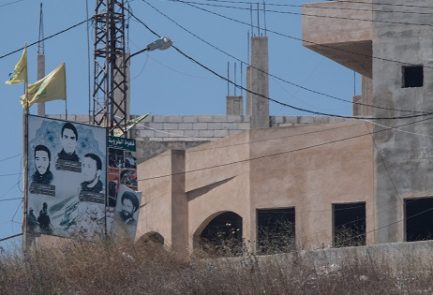
Assad in rare message to Israel: We won’t start war or let foreign forces control our borders 

Posted February 5, 2018 by Joseph Wouk
Categories: Uncategorized

Source: Assad in rare message to Israel: We won’t start war or let foreign forces control our borders – DEBKAfile

DEBKAfile Exclusive: Bashar Assad used a European go-between to send this secret message to PM Binyamin Netanyahu. A similar note came from Beirut.

DEBKAfile’s exclusive intelligence sources report that late last week, a personal Note from Syrian ruler Bashar Assad was secretly handed to Prime Minister Netanyahu by a European intermediary. “War is not what I am after. All I want now is to focus on reunifying Syria and rebuilding the ruins of war.” A key phrase followed: “We are a sovereign nation. We shall not hand our borders over to the control of any forces other than Syrian.”

This phrase was taken as an assurance by the Syrian ruler that the Hizballah forces fighting in Syria would not be allowed to deploy on its borders with Israel, and came in response to Israel’s concerns  It was sent out directly after Prime Minister Netanyahu visited President Vladimir Putin in Moscow on Jan 29 and warned him that Israel would not stand by for the establishment of a Hizballah or Iranian troop presence on its northern border with Syria. It is presumed in Jerusalem that Assad acted on his own initiative in sending this note to Jerusalem.

The day after it landed on Netanyahu’s desk, a second secret note arrived from the Lebanese President Michel Aoun, a reputed ally of Hizballah. This one was devoted to assuring Israel that there were no Iranian missile factories in Lebanon – nor would the Lebanese government allow them to be constructed in the country. Another European diplomat carried this note to Jerusalem. Aoun did not write it himself; he instructed the Lebanese foreign minister Gebran Bassil, his son-in-law, to sign it and pass it on. Bassil went on to emphasize that should the Lebanese president believe that operations by Hizballah did not serve the country’s national and security interests, he would not hesitate to say so loud and clear.

It was impossible to confirm whether or not Assad and Aoun had acted in concert to cool the war fever hanging over the region in the wake of Israel’s widely broadcast concerns over the potential threats looming over its northern border. Netanyahu apparently gave his answer to the two presidents on Sunday, Feb. 4, when he opened the weekly cabinet meeting by saying: “We are not looking for war, but will do everything we have to, to defend ourselves.”

Report: Hezbollah to store weapons at sites Israel likely won’t strike

Posted February 5, 2018 by Joseph Wouk
Categories: Uncategorized

Source: Report: Hezbollah to store weapons at sites Israel likely won’t strike – Israel Hayom

Iran says Trump’s hostility to 2015 nuclear deal scares off investors 

Posted February 5, 2018 by Joseph Wouk
Categories: Uncategorized

Source: Iran says Trump’s hostility to 2015 nuclear deal scares off investors – Israel Hayom

US envoy: Hamas squandering Iran’s ‘blood money’ on terrorism

Posted February 5, 2018 by Joseph Wouk
Categories: Uncategorized

Source: US envoy: Hamas squandering Iran’s ‘blood money’ on terrorism – Israel Hayom

Trinidad: How a Tiny Nation Became ISIS Recruiting Ground

Posted February 5, 2018 by Peter Hofman
Categories: Uncategorized

By – on

Trinidad: How a Tiny Nation Became ISIS Recruiting Ground

Trinidad, a South African nation usually considered part of the Caribbean, may be home to a population of just 1.3 million.

But it’s one of the biggest recruiting grounds for ISIS — and so is neighboring, and equally small, Tobago.

So how does that happen?

The Guardian reports:

Five years ago, Tariq Abdul Haqq was one of Trinidad and Tobago’s most promising young boxers, a Commonwealth Games medallist with Olympic dreams.

Now he lies dead somewhere in Iraq or Syria, buried in the ruins of the self-declared caliphate, along with dozens of his countrymen. Together they formed one of the most unlikely, and most underreported groups of fighters drawn to Isis.

The tiny Caribbean nation, with a population of just 1.3 million, lies about 10,000km from the former Isis capital in Raqqa. Yet at the bloody peak of the group’s power, Trinidad and Tobago had one of the highest recruitment rates in the world.

More than 100 of its citizens left to join Islamic State, including about 70 men who planned to fight and die. They were joined by dozens of children and women, the latter including both willing and unwilling companions, security officials say.

By way of comparison: Canada and the US, with populations many times larger, are each thought to have produced fewer than 300 recruits who made the journey east.

The power of this story – the flight from a balmy Caribbean island state rich in oil and gas to the frontlines of a desert war – was not lost on the propagandists of Isis.

Their Dabiq magazine, aimed at potential recruits and sympathisers, featured a long interview with fighter Abu Sa’d al-Trinidadi – formerly Shane Crawford – in the summer of 2016. He detailed his conversion, his trip to Syria and ended threatening death to Christians and bloodshed in the streets of his former home.

An unnerved Trinidad government raced to introduce new controls on travel and finance that would make the journey to any new jihadi project harder, and would track anyone attempting to return.

There has never been a terror attack on the islands, a plot uncovered, or even any formal Isis threat against Trinidad and Tobago.

But the country now faces the possibility that citizens trained by Isis could return to radicalise a younger generation – or that would-be recruits no longer able to make that dark pilgrimage will seek other targets for extremism.

The island has a thriving international oil and gas industry, and for the US there are potential worries about a more direct threat. Trinidad’s citizens can travel through the Caribbean without visas, and a Trinidadian has already been jailed for his role in a 2007 plot to attack New York’s JFK airport.

Within a month of taking office, Donald Trump called Trinidad’s prime minister, Keith Rowley, to discuss terrorism. The UK government has also recently warned of possible terrorist attacks in the country – although it issued similar travel warnings for countries including Spain and France.

Trinidad’s Muslims make up around one in 10 of the country’s population, and the overwhelming majority follow moderate forms of Islam.

But a tiny minority have been drawn to a more extreme creed. In 1990 a group called Jamaat al Muslimeen launched the western hemisphere’s first and only Islamist coup attempt, taking the prime minister and legislators hostage for several days.

Eventually the army regained control, but the imam behind the coup, Yasin Abu Bakr, was released from jail within a couple of years under an amnesty deal and has resumed preaching.

At a sermon recently attended by the Guardian, Abu Bakr argued that European nations had no moral grounds to criticise Isis beheadings, because of the use of the guillotine during the French revolution.

The attorney general, Faris Al Rawi, denied that Trinidad had a particular problem with Isis recruitment or religious extremism.

“The number may look larger than somewhere else, but I don’t accept for one moment that we have a problem that is much larger than anywhere else,” he said in an interview. “I don’t think that we are any more vulnerable than any other country is.”

For many Trinidadian Isis recruits, religion was more excuse than driving motivation, said anthropologist Dylan Kerrigan, a lecturer at the University of the West Indies.

Young men, many of them recent converts, were drawn to the caliphate mostly by promises of money and a sense of community – an appeal similar to that of gangs in an increasingly violent country, he said.

“[A gang] provides a family, male role models, social order and it promises access to what many young men might think they want: money, power, women, respect,” said Kerrigan who has researched extremism for UN counter-terrorism units.

“[One] imam told me that instead of joining a local gang, some see traveling to the Middle East as like joining another gang.”

Al Rawi said a string of new measures, including intelligence sharing with the US, UK and Israel, mean it will be very hard for those who have left to slip back into Trinidad undetected.

People who knew some of the Isis volunteers say most of them – and some of their dependents – are dead. The only Trinidadians known to have returned to the island were a family group picked up from a Turkish refugee camp, after apparently trying and failing to reach Isis-held territory. They are now under close surveillance, Faris said.

He dismissed concerns about further radicalisation, arguing that many of those who travelled to Syria were simply criminals looking to return with an extra edge over rivals.

“There are many people who are willing to make a trip to a war-torn area just to say you have been there – for the ‘cred’,” he said. “You have to disaggregate the genuine jihadi – who may potentially die as a martyr for a cause – from a pure criminal borrowing the look and persona of terrorism.”

Joining Isis may also have offered a practical escape to those facing the law. Before he was lionized in Dabiq, Shane Crawford, was a petty criminal who had been detained several times including on suspicion of planning to assassinate the then prime minister. He travelled to Syria with two friends who had been released from jail pending an investigation.

But some members of prominent families were drawn in too – perhaps none more high-profile than boxer Tariq Abdul Haqq. His aunt, Pamela Elder, is one of the country’s most respected lawyers and his father Yacoob Abdul Haqq had been a senior boxing official until his 2012 death.

Abdul Haqq was also an acquaintance of Fuad Abu Bakr, the son and heir apparent of the 1990 coup leader Abu Bakr.

The schools, clinics, soup kitchens and factories that filled Jamaat al Muslimeen’s compound were mostly destroyed after Abu Bakr senior’s arrest, but the government spared his large, airy mosque, where both father and son now teach. There is space for hundreds of men to pray from the main floor, and dozens of women to gather on a balcony to hear Friday sermons.

A preacher and politician, Fuad appears to have inherited his father’s extreme religious views along with his imposing height and charisma.

In an interview with the Guardian he described the men who went to fight for Isis in glowing terms, and slammed a new law banning child marriage as a violation of religious rights.

He dismissed reports of Isis brutality, denied that the jihadi group’s widely documented revival of sexual slavery was real, and compared the organisation’s self-declared caliphate to Israel and the Vatican.

“They want independence and an Islamic State, and they have the right to self-determination … so how can you say to these people that you cannot have an Islamic State because that is not an acceptable political status? There is a Jewish State, there is a Catholic state.”

Bakr said he knew several of those who travelled to Syria. Saying that he had to choose his words carefully when discussing their journeys, to avoid violating Trinidadian laws against supporting terrorism, he was still open in his admiration.

“They are not bad people, they are some of the most excellent people I knew, some of them,” he said. “People from all walks of life, businessmen, who just decided this is the right thing to do.”

Then, in an extraordinary invocation of one of the greatest champions of non-violent resistance, he paraphrased lines from a 1963 speech by Martin Luther King Jr in tribute to the Trinidadians who signed up for Isis’s project of extreme violence.

“Martin Luther King said a man who is not willing to die for something is not really fit to live, and I respect someone who is willing to sacrifice themselves for the betterment of their fellow man, and that is what those individuals think they are doing.”

King Abdullah II: Washington Does Not Understand Islam

Posted February 5, 2018 by Peter Hofman
Categories: Uncategorized

King Abdullah II: Washington Does Not Understand Islam

King Abdullah II of Jordan on Sunday told CNN’s Fareed Zakaria that the American leadership does not get what Islam is about—which goes without saying and which could explain the catastrophic US Mid-East policy since Desert Storm, if not earlier.

“Whether I’m in Washington in the Congress or with the administration, I think maybe there’s a lack of understanding of Islam,” the King told his host, who is a self-described secular and nonpracticing Muslim born in India.

Advertisement

The king said Trump’s recognition of Jerusalem as the capital of Israel was “a complication,” because “Jerusalem is such an emotional subject for everybody.” But repeating his argument that Washington misunderstands the Arabs, then he asked, “How do we build the confidence and trust between the Palestinian leadership and the American leadership so that we can get Americans, Israelis and Palestinians at the table?”

As if Abbas et al were children who are unable to realize on their own that they must save their people from a life of poverty and suffering, and must be manipulated emotionally to negotiate with their far stronger neighbor.

King Abdullah was responding to repeated references by President Trump describing Islam and the United States as being at odds with each other. Trump said on the campaign trail that Muslims hate the US.

The king defended Islam, saying “it is not a religion of hate. We as Muslims believe in Jesus Christ as the Messiah. We believe in the Holy Virgin Mother. We believe in the Bible and the Torah, and I think this is the way that all of us were brought up,” he said, misrepresenting the repugnant views against Jews and Judaism which are common among scholars and politicians in his own country.

“When we all greet each other as Arabs and Muslims, we say, ‘As-salamu alaykum’ – peace be unto you,” the King argued, suggesting this was “the basis of Islam.” The king, who is the actual heir of the prophet Muhammad, omitted another popular Muslim saying, “the religion of Muhammad is enforced by the sword.”

The king did admit that “fringe groups” have created a series of problems and challenges, but insisted that most Muslims are fighting against the extremists.

“This is a civil war between all of us – and those that, not only consider us heretics, but consider Christians, Jews and other religions all heretics, who should be put to the sword,” he said about what he described as a “fight inside of Islam.”

“The problem that we have now, and maybe the lack of understanding, is that it is us Muslims working side by side with Christians, Jews and other religions to fight this scourge, which is still going to be a long-term problem,” he stated, but warned that the fight against extremist would fail if the Muslims feel “victimized and isolated,” because this creates “a breeding ground of contempt.”

“We all want a better future for our children and their children. For them to feel isolated, that’s the danger. And the rhetoric that moves in that direction is not a good story for any of us,” he said.

Someone should encourage the king to read the newspapers that are being sold just a stone’s throw away from his own palace in Amman…

Turkey Warns US Troops In Northern Syria May Be Targeted By Its Army

Posted February 5, 2018 by Peter Hofman
Categories: Uncategorized

IDF strikes Hamas armed wing targets in response to rocket fire

Posted February 4, 2018 by Peter Hofman
Categories: Uncategorized

IDF attacked two Hamas targets in southern Gaza on Friday night in response to Thursday’s rocket fire. A Red Alert siren that was sounded at the time of the attack proved to be a false alarm.

Avital Zippel
http://www.jerusalemonline.com/news/in-israel/local/idf-strikes-hamas-armed-wing-targets-in-gaza-34067
IAF fighter jets (archive) Photo Credit: IAF website

IDF fighter jets attacked two Hamas targets in southern Gaza on Friday night. The targets were located in a complex used by Hamas’ armed wing, the IDF Spokesperson’s Unit said in a statement.

 A Red Alert siren was sounded at the time of the attack. The IDF clarified that the siren was a false alarm. Friday’s airstrikes were a further response to the rocket fired from the Gaza Strip late Thursday night.

As previously reported by JOL, IDF forces attacked a Hamas observation post in northern Gaza on Thursday following the launch towards Israel. No rocket remnants were found.

Earlier on Thursday, Israeli security forces apprehended four Palestinians after they crossed into Israel from Gaza carrying knives and a grenade. The suspects were taken into questioning.

Tensions have been escalating in southern Israel ever since US President Donald Trump recognized Jerusalem as Israel’s capital. Dozens of projectiles have been fired from Gaza at Israel since the declaration. No injuries were reported.

Hamas Gaza chief orders highest security alert over fear of imminent war with Israel

Posted February 4, 2018 by Peter Hofman
Categories: Uncategorized

According to Arabic-language reports, the political leader of Hamas in Gaza has ordered most of the terrorist group’s headquarters in Gaza evacuated over fear that Israel plans to launch a military conflict within coming days.

Omri Ariel
http://www.jerusalemonline.com/news/middle-east/israeli-palestinian-relations/hamas-gaza-chief-predicts-war-with-israel-within-days-34370
Photo credit: Abed Rahim Khatib, Flash 90

Yahya Sinwar, the leader of Hamas in Gaza, reportedly believes war with Israel is likely to erupt within the next few days.

According to the London-based Arabic-language newspaper Al-Hayat, Sinwar has ordered Hamas headquarters in Gaza evacuated and has declared the highest level of security alert.

Sinwar’s moves come amid reports of multiple upcoming military exercises set to be conducted by Israel along its southern border, including the joint US-Israel Juniper Cobra exercise.