Up to 200 Russian advisers killed in last week’s clash with US forces in Syria 

Posted February 13, 2018 by Joseph Wouk
Categories: Uncategorized

Source: Up to 200 Russian advisers killed in last week’s clash with US forces in Syria – DEBKAfile

 In the first military clash between US and Russian forces in Syria, more than 200 Russian “mercenaries” are reported killed, scores more injured. 


US military sources first  reported that 100 Russian “advisers” were killed and dozens injured in a US attack on Syrian and allied pro-Iranian forces on Feb. 8. By  Tuesday, Feb. 13, those figures had doubled. Moscow has not confirmed the incident or the casualties, which would be five times more than Russian official losses since it entered the war in 2015. President Vladimir Putin’s spokesman, Dmitry Peskov, declined to comment, saying the Kremlin only tracks data on the country’s armed forces. According to one Russian officer, the death toll continues to rise after scores of Russian wounded were flown to hospitals in Moscow and St. Petersburg.

DEBKAfile’s military sources reported exclusively on Feb. 9 that US special forces had struck Russian military engineers laying a floating bridge on the Euphrates River near Deir ez-Zour for Syrian army, Hizballah and other pro-Iranian forces to cross to the east bank. That engagement unfolded when US forces posted in eastern Syria repelled a Syrian-pro-Iranian attack led by T-72 and T-55 tanks on a base held by American and US-backed Syrian Democratic Forces east of the Euphrates River near the oil town of Tabiye.

The strike force was fighting under the command of Iranian Revolutionary Guards officers. It included members of the Afghan Shiite militia imported by Tehran, pro-Assad troops of the Syrian National Defense Forces, local Arab tribesmen and Russian mercenaries. Those mercenaries were provided by Wagner, a Russian private military contractor, which supplies ground forces to fight for Assad alongside the pro-Iranian and Russian combatants.

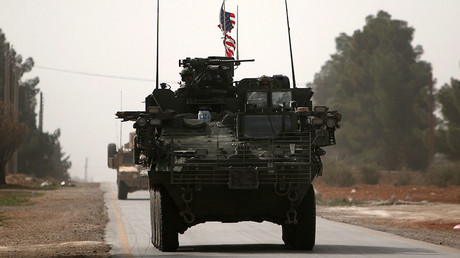
Against that fighting strength, the Americans used F-22 Raptors, F-15 Strike Eagles, Air Force AC-130 gunships, Marine artillery and Army Apache attack helicopters, as well as Special Operations forces, which stopped the multiple assault in its tracks.

Damascus warns Israel of ‘more surprises’ in Syria

Posted February 13, 2018 by Peter Hofman
Categories: Uncategorized

Syrian government official warns Israel of ‘more surprises’ being in store in the wake of the downing of the F-16 jet that attacked Iranian positions in the country Saturday; ‘God willing they will see more surprises whenever they try to attack Syria,’ the assistant foreign minister said.
https://www.ynetnews.com/articles/0,7340,L-5111825,00.html

The Syrian government said on Tuesday that Israel would face “more surprises” in future attacks on Syria’s territory, after Syrian air defenses shot down an Israeli F-16 jet during the fiercest flare-up between the old foes in 36 years.

Syrian anti-aircraft fire downed the F-16 as it returned from a retaliatory bombing raid on Iran-backed positions in Syria after the incursion of an Iranian drone into Israeli airspace early on Saturday. Both Iran and Russia are supporting President Bashar Assad in Syria’s near seven-year civil war.”Have full confidence the aggressor will be greatly surprised because it thought this war—this war of attrition Syria has been exposed to for years—had made it incapable of confronting attacks,” assistant foreign minister Ayman Sussan said.

An official in Bashar al-Assad's regime said Syria had 'more surprises' in store for Israel (Photo: EPA)

An official in Bashar al-Assad’s regime said Syria had ‘more surprises’ in store for Israel (Photo: EPA)

“God willing they will see more surprises whenever they try to attack Syria,” Sussan said during a Damascus news conference.The downed F-16 was the first warplane Israel has lost to enemy fire since its 1982 Lebanon war. Its two-man crew survived, with injuries, after bailing out of the stricken jet.

Israel retaliated by destroying around half of Syria’s anti-aircraft batteries, according to an initial assessment shared with Reuters by an Israeli official who requested anonymity.

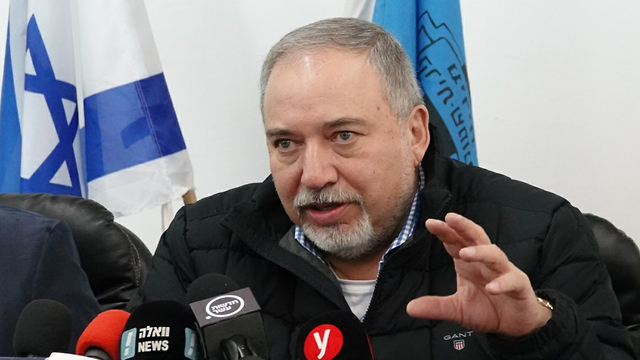
Prime Minister Benjamin Netanyahu said on Sunday that Israeli forces would press ahead with Syria operations in Syria, where it has launched scores of sorties against suspected arms transfers to Iranian-sponsored Lebanese Hezbollah terrorists.In Kiryat Shmona on Tuesday, Defense Minister Avigdor Lieberman told reporters, “There are no limitations (on military operations), and nor do we accept any limitations … We will respond to every provocation.”

“We will continue to defend our vital security and other interests. And I would like to paraphrase the well-known saying: ‘This is not the time to bark, this is the time to bite.'”

Defense Minister Lieberman said, 'Now is the time to bite' (Photo: Effi Sharir)

Defense Minister Lieberman said, ‘Now is the time to bite’ (Photo: Effi Sharir)

Tehran’s involvement in Syria, including the deployment of Iran-backed forces near the Golan Heights, has alarmed Israel. It has also has accused Iran of building precision-guided missile factories for Hezbollah in Lebanon.

Syria and Hezbollah celebrated the F-16 shoot-down as a blow to Israeli military superiority. Israel’s Army Radio said on Tuesday that investigators believed pilot error—rather than Syrian capabilities—were mainly at fault for the F-16’s failure to evade what was probably an aged SA-5 missile.

Saturday’s incident stirred up further questions in Israel about the effectiveness of a coordination mechanism set up with Russia, which has also been reinforcing and arming Assad’s army.

Russian President Vladimir Putin responded to the flare-up by urging Prime Minister Netanyahu to avoid escalation in Syria. Moscow said on Monday it did not have information to support Israel’s allegation about an Iranian military presence in the site bombed for launching the drone.

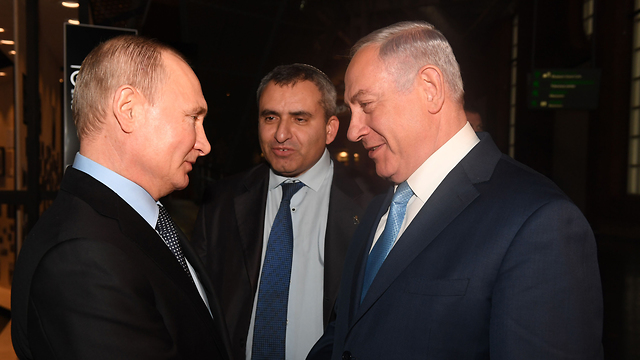
Minister Elkin (center) was present at the meeting between Russian President Putin (L) and PM Netanyahu (Photo: Kobi Gideon/GPO)

Minister Elkin (center) was present at the meeting between Russian President Putin (L) and PM Netanyahu (Photo: Kobi Gideon/GPO)

Ze’ev Elkin, a Russian-speaking Israeli cabinet minister who serves as Netanyahu’s interpreter in the talks with Putin, defended the coordination mechanism on Tuesday as granting Israel “freedom of action in the skies above Lebanon and Syria.”

“I don’t think the Russians ever pledged that they would take military action against the Iranians and the Syrians for us,” Elkin told Israel Radio.

“We are going one-on-one against the Syrians. We don’t need assistance from the Russians. We know how to deal with Syrian anti-aircraft fire, as everyone ultimately saw.”


Erdogan: We have suffered from Ottoman aftermath

Posted February 13, 2018 by Peter Hofman
Categories: Uncategorized

This week, US Secretary of State Rex Tillerson is to meet with Turkish President Recep Tayyip Erdogan in Turkey. The two will likely discuss the US’ support of the Kurdish fighters in Syria.

Valerie Berkley
http://www.jerusalemonline.com/news/world-news/around-the-globe/erdogan-and-tillerson-to-meet-34570
Protestor demonstrates against Turkish violence against Kurds Photo Credit: Gili Yaari /Flash90

US Secretary of State Rex Tillerson is said to visit Turkey this week to meet with Turkish President Recep Tayyip Erdogan. The two are likely to discuss the ongoing civil war in Syria and the US’ decision to back the Kurdish rebel group, YPG.

The two countries remain divided about the respective attitudes towards the Kurds, in Syria and Turkey. The US financially supports Kurdish organizations that Turkey considers to be dangerous terrorist organizations, which threaten stability in Turkey. More than 20% of Turkey’s citizens are Kurds. Erdogan stated, “Anyone interfering in Northern Syria has not suffered from Ottoman repercussions.”

Erdogan said during a speech to Turkish parliament “Turkey was furious at the US for its support of the Kurdish militias.” Erdogan spoke to members of the Turkish Justice and Development Party following the publication of the US Defense Department budget for 2019, which includes funds to train local forces in the struggle against the Islamic State in Syria. Erdogan stated, “Our ally’s decisions to support the YPG will affect our policy.”

Last month, Turkey launched an invasion of Syria intended to push the YPG out of the Ofrin region, near the southern boundary. During the speech, Erdogan sent a clear message and warned the American forces stationed in Syria not to interfere with the operation.

Breaking point? Turkey demands ‘concrete steps’ from US while Washington wavers

Posted February 13, 2018 by Peter Hofman
Categories: Uncategorized

https://www.rt.com/news/418592-turkey-us-breaking-point/
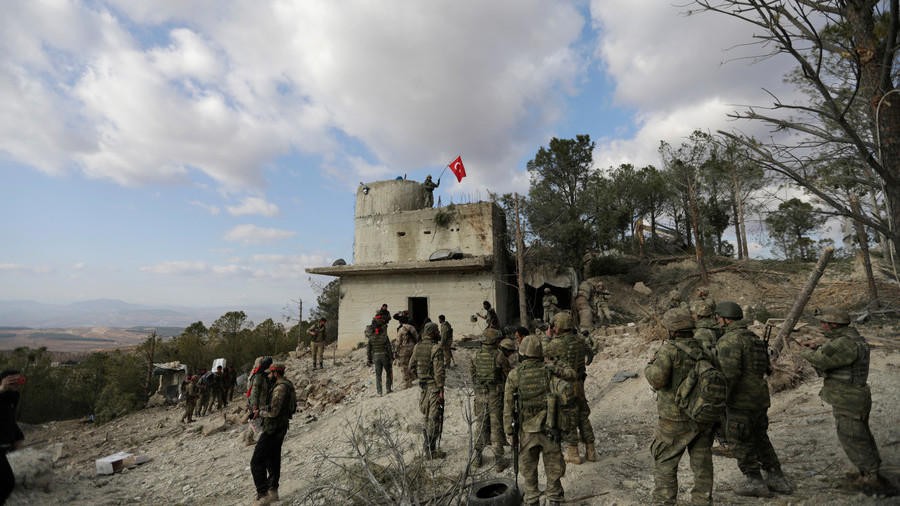
Turkish forces wave a flag on Mount Barsaya, northeast of Afrin, Syria, on January 28, 2018. © Khalil Ashawi / Reuters
Strained relations between Turkey and the US seem to have reached a critical point. Ankara is seeking clarity from the US, threatening to ‘break’ ties. Washington meanwhile continues to hide behind vague statements.

US actions are the reason for the “missing trust” between the two NATO allies, Turkish Foreign Minister Mevlut Cavusoglu told journalists on Monday. He went on to say Ankara expects “concrete steps” from Washington, aimed at mending ties that have almost reached the point of no return.

Read more

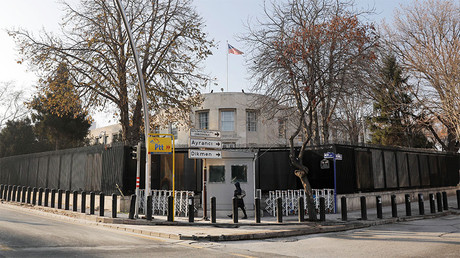
General view of the U.S. Embassy in Ankara, Turkey. © Umit Bektas

Turkey’s “ties with the US are at [a] very critical point,” the minister said. The two sides “will either fix these relations or they will break [down] completely,” he added. Ankara was provoked by the mixed signals coming from the US about its support for Kurdish militias in Syria amid the ongoing Turkish military campaign against these forces in Afrin.

The US has tried to prove to Ankara that it takes its interests in Syria seriously. Late in 2017, US President Donald Trump promised to end arms supplies to the Kurds. In January 2018, Washington repeated this promise, when US National Security Adviser H.R. McMaster told Turkish Presidential Spokesman Ibrahim Kalin that the US would no longer provide weapons to fighters of the Kurdish People’s Protection Units (YPG) and the Democratic Union Party (PYD).

At the same time, Washington also made it clear that US troops would not leave Manbij – another northern Syrian town controlled by the Kurdish militias – even though Ankara said it could extend its operation into this area. Nor is it apparently ready to end support for the “Kurdish elements of the SDF [Syrian Democratic Forces],” an umbrella Syrian armed opposition group.

Read more

FILE PHOTO: American army vehicles drive north of Manbij city, in Aleppo Governorate, Syria March 9, 2017. © Rodi Said

On Sunday, US Defense Secretary James Mattis admitted that “some of the Syrian Democratic Forces” had been “drawn off” from the battle against Islamic State (IS, formerly ISIS/ISIL), to the Afrin area by what he called a “distraction,” apparently referring to the Turkish operation. He went on to say that around 50 percent of all SDF fighters are Kurds, who “see their fellow Kurds in Afrin under attack.” The Pentagon chief made no indication that Washington tries to prevent its allies on the ground from aiding those whom Ankara considers terrorists.

That did not, however, stop Mattis from calling Turkey’s reasons for waging a military campaign in the region legitimate. “They [Turkey] have a legitimate security concern, and we do not dismiss one bit of that, along that border with Syria,” he said, adding that the US is “assisting Turkey” and is “going to work closely” with Ankara.

However, Turkish officials do not seem to be satisfied with these ambiguous statements anymore. “Our demands from the US are clear and have already been conveyed. We no longer want to hear about promises; we want to hear about concrete steps. Trust needs to be rebuilt so we can start to talk about some issues,” Cavusoglu said on Monday.

Read more

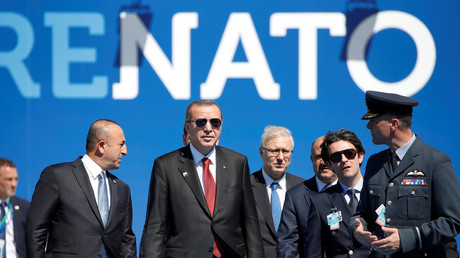
Turkish President Recep Tayyip Erdogan arrives to NATO Summit in Brussels, Belgium, May 25, 2017. © Christian Hartmann

His words were echoed by Turkish Prime Minister Binali Yildirim, who urged Washington to “pull itself together and make a sound decision.” “America’s decision to fight against one terror organization with the cooperation of another terror organization has nothing to do with dignity of a state,” Yildirim told reporters.

The Turkish officials went as far to accuse the US of deliberately sparing terrorists in its operations to justify the extension of its cooperation with Kurdish forces in Syria. “The US is not touching [IS] members in Syria [to have] an excuse to continue working with the YPG,” Cavusoglu said.

The Turkish military operation in the Kurdish area of Afrin entered its fourth week on February 10. Ankara also repeatedly said it plans to expand it with Manbij and Idlib being mentioned as the possible next targets.

In the meantime, Turkey, a NATO member since 1952, seems to be straining its relations with other allies. During the first week of the Afrin campaign, Germany froze all decisions on supplying weapons to Ankara, including upgrades to the German-made Leopard tanks used by Turkish troops. Later, the French president and foreign minister warned Ankara against the invasion and accused it of “adding war to war.”

STEINITZ: ASSAD IN DANGER IF HE ALLOWS IRAN TO ATTACK ISRAEL FROM SYRIA

Posted February 13, 2018 by Louisiana Steve
Categories: Iran and Assad, Russia and Assad

Tags:

BY HERB KEINON FEBRUARY 13, 2018 01:33 Jerusalem Post

Source Link:
STEINITZ: ASSAD IN DANGER IF HE ALLOWS IRAN TO ATTACK ISRAEL FROM SYRIA

{I wonder just how much sway he has in all this. – LS}

“Assad and Hezbollah are the same, and if there will be an attack against us, we will not be obligated only to act against the the source of the attack.”

Israel views Syrian President Bashar Assad’s regime as the weak link in the Iranian-Shi’a axis, and Assad should keep that in mind when weighing whether or not to let Iran set up military bases in his country or transfer precision missiles to Hezbollah, National Infrastructure, Energy and Water Minister Yuval Steinitz said on Monday.

Steinitz – a member of the 12-member security cabinet that discussed on Sunday possible next steps following Saturday’s incursion by an Iranian drone and the ensuing downing of an Israeli F-16 – hinted broadly in an Army Radio interview that Israel would act against Assad if Iran crosses the red lines that Israel has established.

 The first red line, he said, was turning Syrian into a “forward” military base for the Iranian Revolutionary Guards Corps, including intelligence, naval and air-force bases.

The second red line, he said, was that Syria would enable Iran to upgrade Hezbollah’s missile capabilities by turning those missiles into precision weapons that would constitute a much greater threat to Israel than they currently are.

Today there is no difference between Syria and Lebanon, Steinitz said, and the Syrian army and Hezbollah are two arms doing Iran’s bidding.

“Assad and Hezbollah are the same, and if there will be an attack against us, we will not be obligated to act only against the source of the attack,” he said. “We will reserve the right to choose the right front.”

For example, Steinitz said, “the Assad regime is the weak link in the Iranian-Shi’a axis, and I think Assad should think very well whether he wants to turn Syria into a forward base for Iran or allow precision missiles through Syria to Lebanon, because he himself, his regime, his government and his army can be hurt in that situation.”

Meanwhile, Britain joined the US on Monday in standing behind Israel following Saturday’s developments in the North. British Foreign Secretary Boris Johnson issued a statement saying the United Kingdom is “concerned at developments over Israel’s border with Syria this weekend.”

“We support Israel’s right to defend itself against any incursions into its territory,” the statement said. “We are concerned at the Iranian actions, which detract from efforts to get a genuine peace process underway. We encourage Russia to use its influence to press the regime and its backers to avoid provocative actions and to support de-escalation in pursuit of a broader political settlement.”

No such similar statement has been issued by EU foreign-policy chief Federica Mogherini.

On Sunday, the White House issued a statement saying the US supports Israel’s “right to defend itself from the Iranian-backed Syrian and militia forces in southern Syria.”

This is a message that US Secretary of State Rex Tillerson is expected to deliver when he goes to Lebanon later this week as part of a five-county tour of the Mideast, including Egypt, Kuwait, Jordan, Lebanon and Turkey.

On the first stop of his tour in Cairo on Monday, however, the focus was on other issues, with Tillerson saying the US supports Egypt’s fight against Islamic State. But he reiterated that the US advocates free and fair elections there.

Speaking at a joint news conference with his Egyptian counterpart, Tillerson said Washington remains committed to achieving a lasting peace between Israel and the Palestinians, despite President Donald Trump’s decision to recognize Jerusalem as Israel’s capital.

Regarding US-Egypt relations, Tillerson said: “We agreed we would continue our close cooperation on counterterrorism measures.

The Egyptian people should be confident that the US commitment to continue to support Egypt in its fight against terrorism and bringing security to the Egyptian people is steadfast.”

The Egyptian military campaign comes ahead of a presidential election in March, in which President Abdel Fattah al-Sisi is seeking a second term in office.

Asked about the election, Tillerson said the United States supports a credible, transparent election in Egypt and Libya.

“We have always advocated for free and fair elections, transparent elections – not just in Egypt but in any country,” he said.

“The US is always going to advocate for an electoral process that respects the rights of citizens,” Tillerson told journalists, adding that the US was also keen to continue supporting Egypt in its economic recovery.

Netanyahu says he’s talking with Trump about annexing areas of Judea and Samaria

Posted February 13, 2018 by Peter Hofman
Categories: Uncategorized

February 12, 2018

Latest News from Israel

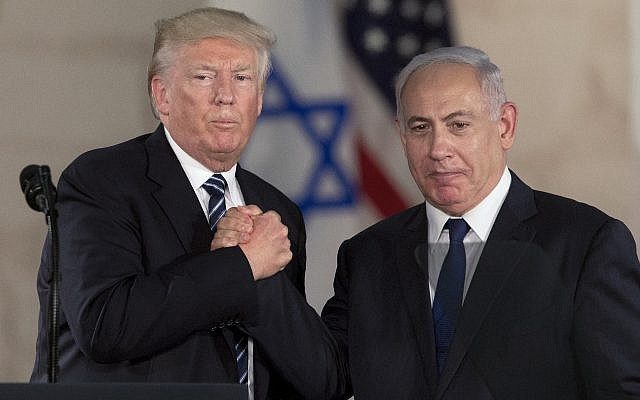
US President Donald Trump (L) and PM Benjamin Netanyahu at the Israel Museum in Jerusalem, May 23, 2017. (AP/Sebastian Scheiner, File)

Netanyahu says he’s been discussing Israeli sovereignty in Judea and Samaria with the White House for quite some time.

By: Batya Jerenberg, World Israel News

At a Likud faction meeting on Monday, Prime Minister Benjamin Netanyahu told his colleagues that he is in close contact with the Trump administration regarding the possibility of applying Israeli sovereignty to Jewish settlements in Judea and Samaria.

This follows hard on the heels of Sunday’s meeting of coalition heads in which it was decided to postpone an upcoming vote at the Ministerial Committee for Legislation on an annexation bill sponsored by Likud Member of Knesset Yoav Kisch. The official reason given for the delay was the aftermath of the Israel Air Force’s incursion into Syria after an Iranian drone, launched from Syria, violated Israeli airspace over the weekend and was destroyed.

However, as Netanyahu has said many times before in connection with proactive moves regarding Judea and Samaria, it is of utmost important to the prime minister to coordinate such decisions with the Americans.

“I’m guided by two principles in this issue,” he said. “Optimal coordination with the Americans, whose relationship with us is a strategic asset for Israel and the settlement movement, and the fact that it must be a government initiative rather than a private one, because it would be a historic move.”

The proposed bill is a copy of the resolution on sovereignty that recently passed in the Likud Central Committee by a unanimous vote.

“It’s time to put the Likud Central Committee’s resolution into practice and begin applying sovereignty over the settlement areas in Judea and Samaria,” Kisch said. “There will be no better historic opportunity to do this.”


Electricity Suppliers Have Taken Steps to Address Electromagnetic Risks

Posted February 12, 2018 by Louisiana Steve
Categories: EMP attack

Tags:

February 12, 2018 by Homeland Security Today

Source Link: Electricity Suppliers Have Taken Steps to Address Electromagnetic Risks3

{Please hurry. – LS}

A GAO report has found that electricity suppliers have taken steps to address electromagnetic risks and more research is still ongoing.

In the case of a severe solar storm or a high-altitude nuclear blast, the electric grid could be severely damaged, causing extensive outages. Government and industry experts agreed that they needed to know more about nuclear risks. Thirteen electricity suppliers were contacted by GAO, and eleven of them had assessed their systems vulnerability to solar storms and expected the impact to be minimal.

Extensive research into the effects of severe geomagnetic disturbance has been carried out and the main risks of potential voltage instability and possible damage to key system components have been identified.

The Department of Energy told GAO that they did not have enough information about the potential effects of a high-altitude electromagnetic pulse that could arise if a nuclear device was detonated. DoE and industry have started to carry out research into the effects of a high-altitude elctromagnetic pulse now. Three suppliers have studied the potential effects on their network and two had had integrated HEMP-resistant features into new control centers. Ten suppliers had started making technological and operational improvements to enhance overall network reliability that also provided some protection against GMD and HEMP risks, such as replacing old transformers or unprotected control centers.

All 13 suppliers have complied with a GMD regulatory standard issued by the North American Electric Reliability Corporation (NERC) — the federally designated regulatory authority responsible for developing and enforcing reliability standards — to develop operating procedures to mitigate GMD effects.


ISRAEL’S STEALTH F-35 IS TRULY ONE OF A KIND – YouTube

Posted February 12, 2018 by Joseph Wouk
Categories: Uncategorized


Syrian frontline town divides NATO allies Turkey and U.S.

Posted February 12, 2018 by Louisiana Steve
Categories: Trump and Turkey

Tags:

February 12, 2018 By Dominic Evans Reuters Via One America News Network

Source Link: Syrian frontline town divides NATO allies Turkey and U.S.

{The face off begins. – LS}

ISTANBUL (Reuters) – A dispute between Turkey and the United States over control of a north Syrian town has put the NATO allies on opposing sides of the conflict’s front line, deepening a diplomatic rift ahead of a visit to Turkey by U.S. Secretary of State Rex Tillerson.

This week’s talks, already challenging given disagreements over President Tayyip Erdogan’s crackdown after a failed 2016 coup, the detention of U.S. consulate staff and citizens, and the trial of a Turkish bank executive for evading U.S. sanctions on Iran, have been given added edge by the dispute over Syria.

Turkish and U.S. troops, deployed alongside local fighters, have carved out rival areas of influence on Syria’s northern border. To Ankara’s fury, Washington allied itself with a force led by the Kurdish YPG, a militia which Turkey says is commanded by the same leaders overseeing an insurgency in its southeast.

The dispute has come to a head over the Syrian town of Manbij, where Turkey has threatened to drive out a YPG-led force and warned the United States – which has troops there – not to get in the way.

“This is what we have to say to all our allies: don’t get in between us and terrorist organizations, or we will not be responsible for the unwanted consequences,” Erdogan said last month, days before launching a military offensive against the YPG in the northwestern Syrian region of Afrin.

{On the contrary, Mr. Erodogan, you WILL be held responsible if our troops are harmed in any way.  You can bet your Koran on it. – LS} 

Turkey would turn its attention to Manbij, about 100 km (60 miles) east of Afrin, “as soon as possible”, he said.

But Washington says it has no plans to withdraw its soldiers from Manbij, and two U.S. commanders visited the town last week to reinforce that message.

It has also warned that Turkey’s air and ground offensive in Afrin risks exacerbating a humanitarian crisis in Syria and disrupting one of the few corners of the country that had remained stable through seven years of civil war.

In a blunt but possibly understated assessment of Tillerson’s visit, a U.S. State Department official said Washington expected “a difficult conversation” in Ankara.

For Turkey, the dispute has pushed relations with the United States to breaking point.

“We will discuss these issues during Tillerson’s visit, and our ties are at a very critical stage,” Foreign Minister Mevlut Cavusoglu said on Monday. “Either we will improve our ties, or they will completely deteriorate.”

“GUNG-HO” MILITARY

As the grievances between Washington and Ankara have escalated, Turkey has built bridges with rival powers Russia and Iran – even though their support has put Syria’s President Bashar al-Assad in the ascendancy while Turkey still backs the weakened rebels seeking his downfall.

The three countries agreed a so far ineffectual plan to wind down the fighting between the Syrian army, which is supported by Russian air power and Iran-backed militias, and jihadist fighters and Turkish-backed rebels.

Turkey says it also won agreement to launch its Afrin operation from Russia, which controls most of the air space in western Syria.

In contrast, it says the United States has yet to honor several pledges: for Washington to stop arming the YPG, to take back those arms after Islamic State was defeated in Syria, and to pull back YPG forces from Manbij.

Last week’s visit to Manbij by U.S. military commanders was a short-sighted and thoughtless “military gung-ho gesture”, according to Erdogan’s senior foreign policy adviser, Gulnur Aybet.

“It is not helpful, at a time when the United States and Turkey are trying to find common ground … for U.S. generals in the field to undertake a flippant and provocative display in Manbij next to the YPG,” she told Reuters.

Relations with the United States were “fragile and frustrating because pledges have been unfulfilled and there is a lack of coherence between the White House and the military”, Aybet said.

U.S. VIEWED UNFAVORABLY

Erdogan has also said Turkey will “strangle” a force which the United States plans to develop in the large sweep of northern Syria which the YPG and its allies currently control, including more than 400 km (250 miles) of the border with Turkey.

His tough language, a year before presidential and parliamentary elections, resonates in a country where 83 percent of people view the United States unfavorably, according to a poll published on Monday.

The poll for the Center for American Progress also found that 46 percent of Turks think their country should do more to confront the United States, compared with 37 percent who believe it should maintain the alliance.

That sentiment has underpinned Erdogan’s unyielding response to other disputes with Washington.

He has dismissed criticism of Turkey’s crackdown since the failed July 2016 coup, in which 250 people were killed, saying the response is justified by the security challenges Turkey faces.

The president has also said the U.S. court conviction of an executive of Turkey’s state-owned Halkbank for evading Iran sanctions was a “political coup attempt” which showed the U.S.-Turkish partnership was eroding.

In October he accused the U.S. consulate in Istanbul of sheltering an employee with links to U.S.-based cleric Fethullah Gulen, blamed by Ankara for last year’s failed coup. Turkey has sought the extradition of Gulen, who has denied any link to the coup attempt.

Turkey’s detention of two locally employed U.S. consulate workers – without providing evidence, according to Washington – led to the two countries suspending visa services. Even when services were resumed, they disagreed publicly over what assurances had been made to resolve their differences.

“The U.S.-Turkey alliance can no longer be taken for granted,” Ozgur Unluhisarcikli of the German Marshall Fund of the United States, which promotes transatlantic cooperation, wrote in a report published ahead of Tillerson’s trip.

“That this relationship has endured several stress tests in the past is no guarantee that it will survive this one”.

CYPRUS SAYS TURKISH SHIPS OBSTRUCTING GAS DRILL SHIP IN EAST MED

Posted February 11, 2018 by Louisiana Steve
Categories: Turkey's territorial claims

Tags:

BY REUTERS FEBRUARY 11, 2018 13:43 Via Jerusalem Post

Source:
CYPRUS SAYS TURKISH SHIPS OBSTRUCTING GAS DRILL SHIP IN EAST MED

{Turkey continues to gobble up more territory. – LS}

In addition to Cyprus and Turkey, Israel and Lebanon are also at odds over offshore gas exploration and marine boundaries.

COSIA – Cyprus said on Sunday the Turkish military was obstructing a drill rig contracted by Italy’s Eni from approaching an area to explore for natural gas, highlighting tensions over offshore resources in the east Mediterranean.

The Saipem 12000 drill ship had been heading from a location south-southwest of Cyprus towards an area southeast of the island when it was stopped by Turkish warships on Friday, Cyprus said.

There was no immediate comment from Turkey.

Cypriot president Nicos Anastasiades said Cyprus was taking the “necessary” steps over the matter, but seemed keen to play down any escalation.
“From our side, our actions reflect the necessity of avoiding anything which could escalate (the situation), without of course overlooking the violation of international law perpetrated by Turkey,” Anastasiades told journalists in Nicosia.

In Italy, a spokesperson for state-controlled Eni confirmed the drill ship was stopped on Friday by Turkish military ships.

Using the Saipem 1200, Eni had previously reported a promising gas discovery south-southwest of the island in another location on Feb. 8, inside Cyprus’s exclusive economic zone.

Blocking the ship is the latest twist in decades-old feuds and overlapping claims in the eastern Mediterrananean, brought into sharper focus by the discovery of some of the world’s largest gas finds in the past decade lurking in the watery deep.

Cyprus is ethnically divided, and Turkey, which supports a breakaway Turkish Cypriot state in north Cyprus, says Greek Cypriots have no jurisdiction to explore for natural gas. Greek Cypriots say it is their sovereign right.

Greek Cypriots run Cyprus’s internationally recognised government. It has no diplomatic relations with Turkey.

In addition to Cyprus and Turkey, Israel and Lebanon are also at odds over offshore gas exploration and marine boundaries.

The Saipem 12000 had previously been commissioned to drill the Calypso, which lies less than 100 km away from the mammoth Zohr field off Egypt. It had been heading to a maritime block, known as Block 3, where it was to start work on another prospect, dubbed Cuttlefish.

Block 3, which lies far below Cyprus’s Karpasia peninsula, the pointed ‘panhandle’ of the island, lies closer to Syria or Lebanon than Turkey.

In Italy, a spokesperson for Eni said the Saipem 12000 was stopped by Turkish military ships with the notice not to continue because of military activities in the destination area.

“The vessel has prudently executed the orders and will remain in position pending an evolution of the situation,” the spokesperson said.