Iran’s nuclear facilities are mysteriously under attack

Posted July 15, 2020 by davidking1530
Categories: Uncategorized

Lots of “work accidents” recently in Iran.

https://www.foxnews.com/world/irans-nuclear-facilities-are-mysteriously-under-attack
Image

Black smoke rose as flames engulfed the Shahid Tondgooyan petrochemical plant in the Khuzestan province of Iran late Sunday afternoon.

Hours earlier, more than 500 miles away, detonations rocked the basement of an old, nondescript home in a northern pocket of Tehran. The two-story dwelling was said to have housed at least 30 gas cylinders that were used for unclear purposes.

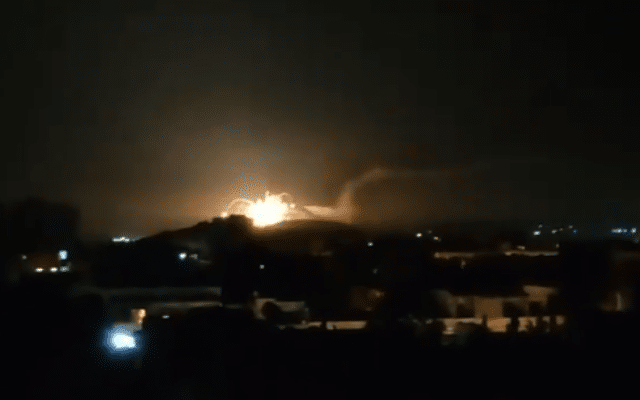
Both incidents came fewer than two days after a string of explosions – and power outages – were reported west of Tehran in the early hours of Friday. Local reports indicated that multiple “mortar-like sounds similar to anti-aircraft missiles” were heard.

The blasts reportedly took place at an Iranian Islamic Revolutionary Guard Corps (IRGC) missile depot.

While some Iranian officials denied the outbursts altogether, and others quoted a former mayor – who reportedly died more than a year ago – as saying it was caused by gas tanks, experts said there is something bizarre at play across the beleaguered country.

These most recent attacks happened on the heels of multiple other mysterious explosions at sensitive sites over the course of the last three weeks – and no one is precisely sure what is going on, other than its rattling of the regime and stymying its controversial nuclear program.

“The tempo and tenor of the recent explosions in Iran have been unusual. There is evidence of a concerted campaign underway to thwart Iran’s nuclear program,” Jason Brodsky, Policy Director of United Against Nuclear Iran (UANI), told Fox News. “The more Iran advances its nuclear program in violation of the Joint Comprehensive Plan of Action (JCPOA), the greater the likelihood for additional strikes.”

He continued: “Additionally, Tehran is distracted by the coronavirus and economic problems. The public is increasingly disenchanted with the regime’s ability to govern the country. The conditions are ripe for additional kinetic activity.”

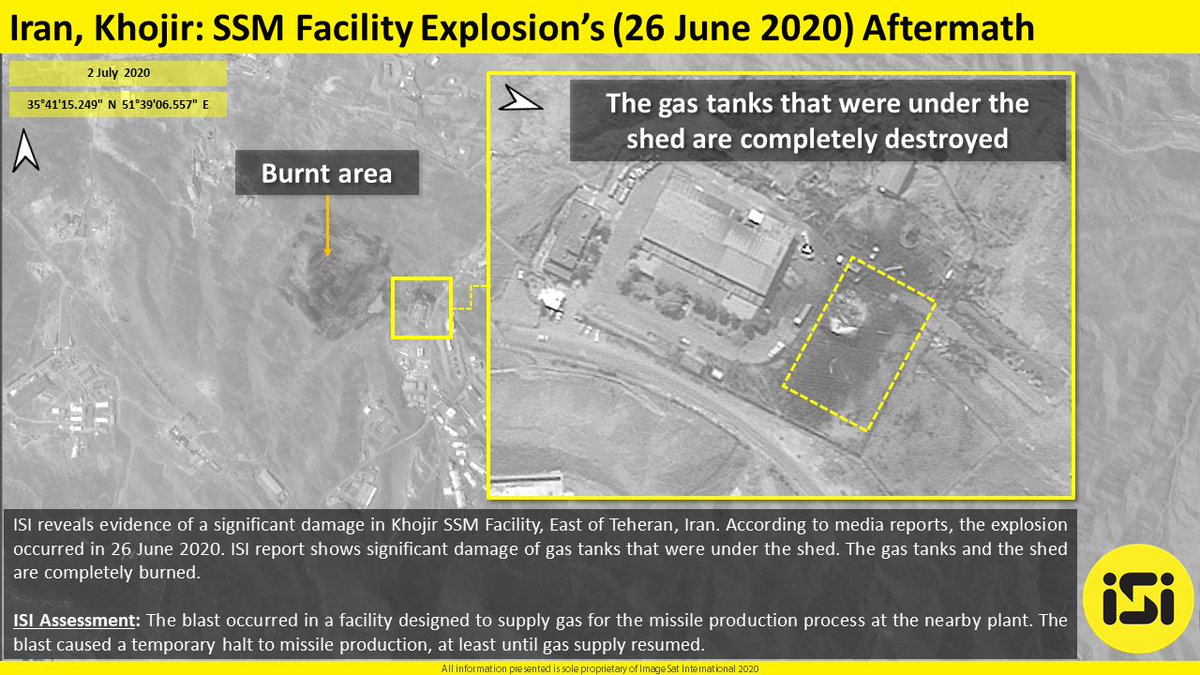
The first enigmatic hit happened on June 26 at a known liquid fuel production center that makes ballistic missiles in Khojir, near Parchin, southeast of the capital. Despite a downplaying by officials, satellite images later emerged to show extensive damage on an arsenal of gas tanks, along with an entire hillside blackened in the blast.

Then on June 30, 19 people died following an explosion at a medical center in Tehran.

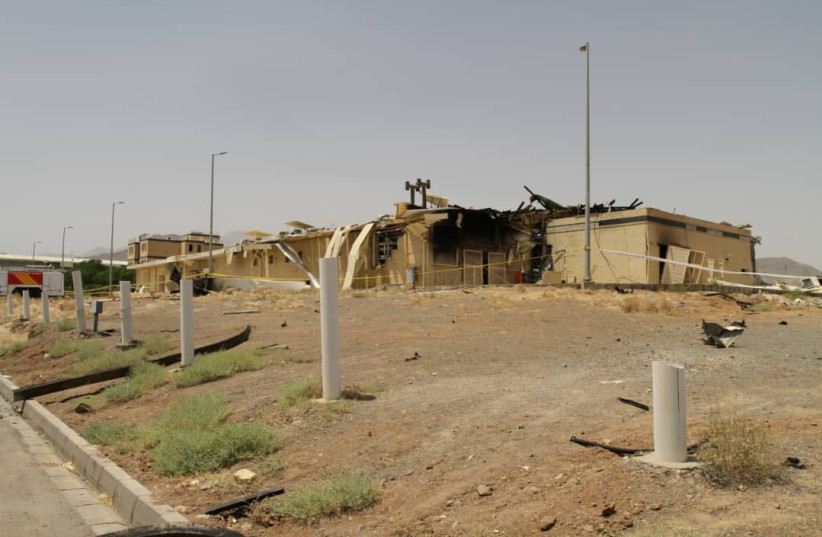
Two days later, on July 2, the notorious Natanz uranium enrichment plant – which became active in 2018 as Iran’s principal place to develop centrifuges required to produce uranium and other nuclear weapons were in-development – was struck by a mammoth blast, as confirmed by the Atomic Energy Organization of Iran (AEOI).

Tehran conceded that a severe attack had impaired an “industrial shed,” and AEOI officials acknowledged to the Iranian media that the blow had “set back Iran’s nuclear program by months.”

According to an analysis by the Kuwait-based publication Al-Jarida, the target of the assault was the UF6 gas – uranium hexafluoride – which Iran uses to infuse into its most advanced IR-6 centrifuges – of which 80 percent has been decimated as a result of the attack.

Then, on July 3, an unexplained fire erupted at a power plant in the southwest city of Shiraz, triggering a power outage in the region.

The next day, yet another explosion and inferno tore through a power plant in Ahwaz, while at the same time, a chlorine gas leak was detected at a Karoun petrochemical plant in Mahshahr, about 75 miles away.

“While one can never ignore the potential for an accident or gross incompetence, the locations of these explosions coupled with the increasing number of things exploding in the last few weeks does make a strong case for this being foreign sabotage,” underscored Behnam Ben Taleblu, a senior fellow at the Foundation for the Defense of Democracies (FDD). “Let’s not forget, they are all occurring on or near, nuclear, missile, or military installations.”

Nonetheless, a swirl of suspicion continues to linger around the series of seemingly harmonized attacks, with many suspecting Israel – and the United States – as pulling strings.

But adding to the peculiarity, BBC Persian reported that just after midnight on June 30, some of its journalists received an email from a group purporting to be the “Homeland Cheetahs” – comprised of anti-government, underground dissidents – claiming credit for earlier attacks. The outlet also said they were informed of the Natanz attack hours before it was documented by officials.

Several intelligence sources told Fox News that they had never heard of the outfit prior to the BBC’s report, and suspected it to be a ruse or a front for a much more sophisticated operation.

While almost all experts conclude that the attacks that have occurred are physical, some say cyber warfare may additionally play a part – especially given that Natanz was targeted by the infamous Stuxnet malware kindled by Israel and the U.S. in 2010. That attack successfully crippled controls at the site by altering the spin cycles of the centrifuges and left scientists scratching their heads.

“Although many are asking the question, was this a cyber-attack or physical sabotage, the answer could be ‘both.’ The most likely suspects are the U.S. and Israel working in tandem. Both countries have very sophisticated cyber warfare units and significant capabilities when it comes to cyber-kinetic attacks,” explained David Kennedy, CEO of TrustedSec and a former NSA and Marine Corps cyber-intelligence expert. “An attack of this magnitude would require a great deal of planning and preparation, and is very complex because you are exploiting industrial control systems and air-gapped devices.”

Jeff Bardin, CIO of security firm Treadstone 71, concurred that their assessment “indicates this was a physical attack likely with cyber used for reconnaissance and support.”

“The explosion was far beyond what is believed cyber sabotage could have created,” he said. “If Iran complains too loudly that adversaries destroyed their nuclear weapons development, the IAEA and the world will want a local inspection – Iran has claimed they are not creating nuclear weapons. If they complain too loudly, we can confirm those locations for nuclear weapons development. If Iranian authorities claim adversary actions occurred, internally, they look weak, where they already suffer a lack of confidence. If they openly respond, they risk more attacks.”

Experts have also pointed to the glaring holes in Tehran’s intelligence apparatus – essentially allowing its country’s most guarded sites to be slaughtered with convention weapons, with little means of foiling it or fighting back.

“Tehran has not yet retaliated for the Natanz explosion. (But) I would expect to see an uptick in Iranian cyber operations against the U.S., Israel, and our Mideast allies like Saudi Arabia, but I don’t expect a serious conflagration,” Kennedy surmised. “The Iranians have suffered a major setback to their nuclear program and their domestic security. They’ve been badly embarrassed. And the truth is, they may not know the full extent of what happened in that attack. They also don’t know what else is coming.”
China ‘strategic accord’ could give Iran a $400 billion boost, up military ties

Posted July 13, 2020 by Joseph Wouk
Categories: Uncategorized

Source: China ‘strategic accord’ could give Iran a $400 billion boost, up military ties | The Times of Israel

Under 25 year agreement reportedly finalized, Beijing and Tehran to increase military cooperation, including weapons development and intel sharing; China getting discount oil

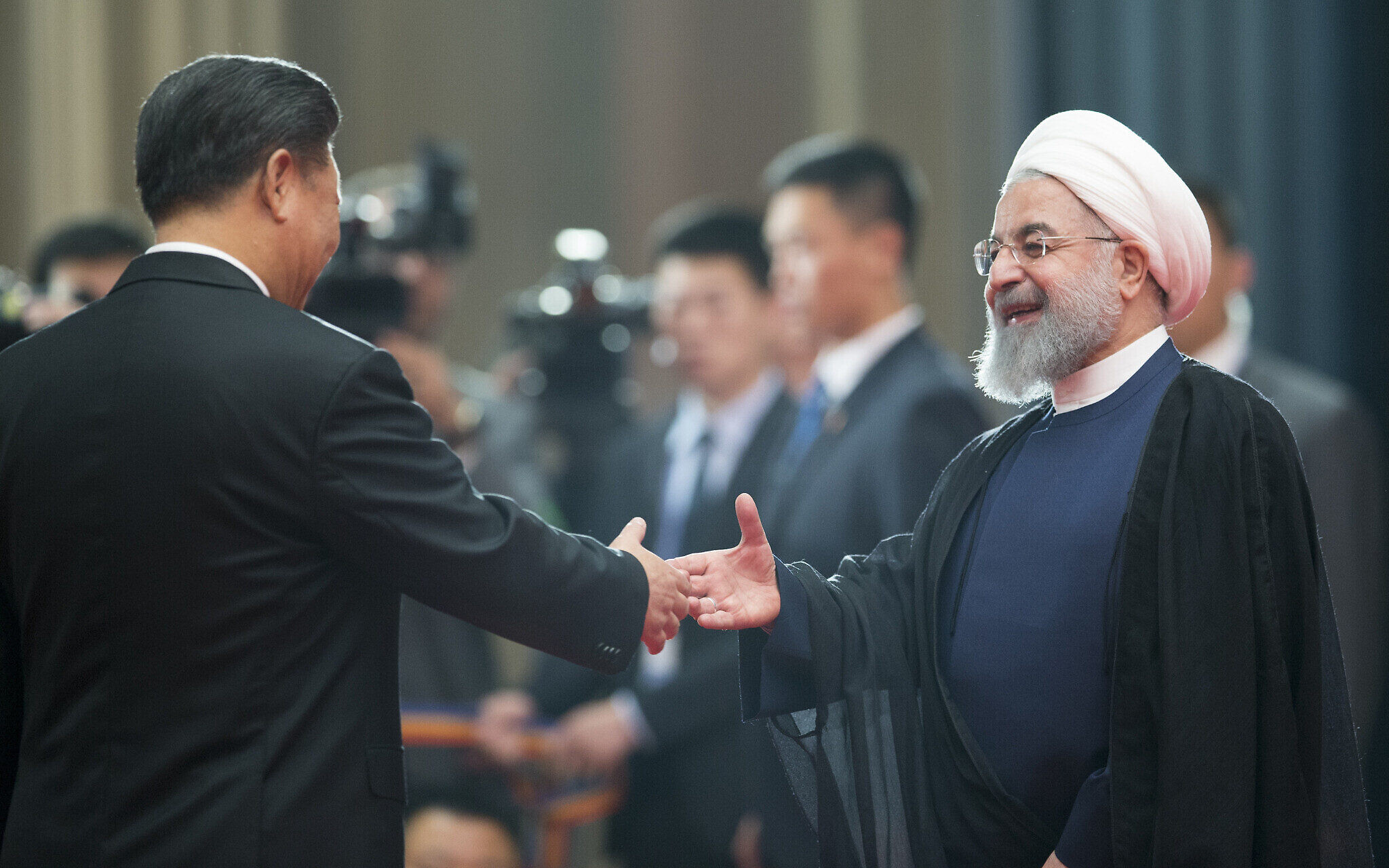
Chinese President Xi Jinping, left, greets Iranian President Hassan Rouhani at the Shanghai Cooperation Organization (SCO) Summit in Qingdao in eastern China's Shandong Province on June 10, 2018. (AP Photo/Alexander Zemlianichenko)

Chinese President Xi Jinping, left, greets Iranian President Hassan Rouhani at the Shanghai Cooperation Organization (SCO) Summit in Qingdao in eastern China’s Shandong Province on June 10, 2018. (AP Photo/Alexander Zemlianichenko)

Negotiations between Iran and China over the creation of a 25-year strategic accord appear to have concluded, with The New York Times on Sunday publishing excerpts from an 18-page agreement labeled “final version” that could see Beijing invest $400 billion over the next 25 years in exchange for discount oil.

The document — which The Times said was dated June 2020 and has yet to be approved by the Majles, Iran’s parliament — detailed how Beijing would receive Iranian oil at a sharply reduced price for the next quarter century in exchange expanding its economic involvement in a variety of fields, including banking and infrastructure, such as telecommunications and transport.

This would potentially include giving the Iranians access to China’s global positioning system and helping roll out an Iranian 5G network.

China is Iran’s top trading partner.

In this photo from January 23, 2016, released by an official website of the office of the Iranian supreme leader, Supreme Leader Ayatollah Ali Khamenei, right, meets with Chinese President Xi Jinping in Tehran, Iran. (Office of the Iranian Supreme Leader via AP)

Tehran has been hit hard by American sanctions reimposed following Washington’s withdrawal from the 2015 nuclear deal in May 2018. Iranian crude exports have been severely curtailed by the US sanctions, as has much of the country’s foreign trade.

The deal could bring Iran as much as $400 billion in Chinese investment over the next quarter century, according to sources with knowledge of the deal who spoke with The Times.

The deal would also encompass military cooperation, including weapons development, combined training and intelligence sharing in order to combat ““the lopsided battle with terrorism, drug and human trafficking and cross-border crimes,” The Times reported.

Both Tehran and Beijing are currently at loggerheads with Washington, Iran over its nuclear program and China over ongoing trade disputes with the Trump administration.

The US has accused China of stealing its intellectual property and engaging in forced technology transfers from US firms doing business there.

The accord said that Iran and China as “two ancient Asian cultures, two partners in the sectors of trade, economy, politics, culture and security with a similar outlook and many mutual bilateral and multilateral interests will consider one another strategic partners,” the paper reported.

Chinese People’s Liberation Army (PLA) soldiers wearing face masks to protect against the spread of the new coronavirus march near the Forbidden City during a plenary session of China’s National People’s Congress (NPC) at the Great Hall of the People in Beijing, May 25, 2020. (AP Photo/Andy Wong)

On Sunday, a senior aide to Iranian President Hassan Rouhani said that the accord could be signed as early as next March, Radio Farda reported.

There has been some pushback in Iran regarding the deal.

Last Monday, Iranian Foreign Minister Mohammad Javad Zarif told lawmakers that their country had been negotiating with the Chinese and that the terms would be announced once a deal is struck.

During the session, Zarif was heckled by lawmakers, largely over his key role in negotiating a 2015 nuclear deal with world powers, which the US unilaterally abandoned in 2018 as a prelude to reimposing biting sanctions.

It was his first address to parliament since a new house started work in late May in the wake of elections that were dominated by conservatives and ultra-conservatives.

Zarif insisted there was “nothing secret” about the prospective China deal.

The nation would be informed “when an accord has been concluded,” he said, adding that the intention had already been made public in January 2016 when Chinese President Xi Jinping visited Tehran.

Iran’s Supreme Leader Ayatollah Ali Khamenei has come out publicly in support of a strategic bilateral partnership with China.

The planned China deal has been a hot topic on Iranian social media since populist ex-president Mahmud Ahmadinejad last month condemned negotiations underway with a foreign country.


Israel’s alleged Natanz strike ‘as complex as Stuxnet,’ a major blow to Iran 

Posted July 11, 2020 by Joseph Wouk
Categories: Uncategorized

Source: Israel’s alleged Natanz strike ‘as complex as Stuxnet,’ a major blow to Iran | The Times of Israel

Blast at centrifuge assembly facility may have set back development by 2 years, experts tell the NY Times, with series of strikes causing ‘extreme internal and external pressure’

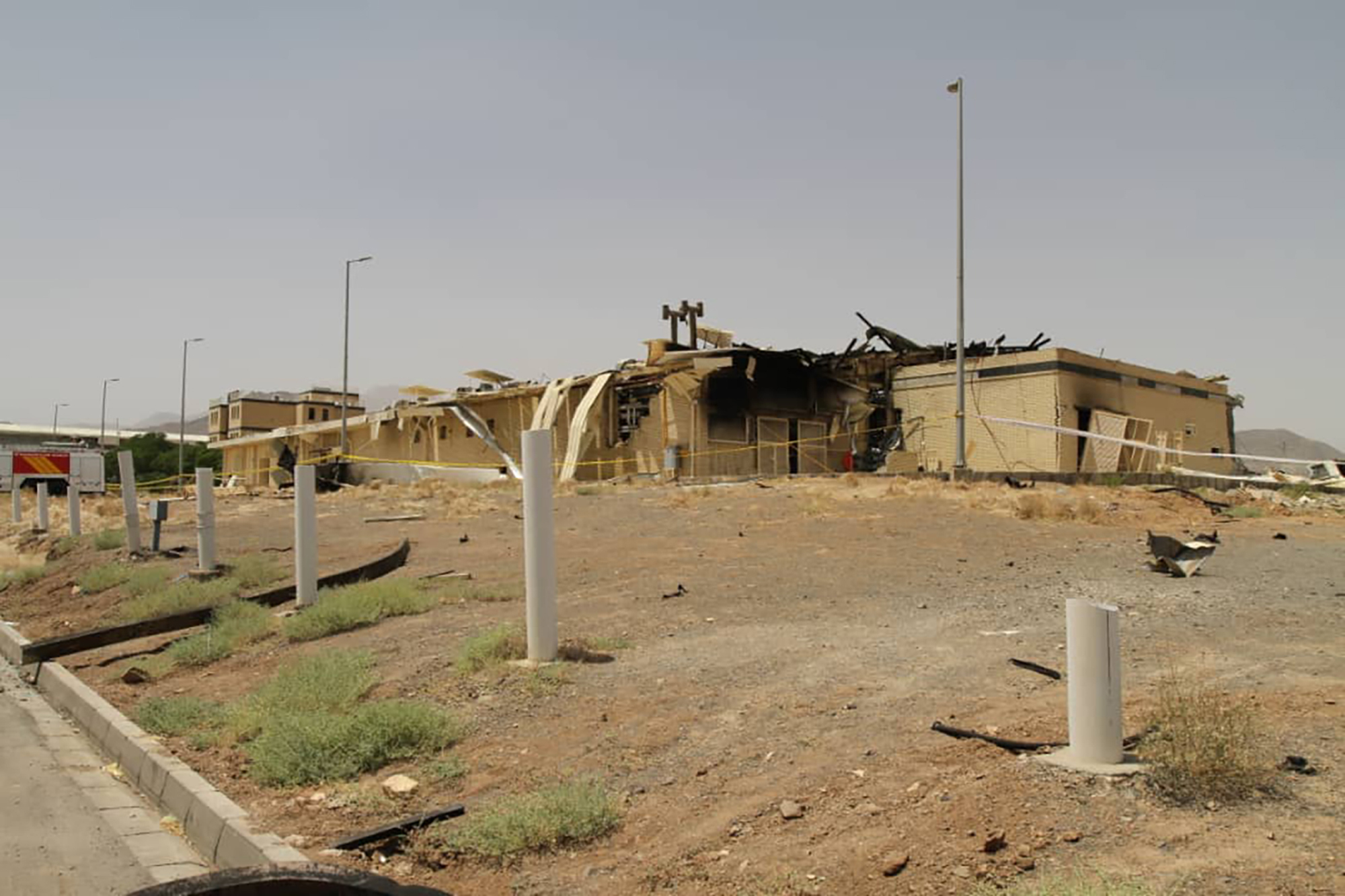
This photo released Thursday, July 2, 2020, by the Atomic Energy Organization of Iran, shows a building after it was damaged by a fire, at the Natanz uranium enrichment facility some 200 miles (322 kilometers) south of the capital Tehran, Iran. (Atomic Energy Organization of Iran via AP)

This photo released Thursday, July 2, 2020, by the Atomic Energy Organization of Iran, shows a building after it was damaged by a fire, at the Natanz uranium enrichment facility some 200 miles (322 kilometers) south of the capital Tehran, Iran. (Atomic Energy Organization of Iran via AP)

An alleged Israeli attack on an advanced centrifuge development and assembly plant at Iran’s Natanz uranium enrichment facility exhibited the complexity of the Stuxnet virus that sabotaged Iranian enrichment centrifuges a decade ago, experts and analysts said in a new report Friday.

Officials with knowledge of the blast at Natanz last week told The New York Times that it was most likely the result of a bomb planted at the facility, potentially at a strategic gas line, but that it was not out of the question that a cyberattack was used to cause a malfunction that led to the explosion.

The Stuxnet virus was uncovered in 2010 and was widely reported to have been developed together by US and Israeli intelligence agencies. It penetrated Iran’s rogue nuclear program, taking control and sabotaging parts of its enrichment processes by speeding up its centrifuges. Up to 1,000 centrifuges out of 5,000 were eventually damaged by the virus, according to reports, setting back the nuclear program.

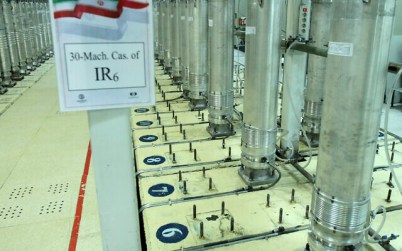
Centrifuge machines in the Natanz uranium enrichment facility in central Iran, November 5, 2019. (Atomic Energy Organization of Iran via AP, File)

The July 2 Natanz explosion was one of a series of mysterious blasts at Iranian strategic sites in recent weeks — the latest of which occurred Friday morning — which have once again been largely attributed to either Washington, Jerusalem, or both.

Friday’s blast “appeared to come from the direction of a missile base,” The Times noted. “If it proves to have been another attack, it will further shake the Iranians by demonstrating, yet again, that even their best-guarded nuclear and missile facilities have been infiltrated.”

Intelligence officials who assessed the damage to the Netanz centrifuge facility told The Times they believed it may have set the Iranians back by as much as two years.

And others asserted that the latest alleged attacks indicated an emergent strategy by Israel and the US — also including Washington’s assassination of top general Qassem Soleimani earlier this year — to carry out covert strikes that will hamper Iran’s regional and nuclear objectives while stopping short of leading to all-out conflict.

Karim Sadjadpour, a senior fellow at Washington-based think tank the Carnegie Endowment for International Peace, told the newspaper that the latest attacks had led to “extreme internal and external pressure” on Iran as it grapples with an economic crisis and punishing US sanctions.

A spokesman for Iran’s foreign ministry said Friday that the cause of the Natanz explosion was not yet known, but warned that the country would retaliate severely if it emerges that a foreign entity was involved, according to the semi-official Fars news agency.

However, he also sought to downplay Israeli involvement, claiming that such reports were only intended to aggrandize Israel and asserting that Jerusalem claims responsibility for incidents “in every corner of the world.”

Iran on Tuesday had called for action against Israel following the damage to the Natanz facility. “This method Israel is using is dangerous, and it could spread to anywhere in the world,” government spokesman Ali Rabiei said during a press conference.

A satellite image from Planet Labs Inc. that has been annotated by experts at the James Martin Center for Nonproliferation Studies at Middlebury Institute of International Studies shows a damaged building after a fire and explosion at Iran’s Natanz nuclear site, on July 3, 2020. (Planet Labs Inc., James Martin Center for Nonproliferation Studies at Middlebury Institute of International Studies via AP)

He added: “The international community must respond and set limits to these dangerous actions by the Zionist regime.”

His comments came as Iran appeared to publicly acknowledge on Tuesday that last week’s fire at Natanz was not an accident.

The latest mysterious blast in Iran came early Friday, as Iranian media reported an explosion in western Tehran, prompting electricity to be cut in surrounding suburbs.

Iran’s official IRIB news agency reported the blast, citing online reports by residents. A member of the Iranian parliament, Hossein Haghverdi, denied that any explosion occurred, saying the power outage was due to a problem at a nearby power station, according to The New York Times.

The mayor of a nearby town, however, confirmed that there was an explosion, but said it came from a factory that filled gas cylinders.

An analyst told The New York Times there were underground military installations in the area.

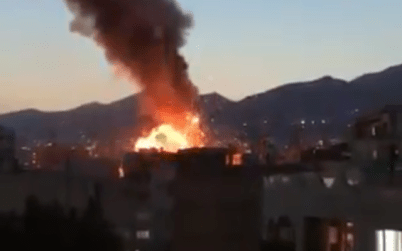
The explosion at a health clinic in Tehran, Iran, on June 30, 2020. (Screen capture: Twitter)

On Tuesday, an explosion reportedly damaged a factory south of Tehran. According to Iranian media reports, two people were killed and three were injured in the blast at the Sepahan Bresh factory in the Kahrizak district.

The area’s governor said human error was to blame for the incident.

An explosion also reportedly damaged a power plant in the Iranian city of Ahvaz last Saturday. A few hours later, the Islamic Republic News Agency said a chlorine gas leak at a petrochemical center in southeast Iran sickened 70 workers.

A week before the Natanz blast, an explosion was felt in Tehran, apparently caused by an explosion at the Parchin military complex, which defense analysts believe holds an underground tunnel system and missile production facilities.

Israel has also been reported to have been behind a cyberattack in May on an Iranian port facility, causing widespread chaos, apparently in retaliation for an attempt by Tehran to target Israel’s water infrastructure.

Channel 13 news reported that the April assault on Israeli water command and control systems had greatly angered Israeli leaders, who saw it as a significant escalation by Iran and a crossing of a red line because it targeted civil infrastructure.


Explosions, power outages reported near Tehran 

Posted July 10, 2020 by Joseph Wouk
Categories: Uncategorized

Source: Explosions, power outages reported near Tehran – The Jerusalem Post

Al-Arabiya reported that the explosions occurred in missile depots belonging to the IRGC southwest of Tehran.

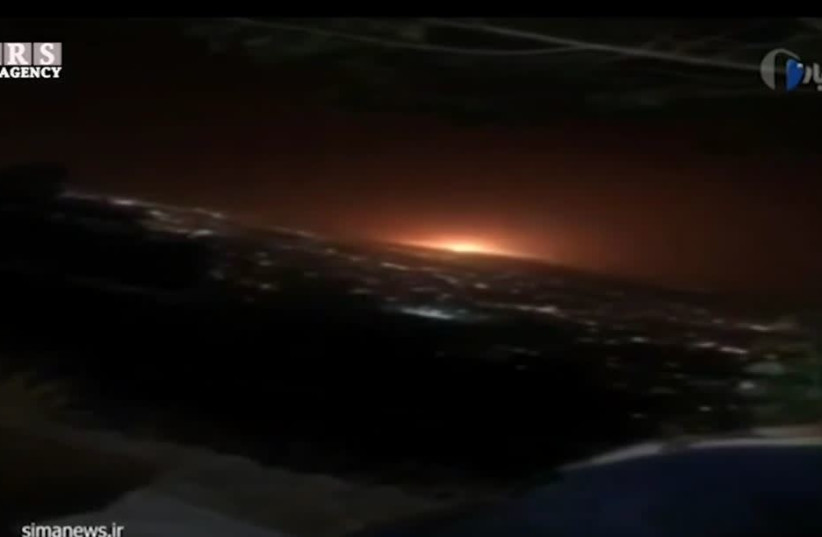
Explosion near Tehran, June 26, 2020 (photo credit: SCREENSHOT FARS NEWS AGENCY)
Explosion near Tehran, June 26, 2020
(photo credit: SCREENSHOT FARS NEWS AGENCY)
Explosions were reported west of Tehran on Thursday night, with some initial reports claiming that the explosions occurred at a missile depot belonging to the Iranian Revolutionary Guards Corps (IRGC).

According to the Iranian Mehr News Agency, the explosions were reported by social media users west of Tehran and in the cities of Garmdareh and Quds.

Power outages were reported in the area after the explosions were heard, according to initial reports.

Al-Arabiya reported that the explosions occurred in missile depots belonging to the IRGC southwest of Tehran.

Thursday’s explosion is the most recent in a series of explosions and fires reported in industrial areas and infrastructure throughout Iran.

On Monday, at least two people were killed and three others injured in a large explosion at the Sepahan Boresh factory in the city of Baqershahr near Tehran, according to Iranian and foreign reports.

The explosion was caused by “negligence in filling oxygen tanks,” the Kahrizak district governor told Radio Free Europe/Radio Liberty on Tuesday. The walls of the Saipa Press Company, located next to the factory, were damaged by the explosion as well.

The location of the explosion is not far from the warehouse where Iran’s nuclear archive was found by Israel in 2018, reported the IntelliTimes intelligence blog. The Saipa Press Company is located about 11 km. northeast from the area where the nuclear archive was found in the Shurabad commercial area. A warehouse where Prime Minister Benjamin Netanyahu claimed that nuclear equipment and material was stored is also located nearby in the Turouzabad area. The International Atomic Energy Agency found traces of uranium at the warehouse in 2019 and began investigating its origin, according to Reuters.

IntelliTimes reported that the Sepahan Boresh factory belongs to the Iranian automotive manufacturer SAIPA. It cooperates with the Iranian Ministry of Defense; the Iranian Revolutionary Guards Corps is involved in the company as well.

On June 26, an explosion was reported at a gas storage facility near Tehran. Iranian media reported that the incident happened in a “public area” in Parchin and not at a military site located nearby. Western security services believe Tehran carried out tests relevant to nuclear bomb detonations in Parchin more than a decade ago; Iran denies this.

Days later, on June 30, another explosion happened at a medical facility in Tehran, killing 19 people. Some initial reports attributed the explosion to oxygen tanks as well.

Later that week, an explosion was reported at a building at the Natanz nuclear facility where centrifuges were reportedly housed.
The Noor News website, close with Iran’s Supreme National Security Council and the Hamshahri newspaper described the Natanz explosion as an “attack” on Tuesday, writing that “there is evidence that it was intentional,” according to Radio Farda.

The report published by Noor stated that the Natanz site is difficult to defend. The extent of the damage and intelligence have strengthened the probability that the Natanz explosion was intentional, according to the report.

On Saturday, a fire broke out at the Shahid Medhaj Zargan power plant in the city of Ahvaz in southwestern Iran, and a chlorine leak sent dozens of employees to the emergency room at a petrochemical plant in the same region on Saturday, according to Iranian media.

The fire at the power plant broke out after a transformer exploded, according to the semi-official Fars News Agency. A spokesman for the Iranian electricity industry later told Iranian media that the “connection” of one of the transformers caused the fire, not an explosion.

About an hour after the fire at the power plant, 70 people were injured from a chlorine gas leak at the Karun Petrochemical Company, located south of Ahvaz, according to the Iranian IRNA news agency. The leak occurred after a pipe from a tank ruptured. The cause of the rupture is being investigated, according to a local official.


Explosion heard in western Tehran, latest in series of blasts to shake Iran

Posted July 10, 2020 by davidking1530
Categories: Uncategorized

Yet another!

This one might be suspicious, given it is said it might have happened near military facilities.

Precise location of the explosion, the third in so many weeks, is unclear, but there are several known military and training facilities in the area.

https://www.israelhayom.com/2020/07/10/explosion-heard-in-western-tehran-latest-in-series-of-blasts-to-shake-iran/

Explosion heard in western Tehran, latest in series of blasts to shake Iran

An explosion shook western Tehran in the early hours of Friday morning, causing widespread power failures in two residential areas, the Islamic republic’s media reported.

The precise location of the explosion, the third in so many weeks, was unclear, but there are several known military and training facilities in the area, which Western analysts said could be the target of sabotage.

The explosion is another in a series of mysterious “incidents” plaguing sensitive Iranian sites in recent weeks. Foreign pundits have already hedged that the incidents could be the result of an Israeli campaign to undermine Tehran’s nuclear program.

Prime Minister Benjamin Netanyahu has not commented on the incidents in Iran, but Defense Minister Benny Gantz dismissed these speculations, saying that not everything that happens in Iran could be blamed on the Jewish state.

“Not every incident that transpires in Iran necessarily has something to do with us,” he told Army Radio on Sunday. “All those systems are complex, they have very high safety constraints and I’m not sure they always know how to maintain them.”

On Tuesday, an explosion reportedly damaged a factory south of Tehran. According to Iranian media reports, two people were killed and three were injured in the blast at the Sepahan Bresh factory in the Kahrizak district.

On Saturday, a blast reportedly damaged a power plant in the Iranian city of Ahvaz. A few hours later, Iranian media said a chlorine gas leak at a petrochemical center in southeast Iran was to blame.

On July 2, an explosion damaged Iran’s Natanz nuclear facility, and a week prior, a blast was reported at the Parchin military complex, which defense analysts believe holds an underground tunnel system and missile production facilities.

On Tuesday, Iran accused Israel of these incidents and called for action against it following the damage to the Natanz facility.

“This method Israel is using is dangerous, and it could spread to anywhere in the world,” government spokesman Ali Rabiei said during a press conference. “The international community must respond and set limits to these dangerous actions by the Zionist regime.”

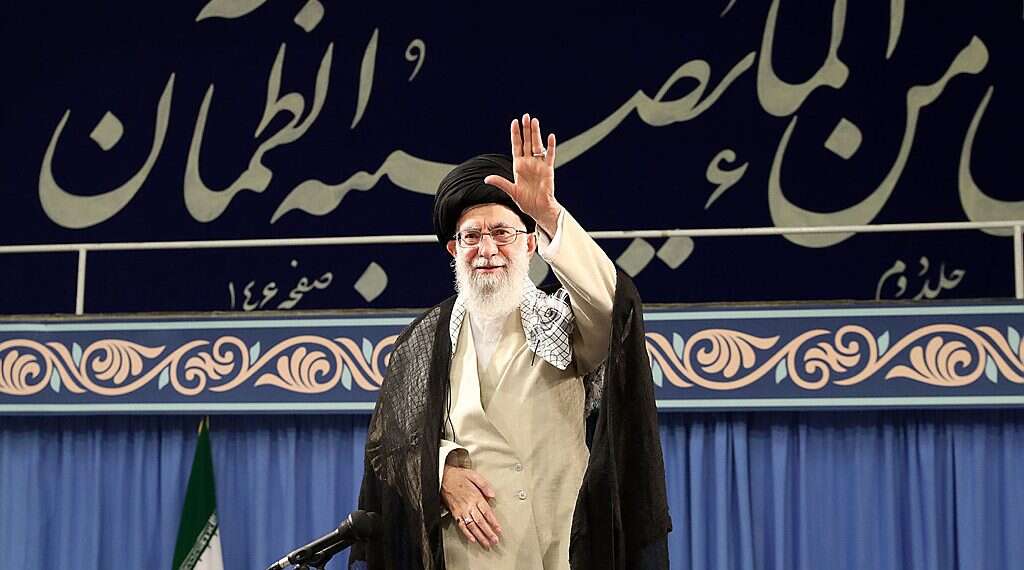
Iranian Supreme Leader Ayatollah Ali Khamenei threatened retaliation against anyone who attacked his country in any way, stating that Iran’s nuclear program was “unstoppable.”

Israeli media reported last week that the country was bracing for possible retaliation by Tehran if it determines that Jerusalem was behind the explosions.

Iran says nuclear program ‘unstoppable,’ warns Israel not to strike

Posted July 10, 2020 by davidking1530
Categories: Uncategorized

There is a special place in hell just reserved for you, Iranian leaders…

Days after explosion causes major damage to key uranium enrichment center, ayatollah’s regime heats up rhetoric against the Jewish state.

https://www.israelhayom.com/2020/07/07/iran-says-nuclear-program-unstoppable-warns-israel-not-to-strike/

Report: Iranian, American officials secretly met in Iraq to defuse tension

Iran vowed on Tuesday to maintain its nuclear program despite Israel’s alleged efforts to sabotage it, stressing that the recent explosion at the Natanz nuclear enrichment center was not going disrupt its pace.

Iran has recently reactivated key parts of its nuclear program in response to US President Donald Trump’s withdrawal from the 2015 nuclear deal. As a result, its uranium enrichment levels have increased in both volume and quality, stoking fears that this might shorten its path to a bomb.

“The Israeli regime should be aware that creation of norm-breaking narrative on any attack against our nuclear facilities, even if it’s only propaganda, is considered as stepping in the path of violating red lines of global peace and security,” government spokesman Ali Rabiei said on Tuesday according to the Tehran Times. He was referring to the incident in the Natanz nuclear site last week, which Iran has publicly suggested could be attributed to the US or Israel.

Israel has not commented on last week’s attack on Natanz, but The New York Times has quoted a Middle Eastern intelligence official who confirmed that Israel planted a device and that the incident led to major damage to the advanced centrifuges.

Rabiei vowed that nothing would stop Iran’s nuclear program.

“This incident has not had any effect on the process of uranium enrichment, and the Natanz facilities are active as before; Iran’s nuclear activities are peaceful and despite hostilities of enemies, it is unstoppable,” he said. “After the incident, some media outlets tried to create a powerful image for the Israeli regime and attributed the incident to it while officials of the usurper regime have refused to accept responsibility,” the government spokesman added.

Explosion near Iran’s capital kills two, damages factory

Posted July 10, 2020 by davidking1530
Categories: Uncategorized

Another one!

Although this one seems to not be suspicious.

https://www.jpost.com/middle-east/2-killed-in-explosion-at-factory-south-of-tehran-report-634114

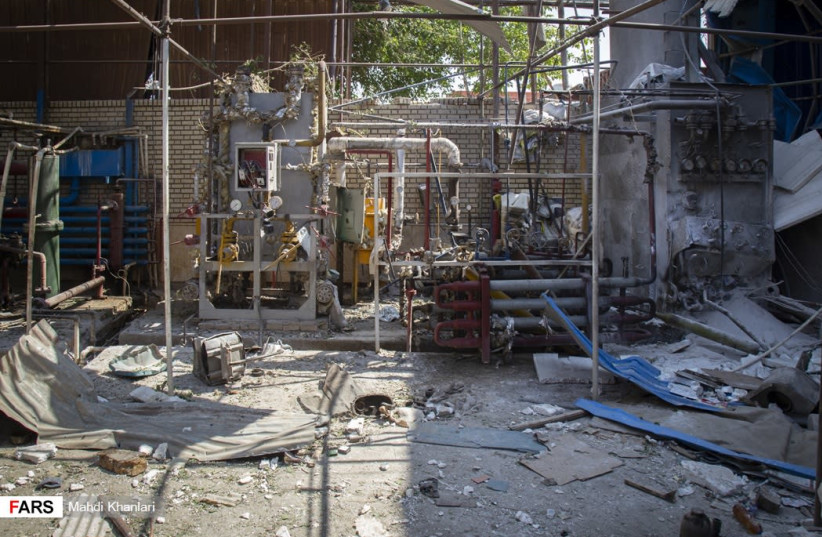
Aftermath of explosion at Sepahan Boresh factory near Tehran, July 7, 2020 (photo credit: FARS NEWS AGENCY/MAHDI KHANLARI)

At least two people were killed and three others injured in a large explosion at the Sepahan Boresh factory in the city of Baqershahr near Tehran on Monday night, according to Iranian and foreign reports.

The explosion was caused by “negligence in filling oxygen tanks,” the Kahrizak district governor told Radio Free Europe/Radio Liberty on Tuesday. The walls of the Saipa Press Company, located next to the factory, were damaged by the explosion as well.
“Human error was the cause of the blast in a factory … Two people were killed and three others were injured,” said local official Amin Babai, adding that the explosion happened in “an industrial zone” at Baqershahr near Tehran.

“The explosion that was caused by some workers’ negligent handling of oxygen tanks…. was so powerful that the walls of a factory nearby were also totally destroyed.”

A large explosion was reportedly heard by residents of areas south of Tehran and in the Kahrizak area.

The location of the explosion is not far from the warehouse where Iran’s nuclear archive was found by Israel in 2018, reported the IntelliTimes intelligence blog. The Saipa Press Company is located about 11 km. northeast from the area where the nuclear archive was found in the Shurabad commercial area. A warehouse where Prime Minister Benjamin Netanyahu claimed that nuclear equipment and material was stored is also located nearby in the Turouzabad area. The International Atomic Energy Agency found traces of uranium at the warehouse in 2019 and began investigating its origin, according to Reuters.

IntelliTimes reported that the Sepahan Boresh factory belongs to the Iranian automotive manufacturer SAIPA. It cooperates with the Iranian Ministry of Defense; the Iranian Revolutionary Guards Corps is involved in the company as well.

This is the third explosion reported in the Tehran region in the past two weeks and the most recent in a series of explosions and fires reported in industrial areas and infrastructure throughout Iran.
On June 26, an explosion was reported at a gas storage facility near Tehran. Iranian media reported that the incident happened in a “public area” in Parchin and not at a military site located nearby. Western security services believe Tehran carried out tests relevant to nuclear bomb detonations in Parchin more than a decade ago; Iran denies this.
Days later, on June 30, another explosion happened at a medical facility in Tehran, killing 19 people. Some initial reports attributed the explosion to oxygen tanks as well.

Later that week, an explosion was reported at a building at the Natanz nuclear facility where centrifuges were reportedly housed.

The Noor News website, close with Iran’s Supreme National Security Council and the Hamshahri newspaper described the Natanz explosion as an “attack” on Tuesday, writing that “there is evidence that it was intentional,” according to Radio Farda.
The report published by Noor stated that the Natanz site is difficult to defend. The extent of the damage and intelligence have strengthened the probability that the Natanz explosion was intentional, according to the report.
On Saturday, a fire broke out at the Shahid Medhaj Zargan power plant in the city of Ahvaz in southwestern Iran, and a chlorine leak sent dozens of employees to the emergency room at a petrochemical plant in the same region on Saturday, according to Iranian media.
The fire at the power plant broke out after a transformer exploded, according to the semi-official Fars News Agency. A spokesman for the Iranian electricity industry later told Iranian media that the “connection” of one of the transformers caused the fire, not an explosion.

About an hour after the fire at the power plant, 70 people were injured from a chlorine gas leak at the Karun Petrochemical Company, located south of Ahvaz, according to the Iranian IRNA news agency. The leak occurred after a pipe from a tank ruptured. The cause of the rupture is being investigated, according to a local official.

Iran’s Atomic Energy Organization denied earlier reports by Iranian opposition media of an explosion at the Shahid Rezaei Nejad Nuclear Facility in Ardakan in the Yazd province in central Iran, saying no incident happened at the site.
The Atomic Energy Organization stated that “counter-revolutionary elements abroad” published the reports in order to “cooperate with the Zionist terrorist and war-mongering regime.”
The reports of an explosion at the nuclear site in Yazd were mostly spread on social media. The reports were accompanied with a satellite image claiming to show damage in the area.

Is the Israel-Iran Shadow War Entering a New Phase? 

Posted July 9, 2020 by Joseph Wouk
Categories: Uncategorized


Iran’s ideological aspirations and hurdles – Jerusalem Studio 484 – YouTube

Posted July 8, 2020 by Joseph Wouk
Categories: Uncategorized


How could Iran retaliate for Natanz explosion – analysis

Posted July 7, 2020 by Joseph Wouk
Categories: Uncategorized

Source: How could Iran retaliate for Natanz explosion – analysis – The Jerusalem Post

Iran’s regime, led by the Islamic Revolutionary Guard Corps, believes in two types of actions. It believes first in perceived tit-for-tat responses and asymmetric attacks.

View of a damage building after a fire broke out at Iran's Natanz Nuclear Facility, in Isfahan, Iran, July 2, 2020. (photo credit: REUTERS)
View of a damage building after a fire broke out at Iran’s Natanz Nuclear Facility, in Isfahan, Iran, July 2, 2020.
(photo credit: REUTERS)
As evidence mounts and pressure builds on Tehran’s regime in the wake of the explosions that badly damaged a facility at Natanz, questions surround how might Iran respond.

The government is in a difficult position because it labelled the explosion an accident, but it is now facing a deluge of foreign media reports that seek to conclude the explosion was perpetrated by a state or group.

This is what Iran’s regime is reading: Major media from The New York Times to The Washington Post and local media such as Kuwait’s Al-Jarida have all sought to assert that Israel was involved in the mysterious July 2 explosion at a warehouse at the Natanz nuclear enrichment facility.

The Post and Times quoted a Middle East security official as saying the damage was done to “send a signal” to Tehran. Reports also claim damage was done to key centrifuges or possibly to advanced gas inputs to the IR-6 centrifuges. That could set back the program for months or a year.

Iran, however, is at a crossroads in other ways. It has sent tankers to Venezuela to boost gas trade. It’s supporters in Iraq may have gunned down a well-known local commentator named Husham al-Hashimi. Iran is also benefiting from a UN expert opinion that deemed the US killing of IRGC Quds Force head Qasem Soleimani an ‘unlawful’ killing. Iran has also triggered a dispute mechanism regarding the 2015 Iran deal.

How might Iran respond to what it perceives as an attack, if the regime does draw that conclusion from Natanz?

Iran’s regime, led by the Islamic Revolutionary Guard Corps, believes in two types of actions. It believes first in perceived tit-for-tat responses, such as the ballistic missile strike carried out in January after Soleimani was killed by the US.

It also believes in asymmetric attacks, such as targeting mining ships in the Gulf of Oman to stir up a crisis in May and June 2019, or the September 2019 attack on the Saudi oil facilities at Abqaiq.

Iran has also carried out attacks on Israel from Syria.

In May 2018, amid tensions over the US withdrawing from the Iran deal and the Syrian regime’s offensive in southern Syria, a salvo of rockets was fired toward the Golan.

In February 2018, a drone was also launched from T-4 and flew into Israeli airspace before being shot down.

Iran has retaliated in other ways and times. When ISIS was accused of targeting a parade in Ahvaz in September 2018, Iran retaliated with a ballistic missile fired at ISIS in Syria on October 1, 2018.

On September 8, 2018, Iran also fired ballistic missiles at Kurdish dissidents near Koya in retaliation for increased Kurdish militant activity in Iran.

Iran’s more usual method of responding is to vow to respond and then do nothing. Iran vowed a “hard revenge” response for the killing of Soleimani in January. But Iran’s IRGC planned a ballistic missile strike that it likely knew would not kill people.

US forces in Iraq had warning of the incoming missiles and soldiers were able to take shelter. It was a gamble for Iran. If Iran killed any Americans the US would retaliate. Instead, Iran shot down a civilian Ukrainian airliner in Tehran during the missile strike on the US forces in Iraq.

Iran thus “responded” by killing innocent people because its air defense is incompetent. It’s not the first time that this air defense incompetence had bad results. Similar incompetence by Syrian air defenders shot down a Russian airplane in the fall of 2018 during Israeli airstrikes in northern Syria.

Iran has often vowed or hinted at retaliation against Israel for more than 1,000 airstrikes on Iranian targets in Syria. Yet the evidence points to just a few rockets fired toward Israel from Syria. Rockets were fired on January 20, 2019, June 2, 2019, November 19, 2019 and also the February 2018 drone attack and the May 2018 salvo. There was also the Iranian-backed Hezbollah “killer drone” incident in August 2019.

Adding it all up shows that Iran talks a lot about revenge and warnings of destruction but rarely does what it says it will do. This isn’t for lack of trying. Iran has sent precision guidance for Hezbollah munitions via Syria. It has helped Hezbollah stockpile an arsenal of 150,000 rockets. It helped Hezbollah with its drone program. Iran has sent ballistic missiles to Syria in the fall of 2018 and 2019.

It has also funneled technology, know-how, experts, advice and weapons to the Houthis in Yemen. This resulted in long range ballistic missile attacks by Houthi rebels on Saudi Arabia. In December 2017, the Houthis even managed to reach almost all the way to Riyadh before their missiles were shot down. Iranian drones, the Qasef and Sammad models the Houthis adapted from Iranian models, have wreaked havoc on Saudi Arabia. Even in the last month there have been explosive-laden drone attacks on Saudi.

In addition, we know that Iran shot down a $200 million US surveillance Global Hawk drone in June 2019. Iran claimed it could have shot down a manned US P-8 plane at the same time. But Iran correctly judged that if they killed Americans then US President Donald Trump would retaliate.

Instead, Trump choose not to kill Iranians in response to an expansive piece of machinery being lost. Similarly, Trump warned Iran about harassing US ships in the Persian Gulf. Iranians had driven fast boats around US ships in April 2020, even showing off a heavy machine gun cocked and ready at the bow of one boat. But Iran likes this kind of showing off. Actually shooting at US ships is another matter. Iran knows its navy would be sunk within an afternoon should it actually attack US ships.

The regime in Iran calculates carefully. It calculates retaliation carefully and it knows that it has suffered many setbacks. Iran’s real retaliation and response is not tit-for-tat against enemies that are more powerful, but rather using its system of militias to burrow into countries and take them over from the bottom up. Its real retaliation is having more Hezbollah power in Lebanon’s parliament.

Iran only has up to 800 IRGC personnel in Syria. But real retaliation is setting down roots near the Golan and recruiting locals. This is a multi-decade project. Iran chooses its actual attacks with caution and also daring, such as the attack on Saudi Arabia’s Abqaiq in September.

It calculated correctly that Riyadh won’t bomb Iran in response. Iran’s drones and cruise missiles harmed Abqaiq’s facility but caused no casualties. That is the way Iran weighs its attacks today. When Iran decides that it must retaliate, either for perceived sabotage inside Iran, or after it collects evidence and present its, then the system of the IRGC will choose carefully its methods, from mines to missiles and drones, to strike at Iran’s enemies across the region.