A rare close up look at the Israeli Navy

Posted August 2, 2020 by Joseph Wouk
Categories: Uncategorized

i24News was brought aboard the Israeli missile boat, the INS Hetz, and given a rare glimpse at the workings and firepower of one of the vessels that make up the core of the Israeli Navy.

A report by Shai Ben-ari. Israel is using one of its three Sa’ar-5 Corvette-class ships as a test bed for future capabilities (including sea-based Iron Dome) that it wants for the four new Sa’ar-6 ships on order with TKMS shipyard in Germany

Iran launches first underground ballistic missiles in a drill – DEBKAfile

Posted August 2, 2020 by Joseph Wouk
Categories: Uncategorized


Iranian underground missile launch.US Gulf forces on alerthttps://www.debka.com/iran-launches-first-underground-ballistic-missiles-in-a-drill/

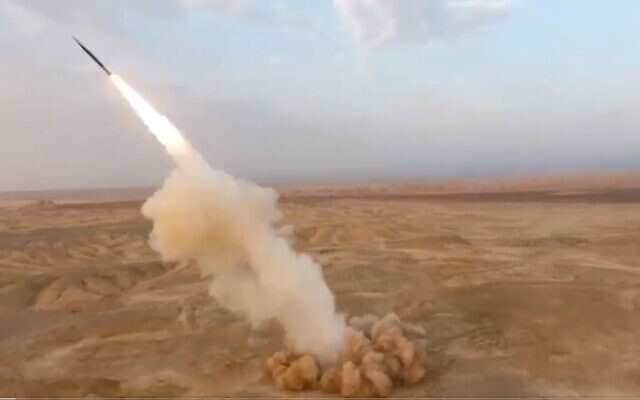
Iran’s Revolutionary Guards Wednesday, July 29, launched underground ballistic missiles in a military drill in which a mock US aircraft carrier was attacked in the Strait of Hormuz. Drone footage showed two missiles blasting out from covered positions in what appeared to be a desert plateau in central Iran. Gen. Amir Ali Hajizadeh, the head of the IRGC’s aerospace division said this was the first underground launch of a ballistic missile. Most of this arsenal is believed to be hidden in underground silos.
A day earlier, footage of the first day of exercise, dubbed Payambar-e Azam 14 (The Great Prophet), broadcast on state television showed a missile fired from a helicopter leaving a trail of smoke before appearing to smash into the side of the fake warship, a rough replica of the USS Nimitz. Other footage from the exercise showed speedboats encircling the replica, commandos rappelling onto the deck of the vessel, and scuba forces underwater. Antiaircraft batteries were seen firing from a location that the report described as being near the port city of Bandar Abbas.

The missiles used in Iran’s military exercise were not identified.

The US Navy condemned the “irresponsible and reckless behavior by Iran,” calling it an attempt “to intimidate and coerce.”

The firings prompted a military alert at two US CENTCOM Gulf headquarters – the Al-Dhafra Air Base at Abu Dhabi in the UAE and the Al-Udeid Air Base in Qatar. Troops were told to seek cover. “The incident lasted for a matter of minutes and an all clear was declared after the threat … had passed,” said Central Command spokeswoman Beth Riordan.

A semiofficial Iranian news agency published a graphic showing an American carrier into the shape of a casket with a set of crosshairs painted on it and a caption quoting Supreme Leader Ayatollah Ali Khamenei as pledging to avenge the US drone strike that killed top Iranian general Qassem Soleimani in January.

White House blasts ‘appalling’ Twitter policy on Khamenei’s anti-Israel posts | The Times of Israel

Posted August 2, 2020 by Joseph Wouk
Categories: Uncategorized

https://www.timesofisrael.com/white-house-blasts-appalling-twitter-policy-on-khameneis-anti-israel-post

Press secretary pans social media company’s reluctance to label Iranian leader’s calls for Jewish state’s destruction, while it repeatedly applies warnings to Trump tweets

By TOI STAFF1 August 2020, 2:32 am  1White House Press Secretary Kayleigh McEnany speaks to the press on June 10, 2020, in the Brady Briefing Room of the White House in Washington. (Saul Loeb/AFP)

The White House on Friday blasted Twitter for allowing tweets by Iran’s supreme leader calling for Israel’s destruction to be posted without censorship, with Press Secretary Kayleigh McEnany saying the social media company’s police was “appalling.”

A Twitter official on Wednesday told the Israeli Knesset that such tweets by Ayatollah Ali Khamenei do not violate the company’s rules against hate speech, and indicated that they are considered mere “foreign policy saber-rattling.”

Asked about Twitter’s statement on the matter, McEnany drew a comparison between the company’s stance toward Iran and the position it has taken toward controversial tweets by US President Donald Trump, some of which which have recently received warning labels and other restrictions from the company for violating its rules.

“I thought it was very eye opening and it tells you where these social media companies stand, where they’re not willing to assess the Ayatollah Khomeini’s tweets but they are willing to assess President Trump’s tweets,” McEnany said.Iran’s Supreme Leader Ayatollah Ali Khamenei addresses the nation in a televised speech, April 9, 2020. (Office of the Iranian Supreme Leader via AP)

“It’s really appalling and it just speaks to their overwhelming, blinding bias against conservatives and against this president,” she added.

McEnany noted that the administration was seeking to take action, submitting a petition to the Federal Communications Commission “to hold social media companies accountable for their censorship” by making them liable to “civil lawsuits for their own speech, fact checks and de-platforming.”

Ylwa Pettersson, Twitter’s head policy for the Nordic countries and Israel, told the Knesset’s Committee for Immigration, Absorption and Diaspora Affairs, via video-conference Wednesday: “We have an approach toward leaders that says that direct interactions with fellow public figures, comments on political issues of the day, or foreign policy saber-rattling on military-economic issues are generally not in violation of our rules.”

She was responding to a question by pro-Israel activist Arsen Ostrovsky, who had asked why Twitter attached a special label to a recent tweet by  Trump noting that it violated the company’s rules, while the Iranian leaders’ many tweets about his wish for Israel to be destroyed are left untouched.

On May 29, Twitter for the first time attached a warning label to Trump’s tweet about the riots that broke out in the US following the killing of George Floyd.

“I just want to fine-tune [Ostrovsky’s] question: Calling for genocide on Twitter is okay, but commenting on the political situation in certain countries is not okay?” asked MK Michal Cotler-Wunsh, who was leading the discussion.https://platform.twitter.com/embed/index.html?dnt=true&embedId=twitter-widget-0&frame=false&hideCard=false&hideThread=false&id=1288453247775256576&lang=en&origin=https%3A%2F%2Fwww.timesofisrael.com%2Fwhite-house-blasts-appalling-twitter-policy-on-khameneis-anti-israel-posts%2F&siteScreenName=timesofisrael&theme=light&widgetsVersion=223fc1c4%3A1596143124634&width=550px

“If a world leader violates our rules but there is a clear interest in keeping that up on the service we may place it behind a notice that provides some more context about the violation and allows people to click through if they wish to see that type of content,” Pettersson replied.Twitter’s Ylwa Pettersson addressing a Knesset committee, July 29, 2020 (screenshot)

“That’s what happened for the Trump tweet: that tweet was violating our policies regarding the glorification of violence based on the historical context of the last line of that tweet and the risk that it could possibly inspire harm and similar actions.”

Trump’s May 29 tweet ended with the words: “Any difficulty and we will assume control but, when the looting starts, the shooting starts. Thank you!”

In addition to the warning label, Twitter disabled the public’s ability to “like” the post, but decided not to remove it “so the citizens can see what their political figures are commenting [on] and hold them accountable for it online,” said Pettersson, who spoke to the Knesset meeting via Zoom.

Pettersson did not comment specifically about the incendiary tweets by the Iranian leader.

“Wow. Twitter just admitted that tweets calling for genocide against Jews by Iranian leaders DON’T violate its policy!” Cotler-Wunsh tweeted after the session ended. “This is a double standard. This is anti-Semitism.”

Last month, The Times of Israel provided Twitter with several examples of Khamenei urging Israel’s elimination, including an explicit call for “armed resistance” — terrorism — against Israel, asking why these tweets do not violate the company’s official guidelines on world leaders, which include a ban on the promotion of terrorism.

According to Twitter’s rules on terrorism and violent extremism, “there is no place on Twitter for… individuals who affiliate with and promote [terrorist group’s] illicit activities… Our assessments in this context are informed by national and international terrorism designations.”https://platform.twitter.com/embed/index.html?dnt=true&embedId=twitter-widget-1&frame=false&hideCard=false&hideThread=false&id=1263551872872386562&lang=en&origin=https%3A%2F%2Fwww.timesofisrael.com%2Fwhite-house-blasts-appalling-twitter-policy-on-khameneis-anti-israel-posts%2F&siteScreenName=timesofisrael&theme=light&widgetsVersion=223fc1c4%3A1596143124634&width=550pxhttps://platform.twitter.com/embed/index.html?dnt=true&embedId=twitter-widget-2&frame=false&hideCard=false&hideThread=false&id=1263181288338587649&lang=en&origin=https%3A%2F%2Fwww.timesofisrael.com%2Fwhite-house-blasts-appalling-twitter-policy-on-khameneis-anti-israel-posts%2F&siteScreenName=timesofisrael&theme=light&widgetsVersion=223fc1c4%3A1596143124634&width=550pxhttps://platform.twitter.com/embed/index.html?dnt=true&embedId=twitter-widget-3&frame=false&hideCard=false&hideThread=false&id=1262513122532896771&lang=en&origin=https%3A%2F%2Fwww.timesofisrael.com%2Fwhite-house-blasts-appalling-twitter-policy-on-khameneis-anti-israel-posts%2F&siteScreenName=timesofisrael&theme=light&widgetsVersion=223fc1c4%3A1596143124634&width=550px

A spokesperson for Twitter replied to The Times of Israel by saying these tweets “are not in violation of our policies at this time,” pointing to the company’s policy according to which “foreign policy saber-rattling on economic or military issues are generally not in violation of the Twitter Rules.”

The Islamic Republic of Iran, whose leadership routinely advocates the elimination of Israel, is considered a leading state sponsor of terror, which openly and proudly supports groups such as Hamas, Palestinian Islamic Jihad and Hezbollah, all of which seek to eradicate Israel via terrorist means. In April 2019, the US designated Iran’s own Islamic Revolutionary Guards Corps as a foreign terrorist organization.https://platform.twitter.com/embed/index.html?dnt=true&embedId=twitter-widget-4&frame=false&hideCard=false&hideThread=false&id=531366667377717248&lang=en&origin=https%3A%2F%2Fwww.timesofisrael.com%2Fwhite-house-blasts-appalling-twitter-policy-on-khameneis-anti-israel-posts%2F&siteScreenName=timesofisrael&theme=light&widgetsVersion=223fc1c4%3A1596143124634&width=550px

In 2014, Khamenei posted on his twitter account a nine-point plan explicitly proposing the elimination of Israel.

At Wednesday’s Knesset debate, Cotler-Wunsh, MKs and pro-Israel advocates urged Twitter to do more to protect Israelis and Jews worldwide from anti-Semitic hate speech.

Yogev Karasenty, who is responsible for the fight against anti-Semitism at the Diaspora Affairs Ministry, said some 200,000 anti-Semitic tweets were found on Twitter in the past two months.

There has recently been significant improvement in how social networks deal with the anti-Jewish material, “but it’s not enough,” lamented Yaakov Hagoel, the vice chair of the World Zionist Organization. Posts that target Muslims or the LGBT community are removed promptly, but when it comes to anti-Semitic posts, “they dodge, ignore and drag their feet,” he said.

Cotler-Wunsh, a freshman lawmaker from the Blue and White party, said that Israel does not necessarily expect Twitter to delete anti-Semitic posts but rather to attach labels to them explaining to users why they are problematic.Blue and White MK Michal Cotler-Wunsh (Avishai Finkelstein)

“I’m not making the case for removing all content. I would suggest flagging the context as anti-Semitic. I believe there is a lot more learning that can be done this way,” she said.

She also called on Twitter to implement the working definition of anti-Semitism formulated by the International Holocaust Remembrance Alliance (IHRA), which has recently been adapted by many countries, and which considers certain forms of anti-Israel agitation to be anti-Semitic.

“We are already using the IHRA working definition when we do develop our policies and internal documents we train our content operators with. So we’re aware of it and are using it,” Twitter’s Pettersson replied.

Raphael Ahren contributed to this report.

In 1st missile battle at sea in 1973, Israeli craft evaded Soviet-made missiles

Posted July 31, 2020 by Joseph Wouk
Categories: Uncategorized


https://www.timesofisrael.com/how-the-cherbourg-boats-bested-a-superpowers-weapons-and-changed-naval-warfare/

How an Israeli-developed weapon system kept the sea-lanes to Haifa open in a naval confrontation to be ranked with Midway and Trafalgar

By ABRAHAM RABINOVICH16 February 2020, 6:01 am6

  • An Israeli gunboat, one of five that disappeared from the French port of Cherbourg on Christmas day, plows through choppy seas 40 miles west of Haifa, December 31, 1970. (AP/Brian Calvert)
  • An Israeli gunboat, one of five that disappeared from the French port of Cherbourg on Christmas day, plows through choppy seas 40 miles west of Haifa, December 31, 1970. (AP/Brian Calvert)
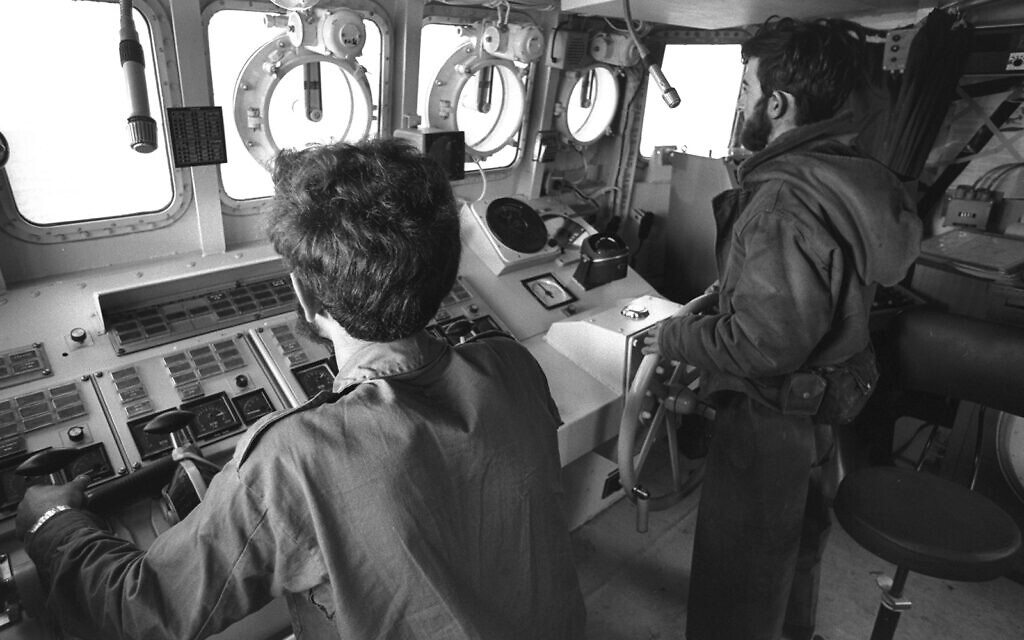
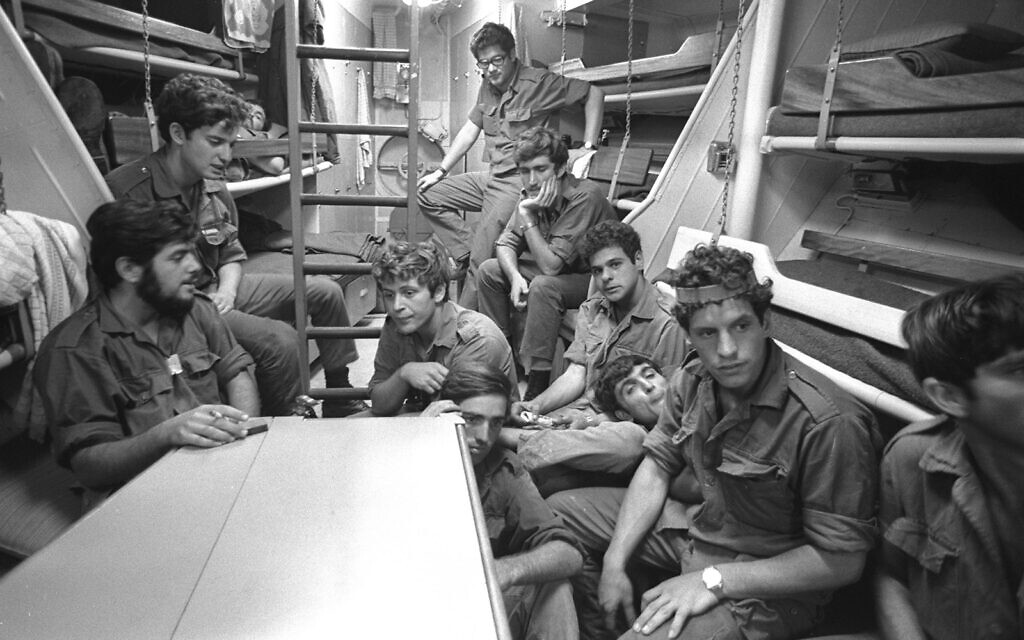
  • The crew of a missile boat at sea during the Yom Kippur War, October 11, 1973. (Alon Reininger/GPO)
  • The crew of a missile boat at sea during the Yom Kippur War, October 11, 1973. (Alon Reininger/GPO)
  • The crew of a missile boat at sea during the Yom Kippur War, October 11, 1973. (Alon Reininger/GPO)
  • The crew of a missile boat at sea during the Yom Kippur War, October 11, 1973. (Alon Reininger/GPO)
  • The crew of a missile boat at sea during the Yom Kippur War, October 11, 1973. (Alon Reininger/GPO)
  • The crew of a missile boat at sea during the Yom Kippur War, October 11, 1973. (Alon Reininger/GPO)
  • An anti-aircraft gunner onboard a missile boat during the Yom Kippur War, October 11, 1973. (Alon Reininger/GPO)
  • An anti-aircraft gunner onboard a missile boat during the Yom Kippur War, October 11, 1973. (Alon Reininger/GPO)
  • The Cherbourg boats in Haifa, January 1, 1970. (Moshe Milner/GPO)T
  • he Cherbourg boats in Haifa, January 1, 1970. (Moshe Milner/GPO)
  • The Cherbourg boats arrive in Haifa, December 31, 1969. (Moshe Milner/GPO)
  • The Cherbourg boats arrive in Haifa, December 31, 1969. (Moshe Milner/GPO)
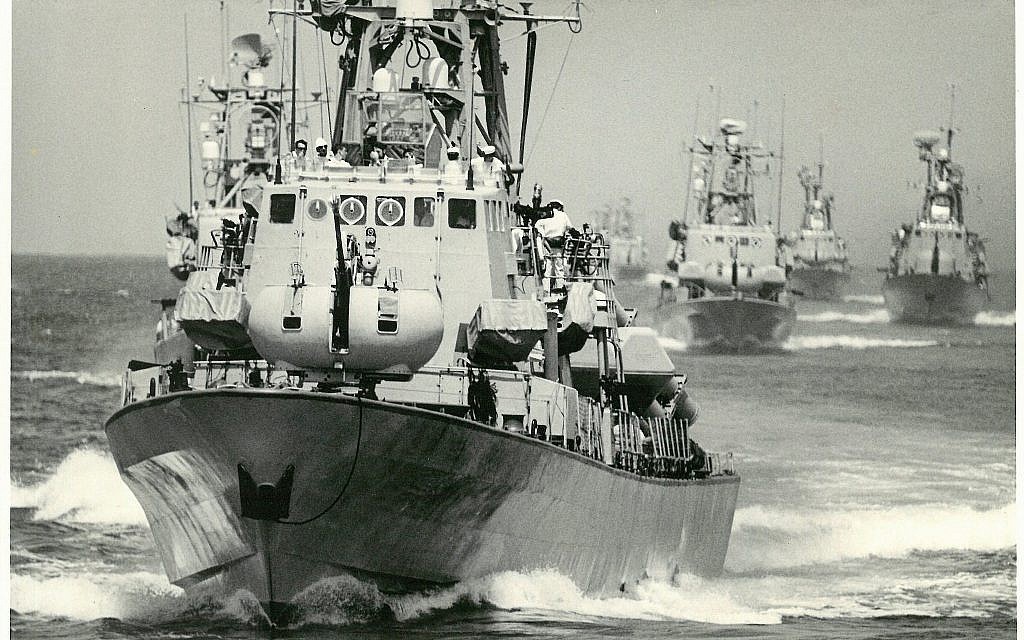
  • The Cherbourg boats in Haifa, December 31, 1969. (Moshe Milner/GPO)
  • The Cherbourg boats in Haifa, December 31, 1969. (Moshe Milner/GPO)
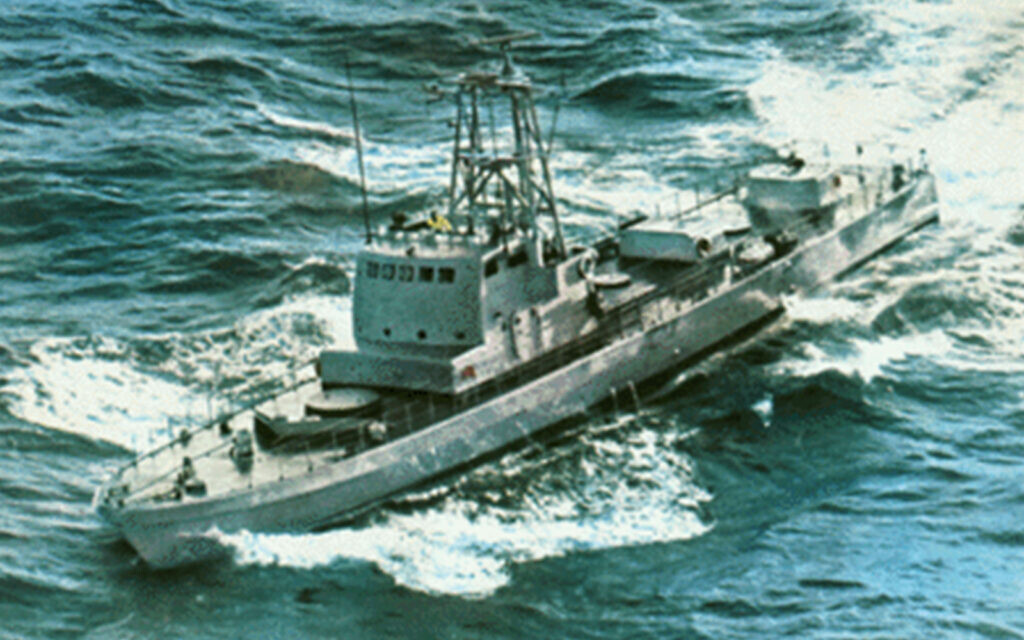
  • Israeli missile boat flotilla on maneuvers. (Israel Government Press Office)
  • Israeli missile boat flotilla on maneuvers. (Israel Government Press Office)
  • One of the Cherbourg boats makes its way to Haifa, December 1969. (Wikimeda commons/Israel Clandestine Immigration and Naval Museum)
  • One of the Cherbourg boats makes its way to Haifa, December 1969. (Wikimeda commons/Israel Clandestine Immigration and Naval Museum)
  • One of the Cherbourg boats arrives in Haifa, December 31, 1969. (Wikimeda commons/Israel Clandestine Immigration and Naval Museum)
  • One of the Cherbourg boats arrives in Haifa, December 31, 1969. (Wikimeda commons/Israel Clandestine Immigration and Naval Museum)
  • One of the 'Cherbourg boats,' the INS Mitvach, on display at Haifa's Clandestine Immigration and Navy Museum. (Amanda Borschel-Dan/Times of Israel)
  • One of the ‘Cherbourg boats,’ the INS Mitvach, on display at Haifa’s Clandestine Immigration and Navy Museum. (Amanda Borschel-Dan/Times of Israel)
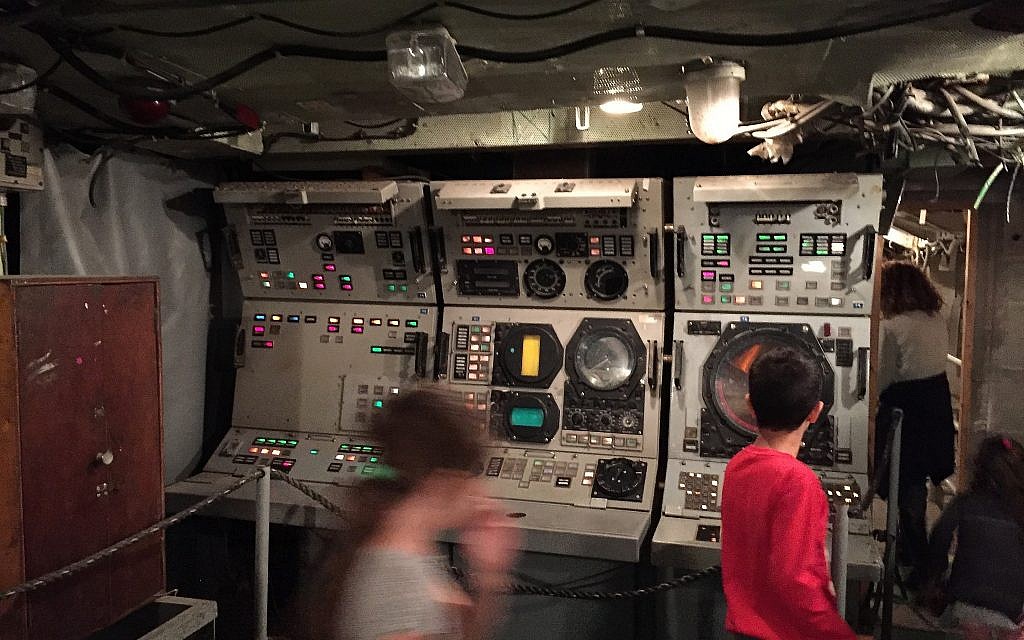
  • Inside one of the 'Cherbourg boats,' the INS Mitvach, on display at Haifa's Clandestine Immigration and Navy Museum. (Amanda Borschel-Dan/Times of Israel)
  • Inside one of the ‘Cherbourg boats,’ the INS Mitvach, on display at Haifa’s Clandestine Immigration and Navy Museum. (Amanda Borschel-Dan/Times of Israel)

The passport control officer at Orly Airport glanced at the Israeli passport handed him and then at the line of young men in blue windbreakers waiting their turn. The man opposite him was also wearing a blue windbreaker.

“What kind of group is this?” asked the officer.

“Students.”

“Come off it,” said the Frenchman, who assumed that the bronzed and purposeful faces in the line were not for cloistered studies destined. “Are you military?”

Even more startling than the question was the language in which it was asked — Hebrew.

“No, why do you ask?”The Boats of Cherbourg, by Abraham Rabinovich

“Because you’re all wearing the same windbreakers and you’ve all got fresh haircuts.” Nodding at several other Israelis who had just passed through and were waiting near the exit, he added: “And all your passports are numbered consecutively.”

The Israeli, agitated, called to the men at the exit. “Leave the airport.” There was a chance, he thought, that some might get away before the gendarmes closed in.

The passport officer calmed him with an upraised palm. “Take it easy,” he said. “You’ve done nothing illegal.” He identified himself as a Moroccan-born Jew who had lived for some years in Israel. “But you ought to tell your superiors about this.”

Had the Mossad been involved, such mistakes would doubtless have been avoided, but the navy was unschooled in semi-clandestine crossings far from the sea.

Israeli missile boat flotilla on maneuvers. (Israel Government Press Office)

The men were among 100 naval personnel — most just a couple of years out of high school — being sent to the port of Cherbourg to run off with five boats embargoed by the French. They were to be hidden below decks by maintenance crews stationed there until the boats sailed.

The vessels were the last of 12 “patrol boats” ordered by Israel from a local shipyard. Seven had already reached Israel over the previous two years but French President Charles de Gaulle, seeking closer ties with the Arab world, seized on an Israeli commando raid on Beirut Airport to embargo the last five. Prime Minister Golda Meir rejected the navy’s proposal to just run off with the boats one night. Nothing illegal must be done, she said, that might give France a reason to sever relations.

Admiral (ret.) Mordecai Limon, head of Israel’s military purchasing mission in Paris, argued that legality in this instance was an arbitrary term. Israel had purchased the boats in good faith while the French government was undoing a legal contract to promote geopolitical objectives. Limon proposed cloaking the getaway with a veneer of legality, leaving behind a fait accompli for lawyers to argue about to their hearts’ content after the boats had sailed. After being convinced that the boats were truly needed, Meir gave her consent.

Limon, a former commander of the Israeli navy, flew to meet Martin Siemm, owner of a large Norwegian shipbuilding company. An underground leader during World War II, Siemm had been recommended to Limon by a mutual friend as a friend of Israel. Meeting in an airport restaurant, Limon described Israel’s quandary regarding the boats. A possible solution, he said, would be for Israel to sell the boats to a foreign entity, or at least be seen to sell them, and then to discreetly reclaim them. Would Siemm agree to be party to such a scenario? “Give me 48 hours,” said Siemm. When he called Limon in Paris it was with a positive response.Hadar Kimche, center, and Mordecai Limon, right, pictured in Cherbourg. (Wikimeda commons/Clandestine Immigration and Naval Museum)

Limon chose Christmas eve for the breakout when alertness in the port would be minimal. Two hours after midnight mass, the Cherbourg boats, as they came to be known, slipped past the harbor’s breakwater into a Force Nine gale roiling the English Channel. Pursuit in this weather was unlikely. As the boats turned south, the land mass of England shielded them from the full force of the storm. But as they emerged into the open Bay of Biscay, mountainous waves came at them from the west where the storm had been raging for days in the Atlantic. Captain Hadar Kimche, commanding the operation, ordered that no one venture onto deck unless secured by a line. Some bridge officers lashed themselves to their seats.

The mad roller coaster continued as Christmas day dawned. As the boats rose higher towards the crest of a wave, a huge green wave would lunge from behind and crash just astern. Then the descent began, a stomach-turning downward rush in which the helmsman could feel the wheel reluctant to respond. When the boat plunged into the bottom of the trough, the surging sea brimmed the deck and seemed about to pull the boat under. Then the vessel would somehow break loose and begin the agonizing climb again. For the men on the bridge it was an extraordinary and frightening sight. Below decks the crew could feel the boat shudder and wondered whether it would rise up again. Except for an occasional terse order and the noise of the engines there was total silence.https://www.youtube.com/embed/XEHU5fJgu-E?feature=oembed&showinfo=0&rel=0&modestbranding=1

Kimche stood on the bridge of the lead vessel with a stopwatch adjusting the boat’s speed. If it descended a wave too rapidly, the prow could be thrust into the trough and control lost. If it was too slow climbing out, tons of water would crash upon its stern. Kimche had hoped to sail at 30 knots, but finally settled for an average speed of 18. Constant orders from the bridge required quick responses from the engine room. The crewmen, almost all seasick, worked steadily but kept buckets close to hand.

Anchored in a sheltered bay on Portugal’s southern coast, Capt. Amnon Tadmor, master of the freighter Lea, told his chief mate that he would not have taken his ship to sea in this weather even though it was many times the size of the Cherbourg boats; if he was already out, he said, he would have sought shelter. The Lea was the first of a string of Israeli merchantmen that the navy had deployed along the boats’ 3,500-mile escape route in order to refuel them and otherwise provide assistance. First contact from the boats came at dusk on December 26, in a message from Kimche asking Tadmor to confirm his position. Four hours later Tadmor saw them rounding the corner of the bay, five small boats showing only navigation lights and moving fast.

An Israeli gunboat, one of five that disappeared from the French port of Cherbourg on Christmas day, plows through choppy seas 40 miles west of Haifa, December 31, 1969. (AP/Brian Calvert)

In the post-Christmas torpor, France was slow to realize that the boats were no longer there. Officials were not immediately concerned because Limon had sent copies of documents to the relevant authorities showing that Israel had renounced its claims to the boats in return for the money it had paid the shipyard, effectively negating the embargo The authorities also received documents from the owner of the shipyard, who was party to Limon’s plot, and from Siemm (both letters drafted by Limon) showing that the Norwegian had purchased the boats from the shipyard to service offshore oil rigs. Two days before Christmas, the three men met in Paris to sign a new set of documents undoing all they had agreed to in the earlier documents and restoring the status quo ante. In other words, Israel still legally owned the boats. These documents were not sent to the French authorities.

Related: How Israel became a naval startup nation with the famous boats of Cherbourg

As the media got its teeth into the story of the missing Israeli patrol boats rumors began circulating; the boats were headed for Oslo, for Israel, for Alaska, even for Panama (a Panamanian law firm had drawn up documents creating a fictitious Norwegian company that was ostensibly involved in the sale).

The Norwegian government, fearful of the impact on the Arab world where Norwegian oil tankers were widely used, publicly refuted any connection to the missing boats. As the Israeli ruse became clear, the French defense minister urged that the air force “interdict” the fleeing boats but cooler heads prevailed. (Polls showed that a large majority of the French public applauded Israel for pulling it off.) “Where are they?” asked a chipper banner headline in one of Cherbourg’s dailies. As the story took on momentum, television teams flew out over the Mediterranean and the North Sea to look for the boats.

On New Year’s eve, 1970, the boats arrived in Haifa bay to the sound of celebratory sirens from vessels in the harbor and cheers from the crowds on shore

.

The Cherbourg boats arrive in Haifa, December 31, 1969. (Moshe Milner/GPO)

Most Israelis today probably remember the escape, if at all, as a “cheeky caper,” in the words of a British newspaper at the time. But the public would remain unaware of a broader context — the boats’ role in a bold project that would transform naval warfare.

It had begun a decade before when Israel’s Defense Ministry rejected the navy’s request for funds to update its aging fleet. Israel’s wars, the ministry said, would be decided by tanks and planes, not ships. In a desperate bid to remain relevant, the navy command decided to explore development of a new kind of warship — small, affordable boats armed with missiles. Heavy guns could not be placed on small boats because of their recoil, but missiles had no recoil. Their warheads, on the other hand, could pack as much punch as those of a heavy warship. Furthermore, if the missile was guided by radar it could pursue its prey and thus be more accurate than shellfire.

As persuasive as these arguments were, there was one formidable counter-argument — such boats did not exist in any Western navy; nor did sea-to-sea missiles. The navy nevertheless decided to pursue the idea despite its lack of an innovative tradition. A think tank made up of naval officers as well as experts from Israel’s fledgling military industries, particularly Israel Aircraft Industries, began to discuss the concept. Before long the concept evolved into a project involving hundreds of engineers, scientists, naval architects and others

.

The crew of a missile boat at sea during the Yom Kippur War, October 11, 1973. (Alon Reininger/GPO)

Admiral Shlomo Erell, the commander of the navy, was the driving force behind the project, a forerunner of Israel’s emergence as the “startup nation.” The intensity was unrelenting. Twelve to 14 hour working days were common and for a period, key personnel worked every day of the year except Yom Kippur. The innocuous-looking boats that had fled Cherbourg — together with the seven which had preceded them — would be converted in Haifa into the first missile boats in the west.

Midway through the project Israel learned that the Soviet Union had also developed missile boats, and had begun distributing them to Egypt and Syria. Israel had little information about them but was inclined to skepticism about the accuracy of the Soviet sea-to-sea missile, the Styx, because the Soviet Union had been laggard in the development of radar in the Second World War. Four months after the Six Day War, the Israeli flagship, the destroyer Eilat, was on routine patrol off Sinai when an Egyptian missile boat emerged from Port Said and fired four missiles from a distance of 13 kilometers. Three hit; the fourth missed only because there was nothing remaining on the surface to hit. Of the Eilat’s 200-man crew, 47 were killed and 100 wounded. The Eilat was the first vessel ever sunk by a missile.The Israeli destroyer Eilat tied up somewhere on the southern Israeli coast before its sinking, July 12, 1967. (AP/Holmberg)

Admiral Erell asked his chief electronics officer, Capt. Herut Tsemach, whether anything could be done to block the Styx. Tsemach estimated what his opposite number in the Soviet fleet headquarters in Leningrad had likely put radar into the design of the Styx. On the basis of this educated guess, he shaped electronic and other counter-measures aimed at diverting incoming missiles. His systems were installed on the Israeli boats but their efficacy could be determined only in a real-time confrontation.

This would come on the first night of the Yom Kippur War. Four Israeli missile boats were approaching the Syrian port of Latakia when three Syrian missile boats emerged. The Styx had twice the range of Israel’s Gabriel missile and the Syrians duly got in the first volleys. Israeli bridge officers could see fireballs arc into the sky and then descend directly towards them. In the final seconds, the fireballs appeared to wobble and then exploded in the sea. The Israeli boats closed to Gabriel range and sank two of the Syrian boats with missiles. The captain of the third Syrian vessel, out of missiles, beached his boat and managed to escape with his crew but the vessel was set ablaze by gunfire. Two other Syrian warships — a torpedo boat and a minelayer — were also sunk.A launch of Israel’s Gabriel Missile (Israel Aircraft Industries)

Sailing back to Haifa after the battle, the flotilla commander, Capt. Michael Barkai, decided to forego tying brooms to the mast in the traditional naval symbol of a “clean sweep.” They had left a lot of Syrian sailors at the bottom of the sea, he told his men. To flaunt victory “wouldn’t be respectful to them or to ourselves.”

Two nights later, a similar scenario was played out on the approaches to Alexandria, with three Egyptian missile boats sunk. From the next morning until the end of the war, two weeks later, the Arab fleets did not venture out of harbor, leaving the sea lanes to Haifa open to vital cargos.

The Israeli missile boats — the five Cherbourg boats and their seven sisters — came through the war intact despite the 54 Styx missiles fired at them.

Capt. Tsemach, whose electronic umbrella had proved decisive, would say that the first missile-boat battle in history, the one off Latakia, deserved ranking with the battles of Midway and Trafalgar in the annals of naval warfare, small in scale and strategically marginal as it was.

Israel, whose population at the time was three million — half that of New York City — had bested the weapon system of a superpower and fundamentally changed the way battles at sea are fought.

Last Christmas day, naval veterans who had participated in the escape from Cherbourg gathered in an auditorium near Haifa to mark the 50th anniversary of the event. Among them was their commander, Hadar Kimche, who had retired as an admiral, and the son of Admiral Limon, who died in 2009. Also present were several hundred veterans who participated in the battles at sea during the Yom Kippur War.

The writer is author of The Boats of Cherbourg. A revised edition has just been published and is available on Amazon. His other books include The Yom Kippur War and The Battle for Jerusalemabra@netvision.net.il


Iran fires ballistic missiles from underground for 1st time, during major drill

Posted July 31, 2020 by davidking1530
Categories: Uncategorized

https://www.timesofisrael.com/iran-fires-ballistic-missiles-from-underground-for-1st-time-during-major-drill/

Screenshot from footage of what Iran says was the unprecedented launch of a ballistic missile from underground, July 29, 2020 (Twitter)

TEHRAN, Iran (AP) — Iran’s paramilitary Revolutionary Guard launched underground ballistic missiles for the first time, as part of an exercise involving a mock-up aircraft carrier in the Strait of Hormuz, state television reported Wednesday.

It was the latest barrage in a drill that the previous day saw two American bases temporarily go on alert over the launches.

Drone footage captured by the Guard showed two missiles blasting out from covered positions in what appeared to be a desert plateau in central Iran, with debris flying up in the air in their wake.

The launches took place on Wednesday, said Gen. Amir Ali Hajizadeh, the head of the Guard’s aerospace division. He told state television it was first time the Guard had done this, though the paramilitary force is known to have vast underground bases hiding its ballistic missile arsenal.

Separately, drones targeted the bridge of the fake aircraft carrier, according to the state TV report. The broadcaster did not immediately air footage of the launches or the drone attack, nor did it identify the missiles used in the drill.

However, the drill clearly meant to send a message to the United States.

A semiofficial news agency close to the Guard published a graphic overnight that photoshopped the image of an American carrier into the shape of a casket with a set of crosshairs on it, with a caption quoting Supreme Leader Ayatollah Ali Khamenei pledging to seek revenge for the US drone strike that killed a top Iranian general in January.

The drill — and the American response to it — underlined the lingering threat of military conflict between Iran and the US after a series of escalating incidents last year led to the January drone strike. Tehran responded to that strike by firing ballistic missiles that wounded dozens of American forces in Iraq.

While the coronavirus pandemic has engulfed both Iran and the US for months, there has been a growing confrontation as America argues to extend a years-long UN weapons embargo on Tehran that is due to expire in October. A recent incident over Syria involving an American jet fighter approaching an Iranian passenger plane has also renewed tensions.

Iranian commandos fast-roped down from a helicopter onto the replica in the footage aired Tuesday from the exercise called “Great Prophet 14.”

Anti-aircraft guns opened fire on a target drone near the port city of Bandar Abbas.

State television footage also showed a variety of missiles being fired from fast boats, trucks, mobile launchers and a helicopter, some targeting the fake carrier. A commander said the Guard, a force answerable only to Khamenei, planned to fire “long-range ballistic missiles” as well during the drill that continued Wednesday.

Ballistic missile fire detected from the drill resulted in American troops being put on alert at Al-Dhafra Air Base in Abu Dhabi in the United Arab Emirates and Al-Udeid Air Base, the forward headquarters of the US military’s Central Command in Qatar, the military said. Troops sought cover during that time.

“The incident lasted for a matter of minutes and an all clear was declared after the threat … had passed,” said US Army Maj. Beth Riordan, a Central Command spokeswoman.

Both bases are hundreds of kilometers away from where Iran put the replica aircraft carrier.

Al-Dhafra also is temporarily home to five French-built Rafale fighter jets on their way to India for that country’s air force.

Other footage from the exercise aired by Iran’s state television showed fast boats encircling the mock-up carrier, kicking up white waves in their wake.

While Iran’s naval forces are dwarfed by the US Navy, its commanders practice so-called “swarm” tactics aimed at overwhelming the US carriers that pass through the strait on their way in and out of the Persian Gulf.

It wasn’t immediately clear if all the footage was from Tuesday, as one overhead surveillance image that appeared to be shot by a drone bore Monday’s date. The exercise had been expected as satellite photos released Monday showed the fake carrier being moved into place by a tugboat.

A black-and-white satellite photo taken Tuesday by Colorado-based firm Maxar Technologies showed damage to the replica’s bow and several of its fake jet fighters.

Explosion in Iran’s Kermanshah province, no casualties reported – Mizan

Posted July 31, 2020 by davidking1530
Categories: Uncategorized

Looks like a serious blaze

https://www.jpost.com/breaking-news/explosion-heard-in-western-iran-report-636581

An explosion has set a fuel tank on fire in Iran’s western province of Kermanshah on Tuesday, Iran’s Mizan news agency reported, in the latest in a series of fires and explosions, some of which have hit sensitive sites.

“An explosion in a fuel tank occurred in Dolat Abad industrial area parking area,” Mizan said, but there were no reports of casualties.
Iran’s Student News Agency ISNA said six fuel tanks were exploded that caused a major fire in the area. A video of the incident published by Mizan showed plumes of dense black smoke billowing into the air.
“Some 100 firefighters are trying to contain the fire in the area. There were no casualties but some people were injured,” the deputy head of Kermanshah’s fire department, Keyvan Maleki, told ISNA, adding that authorities were investigating the cause of the explosion.

There have been several explosions and fires around Iranian military, nuclear and industrial facilities since late June.

To my readers – Please join my Locals group – JW

Posted July 30, 2020 by Joseph Wouk
Categories: Uncategorized

It’s completely free and you’ll have access to films and posts that YouTube won’t allow.

Please help me by signing up even if uninterested. I need 100 followers before I can upgrade the account.

Thanks for your help, and I hope you enjoy…

https://josephwouk.locals.com/

To avoid another attack, Israel tries hard not to embarrass Hezbollah

Posted July 29, 2020 by Joseph Wouk
Categories: Uncategorized

While maintaining awareness along border, military avoided killing operatives in failed offensive by the terror group, holds off on releasing footage from it

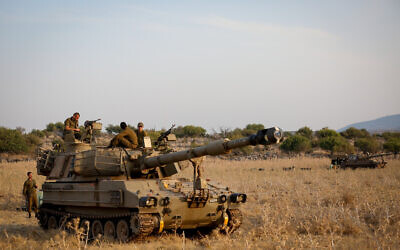
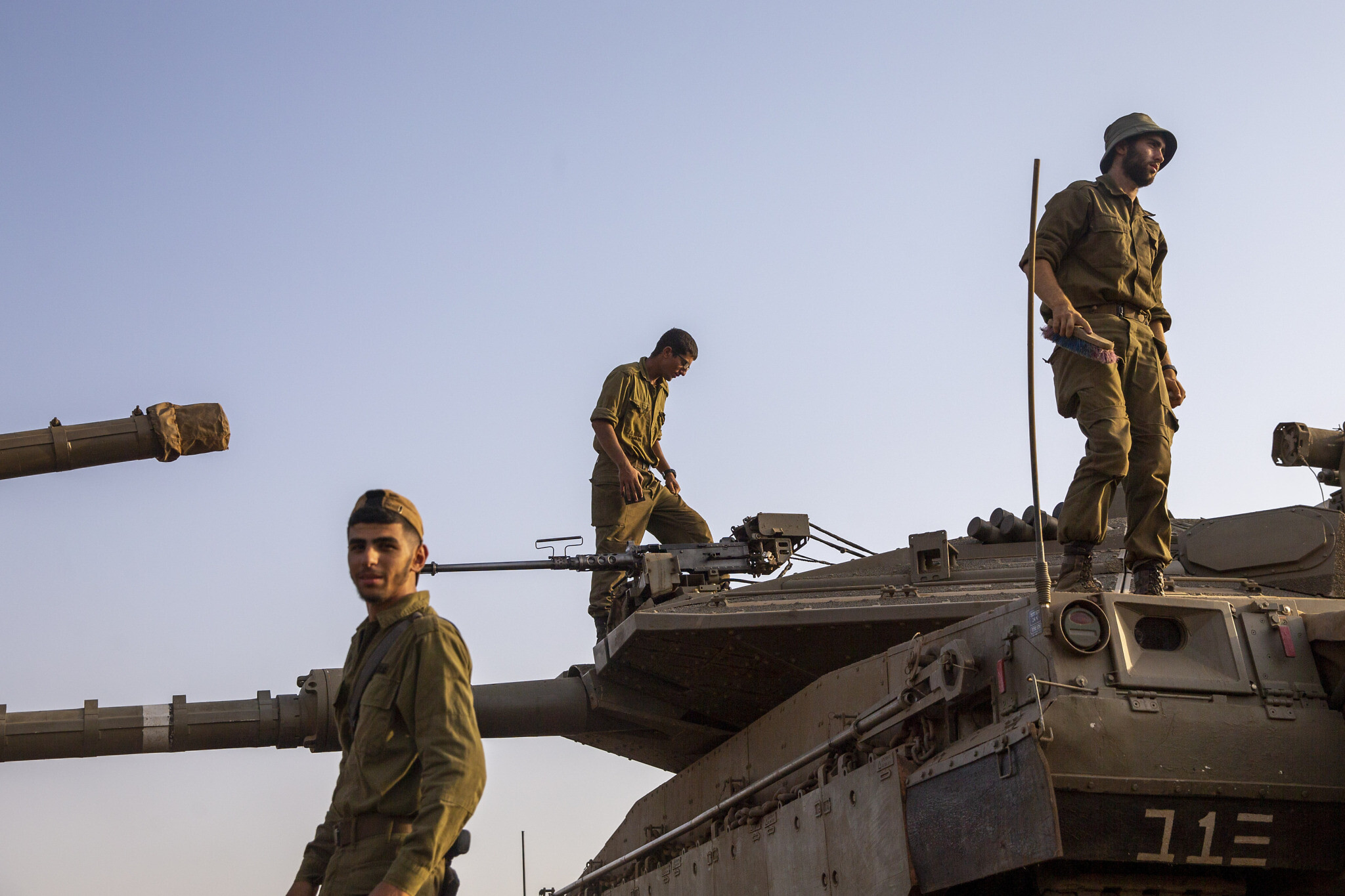
By JUDAH ARI GROSSToday, 6:48 pmUpdated at 7:21 pm  0Israeli soldiers work on tanks near the Lebanon border on July 28, 2020. (AP Photo/Ariel Schalit)

The Israel Defense Forces remained on high alert along the Lebanese border on Wednesday, believing that the Hezbollah terror group is planning to carry out an attack along the frontier in the coming days, following a tense night in which the military spotted suspects moving along the security fence separating an Israeli community from Lebanon.

Israeli aircraft filled the skies over northern Israel and southern Lebanon, according to residents on both sides of the border, apparently watching the region for signs of an imminent attack and preparing to respond to one. IDF combat intelligence units were deployed along the border, scanning the area with powerful cameras and other detection equipment.

On Tuesday, the IDF also sent advanced missile systems to the area, along with special forces units, in order to be able to respond forcefully if such an attack is carried out by the terror group. Hezbollah says it seeks revenge for one of its fighters who was killed in Syria, in an airstrike that was widely attributed to Israel.

The military anticipated Hezbollah would try to attack before or around the upcoming Muslim holiday of Eid al-Adha, which begins Thursday.

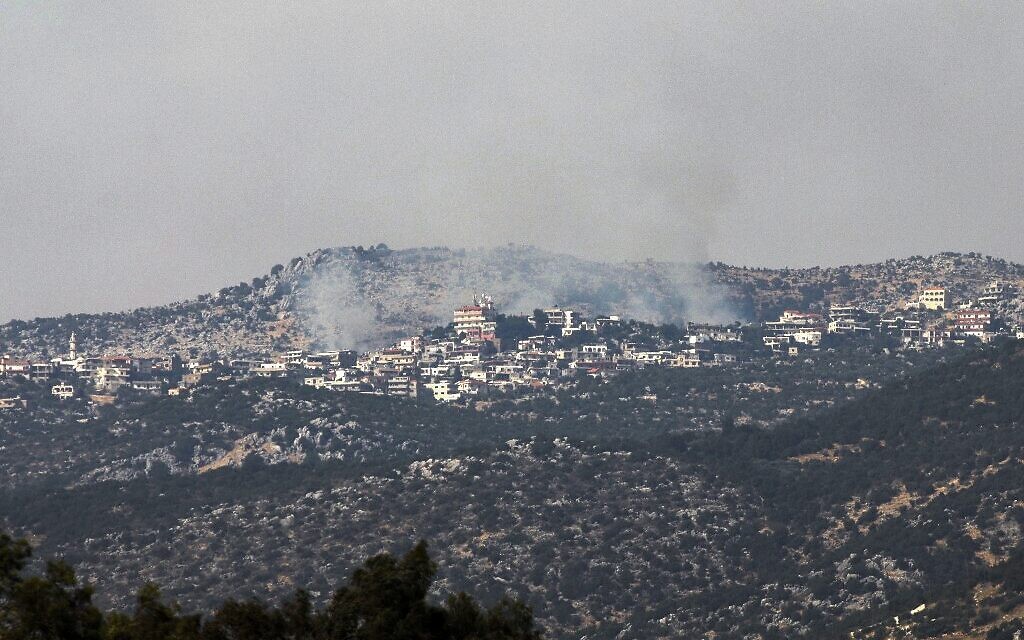
The IDF credits its heightened state of alertness with foiling an attempted attack by Hezbollah on Monday afternoon, in which a group of at least three armed terrorist operatives entered the Israeli-controlled area of Mount Dov, also known as Shebaa Farms, along the border.A picture taken from the Israeli side of the Blue Line that separates Israel and Lebanon shows smoke billowing above Mount Dov on the Israeli-Lebanese border, on July 27, 2020. (Jalaa MAREY / AFP)
According to the IDF’s initial investigation of the incident, the men were spotted by a soldier operating a security camera just before they entered the region through a stretch along the Blue Line — the unofficial but internationally recognized border between Israel and Lebanon — where there was no security fence, and walked through rocky, overgrown terrain toward the IDF’s Gladiola outpost. The men were within 200 to 300 meters of the position before Israeli troops opened fire toward them, forcing them back into Lebanon.

The military is confident that the men were planning some kind of attack, entering the area armed with at least rifles, but does not know definitively what they planned to do. The IDF dismissed the possibility that they intended to fire an anti-tank guided missile at Israeli troops or vehicles as they did not seem to have one. Instead, the military suspects the men were planning to carry out a sniper attack on Israeli troops, attempt to break into the Gladiola outpost, or to plant an improvised explosive device along the main road on Mount Dov.

Hezbollah denied carrying out an attack on Monday night, saying the IDF’s claims were “absolutely false.”

While the IDF has been preparing for the possibility of another attack, it has also been working to avoid one, or at least to not antagonize Hezbollah further.

To that end, the IDF avoided killing the Hezbollah operatives on Monday night, shooting in their direction to force them to flee rather with the goal of hitting them, as additional fallen members would have likely spurred the terror group to retaliate yet more violently.

Syrian Air defenses respond to alleged Israeli missiles targeting south of the capital Damascus, on July 20, 2020 (AFP)

Though it may seem counter-intuitive that Israeli soldiers would deliberately avoid killing Hezbollah fighters who infiltrated into Israeli territory — and indeed the decision has been hotly debated within the military — the IDF top brass generally see this current round of border fighting with Hezbollah as a distraction from its main goals: driving Iran and its proxies out of Syria and blocking the transfer of advanced weapons to Hezbollah from Tehran.

As such, the military prefers to see this bout over as quickly and quietly as possible. And if that means letting three Hezbollah members escape, so be it.

In the days since, the Israeli military has also decided not to release its footage of Monday night’s incident, believing that doing so would embarrass Hezbollah, which vehemently denied that such a clash occurred. However, the IDF was considering releasing portions of the video in the coming days if it deemed the move unlikely to add fuel to the fire.

Israel has also conveyed messages to Hezbollah and Lebanon through third parties that the death of the operative in Syria was not intentional and that it does not want an escalation in violence along the border.

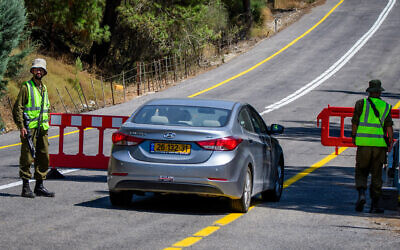
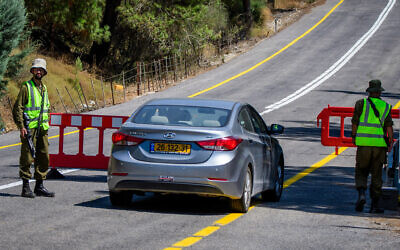
IDF soldiers set up a roadblock on a highway near the border with Lebanon on July 23, 2020. (Basel Awidat/FLASH90)

In its bid to avoid confrontation with Hezbollah, the IDF has also scaled back its presence on the border — moving troops deeper into Israeli territory and keeping them away from highways that are vulnerable to attacks.

No such restrictions have been placed on civilians, as the IDF anticipates Hezbollah will carry out an attack on military targets only.

Last September, Hezbollah took advantage of a lapse in discipline by the IDF, when an armored ambulance with five soldiers inside drove along a road near the community of Avivim, as the highway was in clear line of sight of a Lebanese hilltop. A Hezbollah cell fired two anti-tank guided missiles at the vehicle, narrowly missing it. Another missile was fired at an army post, causing limited damage and no injuries.

Israel sends reinforcements to north, bracing for imminent attack

Posted July 28, 2020 by Joseph Wouk
Categories: Uncategorized

https://www.timesofisrael.com/israel-sends-reinforcements-to-north-bracing-for-imminent-attack/

IDF deploys additional firepower, intel-gathering tools and special forces a day after alleged attempted Hezbollah assault

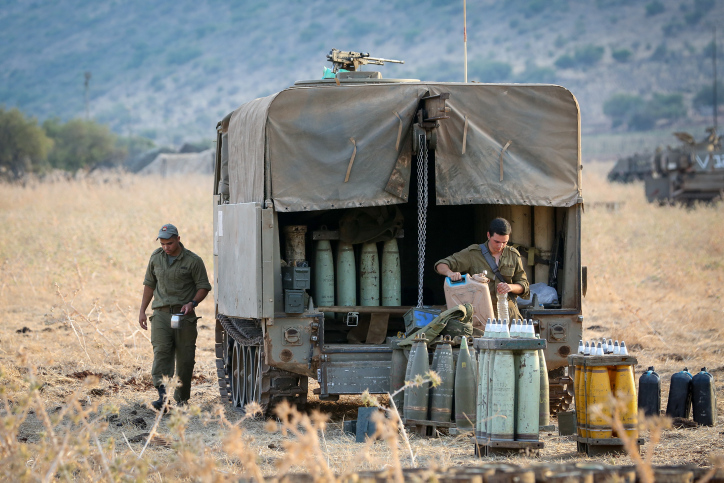
Israeli army forces seen stationed near the border between Israel and Lebanon in the Golan Heights on July 27, 2020. (David Cohen/Flash90)

Israeli army forces seen stationed near the border between Israel and Lebanon in the Golan Heights on July 27, 2020. (David Cohen/Flash90)

The Israel Defense Forces deployed additional reinforcements to the country’s Lebanese and Syrian borders on Tuesday, indicating it was bracing for more violence along the frontiers after an alleged attempted attack by the Hezbollah terror group the day before.

Israeli officials expected an attack on Israeli troops by the Lebanese terror group within the next 48 hours, before the start of the Muslim holiday of Eid al-Adha on Thursday night, according to an unattributed Channel 12 report on Tuesday.

Over the past week, Hezbollah has threatened some form of retaliation for the death of one of its fighters last week in Syria in an airstrike that it attributed to Israel, but which the Jewish state has not officially acknowledged conducting.

Though the IDF on Tuesday did not confirm that it expected an attack in the coming two days, it indicated that it was bracing for  fresh violence on the border, saying it was sending additional “advanced” firepower, powerful intelligence collection equipment and special forces to the area.

The move came a day after the IDF said it thwarted an attempt by Hezbollah to send a team of fighters into the Israeli-controlled territory of Mount Dov, also known as Shebaa Farms, to carry out an attack. According to the military, the Hezbollah cell made it a few meters across the border before IDF troops opened fire at the operatives — apparently not hitting them, but driving them back into Lebanon.

A picture taken from the Israeli side of the Blue Line that separates Israel and Lebanon shows smoke billowing above Mount Dov on the Israeli-Lebanese border, after reports of clashes between the IDF and Hezbollah in the area, on July 27, 2020. (Jalaa MAREY / AFP)
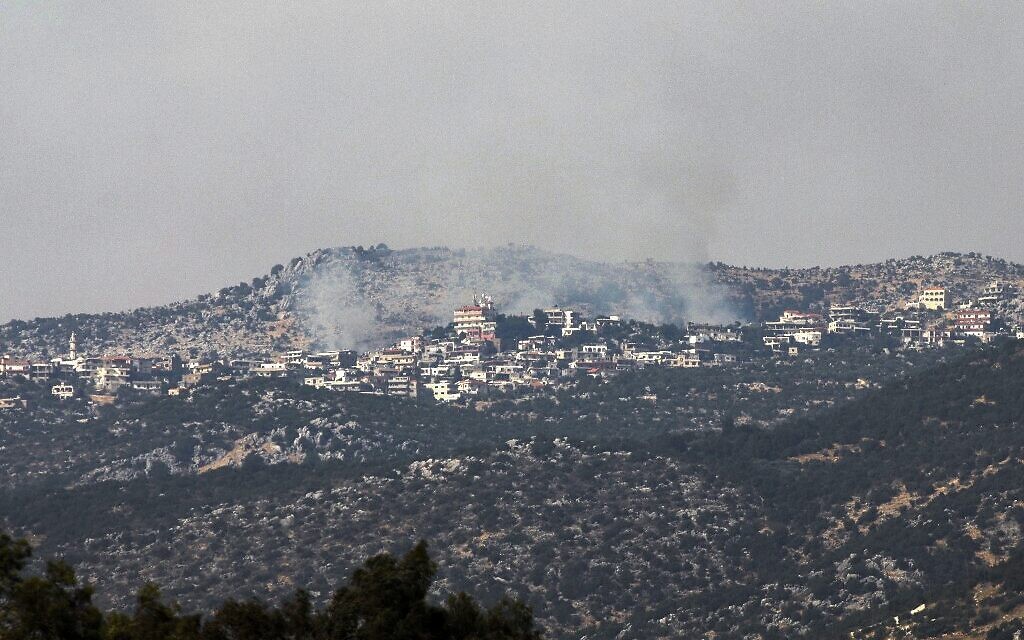
Hezbollah officially denied that an attack had taken place, but did not explicitly dispute that its members had crossed into the Israeli-controlled enclave.

Israeli defense officials scoffed at the terror group’s denial, saying the infiltration attempt had been filmed by military security cameras and that the operatives who took part in it were armed. The IDF on Monday said it was considering releasing the footage from the incident, but had yet to do so as of Tuesday afternoon.

The terror group said a reprisal for its fallen operative in Syria was still to come.

Israeli army forces seen stationed near the border between Israel and Lebanon in the Golan Heights on July 27, 2020. (David Cohen/Flash90)

The IDF said the decision to send the additional units to the IDF Northern Command was made in light of a “situational assessment.”

Those reinforcements joined an infantry battalion, additional Iron Dome missile defense batteries and other troops that were sent to the Northern Command last week when Hezbollah first began indicating it planned to carry out an attack along the border as revenge for its fallen operative.

Also on Tuesday, Defense Minister Benny Gantz issued a clear threat to the enemy countries surrounding Israel that the Jewish state’s military has a far reach and “unlimited capabilities” that it was prepared to use.

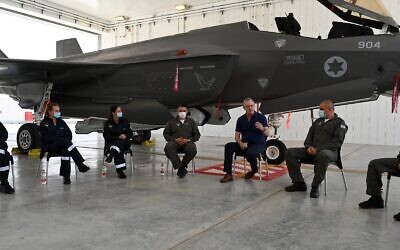
Gantz made his comments during a visit to a squadron of F-35 fighter jets on the Nevatim air base in southern Israel.

“I am finishing a visit to an F-35 squadron, which is the most advanced [aircraft] that the Israeli Air Force has and is one of the best in the world. We have the capability to act at an unprecedented range and level of operational preparedness,” Gantz said.

Defense Minister Benny Gantz meets with an F-35 squadron on the Israeli Air Force’s Nevatim base in southern Israel on July 28, 2020. (Ariel Hermoni/Defense Ministry)

“I suggest that all the countries in the region, near and far — Iran, Lebanon, Syria or anyone else who may be involved in terrorism — remember that Israel has unlimited capabilities and knows how to use them,” he added.

The military remained on high alert along the northern border on Tuesday, with Lebanese media reporting intensive Israeli drone flights over southern Lebanon throughout the morning. The military also maintained a number of roadblocks in the area, preventing IDF vehicles from traveling on certain highways along the border that were considered vulnerable to attack from Lebanon.

Since Friday, the IDF has deployed a smaller number of troops directly along the frontier, having cleared out personnel who were deemed unnecessary as they would constitute a potential target for Hezbollah. The regular units stationed in the area and reinforcements sent to the region took up positions slightly deeper inside Israel, from a distance at which they could still rapidly respond to any attack by Hezbollah but not so close as to be an easy target for the group’s anti-tank guided missiles — a weapon it has long shown a tremendous knack for.

No such restrictions were placed on civilians at the time.

Israel Defense Forces soldiers set up a roadblock on a highway near the border with Lebanon on July 23, 2020. (Basel Awidat/FLASH90)

Also Tuesday, Lebanese Prime Minister Hassan Diab accused Israel of carrying out a “dangerous military escalation” the previous day and thereby violating United Nations Resolution 1701, which ended the 2006 Second Lebanon War.

“I fear that the situation will deteriorate in light of the severe tension on our borders with occupied Palestine,” Diab wrote in a statement, calling for caution.

The Lebanese prime minister, who is supported by Hezbollah, also accused Israel of seeking to give the international peacekeepers in Lebanon, known by the acronym UNIFIL, additional powers in the country and change the “rules of engagement.” UNIFIL’s mandate to operate in Lebanon is due to be reviewed and renewed next month by the UN Security Council.

However, Lebanese news outlets affiliated with or directly controlled by the terror group appeared to indicate that Hezbollah considered the fact that it forced the IDF into a state of high alert to be sufficient retaliation for the time being.

Following the incident, Israel conveyed messages to Lebanon, through third parties, that it did not want Monday’s border altercation to devolve into a war.

In the past, Hezbollah has vowed to retaliate for losses of its fighters in Syria with attacks on Israel. This was the case in September, when the terror group fired three anti-tank guided missiles at Israeli military targets along the Lebanese border, narrowly missing an IDF armored ambulance with five soldiers inside, after the IDF killed two of its fighters in Syria the month before.

Times of Israel staff contributed to this report.

Was there another ‘mysterious’ explosion on Iran’s Qeshm Island?

Posted July 28, 2020 by davidking1530
Categories: Uncategorized

https://www.jpost.com/middle-east/was-there-another-mysterious-explosion-on-irans-qeshm-island-636371

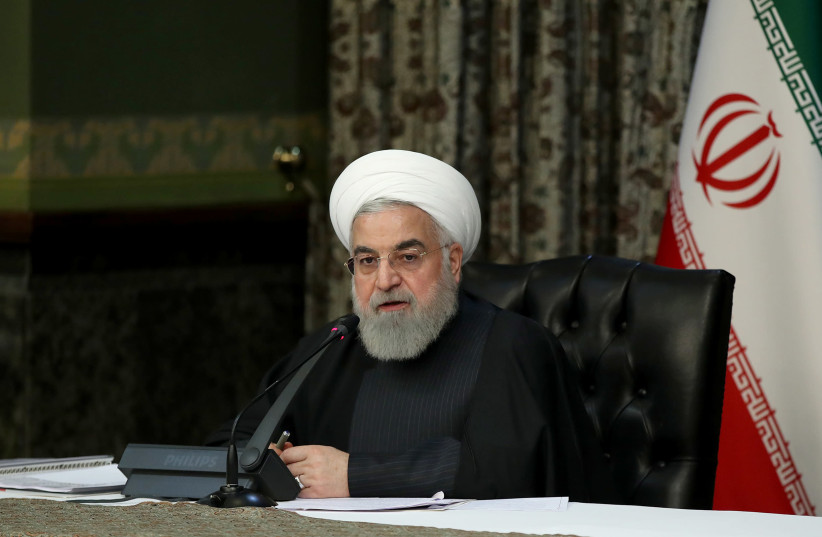
Iranian President Hassan Rouhani speaks during the cabinet meeting in Tehran, Iran, March 4, 2020 (photo credit: OFFICIAL PRESIDENT WEBSITE/HANDOUT VIA REUTERS)

Residents of Qeshm Island in southern Iran reported the sound of an explosion just after 10 p.m. on Saturday. It caused concern because the electricity went off. Officials claimed there was an earthquake, but many did not believe them.

Rumors pointed to other possibilities. Qeshm is known for fishing and tourism. It is a long island off the important Port of Bandar Abbas. Illicit oil trading takes place off some of the islands between Iran and the Gulf.

The tanker Gulf Sky, at the center of an international case involving Islamic Revolutionary Guard Corps front companies, was anchored off the island in mid-July after allegedly being hijacked from near the UAE. It is also of strategic value because the IRGC has a naval base on the island.

In this context, some social-media accounts and local Arabic and Persian media outlets claimed there had been a mysterious explosion. This would be in line with another dozen such explosions that have impacted Iran since late June.

One destroyed a surface-to-surface missile facility at Khojir; another harmed centrifuges at the Natanz nuclear-enrichment facility. This has left many Iranians on edge over concerns they may be targeted by cyberattacks or other acts the government is not admitting to.

There are other controversies related to Qeshm. Fishermen want more support, and some believe the island will form part of a free-trade zone nexus, along with Kish Island, and that China will have a growing role there. “Iran is not for sale,” say some nationalist and populist social-media accounts, challenging China’s alleged upcoming role.

Fishermen held a meeting on Friday about facing issues in transporting their catch. Could an explosion be some sort of sabotage? People say it could be human error or an IRGC secret maneuver.

The fishermen said they were told not to go out fishing on Saturday and link this to the supposed explosion. There are questions over whether it might be linked to ammunition storage on the island.

In the absence of any real evidence that something happened at Qeshm Island, the incident will likely come and go without further details. What it does show is how Iran has been jarred by all the recent explosions – and how locals are quick to report any rumors of what they think is another incident.