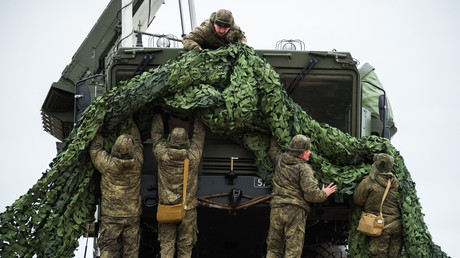
Make Turkey great again: Erdogan trumpets more Syria ops & ‘100% local arms’ in bold manifesto

Posted May 7, 2018 by Peter Hofman
Categories: Uncategorized

https://www.rt.com/news/425997-turkey-military-syria-manifesto/
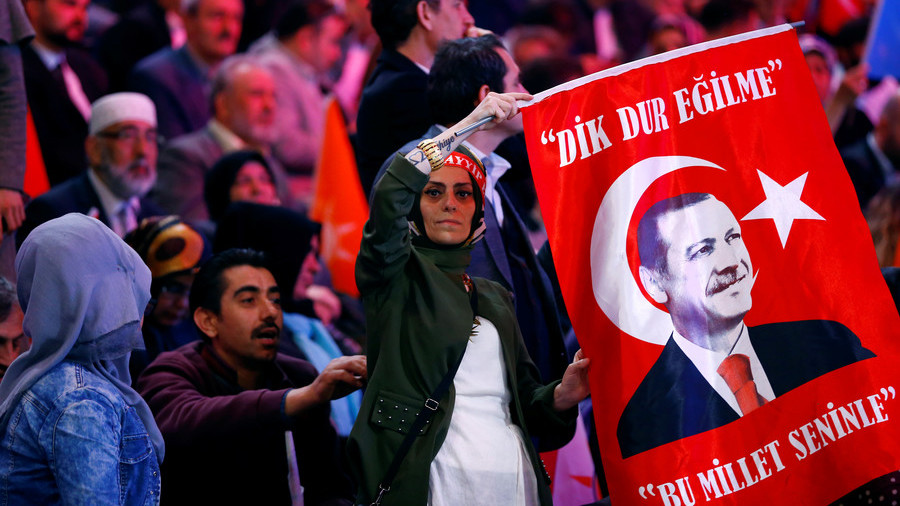
Turkish AK Party’s Istanbul congress © Osman Orsal / Reuters
Ankara will conduct more cross-border military operations in Syria and will focus on developing a fully self-sufficient defense industry, the Turkish president said, unveiling his ruling party’s manifesto ahead of June elections.

“Turkey will launch new operations in the new period, like Operation Euphrates Shield and Operation Olive Branch, to clear its borders from terrorists,” president Recep Tayyip Erdogan said, outlining the ruling Justice and Development Party (AKP) manifesto, ahead of a snap general election on June 24.

The country’s priorities for the next five years will focus, among other things, on military production, an independent foreign policy and on border security.

Read more

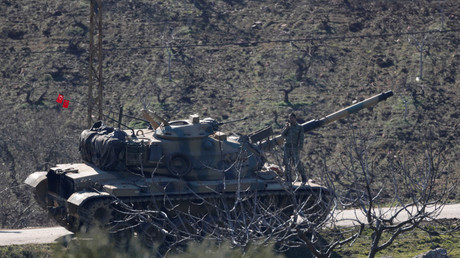
A Turkish tank near the Turkish-Syrian border in Kilis province, Turkey January 31, 2018. © Osman Orsal

“Turkey is becoming an important power in the world. Turkey will be a global power, a leading force,” Erdogan said Sunday, noting that the country aims to enter the ranks of the world’s top 10 economies by 2023.

Part of the domestic development would focus on achieving complete “independence” in defense, as NATO allies continue to hinder weapons-supply and technology-sharing with Ankara.

“Turkey’s goal is to have 100 percent indigenously-made land, air and sea defense systems,” Erdogan said. “We will continue to produce our own weapons to become a global power. We will increase our defense industry [assets], like our ALTAY tank, ATAK helicopter, drones, armed drones.”

“The basic principles of our foreign policy will continue to be independence, national interest, national security and a conscientious stance,” the president added, addressing thousands of AKP’s loyalists in Istanbul.

Erdogan’s pledge to conduct further incursions into a neighboring country comes in the middle of the ongoing cross-border ‘Olive Branch’ operation in the north-western Syrian region of Afrin, which began in January.

Besides fighting the remnants of radical Islamists in the region, the Turkish offensive is also focused on rooting out the Kurdish-led Democratic Union Party (PYD), and especially its armed wing People’s Protection Units (YPG), from the border areas.

Read more

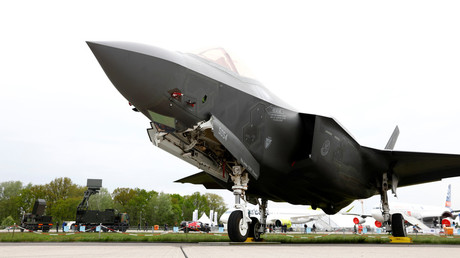
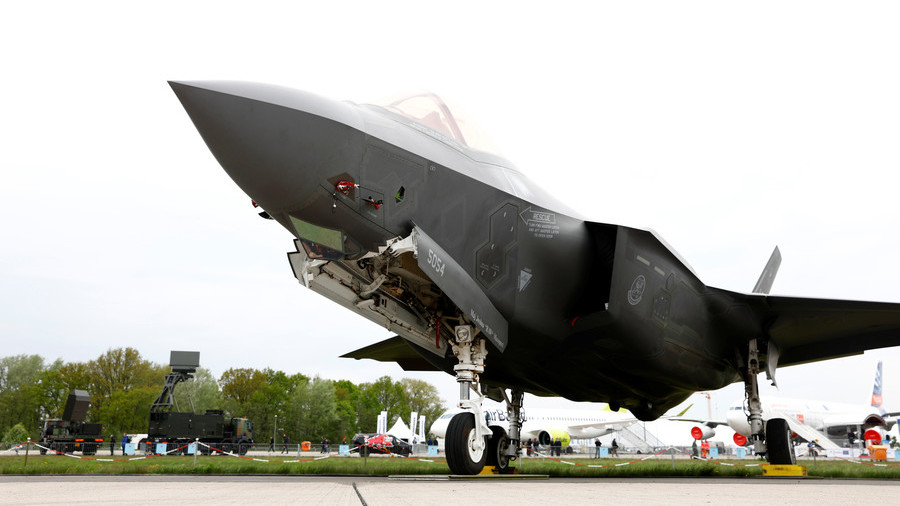
A Lockheed Martin F-35 aircraft. © Axel Schmidt / Reuters

Ankara considers Syria’s Kurdish entities an extension of the Kurdistan Workers’ Party (PKK), which has been a thorn in Turkey’s side for decades. The Afrin campaign is the country’s second such operation in Syria, after the so-called ‘Euphrates Shield’ was completed in early 2017.

Turkish persecution of the Kurds on Syrian territory has further deteriorated its relations with the United States, which has long relied on the Syrian Democratic Forces (SDF), comprising mainly Kurds, to do its bidding along Turkish borders. Ankara has repeatedly criticized the US and other NATO allies for their support of Kurdish militias to keep a foothold in Syria, reiterating on an almost daily basis that it views them as a national security threat.

In addition to the Kurdish issue, Ankara has locked horns with its NATO allies over their criticism of Ankara’s ‘undemocratic’ post-2016 coup-attempt crackdown and their increasing refusal to sell arms and share military technology with Turkey. The reluctance by the West to cater to the needs of NATO’s second largest armed contingent has led Turkey to develop its indigenous arms production and even to seek arms supply from Russia – which has, in turn, evoked anger in Washington.

Defense officials warn of impending Iranian missile strike on northern Israel 

Posted May 7, 2018 by Joseph Wouk
Categories: Uncategorized

Source: Defense officials warn of impending Iranian missile strike on northern Israel | The Times of Israel

TV reports say Tehran looking to retaliate for Israeli raids in Syria without causing all-out war, likely with rockets at IDF bases rather than civilian targets

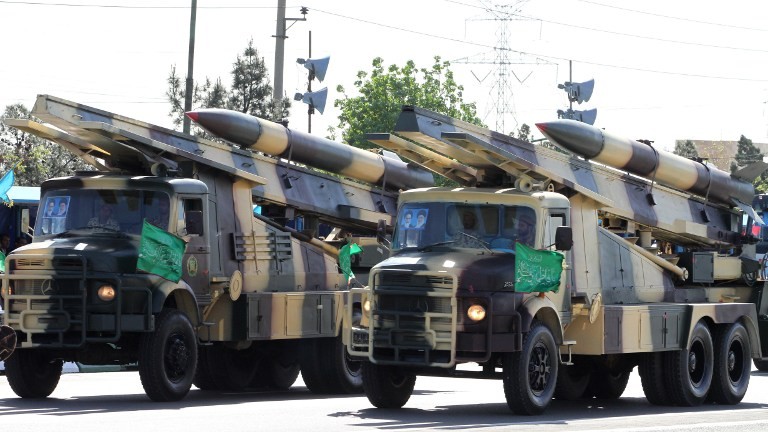
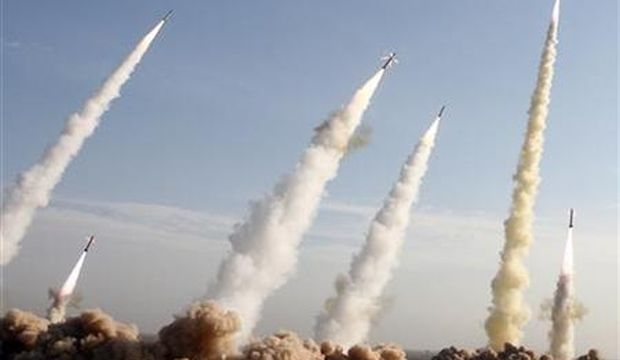
Iranian military trucks carry surface-to-air missiles during a parade on the occasion of the country’s Army Day, on April 18, 2017, in Tehran. (AFP Photo/Atta Kenare)

Iran is planning to retaliate for recent deadly airstrikes in Syria attributed to the Jewish state by having its proxies fire missiles at military targets in northern Israel sometime in the near future, defense officials warned on Sunday.

Tehran vowed revenge after the T-4 army base in Syria was struck in an air raid on April 9, killing at least seven members of the Iranian Revolutionary Guard Corps. The strike was widely attributed to Israel, though Jerusalem refused to comment on it. (T-4 was the base from which Israel said Iran launched an attack drone into Israel in February.) Late last month, a second strike, allegedly conducted by Israel, against an Iranian-controlled base in northern Syria was said to have killed more than two dozen Iranian soldiers.

On Sunday, all of Israel’s nightly news broadcasts reported that the Israeli military and intelligence services had identified preliminary efforts by Iran in Syria to carry out its reprisal, using its IRGC (Islamic Revolutionary Guard Corps), the Hezbollah terrorist group and local Shiite militias to launch a barrage of precision-guided missiles, likely at Israeli military targets in the north.

“Israel has recently identified with certainty Iranian preparations to fire at the north,” Channel 10 said. “We are not on the eve of war with Iran… but Iran is very determined to carry out an attack” to avenge the T-4 strike and the deaths of its military personnel, it said.

Israel Radio said the Iranian planning for an attack was at “an advanced stage.”

The understanding in the defense services is that Iran is looking to conduct its retaliation in such a way as to avoid full-fledged war with Israel, and will therefore likely not target civilian locations, according to the reports, which did not attribute the information to any specific source.
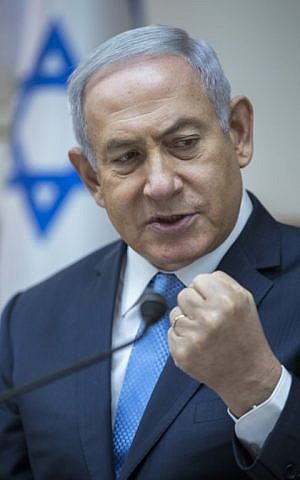
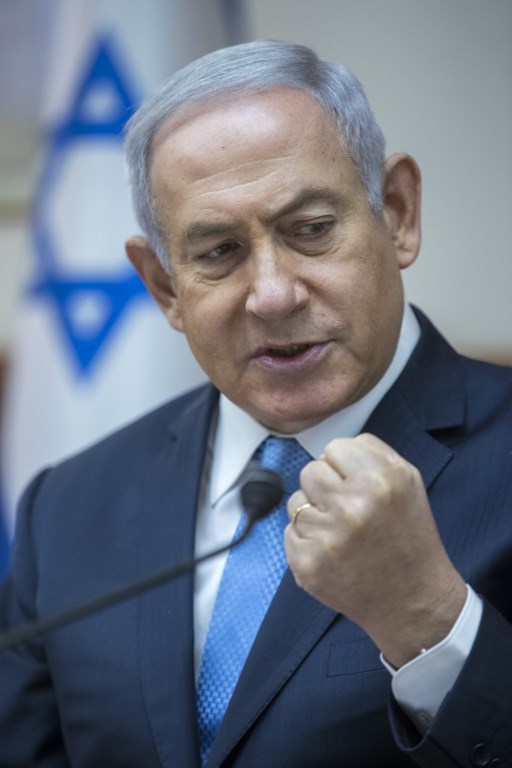
Israeli Prime Minister Benjamin Netanyahu chairs the weekly cabinet meeting in Jerusalem on May 6, 2018. (AFP PHOTO / POOL / JIM HOLLANDER)

No special instructions were given to residents of northern Israel. Indeed, the heads of local councils in the north have reportedly been told to tell citizens not to take any specific precautions and to go about their daily lives as usual.

Israel was working to prevent or counter such an attack, but was also preparing for the possibility that the Iranians “succeed in hitting a base in the north with missiles,” Channel 10 reported. The Israel Defense Forces was threatening to hit all Iranian targets in Syria if Tehran launched an attack on Israeli territory, the TV report said.

Seeking Russian pressure on Iran, Prime Minister Benjamin Netanyahu is set to present the information in Tehran’s preparations to strike Israel to Russian President Vladimir Putin during their meeting Wednesday in Moscow, the reports said.

Earlier on Sunday, Netanyahu said that while Israel is not interested in a military escalation with Iran, if there has to be a fight, he would prefer it be now, rather than later.

“We are determined to block the Iranian entrenchment, even at the cost of confrontation,” Netanyahu said at the start of the weekly cabinet meeting. “We don’t want an escalation, but we are prepared for every scenario. We don’t want confrontation, but if there needs to be one, it is better now than later.”

The prime minister also suggested Iran could directly launch a strike on Israeli territory.
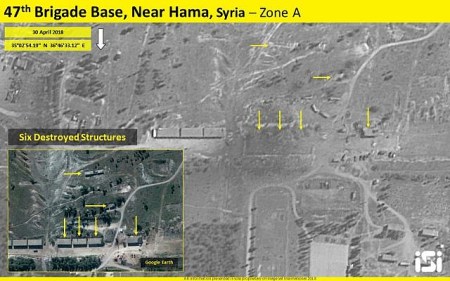
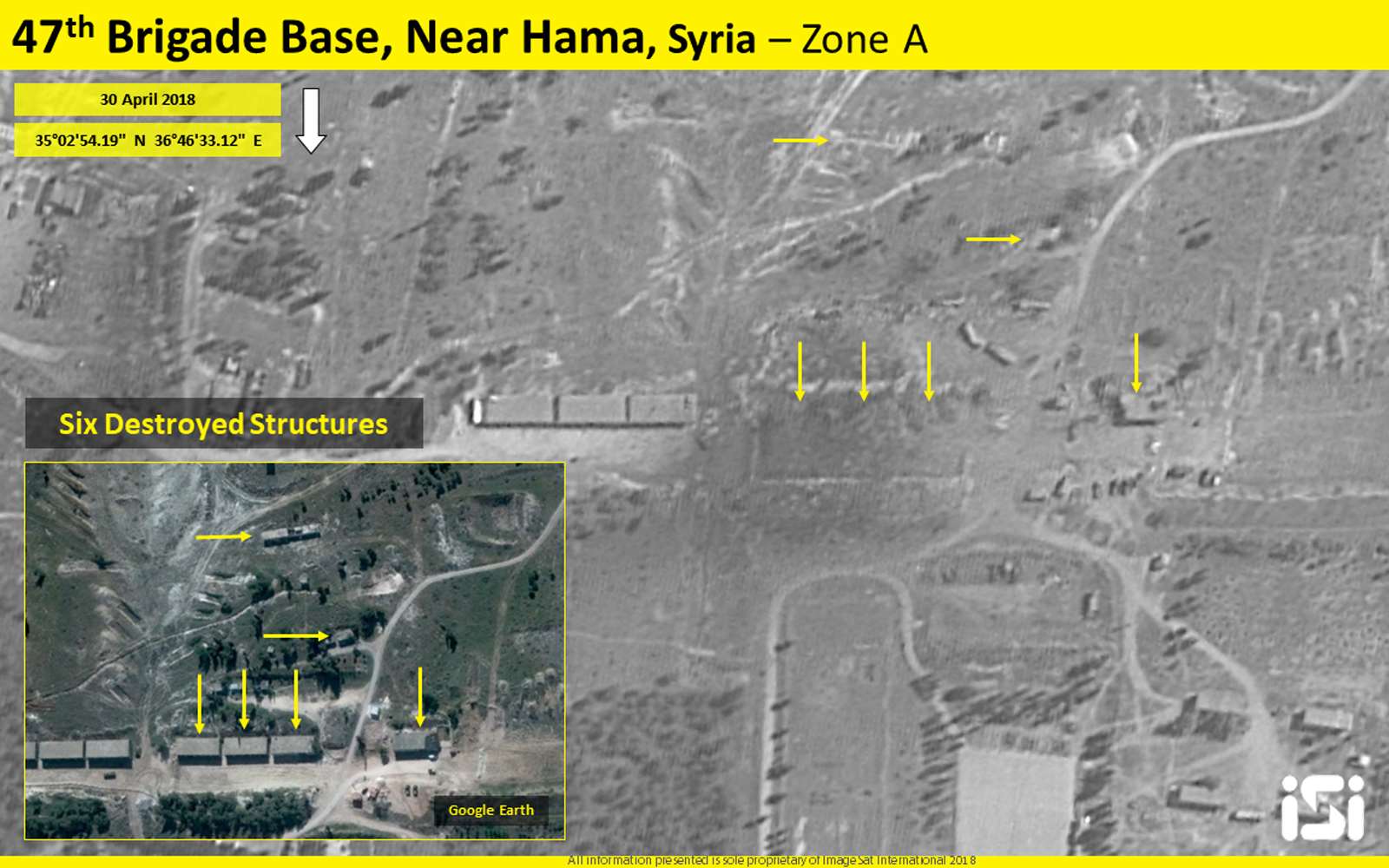
A satellite image showing the results of an alleged Israeli airstrike on a reported Iranian base outside the northern Syrian city of Hama the day before, on April 30, 2018. (ImageSat International ISI)

“In recent months, the Iranian Revolutionary Guards transferred to Syria advanced weaponry in order to attack us both on the battlefield and the home front, including weaponized UAVs, ground-to-ground missiles and Iranian anti-aircraft batteries that would threaten air force jets,” he said.

Sunday night’s warning about Iran’s plans to attack, as disseminated on the TV news broadcasts, appeared to constitute an attempt by Israel to show the Iranians that it was aware of their plans and was prepared to respond if they went through with the reprisal.

A Hadashot TV report said the warning was aimed both to deter Iran and to make it plain to the Iranians that Israel knows what they are planning, and that it will not be fooled if the missiles themselves are fired by Syrian militiamen.

A mainstay of Iran’s defense strategy is the use of proxies to conduct its bidding across the Middle East — the Houthis in Yemen, Hezbollah in Lebanon, Shiite militias in Syria and Iraq, as well as the Palestinian Islamic Jihad and Hamas in the Gaza Strip and West Bank. This is seen as an effort to limit Iranian casualties and keep any fighting limited to outside the Islamic Republic.

Last month, Defense Minister Avigdor Liberman said Israel was prepared to strike the Iranian homeland. “If they attack Tel Aviv, we will strike Tehran,” he said.

The unnamed defense officials on Sunday did not specify when the Iranian attack was expected to take place. The Channel 10 report said Iran’s preparations had been going on for weeks, but had been disrupted in recent days because of several strikes on targets in Syria, including on missile stocks in the Hama area, attributed to Israel. “But the Iranians have not given up,” the report said.

It added that missiles had been brought from Lebanon to Syria for use in the intended attack against Israel. “The idea is to use heavy Iranian missiles, including the Fateh-110” — under the command and with the advisory work of Hezbollah but “without an IRGC presence,” Channel 10 said.
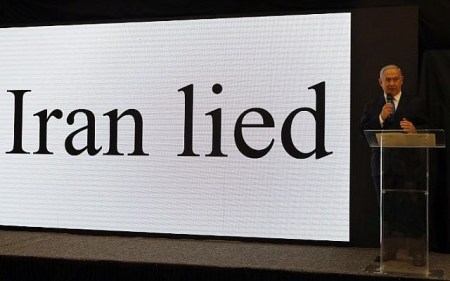
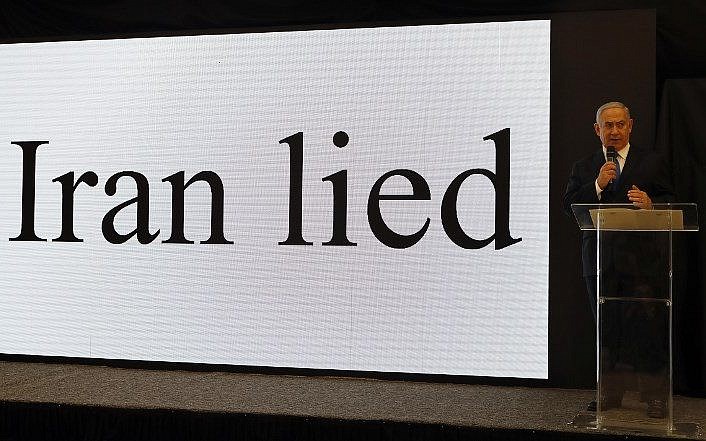
Prime Minister Benjamin Netanyahu gives a speech on files obtained by Israel he says proves Iran lied about its nuclear program, at the Defense Ministry in Tel Aviv, on April 30, 2018. (AFP Photo/Jack Guez)

Iran has been taking a number of heavy blows of late, including Israel’s seizure of its nuclear weapons archives from under its nose in Tehran, Channel 10 noted, and is determined to strike back but not for confrontation to escalate into war.

Last month, a member of the coalition supporting Iran’s ally, Syrian dictator Bashar Assad, told The New York Times that the reprisal would likely not come before the Lebanese parliamentary elections, which began on Sunday.

Further stoking tensions, this week US President Donald Trump is expected to determine the fate of the Iran nuclear accord, which he has repeatedly threatened to leave. On Sunday, French President Emmanuel Macron warned that if America abandoned the Iran deal, it could lead to a war.

Earlier on Sunday evening, Israel’s security cabinet held a three-and-a-half-hour session to discuss recent developments in the region, including the tensions with Iran in Syria and the upcoming decision by Trump regarding the nuclear deal. Channel 10 said this meeting was not a routine meeting, but it was prevented by Israel’s military censorship from explaining why.

Sunday’s warning was not the first intimation by Israeli defense officials of a potentially imminent retaliatory attack by Iran. Shortly before Israel’s Independence Day, the military prepared for the possibility of a direct attack from the IRGC’s air force.

The Times of Israel learned at the time that Israel’s defense establishment believed the Iranian revenge attack would likely be carried out with surface-to-surface missiles or armed drones. Others have speculated that an Iranian retaliation could come in the form of a cyber attack.
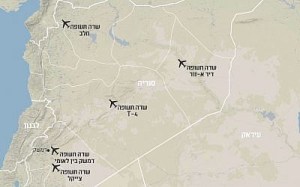
A map of Syria, provided to Israeli media, shows the approximate locations of five bases that Israel believes to be controlled by Iran.

In an apparent effort at deterrence, the IDF last month provided Israeli media with a map showing five Iranian-controlled bases in Syria that would likely constitute potential targets for an Israeli response, should Iran carry out any kind of attack. Satellite photographs of bases were also provided.

Those were Damascus International Airport, through which Iranian transport planes bring in weapons and military gear; the Sayqal air base; the T-4 air base; an airfield near Aleppo; and a base in Deir Ezzor, which was recaptured from the Islamic State terror group by the regime last year.

Israeli intelligence believes the sites are used by Iran for its missions in Syria, as well as to transport weapons to its proxies in the region, including Hezbollah.
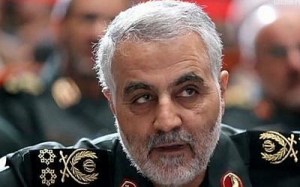
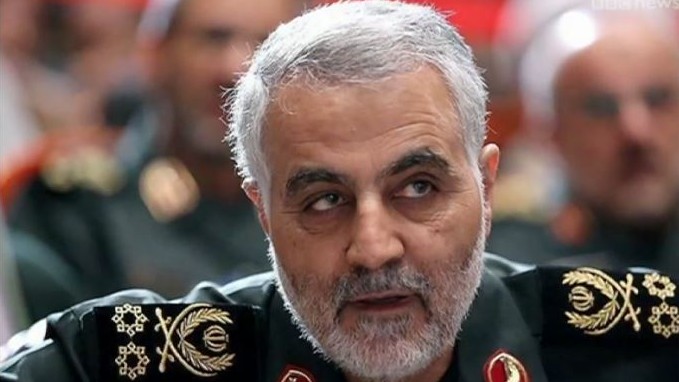
Iranian Revolutionary Guards al-Quds Force commander Maj. Gen. Qassem Soleimani (YouTube screenshot)

Israel believes Iran’s retaliatory effort is being led by Major General Qassem Soleimani, the head of the IRGC’s Quds Force, which operates around the world, with assistance from the head of the IRGC air corps, Brig. Gen. Amir Ali Hajizadeh; the head of its surface-to-surface missile program; Col. Mahmoud Bakri Katrem Abadi; and the head of its air defense operations, Ali Akhbar Tzeidoun.
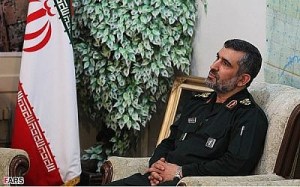
The head of the Iranian Revolutionary Guard Corps’ Air Force Brig. Gen. Amir Ali Hajizadeh. (Fars news)

Soleimani has repeatedly warned Israel, and threatened to “wipe out the Zionist entity” in February over the assassination of a Hezbollah leader, which has been attributed to the Mossad and America’s CIA.

Iran has access to a variety of surface-to-surface missiles, from short-range Fajr-5 rockets to medium-range Fateh 110 missiles, which have a range of approximately 300 kilometers (190 miles), to long-range Shehab ballistic missiles capable of hitting targets over 1,300 kilometers (800 miles) away.

To counter those threats, Israel has a multi-tiered missile defense system consisting of the Iron Dome for short-range rockets and mortar shells, the David’s Sling for medium-range missiles, and the Arrow for long-range ballistic missiles.

Israel sees Iran, which has vowed to destroy the Jewish state, as its main enemy in the region. Israeli officials have repeatedly stated that Israel will not allow Iran to entrench itself in Syria, marking it as a “red line” that it will fight militarily if necessary.
Standing together (Bomb Iran!) 

Posted May 7, 2018 by Joseph Wouk
Categories: Uncategorized

USA and Israel… Dance partners in ridding the 21st Century of the 14th… – JW

REPORT: IRAN PLANNING TO LAUNCH A BARRAGE OF MISSILES AGAINST ISRAEL

Posted May 7, 2018 by Louisiana Steve
Categories: Iran and Israel

Tags:

Military analyst Roni Daniel said the intelligence suggested Iran would use Shiite militias already deployed in Syria, along with experts from Hezbollah.

BY JPOST.COM STAFF, ANNA AHRONHEIM MAY 6, 2018 20:26

Source Link: REPORT: IRAN PLANNING TO LAUNCH A BARRAGE OF MISSILES AGAINST ISRAEL

{Proxy or no proxy, Tehran may feel the heat from this one. – LS}

Iran is preparing a barrage of missiles to launch against Israeli military positions from Syrian territory, Hebrew media reported Sunday, citing defense officials.

Iran plans to avenge alleged Israeli strikes on its bases in Syria, Ma’ariv defense analyst Alon Ben David said, by targeting military targets in northern Israel.

As of now, Israel isn’t “on the eve of war against Iran,” he said, “but the Iranians do want revenge for their losses.”

Iran plans to use Shiite militias already deployed in Syria along with experts from Hezbollah, according to Channel 2 News military analyst Roni Daniel. The proxies would be overseen by general Qasem Soleimani, commander of the Islamic Revolutionary Guard Corps abroad.

Tensions have risen dramatically between the two arch-enemies following the infiltration of a Iranian drone into northern Israel, which the IDF says was armed and on a sabotage attack mission against the Jewish State.

Israel is said to have been preparing for a direct attack from Iran’s Revolutionary Guard Corps since mid-April in response to a strike allegedly carried out by the Jewish state against an Iranian operated airbase in Syria which killed seven IRGC soldiers.

A senior IDF official confirmed to The New York Times in late April that Israel was behind the attack, stating that the February incident “opened a new period” between the Jewish state and the Islamic Republic.

Following the strike, Ali Akbar Velayati, the top aid to Iranian Supreme Leader Ali Khamenei, warned Israel “should be waiting for a powerful response” to the strike on the airfield, saying “it will not remain unanswered.”

 Israel on peak alert for Iranian missile strike as Lebanese vote ends 

Posted May 7, 2018 by Joseph Wouk
Categories: Uncategorized

Source:  Israel on peak alert for Iranian missile strike as Lebanese vote ends – DEBKAfile

Israel’s three-week long high military alert along its northern borders with Syria and Lebanon peaked Sunday night, May 6, as polling stations closed in Lebanon’s first election in nine years.  

Israeli political and military strategists calculate that, now the election is over, Iran will make good on its vow of vengeance at any time between now and the May 14 inauguration of the US embassy in Jerusalem.

The Palestinian Naqba Day on May 15 is another date to watch. All the signs, including intelligence input, indicate that Iranian and Hizballah units have completed their preparations for a missile attack and are standing ready in their positions. Israel estimates that Iran will go for military targets mainly in northern Israel, although civilian locations may also be threatened. Its air force and the entire range of air defense weaponry is on the highest alert.

Iran’s leaders are clearly determined to punish Israel for three attacks on Iranian Revolutionary Guards targets in Syria on February 10, and on April 9 and 29, in one of which, at Syria’s T-4 air base, seven Iranian servicemen were killed.

DEBKAfile’s military sources note that no Israeli officials or military chiefs have given out any details on how the IDF will respond to an Iranian or Hizballah attack.

However, there can be no doubt that the presumed missile offensive can be cut short only by destroying the launchers deep inside Syria and possibly in Lebanon too.

This sort of operation may spread over several days with no certainty about how it may develop. The Israeli security cabinet was convened Sunday for briefings on the forecast and preparations.

Netanyahu: Conflict with Iran better now than later 

Posted May 6, 2018 by Joseph Wouk
Categories: Uncategorized

Source: Netanyahu: Conflict with Iran better now than later | The Times of Israel

Prime minister says Israel will do whatever it takes to prevent Iranian entrenchment in Syria; stresses importance of his upcoming meeting with Putin

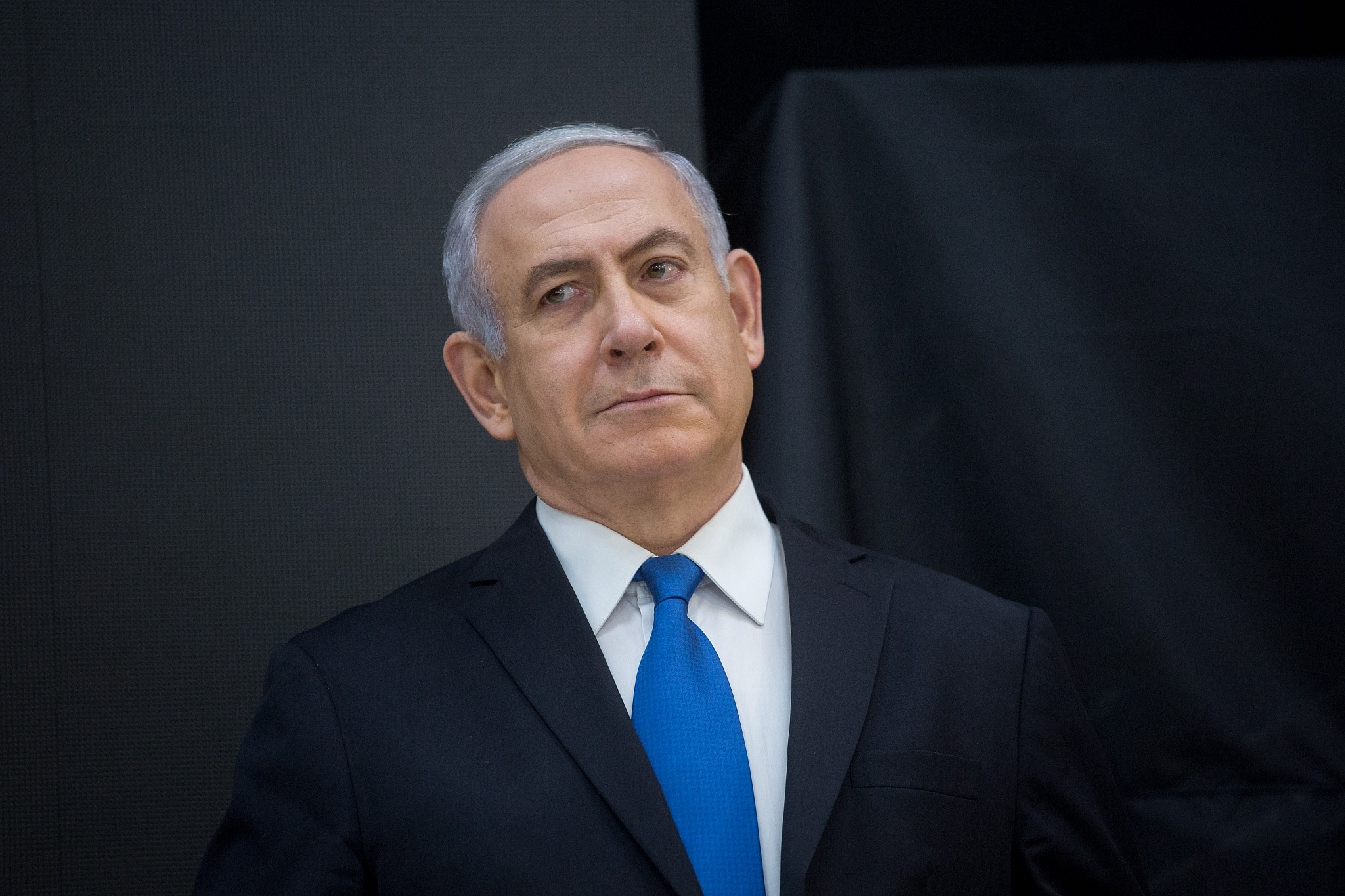
Prime Minister Benjamin Netanyahu addresses the press at the Kirya government headquarters in Tel Aviv on April 30, 2018. (Miriam Alster/Flash90)

Prime Minister Benjamin Netanyahu addresses the press at the Kirya government headquarters in Tel Aviv on April 30, 2018. (Miriam Alster/Flash90)

Prime Minister Benjamin Netanyahu said Sunday that while Israel is not interested in a military escalation with Iran, if there has to be a fight he would prefer it be now rather than later.

The comments came amid escalating tensions between Jerusalem and Tehran as the Islamic Republic has sought to expand its foothold in neighboring Syria, raising fears it could use bases for attacking Israel.

“We are determined to block the Iranian entrenchment, even at the cost of confrontation,” Netanyahu said at the start of his government’s weekly cabinet meeting. “We don’t want an escalation, but we are prepared for every scenario. We don’t want confrontation, but if there needs to be one, it is better now than later.”

His comments came a week after a strike on an Iranian base in Syria, attributed to Israel, which reportedly destroyed hundreds of surface-to-surface missiles and killed over 30 people, including many Iranian military officials. Iran denied that any of its soldiers were killed in the attacks and that any of its bases in Syria were targeted.

Israeli Prime Minister Benjamin Netanyahu chairs the weekly cabinet meeting in Jerusalem on May 6, 2018. (AFP PHOTO / POOL / JIM HOLLANDER)

Netanyahu also highlighted the importance of his upcoming meeting with Russian President Vladimir Putin, scheduled for Wednesday.

Russia is a key backer of Syrian President Bashar Assad, along with Iran, and has raised concerns over reported Israeli bombing runs in Syria. Moscow has signaled it may sell Damascus advanced air defense systems in response.

“My meetings with the Russian president are always important for the IDF and the country, but the meeting this week is especially important in light of the attempts by Iran to establish itself in Syria,” Netanyahu said.

The two leaders also spoke in early April with Putin urging Netanyahu to avoid any steps that could increase instability in Syria.

The talks will also come just days before the May 12 deadline in which US President Donald Trump will decide on whether or not to pull out of the Iran nuclear deal. Russia, a signatory, has called for the pact to remain in place, though Netanyahu has lobbied for it to be annulled or renegotiated.

Prime Minister Benjamin Netanyahu delivers a speech on Iran’s nuclear program at the Defense Ministry in Tel Aviv on April 30, 2018. ( AFP PHOTO / Jack GUEZ)

Netanyahu was scheduled to give a press conference later Sunday to foreign media about some 100,000 Iranian files and documents describing the Tehran’s past efforts to develop atomic weapons.

Netanyahu revealed last week the contents of the documents, which were spirited out of Iran by Israeli spies and, he said at the time, showed that Iranian leaders had lied about their country’s nuclear ambitions.

Netanyahu has frequently spoken with Putin as Israel seeks to get Moscow to use its influence to halt Iran’s attempts to spread its influence deep into Syria and Lebanon on Israel’s northern border. They last met for talks in January.

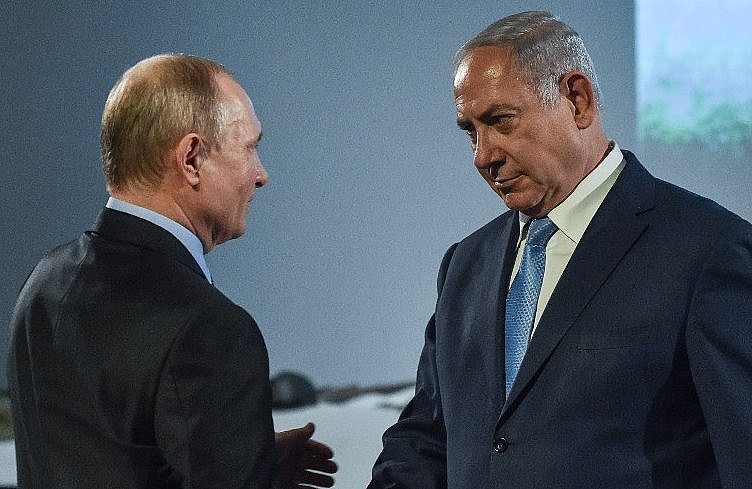
Russian President Vladimir Putin, left, with Israeli Prime Minister Benjamin Netanyahu during an event marking International Holocaust Victims Remembrance Day at the Jewish Museum and Tolerance Center in Moscow, January 29, 2018. (Vasily Maximov/AFP)

Tehran has sent some 80,000 Iran-backed fighters to back Syrian President Bashar Assad’s forces in the country’s seven-year civil war, Israeli Ambassador to the United Nations Danny Danon said last week.

Israel has said Iranian military entrenchment in Syria was unacceptable, fearing that Tehran could use the country as a springboard for attacks against the Jewish state.

American and Israeli officials have been monitoring the situation as Iran has increased the number of transport planes it has been sending from its Mehrabad Airport in Tehran to Syria. The US and Israeli officials fear that these planes are loaded with advanced munitions, which could potentially be used against Israel.

Defense Minister Avigdor Liberman has repeatedly vowed that Israel would work to prevent this from occurring, “no matter the cost.”

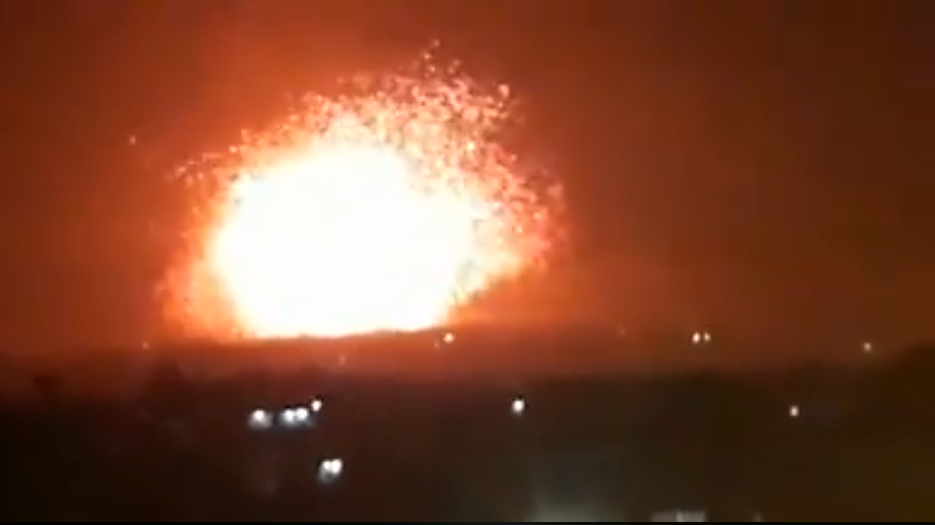
An explosion is seen coming from an army base, allegedly used by Iran-backed militias, outside the northern Syria city of Hama on April 29, 2018. (Screen capture; Facebook)

The base hit in the airstrike last week, south of the city of Hama in northwestern Syria, belonged to the Syrian army’s 47th Brigade but has reportedly been used as a headquarters for Iranian troops for several years.

The recent attack came amid soaring tensions between Iran and Israel following an airstrike last month on Syria’s T4 air base in the central province of Homs that killed seven Iranian military personnel. Tehran has vowed to retaliate for the T4 attack. Syria, Iran, and Russia blamed Israel for that T4 attack. Israel did not confirm or deny it.

Greatest Tank Battles – Sinai 1967 – YouTube

Posted May 6, 2018 by Joseph Wouk
Categories: Uncategorized


In 1967, in response to a growing threat by it’s Arab neighbors, Israel launches a pre-emptive strike against Egypt in the Sinai. This is the story of one of the most dramatic victories in modern warfare. In addition to the Air force, the tank corps played a decisive role.


Palestinian terrorists to receive NIS 10 million each by their 80th birthdays

Posted May 6, 2018 by Peter Hofman
Categories: Uncategorized

Defense Ministry releases info on finances of Henkin, Salomon, Shevach and Ben-Gal killers ahead of Knesset vote on cutting payments to the PA until it stops paying terrorists

Today, 2:13 pm

https://www.timesofisrael.com/liveblog-may-6-2018/

Omar al-Abed (c) smiles in the Judea Military Court ahead of his sentencing on February 15, 2018 for the murders of Yosef, Elad, and Chaya Salomon. (Courtesy)

Henkin, Salomon, Shevach and Ben-Gal killers to receive NIS 10 million by age 80

The Palestinian terrorists responsible for killing Eitam and Naama Henkin; Yosef, Elad and Chaya Salomon; Raziel Shevach; and Itamar Ben-Gal will each receive at least NIS 10 million ($2.77 million) by their 80th birthdays, statistics from the Defense Ministry show.

The numbers have been released ahead of a Knesset vote to cut payments to the Palestinian Authority until it stops paying terrorists.

Omar al-Abed, who was convicted of murdering three members of the Salomon family, has so far earned NIS 12,200, with a monthly salary of NIS 1,400 for the first three years. He is expected to reach a cumulative salary of NIS 12,604,000 by the age of 80.

Karem Lufti Fatahi Razek, who was convicted of the 2015 Henkin murders and was sentenced to two life sentences and another 30 years, has earned NIS 40,600 and is expected to receive a cumulative salary of NIS 11,232,000 by the age of 80.

Zaid Ziyad, who was also convicted over the Henkin murders and sentenced to life in prison, has earned NIS 40,600 and is expected to earn a cumulative wage of NIS 10,056,000 by age 80.

Asi Abed El-Hakim, who was charged with the murder of Rabbi Itamar Ben Gal and was arrested a month ago, has already earned NIS 1,400. If he is sentenced to life imprisonment, he is expected to earn NIS 12,604,800 by the time he’s 80.

Turkey will ‘retaliate’ if US halts weapon sales over purchase of Russian arms – Ankara

Posted May 6, 2018 by Peter Hofman
Categories: Uncategorized

Published time: 6 May, 2018 11:16

https://www.rt.com/news/425966-turkey-retaliation-us-weapons/

A Lockheed Martin F-35 aircraft. © Axel Schmidt / Reuters

In a deepening rift between two major NATO allies, Turkey says it will retaliate if Washington stops the sale of US weapons over Ankara’s decision to buy Russian military hardware. Such a move would be “wrong” and “illogical.”

“If the United States imposes sanctions on us or takes such a step, Turkey will absolutely retaliate,” Foreign Minister Mevlut Cavusoglu told CNN Turk. “What needs to be done is the US needs to let go of this.”

“Turkey is not a country under your orders, it is an independent country… speaking to such a country from above, dictating what it can and cannot buy, is not a correct approach and does not fit our alliance,” he said, referring to the fact that both countries are part of NATO.

Read more

© Igor Zarembo

The notion of halting weapons sales has been put forward by lawmakers in the US House of Representatives through the proposed US National Defense Authorization Act. The latter would ask the defense department to provide Congress with a report on the relationship between the US and Turkey and would block the sale of major defense equipment until the report is complete.

This move could throw a spanner in the works for Turkey as it plans to buy more than 100 Lockheed Martin F-35 Joint Strike Fighter Jets. It is also in talks with Washington over the purchase of Patriot missiles.

Cavusoglu said he plans to travel to Washington next week to meet with US Secretary of State Mike Pompeo, who previously said he was concerned over Ankara’s decision to buy the Russian S-400 missile batteries.

The foreign minister’s comments come after US State Department spokesperson Heather Nauert said on Thursday that Washington has “serious concerns about Turkey’s potential acquisition” of S-400 anti-aircraft systems.

Nauert added that NATO countries are only supposed to buy weapons and other materiel that are “interoperable with other NATO partners.”

In April, Assistant Secretary of State Wess Mitchell warned that the decision to buy Russian military hardware exposed Turkey to the possibility of sanctions. He added that it may bar Ankara from receiving any F-35 jets under the Countering America’s Adversaries Through Sanctions Act (CAATSA), which is mainly aimed at hindering Russian arms exports.

Read more

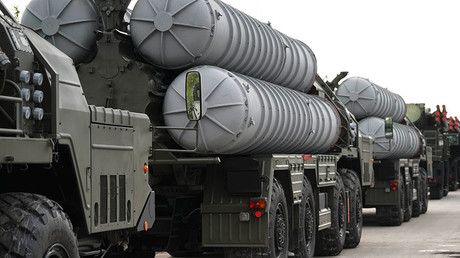
S-400 battery is being deployed in Russia on Jan 13, 2018. © Aleksey Malgavko

Mitchell strayed from the usual “interoperable with NATO equipment” justification, instead stating that it was “in the American national interest to see Turkey remain strategically and politically aligned with the West.” He specifically noted his disapproval that Ankara had “increased its engagement with Russia and Iran.”

Responding to Mitchell’s comments, Russian Foreign Minister Sergey Lavrov described the US threats as “a typical example of attempted blackmail” with the intention of giving US companies an “unfair advantage in market competition.”

The deal between Turkey and Russia was signed in December. Deliveries of the S-400 systems to Turkey are scheduled to start in 2020. However, following talks with Cavusoglu in March, Lavrov stated that Moscow is ready to speed up the process.

Cavusoglu’s Sunday remarks come amid increased tensions between the US and Turkey, particularly over Ankara’s Operation Olive Branch, which was launched against Kurdish fighters in Afrin on January 20. A war of words broke out after the top US commander in the US-led coalition against Islamic State (IS, formerly ISIS) said that Turkey would face a sharp response if it struck Manbij, Syria as part of its operation.

“It is obvious that those who say they will ‘give a sharp response’ if they were hit have not been hit by the Ottoman slap,” Turkish President Recep Tayyip Erdogan said in response. His words referenced a Turkish martial arts move that involves an open-palm hit, resulting in a one-hit knockout or even skull fractures and death.

The relationship between Washington and Ankara also hit a speed bump in October, when Turkey arrested a US consulate worker for alleged ties to exiled Turkish cleric Fethullah Gulen, whom Ankara blames for a failed coup attempt in 2016. Ankara has criticized the US for failing to extradite Gulen, who lives in Pennsylvania, while Western governments have slammed Turkey for its post-coup crackdown.

Netanyahu: No Interest in Conflict with Iran, But Better Now Than Later

Posted May 6, 2018 by Peter Hofman
Categories: Uncategorized

http://www.jewishpress.com/news/middle-east/iran-news/netanyahu-no-interest-in-conflict-with-iran-but-better-now-than-later/2018/05/06/

Prime Minister Benjamin Netanyahu, Photo Credit: Omer Miron / GPO

Prime Minister Benjamin Netanyahu said in his opening remarks to Sunday’s government cabinet meeting that although Israel has no interest in a conflict with Iran, if one is inevitable, it is better to deal with it now than later.

“We are determined to block Iranian entrenchment [in Syria], even at the cost of a confrontation,” Netanyahu said. “We have no interest in an escalation, but we are prepared for every scenario. We don’t want a confrontation – but if one must come, it’s better now than later.”

 The prime minister also underscored the exceptional importance of his upcoming meeting this Wednesday in Moscow with Russia’s President Vladimir Putin. “My meetings with the Russian president are always important for the IDF and the country,” he said, “but the meeting this week is especially important in light of the attempts by Iran to establish itself in Syria.”

Netanyahu meets regularly with Putin, and the two are on good terms. They last met for talks in January after they together attended a ceremony at the Jewish Museum and Tolerance Center in Moscow to mark the 75th anniversary of the uprising of the inmates at the Sobibor concentration camp during the Holocaust.

During that meeting, Netanyahu warned Putin that Iran was building weapons factories in Lebanon, where its military advisers were attempting to manufacture precision weapons for use against Israel. He also warned that Iran was continuing to establish a permanent military presence in Syria – an existential threat to the State of Israel, which would not be allowed to continue, he warned.

Last week three Iranian bases were struck in Syria, including at least one being used as a major weapons depot. At least 200 surface-to-surface long-range missiles were destroyed and some 30 military personnel were killed, including many Iranian officials.

Iran issued a statement denying that any of its bases in Syria were targeted and said none of its soldiers were killed.

One day later, Netanyahu revealed the existence of more than 100,000 files detailing a comprehensive Iranian nuclear weapons development program that was put on hold a number of years ago, with its files carefully tucked away in a high-security storage facility in Tehran, obviously for future use.

In a daring operation earlier this year, Israel’s international Mossad intelligence agency managed to penetrate the facility, take the files and leave Iran all in the same night. After months of scrutinizing and painstakingly translating the documents together with the United States, Netanyahu revealed the contents of some of them last week, sending shock waves through Tehran.

Israel’s Ambassador to the United Nations, Danny Danon, meanwhile also notified the UN Security Council in a briefing a week ago that Tehran has deployed some 80,000 Shi’ite fighters in Syria to support the regime of President Bashar al-Assad. The presence of such a formidable foreign military force across Israel’s northern border – as well as the increasing number of advanced weapons being transported by Iranian aircraft into Syria – is completely unacceptable, he told the Security Council, adding that Israel will “do what it must” to deal with the threat to its existence.

Iran has repeatedly declared its intention to “wipe the Zionist state (Israel) off the map.”