I beg for your forgiveness .
I beg for your forgiveness .

By Deborah Danan May 26, 2018 Breitbart
Source Link: Louisiana Becomes 25th State to Bar Business Ties with Companies Boycotting Israel
{Home sweet home. – LS}
“The United States, and by affiliation Louisiana, have benefited in innumerable ways from our deep friendship with Israel. Any effort to boycott Israel is an affront to this longstanding relationship. I am pleased that Louisiana will join what is now a critical mass of states in supporting our closest ally,” Gov. John Bel Edwards, a Democrat, said in a statement.
The order directs the state commissioner of administration to terminate existing state contracts with companies that are either currently boycotting Israel or supporting those who do. It further stipulates that future state contracts will first require parties to sign an agreement stating their compliance with the new law.
The executive order specifies BDS and says it hopes to reverse the anti-Israel movement’s aim to isolate the Jewish state. “The state of Louisiana unequivocally rejects the BDS campaign and stands firmly with Israel,” the order reads.
Edwards issued the order on the same night the Governor’s Mansion celebrated the 70th anniversary of Israel’s creation. Earlier on Tuesday, the House passed a resolution praising the anniversary.
Pro-Israel groups lauded Edwards’ move.
The Israel Project said in a statement from its CEO Josh Block:
The Israel Project is grateful to the governor for his leadership in fighting back against BDS discrimination. Advocates of BDS discrimination remain committed to their anti-Semitic agenda of isolating and demonizing the world’s only Jewish State. Its founders have openly called for Israel’s destruction and made it clear that they target Israel’s very existence, not its policies. From the North to South, in blue and red states – and with strong bipartisan support – lawmakers in 25 states have now declared BDS a form of discrimination and sent a clear signal that their states will not tolerate or condone taxpayer dollars going to subsidize anti-Israel hate.
“We are heartened that Louisiana has taken a strong stand opposing discrimination against Israel,” Roz Rothstein, CEO of StandWithUs, said. “Earlier this year, the city of New Orleans rejected an anti-Semitic resolution, and now the state has made clear that taxpayer funds should not support businesses which discriminate.”
The Jewish Federations of North America said that the move marks “a critical moment in which fifty percent of U.S. states have received the message that boycotting Israel is bad for business,” according to a statement released by the group’s Senior Vice President of Public Policy William Daroff.
“These state actions address the discriminatory nature of BDS and the ability for states to control their own commerce. We thank the governor and the many community activists who made this possible in Louisiana,” Daroff added.
Source: Russia said to test missile that can down F-35 fighter jet | The Times of Israel
In world’s longest-range surface-to-air missile test, S-500 missile reportedly hits target 300 miles away

Russia has successfully conducted the world’s longest-range surface-to-air missile test, according to a report in US media on Thursday.
The S-500 missile, which Russia said will be able to down F-35 fighter jets — the most advanced in America’s (and Israel’s) fleets, as well as ballistic missiles — was able to hit a target 480 kilometers (299 miles) away CNBC reported, citing “sources with direct knowledge of US intelligence concerning the weapons program.”
Israel said this week its F-35 fighter jet conducted airstrikes on at least two occasions, reportedly in Syria, which Air Force commander Maj. Gen. Amikam Norkin said made Israel the first country in the world to use the American-made stealth aircraft operationally.
The US military source, who spoke to CNBC anonymously, said that the Russian test was 80 kilometers (50 miles) further than any previous test.
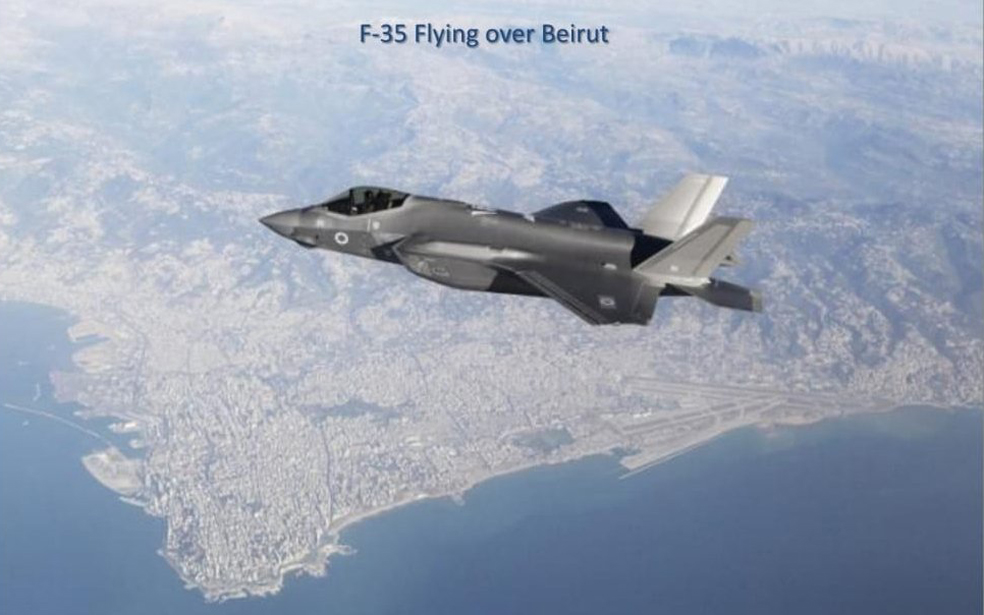
Russia has said that the S-500 will be operational by 2020 and will also have the capability to hit targets in near space, 100 kilometers (62 miles) above earth.
There was no confirmation of the test from the Kremlin.
The S-500 will operate alongside the S-400 missiles and are set to replace the aging S-300 systems.
Russia had reportedly contemplated supplying S-300 missiles to Syria, but earlier this month, after intensive lobbying by Israel, Moscow said it would not provide Damascus with the advanced air defense system.
Source: In French poll, majority say Zionism is a Jewish conspiracy – Diaspora – Jerusalem Post
The poll also revealed widespread hostility toward and ignorance about Israel.

Zionism is a Jewish conspiracy meant to manipulate Western societies to benefit Jews.
That’s the belief of a majority of 1,007 French respondents to a poll about the Jewish nationalist movement.
Some 53 percent of the respondents to the survey conducted this year by the Ifop polling company agreed with the statement that “Zionism is an international organization that seeks to influence the world and societies to the Jews’ benefit,” the Union of Jewish Students in France, or UEJF, said in a report this week about the poll that it commissioned Ifop to perform.
Of those, 11 percent said they “strongly agree.” Half of the respondents said Zionism was a “racist ideology.”
At the same time, 54 percent of respondents agreed that anti-Zionism is a form of antisemitism and 59 percent agreed with the statement that Zionism is a “movement of liberation and emancipation for the Jewish people.”
Twenty-six percent of respondents said they thought a boycott Israel was justified. Israel’s existence “feeds antisemitism,” 38 percent of the respondents said.
The poll also revealed widespread hostility toward and ignorance about Israel.
Almost a quarter of the respondents said that Israel declared its independence after 1980. A third indicated correctly that the nation was established in 1948.
Israel was described as a “threat to regional stability” by 57 percent of respondents and as a “theocracy” by 51 percent. The assertions that Israel is a democracy and is a “normal country like all other” received approval ratings of 46 and 48 percent, respectively.
Source: All-or-nothing approach: Washington’s maximalist doctrine – American Politics – Jerusalem Post
It’s an approach that Trump has applied to every major negotiation he says he is interested in pursuing thus far.
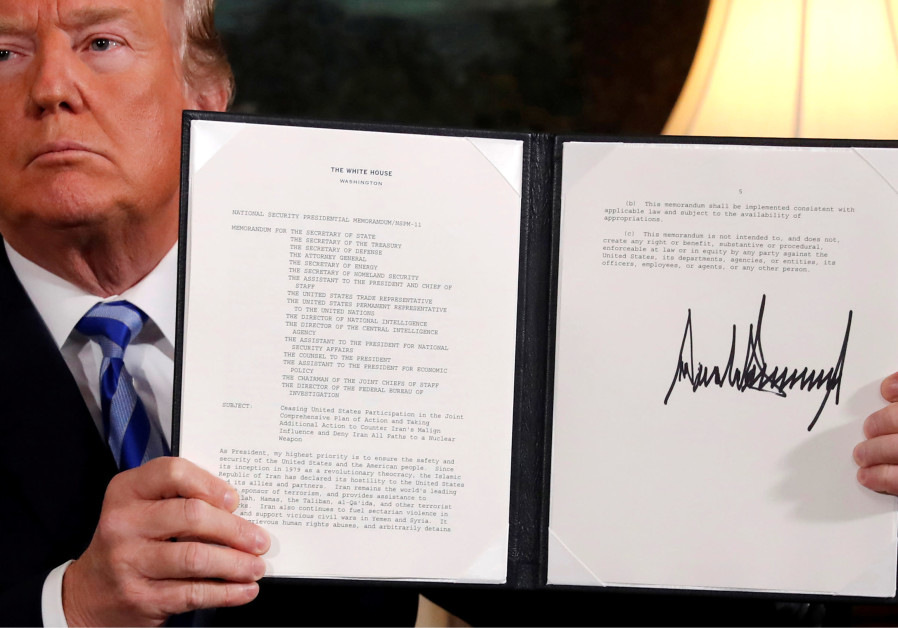
WASHINGTON – When Donald Trump withdrew the US from an international arms control agreement with Iran earlier this month, Washington’s foreign policy establishment fought passionately over the path forward. Reasonable people disagreed. But nonproliferation experts united in their criticism of Trump, fearful that his actions risked undermining global efforts to limit the spread of nuclear weapons.
Former and current UN and US nuclear experts focused on the technical aspects of what was a remarkably granular document– to the chagrin of its detractors – insisting that the Iran deal, formally known as the Joint Comprehensive Plan of Action (JCPOA), includes some of the strictest and most intrusive nuclear inspections ever designed.
Many in the field remain impressed that the 2015 agreement secured monitoring of the entire supply chain that once fueled Iran’s nuclear program, from the mines and mills that produce its raw materials to its storage facilities, to the research centers and the enrichment sites themselves.
But opponents of the JCPOA have long disagreed with this assessment, noting that the deal did not grant inspectors access to Iran’s military facilities. This created a blind spot for nuclear watchdogs precisely where Iran had previously experimented with nuclear weapons technology.
This ongoing policy debate – over the most effective way to limit and control the physical levers of Iran’s nuclear weapons program – produced a nonpartisan divide over the merits of the 2015 accord. Much of the disagreement was not over the nefarious and destructive nature of the Iranian government, on which most parties agreed, but over more technical matters such as oversight and verification tactics.
And yet, technical debate seems to have had little impact on Trump’s political decision to pull out of the JCPOA – much less on his strategy after withdrawal.
Neither Trump nor Mike Pompeo, his new secretary of state, has laid out in detail a doctrine combating the spread of nuclear weapons. The Trump administration has not offered a comprehensive plan that will compel Iran to concede more than it did over nine years of sanctions and talks – initially held with Britain, France and Germany, before they expanded to the full UN Security Council – beyond demanding its leaders come to heel under a new round of crushing economic constraints.
And if the technical standards outlined in the JCPOA were insufficient to Trump, he is unlikely to be satisfied with the outcome of nuclear talks with North Korea – even if those go well. Pyongyang does not merely possess a uranium enrichment program, as Tehran does, but a declared military weapons program spread across countless sites throughout the country and stocked with up to 60 nuclear bombs.
In both cases, Trump has taken maximalist positions, demanding full disarmament, a complete dismantlement of nuclear infrastructure and absolutist access for inspectors to any site at any time, effectively requiring the governments to relinquish their sovereignty. Many argue this is justified in the cases particular to these rogue nations. That might be so, but getting their leaders to agree to such terms through diplomatic means would be an unprecedented, impractical feat.
So far, this is all we have to work on as we try to glean a Trump doctrine still early in this chaotic presidency. Trump is in the middle of several high-stakes games of chicken and we don’t know what it takes to make him blink – to offer concessions – or how the games might end if he never does.
In some ways, the Trump team is looking at the dilemma of a nuclear Iran through the same lens as the Iranians themselves, because the technical process of their nuclear work has been weaponized by their leaders for strategic means.
Iran has discovered a state of being in which it can achieve regime security and potential for power projection enjoyed by nuclear-weapons states, just without being burdened by all the costs of constructing the bomb itself – a “nuclear threshold” position achieved in a Goldilocks-period of uranium enrichment where it perfects the miniaturization of warheads and delivery systems, and stockpiles excessive amounts of fissile material enriched to the highest acceptable grade without putting all of the pieces together.
If this is the Iranian strategy, as the US intelligence community concluded in 2013, the nuclear deal cannot only be viewed as a strictly technical nonproliferation document.
Suddenly, the status of Iran’s nuclear program cannot only be gauged and measured by nuclear scientists assessing yellowcake sourcing and centrifuge efficiency. It must also be seen through a strategic lens, as the Iranians see it, if and when world leaders conclude that the aims toward which Iran has used its nuclear work run contrary to their national interests.
That seems to be the case today with Trump’s policy on Iran – and it might justify his decision to link the Iranian nuclear file with all of the other files of concern to the US with respect to the Islamic Republic, including its human rights abuses, its ballistic missile work, its support for terrorist organizations and the march of its Revolutionary Guard Corps across the Middle East.
But paradoxically, this linkage, while perhaps justified in a moral sense, complicates any realistic strategy going forward meant to thwart any one of these “malign” Iranian activities. In demanding that Tehran categorically end its nuclear work, abandon its support for Syria’s Bashar Assad, withdraw from Yemen, end its indefinite detentions of political prisoners without trial, cease all ballistic missile activity and end support for Hezbollah in Lebanon, and Hamas in Gaza, the US risks accomplishing nothing – and perhaps exacerbating everything.
It is a doctrine, indeed, of all-or-nothing. It’s an American bullishness that, to a portion of the president’s domestic audience, presents the sort of tough leadership that helped get him elected. And it’s an approach that Trump has applied to every major negotiation he says he is interested in pursuing thus far, whether it be with Iran or North Korea, or even between Israelis and Palestinians.
His approach only tells us what we already knew: Trump wants big deals. It has not yet told us how he will get there.
Source: Iran sets May 31 deadline to see EU measures to save nuclear deal – Israel Hayom
Tehran will decide whether to quit the accord after reviewing the economic package France, Germany and Britain offer • “I’m sorry to say that we haven’t [seen] the plan B yet,” Iranian officials involved in the negotiations says.
|
Iranian President Hassan Rouhani
| Photo: EPA
|
Iran wants European powers to present it with measures by the end of May to compensate it for the United States abandoning the 2015 nuclear deal, a senior official said on Friday, and Tehran would decide within weeks whether to quit the accord.
The 2015 agreement between Iran and world powers lifted international sanctions on Tehran in return for it agreeing to curbs on its nuclear program.
Since President Donald Trump pulled the United States out of the deal earlier this month, European powers have been trying to find a way to ensure Iran still receives economic benefits to persuade it to stay in the deal. But that has proven difficult, with European firms frightened away by U.S. sanctions.
Nations that remain in the agreement meet on Friday for the first time since Trump left the pact, but diplomats see limited scope for salvaging it. British, Chinese, French, German and Russian officials will try to flesh out a strategy with Iran’s deputy foreign minister to save the deal by keeping oil and investments flowing.
“I am personally maybe not optimistic but … I am trying my best to come to a conclusion,” a senior Iranian official told reporters ahead of the talks.
EU leaders have united behind the accord, with Brussels working on measures including banning EU-based firms from complying with reimposed U.S. sanctions and urging governments to make money transfers to Iran’s central bank to avoid fines.
“We expect the [economic] package to be given to us by the end of May,” the Iranian official said. “I’m sorry to say that we haven’t [seen] the plan B yet. The plan B has just started to be figured out.”
He said European measures would need to ensure that oil exports did not halt, and that Iran would still have access to the SWIFT international bank payments messaging system.
Washington has threatened not only to reimpose sanctions but to make them even tighter. U.S. Secretary of State Mike Pompeo on Monday threatened Iran with “the strongest sanctions in history” if it did not change its behavior in the Middle East.
“Pompeo was like taking a cold shower,” said a European diplomat. “We’ll try to cling to the deal, but … we’re under no illusions.”
Iran’s Supreme Leader Ayatollah Ali Khamenei set out conditions on Wednesday for Iran to stay in the deal: Unless Europe guarantees Iran’s oil sales will not be hurt, Tehran would resume enrichment of nuclear material. He also rejected any new negotiations over Iran’s missile program, which was not covered in the nuclear deal and which Iran says it will never give up.
The Iranian official said on Friday: “We don’t have enough time. We expect the [meeting] today to take a unified position against the withdrawal of the United States and compensate for the U.S. absence in the deal. If not, we would go for a ministerial [meeting] and after that if Iran is still not satisfied we would take the decision.”
The U.S. Treasury announced more sanctions on Thursday on several Iranian and Turkish companies and a number of aircraft in a move targeting four Iranian airlines.
Iran has struggled to benefit from the accord so far, partly because of remaining unilateral U.S. sanctions that have deterred major Western investors from doing business with Tehran. Some Western companies have already quit Iran or said they may have to leave because of the new U.S. sanctions.
Trump denounced the accord, completed under his predecessor Barack Obama, because it did not cover Iran’s ballistic missile program, its role in Middle East conflicts or what happens after the deal begins to expire in 2025.
While European nations share those concerns, they say that torpedoing the nuclear deal makes them far harder, not easier, to address. They have said that as long as Tehran meets its commitments, they would remain in the deal.
The U.N. atomic watchdog policing the pact said on Thursday Iran continued to comply with the terms of the deal, but could be faster and more proactive in allowing snap inspections.
France’s President Emmanuel Macron wants to complement the nuclear deal with negotiations over other issues, an idea cautiously received by Russian President Vladimir Putin during talks in St. Petersburg on Thursday.
Source: End European subversion – Israel Hayom
Eldad Beck
For years, the European Union has been funding activities that are detrimental to Israel’s interest and cast doubt on its right to exist.
The apparent paradox between the EU’s commitment to Israel’s existence, security and welfare and its actual policies, which include the generous funding of the most virulent opponents of Israel’s existence both within and outside Israel, is in fact due to the compromising and pacifist policies of past Israeli governments. Those governments shut their eyes to the notoriously subversive activity of the EU, which undermines the foundation of the State of Israel’s existence.
Those past Israeli governments sought, for obvious reasons, to tie Israel’s economy to that of Europe. Israel has much to offer in many fields and the Europeans have a lot of money. Geographical proximity to the continent makes Europe Israel’s main trade partner. While Israel enjoys access to various major EU programs, this relationship, which contributed to Israel’s transformation into a stable and leading economy, came at a heavy price: The Europeans conditioned this cooperation on their involvement in Israel’s internal affairs and a significant role in the promotion of a “peace process” between Israel and the Palestinians. In retrospect, this role was meant from the outset to allow Europe to defend Palestinian interests, at the expense of Israel’s.
This is not just about unlimited and unconditional assistance to the Palestinians in their struggle to “liberate” Judea and Samaria and, in the past, the Gaza Strip from “Israeli occupation.” For a while now, the EU has acted on several fronts to directly undermine Israel’s interests and has grossly interfered in its internal affairs. Its funds have allowed the Palestinian Authority and the U.N. refugee agency education systems to propagate anti-Israel and anti-Semitic incitement for years.
According to a new report from the Ministry of Strategic Affairs, and many past reports from serious non-governmental organizations like NGO Monitor, the EU and its member counties help fund organizations that aim to delegitimize and bring an end to the State of Israel in a variety of ways. As part of its campaign of delegitimization, the EU encourages the financing of bodies that seek to eradicate the Jewish character of Israel and transform it from an “apartheid state” to a state of all its citizens. This is not about bringing change to the status of the “occupied territories,” but rather a fundamental change to the State of Israel.
The EU also supports groups and organizations that oppose the current government’s policies, in an effort to influence internal Israeli politics.
The Europeans directly fund and indirectly finance these efforts through the funding of governments of EU-member states and institutions or funds that enjoy the financing of those governments, like private funds, cultural centers, movie funds and many others. Such is Europe’s involvement in the campaign to sully and impose a reality on Israel that is incompatible with its Jewish identity.
And yet, all this could not have happened had successive Israeli governments not allowed the phenomenon to develop and intensify.
Israel is not a European colony and certainly has no interest in joining the European Union in its present state. If the EU is interested in good ties with Israel, and there are many reasons and motives for this to be the case, it must immediately cease its subversive efforts to impose on Israel arrangements and solutions that are neither to its advantage nor its benefit. As a sovereign state, Israel must both demand this and make every effort to prevent it from happening.
Source: Hamas military leader admits Iran provides group with weapons, expertise – Israel Hayom
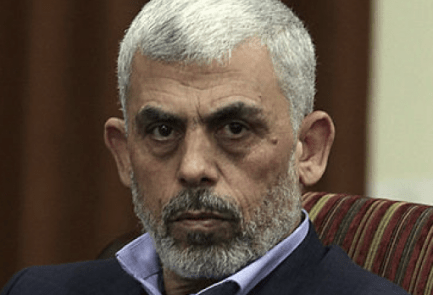
In an interview with Lebanon’s Al Mayadeen TV station, Yahya Sinwar says the foreign assistance to his organization comes “first and foremost [from] the Islamic Republic of Iran” • Sinwar notes that coordination with Tehran is held “almost on a daily basis.”
|
Hamas military leader Yahya Sinwar
| Photo: AP
|
Hamas military leader Yahya Sinwar recently admitted that his organization maintains close ties with Iran.
In an interview with Lebanon’s Al Mayadeen television on May 21, Sinwar was asked whether Hamas’ response to a new Israeli offensive would be unprecedented. “Absolutely. This is certain and beyond any doubt,” he said.
According to a transcript on the Middle East Media Research Institute’s website, he went on to explain that “our resistance in the Gaza Strip has greatly developed its capabilities first and foremost thanks to Allah, but also with the help of the righteous free men of our nation – first and foremost the Islamic Republic of Iran, which has provided the [Izzedine] al-Qassam Brigades and the other factions of the resistance with a lot of money, equipment and expertise, even before the [Israeli] aggression, but especially after it.”
He said that Iran “has provided us with a lot of resources, which allowed for the great development of our capabilities.”
Sinwar went on to elaborate on the close relations Hamas has with Iran and Hezbollah, Tehran’s proxy in Lebanon, as well as with Iran’s Revolutionary Guards Corps.
“We have excellent relations with our brothers in Hezbollah. Our relations with them are extremely developed. We work together and coordinate and are in touch on an almost daily basis. The relations are at the best stage ever. Similarly, our ties with the Islamic Republic of Iran, with brother Qassem Soleimani [commander of the Quds Force, the IRGC’s black-ops arm] and the other brothers in the IRGC leadership are very strong, powerful and warm. Our relations with the Islamic republic are excellent,” he reiterated.
During the interview, Sinwar went out of his way to show that there is no daylight between Hamas and the Iranian regime.
Hamas and Iran, both of which seek Israel’s destruction, maintained very close ties in the past, but the relationship soured when Hamas refused to support Iran’s ally, Syrian President Bashar Assad, in the civil war in Syria. Gaza’s rulers began trying to mend fences with their Iranian patrons in early 2015, after finding themselves in dire straits following a 2014 war with Israel. In 2017, Hamas officials admitted Tehran was once again the Islamist group’s biggest backer.
Many have attributed the improvement in the two’s relations to the resurgence of Assad’s regime.
Source: ‘I’d put my money on the US and Israel against Iran’ – Israel Hayom
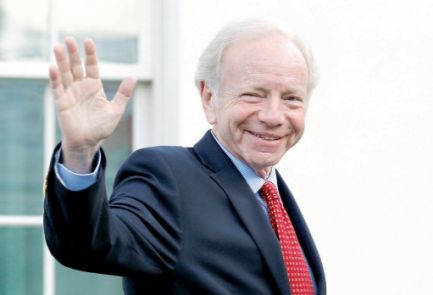
When former Democratic Senator Joe Lieberman heard about President Donald Trump’s decision to relocate the U.S. Embassy to Jerusalem, he was “thrilled and grateful” • “All credit goes to President Trump for having the courage and the confidence,” he says.
|
Former Democratic Senator Joe Lieberman
| Photo: Reuters
|
“It’s very hard to trust the Iranians. There’s a very radical regime in Tehran. During the nuclear agreement negotiations, they kept saying that it doesn’t change anything, they’ll remain anti-American, anti-Israel, anti everyone who doesn’t agree with their revolution,” former U.S. Senator Joe Lieberman sums up the views of the opponents of the 2015 nuclear agreement, essentially reflecting the sentiments coming out of the Oval Office over the last year.
These sentiments led U.S. President Donald Trump to make a dramatic decision two weeks ago and withdraw from the agreement, effectively reimposing tough sanctions on Iran.
Lieberman, in Israel to celebrate the opening of the new U.S. Embassy in Jerusalem, concedes that Trump has surprised everyone and came through for Israel and the Middle East. Lieberman, it seems, is not sorry that the candidate he supported in the 2016 election, Hillary Clinton, ultimately lost to Trump.
Q: You’ve seen quite a few presidents over the course of your career. Do you think that Trump is the most pro-Israel president you’ve encountered?
“So far he’s been extremely pro-Israel. It’s still early in his presidency. For the time I’ve followed U.S.-Israel relations and certainly during the 24 years I was in the Senate, some presidents are closer to Israel and some are not, usually in the term of every president there are some disagreements between the prime minister of Israel and the president of the U.S. But I would say that President Trump is really off to a very strong pro-Israel start.”
Q: Do you think there’s more to come?
“We’ll see. The decision he made to take the U.S. out of the Iran nuclear agreement was a really critically important decision, for the U.S., first of all, it’s the right decision, but it’s also the right decision for our allies in the region, namely Israel and the Arab countries.
“Now the important question is what’s next and to make sure that the European countries aren’t successful in convincing President Trump to essentially water down his decision by adding [sanctions] exceptions. We need to remain tough because that’s the way to get Iran to come to the table and negotiate a better agreement or suffer the consequences. A very powerful alliance is now emerging in the Middle East between the U.S., the Arab world and Israel one side, with Iran and its allies on the other side. I would put my money on the U.S., the Arab world and Israel to prevail in a conflict, if it becomes a conflict.”
America fell in love
As an American, Orthodox Jew and an enthusiastic Zionist, Lieberman has always held hawkish views and expressed his concern for the welfare and security of Israel. But Lieberman was also a Democrat who served 24 years in the U.S. Senate, often acting as the voice of reason for both parties, even at risk to his own political career.
Thus, for example, in 1998, when disturbing details began to emerge about the illicit relationship between then-President Bill Clinton and White House intern Monica Lewinsky, Lieberman gave a courageous address before the Senate, criticizing the Democratic president. In his address, Lieberman accused Clinton of being an embarrassment and of having failed as a role model, calling for “some measure of public rebuke and accountability.”
Republicans, who were looking for any legitimacy to launch an impeachment, welcomed Lieberman’s words with glee. For Clinton, it was a little less welcome. But Lieberman stuck to his guns, becoming the absolute antithesis of Clinton, as well as America’s moral compass.
When then-Vice President Al Gore ran for president in 2000, he quickly realized that he needed someone like Lieberman at his side, to prove to the American public that his ticket puts ethics ahead of political considerations.
And so, in the summer of 2000, Lieberman made history by becoming the first Jew to be nominated by a major party for the position of vice president. While the Gore-Lieberman ticket didn’t win (over a few hundred votes in Florida), the race itself turned Lieberman into a household name. Lieberman proved that a public servant’s religious faith can be an asset rather than a liability, and America fell in love.
Lieberman has always had long term foresight, and he was even willing to openly support the war in Iraq, which cost him the Democratic nomination for Senate in 2006 (he won the seat anyway as an independent). But because of his long-term vision, he was shocked when President Barack Obama agreed to restrict Iran’s nuclear activities for a set time, which would allow them to renew their nuclear efforts at full speed within 10-25 years.
Q: If Republican candidate John McCain had won the 2008 election instead of Obama, would he have negotiated a better nuclear agreement with Iran?
“I think that if McCain had been elected in 2008 he never would have negotiated an agreement with Iran like Obama did. He was very critical against the agreement, and he voted against it.”
Q: So if McCain was president there would be no agreement, and Iran would have forged ahead with its nuclear plans unhindered?
“Who knows what would have happened, but frankly that would have been better than entering a deal that simply required Iran to pause its nuclear program, later having a clear path toward a legal nuclear weapons program, which is not much of an achievement at all. What the president has said, and he’s right, what has to happen is that Iran needs to stop developing nuclear weapons altogether, and if it does, there is a possibility of sanctions being lifted and hopefully better relations with the West.”
Q: Trump’s decision to pull out of the agreement has removed Iran from the global trade market, because anyone that does business with Iran will now be punished. So why is Europe so optimistic about salvaging the nuclear agreement?
“It comes down to a very simple choice, as the U.S. moves toward reimposing full sanctions on Iran – so-called secondary sanctions – the businesses of the world have to decide whether they want to do business with Iran or with the United States. When we put those sanctions back on, they can’t do both.”
“It’s a very easy choice. We have a multi trillion dollar economy, and the Iranian economy is four of five hundred billion and any global business needs access to America and America’s financial system.”
“I think no matter the government leaders’ posturing in Europe, effectively, their businesses are not going back in. These sanctions could be much more effective if they specifically cover the energy sector so that European businesses and businesses from elsewhere that have been working in Iran will feel that they have to pull out.”
Lieberman says that Trump’s recent decision to withdraw the U.S. from the nuclear agreement and reimpose the sanctions is an enormous success for the organization he heads – a bi-partisan organization named United Against Nuclear Iran, which aims to ensure that Iran remains isolated until it abandons its nuclear aspirations altogether.
“What we have focused on is making sure that businesses are observing the sanctions that the U.S. adopts, and publicly shaming them if they violate the sanctions. Together with others, we’ve had a good effect on businesses. Even after the Iran nuclear agreement was executed in 2015, very few European businesses wanted to do business in Iran.”
Q: What were your first thoughts when you heard the U.S. Embassy was being relocated to Jerusalem?
“This is something that I worked on a lot in the 1990s with colleagues from both parties in the Senate. The bill [mandating the relocation of the embassy] finally passed in 1995. What I thought, and what all my colleagues though, was that this was the way to correct a historic injustice. The United States, as is the custom in international law, locates our embassies in every other country in the world, in the city that the host country designates as its capital, except in Israel – our close and dear ally.
“From the U.S. perspective, as a great power, we were allowing ourselves to be essentially intimidated by fears of what would happen if we did the right thing, which was to treat Israel the same way we treated every other country in the world when it came to the capital city and the embassy.”
“President [Bill] Clinton insisted on this waiver that went in, and he and the two succeeding presidents suspended the effectiveness of this clear, strong congressional mandate to recognize Jerusalem as the capital of Israel and move our embassy there, until President Trump.
“I must admit, when I heard that President Trump was thinking about this and had made the announcement, I was really thrilled and extremely grateful.
“To speak frankly, I was someone who supported Hillary Clinton in 2016, I’m a registered Democrat and I’ve known the Clintons for a long time, but all credit goes to President Trump for having the courage and the confidence.
“We have to be grateful to President Trump for keeping his promise and making this change, which really is significant in the history of modern Israel and in the 3,000-year history of Jerusalem.”
Q: You’ve been a stalwart supporter of religion as a positive force in public service. How do you keep that vision alive now that everything is so politicized?
“It’s a real concern of mine. The American people, in their private lives, are religious and they care about values. But in the public life of our country we’ve gone in another direction, and it’s not good for us. We have to go back to history and what matters. It would be better for ourselves, our families, our communities, our county, if we have some norms and values that we hold dear and try to live by.
“In the Torah, the Israelites experienced what happens when you have liberty but no law in the time of Noah. But in Egypt, under Pharaoh, they experienced law without liberty. Clearly what you need is a balance of liberty and law, and that’s how you achieve justice. That’s the way and the mission that we were all given on Mount Sinai with the Ten Commandments.”
Q: Do you think Israel is a good example of coexistence between religion and democracy?
“Yes. The Torah, just like the American Constitution, contemplates that throughout history, we will be trying to realize the ideals of the Ten Commandments, and the law, better and better. Israel really is a beacon of the rule of law and equal opportunity and human rights, generally speaking. There continue to be points of tension between religion and the state, but that’s where leadership comes in, and that’s where Israel can really be a light unto the other nations. I’ve always felt that Israel distinguishes itself because it has a national purpose and a sense of community.”
Q: Are you contemplating going back into politics?
“No. I think my days of elected office are over. But one never knows about appointive office. But I have to say, I’m really very blessed in the life I’m leading. I was 40 years in elected office, but I’m very happy where I am. But I’ll always have my hand in politics. My wife says that politics is a disease for which there is no cure. I think I’m afflicted.”
Source: Report: Israel attacked a Hezbollah base in Syria – Arab-Israeli Conflict – Jerusalem Post
According to the Syrian Al-Marsad organization for human rights, Thursday’s attack on the Dabaa military airport in central Syria was aimed at Hezbollah members and militias.
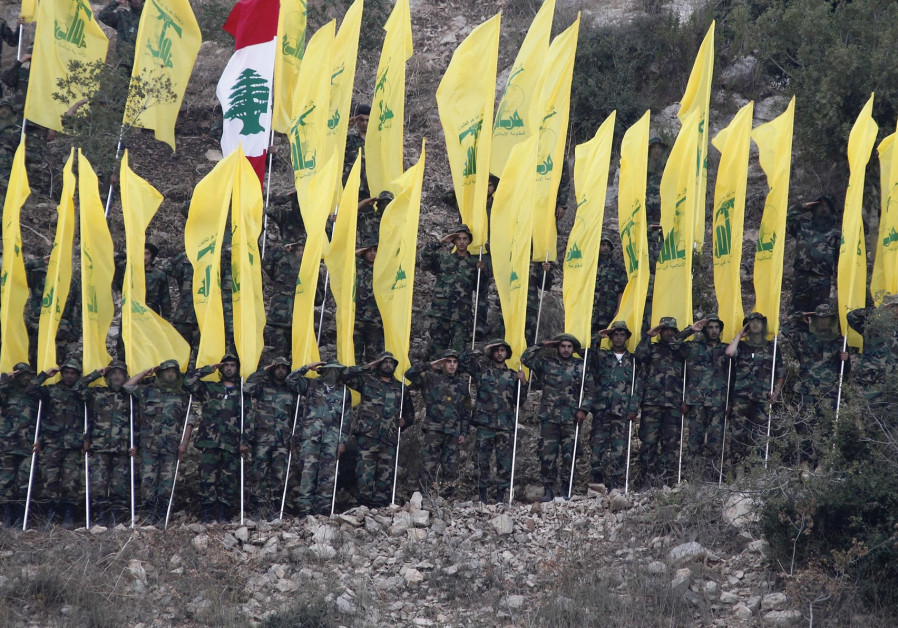
The Syrian Al-Marsad organization for human rights reported on Friday that Thursday’s attack on the Dabaa military airport in central Syria was aimed at Hezbollah members and militias supporting the regime. According to the report, six strong explosions, allegedly related to missile strikes, were heard in the region of Homs, near the Lebanese border. Syrian air defense systems reportedly attempted to intercept the missiles. So far, no fatalities have been reported. Al-Marsad did not state whether the attempt was successful.
The report further claimed that the missile attack was carried out by Israel.
Earlier on Friday, the Lebanese army announced that on Thursday, May 24, five Israeli Air Force planes circled above Lebanese territory for some 15 hours altogether. According to the report, most of the flights took place in the southern and northern regions of Lebanon, but one of them was mentioned to have circled above “all regions of the country.” No offensive action or operation was said to have been carried out by the aircraft.
On Thursday, Syrian state media said a military airport near Homs had come under missile attack which was repelled by its air defense systems.
“One of our military airports in the central region was exposed to hostile missile aggression, and our air defense systems confronted the attack and prevented it from achieving its aim,” state news agency SANA said.
SANA earlier reported sounds of explosions heard near the Dabaa airport, about 12 miles southwest of the central Syrian city of Homs and 6 miles from the Lebanese border.
Pentagon spokesman Lieutenant Colonel Kone Faulkner, when asked about reports of the attack, said the US-led coalition fighting Islamic State in Syria did not carry it out and the coalition does not target Syrian government positions.
British-based war monitor the Syrian Observatory for Human Rights said troops belonging to Hezbollah and other militias allied to Syrian President Bashar Assad are stationed in the Dabaa military airport. It had no information on casualties.
Earlier reports on Thursday from the Syrian opposition pointed to an Israeli attack on a Syrian Revolutionary Guard air missile base at the Dabaa airport west of Homs, by the Lebanese border.
An Israeli military spokeswoman declined to comment.
In recent months Israel has carried out several airstrikes in Syria, targeting Iranian and Iranian-linked targets. Israeli leaders have repeatedly asserted that Jerusalem would not allow Iran to gain a foothold in southern Syria.




 anneinpt
 artaxes
 danmillerinpanama
 davidking1530
 Peter Hofman
 Joseph Wouk
 Peter
Peter Louisiana Steve


Recent Comments