NATO chief: Alliance won’t defend Israel In War With Iran

Posted June 2, 2018 by Joseph Wouk
Categories: Uncategorized

Source: NATO chief: Alliance won’t defend Israel in war with Iran – Middle East – Jerusalem Post

A German Green Party politician questioned the statement on Twitter.

BY BENJAMIN WEINTHAL, ANNA AHRONHEIM
 JUNE 2, 2018 19:43

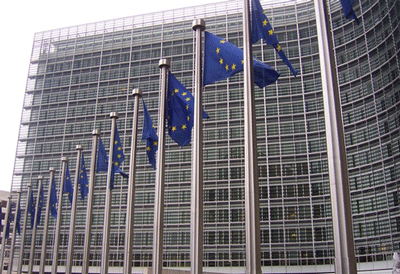
NATO Secretary-General Jens Stoltenberg enters the new NATO headquarters building in Brussels

Jens Stoltenberg, the head of the North Atlantic Treaty Organization (NATO), told a German media outlet on Saturday
that NATO would not side with Israel in the event that the Islamic Republic of Iran attacks the Jewish state..

The NATO chief told Der Spiegel magazine that “the security guarantee [of NATO] does not apply to Israel” because the Jewish state
is not a member of the 29 country alliance.

In response to the Stoltenberg’s announcement, the German Green Party politician and former head of the German-Israel parliamentary group in the Bundestag, Volker Beck, asked on Twitter: “That raises the question. What does this clarification mean for the security dialogue between NATO, EU, Germany and Israel? It points to at least very different starting points and positions of interest.”

Tensions between Israel and Iran have escalated in recent months, with Israel striking Iranian military bases in Syria, including in a May 8 attack that reportedly left 9 Iranian military personnel dead.

Stoltenberg’s statement comes despite growing cooperation between Israeli and the NATO alliance, including Israel’s participation in a joint naval exercise in late May. Earlier Israel-NATO joint naval and air force exercises took place in December.

Israel’s relationship with NATO is defined as a “partnership,” and the country has been a member of NATO’s Mediterranean Dialogue since it was initiated in 1994, along with six other non-NATO Mediterranean countries: Jordan, Algeria, Egypt, Mauritania, Morocco and Tunisia. The goal of the group is to enable dialogue and cooperation on security and counterterrorism issues.

However, Turkey, a member of NATO since 1952, objected to Israel’s cooperation as part of the Mediterranean Dialogue since Israeli-Turkish ties soured six years ago.

Following a Turkish-Israeli reconciliation in 2016, Ankara withdrew its longstanding veto against Israel being accepted as a partner nation to the organization, and Jerusalem opened its first ever diplomatic mission to NATO headquarters in Brussels.

In the face of Russia’s growing military presence in the eastern Mediterranean, especially in Syria, NATO’s strategic interest in the region is increasing — as is Israel’s importance to the alliance.

U.S. considers deploying defense system amid concern over Iranian threat 

Posted June 2, 2018 by Joseph Wouk
Categories: Uncategorized

Source: U.S. considers deploying defense system amid concern over Iranian threat – Diaspora – Jerusalem Post

Iran’s Shahab 3 missiles can already travel 2,000 km, enough to reach southern Europe, and its Revolutionary Guards have said they will increase the range if threatened.

BY REUTERS
 JUNE 1, 2018 14:47
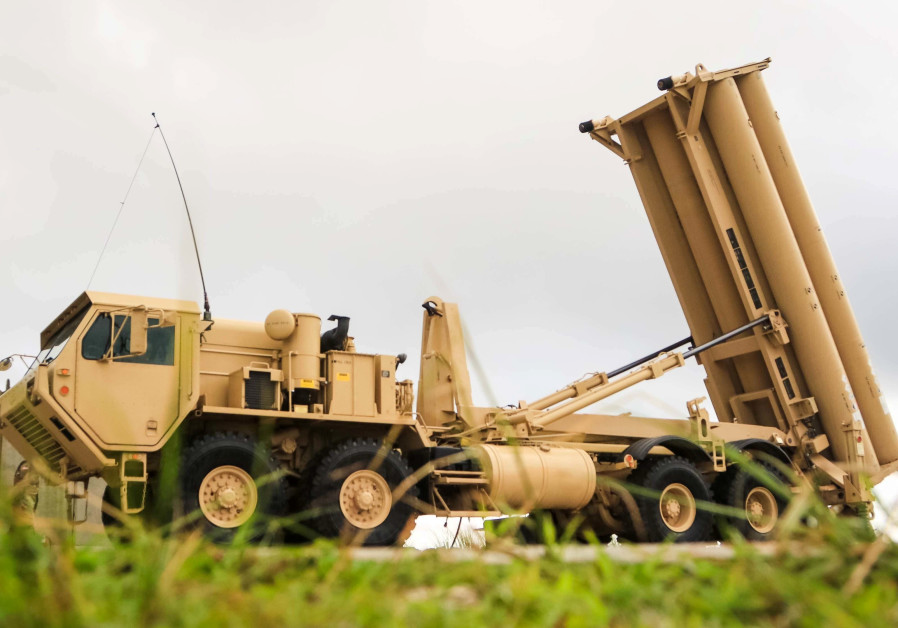
A U.S. Army Terminal High Altitude Area Defense (THAAD) weapon system is seen on Andersen Air Force

BERLIN – The US military has held preliminary discussions about moving a powerful missile defense system to Germany to boost European defenses, according to two sources familiar with the issue, a move that experts said could trigger fresh tensions with Moscow.

The tentative proposal to send the Terminal High Altitude Area Defense (THAAD) system to Europe predates US President Donald Trump’s decision to withdraw from the 2015 Iran nuclear accord, and comes amid a broader push to strengthen Europe’s air and missile defenses.

While Europe and the United States are at odds over the fate of the nuclear agreement, they share concerns about Iran’s continued development of ballistic missiles.

Iran’s Shahab 3 missiles can already travel 2,000 km, enough to reach southern Europe, and its Revolutionary Guards have said they will increase the range if threatened since the range is capped by strategic doctrine, not technology constraints.

US European Command has been pushing for a THAAD system in Europe for years, but the US withdrawal from the Iran nuclear accord has added urgency to the issue, said Riki Ellison, head of the non-profit Missile Defense Advocacy Alliance.

A senior German military official cited the need to add more radars across Europe to better track and monitor potential threats, and cue interceptors if needed.

The US Defense Dept said no such action had been decided.

“There are currently no plans to station THAAD systems in Germany. We do not discuss potential future military planning, as we would not want to signal our intent to potential adversaries. Germany remains among our closest partners and strongest allies,” said Pentagon spokesman Eric Pahon.

Deploying another US defensive system to Europe could reassure NATO allies in southern Europe already within striking range of Iran’s missiles, said one military official from that region.

Talk of deploying a THAAD system in Europe also comes against the backdrop of rising tensions between the West and Russia.

NATO has long insisted that its missile defense program is not directed at Russia, but the alliance has adopted a tougher tone toward Moscow in the wake of the poisoning of a Russian former spy in England.

Moscow denies any involvement in the poisoning, and blames the tensions on NATO’s military expansion eastward, and its assembly of a ballistic missile shield with a key site in Romania that was declared combat-ready in 2016.

Moving THAAD to Germany could plug a radar gap caused by a two-year delay in completion of a second Aegis Ashore missile defense site in Poland that was initially due to open this year.

The issue may be raised in a new Pentagon missile defense review expected in early June.

The review may draw a closer connection between missile defense and a need to deter Russia that was highlighted in the new US national defense strategy, said Tom Karako, senior fellow at the Center for Strategic and International Studies.

MESSAGE TO EUROPEAN ALLIES

One US military official said there had been preliminary talks with German military officials on moving a THAAD system to Ramstein Air Base in Germany, headquarters for the US Air Force in Europe and NATO Allied Air Command.

“It would be a further political message to the Europeans that we’re serious about protecting our allies,” said the official. “The initial assessment is that Germany would very likely not have a problem with a THAAD deployment,”

US General Curtis Scaparrotti, head of US European Command, last week said he was seeking more troops and equipment to deter Russia, but declined further comment.

A second source said German officials were open to the move as a way to better protect civilian populations.

The German defense ministry is working to rebuild its own short- and medium-range missile defenses after years of cuts.

Starting later this year, it also plans to review territorial missile defense needs in a conceptual study that will also look at THAAD and the Arrow 3 anti-missile system built by Israel and the United States, a spokesman said.

The German foreign ministry, which oversees foreign troops stationed in Germany, said it could not confirm sending any signals about a possible THAAD deployment to the United States.

Washington does not need Germany’s permission to move such equipment under existing basing contracts, but the sources said a formal notification would be sent before any move to proceed.

The THAAD system is built by Lockheed Martin Corp with a powerful Raytheon Co AN/TPY-2 radar, to shoot down short-, medium-, and intermediate-range ballistic missiles.

US vetoes Kuwaiti resolution calling for “int’l protection” of Palestinians

Posted June 2, 2018 by Joseph Wouk
Categories: Uncategorized

Source: US vetoes Kuwaiti resolution calling for “int’l protection” of Palestinians – Arab-Israeli Conflict – Jerusalem Post

In UN counter-vote, Israel sees a new strategy that puts it on offense.

BY MICHAEL WILNER
 JUNE 1, 2018 23:43
U.S. Ambassador to the United Nations Nikki Haley vetoes a resolution for protection of Palestinians

U.S. Ambassador to the United Nations Nikki Haley vetoes a vote as Bolivian Ambassador Sacha Llorenty votes for a Arab-backed resolution for protection of Palestinian civilians. (photo credit: SHANNON STAPLETON / REUTERS)

WASHINGTON — When the Trump administration demanded a UN Security Council vote on Friday meant to counteract a Kuwaiti resolution condemning Israel, the Israelis saw the birth of a new diplomatic strategy that it hopes becomes the norm.

Under the plan, Israel would no longer face hostile votes at the council without the US counter-punching, demanding a vote on language that calls out “the hypocrisy of the council,” Danny Danon, Israel’s ambassador to the UN, told The Jerusalem Post on Friday.

“This is changing the rules of the game — we are now on the offense,” Danon said. “Its the beginning of a new strategy and of new rules.”

The US vetoed Kuwait’s resolution, in the works for weeks, in a Friday afternoon vote, alongside abstentions from the United Kingdom, the Netherlands, Poland and Ethiopia. Israel was pleased with the extent of opposition to the measure, and considers the tally a mark of progress, although Israeli officials expressed concern with France’s vote in favor.

“The final text is certainly not perfect– we would have liked it to establish clearly Hamas’ responsibility, and condemn the rocket launches against Israel,” said France’s envoy, Francois Delattre. “But the deep consultations in recent weeks led to significant improvements.”

The Kuwaiti proposal called for “international protection” for Palestinians in Gaza, and declined to mention the role of Hamas in governing the coastal strip. The US measure would have condemned Hamas as a terrorist organization and for its recent firing of over 70 rockets onto Israeli territory, but it too failed, only receiving one vote – from the US itself – in its favor.

“When the United Nations sides with terrorists over Israel, as the Kuwait resolution does, it only makes a peaceful resolution to this conflict harder to reach,” Haley said, explaining the US veto. “It is resolutions like this one that undermine the UN’s credibility in dealing with the Israeli-Palestinian conflict.”

Haley said she was offering members an alternative in the form of a resolution that explicitly condemns Hamas for its “grip” on Gaza. “There is an alternative,” she said. “This resolution rightly brings responsibility where it belongs.”

It is that alternative that has sparked hope in the Israeli team that a new strategy has taken shape.

“From now on, whenever there’s going to be a resolution like this condemning Israel, it won’t be just a US veto that follows,” Danon said. “There will be a proactive effort to expose the hypocrisy of the council.”

June 12 summit is on, says Trump after 2 hours with top North Korean official 

Posted June 2, 2018 by Joseph Wouk
Categories: Uncategorized

Source: June 12 summit is on, says Trump after 2 hours with top North Korean official – DEBKAfile

Kim Yong Chol, right-hand of North Korea’s ruler, hand-delivered a letter from Kim Jong-un to US President Donald Trump at the White House on Friday, June 1. After they talked for nearly two hours, Trump respectfully escorted his visitor to the car and told reporters: Get ready to travel to Singapore next Friday after the “good will” shown by Pyongyang. The summit with Kim Jong-un would not be a one-day event, he said, but the start of a process of negotiation. Trump also disclosed a plan to mark the end of the Korean war after nearly 70 years.

He said Kim had sent him “a very nice letter,” but then denied having opened it yet. Trump’s talks with Kim Yong Chol, North Korea’s former spymaster,  ranged over sanctions, denuclearization, political and security guarantees for the regime and the prosperity awaiting North Korea after denuclearization – in support of which he said Japan, South Korea and China would be involved. He noted that they did not discuss human rights.
Asked by reporters to comment on Russian foreign minister Sergei Lavrov’s visit to Pyongyang Thursday and his advice to North Korea to give up nuclear weapons,  only in return for the phased lifting of US sanctions, Trump said, “if the Russians are positive, I’m happy. I hope they are.” He also commented later: “We have hundreds more sanctions which we have held back because we are talking. You will see how powerful our sanctions are for Iran.”

DEBKAfile: The signing of a peace treaty for ending the Korean war is widely interpreted as closing down the demilitarized zone dividing the two Koreas since the war ended in the 1953 armistice accord. This in turn may augur the start of the historic process of reunification.

Iran Wants to Stay in Syria Forever

Posted June 2, 2018 by Louisiana Steve
Categories: Iran - Syria war

Tags:

Russia and Israel are ramping up pressure on Iran to withdraw. But Tehran is intent on recouping its investment of blood and treasure.


A Syrian man holds the Iranian flag as a convoy carrying aid provided by Iran arrives in the eastern city of Deir Ezzor on Sept. 20, 2017. (LOUAI BESHARA/AFP/Getty Images)

BY BORZOU DARAGAHI | JUNE 1, 2018 VIA Foreign Policy

Source Link:
Iran Wants to Stay in Syria Forever

{Iran is making a big mistake.  They should cut their losses and stop throwing good money after bad.  Of course, they won’t.  Their hate for Israel transcends the very well-being of their own people and will only serve to be their undoing.   – LS}

Hamid Rezai was among the latest batch of soldiers to die for Iran in Syria, killed by an alleged Israeli rocket attack on the T4 airbase near Homs. He was a 30-year-old native of the capital, Tehran, a pious young man whose father had also been a soldier and who left behind an infant daughter. At Rezai’s late April burial service, his weeping mother said there was no stopping him from volunteering to fight in Syria. “It offends me when people ask, ‘Why didn’t you stand in his way?’” she said, according to an account in the hard-line Mashregh News. “My son chose his own path.”

Rezai’s death added to the more than 2,000 Iranian military deaths in Syria since Tehran began pouring troops and tremendous amounts of resources into the country to defend the regime of Bashar al-Assad from an armed uprising. Israel is pressing Russia, the main powerbroker in Syria, and other international players to get Iran to leave Syria, threatening more strikes on Iranian positions near its border at the Golan Heights or anywhere inside the country should it remain. U.S. Secretary of State Mike Pompeo listed Iran’s withdrawal from Syria as one of 12 preconditions for removing sanctions after the Trump administration withdrew from the nuclear deal last month.

But Iranian officials and other experts say the country has invested too much blood and treasure — upwards of $30 billion to date — to fold to international demands, regardless of Israeli airstrikes, or even Moscow’s pressure. Having already made such a massive investment, Iran is determined to reap the potential long-term strategic rewards Syria has to offer — even if it comes at the expense of more lives and money in the short term.

“I don’t think Iran is willing to abandon its presence in Syria,” said the editor of a leading Tehran news outlet, who spoke to Foreign Policy on condition of anonymity. “It gives Iran good leverage against Israel. The ground is very important, and Iran is very skillful at managing the ground — the one area where even Russians are weak. The one who has control of the ground doesn’t take seriously those who don’t.”

Iran insists it is in Syria at the behest of Damascus and will only leave at its request. “As long as necessary and as long as terrorism exists there and the Syrian government wants us to do this, Iran will maintain its presence in Syria and will offer its contribution to the Syrian government,” said Bahram Qassemi, the spokesman for Iran’s foreign ministry, according to the BBC.

Assad said in a Russian TV interview this week that there have never been Iranian troops inside Syria. “We have Iranian officers who work with the Syrian army as help,” he said. “But they don’t have troops.”

Iran, along with its Lebanese ally, Hezbollah, originally intervened in Syria to defend a regime that had long been its loyal ally at a time when much of the world had written off Assad as another casualty of the Arab Spring uprisings. Over the last seven years, the Iranian investment in Syria has escalated to billions of dollars in military and economic pursuits, sometimes intertwined. Iran has recruited and trained militia recruits from across the Middle East and South Asia deployed to Syria, and provided for the families of those killed. According to calculations by Mansour Farhang, a United States-based scholar and former Iranian diplomat, Iran has spent at least $30 billion on Syria in military and economic aid. The estimates by Nadim Shehadi, a Middle East scholar at Tufts University’s Fletcher School of Law and Diplomacy, are even higher, at $15 billion a year and some $105 billion in total. Either figure would be politically controversial at a volatile moment when Iranians at home are demanding accountability and fiscal prudence.

“They’ve made so much economic and political investment,” Farhang said. “It’s very difficult for them to pick up their bags and go home.”

Iranian forces currently operate out of 11 bases around the country, as well as nine military bases for Iranian-backed Shiite militias in southern Aleppo, Homs, and Deir Ezzor provinces as well as about 15 Hezbollah bases and observation points mostly along the Lebanese border and in Aleppo, according to Nawar Oliver, a military researcher at the Omran Center for Strategic Studies, a think tank in Istanbul.

Military analysts said Iran is already under Russian pressure to relocate troops and militias now in Syria’s south to Deir Ezzor, west of the Euphrates River. But Israeli Prime Minister Benjamin Netanyahu warned this week that Israel would strike against any attempt by Iran to “establish itself militarily” in Syria, “not just opposite the Golan Heights, but any place in Syria.” Former Israeli United Nations envoy Dore Gold insisted Netanyahu was not being hyperbolic, but meant the entire country. “From a clear military standpoint, Israel wants Iran out of Syria,” said Gold, now director of the Jerusalem Center, a think tank. “That means Syria within its boundaries.”

But Iran’s involvement in Syria goes beyond a conventional military presence, and it has already begun to plant there the seeds of its unique financial and ideological institutions. Along with about a dozen other Iran-linked organizations, the Iran-backed Jihad al-Binaa, the Islamic charitable foundation that financed and organized the reconstruction of southern Beirut after the 2006 summer war, is already working on large projects to rebuild schools, roads, and other infrastructure in Aleppo and other towns, as well as providing aid for the families of slain Iran-backed Syrian militiamen.

Report: US Oil Output Jumps To Record High In March

Posted June 1, 2018 by Louisiana Steve
Categories: Trump and oil drilling, U.S. oil

Tags:


In the first great Texas gusher, oil is discovered at Spindletop in Beaumont, Texas

Reuters Thursday, May 31, 2018

Source Link:
Report: US Oil Output Jumps To Record High In March

{Strategically, this is good news if you consider Saudi output was just below this figure for the same period. – LS}

U.S. crude oil production jumped 215,000 barrels per day (bbl/d) to 10.47 million bbl/d in March, the highest on record, the Energy Information Administration (EIA) said in a monthly report on May 31.

Production in Texas rose by 4% to almost 4.2 million bbl/d, a record high based on the data going back to 2005. The Permian Basin, which stretches across West Texas and eastern New Mexico, is the largest U.S. oil field.

Output from North Dakota held around 1.2 million bbl/d, while output in the federal Gulf of Mexico declined 1.1% to 1.7 million bbl/d.

The agency also revised February oil production down by 5,000 bbl/d to 10.26 million bbl/d.

U.S. natural gas production in the Lower 48 states rose to an all-time high of 88.8 billion cubic feet per day (Bcf/d) in March, up from the prior record of 87.7 Bcf/d in February, according to EIA’s 914 production report.

Output in Texas, the nation’s largest gas producer, increased 1.3% in March to 22.7 Bcf/d, the most since April 2016.

In Pennsylvania, the second biggest gas producing state, production dipped to 16.4 Bcf/d in March, down 0.6% from February’s record high of 16.5 Bcf/d. That compares with output of 14.8 Bcf/d in March 2017.

Netanyahu on top of the world at home as political wins add up

Posted June 1, 2018 by Joseph Wouk
Categories: Uncategorized

Source: Netanyahu on top of the world at home as political wins add up – Middle East – Stripes

Israeli Prime Minister Benjamin Netanyahu speaks during the U.N. General Assembly meeting at the United Nations on Sept. 19, 2017.

CAITLIN OCHS/BLOOMBERG

By DAVID WAINER | Bloomberg | Published: May 31, 2018

Yoaz Hendel, a former adviser to Benjamin Netanyahu, has become one of his fiercest right-wing critics, denouncing his policies in columns and talk shows, and leading a rally against the corruption that’s allegedly permeated his government.

Now, even Hendel is reconsidering his views of the Israeli prime minister, impressed by his role in the transfer of the U.S. Embassy to Jerusalem, the unraveling of the Iran nuclear deal, and Israel’s strikes against Iranian military forces in Syria. He’s not alone. Netanyahu’s popularity has surged in recent polls, overshadowing the graft probes that have already produced police recommendations to indict him in two cases.

“It’s not that anything’s changed in terms of his attempts to undermine our democracy and institutions,” said Hendel, who quit as the prime minister’s top spokesman in 2012. “But I need to recognize that the way he’s coping with strategic challenges are forcing me, and others on the right who were questioning his leadership, to think about his accomplishments as a statesman.”

Netanyahu’s grip on power is still potentially in jeopardy, and his political successes shouldn’t have a bearing on Attorney General Avihai Mandelblit’s decision whether to indict him in the corruption cases – in theory at least. But it would take an especially aggressive attorney general to indict a popular, sitting prime minister for the first time in Israel’s history, said Eran Vigoda-Gadot, a political science professor at Haifa University.

“In order to put a sitting prime minister in jail, you need to come up with a smoking gun,” Vigoda-Gadot said. “We tend to think the separation of powers is strong enough to help the judicial system take independent decisions regardless of public opinion. But in reality, judges and attorneys general, without admitting it, are influenced by what happens around them.”

Just a few months ago, things were looking bleak for Netanyahu. Several former aides had agreed to testify against him, and as doubts about his political durability grew, right-wing rivals started positioning themselves for the post-Netanyahu era.

Today, gone are the headlines about gifts of pricey cigars and champagne from billionaires. European leaders have berated Israel for killing more than 120 Palestinians at sometimes violent protests in the Gaza Strip, but at home Netanyahu is widely seen as the forceful leader who persuaded Washington to pull out of the Iran nuclear deal and recognize contested Jerusalem as Israel’s capital.

The election of the like-minded Trump came as a boon to Netanyahu, whose ties with the Obama administration had been strained over their divergent approaches on Iran and the Palestinians. During his campaign, Trump pledged to move the embassy and exit the Iran deal, and after he was elected, he delivered.

Israel’s strong economy, for which Netanyahu takes a lot of credit, has helped his standing, too. Gross domestic product has grown above 4 percent for three straight quarters and unemployment is near record lows. Investment in high-tech is high and tourism is booming.

“From the economy to security, Israelis realize they have it good, they don’t want a change at the top,” said Agriculture Minister Uri Ariel, whose Jewish Home party competes for right-wing voters with Netanyahu’s Likud. “Much of this is largely to his credit, and he’s now reaping the political benefits.”

There are high risks to Netanyahu’s strategic accomplishments. Trump’s withdrawal from the Iran deal could backfire and increase conflict in the region. Rocket fire from the Gaza Strip, and retaliatory Israeli airstrikes, could widen into a war embroiling the West Bank and Jerusalem. And the threat still looms of a direct confrontation with Iran over its military presence in Syria.

Critics say there is another Netanyahu in addition to the one who has scored successes on the diplomatic stage – one who poses a danger to Israeli democracy. The prime minister has railed against law enforcement and the media, accusing them of trying to depose his nationalist government. He’s also supported legislation meant to curb police powers, and media have reported he opposes extending the tenure of the police chief overseeing a total of four corruption investigations entangling his government.

“There is a deliberate, orchestrated attempt to undermine the rule of law in Israel as the prime minister’s investigations draw close to an indictment,” Yair Lapid, chairman of the opposition Yesh Atid faction and Netanyahu’s chief rival in polls, said earlier this month. “And the one who’s leading the attack is the one who was supposed to protect it.”

Yet those accusations aren’t likely to sway Netanyahu’s governing partners or a constituency that has remained loyal even during his darkest days. Netanyahu, already 12 years on the job, may be on his way to becoming his country’s longest-serving prime minister.

“We are being bombarded by good news,” said Ran Baratz, another former Netanyahu aide. “The political forces that were positioning against him a few months ago understand that he’s now in full control again.”

Europe makes an about-face on Israel 

Posted June 1, 2018 by Joseph Wouk
Categories: Uncategorized

Source: Europe makes an about-face on Israel » J-Wire

June 1, 2018 by Melanie Phillips – JNS.org

A strange, startling and deeply unfamiliar sound was heard this week. A Trump tweet imploding, perhaps? Kim Jong-Un finally destroying his nuclear arsenal? A distant rumble from the Hawaii volcano?  No. It was the sound of the European Union and United Nations loudly supporting Israel against attack.

In the heaviest onslaught since 2014, southern Israel was attacked from Gaza this week by Islamic Jihad and Hamas launching dozens of rocket and mortar attacks, as well as bursts of machine-gun fire. An Israeli kindergarten was hit, although no one was hurt. After Israel pummeled terrorist targets, Egypt brokered a truce.

What was striking was that the Israel-averse European Union, United Nations, France, Italy, Germany and Ireland criticized the Gaza attackers and expressed support for Israel.

France declared that its commitment to Israel’s security was “unwavering.” Germany said the targeting of Israeli civilians was “malicious,” and that it was “Israel’s right to preserve its security, defend its borders and respond proportionately to attacks.”

Yet two weeks earlier, when Israel defended itself against the attempt by Hamas to storm the Gaza border and murder Israeli civilians, those same European nations and the United Nations grossly misrepresented what happened as the killing of unarmed civilians in “peaceful protests,” despite the vast majority of those killed by Israel being Hamas terrorists.

So what’s changed? Well, first of all, the situation on the ground.

European Union flags in front of the European Commission building in Brussels. Credit: Amio Cajander via Wikimedia Commons.

When Hamas began its weekly riots at the Gaza border fence, some took this as the sign of an inevitable escalation to all-out war. Yet on May 14—the day of the heaviest onslaught that provoked the E.U. criticism—Hamas abruptly called off its invasion. Whatever the reason, the decision was taken to cool it.

Then suddenly, Islamic Jihad—aided and abetted by Hamas—launched its missile onslaught. It was clear this did not enjoy wide support. Russia didn’t want it. Egypt didn’t want it. The Gulf states will tolerate nothing that gets in the way of their tacit alliance with the United States and Israel against Iran. Even Hamas reportedly got cold feet over the scale of the attack.

So who wanted it? Step forward the Islamic Republic of Iran, backers of Hamas and patrons of Islamic Jihad. And why did Iran want it? Because the regime is distinctly rattled.

America’s withdrawal from the nuclear deal has thrown it into disarray. The United States is threatening to impose condign sanctions. The Iranian rial is in freefall. The recent speech by Secretary of State Mike Pompeo extended U.S. policy way beyond curtailing Iran’s nuclear activities.

Iran, he said, must stop supporting Hezbollah, Hamas and Islamic Jihad, support disarming Shi’ite militias in Iraq and withdraw from Syria. The United States would work to counteract its cyber activities, track down its operatives and proxies and “crush” them.

Israel is now destroying more and more Iranian assets in Syria with U.S. backing.

Moreover, a wedge is being driven between Russia and Iran. Russia needs stability in the region to safeguard its interests. The last thing it wants is for Israel to be drawn further into Syria. So Russia is trying to keep Iranian forces away from Israel’s northern border and has said the Islamic Republic should pull its forces out of Syria once a political settlement is reached.

Galvanized by the new U.S.-led dynamic, the Iranian people are continuing to revolt. There’s now a Twitter hashtag in Farsi calling for regime change, as well as another that reads: “Thank you Pompeo.” If this escalates, the Iranian people can bring down the regime.

In the space of a few months, therefore, it has gone from being an unstoppable regional force to scrabbling to survive. So in desperation, it is playing two of its remaining cards.

The first was using its proxies in Gaza to unleash the missile barrage against southern Israel. The second is its urgent wooing of the European Union to persuade it to defy the American call to impose global sanctions.

At this moment, the European Union chooses to back Israel against the Gaza missile barrage—the same European Union that all but ignored the missile barrages that led to the 2014 Gaza war in which, of course, it denounced Israel for finally defending itself.

When it came to the Gaza border riots, however, the European Union was not united in its condemnation of Israel. The Czech Republic Foreign Minister Martin Stropnický said rushing the security fence should be regarded as a form of terrorism.

Earlier, Hungary, Romania and the Czech Republic had blocked an E.U. statement condemning the U.S. embassy move while other countries, including Slovakia, Greece and Poland, reportedly also expressed reservations. On Monday, European foreign ministers discussed Gaza at their monthly meeting but failed to issue a statement, a sign they didn’t agree.

But the real reason for the E.U.’s surprising change of tone is surely that the presence in the White House of President Donald Trump has changed everything.

America backed Israel strongly over the Gaza riots. While eight E.U. members lined up at the United Nations to call on Israel to refrain from using “excessive force” against “peaceful protests,” the U.S. ambassador Nikki Haley said the violence came from those who rejected the existence of the State of Israel. “Such a motivation—the destruction of a United Nations member state—is so illegitimate as to not be worth our time in the Security Council, other than the time it takes to denounce it.”

The European Union is beginning to grasp that the implicit criticism of those who fail to join the United States in supporting Israel carries consequences. President Trump has made it clear that he expects European and other countries to support him in imposing sanctions against Iran. If they don’t, they will have to choose: trade with Iran or trade with America. They can’t do both.

Meanwhile, Italy is politically imploding and threatening the whole E.U. project. The financier George Soros has said the European Union is now facing an existential crisis.

Is the E.U. going to choose this moment to get up America’s nose still further? Hardly. So it was presumably anxious to demonstrate to Trump that, despite its earlier sanitizing of Hamas as “unarmed protesters,” it was really against Hamas after all.

If so, such declarations won’t cut it. For the world has reached a tipping point, and Iran is key. To avoid a truly terrible conflagration, the Iranian regime has to be brought down.

Israel, the United States, the Gulf states and the Iranian people are behind such a strategy. Astoundingly, Britain and the European Union stand with the regime against them. They must now decide if they will join the attempt to defeat the forces of evil—or else suffer the consequences.

Melanie Phillips, a British journalist, broadcaster and author, writes a column for JNS every two weeks. Currently a columnist for “The Times of London,” her personal and political memoir, “Guardian Angel,” has been published by Bombardier, which has also published her first novel, “The Legacy,” released in April. Her work can be found at her website,  www.melaniephillips.com.

Top Saudi commentator calls for peace with Israel

Posted June 1, 2018 by Joseph Wouk
Categories: Uncategorized

Source: Top Saudi commentator calls for peace with Israel – Israel Hayom

Gaza is on borrowed time 

Posted June 1, 2018 by Joseph Wouk
Categories: Uncategorized

Source: Gaza is on borrowed time – Israel Hayom