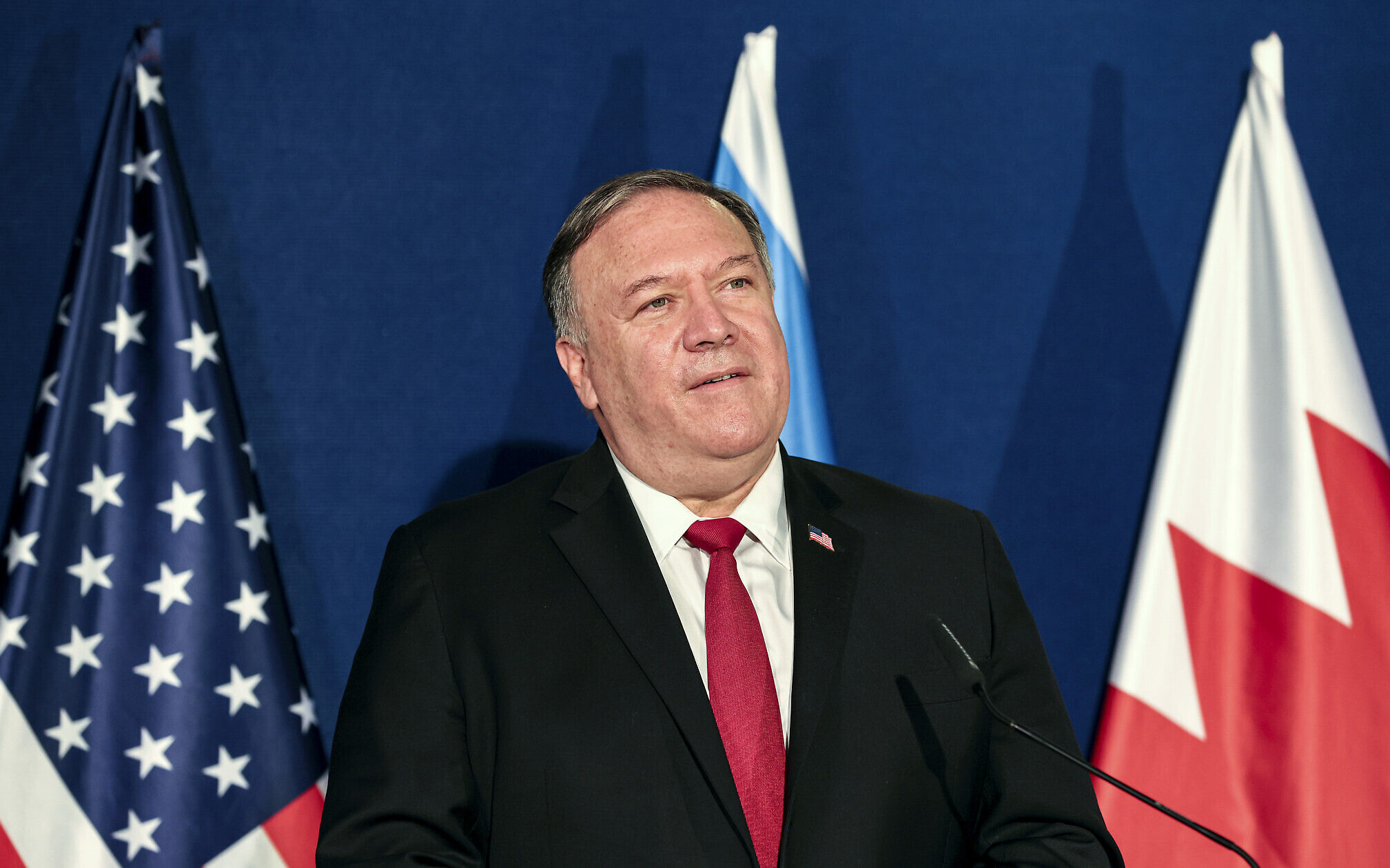
US Secretary of State Mike Pompeo wrapped up a visit to Israel, replete with dramatic policy announcements, with a conversation with The Jerusalem Post on Friday.
Just the day before, Pompeo became the first US secretary of state to visit a West Bank settlement, as well as the Golan Heights. And while he was at the Psagot Winery in Sha’ar Binyamin, he announced that products exported by Israelis in Judea and Samaria to the US would be labeled “Made in Israel,” and that the US would consider the anti-Israel Boycott, Divestment and Sanctions (BDS) movement to be antisemitic and all funding would be revoked from its affiliates.
But there are many more issues regarding Israel on the agenda, from continuing the maximum pressure campaign on Iran to the momentum created by the Abraham Accords.
Pompeo wouldn’t quite admit that his time in office is, in all likelihood, ending in two months – in keeping with his boss US President Donald Trump’s continuing challenge to the election results that are in favor of Democratic candidate Joe Biden. But much of his remarks still had the air of a retrospective, of someone looking back at a job that he considered to be well done.
The following is a complete transcript of the interview, edited for clarity.
Israel’s security establishment is worried that another Obama-esque approach to Iran will fail a second time and will once again result in a triumphant Iran flush with billions of dollars in cash. Then again, Joe Biden is not Barack Obama, and the world is in a different place.
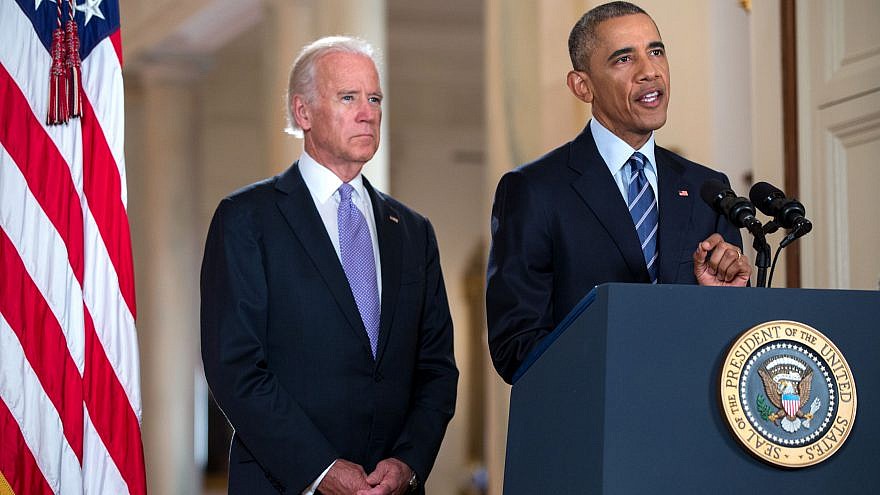
(November 12, 2020 / JNS) One of the top foreign-policy issues President-elect Joe Biden will be forced to address upon taking office in January will be the Iranian threat.
During the campaign trail, in what was seen as a dig at U.S. President Donald Trump’s efforts to apply maximum pressure on Iran through sanctions, Biden said he would handle Iran “the smart way” and would give Iran “a credible path back to diplomacy.” Biden has also said that the United States could rejoin the deal “as a starting point for follow-on negotiations” if Iran commits to full compliance.
But Israel’s security establishment is worried that another Obama-esque approach to Iran will fail a second time and will once again result in a triumphant Iran flush with billions of dollars in cash. Any letting down of the guard could also embolden world leaders eager to turn a blind eye to Iranian violations and hegemonic ambitions in order to seal a deal, regardless of Israeli or Gulf state fears.
Asaf Romirowsky, executive director of Scholars for Peace in the Middle East and a senior non-resident fellow at Bar-Ilan University’s Begin-Sadat Center, told JNS that Biden will “have a hard time disregarding the renewed sanctions on Tehran and their effects.”
“As a veteran politician, Biden has a greater appreciation of the U.S.-Israeli alliance and will not compromise Israeli security,” said Romirowsky. “Moreover, his history with Israel will contribute to his attitude that would presumably be less acrimonious as it was during the Obama years.”
Biden, however, may indeed feel the need to revert back to his old boss’s methods of diplomacy in order to appease Iran.
Iranian President Hassan Rouhani, quoted by the state-run IRNA news agency, said the next U.S. administration must “compensate for past mistakes” and “return to the path of complying with international agreements through respect of international norms.”
‘Not fully cooperating with the IAEA’s investigation’
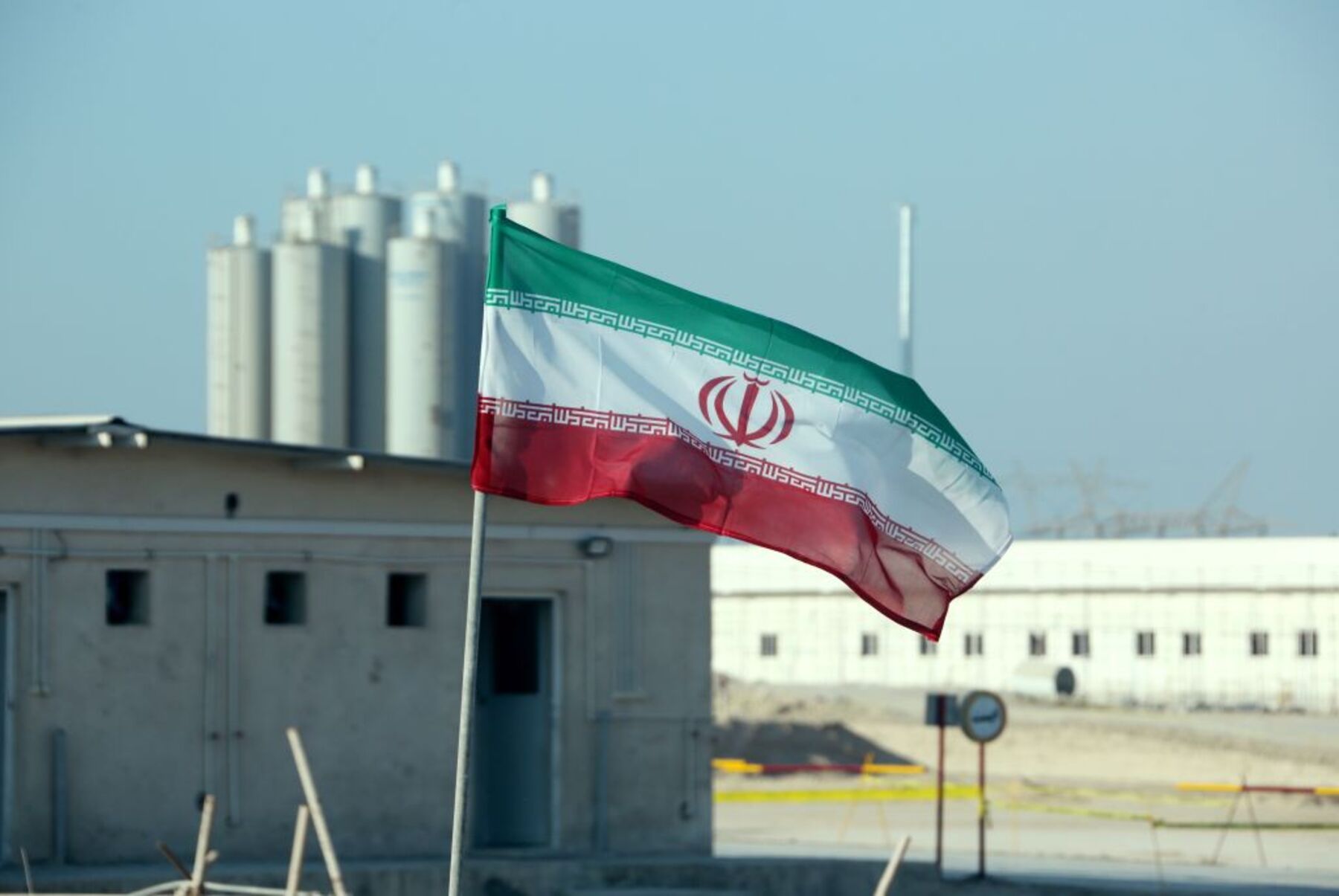
According to the latest report by U.N. inspectors, Iran has 2,440 kilograms of enriched uranium stockpiles, which far exceeds the 300 kilograms allowed under the 2015 nuclear deal. Experts say that is enough material to make at least two nuclear weapons. The report said that Iran is also enriching uranium to as much as 4.5 percent purity, which is also higher than the limits in the deal. Additionally, Iran has also completed the transfer of a cascade of advanced centrifuges from a plant above ground to an underground site, which can protect the plant from aerial attacks.
What has Israeli experts worried is Iran’s blatant non-compliance with the deal and clear interest in pursuing nuclear weapons. It continues to install advanced centrifuges and is developing its intercontinental ballistic-missile program.
Iran’s lies and deceptions with regard to its intent for its nuclear program, which it says is for peaceful purposes only, have been handily proven by Israel in a number of instances. But each time Israel requested that the international community investigate, Israel was met with a slow reluctance to comply.
In 2018, Mossad agents broke into Iran’s secret nuclear archives in the heart of Tehran and walked away with about 50,000 pages and 163 compact discs worth of intelligence proving Iran had misled the United States and Europe about its intentions even while it negotiated the Joint Comprehensive Plan of Action, or JCPOA.
The International Atomic Energy Agency (IAEA) was slow to respond.
In his 2018 address to the U.N. General Assembly, Israeli Prime Minister Benjamin Netanyahu urged the international community to investigate what he said was a secret nuclear facility in the Turquzabad district of Tehran.
Again, the IAEA took its time investigating, but eventually, it did demand an explanation from Iran over why traces of nuclear particles were discovered at the site.
According to the United States Institute of Peace (USIP), “besides its public denials, Iran does not appear to be fully cooperating with the IAEA’s investigation into the site.”
The USIP also said that the IAEA “continues to question Iran about the site,” but the agency had “not received an entirely satisfactory reply.”
Yet even with clear evidence of Iran’s rogue behavior, Romirowsky said Biden, like Obama, “believes that a deal is still the best way to prevent a nuclear Iran.”
Romirowsky warned that Biden is entering “a very different Middle East landscape that he and his advisers cannot ignore, specifically regarding Israel, and its newfound Arab relations and collaboration in particular, as it relates to the threat of Iran illustrated by security and military ties between Israel, the Egyptians and the Saudis.”
‘Their best interests in mind’
Uzi Rabi, director of the Moshe Dayan Center for Middle Eastern Studies at Tel Aviv University, told JNS he is concerned that Israel will soon find itself “at the eleventh hour” with regard to Iran’s nuclear weapons program. “We are in a very delicate situation,” he said.
He noted Biden’s intentions to negotiate with Iran, as well as Tehran’s eagerness to reach an agreement due in part to its poor economic plight.
“The question is what sort of agreement Biden has in mind,” said Rabi. “Will it have modifications with regard to Iran’s ballistic-missile program, Iran’s aggression in the region and bringing in more monitoring? That would be great.”
The JCPOA ignored or mismanaged all three of these issues.
Rabi said he hopes that the Americans have “learned a lesson from what happened before” regarding Iran’s disingenuous approach to negotiating. He also said the Americans “cannot get to the negotiating table and play it by ear. They must have a clear end game.”
He explained that the important elements that were left out of the deal, such as Iran’s ballistic-missile program, its hostile behavior in the Middle East, and improved inspections, should be included in any new agreement.
“One should hope that Biden and his team is coming up with a fresh approach about how to deal with Iran,” he said.
Rabi said that behind the scenes, Gulf state leaders fear that Biden will follow Obama’s appeasement approach and will want to lift sanctions and reduce pressure on Iran.
This mistaken approach could have a negative “snowball effect,” he warned. “Biden should bear this in mind and internalize what has happened in the Middle East.”
Ultimately, said Rabi, this is Biden’s “litmus test.”
“If Biden performs in a successful way when it comes to the Iran file, that will make life easier for everyone in the Middle East, including the United States. If the opposite happens, you can definitely expect a negative snowball effect,” he stated.
Rabi echoed Romirowsky, suggesting that Israel needs a joint agreement with Egypt, Saudi Arabia and the United Arab Emirates by which they can influence some changes to any new Iran deal if and when it happens.
In order to try and be involved in any new negotiations, Israel and its Arab partners should “strive for a dialogue with those in the future Biden administration,” said Rabi.
Romirowsky added that “Iran and its proxies are still the largest destabilizing factors to the region.”
As such, he said, “a Biden administration will contend with a more unified Middle East—a Sunni Crescent that includes Israel. This will require an understanding of Israeli deterrence bolstered by an Israeli Qualitative Military Edge. Trump’s policies towards Israel gave Israel a sense of relief and gratitude post-Obama.”
According to Romirowsky, moving forward, Biden will need to “convince Israelis that he will have their best interests in mind when it comes to Iran.”
Military says Iranian command base near Damascus airport also among targets hit overnight in response to attempted border attack; army goes on high alert for possible retaliation
The Israel Defense Forces said a round of airstrikes it carried out in Syria on Wednesday morning was meant to send a message to Iran to leave the country, specifically the border area, following an attempted attack on the Golan Heights that was thwarted this week.
In the predawn hours of Wednesday morning, Israeli fighter jets struck eight targets in Syria — roughly half near Damascus and half along the Golan border — in response to an Iranian-directed effort to set off anti-personnel mines against Israeli troops, IDF Spokesperson Hidai Zilberman said. The explosives were disarmed on Tuesday morning.
According to the spokesman, the strikes targeted a number of facilities controlled by Iran’s Islamic Revolutionary Guards Corps’ expeditionary Quds Force, which commands and supports proxy militias in Syria. In addition, the Israeli fighter jets bombed a Syrian military base, as well as several Syrian anti-aircraft batteries that fired at them.
The Syrian state news agency SANA said three soldiers were killed and one was injured in the attack, which it said targeted sites in southern Syria. There were no immediate reports of casualties from the IRGC.
The Syrian Observatory for Human Rights, a pro-opposition organization based in the United Kingdom, said 10 people in total were killed in the Israeli strikes, some of them Iranian. This could not be immediately confirmed. The Observatory has in the past been accused of inflating and even inventing casualty figures. In general, Israel does not intentionally target people in its strikes, instead focusing on infrastructure, as this has been found to reduce the likelihood of retaliation by Iran and its proxies.
Zilberman told reporters that the retaliatory attack was intended as both a message to Iran that “we won’t allow Iranian entrenchment at all and next to the border specifically,” and a message to Syria that it will be held responsible for allowing Tehran to maintain a presence in its country.
The spokesman said that Israel tried to send a similar message to Iran and Syria in August after a previous attempt to plant bombs along the border, but it evidently “wasn’t received.”
Zilberman said the military was prepared for the possibility of retaliation from Iran or Syria, with Iron Dome and other air defense systems on high alert.
Israel views a permanent Iranian military presence in Syria as an unacceptable threat, which it will take military action to prevent.
Defense Minister Benny Gantz threatened further action if Iran again attempted to carry out attacks on Israeli forces or continued to establish a permanent military presence in Syria.
“The IDF last night struck military targets belonging to the Iranian Quds Force and the Syrian military in response to the planting of bombs on the Syrian border within Israeli territory. I say again to our enemies: Israel will not accept violations of our sovereignty anywhere, and we will not allow a dangerous force build-up on any border,” Gantz said in a Hebrew video statement.
Zilberman did not reveal the nature of all eight targets of the predawn attack, but said they included: a military base used by Iran to direct its forces in the country located just next door to Damascus International Airport; a secret barracks used by top Iranian commanders in Syria, which is also used to host visiting delegations from Tehran, southeast of Damascus; a base of the Syrian military’s 7th Division, which cooperates widely with Iran; and mobile Syrian surface-to-air missile batteries.
According to the spokesman, the military knew there were Iranian officers in the barracks when the attack was carried out, but did not specifically target them or the areas in the building where they were located.
In addition, the IDF said it targeted arms warehouses in Syria. Zilberman did not comment on the nature of the sites that were bombed on the Golan border.
The Syrian state news outlet also said Syrian air defenses shot down several incoming Israeli missiles, though war analysts generally dismiss the regime’s regular claims of interceptions as false, empty boasts. Zilberman said the military was still reviewing the results of the attack so he could not say definitively if the claim was true, but that if the Syrian military had succeeded in downing any incoming missiles, it was “extremely marginal if it happened at all.”
Though Israel officially maintains a policy of ambiguity regarding its activities in Syria — in the hopes of not giving Iran and Syria a pretext to respond — the IDF consistently acknowledges carrying out airstrikes on targets in Syria that either are in response to specific attacks from the country, as was the case this week, or were attempts to preempt and prevent such attacks.
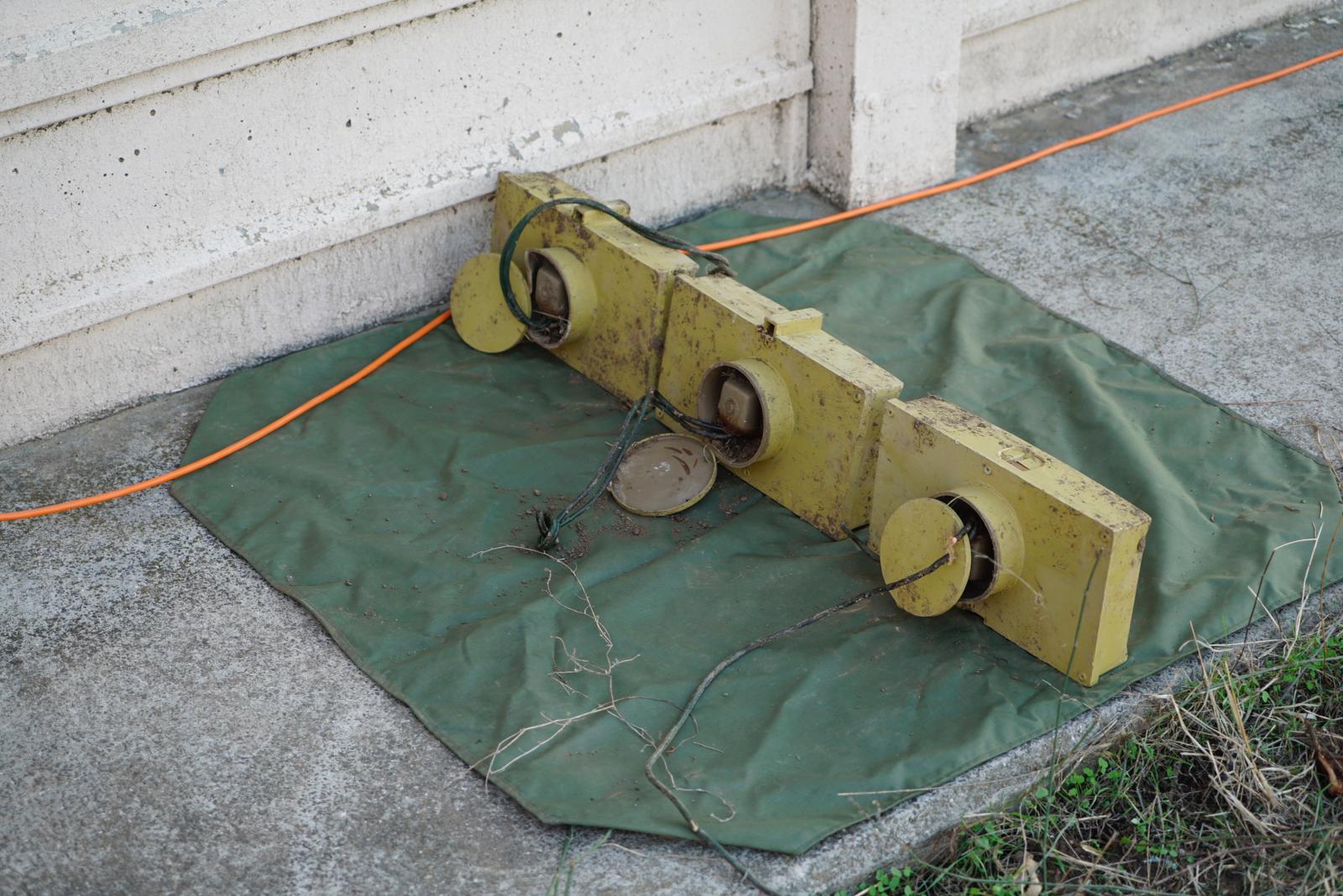
According to Zilberman, the three Claymore-style mines planted along the border were set there by Syrian nationals who live near the border, at the instruction of the IRGC Quds Force. The mines were uncovered in a buffer zone near the border that is under Israeli control but is on the Syrian side of the security fence, where the IDF regularly conducts patrols, indicating that the explosives were meant to be used against soldiers.
It was the same area where Iranian-backed Syrian operatives tried to plant mines in August, though in that case the four men were spotted by the IDF at the time and killed.
Since that attempt, the IDF has more closely monitored the area to prevent a similar attack.
Zilberman said the military did not yet know when the three mines were planted along the border, but that it seemed to have been several weeks ago. The IDF was investigating how the Iranian-backed operatives were able to evade detection and plant the bombs.
On Tuesday morning, the IDF sent a team of combat engineers into the area to disarm the mines.
Zilberman said the military called on the UN peacekeeping force that is meant to maintain the 1974 ceasefire between Israel and Syria to prevent such attacks in the future.
The IDF has launched hundreds of strikes in Syria since the start of the civil war in 2011 against moves by Iran to establish a permanent military presence in the country and efforts to transport advanced, game-changing weapons to terrorist groups in the region, principally Hezbollah.
Fox News senior strategic analyst Gen. Jack Keane (Ret.) joins ‘Fox News @ Night’ with reaction
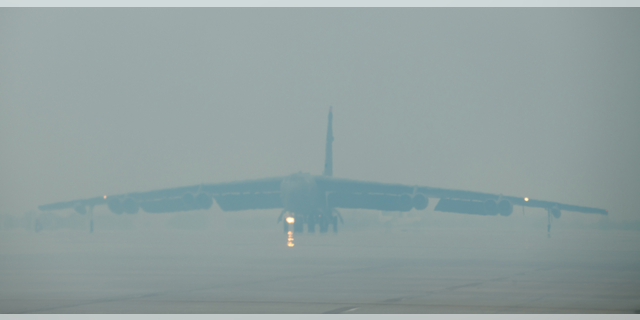
The U.S. military deployed B-52 bombers to the Middle East Saturday, just days after the Trump administration announced a partial withdrawal of American troops from Afghanistan and Iraq.
U.S. Central Command said the U.S. Air Force B-52H “Stratofortress” aircrews conducted the mission on “short notice” to “deter aggression and reassure U.S. partners and allies.”
“The ability to quickly move forces into, out of and around the theater to seize, retain and exploit the initiative is key to deterring potential aggression,” said Lt. Gen. Greg Guillot, 9th Air Force commander.
“These missions help bomber aircrews gain familiarity with the region’s airspace and command, and control functions and allow them to integrate with the theater’s U.S. and partner air assets, increasing the combined force’s overall readiness.”
President Trump’s new acting defense secretary Christopher Miller announced Tuesday a drawdown of troops to 2,500 in Afghanistan and 2,500 in Iraq by Jan. 15 of next year. There are roughly 4,500 troops in Afghanistan and 3,000 in Iraq right now.
“In light of these tremendous sacrifices, and with great humility and gratitude to those who came before us, I am formally announcing that we will implement President Trump’s orders to continue our repositioning of forces from those two countries,” Miller said Tuesday.
“This is consistent with our established plans and strategic objectives, supported by the American people, and does not equate to a change in policy or objectives.”
Secretary of State Mike Pompeo was in Doha, Qatar, Saturday to take part in what could be his last round of negotiations with the Taliban and Afghan government about a peace deal.
Violence in Afghanistan soared this year, as eight people were killed just hours before peace talks were set to begin Saturday when mortars hit a residential area of Kabul.
A B-52H “Stratofortress” at Minot Air Force Base in North Dakota Friday.
It is unclear where the B-52H bombers went in the Middle East Saturday, but they left from Minot Air Force Base in North Dakota.
Minot Air Force Base is the only base in the United States that houses both intercontinental ballistic missiles in underground silos as well as a fleet of bombers also capable of carrying nuclear warheads.
It marks the first B-52 mission to the Middle East in several months. In January, after the U.S. military’s elite Joint Special Operations Command killed Iranian General Qassem Soleimani in a drone strike, six B-52 bombers were dispatched to Diego Garcia in the Indian Ocean.
The president-elect needs to decide how much help he wants to accept from the Israelis.
When President-elect Joe Biden finally starts getting intelligence briefings, he may want to pay special attention to Israel’s successful operation against Abu Muhammad al-Masri, al-Qaeda’s second in command.
The significance of that operation, which took place in August and saw al-Masri shot dead in the street, is its location: Iran. According to the center-left conventional wisdom, this sort of thing should be impossible. While many analysts acknowledge that senior al-Qaeda leaders fled to Iran after the fall of the Taliban in Afghanistan, they have insisted that there was no significant relationship between the Shiite majority regime in Tehran and the Sunni-jihadist terrorist group.
In fact, al-Qaeda’s No. 2, who was wanted by the FBI for his role in planning the 1998 attacks on U.S. embassies in Africa, was living freely in an Iranian suburb. It should be obvious by now that Iran is willing to cooperate with al-Qaeda when their interests converge.
Iran and al-Qaeda have cooperated for decades against U.S. targets in the Middle East. “There is ample evidence going back to the 1990s that Iran is willing to work with al-Qaeda at times,” said Thomas Joscelyn, a founding editor of the Long War Journal. “Sometimes their interests are opposed and sometimes they converge.”
This came to the public’s attention in 2017, after the CIA released a batch of documents recovered at the compound of Osama bin Laden in Pakistan. One of those documents is a 19-page memo laying out the quarter-century history of al-Qaeda’s relationship with Iran. It says Iranian intelligence offered al-Qaeda money, arms and training and facilitated the travel of some operatives, while providing safe haven for others. Indeed, after the fall of the Taliban, the wives and children of bin Laden and his deputy fled to Iran.
All of this is relevant to Biden as he navigates how to achieve his own stated goal of rejoining the Iran nuclear bargain from which the U.S. withdrew in 2018. If Biden proceeds with his current plan of lifting nuclear sanctions on Iran in exchange its return to compliance with the nuclear agreement, what will his administration do to deter Iran from supporting terrorism? The current administration has sanctioned Iran’s central bank and military for sponsoring terror. Will Biden keep those sanctions in place?
Another question for Biden is whether he will encourage Israel to continue its daring intelligence operations inside Iran. When Biden was vice president, the U.S. discouraged Israel from assassinating Iranian nuclear scientists, particularly as it conducted the diplomacy that led to the 2015 nuclear deal. In the past four years, however, Israeli operations have been successful. The killing of al-Masri occurred during a summer in which a number of strategic sites inside Iran exploded as a result of what appears to be Israeli sabotage. Will Biden urge Israel to cool its jets?
Ten years ago, it was understandable that America would want to restrain Israel while it negotiated with Iran. The Obama administration tried but failed to reach a much stronger and more durable deal that restricted Iran’s nuclear ambitions. Now Biden should consider whether pursuit of that flawed deal is worth the effort. In the next two months, he and his transition team will have to decide whether constraining Israel helps or hinders the goal of containing Iran.
Posted November 20, 2020 by Joseph Wouk Categories: Uncategorized
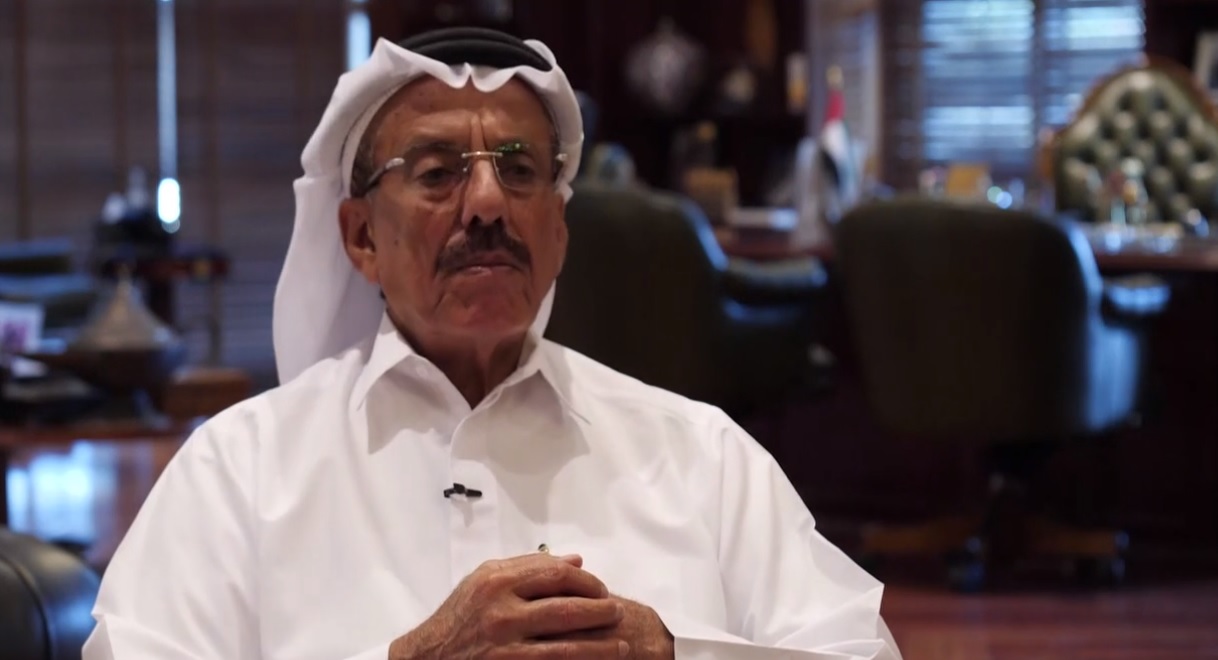
Khalaf Ahmad Al Habtoor, who runs UAE conglomerate, is looking forward to doing business with Israelis; says Iran threatens region while supporting ‘all terrorists in the world’
By TOI STAFFToday, 1:41 pm 1Emirati businessman Khalaf Ahmad Al Habtoor (Channel 13 screenshot)
A top Emirate businessman has told an Israeli TV network that Iran, Hezbollah and global terrorism are major threats that must be dealt with, and that he hopes Israel will make Hezbollah “disappear from the Earth.”
Khalaf Ahmad Al Habtoor is the head of Al Habtoor group, a major conglomerate that deals in real estate, education, hospitality, automotive industries, publishing and other areas. He is responsible for one of Dubai’s more iconic buildings, the Burj Al Arab hotel.
The billionaire had been a proponent of normalization with Israel even before the United Arab Emirates and the Jewish state signed an agreement to establish formal ties this year.
“I don’t really like the word of peace because we have no argument, we have no dispute between us and the Israelis,” he told Channel 13 in a report that aired Thursday night.
Al Habtoor said Iran presented a threat to the whole Middle East. “It supports all the terrorists in the world. I am against war personally, but I am with erasing all the terrorists on Earth,” he said.
He also cited Lebanon’s Hezbollah terror group as a major regional problem.
“Hezbollah must disappear, must disappear from the Earth,” he said. “Hezbollah controls everything [in Lebanon], if Hezbollah’s there we cannot help. Somebody, someone, some country must get rid of this, and the only one I think [can do it] which is on the border is Israel.”
Asked then if he meant Israel should deal with Hezbollah, Al Habtoor replied: “One hundred percent. These are the only people, because they know them. And to make peace with Lebanon, that will be excellent, for Israelis and Lebanese to move [closer] to each other… This will be a great gift.”Hezbollah terrorists stand in formation at a rally to mark Jerusalem Day, or Al-Quds Day, in a southern suburb of Beirut, Lebanon, on May 31, 2019. (AP Photo/Hassan Ammar)
Al Habtoor’s company was one of the first to announce plans for joint business in Israel following normalization. In September it said it was working with Israeli airline Israir on launching direct routes between the countries, as well as further as-yet-unannounced collaborations.
He said the two nations were currently in “a period of engagement. Not the marriage — engagement. And we see each other, how we help each other, how we can cooperate.”
With their economies hard hit by the coronavirus pandemic, the UAE and Israel are hoping for rapid dividends from the normalization deal.
They have already signed treaties on direct flights, along with accords on investment protection, science and technology.
Earlier this month, Abu Dhabi gave its final okay to a visa exemption program with Israel. That agreement still must be ratified by the Israeli cabinet and Knesset before it enters into force. The Knesset last month approved Israel’s normalization deal with the UAE by an overwhelming majority, all but ensuring that the visa program will be confirmed in the near future.Palestinian Authority President Mahmud Abbas speaks in the West Bank city of Ramallah on September 3, 2020. (Alaa Badarneh/Pool/AFP)
Israel’s deals with the UAE and Bahrain infuriated the Palestinians, who condemned the Gulf nations’ actions as a “stab in the back” and a “betrayal.” They recalled their ambassadors to the countries.
However, media reports Wednesday in Reuters, Saudi-backed al-Arabiya and the major Palestinian news agency Ma’an indicated those envoys had been quietly returned recently.
In mid-September, the Arab League struck down a draft resolution presented by the PA that would have condemned normalization with Israel. While the Palestinian Authority attempted numerous strategies since then — such as beginning unity talks with its rival Hamas and engaging with the UAE’s regional rivals Turkey and Qatar — they bore little fruit.
JERUSALEM — Israel will receive the first of four Sa’ar 6 ships in December as part of a broad shift in naval doctrine that will see the country defend more areas at sea at a longer distance for a longer period of time, according to the Israel Defense Forces.
The coming shift in maritime activity comes in the wake of Israel signing a pipeline deal with Cyprus and Greece in the summer, and joining an Eastern Mediterranean gas forum with Cyprus, Greece, Egypt, Jordan and the Palestinian Authority. It also comes amid new investments in Israeli’s Haifa Port that could involve the United Arab Emirates; the two countries recently agreed to improve relations.
A Nov. 11 ceremony will see the Israeli flag replace the German flag on the ship, which was made in Kiel, Germany, by Thyssenkrupp Marine Systems. The IDF expects the Sa’ar 6 to defend offshore infrastructure — making up an area over twice the size of Israel’s land territory. The discovery of natural gas reserves and Israel’s desire to protect its exclusive economic zone were the main motivations behind the 2013 decision to order the ships.
The gas rigs and sea infrastructure, including Israel’s Karish-Tanin, Leviathan and Tamar fields, are essential and must be defended, the IDF has said.
“According to assessments, terror armies in our region possess the ability to fire high-trajectory rockets of a wide range that are able to reach the gas rigs,” the IDF explained. “We want to deter enemies from even aiming at the rigs. It [the Sa’ar 6] has an enormous radar so it can be a standalone unit. Abilities and probability of protection increases, as it is connected to Iron Dome, David’s Sling and other air defense. If it detects threats, it can transfer data to land networks to engage targets.”
Gas rigs are vulnerable strategic platforms; one missile strike could be catastrophic. In addition, the IDF said, the Navy reports Israel receives 98 percent of its imports by sea.
The commander of the Israeli Navy, Maj. Gen. Eli Sharvit, also noted that “the mission of defending Israel’s exclusive economic zone and strategic assets at sea is the primary security mission of the Israeli Navy. These assets are essential to the operational continuity of the State of Israel, and having the ability to protect them holds critical importance.”
What can the ship do?
Several of the ships will be deployed to protect the gas fields, leaving one or two to conduct other missions with the rest of Israel’s fleet, which consists of submarines, Sa’ar 5 corvettes and missile boats. The first of the Sa’ar 6 corvettes will be commissioned as INS Magen.
In a briefing with the IDF naval commander, who could only be identified by the initial N for security reasons, the chief said the INS Magen was custom made for Israel’s operational needs, underlining that the main task of the ships will be the defense of Israel’s exclusive economic zone. This also means the ship has a kind of plug-and-play setup so Israel can incorporate domestic combat system add-ons, most of which have an open architecture for interoperability with other Israeli systems.
ThyssenKrupp fit the ship’s hull and installed the mechanical and electric systems, and the company will conduct training near the shipyard before sailing to Israel.
The IDF has said more than 90 percent of the Sa’ar 6-class corvette’s battle systems will be of Israeli design. Expect the installation of systems from Israel’s top three defense companies, including:
Multimission Adir radar by Israel Aerospace Industries. The naval version of the Iron Dome defense system by Rafael Advanced Defense Systems. Barak missile interceptors from IAI. An electronic warfare suite from Elbit Systems. Rafael’s C-Gem offboard decoy to counter missile threats. A 76mm cannon for the ship’s main gun. The IDF naval commander said “many of the systems” on the ship are brand new, highlighting the vessel’s detection systems, such as a radar with a range exceeding 100 kilometers, and its weapons and defense systems that can react to high-trajectory rockets and missiles. In September, the Navy and the Defense Ministry’s Directorate of Defense Research and Development successfully conducted a trial of a sea-to-sea missile system from IAI meant for the Sa’ar 6.
Israel says the Sa’ar 6 is stealthy and has a low radar cross-section. The country intends for these ships to form the backbone of its naval fleet for three decades.
Posted November 19, 2020 by Joseph Wouk Categories: Uncategorized
In apparent message to Biden administration, US secretary of state says lifting sanctions would ‘weaken new partnerships for peace in the region’ and only benefit Tehran
By AP18 November 2020, 7:55 pm 3US Secretary of State Mike Pompeo looks on during a press conference with Prime Minister Benjamin Netanyahu and Bahrain’s Foreign Minister Abdullatif bin Rashid Alzayani after their trilateral meeting in Jerusalem on November 18, 2020. (Menahem Kahana/Pool via AP)
WASHINGTON — The United States hit Iran with new sanctions on Wednesday, as Secretary of State Mike Pompeo made the case that undoing the actions of the Trump administration would be foolish and dangerous.
The Treasury and State departments announced they had targeted a leading Iranian charity and numerous of its affiliates for human rights violations. At the same time, Pompeo released a statement titled “The Importance of Sanctions on Iran,” which argued that the Trump administration’s moves against Iran made the world safer and should not be reversed.
The sanctions announced Wednesday target Iran’s Mostazafan Foundation and roughly 160 of its subsidiaries, which are alleged to provide material support to Iran’s Supreme Leader Ayatollah Ali Khamenei for malign activities, including the suppression of dissent.
“While (it) is ostensibly a charitable organization charged with providing benefits to the poor and oppressed, its holdings are expropriated from the Iranian people and are used by the Supreme Leader Ali Khamenei to enrich his office, reward his political allies, and persecute the regime’s enemies,” Treasury said in a statement.Iranian Intelligence Minister Mahmoud Alavi smiles at the end of his press briefing after registering his candidacy for the Experts Assembly elections at the interior ministry in Tehran, December 19, 2015. (AP Photo/Ebrahim Noroozi)
Also targeted was Iran’s Intelligence Minister Mahmoud Alavi, who it said “played a central role in the Iranian regime’s human rights abuses against Iranian citizens.”
Many of the sanctions supplement previously announced penalties by simply adding another layer to them. But they come as the administration seeks to ramp up pressure on Iran before President-elect Joe Biden takes office. Biden has said he wants to return to the rapprochement with Iran that started in the Obama administration but was ended by outgoing President Donald Trump.
In an apparent nod to the incoming Biden administration’s stated plans to rejoin or renegotiated the 2015 Iran nuclear deal that Trump withdrew from, Pompeo said sanctions imposed against Iran had been “extraordinarily effective” in reducing the threat from the country. He said they had slashed Iran’s revenue by hundreds of billions of dollars since the pullout in 2018.
“Sanctions are part of the pressures creating a new Middle East, bringing together countries that suffer the consequences of Iran’s violence and seek a region more peaceful and stable than before,” he said in a statement. “Reducing that pressure is a dangerous choice, bound to weaken new partnerships for peace in the region and strengthen only the Islamic Republic.”Then-US vice president Joe Biden discusses the Iran nuclear deal with Jewish community leaders at the David Posnack Jewish Community Center in Davie, Florida, September 3, 2015. (AP/Joel Auerbach)
Pompeo said that in its remaining time, the Trump administration would continue to impose sanctions on Iran as well as on foreign governments and companies that violate them.
“Throughout the coming weeks and months, we will impose new sanctions on Iran, including using our nuclear, counterterrorism, and human rights authorities, each reflecting the wide range of malign behavior that continues to emanate from the Iranian regime,” he said. “These sanctions are a critical tool of national security to preserve the safety of the region and to protect American lives.”
The announcement came as Pompeo was visiting Israel.
Posted November 19, 2020 by Joseph Wouk Categories: Uncategorized
Military points finger at secretive Unit 840 for placing mines uncovered Tuesday, also blames it for similar incident in August
By ALEXANDER FULBRIGHT and JUDAH ARI GROSSToday, 12:47 pmUpdated at 1:13 pm 0Three anti-personnel mines that Israel says were planted inside Israeli-controlled territory along the border with Syria, which were uncovered on November 17, 2020. (Israel Defense Forces)
The Israel Defense Forces on Thursday blamed a unit in Iran’s elite Quds Force for planting explosives in Israeli territory along the border with Syria, drawing retaliatory Israeli strikes.
The IDF said the Quds Force’s Unit 840 was responsible for planting three anti-personnel mines that were discovered and disarmed by military engineers on Tuesday.
Lt. Col. Avichay Adraee, the IDF’s Arabic-language spokesman, said the secretive unit was in charge of planning and setting up “terror infrastructure” outside Iran against Western and Iranian opposition targets.
The military said Unit 840 was also behind a similar attempt in August by four armed men to plant explosives inside an unmanned military outpost along the border. The four were killed by IDF troops when they crossed into Israeli territory.
“Iran, we’re watching you,” the IDF wrote on its English-language Twitter account. “We will not allow Iran to entrench itself in Syria.”https://platform.twitter.com/embed/index.html?dnt=true&embedId=twitter-widget-0&frame=false&hideCard=false&hideThread=false&id=1329366711485804545&lang=en&origin=https%3A%2F%2Fwww.timesofisrael.com%2Fidf-says-irans-quds-forces-responsible-for-explosives-placed-on-syrian-border%2F&siteScreenName=timesofisrael&theme=light&widgetsVersion=ed20a2b%3A1601588405575&width=550px
The Quds Force is a branch of Iran’s Islamic Revolutionary Guard Corps tasked with carrying out overseas operations.
Apparently responding to the Israeli strikes in Syria earlier in the week, the head of the IRGC appeared to warn Israel on Thursday.
“There won’t be any safe place for whoever wants to harm Iranian interests,” Maj. Gen. Hossein Salami said during a ceremony held by the IRGC’s navy. “The defense of Iran’s security and interests knows no geographical border.”
In response to this week’s incident, Israel struck targets linked to Iran’s Islamic Revolutionary Guard Corps and Syrian military around Damascus early Wednesday. The military later said the strikes were meant to send a message to Iran to leave Syria, specifically the border area.
In a rare move, the IDF released images of some of the strikes and on Thursday morning also published aerial before-and-after photographs of two sites that it bombed: a military complex used by the Quds Force, and a command center of the Syrian military’s 7th Division, which Israel says cooperates widely with Iranian forces in Syria.
Syrian state media reported that three Syrian soldiers were killed in the strikes. All three appeared to have served in air defense batteries that were destroyed by the IDF after they fired on Israeli jets.
The Syrian Observatory for Human Rights, a pro-opposition organization based in the United Kingdom, said 10 people in total were killed in the Israeli strikes, some of them Iranian. This could not be immediately confirmed and was not reported by other groups in Syria. The Observatory has in the past been accused of inflating and even inventing casualty figures.Footage of Israeli strikes on Iranian and Syrian targets in southern Syria following an attempted explosive attack by Iranian-backed operatives against Israeli troops on the Golan Heights, November 18, 2020 (Israel Defense Forces)
In general, Israel does not intentionally target people in its strikes, instead focusing on infrastructure, as this has been found to reduce the likelihood of retaliation by Iran and its proxies.
The IDF generally maintains a policy of ambiguity regarding its activities against Iran and its proxies in Syria, refusing to publicly acknowledge its actions, with the exception of retaliations to attacks, as was the case this week.
The mines uncovered Tuesday were planted within Israeli territory, but on the Syrian side of the security fence, an area where Israeli troops routinely conduct patrols, indicating that the explosives were meant to be used against those soldiers. IDF Spokesperson Hidai Zilberman told reporters on Wednesday that the mines were planted by Syrian nationals who live near the border, at the instruction of the IRGC Quds Force.
Zilberman told reporters on Wednesday that the retaliatory strikes were intended as both a message to Iran that “we won’t allow Iranian entrenchment at all and next to the border specifically,” and a message to Syria that it will be held responsible for allowing Tehran to maintain a presence in its country.
He also said the military was prepared for the possibility of retaliation from Iran or Syria, with Iron Dome and other air defense systems on high alert.An Iron Dome anti-missile battery is seen in the Golan Heights near the border with Syria on November 18, 2020. (Jalaa Marey/AFP)
Israel views a permanent Iranian military presence in Syria as an unacceptable threat, which it will take military action to prevent.
The IDF has launched hundreds of strikes in Syria since the start of the civil war in 2011 against moves by Iran to establish a permanent military presence in the country and efforts to transport advanced, game-changing weapons to terrorist groups in the region, principally Hezbollah.
Posted November 18, 2020 by davidking1530 Categories: Uncategorized
Here’s hoping…
I’ve always thought it would be totally awesome if the US gave/sold Israel some bombers (like B-2 or B-52 or B-1), together with a whole heap of whopping big bunker busters.
Game over, Iran.
It’s likely that the US and Israel have something up their sleeves that can’t be mentioned.
When US Secretary of State Mike Pompeo announced his trip to the region last week, State Department officials said his stop in Israel from Wednesday to Friday will be on “a variety of issues, including the implementation of the Abraham Accords.”
Interestingly, Iran was not mentioned as a topic of discussion in Israel, despite being mentioned repeatedly in the context of Pompeo’s visit to the United Arab Emirates, Qatar and Saudi Arabia on this tour.
Yet it defies all logic to think that Iran is not going to be on the agenda for Pompeo’s visit to Jerusalem. Yes, there is much to discuss about the Abraham Accords, but Israel is one of the primary targets of the Iranian nuclear threat.
And in the two months remaining for the Trump administration, it is more likely to be able to take effective steps directly countering the Iranian threat than on expanding the circle of Middle Eastern countries establishing relations with Israel.
When it comes to the Abraham Accords, the State Department official said the UAE and Bahrain are working toward opening embassies in Israel and starting cooperation in education, healthcare, security and other issues.
“The accords represent a historic breakthrough, and we believe more Arab and Muslim-majority countries will soon follow down this path of peace,” he said.
In Israel, however, officials are more circumspect about the chances of convincing more Arab states to normalize ties.
Intelligence Minister Eli Cohen (Likud), a member of the security cabinet, said many processes in the region were put on hold ahead of this month’s US election. That situation will likely continue until presumed President-elect Joe Biden makes his positions clear, he said.
“I think many countries in the region will now sit, wait and see what the American policy will look like,” Cohen said.
Saudi Arabia is one country that has been mentioned as a likely candidate to establish relations with Israel soon. Biden, however, has made statements about distancing his administration from Riyadh, especially in light of its human-rights violations, which the Trump administration ignored.
The Saudis will likely wait and see what they can get out of a Biden administration in exchange for normalization with Israel, whether it’s weapons sales, more favorable policies or both.
Cohen expressed hope that Biden would pick up where US President Donald Trump left off.
“We’re in a process of peace agreements, of promoting stability in the region,” he said. “If I were Biden, I would strengthen this axis and not make things easier for Iran.”
In the meantime, Israel is encouraging the Trump administration to take direct action to reduce the Iranian threat.
It’s likely that the US and Israel have something up their sleeves that can’t be revealed. A recent report in The New York Times that Israel in August killed al-Qaeda’s No. 2 leader, who was based in Iran, is a reminder that there are always things happening behind the scenes when it comes to Israeli and American efforts to curb the threat from Iran.
SOME HAVE suggested the possibility of an attack on Iran in the next two months. But this seems unlikely in light of acting Secretary of Defense Christopher C. Miller’s letter to all Department of Defense employees on Friday, calling for an end to the state of war the US has been in since 2001.
“This is a critical phase in which we transition our efforts from a leadership to a supporting role… All wars must end,” he wrote. “Ending wars requires compromise and partnership. We met the challenge; we gave it our all. Now, it’s time to come home.”
The US can, for example, send bunker-buster bombs to Israel, like a bill proposed last month by Congressmen Josh Gottheimer (D-New Jersey) and Brian Mast (R-Florida) would allow. The 30,000-pound Massive Ordnance Penetrator bomb the bill mentions would allow Israel to defend itself against Iran if it develops nuclear weapons and would “shore up Israel’s qualitative military edge,” Gottheimer said.
One expert, speaking on condition of anonymity, said Israel would need B-1 or B-52 bombers to carry the bunker buster to Iran without its air force being able to stop it. But the Obama administration refused to give Israel the bunker busters or allow the IAF to train on the planes.
The Trump administration is in favor of giving Israel bunker busters, but it has said the US only has 18 B-1 bombers. Still, America has plenty of Cold War-era B-52s that can do the job.
When Pompeo visits Israel this week, Prime Minister Benjamin Netanyahu could push for the US to give Israel these capabilities, which will shift the balance in the region so that the Jewish state can destroy Iran’s nuclear program if need be.
As for what’s being discussed more openly, the Trump administration clearly is not relaxing its “maximum pressure” campaign during its final months. The US plans to pile on more and more sanctions in the coming weeks, with a goal to make it difficult for Biden to return to the Joint Comprehensive Plan of Action (JCPOA), the 2015 nuclear deal that gave Iran a long-term path to a bomb.
Some of these sanctions would be placed by designating entities and individuals as terrorists, others would be on human-rights violators, and still others would target Iran’s ballistic-missile system.
These kinds of sanctions are technically easy to undo: Whatever Trump can do with a flourish of executive power can be reversed by Biden the exact same way.
But the Trump administration is relying on the idea that lifting sanctions on terrorists and human-rights violators would be politically toxic. It would raise the question of why the Biden administration cares so much about restoring the Obama-era agreement that it would overlook atrocities, thus making it much more challenging for Biden to take the necessary steps to rejoin the Iran deal.
FORMER ISRAELI ambassador to the US Michael Oren, who was in Washington as the Obama administration began talks with Iran, said the Trump administration was giving Biden “the gift of leverage” going into negotiations and called on the president-elect not to squander it.
“As Bibi [Netanyahu] used to say, We have them on the ropes. Don’t let them get off the mat,” he said.
However, Oren mentioned efforts that Biden associates have been making to counter the Trump administration by spreading “myths” about the efforts to curb an Iran nuclear weapon.
“The lie of the JCPOA… [is a] false dichotomy that it’s either the Iran deal or war,” Oren said. “That isn’t the choice: The choice is between the Iran deal and a better deal. Nobody in the Middle East believed the choice is war. The only people who believed that is the American people because they’re so war-weary – and it worked.”
“I think that Biden would [present that dichotomy] again, and that’s a lie,” he said.
A “multidimensional lie” that some in the Biden orbit have been spreading is that Iran is closer to a nuclear weapon than it was before Trump pulled the US out of the JCPOA, Oren said.
“[For] one [thing], the IAEA says Iran has not enriched enough uranium to produce even one nuclear weapon,” he said. “Two, the JCPOA enables Iran to develop centrifuges that enrich uranium at four times the present rate, reducing the breakout time to a quarter of what it was, which means [that it’s] much closer than Iran was to a bomb in 2015.”
Taking that into account, strategies that Israel and the Trump administration are not discussing openly are likely to have more staying power and be far more effective in protecting Israel from the Iranian threat at this juncture.


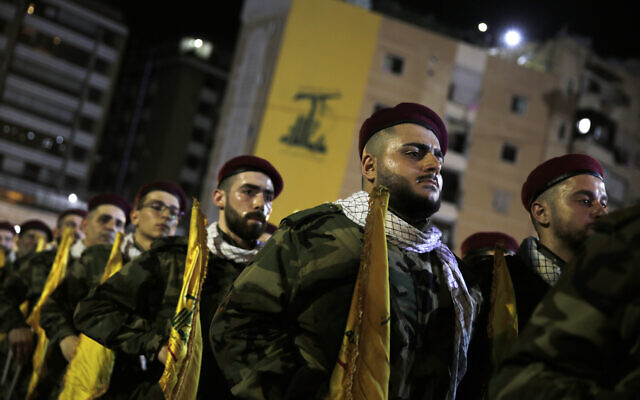 Hezbollah terrorists stand in formation at a rally to mark Jerusalem Day, or Al-Quds Day, in a southern suburb of Beirut, Lebanon, on May 31, 2019. (AP Photo/Hassan Ammar)
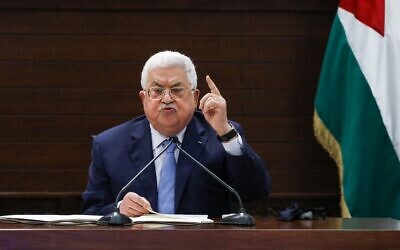 Palestinian Authority President Mahmud Abbas speaks in the West Bank city of Ramallah on September 3, 2020. (Alaa Badarneh/Pool/AFP)
 Iranian Intelligence Minister Mahmoud Alavi smiles at the end of his press briefing after registering his candidacy for the Experts Assembly elections at the interior ministry in Tehran, December 19, 2015. (AP Photo/Ebrahim Noroozi)
 Then-US vice president Joe Biden discusses the Iran nuclear deal with Jewish community leaders at the David Posnack Jewish Community Center in Davie, Florida, September 3, 2015. (AP/Joel Auerbach)
 Footage of Israeli strikes on Iranian and Syrian targets in southern Syria following an attempted explosive attack by Iranian-backed operatives against Israeli troops on the Golan Heights, November 18, 2020 (Israel Defense Forces)
 An Iron Dome anti-missile battery is seen in the Golan Heights near the border with Syria on November 18, 2020. (Jalaa Marey/AFP)




 anneinpt
 artaxes
 danmillerinpanama
 davidking1530
 Peter Hofman
 Joseph Wouk
 Peter
Peter Louisiana Steve
 WarSclerotic
Recent Comments