Post-war Syria destined to be sanctions-busting hub, the Russian-Iranian-Turkish summit decides – DEBKAfile

Posted September 12, 2018 by Joseph Wouk
Categories: Uncategorized

Source: Post-war Syria destined to be sanctions-busting hub, the Russian-Iranian-Turkish summit decides – DEBKAfile

Shared mechanisms for beating US sanctions against Iran may be built into Syria’s massive post-war reconstruction program, DEBKAfile’s exclusive sources report. This plan was approved by Presidents Vladimir Putin, Hassan Rouhani and Tayyip Erdogan at their Tehran summit on Sept. 7. It topped their agenda, in addition to coordination among Russian, Iranian and Syrian forces in their coming offensive for demolishing the last Syrian rebel stronghold in Idlib. The pause in launching ground operations in Idlib is accounted for by two major hurdles:
  1. Putin and Rouhani are keen to get started on building the new economic mechanisms. A full-scale war in Idlib would disrupt the process, especially if the Turkish president, who is against this offensive, gets in the way.
  2. Turkey continues to pour troops into Idlib for widening its foothold there. Neither the Russian nor the Iranian leader – least of all, Syria’s Bashar Assad – want to see their forces confronted by Turkish troops.

At their conference in Tehran, the three leaders forged an economic-strategic pact to create measures for fighting American sanctions. One measure approved was to contract all business deals among Russia, Iran and Turkey, including gas and oil, in local currencies instead of American dollars. The same rule would apply to banking transactions. Russian Foreign Minister Sergei Lavrov first raised this proposal when he remarked that Russia and Turkey could conduct their bilateral trading deals to their national currencies instead of the US dollar.

US and Israel paid special note to the trilateral decision reached in Tehran to convert the massive projects for Syria’s post-war recovery (after Iran had solidified its military foothold there) into a back-door hatch for escaping US sanctions against Iran. During the Obama presidency, Oman and Abu Dhabi served this purpose; under Donald Trump, it will pass to Damascus, with the added benefit of  protection from the deepening Russian-Iranian-Syrian military cooperation.


U.S. to hold Tehran responsible for “proxy” attacks in Iraq 

Posted September 12, 2018 by Joseph Wouk
Categories: Uncategorized

Source: U.S. to hold Tehran responsible for “proxy” attacks in Iraq – Middle East – Jerusalem Post

In August the US State Department rolled out a new Iran Action Group that is designed to put pressure on Tehran and coordinate actions across the US government.

BY SETH J. FRANTZMAN
 SEPTEMBER 12, 2018 01:41
U.S. to hold Tehran responsible for “proxy” attacks in Iraq

The White House warned Iran against attacks by its proxies in Iraq on Tuesday. The statement is a major departure from previous US policy in Iraq. For example, the US was not confrontational with the numerous Iranian-backed Shia militias operating in the country. Now Washington says it will hold Tehran accountable for any attack that results in injury to US forces or even damage to US government facilities. The statement comes in response to threats to the US consulate in Basra.

In August the US State Department rolled out a new Iran Action Group that is designed to put pressure on Tehran and coordinate actions across the US government. This coincided with US President Donald Trump signing the 2018 National Defense Authorization Act that singled out Iran in numerous places.

Iran has been openly supporting a plethora of militias in Iraq since Tehran began to operate more openly among Shi’ites in Iraq following the US-led 2003 invasion that toppled Saddam Hussein. Groups such as the Badr Organization and Kata’ib Hezbollah are run by Iraqis who served alongside the Iran’s Islamic Revolutionary Guard Corps (IRGC) in the 1980s fighting against Saddam Hussein. During the war on Islamic State Iranian-backed militias expanded their power in Iraq, helping to defeat ISIS. This put them on the same side as the US-led Coalition. Called the Popular Mobilization Forces or Hashd al-Shaabi, their numbers grew to almost 100,000 men under arms. However their deepening influence in Baghdad concerned Washington. In 2016 parliament in Iraq allowed the Iranian-backed militias to become an official paramilitary force. Former Secretary of State Rex Tillerson warned the militias to “go home.” However current Iraqi Prime Minister Haider al-Abadi told Tillerson last year that the Iranian-backed groups were the “hope” of Iraq and the region.

In the May 2018 elections in Iraq these militias ran their own party in the elections, called the Fateh Alliance. It came in second place. Since then the US has sought to bolster its allies and deny the Iranian-backed parties control of Baghdad. The recent protests in Basra have become part of these tensions between those in Iraq who want to be free of Iran’s overbearing influence and those who are close to Tehran. Protesters burned the Iranian consulate last week and targeted the headquarters of the Iranian-backed militias, including Badr and Kata’ib Hezbollah. Rockets were then fired at the US consulate.

The US statement holding Iran responsible for the attacks in Basra represents a major change in US policy. US officials reported in the spring of 2018 that “Iranian support for certain PMF militias posed the greatest threat to the safety of US personnel in Iraq,” according to a Department of Defense Inspector General Report in May. The White House now says that “Iran did not act to stop these attacks [on September 7] by its proxies in Iraq, which it has supported with funding, training and weapons.”

However the PMF have been incorporated into the Iraqi Security Forces, which means that their training and funding also comes from Baghdad. How to disentangle Baghdad from its alliance with Washington and its support of militias that threaten the US is now a major challenge for the Trump administration. US Vice-President Mike Pence also condemned the IRGC on Monday for a missile attack on Kurdish opposition groups in northern Iraq. He called the attack an “effort to threaten and destabilize [Iran’s] closest neighbor.” Taken alongside the White House condemnation of Iranian proxies, the US is constructing a new policy in Iraq to confront Iran’s role in the country.

Salehi: consequences will be harsh if Irans scientists harmed

Posted September 11, 2018 by Joseph Wouk
Categories: Uncategorized

Source: Salehi: consequences will be harsh if Irans scientists harmed

In an exclusive AP interview, Iran’s nuclear chief expresses hope atomic deal between Tehran and world powers survives, but warns the program will be in a stronger position than ever if not; implies Israel to pay price for scientists’ assassinations.
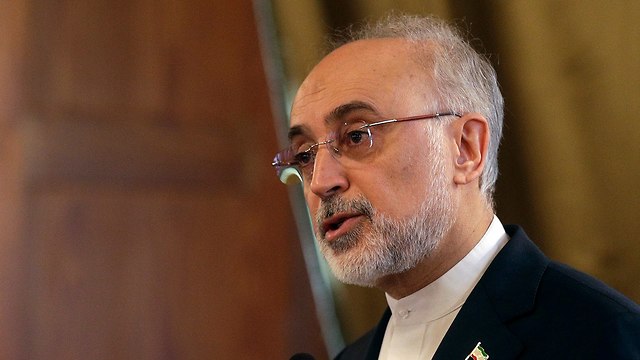
Iran’s nuclear chief Ali Akbar Salehi told The Associated Press in an exclusive interview Tuesday in Tehran that the “consequences will be harsh” if there are any new attacks targeting Iran’s nuclear scientists.A string of bombings, blamed on Israel, targeted a number of scientists beginning in 2010 at the height of Western concerns over Iran’s program.

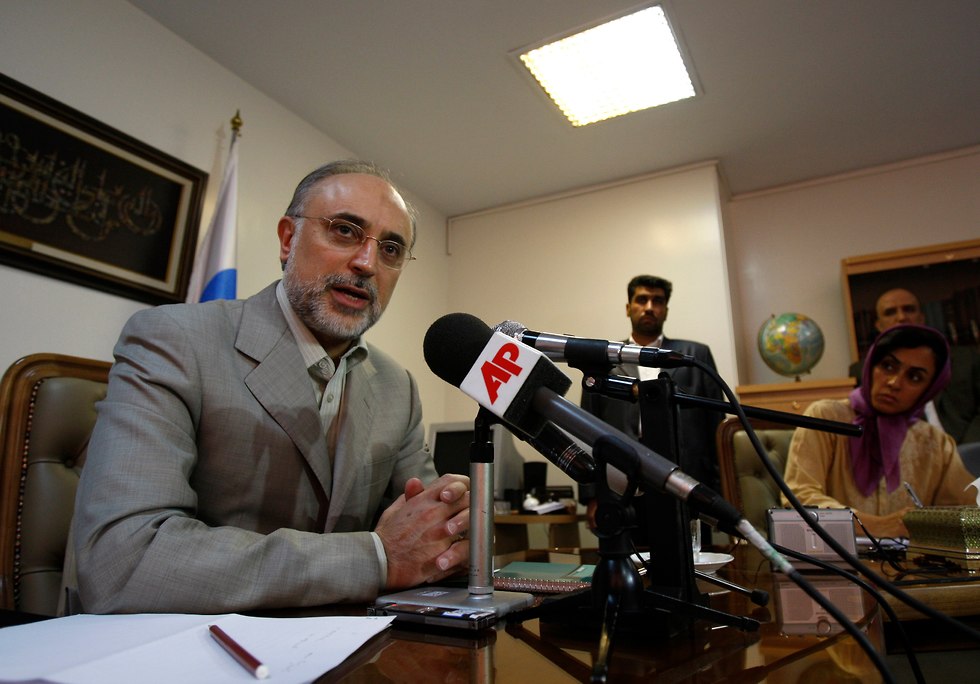
Iran’s nuclear chief Ali Akbar Salehi (Photo: AP)

Iran’s nuclear chief Ali Akbar Salehi (Photo: AP)

Israel has never assumed responsibility for the scientists’ assassinations Iran attributed to it.

In 2010 Iran’s parliament speaker said it had received information that Israeli and US intelligence intended to carry out “terrorist acts” in Tehran after the killing of scientist Professor Massoud Ali-Mohammadi.

The scholar worked for Iran’s Islamic Revolutionary Guard Corps.

In the same year, former president Mahmoud Ahmadinejad accused the United Nations of complicity in the murder of a nuclear scientist Majid Shahriyari, days before talks aimed at defusing a nuclear stand-off.

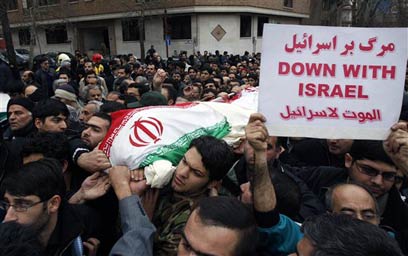
Massoud Ali Mohammadi's funeral

Massoud Ali Mohammadi’s funeral

“In these kinds of terrorist acts, undoubtedly the United Nations is in cahoots with Zionists,” the former president stated.

Salehi also said that he hopes the atomic deal between Tehran and world powers survives, but warns the program will be in a stronger position than ever if not.

Salehi also said that President Donald Trump’s decision to withdraw America from the 2015 accord “puts him on the loser’s side” of history.

He added: “That deal could have paved the way for building the trust and the confidence that we had lost.”

Salehi’s comments come after Trump decided to pull the US from the deal in May. The 2015 accord, struck under President Barack Obama’s administration, saw Iran agree to limit its enrichment of uranium in exchange for the lifting of crippling economic sanctions.

In the wake of Trump’s decision, Western companies from airplane manufacturers to oil firms have pulled out of Iran. Iran’s rial currency, which traded before the decision at 62,000 to $1, now stands at 142,000 to $1.

“I think (Trump) is on the loser’s side because he is pursuing the logic of power,” Salehi said. “He thinks that he can, you know, continue for some time but certainly I do not think he will benefit from this withdrawal, certainly not.”

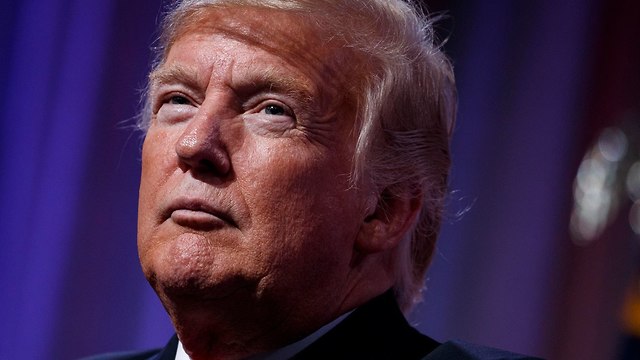
US President Donald Trump (Photo: AP)

US President Donald Trump (Photo: AP)

Salehi spoke about Iran’s efforts to build a new facility at Natanz’s uranium enrichment center that will produce more advanced centrifuges. Those devices enrich uranium by rapidly spinning uranium hexafluoride gas.

For now, the nuclear accord limits Iran to using a limited number of an older model, called IR-1s. The new facility will allow it to build advanced versions called the IR-2M, IR-4 and IR-6, which can enrich uranium much faster.

“If we have to go back and withdraw from the nuclear deal, we certainly do not go back to where we were before,” Salehi said. “We will be standing on a much, much higher position.”

We will NEVER forget…

Posted September 11, 2018 by Joseph Wouk
Categories: Uncategorized


Paul Simon at Ground Zero- Sounds of Silence – Hebrew Subtitles


I Admit , yes really !

Posted September 11, 2018 by Peter Hofman
Categories: Uncategorized

The weirdo in me let me do this .

Thanks to yo

Putin is ready go all the way against the US in Syria. Where does this place Israel? – DEBKAfile

Posted September 11, 2018 by Joseph Wouk
Categories: Uncategorized

Source: Putin is ready go all the way against the US in Syria. Where does this place Israel? – DEBKAfile

Russian-Syrian success in the high-stakes Idlib offensive would give Tehran a major victory and renewed footing in Syria. This would torpedo the US-Israeli campaign to drive the Iranians out.

After a series of aerial bombardments, the Russian-Syrian-Iranian offensive to gain control of Idlib, the last rebel stronghold in Syria, is ready to go, having meanwhile gained the valuable increment of Hizballah fighters. After returning home from the Syrian battlefields, these Lebanese Shiite fighters were given fresh orders over the weekend to return to Idlib and Hama.

Last month, US National Security Adviser John Bolton spent four days in Israel mapping out with Prime Minister Binyamin Netanyahu and Israeli generals a joint military strategy for destroying the Iranian military presence in Syria . However, full Russian-Iranian partnership for the Idlib operation injects a new factor into the equation: Its success would consolidate Iran’s grip on the country with solid Russian support.

The stakes in Idlib is so high that for the past two weeks, the US and Russia have been massing large-scale naval and aerial might in the eastern Mediterranean opposite Syria and Persian Gulf waters. British and French forces in the region are on high alert in case they are called on as back-up for a potential US military move in Syria. Moscow last week warned that for any attack by the three Western allies on Iranian/Syrian forces taking part in the Idlib offensive, Russia would hit back at pro-American targets in eastern and northern Syria. In the line of Russian fire, therefore, are the Syrian Kurdish SDF and YPG militias.

US forces in eastern Syria were placed on standby as a signal to Moscow that attacks on the Kurds would encounter the US military in action. On Saturday, Sept. 8, as these tensions peaked, Gen. Joseph Dunford, Chairman of the Joint US Chiefs of Staff, briefed President Donald Trump on his operational plans in Syria.

In Israel, where the general public was not advised of this hazardous situation while ushering in the New Year Festival, most people were not aware that a major conflagration was at hand in Syria or that it could draw their armed forces into battle.

As things stand, there is a real likelihood of the US, the UK, France and Israel intervening when the Russian-Iranian-Syrian offensive goes forward in Idlib, with Turkey’s nod – unless President Trump decides at the last minute to change course. US statements on the question have been clothed in threats to intervene if the Syrians again resort to chemical warfare. Moscow threw this threat back by accusing the Americans of a false flag conspiracy for rebels to use chemical weapons and then accuse Syria.
The British handled this charge. In a statement to parliament, Prime Minister Theresa May named two Russian nationals as responsible, in the service of Russian military intelligence, for the attempted assassination by a nerve agent of former Russian spy Sergey Skripal and his daughter in Salisbury. The intention was to depict Moscow as the villains of any poison chemicals scenario.

While the region is on tenterhooks for the Idlib offensive to go forward, the scale, nature  and location of US-led allied intervention cannot yet be determined, since it is likely to be commensurate with the degree of Russian backing for the Iranian and Hizballah forces which are in the vanguard of the Idlib operation. If Russian backing goes all the way, Israel and the IDF will find that the huge effort they have invested in recent months to cut down Iran’s military foothold in Syria is nullified. Iran will be riding back in triumph under Russian military protection. On Sunday, Sept. 9, the IDF, with unusual candor, confirmed that in its “Operation House of Cards” of May 10, Israeli fighter squadrons wiped out 50 Iranian bases, command centers and weapons depots across Syria. This admission was intended to warn Moscow and Tehran that, even if Iran rebuilt its “house of cards” in Syria, they were still in the IDF’s sights.

Bolton warns ICC not to go after Israel, confirms closure of PLO’s DC office

Posted September 10, 2018 by Joseph Wouk
Categories: Uncategorized

Source: Bolton warns ICC not to go after Israel, confirms closure of PLO’s DC office | The Times of Israel

( Bolton is right.  Does ANYBODY actually believe the  ICC would be fair regarding Israel ? – JW )

Trump’s National Security Adviser vows to protect US and allies ‘by any means necessary’ from prosecution at The Hague, says ‘illegitimate, dangerous’ court ‘already dead to us’

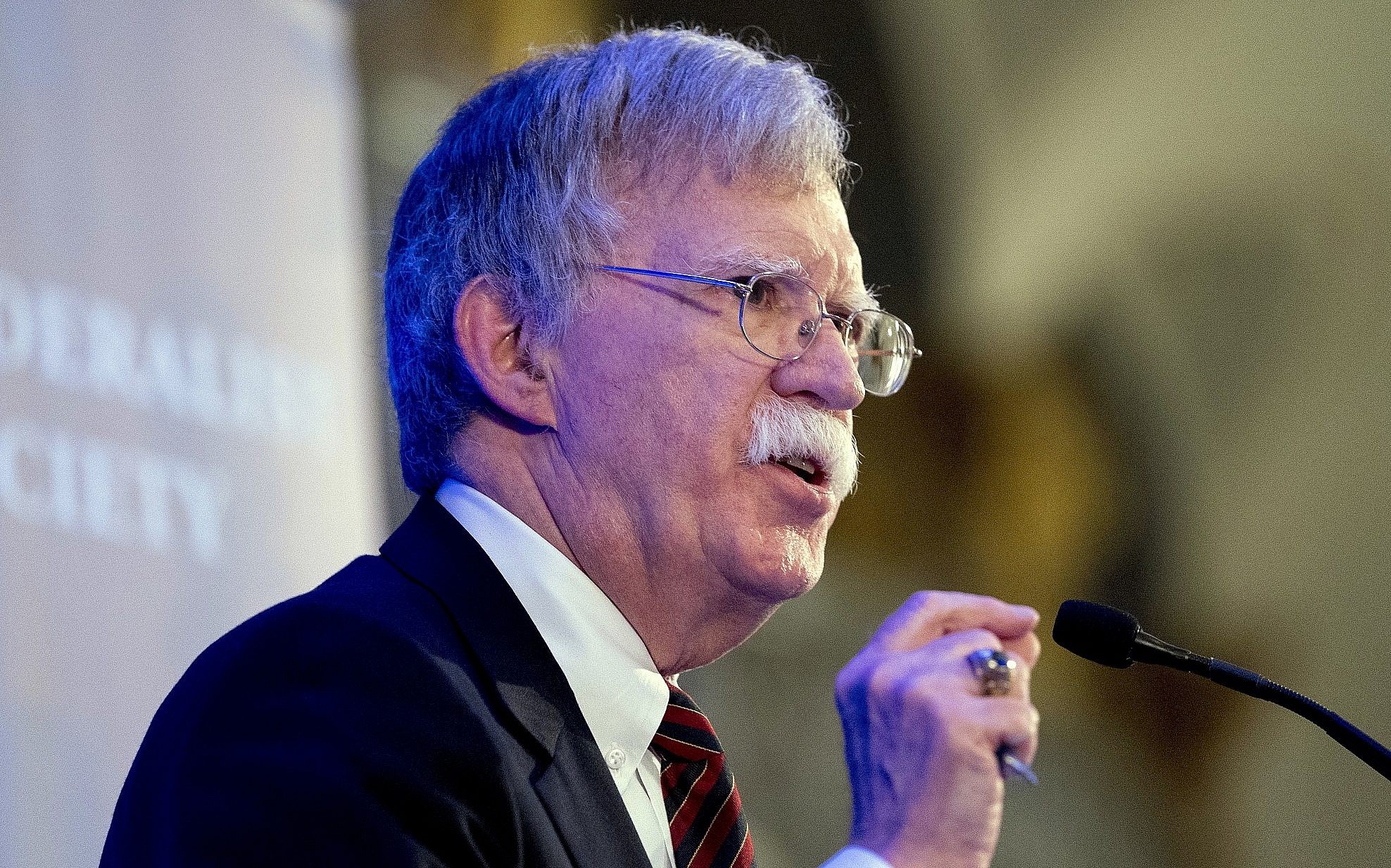
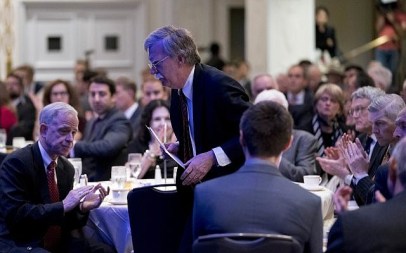
US National Security Adviser John Bolton speaks at a Federalist Society luncheon at the Mayflower Hotel, Monday, Sept. 10, 2018, in Washington. (AP Photo/Andrew Harnik)

US National Security Adviser John Bolton speaks at a Federalist Society luncheon at the Mayflower Hotel, Monday, Sept. 10, 2018, in Washington. (AP Photo/Andrew Harnik)

The United States on Monday warned the International Criminal Court against prosecution of US or Israeli officials for war crimes in the Middle East.

White House National Security Adviser John Bolton called the Hague-based rights body “unaccountable” and “outright dangerous” to the United States, Israel and other allies, and said any probe of US service members would be “an utterly unfounded, unjustifiable investigation.”

In remarks to the conservative Federalist Society in Washington, Bolton said: “If the court comes after us, Israel or other US allies, we will not sit quietly… The United States will use any means necessary to protect our citizens and those of our allies from unjust prosecution by this illegitimate court.”

While “in theory, the ICC holds perpetrators of the most egregious atrocities accountable for their crimes, provides justice to the victims, and deters future abuses,” he said, “In practice… the court has been ineffective, unaccountable, and indeed, outright dangerous.

“For all intents and purposes, the ICC is already dead to us,” he stated.

Bolton added that “While the court welcomes the membership of the so-called state of Palestine, it has threatened Israel, a liberal, democratic nation, with investigation into its actions in the West Bank and Gaza to defend its citizens from terrorist attacks.”

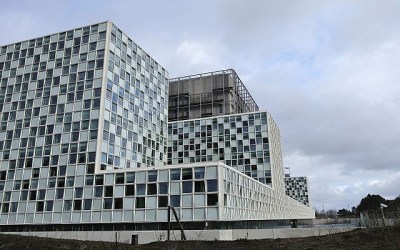
Exterior view of the headquarters of the International Criminal Court in The Hague, Netherlands, January 12, 2016 (AP Photo/Mike Corder)

He noted recent suggestions “that the ICC will investigate Israeli construction of housing projects on the West Bank” and said “The United States will always stand with our friend and ally Israel.”

Israel last month lodged a formal protest with the ICC for launching a campaign to reach out to “victims of the situation in Palestine,” an unusual step which Jerusalem officials charge casts doubt on the court’s ability to treat the Jewish state fairly.

Bolton said the State Department’s decision to close the Palestinian Liberation Organization’s offices in Washington reflected “congressional concern with Palestinian attempts to prompt an ICC investigation of Israel.

US National Security Adviser John Bolton takes the stage to speak at a Federalist Society luncheon at the Mayflower Hotel, Monday, Sept. 10, 2018, in Washington. (AP Photo/Andrew Harnik)

“The Trump administration will not keep the office open when the Palestinians refuse to take steps to start direct and meaningful negotiations with Israel,” he added. “The United States supports a direct and robust process, and we will not allow the ICC or any other organization to constrain Israel’s right to self-defense.”

Bolton also threatened to arrest and prosecute judges and other officials of the International Criminal Court if it moves to charge any American who served in Afghanistan with war crimes.

The ICC, which is based in the Hague, has a mandate to prosecute war crimes, crimes against humanity and genocide.

President Bill Clinton signed the Rome Statute that established the court, but his successor, George W. Bush, renounced the signature, citing fears that Americans would be unfairly prosecuted for political reasons.


U.N. Security Council meeting, led by Trump, to increase pressure on Iran 

Posted September 10, 2018 by Joseph Wouk
Categories: Uncategorized

Source: U.N. Security Council meeting, led by Trump, to increase pressure on Iran – Middle East – Jerusalem Post

Experts expect the US president to use the occasion to mobilize international support for renewed economic sanctions.

BY MAYA MARGIT/THE MEDIA LINE
 SEPTEMBER 10, 2018 05:18
U.N. Security Council meeting, led by Trump, to increase pressure on Iran

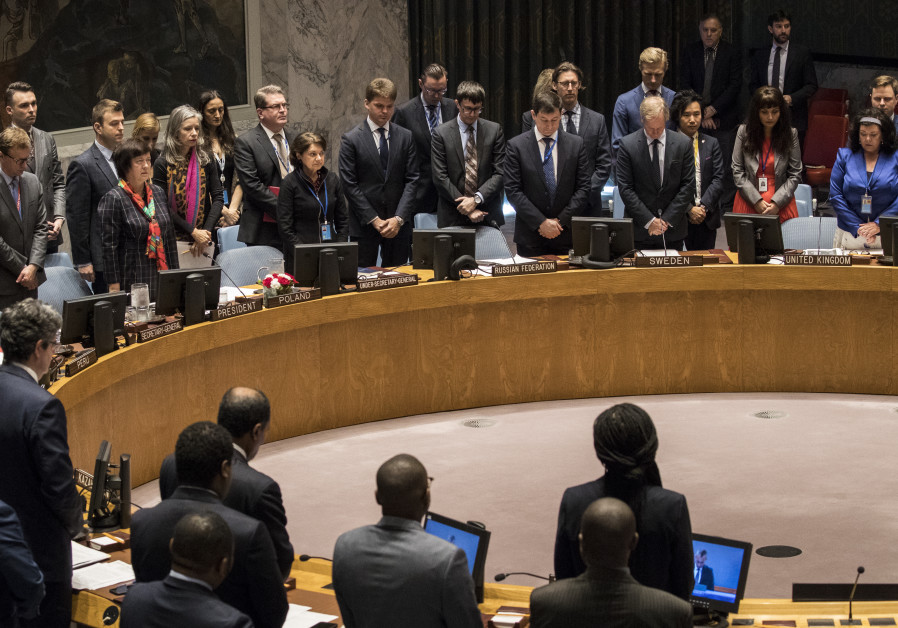
United States President Donald Trump will later this month chair a high-level United Nations Security Council meeting on the situation in the Middle East, in a bid to tighten the diplomatic screws on Iran. The American leader is expected to use the session to focus the spotlight on Tehran’s regional expansionism through its proxies in Iraq, Syria, Lebanon and Yemen; its ballistic missile program; and its global arm sales—all of which, according to the Trump administration, violate existing UNSC resolutions.

“We want to make sure that [the Iranians] understand the world is watching [and] that is the biggest reason for this meeting,” US Ambassador to the UN Nikki Haley explained, leading analysts to posit that the primary American goal is to continue ratcheting up pressure on the mullahs.

In response, Iranian Foreign Minister Mohammad Javad Zarif accused the US president of hypocrisy, tweeting, “There’s only one UNSC resolution on Iran. @realDonaldTrump is violating it & bullying others to do same. Now he plans to abuse [the rotating] presidency of [the Security Council which Washington holds in September] to divert a session—item devoted to Palestine for 70 yrs—to blame Iran for horrors US & clients have unleashed across M.E. #chutzpah.”

Zarif was referring to the unanimous adoption in July 2015 of UNSC resolution 2231, which endorsed the Joint Comprehensive Plan of Action—commonly known as the Iran nuclear deal—and President Trump’s subsequent unilateral withdrawal from the pact in May.

Washington has to date failed to condemn Iran in the Security Council due to the veto power of the latter’s backers Russia and China. This past February, for example, Moscow torpedoed a US bid to denounce Tehran for shipping weaponry to Houthi rebels in Yemen.

“[President Trump] is looking to mobilize the support of the international community, especially the signatories of the Iran nuclear deal,” with regards to economic sanctions, Dr. Raz Zimmt, a Senior Research Fellow at the Tel Aviv-based Institute for National Security Studies, asserted to The Media Line.

“[The Iranians] consider Trump’s appearance as a provocation and they expect him to use this opportunity to attack Iran,” he elaborated. “The main question is whether Trump wants to use this opportunity to arrange a meeting with [Iranian] President Hassan Rouhani, assuming he will be attending. We still don’t know because Zarif might be sent instead. My assessment is that Tehran will [anyways] never agree to that meeting.

“All we will see is continued anti-Iranian rhetoric so I don’t think [Trump’s speech] will change anything in particular,” Dr. Zimmt predicted.

“Each side is just going to use this opportunity to express their stance.” Dr. Eldad Pardo, an Iran expert at the Hebrew University in Jerusalem, stressed to The Media Line that reining in Tehran is a “major foreign policy issue for the US” and that the UNSC meeting would be geared towards getting the Islamic Republic back to the negotiating table.

“Trump wants to change Iran’s behavior by exerting a lot of pressure on it,” he explained. “Most of all, the US would like to see Iran give up its nuclear ambitions” and destabilizing activities in the region.

“In order to pressure Iran, you need to rebuild the crippling sanctions and for this you need an international coalition,” Dr. Zimmt noted, arguing that other nations would likely abide by Washington’s demands in order to maintain crucial diplomatic and trade ties.

A second batch of US sanctions targeting Iran’s oil sector will take effect in November, with a report this week by Oxford Economics suggesting that the new penalties will “cripple the [Iranian] economy” which could to contract by as much as 4 percent next year.

President Trump on Wednesday contended that Iran is in “total turmoil” and that the Iranian regime is now “just worrying about [its] own survival.”

The Security Council session is slated to take place on September 26 during the annual opening of UN General Assembly in New York.

Charles Bybelezer contributed to this report.


Iran completes facility to build centrifuges

Posted September 10, 2018 by Joseph Wouk
Categories: Uncategorized

Source: Iran completes facility to build centrifuges

Iran’s nuclear Chief Ali Akbar Salehi says Iran completed advanced hall for construction of modern centrifuges, as part of massive deal with undisclosed European nation; adds ‘Trump can become a legend in his own lifetime if he manages to sign a new financial and political agreement with Iran.’

Iran has completed a facility to build advanced centrifuges, Iran’s nuclear chief was quoted on Sunday as saying, as Tehran prepares to increase its uranium-enrichment capacity if the nuclear deal collapses after the United States exits.

In June, Ali Akbar Salehi, the head of the Atomic Energy Organization of Iran, said the facility at the Natanz nuclear plant would be completed within a month.

Salehi’s statement in June came days after Supreme Leader Ayatollah Ali Khamenei said he had ordered preparations to increase the country’s uranium enrichment capacity if the nuclear agreement with world powers collapsed.
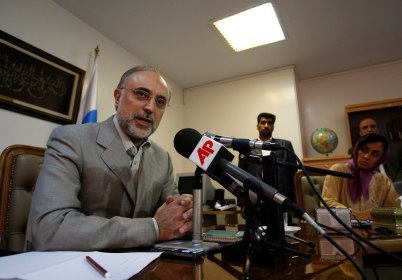
Ali Akbar Salehi (Photo: AP)

Ali Akbar Salehi (Photo: AP)

On Sunday, the official news agency IRNA quoted Salehi as saying: “(Ayatollah Khamenei) had ordered us to set up and complete a very advanced hall for the construction of modern centrifuges, and this hall has now been fully equipped and set up.”

Salehi said Iran’s announced plans to build nuclear reactors for ships, while staying within the limits set by its atomic deal with major powers, was “advancing well but would take 10 to 15 years to complete”, IRNA said.

“A third step (in reaction to the US withdrawal) might be to suspend some of the limitations within the nuclear agreement, for example on the volume and level of enrichment,” Salehi said, according to IRNA.

“And the final scenario can be a complete exit from the nuclear accord, which I hope will never happen, with the help of (remaining signatories), because everyone would suffer,” Salehi added.

Iranian officials have said they would decide whether to quit the 2015 nuclear deal after studying a planned European package of economic measures that could help offset US sanctions.

When asked what he thinks Trump was trying to achieve by withdrawing from the nuclear deal, Salehi replied that he believes Trump is attempting to reverse all decisions made by of his predecessor Barack Obama’s, and “break the spirit of Iran.”

“He has decided to sabotage the US relationship with Cuba, and hurt the Climate Deal,” said Salehi.
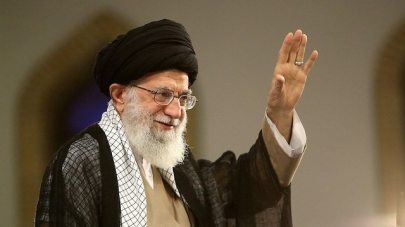
Iran's Supreme Leader Ayatollah Ali Khamenei  (Photo: Reuters)

Iran’s Supreme Leader Ayatollah Ali Khamenei (Photo: Reuters)

“Trump has always believed that the nuclear accord was bad for the US and its allies in the Middle East, Israel and Saudi Arabia,” he continued.

Following Iranian President Hassan Rouhani’s statement on Saturday saying that the United States is continually sending messages to the Islamic republic asking it to begin negotiations, Salehi implied that Trump has a lot to gain from such a move.

“Trump understands Iran’s power, and can become a legend in his own lifetime if he manages to sign a new financial and political agreement with it,” Iran’s nuclear chief opined.

Salehi also said that Iran was willing to discuss other matters alongside the nuclear deal but Supreme Leader Ayatollah Ali Khamenei refused, saying the US cannot be trusted since it breaks all of its promises. “Trump quitting the deal reinforces that decision,” he said.

“Even prior to the nuclear deal, Khamenei approved sporadic talks with US officials. Iranian and US ambassadors secretly met in Baghdad,” Salehi disclosed.

He added that Khamenei have said recently that the meeting between Iran’s Foreign Minister Mohammad Javad Zarif and Former US Secretary of State John Kerry was a mistake, since he did not approve it personally.


Air Force marks planes to commemorate bombing Syria reactor in 2007

Posted September 10, 2018 by davidking1530
Categories: Uncategorized

They must have changed the name of the operation, it was “Operation Orchard” previously I believe.

https://www.timesofisrael.com/air-force-marks-planes-to-commemorate-bombing-syria-reactor-in-2007/

At Hatzerim Air Base ceremony, stickers with the operation’s symbol placed on F-15i and F-16i jets that destroyed facility in Deir el-Zour

Pilots and crews who took part in the 2007 bombing of the Syrian nuclear reactor in Deir a-Zour take part in a ceremony marking the planes that participated in the operation, on September 6, 2018 at the Hatzerim Air Force Base in southern Israel. (IDF Spokesperson's Unit)

The Israeli Air Force marked the 11-year anniversary of its destruction of Bashar Assad’s secret nuclear reactor, in a ceremony that saw special markings placed on the warplanes that took part in the strike.

The strike against the reactor in the Deir el-Zour region of Syria took place on the night between September 5 and 6, 2007, but was only officially acknowledged by Israel earlier this year. The reactor had become operational a short time earlier, leading then-prime minister Ehud Olmert to order its destruction.

Three squadrons took part in the attack, dubbed by the military “Operation Outside the Box”: Squadron 69, known as “Hapatishim,” or “The Hammers” flying F-15i fighters; Squadron 119, “Ha’atalef,” or “The Bat” and Squadron 253, “The Negev,” flying F-16is.

The ceremony at the Hatzerim Air Force Base, west of Beersheba, saw the marking of the planes from squadrons 69 and 253. Squadron 119’s planes will be marked in a separate ceremony on September 14.

Pilots who took part in the operation, technical crews who armed the planes in 2007 and the commander of Squadron 69, Lt. Col. G., placed on the planes stickers bearing the symbol of the operation, the army said in a statement.

The symbol includes a triangle, symbolizing an attack and painted in the colors of the Syrian flag, with a radioactivity symbol at its center, symbolizing the nuclear reactor.