US seeking to negotiate a treaty with Iran 

Posted September 20, 2018 by Joseph Wouk
Categories: Uncategorized

Source: US seeking to negotiate a treaty with Iran – Israel Hayom

Make no mistake: Russia is mad 

Posted September 20, 2018 by Joseph Wouk
Categories: Uncategorized

Source: Make no mistake: Russia is mad – Israel Hayom

Yoav Limor

The “tragedy of errors,” as Russian President Vladimir Putin called the downing of a Russian jet in Syria on Tuesday, has real potential to damage Israel’s strategic interests in the region. It would appear that there is no argument about the details of the incident (other than among conspiracy theorists).

What was unusual in Tuesday’s strike was the location: Latakia in northwest Syria, close to Russian forces, in an area where the IDF hasn’t been active for some time. The strike itself was routine; the IDF notified the Russian military about it in advance, the missiles were fired remotely, the four IAF F-16s returned to base unharmed, and as usual, Syrian antiaircraft missiles were fired indiscriminately in every direction, long after the strike itself was over.

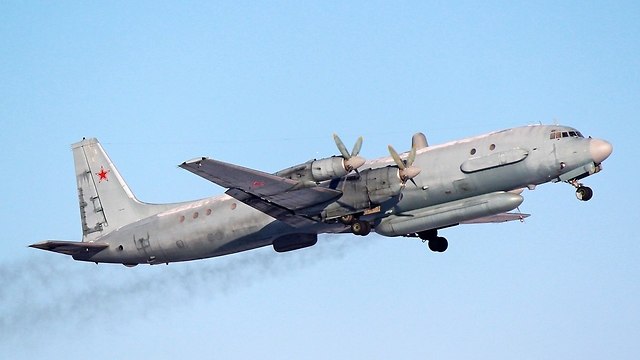
If the operators of Syria’s air defenses weren’t so frightened and apparently untrained, the hit to the Russian Il-20 plane, which killed the 15 crew members on board, could have been avoided. There is no way they didn’t see it – the plane is a heavy, slow-moving target – on their screens. Because of their hysteria, they could have wound up hitting almost any other target in the area, such as passenger aircraft carrying innocent civilians.

Theoretically, this is a matter between Russia and Syria. Russia supplied Syria with the SA-5 batteries that wound up shooting down its plane, and now it must demand explanations from Syrian President Bashar Assad. That won’t happen; Russia was quick to blame Israel for knocking over the first domino, and as usual, sent conflicting messages that make it hard to parse their future strategy. On one hand, a harsh statement came from the Russian Defense Ministry, while on the other, Putin had a conciliatory message – in which he nevertheless said that the Defense Ministry statement had been coordinated with him.

Amid all this confusion, all sides involved will try to make the most of the opportunities presented and minimize risks. From now on, Russia will demand a higher level of coordination with Israel and limits to the areas in which Israel can attack, and possibly a commitment to refrain from certain actions. Syria, Iran, and Hezbollah will try and drag Russia into “handling” Israel and keeping it from continuing to carry out strikes in the region. Israel, as we saw in the carefully worded statement from the IDF Spokesperson, will blame Iran, Hezbollah, and Syria for the incident, and say they are responsible for the mess.

But Israel needs to take rapid action to minimize damage. It is in Israel’s strategic interest to keep up its offensive actions to the north, mainly in Syria. If that action is curtailed, Israel’s national security will be compromised. Because no one in Israel wants to be in conflict with Moscow, we need to coordinate our positions and put an end to the latest incident not only be presenting the findings of a probe, but also by paying the price of a formal, public apology – and maybe even by compensating the families of the casualties. We must also establish clear rules that will prevent clashes in the future.

The Russians have been active in the neighborhood for three years. Thus far, Israel has managed to avoid head-on clashes with them, despite a few near misses. No one in Israel, and certainly not in the IDF or the Israeli Air Force, wants Russia – which until now hasn’t cared much about Israel’s actions – to turn hostile, and Israel needs to do everything to prevent that from happening. Even if that means limiting its actions for the time being.

Continued good relations between Putin and Prime Minister Benjamin Netanyahu carry a lot of weight for future developments. We need only remember how Russia treated Turkey after it downed a Russian jet in 2015, and compare it to Russia’s measured reaction on Tuesday. Still, make no mistake – Russia is angry and has to account for itself at home. Israel will need to walk a thin line between protecting its own security interests and avoiding a very unwanted clash with Russia.


IDF chief sends condolences to Russian families after Syria strike debacle

Posted September 20, 2018 by Joseph Wouk
Categories: Uncategorized

Source: IDF chief sends condolences to Russian families after Syria strike debacle

Speaking at IDF exhibition in Holon, Eisenkot says Israel shares the ‘sorrow of the families’ of Russian military personnel who were killed during Syrian attempt to repel IAF strike on Latakia; despite Russia blaming Israel, Eisenkot emphasizes: ‘Unfortunately, Syrian forces hit a Russian aircraft.’
IDF Chief of Staff Gadi Eisenkot joined senior Israeli officials on Thursday morning in expressing regret for the loss of 15 Russian lives that was caused Monday evening when Syrian air defenses downed a Russian plane while trying to intercept an airstrike launched by Israel.
Israel claimed responsibility for the attack after originally maintaining silence.

Syrian President Bashar Assad’s forces accidentally shot down the Russian military aircraft following a missile strike on the Syrian coastal city of Latakia that was immediately attributed to the Israel Air Force.

“Today, the State of Israel marks 45 years since the outbreak of the (1973) Yom Kippur War—a war that left the IDF with one clear mission: be ready and place the army’s preparedness as a top priority,” Eisenkot said during a ceremony in Holon to inaugurate the “Our IDF” exhibit.

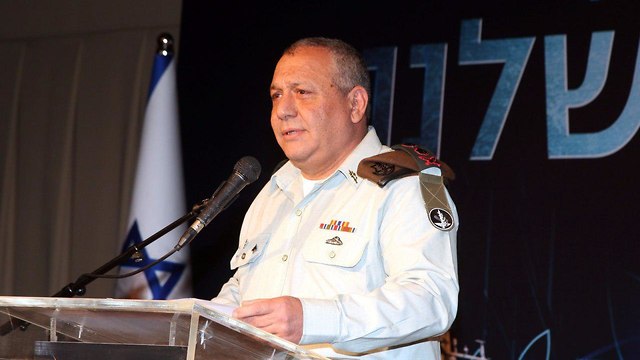
Chief of Staff Lt. Gen. Gadi Eisenkot (Photo: Yariv Katz)

Chief of Staff Lt. Gen. Gadi Eisenkot (Photo: Yariv Katz)

“Its operational and technological strength presented in the exhibit reflects extensive activity in the build up and action of the forces—action that is carried out with great professionalism and discretion to prevent our enemies from having advanced capabilities that threaten the State of Israel,” the military chief continued.

“For this reason, the IDF went into action again this week in the north. Unfortunately, Syrian forces hit a Russian aircraft and we share the sorrow of the families and the Russian army.”

Prime Minister Benjamin Netanyahu told Russian President Vladimir Putin on Tuesday that Syrian forces were to blame for the downing of the Russian military plane, but he offered “all necessary information” to investigate the incident.

A day after the attack, the Russian Defense Ministry denounced what it described as Israel’s “deliberate provocation” and blamed Israel for the subsequent crash, saying the plane was caught in the crossfire as four Israeli strike hit targets in northwestern Syria.

In a bid to calm tensions between Jerusalem and Moscow, an IDF delegation headed by the IAF’s Commander Amikam Norkin departed for the Russian capital to explain what led to the deadly mishap.

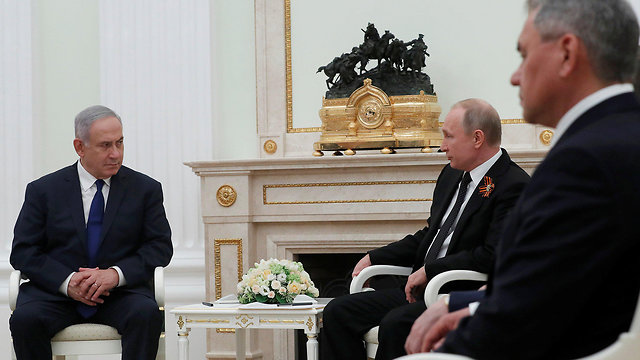
PM Netanyahu with President Putin during visit to Moscow (Photo: Reuters)

PM Netanyahu with President Putin during visit to Moscow (Photo: Reuters)

According to a statement put out by the IDF, Norkin and his delegation will present pictures to Russian officials showing the circumstances surrounding the incident, along with preliminary conclusions on the ongoing IDF investigation into the matter.

Israel’s ambassador in Moscow was summoned to the Russian Foreign Ministry over the incident, foreign ministry spokeswoman Maria Zakharova said.

“The Israeli pilots were using the Russian aircraft as a shield and pushed it into the line of fire of the Syrian defense,” ministry spokesman Maj. Gen. Igor Konashenkov said in a statement.

Russia said it would make an “appropriate response” to Israel.

Reuters and Associated Press contributed to this report.

Israel reinforces security on nuclear sites amid Irans threats

Posted September 20, 2018 by Joseph Wouk
Categories: Uncategorized

Source: Israel reinforces security on nuclear sites amid Irans threats

At IAEA conference, Israel’s atomic agency head Ze’ev Snir says ‘Iran’s threats prompt Israel to act in order to protect its nuclear sites;’ Iran UN Amb. Gholamali Khoshrou says Israel’s nuclear program must be supervised.
Head of the Israel Atomic Energy Commission (IAEC), Ze’ev Snir, said Israel cannot ignore Iran and its proxies’ repeated threats to attack its nuclear sites at the 62nd conference of the International Atomic Energy Agency (IAEA) in Vienna Tuesday.

“Those threats prompt Israel to act in order to protect its nuclear sites,” Snir stated.

“The sites are constantly upgraded according to the IAEA’s security protocols, with the aim of push off any attack,” he added.

Security Cabinet member and Knesset member Minister Yisrael Katz said in an interview with Ynet Israel is constantly threatened by Iran.

“(Iran’s) regime is attempting to carry out a revolution, to threaten Israel, to threaten Saudi Arabia, and everyone in the region who is not Shi’ite,” he said.

“Obviously, (we are the ones mainly threatened—ed) since we are the powerful country that keeps Iran at bay. We know we have to protect our strategic locations,” Katz elaborated.

Nuclear reactor in Dimona

Nuclear reactor in Dimona

“We should pose a threat to Iran and cerate a deterrence against it,” he added.

It is the first time Israel has acknowledged it is reinforcing security around its nuclear reactor in Dimona.

Until now, the IAEA viewed the protection of the nuclear reactor in Dimona as a precaution against pollution rather than protection against military and terror threats.

Meanwhile, Iran has asked the United Nations to condemn Israeli threats against Tehran and to bring Israel’s nuclear program under its supervision, state media reported on Thursday.

Prime Minister Benjamin Netanyahu used a visit to a secretive Israeli atomic reactor in late August to warn the country’s enemies that it has the means to destroy them, in what appeared to be a veiled reference to its assumed nuclear arsenal.

“The United Nations’ members should not turn a blind eye to these threats and must take firms actions to eliminate all Israeli nuclear weapons,” Fars news agency quoted Iran’s ambassador to the United Nations Gholamali Khoshrou as saying in letters to the UN secretary general and the Security Council.

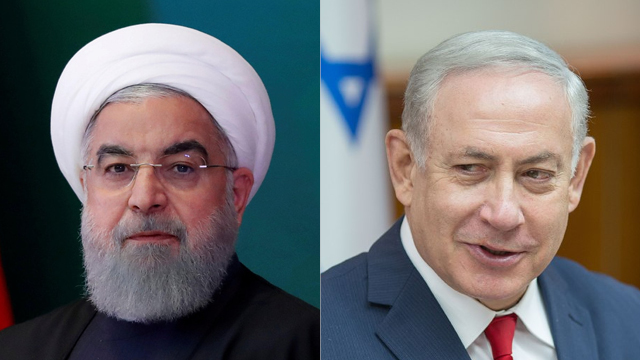
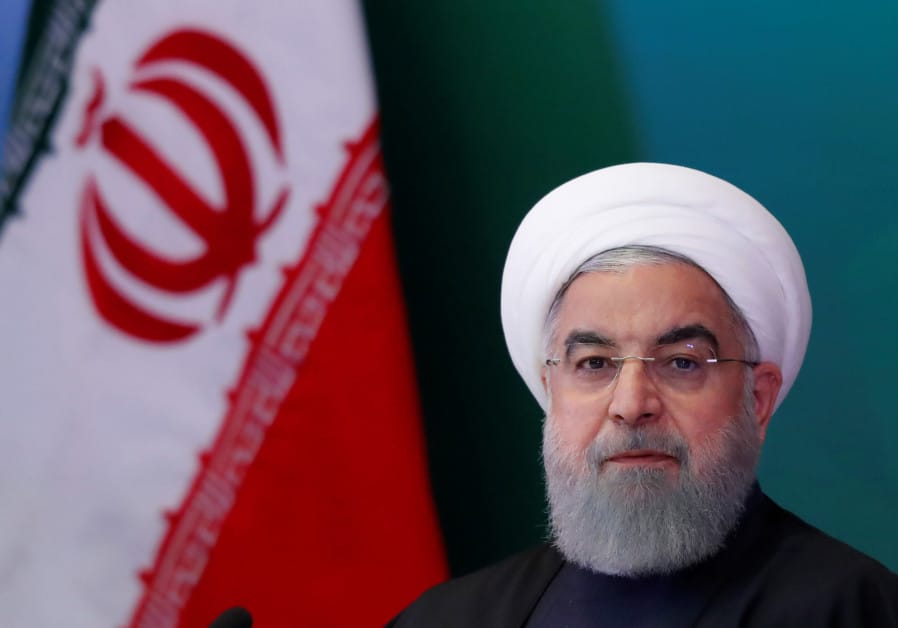
Iranian President Hassan Rouhani (L) and PM Benjamin Netanyahu

Iranian President Hassan Rouhani (L) and PM Benjamin Netanyahu

Khoshrou asked the United Nations to force Israel to join the Nuclear Non-Proliferation Treaty (NPT) and bring its nuclear program under supervision of the IAEA, a UN atomic watchdog.

Israel, which is outside the NPT, neither confirms nor denies having the bomb, a decades-old ambiguity policy that it says keeps hostile neighbours in check while avoiding the kind of public provocations that can spark regional arms races.

Israel is trying to lobby world powers to follow the United States in exiting their 2015 deal with Iran that capped the Islamic Republic’s nuclear capabilities in return for lifting of sanctions.

The Israelis deem the agreement insufficient for denying their arch-foe the means to eventually get the bomb—something that Tehran, which is a signatory to the 1970 NPT, denies wanting.

Since its 1979 Islamic Revolution, Iran has preached Israel’s destruction. It backs the Lebanese terror group Hezbollah and the Palestinian terror group Hamas. Its reinforcement of Damascus during Syria’s civil war is seen by the Netanyahu government as a further Iranian deployment on Israel’s borders.

In Late April, Netanyahu revealed what he said was “conclusive proof” of a secret project underway in Iran for the development of a nuclear weapon—evidence that he said proved that Tehran had lied “big time” to the international community.

Israel had obtained, he said, in a “great intelligence achievement,” secrets comprising a giant trove of documents and digital information pertaining to Iran’s clandestine Amad nuclear weapons project whose goal was “creating nuclear weapons”

The evidence, Netanyahu posited, prove “Iran has been hiding for years from the international community” its nuclear weapons development program.

In August 2017, Hezbollah leader Hassan Nasrallah marked 11 years to the Second Lebanon War with a speech in which he threatened that “the defeat Israel suffered in 2006, it will suffer again, but it will be a much greater defeat.”

Nasrallah argued that Israel recognized Hezbollah’s strength, “an example of that is the evacuation of the ammonia tank in Haifa. We hope they examine moving the nuclear reactor in Dimona as well, as it is more dangerous and needs to be taken care of.”

During operation Protective Edge, Israel intercepted three rockets that were launched at Dimona.


Nasrallah boasts Hezbollah has highly accurate’ missiles

Posted September 20, 2018 by Joseph Wouk
Categories: Uncategorized

Source: Nasrallah boasts Hezbollah has highly accurate’ missiles

Addressing crowds in televised speech, Hezbollah leader delivers diatribe against Israel, saying its efforts to prevent precision missiles reaching his group through airstrikes have already failed; warns that in a future war with Israel, it will ‘face a fate and a reality it never expected.’
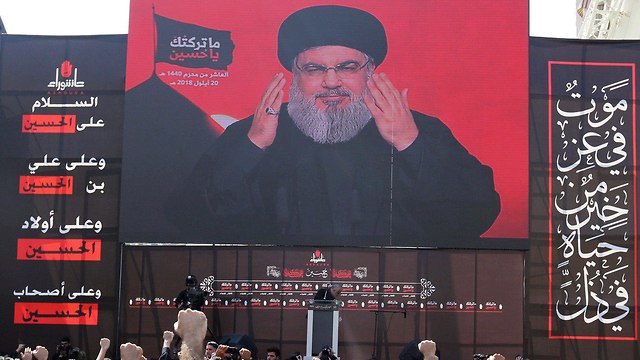
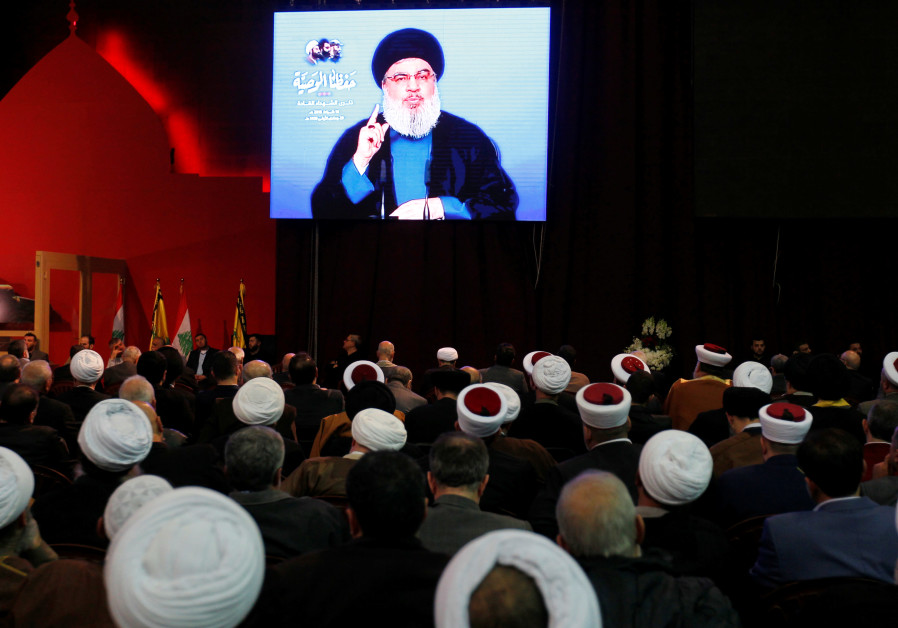
The leader of Lebanon’s Hezbollah terror group boasted on Thursday that the group possesses “highly accurate” missiles despite Israeli attempts to prevent it from acquiring such weapons.Hassan Nasrallah spoke in a televised speech to supporters commemorating Ashoura, one of the most important religious holy days for Shi’ite Muslims.Nasrallah says Israel knows the regional balance of power has changed, and that recent Israeli strikes in Syria to prevent Hezbollah from acquiring those weapons failed because this “has already been achieved.”

Hassan Nasrallah (Photo: Reuters)

Hassan Nasrallah (Photo: Reuters)

Syrian President Bashar Assad’s forces accidentally shot down a Russian military aircraft following a missile strike on the Syrian coastal city of Latakia that was immediately attributed to the Israel Air Force. Israel took responsibility for the attack shortly after.

He says Hezbollah now has “highly accurate … missiles” and that, should Israel impose a war on Lebanon, “it will face a fate and a reality it never expected on any day.”

Israel worries Hezbollah has been improving its capabilities and increased its strikes in Syria to prevent weapons shipments to the group from Iran.

“No matter what you do to cut the route, the matter is over and the resistance possesses precision and non-precision rockets and weapons capabilities,” Nasrallah said, addressing Israel in the broadcast speech while claiming that he was not speaking from a bunker.

“They laugh at me and say I am threatening from a bunker. I am obviously not inside a bunker. I am in a specific place and the fact that I am here giving a speech proves that you are trying day and night to kill me and are only failing,” he said.

“The Israelis are angry and worried that their efforts are failing,” Nasrallah said at the opening of his remarks.

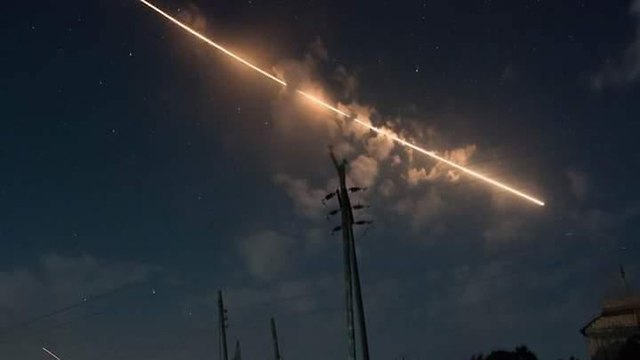
Attack on Latakia

Attack on Latakia

“They pinned their hope on what has happened in Syria and Iraq, but these delusions have shattered. They realize that the axis of resistance is stronger than ever. They realize that there are new states that have joined the axis of resistance, countries that were outside the conflict with Israel are today part of it,” he added as he continued his one of many diatribes against Israel.

“Israel is scared of every war. They understand that a war against us will have numerous consequences in the region. Their weak points are exposed and they know about our strength,” he declared.

According to Nasrallah, Israel is well aware of his organization’s stockpile of precision missiles and has no solution.

File photo of plane model shot down by Syria (Photo: Kirill Naumenko/Wikipedia)

File photo of plane model shot down by Syria (Photo: Kirill Naumenko/Wikipedia)

“In 1973, the war was on the front at a time when people in Tel Aviv would drink coffee and read the papers. Now, everything is different. I say to Israel: be careful. Everything you have done up until this point is finished … Israel understands that war cannot be won with technology. The human element will decide the war,” Nasrallah said.

“In 1982 Israel threatened to occupy Beirut. Who speaks about that today?” Nasrallah asked. “Since 2006 no Israeli has said ‘we will invade Lebanon and get to Beirut’ because such an operation requires ground forces. That cannot be done with an air force. Israel no longer has an army that can occupy land. Therefore, every Israeli threat focuses on the power of fire and not on the human power.”

Hezbollah, backed by Iran, has played a critical role in supporting Syrian President Bashar Assad during Syria’s seven-year-long civil war.

Iran’s Revolutionary Guards helped form Hezbollah in the early 1980s to resist Israel’s military presence in southern Lebanon, which ended in 2000. Israel and Hezbollah fought a brief war on Lebanese soil in 2006.

Reuters, Associated Press, Daniel Salami, Yoav Zitun and Itamar Eichner contributed to this report.

Iran asks U.N. to condemn Israeli nuclear program following airstrike 

Posted September 20, 2018 by Joseph Wouk
Categories: Uncategorized

Source: Iran asks U.N. to condemn Israeli nuclear program following airstrike – Middle East – Jerusalem Post

Iran has asked the United Nations to force Israel to join the Nuclear Non-Proliferation Treaty.

BY JERUSALEM POST STAFF, REUTERS
 SEPTEMBER 20, 2018 09:08
Iran asks U.N. to condemn Israeli nuclear program following airstrike

Iran’s ambassador to the United Nations has asked the world body to condemn Israeli threats against Tehran and to bring Israel’s nuclear program under its supervision in letters to UN Secretary-General António Guterres and the Security Council.

Gholam Ali Khoshrou, Iran’s ambassador to the United Nations, has asked the United Nations to force Israel to join the Non-Proliferation of Nuclear Weapons Treaty and bring its nuclear program under the supervision of the International Atomic Energy Agency (IAEA), a UN atomic watchdog, Iranian state television reported.

Iran’s condemnation follows an Israeli air strike Wednesday on a Syrian military facility which housed weapons systems that were about to be transferred to Hezbollah in Lebanon from Iran, according to the IDF Spokesperson’s Unit.

Following the Israeli strike near Latakia, Syria fired anti-aircraft missiles that hit a Russian IL-20 plane, killing all 15 airmen aboard. On Tuesday morning, Moscow accused Israel of using the Russian plane as cover to carry out the strikes, and said Israel had issued a warning of the impending operation only one minute beforehand.

The downing of the Russian aircraft sparked the most serious crisis between Moscow and Jerusalem since Russia became militarily engaged in Syria three years ago, when a deconfliction mechanism was set up between the two countries to prevent any accidental mishaps in Syrian airspace.

Foreign media sources have long reported that Israel possesses a nuclear weapons arsenal, which Israel has publicly denied.

However, Prime Minister Benjamin Netanyahu used a visit to a secretive atomic reactor in late August to warn the country’s enemies that it has the means to destroy them, in what appeared to be a veiled reference to its assumed nuclear arsenal.

Israel Atomic Energy Commission Director-General Ze’ev Snir also called for action concerning nuclear sites in the region at the 62nd General Conference of the International Atomic Energy Agency on Thursday.

“Iran and Syria pose significant proliferation threats to the region, and the world,” Snir said. “Syria built an undeclared, secretive military nuclear reactor at Deir al-Zour. Such concealment of illicit activities, is a clear violation of the NPT and Syria’s safeguards obligations. The IAEA and the international community should have taken action 10 years ago, and must take action now.”

Snir also pleaded for strong actions against Iran, “The IAEA must conduct a robust verification of Iran’s clandestine activities. The covert Iranian nuclear weapons program is a documented fact.”

Iranian officials have condemned Israel’s “nuclear bombs” in the past.

Javad Zarif

@JZarif

As world marks Int’l Day against Nuclear Tests, let’s remember that only nuclear bombs in our region belong to Israel and the US; the former a habitual aggressor & the latter the sole user of nukes. Let’s also remember that Iran has called for Nuclear Weapon Free Zone since 1974.

In August, Iranian Foreign Minister Mohammad Javad Zarif derided Israel for possessing “the only nuclear bombs in our region,” along with the United States, calling “the former a habitual aggressor and the latter the sole user of nukes.”

Israel is trying to lobby world powers to follow the US in exiting their 2015 deal with Iran, which capped the Islamic Republic’s nuclear capabilities in return for lifting of sanctions.

The Israelis deem the agreement insufficient for denying their arch-foe the means to eventually get the bomb – something that Tehran, which is a signatory to the 1970 Non-Proliferation Treaty, denies wanting.

Herb Keinon and Anna Ahronheim contributed to this report.

Russia shuts E. Mediterranean to air and sea traffic for “military exercise” – DEBKAfile

Posted September 20, 2018 by Joseph Wouk
Categories: Uncategorized

Source: Russia shuts E. Mediterranean to air and sea traffic for “military exercise” – DEBKAfile

The Russian Defense Ministry suddenly announced Thursday morning, Sept. 20, the closure of the eastern Mediterranean to air traffic and shipping – from the Syrian and Lebanese coasts to Cyprus -due to a snap “military exercise.”

DEBKAfile: By this device, Russia has shut down Israel’s capacity to strike targets in Syria from the sea or from Lebanon. Air raids henceforth can only be launched directly from Israel or through Jordanian air space. Israel’s missile ships are also prevented from reaching waters off the Syrian coast.

This stratagem is not only aimed against Israel, in the wake of the Russian Il-20 reconnaissance air crash Monday with 15 people aboard, but the United States as well. Heading towards the Mediterranean is the USS Harry S. Truman aircraft carrier strike group to join the US Sixth fleet. The group carries 6,000 sea and air crew personnel, with 9 squadrons of fighter-bombers on its decks, and consists additionally of guided missile cruisers and destroyers. It is the Trump administration’s first major response to the massing by the Russians of an armada of 25 warships off the Syrian coast since the last week of August.

The Russian naval buildup and the forthcoming arrival of the US aircraft carrier, following the downing of the Russian plane, is scaling military tensions around Syria up to a new pitch between the US, Russia and Israel. Further developments are seen to be impending.

Raised Israel-Russia tension is not the only troubling aspect of strike in Syria

Posted September 20, 2018 by Joseph Wouk
Categories: Uncategorized

Source: Raised Israel-Russia tension is not the only troubling aspect of strike in Syria | The Times of Israel

The Latakia area is normally considered off-limits by Israel. The target of Monday’s attack there, which led to Syria’s downing of a Russian plane, must have been highly important

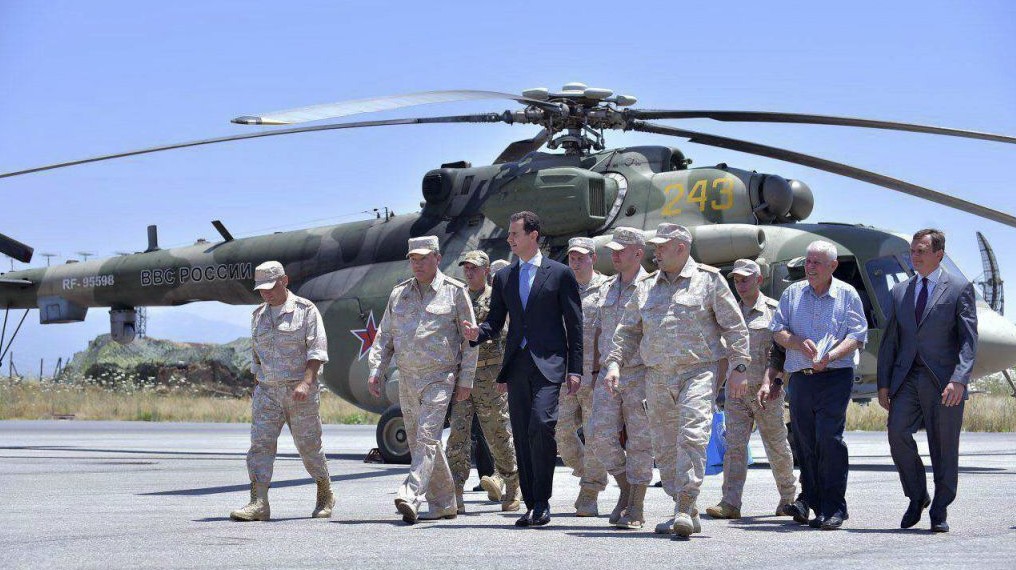
Syrian President Bashar Assad inspects the Russian Hmeimim air base in the province of Latakia, Syria, June 27, 2017 (Syrian Presidency via AP, File)

Syrian President Bashar Assad inspects the Russian Hmeimim air base in the province of Latakia, Syria, June 27, 2017 (Syrian Presidency via AP, File)

The overnight air strike by Israel in Syria was just one of hundreds of such attacks over the past year — most of them attributed, but few of them acknowledged, by Israel. Nonetheless, there were several highly unusual aspects to it — not least, of course, the accompanying downing of a Russian military plane, with 15 crew, by Syrian anti-aircraft missiles.

This Syrian strike on the Russian plane, as a side-effect of the Israeli strike, is producing considerable tension between Moscow and Jerusalem, despite the security coordination that has hitherto been maintained between Israel and Russia in the Syrian context.

On Tuesday afternoon, Russia summoned Israel’s ambassador to Moscow to its foreign ministry for clarifications. Earlier, Russia stated that the incident constituted deliberate provocation by Israel, which endangered Russian lines, and that Moscow reserved the right to respond. In response, in a very rare turn of events, Israel acknowledged the strike, expressed sorrow over the loss of Russian lives, made plain that it blamed Syria for the downing of the Russian plane, and gave details of what had played out.

The escalated friction in Israel-Russia ties, however, is not the only unusual aspect of this attack. The location of the targets that were struck was also out of the ordinary — and, again, this is because of the Russian connection.

The port city of Latakia is considered to be Syria’s main port city, the center of Bashar Assad’s Alawite Islamic sect, and a symbol of the survival of the Assad regime. Beyond this, however, it is also marked by a significant Russian presence.

The Russian air base Hmeimim, which is considered the most important in the country, is located nearby, to the south. Russia maintains several rings of protective anti-aircraft missile defenses around the base. This area was adjacent to the targets struck overnight.

Russia’s main naval base in Syria may be located at Tartus, a few dozen miles further south, but Russian ships do use Latakia from time to time, as a kind of secondary port. Until now, the whole area had been considered almost extra-territorial by Israel, essentially off-limits, because of the Russian presence. There may have been an occasional strike in recent years, but if so, it barely figured in international, Arab or, indeed, Israeli media reports.

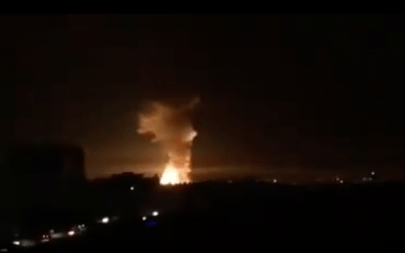
Explosions seen in the Syrian city of Latakia after an attack on a military facility nearby on September 17, 2018. (Screen capture: Twitter)

Therefore, for Israel to have struck at targets in Latakia, the targets must have been critical. And indeed, the IDF, in its Tuesday statement, specified that the target was a Syrian military facility that manufactured “accurate and lethal weapons,” which were “about to be transferred, on behalf of Iran, to Hezbollah in Lebanon.”

Syria, for its part, said the target struck was a subsidiary of its defense ministry, known as the Organization for Technical Industries, which has suspected ties to the country’s chemical weapons and missile programs. “These weapons were meant to attack Israel, and posed an intolerable threat against it,” the army said.

Latakia has in the past been a focus of Syrian military activity. It was through Latakia, notably, that Assad imported components that were used in the construction of Syria’s Al-Kabir nuclear reactor at Deir ez-Zour, which was destroyed by Israel in 2007.

Unusual, too, was the very nature of the strike, at least according to initial information. First reports suggested that planes or unmanned drones had carried out the attack. Soon after, there were reports that it was carried out from the sea.

Russia’s Defense Ministry claimed that a French destroyer even fired missiles in the course of the attack, though the French denied any involvement. Later, Russia said the strike was carried out by four Israel F-16s.

What is clear is that Syria’s anti-aircraft defenses responded with heavy fire — even if there were no actual targets, such as Israeli planes, in the area. Said the IDF: “The Syrian anti-air batteries fired indiscriminately and, from what we understand, did not bother to ensure that no Russian planes were in the air.”


US tags Iran anew as top terror sponsor, as global attacks fall 

Posted September 20, 2018 by Joseph Wouk
Categories: Uncategorized

Source: US tags Iran anew as top terror sponsor, as global attacks fall | The Times of Israel

State Department’s 2017 terrorism report says Tehran’s proxies ‘demonstrated a near-global terrorist reach’

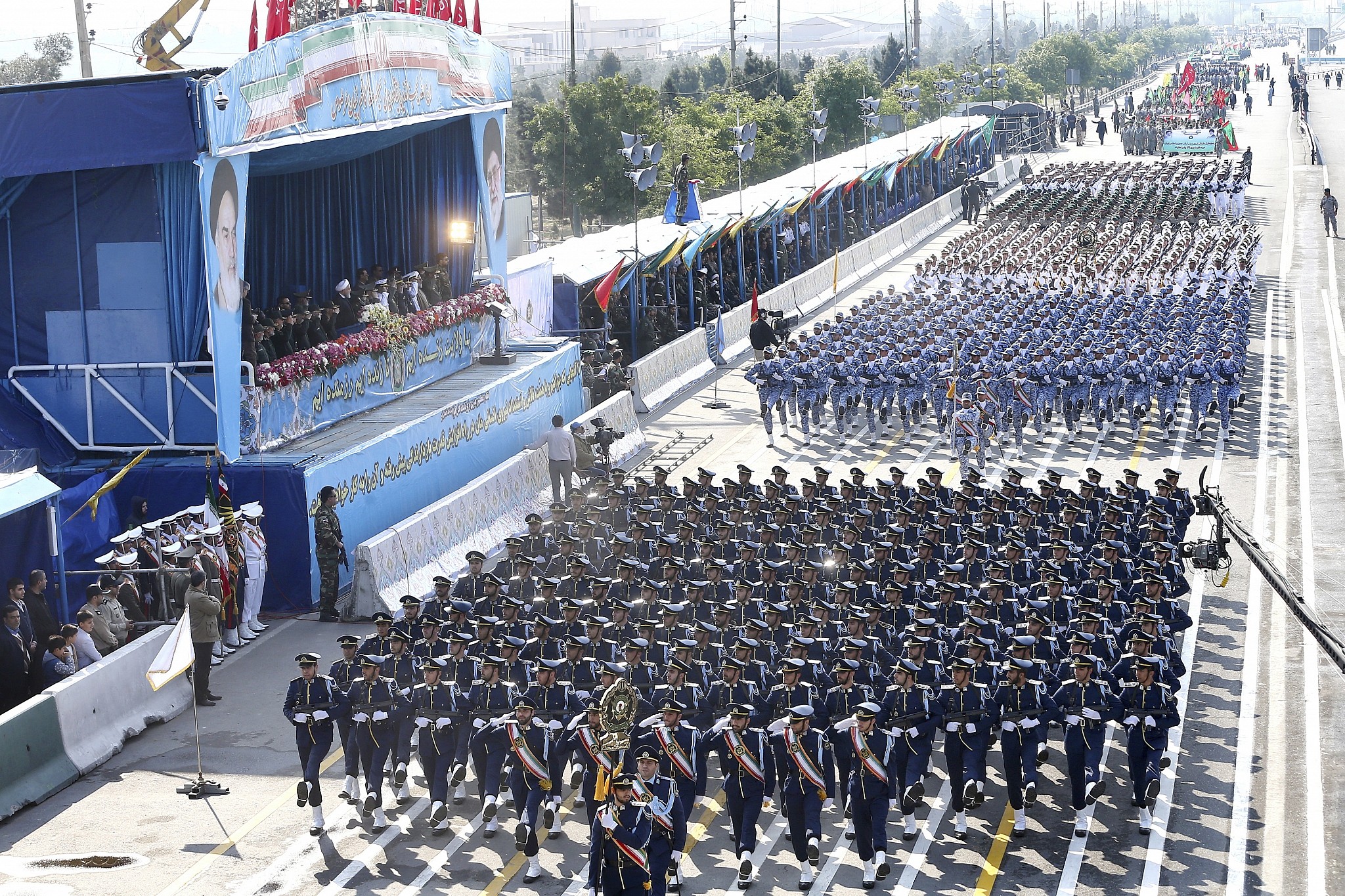
Iranian army troops march during a parade marking National Army Day in front of the mausoleum of the late revolutionary founder Ayatollah Khomeini, just outside Tehran, Iran, April 18, 2018. (AP Photo/Ebrahim Noroozi)

Iranian army troops march during a parade marking National Army Day in front of the mausoleum of the late revolutionary founder Ayatollah Khomeini, just outside Tehran, Iran, April 18, 2018. (AP Photo/Ebrahim Noroozi)

WASHINGTON (AP) — Iran remains the world’s leading state sponsor of terrorism, the Trump administration said Wednesday in an annual report that also highlighted another drop in terrorist attacks worldwide.

The State Department’s annual survey of global terrorism accused Iran of intensifying numerous conflicts and trying to undermine governments throughout the Middle East and beyond. Iran’s “terrorist affiliates and proxies,” the report said, “demonstrated a near-global terrorist reach.”

The number of worldwide terrorist attacks dropped by 23 percent last year compared with 2016, according to the report, a change largely due to gains against the Islamic State group in Iraq. The number also had declined in 2016 over the previous year.

The report comes as the Trump administration is toughening its stance against Iran. President Donald Trump withdrew from the landmark nuclear accord with Iran earlier this year and has begun to dismantle sanctions relief granted under the 2015 deal.

Re-imposing sanctions is one part of a larger effort by the US to cut Iran off from funds used to support proxy forces and support other “malign activity” in the region, including terrorism, according to Trump administration officials.

“Iran uses terrorism as a tool of its state craft, it has no reservations about using that tool on any continent,” Ambassador Nathan Sales, the State Department’s coordinator for counterterrorism, told journalists Wednesday. He cited Iran-linked fundraising networks in West Africa, weapons caches in South America and operational activity in Europe.

The report specifically cited the activities of Iranian Gen. Qassem Suleimani, the powerful Revolutionary Guard commander who also helped organize the Iraqi militias against IS.

Iran used the Revolutionary Guard “to provide support to terrorist organizations, provide cover for associated covert operations, and create instability in the Middle East,” the report stated.

Also in the Middle East, Iranian fighters and Iran-backed militias, like Lebanon’s Hezbollah, emerged emboldened from the war in Syria with valuable battlefield experience they seek to leverage elsewhere, according to the report.

The 23 percent drop in worldwide terrorist attacks in 2017 was attributed mainly to fewer attacks in Iraq, where territory once held by the Islamic State group was retaken by government forces. Deaths due to terrorist attacks also decreased by 27 percent last year. The report said IS alone carried out 23 percent fewer terrorist attacks and caused 53 percent fewer total deaths, compared with 2016.

Despite the drop in attacks, the report described the terrorist landscape as “more complex” and said the terrorist threat to the US and allies around the world had “evolved.”

As IS lost territory, the group became “dispersed and clandestine, turning to the internet to inspire attacks by distant followers,” which has made the group “less susceptible to conventional military action,” the report said.

The report stated that IS and groups that pledged allegiance to IS carried out attacks in more than 20 countries worldwide in 2017.

Also in 2017, al-Qaida quietly expanded its membership and operations, with a global network that includes forces in Syria, the Gulf, North Africa, Somalia and the Indian subcontinent in addition to core forces in Afghanistan and Pakistan.

“They have largely remained out of the headlines in recent years,” Sales said Wednesday, “but we shouldn’t confuse a period of relative quiet with al-Qaida’s abandonment of its capabilities or its intentions to strike us or our allies.”

The report highlighted a truck bombing in Mogadishu in October 2017 carried out by the al Qaida-linked al-Shabab extremist group that killed hundreds of people in “the deadliest terrorist attack in Somali history.”

The report stated that terrorist attacks took place in 100 countries in 2017, but were concentrated geographically with 59 percent of all attacks taking place in just five countries: Afghanistan, India, Iraq, Pakistan and the Philippines.

Nasrallah: ‘Israeli aggression in Syria can not be tolerated’ 

Posted September 20, 2018 by Joseph Wouk
Categories: Uncategorized

Source: Nasrallah: ‘Israeli aggression in Syria can not be tolerated’ – Arab-Israeli Conflict – Jerusalem Post

“The many Israeli attacks in Syria are not related to Hezbollah arms transfers”, he claimed.

BY REUTERS
 SEPTEMBER 19, 2018 22:17
Nasrallah: 'Israeli aggression in Syria can not be tolerated'

The leader of Lebanon’s Iran-backed Hezbollah, a key Damascus ally, said on Wednesday his group would keep its military presence in Syria until further notice, commending a Russian-Turkish deal over Idlib as a step towards a broader political solution.

But Sayyed Hassan Nasrallah indicated the number of fighters of the powerful Shi’ite group would be reduced as fronts across Syria become more quiet.

“We will stay there (in Syria) even after the settlement in Idlib. Our presence there is linked to the need and the consent of the Syrian leadership,” he said in a televised address to hundreds of cheering followers in southern Beirut on the eve of the annual Ashura religious rally.

“The quietness of the fronts and less number of threats.. will naturally affect the current numbers (of Hezbollah fighters),” he added. “Syria is heading to a great calm”.

Ashura, the holiest day of the Shi’ite calendar, falls on Thursday. It commemorates the martyrdom of Hussein, a grandson of the Prophet Mohammad, and is marked by large public processions.

Hezbollah has provided vital support to Syria’s military in the seven-year war, helping it regain swathes of the country. “We will stay there until further notice,” Nasrallah said.

Nasrallah commended the outcome of the Iranian, Russian and Turkish diplomacy to spare Idlib a military offensive that could have led to a catastrophic humanitarian situation.

On Monday, Russian and Turkey agreed to rule out a military solution in the Idlib region, the opposition’s last big foothold in Syria along with adjoining territory north of Aleppo, in favour of enforcing a new demilitarised zone from which “radical” rebels will be required to withdraw by the middle of next month.

“The outcome (of the diplomatic efforts) is good and reasonable but depends on results,” Nasrallah said, describing the agreement as a step towards reaching a political solution to the conflict.

Russia, the biggest outside backer of Syrian President Bashar al-Assad in his fight against rebels, has been preparing for an offensive on the city of Idlib, controlled by rebels.

The United Nations had warned such an attack would create a humanitarian catastrophe in Idlib province, where about 3 million people live.

Assad has recovered other areas once held by rebels, with decisive military support from Iran and Russia.