Russia using world’s largest military planes to deliver S-300 system to Syria 

Posted October 2, 2018 by Joseph Wouk
Categories: Uncategorized

Source: Russia using world’s largest military planes to deliver S-300 system to Syria | The Times of Israel

Moscow began delivery of the advanced anti-aircraft system over the weekend, despite Israeli objections
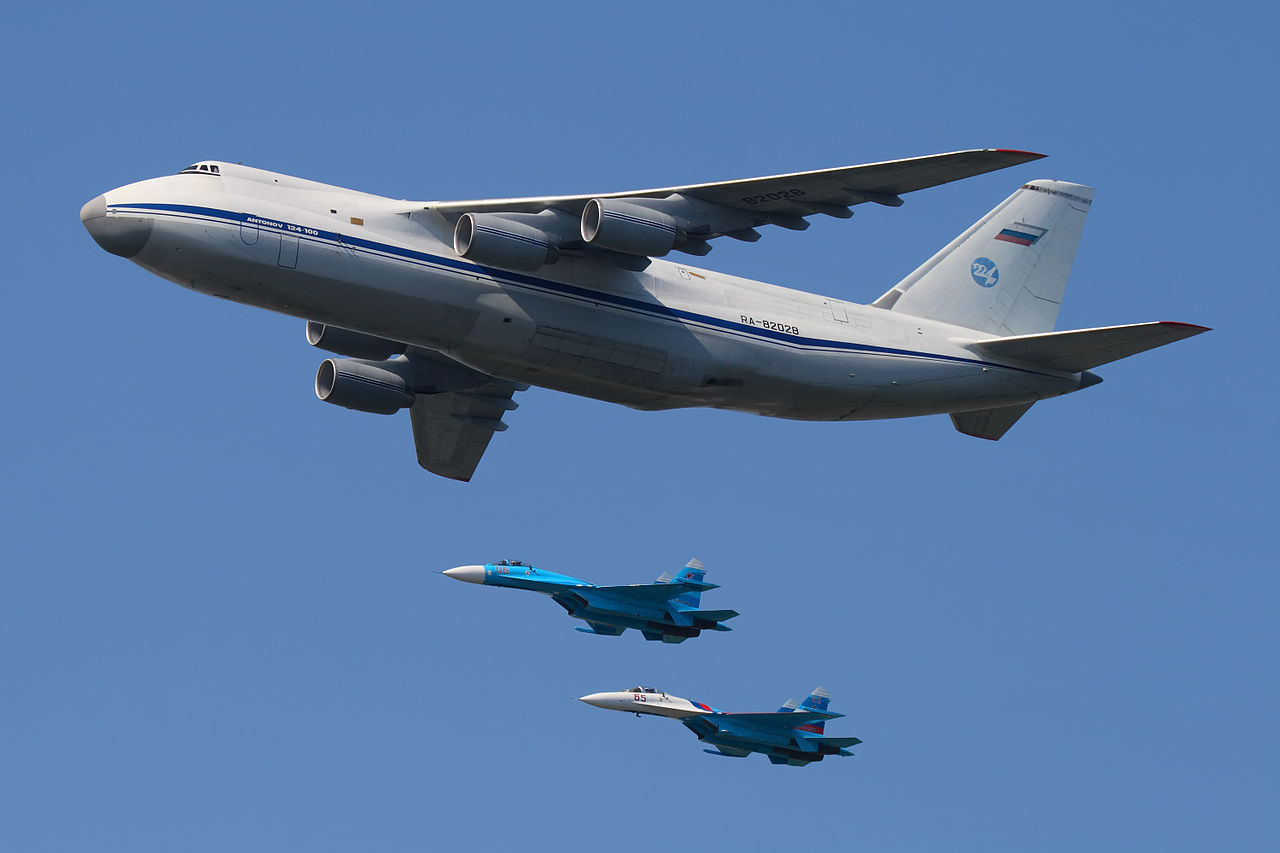
An An-124 100 aircraft photographed in May 2010 at a Moscow Victory Day Parade. (Wikimedia, Sergey Kustov, CC BY-SA 3.0)

An An-124 100 aircraft photographed in May 2010 at a Moscow Victory Day Parade. (Wikimedia, Sergey Kustov, CC BY-SA 3.0)

Russia has over the past week been delivering its advanced anti-aircraft systems, S-300, to Syria and has been using the Russian-made Antonov An-124 Ruslan for the job.

The Antonov An-124 Ruslan, also known as the Condor, is considered the largest military transport aircraft in the world, and is the second-largest plane overall, behind the Antonov An-225 Mriya. The Russian-made Mriya is the heaviest aircraft ever built and has the largest wingspan of an aircraft in service, at 88.4 meters (290 feet). With an empty weight of 314 tons, only one such aircraft was ever built.

The Ruslan weighs 192 tons empty and has a wingspan of 73.3 meters (240 feet).

The planes, used by the Russian Air Force as well as several cargo operators, were spotted by hobbyists who track aircraft movements (also known as aircraft spotters), on the Russia-Syria route over the past several days, according to Israeli news site Ynet.

Russia said it began supplying the S-300 air-defense system to Syria on Friday, despite Israeli protests. The first Ruslan plane was spotted arriving at the Hmeimim Air Base near Latakia in Syria on Thursday evening, according to the Ynet report.
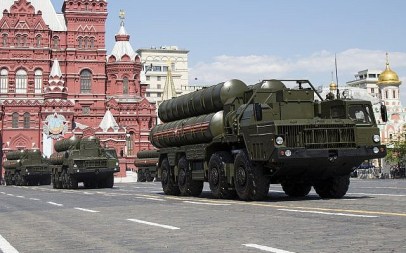
In this file photo taken on Monday, May 9, 2016, Russian S-300 air defense missile systems drive during the Victory Day military parade marking 71 years after the victory in WWII in Red Square in Moscow, Russia. (AP Photo/Alexander Zemlianichenko, File)

Russian Foreign Minister Sergei Lavrov announced the deliveries had started during a UN press conference. He said the anti-aircraft system “will be devoted to [ensuring] 100 percent safety and security of our men in Syria.”

Moscow’s decision to supply the systems to Syria has caused concern in Jerusalem. A senior Israeli official said Saturday that Syria’s possession of the S-300 posed a serious challenge for the Jewish state, but added that Israel was working on ways to prevent the development from becoming a major threat to the country’s security.

“The S-300 is a complex challenge for the State of Israel. We are dealing with the [decision] in different ways, not necessarily by preventing shipment [of the anti-aircraft system],” the official said.

The official added that he believes Russian President Vladimir Putin understands that while Moscow “made a move, the playing field is very large,” indicating that Israel reserved the right to protect itself and that it had the support of the United States.

Prime Minister Benjamin Netanyahu on Friday criticized Russia’s move as “irresponsible,” but said Israel was committed to continued deconfliction with Moscow in its military operations in the region.

Speaking to CNN in New York after the annual UN General Assembly, Netanyahu said that he spoke to Putin earlier this month after Syrian forces responding to an Israeli airstrike mistakenly shot down a Russian military reconnaissance plane, killing all 15 people on board.

Netanyahu said he told Putin, “Let’s continue this deconfliction, but at the same time, I told him very respectfully and very clearly that Israel will do, will continue to do what it has to do to defend itself.”
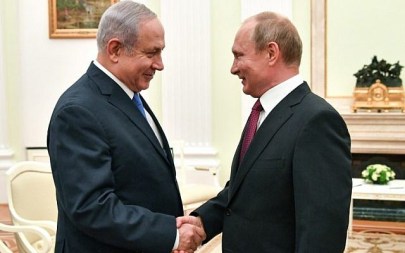
Russian President Vladimir Putin (R) shakes hands with Israeli Prime Minister Benjamin Netanyahu during their meeting at the Kremlin in Moscow on July 11, 2018. (AFP/Pool/Yuri Kadobnov)

He said both sides wanted to avoid a military clash in Syria, noting that the many militaries and other groups operating in the region were making it “very crowded over there in this tiny space.

“Through this mess, we’ve been able for three years to avoid any clash between … between Russian and Israeli forces,” he said. “I think there’s a desire on both our part and Russia’s part to … avoid a clash.”

The Russian defense ministry also announced last week that it would begin jamming radars of military planes striking targets in Syria from off the coast of the Mediterranean.

Both Israel and the United States have protested the decision to supply Syria with the S-300, which could complicate ongoing Israeli efforts to prevent Iran deepening its military presence in Syria and to thwart the transfer of weapons in Syria to Hezbollah.

Israel has vowed to continue its operations.

Israel has carried out hundreds of strikes against Syrian and Iranian targets in Syria over the last several years, with fighter jets going nearly unchallenged by the country’s air defenses — though an F-16 was downed by a Syrian anti-aircraft missile in February in what the IDF later said was the result of a professional error by the pilots.

Jerusalem has vowed to prevent Lebanon-based Hezbollah or Iranian proxy militias in Syria from obtaining advanced weapons that could threaten the Jewish state and has worked to keep Iran from gaining a foothold in Syria that can be used to attack Israel.

Russia, which is a main backer of Syrian President Bashar Assad, has maintained a deconfliction hotline with Israel, allowing the Jewish state to carry out the attacks as long as it was informed beforehand.

The future of that program has been uncertain since the September 17 incident, which occurred as four Israeli fighter jets conducted an airstrike on the weapons warehouse near the coastal city of Latakia, which the IDF said was intended to provide weapons to the Hezbollah terror group and other Iranian proxies.
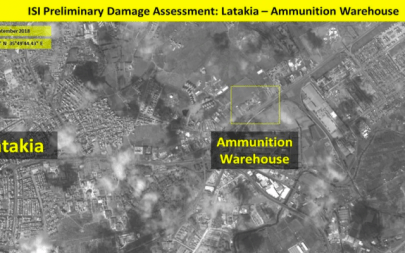
The remains of a Syrian ammunition warehouse which was destroyed in an Israeli airstrike on a base in Latakia, September 18, 2018. (ImageSat International (ISI/Ynet)

Moscow has accused Israel of using the IL-20 spy plane as a shield after the attack, rejecting Israel’s claims that poorly trained Syrian air defense operators are to blame for the deaths of 15 Russian servicemen aboard the aircraft.

Israel denies this charge, and insists it also notified the Russians 12 minutes before the attack — while Moscow has said it was given only a minute’s notice.

Earlier this year Defense Minister Avigdor Lieberman downplayed Israeli concerns over Russia’s purported plans to install the system in Syria.

“One thing needs to be clear: If someone shoots at our planes, we will destroy them. It doesn’t matter if it’s an S-300 or an S-700,” he said.


Netanyahu slams ‘ridiculous’ Iran effort to tie Israel to attack at parade 

Posted October 2, 2018 by Joseph Wouk
Categories: Uncategorized

Source: Netanyahu slams ‘ridiculous’ Iran effort to tie Israel to attack at parade | The Times of Israel

Prime minister speaks out after Tehran’s Revolutionary Guards fire missiles bearing ‘Death to America, Death to Israel’ slogans at Islamic State targets in Syria

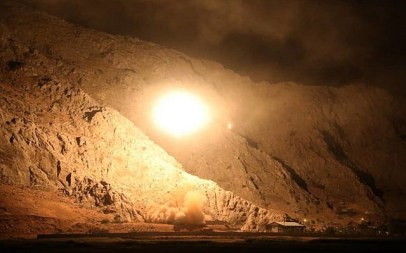
In this photo released on Oct. 1, 2018, by the Iranian Revolutionary Guard, a missile is fired from city of Kermanshah in western Iran targeting the Islamic State group in Syria (Sepahnews via AP)

In this photo released on Oct. 1, 2018, by the Iranian Revolutionary Guard, a missile is fired from city of Kermanshah in western Iran targeting the Islamic State group in Syria (Sepahnews via AP)

Prime Minister Benjamin Netanyahu on Monday night castigated Iran for falsely seeking to tie Israel to an attack at a military parade in southern Iran last month in which at least 24 people were killed.

Netanyahu spoke after Iran fired missiles featuring slogans urging “Death to Israel” and “Death to America” at Islamic State targets in Syria earlier Monday that it said were connected to the attack. Tehran has blamed a range of adversaries, including Israel, the US, the Islamic State, and others, for the attack.

“Iran’s attempt to tie Israel to the terrorist attack in southern Iran is ridiculous,” Netanyahu said in a statement. “The fact that ‘Death to Israel’ was written on the missiles launched at Syria proves everything,” he added.

Iran’s Revolutionary Guard launched six ballistic missiles as well as drone bombers early Monday toward eastern Syria, targeting what it said were terrorists that it blamed for the attack on the military parade.

Screen capture from video of Prime Minister Benjamin Netanyahu showing a diagram of what he said was a previously unknown Iranian nuclear site, during his address to the 73rd UN General Assembly, September 27, 2018. (United Nations)

The missiles had anti-Israel, anti-American, and anti-Saudi slogans written on them. One missile shown on state television bore the slogans “Death to America, Death to Israel, Death to Al Saud,” referring to Saudi Arabia’s ruling family. The missile also bore in Arabic the phrase “kill the friends of Satan,” referring to a verse in the Quran on fighting infidels.

The missiles had enough range to strike regional US military bases and targets inside both Saudi Arabia and the United Arab Emirates. Iran’s supreme leader has called out the two Arab nations by name, accusing them of being behind the Sept. 22 attack on the parade in the Iranian city of Ahvaz, something denied by both Riyadh and Abu Dhabi.

Israel’s Hadashot TV news reported Monday night that one of the Iranian missiles crashed soon after launch.

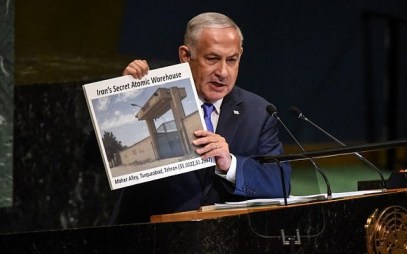
Netanyahu is a relentless critic of the Iranian regime, which he insists is trying to fool the world as it seeks a nuclear arsenal. At the UN last week, he revealed details of what he said was a “secret atomic warehouse” in Tehran, which he said stored radioactive material — an allegation Tehran has denied and derided.

In this photo released on October 1, 2018, by the Iranian Revolutionary Guard, a missile is fired from city of Kermanshah in western Iran targeting the Islamic State group in Syria. (Sepahnews via AP)

“This is the roaring of missiles belonging to the Revolutionary Guard of the Islamic Revolution,” an Iranian state TV reporter said as the missiles launched behind him. “In a few minutes, the world of arrogance — especially America, the [Israeli] Zionist regime and the Al Saud — will hear the sound of Iran’s repeated blows.” Al Saud is a reference to Saudi Arabia’s royal family.

Iranian state TV and the state-run IRNA news agency said the missiles “killed and wounded” militants in Syria, without elaborating. The missiles, launched from western Iran, flew over Iraq and landed near the city of Boukamal in the far southeast of Syria, they reported.

“Terrorists used bullets in Ahvaz,” Gen. Amir Ali Hajizadeh, chief of the Guard’s aerospace division, told the semi-official Tasnim news agency. “We answered them with missiles.”

The Guard, a paramilitary group that answers directly to the supreme leader, said it followed the missiles with bombing runs by seven remotely piloted drones, a first for Iran. State TV aired footage of a drone dropping what appeared to be an unguided munition.

Boukamal is held by Syrian government forces, but Islamic State still maintains a presence in the area, despite being driven from virtually all the territory it once held in Syria and Iraq.

Rami Abdurrahman, who heads the Britain-based Syrian Observatory for Human Rights, told The Associated Press that the Iranian missiles hit the IS-held town of Hajin, just north of Boukamal.

Strong explosions shook the area early Monday, reverberating east of the Euphrates River, he said. US-allied Kurdish fighters have been battling IS in and around Hajin for weeks.

The US military’s Central Command acknowledged that Iranian forces conducted “no-notice strikes” in the area.

“The coalition is still assessing if any damage occurred, and no coalition forces were in danger,” US Army Col. Sean Ryan said.

The missile launch further adds to confusion over who carried out the assault on a military parade, which killed at least 24 people and wounded over 60.


Netanyahu: Hezbollah ‘brazenly lying’ to world about weapons sites

Posted October 2, 2018 by Joseph Wouk
Categories: Uncategorized

Source: Netanyahu: Hezbollah ‘brazenly lying’ to world about weapons sites | The Times of Israel

Israeli PM says foreign ambassadors in Beirut went on ‘fraudulent propaganda tour’ hosted by Lebanese FM as terror group had 3 days to clear the area

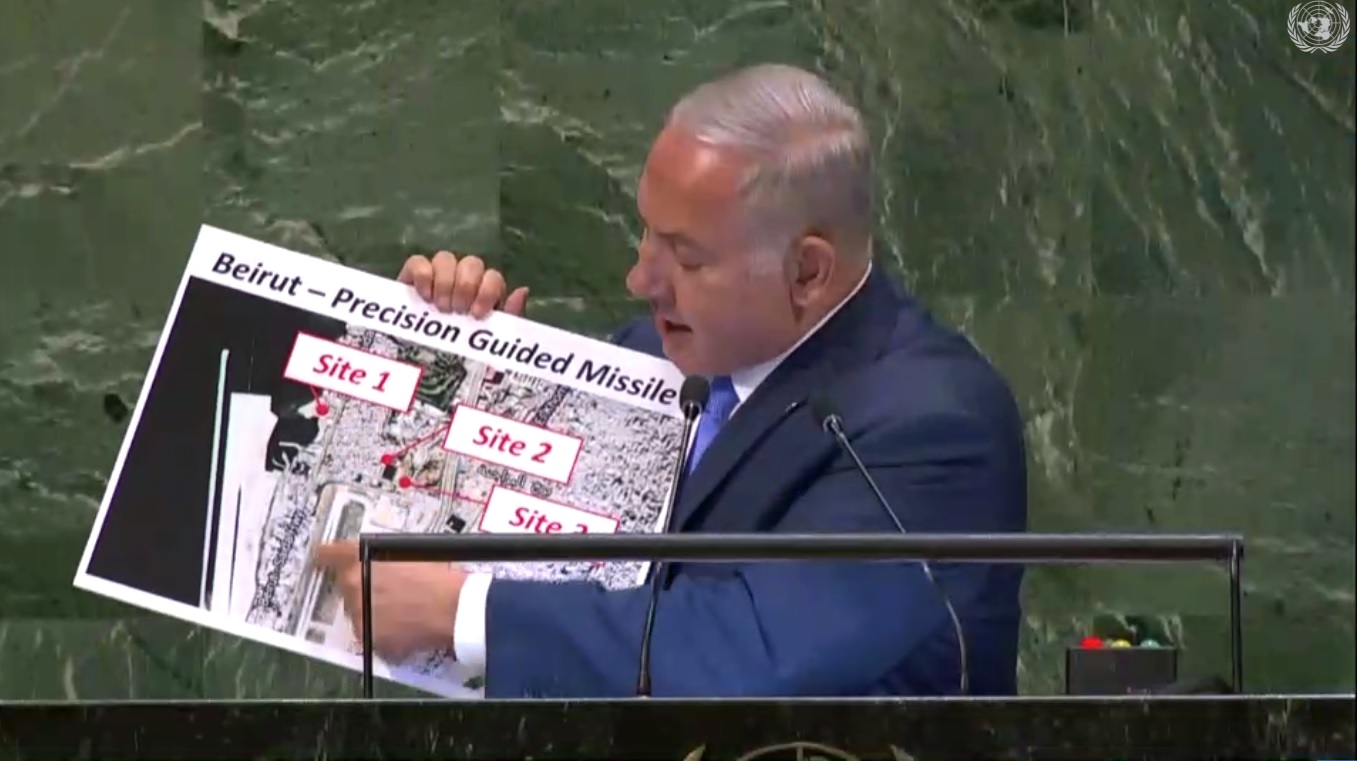
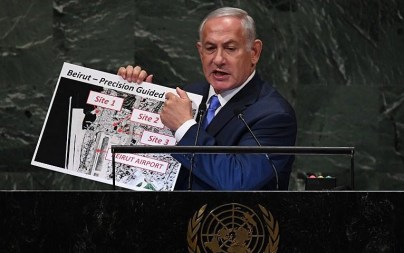
Screen capture from video of Prime Minister Benjamin Netanyahu showing a diagram of what he said was Hezbollah terror group sites near Beirut during his address to the 73rd UN General Assembly in New York, September 27, 2018. (United Nations)

Screen capture from video of Prime Minister Benjamin Netanyahu showing a diagram of what he said was Hezbollah terror group sites near Beirut during his address to the 73rd UN General Assembly in New York, September 27, 2018. (United Nations)

Prime Minister Benjamin Netanyahu accused Lebanese terror group Hezbollah, an Iranian proxy, of “brazenly lying” to the international community over the secret weapons facilities in and around Beirut, which the Israeli premier disclosed on the world stage at the United Nations General Assembly last week.

Netanyahu said in a statement Monday that Lebanese Foreign Minister Gibran Bassil took 73 foreign envoys on a “fraudulent propaganda tour” of the alleged missile sites, where he failed to show them the underground facilities where Hezbollah is reportedly storing precision-guided missiles.

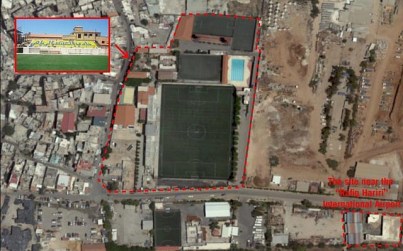
“Hezbollah is brazenly lying to the international community by means of the fraudulent propaganda tour of the Lebanese foreign minister who took ambassadors to the soccer field [one of the alleged missile sites] but refrained from taking them to the nearby underground precision missile production facility,” Netanyahu said.

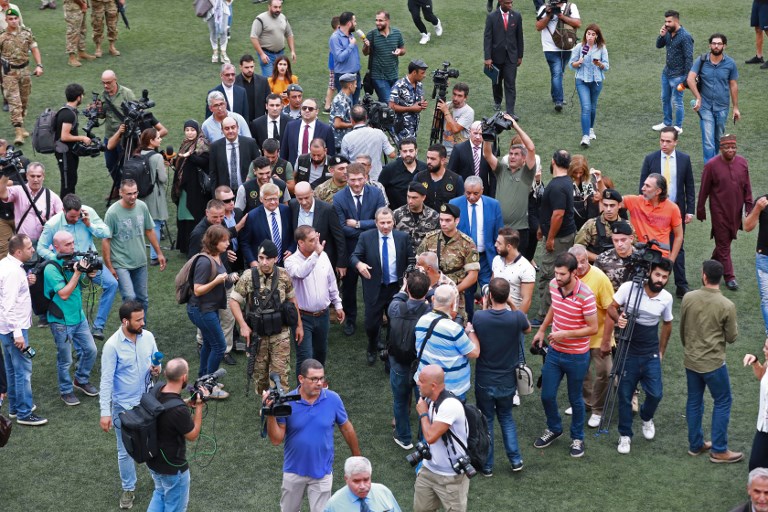
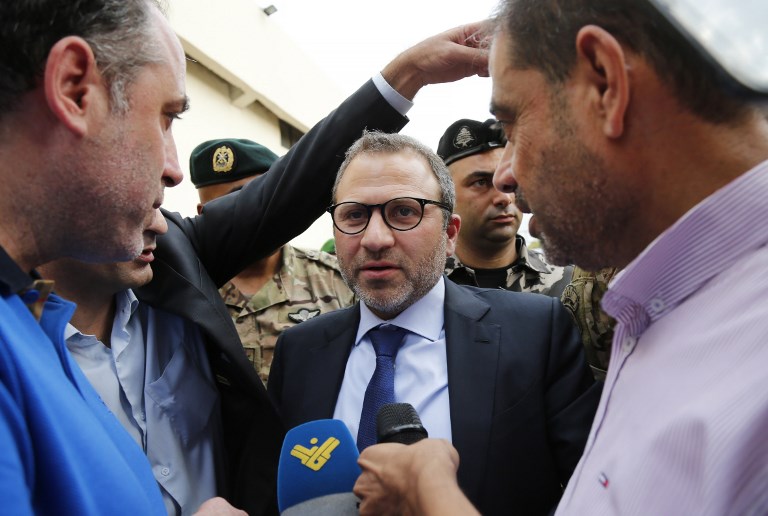
On Monday, Bassil led a group of the ambassadors around a pool complex and the sports stadium in a bid to disprove the Israeli accusations.

“Today Lebanon is raising [its] voice by addressing all countries of the world… to refute Israel’s allegations,” Bassil was quoted as saying. Israel’s Channel 10 news said Monday night that Lebanon feared Israel may attack the sites.

Netanyahu said the envoys “should ask themselves why [Lebanese authorities] waited three days to give them a tour.” The PM said in the September 27 address to the UN General Assembly that Hezbollah had secret missile conversion sites in and around Beirut.

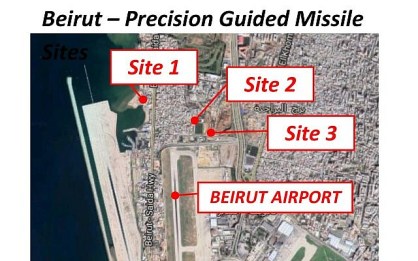
One of the alleged sites is located under a soccer field used by a Hezbollah-sponsored team; another is just north of the Rafik Hariri International Airport; and the third is underneath the Beirut port and less than 500 meters from the airport’s tarmac.

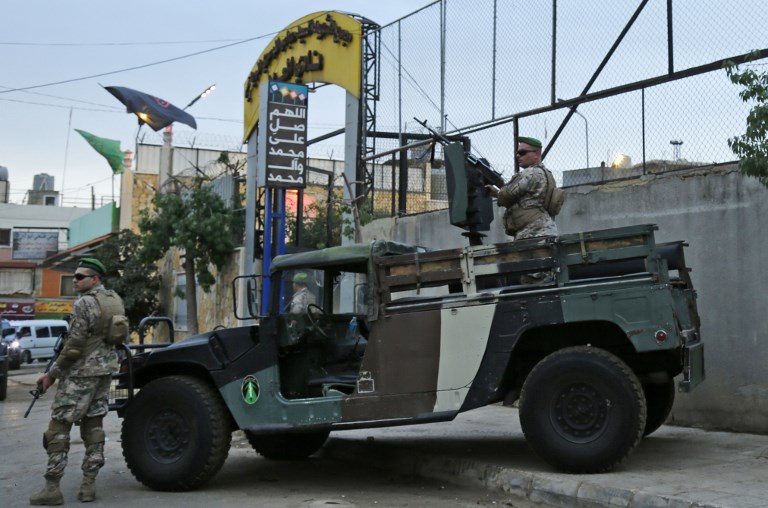
Lebanese security forces guard the entrance of Al-Ahed stadium in Beirut’s southern suburbs during a tour organized by the Lebanese foreign minister for ambassadors on October 1, 2018 of alleged missile sites around the Lebanese capital in a bid to disprove Israeli accusations that the Hezbollah movement has secret missile facilities there. (AFP PHOTO / ANWAR AMRO)

These three are not the only facilities that the IDF believes are being used by Hezbollah for the manufacturing and storage of precision missiles.

Hezbollah, Netanyahu said, took pains to clear out the exposed facilities so that foreign diplomats could tour the area.

“It’s saddening that the Lebanese government is sacrificing the safety of its citizens while covering for Hezbollah, which has taken Lebanon hostage in its aggression toward Israel,” said Netanyahu.

Lebanon’s Foreign Minister Gibran Bassil gathers 73 foreign envoys and journalists at Al-Ahed stadium in Beirut’s southern suburbs on October 1, 2018 during a tour he organized of alleged missile sites around the Lebanese capital’s international airport, in a bid to disprove Israeli accusations that the Hezbollah movement has secret missile facilities there. (AFP PHOTO / ANWAR AMRO)

Earlier Monday, the Israeli military released a video noting that three days had passed since Netanyahu detailed the presence of the alleged facilities.

“In three days you can clear out a precision missile factory, invite foreign ambassadors, and hope that the world will fall for it.”

It urged the international community not to be duped by what it said were “Hezbollah’s lies.”

The Russian ambassador to Lebanon, Alexander Zasypkin, described the tour as “very good.”

“On the diplomatic and political spheres, there are many statements,” he told The Associated Press. “What we saw today are facts. There is a club and stadium. I can’t imagine a secret thing happening in these places. We saw that with our own eyes.”

In his UN address on Thursday, Netanyahu produced satellite imagery pinpointing the three sites being used by Hezbollah, accusing the Shiite terror group of using Beirut residents as human shields.

“So I also have a message for Hezbollah today: Israel knows, Israel also knows what you’re doing. Israel knows where you’re doing it. And Israel will not let you get away with it,” Netanyahu said.

Prime Minister Benjamin Netanyahu addresses the General Assembly at the United Nations in New York September 27, 2018, and holds up a placard detailing alleged Hezbollah missile sites in Beirut. (AFP / TIMOTHY A. CLARY)

Hezbollah, whose forces control south Lebanon bordering Israel and Beirut’s southern suburbs where the airport is located, has not officially reacted to the accusation.

Bassil on Monday lashed out at Israel, which he said had “violated our land, air, and marine space 1,417 times in the last eight months.”

Israel was attempting “to justify another violation of UN resolutions and to justify another aggression on a sovereign country,” he said.

The Jewish state has fought several conflicts against Hezbollah, the last in 2006.

Bassil said his government would not allow rocket facilities near the airport and that Hezbollah is “wiser” than to place them there. He said Netanyahu’s claims were based on “inaccurate” estimates without any “compelling evidence.”

“Lebanon demands that Israel ceases its madness,” he said.

Bassil said Monday’s tour, which included the ambassadors and several reporters, was not “a fact-finding mission,” but part of a “counter-diplomatic campaign” to rebut the allegations.

Hezbollah’s leader Hassan Nasrallah recently boasted that his group now possesses “highly accurate” missiles despite Israeli attempts to prevent it from acquiring such weapons.

Bassil acknowledged Hezbollah’s claims, but said “this doesn’t mean that those missiles are present in the vicinity of Beirut airport.”

Soon after Netanyahu’s speech Thursday, the IDF released satellite images of the sites that it says are being used by Hezbollah to hide underground precision missile production facilities.

Lebanon’s Foreign Minister Gibran Bassil talks to the media as he gathered ambassadors near Beirut international airport on October 1, 2018 during a tour of alleged missile sites around the Lebanese capital, in a bid to disprove Israeli accusations that the Hezbollah movement has secret missile facilities there. (AFP PHOTO / ANWAR AMRO)

The sites are located within close proximity to the Beirut airport.

The factories, which are meant to convert regular missiles into more accurate precision ones, are not believed to be up and running. The Israeli military said the missiles are currently being constructed with Iranian assistance.

The target of last month’s Israeli airstrike, in which a Russian spy plane was inadvertently shot down by Syrian air defenses, was machinery used in the production of precision missiles en route to Hezbollah, The Times of Israel learned.

An image from a placard displayed by Prime Minister Benjamin Netanyahu during his speech to the United Nations General Assembly showing Hezbollah precision missile sites hidden in Beirut. (GPO)

According to Netanyahu, these precision missiles are capable of striking with 10 meters (32 feet) of their given target. Hezbollah is believed to have an arsenal of between 100,000 and 150,000 rockets and missiles, though the vast majority are thought to lack precision technology.

A satellite image released by the Israel Defense Forces showing a site near Beirut’s international airport that the army says is being used by Hezbollah to convert regular missiles into precision-guided munitions, on September 27, 2018. (Israel Defense Forces)

The army said the facilities are “another example of Iranian entrenchment in the region and the negative influence of Iran.”

Holding up aerial photos of the alleged Hezbollah facilities, Netanyahu warned: “Israel knows what you are doing, Israel knows where you are doing it, and Israel will not let you get away with it.”

Netanyahu accused the Lebanese terror group of “deliberately using the innocent people of Beirut as human shields.”

According to the Israel Defense Forces, Hezbollah began working on these surface-to-surface missile facilities last year.

Reports that Iran was constructing underground missile conversion factories in Lebanon first emerged in March 2017.

Since then, Israeli officials have repeatedly said that Israel would not tolerate such facilities.

In January, Netanyahu said Lebanon “is becoming a factory for precision-guided missiles that threaten Israel. These missiles pose a grave threat to Israel, and we cannot accept this threat.”


Israelis remain largely isolated in praise for Trump and US policy — poll

Posted October 2, 2018 by Joseph Wouk
Categories: Uncategorized

Source: Israelis remain largely isolated in praise for Trump and US policy — poll | The Times of Israel

Pew survey shows 82% of Jewish Israelis trust US handling of global affairs and 94% have favorable opinion of America — views which are out of sync with most other nations polled

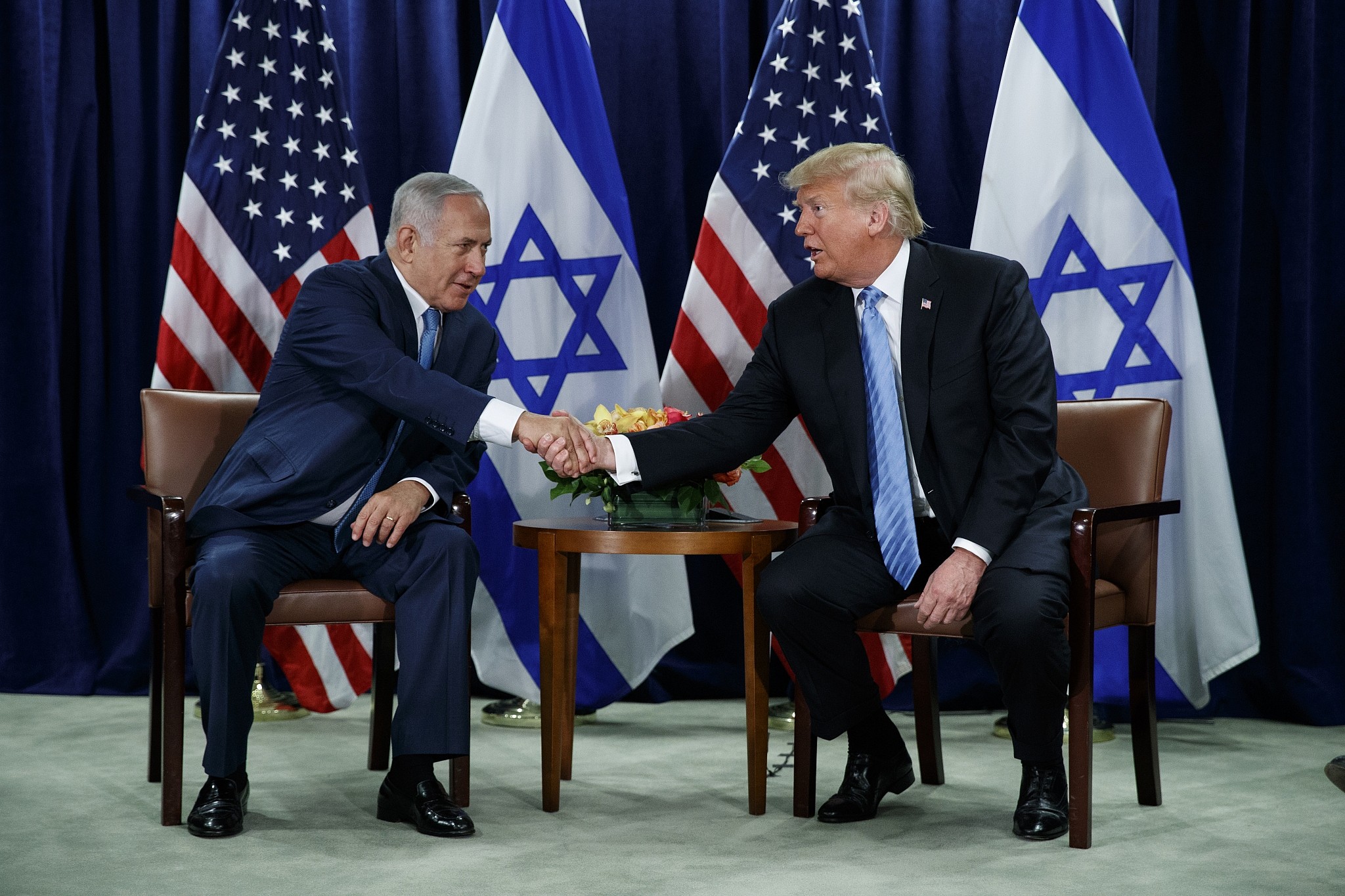
US President Donald Trump shakes hands with Prime Minister Benjamin Netanyahu at the United Nations General Assembly on September 26, 2018, at UN Headquarters (AP Photo/Evan Vucci)

US President Donald Trump shakes hands with Prime Minister Benjamin Netanyahu at the United Nations General Assembly on September 26, 2018, at UN Headquarters (AP Photo/Evan Vucci)

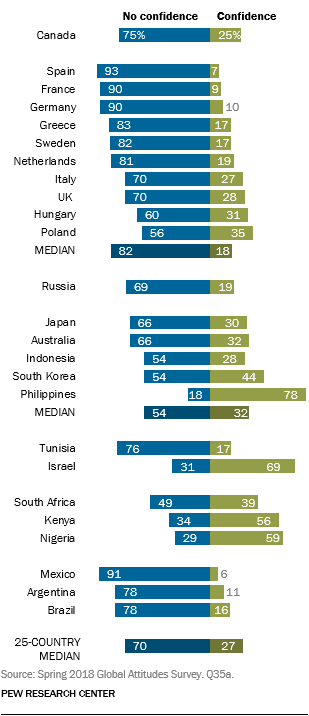
Israelis have an extremely positive view of US President Donald Trump and his administration, and are largely isolated in this outlook in the international community, a new survey by the Pew Research Center has shown.

The poll of America’s standing in 25 countries shows 82 percent of Jewish Israelis have confidence in Trump’s handling of global affairs (69% among Israelis overall) while 94 of Jewish Israelis have a favorable view of the US in general (83% overall).

But Israeli approval was not shared by many others, and ratings were generally at historic lows, with views of Washington dim — and falling — in many nations which are key allies of the US, including Germany (30% favorability), Canada (39%) and France (38%). The UK was evenly split at 50%.

Though some nations showed a ratings improvement between 2017 to 2018 — such as Spain, Japan, South Korea, Brazil and South Africa — all but three continued to view the US less favorably than under the Obama administration, those three being, Israel, Russia and Kenya.

Confidence in US President Donald Trump internationally (Courtesy Pew Research Center)

And Israel was tied with the Philippines for the highest overall rating for the current administration at 83%. Among Israeli Jews that figure was still higher at 94%, while only 43% of Arabs agreed.

Israeli appreciation for the US actually went up over the past year, from 81% in 2016 and 2017.

Pollsters also noted that respondents on the political right were generally far more enthusiastic than those on the left, with the divide in Israel (94% to 57%) being the largest between countries polled.

Israelis were also more convinced than any other respondents that the US was doing more to address global problems in the past two years, with 52% expressing that sentiment. The only other countries to come close were Nigeria (48%) and Kenya (42%), while in most European countries that number was in single digits or low teens.

Israel is also far ahead of most countries in the belief that Washington takes its interests into account, with 86% saying the administration considers Israeli interests when making decisions. Once again the Philippines (74%) and Kenya (63%) were closest to the Israeli position, while the median for all countries was only 28%.

While most respondents did not register a major change in their nations’ relationship with the US between this year and last, Israelis once again stood out, with 79% saying ties had improved — likely a result of the US decision in December 2017 to recognize Jerusalem as the Jewish state’s capital and move its embassy there.

And while, as noted above, 69% of Israelis trust Trump’s handling of international relations, the number is far above the median of all 25 nations which stands at 27%.

Israelis are in agreement with most polled nations, however, that China plays a far larger role on the world stage today than in the past, with 74% expressing that view — a percentage similar to those in France, Spain, Russia, Germany, the UK, Canada and others.


Germany approves extradition of Iranian diplomat over alleged bomb plot

Posted October 1, 2018 by Joseph Wouk
Categories: Uncategorized

Source: Germany approves extradition of Iranian diplomat over alleged bomb plot | The Times of Israel

Hebrew media reported earlier this year that the planned attack on an opposition rally in Paris was thwarted by the Mossad

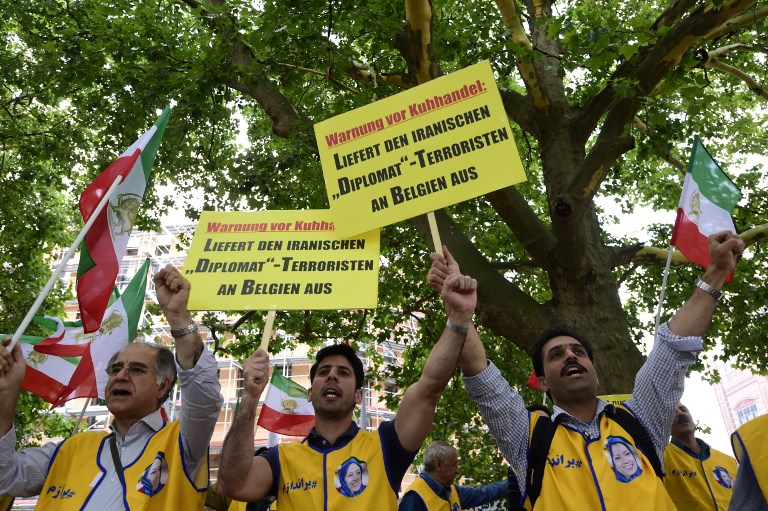
In this file photo taken on July 11, 2018, activists of the National Council of Resistance of Iran (NCRI) hold placards reading 'Deliver the Iranian diplomat - terrorist to Belgium' during a demonstration calling for the extradition of a secret service officer to Belgium in front of the Federal Foreign Office in Berlin (AFP PHOTO / Tobias SCHWARZ)

In this file photo taken on July 11, 2018, activists of the National Council of Resistance of Iran (NCRI) hold placards reading ‘Deliver the Iranian diplomat – terrorist to Belgium’ during a demonstration calling for the extradition of a secret service officer to Belgium in front of the Federal Foreign Office in Berlin (AFP PHOTO / Tobias SCHWARZ)

A German court said Monday it gave the green light for an Iranian diplomat linked to an alleged bomb plot against an Iranian opposition rally to be handed over to Belgium.

The superior regional court in Bamberg said in a statement that it had on September 27 approved the extradition of the Iranian diplomat based in Vienna who has been named as Assadollah Assadi.

“The wanted man cannot cite diplomatic immunity because he was on a several day holiday trip outside his host state Austria and not traveling between his host country and the state that dispatched him,” the court said.

The suspected plan to target a gathering of the National Council of Resistance of Iran (NCRI) organized by dissident group The People’s Mujahedeen of Iran (MEK) in a Paris suburb came to light a few days after the June 30 event.

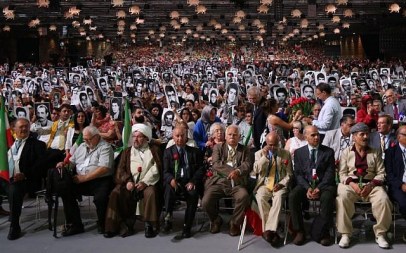
People hold pictures of relatives killed by the Iranian regime during the “Free Iran 2018 – the Alternative” event on June 30, 2018, in Villepinte, north of Paris. Six people were arrested in Belgium, Germany and France for an alleged plot to attack the rally, including an Iranian diplomat and his wife. (AFP Photo/Zakaria Abdelkafi)

Hebrew media reported earlier this year that the plot was thwarted by Israel’s Mossad spy agency.

Six people were arrested in Belgium, France and Germany, two of whom were later released.

German prosecutors say Assadi, believed to be an intelligence agent, ordered a couple to attack the rally and had handed them the explosives at a June meeting in Luxembourg.

Tehran has dismissed the alleged bomb plot as a “sinister false flag ploy” designed to discredit Iran at a time when it faces major diplomatic tensions with the United States.

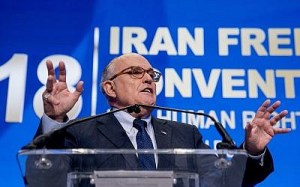
Rudy Giuliani, an attorney for President Donald Trump, speaks at the Iran Freedom Convention for Human Rights and democracy at the Grand Hyatt, Saturday, May 5, 2018, in Washington. (AP Photo/Andrew Harnik)

The rally in the Paris suburb of Villepinte was attended by several allies of US President Donald Trump, including former New York mayor Rudy Giuliani and former House speaker Newt Gingrich, both of whom urged regime change in Iran.

Belgian authorities in July requested the extradition of both Assadi and a man identified as Merhad A., who was detained in Paris.

Belgian police believe Merhad A. is an accomplice of a husband and wife team caught in Brussels in possession of 500 grams of the powerful explosive TATP and a detonator.

The couple were identified as Amir S. and Nasimeh N.

All three are Belgian nationals of Iranian origin.

The MEK, formed in the 1960s to overthrow the shah of Iran, fought the rise of the mullahs in Tehran following the 1979 Islamic revolution.

It earned itself a listing as a “terrorist organization” by the US State Department in 1997 and was only removed from terror watchlists by the European Union in 2008 and by Washington in 2012.


Rev Guards fire 8 missiles from Iran at ISIS in E. Syria – DEBKAfile

Posted October 1, 2018 by Joseph Wouk
Categories: Uncategorized

Source: Rev Guards fire 8 missiles from Iran at ISIS in E. Syria – DEBKAfile

Tehran state media reported that on Monday, Oct. 1,  IRGC missiles targeted the headquarters of the terrorists” east of the Euphrates in Syria in reprisal for their attack on a military parade in Ahvaz on Sept. 8, which killed 30 people and injured scores.

The missiles were fired from the Iranian Kurdish region of Kermanshah. It was the second time in three weeks that the Revolutionary Guards had fired surface missiles from their base in Kermanshah at a target outside Iran. On the day of the Ahvaz attack, they launched missiles against Kurdish political centers and military headquarters in northern Iraq, alleging they were complicit in a recent spate of cross-border raids on Iranian military border positions in the north.

DEBKAfile’s military sources note that the missiles fired on Monday aimed at the region east of Abu Kamal between Harse and Hajin, which is the last piece of land still held by ISIS in Syria. Abu Bakr al-Baghdadi is believed to be hiding there.  The Ahvaz attack was claimed at the time by ISIS and Iranian Arab separatists. The IRGC’s response indicated that the former was held accountable.

Witnesses report that at least two of the eight missiles fired from Kermanshah, exploded prematurely and fragments dropped into northern Iraq.  No word has come from Syria about the missile attack, although the area east of the Euphrates houses a US military presence, Syrian Kurds, Syrian forces and Iraqi Shiite militias.

Lebanese Hizballah sources did not miss the opportunity to imply that the Iranian missiles also addressed a warning to the US, Israel and Saudi Arabia. Tehran State TV released images Monday morning of an IRGC soldier pointing to a slogan on one of the missiles: “Death to America, Death to Israel, Death to Al Saud.” Soon after the first attack into eastern Syria, Tehran announced another had taken place, this one by Iranian drones.


Iran scrambling to cover up newly revealed nuclear site, Israeli official says 

Posted October 1, 2018 by Joseph Wouk
Categories: Uncategorized

Source: Iran scrambling to cover up newly revealed nuclear site, Israeli official says | The Times of Israel

Senior source asserts Netanyahu’s announcement of Tehran warehouse has caused ‘growing pressure’ in Islamic Republic; claims 15kg of radioactive material was moved out in August

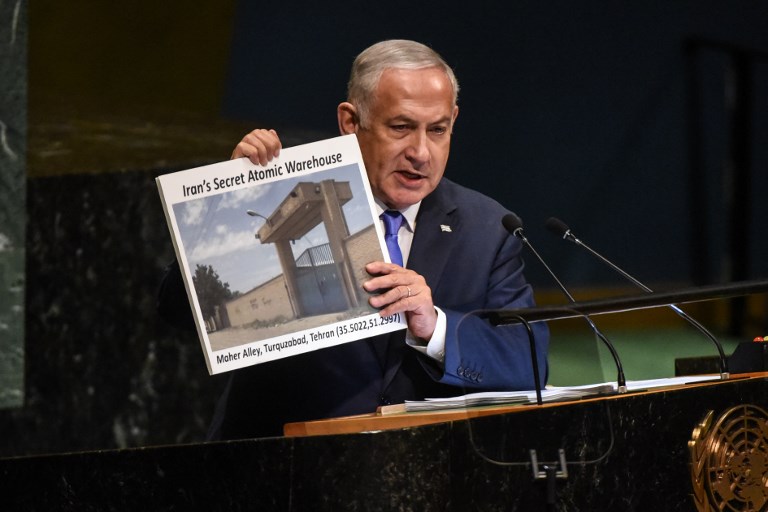
Benjamin Netanyahu, Prime Minister of Israel, holds up a placard showing a suspected Iranian atomic site while delivering a speech at the United Nations during the United Nations General Assembly on September 27, 2018 in New York City. (Stephanie Keith/Getty Images/AFP)

Benjamin Netanyahu, Prime Minister of Israel, holds up a placard showing a suspected Iranian atomic site while delivering a speech at the United Nations during the United Nations General Assembly on September 27, 2018 in New York City. (Stephanie Keith/Getty Images/AFP)

NEW YORK — Prime Minister Benjamin Netanyahu’s revelation at the UN on Thursday of a previously unknown Iranian nuclear site has caused “growing pressure inside Iran,” a senior Israeli official said over the weekend.

“They’re wondering how to deal with this facility, how to evacuate it, how to cover it up,” the official said. “There is no doubt it is a very important site for them; they’re seeking to conceal it and stall in any way possible.”

According to the official, the 15 kilograms of radioactive material that Netanyahu said was removed from the facility and dispersed around Tehran was taken away at the beginning of August.

Netanyahu, meanwhile, told Israeli reporters in a briefing Friday that it was past time for the IAEA to act, and that Iran had been exposed “as deceiving and cheating the international community.” He also said that Iran was aiming to break out to a nuclear arsenal when it deems the time ripe: “There’ll be a crisis somewhere or other, and they’ll [take advantage of the distraction] to break out to a nuclear arsenal,” he warned. “That’s the Iranian plan.”

In his address to the UN General Assembly on Thursday, revealing the “secret atomic warehouse,” Netanyahu said “[Global] intelligence services and the International Atomic Energy Agency (IAEA) have known about this for six weeks” and failed to act. The warehouse allegedly contained nuclear materials that Iran is not allowed to hold without declaring them to the IAEA.

Netanyahu, in his speech, claimed the warehouse was used for “storing massive amounts of equipment and material from Iran’s secret weapons program,” which was quickly being moved to other parts of the city.

The site may contain as much as 300 tons of nuclear-related equipment and material in 15 shipping containers, he added.

The US on Friday asked the IAEA to investigate Netanyahu’s new allegations, although Reuters also quoted a US official as saying the prime minister’s information was misleading, and that the site contained documentation and not nuclear materials.

The Israeli official rejected this on Friday, saying “It’s not just documents. There are other things there,” and added: “Did he check it? First of all, let them check.” He noted that it seemed “very important for Iran to hide it, to disperse things across Tehran.”

The official acknowledged that Israel did not have information on everything contained within the site, and said this was why the IAEA should “go and check.”

Asked if the existence of the secret warehouse and its contents definitely violated the terms of the 2015 Iran nuclear deal, the Israeli official replied: “First of all, let them check… Why did they remove 15 kilograms of radioactive material? That’s a question that needs to be looked into.

“We know there’s radioactive material there. They distributed that radioactive material all around Tehran. Those 15 kilograms are a fact. Why did they go around dispersing it? What happened? They need to check.”

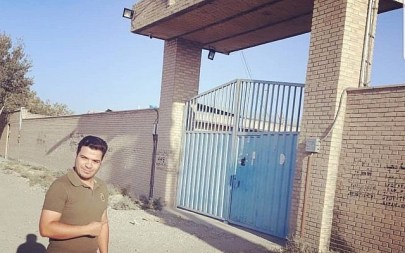
Iranians on Friday published selfies on social media taken outside the facility, and mocked Netanyahu’s claim that it was a secret nuclear facility. The official said “The fact that you have young Iranians taking selfies there is unbelievable.”

An Iranian poses outside the site identified by Prime Minister Benjamin Netanyahu as a secret Iranian nuclear facility on September 28, 2018 (Twitter)

The senior official scoffed at the notion that Netanyahu had exposed sensitive intelligence material. “That’s absurd. We had discussions about this, what to reveal and what not to, and it was decided to reveal it at this point.”

Briefing Israeli reporters traveling with him in the US, Netanyahu himself on Friday said it was “time for [the IAEA] to act.” As to whether it would, he said: “They may act and they may not act, but one thing is certain — Iran has been exposed as deceiving and cheating the international community. That’s been revealed and that’s the main purpose. Anything else is a bonus.”

Netanyahu once again lambasted the 2015 nuclear deal, saying Iran “immediately” used funds freed up by the accord to bolster its war machine. “It gave them hundreds of millions of dollars in direct released funds, in credit and in the entry of investors” and Iran had since seen “a 40 percent increase in its defense budget.”

Said Netanyahu Friday, in a bitter denunciation of the accord: “The essence of the 2015 nuclear deal was that, in that in return for not enriching uranium for a single bomb, Iran in a few years will get the right to enrich for hundreds of bombs. Iran has already announced that it will produce 200,000 centrifuges, some of them 20 times faster than the current generation.”

Iran, he said, has “mountains of yellowcake” uranium concentrate. “They have their archived information [on bomb-making] in their secret atomic archive. They can push not for one bomb, but for hundreds of bombs simultaneously.”

“There’ll be a crisis somewhere or other, and they’ll [take advantage of the distraction] to break out to a nuclear arsenal,” he warned. “That’s the Iranian plan. And that’s what the agreement gave them.

“It also gave them hundreds of millions of dollars — directly released funds,” he noted. “They put that money directly into their war machine; there’s been a 40% increase in their defense budget.

The Iranians, he said, “were also obligated [under the deal] to come clean on all their [nuclear] activities. The 15 kilograms [of radioactive material] is further prove [of their failure to do so].”

The newly revealed warehouse, said Netanyahu, did not merely contain documents, as some US officials have charged. “There are other things too. But they key fact is that they hid it.”

On Friday an unnamed official told Channel 10 news that the facility was uncovered by the Mossad spy agency a few months ago, and had since been kept under surveillance.

When the IAEA failed to act, the Israeli government apparently agonized over what to do with the information, and decided after discussions in the Prime Minister’s Office that Netanyahu would reveal it in his annual speech to the United Nations General Assembly on Thursday in an attempt to goad the IAEA into taking action.

An image from a placard displayed by Prime Minister Benjamin Netanyahu during his speech to the United Nations General Assembly showing a suspected ‘secret atomic warehouse’ in the Turquzabad district of Tehran containing up to 300 tons of nuclear material. (GPO)

“There was no choice but to reveal this information, because the goal is to prompt the IAEA to take action,” the senior official said. “We wanted to wake up the world and pressure the IAEA to act against the suspected facilities in Iran.”

Channel 10 reported that the senior official revealed that the nuclear facility is under the supervision of a secret Iranian defense ministry department headed by Mohsen Fakhrizadeh, named by Netanyahu in his April presentation of the seized nuclear archive as the Iranian physicist who heads the country’s nuclear program.

Benjamin Netanyahu, Prime Minister of Israel, holds up a placard showing a suspected Iranian atomic site while delivering a speech at the United Nations during the United Nations General Assembly on September 27, 2018 in New York City. (Stephanie Keith/Getty Images/AFP)

“Remember that name, Fakhrizadeh,” Netanyahu had said in April, showcasing the material that he said proved conclusively that Iran lied when it said it had not sought nuclear weapons and that the 2015 nuclear deal was built upon “Iranian deception.”

The Israeli official was adamant, by contrast, that what the Iranians were keeping in the newly revealed warehouse was considerably more grave than the contents of the archive. The official did not elaborate beyond saying it was “forbidden nuclear material,” the TV report said.

In May an Israeli TV report suggested Jerusalem may have decided not to assassinate Fakhrizadeh because it prefers to keep him alive and watch what he is up to, even as other Iranian nuclear experts have been assassinated in recent years in hits attributed to the Mossad.

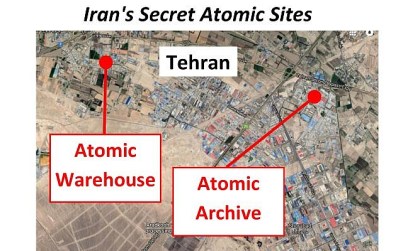
At the General Assembly speech (full text here),  the prime minister said the IAEA had failed to take any action after he revealed in April a nuclear archive that Israeli spies managed to spirit out of Iran, and so he was now revealing what he said was a “secret atomic warehouse” in the Turquzabad district of Tehran, a few miles from the archive.

Both the archive and warehouse, Netanyahu said, were proof that Iran had not given up its nuclear program. “Iran has not abandoned its goal to develop nuclear weapons…. Rest assured that will not happen. What Iran hides, Israel will find,” Netanyahu added.

On Thursday, Netanyahu also met with UN Secretary-General Antonio Guterres and urged him to ask the IAEA to investigate the facility.

Prime Minister Benjamin Netanyahu (L) and UN Secretary-General Antonio Guterres (R) in New York, September 27, 2018 (Avi Ohayon/GPO)

He urged IAEA director-general Yukiya Amano, who he called “a good man,” to “do the right thing” and “go and inspect this atomic warehouse immediately — before the Iranians finish cleaning it out.”

Inspect “right here, right now,” he urged, “and inspect the other sites we told you about… Tell the world the truth about Iran.”

Iranian officials have dismissed Netanyahu’s claims about the atomic warehouse as unfounded and “obscene.”

Referring to Netanyahu’s statements as “ridiculous,” an Iranian state TV report said the country is committed to nonproliferation and Iran’s nuclear program is under surveillance of the IAEA. The website of state TV briefly reported the Netanyahu accusation and called it an “illusion.”

Agencies contributed to this report.


Iran’s Revolutionary Guard launches missiles into Syria over parade attack

Posted October 1, 2018 by Joseph Wouk
Categories: Uncategorized

Source: Iran’s Revolutionary Guard launches missiles into Syria over parade attack | The Times of Israel

Several ballistic missiles said to kill and wound militants in east of the country in response to assault on military parade in Ahvaz on Sept. 22 that killed at least 24 people

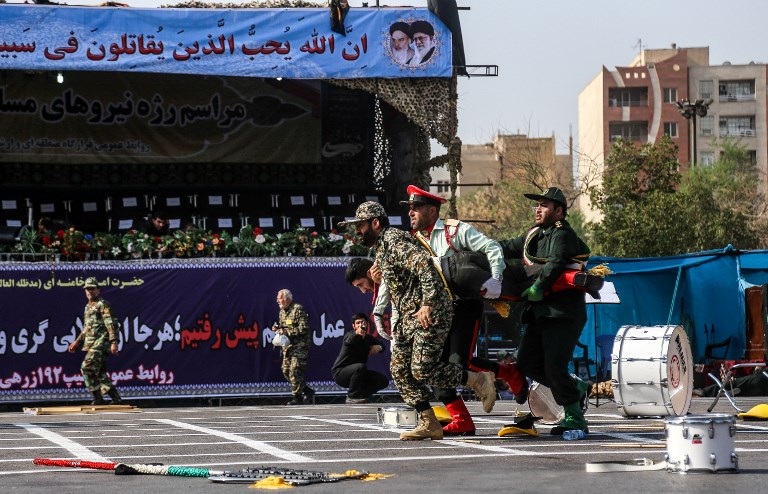
This picture taken on September 22, 2018, in the southwestern Iranian city of Ahvaz shows Iranian soldiers carrying away an injured colleague at the scene of an attack on a military parade that was marking the anniversary of the outbreak of its devastating 1980-1988 war with Saddam Hussein's Iraq. (AFP/ ISNA / MORTEZA JABERIAN)

This picture taken on September 22, 2018, in the southwestern Iranian city of Ahvaz shows Iranian soldiers carrying away an injured colleague at the scene of an attack on a military parade that was marking the anniversary of the outbreak of its devastating 1980-1988 war with Saddam Hussein’s Iraq. (AFP/ ISNA / MORTEZA JABERIAN)

Iran’s paramilitary Revolutionary Guard said Monday it launched ballistic missiles into eastern Syria targeting militants it blamed for a recent attack on a military parade.

State television and the state-run IRNA news agency said the attacks “killed and wounded” militants in Syria.

“The headquarters of those responsible for the terrorist crime in Ahvaz was attacked a few minutes ago east of the Euphrates by several ballistic missiles fired by the aerospace branch of the Guardians of the RevSolution,” the Guards said on their official website.

Syrian state media did not immediately acknowledge the strike.

The Guard published images on its website showing what it described as the missile launch near a rocky outcropping in an undisclosed location. Previously, the Guard has launched missiles from Iran’s western provinces for such attacks.

The attack adds to confusion over who carried out the assault on the military parade in Ahvaz on Sept. 22 that killed at least 24 people and wounded over 60.

Iran initially blamed Arab separatists for the attack in which gunmen disguised as soldiers open fire on the crowd and officials watching the parade from a riser in the southwestern city. Arab separatists also immediately claimed the attack and offered details about one of the attackers that ultimately turned out to be true.

In this photo provided by Mehr News Agency, civilians try to take shelter in a shooting scene, during a military parade marking the 38th anniversary of Iraq’s 1980 invasion of Iran, in the southwestern city of Ahvaz, Iran, Sept. 22, 2018 (AP Photo/Mehr News Agency, Mehdi Pedramkhoo)

The extremist Islamic State group also claimed responsibility for the assault, but initially made factual incorrect claims about it. Later, IS released footage of several men that Iran ultimately identified as attackers, though the men in the footage never pledged allegiance to the extremist group.

In a three-minute audio recording released last week, the Sunni jihadist group’s spokesman Abu Hassan al-Muhajir said Iran “had not recovered from the fearful shock, which God willing will not be the last.”

The deputy head of Iran’s Revolutionary Guards has warned Israel and the US that they can expect a “devastating” response from Iran, repeating accusations of their involvement in the attack.

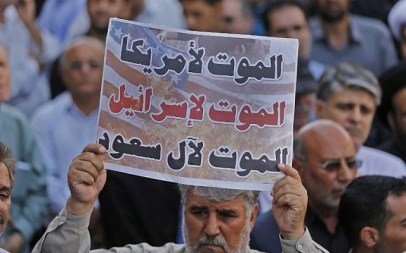
An Iranian man holds a placard denouncing the USA, Israel and Saudi Arabia during a mass funeral for the victims of those killed during an attack on a military parade on the weekend, in the southwestern Iranian city of Ahvaz on September 24, 2018. (AFP PHOTO / ATTA KENARE)

This is the third time in recent months that Iran has fired its ballistic missiles in anger.

Last year, Iran fired ballistic missiles into Syria over a bloody IS attack on Tehran targeting parliament and the shrine of Ayatollah Ruhollah Khomeini. In September, Iran fired missiles into Iraq targeting a base of an Iranian Kurdish separatist group. The separatists say that strike killed at least 11 people and wounded 50.


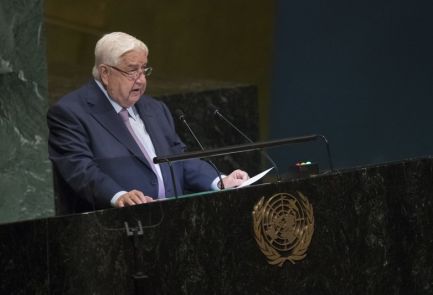
Syrian FM: Victory over terrorism near, ‘occupying forces’ must leave 

Posted September 30, 2018 by Joseph Wouk
Categories: Uncategorized

Source: Syrian FM: Victory over terrorism near, ‘occupying forces’ must leave – Israel Hayom


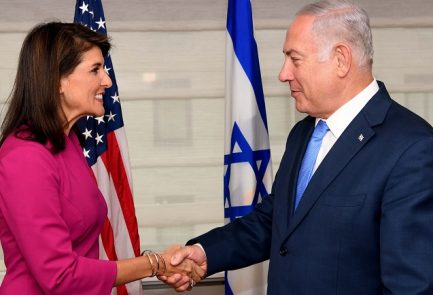
Haley to Netanyahu: Abbas is not helping the Palestinian people 

Posted September 30, 2018 by Joseph Wouk
Categories: Uncategorized

Source: Haley to Netanyahu: Abbas is not helping the Palestinian people – Israel Hayom