Israel boosts troop deployment along Gaza border – Israel Hayom

Posted October 4, 2018 by Joseph Wouk
Categories: Uncategorized

Source: Israel boosts troop deployment along Gaza border – Israel Hayom


Israel can overcome the S-300, but must resolve crisis with Russia

Posted October 4, 2018 by Joseph Wouk
Categories: Uncategorized

Source: Israel can overcome the S-300, but must resolve crisis with Russia

Analysis: In the wake of the shooting down of the Russian intelligence plane, the Kremlin delivered S-300 anti-aircraft batteries to Syria, making IDF operations difficult, but not impossible. At the same time, a diplomatic confrontation with a world superpower is ill-advised, to put it lightly, and so Netanyahu must make some diplomatic moves. And perhaps Trump will finally wake up and intervene.


Ron Ben-Yishai|Published:  10.04.18 , 01:29

 These are the three steps, arranged according to the level of severity.1. Provide the Syrian aerial defense apparatus with Russian-made anti-aircraft S-300 missile batteries.

2. Provide the Syrian aerial defense apparatus with modern electronic control and monitoring systems. This will allow the Syrians to better differentiate between enemy and friendly planes and automatically “lock” onto hostile targets without requiring a decision from the battery commander, which could lead to mistakes. This system will also apparently allow the Russian aerial defense commanders in Syria to control both the S-300 and the Syrian army’s other missile systems.

3. Use electronic and cyber warfare to disrupt GPS navigating systems and radars installed on fighter jets that Russia wants to prevent from nearing Syrian or Lebanese airspace or from attacking targets in Syria. Russian Defense Minister Shoygu may not have said this measure was meant to prevent Israeli jets from reaching areas from which they could fire into Syria or to disrupt missiles or bombs the IAF launches, but it’s clear the Israeli Air Force’s fighter jets and precision-guided arms were what the Russians had in mind.
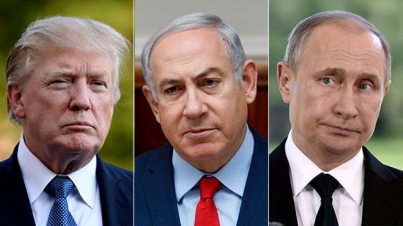
US President Donald Trump, Prime Minister Benjamin Netanyahu and Russian President Vladimir Putin (left to right) (Photo: MCT, AFP, Reuters)

US President Donald Trump, Prime Minister Benjamin Netanyahu and Russian President Vladimir Putin (left to right) (Photo: MCT, AFP, Reuters)

In any case, even if the Russians’ goal was to prevent and disrupt the operations of Israel’s fighter jets and missiles in Syrian and Mediterranean airspace, it’s clear these measures could also disrupt the operations of American, French and British fighter jets that are combating ISIS forces in this area. In addition—and this is truly dangerous—these measures would disrupt commercial planes flying routes between Cyprus and the shores of Syria and Lebanon. Commercial flights to and from Israel—mostly to Europe and Turkey—might also be affected by these measures.

Taking advantage of others’ troubles

On the surface, it appears these are the most severe steps Russia has taken against Israel since the 1973 Yom Kippur War.

It is safe to assume the severity of these measures is due to the outrage of the commanders of Russian air and aerial defense forces stationed in Syria. The Israeli Air Force attack in Latakia and the shooting down of a Russian intelligence plane with a Russian missile by the Syrian air defense forces—who are trained and supervised by Russian forces—presents these commanders to the Russian public and the Kremlin as completely inept and as those who don’t understand what’s going on around them. This is what led to the unrestrained lashing from the Russian Defense Ministry spokesman and the fabricated story about the Israeli jets using the Russian plane as bait, leading to it being shot down.

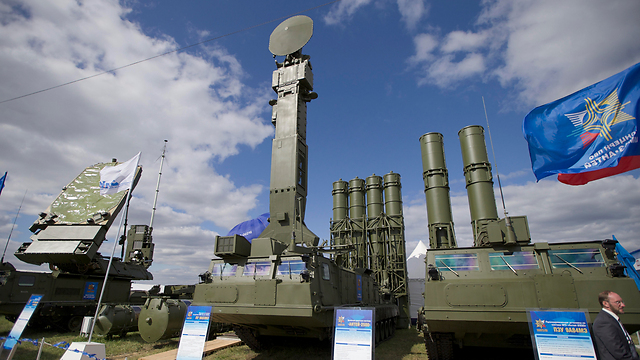
The newly supplied S-300 missile system

The newly supplied S-300 missile system

Another reason for the severe steps taken by the Russians is the desire to stop IAF strikes in Syria, or at the very least considerably reduce the number of attacks—over 200 of which were carried out over the past year, according to the IDF. This number led both Syrian President Assad and the Iranians to complain that the Russians are not providing them with sufficient defense. The Russians, in turn, are worried these complaints would lead Assad—under Iranian influence—to thank Moscow for its help and politely ask the Russians to leave Syria, which would undermine Putin’s economic and geo-political interests.Providing the Syrians with S-300 batteries and other aerial defense measures allows the Russians to show Assad that he can’t survive without their help, as well as that they’re committed to him (and not just Assad: the Iranians are also in the debt of the Russians, who back them not just in words but now in actions as well).

The second reason is diplomatic: the Russians want Assad to be entirely dependent on them, and the shooting down of the Russian plane gives them a diplomatic achievement, which turns the Syrian president—and to a certain extent the Iranians—into their “vassals.”

Another reason for the series of unusual measures is that the Russians are also hoping for financial gain. They are not giving the Syrians the S-300 system for free. This is an expensive system, and it is likely the Iranians are the ones who would have to foot the hundreds of millions of dollars bill.
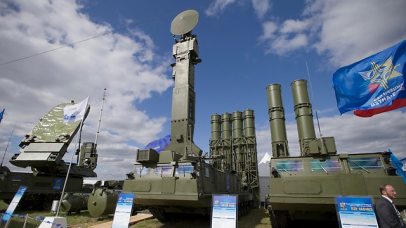
 (Photo: AP)

(Photo: AP)

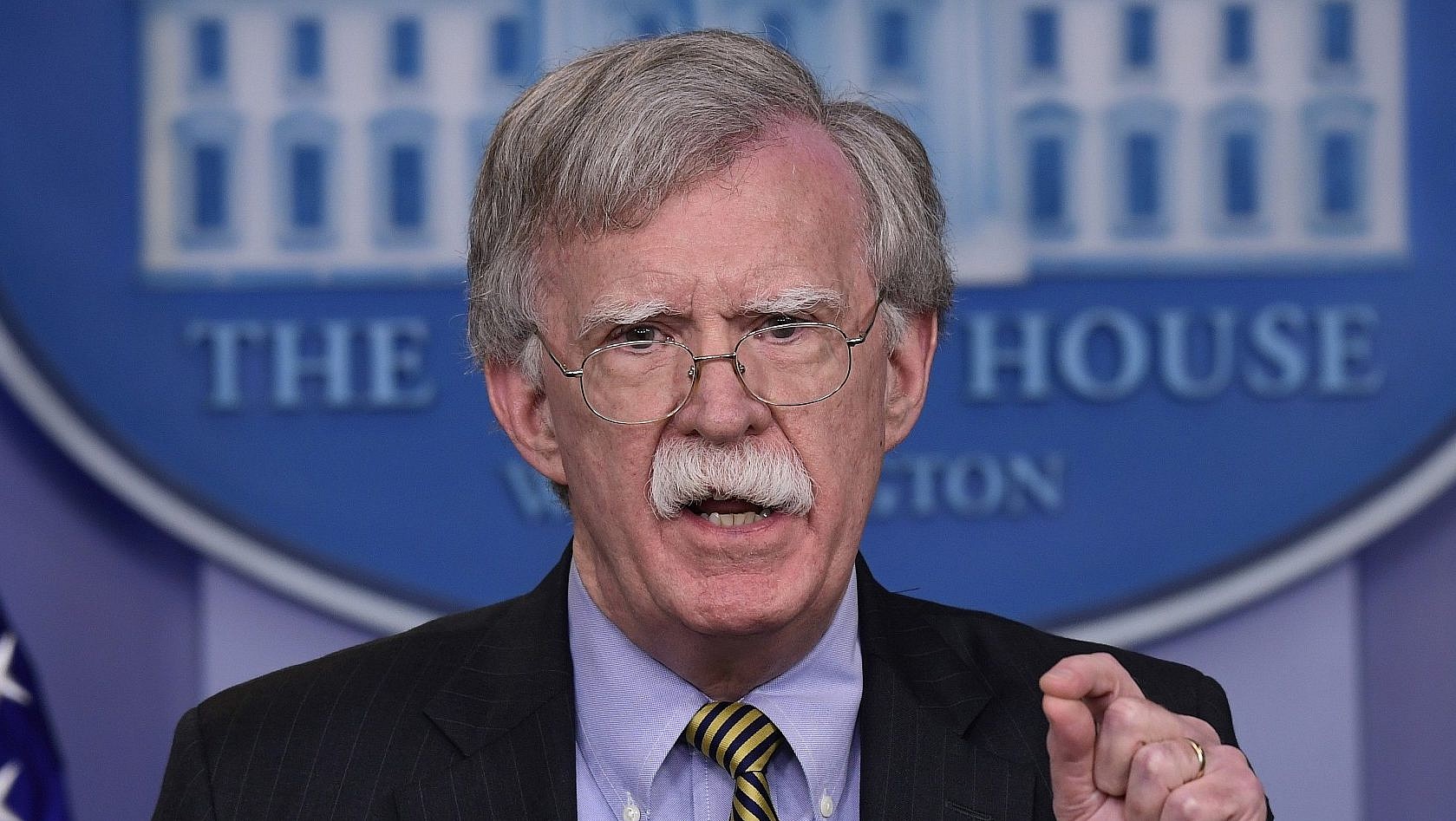
As usual, the Russians know how to gain from any trouble around them. What’s concerning is that the Americans have not really interfered so far. Trump’s National Security Advisor John Bolton and Secretary of State Mike Pompeo may have dubbed this as a “significant escalation” and expressed hope Russia would reconsider the move, but so far Washington has left Jerusalem to deal with the shooting down of the plane on its own. President Trump might intervene and help ease the burden, but meanwhile it’s Prime Minister Benjamin Netanyahu and Defense Minister Avigdor Lieberman who are facing Putin, the Russian Defense Ministry and the Russian military, who really dislike us these days.

The IDF knows the S-300 well

Nevertheless, there is no reason for panic or over-pessimism. It’s important to thoroughly examine the details in order to reach a sobered assessment of the real effect the Russian steps would have on the IDF’s aerial freedom of operations and on Israel’s ability to thwart Iran’s military entrenchment in Syria.

The S-300 system is indeed more effective and advanced than any other interception system the Syrians had prior. It can intercept not only planes but also ballistic missiles at a range of up to 250 kilometers and at very high altitudes.

Syria sought to buy such a system from Russia back in 2009. The Iranians were willing to pay for it, but pressure on Putin from Netanyahu and former US President Barack Obama stopped the deal in 2013. Syrian aerial defense officers had already begun training with the S-300 in Russia, and Assad’s army had already started receiving parts of the system—including vehicles to carry launchers, command and control trailers and other logistical vehicles—but until now Putin had avoided providing Assad with the full system.

In April, Putin resisted pressures from his generals, who wanted him to provide the system to Syria as a retaliatory move for the Israeli strike on Iranian weapons in the Syrian T4 air base, where Russian military personnel were stationed at the time. But now, it’s harder to thwart the plans of the Russian generals and the Russian military industry to sell the S-300 to the Syrians.

It’s important to note that the S-300 system has several models, and the older models have already been sold to over 20 countries, including Greece and Cyprus—which are friendly to Israel and have close military cooperation with it.

The S-300 system the Syrians asked for is called SA10 by NATO. It is a model both Greece and Cyprus already have, and so it is safe to assume Israel’s Air Force and military industries have already gotten a chance to study it.

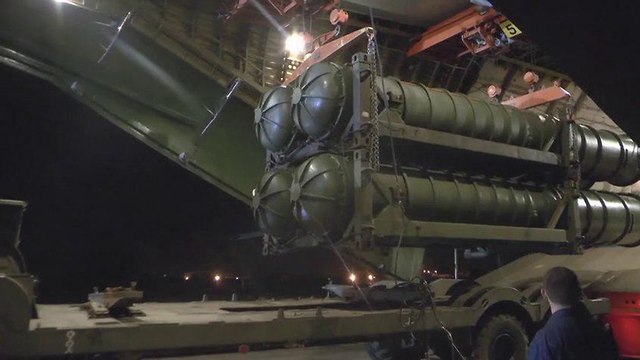
The Russian plane delivering S-300 missile system

The Russian plane delivering S-300 missile system

Iran, meanwhile, has a more advanced model of the S-300 system. Putin had initially heeded Israeli and American pressure not to sell the S-300 system to Tehran, with the understanding it would be used to defend Iran’s nuclear weapons production and development sites if the West decides to take military action against the Islamic Republic.

But two years ago, following the agreement between Tehran and world powers to suspend its nuclear activity, Russia delivered the S-300 batteries to Iran. This, it’s safe to say, led Israel—and mostly the IDF and Israeli defense industries—to accelerate the development of an answer in the form of methods and measures that would neutralize the threat of the S-300 system to Israeli and Western aerial freedom of operation.

By the way, the newest model of the S-300 (officially known as S-400)—which has not yet been delivered to other countries—is already in Syria and operated by a Russian force, defending the Khmeimim Air Base, 25 kilometers south of Latakia, where Russian troops are stationed. That battery was stationed there several years ago, after the Turkish air force shot down a Russian plane. The battery hasn’t been used since, but it’s possible that if another crisis develops in the future, the Russians might be tempted to try to use that advanced system against the Israel Air Force. This is not a threat that can be handled, but it needs to be taken into consideration.

The bottom line is this: Russia providing the S-300 system to Syria is indeed not good news for Israel, but it is not a threat that would prevent the IAF from carrying out the missions it was tasked with. It will only require more effort, more planning and more caution in the use of force in Syrian and Lebanese airspace.

But, as already noted, in addition to the delivery of the S-300 batteries, Russian Defense Minister Shoygu announced he was providing the Syrian aerial defense apparatus with electronic control and monitoring systems. This measure will improve the response speed of the Syrian missile batteries, but not considerably.

The importance of these systems is in changing the situation in which Syrian missile operators cannot tell the difference between Russian or Iranian planes and Israeli planes. This was one of the main issues that led to the shooting down of the Russian intelligence plane: the Syrians didn’t have the identification friend or foe modes (IFF) of the Russian plane, and they shot it down without even trying to use other measures that would’ve allowed them to identify it as a friendly or civilian plane. The Russians didn’t give the IFF to the Syrians and paid for it dearly, and this is one of the reasons they’re taking out their anger on Israel.

The third step Moscow is taking should not be taken lightly: the use of electronic and cyber warfare to disrupt Israel’s fighter jets, missiles, drones, rockets and other armaments could somewhat limit the freedom of operation of the IDF’s aerial systems. But the high-tech and cyber capabilities of Israel and the IDF will likely manage to deal with this threat as well after not a long period of examination and adjustment.
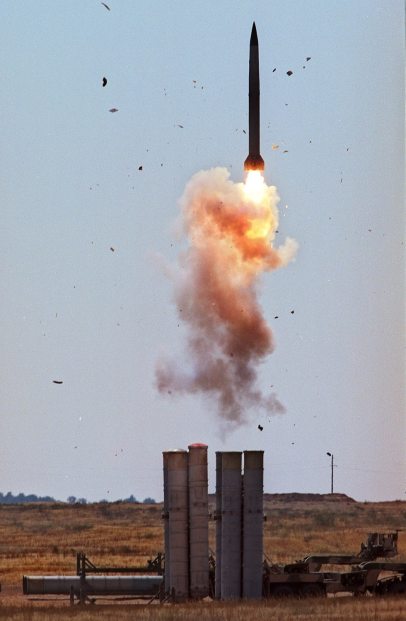
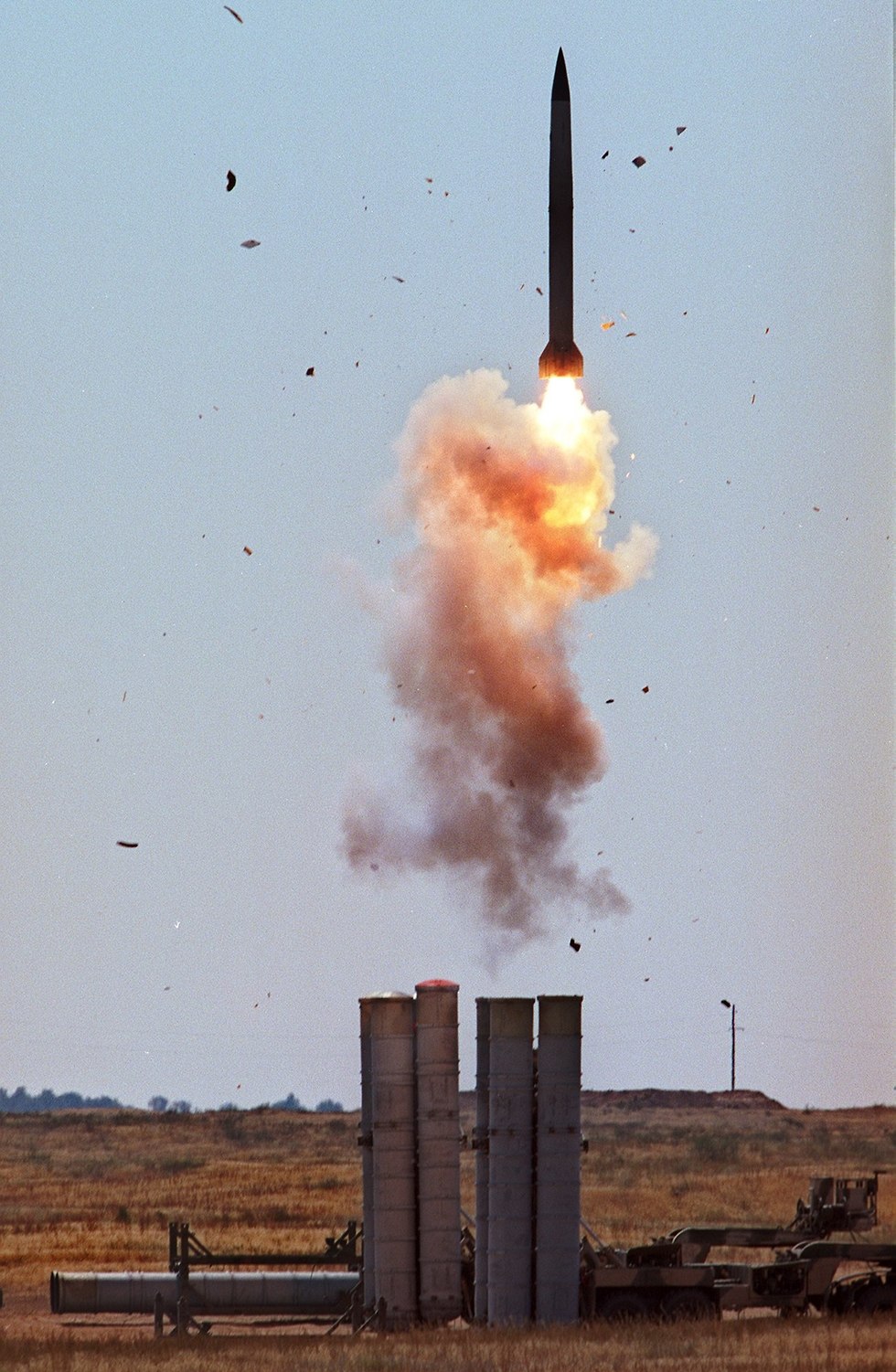
S-300 missile (Photo: AFP)

S-300 missile (Photo: AFP)

And still, Russia is a world power and has kinetic military capabilities and cyber capabilities that Israel shouldn’t and has no need to deal with. Israel needs to avoid becoming Russia’s enemy as much as possible, and prevent a situation in which the anti-Israeli figures in the Russian security establishment might force Putin to have a direct and public confrontation with Israel in Syrian territory. Such a confrontation would not be good for Russia, but Israel would be the one suffering severe damages, while the Iranians, Hezbollah and the Syrian regime would be celebrating.Therefore, in tandem with the efforts to deal with the new military situation in Syria, Israel must make diplomatic efforts to bring this crisis to an end and resume the coordination and cooperation with the Kremlin. The diplomatic effort must now be at the forefront, and with it Israel will perhaps be able to reduce the steps Russia is taking.

There are several necessary diplomatic moves to be made, including Prime Minister and Foreign Minister Netanyahu doing everything he can to recruit the help of President Trump and the Pentagon. The ongoing paralysis in the American administration vis-à-vis the situation in Syria is a leftover from the Obama administration, and it is harmful to Israel because it leaves us alone facing Iran (a regional superpower) and Russia (a world superpower). It’s time for the US to get off the fence. It has enough military assets in Syria and the Mediterranean and enough leverage with which to pressure the Kremlin to rein in the Russian generals.

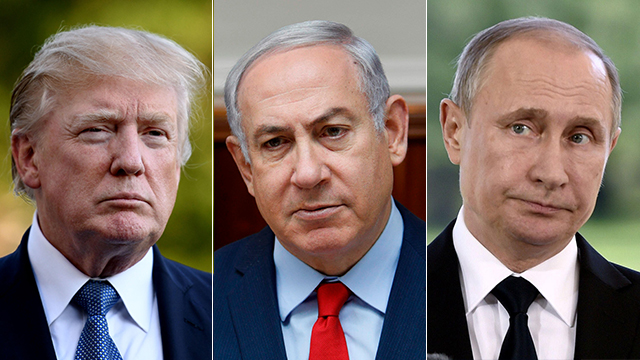
 

US terminates 1955 treaty with Iran after UN court ruling

Posted October 4, 2018 by Joseph Wouk
Categories: Uncategorized

Source: US terminates 1955 treaty with Iran after UN court ruling

Trump administration withdraws from Treaty of Amity after International Court of Justice challenges State Department sanctions on basis that they violate friendship pact between America and Iran by affecting imports of humanitarian goods and products and services linked to safety of civil aviation.
In response to a UN court order that the US lift sanctions on Iran, the Trump administration said Wednesday it was terminating a decades-old treaty affirming friendly relations between the two countries. The largely symbolic gesture highlights deteriorating relations between Washington and Tehran.
Secretary of State Mike Pompeo said withdrawing from the 1955 Treaty of Amity was long overdue and followed Iran “groundlessly” bringing a complaint with the International Court of Justice challenging US sanctions on the basis that they were a violation of the pact.Meanwhile, National Security Adviser John Bolton said the administration also was pulling out of an amendment to the Vienna Convention on Diplomatic Relations that Iran or others, notably the Palestinians, could use to sue the US at The Hague-based tribunal. Bolton told reporters at the White House that the provision violates US sovereignty.

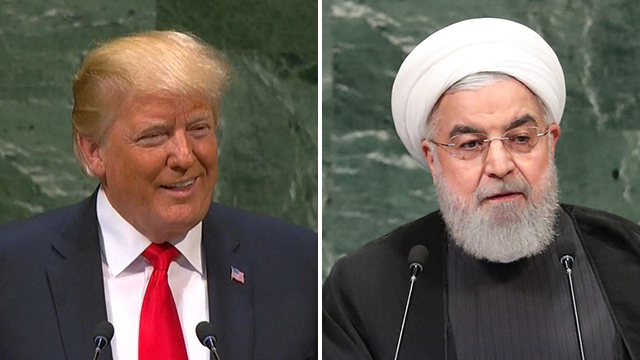
US President Trump; Iran President Rouhani

US President Trump; Iran President Rouhani

“The United States will not sit idly by as baseless politicized claims are brought against us,” Bolton said. He cited a case brought to the court by the “so-called state of Palestine” challenging the move of the US Embassy in Israel from Tel Aviv to Jerusalem as the main reason for withdrawing.

Bolton, who last month unleashed a torrent of criticism against the International Criminal Court, noted that previous Republican administrations had pulled out of various international agreements and bodies over “politicized cases.” He said the administration would review all accords that might subject the US to prosecution by international courts or panels.

Earlier, Pompeo denounced the Iranian case before the UN court as “meritless” and said the Treaty of Amity was meaningless and absurd.

“The Iranians have been ignoring it for an awfully long time, we ought to have pulled out of it decades ago,” he told reporters at the State Department.

The little-known treaty with Iran was among numerous such ones signed in the wake of World War II as the Truman and Eisenhower administrations tried to assemble a coalition of nations to counter the Soviet Union. Like many of the treaties, this one was aimed at encouraging closer economic relations and regulating diplomatic and consular ties.

Its first article reads: “There shall be firm and enduring peace and sincere friendship between the United States of America and Iran.”

The treaty survived the 1979 overthrow of the Shah in Iran’s Islamic revolution and the subsequent hostage crisis that crippled American-Iranian relations for decades.

But amid a broader push to assert US sovereignty in the international arena and after pulling out of the Iran nuclear deal this year, the administration determined that the court case made the treaty irrelevant.

Mike Pompeo (Photo: AP)

Mike Pompeo (Photo: AP)

Pompeo said the ruling was a “useful point for us to demonstrate the absolute absurdity” of the treaty.

The court case is legally binding, but Pompeo said the administration would proceed with sanctions enforcement with existing exceptions for humanitarian and flight safety transactions.

“The United States has been actively engaged on these issues without regard to any proceeding before the ICJ,” he said.

At the same time, he criticized the ruling.

“We’re disappointed that the court failed to recognize that it has no jurisdiction to issue any order relating to these sanctions measures with the United States.”

The ruling said Washington must “remove, by means of its choosing, any impediments arising from” the re-imposition of sanctions to the export to Iran of medicine and medical devices, food and agricultural commodities and spare parts and equipment necessary to ensure the safety of civil aviation.

It said the exceptions mentioned by Pompeo “are not adequate to address fully the humanitarian and safety concerns” raised by Iran.

The first set of sanctions that had been eased under the terms of the nuclear deal negotiated by the Obama administration was reimposed in August. A second, more sweeping set of sanctions, is set to be reimposed in early November.

Iran’s foreign minister, Mohammad Javad Zarif, praised the court ruling, saying on Twitter that it was “another failure for sanctions-addicted” US and a “victory for rule of law.” He said it was imperative for other countries ‘to collectively counter malign US unilateralism” and he accused the US of being an “outlaw regime.”

The court said the case will continue and the US can still challenge its jurisdiction but no date has been set for further hearings.


US pulls out of Vienna treaty amendment to block Palestinian lawsuit 

Posted October 4, 2018 by Joseph Wouk
Categories: Uncategorized

Source: US pulls out of Vienna treaty amendment to block Palestinian lawsuit | The Times of Israel

National Security Adviser Bolton says US ‘will not sit idly by’ in face of ‘baseless politicized claims,’ asserts Palestine is ‘not a state’

National Security Adviser John Bolton speaks during a briefing at the White House in Washington, Wednesday, Oct. 3, 2018. (AP Photo/Susan Walsh)

National Security Adviser John Bolton speaks during a briefing at the White House in Washington, Wednesday, Oct. 3, 2018. (AP Photo/Susan Walsh)

WASHINGTON — The Trump administration has pulled the United States out of an amendment to the Vienna Convention to keep the Palestinians from suing the US government at the International Court of Justice in The Hague.

“The president has decided that the United States will withdraw from the optional protocol and dispute resolution to the Vienna Convention on diplomatic relations,” US National Security Adviser John Bolton told reporters at the White House on Wednesday. “This is in connection with a case brought from the so-called State of Palestine naming the United States as a defendant, challenging our move of our embassy from Tel Aviv to Jerusalem.”

Bolton said the US will remain party to the underlying Vienna treaty, but that it will review all international agreements that could still expose the country to ICJ resolutions.

“Our actions today deal with the treaties and current litigation involving the United States before the International Court of Justice,” he said. “Given this history, and Iran’s abuse of the ICJ, we will commence a review of all international agreements that may still expose the United States to purported binding jurisdiction and dispute resolution in the International Court of Justice.”

He added: “The United States will not sit idly by as baseless politicized claims are brought against us.”

Bolton’s announcement came hours after US Secretary of State Mike Pompeo announced that the United States was terminating a 1955 treaty reached with then-ally Iran after Tehran cited it in an international court ruling against Washington’s sanctions policy.

In September, the Palestinians filed a case with the United Nations’ highest court asking its judges to order Washington to remove the recently relocated US embassy from Jerusalem.

The lawsuit, filed at the Hague-based International Court of Justice, came against a backdrop of deeply strained ties between Washington and the Palestinians, in part because of the Trump administration’s decision in December to recognize Jerusalem as Israel’s capital and to move the US embassy there from Tel Aviv in May. The Palestinian Authority broke off contact with the US after the Jerusalem announcement.

Bolton said Wednesday that the administration’s decision “really has less to do with Iran and the Palestinians than with the continued consistent policy of the United States to reject the jurisdiction of the International Court of Justice, which we think is politicized and ineffective.”

Asked by a reporter why he referred to Palestine as a “so-called state,” the former UN ambassador said, “It’s accurate. It is not a state.”

“It’s not a state now,” he went on. “It does not meet the customary international law test of statehood. It doesn’t control defined boundaries, it doesn’t fulfill the normal functions of government. There’s a whole host of reasons why it is not a state. It could become a state, as the president has said. But that requires diplomatic negotiations with Israel and others.”

Last week, US President Donald Trump announced, for the first time, his preference for the Israeli-Palestinian conflict to be resolved through the two-state framework. He said he hoped his long-awaited peace plan would be released within the next four months.

“We’ve been working as you well know on a peace plan,” Bolton said Wednesday. “We’ll be rolling it out in due course when we decide it’s the most appropriate time to do it.”


Russia S-300 delivery to Syria ‘very serious,’ Pompeo says 

Posted October 4, 2018 by Joseph Wouk
Categories: Uncategorized

Source: Russia S-300 delivery to Syria ‘very serious,’ Pompeo says – American Politics – Jerusalem Post

In late September, Pompeo warned the Trump administration is prepared to hold Russia “accountable” if it proceeds with the sale, but has yet to outline consequences.

BY MICHAEL WILNER
 OCTOBER 3, 2018 18:42
U.S. Secretary of State Mike Pompeo meets German Foreign Minister Heiko Maas (L)

WASHINGTON — Russia’s deployment of a sophisticated missile defense system in Syria amounts to a “very serious escalation” of the conflict there, US Secretary of State Mike Pompeo said on Wednesday.

Speaking with reporters in Washington, the secretary offered his gravest warning yet to Moscow after failing to dissuade his Russian counterparts from proceeding with the S-300 transfer during talks in New York last week.

US President Donald Trump’s national security adviser, John Bolton, warned last month that the deployment of the S-300, which targets both missiles and aircraft, would risk complicating a careful balance of air power in Syria, where warplanes fly from Russia, Israel, and the US-led coalition against Islamic State militants.

“We consider this a very serious escalation,” Pompeo said. In late September, he warned the Trump administration is prepared to hold Russia “accountable” if it proceeds with the sale, but has yet to outline consequences.

Israel is concerned that the move will increase odds of direct conflict with Moscow and complicate its effort to push Iranian forces back from its border. Israeli forces have targeted Syrian government and Iranian assets both with missile attacks as well as in air raids.

Pompeo also announced the US would withdraw from a little-known 1955 agreement with Iran that on Wednesday provided the basis for an international court decision critical of its sanctions against Tehran.

Iran cited the treaty of amity in its latest case against the US at the International Court of Justice, but has also been used by the US in its charges against Tehran, including the legal case it brought against the state during the Iran hostage crisis of 1979.


Merkel to visit Israel amid deep disagreements over Palestinians, Iran

Posted October 3, 2018 by Joseph Wouk
Categories: Uncategorized

Source: Merkel to visit Israel amid deep disagreements over Palestinians, Iran | The Times of Israel

Berlin says trip, beginning Wednesday evening, will focus on economy, innovation and technology; chancellor to receive her third Israeli honorary doctorate

A Bedouin child writes on a picture of German Chancellor Angela Merkel ahead of her expected visit to Israel on Wednesday, in the West Bank Bedouin community of Khan al-Ahmar, Oct. 2, 2018. Arabic on the poster reads, "save Khan al-Ahmar" and "save our school." (AP Photo/Nasser Shiyoukhi)

A Bedouin child writes on a picture of German Chancellor Angela Merkel ahead of her expected visit to Israel on Wednesday, in the West Bank Bedouin community of Khan al-Ahmar, Oct. 2, 2018. Arabic on the poster reads, “save Khan al-Ahmar” and “save our school.” (AP Photo/Nasser Shiyoukhi)

German Chancellor Angela Merkel is set to land in Israel Wednesday evening for a two-day visit centered around a one-on-one meeting with Prime Minister Benjamin Netanyahu and a joint session of the Israeli and German cabinets.

The visit highlights Israel and Germany’s historically close partnership, but may also lay bare deep policy disagreements between the two.

In Jerusalem, in addition to her meeting with Netanyahu, the German leader will visit the Yad Vashem Holocaust memorial for the third time and receive her third honorary doctorate from an Israeli university.

She is not expected to enter the Palestinian territories, but her visit to Israel has prompted calls for the German chancellor to urge Israel to stop its planned demolition of a Bedouin village in the West Bank.

“Germany and Israel are connected with a unique relationship. Out of the heritage of our history, out of the break of civilization that was the Holocaust, we Germans have a special responsibility for the relationship with Israel,” Merkel said Friday in a video for her weekly podcast.

“We can be very thankful that today we’re close partners and friends,” she stressed.

Merkel and Netanyahu last met in June in Berlin and agreed that the next round of German-Israeli government consultations — which have been taking place for the last ten years — would focus on the economy, innovation and technology, the Chancellery said Tuesday, citing Israel as being “one of the world market leaders” in information technology and cybersecurity.

“We can learn a lot in many areas,” said Merkel, who will be accompanied by a delegation of leading German businesspeople.

But the two leaders are also expected to discuss geopolitical issues, as well as the Israeli-Palestinian conflict and, specifically, the planned Israeli demolition of Khan al-Ahmar and the US administration’s increasingly tough policies vis-a-vis Ramallah; as well as the Iran nuclear deal and European efforts to salvage the pact and continue trading with the Islamic Republic.

Merkel and Netanyahu have deep disagreements on all of these issues.

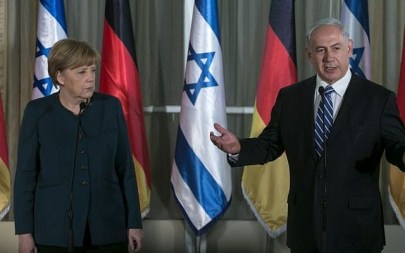
Germany’s Chancellor Angela Merkel (left) and Prime Minister Benjamin Netanyahu give a joint press conference at the prime minister’s residence in Jerusalem on February 24, 2014. (Olivier Fitoussi/POOL/Flash90)

Merkel, who has been in power since 2005 but is increasingly embattled at home, is scheduled to arrive at around 7:30 p.m. at Ben-Gurion Airport, where she will be greeted by Regional Cooperation Minister Tzachi Hanegbi.

Later that evening, she will dine with Netanyahu and his wife Sara at the Prime Minister’s Residence on Jerusalem’s Balfour Street.

On Thursday morning, Merkel will visit Yad Vashem, where she will walk through the Holocaust museum, the Hall of Names, and the Hall of Remembrance and visit the Children’s Memorial.

Merkel previously visited the site in 2006 and 2008.

The chancellor will then receive an honorary doctorate from Haifa University and meet with students, at the Israel Museum in Jerusalem.

Merkel is being recognized for “her leadership grounded in principles of equality, freedom and human rights; for serving as a model to women around the world; in appreciation of her warm friendship and robust ties between The Federal Republic of Germany and the State of Israel,” Haifa University said in a statement.

“Throughout her life, Dr. Merkel has demonstrated exemplary standards of excellence, wisdom and humanity,” university president Prof. Ron Robin said.

In 2007, the Hebrew University of Jerusalem bestowed an honorary doctorate on Merkel. Four years later, Tel Aviv followed suit.

Later on Thursday, Merkel and Netanyahu will tour an exhibit on innovation at the Israel Museum and hold a roundtable with businesspeople.

President Reuven Rivlin will then host the chancellor and her delegation for a working lunch in his official residence, before she heads back to the King David Hotel, where she is staying, for a meeting with Netanyahu and a joint press conference, which will be followed by the so-called G2G consultations. At around 7:00 p.m, the delegation will head back to Berlin.

Merkel is not expected to visit the Palestinian Authority during this week’s visit.

However, Palestinian schoolchildren in Khan al-Ahmar, the West Bank village Israel is slated to demolish in the coming days, are reportedly asking her to intervene on their behalf.

Bedouin children hold pictures of German Chancellor Angela Merkel ahead of her expected visit to Israel on Wednesday, in the West Bank Bedouin community of Khan al-Ahmar, Oct. 2, 2018. Arabic on the poster reads, “Save Khan al-Ahmar” and “Save our school.” (AP Photo/Nasser Shiyoukhi)

On Tuesday, the students held posters of Merkel pleading with her to pressure Israel to halt demolition plans for the encampment of corrugated shacks outside an Israeli settlement east of Jerusalem.

Israel says the village was illegally built and offered to resettle residents a few miles away. But Palestinians and other critics say the demolition is aimed at displacing Palestinians in favor of settlement expansion. Israel’s Supreme Court recently rejected a final appeal against the plans.

Israel has come under heavy criticism, with major European countries urging it to avoid such actions. Germany, too, has heavily criticized Israel’s intention to destroy the village.

GermanForeignOffice

@GermanyDiplo

The German government is deeply concerned by impending demolition of Khan al-Ahmar. We urge the Israeli government to refrain from resettling the residents.

“The consequences a demolition and displacement would have on the residents of this community, including their children, as well as on the prospects of the two-state solution would be very serious,” Germany said in a joint statement with four other European nations last month.

Khan al-Ahmar is not the only sticking point between Berlin and Jerusalem. While Israel welcomed the US administration’s recent cuts to UNRWA, an agency supporting Palestinian refugees, Germany has criticized the move and stepped up its financial contribution to UNRWA to allow its operations to continue.

Germany and Israel are also at odds about the future of the Iran nuclear deal. While Netanyahu has condemned the deal as existentially dangerous for Israel, and urged the international community to join US sanctions on the regime, Merkel’s government remains staunchly supportive of the 2015 landmark pact, working to find ways to help Iran circumvent the sanctions the US has imposed on Iran.

AP contributed to this report.


Hezbollahs deputy leader says hes not threatened by PMs speech

Posted October 3, 2018 by Joseph Wouk
Categories: Uncategorized

Source: Hezbollahs deputy leader says hes not threatened by PMs speech

Naim Qassem claims Lebanon’s terror group is prepared to face ‘Israeli aggression,’ which he adds is unlikely to happen, and labels prime minister’s remarks during UN General Assembly as ‘unsuccessful show.’
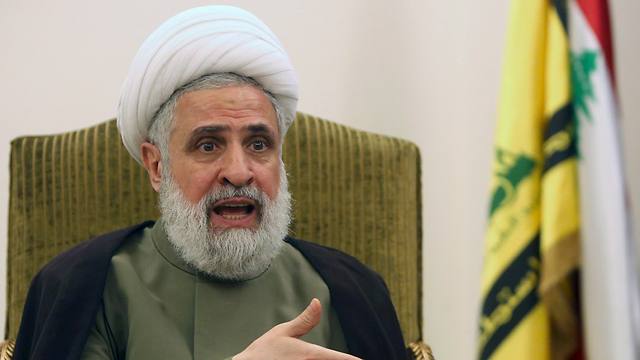
Hezbollah’s deputy secretary-general, Naim Qassem, said on Wednesday that Prime Minister Benjamin Netanyahu’s speech at the UN neither interests nor threatens the terror group.The remarks were made in response to the claims Netanyahu made during his speech at the UN General Assembly last Thursday when he identified three locations near Beirut airport where he said the Shi’ite group Hezbollah was converting “inaccurate projectiles” into precision-guided missiles.

“We are not interested in or threatened by Netanyahu’s unsuccessful show,” the deputy leader stressed.

Naim Qassem (Photo: Reuters)

Naim Qassem (Photo: Reuters)

“We are fully prepared to deal with the Israeli aggression if it happens, even though we do not expect it, and it does not affect the hard work we put in to improve our preparedness and our weaponry,” Qassem vented.

Qassem, who spoke at a conference in Beirut, also suggested the terror group’s resistance is what led to the May 2000 withdrawal of Israeli military forces from southern Lebanon.

“As we fought on the battlefield, those on the background chanted: ‘No, you can’t,’ but in the end we achieved victory after victory. It’s proven by the 2000 withdrawal and the 2006 liberation (Second Lebanon War-ed). The victory of the resistance axis is the victory of Lebanon,” he exclaimed.

Earlier on Wednesday, thousands of residents of the Dahieh suburb south of Beirut, an area controlled by Hezbollah, received anonymous mobile phone notifications warning them they live in close proximity to a Shiite terror group’s weapons storage compound that has the potential of exploding at any moment, the Asharq al-Awsat newspaper reported on Wednesday, implying also that Israel is responsible for incident.

Watsapp message

Watsapp message

“Important message, near your home, a Hezbollah site has been established, proceed with caution,” read the mysterious Watsapp message.

According to the Arab newspaper, Israeli political sources refused to comment on the claim that Israeli intelligence is behind the messages.

Immediately after Netanyahu’s speech at UNGA speech the IDF released video evidence of what it said were Hezbollah rocket building sites in Beirut.

The IDF said Hezbollah also has other sites within and outside of Beirut where its members have been working to create an infrastructure intended to stockpile precision missiles in the future.

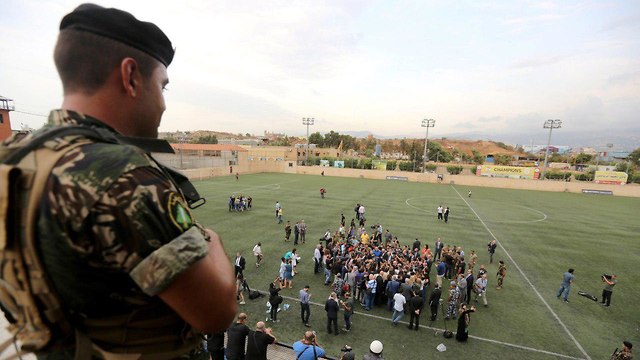
According to the military’s intelligence, one of the sites is located inside a Hezbollah soccer stadium while another is adjacent to the Beirut–Rafic Hariri International Airport.

 (Photo: Reuters)

(Photo: Reuters)

On Monday, Lebanese Foreign Minister Gebran Bassil, spoke to foreign ambassadors before taking them on a tour of the area mentioned in the prime minister’s UN speech, where Bassil reiterated that there were “many statements … affirming the possession of accurate missiles by Hezbollah. However, this does not mean that these missiles are present in the vicinity of Beirut airport.” he stressed in an apparent attempt to dismiss Netanyahu’s claims.

Reuters contributed to this report.


Majority of Democratic Congress members plea to restore UNWRA aid 

Posted October 3, 2018 by Joseph Wouk
Categories: Uncategorized

Source: Majority of Democratic Congress members plea to restore UNWRA aid – Arab-Israeli Conflict – Jerusalem Post

( No surprise. The hard left which now runs the Democrat party is always anti-Israel.  We are the “little” Satan to them with the US as the “big” Satan just like radical Islam. – JW ) 

“The administration’s decision will exacerbate the already dire humanitarian crisis in Gaza, where one million people – half the population – depend on UNRWA for food assistance.”

BY CASSANDRA GOMES-HOCHBERG
 OCTOBER 3, 2018 12:32

U.S. President Donald Trump delivers his State of the Union address to a joint session of the U.S. C

Almost two-thirds of Democratic Congress members, 112 members of the House of Representatives and 34 senators, sent a letter in appeal to US President Donald Trump and Secretary of State Mike Pompeo to reverse the decision to “end vital United States contributions to the United National Relief [and] Works Agency (UNRWA).”

Addressed to Pompeo, the letter expressed concern regarding the administration’s decisions to pressure Palestinian leadership back to the negotiating table at the expense of furthering the current humanitarian crisis in Gaza.

“The administration’s decision will exacerbate the already dire humanitarian crisis in Gaza, where one million people – half the population – depend on UNRWA for food assistance,” the letter said.

UNRWA also runs 278 schools in Gaza, which are attended by some 300,000 students.

In August, the Trump administration cut all funding to UNRWA, claiming the organization’s “fundamental business model and fiscal practices” that have served a growing community “is simply unsustainable and has been a crisis mode.” In January, Trump’s administration had already suspended more than half of its annual funding – $65 million out of $125 million.

On Monday, UNRWA withdrew some of its foreign staff from Gaza for safety reasons. UNRWA spokesperson Chris Gunness said that workers had been “harassed and prevented from carrying out their duties” by people angered by the organization’s cost-cutting measures.

The letter also addressed Hamas’s role in perpetuating chaos in the Gaza Strip, by acting “in complete disregard for the safety and freedom of the people of Gaza.” The measure, however, will only “aggravate tensions in the region and further erode prospects for a lasting peace between Israelis and Palestinians.”

J Street, a Washington-based advocacy group, released the letter in a press release, in which it claimed that “this administration’s reckless actions can and must eventually be reversed – and replaced with policies that promote Israelis’ and Palestinians’ shared aspirations for a secure and peaceful future.”

Michael Wilner contributed to this report


Syria’s S-300s are being integrated in Russia’s national nuclear C3 command and control system – DEBKAfile

Posted October 3, 2018 by Joseph Wouk
Categories: Uncategorized

Source: Syria’s S-300s are being integrated in Russia’s national nuclear C3 command and control system – DEBKAfile

When Russian Defense Minister Sergei Shoigu said on Oct. 2 that the “unified” S-300 air defense systems in Syria will be installed in Syria by Oct. 20, he really meant its integration in the Russian homeland system.

This element of his report to President Vladimir Putin is the key to the real import of Moscow’s response to the downing of its Il-20 spy plane on Sept. 17, for which Shoigu blamed Israel. DEBKAfile’s military and intelligence sources report that Putin seized on the disaster to establish in Syria an advanced air defense weapons system linked not only to the Russian Khmeimim Air Base in Latakia, but integrated in Russia’s own C3 command, control and communications system against nuclear attack.

This move is a strategic game-changer for American and Israeli operations in Syria. They are no longer taxed with staying clear of Russian and Syrian missile batteries in Damascus, but are facing their first direct contest with the air defense system which defends Russian cities. Shoigu seemed to offer details on the S-300s delivered to Syria. He mentioned 49 units of “radars, basic target acquisition systems, command posts and four launchers.” But he carefully omitted to reveal how the Syrian and Russian air defense networks were to be linked to the command and control center in Russia and exactly how they would function together. A critical question remains open: Is the Syrian S-300 system fully integrated in the Russian homeland C-3 or only partially?

The C-3 is pretty much an unknown quantity for Western intelligence since Russian military engineers have been working tirelessly on upgrades for some months. Israel military officers have wisely stopped boasting that their air force can easily handle the S-300s, having realized that the version of this anti-air system tested in Israeli war games in Greece and other places is more or less obsolete. It has been has been replaced by a far more sophisticated S-300 which is the version shipped to Syria in the last two weeks.

Moscow has therefore substantially raised the stakes of the military contest between Russia and the United States in Syria to a much higher level. Putin has chosen this arena to directly test Russia’s air defense capabilities against the US Air Force’s F-22 stealth plane and  Israel’s US-made F-35 “Adir” super plane, to find out which comes out best.


France freezes Iranian assets over planned Paris attack – Israel Hayom

Posted October 3, 2018 by Joseph Wouk
Categories: Uncategorized

Source: France freezes Iranian assets over planned Paris attack – Israel Hayom