Iran rejects talks after Macron says ‘very short time’ to stop it getting nukes

Posted January 31, 2021 by Joseph Wouk
Categories: Uncategorized


French leader tells Saudi TV any new nuclear negotiations will be ‘very strict,’ must include Riyadh; Tehran warns France against ‘hasty and ill-considered positions’

By TOI STAFF and AGENCIES30 January 2021, 6:35 pm  2
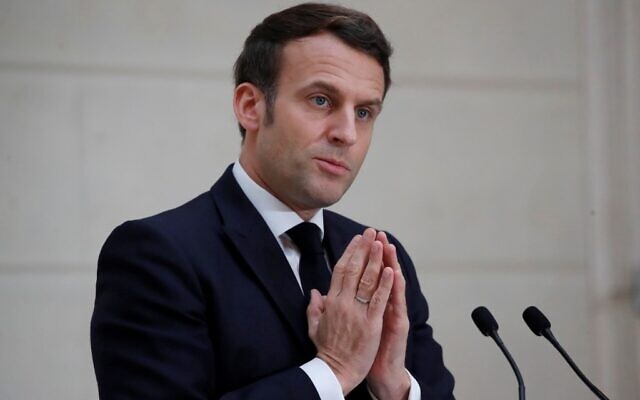
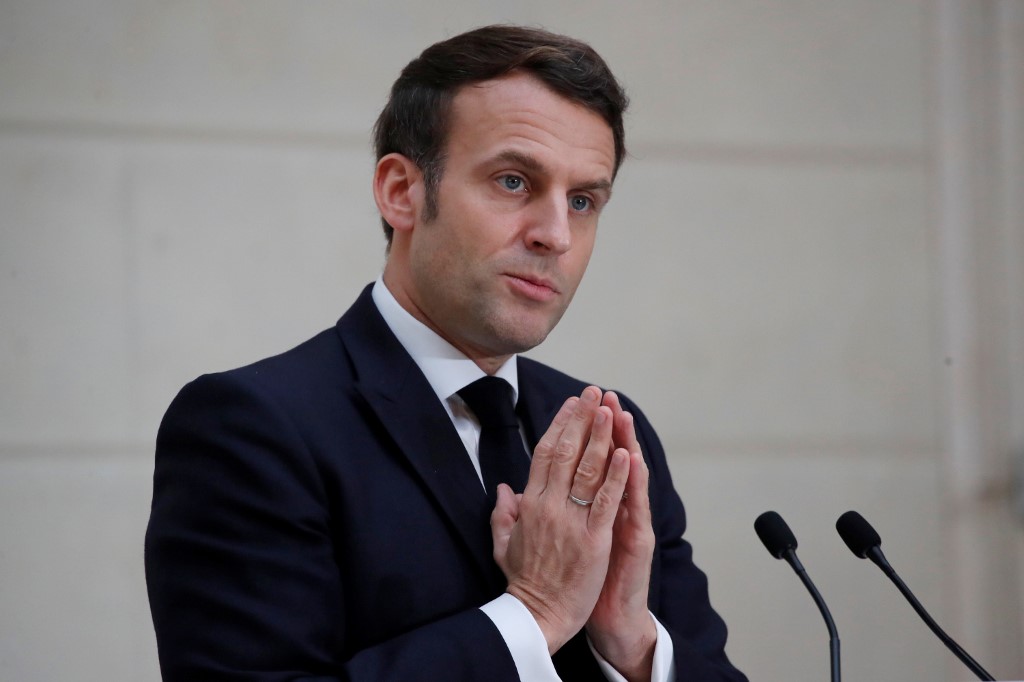
French President Emmanuel Macron at the Elysee Palace in Paris, January 13, 2021. (Francois Mori / POOL / AFP)

French President Emmanuel Macron at the Elysee Palace in Paris, January 13, 2021. (Francois Mori / POOL / AFP)

Iran on Saturday warned France to avoid “hasty and ill-considered positions,” after French President Emmanuel Macron was reported to say any new nuclear negotiations with Tehran would be “very strict,” and that only a very short time remains to prevent Iran from obtaining nuclear weapons.

Macron told Saudi Arabia’s Al Arabiya TV in an interview that any talks should include the Saudis, a major regional foe of Iran. The French leader reportedly said it was important not to repeat the “mistake” of leaving other countries in the region out of the 2015 nuclear accord.

Macron’s comments were not aired but rather reported by Al Arabiya in Arabic.

“Negotiations with Iran will be very strict and it will be necessary to include our partners in the region in the nuclear agreement, including Saudi Arabia,” he was quoted saying.

He warned that “the time remaining to prevent Iran from acquiring a nuclear weapon is very short.”

An Iranian Foreign Ministry spokesman, Saeed Khatibzadeh, said in response that “The nuclear accord is a multilateral international agreement ratified by UN Security Council Resolution 2231, which is non-negotiable and parties to it are clear and unchangeable.”

He cautioned Macron to “exercise restraint and refrain from hasty and ill-considered positions.”

He said that “The United States has withdrawn from this agreement and Europe has been unable to maintain it, and if there is a desire to revive and maintain the deal, the solution is simple: The United States will return to the accord and all sanctions will be removed.”

He also attacked France’s sale of arms to Saudi Arabia, saying “French weapons, along with other Western weapons, not only cause the massacre of thousands of Yemenis, but are also the main cause of instability in the Persian Gulf region.”

Former US president Donald Trump unilaterally withdrew America from the nuclear deal in 2018. Under the deal, Tehran had agreed to limit its uranium enrichment in exchange for the lifting of economic sanctions.

After the US then ramped up sanctions, Iran gradually and publicly abandoned the deal’s limits on its nuclear development. Iranian state TV reported Thursday that Iran has exceeded 17 kilograms of 20 percent enriched uranium within a month, moving its nuclear program closer to weapons-grade enrichment levels.

US President Joe Biden, who was vice president when the deal was signed during the Obama administration, has said he hopes to return the US to the deal. But he has said Tehran must resume compliance first, a demand reiterated by new Secretary of State Antony Blinken on Wednesday.

On Friday, Iranian Foreign Minister Mohammad Javad Zarif said Iran’s recent nuclear activities do not mean that it is seeking to build an atomic bomb. Meeting with Turkish Foreign Minister Mevlut Cavusoglu in Ankara, Zarif claimed Tehran does not view nuclear arms as a tool for security.

He once again stressed that Iran expects the US to return to the 2015 nuclear deal before it halts its increased enrichment activities and returns to compliance with the accord.

On Thursday, Iran said it plans to install 1,000 new centrifuges at the Natanz nuclear facility within three months and that its scientists had exceeded previous goals for uranium enrichment.

Behrouz Kamalvandi, a spokesperson for the Atomic Energy Organization of Iran, made the announcement about the centrifuges while Parliament Speaker Mohammad Bagher Qalibaf visited the Fordo nuclear facility, an underground site near the city of Qom.

Natanz is Iran’s main nuclear enrichment plant. An explosion at the site last year, which foreign media reports have attributed to Israel or the US, damaged an advanced centrifuge development and assembly plant.

Uranium enriched to 20% is a short technical step away from weapons-grade 90% enrichment. Western nations have criticized Iran’s enrichment activity and called on Tehran to adhere to its 2015 nuclear accord with world powers.

The Biden administration’s policy on Iran is expected to be a point of contention between the new US administration and Israel. Israeli officials have voiced strong objections to the US rejoining the nuclear deal, and have also issued threats against Iran in recent weeks.

IDF chief Aviv Kohavi issued a rare public criticism of the US plans on Tuesday and said that he had ordered the military to develop operational plans for striking Iran’s nuclear program. Defense Minister Benny Gantz later appeared to rebuke Kohavi for the comments.

Iran’s aggressive moves in recent months were believed to be partially aimed at increasing its leverage ahead of negotiations with Biden.

The Biden administration has pledged to consult with Israel and its other Middle East allies before making decisions regarding Iran.

Biden on Friday appointed Robert Malley, a veteran Middle East official, as his administration’s special envoy for Iran. Iran hawks are “aghast,” believing Malley to be a key architect of the 2015 deal, AP said without citing named sources.

These hawks are said to fear Biden “wants to rejoin the Iran deal at any cost and may be willing to sacrifice the security of Israel and the Gulf Arab states to do so,” AP reported. The hawks, it said, regard Malley as less than fully supportive of Israel.
Israeli Army Chief: Iran Could Be ‘Weeks Away’ from Atomic Bomb

Posted January 28, 2021 by Joseph Wouk
Categories: Uncategorized

5,524

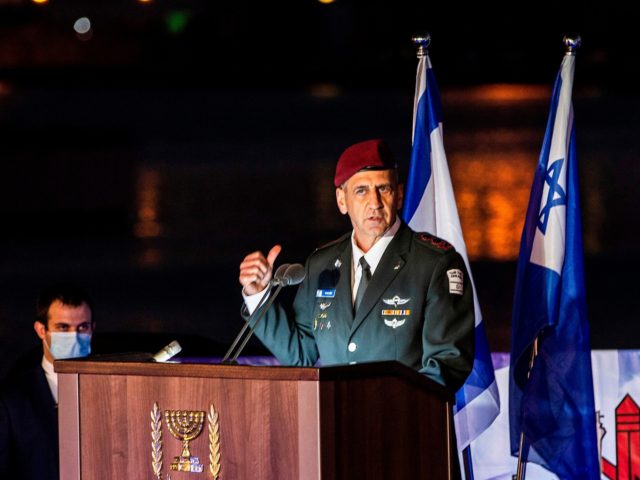
Israeli army chief of staff Aviv Kohavi delivers a speech during a ceremony marking the arrival of the first of four new German-built Saar 6 naval vessels (unseen) purchased by the navy, in the northern Haifa city naval base, on December 2, 2020. - Israel received the first of its …
HEIDI LEVINE/POOL/AFP via Getty

DEBORAH BRAND27 Jan 20211,7203:37

Israel’s military chief on Tuesday warned Iran’s uranium enrichment of up to 20 percent purity could mean the country was “months, maybe even weeks” away from obtaining the bomb.

Earlier this month, Iran announced it was enriching uranium at 20 percent purity.

Once 20 percent purity is reached, it is a short technical step for centrifuges to obtain weapons-grade 90 percent enrichment or even higher.

“No one has any doubt. Iran hopes, wants, identified and built the capabilities necessary to be a military nuclear power. And maybe even use them when it decides it wants to,” Israel Defense Forces Chief of Staff Aviv Kohavi (pictured) said in an address to Tel Aviv University’s Institute for National Security Studies.

“There needs to be serious effort so that by the end, there won’t not only not be a bomb but there won’t be an ability to rush to a bomb,” he said.

He warned against President Joe Biden’s plans to reenter the 2015 nuclear deal. Kohavi said:

The Iran of today is not the Iran of 2015 when the deal was signed. Iran now is under enormous pressure — financial pressure, massive inflation, bitterness and unrest in the population, whose salaries have tanked — because of the American sanctions. These pressures must continue. No matter what happens. Anything that releases that pressure gives them oxygen, gives them air and will allow them to continue to violate the current agreement.

A return to the 2015 nuclear agreement, or even if it is a similar accord with several improvements, is a bad thing and it is not the right thing to do from an operational and strategic point of view.

The military leader added rejoining the deal would likely trigger a “nuclear arms race” in the Middle East with other countries, like Saudi Arabia, jostling for the bomb to maintain the balance of power.

He revealed he had ordered his forces to lay the groundwork for strikes against Iran.

“Iran can decide that it wants to advance to a bomb, either covertly or in a provocative way. In light of this basic analysis, I have ordered the IDF to prepare a number of operational plans, in addition to the existing ones. We are studying these plans and we will develop them over the next year,” he said.

“The government will of course be the one to decide if they should be used. But these plans must be on the table, in existence and trained for.”

Iranian President Hassan Rouhani’s chief of staff Mahmoud Vaezi responded by dismissing Kohavi’s remarks as psychological warfare.

“They talk more and seek psychological warfare, and they have virtually no plan, no ability, and no capability to do so,” Vaezi said.

According to Israeli media, the head of the Mossad spy agency Yossi Cohen is slated to travel to the U.S. to meet with Biden and outline Israel’s demands for a future Iran deal, which would include curtailing its ballistic missile program and its backing of terror proxies like Hezbollah.

Vaezi said he believed the Biden administration would not be as accommodating to Israeli demands as the Trump administration was.

“Of course, some officials of the Zionist regime think that whatever they say, Washington will accept it,” Vaezi said.

He charged former President Donald Trump’s son-in-law and special adviser Jared Kushner of being a “Zionist agent in Washington.”

“But I think the new US administration, like other countries, has its independence,” Vaezi said.

US suspends $23 billion sale of F-35s to UAE that followed Abraham Accords

Posted January 28, 2021 by Joseph Wouk
Categories: Uncategorized


Washington reviewing foreign arms sales made by Trump administration, including deal reached as part of Israel normalization, as well as accord with Saudi Arabia

By JACOB MAGID and AGENCIES27 January 2021, 10:12 pm  1

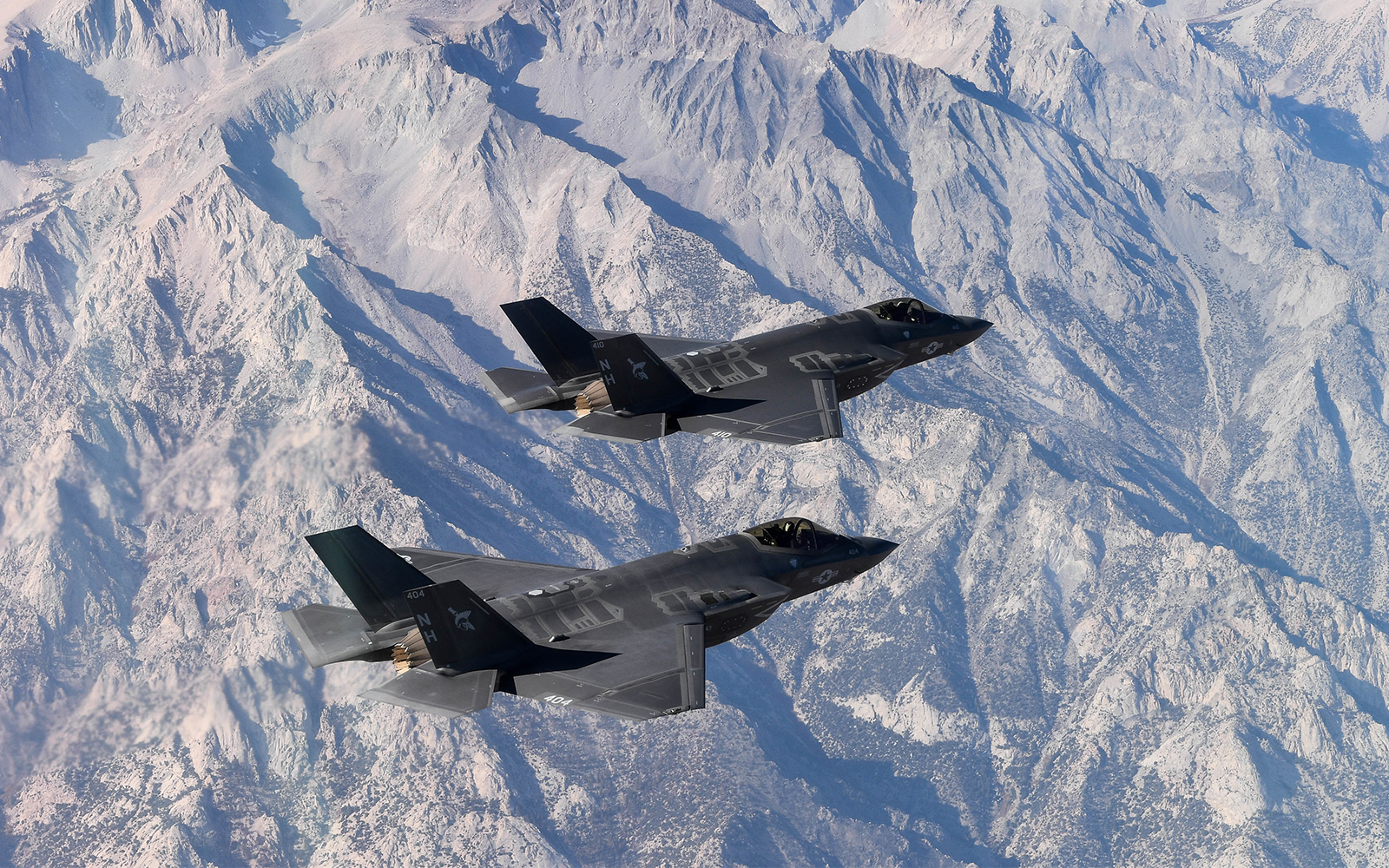
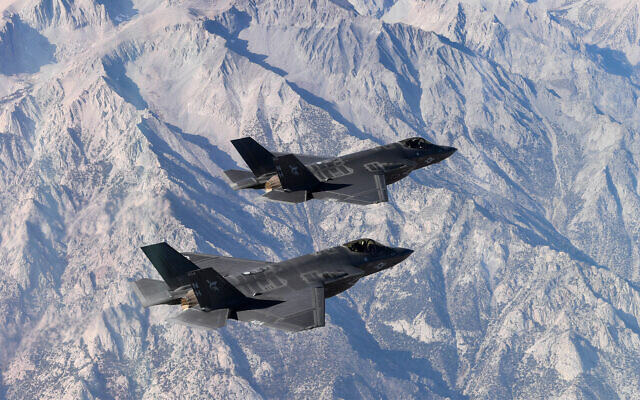
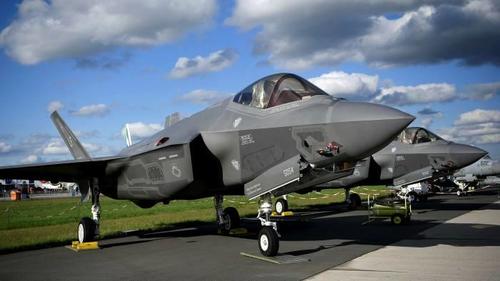
Two US Navy F-35C Lightning II jets fly in formation during an exercise out of Naval Air Station Lemoore, California, November 16, 2018. (US Navy/Chief Mass Communication Specialist Shannon E. Renfroe)

Two US Navy F-35C Lightning II jets fly in formation during an exercise out of Naval Air Station Lemoore, California, November 16, 2018. (US Navy/Chief Mass Communication Specialist Shannon E. Renfroe)

WASHINGTON — The Biden administration has put a temporary hold on several major foreign arms sales initiated by former US president Donald Trump, including the deal to provide 50 F-35 advanced fighter jets to the United Arab Emirates, which was fast-tracked by Washington after Abu Dhabi agreed to normalize relations with Israel.

In addition to the massive $23 billion transfer of stealth F-35 fighters to the United Arab Emirates, another deal being paused is the planned major sale of munitions to Saudi Arabia. Both sales were harshly criticized by Democrats in Congress.

“The department is temporarily pausing the implementation of some pending US defense transfers and sales under Foreign Military Sales and Direct Commercial Sales to allow incoming leadership an opportunity to review,” the State Department said in a statement.

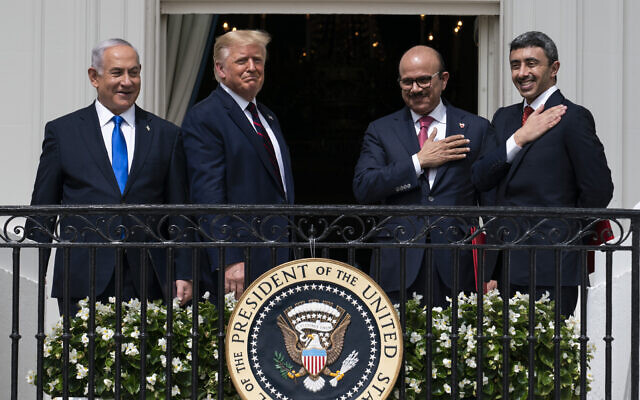
“When it comes to arms sales, it is typical at the start of an administration to review any pending sales, to make sure that what is being considered is something that advances our strategic objectives and advances our foreign policy,” Secretary of State Antony Blinken said later Wednesday at a press briefing.From left to right: Prime Minister Benjamin Netanyahu, US President Donald Trump, Bahrain Foreign Minister Abdullatif al-Zayani and United Arab Emirates Foreign Minister Abdullah bin Zayed al-Nahyan are seen on the Blue Room Balcony after signing the Abraham Accords during a ceremony on the South Lawn of the White House in Washington, September 15, 2020. (AP Photo/Alex Brandon)
The Trump administration’s announcement on the F-35 sale came shortly after the Republican president lost the November 6 election to now-President Joe Biden and followed the signing of the Abraham Accords between Israel, Bahrain and the UAE, under which the Arab states agreed to normalize relations with Israel.

Trump had explicitly backed arms sales on commercial grounds, saying that the Saudis were creating US jobs by buying from US manufacturers.

Congressional critics have expressed disapproval with such sales, including the deal with Saudi Arabia, that then-Secretary of State Mike Pompeo pushed through after bypassing lawmakers by declaring an emergency required it. The critics have alleged the weapons could be used to aid Saudi Arabia’s war in Yemen, which is the home of one of the world’s worst humanitarian crises.

Less than a month after the UAE sale was announced, an effort to block the deal fell short in the Senate, which failed to halt it.

Senators argued the sale of the defense equipment had unfolded too quickly and with too many questions. The Trump administration billed it as a way to deter Iran, but the UAE would have become the first Arab nation — and only the second country in the Middle East, after Israel — to possess the stealth warplanes.

The deal was approved by the UAE during Trump’s final hour in the White House, a US official revealed.

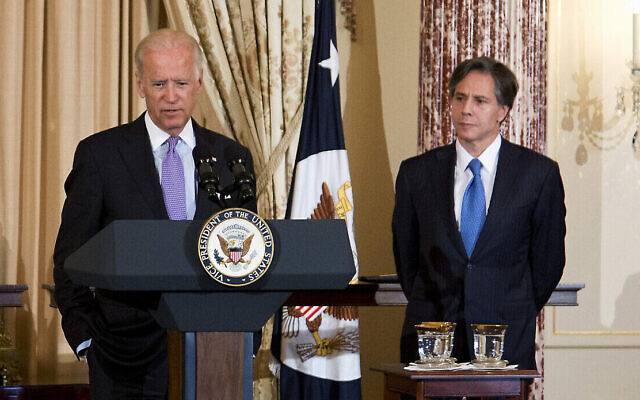
The exact nature of the agreement signed that day was not clear though, nor whether it represented the contract itself. A contract would be more binding and could place financial penalties on parties who fail to follow through with the deal.Then-Vice President Joe Biden (left) and then-Deputy Secretary of State Tony Blinken, June 30, 2015, at the State Department in Washington. (AP Photo/Manuel Balce Ceneta)
“We very much support the Abraham Accords. We think that Israel normalizing relations with its neighbors and other countries in the region is a very positive development” Blinken said Wednesday.

“We’re also trying to make sure that we have a full understanding of any commitments that may have been made in securing those agreements, and that’s something we’re looking at right now,” he added.

In a November interview with The Times of Israel, Biden’s eventual Secretary of State Antony Blinken panned the apparent “quid pro quo” nature of the F-35 sale that immediately followed the normalization agreement.

“The Obama-Biden administration made those planes available to Israel and only Israel in the region,” said Blinken, who served as Biden’s national security adviser, deputy national security adviser to the president and deputy secretary of state during the Obama administration.

Israeli analyst Neri Zilber noted on Twitter that it “will be interesting to see if UAE begins slow-rolling normalization with Israel in response” to Biden’s hold on the weapons deal.

Israel and the UAE signed a US-brokered normalization deal in September. The Trump administration formally notified Congress of its planned weapons sale to Abu Dhabi two months later.

On the record, the three countries have insisted that the arms deal was not part of negotiations that brought about the so-called Abraham Accords.

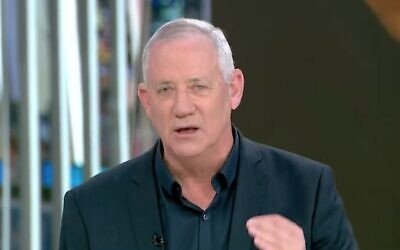
Screen capture from video of Blue and White party leader Defense Minister Benny Gantz during an interview with Channel 13 news, January 12, 2021. (Channel 13 news)

But Trump officials have acknowledged that the agreement put Abu Dhabi in a better position to receive such advanced weaponry, and a source with direct knowledge of the talks told The Times of Israel that both the US and Israel knew that the arms deal was “very much part of the deal.”

Israel announced in October that it would not oppose the sale, an about-face from its previous opposition to the deal on the grounds that it would harm the Jewish state’s military edge in the region. That decision came after meetings held between Defense Minister Benny Gantz and his US counterpart at the time, Mark Esper, at the conclusion of which the sides signed an agreement further codifying Washington’s commitment to maintaining Israel’s federally-protected military edge in the region.

Gantz is also believed to have secured an American commitment to a substantial military package to compensate for the weapons that the Pentagon was preparing to sell to one of Israel’s neighbors.

Because the transfer of such weapons takes years to come about, the Biden administration could block the deal, but there’s little precedent for a president to scrap such agreements made by a predecessor.

Biden Freezes Arms Sales To Saudis & UAE, Including Large F-35 Jet Transfer

Posted January 28, 2021 by Joseph Wouk
Categories: Uncategorized

BY TYLER DURDENWEDNESDAY, JAN 27, 2021 – 22:20

On Wednesday the Biden administration issued a freeze of all US arms sales to Saudi Arabia and the United Arab Emirates at a moment Congressional scrutiny of America’s support to the Saudi-led coalition waging war in Yemen grows. US involvement in the war goes all the way back to the Obama administration, with Trump also in the last months of his presidency approving billions in new arms sales to the kingdom.

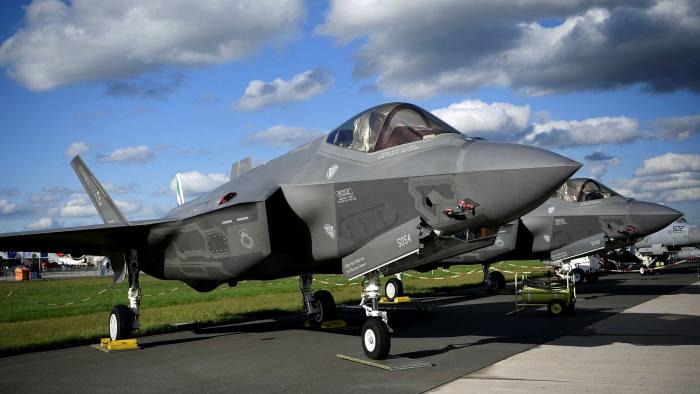
In particular Lockheed Martin produced F-35 stealth fighters that were set to be transferred to the UAE the have been “temporarily” blocked along with munitions to the Saudis, among other sales. Prior reports suggested the prior Trump deal was to send as many as 50 advanced F-35 fighters to the UAE.

The Lockheed Martin produced F35 fighter jet, via FT/dpa

The AP cited officials who identified “that among the deals being paused is a massive $23 billion transfer of stealth F-35 fighters to the United Arab Emirates.”

“That sale and several other massive purchases of U.S. weaponry by Gulf Arab countries had been harshly criticized by Democrats in Congress,” the report added.

The State Department said of the “temporary pause” that it is “temporarily pausing the implementation of some pending U.S. defense transfers and sales under Foreign Military Sales and Direct Commercial Sales to allow incoming leadership an opportunity to review.”

And Axios further details that “The sales of F-35 jets and attack drones to the UAE and a large supply of munitions to Saudi Arabia will be paused pending a review.” It added that it “signals a major policy shift from the Trump era, and may herald sharp tensions with both Gulf countries.

In response the UAE appealed to the need for “interoperability” with US forces in the Gulf while underscoring the close military cooperation as a reliable partner force:https://platform.twitter.com/embed/index.html?dnt=false&embedId=twitter-widget-1&frame=false&hideCard=false&hideThread=false&id=1354527969356746754&lang=en&origin=https%3A%2F%2Fwww.zerohedge.com%2Fgeopolitical%2Fbiden-freezes-arms-sales-saudis-uae-including-large-f-35-jet-transfer&siteScreenName=zerohedge&theme=light&widgetsVersion=ed20a2b%3A1601588405575&width=550px

So far the Saudis have had no comment after the somewhat expected move, which also follows Biden previously on the campaign trail vowing to get tougher on the “pariah” stateas he called the kingdom during a debate.

Months ago an attempt in the Senate led by New Jersey Democrat Bob Menendez to block Trump arms sales to the Saudis was narrowly defeated.

Responding to IDF chief, Iran says it’s ‘serious’ about defending itself

Posted January 27, 2021 by Joseph Wouk
Categories: Uncategorized


After Kohavi announces he’s ordered fresh plans to hit Iranian nuclear sites, top Tehran official scoffs at Israel’s capabilities

By TOI STAFFToday, 1:40 pm  1

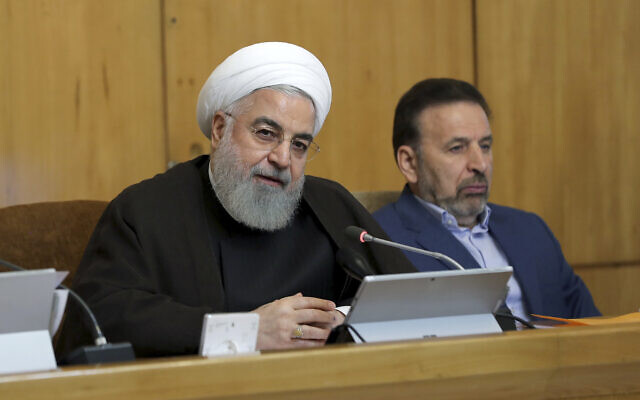
Iranian President Hassan Rouhani speaks during a cabinet meeting, as his chief of staff Mahmoud Vaezi sits at right, in Tehran, Iran, July 10, 2019. (Iranian Presidency Office via AP)

Iranian President Hassan Rouhani speaks during a cabinet meeting, as his chief of staff Mahmoud Vaezi sits at right, in Tehran, Iran, July 10, 2019. (Iranian Presidency Office via AP)

A senior Iranian official on Wednesday dismissed as psychological warfare remarks by the Israeli chief of staff regarding the preparation of plans to hit Iran’s nuclear sites and said the Jewish state doesn’t have the ability to carry out such a plan anyway.

“We are serious in defending the country,” said Mahmoud Vaezi, Iranian President Hassan Rouhani’s chief of staff.

Speaking to reporters on the sidelines of a cabinet meeting in Tehran, Vaezi was responding to a Tuesday speech by IDF Chief of Staff Aviv Kohavi in which he said he had directed the military to prepare fresh operational plans to strike Iran to block its nuclear program.

“They talk more and seek psychological warfare, and they have virtually no plan, no ability, and no capability to do so,” Vaezi said, according to Iranian media reports.

Vaezi also indicated he believes the Biden administration will not be as responsive to Israeli demands as Donald Trump’s was.

“Of course, some officials of the Zionist regime think that whatever they say, Washington will accept it,” Vaezi said. He accused Trump’s son-in-law and special adviser Jared Kushner of being a “Zionist agent in Washington.”

“But I think the new US administration, like other countries, has its independence,” Vaezi said.

He also dismissed what he said was lobbying by Israel and other countries in the region — “such as Saudi Arabia, which is our enemy” — that oppose a US return to the 2015 nuclear deal between Iran and world powers.

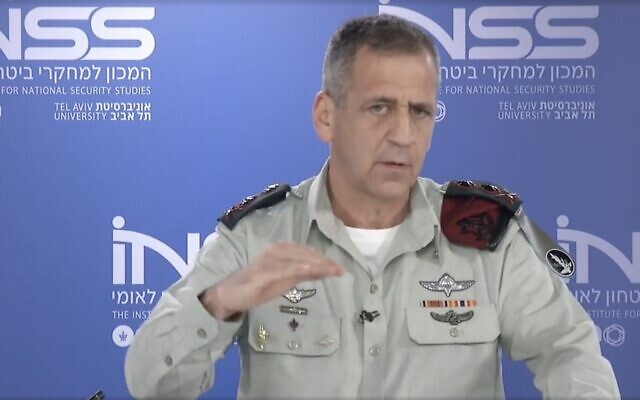
“We should not take such things seriously” even though the US does, Vaezi said.IDF Chief of Staff Aviv Kohavi speaks at the Institute for National Security Studies think tank’s annual conference on January 26, 2021. (Screen capture/INSS)
Kohavi made his remarks during a live-streamed speech at the Institute for National Security Studies think tank’s annual conference, which was held this year entirely online due to the coronavirus pandemic.

“Iran can decide that it wants to advance to a bomb, either covertly or in a provocative way. In light of this basic analysis, I have ordered the IDF to prepare a number of operational plans, in addition to the existing ones. We are studying these plans and we will develop them over the next year,” Kohavi said.

According to Kohavi, due to its improved centrifuges and growing stockpile of enriched uranium, Iran, were it to now “rush ahead,” could be “months, maybe even weeks” from a bomb.

In a rare public comment on American foreign policy, the IDF chief warned that US President Joe Biden should not rejoin the 2015 nuclear agreement, as the American leader has indicated he plans to do provided Tehran returns to compliance with the deal.

“Returning to the 2015 nuclear agreement or even to an agreement that is similar but with a few improvements is a bad thing and it is not the right thing to do,” Kohavi said.

Trump in 2018 pulled the US out of the deal, known formally as the Joint Comprehensive Plan of Action, and applied stiff sanctions that have played havoc with the Iranian economy. Other parties to the deal have worked to keep it going, but Iran has responded by steadily dropping its own commitments to the pact, which was intended to prevent it from being able to develop nuclear weapons.

Earlier this month, Tehran announced it was beginning to enrich uranium up to 20 percent — far beyond the 3.5 percent permitted under the JCPOA and just a small technical step away from the 90 percent needed for a nuclear weapon. Iran also said it was beginning research into uranium metal, a material that technically has civilian uses but is overwhelmingly seen as a step toward a nuclear bomb.

Iran said Tuesday it would also move to restrict short-notice inspections of suspect nuclear facilities from late February.

Israel has twice conducted military strikes against the nuclear programs of its enemies — Iraq in 1981 and Syria in 2007 — under what’s become known as the Begin Doctrine, which maintains that Jerusalem will not allow an enemy country to obtain an atomic weapon.

UAE, Bahrain: We need ‘unified voice’ with Israel on Iran’s missiles, nukes

Posted January 27, 2021 by Joseph Wouk
Categories: Uncategorized


Speaking to FM Ashkenazi, ministers from Gulf states say Jerusalem and its new allies can together ‘exert greater influence on the US’

By LAZAR BERMAN26 January 2021, 6:56 pm  1

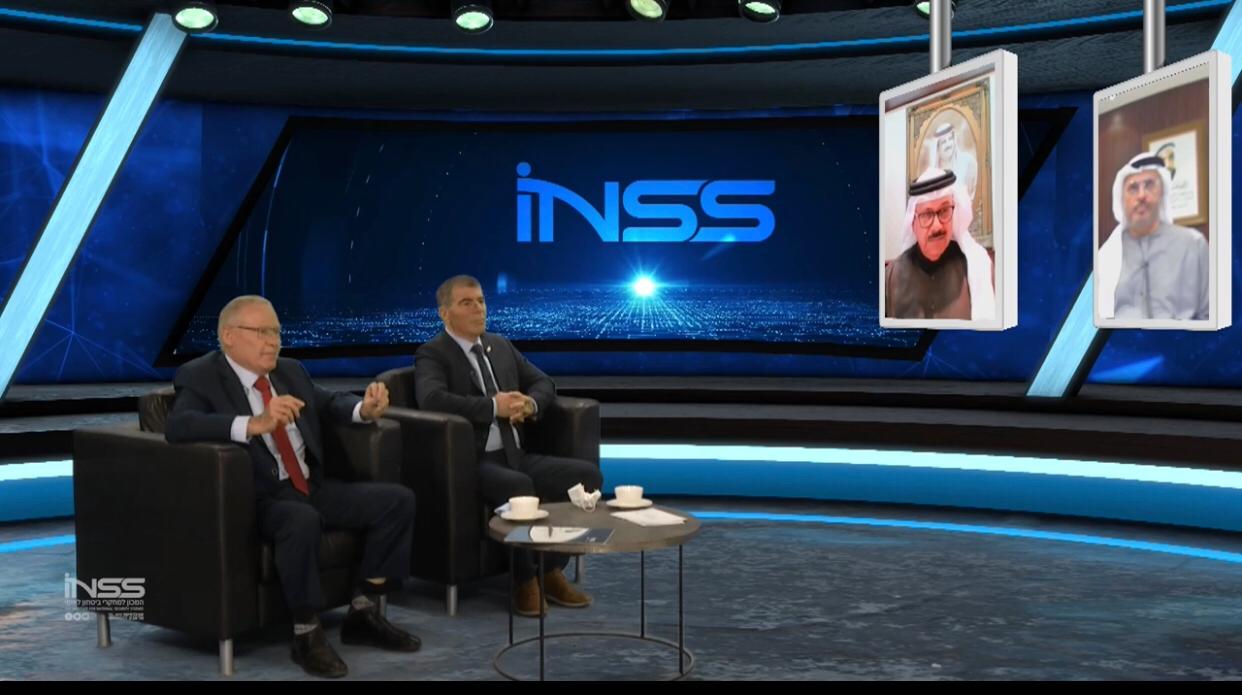
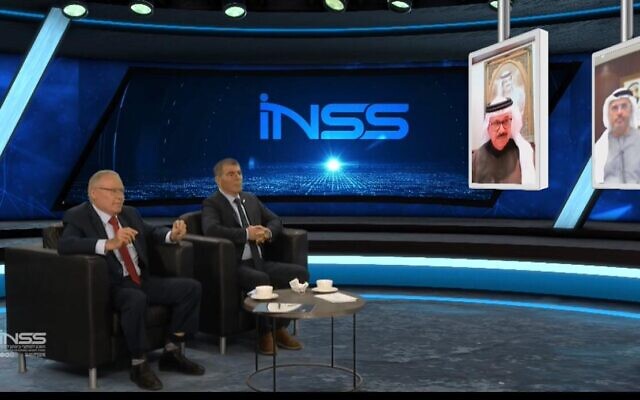
Foreign Minister Gabi Ashkenazi (2L) speaks to his Bahraini and Emirati counterparts at the INSS conference. January 26, 2021 (Courtesy of INSS)

Foreign Minister Gabi Ashkenazi (2L) speaks to his Bahraini and Emirati counterparts at the INSS conference. January 26, 2021 (Courtesy of INSS)

The United Arab Emirates and Bahrain called on Tuesday for a coordinated effort with Israel to press the new US administration on Iran.

Speaking alongside Israel’s Foreign Minister Gabi Ashkenazi, Bahraini Foreign Minister Abdullatif bin Rashed Alzayani stressed the concern the countries share over Tehran’s nuclear program, ballistic missiles, and activities across the Middle East.

“A joint regional position on these issues will exert greater influence on the United States,” Alzayani said.

The Bahraini and Israeli foreign ministers and Emirati minister of state for foreign affairs spoke on the first day of the Institute for National Security Studies’s 14th annual international conference, which is being held virtually this year because of COVID-19 restrictions. The panel was moderated by INSS Director General (ret.) Amos Yadlin.

US President Joe Biden has indicated his desire to rejoin the 2015 Joint Comprehensive Plan of Action, while Israel is pushing for any return to the agreement to include fresh limitations on Iran’s ballistic missile program and support for terror and destabilization around the world.Foreign Minister Gabi Ashkenazi greets Bahraini Industry, Commerce and Tourism Minister Zayed R. Alzayani in Jerusalem on December 2, 2020 (Shlomi Amsalem/GPO)
The Islamic Republic’s foreign minister warned last week that his country would not accept changes to the terms of the 2015 pact, which currently does not deal with Iran’s missile program or regional proxies.

“We must respond to Iran’s missile program,” Alzayani continued, “its support for proxies in the region, and its interference in the domestic affairs of states across the region, in order to bring about a broader peace and stability for the Middle East.”

The JCPOA was signed by Iran and six world powers known as the P5+1 in 2015. Then-president Trump unilaterally pulled the US out of the deal in 2018, opting instead for a “maximum pressure” sanctions effort.https://www.youtube.com/embed/S_s6mea6rss?feature=oembed&showinfo=0&rel=0&modestbranding=1

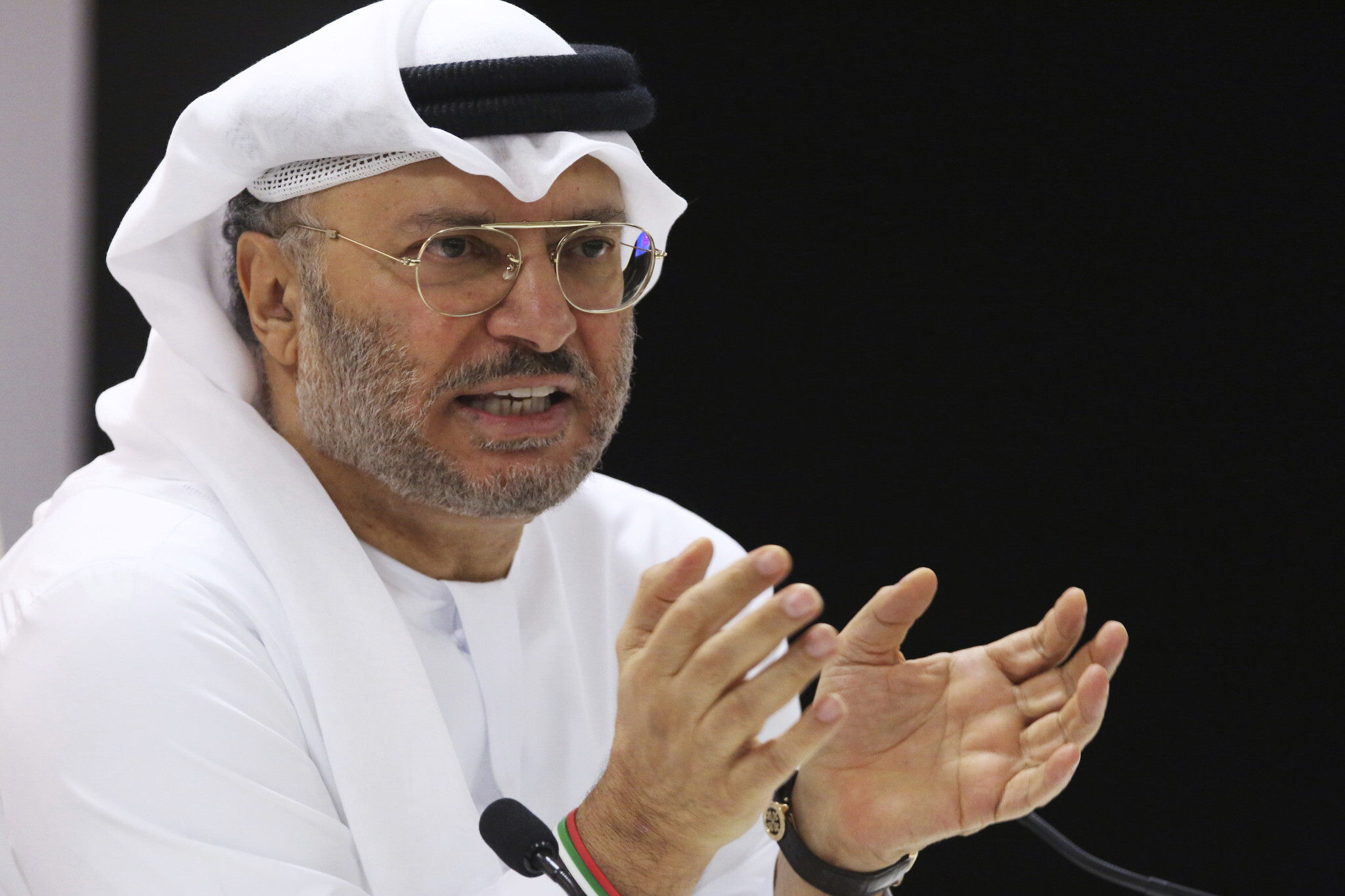
One of the JCPOA’s “failures,” argued UAE Minister of State for Foreign Affairs Anwar Gargash on Tuesday, was the “absence of a regional voice therein.”

Iran drafted conditions for returning to compliance with the nuclear deal, one of which is that no new signatories — understood to mean Arab Gulf states —  may be added to the agreement.

Since 2019, Tehran has suspended its compliance with most of the limits set by the agreement in response to Washington’s abandonment of sanctions relief and the failure of other parties to the deal to make up for it. It is now enriching uranium to 20 percent, just a short step away from weapons-grade levels.

Israel, UAE, and Bahrain all seek to dissuade the Biden administration from returning to the JCPOA in its original form.Emirati Minister of State for Foreign Affairs Anwar Gargash speaks to journalists in Dubai, United Arab Emirates, Monday, June 18, 2018. (AP/Jon Gambrell)

Alzayani suggested that the terms of the deal must be changed in light of the signing of the 2020 Abraham Accords, the US-brokered agreements which normalized ties between Israel and the UAE, Bahrain, Morocco and Sudan.

“Any future agreement with Iran will need to reflect the new reality in the region and be acceptable to all states in the region.”

Ashkenazi, a former IDF chief of staff, agreed that the accords “strengthened the regional voice” and stressed the importance of maintaining a credible military option in Israel’s policy toward Iran.

He also warned against a “confrontational policy in the press” in order to sway the Biden administration, instead calling for a “professional conversation, real, transparent…to strive for a situation in which Israel’s concerns” are made clear to senior US officials.

The Gulf ministers also discussed their support for a two-state solution between Israel and the Palestinians.

They argued that the Abraham Accords would spur progress on Israeli-Palestinian peace. The pact “created an incentive for such progress and put the brakes on steps that would have reversed the process,” said Alzayani.

In exchange for official ties with the UAE, Israel agreed to suspend plans to annex large parts of the West Bank under the Israeli-Palestinian peace plan drawn up by the Trump administration. The move opened a rift between Abu Dhabi and Ramallah, which saw normalization with Israel as premature given the lack of an Israeli-Palestinian peace deal, though the UAE says it is still committed to the Palestinian cause.

“After 40-50 years we arrived at the conclusion that disengagement from Israel was not effective, but rather we could more effectively respond to our disagreements with her through dialogue, interaction, trust, and compromise,” Gargash explained.UAE Foreign Minister Abdullah bin Zayed Al-Nahyan, US President Donald Trump, Bahrain Foreign Minister Abdullatif al-Zayani and Israeli Prime Minister Benjamin Netanyahu talk at the ceremony for the signing of the Abraham Accords, at the White House in Washington, DC, September 15, 2020. (Avi Ohayon / GPO)

The fruits of peace

The diplomats laid out their visions for the next stage in the normalization process between Israel and its new Gulf partners. Gargash stressed the importance of providing “meaning to the peace for the average citizen – freedom of movement and more opportunities,” adding that the UAE was eager to welcome more Israeli tourists.

Over 70,000 Israelis have visited the UAE, said Ashkenazi. The Washington Post reported that over 150 Emirati restaurants have begun serving kosher food.

Alzayani sounded a more cautious note, warning that peace requires patience, and that governments must create the environment in which ties can develop organically.

Over 1,000 Israeli and Gulf companies are involved in some sort of collaboration, Ashkenazi revealed, and the three nations are drafting over 40 agreements that will serve as the practical basis for cooperation moving forward.

Israel’s first ambassador to the UAE, Eitan Na’eh, told The Times of Israel that the growing ties with the Gulf would have widespread economic ramifications, and that he expected trade with the Gulf to lower the cost of living in Israel.

IDF chief says he’s ordered fresh military plans to thwart Iran’s nuke program

Posted January 27, 2021 by Joseph Wouk
Categories: Uncategorized


Kohavi warns US against rejoining 2015 nuclear deal or even a slightly improved version, calling it ‘a bad thing to do’ that would lead to an Iranian bomb, which Israel won’t allow

By JUDAH ARI GROSS26 January 2021, 9:28 pm  1

IDF Chief of Staff Aviv Kohavi speaks at the Institute for National Security Studies think tank's annual conference on January 26, 2021. (Screen capture/INSS)

IDF Chief of Staff Aviv Kohavi speaks at the Institute for National Security Studies think tank’s annual conference on January 26, 2021. (Screen capture/INSS)

Israel Defense Forces Chief of Staff Aviv Kohavi on Tuesday said he has directed the military to prepare fresh operational plans to strike Iran to block its nuclear program.

“Iran can decide that it wants to advance to a bomb, either covertly or in a provocative way. In light of this basic analysis, I have ordered the IDF to prepare a number of operational plans, in addition to the existing ones. We are studying these plans and we will develop them over the next year,” Kohavi said.

He added: “The government will of course be the one to decide if they should be used. But these plans must be on the table, in existence and trained for.”

According to Kohavi, due to its improved centrifuges and growing stockpile of enriched uranium, Iran, were it to now “rush ahead,” could be “months, maybe even weeks” from a bomb.

Israel has twice conducted military strikes against the nuclear programs of its enemies — Iraq in 1981 and Syria in 2007 — under what’s become known as the Begin Doctrine, which maintains that Jerusalem will not allow an enemy country to obtain an atomic weapon.IDF Chief of Staff Aviv Kohavi speaks at the Institute for National Security Studies think tank’s annual conference on January 26, 2021. (Screen capture: INSS)

Kohavi made his remarks during a livestreamed speech at the Institute for National Security Studies think tank’s annual conference, which was held this year entirely online due to the coronavirus pandemic.

In a rare public comment on American foreign policy, the IDF chief warned that US President Joe Biden should not rejoin the 2015 nuclear agreement, as the American leader has indicated he plans to do provided Tehran returns to compliance with the deal.

Left: US President-elect Joe Biden on January 14, 2021, in Wilmington, Delaware (AP Photo/Matt Slocum); Right: Iranian President Hassan Rouhani in Tehran, Iran, December 9, 2020. (Iranian Presidency Office via AP)

“With the changing of the administration in the United States, the Iranians have said they want to return to the previous agreement. I want to state my position, the position that I give to all my colleagues when I meet them around the world: Returning to the 2015 nuclear agreement or even to an agreement that is similar but with a few improvements is a bad thing and it is not the right thing to do,” Kohavi said.

Due to the close relationship between the American and Israeli militaries, as well as the IDF’s general preference to keep out of political arguments, it is highly uncommon for military officials to criticize allies’ foreign policy.

In his speech, Kohavi spoke out harshly not only against the possibility of the United States rejoining the 2015 deal, known formally as the Joint Comprehensive Plan of Action (JCPOA), but also against the original agreement. Kohavi’s predecessor, as well as other senior Israeli defense officials, were not devout champions of the agreement, but described it as an imperfect way to take the Iranian nuclear issue off the table for at least a few years, allowing them to focus their attentions more on other issues.

Kohavi denounced the deal entirely, specifically for its so-called “sunset clauses,” the terms of the agreement limiting different aspects of Iran’s nuclear program that end after a certain number of years. Critics of the JCPOA see these as allowing Iran to eventually develop an accepted nuclear program, while proponents of the deal argue that these could have been pushed back further with additional agreements.

The consensus view among Israeli defense officials opposes a return to the exact terms of the 2015 nuclear agreement, under the belief that the leverage from recent sanctions would allow for a stronger deal to be negotiated. But Kohavi’s speech marked the first time an improved version of the deal has also been described as wholly unacceptable from an Israeli security standpoint.

This photo released November 5, 2019 shows centrifuge machines in the Natanz uranium enrichment facility in central Iran. (Atomic Energy Organization of Iran via AP, File)

“If the 2015 nuclear deal were carried out, Iran would be able to get itself a weapon because the agreement did not include limits to prevent this when [the agreement] ended. As of today, Iran has increased the amount of enriched material beyond what was permitted. It enriched it to levels beyond what was permitted. It developed and manufactured centrifuges that will allow it to rush ahead and produce a weapon at a much faster rate, within months, maybe even weeks,” Kohavi said.

Earlier this month, Tehran announced it was beginning to enrich uranium up to 20 percent — far beyond the 3.5 percent permitted under the JCPOA and just a small technical step away from the 90 percent needed for a nuclear weapon. Iran also said it was beginning research into uranium metal, a material that technically has civilian uses but is overwhelmingly seen as a step toward a nuclear bomb.

Iran said Tuesday it would also move to restrict short-notice inspections of suspect nuclear facilities from late February.

“No one has any doubt. Iran hopes, wants, identified and built the capabilities necessary to be a military nuclear power. And maybe even use them when it decides it wants to,” Kohavi said.

The military chief warned that a return to the Iran deal would also likely prompt a “nuclear arms race” in the Middle East as other countries in the region — like Saudi Arabia, which also sees Iran as a major threat — would also seek to obtain an atomic weapon in order to maintain the balance of power.

In his speech, the IDF commander called for the United States to use the leverage over Iran gained during the presidency of Donald Trump through his so-called “maximum pressure” campaign of financial sanctions on Tehran, which has crippled the already-weak Iranian economy. Kohavi said the US should use this situation to negotiate a better deal that would end Iran’s nuclear program entirely, not just its military aspects.

“There needs to be serious effort so that by the end, there won’t not only not be a bomb but there won’t be an ability to rush to a bomb,” he said.

Iranian police officers take position while protesters gather in front of Amir Kabir University in Tehran, Iran, to remember victims of a Ukrainian airplane shot down by an Iranian missile; during a rally on January 11, 2020. (AP Photo/File)

“The Iran of today is not the Iran of 2015 when the deal was signed. Iran now is under enormous pressure — financial pressure, massive inflation, bitterness and unrest in the population, whose salaries have tanked — because of the American sanctions. These pressures must continue. No matter what happens. Anything that releases that pressure gives them oxygen, gives them air and will allow them to continue to violate the current agreement,” Kohavi said.

Biden administration officials have indicated that Israel will be involved in its decision-making process regarding Iran’s nuclear program.

According to a Channel 12 report, the head of the Mossad Yossi Cohen is expected to travel to the United States shortly to meet with Biden and lay out Israel’s demands for a future Iran deal, which would include not only Tehran’s nuclear program, but also its missile program and support for proxies throughout the Middle East.

How Iran Could Get Nuclear Weapons On Biden’s Watch

Posted January 25, 2021 by davidking1530
Categories: Uncategorized

https://www.19fortyfive.com/2021/01/how-iran-could-get-nuclear-weapons-on-bidens-watch/

Could Iran develop a nuclear weapon on President Biden’s watch? Yes.

While Democrats might blame President Donald Trump’s abrogation of the Joint Comprehensive Plan of Action (JCPOA) for recent Iranian nuclear violations, they should not: The 2015 Iran deal reversed decades of non-proliferation precedent which demanded a complete accounting and dismantlement of nuclear infrastructure. Exculpating Iran due to hatred of Trump also ignores that Iran is treaty-bound to uphold its Non-Proliferation Treaty Safeguards Agreement commitments.

To understand just how close the Islamic Republic is to nuclear weapons, consider the three general components of a nuclear weapons capability: enrichment, warhead design, and delivery. Iran has worked on all three. The International Atomic Energy Agency (IAEA) chronicled Iran’s possible military dimensions in a public report almost a decade ago: Iran had worked on warhead design, detonators, weapon modeling, and procurement. While Biden’s team may say that the JCPOA stopped such activity, Iran’s accounting to the IAEA fell short, the regime sought to hide the archive of its work, and the knowledge already developed does not go away.

The JCPOA and its corollary, UN Security Council Resolution 2231, reversed legal precedent to enable Iranian missile work under the guise of a satellite launch program. While some officials debate Iran’s missile capability, they ignore another reality: While the Pentagon might seek precision and perfection, the Islamic Revolutionary Guard Corps may not. A dirty bomb carried by ship obviates the need for an intercontinental ballistic missile or, for that matter, the perfect warhead.

The JCPOA focused its efforts on Iran’s enrichment program, although it undercut its effectiveness both with expiring provisions and by allowing Iran to maintain an industrial-scale enrichment program greater than that of Pakistan at a time that Pakistan built nuclear weapons. In short, Iran already has the knowledge to build and launch a warhead. All it needs is more enriched uranium.

Even as Iran approaches nuclear weapons capability, Biden continues to be blind to Iran’s own strategy. His national security team mistakenly believes that differences between hardliners and reformers are of belief rather than tactics. They see sincerity rather than a game of good-cop, bad-cop. The reality is that both factions support the theocracy’s revolutionary precepts and collude to disenfranchise tens of millions of Iranians who seek to live in a normal country.

Tehran is confident that they can outplay American diplomacy for other reasons: They are simply following the path already laid by Pyongyang. Consider the 1994 Agreed Framework signed both to keep North Korea within the confines of the Nuclear Nonproliferation Treaty and to stop its development of nuclear weapons. As Iran does now, North Korea maintained a pretense of abiding by its agreement even as it sought to cheat along the margins. Even as it became clear the Agreed Framework was not constraining North Korean ambitions, officials—including Biden himself—bent over backwards to deny its flaws and exculpate North Korean cheating. After the North Korean foreign ministry announced in 1998 that it would no longer abide by the Agreement, for example, the Clinton administration offered Pyongyang $100 million in new aid.

Today, Democrats similarly debate new incentives to bring Tehran back into the fold.  As defiance becomes lucrative, it only grows. North Korea subsequently demanded $300 million to allow inspection of an underground nuclear site near Kumchang-ni and $1 billion to stop missile exports. American proponents of diplomacy meanwhile argued that increasingly violent North Korean rhetoric was simply a prelude to its offer of a grand bargain. The reality: North Korean authorities never abandoned their nuclear drive, but saw diplomacy as a way to delay accountability and enrich the regime. Today, North Korea’s nuclear arsenal increasingly threatens the United States and its allies, while its leaders live a luxurious lifestyle funded in part by billions of dollars of wasted American taxpayer money.

Let’s face it: Biden’s team may say they want to re-engage Tehran, but in reality, their diplomacy will simply be a fig leaf to enable Iran, like North Korea before it, to establish a nuclear fait accompli.

Gulf War: How Israel went from 0 to world’s best missile defense

Posted January 25, 2021 by davidking1530
Categories: Uncategorized

https://www.jpost.com/middle-east/gulf-war-how-israel-went-from-0-to-best-missile-defense-to-worlds-best-656267

So is Israel in better or worse shape in terms of missile defense and deterrence than it was 30 years ago?

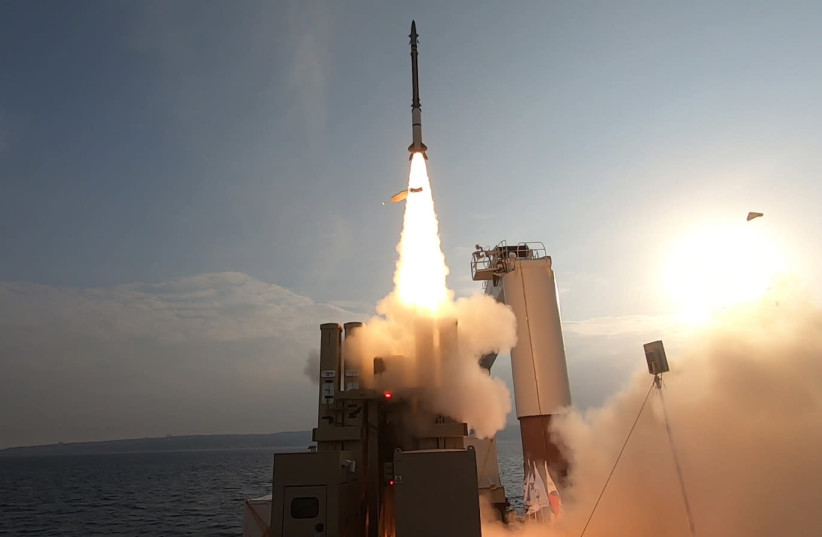
The Israel Missile Defense Organization conducts live-fire intercept tests of the David's Sling weapon system (photo credit: DEFENSE MINISTRY)

Thirty years after the 1991 Gulf War, Israel has gone from zero real missile defense to the best missile defense shield in the world and from fear of preemptive action in other countries to operating almost freely in Syrian airspace and in some other hostile areas.

At the same time, if in 1991, Iraq’s Saddam Hussein presented the only major missile threat, Israel currently faces potential missile threats from six distinct areas. These are Gaza, Hezbollah, Iran, Syria, Iraq and Yemen.

Jerusalem is confronted by two adversaries, Iran and Hezbollah, which can each overwhelm even Israel’s state-of-the-art three-tier missile defense with a combination of volume and advanced precision.

This view has been advanced repeatedly to The Jerusalem Post by former Missile Defense Organization chief Uzi Rubin, former intelligence minister Dan Meridor and former deputy national security council chief Chuck Freilich.

So is Israel in better or worse shape in terms of missile defense and deterrence than it was 30 years ago?

Looking at the issue of missile defense in isolation, the situation is probably worse.

Back in 1991, Iraq’s 39 ballistic Scud missiles fired on Israel easily beat the lame US patriot missile defense system and only failed to kill Israelis because of a combination of early warning sirens, bomb shelters, the Scuds’ lack of precision and luck.
Even without deaths, the Scuds caused tremendous trauma and significant evacuations which shook the country.

But the impact was limited compared to the current era’s threats.

Hamas is believed to have rebuilt its rocket arsenal to possibly more than the 10,000 rockets it had on the eve of the 2014 Gaza War.

Even back then it managed to continue to fire rockets on Israel’s home front for 50 days, covering the majority of the country and even leading to most flights from Ben Gurion Airport being grounded for 48 hours at one point.

Despite Hamas’ capabilities, the IDF’s current missile defense can be considered an overall success, and a night-and-day improvement from the 1991 Patriot defense system.

Both in that round of fighting and in later shorter rounds, including a few in 2019, the Iron Dome was able to shoot down enough Hamas and Islamic Jihad rockets – all relatively short range – so that few Israelis were killed.

For many years the IDF has also operated the Arrow missile defense system to shoot down long range intercontinental ballistic missiles and potentially some medium range missiles.

In 2017, the IDF introduced the David’s Sling to focus specifically on medium range missiles, even as both the Iron Dome and Arrow could be used for that as well.

In mid-December, the IDF held its first impressive combined missile defense test in which all three missile defense systems needed to be utilized simultaneously.

One would think that all of this advancement and Israel’s relative success with Hamas would mean the country is much better off than when Saddam Hussein could land his rockets in Tel Aviv at will.

But these days Hamas is the easy part.According to missile defense and national security experts cited above: Rubin, Meridor and Freilich, both Iran and Hezbollah have the capacity to overwhelm all three tiers of Israel’s missile defense. Hezbollah has up to 150,000 rockets, including several hundred precision missiles. Iran has fewer missiles within range, but at least 400 ballistic missiles which can hit Israel.

Although theoretically, Iron Dome might be used against them, as in the mid-December test, there has been no major real war test of either the Arrow or the other missile defense systems’ abilities to shoot down a barrage of ballistic missiles.

In contrast, Iran has successfully and accurately used its ballistic missiles to attack ISIS in Syria in 2018 and US forces in Iraq in 2020.

It has also used attack UAVs including: the Shahed 129, Saegheh 2 and the Ababil, to attack targets in Yemen and Saudi Arabia in 2019-2020 and showed off an impressive drill of ballistic missiles and attack drones on January 15-16.

Moreover, though Jerusalem is doing all it can to prevent the deployment of Iranian long range precision missiles in Syria, Iraq and Yemen, it is an open question whether this is possible indefinitely.

Still, that is not the end of the story either since there is also the question of deterrence.  From a deterrence perspective, Israel is in a far stronger position now than in 1991 when Israel did not even respond directly to Saddam’s 39 ballistic missiles.

Conventionally, the understanding was that then prime minister Yitzhak Shamir was pressured by then US president George H.W. Bush not to respond for fear that an Israeli intervention would scuttle the broad anti-Iraq coalition Bush had assembled.

In addition, Israel was still suffering from the trauma of the 1982 Lebanon War, which unnerved Israel’s confidence that it could operate successfully in enemy territory.

Records, newly declassified in 2018, showed that then defense minister Moshe Arens approved a counterattack on Iraq weeks into the war after all the Scuds had been fired and most of the US’s aims in Iraq had been accomplished.

Even at this point when the coalition was not at risk, Israel was asked not to respond.

Then US defense secretary Dick Cheney used time-honored procedural delaying tactics about having to hold meetings on operational coordination.

It was also revealed in 2018 that then IDF chief Dan Shomron was fearful about the consequences of an Israeli attack in foreign territory. So after Arens told him to prepare a plan, the IDF commander went behind the defense minister’s back and told Shamir that he opposed it.

That was the IDF’s mentality in 1991.

In contrast, in recent years, and with a reported exclamation point in recent weeks, Israel has carried out thousands of airstrikes and other attacks to stop Iran’s attempts to smuggle precision missiles into Syria, and reportedly also in Lebanon and Iraq when necessary.

In that respect, Gadi Eisenkot, who was IDF chief from 2014-2019, has said recently that Israel may have deterred its many enemies from starting a major conflict, with missiles or without, than at almost any other time in its history.

In January last year, General David Petraeus, former CIA director and  commander of the multinational forces in Iraq, said that, “Iran will not risk a major war because it would put its survival at risk,” should Jerusalem respond – and then said the same applied to Hezbollah.

The IDF’s ability to hit almost anywhere and anytime, with precision and without losing IDF troops is unprecedented.
Based on that, it may continue to deter the increasing number of actors whose missile capabilities could beat Jerusalem’s missile defense.

That could mean that in the final analysis Israel is more threatened, but also more secure in 2021 than it was in 1991.

As Trump exits, the full Mossad story on normalization comes into focus

Posted January 23, 2021 by davidking1530
Categories: Uncategorized

Interesting behind-the-scenes info.

https://www.jpost.com/middle-east/exclusive-as-trump-exits-the-full-mossad-story-on-normalization-into-focus-656108

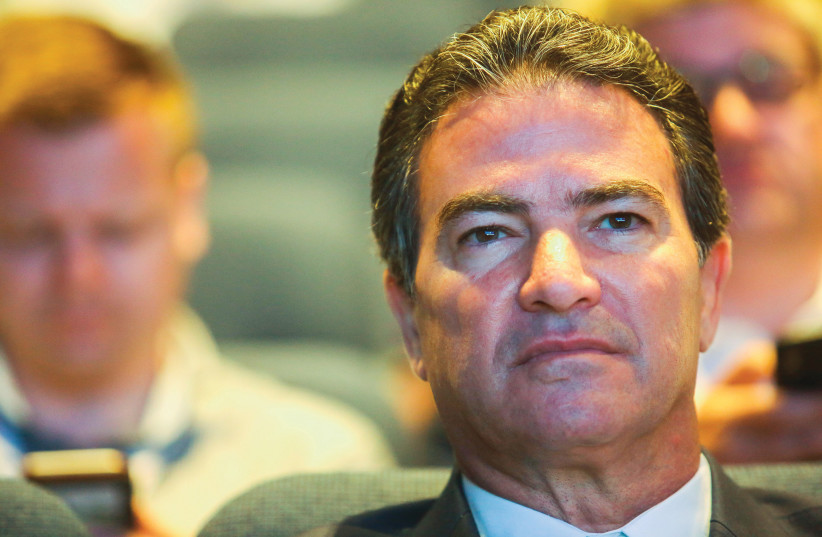
MOSSAD DIRECTOR Yossi Cohen. (photo credit: FLASH90)

As the administration of president Donald Trump exits stage left, it’s time to take stock of the four normalization deals that Israel has already signed.

But there is a crucial piece of the story that has not been emphasized.

Contrary to conventional wisdom, although the July-to-December 2020 wave of deals provided the historic photos, the turning point moments were back in 2017 and 2019, The Jerusalem Post has learned. Also, though, it has not yet signed an agreement itself, the key party was always Saudi Arabia.

Much of the de-emphasis of these points has to do with Mossad chief Yossi Cohen – whose acts were mostly shrouded in mystery until a major speech in July 2019 – who was leading the Israeli push by Prime Minister Benjamin Netanyahu.

There have been multiple narratives about who really got the ball rolling between Israel, the US and the UAE, and about when was the critical turning point.

Of course, part of the complex answer is that each country in the Israel, UAE, US triad played its part.

Also, each of the countries that came afterward made its own contributions which helped form the order of who would be “in” during the Trump era and who would play “wait and see.”

But to properly understand what happened in 2020, Israeli intelligence sources would say that it is imperative to understand the behind-the-scenes role of Cohen and the Saudis and what happened in September-November 2017, and in July 2019.

TRADITIONALLY, CLANDESTINE developments with countries with which Israel has no diplomatic relations fall under the realm of the Mossad.

In that respect, the Post has learned that Cohen especially distinguished himself from his start in January 2016 by not only marking goals, but establishing a unit to focus on the normalization goal.

Reports of Cohen’s travels to Saudi Arabia, UAE, Bahrain, Sudan, Morocco and other countries without diplomatic relations with Israel started coming in the middle of his term, but he was on the travel circuit even earlier.

There were precursors like former National Security Council chief Yaakov Amidror and former Foreign Ministry director-general Dore Gold. There were also other Israeli intelligence figures, who are conventionally less involved with foreign countries, who got involved in the game in important ways in recent years.

One interesting departure from Mossad dominance of the normalization trend related to Sudan and Morocco.

Cohen was virtually the sole key figure paving the early path which led to normalization with the UAE, and which brought the Saudis to actively support the trend, even as they themselves have not formally crossed the line.

He was also the early middleman for Sudan and Morocco.

But at an undefined point leading up to normalization with those countries, National Security Council chief Meir Ben Shabbat, represented by “R.” or “Maoz,” a Shin Bet agent on “loan” to the NSC, took a critical role in finishing those deals.

Ben Shabbat, Maoz and, according to reporter Barak Ravid, a British-Israeli lawyer named Nick Kaufman, who had connections with the Sudanese because of his expertise in dealing with some of their International Criminal Court issues, helped smooth over a range of rough patches along the way.

Cohen would not deny that Ben Shabbat and Maoz made contributions to those normalization pushes and helped save them at various points when the US and Sudan hit temporary walls.

However, the Post has learned that even once Ben Shabbat and R. were working the Sudan and Morocco angles, Cohen’s view would be that he was still the “project manager” for the normalizations, and that he merely “subcontracted” out aspects of implementation.

In Cohen’s narrative, his direct involvement in planning the meeting between Netanyahu and chairman of the Sovereignty Council of Sudan Lt.-Gen. Abdel Fattah Abdelrahman al-Burhan in Uganda in February 2020, as well as being physically present there, shows that he had gotten most of the key work done before subcontracting out later implementation measures.

Further, even as Ben Shabbat, Maoz and their team helped put out fires down the stretch, Cohen still had his hands at least partially on the wheel with additional meetings, one of which with the deputy chairman of the Sudanese Sovereign Council, Gen. Mohamed Hamdan Dagalo, was widely reported in August 2020.

Reports throughout the second half of 2020 noted Cohen hopping around the Gulf and elsewhere.

IN SOME ways, sources would say, this would lead to a new perspective on the July-December 2020 normalization wave.

Conventional wisdom is that no wave was coming until July 2020, and that there might have been no wave if UAE Ambassador to the US Yousef Al Otaiba, Israeli Ambassador to the US Ron Dermer, senior adviser to the US president Jared Kushner, his aide Avi Berkowitz, Ambassador to Israel David Friedman and a variety of other players had not suddenly scrambled to a magic formula, which then paved the way for the other three normalization deals.

While recognizing each contribution to the Abraham Accords, Cohen’s narrative would be entirely different.

His version of events would look back to his major July 2019 speech at the Interdisciplinary Center Herzliya conference.

In that speech, he said, “The Mossad has identified at this time a rare opportunity, perhaps the first in the history of the Middle East, to reach a regional understanding that would lead to an inclusive regional peace agreement,” he said.

He added: “This creates a window of opportunity that is perhaps one-time only.”

While his speech made headlines, nothing immediately came of it. In fact, nothing came of it for another 13 months, and most viewed it as just giving out talking points which Netanyahu and a variety of other ministers were periodically issuing.

A point Cohen made in the speech saying the Mossad had set the stage for “a renewal of ties with Oman and the establishment of Foreign Ministry representation” was even met with a public rejection by Oman.

Yet, sources would indicate that in Cohen’s view, this speech was actually the key point.

He was not pontificating with generic hopeful aspirations or guessing, the way some other ministers might have been who were hearing things secondhand.

Cohen was delivering a hard-nosed assessment of the future which he knew firsthand to be on the way.

He could not predict the exact timing, but he knew that he had helped convince the Saudis as well as the UAE that normalization was the way forward, and that they would find the right moment.

The reason he could make that speech in July 2019, the Post has learned, is that ironically, even as they have not yet officially crossed the normalization line themselves, the Saudis were the key, and were committed.

In that sense, Israeli intelligence sources have indicated that a real turning point was the reported visit of Saudi Crown Prince Mohammed bin Salman to Tel Aviv in September 2017.

BY NOVEMBER 2017, this had led to a historic interview by then-IDF chief Gadi Eisenkot with a Saudi media outlet in which he proclaimed that Israel was now sharing classified intelligence on Iran with Riyadh.

In this light, insiders like Cohen could see the building of momentum for the events of 2020, even if they were far from inevitable, long before the general public caught on.

Then why didn’t Cohen make the July 2019 speech back in 2017?

Sources indicated that the plan was to get the other countries on board so it would build like a wave.

Saudi support in late 2017 laid the groundwork for the Mossad to have greater success in building that wave over the next 18 months, including visits by Netanyahu and other Israeli ministers to various countries.

The current Mossad chief might even say that the months when normalization happened were when it had to happen. This was because it was all part of a general vision of achieving certain common goals within the Trump administration’s framework for the Middle East.

No one knew who would win the US election in November 2020, but everyone knew that US President Joe Biden (then the Democratic challenger) had a strong shot.

From this perspective, the normalization wave had to start no later than around September, and July was about the latest it could start if time would be left for a series of countries to each make a splash by joining.

But the Palestinians needed to be given a chance first to accept the Trump administration’s peace plan, which kept getting delayed by Israeli elections, until it was finally unveiled in January 2020.

From then until July 2020, with a boost of cooperative activity between Israel and the UAE in March relating to the coronavirus, the question was timing.

Also, from that perspective, as crucial as the Kushner-Friedman-Berkowitz group, Otaiba and Ben Shabbat, “Maoz” and his team were, the big leaps forward were already made by the Mossad with the Saudis by 2017 and were getting revved up by the time of Cohen’s July 2019 speech.

Undeniably, the US, UAE and Ben Shabbat’s team helped put out major fires and used out-of-the-box thinking to create new opportunities.

The Mossad would be happy to share credit with the full cast. Certainly, the Trump administration’s approach of making deals between Israel and its neighbors at all costs created opportunities that would not have otherwise existed.

In addition, not every prediction Cohen made has come true.

After naming Oman in 2019, he was on record again in fall 2020 that Oman would sign a normalization agreement with Israel, and that still has not yet panned out.

Still, some of the key US actors saving, salvaging and signing the Abraham Accords in 2020 were not even in office in 2016, and in 2017 were still learning the lay of the land – this while the Mossad was already paving the road.

But, by and large, if many of Cohen’s seemingly audacious 2019 predictions about normalization have come true, it could be because, as a director and producer, he was already holding much of the script.