Column One: Hamas and Fatah unmasked 

Posted November 23, 2018 by Joseph Wouk
Categories: Uncategorized

Source: Column One: Hamas and Fatah unmasked – Opinion – Jerusalem Post

Abbas was similarly blindsided by Prime Minister Binyamin Netanyahu’s visit to Oman, and Minister of Culture and Sports Miri Regev’s visit to Abu Dhabi for the world judo championships.
BY CAROLINE B. GLICK
 NOVEMBER 22, 2018 21:45
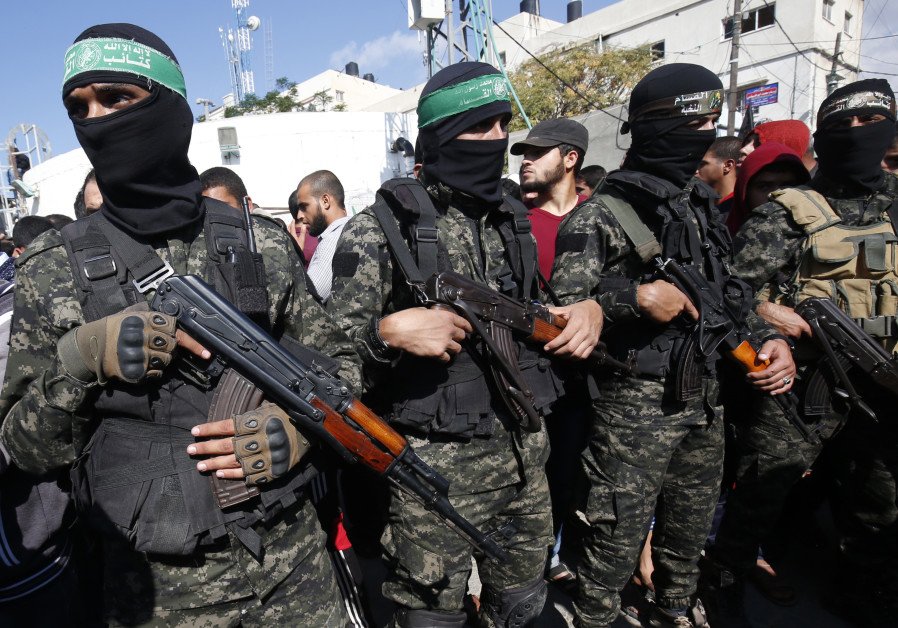
Palestinian militants of the Islamist movement Hamas' military wing Al-Qassam Brigades

The first thing we learned about Hamas is that its control over Gaza is all encompassing.

This week, the media published the communications between Hamas forces during their battle with IDF Special Forces in Gaza on November 11. From those communications we learned that Hamas forces detected the vehicle carrying the Israeli forces very quickly. While they didn’t know who was in the vehicle, they knew the vehicle was suspicious and dispatched a force to intercept it.

Hamas’s ability to detect the vehicle and act swiftly to intercept it demonstrated the terror regime’s ability to use both technological and physical assets to maintain its control over Gaza in a manner reminiscent of the Stasi in East Germany.

THE ALMOST-WAR with Hamas last week also taught us that contrary to the longstanding assessment of the IDF’s General Staff, Hamas is not at all interested in reaching a long-term ceasefire with Israel and therefore there is no point in trying to negotiate one.

For the past several months, various experts inside the Israeli government and military and in foreign countries have claimed that Hamas’s leadership in Gaza is split between two factions.

The first faction, led by Hamas Secretary General Ismail Haniyeh, works with Iran and Qatar to scuttle all efforts to reach a long-term ceasefire between Hamas and Israel. The second ostensible faction in this ostensible rivalry is led by Hamas terror boss Yahya Sinwar. The Sinwar faction, so the thinking goes, while dedicated to fighting Israel until it is destroyed, believes that the most urgent order of business is solving Gaza’s humanitarian crisis. Based on this assessment, Israel opted to permit Qatar to supply Gaza with gas to fuel its power stations and cash to fill its pockets. The day before Hamas’s largest rocket and mortar onslaught against southern Israel ever, Israel permitted Qatar to transfer $15 million in cash to Hamas.

The fact that right after receiving the cash Sinwar turned around and ordered the rocket assault on Israel shows that his purported interest in a long-term ceasefire with Israel, and the alleged breach between Haniyeh on the one hand and Sinwar on the other was a ruse. He didn’t want a ceasefire. He wanted to fight under optimal conditions – with the power plant purring, his pockets full of cash and his public ecstatic at his great success in bamboozling the bumbling Jews.

THE THIRD THING we learned about Hamas last week is that it is in the process of swallowing the PLO. Pinchas Inbari from the Jerusalem Center for Public Affairs reported that Hamas brought two PLO factions – the Popular Front for the Liberation of Palestine and the Democratic Front for the Liberation of Palestine – into its war room in Gaza. Both the PFLP and the DFLP have been outspoken in their condemnations of the main PLO faction Fatah and Fatah’s leader Mahmoud Abbas for his refusal to supply Hamas-controlled Gaza with money and electricity. By allowing them a seat at the table in its war room, Hamas is effectively replacing Fatah as the PLO ruling faction.

Last month, in the lead up to the PLO’s Palestinian National Council meeting in Ramallah, Abbas was threatening to stiffen his sanctions against Hamas. But Inbari revealed that ahead of the PNC meeting which took place three weeks ago, Fatah Tanzim terrorists warned Abbas that if he ordered more sanctions against Hamas, Hamas would go to war against Fatah forces in Judea and Samaria.

Like his Tanzim terror operatives, Abbas recognized that Fatah will lose such a war. So he stood down.
Fatah would lose a war with Hamas because as Hamas gets stronger, Fatah is falling apart.

TODAY, Fatah and the PA are beset by three crises which, together and separately, ensure that it will soon implode.

First, it is in a leadership crisis. Abbas is 83 years old. He suffers from multiple medical problems which reportedly include prostate cancer and heart disease. While a number of Fatah officials jockey to replace him, none has the backing of a significant enough cross section of Palestinian power brokers and outside powers to succeed Abbas without a fight that will leave the PA/Fatah bloodied, hollowed out and discredited in the eyes of its public and its foreign stakeholders.

Abbas’s waning power manifests itself almost daily. On May 15, the day the American Embassy opened in Jerusalem, his PA had ordered Arab Jerusalemites to hold a general strike. As Inbari notes, the initiative was a complete flop. It went largely unnoticed only because Hamas staged a massive, violent riot against Israel along the border fence with Gaza that day which captured all of the media’s attention.

In the recent Jerusalem municipal elections, Arab Jerusalemites tried to defy the PA’s order to boycott the poll. Several attempted to stand for election. In the end, the PA was able to force the would-be candidates to opt out of the race and keep Jerusalem’s Arabs away from the polls. But this showed that the local Arab population’s defiance of the PA is rapidly growing.

Rather than disassociate from Israel, increasing numbers of Jerusalem Arabs are applying for Israeli citizenship.

THE SECOND CRISIS afflicting the PA is economic. The US suspension of budgetary assistance to the PA and financial support for UNRWA has caused significant harm to the Palestinian economy. And the public is revolting.

While all eyes were glued to Gaza and Hamas’s rocket onslaught against southern Israel last week, tens of thousands of Palestinians were demonstrating in Ramallah against the PA’s decision to nationalize private pensions and insurance policies. The mass protests have continued this week.

Shortly after the PA was established in Gaza in 1994, Israel handed over the pension funds it set up for local employees of the Civil Administration. In a matter of months, the PA emptied the accounts leaving the administration’s pensioners penniless. Palestinian residents of Judea and Samaria are uninterested in having that happen to their savings.

The PA’s demand that Palestinians end their economic cooperation with Israel and stop working for Israeli companies is similarly being met with derision and fury. Inbari reported that Sahar Saed, chairman of the board of commerce in Nablus, attacked Boycott, Divestment and Sanctions groups for calling for Palestinians to stop working for Israeli companies. Saad said that so long as there are no alternative job opportunities for the Palestinians, the BDS groups and the PA which backs them need to stop bothering Palestinian workers at Israeli-managed industrial parks in Judea and Samaria.

THE THIRD CRISIS which is destroying Fatah and its Palestinian Authority is the Arab world’s decision, for the first time in 70 years, to effectively abandon the Palestinian cause as a unifying force for the Arab world.

Some Arab leaders openly express a desire to move beyond the Palestinians and rejection of Israel and concentrate the efforts of the Arab League on unifying against Iran and Turkey.
Saudi Arabia, for its part, has begun directly undermining the basis of PLO power.

Riyadh recently announced it would stop accepting laissez passes from Arab Jerusalemites and instead will require them to use real passports. In response, Arab Jerusalemites are applying for Israeli citizenship.

Equally, if not more significantly, the Saudis have begun pressuring the Lebanese government to naturalize the Palestinians who have lived in Lebanon for 70 years in UN refugee camps.

Ahead of his address before the UN General Assembly in September, Abbas was unable to secure meetings with Arab leaders. The only leaders willing to meet with him were the Europeans who have replaced the Arabs as the main supporter of the PLO specifically and the Palestinians more generally.

Abbas was similarly blindsided by Prime Minister Binyamin Netanyahu’s visit to Oman, and Minister of Culture and Sports Miri Regev’s visit to Abu Dhabi for the world judo championships.

For their part, both the IDF General Staff and the government have shown little awareness or ability to deal coherently with the unfolding realities revealed in Hamas-ruled Gaza and in the Fatah-controlled PA.

AS FAR AS Hamas is concerned, its complete control over Gaza and its across-the-board rejection of any significant cessation of hostilities with Israel shows that the IDF’s longstanding assessments of Hamas have been wrong. The IDF General Staff’s insistence on appeasing Hamas to achieve a long-term ceasefire was justified on the basis of an incorrect reading of Hamas’s interests and goals. The government’s decision to agree to sue for a ceasefire was predicated on the General Staff’s failure to understand or reconcile with Hamas’s interests and goals.

And if the General Staff failed to understand Hamas’s intentions and so misinformed the government, the government and the IDF have together failed to deal competently with the PA’s rapidly encroaching collapse. This failure was exposed in part in a document authored by Col. Alon Mednes, who served until recently as Operations Officer of Central Command. Mednes’s letter on the state of Central Command was written in the summer and leaked to the media earlier this week. Among the many worrying assessments included in his letter, one related to Central Command’s continued role as military commander of Judea and Samaria is of particular significance in light of Fatah’s disintegration.

Mednes wrote, “When you’re here [in Judea and Samaria], you understand that without a narrative about our present governance here, which is reinforced from time to time, the Command is liable to become irrelevant.”

THE MAIN reason that Central Command doesn’t have a narrative is because its continued military rule makes no sense. Israel transferred governing power from the Military Government to the PA 22 years ago. Ever since, the Military Government has been limited to Area C. The overwhelming majority of the residents of Area C are not Palestinians but Israelis. In other words, for 22 years, the Military Government has governed Israeli citizens.

Clearly, the IDF has no ready narrative to explain this absurd state of affairs. The IDF has little to contribute as a governing authority to the daily lives of half a million Israelis. Even worse, its continued political power diminishes the IDF’s coherence as a fighting force while harming the civil rights of Israelis who live in the area.

Israelis are divided over whether the PA’s coming collapse is a good or bad thing. But regardless of its potential value, it will blow up in Israel’s face if the government doesn’t decide now how it wants to deal with a post-Fatah/PA Judea and Samaria .

We learned a lot about the Palestinians over the past few weeks. The most urgent order of business for the government and the IDF is to deal realistically with what we now know.
http://www.CarolineGlick.com


Column One: Hamas and Fatah unmasked 

Posted November 23, 2018 by Joseph Wouk
Categories: Uncategorized

Source: Column One: Hamas and Fatah unmasked – Opinion – Jerusalem Post

Abbas was similarly blindsided by Prime Minister Binyamin Netanyahu’s visit to Oman, and Minister of Culture and Sports Miri Regev’s visit to Abu Dhabi for the world judo championships.

BY CAROLINE B. GLICK
 NOVEMBER 22, 2018 21:45
Palestinian militants of the Islamist movement Hamas' military wing Al-Qassam Brigades

The recent almost-war with Hamas taught us a lot about the terror regime. It also taught us a lot about Hamas’s rival, Fatah, and the Palestinian Authority it controls in Ramallah. Israel’s most urgent task is to understand the implications of what we now know.

The first thing we learned about Hamas is that its control over Gaza is all encompassing.

This week, the media published the communications between Hamas forces during their battle with IDF Special Forces in Gaza on November 11. From those communications we learned that Hamas forces detected the vehicle carrying the Israeli forces very quickly. While they didn’t know who was in the vehicle, they knew the vehicle was suspicious and dispatched a force to intercept it.

Hamas’s ability to detect the vehicle and act swiftly to intercept it demonstrated the terror regime’s ability to use both technological and physical assets to maintain its control over Gaza in a manner reminiscent of the Stasi in East Germany.

THE ALMOST-WAR with Hamas last week also taught us that contrary to the longstanding assessment of the IDF’s General Staff, Hamas is not at all interested in reaching a long-term ceasefire with Israel and therefore there is no point in trying to negotiate one.

For the past several months, various experts inside the Israeli government and military and in foreign countries have claimed that Hamas’s leadership in Gaza is split between two factions.

The first faction, led by Hamas Secretary General Ismail Haniyeh, works with Iran and Qatar to scuttle all efforts to reach a long-term ceasefire between Hamas and Israel. The second ostensible faction in this ostensible rivalry is led by Hamas terror boss Yahya Sinwar. The Sinwar faction, so the thinking goes, while dedicated to fighting Israel until it is destroyed, believes that the most urgent order of business is solving Gaza’s humanitarian crisis. Based on this assessment, Israel opted to permit Qatar to supply Gaza with gas to fuel its power stations and cash to fill its pockets. The day before Hamas’s largest rocket and mortar onslaught against southern Israel ever, Israel permitted Qatar to transfer $15 million in cash to Hamas.

The fact that right after receiving the cash Sinwar turned around and ordered the rocket assault on Israel shows that his purported interest in a long-term ceasefire with Israel, and the alleged breach between Haniyeh on the one hand and Sinwar on the other was a ruse. He didn’t want a ceasefire. He wanted to fight under optimal conditions – with the power plant purring, his pockets full of cash and his public ecstatic at his great success in bamboozling the bumbling Jews.

THE THIRD THING we learned about Hamas last week is that it is in the process of swallowing the PLO. Pinchas Inbari from the Jerusalem Center for Public Affairs reported that Hamas brought two PLO factions – the Popular Front for the Liberation of Palestine and the Democratic Front for the Liberation of Palestine – into its war room in Gaza. Both the PFLP and the DFLP have been outspoken in their condemnations of the main PLO faction Fatah and Fatah’s leader Mahmoud Abbas for his refusal to supply Hamas-controlled Gaza with money and electricity. By allowing them a seat at the table in its war room, Hamas is effectively replacing Fatah as the PLO ruling faction.

Last month, in the lead up to the PLO’s Palestinian National Council meeting in Ramallah, Abbas was threatening to stiffen his sanctions against Hamas. But Inbari revealed that ahead of the PNC meeting which took place three weeks ago, Fatah Tanzim terrorists warned Abbas that if he ordered more sanctions against Hamas, Hamas would go to war against Fatah forces in Judea and Samaria.

Like his Tanzim terror operatives, Abbas recognized that Fatah will lose such a war. So he stood down.

Fatah would lose a war with Hamas because as Hamas gets stronger, Fatah is falling apart.

TODAY, Fatah and the PA are beset by three crises which, together and separately, ensure that it will soon implode.

First, it is in a leadership crisis. Abbas is 83 years old. He suffers from multiple medical problems which reportedly include prostate cancer and heart disease. While a number of Fatah officials jockey to replace him, none has the backing of a significant enough cross section of Palestinian power brokers and outside powers to succeed Abbas without a fight that will leave the PA/Fatah bloodied, hollowed out and discredited in the eyes of its public and its foreign stakeholders.

Abbas’s waning power manifests itself almost daily. On May 15, the day the American Embassy opened in Jerusalem, his PA had ordered Arab Jerusalemites to hold a general strike. As Inbari notes, the initiative was a complete flop. It went largely unnoticed only because Hamas staged a massive, violent riot against Israel along the border fence with Gaza that day which captured all of the media’s attention.

In the recent Jerusalem municipal elections, Arab Jerusalemites tried to defy the PA’s order to boycott the poll. Several attempted to stand for election. In the end, the PA was able to force the would-be candidates to opt out of the race and keep Jerusalem’s Arabs away from the polls. But this showed that the local Arab population’s defiance of the PA is rapidly growing.

Rather than disassociate from Israel, increasing numbers of Jerusalem Arabs are applying for Israeli citizenship.

THE SECOND CRISIS afflicting the PA is economic. The US suspension of budgetary assistance to the PA and financial support for UNRWA has caused significant harm to the Palestinian economy. And the public is revolting.

While all eyes were glued to Gaza and Hamas’s rocket onslaught against southern Israel last week, tens of thousands of Palestinians were demonstrating in Ramallah against the PA’s decision to nationalize private pensions and insurance policies. The mass protests have continued this week.

Shortly after the PA was established in Gaza in 1994, Israel handed over the pension funds it set up for local employees of the Civil Administration. In a matter of months, the PA emptied the accounts leaving the administration’s pensioners penniless. Palestinian residents of Judea and Samaria are uninterested in having that happen to their savings.

The PA’s demand that Palestinians end their economic cooperation with Israel and stop working for Israeli companies is similarly being met with derision and fury. Inbari reported that Sahar Saed, chairman of the board of commerce in Nablus, attacked Boycott, Divestment and Sanctions groups for calling for Palestinians to stop working for Israeli companies. Saad said that so long as there are no alternative job opportunities for the Palestinians, the BDS groups and the PA which backs them need to stop bothering Palestinian workers at Israeli-managed industrial parks in Judea and Samaria.

THE THIRD CRISIS which is destroying Fatah and its Palestinian Authority is the Arab world’s decision, for the first time in 70 years, to effectively abandon the Palestinian cause as a unifying force for the Arab world.

Some Arab leaders openly express a desire to move beyond the Palestinians and rejection of Israel and concentrate the efforts of the Arab League on unifying against Iran and Turkey.
Saudi Arabia, for its part, has begun directly undermining the basis of PLO power.

Riyadh recently announced it would stop accepting laissez passes from Arab Jerusalemites and instead will require them to use real passports. In response, Arab Jerusalemites are applying for Israeli citizenship.

Equally, if not more significantly, the Saudis have begun pressuring the Lebanese government to naturalize the Palestinians who have lived in Lebanon for 70 years in UN refugee camps.

Ahead of his address before the UN General Assembly in September, Abbas was unable to secure meetings with Arab leaders. The only leaders willing to meet with him were the Europeans who have replaced the Arabs as the main supporter of the PLO specifically and the Palestinians more generally.

Abbas was similarly blindsided by Prime Minister Binyamin Netanyahu’s visit to Oman, and Minister of Culture and Sports Miri Regev’s visit to Abu Dhabi for the world judo championships.

For their part, both the IDF General Staff and the government have shown little awareness or ability to deal coherently with the unfolding realities revealed in Hamas-ruled Gaza and in the Fatah-controlled PA.

AS FAR AS Hamas is concerned, its complete control over Gaza and its across-the-board rejection of any significant cessation of hostilities with Israel shows that the IDF’s longstanding assessments of Hamas have been wrong. The IDF General Staff’s insistence on appeasing Hamas to achieve a long-term ceasefire was justified on the basis of an incorrect reading of Hamas’s interests and goals. The government’s decision to agree to sue for a ceasefire was predicated on the General Staff’s failure to understand or reconcile with Hamas’s interests and goals.

And if the General Staff failed to understand Hamas’s intentions and so misinformed the government, the government and the IDF have together failed to deal competently with the PA’s rapidly encroaching collapse. This failure was exposed in part in a document authored by Col. Alon Mednes, who served until recently as Operations Officer of Central Command. Mednes’s letter on the state of Central Command was written in the summer and leaked to the media earlier this week. Among the many worrying assessments included in his letter, one related to Central Command’s continued role as military commander of Judea and Samaria is of particular significance in light of Fatah’s disintegration.

Mednes wrote, “When you’re here [in Judea and Samaria], you understand that without a narrative about our present governance here, which is reinforced from time to time, the Command is liable to become irrelevant.”

THE MAIN reason that Central Command doesn’t have a narrative is because its continued military rule makes no sense. Israel transferred governing power from the Military Government to the PA 22 years ago. Ever since, the Military Government has been limited to Area C. The overwhelming majority of the residents of Area C are not Palestinians but Israelis. In other words, for 22 years, the Military Government has governed Israeli citizens.

Clearly, the IDF has no ready narrative to explain this absurd state of affairs. The IDF has little to contribute as a governing authority to the daily lives of half a million Israelis. Even worse, its continued political power diminishes the IDF’s coherence as a fighting force while harming the civil rights of Israelis who live in the area.

Israelis are divided over whether the PA’s coming collapse is a good or bad thing. But regardless of its potential value, it will blow up in Israel’s face if the government doesn’t decide now how it wants to deal with a post-Fatah/PA Judea and Samaria .

We learned a lot about the Palestinians over the past few weeks. The most urgent order of business for the government and the IDF is to deal realistically with what we now know.
http://www.CarolineGlick.com


Trump: CIA ‘Didn’t Conclude’ Saudi Prince Ordered Killing | Time

Posted November 23, 2018 by Joseph Wouk
Categories: Uncategorized

Source: Trump: CIA ‘Didn’t Conclude’ Saudi Prince Ordered Killing | Time

President Donald Trump disputed that U.S. intelligence officials have definitively concluded that Saudi’s crown prince ordered the murder of U.S.-based columnist Jamal Khashoggi, while continuing to tout the importance of maintaining economic ties with the Kingdom.

A confidential Central Intelligence Agency report on Khashoggi’s death says Crown Prince Mohammed bin Salman “might have done it,” Trump said Thursday, referring to a demand that the journalist be killed. But the CIA “didn’t conclude” that the prince made the demand, the president told reporters during a press conference at his Mar-a-Lago resort in Florida.

“You can conclude maybe he did or maybe he didn’t,” Trump said about the CIA report. “Whether he did or whether he didn’t, he denies it vehemently.”

Several news organizations including the Washington Post and New York Times have reported that the CIA concluded the crown prince ordered Khashoggi’s assassination in Istanbul last month, contradicting the Saudi government’s claim he wasn’t involved. CIA officials have high confidence in their conclusion, which is based on multiple sources of intelligence, the Post reported Nov. 16.

“They did not come to a conclusion,” Trump said Thursday. “They have feelings certain ways.”

The president added that he didn’t know if anyone will ever be able to conclude that the crown prince demanded the murder.

Trump’s comments come after days of affirming his support for Saudi Arabia. Trump reiterated his backing Thursday, praising the country for being a strong ally, purchasing military equipment from U.S. companies, and keeping oil prices low.

“Do people really want me to give up hundreds of thousands of jobs?” Trump said. “Frankly if we went by this standard, we wouldn’t be able to have anybody as an ally, because look at what happens all over the world.”

Congressional leaders have been more skeptical of the crown prince’s denials. Senate Foreign Relations Committee Chairman Bob Corker and the panel’s ranking Democrat, Bob Menendez, invoked a human rights-related law on Tuesday to require a formal U.S. determination of whether the prince is responsible for Khashoggi’s murder. Such a determination could trigger additional sanctions.

“If you want to see a global depression all you have to do is lift the oil price $50 a barrel,” Trump said. “We want low oil prices and Saudi Arabia’s really done a good job.”


Trump: Israel would be in big trouble without Saudi Arabia 

Posted November 23, 2018 by Joseph Wouk
Categories: Uncategorized

Source: Trump: Israel would be in big trouble without Saudi Arabia | The Times of Israel

Defending stance on Khashoggi killing, US president suggests that without Washington’s ‘strong ally’ Riyadh, Israel would be forced ‘to leave’ region

US President Donald Trump on Thursday suggested that Israel would face major regional difficulties in the Middle East if it were not for the stabilizing presence of Saudi Arabia.

“Israel would be in big trouble without Saudi Arabia,” Trump told reporters after a Thanksgiving Day telephone call with members of the military from his Mar-a-Lago resort home in Florida.

The US president was asked to comment on reports that the CIA had concluded that Saudi Arabia’s Crown Prince Mohammad Bin Salman ordered the brutal murder of US-based Saudi journalist Jamal Khashoggi in the Saudi consulate in Istanbul in October.

“If you look at Israel, Israel would be in big trouble without Saudi Arabia,” Trump said. “So what does that mean, Israel is going to leave? You want Israel to leave? We have a very strong ally in Saudi Arabia.”

“The fact is that Saudi Arabia is tremendously helpful in the Middle East, if we didn’t have Saudi Arabia we wouldn’t have a big base, we wouldn’t have any reason probably…” Trump said, without finishing the sentence.

Critics in Congress and high-ranking officials in other countries have accused Trump of ignoring human rights and giving Saudi Arabia a pass for economic reasons, including its influence on the world oil market.

Noting that Saudi Arabia helps keep oil prices down, Trump on Thursday argued that almost no country is without its faults.

“If we go by a certain standard we won’t be able to have allies with almost any country,” he said.

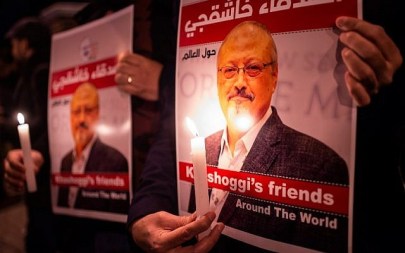
People hold posters picturing Saudi journalist Jamal Khashoggi and candles during a gathering outside the Saudi Arabia consulate in Istanbul, on October 25, 2018. (Yasin Akgul/AFP)

Citing vehement denials by the Saudi crown prince and king that they were involved in Khashoggi’s killing, which he termed “an atrocity,” Trump said, “maybe the world should be held accountable because the world is a vicious place. The world is a very, very vicious place.”

Trump said this week he would not impose harsher penalties on the crown prince over the death and dismemberment of Washington Post columnist Khashoggi.

On Tuesday, Trump also mentioned Israel in justifying why US-Saudi ties would not suffer over the Khashoggi scandal.

“The United States intends to remain a steadfast partner of Saudi Arabia to ensure the interests of our country, Israel, and all other partners in the region,” he said.

Earlier this month, in Israel’s first public comments on the murder of Khashoggi, Prime Minister Benjamin Netanyahu said that while the killing was “horrendous,” it was still necessary to preserve stability in the Arab kingdom.

Netanyahu’s comments came a day after the Washington Post reported that the Israeli leader had recently urged the White House to maintain its support for the crown prince amid growing criticism over the killing of Khashoggi. Netanyahu told Trump administration officials that the crown prince was a key strategic partner and a linchpin of the alliance against Iranian encroachment in the region, according to the Post.

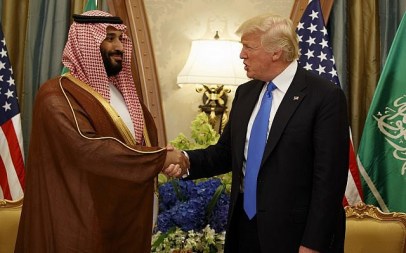
In this May 20, 2017, file photo, President Donald Trump shakes hands with Saudi Deputy Crown Prince and Defense Minister Mohammed bin Salman in Riyadh. (AP Photo/Evan Vucci)

Israel does not have diplomatic ties with Saudi Arabia although the two countries have found a common foe in Iran.

American intelligence agencies have concluded that the crown prince ordered the killing in the Saudi Consulate in Turkey, according to a US official familiar with the assessment. The official was not authorized to discuss the matter publicly and spoke on condition of anonymity.


US envoy: Iran has failed to declare all chemical weapons 

Posted November 23, 2018 by Joseph Wouk
Categories: Uncategorized

Source: US envoy: Iran has failed to declare all chemical weapons – Israel Hayom

U.S. is worried Iran is seeking “central nervous system-acting chemicals for offensive purposes,” Kenneth Ward tells Organisation for Prohibition of Chemical Weapons • Iran: Claims are groundless • Atomic agency: Iran meeting nuclear-related commitments.

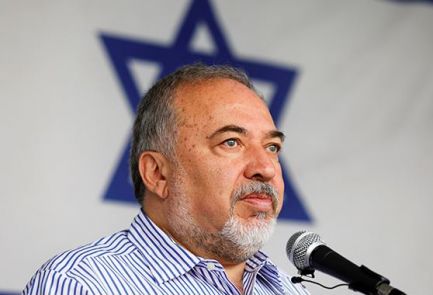
After quitting, Lieberman slams government ‘capitulation to Hamas’ 

Posted November 23, 2018 by Joseph Wouk
Categories: Uncategorized

Source: After quitting, Lieberman slams government ‘capitulation to Hamas’ – Israel Hayom


‘Pinpoint operations won’t work on Hamas’ 

Posted November 23, 2018 by Joseph Wouk
Categories: Uncategorized

Source: ‘Pinpoint operations won’t work on Hamas’ – Israel Hayom


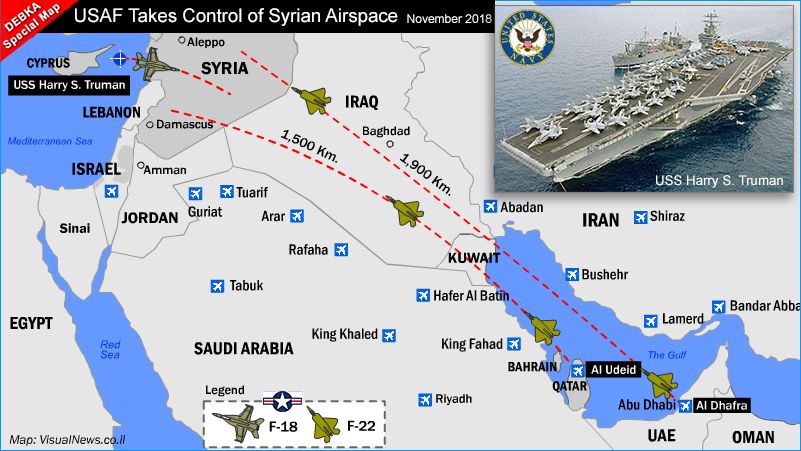
USAF takes control of Syrian skies. Unidentified air strike on Iranian target – DEBKAfile

Posted November 23, 2018 by Joseph Wouk
Categories: Uncategorized

Source: USAF takes control of Syrian skies. Unidentified air strike on Iranian target – DEBKAfile

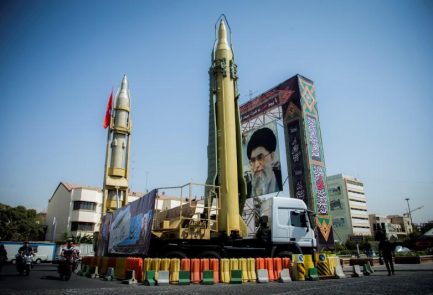
This new game changer in Syria, revealed here by DEBKAfile, provoked an exceptionally detailed threat from Tehran: “US bases in Afghanistan, the UAE and Qatar, and US aircraft carriers in the Gulf are within range of our missiles,” said Brig. Gen. Amirali Hajizadeh, head of the Iranian Revolutionary Guards’ airspace division, on Wednesday, Nov. 21.

“We can hit them if they (Americans) make a move. Our land-to-sea missiles have a range of 700 km (450 miles) … and the US aircraft carriers are our targets.” he said.

Iran’s airspace chief was responding to the abrupt change in the skies over Syria. For the past week, the: US Air Force has kept F-22 stealth planes and F/A 18F Super Hornet fighters flying over Syria around the clock. Gen. Hajizadeh knew exactly where they were coming from – the US Al Udeid Air Base in Qatar and the US Al Dhafra Air Base in the UAE. Why he slipped the Kandahar base into his list is a mystery because none of the USAF planes over Syria come from there. The USS Harry Truman Carrier Strike Group is another matter, since some of the US fighter bombers circling over Syria come from its decks. This five-ship strike group reached Syrian waters late last week. They also had cruise missiles aboard.

DEBKAfile’s military sources report that these US overflights are taking place without interruption: as one group flies back to base, another takes its place. Their constant presence in Syrian air space has chased all other warplanes, especially those of Russia and Syria, out of the sky. US pilots also report that the S-300 air defense systems, which the Russians began importing to Syria in October, are not operational and are unlikely to be before January.

This is what Pentagon spokesman Eric Pahon was talking about on Tuesday, Nov. 20, when he said: “Russia’s S-300 air defense systems in Syria have no impact on United States’ operations in the country.” He also aimed a warning at Moscow: “Any additional arms sent into Syria only serves to escalate the situation at this point.”

Is this a window of opportunity?

According to an exclusive report reaching our military sources, unidentified aircraft attacked an Iranian target in Syria on Monday, Nov. 19. This was not a major operation and the target was small. All the same, it was the second attack on an Iranian site in Syria since Israel discontinued its aerial attacks in the second half of September. The first, on Oct. 23, appears to have been carried out by unidentified missiles against the Damascus region.

After the air strike, Washington hastened to send out quiet messages that the USAF was not involved. However, so long as the Russian S-300s are non-operational and the US Air Force provides an umbrella, Israel is offered a window of opportunity for resuming its assaults on Iran’s presence in, and arms deliveries, to Syria. There is no knowing how long that window will stay open.


Iran says US bases, aircraft carriers within range of Iranian missiles 

Posted November 22, 2018 by Joseph Wouk
Categories: Uncategorized

Source: Iran says US bases, aircraft carriers within range of Iranian missiles – Israel Hayom


Off Topic: ‘European Jews pessimistic about their future,’ Jewish leader says 

Posted November 22, 2018 by Joseph Wouk
Categories: Uncategorized

Source: ‘European Jews pessimistic about their future,’ Jewish leader says – Israel Hayom