Citing heavy cost of war, PM defends choice not to strike Hamas in Gaza

Posted November 27, 2018 by Joseph Wouk
Categories: Uncategorized

Source: Citing heavy cost of war, PM defends choice not to strike Hamas in Gaza | The Times of Israel

Meeting with new Israel Defense Forces recruits amid criticism for accepting ceasefire, Netanyahu says there are no ‘free’ military campaigns

Prime Minister Benjamin Netanyahu speaks to a group of new recruits at the army's Tel HaShomer induction center outside of Tel Aviv on November 26, 2018. (Ariel Hermoni/Defense Ministry)

Prime Minister Benjamin Netanyahu speaks to a group of new recruits at the army’s Tel HaShomer induction center outside of Tel Aviv on November 26, 2018. (Ariel Hermoni/Defense Ministry)

Prime Minister Benjamin Netanyahu on Monday defended his decision not to launch a large-scale military campaign in the Gaza Strip in response to a massive barrage of rocket and mortar attacks earlier this month, saying that doing so would be too costly for the country.

The prime minister, who also serves as defense, foreign, health and absorption ministers, made his remarks to a group of new recruits to the Israel Defense Forces at the military’s main induction center, Tel Hashomer base, near Tel Aviv.

“As prime minister, what preoccupies me is the fact that I know there’s no ‘free’ wars or ‘free’ casualties. There’s always a price to pay, and the price is very high, and I always thinks about this price,” he said.

The prime minister faced harsh criticism for the government’s decision not to launch a larger military campaign in the Gaza Strip after terrorist groups in the coastal enclave fired some 500 rockets and mortar shells at nearby Israel cities and towns, killing one person and injuring scores more.

In response, the Israeli military bombed some 160 targets connected to the Hamas and Palestinian Islamic Jihad terror groups, killing seven people, most of whom were later identified as members of terrorist groups, some in the process of launching projectiles at Israel at the time they were killed.
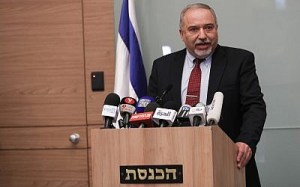
Avigdor Liberman announces his resignation from the defense portfolio during a Jerusalem press conference, November 14, 2018. (Yonatan Sindel/Flash90)

Then-defense minister Avigdor Liberman resigned a day after a de facto cease-fire went into effect, specifically citing the government’s policies toward Gaza and its Islamist rulers — Hamas — as the reason.

Prior to this month’s flareup, Netanyahu told reporters that he saw another war in the Gaza Strip — what would be the fourth in 10 years — as unnecessary and that he preferred reaching a long-term cease-fire agreement with Hamas.

However, speaking to new recruits for the Israel Defense Forces’ Armored Corps, the prime minister stressed that Israel also had to be prepared to attack.

“When a war is unpreventable, we will use all of our force and all of our power and do so in the best way possible,” Netanyahu said. “We know that the ultimate goal of the military is first and foremost to defend our country and if we are required to do so — to win in war,” he continued. “Ultimately, you win not just by defense, but rather we win by attacking.”
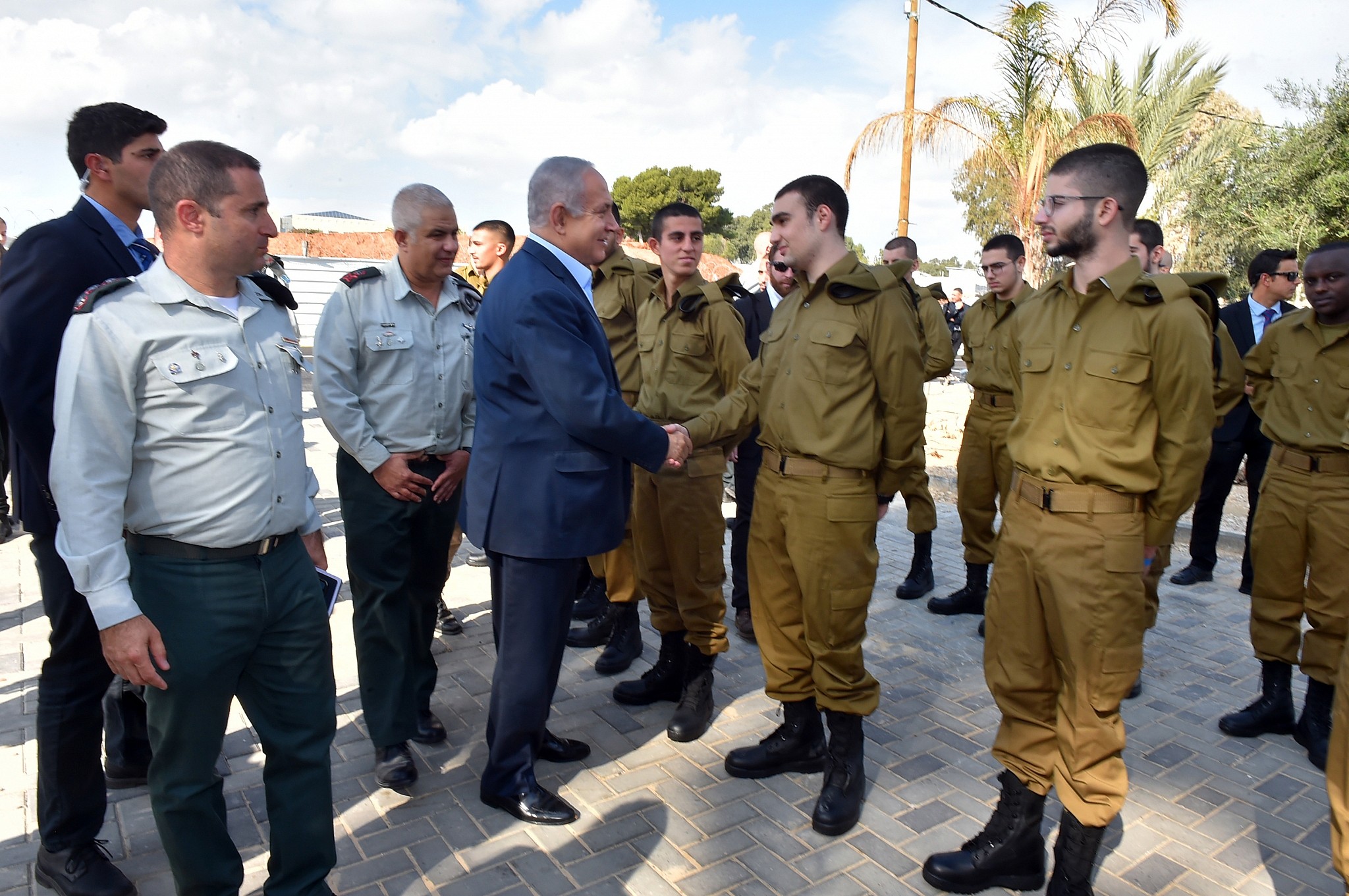
Prime Minister Benjamin Netanyahu meets a group of new recruits at the army’s Tel Hashomer induction center near Tel Aviv, November 26, 2018. (Ariel Hermoni/Defense Ministry)

As of Monday, the de facto cease-fire reached on November 13 appeared to be holding, with only comparatively small-scale violent incidents occurring along the border.

The Egyptian military, as well as the United Nations and Qatar, has played a key role in these negotiations.
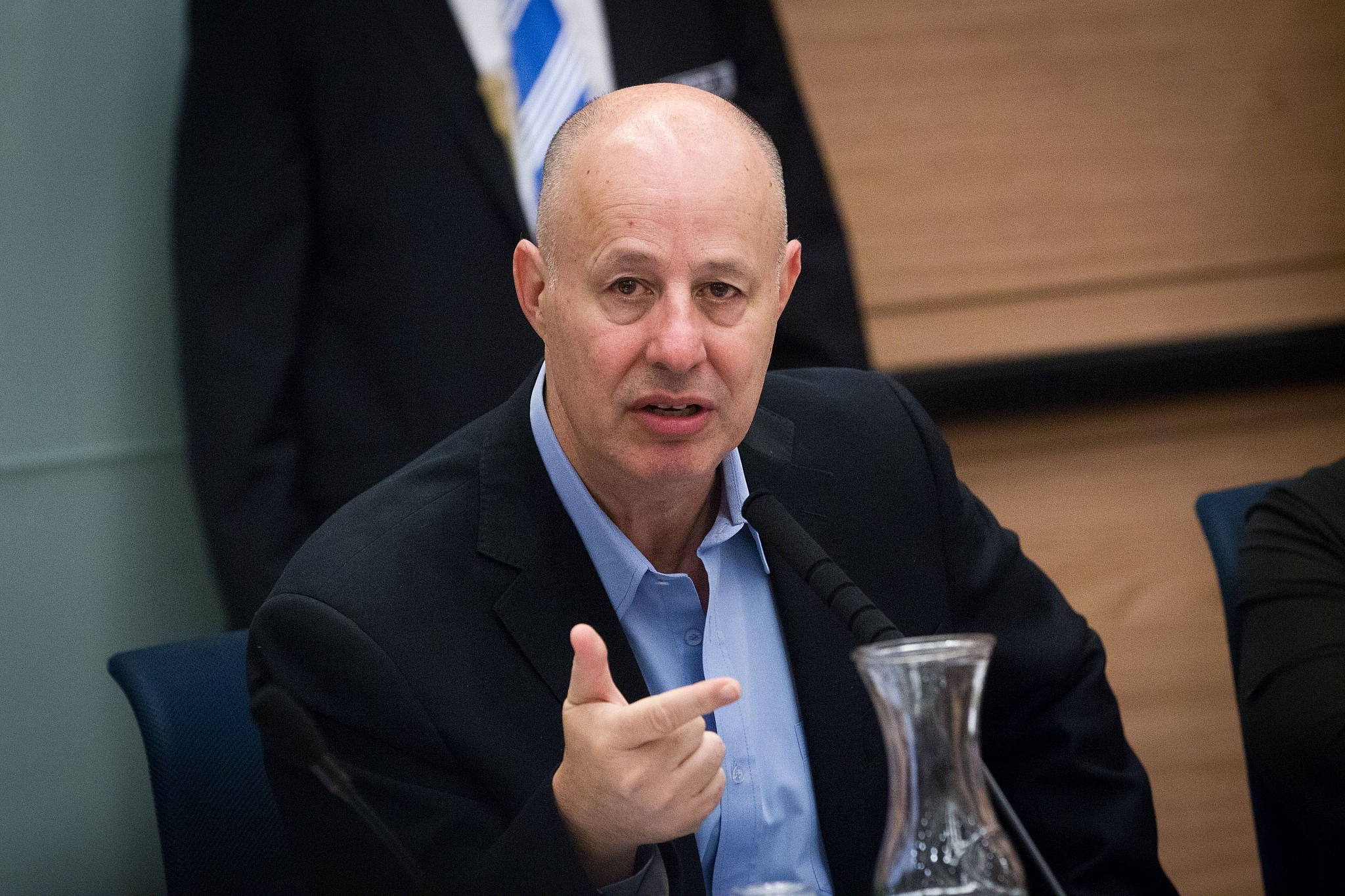
Likud MK Tzachi Hanegbi at a meeting of the Defense and Foreign Affairs Committee in the Knesset. November 19, 2015. (Miriam Alster/Flash90)

Netanyahu’s Likud ministerial colleague, Tzachi Hanegbi, indicated last week that a major offensive in Gaza would cost 500 soldiers’ lives.

When it was put to him, in an Army Radio interview, that one Hamas rocket hit an empty kindergarten, Hanegbi replied: “The empty kindergarten — that’s always talked about. But those 500 coffins — of the Israeli youths that would come back if we sent them into [Gaza’s] Jabalaya [refugee camp] — would not be empty.”
 

PM: Israel improving ties around world without having to concede settlements

Posted November 27, 2018 by Joseph Wouk
Categories: Uncategorized

Source: PM: Israel improving ties around world without having to concede settlements | The Times of Israel

Amid visits of friendly leaders and reports of new diplomatic channels with Arab countries, Netanyahu says country’s strength means deal with Palestinians no longer prerequisite

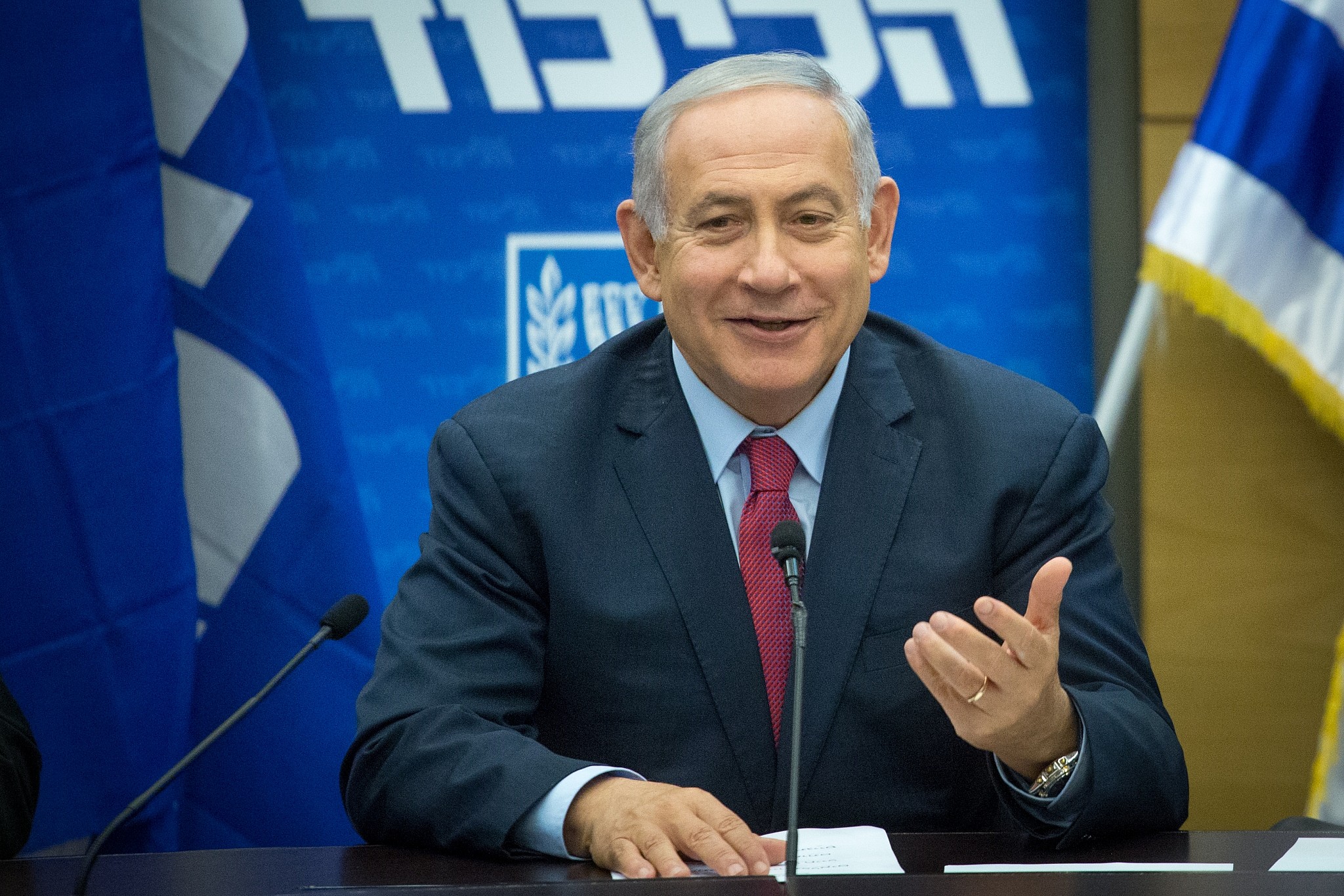
Prime Minister Benjamin Netanyahu leads a Likud faction meeting in the Israeli parliament on November 26, 2018. (Miriam Alster/Flash90)

Prime Minister Benjamin Netanyahu on Monday said recent signs of a diplomatic flourishing for Israel were occurring without Jerusalem having to make any concessions on West Bank settlements, as he celebrated the visit of Chad’s leader after decades of ruptured ties.

Israel has also recently ramped up contacts with a number of Arab countries that, until recently, had shunned any appearance of even informal ties with the Jewish state. Reports Sunday indicated Israel was working toward establishing diplomatic channels with Sudan and Bahrain.

Most Arab countries insist Israel must reach a peace deal with the Palestinians before any normalization can take place. But in recent years attitudes in some parts of the region have seemingly shifted, and Netanyahu said Israel was forging ahead with the ties despite West Bank settlements continuing to grow and peace talks being stagnant.

“We are opening up the world,” he told his Likud faction in public remarks Monday. “Israel is enjoying unprecedented diplomatic flourishing, including in the Arab world… and the Muslim world.”

View of the Israeli settlement of Ma’ale Hever, in the Har Hebron Regional Council, April 19, 2015. (Nati Shohat/Flash90)

Netanyahu stressed that previous leaders had attempted to strengthen Israel’s international standing with “dangerous concessions, including uprooting communities,” referring to the 2005 disengagement plan by former prime minister Ariel Sharon, in which all settlements in the Gaza Strip were dismantled.

“That hasn’t happened — and won’t happen — with me,” Netanyahu continued. “The exact opposite is happening. We are getting the world’s support, including by many in the Arab world, through our strong and steadfast standing.

“We believe in peace out of strength, we believe in alliances born out of Israel’s value as a technological, financial, defense and intelligence powerhouse,” he added. “That’s what we will continue doing, and that’s also how we’ll achieve peace.”

Netanyahu opened his public remarks by hailing visiting Czech President Milos Zeman, for pledging to move his country’s embassy to Jerusalem; and Chadian President Idriss Déby, who, on Sunday, told Israeli leaders in Jerusalem that he wishes to restore diplomatic relations.

The premier said that Déby had invited him to visit Chad and that he had “happily” accepted the invitation.

Déby’s historic visit is part of a campaign to lay the groundwork for normalizing ties with the Muslim-majority countries of Sudan, Mali and Niger, according to a report on Israel’s Channel 10 News Sunday.

Other reports said Israel was also working to normalize relations with Bahrain, as Jerusalem ramps up its drive to forge more open relations with the Arab world amid shifting alliances in the Middle East driven by shared concerns over Iran.

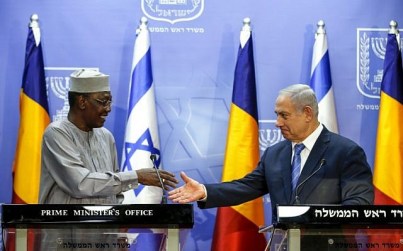
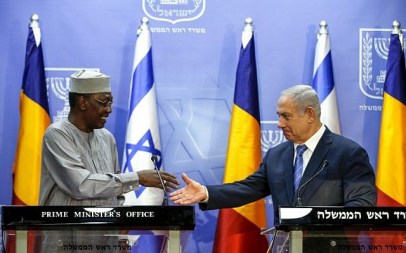
Prime Minister Benjamin Netanyahu (right) prepares to shake hands with Chadian President Idriss Déby as they deliver joint statements in Jerusalem, November 25, 2018. (Ronen Zvulun/Pool/AFP)

Netanyahu has for years spoken about the warming of ties between Israel and the Arab world, citing not only Iran as a common enemy, but also many countries’ interest in cooperating with Israel on security and defense matters, as well as Israel’s growing high-tech industry.

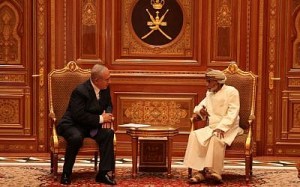
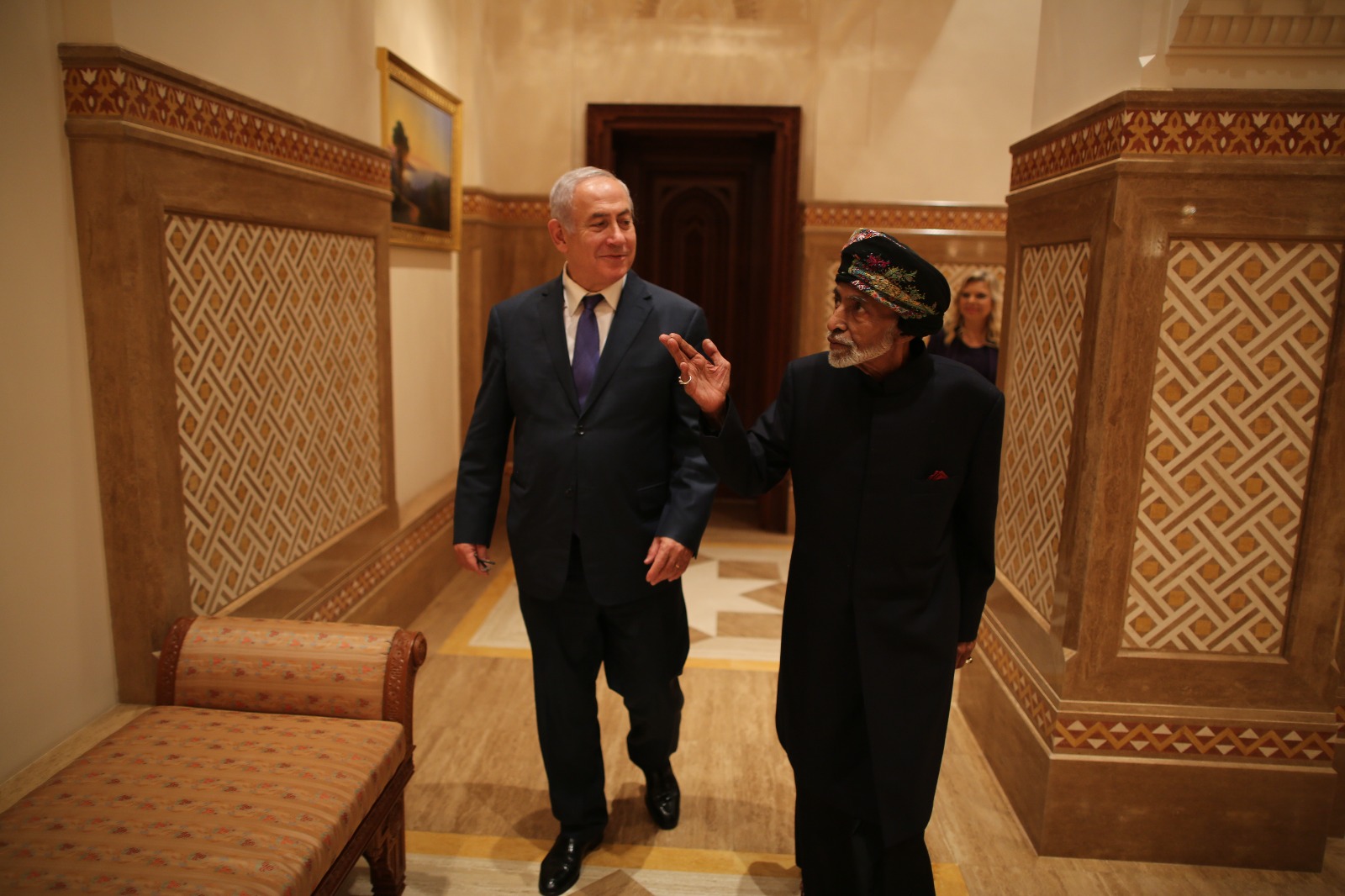
Prime Minister Benjamin Netanyahu (left) talks with Sultan Qaboos bin Said in Oman, October 26, 2018. (Courtesy)

Oman last month welcomed the Israeli premier in a surprise visit, an apparent sign of Israeli progress in improving ties with the Gulf states.

At a security conference in Bahrain following the visit, Omani foreign minister also offered rare words of support for the Jewish state.

“Israel is a state present in the region, and we all understand this. The world is also aware of this fact, and maybe it is time for Israel to be treated the same and also bear the same obligations,” Yussef bin Alawi bin Abdullah said, according to Reuters.

During a press conference with Déby on Sunday, Netanyahu remarked that “there will be more such visits in Arab countries very soon,” without providing details.

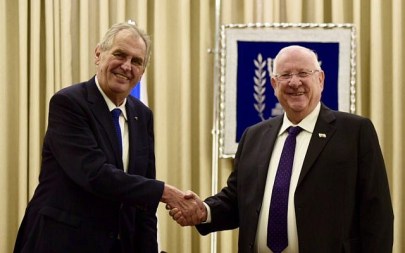
President Reuven Rivlin (right) meets with his Czech counterpart, Milos Zeman, in Jerusalem, November 26, 2018. (Czech Presidency/Twitter)

Earlier Monday, during his visit to Israel, Czech President Zeman expressed skepticism over the possibility of a two-state solution. He told President Reuven Rivlin he was interested in learning more about alternative approaches to solving the Israeli-Palestinian conflict.

Zeman, an outspoken supporter of Israel, arrived on Sunday evening for a three-day state visit, during which he will inaugurate the so-called “Czech House” in Jerusalem, an office space billed by Prague as a “first step” toward moving the country’s embassy to the city.

In April, Zeman announced the beginning of a process that will move the country’s diplomatic mission from Tel Aviv to Jerusalem, though it remains unclear if and when Prague will actually open an embassy in the holy city.

Raphael Ahren and Times of Israel staff contributed to this report.


Palestinians said scrambling for support as Arab, Muslim world warms to Israel

Posted November 27, 2018 by Joseph Wouk
Categories: Uncategorized

Source: Palestinians said scrambling for support as Arab, Muslim world warms to Israel | The Times of Israel

PA seeks emergency sessions of Arab League and Organization of Islamic Cooperation as Chad’s president visits Jerusalem amid thawing of relations with Bahrain and Saudi Arabia

Prime Minister Benjamin Netanyahu (left) with Sultan Qaboos bin Said of Oman on October 26, 2018 (Courtesy)

Israel’s ongoing thawing of relations with various Arab and Muslim countries in the Middle East and Africa is said to be sending Palestinian Authority officials scrambling, concerned that support for their cause is waning among allies.

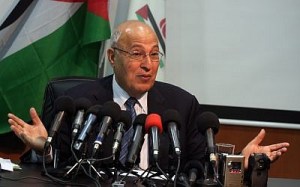
PA President Mahmoud Abbas’s senior adviser Nabil Shaath told the Haaretz daily Monday that Ramallah is seeking to convene emergency sessions of the Arab League and Organization of Islamic Cooperation as it worries that countries such as Chad, Sudan, Bahrain, Oman and Saudi Arabia are moving closer toward normalization with Jerusalem — relations that would counter resolutions passed by the two umbrella bodies.

“There are a number of Arab and Islamic resolutions and declarations stating explicitly that there will be no process of normalization with Israel without a resolution of the Palestinian issue based on the Arab Peace Initiative and decisions of the international community,” Sha’ath told Haaretz.

At the most recent summit of the Arab League in April, member countries signed off on a statement vowing not to make reconciliation agreements without an agreed-upon solution to the Palestinian issue.

Nabil Shaath speaks to reporters in the West Bank city of Ramallah, October 1, 2011. (Issam Rimawi/Flash 90)

“What we have been seeing in recent weeks — beginning with Netanyahu’s visit to Oman and the visit to Israel by the president of Chad, and now there is talk of Bahrain and Sudan and ties of one kind or another with Saudi Arabia — raises question marks, and there is therefore a need to clarify the Arab and Islamic position,” Shaath said.

On Sunday, Prime Minister Benjamin Netanyahu welcomed Chadian President Idriss Déby for a historic visit to the Jewish state, laying the groundwork for normalizing ties with the Muslim-majority countries of Sudan, Mali and Niger, according to a report on Israel’s Channel 10 News Sunday.

Déby told Israeli leaders in Jerusalem that he wishes to restore diplomatic relations.

Other reports said Israel is also working to normalize relations with Bahrain, as Jerusalem ramps up its drive to forge more open relations with the Arab world amid shifting alliances in the Middle East driven by shared concerns over Iran.

Netanyahu has for years spoken about the warming of ties between Israel and the Arab world, citing not only Iran as a common enemy, but also many countries’ interest in cooperating with Israel on security and defense matters, as well as Israel’s growing high-tech industry.

Oman last month welcomed the Israeli premier in a surprise visit, which marked an apparent sign of Israeli progress in improving ties with the Gulf states.

Prime Minister Benjamin Netanyahu (R) prepares to shake hands with Chadian President Idriss Déby as they deliver joint statements in Jerusalem November 25, 2018. (RONEN ZVULUN / POOL / AFP)

During a press conference with Déby on Sunday, Netanyahu remarked that “there will be more such visits in Arab countries very soon,” without providing details.

Netanyahu said Monday that recent signs of a diplomatic flourishing for Israel were occurring without Jerusalem having to make any concessions on West Bank settlements.

“We are opening up the world,” he told his Likud faction in public remarks Monday. “Israel is enjoying unprecedented diplomatic flourishing, including in the Arab world… and the Muslim world.”

Netanyahu stressed that previous leaders had attempted to strengthen Israel’s international standing with “dangerous concessions, including uprooting communities,” referring to the 2005 disengagement plan by former prime minister Ariel Sharon, in which all settlements in the Gaza Strip were dismantled.

“That hasn’t happened — and won’t happen — with me,” Netanyahu continued. “The exact opposite is happening. We are getting the world’s support, including by many in the Arab world, through our strong and steadfast standing.

“We believe in peace out of strength, we believe in alliances born out of Israel’s value as a technological, financial, defense and intelligence powerhouse,” he added. “That’s what we will continue doing, and that’s also how we’ll achieve peace.”

While Shaath noted that the thawing of Israel’s relations with Ramallah’s traditional backers has yet to reach the level of full diplomatic relations, he referred to “the beginning of a worrisome process that needs to be stopped.”

Shaath argued that these regional developments come against the backdrop of the Trump administration’s ongoing rift with the PA, which the PA claims Washington seeks to further isolate by encouraging various Arab and Muslim countries to improve their ties with Israel. The PA has been boycotting the Trump Administration since it recognized Jerusalem as Israel’s capital last year and moved its embassy to the city in May.

The PA official said he hopes to convene emergency conferences on these issues, but admitted that most of the efforts of regional powers are being used to deal with the issue of reconciliation between Abbas’s Fatah and the Hamas terror group in Gaza, which have long been at odds.


Lebanese report: Hamas agrees to cede control of Gaza, demands unity government 

Posted November 27, 2018 by Joseph Wouk
Categories: Uncategorized

Source: Lebanese report: Hamas agrees to cede control of Gaza, demands unity government | The Times of Israel

Paper with Hezbollah ties says terror group is prepared to implement reconciliation deal brokered by Egypt last year, in exchange for sanctions lift, new general election

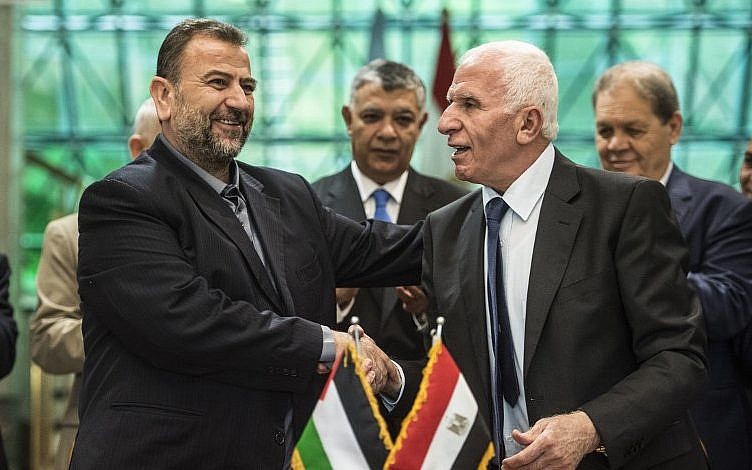
Fatah's Azzam al-Ahmad, right, and Saleh al-Arouri, left, of Hamas shake hands after signing a reconciliation deal in Cairo on October 12, 2017, as the two rival Palestinian movements ostensibly ended their decade-long split following negotiations overseen by Egypt. (AFP/Khaled Desouki)

Fatah’s Azzam al-Ahmad, right, and Saleh al-Arouri, left, of Hamas shake hands after signing a reconciliation deal in Cairo on October 12, 2017, as the two rival Palestinian movements ostensibly ended their decade-long split following negotiations overseen by Egypt. (AFP/Khaled Desouki)

The Hamas terrorist group has agreed to implement a reconciliation agreement with the Palestinian Authority that would see the rulers of the Gaza Strip return control of the territory to its West Bank rivals, the Lebanese al-Mayadeen outlet reported Tuesday.

Sources close to Hamas told the Hezbollah-affiliated newspaper the group would implement the agreement brokered by Egypt last year on the condition that civil servants in Gaza be paid their salaries and all PA sanctions be removed.

The report said Hamas is demanding that a Palestinian unity government be formed within 45 days, and called for general elections to be held within six months.

The sources said Hamas officials made the offer to Egyptian officials during a recent visit to Cairo.

Egypt has been working to revive the reconciliation process between Hamas and Fatah, meeting with leaders from the rival parties for separate talks in recent months.

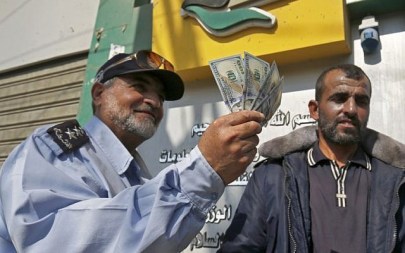
A Palestinian man shows his money after receiving his salary in Rafah in the southern Gaza Strip November 9, 2018. (Photo by SAID KHATIB / AFP)

In October 2017, Hamas and Fatah signed an Egyptian-brokered deal to bring the West Bank and Gaza under one Palestinian government, but they failed to implement it. Disputes over civil services and the fate of Hamas’s 25,000-strong military wing have remained thorny issues between the sides.

Hamas has controlled Gaza since ousting the Fatah-dominated Palestinian Authority from the territory in 2007.

Last year, Palestinian Authority President Mahmoud Abbas vowed to take “painful and unprecedented” measures against Hamas to force the terror group to dismantle its de facto government and cede power back to his Western-backed PA.

Abbas’s threat was followed up by a series of sanctions that included drastic cuts in the salaries of PA employees in the Gaza Strip, the suspension of social assistance to hundreds of families, and the forced retirement of thousands of civil servants. In addition, the PA stopped paying Israel for electricity and fuel supplies to the coastal enclave.

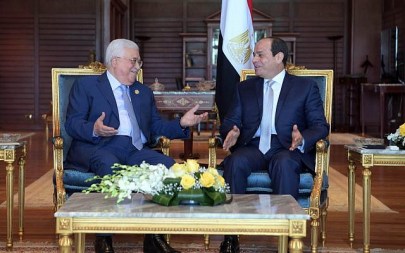
Palestinian Authority President Mahmoud Abbas and Egyptian President Abdel Fattah el-Sissi meeting in Sharm al-Sheikh on November 3, 2018. (Wafa)

Hamas had hoped Abbas would lift the sanctions after signing the reconciliation agreement in Cairo last year, but since then, a number of deadlines for the transfer of power were missed, and the PA sanctions on Gaza have remained.

Earlier this month, Qatar began paying the salaries of Palestinian civil servants in Gaza in a bid to ease tensions in and around the impoverished territory. A total of $90 million is to be distributed in six monthly installments of $15 million, according to authorities, primarily to cover salaries of officials working for Hamas.

The Israeli-authorized money transfer appeared to be part of a deal that would see cash-strapped Hamas end months of often violent protests along the border, in exchange for Israel easing parts of its blockade of Gaza.

But days after the first cash Qatari transfer was made, one of the biggest flare-ups in violence erupted in and around Gaza, when over 460 rockets and mortar shells were fired at southern Israel.

Palestinians wave the national flag during a demonstration in Gaza City on December 3, 2017, in support of the reconciliation talks between Hamas and Fatah. (AFP/Mohammed Abed)

The Iron Dome missile defense system intercepted over 100 of them. Most of the rest landed in open fields, but dozens landed inside Israeli cities and towns, killing one person, injuring dozens and causing significant property damage. Israel responded with extensive airstrikes in the Strip before calm returned.

Deadly clashes have accompanied the major protests along the Gaza border with Israel that began on March 30. Israel has accused Hamas of leading the protests and using them as cover to carry out attacks against troops stationed at the border.


Demise of Iran nuclear deal will yield unpredictable consequences, Iran official warns 

Posted November 27, 2018 by Joseph Wouk
Categories: Uncategorized

Source: Demise of Iran nuclear deal will yield unpredictable consequences, Iran official warns – Israel Hayom


Iran trains squads for terrorizing US forces in Syria. US air/naval buildup for striking back – DEBKAfile

Posted November 27, 2018 by Joseph Wouk
Categories: Uncategorized

Source: Iran trains squads for terrorizing US forces in Syria. US air/naval buildup for striking back – DEBKAfile

Iran’s proxy militias in Syria are being trained and armed for terrorizing US forces in eastern Syria, starting with IEDs like the bombs that bedeviled American forces in Iraq in 2004-2006. 

The mastermind of this campaign is Iran’s Mid East commander, Al Qods chief Gen. Qassem Soleimani. DEBKAfile’s military and intelligence sources report that US commanders in Syria were forewarned of the coming campaign after it was approved by Tehran as retaliation for the sanctions re-imposed by the Trump administration.

They learned that terror squads, detached from the Iraqi and Afghan militias encamped in the eastern Syrian Deir ez-Zour province, had in the last few days completed their specialist training by Al Qods and Hizballah bomb experts. They were taught how to blow up American military installations, bridges and transportation routes and how to plant IEDs outside buildings and on the roads frequented by US military traffic.

The American commanders were also apprised by intelligence informants that Iran was sending large quantities of IEDs via Iraq for the use of the newly-trained terror squads. They are a new type of device, compared to the IEDs used in Iraq, with a more powerful bang and the capacity to disable the armored vehicles used by US forces in eastern Syria.

The US army, for its part, is reported by our sources to have rushed another 500 Marines to the big Al Tanf garrison, which straddles the borders of Syria, Jordan and Iraq, for boosting the security of US troops in the region. They are augmented by 1,700 members of the Syrian Democratic Force (SDF) which operates under US command.

It is estimated that Al Tanf will be the first target of attack as soon as Tehran gives the green light for the campaign to start, because it is set in desert terrain where terrorist squads can move at speed. If Iran pulls this initial operation off, it will be extended to other US military locations – in all, at least 12 ground bases and another four air bases in northeastern Syria. They range from Manbij up near the Turkish border up to Al-Hasakeh, the hub of the pro-American Kurdish YPG militia’s political and command headquarters in northern Syria.

In the second half of the month, the United States launched a large-scale air and naval exercise based on the USS Harry S. Truman Carrier and its strike group of five warships, which are present opposite the Syrian shore, as well as US air bases in the Persian Gulf. (See an earlier DEBKAfile article on US flights around the clock over Syria.) British, Israeli and French air contingents have joined the exercise. The French Dupuy de Lome spy ship has also reached Syrian waters and is coordinating its operations with the USS Truman.

Our military sources say that by these moves, Washington is notifying Tehran that the moment US forces come under attack in Syria, America and its allies will strike back at the foundations of the Iranian presence in Syria.


Air Force bolsters stealth power as more F-35I fighter jets land in Israe 

Posted November 26, 2018 by Joseph Wouk
Categories: Uncategorized

Source: Air Force bolsters stealth power as more F-35I fighter jets land in Israe – Israel News – Jerusalem Post

Israel now has 14 of the world’s most advanced stealth fighter jet.

BY ANNA AHRONHEIM
 NOVEMBER 26, 2018 11:36
An F-35i Adir jet in Nevatim base, southeast of Beersheba

The Israel Air Force received another two F-35i “Adir” stealth fighter jets on Sunday, bringing the total number of advanced jets in the Golden Eagle Squadron to 14.

The pair of fifth-generation jets landed at the IAF’s Nevatim Airbase, southeast of Beersheba.

Israel received its first two Adir fighter jets from the United States in December 2016.T he aircraft were declared operational approximately a year later making the IAF the only air force in the Middle East to have the stealth fighter jets battle-ready.

In mid-November, the US Air Force held its F-35 UGWG (Users Group Working Group) in Israel, a conference for countries flying the advanced jet that was founded by the commander of the United States Air Forces in Europe – Air Forces Africa.

Delegates from Israel and various European countries including Britain, the Netherlands and others participated in the second annual conference.

“The purpose of the conference was to create a community of users and a common language between the countries that are receiving the F-35,” the IDF said in a statement. “During the conference a shared dialogue developed regarding operating procedures. The IAF participated in the conference as a part of the cooperation with the USAFE and in order to enrich its knowledge in the deployment of its air power.”

In May, IAF Commander Maj.-Gen. Amikam Norkin announced that the IAF had used the F-35i Adir in combat operations for the first time, making the IAF the world’s first air force in the world to have used the jet in such a capacity.

According to Norkin, who made the announcement while showing a picture of the jet over the Lebanese capital of Beirut, the jets flew on two missions on different fronts in the Middle East.

The Lockheed Martin-built F35s are being purchased as part of the military aid agreement between the US and Israel.
The IAF is reportedly leaning toward purchasing an additional 15 F-35 stealth fighters to make a third stealth squadron, bringing the total number of jets to 75 instead of 50.

The IAF is expected to soon place orders on several new aircraft to upgrade its ageing squadrons in order to stay ahead of regional changes and increased threats in the region.

The deal, which according to some reports is worth a combined $11 billion, would include a fleet of F-15 IA (an acronym for Israel Advanced) fighter jets, Chinook transport helicopters, V-22 tiltrotor aircraft and KC-46 aerial refueling tankers.


EU condemns Iranian president for labeling Israel a ‘cancerous tumor’ 

Posted November 26, 2018 by Joseph Wouk
Categories: Uncategorized

Source: EU condemns Iranian president for labeling Israel a ‘cancerous tumor’ – Israel Hayom


Minister: If Hezbollah attacks, Israel will hit hard in Lebanon 

Posted November 26, 2018 by Joseph Wouk
Categories: Uncategorized

Source: Minister: If Hezbollah attacks, Israel will hit hard in Lebanon – Israel Hayom


Revealed: Israel close to forging diplomatic ties with Bahrain 

Posted November 26, 2018 by Joseph Wouk
Categories: Uncategorized

Source: Revealed: Israel close to forging diplomatic ties with Bahrain – Israel Hayom