Justice Department charges Iranian hackers with attacks on US cities, companies

Posted November 29, 2018 by Louisiana Steve
Categories: Cyber attacks, Cyber security, Iran - cyber attacks on U.S.

Tags:

John Spink | Atlanta Journal-Constitution via AP – Linda Crossland gives directions to a citizen while seated at the City of Atlanta Customer Service Desk with her computer off, in the atrium of City Hall in Atlanta, March 23, 2018. Employees at Atlanta City Hall were handed instructions as they come through the front doors to not turn on computers or log on to their workstations. The action comes as city officials struggled to determine how much sensitive information may have been compromised in a cyberattack.

BY Ellen Nakashima and Devlin Barrett, The Washington Post • November 28, 2018 11:31 am

Source Link: Justice Department charges Iranian hackers with attacks on US cities, companies

{You think Iran will ever do anything for the betterment of mankind…or their own people for that matter? – LS}

WASHINGTON — The Justice Department unsealed charges Wednesday against two Iranian criminal hackers who allegedly used ransomware to hit American hospitals, universities, government agencies and the city of Atlanta, causing tens of millions of dollars in damages.

In all more than 200 victims were affected, more than $6 million in ransom collected and damages exceeded $30 million, officials said. Ransomware encrypts data on affected systems, with an offer to decrypt if a ransom is paid.

This is the first time federal prosecutors are bringing charges against hackers for using ransomware with Bitcoin exchanges, according to officials. Bitcoin exchanges transfer traditional currencies into Bitcoin, or Bitcoin into traditional currencies.

The 25-page indictment charges that the hackers’ scheme was for their own personal profit, and was not government directed.

The defendants, Faramarz Shah Savandi and Mohammad Mehd Shah Mansouri, were charged with conspiring to hack victims between December 2015 and this month. The suspects are believed to be in Iran.

A ransomware called SamSam was used in attacks against Atlanta, the Colorado Department of Transportation and several health care institutions. The ransomware, first identified in 2015, gained prominence after it afflicted Atlanta in March, hobbling computers in the court system, shutting down the Wi-Fi at the international airport, preventing residents from paying their water bills online, and forcing the police for several days to file police reports on paper instead of electronically.

Though Atlanta refused to pay the anonymous hackers $51,000 in ransom, recovering from the attack is estimated to have cost the city’s taxpayers more than $9 million.

The SamSam ransomware was not as well-known as WannaCry, a computer virus paired with ransomware that in May 2017 affected more than 300,000 computers in 150 countries. But in some ways, it is more sophisticated. WannaCry, which U.S. officials said was created by North Korea, spread on the open internet and hit targets indiscriminately.

With SamSam, by contrast, the hackers chose targets that were vulnerable and then infiltrated their networks, pre-positioning the ransomware on key servers before triggering it — a technique that enabled them to inflict maximum damage immediately, according to officials and cybersecurity experts.

SamSam differs from other ransomware because it does not rely on phishing to infiltrate a system, but uses other techniques, including what security officials call brute-force attacks to guess weak passwords.

But it shares one key attribute with WannaCry, said cyber experts. Both utilize a potent cyber tool developed by the National Security Agency that was breached and wound up on the open internet: EternalBlue. The “exploit,” as hackers call it, takes advantage of a software flaw in some Microsoft Windows operating systems, helping attackers gain access to those computers.

Although Microsoft, after being notified by the NSA, issued a patch for the flaw in March 2017, many companies around the world and some in the United States failed to update their machines and fell victim to WannaCry last year.

The hackers who developed SamSam at some point incorporated EternalBlue into the malware. “SamSam was far more potent with EternalBlue,” said Jake Williams, founder of the cybersecurity company Rendition Infosec. “Their capabilities increased dramatically with it.”

Other ransomware has also used EternalBlue, showing how these exploits, once released, can be picked up by anyone — criminals or nation states. And it has raised questions about how agencies such as the NSA protect their hacking tools.
Off Topic: Man arrested after trying to run down Jews leaving Los Angeles synagogue 

Posted November 29, 2018 by Joseph Wouk
Categories: Uncategorized

Source: Man arrested after trying to run down Jews leaving Los Angeles synagogue | The Times of Israel

Mohammed Mohammed captured on security footage targeting Orthodox Jews on Shabbat, before reportedly shouting anti-Semitic slogans at them

Los Angeles police have arrested a man who allegedly attempted to run over two people outside of a local US synagogue.

Police are investigating Friday night’s incident as a possible hate crime, the NBC Los Angeles affiliate reported Sunday.

A security camera video shows the driver trying to run down the two men leaving the Bais Yehuda Shul, and then reversing and trying to hit them again, CBS LA reported. The victims wore clothing typically worn by Orthodox Jews on Shabbat.

The driver also reportedly shouted anti-Semitic epithets at them. He was stopped when his car ran a stop sign and slammed into another vehicle.


“Why he chose us? Probably because of the yarmulkes on our heads,” one of the victims told CBS.

The alleged attacker has been identified as Mohammed Mohammed, 32. He was held on $55,000 bail and charged with assault with a deadly weapon with a vehicle.


Iran says it has added 2 mini submarines to its naval fleet 

Posted November 29, 2018 by Joseph Wouk
Categories: Uncategorized

Source: Iran says it has added 2 mini submarines to its naval fleet | The Times of Israel

Ghadir-class subs claimed to have sonar-evading technology, ability to launch missiles from under water, as well as fire torpedoes and drop marine mines

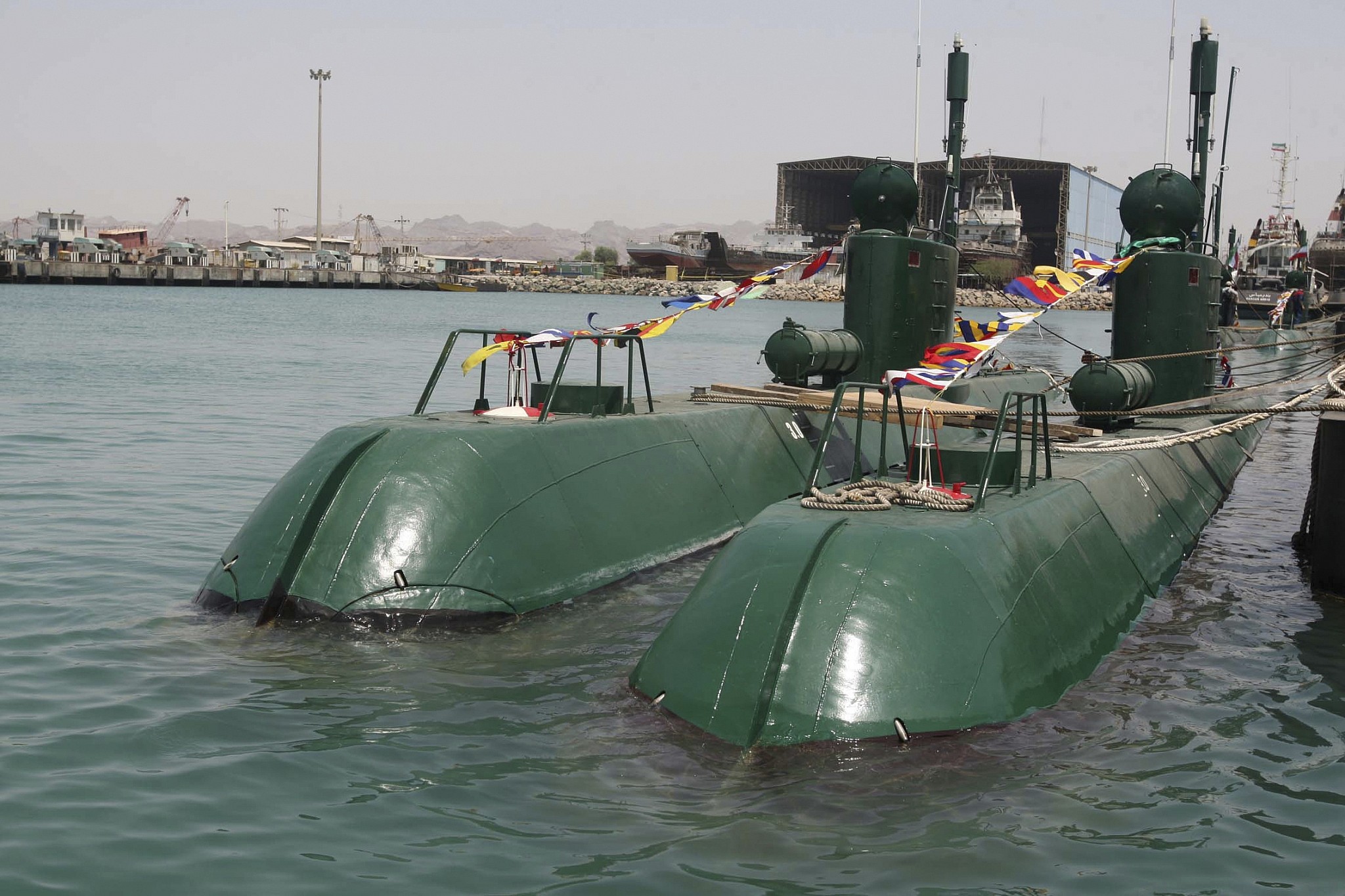
Iran's Ghadir submarines are seen in the southern port of Bandar Abbas in Persian Gulf, Iran, August 8, 2010. (AP Photo/Iranian Defense Ministry, Vahid Reza Alaei/File)

Iran’s Ghadir submarines are seen in the southern port of Bandar Abbas in Persian Gulf, Iran, August 8, 2010. (AP Photo/Iranian Defense Ministry, Vahid Reza Alaei/File)

Iran’s navy has acquired two new mini submarines designed for operations in shallow waters such as the Persian Gulf, the Iranian state TV reported on Thursday.

The report said one of the mini submarines — also known as midget submarines — was dubbed Ghadir-955 and was built in 18 months. The other, a previously built Ghadir-942, took 10 months to overhaul.

The subs have sonar-evading technology and can launch missiles from under water, as well as fire torpedoes and drop marine mines, the TV said. Iran began manufacturing Ghadir subs in 2005. The first was unveiled in 2007 and by 2012, five such submarines were incorporated into Iran’s navy.

Midget submarines weigh less than 150 metric tons and are used for short missions, with no living accommodations for a crew of up to nine.

The TV broadcast footage of the inauguration of one the submarine in southern port of Bandar Abbas, at the mouth of the strategic Strait of Hormuz, the passageway for nearly a third of all oil traded by sea.

At the ceremony, Adm. Mojtaba Mohammadi said the sub is the 14th Iran-made vessel that joined the navy.

Iran does not disclose the total number of submarines in its fleet, however, it is believed to have some 12 light and three Russian-made submarines.

Iran, which has been developing its own tanks, armored personnel carriers, missiles and fighter planes as a part of an arms development program initiative since 1992, often boasts of new achievements or acquisitions that cannot dependently verified.

The submarines’ announcement is likely intended to boost Iran’s military image amid rising tensions with the United States, which in November re-imposed all sanctions lifted under the 2015 nuclear deal between Iran and world powers. The Trump administration pulled America out from the deal in May.

Last month, a senior Iranian official said that the range of the country’s land-to-sea ballistic missile has been increased to 700 kilometers (435 miles).

“We have managed to make land-to-sea ballistic, not cruise, missiles that can hit any vessel or ship from 700 kilometers,” Amirali Hajizadeh, head of the Revolutionary Guards’ airspace division, was quoted as saying by the semi-official Fars news agency.

In September, Iran’s defense ministry said it planned it improve the capabilities of its ballistic and cruise missiles.

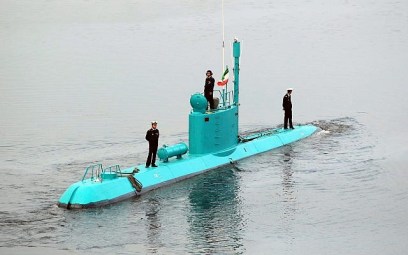
Iran’s Ghadir submarine moves in the southern port of Bandar Abbas in Iran, November 28, 2012. (AP/Fars News Agency, Ebrahim Norouzi/File)

“Increasing ballistic and cruise missile capacity … and the acquisition of new generation fighters and heavy and long-range vessels and submarines with various weapons capabilities are among the new plans of this ministry,” Mohammad Ahadi, Iran’s deputy defense minister for international affairs, said, according to a translation by Reuters.

In 2017, Iran’s supreme leader Ayatollah Ali Khamenei ordered limits on the country’s ballistic missile program to 2,000 kilometers. That range would encompass much of the Middle East, including Israel and American bases in the region. However, such limits come as Iran routinely says its ballistic missile program is only for defensive purposes against regional adversaries.

Although there are no restrictions in place on the range of Iranian missiles, US President Donald Trump had insisted that limitations be placed on Tehran’s missile program, as a prerequisite for Washington remaining in the landmark 2015 nuclear deal with Iran. He ultimately pulled out of it on May 12.

The US and its allies have been demanding that Iran curb its production of ballistic missiles, which can reach parts of Europe and could soon reach the US as well. Western officials have maintained that the only reason Tehran could have for manufacturing such missiles would be to fit them with non-conventional, including atomic, warheads.

Tehran, which calls for the destruction of Israel, insists that it sees the missile program as crucial to its defensive posture, and says its existence is non-negotiable.

United Nations Security Council Resolution 2231, which affirmed the Iran nuclear deal, called on Iran to refrain from developing missiles capable of carrying nuclear weapons. Iran has maintained that it never intended to develop nuclear weapons and therefore its missile development does not violate the agreement.

However, Prime Minister Benjamin Netanyahu has presented evidence which he says detail Iranian efforts and research programs specifically aimed at producing an atomic weapons.


US urges PA to free American-Palestinian charged with dealing with Jews 

Posted November 29, 2018 by Joseph Wouk
Categories: Uncategorized

Source: US urges PA to free American-Palestinian charged with dealing with Jews – Israel Hayom


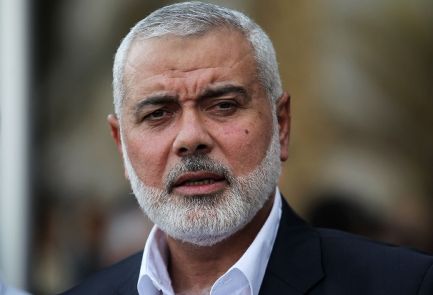
Hamas leader furious after Israel, US push for UN condemnation 

Posted November 29, 2018 by Joseph Wouk
Categories: Uncategorized

Source: Hamas leader furious after Israel, US push for UN condemnation – Israel Hayom


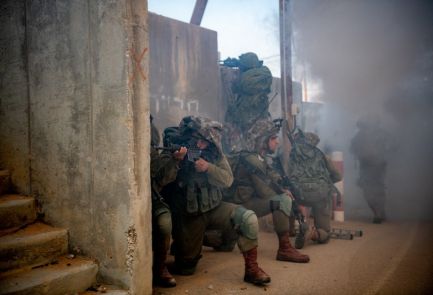
Bracing for Gaza clash, IDF launches urban, tunnel warfare drill ‎ 

Posted November 29, 2018 by Joseph Wouk
Categories: Uncategorized

Source: Bracing for Gaza clash, IDF launches urban, tunnel warfare drill ‎ – Israel Hayom


Iranian air freighters now routed to Beirut instead of Syrian air bases – DEBKAfile

Posted November 29, 2018 by Joseph Wouk
Categories: Uncategorized

Source: Iranian air freighters now routed to Beirut instead of Syrian air bases – DEBKAfile

Day by day at least one, if not two, Iranian transport aircraft, are landing at Beirut international airport in the past week, DEBKAfile’s military sources report.

Flights to Syrian air bases have all but ceased. On their return flights, they refuel at Damascus airport. Most of the incoming aircraft are Boeing 747s of Qeshm Fars Air, which serves Iran’s Revolutionary Guards Corps (IRGC). Intelligence watchers, speculating about the reason for the accelerated Iranian air runs to Beirut and the nature of their cargoes, suggest that they are anxious to avoid encounters with the USAF aircraft circling Syrian skies (as DEBKAfile first revealed on Nov. 22).

Another conjecture is that, since the Russian- S-300 air defense systems won’t be operational before the end of January, Iran and Russia agreed that it would be less hazardous for Iranian air deliveries to be routed to Beirut than to risk possible Israel air strikes over Syria.

Israel last bombed Beirut International Airport 12 years ago in the course of the 2006 Lebanon War against Hizballah. Its air force then dropped rockets on three runways to block Iranian ammo and missile resupplies for the enemy.

Tehran calculates that Israel will not repeat those strikes for fear of sparking an all-out war with Hizballah. This threat was conveyed to Israel on Nov. 10 by the Lebanese Shiite group’s leader, Hassan Nasrallah, after Prime Minister Binyamin Netanyahu exposed the presence in the vicinity of the airport of workshops for upgrading Hizballah’s surface rockets to precision-guided capabilities.

Nasrallah said: “…an attack on Lebanon will definitely and certainly be responded to,” and went on to say that, although Israel “ possesses a large army, advanced air force and nuclear weapons, it cannot handle the number of missiles possessed by Hizballah.”

Nasrallah and Tehran have since taken note of the fact that although the prime minister exposed the missile workshops, Israel refrained from destroying them.

The rerouting of Iranian deliveries for Hizballah from Syria to Beirut is a game changer that warrants altered tactics against the Lebanese Shiite terrorists and their supplier. Tehran is furthermore in the course of a bold new step in Syria with the potential for a major shift in the region’s strategic contours.


Off Topic: Facebook removes viral video protesting Airbnb boycott 

Posted November 28, 2018 by Joseph Wouk
Categories: Uncategorized

Source: Facebook removes viral video protesting Airbnb boycott – Israel Hayom


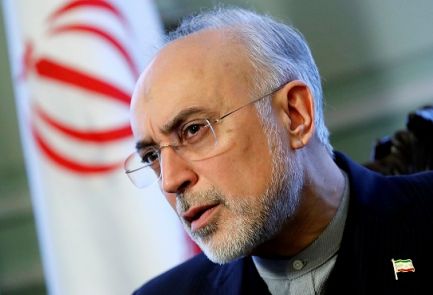
Iran’s patience with EU is running thin, nuclear chief warns

Posted November 28, 2018 by Joseph Wouk
Categories: Uncategorized

Source: Iran’s patience with EU is running thin, nuclear chief warns – Israel Hayom


US lobbies Europe to back United Nations vote on condemning Hamas

Posted November 28, 2018 by Joseph Wouk
Categories: Uncategorized

Source: US lobbies Europe to back United Nations vote on condemning Hamas | The Times of Israel

Israeli envoy says General Assembly expected to vote Friday or Monday on resolution slamming rocket fire from Gaza

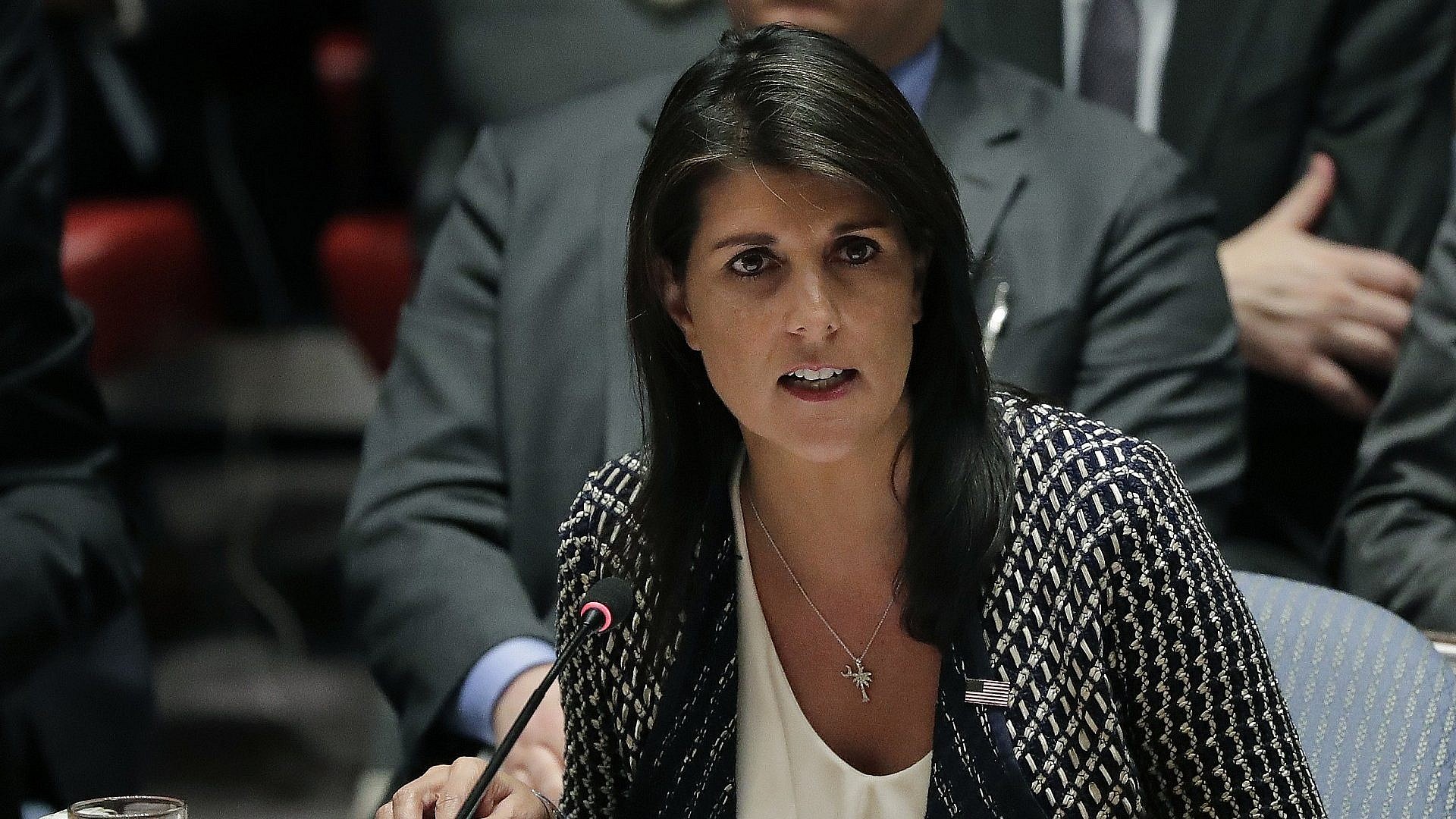
Nikki Haley, US ambassador to the United Nations, speaks during a Security Council meeting on April 13, 2018, at United Nations headquarters. (AP Photo/Julie Jacobson)

Nikki Haley, US ambassador to the United Nations, speaks during a Security Council meeting on April 13, 2018, at United Nations headquarters. (AP Photo/Julie Jacobson)

The United States is leading a push at the United Nations to win crucial backing from European countries for a resolution condemning Hamas, the Israeli ambassador said Tuesday.

The General Assembly is expected to vote Friday or possibly Monday on the proposed resolution condemning rocket firings into Israel and demanding that Hamas end the use of violence.

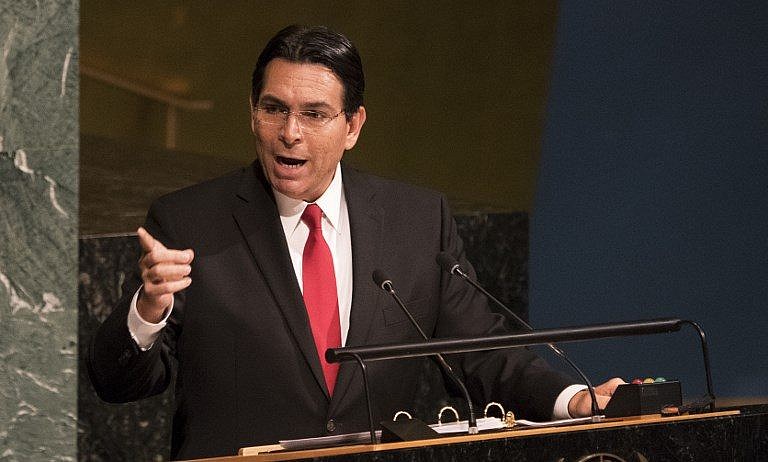
Israel’s Ambassador Danny Danon told reporters that US diplomats were in talks with their EU counterparts on the draft text. European backing would significantly boost chances of approval by the 193-nation body.

“The US is negotiating the language with the EU,” Danon told a briefing. “For us it’s very symbolic to have this resolution presented with the support of the EU.”

If adopted, it would mark the first time that the assembly has voted to condemn Hamas, the Islamist terror group that has ruled the Gaza Strip since 2007.

In this file photo taken on June 13, 2018 Israel’s Ambassador to the United Nations Danny Danon speaks to the General Assembly before a vote to condemn Israeli actions in East Jerusalem and the West Bank, in the General Assembly in New York. (Don Emmert/AFP)

European diplomats said there were disagreements on the proposed US text, notably including references to UN resolutions and to the two-state solution to the Israeli-Palestinian conflict, which is supported by the UN.

A draft text seen by AFP “condemns Hamas for repeatedly firing rockets into Israel and for inciting violence” and “demands that Hamas and other militant actors cease all provocative actions and violent activity.”

The European Union has put Hamas on its blacklist of terror groups, but the 28-nation bloc has struggled to come up with a united position on the Israeli-Palestinian conflict.

In June, US Ambassador Nikki Haley sought to amend an Arab-backed resolution condemning Israel for the violence in Gaza, but failed to win the required votes in the assembly.

The US amendment condemning Hamas received 62 votes in favor, with 58 against and 42 abstentions.

The Israeli ambassador said the US draft resolution had created a “win-win solution” for his government because it had forced capitals to turn their attention to Hamas.

On Thursday, the United Nations will hold events to mark the International Day of Solidarity with the Palestinians, which commemorates the adoption of the 1947 partition plan intended to establish an Arab state and a Jewish state.