Syria air defenses target suspected drones over Russia base

Posted January 28, 2019 by Joseph Wouk
Categories: Uncategorized

Source: Syria air defenses target suspected drones over Russia base | The Times of Israel

State media provides no further details about alleged attack that comes amid rising violations of a cease-fire in Syria’s west negotiated by Turkey and Russia

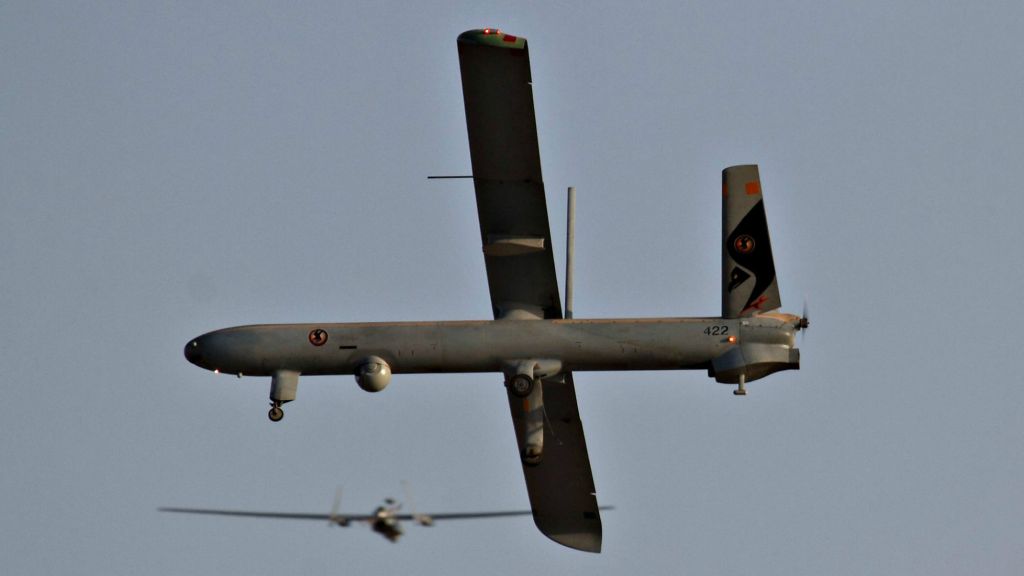
Illustrative. A UAV, June 2010. (Ofer Zidon/ Flash90)

Illustrative. A UAV, June 2010. (Ofer Zidon/ Flash90)

DAMASCUS, Syria — Syria state media said Sunday the country’s air defense systems intercepted and destroyed three “hostile” targets over a Russian air base in the country’s coastal region.

There were no more details about the suspected attack or who was behind it, but it comes amid rising violations of a cease-fire in Syria’s west negotiated by Turkey and Russia and in place since September.

On Sunday, Russia Presidential Press Secretary Dmitry Peskov said on state television that the agreement with Turkey is not fully implemented, leaving the situation there as a matter of concern “first of all, by the Syrian authorities and also Moscow.” He didn’t address the suspected drone attack.

The Britain-based monitoring group Syrian Observatory for Human Rights said explosions heard in the region were from air defense systems intercepting suspected attacking drones. The Observatory said such drones had previously targeted the Russian air base in Latakia province — the last such attack coming in November, despite the cease-fire deal.

The de-escalation deal in Idlib province averted a Syrian government offensive on the armed opposition enclave, which is also home to nearly 3 million people. The agreement created a security zone free of heavy weapons and monitored by Turkish troops to halt fighting.

But infighting between the armed groups in Idlib escalated into a major showdown. Earlier this month, members of the al-Qaeda-linked Hayat Tahrir al-Sham, Arabic for Levant Liberation Committee, took over control of Idlib and the surrounding countryside and forced rival Turkey-backed insurgents to accept an HTS-controlled administration.

Last week, Russia complained that the al-Qaeda-linked group’s hold increasingly threatened its air base and urged Turkey to do more to rein in the militants in the enclave.

The Syrian government has repeatedly threatened to launch an offensive to recapture Idlib province, while Turkey had complained that Damascus was trying to undermine the deal.


Off Topic:  Israeli rescue team arrives in Brazil as dam collapse toll hits 58 

Posted January 28, 2019 by Joseph Wouk
Categories: Uncategorized

Source: Israeli rescue team arrives in Brazil as dam collapse toll hits 58 | The Times of Israel

IDF sends search-and-rescue teams, divers and medical personnel to take part in search for the hundreds more still missing

Brazilian officials greet the head of an IDF search and rescue team that arrived in Brazil on Sunday January 27 (Screencapture/Globo TV)

Brazilian officials greet the head of an IDF search and rescue team that arrived in Brazil on Sunday January 27 (Screencapture/Globo TV)

An Israeli Defense Force search-and-rescue team landed in Brazil late Sunday evening where they will join forces with local rescue crews who are searching for hundreds of people missing in the wake of a catastrophic dam collapse.

The Civil Defense office in Minais Gerais state on Sunday raised the confirmed death toll to 58, with up to 300 people still missing following the avalanche of iron ore waste from a mine Friday.

The Israeli team of some 130 conscripted and reservist soldiers landed on a specially chartered El Al flight at  Belo Horizonte International Airport in South Western Brazil late Sunday.

The team was greeted on the runway by the governor of  Minas Gerais, Romeu Zema. The heads of the delegation immediately began talks with local officials in charge of the rescue to coordinate efforts, according to Brazil’s Globo TV.

An El Al airplane carrying 130 members of an IDF search and rescue team arrives in Belo Horizonte, Brazil on January 27, 2019 (Screencapture/ Globo TV)

The delegation is mostly made up of military search-and-rescue specialists and medical officers and also includes members of the Israeli Navy’s Yaltam scuba unit who were also brought in to assist in the efforts, as the military expected a significant amount of underwater missions in the flooded region.

They are expected to begin work already on Monday morning.

“Following a situational assessment and discussions with local officials, it emerged that search and rescue is the main need at the Brazilian disaster site,” the Israel Defense Forces said in a statement.

The army said the search-and-rescue teams would use radar, underwater sonar, cellular detection systems and drones to locate the missing people.

Embedded video

Israel Defense Forces

@IDF

The 14-hour flight to Brazil was made via a chartered El Al airplane, which took off from Ben Gurion International Airport on Sunday morning. Preparations for the trip began on Saturday, following a conversation between Prime Minister Benjamin Netanyahu and Brazilian President Jair Bolsonaro.

Ties between Israel and Brazil have warmed with the election of Bolsonaro, who said earlier this month that he will move his country’s embassy to Jerusalem. The Brazilian president’s confirmation of the move came after Netanyahu visited the South American country for Bolsonaro’s January 1 investiture.

Israel regularly offers aid and search and rescue help to countries both friendly and hostile, though this appeared to be the first-ever aid delegation to Brazil.

Brazilian rescue crews returned to mud-covered flats Sunday to resume the search  after the operation was suspended for several hours over fears that a second dam was at risk of breach.

Earlier Sunday, authorities stopped the search and evacuated several neighborhoods in the southeastern city of Brumadinho that were within range of the second B6 dam owned by the Brazilian mining company Vale. An estimated 24,000 people were told to get to higher ground, but by the afternoon civil engineers said the second dam was no longer at risk.

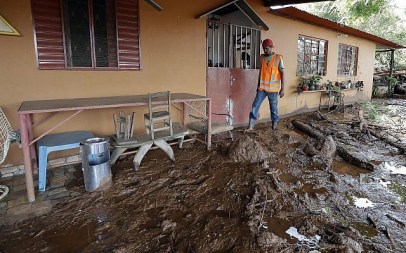
A volunteer walks next to a partially destroyed home, two days after a dam collapsed in Brumadinho, Brazil, Sunday, Jan. 27, 2019. (AP Photo/Andre Penner)

“Get out searching!” a woman yelled at firefighters near a refugee set up in the center of Brumadinho. “They could be out there in the bush.”

Areas of water-soaked mud appeared to be drying out, which could help firefighters get to areas previously unreachable.

Even before the brief suspension of rescue efforts, hope that loved ones had survived a tsunami of iron ore mine waste from Friday’s dam collapse was turning to anguish and anger over the increasing likelihood that many of the missing had died.

Zema, the governor said that by now most recovery efforts will entail pulling out bodies.

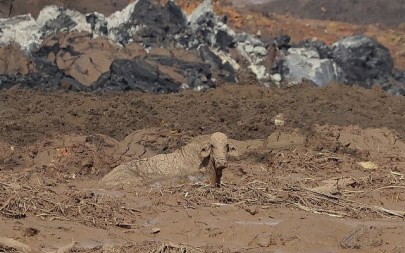
A cow sits stuck after a dam collapsed in Brumadinho, Brazil, Sunday, Jan. 27, 2019. Brazilian officials on Sunday suspended the search for potential survivors of a Jan. 25 dam collapse that has killed at least 40 people amid fears that another nearby dam owned by the same company was also at risk of breaching. (AP Photo/Andre Penner)

The flow of waste reached the nearby community of Vila Ferteco and an occupied Vale administrative office. It buried buildings to their rooftops and an extensive field of the mud cut off roads.

Some residents barely escaped with their lives.

“I saw all the mud coming down the hill, snapping the trees as it descended. It was a tremendous noise,” said a tearful Simone Pedrosa, from the neighborhood of Parque Cachoeira, 5 miles (8 kilometers) from where the dam collapsed.

Pedrosa, 45, and her parents dashed to their car and drove to the highest point in the neighborhood.

“If we had gone down the other direction, we would have died,” Pedrosa said.

“I cannot get that noise out of my head,” she said. “It’s a trauma … I’ll never forget.”

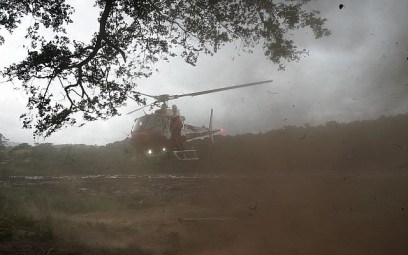
A helicopter takes of carrying a rescued body that was found in the mud, after a dam collapse near Brumadinho, Brazil, Saturday, Jan. 26, 2019. (AP Photo/Leo Correa)

In addition to the dead, 23 people were hospitalized, according to the Minas Gerais fire department. There had been some signs of hope earlier Saturday when authorities found 43 more people alive.

The rivers of mining waste also raised fears of widespread environmental contamination and degradation.

According to Vale’s website, the waste is composed mostly of sand and is non-toxic. However, a UN report found that the waste from a similar disaster in 2015 “contained high levels of toxic heavy metals.”


On International Holocaust Remembrance Day, #WeRemember 

Posted January 27, 2019 by Joseph Wouk
Categories: Uncategorized

Published on Jan 27, 2019

Today, on International Holocaust Remembrance Day, #WeRemember so that #NeverAgain means never again.

Are Israel and Iran on a Collision Course in Syria? 

Posted January 27, 2019 by Joseph Wouk
Categories: Uncategorized

This week began with a violent escalation in the Syrian arena, continued with violent escalation in the Gaza arena, and tensions that lasted until Friday in both arenas.

But by Friday night, things turned for the better. Three developments over the last two days — both Syrian and Gazan — have significantly improved the security situation from an Israeli perspective.

The first took place on Friday, when Russian Deputy Foreign Minister Ryabkov was interviewed by CNN and announced that Russia is not exactly an ally of the Iranians and that Israel’s security must also be taken into account. Such a statement by the Russian deputy foreign minister can be seen as a diplomatic turning point in which Russia is correcting its direction.

Only on Tuesday did a spokeswoman for the Russian Foreign Ministry say that the ‘arbitrary’ Israeli attacks should stop. Three days passed, and from the Foreign Ministry in Moscow — higher ranking than the spokeswomen — sang a different tune.

The reason being that Russia, as strange as it may sound, needs us more than it needs Iran. The Russians have recently realized that Israel is willing to go head to head with the wall to thwart Iranian consolidation and increased forces in Syria as well as the project to improve Hezbollah’s position in Lebanon.

The lack of ambiguity on Israel’s part is also a contributor. The Russians’ conclusion, apparently, is that the Iranians are dragging Israel into attacks on Syria, which could prevent Russia from fulfilling its strategic goal of stabilizing Bashar Assad’s regime and start rebuilding Syria. The Russians are supposed to benefit from the country’s economic and political rehabilitation.


New US Missile Defense Strategy Tackles 21st Century Threats 

Posted January 27, 2019 by Joseph Wouk
Categories: Uncategorized

President Donald Trump on January 17 was expected to unveil a review of U.S. missile defense capabilities that aims to counter threats from North Korea and Iran while adapting to ever more sophisticated weapon systems being developed by Russia and China.

Top among the concerns highlighted by the Missile Defense Review is the speed at which rivals, particularly Beijing and Moscow, are pushing ahead with new technologies such as hypersonic missiles that can thwart traditional defense systems. Flying at low altitude, many times the speed of sound, and able to change direction, these weapons don’t follow a ballistic arc so are much harder to track and cannot be intercepted.

As a result, the Pentagon is urgently looking at ways to enhance its ability to track hypersonic missiles, primarily by using existing sensors that are deployed in space. ‘Enhancing our ability to track these emerging threats will make defending against cruise missile and (hypersonic) threats possible,’ the Missile Defense Agency (MDA) said in a summary of the review. Trump ordered the analysis in 2017, amid heightened tensions with Pyongyang over its nuclear program — the first such review of America’s ballistic defenses since 2010.

Think Tank Central: US and Israel Missile Defense Strategies 

Posted January 27, 2019 by Joseph Wouk
Categories: Uncategorized


Off Topic:  Israel recognizes Juan Guaidó as Venezuelan leader, Netanyahu says

Posted January 27, 2019 by Joseph Wouk
Categories: Uncategorized

Source: Israel recognizes Juan Guaidó as Venezuelan leader, Netanyahu says – International news – Jerusalem Post

“Israel joins the United States today, as well as Canada, most South American countries and European nations,” Prime Minister Benjamin Netanyahu said.

BY HERB KEINON
 JANUARY 27, 2019 16:58
Benjamin Netanyahu (L) and Juan Guaido (R)

Prime Minister Benjamin Netanyahu made the announcement in a taped message from his office. The decision comes despite concern about how it will impact on the country’s Jewish community, which stands today at 6,000, down from 20,000 in 1985.

On Saturday US Secretary of State Mike Pompeo told the UN Security Council, “now is the time for every other national to pick a side. No more delays, no more games. Either you stand with the forces of freedom, or you’re in league with [Nicolas] Maduro and his mayhem.”

Guaido, the head of the opposition and president of the National Assembly, declared himself interim president on Wednesday, a step soon recognized by the US.

Maduro, and his predecessor Hugo Chavez, have been harsh critics of Israel, with Chavez breaking off ties between the two countries in 2009.


With smug tunnels speech, Hezbollah chief tries to bury terror group’s defects 

Posted January 27, 2019 by Joseph Wouk
Categories: Uncategorized

Source: With smug tunnels speech, Hezbollah chief tries to bury terror group’s defects | The Times of Israel

Nasrallah claims Israel was humiliated by underground infrastructure, threatens Israelis with war, in bid to hide Hezbollah’s failures and distort the actual power balance

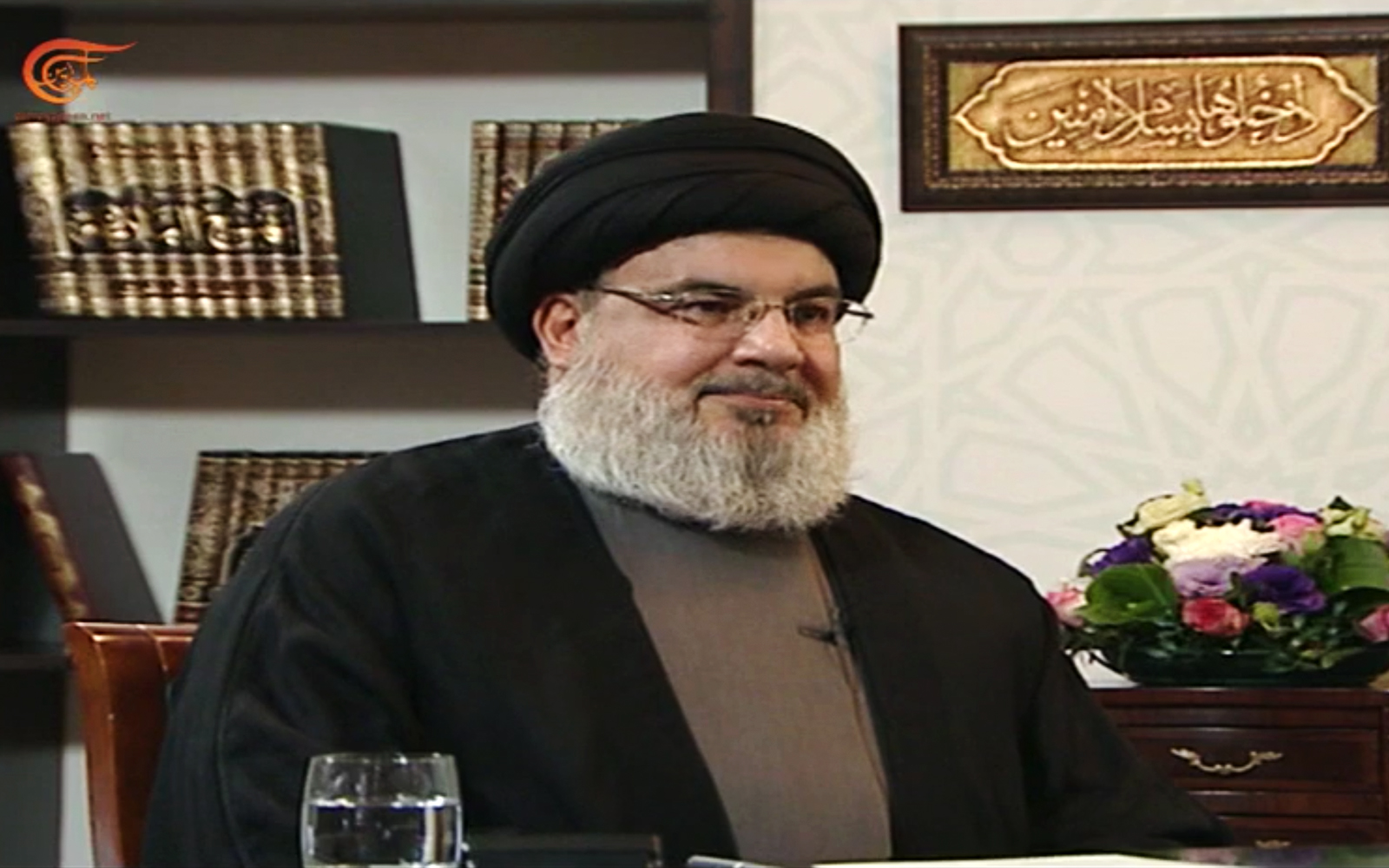
Hezbollah terror group leader Hassan Nasrallah is interviewed on the al-Mayadeen Lebanese television channel, January 26, 2019 (Screen capture)

Hezbollah terror group leader Hassan Nasrallah is interviewed on the al-Mayadeen Lebanese television channel, January 26, 2019 (Screen capture)

After weeks, it has finally happened: Hezbollah leader Hassan Nasrallah has confirmed the existence of cross-border attack tunnels from Lebanon into Israel — though he didn’t explicitly take responsibility — despite the terror group’s initial attempts to deny that a subterranean network was being built across the border for military purposes.

But as is his wont, Nasrallah quickly turned an event that is supposed to embarrass Hezbollah into a propaganda and deterrence tool against Israel, by directly addressing, and threatening, the attentive public in the Jewish state.

In his interview Saturday evening with his home TV channel, Al-Mayadeen, Nasrallah explained that the tunnels have existed for a long time, some predating the 2006 Second Lebanon War. Israel suffered an embarrassing failure in having taken so long to uncover them, he insisted.

Nasrallah knew that after his prolonged absence from the public eye and a wave of rumors regarding his health, Israeli news outlets would be closely following his every word. And he made full use of the situation to try to intimidate the average Israeli, saying Hezbollah has precision-guided missiles, more tunnels, the ability to conquer northern Israel, bomb the entire country and disrupt the lives of Tel Aviv residents, and more.

He even jokingly told his interviewers that Hezbollah’s possession of precision-guided missiles was to Israel’s advantage, since it would prevent innocents from being harmed.

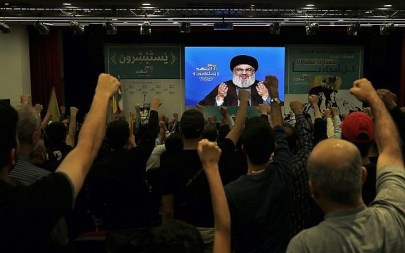
Supporters of the Hezbollah terror group raise their fists and cheer as they listen to a speech by Hezbollah leader Hassan Nasrallah, via a video link, during a rally marking Hezbollah Martyr’s Day in Beirut, Lebanon, November 10, 2018. (AP/Bilal Hussein)

Had aliens landed in the region and listened to Nasrallah’s interview without prior knowledge of the balance of power between Israel and Hezbollah, they may have believed that in a future war it would be Israel’s existence that would be in danger, not Hezbollah’s.

In fact, Hezbollah remains a dangerous organization capable of inflicting immense damage on Israel, but it does not pose an existential threat to Israel. In the next war, however, Hezbollah’s future and its very existence will probably be in question, along with the entire current state of Lebanon. It sometimes seems that Nasrallah forgets this. Perhaps the civil war in Syria has had its effect, and the group’s achievements there — with generous help from Russia — have caused its secretary-general’s smugness to skyrocket.

Nasrallah was appointed Hezbollah leader almost 27 years ago, when he was just 31 years old. It can be assumed that 27 years of autocratic rule over a terror group that has become the strongest in the world — possessing one of the world’s biggest missile arsenals — have raised his euphoria levels.

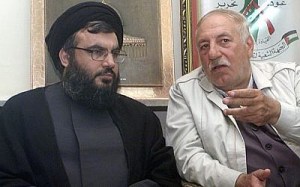
PFLP-GC chief Ahmed Jibril (right) pictured with Hezbollah leader Hassan Nasrallah in Beirut in May 2002. (photo credit: AP Photo/Bassem Tellawi)

He feels invincible, has forgotten the outcome of the Second Lebanon War, and the price Lebanon could pay doesn’t seem to be his top priority. Hezbollah is preventing the formation of a government in Lebanon, demanding more and more political strength and power.

In recent years, Nasrallah has been functioning as an Iranian emissary, which is why the welfare of Lebanon’s residents doesn’t really interest him. He has to satisfy his Iranian masters, even if that means risking a new war.

A clear-headed examination of Nasrallah’s “achievements” in recent years shows the magnitude of Hezbollah’s failure, in and outside Lebanon. The Syrian civil war was decided by the Russians, not Hezbollah, and until Moscow intervened, Hezbollah couldn’t stand up to Islamic State.

The terror organization lost almost 2,000 combatants, and thousands were injured in battle in Syria. It may have gained experience in fighting in similar fashion to an army, but fighting as regular forces was never going to get Hezbollah anywhere. On the contrary, if it tries to confront the Israel Defense Forces that way, its failure will be even more pronounced.

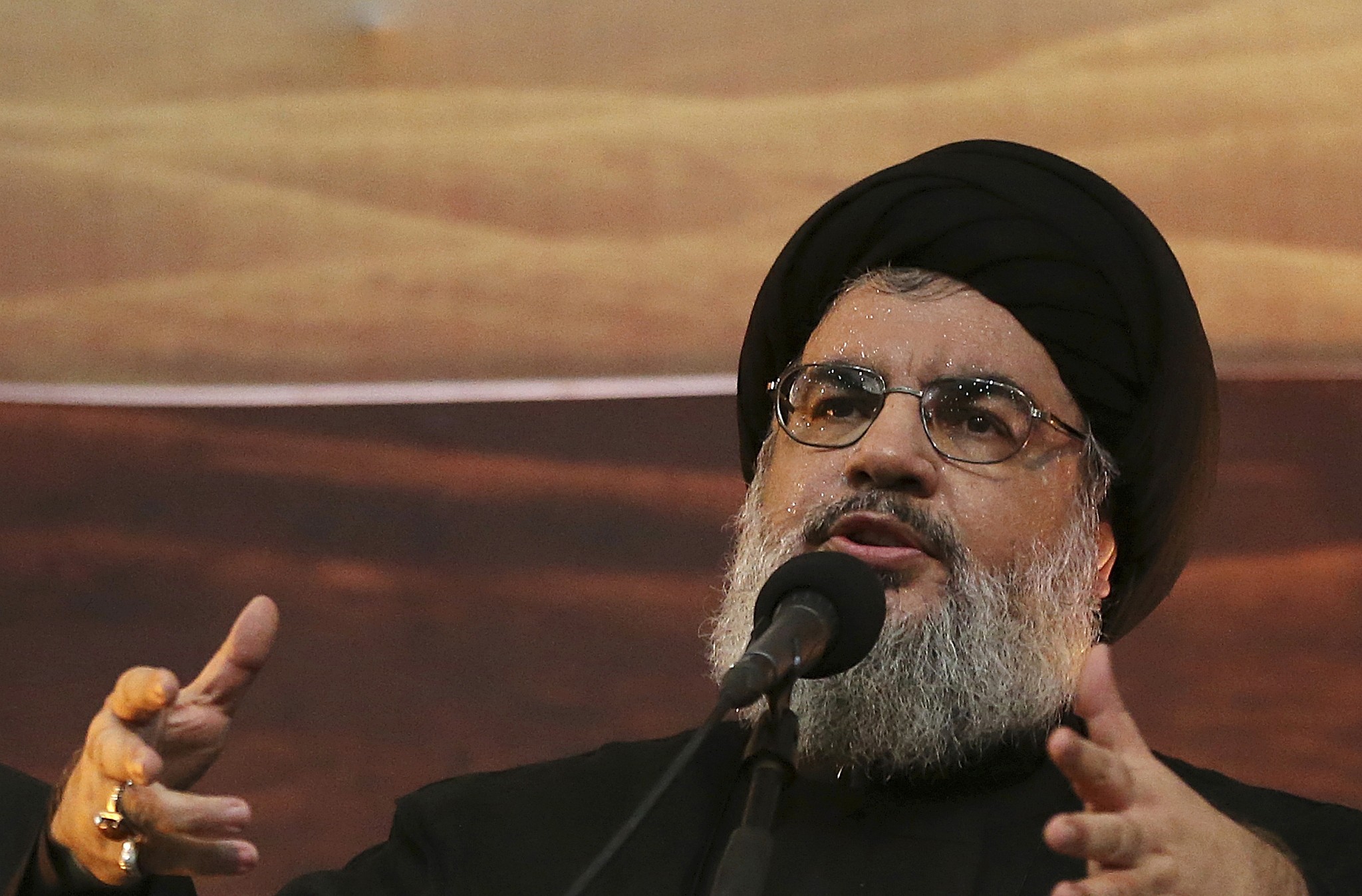
Hezbollah leader Sheikh Hassan Nasrallah addresses supporters in the southern suburb of Beirut, Lebanon, November 3, 2014 (AP Photo/Hussein Malla, File)

Meanwhile, Lebanon itself is financially and politically crumbling.

Hezbollah and Nasrallah, with all their slogans against Israel, seem to be trying to divert attention away from the weaknesses of the terror group while deflecting the Lebanese public’s attention away from a salient fact: That it has taken over Lebanon and turned it into an Iranian hostage.


PM: Nasrallah ’embarrassed’ by Israel’s success in destroying Hezbollah tunnels

Posted January 27, 2019 by Joseph Wouk
Categories: Uncategorized

Source: PM: Nasrallah ’embarrassed’ by Israel’s success in destroying Hezbollah tunnels | The Times of Israel

Netanyahu says terror group in financial difficulties after sanctions reimposed on Iran; dismisses its leader’s claim subterranean passages predate 2006 war

Prime Minister Benjamin Netanyahu attends the weekly cabinet meeting at the Prime Minister's Office, in Jerusalem, on December 16, 2018. (ABIR SULTAN / POOL / AFP)

Prime Minister Benjamin Netanyahu attends the weekly cabinet meeting at the Prime Minister’s Office, in Jerusalem, on December 16, 2018. (ABIR SULTAN / POOL / AFP)

Prime Minister Benjamin Netanyahu on Sunday said Hezbollah chief Hassan Nasrallah was “embarrassed” in the wake of Israel’s success in identifying and destroying a series of cross-border attack tunnels from Lebanon, and said the Lebanon-based terror group is struggling financially in the wake of sanctions imposed on its sponsor Iran.

“Yesterday Nasrallah broke his silence. He is embarrassed for three reasons: Firstly, due to our tremendous success in Operation Northern Shield,” the prime minister said at the opening of the weekly cabinet meeting, referring to the Israeli military’s campaign to dismantle the underground infrastructure.

“He and his men invested tremendous effort in the surprise weapon of the tunnels, including digging them — contrary to what he said — in recent years and in recent months. Within six weeks we completely deprived him of that weapon,” Netanyahu said.

“Second, Nasrallah is embarrassed by financial distress. The policy we have advocated to renew the sanctions against Iran is a policy adopted by President Trump in a clear and sharp manner, severely harming the sources of funding for Iran and its proxies, first and foremost Hezbollah.

“And thirdly Nasrallah is embarrassed by our determination. Hezbollah is faced with the lethal force of the IDF, and believe me, Nasrallah has good reasons not to want to feel our blows land,” added Netanyahu.

Nasrallah, leader of the Hezbollah terror group, on Saturday said Israel’s operation to uncover and destroy cross-border attack tunnels was indicative of an intelligence failure, and said the group’s plans for an invasion of the Galilee remained intact.

Hezbollah terror group leader Hassan Nasrallah is interviewed on the al-Mayadeen Lebanese television channel, January 26, 2019 (Screen grab)

Breaking months of silence, and speaking for the first time since Israel launched Operation Northern Shield in early December to uncover and destroy the tunnels dug under its border, Nasrallah claimed during an interview with the pro-Hezbollah al-Mayadeen TV that “some of the tunnels are from before Resolution 1701 and the Second Lebanon War.”

UN Resolution 1701 ended the 2006 conflict and called for all armed groups in Lebanon besides the country’s military to remain north of the Litani River. Israel has for years claimed that Hezbollah has been violating the resolution by conducting military activities along the border.

“The Israelis discovered a number of tunnels after many years, and it’s not a surprise. The surprise is that these tunnels, they took some time to find,” Nasrallah said on the al-Mayadeen channel.

“One of the tunnels discovered in recent weeks is 13 or 14 years old,” said a smiling Nasrallah. The Israeli operation brought to light the “failure” of the country’s intelligence services, he added.
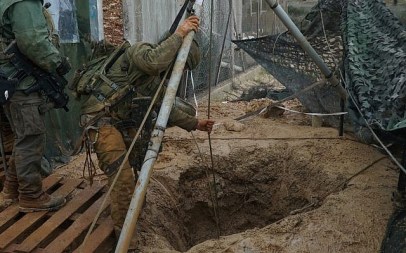
Israeli troops prepare to destroy attack tunnels dug into Israel from southern Lebanon by the Hezbollah terror group on December 20, 2018. (Israel Defense Forces)

Nasrallah’s claim regarding when work began on some of the tunnels appeared to line up with a Channel 13 report earlier this month. Israel has said it was aware of Hezbollah’s tunnel operations for several years.

Nasrallah also suggested that Israeli citizens should question the information they were being given on the tunnels, on the basis that northern residents’ concerns about the presence of attack tunnels had been dismissed for years.

“Moshe Ya’alon confirmed during Operation Northern Shield that there were tunnels,” he said, presumably referring to the former defense minister’s admission that officials had lied about the existence of the tunnels. “My question to the settlers in the north: Do you think Netanyahu, Eisenkot, and the new chief of staff are lying to you now or telling the truth?”

Nasrallah went on to claim that the tunnels were hardly central to Hezbollah’s attack plan in a future war, and that Israeli leaders had inflated their importance “to leave the [army] with a significant achievement” to boast of.

He confirmed Israeli leaders’ accusations that “part of our plan for the next war is to enter the Galilee, a part of our plan we are capable of, God willing. The important thing is that we have this capability and we have had it for years.”

But, he claimed, “The uncovering of the tunnels does not affect by 10 percent our plans to take over the Galilee. If we decide to do it — even if they’ve destroyed the tunnels — can’t we rebuild them?” He also suggested there may be attack tunnels on the Israeli-Lebanese border that Israel has not yet discovered.
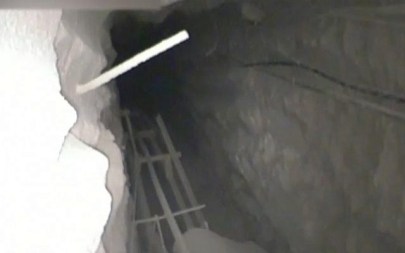
Attack tunnel dug into Israel from southern Lebanon that the Israeli military believes Hezbollah planned to use in future wars, which was discovered in January 2019. (Israel Defense Forces)

Saturday’s interview with Nasrallah was an extraordinarily long one, lasting over three hours.

Despite his bluster, the terror leader would not officially confirm that the cross-border tunnels had actually been dug by Hezbollah.

“Israel is claiming that Hezbollah dug them. I don’t have to say that I or Hezbollah dug the tunnels, because we always prefer to keep ambiguity on defense. We have no reason to work for free for Israel,” he said. He added: “I won’t confirm or deny if all of the tunnels have been uncovered.”

He also insisted that Operation Northern Shield “has not ended, despite the Israelis having announced its completion. Digging is still going on.”

The IDF announced the end of Operation Northern Shield two weeks ago.
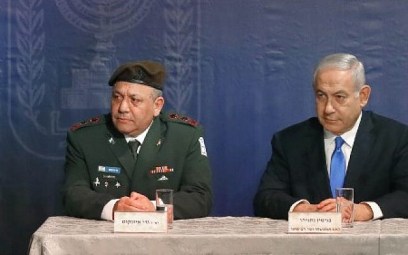
Outgoing IDF Chief of Staff Gadi Eisenkot (L) and Prime Minister Benjamin Netanyahu attend a handover ceremony at the Defense Ministry for new Chief of Staff Aviv Kochavi on January 15, 2019. (Jack Guez/AFP)

Nasrallah, 58, took over the Iran-backed Hezbollah group after its previous leader was killed in a 1992 targeted assassination by Israeli helicopters on his convoy.

As a precaution against a repeat of the incident, Nasrallah’s movements are shrouded in mystery with few public appearances. He instead prefers videos or live television broadcasts.

Hezbollah is designated a terror organization, either entirely or partly, by Israel, the United States, the European Union and other countries.

Nasrallah also warned Hezbollah could respond to Israeli airstrikes in Syria targeting mainly Iranian positions and what Israel says are weapons shipments.

Adam Rasgon contributed to this report.
 

Israel and Iran Are Waging a Secret War in Syria. Here’s How It Finally Went Public

Posted January 27, 2019 by Joseph Wouk
Categories: Uncategorized

Source: Israel and Iran Are Waging a Secret War in Syria. Here’s How It Finally Went Public

Joseph Hincks
Time

The video shows a skier in a blue jacket slaloming down a slope before the camera pans upward, an ominous score playing in the background. “This is what families skiing on Mount Hermon in northern Israel saw when they looked up,” reads the on-screen caption on a 37-second clip the Israeli Defense Force (IDF) posted to Twitter Monday, as two vapor trails cut across a dusky sky. “An Iranian rocket fired towards them from Syrian soil.”

Captured on a snowboarder’s camera on Jan. 20, the video of Israel’s Iron Dome missile defense system apparently intercepting a surface-to-surface rocket fired into the Israeli-occupied Golan Heights, an elevated plateau in southwestern Syria, was posted shortly after Israel carried out a series of retaliatory air strikes against Iranian targets in the country. Those targets included what Prime Minister Benjamin Netanyahu called “Iranian warehouses containing Iranian weapons” at Damascus International Airport, and a line of Syrian military air defense batteries, including some Russian-made installations.

Embedded video

Israel Defense Forces

@IDF

Look at what Israeli families skiing in northern Israel saw above them yesterday…

The Israeli air strikes killed 21 people, according to a monitor, among them 12 members of Iran’s Revolutionary Guard Corps, six Syrian fighters, and three non-Syrian nationals. In response, a high ranking Iranian military official issued fresh threats to annihilate Israel and Syria warned it could hit Tel Aviv’s airport. Meanwhile, Russian called for Israel to halt “arbitrary strikes on the territory of a sovereign state.” By Thursday, Israel had deployed the Iron Dome system in Tel Aviv to provide the metropolitan area with greater air cover amid the tension with Syria, as well as fresh flare ups in the Gaza Strip to the south.

Neither tit-for-tat battles nor incendiary threats between Israel and Iran are new. But this week’s violence has underscored fears that both countries’ attempts to set red lines in Syria risk escalating a shadow conflict into open war.

Here’s what to know.

Why are missiles flying over a ski resort?

Israeli Iron Dome aerial defense systems deployed near the Mount Hermon resort, located at the intersection of the Israeli-Lebanese-Syrian border in the north of the Golan Heights on Jan. 21, 2019. According to media reports, the Israeli Defense Forces (IDF) stated that it had targeted Iranian Revolutionary Guards targets active in Syrian territory in response to alleged rocket that was fired from Syria toward Mount Hermon Resort on Jan. 20.
The IDF’s video describes Mount Hermon as being in northern Israel, but the international community does not recognize Israeli sovereignty over the Golan Heights. Israel conquered most of the plateau during the Arab–Israeli War of 1967 and unilaterally annexed it in 1981.

Although Syria and Israel’s territorial dispute over the Golan Heights was not resolved and the two states have technically been at war since Israel’s founding, Israel’s northwestern border was for decades its least volatile front. That changed when the Syrian war broke out in 2011, and Iran began pouring in money, resources and soldiers into the country in support of the regime of Bashar al-Assad.

The Islamic Republic’s intervention was, in part, a response to the initial routing of the regime’s forces by Sunni rebels, who were financed by Saudi Arabia and other Gulf countries. Tehran’s primary strategic objective now is to increase its ability to deter any potential Israeli attack on Iran by raising the stakes of such a strike for Israel, says Payam Mohseni, Iran Project Director at Harvard’s Kennedy School of Government. The presence of Iran-allied militias on the ground on Israel’s northwest border “may be a game changer” in terms of this deterrent, he says. They also increase Iran’s ability to support and supply Lebanon-based Shi’a Islamist political party and militant group Hezbollah, to Israel’s direct north. “Israel is attacking to severely limit such a scenario.”

“Iran is busy turning Syria into a base of military entrenchment,” Netanyahu saidin 2017, as Iranian and Russian intervention in support of Assad helped the regime towards strategic victory. “It wants to use Syria and Lebanon as war fronts against its declared goal to eradicate Israel,” Netanyahu added, “This is something Israel cannot accept.”

How entrenched is Iran in Syria?

Iran denies any formal military presence or bases in Syria, outside of the advisory capacity it openly acknowledges, and there are no definitive numbers on the troops it has on the ground. But at least 2,000 Iranians have died in Syria since the war began, says Ariane Tabatabai, an associate political scientist at the California-based RAND Corporation. Syria represents “one of the most significant commitments Iran has made beyond its borders in recent decades,” Tabatabai says.

More sizable than the number of Iranian fighters, however, is the contingent of foreign fighters Iran is training and equipping in Syria. In addition to Hezbollah and Syrian forces loyal to Assad, Tehran is backing Shi’a militias comprised of Afghan and Pakistani fighters. Tabatabai says estimates for the number of Afghans killed in Syria runs into the tens of thousands.

On Thursday, the the U.S. Treasury Department announced sanctions against the Iran-backed Fatemiyoun Division, composed of Afghan nationals, and the Zaynabiyoun Brigade, consisting of Pakistani nationals. “The brutal Iranian regime exploits refugee communities in Iran, deprives them of access to basic services such as education, and uses them as human shields for the Syrian conflict,” U.S. Treasury Secretary Steven Mnuchin said in a statement.

Iran’s presence is not limited to boots on the ground. It has invested everything from telecommunications, to resources extraction, to the education sector.

Can the U.S. or Russia help defuse the situation?

Experts say Israel and Iran are attempting to set red lines over each other’s activities in Syria and neither wants war. “For now the risks of this seriously escalating are limited,” says Harvard’s Mohseni. But others deem the risk of accidental escalation significant. Should a rocket coming from Syria hit civilians in the Golan Heights, for example, or if a misdirected Israeli strike hits critical Syrian or Russian infrastructure, the responses could be difficult to contain.

Although Russia on Wednesday said Israel’s “arbitrary” Israeli air strikes should stop, it has tolerated a certain amount of Israeli action against Iranian and pro-Iranian targets in Syria, provided they do not impact its own or Syrian assets, says Joost Hiltermann, director of the International Crisis Group’s Middle East and North Africa program. Moscow is “generally trying to help the two set their red lines without getting too deeply involved itself,” he says. “In a way it’s rather neutral. It doesn’t want Iran to prevail. It doesn’t want Israel to prevail either.”

But there are doubts over the extent to which Russia will be able to control Iran’s influence over the Syrian regime. Writing for TIME earlier this month, Lina Khatib, head of the Middle East and North Africa Program at Chatham House, argued that a sudden U.S. troop pullout would strengthen Tehran’s hand. The presence of U.S. forces in northeastern Syria has so far limited free movement between Iran-backed militias and the allied Iraqi Popular Mobilization Forces across the border. The presence of American troops also blocks Iranian access to oil fields, the revenue from which could offset the economic impact of recently reinstated American sanctions. American withdrawal, Khatib writes, “would give Iran time and space to consolidate its presence and access to resources and eventually make it more difficult for Russia and Assad to detangle Syria from Iran.”

How has the Israeli military tried to tried to limit Iran’s influence?

Until recently, Israel had maintained a policy of ambiguity over its activities in Syria—meaning that it did not openly admit responsibility for strikes on Iranian installations or troop convoys. Nor did it openly acknowledge its funding of rebel groups in southern Syria to block Iran-backed fighters. But in September an Israeli intelligence official said Israel had conducted more than 200 attacks against Iranian targets in Syria in the past two years. Earlier this month, a former IDF military chief-of staff told the New York Times the IDF had struck “thousands” of targets in Syria since 2011.

The new openness followed the launch in May of around 20 rockets into Golan Heights, which Israel blamed on Iran. “They must remember that if it rains here [in Israel], it will pour there,” said Israeli Defense Minister Avigdor Liebermanfollowing a series of retaliatory air strikes he claimed struck almost all Iran’s infrastructure in Syria. “I hope that we have finished this chapter and that everyone got the message.”

But looking back at the past week, that doesn’t seem to be the case.