Gaza terrorists fire hundreds of rockets at Israel; IDF pummels Hamas targets

Posted May 11, 2021 by Joseph Wouk
Categories: Uncategorized

At least 24 Israelis hurt, one seriously; 23 Palestinians said killed, among them children; military says most were Hamas members or were killed by errant Gazan rockets
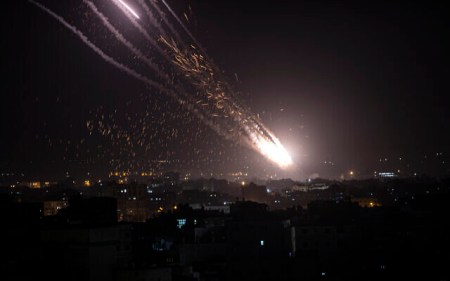
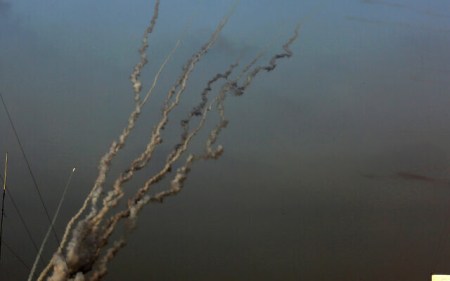
  • Rockets are launched from the Gaza Strip towards Israel, Monday, May. 10, 2021.  (AP Photo/Khalil Hamra)
    Rockets are launched from the Gaza Strip towards Israel, Monday, May. 10, 2021. (AP Photo/Khalil Hamra)
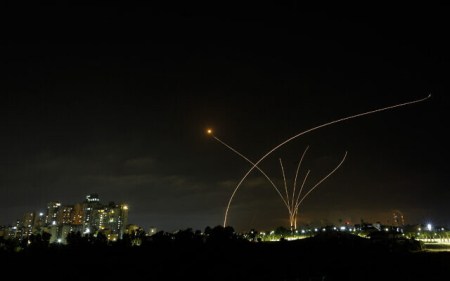
  • A long exposure picture shows Iron Dome anti-missile system fire as rockets are launched from the Gaza Strip, Ashkelon, May 10, 2021 (Edi Israel/Flash90)
    A long exposure picture shows Iron Dome anti-missile system fire as rockets are launched from the Gaza Strip, Ashkelon, May 10, 2021 (Edi Israel/Flash90)
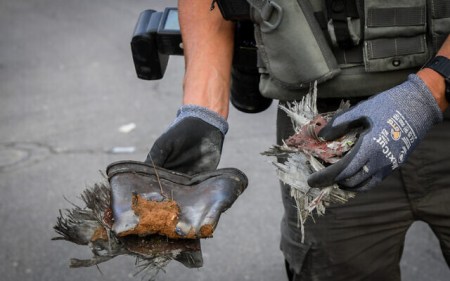
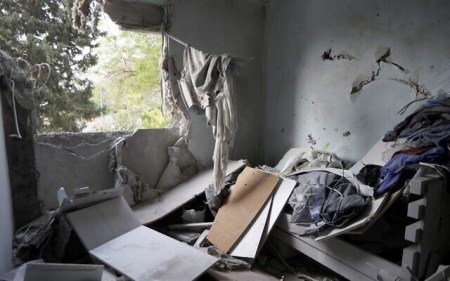
  • A rocket fired from the Gaza Strip that directly struck an apartment building in Ashkelon on May 11, 2021. (Flash90)
    A rocket fired from the Gaza Strip that directly struck an apartment building in Ashkelon on May 11, 2021. (Flash90)
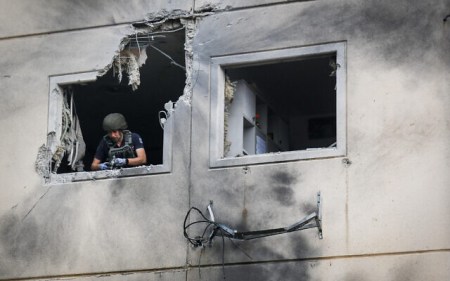
  • An apartment building that was hit by a rocket fired from the Gaza Strip in the city of Ashkelon on May 11, 2021. (Flash90)
    An apartment building that was hit by a rocket fired from the Gaza Strip in the city of Ashkelon on May 11, 2021. (Flash90)
  • Parts of an apartment building is destroyed following Israeli airstrikes in the Gaza Strip on May 11, 2021 (MOHAMMED ABED / AFP)
    Parts of an apartment building is destroyed following Israeli airstrikes in the Gaza Strip on May 11, 2021 (MOHAMMED ABED / AFP)
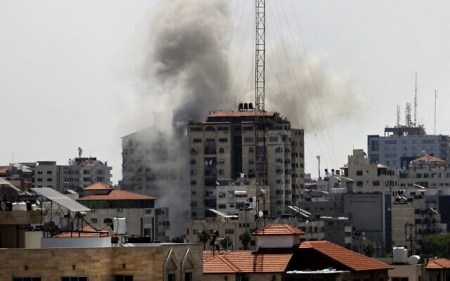
  • Smoke from Israeli airstrikes in the Gaza Strip, controlled by the Palestinian Hamas terror group, on May 11, 2021. (MAHMUD HAMS / AFP)
    Smoke from Israeli airstrikes in the Gaza Strip, controlled by the Palestinian Hamas terror group, on May 11, 2021. (MAHMUD HAMS / AFP)
  • Fire billows from Israeli air strikes in Rafah, in the southern Gaza Strip, on May 11, 2021.(Photo by SAID KHATIB / AFP)
    Fire billows from Israeli air strikes in Rafah, in the southern Gaza Strip, on May 11, 2021.(Photo by SAID KHATIB / AFP)
  • Smoke billows from a building targeted in an Israeli strike on Gaza City amid rocket fire from the Strip on May 11, 2021 (MOHAMMED ABED / AFP)
    Smoke billows from a building targeted in an Israeli strike on Gaza City amid rocket fire from the Strip on May 11, 2021 (MOHAMMED ABED / AFP)
  • Rockets are fired from Gaza City towards Israel on May 11, 2021 (Atia Mohammed/Flash90)
    Rockets are fired from Gaza City towards Israel on May 11, 2021 (Atia Mohammed/Flash90)
  • A picture taken early on May 11, 2021 shows a damaged building in the southern Israeli city of Ashkelon after rockets were fired by the Hamas terror group from the Gaza Strip towards Israel overnight amid spiraling violence  (JACK GUEZ / AFP)
    A picture taken early on May 11, 2021 shows a damaged building in the southern Israeli city of Ashkelon after rockets were fired by the Hamas terror group from the Gaza Strip towards Israel overnight amid spiraling violence (JACK GUEZ / AFP)
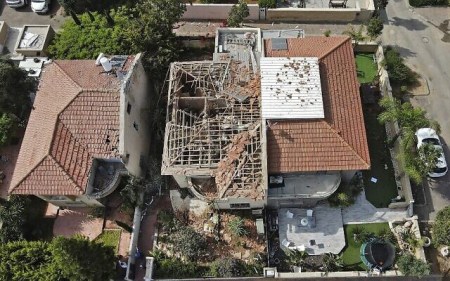
  • An overhead view of an Ashkelon home badly damaged by a rocket fired from Gaza on May 11, 2021. A man was seriously hurt in the attack. (JACK GUEZ / AFP)
    An overhead view of an Ashkelon home badly damaged by a rocket fired from Gaza on May 11, 2021. A man was seriously hurt in the attack. (JACK GUEZ / AFP)

Palestinian terror groups in the Gaza Strip fired a massive barrages of rockets at southern Israel throughout Tuesday, wounding at least 24 people and drawing deadly retaliatory airstrikes from the Israel Defense Forces.

The assaults continued a night of almost constant rocket fire on Israeli communities near the Gaza Strip and as the IDF conducted strikes on more than 100 targets in the coastal enclave, as part of what it has called “Operation Guardian of the Walls,” the military said. The previous day saw a major outbreak of violence from Gaza, including rare rocket fire on Jerusalem, where Palestinians have been clashing with police for days.

According to Gaza’s Hamas-run Health Ministry, at least 23 people in the Strip were killed on Monday night and Tuesday, including nine minors. Another 107 Palestinians were injured to varying degrees, the ministry said. The IDF said at least 15 of those killed were members of the Hamas terror group who were launching rockets or anti-tank guided missiles at Israel.

IDF Spokesperson Hidai Zilberman said a number of those killed in Gaza, including at least three children, were hit by errant rockets fired by Palestinian terrorists, not by Israeli airstrikes.
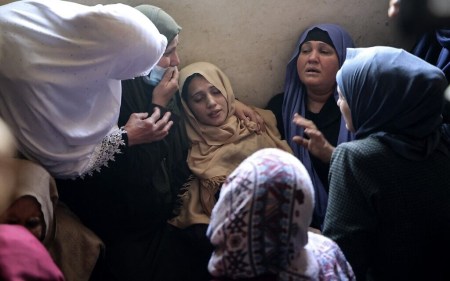
The mother of Palestinian Hussien Hamad, 11, is comforted by mourners during his funeral in Beit Hanoun in the northern Gaza Strip on May 11, 2021 (MAHMUD HAMS / AFP)

Hamas and the Palestinian Islamic Jihad terror groups reported that several high-ranking commanders were killed in Israeli raids on Tuesday, including two top PIJ leaders in a drone strike on a building in the upscale Rimal neighborhood of Gaza City, one of whom was the brother of another top PIJ commander, Baha Abu al-Ata, who was killed in an Israeli strike in November 2019, kicking off a major round of fighting in the Strip.

IDF Chief of Staff Aviv Kohavi on Tuesday afternoon gave the military a green light to keep targeting Hamas and PIJ members operating in the Strip and bombing sites connected to the terror groups’ rocket production and storage efforts.

The IDF spokesperson said Israel was taking steps to avoid Palestinian civilian casualties, but that they were liable to occur anyway as Hamas deliberately operates within a densely populated area, using the residents of the Strip as human shields.

Israel on Tuesday showed no indications that it was interested in an immediate ceasefire, as Zilberman said the fighting was expected to last at least several days and that the coming hours would be particularly punishing for Hamas.

“We have an intense day ahead of us,” Zilberman told reporters on Tuesday morning, adding, “We have a goal and we will not stop until we’ve reached it.”

Soldiers from the IDF’s Golani Infantry Brigade and 7th Armored Brigade were sent to the Gaza border as reinforcements and additional troops were called in to aerial defense, intelligence and air force units, the military said.

“The chief of staff said the IDF will continue to act determinedly in order to return security to residents of the south, and all headquarters should prepare for a wider conflict, which has no time limit,” the IDF said.

Smoke billows from a building targeted by in an Israeli strike on Gaza City amid rocket fire from the Strip on May 11, 2021 (MOHAMMED ABED / AFP)

Asked about the potential for a ground invasion or targeted killing of top terrorist commanders, Zilberman said the military “was prepared for anything.”

According to the IDF, over 200 rockets and mortar shells were fired from the Gaza Strip toward Israel from 6 p.m. Monday to 6 a.m. Tuesday, dozens of which were intercepted by Iron Dome missile defense batteries. The military said the Iron Dome had a successful interception rate of over 90 percent of projectiles heading toward populated areas.

According to Zilberman, roughly a third of the projectiles fired from Gaza landed inside the Strip.

Most of the others landed in open fields, where they caused no injuries, but a small number landed inside Israeli communities, causing damage to nearby buildings and infrastructure. One rocket directly struck a house in the Sha’ar Hanegev region on Monday night, damaging it but not injuring its occupants, and two hit apartment buildings in Ashkelon on Tuesday morning, injuring those inside.

Video footage of the Tuesday morning attack showed dozens of rockets being fired at Ashkelon, with Iron Dome interceptor missiles screaming up into the gray morning sky to try and bring them down.

Six Israelis were wounded in that attack, four of them members of the same family: parents in their 40s, an 8-year-old and an 11-year old. The father was seriously hurt with a head wound, and the rest sustained light injuries from shrapnel. A 63-year-old man was also moderately injured by shrapnel, and a man and a woman in their 80s were lightly injured, medics said. On Monday, an Israeli man was lightly injured when Palestinian terrorists fired an anti-tank guided missile at his car.

In total, Ashkelon’s Barzilai Medical Center and Beersheba’s Soroka Medical Center said they was treating 24 people who were wounded on Monday night and Tuesday morning, 22 of them with light injuries. In addition to those hit by rocket fire, a number of those were hospitalized for injuries sustained while running to bomb shelters, and eight people suffered acute anxiety attacks brought on by rocket sirens, medics said.

In response to the ongoing rocket rockets, IDF fighter jets, aircraft and tanks struck some 130 targets in the Gaza Strip, most of them associated with Hamas, but also some linked to other terror groups in the enclave, including the Palestinian Islamic Jihad.

According to the IDF, they included the home of a top Hamas commander, Hamas’s intelligence headquarters in southern Gaza, two attack tunnels that approached the border with Israel, rocket production and storage sites, observation posts, military installations and launchpads. The IDF said it was also targeting terrorist operatives as they fired rockets at Israel. The military released footage of some of its strikes, including the attack on the Hamas officer’s apartment building (below).

Hamas in Gaza said it had launched the morning attack on Ashkelon in response to the IDF strike on the commander’s apartment building. The terror group said it would “turn Ashkelon into hell” if Israel targeted civilians in Gaza.

Palestinian media also reported strikes around the southern cities of Rafah and Khan Younis and on an apartment building in the al-Shati camp near Gaza city. A building was also destroyed in Gaza City’s upscale Tel al-Hawa neighborhood.

Zilberman said the military was deploying additional air defenses throughout the country, notably in the Tel Aviv metropolitan area. Tel Aviv had yet to be targeted as of Tuesday morning, but the IDF suspected that rocket fire may soon be directed there as well.

Earlier, the Hamas military wing issued an ultimatum that it would carry out a massive attack by 2 a.m. if Israel did not vacate its forces from the Temple Mount. It later claimed that it had suspended plans for the attack after police withdrew from the holy site.

There was no confirmation from Israel that police had left the compound.

Defense Minister Benny Gantz said the IDF would continue striking Hamas and other terrorists in the Strip until “long-term and complete quiet” is restored.
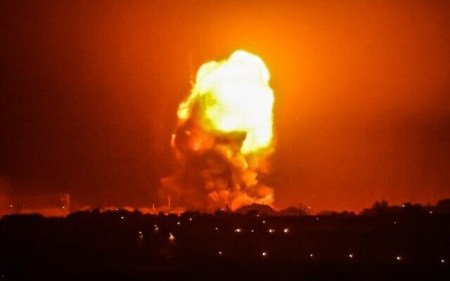
Fire billows from Israeli air strikes in Rafah, in the southern Gaza Strip, on May 11, 2021.(Photo by SAID KHATIB / AFP)

Gantz also threatened Hamas’s leadership, saying its commanders would “be held responsible and pay the price for the aggression.”

The waves of rocket fire began at 6 p.m., the time Hamas had earlier threatened it would attack Israel if it did not remove its security forces from the Temple Mount and the neighborhood of Sheikh Jarrah in East Jerusalem, following weeks of unrest in the capital. Monday saw widespread clashes between Palestinians and Israel Police officers on the Temple Mount, as well as multiple attacks by Palestinian rioters against Israeli civilians. Hundreds of Palestinians were reportedly injured, along with dozens of police officers and a number of Israeli civilians.

In addition to the attack on the capital — the first time Jerusalem was targeted by rocket fire since the 2014 Gaza war — Palestinian terror groups fired rockets and mortar shells at Israeli cities and towns near the Gaza border, mostly at Ashkelon and Sderot, as well as smaller communities in the Sha’ar Hanegev region of southern Israel.

An anti-tank guided missile was also fired at an Israeli civilian’s car that was traveling on a hill south of Sderot, lightly injuring him, the military said. The Palestinian Islamic Jihad took responsibility for the attack and later released footage of the strike.

In the video, the Israeli man can be seen approaching the jeep from a hill overlooking the Gaza Strip. As he gets close, the anti-tank missile is fired at the car, causing a large blast. The man was reportedly blown back from the vehicle by the blast and sustained shrapnel wounds to the face and extremities.

The Israeli Air Force began conducting retaliatory airstrikes on Hamas-controlled targets in the Strip around 6:30 p.m. in response to the attacks from the enclave, including at rocket-launching teams.

The military said its fighter jets bombed a Hamas attack tunnel in the northern Gaza Strip. A number of Hamas members were believed to be inside the tunnel at the time and were killed in the strike. It was not immediately clear if the tunnel crossed into Israeli territory.

In light of the ongoing rocket attacks, Gantz declared the area within 80 kilometers (50 miles) of the Gaza Strip to be under military control, giving the IDF the power to issue directives to civilians there. The IDF ordered schools closed in communities near Gaza on Tuesday and limited gatherings to groups of 10 people outdoors and 50 people indoors. Businesses would be allowed to open only if they had easy access to bomb shelters.

The military also limited gatherings in the Tel Aviv metropolitan area and the Shfela region around Beit Shemesh to 30 people outdoors and 50 people indoors. Schools and businesses there could also only be opened if they had easy access to a bomb shelter. A number of cities in central Israel announced they were preemptively canceling schools on Tuesday as a precautionary measure.
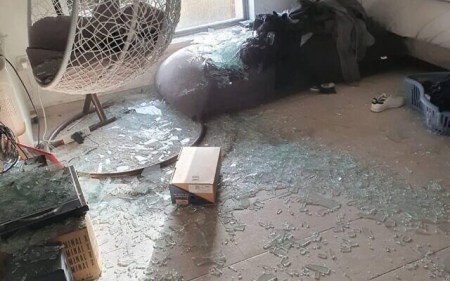
Damage caused to a house outside of Jerusalem that was struck by debris after a rocket fired from the Gaza Strip landed nearby on May 10, 2021. (Courtesy)

Hamas claimed responsibility for firing the seven rockets at Jerusalem, one of which was intercepted by the Iron Dome missile defense system, according to the IDF. One rocket landed near a home in a community outside Jerusalem, causing light damage, but no injuries. Some of the others sparked fires in the forests surrounding the capital, which were quickly extinguished.

The attack triggered sirens in the capital, as well as in Beit Shemesh and surrounding towns. The Knesset plenum was evacuated, as was the Western Wall complex, where thousands of Israelis had gathered to celebrate Jerusalem Day, which marks the reunification of the city after the IDF captured its eastern neighborhoods and the Old City in the 1967 Six Day War.

Zilberman, the military spokesman, said a number of terror groups conducted the rocket launches, but all with the approval and at the direction of Hamas, the de facto ruler of the Gaza Strip.


“We have a clear address: that is Hamas. The group will pay a dear price for its actions. We will respond fiercely,” he said.

Over the past day, the IDF has significantly boosted its presence along the Gaza border both in terms of ground troops and air defense systems, Zilberman said.

The military initially believed that Hamas was not interested in a large-scale conflict with Israel at this time, but that assessment changed over the past two days and the IDF began preparing accordingly.

Recent days have seen a number of rocket and mortar shell attacks from the Gaza Strip, as well as a major return of balloon-borne incendiary and explosive devices being launched from Gaza, which have burned large swaths of southern Israel.

Palestinian terror groups have tied the attacks to the unrest in Jerusalem connected to both prayer on the Temple Mount during the Muslim holy month of Ramadan, and the pending eviction of a number of Palestinian families from their homes in East Jerusalem’s Sheikh Jarrah neighborhood.

Israel has fought three large operations against Hamas and other terror groups in the Gaza Strip since 2008, most recently in 2014 with a 51-day war known as Operation Protective Edge.

Hamas, which is officially dedicated to the destruction of the State of Israel, took effective control of the Gaza Strip in 2007 from the Palestinian Authority in a violent coup. Since then, Israel has imposed a naval blockade on the enclave, as well as stiff control over what can enter the Strip, maintaining that it is necessary in order to prevent terror groups from smuggling weapons into the area.

Times of Israel staff contributed to this report.
Iran sought nuclear weapons, technology for WMDs last year, reports find

Posted May 10, 2021 by davidking1530
Categories: Uncategorized

What a surprise.

https://www.foxnews.com/world/iran-nuclear-weapons-technology-weapons-mass-destruction

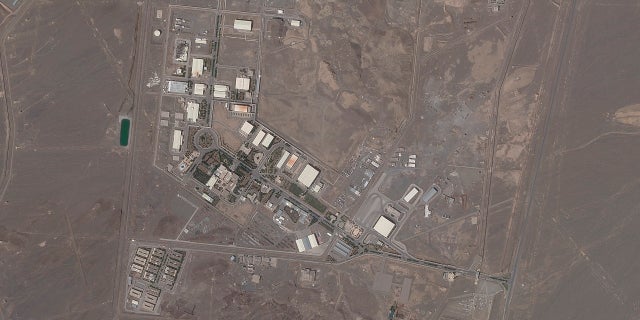
FILE - In this April 14, 2021, file satellite photo provided from Planet Labs Inc. shows Iran's Natanz nuclear facility. (Planet Labs via AP)

The Islamic Republic of Iran made multiple attempts in 2020 to obtain technology for its weapons of mass destruction program and has not stopped its drive to develop atomic weapons, intelligence agencies from the Netherlands, Sweden and Germany recently reported.

The Netherlands’ General Intelligence and Security Service “investigated networks that tried to obtain the knowledge and materials to develop weapons of mass destruction. Multiple acquisition attempts have been frustrated by the intervention of the services,” the agency wrote in its April report.

According to the Dutch report, “The joint Counter-proliferation Unit (UCP) of the AIVD [the General Intelligence and Security Service] and the MIVD [the country’s Military Intelligence and Security Service] is investigating how countries try to obtain the knowledge and goods they need to make weapons of mass destruction. Countries such as Syria, Pakistan, Iran and North Korea also tried to acquire such goods and technology in Europe and the Netherlands last year.”

Iran’s regime was listed under the document’s section on preventing “countries from acquiring weapons of mass destruction.”

The intelligence agency did not provide details on the multiple attempts by the rogue nations to secure weapons of mass destruction technology. The report also did not state whether Iran’s regime illegally obtained technology and equipment for its nuclear program.

The General Intelligence and Security Service under its mandate “conducts investigations, provides information, and mobilizes third parties to safeguard the democratic legal order and national security, to actively reduce risks, and to contribute to foreign policy-making.”

The Netherlands’ MIVD and AIVD intelligence services, according to the report, “conducted intensive research into several very active networks” that are involved in proliferation and use various third parties in European countries. “Consequently, export licenses were verified and acquisition attempts frustrated,” the report said.

The damning findings from the fresh European intelligence are likely to animate broader discussion about whether the U.S. should return to the much-criticized 2015 Iran nuclear deal.

Critics have long argued the atomic accord places what is at best a temporary restriction on the Islamic Republic’s drive to join the club of nations with nuclear weapons.

A spokesperson for Sen. Ted Cruz, R-Texas, told Fox News, “The Iranian regime has never stopped seeking weapons of mass destruction to use against America and our allies. Nevertheless, the Biden administration, like the Obama administration, is committed to dismantling all meaningful pressure against the regime and flooding it with hundreds of billions of dollars.

“Sen. Cruz had fought for years to prevent that from happening, and continues to emphasize that any deal with Iran not brought to the Senate as a treaty and passed by the Senate can and will be reversed by a future administration,” the spokesperson added.

The Biden administration is currently conducting indirect negotiations with Iran’s regime in Vienna about the U.S. rejoining the Joint Comprehensive Plan of Action, the formal name for the 2015 nuclear accord.

The Trump administration withdrew from the nuclear pact in 2018 because U.S. officials believed the deal permitted Tehran’s rulers to build nuclear weapons.

The Swedish Security Service revealed in its intelligence report for 2020 that Iran sought Swedish technology for its nuclear weapons program. According to the document, “Iran also conducts industrial espionage, which is mainly targeted against Swedish hi-tech industry and Swedish products, which can be used in nuclear weapons programs. Iran is investing heavy resources in this area and some of the resources are used in Sweden.”

Iran’s regime wages industrial espionage against the Scandinavian country and targets its industry, the 88-page document notes.

In April, the Bavarian Office for the Protection of the Constitution, the domestic intelligence agency of the southern German state, wrote in its report for 2020: “Proliferation-relevant states like Iran, North Korea, Syria and Pakistan are making efforts to expand on their conventional arsenal of weapons through the production or constant modernization of weapons of mass destruction.”

The German intelligence agency, the rough equivalent of the FBI, noted that “In order to obtain the necessary know-how and corresponding components, these states are trying to establish business contacts with companies in high-technology countries like Germany.”

Jason M. Brodsky, senior Middle East analyst at Iran International, a London-based news organization, told Fox News, “I think these findings underscore the permissive environment that Europe affords for Iran to conduct industrial espionage and a range of other intelligence activities. They also highlight the need for the E3 [Britain, France, Germany] and the United States to obtain credible explanations from Tehran over the uranium traces found at undeclared sites throughout the country as a part of clarifying the outstanding safeguards issues with the IAEA [International Atomic Energy Agency].”

Brodsky continued, “The activities of the Organization of Defensive Innovation and Research (SPND) merit continued scrutiny in light of these revelations. SPND [a subsidiary organization of the Iranian Defense Ministry] inherited Iran’s past nuclear weapons program – Project Amad – and in 2019, the U.S. government found that the organization was functioning in a way so that the intellectual wealth of that program was preserved.

“That is not to mention SPND’s work on chemical weapons research through the Shahid Meisami Group, which the U.S. sanctioned in December 2020. These European intelligence findings demonstrate the need for continued vigilance over this entity and Iran’s ambitions for weapons of mass destruction,” Brodsky said.

The U.S. government – both Republicans and Democrats – have recognized Iran’s regime as the leading state sponsor of international terrorism.

Fox News did not receive an immediate response from Iran’s U.N. mission, its embassy in Berlin or its foreign ministry in Tehran.

US President invites Mossad Chief to discuss Iran and “other matters”

Posted May 2, 2021 by Joseph Wouk
Categories: Uncategorized

The surprise interview initiated by President Joe Biden with Mossad chief Yossi Cohen on Friday, April 30, was prompted by Israel’s concerns over the upcoming US nuclear talks with Iran and also covered “other matters,” that were not specified in the White House readout. DEBKAfile’s sources note that this event was unusual in more than one respect: Presidential meetings with foreign spy chiefs do take place, but they are rarely made public. This one was formally announced by the White House.

Its background: During the week, a high-ranking Israeli delegation led by Cohen, national security adviser Meir Ben Shabbat and Military Intelligence Chief Maj. Gen. Tamir Hayman sat down with their American counterparts. After they offered new intelligence, the argument for and against US diplomacy with Tehran went back and forth with neither side convinced. President Biden apparently decided to step outside his schedule for the task of selling the Issue to Israel. His decision was unconventional in another respect: Yossi Cohen was the first Israeli  official to be received at the White House by President Biden – even before Prime Minister Binyamin Netanyahu was invited. This denoted the urgency the president attached to clearing the air between his administration and Israel on the Iranian issue. The Mossad chief, on receiving the call from the White House, checked with the prime minister, who briefed him and told him to go ahead.

Israel’s ambassador to the US: We won’t be bound by Iran deal

Posted April 30, 2021 by Joseph Wouk
Categories: Uncategorized

After Biden says US coordinating with allies on reentering pact, Gilad Erdan says Washington respects Jewish state’s need for ‘freedom of action’

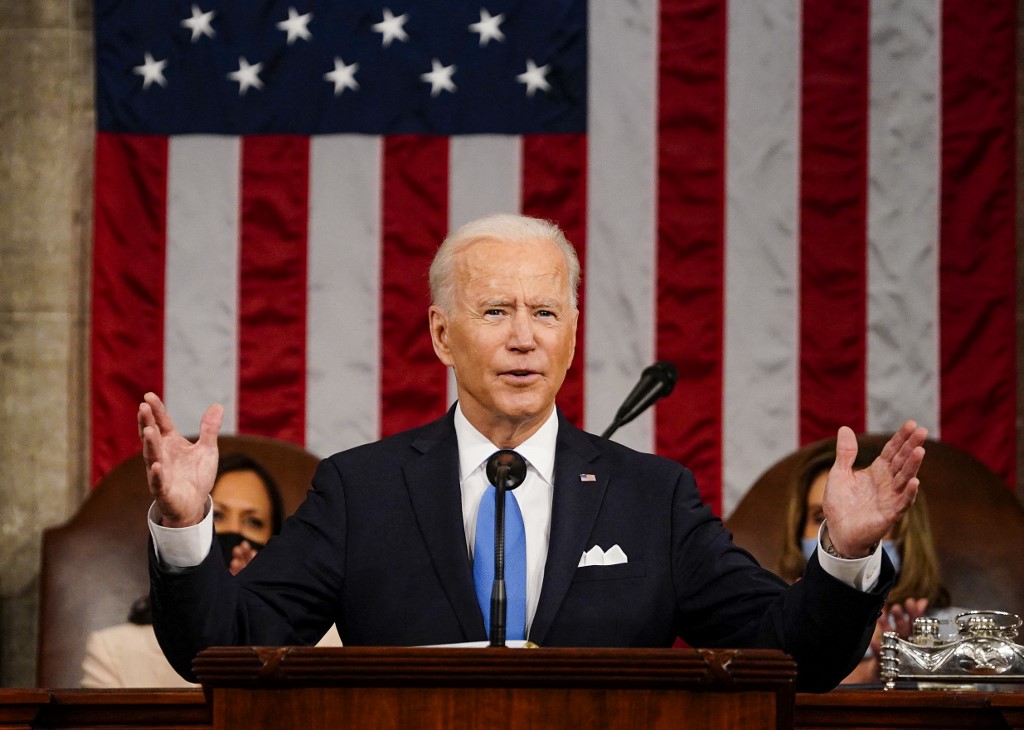
US President Joe Biden addresses a joint session of Congress at the US Capitol in Washington, DC, on April 28, 2021. (Melina Mara / POOL / AFP)

US President Joe Biden addresses a joint session of Congress at the US Capitol in Washington, DC, on April 28, 2021. (Melina Mara / POOL / AFP)

After US President Joe Biden made only brief mention of Iran’s nuclear program during his first speech to Congress, Israel’s Ambassador to the US Gilad Erdan said Thursday that Jerusalem will not allow its security to be dependent on or bound by an international agreement that it is not a party to.

Erdan’s comments came hours before he was slated to attend a meeting with Mossad spy agency chief Yossi Cohen and US Secretary of State Antony Blinken that was expected to touch on the efforts to breathe new life into the limping 2015 Iran deal.

He said that although the Biden administration is seeking to reenter the deal and bring Iran back to compliance, the US accepts Israel’s right to defend itself, a value that Israeli officials drove home during talks in Washington this week.

Israeli defense officials told their US counterparts that “the freedom of action of Israel to prevent Iran from becoming an existential threat is a freedom of action that will be preserved,” he said.

It is a demand that “the current government respects,” Erdan added and noted that Israel’s self-defense needs, including against other regional threats, has been backed in recent White House statements.

He said Israel is committed to preventing Iran from obtaining nuclear weapons “in any way possible and I think the international committee led by the US understands that.”

Erdan said that during the Washington talks, where Israeli and US officials discussed ongoing negotiations in Vienna among the parties to the Iran deal, it was agreed that there would be clear communication between the sides.

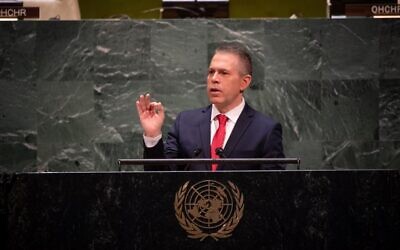
Israeli Ambassador Gilad Erdan speaks at the UN in New York. (Shahar Azran/Israeli Mission to the UN)

“We agreed on the principle of transparency and not to surprise each other and I think we are both keeping to it,” he said.

Erdan conceded that Israel and the US have different opinions on the Iran deal — Israel has staunchly opposed the pact from the start — but said that is the only difference on security matters between Jerusalem and Washington.

“Beyond that, all the cooperation activities are continuing as usual,” he said.

Commenting on Biden’s speech to Congress, which made only a brief mention of Iran’s nuclear program and none of Israel by name, Erdan said the US president has made it clear that he will prioritize dealing with the coronavirus outbreak and economic recovery ahead of international issues, which are anyway dominated by economic concerns related to China.

“I think we can all be very, very encouraged that his commitment to preventing Iran from getting nuclear weapons was mentioned in his speech,” Erdan said. “There is a lot to be optimistic about.”

During his speech, Biden said: “On Iran and North Korea’s nuclear programs that present a serious threat to America’s security and the security of the world – we are going to be working closely with our allies to address the threats posed by both of these countries through diplomacy as well as stern deterrence.”

Israeli and American national security advisers met in Washington on Tuesday to discuss concerns over Iran’s nuclear ambitions and US efforts to reenter the deal between Tehran and world powers.

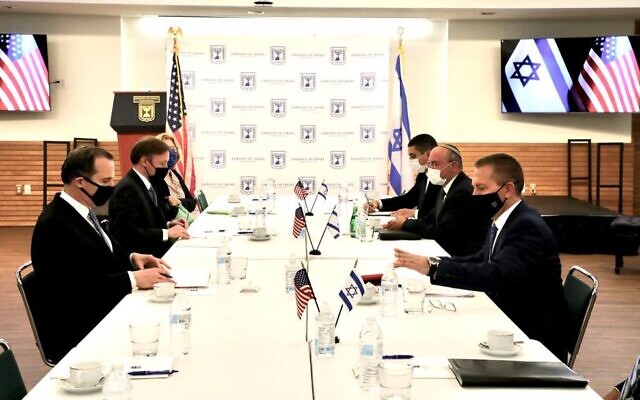
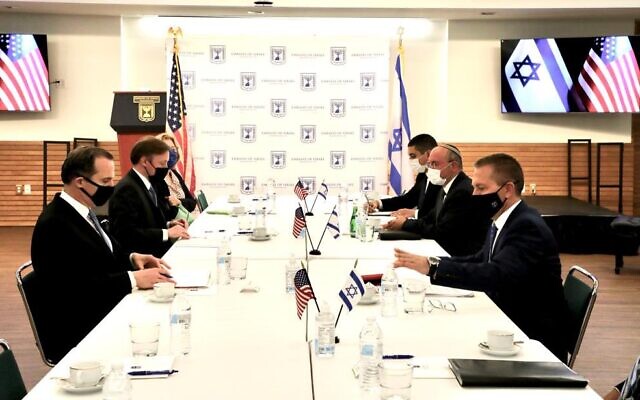
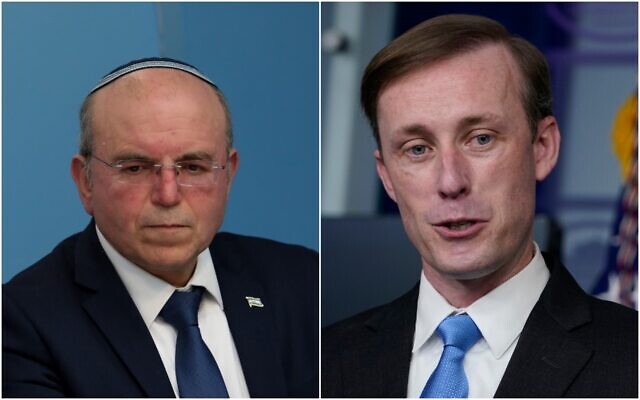
Israeli officials, including Ambassador Gilad Erdan (R), National Security Adviser Meir Ben-Shabbat (2R) meet with US officials Brett McGurk (L), US National Security Adviser Jake Sullivan (2L) and Barbara Leaf (3L) at the Israeli embassy in Washington DC on April 27, 2021 (Embassy of Israel)

The meeting between National Security Council chairman Meir Ben-Shabbat and his counterpart, Jake Sullivan, marked the first in-person meeting in the United States of high-level officials from the two countries since Biden entered the White House. Erdan was also at the meeting.

“The United States and Israel agreed on the significant threat posed by Iran’s aggressive behavior in the region, and US officials underscored President Biden’s unwavering support for Israel’s right to defend itself,” the White House said in a statement after the meeting.

Ben-Shabbat and Sullivan head the bilateral strategic group aimed at Israeli-US cooperation in the effort to prevent Iran from obtaining a nuclear weapon. The group has convened virtually twice in recent months.

Ahead of their departure to Washington, Prime Minister Benjamin Netanyahu instructed the defense officials participating in the mission to voice objection to the US return to the Iran nuclear deal, but not to hold talks on the issues.

Netanyahu emphasized in a meeting with the delegation last week that Israel is not a party to the nuclear agreement with Iran, and not committed to it.

“Israel is committed to its own security interests only and will act accordingly,” an unnamed Israeli official reportedly said.

Meanwhile, indirect talks are taking place in Vienna between Iran, the US and other major powers aimed at reviving the Joint Comprehensive Plan of Action, which has been on life support since Biden’s predecessor Donald Trump withdrew from the agreement in 2018. Trump’s administration subsequently issued a host of sanctions against Iran as part of its “maximum pressure” strategy aimed at coaxing Tehran into a stricter agreement to curb its nuclear weapons program.

Biden has sought to reenter the US into the JCPOA, but has refused to do so until Iran returns to compliance with the agreement. Following Trump’s withdrawal, Iran engaged in a rush to enrich uranium, recently ramping up levels to an unprecedented 60 percent, in a policy that has been vehemently opposed by the international community.

Blinken, Yossi Cohen meet in Washington as Israel presses its case on Iran

Posted April 30, 2021 by Joseph Wouk
Categories: Uncategorized

Israeli officials say US ‘respects’ Israel’s ‘freedom of action’; US says it’s acting with ‘transparency’ toward Jerusalem, both nations ‘share a common interest’ on Iran

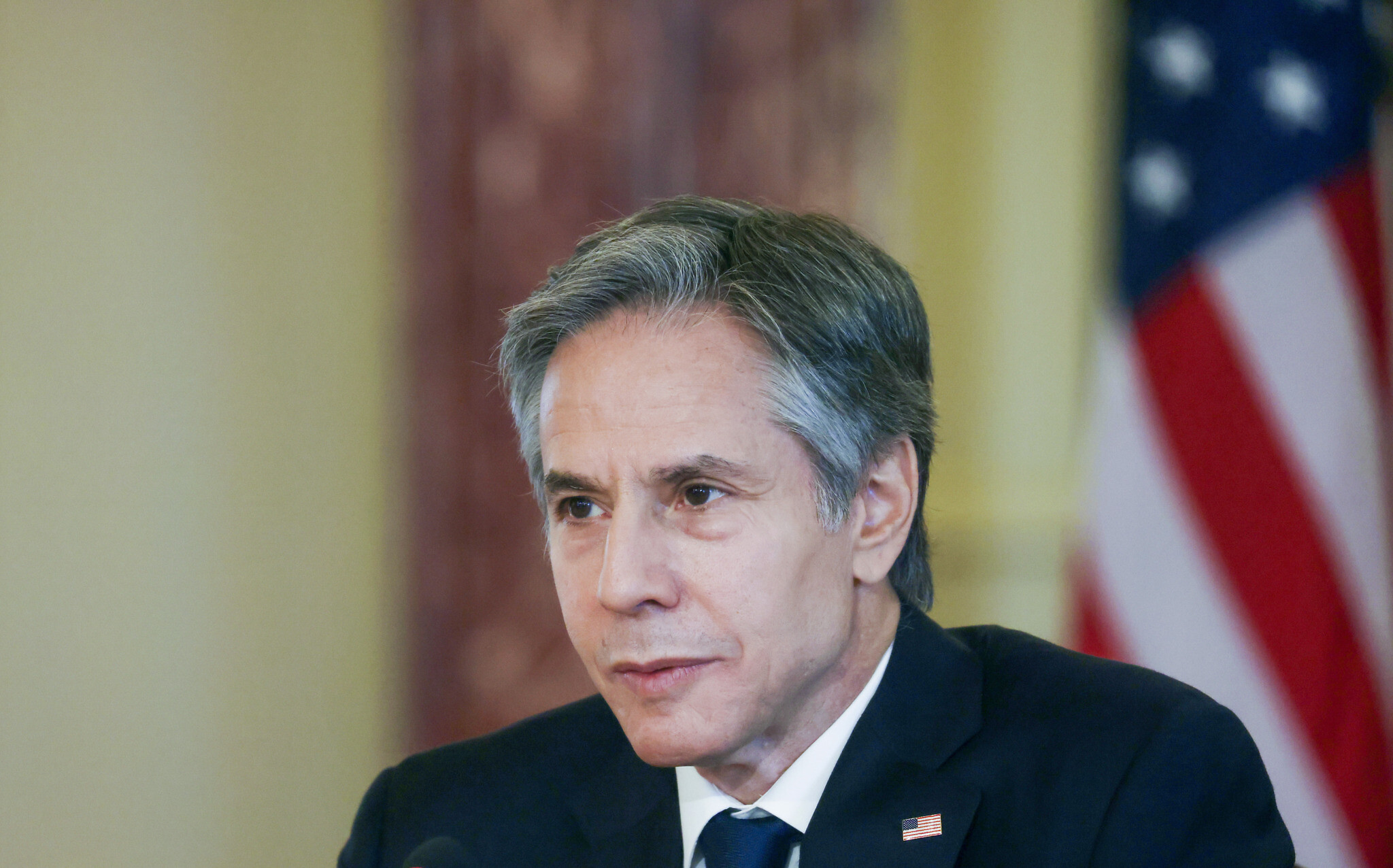
Secretary of State Antony Blinken participates in a virtual bilateral meeting with Kenyan President Uhuru Kenyatta at the State Department in Washington, Tuesday, April 27, 2021. (Leah Millis/Pool via AP)

Secretary of State Antony Blinken participates in a virtual bilateral meeting with Kenyan President Uhuru Kenyatta at the State Department in Washington, Tuesday, April 27, 2021. (Leah Millis/Pool via AP)

US Secretary of State Anthony Blinken met Thursday in Washington with visiting Mossad chief Yossi Cohen and Israel’s ambassador Gilad Erdan, as Israel sought to convince Washington to seek an improved deal to prevent Iran from attaining nuclear weapons rather than reenter the limping 2015 accord.

The two-hour meeting was the second this week in Washington involving senior officials from the two countries and underscored Israel’s unease with ongoing indirect nuclear negotiations between Iran and the United States in Vienna, the officials said. Although other issues were discussed, Israel used Thursday’s meeting to “express strong concerns” about Iran, one of the officials said.

Blinken attended Thursday’s meeting along with his newly confirmed deputy, Wendy Sherman, President Joe Biden’s national security adviser Jake Sullivan and two other senior officials, Brett McGurk from the National Security Council and Derek Chollet from the State Department. Cohen and Erdan represented Israel.

The State Department declined to comment on the meeting or even to confirm that it had happened, but said the Biden administration is committed to coordination and transparency with Israel in its nuclear diplomacy with Iran.

Head of the Mossad Yossi Cohen speaks at a cyber conference at Tel Aviv University on June 24, 2019. (Flash90)

Earlier Thursday, Erdan said the US understood Israel retained “freedom of action” to act against Iranian activities that threatened the Jewish state.

“The freedom of action of Israel to prevent Iran from becoming an existential threat is a freedom of action that will be preserved,” Erdan said, adding that “the current government respects” that Israeli demand.

As the officials met in Washington, Israel’s intelligence minister, Eli Cohen, joined the chorus of Israeli officials sounding the alarm on Iran and insisting on Israel’s operational freedom.

Israeli warplanes, Cohen said, “can reach everywhere in the Middle East — and certainly Iran.”

He warned that “a bad deal will send the region spiraling into war. Anyone seeking short-term benefits should be mindful of the longer term. Israel will not allow Iran to attain nuclear arms. Iran has no immunity anywhere.”

Cohen also urged international pressure on Iran’s other activities, including its “destabilizing other countries.”

Mossad chief Cohen and National Security Adviser Meir Ben-Shabbat have been in Washington for the past few days for high-level meetings with American counterparts seeking to clarify Israel’s position and needs as the Biden administration works to rejoin the 2015 deal imposing limits on Iran’s nuclear program in exchange for the lifting of US and international sanctions.

State Department Spokesman Ned Price on Thursday would not confirm the Cohen-Blinken meeting, but said the two countries were coordinating closely on the Iran issue.

“We have, as you’ve heard from State Department officials, updated our Israeli counterparts before every round of negotiations, after every round of negotiations and we’ve been consulting with them during these negotiations as well,” Price said, according to The Hill.

“So, we have conducted ourselves with a great deal of transparency knowing that the United States and Israel share a common interest here, of course, and that is seeing to it that Iran is verifiably and permanently prevented from acquiring a nuclear weapon.”

A Tuesday meeting between Ben-Shabbat and his American counterpart Jake Sullivan also dealt with the “significant threat” of Iran’s behavior in the region, the White House said at the time.

Israeli officials, including Ambassador Gilad Erdan (R), National Security Adviser Meir Ben-Shabbat (2R) meet with US officials Brett McGurk (L), US National Security Adviser Jake Sullivan (2L) and Barbara Leaf (3L) at the Israeli embassy in Washington DC on April 27, 2021 (Embassy of Israel)

Price also told reporters on Thursday that US Special Envoy on Iran Robert Malley joined in on the Ben-Shabbat-Sullivan meeting to brief the two officials on efforts in Vienna to bring the US and Iran back to the table.

The two national security advisers agreed at the meeting to establish an interagency working group dealing with the threat to Israel and other US allies in the region from Iranian drones and precision-guided missiles.

The Biden administration has said returning Iran to compliance with the nuclear deal was a priority after former president Donald Trump withdrew from the accord in 2017.

US Senate confirms Colin Kahl, a shaper of Iran deal, to senior defense post

Posted April 29, 2021 by Joseph Wouk
Categories: Uncategorized

Republicans and right-wing pro-Israel community strongly objected to the nomination

Colin Kahl, delivers a speech during a panel discussion as part of the US-Islamic World Forum in the Qatari capital Doha on June 1, 2015. (AFP via Getty Images)

Colin Kahl, delivers a speech during a panel discussion as part of the US-Islamic World Forum in the Qatari capital Doha on June 1, 2015. (AFP via Getty Images)

WASHINGTON (JTA) — The Senate confirmed Colin Kahl to be undersecretary of defense for policy, a Biden nomination that survived a fierce challenge from the pro-Israel right, which targeted Kahl for his role in shaping the 2015 Iran nuclear deal.

Kahl was confirmed 49-45 in Tuesday’s vote along party lines.

Republicans, spurred by the right-wing pro-Israel community, targeted Kahl principally for his role when he was national security adviser to then-Vice President Joe Biden in shaping the Iran deal, which traded sanctions relief for a rollback of Iran’s nuclear program.

Biden, now president, wanted Kahl back in government as the administration seeks to reenter the agreement. Former president Donald Trump left the deal in 2018, agreeing with conservatives who said it did not do enough to contain Iran.

Since the US pullout, Iran has accelerated its nuclear program, and Biden thinks the deal’s framework is the best means of keeping Iran from acquiring a nuclear weapon.

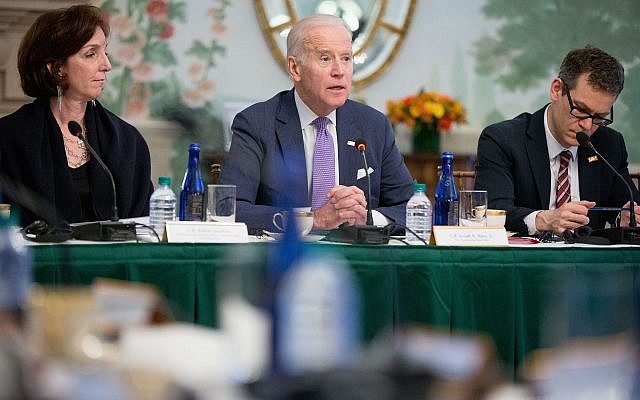
Then Vice President Joe Biden, center, flanked by Assistant Secretary of State for Western Hemisphere Affairs Roberta Jacobson, left, and National Security Adviser to the Vice President Colin Kahl, at the Blair House in Washington, February 24, 2016. (Andrew Harnik/AP)

Christians United for Israel launched a six-figure ad buy in West Virginia targeting Joe Manchin, a moderate Democrat who sometimes votes with Republicans.

It didn’t work, as Manchin said he was on board with Kahl. Three Israeli generals who worked with Kahl when he was with the Obama administration effectively endorsed him, as did a cadre of Democrats who are close to the pro-Israel community.

US eyes major rollback of Iran sanctions to revive nuclear deal

Posted April 29, 2021 by Joseph Wouk
Categories: Uncategorized

American officials open to lifting penalties tied to terrorism, missile development, human rights; relief would likely anger Israel, Gulf states

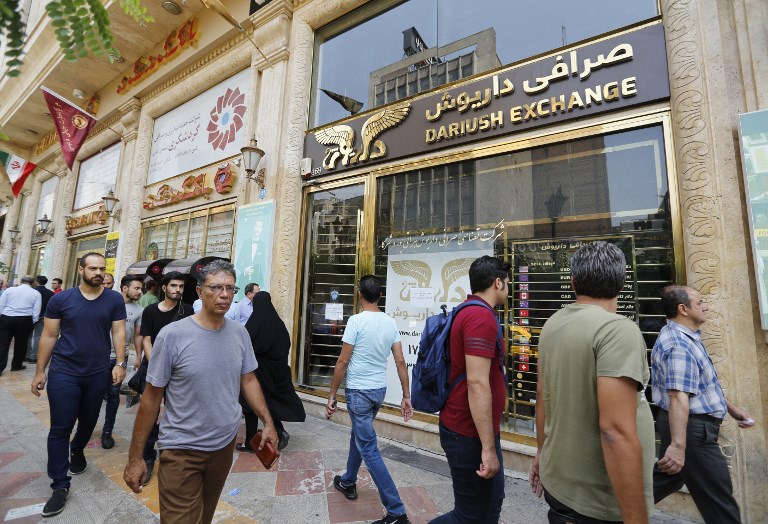
People walk in front of a currency exchange shop in the Iranian capital Tehran on August 8, 2018. (AFP PHOTO / ATTA KENARE)

People walk in front of a currency exchange shop in the Iranian capital Tehran on August 8, 2018. (AFP PHOTO / ATTA KENARE)

WASHINGTON (AP) — The Biden administration is considering a near wholesale rollback of some of the most stringent Trump-era sanctions imposed on Iran in a bid to get the Islamic Republic to return to compliance with a landmark 2015 nuclear accord, according to current and former US officials and others familiar with the matter.

As indirect talks continue this week in Vienna to explore the possibility of reviving the nuclear deal, American officials have become increasingly expansive about what they might be prepared to offer Iran, which has been driving a hard line on sanctions relief, demanding that all US penalties be removed, according to these people.

American officials have refused to discuss which sanctions are being considered for removal. But they have stressed that they are open to lifting non-nuclear sanctions, such as those tied to terrorism, missile development and human rights, in addition to those related to the nuclear program.

Biden administration officials say this is necessary because of what they describe as a deliberate attempt by the Trump administration to stymie any return to the deal. Under the 2015 agreement, the United States was required to lift sanctions tied to Iran’s nuclear program, but not the non-nuclear sanctions.

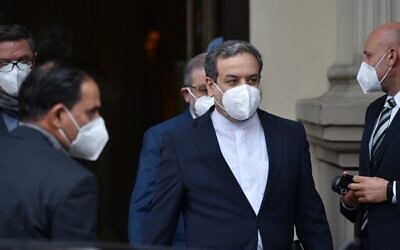
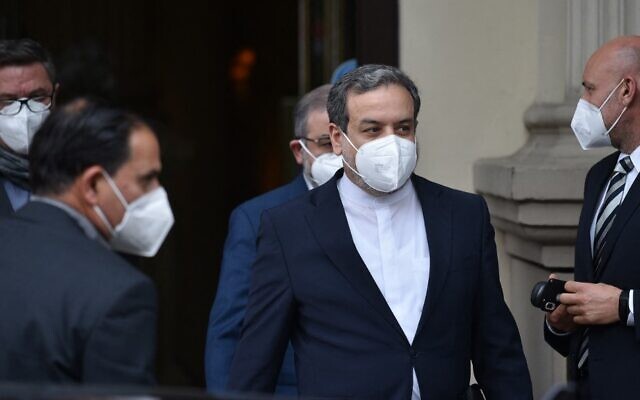
Abbas Araghchi, political deputy at the Ministry of Foreign Affairs of Iran, is leaving the ‘Grand Hotel Wien’ after the closed-door nuclear talks in Vienna on April 16, 2021, where diplomats of the EU, China, Russia and Iran hold their talks. (JOE KLAMAR / AFP)

When former president Donald Trump re-imposed sanctions after withdrawing from the deal in 2018, he not only put the nuclear sanctions back in but also added layers of terrorism and other sanctions on many of the same entities. In addition, the Trump administration imposed an array of new sanctions on previously unsanctioned entities.

This has put the current administration in an awkward position: Iran is demanding the removal of all sanctions. If the US doesn’t lift at least some of them, Iran says it won’t agree to halt its nuclear activities barred by the deal known as the Joint Comprehensive Plan of Action, or JCPOA.

But if the Biden administration makes concessions that go beyond the nuclear-specific sanctions, Republican critics and others, including Israel and Gulf Arab states, are likely to seize on them as proof that the administration is caving to Iran. Former secretary of state Mike Pompeo has led the charge among Trump alumni to denounce any easing of sanctions.

Former Trump administration officials say all the sanctions are legitimate. Gabriel Noronha, a former State Department senior adviser on Iran, said all the Trump-era sanctions had been approved by career Justice Department lawyers and would have been rejected if they weren’t legitimate.

On the eve of renewed sanctions by Washington, Iranian protesters burn a dollar banknote and a US makeshift flag during a demonstration outside the former US embassy in the Iranian capital Tehran on November 4, 2018, marking the anniversary of its storming by student protesters that triggered a hostage crisis in 1979. (ATTA KENARE / AFP)

But a senior State Department official involved in the negotiations said officials now “have to go through every sanction to look at whether they were legitimately or not legitimately imposed.”

The official, who like the others spoke on condition of anonymity to discuss the private talks, also said the US would be prepared to lift sanctions that would otherwise deny Iran the benefits it’s entitled to under the deal, not just those specifically related to nuclear activity. Those sanctions could include restrictions on Iran’s ability to access the international financial system, including dealing in dollar-based transactions.

“There are sanctions that are inconsistent with the JCPOA and as we have said, if Iran resumes its compliance with the nuclear deal … we would be prepared to lift those sanctions that are inconsistent with the JCPOA,” State Department spokesman Ned Price said last week. He declined to elaborate on what might be “inconsistent” with the deal.

Despite the reticence of Price and the senior official, their comments suggested that sanctions imposed on Iran’s Central Bank, its national oil and shipping companies, its manufacturing, construction and financial sectors are on the block. Deal critics briefed on aspects of the Vienna negotiations say they suspect that is indeed the case.

This image taken from the Twitter account of President Donald J. Trump @realDonaldTrump, shows what looks like a movie-style poster that takes creative inspiration from the TV series ‘Game of Thrones’ to announce the re-imposition of sanctions against Iran. Trump tweeted a photo of himself with the words ‘Sanctions are Coming’ Nov. 5. The US sanctions on Iran had been lifted under a 2015 nuclear pact, but they are taking effect on Monday. (Donald J. Trump Twitter account via AP)

That’s because the bank, oil, shipping and other sanctions, all ostensibly imposed by the Trump administration for terrorism, ballistic missile and human rights concerns, also affect nuclear sanctions relief.

Current officials say no decisions have yet been made and nothing will be agreed in Vienna until everything regarding sanctions relief and Iran’s return to compliance with the nuclear deal has been settled.

But critics of the nuclear deal fear the administration will go beyond even what has been suggested by the administration’s oblique comments. They suspect that sanctions on people, companies, government agencies or other entities identified for nuclear sanctions relief in the 2015 deal will be cleared; even if they were subsequently penalized on other grounds.

“The administration is looking to allow tens of billions of dollars into the coffers of the regime even if it means lifting sanctions on major entities blacklisted for terrorism and missile proliferation,” said Mark Dubowitz, a prominent Iran deal critic and CEO of the Foundation for Defense of Democracies.

“They’re even looking to give the regime indirect access to the US dollar through the US financial system so that international companies can clear transactions with Iran through the US dollar,” said Dubowitz, who is frequently criticized for his hard-line stance on Iran but has also been asked for his views on sanctions by the administration.

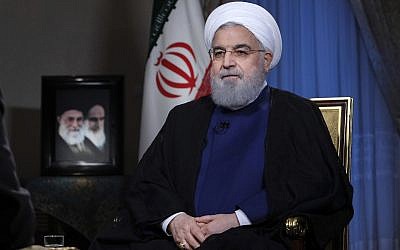
Iran’s President Hassan Rouhani addresses the nation in a televised speech in Tehran, Iran, August 6, 2018. (Iranian Presidency Office via AP)

The State Department spokesman’s reply to such concerns only increased the worries of the critics.

“The JCPOA, that original agreement, spells out precisely what is allowed, precisely what is prohibited in order for a country to be in compliance with it. That remains the blueprint for all of this,” Price said.

The Obama administration grappled with much the same issue after the conclusion of the nuclear deal in 2015. It took the position that some sanctions previously imposed by it and former President George W. Bush’s administration for terrorism reasons should actually be classified as nuclear sanctions and therefore lifted under the deal.

Still, many countries and international companies were hesitant to jump into the Iranian market for fear that the sanctions relief was not clear-cut and that a future US president could re-impose the sanctions. Now, that that has happened, and even before an agreement has been concluded in Vienna, that concern has resurfaced.

Already, Republicans in Congress and opponents of the Iranian government are stepping up efforts to codify Trump’s hard-line stance on Iran with new legislation. Although a law to bar a return to the nuclear deal is unlikely to pass, there is wide bipartisan support for resolutions encouraging the administration to take a tougher line on Iran.

Such a resolution was introduced on Wednesday with more than 220 Democratic and Republican co-sponsors. In it, they call for the administration to recognize “the rights of the Iranian people and their struggle to establish a democratic, secular, and non-nuclear Republic of Iran while holding the ruling regime accountable for its destructive behavior.”

In DC, Israel’s top spy and security wonk face a mission impossible on Iran

Posted April 28, 2021 by Joseph Wouk
Categories: Uncategorized

Meir Ben-Shabbat and Yossi Cohen are well-regarded in Washington, but their trip is unlikely to prevent the Biden administration from barreling toward deal with Tehran

Lazar Berman
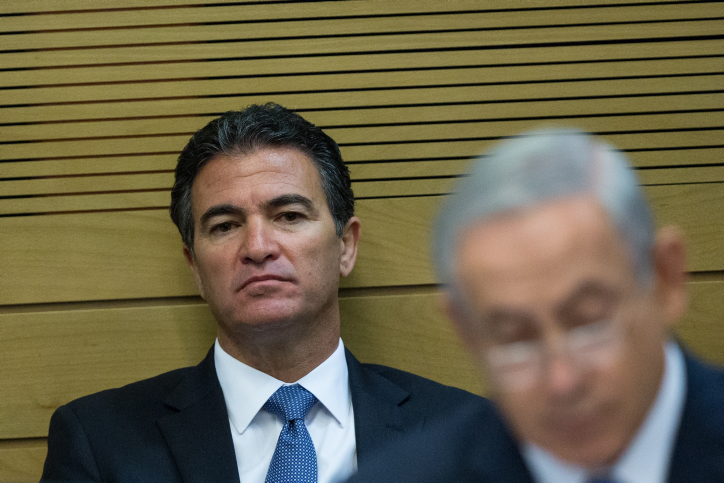
Yossi Cohen, then the national security adviser, is seen in a committee meeting at the Israeli parliament on December 8, 2015, sitting behind Prime Minister Benjamin Netanyahu. (Yonatan Sindel/Flash90)

Yossi Cohen, then the national security adviser, is seen in a committee meeting at the Israeli parliament on December 8, 2015, sitting behind Prime Minister Benjamin Netanyahu. (Yonatan Sindel/Flash90)

Senior Israeli national security officials are in Washington for their first face-to-face meetings in the United States with their Biden administration counterparts. The focus of the conversations is squarely on the terms of the US return to the 2015 nuclear deal, which Iran has been gradually and openly violating.

Though they are senior figures and well-respected in Washington, Mossad agency chief Yossi Cohen and National Security Advisor Meir Ben-Shabbat face a difficult task. As talks on the future of the deal progress in Vienna, it is becoming increasingly clear that the US and Iran will eventually reach an agreement — and there’s nothing Israeli officials can do to stop it.

The question, then, is what the officials wish to achieve, and whether they stand a chance to influence American policy.

“I think they can move the needle a bit,” said Eran Lerman, vice president of the Jerusalem Institute for Strategy and Security and past deputy director of Israel’s National Security Council. “I don’t think it’s going to change the direction.”

Both the US and Israel are seeking to avoid the bitter diplomatic fight that unfolded publicly in the lead-up to the 2015 Joint Comprehensive Plan of Action, as the Iran deal is formally known.

“The pattern is that before and after each round in Vienna, the US wants to consult Israel,” explained David Makovsky, Ziegler distinguished fellow at the Washington Institute for Near East Policy. “Each side is trying to learn the lessons of 2015.”

Israeli National Security Council chairman Meir Ben-Shabbat (right), and US National Security Advisor Jake Sullivan. (Flash90, AP)

The nations set up a strategic group, which last convened on April 13, to coordinate their efforts to prevent Iran from acquiring nuclear arms. The group is led by Biden’s National Security Advisor Jake Sullivan and his Israeli counterpart Ben-Shabbat, who met on Tuesday in Washington.

Though ongoing updates are important, Israel is more concerned about what comes next.

The major gap between Israel and the US, one that may well be unbridgeable at this point, is around the question of whether there is any value in returning to the original JCPOA. Though Biden administration officials have promised to deal with Iran’s missile production and activities across the Middle East in subsequent talks, the first step in their eyes is to get Iran back into compliance with international demands on its nuclear program.

A return to the original deal “is the floor and not the ceiling,” said a source familiar with the administration’s thinking on the talks. “It doesn’t stop there.”

This approach offers tangible and immediate benefits. To return to compliance, Iran would have to hand over enriched uranium it currently possesses in violation of the JCPOA limits.

“The US approach is to say, by locking in the current deal, they’re going to have to get rid of over 2,000 kilo — almost two bombs worth — of low-enriched uranium,” Makovsky said.

David Makovsky (screen capture: YouTube)

The next phase of talks – over issues like missiles and support for armed proxies – would then begin with Iran’s stockpile of low-enriched uranium back down to 300 kilograms.

“The administration’s view is let’s first lock in what we have, and ensure that a follow-on deal is not a high-stakes gamble where they keep accumulating and accumulating,” Makovsky said.

Israel contends that in order to get Iran to return to the original deal, the US will have to give up its main source of leverage – sanctions reinstated by former president Donald Trump that have devastated Iran’s economy — rendering a new agreement reining in its missile activity and support for proxies even less likely.

There is certainly no guarantee that a new and improved deal – “JCPOA 2.0” – will ever actually come about.

“The president and the secretary of state keep saying that they want a longer and stronger deal,” Makovsky said. “So the question is, is 2.0 real, or is merely aspirational? And if it’s real, what is the economic leverage that will ensure that Iran will sign up for 2.0?”

“Longer” refers to extending the “sunset clauses” in which limits on uranium enrichment end in 2025 and 2030. Though the deal technically prohibits Iran from ever developing a nuclear weapon, detractors of the agreement say these clauses will allow Iran to do so with impunity once the sanctions against the regime end. “Stronger” means more access for inspectors and limits on Iranian activities beyond its nuclear program.

As the Biden administration focuses its efforts on sealing an agreement for a return to the original deal, it is avoiding speaking publicly about its plans for a follow-on deal so as not to add any further obstacles to the talks in Vienna. But this understandably unsettles Israel and its strategic partners in the region, and increases the fear that the US won’t have enough leverage left once it removes most sanctions.

Ben-Shabbat and Cohen are likely also trying to understand how two looming deadlines are affecting America’s approach to the negotiations. In May, a “temporary bilateral technical understanding” between Iran and the IAEA will end, which would drastically scale back inspectors’ access to Iranian nuclear sites. The next month, Iran will hold presidential elections, in which many expect a hardline candidate to prevail.

Abbas Araghchi, political deputy at the Ministry of Foreign Affairs of Iran, leaves the ‘Grand Hotel Wien’ after the closed-door nuclear talks in Vienna on April 16, 2021, where diplomats of the EU, China, Russia and Iran hold talks. (JOE KLAMAR / AFP)

The Israelis, for their part, are sharing new intelligence with their American counterparts on Iran’s nuclear program, and will argue that their ongoing alleged covert strikes on Iranian nuclear facilities and on Tehran’s proxy forces in the region should not be curtailed as talks move forward in Vienna.

“I think they will make the case very forcefully…that the freedom of action that Israel maintains is an asset, not a liability for the Americans,” said Lerman.

A non-trip?

Despite the senior-level visits to Washington, it’s hard to ignore a inescapable sense of futility. The fundamental disagreement between Israel under Benjamin Netanyahu and the US under Joe Biden is real and too wide to be bridged.

“You have this Israeli delegation that’s preaching a certain gospel, and a group of senior Americans who really couldn’t care less,” argued Ori Goldberg of the IDC Lauder School of Government.

Israel, with its predilection toward tactical brilliance, seems to think that there is some piece of intelligence it has garnered — however impressively — that could sway the Biden administration. But the American president and his advisers have made a political determination based on their own approach and worldview, not on a particular fact or intelligence.

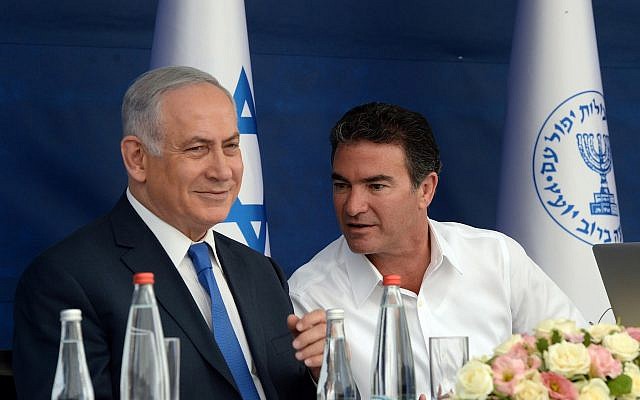
Prime Minister Benjamin Netanyahu (left) and Mossad head Yossi Cohen during a toast for the Jewish New Year on October 2, 2017. (Haim Zach/GPO)

To compound the inefficacy of the Israeli mission, the two senior figures who made the trip are seen as Netanyahu loyalists in the eyes of an administration that is no fan of the prime minister. IDF Chief of Staff Aviv Kohavi earlier this week dropped out of the trip, ostensibly because of escalating rocket fire from Gaza, removing the figure least identified with Netanyahu and with interlocutors in the Pentagon least affected by the political change in Washington.

“Both Yossi Cohen and Meir Ben-Shabbat at this stage are political operatives,” said Goldberg. “They’re not greeted with elation by senior officials in the Biden administration. “

“It’s a non-trip,” he added, arguing that instead of a coordinated trip, this was a set of disjointed individual visits.

“There is a problem to some extent,” agreed Lerman, “because some Israelis in high places feed the perception that essentially we are talking about a political posture rather than a professional message. That detracts from the effectiveness of the mission.”

At the same time, Lerman emphasized, Cohen and Ben Shabbat “represent serious, effective, professional establishment figures. They are not their master’s voices in any sense of the words.”

Others see no issue with the top Israeli officials making the trip, but believe that it is their US counterparts who make the visits unlikely to bear much fruit.

Danielle Pletka (photo credit: AEI, courtesy)

“The Israeli government is the Israeli government and these are its senior-most national security officials,” emphasized Danielle Pletka, senior fellow at the American Enterprise Institute in Washington, DC.

“As to whether the Biden administration will listen to them, these are the same people who were in the Obama administration. There’s no reason to believe they would act any differently than they did then.”

IDF probing why air defenses didn’t intercept Syrian anti-aircraft missile

Posted April 24, 2021 by Joseph Wouk
Categories: Uncategorized

Incoming projectile exploded in mid-air overnight, sending debris crashing down in southern Israel; reverberations of an explosion were felt in central Israel, Jerusalem

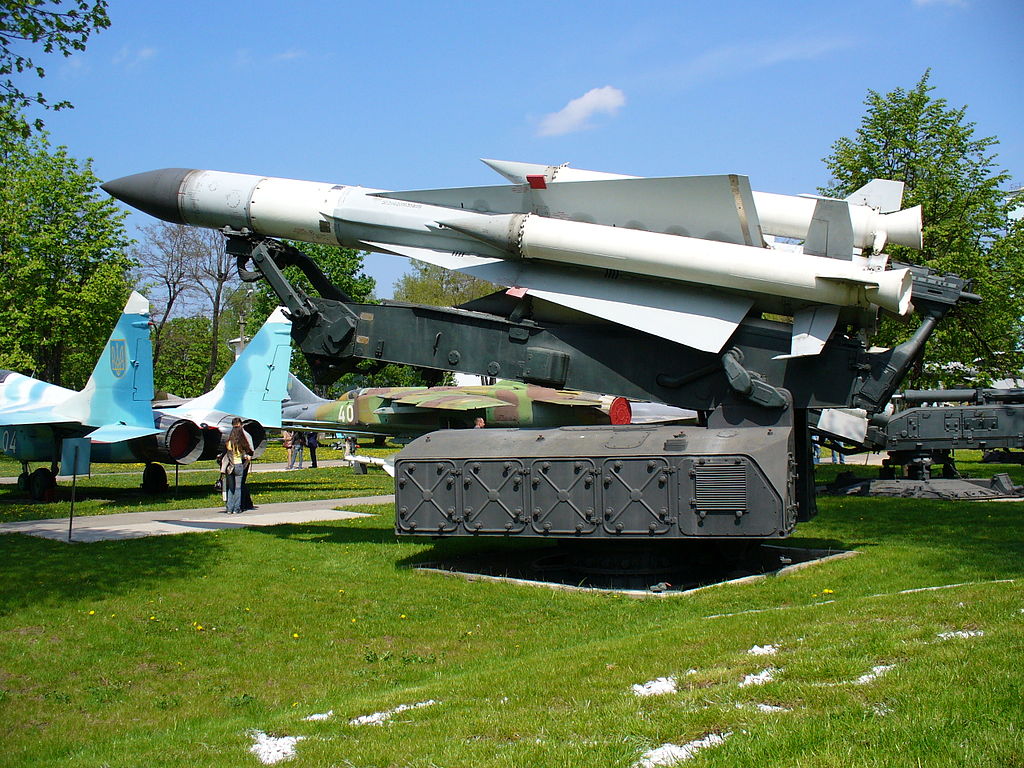
An SA-5 interceptor missile on display at the Ukrainian Air Force Museum. (George Chernilevsky/Wikimedia/CC BY-SA 3.0)

An SA-5 interceptor missile on display at the Ukrainian Air Force Museum. (George Chernilevsky/Wikimedia/CC BY-SA 3.0)

The Israel Defense Forces launched an investigation to determine why its air defenses failed to intercept an errant surface-to-air missile fired from Syria that landed in southern Israel on Thursday morning.

The Syrian missile exploded in mid-air, sending fragments crashing down, with pieces landing in the community of Ashalim, some 40 kilometers from the nuclear reactor in Dimona, without causing injuries or significant damage.

“The IDF worked to prevent a potential strike on critical assets in the State of Israel. A SA-5-model of surface-to-air missile was fired, passed through the area. There was an attempt to intercept it, which did not succeed. We are still investigating the event,” Defense Minister Benny Gantz said at a press conference in Tel Aviv.

“Normally we see different outcomes,” Gantz added.

Shortly after 1:30 a.m. on Thursday, Israeli fighter jets conducted a series of airstrikes on targets in the Syrian Golan. In response, Syrian air defense units fired a large number of anti-aircraft missiles, notably SA-5 missiles, at the attacking Israeli planes, according to Syrian state media.

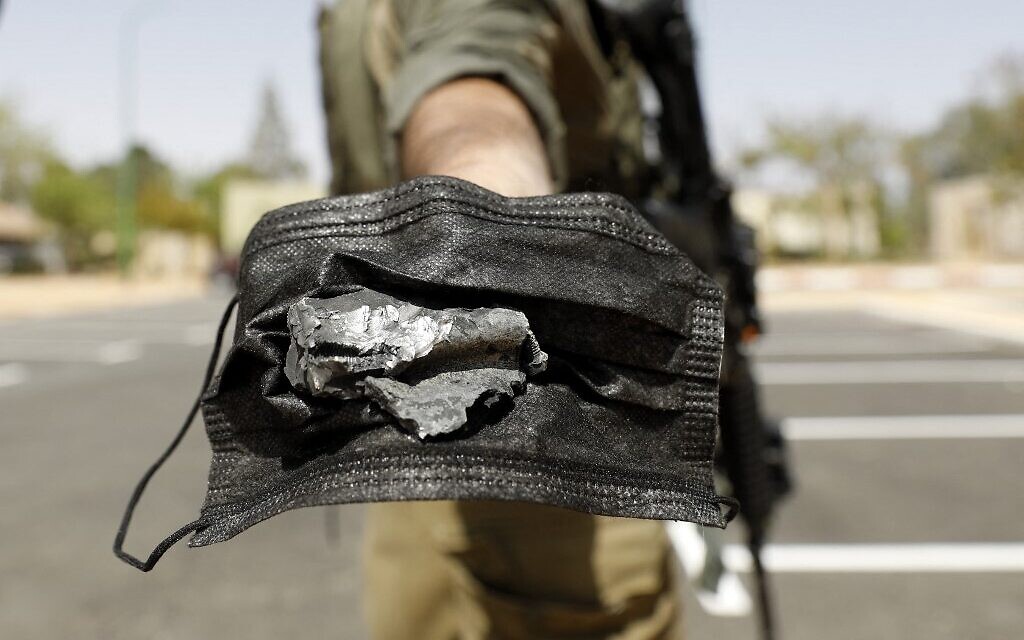
An Israeli soldier uses a mask to hold a piece of debris from a Syrian surface-to-air missile that landed near the Dimona nuclear site in Israel’s southern Negev desert, on April 22, 2021. (Ahmad GHARABLI / AFP)

Israeli radar detected that at least one of the SA-5s — also known as S-200 missiles — was on a trajectory that would have it land in the northern Negev desert, which both triggered sirens in the area and prompted Israeli air defense troops to fire an interceptor missile at the incoming projectile.

According to the IDF, the interceptor failed to shoot down the Syrian anti-aircraft missile, a massive projectile with a 200 kilogram (440 pound) warhead. The military said it was launching an investigation into the matter.

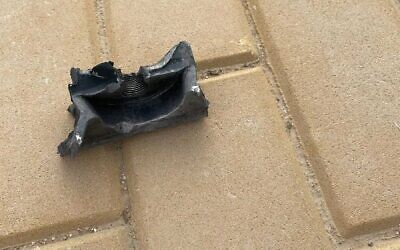
Fragments of a Syrian SA-5 missile fired toward Israel, which landed in a swimming pool in the community of Ashalim in the northern Negev, on April 22, 2021. (courtesy)

Pieces of the projectile were recovered from Ashalim. A number landed in the community’s swimming pool.

The IDF has refused to identify which of its air defense systems was used in the effort. Video footage of the launch of the Israeli interceptor was widely shared on social media (below).

Residents of Jerusalem and central Israel reported feeling reverberations of an explosion. It was not clear if it was caused by the impact of the Syrian missile on the ground or by the failed interception attempt.

In response to the launch of the surface-to-air missile, the Israeli military conducted a second round of airstrikes in Syria, targeting Syrian air defenses, including the battery that fired the SA-5 that struck southern Israel.

Syrian state media reported that four soldiers were injured in the Israeli attack. Syrian news outlets reported that one of the four troops was killed in the strike, though that was not immediately confirmed by official Syrian sources.

Though they are primarily designed to intercept aircraft and projectiles in the air, SA-5 missiles are capable of causing considerable damage if they strike the ground by virtue of their large size.

In 2019, in a similar case, a Syrian SA-5 missile that was fired at an Israeli jet crashed in northern Cyprus, causing a large explosion and starting a fire.

Fragments of a Syrian SA-5 missile fired toward Israel, which landed in the community of Ashalim in the northern Negev, on April 22, 2021. (courtesy)

Israel has regularly accused the Syrian military of wildly firing large amounts of anti-aircraft missiles in response to its strikes.

The predawn incident came amid peak tensions between Israel and Iran, weeks after an attack on Iran’s Natanz nuclear site earlier this month, which has been widely attributed to the Jewish state. Iran has vowed to retaliate for the alleged Israeli sabotage.

IDF Spokesperson Hidai Zilberman stressed that the military did not believe the overnight incident was a deliberate attack on the country or its nuclear facility.

“There was no intention of hitting the nuclear reactor in Dimona,” Zilberman told reporters.

‘Errant Syrian missile’ fired at Israeli jet explodes near Dimona nuclear site

Posted April 24, 2021 by Joseph Wouk
Categories: Uncategorized

IDF says missile was fired during IAF airstrike, was not a deliberate attack on reactor; in response, Israel targets battery that launched projectile; 4 Syrian troops hurt

An Israeli soldier uses a mask to hold a piece of debris from a Syrian surface-to-air missile that landed near the Dimona nuclear site in Israel's southern Negev desert, on April 22, 2021. (Ahmad GHARABLI / AFP)

An Israeli soldier uses a mask to hold a piece of debris from a Syrian surface-to-air missile that landed near the Dimona nuclear site in Israel’s southern Negev desert, on April 22, 2021. (Ahmad GHARABLI / AFP)

Incoming rocket sirens were triggered in the northern Negev in the predawn hours of Thursday morning, followed by massive explosions that could be heard throughout much of the country, as a Syrian surface-to-air missile crashed to earth near the Dimona nuclear reactor.

The Israel Defense Forces said the sirens were set off not by a directed attack on a target within Israel but by an errant Syrian anti-aircraft missile fired at an Israeli jet during an IAF airstrike on targets in the Syrian Golan Heights.

“A launch was detected of a surface-to-air missile from Syrian territory toward Israeli territory, which fell in the Negev region,” the IDF said.

There were no reports of injuries or damage.

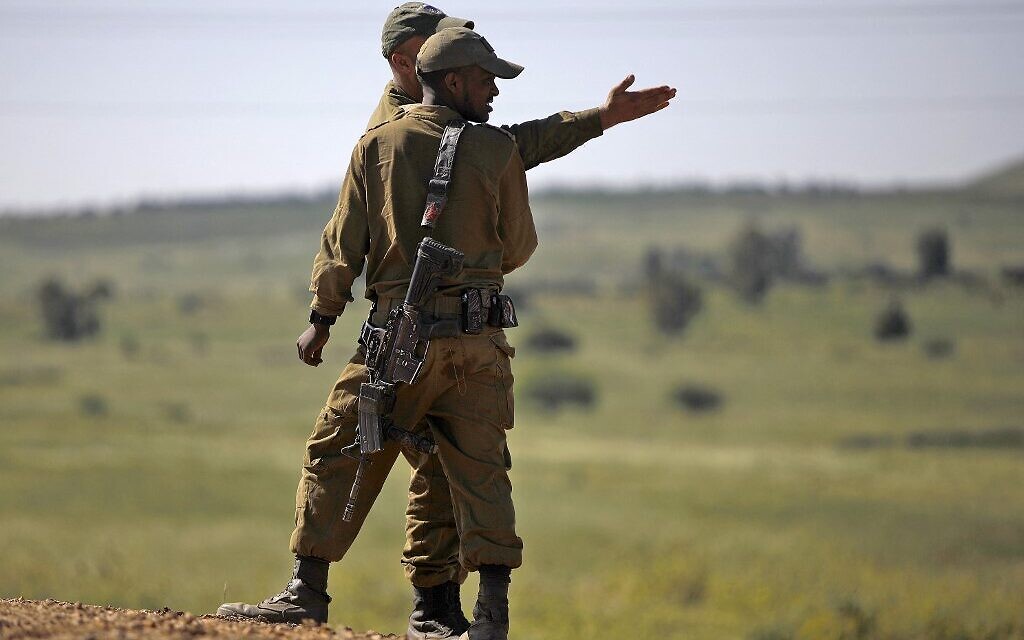
Israeli soldiers stand at a position near Moshav Sha’al in the Golan Heights on April 22, 2021. (JALAA MAREY / AFP)

IDF troops launched an interceptor missile at the incoming projectile to try to shoot it down, apparently unsuccessfully. The IDF said it was still investigating the matter as of Thursday morning. The Israeli military refused to identify which of its air defense batteries was used.

Pieces of the Syrian surface-to-air missile landed in open areas of the Ramat Negev region of southern Israel, local authorities said in a message to residents, with some pieces reportedly striking some 30 kilometers from the Dimona nuclear reactor.

In response to the launch of the surface-to-air missile, Israeli jets conducted a second round of airstrikes in Syria, bombing the battery that fired the projectile, as well as other air defense systems, the IDF said.

According to Syrian state media, four soldiers were injured in the Israeli strike and material damage was caused.

The incident came amid peak tensions between Israel and Iran, after an attack on Iran’s Natanz nuclear site earlier this month, which has been widely attributed to the Jewish state. Iran has vowed to retaliate for the alleged Israeli sabotage.

Fragments of a Syrian SA-5 missile fired toward Israel, which landed in a swimming pool in the community of Ashalim in the northern Negev, on April 22, 2021. (courtesy)

IDF Spokesperson Hidai Zilberman stressed that the military did not believe this was a deliberate attack on the country or its nuclear facility.

“There was no intention of hitting the nuclear reactor in Dimona,” Zilberman told reporters.

According to Zilberman, the projectile appeared to be a Russian-made SA-5 surface-to-air missile, a particularly large projectile, weighing several thousand kilograms with a 200-kilogram warhead.

Residents of Jerusalem and central Israel reported feeling reverberations of an explosion. It was not immediately clear if this was caused by the impact of the Syrian missile or by a failed interception attempt.

According to Syrian state media, the Israeli attack began at 1:38 a.m., with IDF jets conducting strikes on targets in the Syrian-controlled Golan Heights.

The missile set off the sirens three minutes later near Abu Qrenat, an area between Beersheba and Dimona, as well as the military’s large Ariel Sharon Base nearby, locations that are not generally targeted by rocket fire.

Roughly an hour later, Israeli fighter jets conducted a second round of strikes on Syrian air defense batteries near Damascus, according to Israeli and Syrian sources.

Though uncommon, Syrian surface-to-air missiles fired at Israeli fighter jets have in the past caused damage and triggered sirens as they fell back to earth.

In 2019, an SA-5 missile that had been fired at an Israeli aircraft landed in northern Cyprus, causing an explosion and a large fire in a village there.

In 2017, two SA-5 missiles that were launched at Israeli jets landed in eastern Israel, while a third landed in Jordanian territory, without causing injury or damage. In that incident, the IDF fired an Arrow 2 interceptor at the incoming projectile in what was the first operational use of the system.