IDF warns Hamas likely to spark war in Gaza in bid for international support

Posted February 14, 2019 by Joseph Wouk
Categories: Uncategorized

Source: IDF warns Hamas likely to spark war in Gaza in bid for international support | The Times of Israel

Intelligence assesses terror group no longer opposes full-scale conflict, seeing it as a way to bring in reconstruction funds for beleaguered enclave; IDF developing war plans
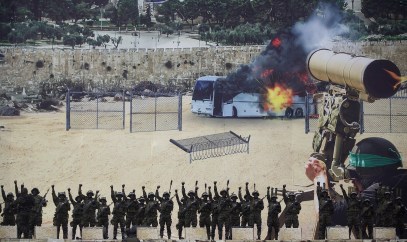
Masked gunmen of the al-Qassam brigades, the military wing of Hamas, raise their hands as they stand in front of a huge poster showing a mock attack on a bus, during a mass rally in Gaza, Sunday, Dec. 16, 2018. (AP/Khalil Hamra)

The Hamas terror group may seek to spark a war with Israel in the near future in an attempt to elicit international sympathy and an influx of international aid money to the Gaza Strip, which it controls, according to an Israeli Military Intelligence assessment released Wednesday.

The Israel Defense Forces believes Hamas or the Iran-backed Palestinian Islamic Jihad, the second largest terror group in Gaza, could attempt to draw Israel into a war by conducting an attack along the border — another anti-tank missile strike on a bus, an ambush from an as-yet-undiscovered tunnel or a similar low-level but significant attack.

According to the intelligence assessment, parts of which were distributed to reporters on Wednesday, while the Israeli military sees the northern arena — Lebanon and the Iranian entrenchment in Syria — as the larger challenges facing the Jewish state, the more immediate threats come from the Gaza Strip.

In light of this view, IDF chief Lt. Gen. Aviv Kohavi, whose tenure began last month, called for the military to update operational plans for fighting in the Gaza Strip.

IDF chief Aviv Kohavi visits Southern Command in undated photograph. (Israel Defense Forces)

“Gaza, as it is noted in the annual intelligence assessment, is the most volatile region, and there is a risk of terror group’s initiating action [against Israel]. The chief of staff identified an improvement of readiness in that region as a top priority,” the military said.

“The identification of targets will be increased — both for retaliatory strikes and to assist in ground forces maneuvering within the Strip,” the army said.

Kohavi also called for the military to purchase two more Iron Dome missile defense systems. Currently, the Israeli Air Force possesses eight batteries — six that are operated by conscripts and two by reservists. “By the end of 2019, 10 batteries are intended to be deployed across the country — eight staffed by conscripts and two by reservists,” the army said.

The IDF believes the terror group is not interested in entering a long conflict with Israel, but envisions a short period of intense fighting after which it would be able to negotiate a ceasefire agreement that would improve its overall economic and political standing.
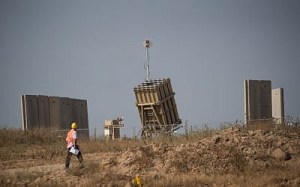
An operator walks by an Iron Dome missile defense battery near the city of Sderot in southern Israel on May 29, 2018. (Yonatan Sindel/Flash90)

Adding to the potential for war in Gaza, the Palestinian Islamic Jihad in recent months has proven itself to be increasingly willing to clash with Israeli troops, despite Hamas’s opposition. Earlier this month, a sniper from the Iran-backed terror group opened fire at an IDF officer, hitting him in the helmet, causing light injuries.

This in part seems to come from the fact that Israel officially holds Hamas responsible for all violence coming from the Gaza Strip and thus directs its retaliatory strikes against Hamas targets and bases, meaning PIJ can carry out attacks without immediate consequences.

This represents a change from the IDF’s assessments in recent months, which had held that while Hamas wanted to maintain pressure on Israel with border violence, it was not interested in all-out conflict.
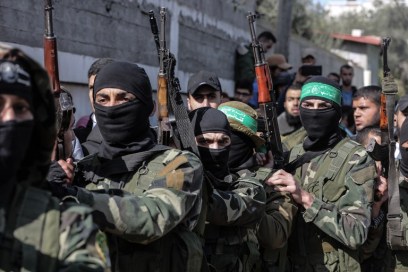
Masked Hamas gunmen attend the funeral of Mahmoud al-Nabaheen, 24, in the Bureij refugee camp, in the central Gaza Strip, on January 23, 2019. (MAHMUD HAMS / AFP)

Hamas, which has ruled Gaza since it overthrew the Palestinian Authority in a bloody coup in 2007, has faced increasing domestic pressure as the Strip’s economy has deteriorated during the interim 12 years in the face of a naval blockade by Israel and Egypt, which the countries say is necessary to prevent the terror group from importing large amounts of weaponry and war materiel into the coastal enclave.

International aid groups have warned in recent months that the Gaza Strip, which already has sweeping unemployment and limited access to electricity and water, is heading for a full humanitarian crisis.

In response to these dire economic straits, over the past year, the terror group has led a series of regular riots and protests along the border, dubbed the “Great March of Return,” which included the launching of thousands of airborne arson devices into southern Israel that caused millions of shekels of damage to farmland and nature reserves, as well as sporadic flareups of rocket and mortar fire, including one in November in which over 500 projectiles were fired at Israel.
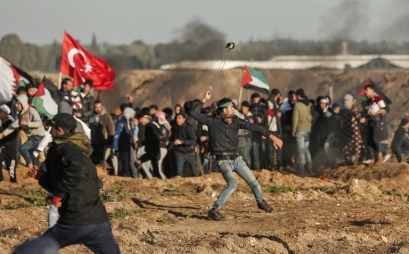
Illustrative: A Palestinian protester uses a slingshot to hurl stones at Israeli forces across the border fence, during clashes following a demonstration along the border with Israel east of Gaza City on January 11, 2019. (Mahmud Hams/AFP)

Over 200 Palestinians have been killed by Israeli troops in the clashes along the border and thousands more have been injured since the protests began on March 30. During the same period, two Israeli soldiers have been killed and several others injured. A Palestinian man living in the Israeli city of Ashkelon was also killed in a rocket attack from the Gaza Strip.

In a bid to end the weekly, sometimes daily, violence along the border, Israel reached a ceasefire agreement with Hamas — with Egypt and a United Nations envoy acting as mediators — that extended the permitting fishing zone around the Gaza Strip to 12 nautical miles and, more importantly, allowed the Islamist terror group to receive tens of millions of dollars from Qatar.

However, the IDF believes Hamas thinks it could negotiate better economic incentives from Israel in the midst of a small-scale war than it can now.

In light of the potential for a renewed outbreak of violence, Kohavi has instructed the military to prepare responses to a variety of potential scenarios in the Gaza Strip.

In addition, the newly minted IDF chief formed a General Staff-level task force to create a bank of targets that the military could strike quickly, not only in Gaza but for every regional command.

“In addition, he created a task force to identify high-quality targets in the Gaza Strip ahead of a potential operation there, which will be led by Col. Ronen Geiger,” the army said.

This appeared to be a response to criticisms heard within the military and outside it that the air force and artillery attacked empty or otherwise worthless targets during the 2014 Gaza war.


Israeli Intel Estimate: New Iranian threat from Iraq. Gaza escalates. Moscow jumps on Palestinian issue – DEBKAfile

Posted February 14, 2019 by Joseph Wouk
Categories: Uncategorized

Source: Israeli Intel Estimate: New Iranian threat from Iraq. Gaza escalates. Moscow jumps on Palestinian issue – DEBKAfile

Iranian forces are moving back from Israel’s border to northern and eastern Syria and arming Shiite proxies with surface missiles. This is reported in the Israeli Military Intelligence (AMAN) Estimate 2019, laid before the government two weeks ago and divided into two sections: pre- and post-election. The document foresees heightened tensions on the Gaza and northern fronts in the coming months.

After the April 9 general election, the next government will have to take a stand on President Donald Trump’s ”Deal of the Century” for resolving the Israeli-Palestinian conflict, a challenge which does not figure in any party campaign.
In the run-up to the election, AMAN predicts the following events:

  1. The Gaza Strip will heat up. Already this week, thousands of Palestinians are gathering night after night on the Gaza border to attack Israeli troops with explosive devices and hand grenades. The explosions cause alarm in neighboring Israeli communities.
  2. The northern front, including the Golan, will see escalating violence from across the Syrian border. The Iranian Al Qods Brigades and Hizballah will be choosing their moment to fire missiles into Israel, taking advantage of the Russian presence somewhat inhibiting Israeli payback.
  3. Palestinian terrorists will raise the stakes in Judea and Samaria so as to cast a pall on Israel’s election, encouraged by Moscow’s first supportive intervention in the Palestinian arena. The first Palestinian unity conference is taking place this week with Foreign Minister Sergei Lavrov in the chair. DEBKAfile’s intelligence sources report that the Palestinians reckon that Prime Minister Binyamin Netanyahu, when he arrives in the Russian capital on Feb. 21, will find in the Kremlin a newly friendly face for the Palestinian cause. Therefore, Iran and Syria won’t be the only items on the agenda of his talks with President Vladimir Putin.

The Intelligence Estimate points to changes in Iran’s Syrian deployment. Its forces are described as pulling away from proximity with Israel’s northern border and regrouping in northern and eastern Syria. This redeployment is cause for concern in Israel. Rather than being driven back under the pressure of Israel’s aerial and missile assaults, Tehran aims to take advantage of the coming withdrawal of US troops from Syria to extend its strategic depth into Iraq, from which Iranian missiles can reach Israel.

The Iranians are expected to leave their Shiite militias behind for dealing with the Israel front and arm them with ground-to-ground, short-range ballistic missiles. Israel’s northern front is therefore not moving farther away, it is expanding into Iraq and, in addition to the rockets piled up by Hizballah, Hamas and Islamic Jihad, Israel is now faced with ballistic missiles from Iraq and close by.


Abbas embarks on trip to wage battle over Trump’s ‘Deal of the Century’ 

Posted February 13, 2019 by Joseph Wouk
Categories: Uncategorized

Source: Abbas embarks on trip to wage battle over Trump’s ‘Deal of the Century’ – Arab-Israeli Conflict – Jerusalem Post

Abbas is traveling from one Arab country to another in an attempt to prevent Middle East countries from supporting Trump’s peace plan.

BY SARA RUBENSTEIN
 FEBRUARY 13, 2019 11:51Palestinian President Mahmoud Abbas

Palestinian Authority President Mahmoud Abbas has embarked on a trip to moderate Arab countries to wage a battle against US President Donald Trump’s “Deal of the Century,” according to a report published by Israel Hayom on Wednesday.

Abbas is traveling from one Arab country to another in an attempt to prevent Middle East countries from supporting Trump’s peace plan.

Palestinian news agency, Ma’an, carried pictures from Abbas’s trip to Saudi Arabia on Tuesday where he met with Saudi king Salman in Riyadh. Salman said that ” Saudi Arabia permanently stands by Palestine and its people’s right to an independent state with the occupied East Jerusalem as its capital,” according to Ma’an.

Abbas is also trying to convince Arab leaders to support Palestinian demands on core issues, including Israel’s withdrawal to the 1967 borders and recognition of east Jerusalem as the capital of an independent Palestinian state.

Senior Advisor Jared Kushner and Special Representative for International Negotiations, Jason Greenblatt, are expected to travel to the Middle East in the near future to present the plan to the relevant countries.

The assessment in Ramallah, Israel Hayom said, is that the Trump government will encourage Arab states to begin implementing the plan following Israeli elections and the formation of the new government in May.


German foreign ministry celebrates Iran’s Islamic revolution in Berlin

Posted February 13, 2019 by Joseph Wouk
Categories: Uncategorized

Source: German foreign ministry celebrates Iran’s Islamic revolution in Berlin – International news – Jerusalem Post

Foreign ministry state secretary Niels Annen, from the Social Democratic party, and an official from the Iran desk at the ministry attended the pro-mullah regime event.

BY BENJAMIN WEINTHAL
 FEBRUARY 13, 2019 14:14
A couple, with their faces painted in the colours of Iranian and German national flags

The German foreign affairs ministry sent representatives to Iran’s embassy in Berlin to celebrate the 40-year anniversary of the Islamic Republic of Iran—a regime in Tehran that frequently urges the destruction of the Jewish state and spreads Holocaust denial.

The German mass circulation daily Bild reported on Tuesday that foreign ministry state secretary Niels Annen, from the social democratic party, and an official from the Iran desk at the ministry attended the pro-mullah regime event.

Bild wrote the foreign ministry said it sent officials to the Iranian embassy to keep “dialogue channels” open. Germany has long been Iran’s most important trade partner within the EU.

The foreign policy spokesman of the Free Democratic Party in the Bundestag, Bijan Djir-Sarai told the Bild, “the fact that a representative of the Federal Government participates in celebrations of the 40th anniversary of the Islamic revolution of the Iranian embassy is embarrassing.” He added “A certain distance would have been helpful here. It is a mystery to me which message the Federal Government wanted to set with this performance. ”

The Jerusalem Post sent a media query to German foreign minister Heiko Maas regarding his ministry’s presence at the pro-Iran regime celebration. Maas, a member of the social democratic party, claims he went into politics “because of Auschwitz.”

German Jews accuse Maas of failing to internalize the lesson of the Holocaust with his robust support of Iran’s regime.

Iran’s regime is the leading international state-sponsor of terrorism, according to the US Department of State. Chancellor Angela Merkel’s administration, which has declared Israel’s security to be “non-negotiable,” refuses to join US sanctions against the Islamic Republic.

The timing of Annen’s visit coincides with Iranian Brig. Gen. Yadollah Javani saying to Iran’s state-controlled IRNA news agency regarding an American attack on Iran: “But if they attack us, we will raze Tel Aviv and Haifa to the ground.

According to the Bild article, Annen did criticize Iran’s genocidal antisemitic threats against Israel at the celebration. Annen has faced criticism in Germany and in the United States for his anti-Americanism. Maas opted not to attend the US-led conference in Warsaw today to blunt Iranian jingoism. He sent Annen instead, who is known as an energetic defender of the controversial Iran nuclear deal, to represent Germany. German foreign ministry officials have oft participated in events calling for the destruction of Israel. In 2017, former German foreign minister Sigmar Gabriel, a member of the social democratic party,welcomed an Iranian religious leader who called for the elimination of Israel at the annual al-Quds rally in Berlin.

In 2008, Gabriel’s Social Democratic Party colleague and current president of the Federal Republic, Frank-Walter Steinmeier (then-foreign minister), sponsored an event at the Foreign Ministry to address “common solutions” in the Middle East. Iran’s former deputy foreign minister, Muhammad Javad Ardashir Larijani, called at the event for the “Zionist project” to be “canceled” and said that Israel “has failed miserably and has only caused terrible damage to the region.”

The then-German Ambassador to Iran Herbert Honsowitz violated EU guidelines in 2008 by allowing a military attache to attend an anti-Israel military parade in Teheran, according to a spokeswoman for the German Foreign Ministry’s Iran section. “Israel must be wiped off the map” was one of the slogans painted on Shihab-3 missiles featured at the event in Teheran.


Israels covert war with Iran: Fact or fiction?

Posted February 13, 2019 by Joseph Wouk
Categories: Uncategorized

Source: Israels covert war with Iran: Fact or fiction?

Reports of Israeli special forces activity across the region do shed some light on the Jewish state’s effort to thwart Tehran’s expansionist and nuclear ambitions, but how much of it is actually true?

An Israeli defense expert quoted by Russia’s Sputnik news agency claims Jerusalem also is cooperating with central Asian countries such as Kazajistan, Turkmenistan and Uzbekistan to thwart Iran’s expansionism.

The revelation came a day after British media reported that the spy agencies of Israel, the US and Britain cooperated in the extraction of an Iranian nuclear scientist from Tehran that subsequently was granted asylum in America in exchange for details on Iran’s atomic program.

Benjamin Netanyahu reveals Israel has Iranian nuclear documents

Benjamin Netanyahu reveals Israel has Iranian nuclear documents

The unidentified man purportedly was initially smuggled to Turkey by Israel’s Mossad and then traveled by sea to London on a dingy alongside Iranian migrants earlier this year. Once there, the scientist provided information regarding the mullahs’ nuclear progress since the 2015 atomic deal was forged with world powers and was then flown to the US.

While it is well-known the Israel Defense Forces has conducted thousands of strikes against Iranian assets in Syria, the army also is active in other nations to prevent the Iranian regime from creating a land corridor stretching from Tehran to Beirut through which to smuggle arms and create forward-operating outposts. One of the primary reasons for training abroad is to simulate the rugged conditions that exist in southern Lebanon, for example, where Israeli soldiers likely are to deploy in the event of a future war with Hezbollah.

Illustrative: Israeli soldiers from the Givati Brigade on a training exercise  (Photo: GPO)

Illustrative: Israeli soldiers from the Givati Brigade on a training exercise (Photo: GPO)

“It is difficult to believe all the details in the reports about the Iranian scientist given that he was apparently taken to Britain by boat with other refugees when the CIA has more airplanes than many national carriers. Regarding Afghanistan, the story also seems embellished,” says former Mossad agent Gad Shimron. “That said, all things are possible but the benefit of being a journalist is that you can publish anything about Israeli spies and nobody will deny it.”

Indeed, some hold the reports are part of a disinformation campaign meant to harm or deter Israel, which, in Shimron’s estimation, is compounded by disproportionate media coverage on Jerusalem because it is “sexy” to attribute responsibility to the Jewish state.

Israel strikes Iranian targets in Syria (Photo: EPA)

Israel strikes Iranian targets in Syria (Photo: EPA)

“The whole civilized world is engaged in this underground war as there is widespread fear about the prospect of the ayatollah having his finger on the ‘red (nuclear) button.’ But compared to the CIA and MI6, Israel is doing little in Iran. Nevertheless,” he adds, “the Mossad often undertakes missions such as the one last year that recovered the treasure trove of Iranian atomic documents.”

Still others postulate that the latest reports contain valid elements, with some maintaining the stories may even have been leaked by Israel and its allies as a warning to the Islamic Republic.

“Usually the accounts have a factual basis but then diverge as each correspondent has only limited details and makes what they determine of them,” says Mishka Ben-David, another former Mossad agent. “There are pros and cons to this; on the one hand, there is the positive impact of demonstrating Israel’s abilities, however, at the same time putting this out in the open makes Israel’s enemies aware of them.

Mossad chief Yossi Cohen (Photo: Motti Kimchi)

Mossad chief Yossi Cohen (Photo: Motti Kimchi)

“According to most assessments,” he says, “the Mossad has been quite involved in sabotaging Iran and managed to postpone its nuclear project by up to ten years, although not to forestall it indefinitely.”

If the reports contain a modicum of truth, they provide a small window into the “war between wars” pitting the Islamic Republic against the Jewish state, the latter of which has been implicated in the assassinations of at least four Iranian nuclear scientists and, in conjunction with Washington, is believed to have developed the Stuxnet computer virus that significantly impeded Tehran’s atomic program at the beginning of the decade.

For its part, Iran’s proxies in the Gaza Strip (Hamas and Islamic Jihad) and Lebanon (Hezbollah) continue to pose a significant threat to Israel, as the Iranians attempt to establish a permanent military presence in Syria from which to open a third front in the next conflict.

Hamas leader Ismail Haniyeh in Gaza (Photo: AFP)

Hamas leader Ismail Haniyeh in Gaza (Photo: AFP)

All of this, meanwhile, comes on the backdrop of Jerusalem’s abandonment of its longstanding policy to neither confirm nor deny military operations abroad, in particular those directed at Iran in Syria.

It may be, then, that Israel’s political and defense establishments are taking incremental steps to come out of the closet, so to speak, in order to make crystal clear to Tehran the lengths to which the Jewish state will go to ensure its arch-nemesis can never threaten its existence.

Article written by Charles Bybelezer. Reprinted with permission from The Media Line 


Israel, Arab states come together at conference against Iran

Posted February 13, 2019 by Joseph Wouk
Categories: Uncategorized

Source: Israel, Arab states come together at conference against Iran

Prime Minister Netanyahu travels to Warsaw to attend summit on peace and security in the Middle East, which will focus on the Iranian threat; for the first time since the 1991 Madrid Conference, an Israeli PM will sit in the same room as representatives from many Arab nations.

Prime Minister Benjamin Netanyahu arrived in Poland early Wednesday to join senior officials from 60 nations at the Warsaw summit on peace and security in the Middle East, which is organized by the United States and Poland in an effort to ratchet up pressure against Iran.

“I think that holding this conference, in which Israel, the US, various countries around the world and from the region sit down in one place … and discuss one topic—which, in my opinion, is the most important for our national security—is a very important achievement. I very much appreciate the American initiative, which I have been associated with and party to for many months,” he said before boarding his flight to the Polish capital.

While in Warsaw, Netanyahu is expected to meet with US Vice President Mike Pence and Secretary of State Mike Pompeo, as well as Polish Prime Minister Mateusz Morawiecki.

Prime Minister Netanyahu and his wife Sara board flight to Warsaw (Photo: Amos Ben Gershom/GPO)

Prime Minister Netanyahu and his wife Sara board flight to Warsaw (Photo: Amos Ben Gershom/GPO)

The Israeli premier is expected to give a scathing speech against Iran on the conference’s first day Thursday. US Vice President Pence and Polish Foreign Minister Jacek Czaputowicz are also scheduled to speak.

Iran has denounced the conference, which begins Wednesday, as an American anti-Iran “circus” and Russia has said it will not attend.

The absence of foreign ministers from major European powers, Germany and France, highlights festering tensions with the European Union over US President Donald Trump’s decision last year to withdraw from a 2015 nuclear deal with Iran and reimpose sanctions.

EU policy chief, Federica Mogherini, who was a key player in the Iran nuclear deal, will also not attend the two-day conference due to scheduling issues, an EU official said, although US Secretary of State Mike Pompeo will travel to Brussels on Friday to meet with her.

Pompeo, who will be joined by US Vice President Mike Pence in Warsaw, played down the absence of leading European ministers at the event during a brief stop in the Slovak capital Bratislava on Tuesday, before he headed to Warsaw.

“Some countries are having their foreign ministers come. Other countries are not. That’s their choice,” he told a news conference.

“We think we will make real progress. We think there’ll be dozens of nations there seriously working towards a better, more stable Middle East, and I’m hoping by the time we leave on Thursday we’ll have achieved that,” he added.

US officials, right, meet with Polish officials ahead of the conference (Photo: EPA)

US officials, right, meet with Polish officials ahead of the conference (Photo: EPA)

While countries such as France, Germany and Britain have opened a new channel for non-dollar trade with Iran to avert US sanctions and keep the nuclear deal afloat, they have criticized Tehran’s ballistic missile program.

“There will be discussions about Iran’s influence in the Middle East, what we can do to help get Iran on a more helpful footing that it has been, to collectively push back on some of its malign behavior in the region,” a senior US official said of the Warsaw agenda.

New US sanctions, mainly targeted at cutting off revenue from Iran’s oil sector, have largely succeeded in persuading European companies to abandon business with Iran.

Iran has threatened to pull out of the deal unless the European powers enable it to receive economic benefits. The Europeans have promised to help companies do business with Iran as long as it abides by the deal.

US Secretary of State Mike Pompeo in Warsaw (Photo: AFP)

US Secretary of State Mike Pompeo in Warsaw (Photo: AFP)

In other policy differences, Washington’s European allies have also voiced concern over Trump’s decision to withdraw US troops from Syria.

The Americans and the Poles invited senior officials from almost all Muslim and Arab nations, but were unable to bring many leaders to the conference. Instead, Arab countries will send foreign ministers, deputy ministers or ambassadors to Poland.

Among the Muslim countries expected to send ministers are Saudi Arabia, the United Arab Emirates, Oman, Jordan, Yemen, Bahrain, Morocco and Kuwait. Egypt and Tunisia will be sending deputy ministers.In addition, foreign ministers from Balkan and Visegrád Group (Hungary, Slovakia, the Czech Republic and Poland) nations will also attend.

This would be the first regional conference since the 1991 Madrid Conference in which the prime minister of Israel will be present alongside representatives of almost all Arab nations. It remains to be seen, however, whether Arab officials will make any public overtures to Netanyahu without a major concession to the Palestinian cause, which still animates the Arab public.

The 1991 Madrid Conference (Photo: Moshe Milner)

The 1991 Madrid Conference (Photo: Moshe Milner)

With Arab public opinion still strongly against normalization with Israel, this week’s conference is unlikely to produce warm engagement right away, said Yoel Guzansky, a senior researcher at Israel’s Institute for National Security Studies.

“Covert meetings already exist, and the ‘under-the-table’ relations are the world’s worst kept secret, so I don’t see what the Arabs would gain from shaking hands,” he said. “The point is to see everyone in the same room as a united front against Iran. But the Arab street is still nowhere near where the elites are regarding Israel, and too strong an embrace could draw fire.”

The conference, which was originally meant to focus on Iran, will also deal with promoting peace in the Middle East, after the Iranians put immense pressure on the Poles, who wish to maintain their good relations with Tehran and the Muslim world, and they changed the agenda.

Moreover, European countries warned Washington that it was ill-advised to hold a conference that highlights the differences of opinions between Europe and the United States on Iran, and suggested to hold a closed forum discussion on the Iranian ballistic missiles threat instead.

The conference will hear from White House adviser Jared Kushner, who is Trump’s son in law, over plans by the United States for peace between Palestinians and Israelis.

While Kushner is not likely to divulge too many details of the plan, it will be one of the first occasions in the two years he has been working on the plan that he will publicly discuss the US efforts.

Palestinian officials have said they will not attend the Warsaw conference because of Washington’s decision to move the US embassy to Jerusalem. They’ve also asked Arab countries to boycott or downgrade their representation at the conference in Poland.

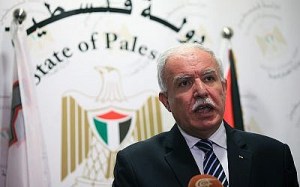
“We view the Warsaw conference as a plot against the Palestinian cause,” Palestinian Foreign Minister Riad Malki said this week.

President Mahmoud Abbas met with Saudi Arabia’s King Salman on Tuesday, who expressed his “permanent stand” in favor of a Palestinian state with east Jerusalem as its capital, according to the official Saudi news agency.

Alongside Iran and the Palestinians, Qatar and Turkey are also boycotting the conference.

The Associated Press contributed to this story.

Heading to Warsaw, Netanyahu hopes summit brings Arab ties out into the open 

Posted February 13, 2019 by Joseph Wouk
Categories: Uncategorized

Source: Heading to Warsaw, Netanyahu hopes summit brings Arab ties out into the open | The Times of Israel

Observers doubtful that Gulf states, Saudi Arabia will be willing to use conference on Iran to go public on clandestine cooperation with Israel

Prime Minister Benjamin Netanyahu speaks at the Prime Minister's Office in Jerusalem on February 5, 2019. (Noam Revkin Fenton/Flash90)

Prime Minister Benjamin Netanyahu speaks at the Prime Minister’s Office in Jerusalem on February 5, 2019. (Noam Revkin Fenton/Flash90)

WARSAW, Poland (AP) — The Mideast conference in Poland starting Wednesday offers Prime Minister Benjamin Netanyahu an opportunity to flaunt in public what he has long boasted about happening behind the scenes — Israel’s improved relations with some Gulf Arab nations.

Several Gulf dignitaries are expected to attend in a potential show of force against uninvited Iran. But the Palestinians are urging a boycott of the conference, and it remains to be seen whether Arab officials will make any public overtures to Netanyahu without a major concession to the Palestinian cause, which still animates the Arab public.

The United States and Poland are sponsoring the conference in Warsaw, which they say is aimed at promoting peace and security in the region but appears to be mainly focused on isolating Iran.

Iran has denounced the conference as an American anti-Iran “circus.” Russia has said it will not attend, and the European Union’s foreign policy chief, Federica Mogherini, is also skipping the event.

For US President Donald Trump’s administration, it is a high-profile occasion to gather all its Middle East allies. For Poland, it offers a chance to strengthen ties with Washington as it seeks greater protection from Russia.

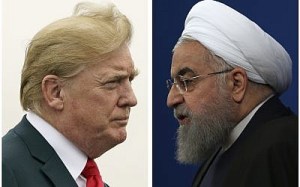
US President Donald Trump, left, on July 22, 2018, and Iranian President Hassan Rouhani on February 6, 2018. (AP Photo)

But the real winner could be Netanyahu, who has repeatedly stated that Israel has clandestinely developed good relations with several Arab states, despite a lack of official ties. Bringing such contacts out into the open would mark a major diplomatic coup, put a seal of approval on his goal of improving Israel’s standing in the world and provide a powerful photo-op for his reelection campaign ahead of the April vote in Israel.

Before departing for Poland on Tuesday, Netanyahu told reporters that the focus of the conference will be Iran, an issue he said “unites Israel, the United States, many countries in the world.” He said Israel enjoys “very good relations” with every country in the region “except Syria,” where Israel has carried out several airstrikes on Iranian targets in recent months.

Danny Danon, Israel’s UN ambassador, said his private contacts with Arab officials are far warmer than what is said in public. He predicted that once one Arab country goes public, others will quickly follow.

“As of now, they are already cooperating with us,” he told reporters in Jerusalem recently. “We ask them to recognize us and not to be ashamed for using our technology or our defense systems.”

Israel has signed peace accords with Egypt and Jordan, but other Arab nations have refused to publicly improve relations without significant progress being made toward ending Israel’s half-century control over the West Bank, sought by Palestinians for a future state.

But as shared concerns about Iran have overshadowed the Palestinian issue in recent years, ties that have long lingered in the shadows have begun to emerge.

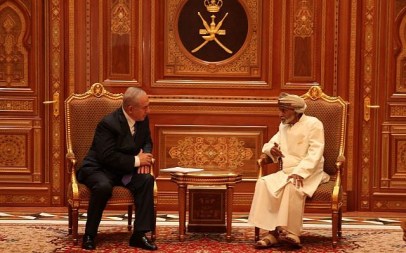
Netanyahu visited Oman in October and met with longtime ruler Sultan Qaboos bin Said. Days later, two of his ministers headed to the United Arab Emirates for a security conference and to cheer on an Israeli delegation at a judo tournament — where the Israeli anthem was played after two Israeli competitors won gold.

Prime Minister Benjamin Netanyahu (L) talks with Sultan Qaboos bin Said in Oman on October 26, 2018 (Courtesy)

Saudi Arabia, long rumored to have backdoor ties to Israel, lifted a decades-long ban on the use of its airspace for flights to Israel last spring, allowing India’s national carrier to cross its skies. The leaders of the small Gulf nation of Bahrain have also expressed willingness to normalize relations.

Gulf Arab states have given less voice to their traditional antipathy toward Israel as they have grown increasingly fearful of Iran over its involvement in Syria and other regional conflicts, and its support for various armed groups. Getting closer to Israel also helps them curry favor in Washington.

But with Arab public opinion still strongly against normalization with Israel, this week’s conference is unlikely to produce warm engagement right away, said Yoel Guzansky, a senior researcher at Israel’s Institute for National Security Studies.

“Covert meetings already exist, and the ‘under-the-table’ relations are the world’s worst kept secret, so I don’t see what the Arabs would gain from shaking hands,” he said. “The point is to see everyone in the same room as a united front against Iran. But the Arab street is still nowhere near where the elites are regarding Israel, and too strong an embrace could draw fire.”

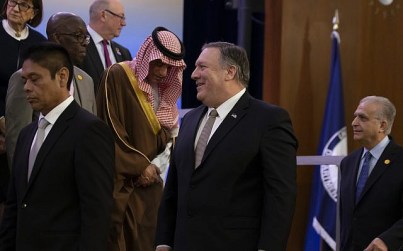
US Secretary of State Mike Pompeo, center, walks past Saudi Arabia’s Foreign Minister Adel al-Jubeir, as he and other foreign ministers arrive before a family photo during the Global Coalition to Defeat ISIS meeting, at the State Department, February 6, 2019, in Washington. (AP Photo/Alex Brandon)

The foreign ministers of Saudi Arabia and the UAE are scheduled to attend and meet with US Secretary of State Mike Pompeo. It is unclear what their level of engagement will be with the Israeli delegation.

Netanyahu recently visited the Muslim-majority African nation of Chad to officially restore relations after 50 years and promised there would be more such visits and announcements soon.

Trump’s senior Mideast adviser, son-in-law Jared Kushner, has been working on an Israeli-Palestinian peace plan for close to two years, but has not yet released details. US officials say Kushner is expected to make some comments about the conflict in Warsaw, but Netanyahu said he doesn’t expect any discussion of the peace plan.

The Palestinians have preemptively rejected the plan, accusing the Trump White House of being unfairly biased toward Israel. They’ve also asked Arab countries to boycott or downgrade their representation at the conference in Poland.

Palestinian Authority Foreign Affairs Minister Riyad al-Malki, in a press conference on October 10, 2014. (Ala Mufarja / Wafa)

“We view the Warsaw conference as a plot against the Palestinian cause,” Palestinian Authority Foreign Minister Riyad al-Malki said this week.

PA President Mahmoud Abbas met Tuesday with Saudi Arabia’s King Salman, who expressed his “permanent stand” in favor of a Palestinian state with East Jerusalem as its capital, according to the official Saudi news agency.

Further tempering expectations, an Israeli TV channel obtained what it said was a secret Foreign Ministry report concluding it was very unlikely Saudi Arabia would normalize relations with Israel without a major concession to the Palestinians. The report, aired on Channel 13 news, quoted a senior official as saying the narrow window for a breakthrough with the Saudis had closed.

The Foreign Ministry refused to comment on the report.


Slamming Europe over Iran stance, Netanyahu heads to Warsaw for Mideast summit

Posted February 13, 2019 by Joseph Wouk
Categories: Uncategorized

Source: Slamming Europe over Iran stance, Netanyahu heads to Warsaw for Mideast summit | The Times of Israel

PM, the only head of state to attend US-Polish conference focused on Iran and Mideast peace process, hopes to meet with one of several Arab foreign ministers there

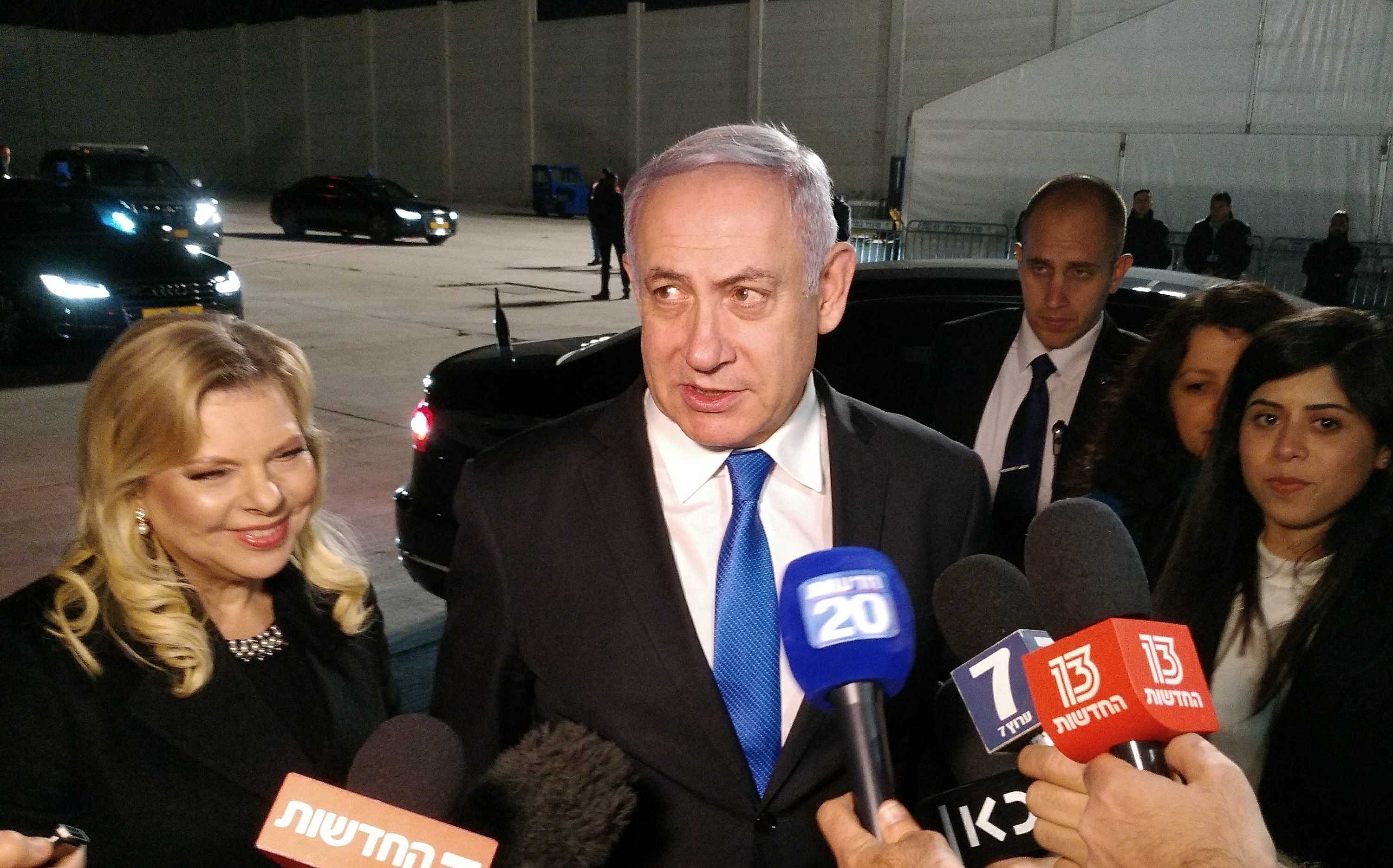
Prime Minister Benjamin Netanyahu speaking with reporters at Ben Gurion Airport before his departure to a conference in Poland, February 11, 2019. (Raphael Ahren/Times of Israel)

Prime Minister Benjamin Netanyahu speaking with reporters at Ben Gurion Airport before his departure to a conference in Poland, February 11, 2019. (Raphael Ahren/Times of Israel)

Prime Minister Benjamin Netanyahu headed to Warsaw on Tuesday evening to attend a US-Polish conference on the Middle East, which is expected to focus on Iran and Israeli-Palestinian peace efforts.

Netanyahu will reportedly be looking to use the summit, to be attended by several high-ranking officials from Muslim countries in the region, to help expand ties with the Arab world.

The summit appears to be the first time an Israeli leader and senior Arab officials will attend an international conference centered on the Middle East since the Madrid peace conference in 1991, which set the stage for the landmark Oslo Accords between Israel and the Palestinians.

Netanyahu said before taking off that Iran, and not Israeli-Palestinian peace talks, would be the centerpiece of talks at the summit, and slammed European countries for continuing to work with Iran.

“Iran is sending terrorists to European capitals and at the same time … some  Western European governments are helping Iran. It’s just mindboggling,” he said.

“It’s not the first time we’ve seen this kind of folly,” he added, in apparent reference to European powers pursuing an appeasement policy with Nazi Germany in 1938.

In Warsaw, Netanyahu — the only head of government to attend the conference — is scheduled to meet US Vice President Mike Pence and US Secretary of State Mike Pompeo, as well as visit the city’s Jewish museum and lay a wreath at the Ghetto Heroes Monument, which commemorates the 1943 Warsaw Ghetto uprising.

On Sunday, he indicated that he would meet with additional “world leaders” but did not elaborate.

“I’m planning to see everyone who’s there in one big great room,” he said, adding that Israel had good ties with all countries in the region aside from Syria.

No meetings with top Arab officials have been scheduled, despite efforts to set one up, according to the Kan public broadcaster.

Jordan, Bahrain, Saudi Arabia, Yemen, UAE, Kuwait, Morocco are all sending foreign ministers, according to Poland.

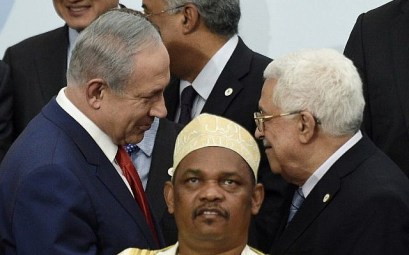
Netanyahu and the Arab officials will share a stage during a group photo scheduled for meeting participants. Netanyahu’s last face to face meeting with Palestinian Authority President Mahmoud Abbas took place during a similar group photo at 2015 Paris climate talks.

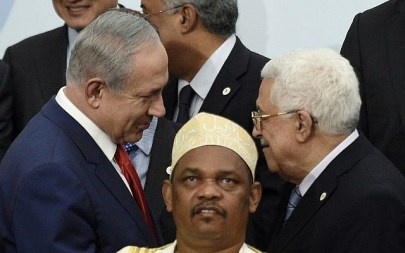
Prime Minister Benjamin Netanyahu (L) talks with Palestinian Authority President Mahmoud Abbas (R) behind Comoros’ President Ikililou Dhoinine during the group photo during the COP21, United Nations Climate Change Conference, in Le Bourget, outside Paris, on November 30, 2015. (AFP PHOTO / POOL / MARTIN BUREAU)

This time, however, Abbas will not attend, and Palestinians have been heavily critical of the conference.

Efforts to thwart Iranian aggression are widely expected to take center stage at the summit, whose official title is “Ministerial to Promote a Future of Peace and Security in the Middle East,” though at least one session is dedicated to the US administration’s efforts to broker an Israeli-Palestinian peace deal.

“The first issue on the agenda is Iran — how to continue preventing it from entrenching in Syria, how to thwart its aggression in the region and, above all, how to prevent Iran from attaining nuclear weapons,” Netanyahu said Sunday in his weekly cabinet meeting.

US Secretary of State Mike Pompeo (L) meets with Prime Minister Benjamin Netanyahu in Brasilia on January 1, 2019 (Avi Ohayon/GPO)

The US and Poland — who co-organized the summit — insisted that the conference’s objective is not to bash Iran.

Rather, the event will deal with “the whole region and the challenges it is facing, be it civil wars, terrorism, energy or cybersecurity,” Polish Ambassador to Israel Marek Magierowski told The Times of Israel this week.

“So the nature of the upcoming conference is, in our view, definitely not anti-Iranian.”

The Iranian leadership, however, slammed the event as an attempt to isolate them, and threatened Poland with consequences.

Palestinians officials, meanwhile, have described the meeting as an effort by the US to advance its anti-Palestinian positions.

“To be clear: Palestine has not mandated anyone to speak on its behalf. Despite US efforts to promote normalization of diplomatic relations between Arab states and Israel, no changes in the Arab Peace Initiative will be accepted,” Palestine Liberation Organization secretary-general Saeb Erekat wrote in a syndicated op-ed published Tuesday.

“Full normalization of ties with Israel will take place only after a final-status agreement is achieved and Israel ends its control of all Arab territories occupied since 1967, including Syria’s Golan Heights and Palestine’s East Jerusalem.”

“The Warsaw Conference is an attempt at bypassing the Arab Peace Initiative and destroying the Palestinian National project,” said Erekat, referring to a Saudi proposal to extend Arab recognition of Israel in exchange for a pullout to the pre-1967 armistice lines and a “just solution” for Palestinian refugees.

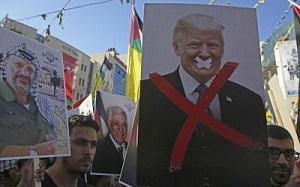
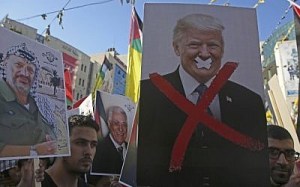
Palestinian protesters hold portraits of late Palestinian leader Yasser Arafat and US President Donald Trump during a rally in support of the Fatah party in Nablus, July 17, 2018. (AFP Photo/Jaafar Ashtiyeh)

His statement came a day after the Palestinian Authority’s Foreign Ministry called the conference an “American conspiracy.”

A White House official last week told reporters the Palestinians had been invited to the conference.

The PA has boycotted the US administration since President Donald Trump’s 2017 recognition of Jerusalem as Israel’s capital, a move it said meant the US could no longer serve as a mediator in peace talks.

Ties between the sides have continued to fray since then, with the US moving to end aid it provides to Palestinians and cut funding to Abbas over his refusal to enter negotiations and Ramallah’s payments to terror convicts and their families.

According to a US official, Trump’s senior adviser and son-in-law Jared Kushner will discuss the White House’s peace efforts during the conference and take questions from the audience.

“We would very much welcome the Palestinian Authority’s perspectives during the discussion, but I do want to emphasize this is not a negotiation but a discussion, and we look forward to fostering a constructive conversation in Warsaw,” the official was quoted saying by Reuters.

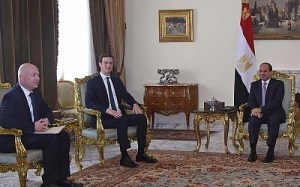
Egyptian President Abdel-Fattah el-Sissi, center, meets with US President Donald Trump’s son-in-law and senior adviser Jared Kushner, and Mideast envoy Jason Greenblatt in Cairo, June 21, 2018.(MENA via AP)

Kushner will be accompanied in Warsaw by Jason Greenblatt, Trump’s envoy for Israeli-Palestinian peace.

The US peace plan reportedly includes an economic development proposal for Palestinians that foresees major infrastructure and industrial work, particularly in Gaza. For the plan to succeed or even pass the starting gate, it will need at least initial buy-in from both Israel and the Palestinians as well as from the Gulf Arab states, which officials say will be asked to substantially bankroll the economic portion.

A senior US official told The Times of Israel this week that a date for the peace plan’s rollout has not yet been decided and there are “numerous considerations” that may play a role and push its release back to mid-May at the earliest.

Netanyahu is scheduled to arrive in Warsaw on Tuesday around midnight, but the first event on the schedule his office sent reporters is the meeting with Pompeo at 4.15 P.M., which would leave plenty of time for secret meetings with some of the Arab officials in town for the conference.

Later on Wednesday, Netanyahu will attend a welcoming ceremony for heads of delegations at Warsaw’s historic Royal Castle.

On Thursday morning, Polish Foreign Minister Jacek Czaputowicz and Pompeo will open the conference, which will take place at capital’s PGE Narodowy Stadium.

Netanyahu’s office said he, too, will address the summit’s opening session, though his name does not appear on the program issued by the Polish Foreign Ministry.

After a group photo of foreign dignitaries, the heads of delegation will have working lunch, which will be addressed by Pence and Polish Prime Minister Mateusz Morawiecki.

After lunch, Netanyahu and Pence will head to the Monument to the Ghetto Heroes and lay a wreath there. The two leaders will then walk together to POLIN — Museum of the History of Polish Jews, where they will conduct a working meeting.

On Thursday evening, the prime minister’s delegation is set to return to Israel.

Agencies and Times of Israel staff contributed to this report.


Organizers don’t mention Iran as topic for Warsaw summit

Posted February 13, 2019 by Joseph Wouk
Categories: Uncategorized

Source: Organizers don’t mention Iran as topic for Warsaw summit | The Times of Israel

In joint op-ed, Mike Pompeo and his Polish counterpart say summit to focus on Syria, Yemen, Israeli-Palestinian peace — seemingly contradicting Netanyahu’s assertion

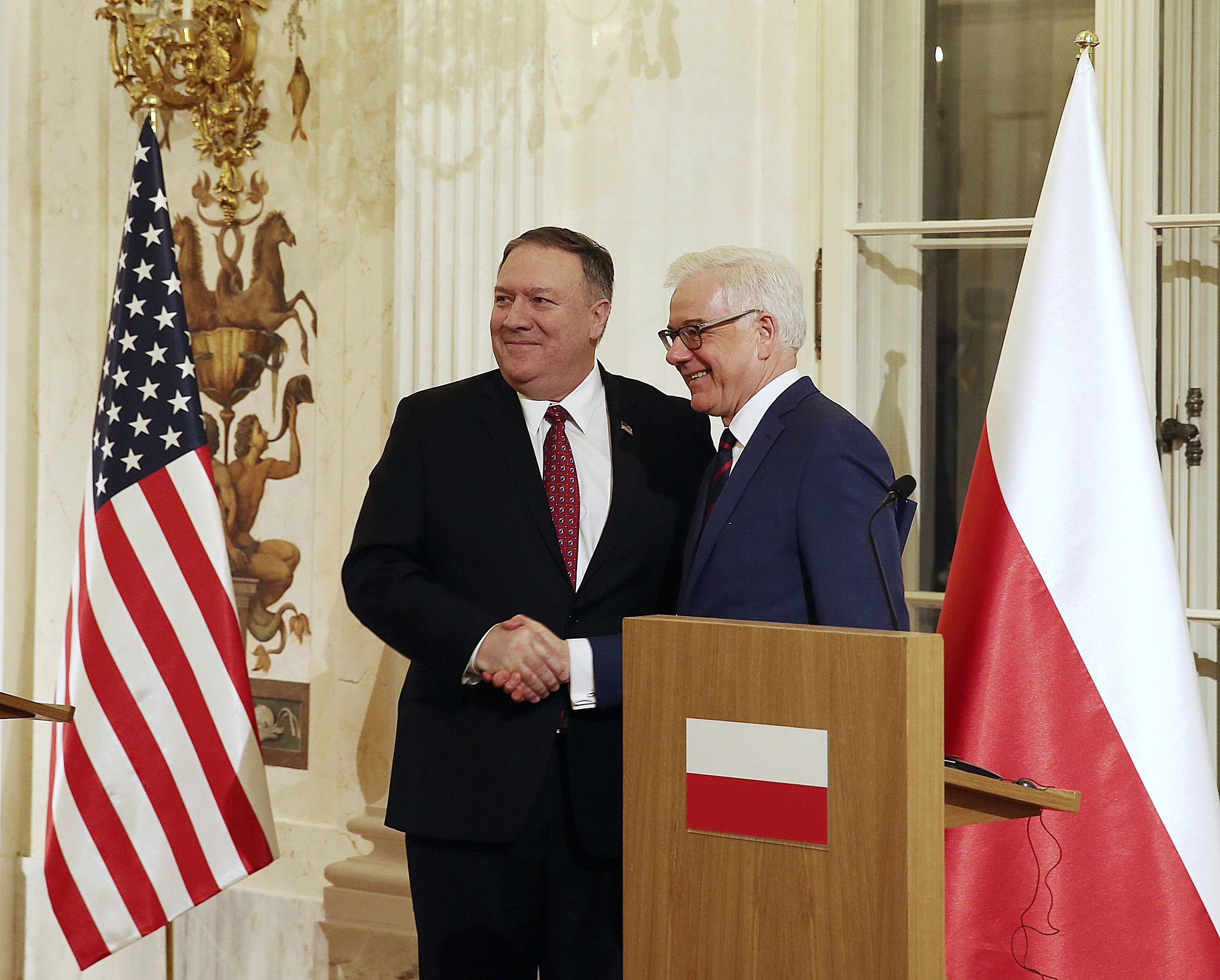
US Secretary of State Mike Pompeo gestures during a joint press conference with the Polish Foreign Minister Jacek Czaputowicz during his visit to Warsaw, Poland, Tuesday, Feb. 12, 2019.(AP Photo/Czarek Sokolowski)

US Secretary of State Mike Pompeo gestures during a joint press conference with the Polish Foreign Minister Jacek Czaputowicz during his visit to Warsaw, Poland, Tuesday, Feb. 12, 2019.(AP Photo/Czarek Sokolowski)

WARSAW, Poland — The international Middle East conference opening on Wednesday evening will focus on the civil wars in Syria and Yemen, as well as the Israeli-Palestinian conflict and other security-related regional matters, its organizers said, apparently contradicting Prime Minister Benjamin Netanyahu, who had said the event would focus on Iran.

“We will discuss violent instability in Syria and Yemen, as well as efforts to achieve a peace agreement between Israel and the Palestinians,” US Secretary of State Mike Pompeo and Polish Foreign Minister Jacek Czaputowicz wrote in a joint op-ed published Wednesday morning on CNN’s website.

“Further sessions will feature discussions on missile proliferation, energy security, emerging cyber-based threats, counterterrorism, and humanitarian aid. Our broad goal is to hear every nation’s unscripted, candid ideas for how to make progress on these issues, and more,” they wrote.

Pompeo and Czaputowicz only mentioned Iran indirectly, carefully avoiding the impression that the summit’s focus is an effort to isolate the Islamic Republic.

“We expect each nation to express opinions that reflect its own interests. Disagreements in one area should not prohibit unity in others,” they wrote. “In the past, for example, our two nations have taken distinct positions on the Iran nuclear deal. Despite these strong differences of opinion, the US-Poland relationship remains strong.”

The US and Poland are the co-organizers of the so-called Ministerial to Promote a Future of Peace and Security in the Middle East.

Netanyahu, who arrived in Warsaw early Wednesday morning, had said that the conference will not focus on Israeli-Palestinian peace efforts, since Pompeo and US Vice President Mike Pence — who will also attend the summit — do not deal with the administration’s much-anticipated peace proposal.

Rather, Netanyahu told reporters Tuesday evening, the conference will have a clear emphasis on efforts to thwart Iranian aggression.

“This is a very important international conference in Warsaw. The focus is Iran. This brings together Israel, the US, and countries in and beyond the region,” he said.

“I think that the holding of this conference in which Israel, the US, various countries around the world and from the region sit down in one place, in one hall and discuss one topic which, in my opinion, is the most important for our national security, is a very important achievement,” he continued.

Netanyahu is set to meet Pompeo later on Wednesday.

Prime Minister Benjamin Netanyahu speaking with reporters at Ben Gurion Airport before his departure to a conference in Poland, February 11, 2019. (Raphael Ahren/Times of Israel)

Speaking to reporters before boarding a Boeing 777 to Warsaw, the prime minister slammed European countries for continuing to work with Iran.

“I like to ask Europe what they think they’re doing. Iran is sending terrorists to European capitals. And at the same time, some Western European governments are helping Iran — it’s mind-boggling,” he said.

“It’s not the first time we’ve seen this folly in certain parts of Europe,” he added, in apparent reference to European powers pursuing an appeasement policy with Nazi Germany in 1938.

Netanyahu will reportedly be looking to use the summit, to be attended by several high-ranking officials from Muslim countries in the region, to help expand ties with the Arab world.

The summit appears to be the first time an Israeli leader and senior Arab officials will attend an international conference centered on the Middle East since the Madrid peace conference in 1991, which set the stage for the landmark Oslo Accords between Israel and the Palestinians.

No meetings with top Arab officials have been scheduled, despite efforts to set one up, according to the Kan public broadcaster.

Jordan, Bahrain, Saudi Arabia, Yemen, UAE, Kuwait and Morocco are all sending foreign ministers, according to Poland.

Netanyahu and the Arab officials will share a stage during a group photo scheduled for meeting participants. Netanyahu’s last face-to-face meeting with Palestinian Authority President Mahmoud Abbas took place during a similar group photo at the 2015 Paris climate talks.

Prime Minister Benjamin Netanyahu (L) talks with Palestinian Authority President Mahmoud Abbas (R) behind Comoros’ President Ikililou Dhoinine during the group photo during the COP21, United Nations Climate Change Conference, in Le Bourget, outside Paris, on November 30, 2015. (AFP PHOTO / POOL / MARTIN BUREAU)

This time, however, Abbas will not attend, and Palestinians have been heavily critical of the conference.

The event will deal with “the whole region and the challenges it is facing, be it civil wars, terrorism, energy or cybersecurity,” Polish Ambassador to Israel Marek Magierowski told The Times of Israel this week.

“So the nature of the upcoming conference is, in our view, definitely not anti-Iranian.”

The Iranian leadership, however, slammed the event as an attempt to isolate them, and threatened Poland with consequences.Palestinians officials, meanwhile, have described the meeting as an effort by the US to advance its anti-Palestinian positions.

“To be clear: Palestine has not mandated anyone to speak on its behalf. Despite US efforts to promote normalization of diplomatic relations between Arab states and Israel, no changes in the Arab Peace Initiative will be accepted,” Palestine Liberation Organization secretary-general Saeb Erekat wrote in a syndicated op-ed published Tuesday.

“Full normalization of ties with Israel will take place only after a final-status agreement is achieved and Israel ends its control of all Arab territories occupied since 1967, including Syria’s Golan Heights and Palestine’s East Jerusalem.”

“The Warsaw Conference is an attempt at bypassing the Arab Peace Initiative and destroying the Palestinian National project,” said Erekat, referring to a Saudi proposal to extend Arab recognition of Israel in exchange for a pullout to the pre-1967 armistice lines and a “just solution” for Palestinian refugees.

Palestinian protesters hold portraits of late Palestinian leader Yasser Arafat and US President Donald Trump during a rally in support of the Fatah party in Nablus, July 17, 2018. (AFP Photo/Jaafar Ashtiyeh)

His statement came a day after the Palestinian Authority’s Foreign Ministry called the conference an “American conspiracy.”

A White House official last week told reporters the Palestinians had been invited to the conference.

The PA has boycotted the US administration since President Donald Trump’s 2017 recognition of Jerusalem as Israel’s capital, a move it said meant the US could no longer serve as a mediator in peace talks.

Ties between the sides have continued to fray since then, with the US moving to end aid it provides to Palestinians and cut funding to Abbas over his refusal to enter negotiations and Ramallah’s payments to terror convicts and their families.

On Wednesday afternoon, Netanyahu will attend a welcoming ceremony for heads of delegations at Warsaw’s historic Royal Castle.

On Thursday morning, Czaputowicz and Pompeo will open the conference, which will take place at capital’s PGE Narodowy Stadium.

Netanyahu’s office said he, too, will address the summit’s opening session, though his name does not appear on the program issued by the Polish Foreign Ministry.

After a group photo of foreign dignitaries, the heads of delegation will have a working lunch, which will be addressed by Pence and Polish Prime Minister Mateusz Morawiecki.

After lunch, Netanyahu and Pence will head to the Monument to the Ghetto Heroes and lay a wreath there. The two leaders will then walk together to POLIN — Museum of the History of Polish Jews, where they will conduct a working meeting.

On Thursday evening, the prime minister’s delegation is set to return to Israel.

Agencies and Times of Israel staff contributed to this report.


Visiting Haifa base, Netanyahu warns Iran of Israel’s long missile ranges

Posted February 13, 2019 by Joseph Wouk
Categories: Uncategorized

Source: Visiting Haifa base, Netanyahu warns Iran of Israel’s long missile ranges | The Times of Israel

Comment comes day after Revolutionary Guard commander said Tehran would raze Haifa and Tel Aviv if the US attacks

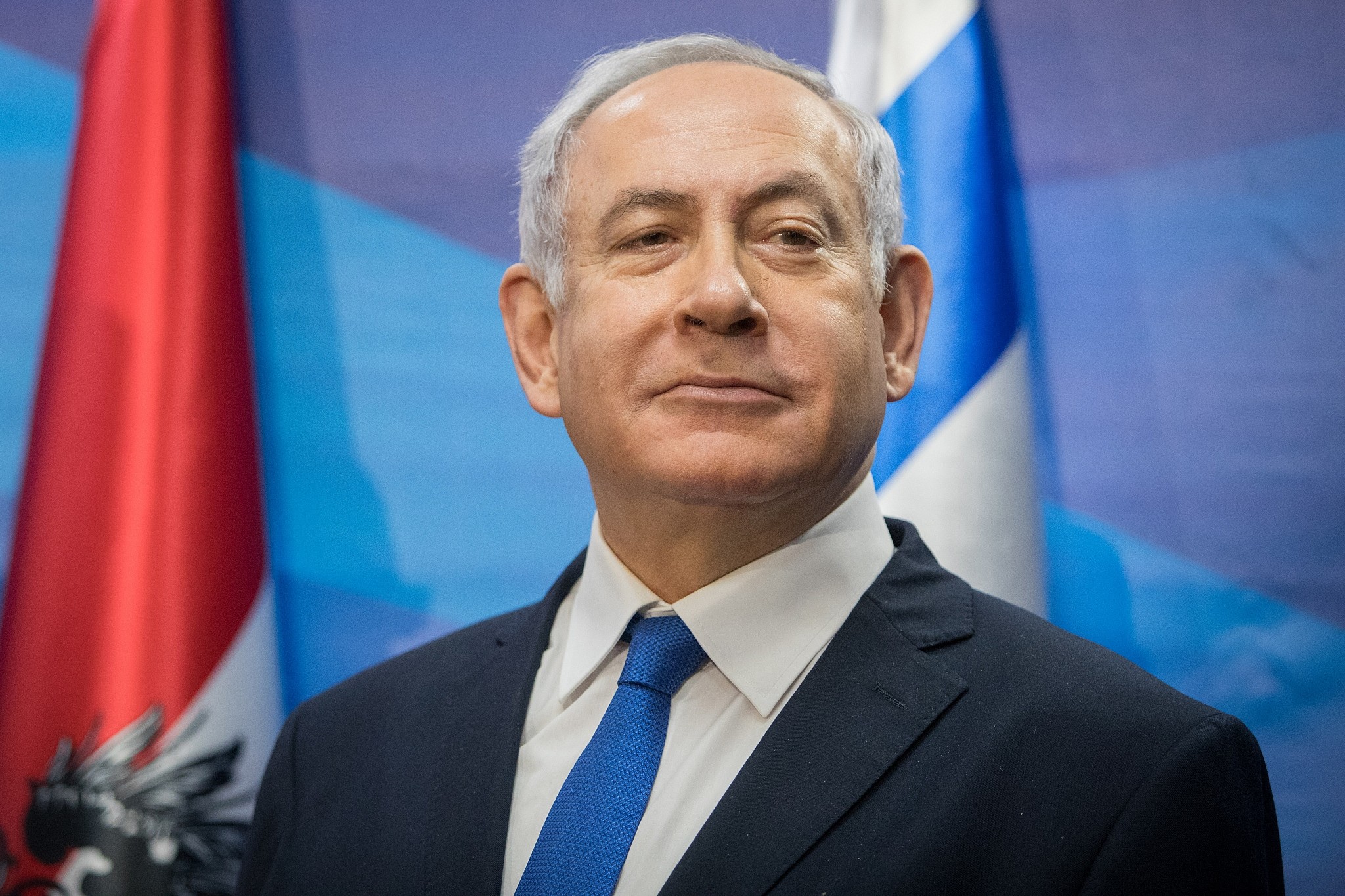
Prime Minister Benjamin Netanyahu visits and IDF naval base in Haifa, February 12, 2019. (Haim Tzach/PMO)

Prime Minister Benjamin Netanyahu visits and IDF naval base in Haifa, February 12, 2019. (Haim Tzach/PMO)

Prime Minister Minister Benjamin Netanyahu threatened that Israel could target Iran-backed militias throughout the Middle East during a visit to a naval base Tuesday.

“Our missiles can travel very far, and confront any enemy, including the Iranian proxies in our region,” he said from the base in Haifa, a day after an top Iranian commander threatened to raze the city if the US attacked the Islamic Republic.

“We are constantly acting in accordance with our need to prevent Iran and its proxies from entrenching along our northern border, and in the wider region,” added Netanyahu, who is also defense minister.

Iranian proxies in the region include the Lebanon-based Hezbollah, several terror groups in Gaza, and Shiite militias in Iraq.

On Monday, a senior Revolutionary Guards commander said at a rally marking the 40th anniversary of the Islamic Revolution that Iran would wipe out Haifa and Tel Aviv if the US launches an attack on the Islamic Republic.

Netanyahu hit back hours later, saying that if Iran made the “terrible mistake” of attacking Israel, it “will be the last anniversary of their revolution they will ever celebrate.”

Monday also saw a reported Israeli tank shelling on the Quneitra region just over the Golan Heights border in Syria.

According to Syrian state media, Israeli shells targeted a hospital in Quneitra and an observation post in a nearby town, both of which lie in the demilitarized zone separating the countries.

The IDF did not comment on the report.

Netanyahu’s bureau published a picture of him on the base with officers despite a recent ruling by the attorney general that he could not use pictures with soldiers over concerns it could be used as election propaganda.