Don’t worry about what the neighbors might think 

Posted April 17, 2019 by Joseph Wouk
Categories: Uncategorized

Source: Don’t worry about what the neighbors might think – www.israelhayom.com

America is already divided, as is Israel, between those who favor appeasing enemies while reprimanding friends, and those who espouse the opposite view.

A few days ahead of the Knesset elections, Prime Minister Benjamin Netanyahu vowed to extend Israeli sovereignty to parts of Judea and Samaria. This campaign promise, which was reported by many unfriendly news outlets as a ploy to garner votes from the far-right, had nothing to do with his ultimate victory, however. The real reason for his win was simple. The Likud Party that he heads is most closely aligned with the position of mainstream Israeli society, which holds centrist views laced with the realism born of experience.

This is not to say that Netanyahu’s annexation announcement was insignificant. On the contrary, it was so straightforward and insistent that it led many right-wingers to say that they’d believe it when they saw it.

Politicians tend to talk big, after all, particularly during a campaign. And Netanyahu, as Israelis across the political spectrum agree, is nothing if not a brilliant politician. A “magician” is what he was called on election night by left-wing pundits shifting from elated to despondent as exit polls gradually were replaced by actual country-wide vote counts.

Once the final tally was in, the news lull left by a lack of concrete information about the yet-to-be-finalized coalition was instantly filled with hysteria, at home and abroad, about Netanyahu’s annexation pledge.

One source of this carry-on was the liberal/progressive American-Jewish community.

Nine groups – the Central Conference of American Rabbis, the Union for Reform Judaism, the United Synagogue of Conservative Judaism, its Rabbinical Assembly, Mercaz (its Zionist affiliate), the Anti-Defamation League, Ameinu, the National Council of Jewish Women and the Israel Policy Forum – wrote a letter to U.S. President Donald Trump, asking him to keep Netanyahu in check.

Yes, this motley crew, not one member of whom supports Trump, appealed to him to prevent the prime minister of Israel from making a move that they “believe … will lead to greater conflict between Israelis and Palestinians, severely undermine, if not entirely eradicate, the successful security coordination between the State of Israel and the Palestinian Authority, and galvanize efforts such as the Boycott, Divestment, and Sanctions movement that are intended to isolate and delegitimize Israel.”

In addition, the letter went on, “[Annexation] will create intense divisions in the United States and make unwavering support for Israel and its security far more difficult to maintain.”

This plea, dripping with nauseating false piety, would be laughable if it weren’t so vile.

In the first place, the only “undermining” and “eradicating” going on in Israel are being done by the PA. Secondly, the BDS movement uses any excuse to engage in “efforts to isolate and delegitimize” the Jewish state. That’s its whole purpose, of course.

Third, it is a complete lie that annexation would divide the United States and make its support for Israel “more difficult to maintain.”

America is already divided, as is Israel, between those who favor appeasing enemies while reprimanding friends, and those who espouse the opposite view. Jewish liberals and Israeli leftists who fear offending murderous Palestinians and hateful boycotters belong in the former category.

To be fair, Jews have a long-standing tradition of identifying with their captors. Many Israelites rescued from Egyptian bondage complained to Moses that conditions under slavery were better than their trek through the desert to arrive at the Promised Land. If those whiners had had their way, we would not be celebrating the Passover holiday that begins this Friday.

The other tendency of Diaspora liberals – to flinch whenever Israel asserts its heritage and power – stems from “mar’it ayin,” a concept in halachah (Jewish law) according to which even legitimate actions are prohibited when they could be misconstrued by other people as impermissible. In other words, it’s the Jewish legalization of worrying about what the neighbors might think, and changing one’s behavior to stave off possible disapproval.

Thankfully, Netanyahu disregards mar’it ayin when making decisions for the country, whether Jews across the ocean like it or not.

This article is reprinted with permission from JNS.org.

 

Anticipating Trump’s “Deal of the Century” 

Posted April 17, 2019 by Joseph Wouk
Categories: Uncategorized

Source: Anticipating Trump’s “Deal of the Century” – www.israelhayom.com

The unofficial reports, which have been slammed by the White House as misleading, suggest the plan could fail because of a great miscalculation of traditional Palestinian-Israeli diplomacy, by asking too little of Arabs and too much of Israelis.

President Trump’s peace plan for the Palestinian-Israeli conflict surfaced two years ago and to this day – remarkably – only he and a handful of aides know its precise details. A stream of leaks, however, contains enough internal consistency that their collation, supplemented by conversations with administration officials, provides a plausible outline of the plan’s contents.

These suggest the plan boils down to a grand exchange: The Arab states recognize Israel and Israel recognizes Palestine, both with capital cities in Jerusalem. This approach builds on elements forwarded by Egypt’s President Sisi in 2016, the Obama administration in 2009, the 2002 Arab Peace Initiative, and even my 1990 symmetry plan.

These prior plans either had Israel go first or called for simultaneous steps; in contrast, Trump’s has the Arab states initiate, with Israel responding. This change prompted Mahmoud Abbas of the Palestinian Authority (PA) immediately to reject the “deal of the century” when he met with Trump in May 2017; one report noted that “Abbas has long feared such a plan” and “vehemently opposed” it.

Despite that reaction, the purported deal contains many elements favorable to the Palestinians:

  • Palestine consists of Areas A and B on the West Bank in their entirety and parts of Area C; in all, it will constitute 90 percent of the West Bank;
  • The capital is within or near Jerusalem’s expansive municipal boundaries, perhaps in an area stretching from Shuafat to Isawiya, Abu Dis, and Jabal Mukabar;
  • An international body oversees a joint PA-Israeli administration governing Jerusalem’s Holy Basin (including the Old City);
  • A joint PA-Jordan body controls Jerusalem’s Islamic sanctuaries;
  • Egypt, Jordan, and Lebanon give more rights to their Palestinian residents;
  • Jewish residents in smaller West Bank towns are relocated;
  • A land passage connects the West Bank and Gaza;
  • Gaza joins Palestine when the PA regains control of it;
  • Washington organizes a gigantic economic aid package (perhaps $40 billion, or roughly $25,000 per Palestinian resident of the West Bank) for the PA;
  • Palestinians enjoy temporary access to select Israeli seaports and airports until foreign funds build exclusive PA facilities.

In exchange, the Palestinians apparently will be asked to accept several limitations:

  • Continued Israeli military control over Palestine’s borders, its air and sea access, and the Jordan Valley;
  • Legal recognition by the U.S. government (and perhaps annexation by Israel) of larger Jewish towns amounting to 10 percent of the West Bank;
  • Giving up the “right of return” for Palestinians living outside Israel in favor of compensation.

Assuming this outline to be correct in the essentials, it raises three main worries. First, the benefits to Israel are illusory. Its peace treaties with Egypt (signed 40 years ago) and Jordan (25 years ago) led not to significant trade, friendly diplomatic relations, or an increase in human contact. Rather, they intensified anti-Zionist sentiments among Egyptians and Jordanians while improving their governments’ arsenals. The same pattern of heightened hostility also followed other Arab diplomatic agreements with Israel – Lebanon in 1983, the PLO in 1993; why should Saudi or Bahraini recognition be otherwise? In other words, Arab state recognition hardly benefits Israel and could hurt it.

Ending the Palestinian claim to a “right of return” is Israel’s other illusory benefit. Just recall the farcical 1990s non-change of the PLO charter to drop its call for Israel’s destruction to anticipate the hollow theatrics ahead.

Second, despite the Palestinians gaining real and irreversible benefits (money, territory, legitimacy), they with certainty will continue their century-old pattern of rejecting Israel through campaigns of delegitimization and violence, as has been the case since the first Palestinian-Israeli agreement in 1993. That’s because Shimon Peres’ discredited “New Middle East” idea, that enriching and rewarding Palestinians makes them peaceable, underlies the reported Trump plan. Long experience, however, shows that these benefits make them more inclined to eliminate the Jewish state. In brief, the PA will pocket “Palestine” and intensify its anti-Zionism.

Third, should Israelis complain to Trump about that delegitimization and violence, he will likely respond with annoyance: The Palestinian-Israeli conflict is now “off the table” and they should move on. Should they persist, his predictable rage will damage not just Israel but also the anti-Tehran campaign and anti-Islamist efforts in general.

In short, the reported plan repeats the great miscalculation of traditional Palestinian-Israeli diplomacy by asking too little of Arabs and too much of Israelis. I predict that it will fail, just as did those of Clinton, George W. Bush, and Obama.

Therefore, Americans concerned about Israel, Iran, and Islamism need to prepare for the imminent unveiling of what could be a problematic plan. Yes, so far, Trump has been “the most pro-Israel president ever” but, as the Bible reminds us, “put not your trust in princes.”

Deal of the century: Don’t repeat the same mistake

Posted April 17, 2019 by Joseph Wouk
Categories: Uncategorized

Source: Deal of the century: Don’t repeat the same mistake – www.israelhayom.com

We commonly cite the foolishness of doing the same thing and expecting different results. If we apply this adage to “land for peace” proposals regarding Israel and the Palestinians, we will be very wary of any claim that we can expect peace if we would only uproot Jews from their ancient lands.

President Trump’s recent announcement that the United States would “fully recognize Israel’s Sovereignty over the Golan Heights” is an acknowledgment of the political reality that will strengthen the U.S.-Israel relationship, provide greater security and stability in the region and further cement support among the president’s evangelical base. Recognizing Israel’s sovereignty over this land is yet another bold policy step that sets the Trump administration apart.

An American president’s statements can be powerful, but only when backed up by clear and decisive action. Unfortunately, the words of America’s leaders have sometimes meant little to our friends (and adversaries) around the world because those words stood alone without a commitment to action.

Under President Trump, the world sees and understands that the United States is a true friend of Israel. Whether it was moving the U.S. embassy to and recognizing Jerusalem as the capital of Israel, straightforwardly dealing with the threat posed by Iran, or acknowledging the sovereignty of Israel over its land, Mr. Trump is making history as perhaps the most pro-Israel president ever.

Some may balk at this pronouncement because in their eyes it harms the chance of a peace deal. Yet an honest review of history shows one must recognize the long wake left by Palestinian leaders and their enablers who have refused to reject violence and have betrayed their partners’ trust time and time again.

Up until the 1967 Six-Day War, Israeli communities in the Galilee lived in constant fear of shells raining down from the high ground of the Golan. Taking control of this area from Syrian forces during the war 50 years ago has enabled Israel to protect its people living there ever since. The fact that we are finally recognizing this reality is not by chance; President Trump has made a point of bluntly acknowledging facts and reality. He is now doing the right thing at the right time – recognizing Israeli sovereignty over land which it currently controls and to which its people have a historical connection, at the same time that Iran is increasing its influence over a fractured Syria, presenting an even greater threat to Israel and the region.

Pundits in concert with projectiles from Gaza will predict doom and gloom for the region and the world. We’ve heard it all before. The history of modern Israel is replete with pessimists chiming in at every significant development. The U.N., in particular, is little more than a launching pad for anti-Israel missives. Thankfully, there have been enough leaders who disregarded those voices, as Mr. Trump has done during his presidency. Today, Israel is a developed and stable democracy, anchoring the region and providing an example of liberty to those neighbors who desire freedom and its fruits.

One of us is a Christian, the other an orthodox Jew. We both pray for and desire peace, stability, and freedom in the Middle East. But just because we desire something does not make it so. We cannot control whether the necessary parties come to the negotiating table, and we should not fail to speak the truth and recognize reality because of the fear of others’ reactions.

At this time, as many are thinking about a new peace deal in the Middle East, they must remember that “land for peace” efforts have a long but failed history. Agreements like the Oslo Accords and the freeze on building houses for the Jewish people did little to stop Palestinian violence, which continued after they were put in place. We must not be naive about this.

Neither should we be hopeless. Relations between many Gulf Arab countries and Israel are getting better, as they recognize their common foe and threat to peace posed by Iran. The time may yet come for a peace agreement in the Middle East, even if it is not here yet.

President Trump’s decisive actions related to Israel have brought a new level of respect for the United States in the region, and greater stability, and it has resulted in peak approval ratings among evangelicals and others who care about the Holy Land. The Trump administration should stay the course, continuing to avoid the “land for peace” proposals and the policies that have prevented Israelis from building in Judea and Samaria, which have repeatedly failed to work. This looks even more sensible in light of Prime Minister Benjamin Netanyahu’s recent pledge to extend sovereignty over these areas.

We commonly cite the foolishness of doing the same thing and expecting different results. If we apply this adage to “land for peace” proposals regarding Israel and the Palestinians, we will be very wary of any claim that we can expect peace if we would only uproot Jews from their ancient lands where Abraham walked and Joseph and Joshua are buried. Withdrawal from Gaza did not stop the violence; there should be no reasonable expectation for this approach to work elsewhere in Israel. In the intractable conflict rooted in the land God gave to the people of Israel, the best approach would be to seek God’s solutions in God’s timing.


Syrian military officials’ first criticism of Russia, alleging Moscow’s collusion with Israel – DEBKAfile

Posted April 17, 2019 by Joseph Wouk
Categories: Uncategorized

Source: Syrian military officials’ first criticism of Russia, alleging Moscow’s collusion with Israel – DEBKAfile

( Don’t you just LOVE it…? – JW )

Russia comes under fire from Damascus for the first time, since its 2015 intervention on behalf of the Assad regime, on the charge of collaborating with Israel.

Unnamed Syrian military sources said on Monday, April 15: “Israel possesses one of the most powerful military intelligence wings in the world,” and “not only benefits from close intelligence ties with the US coalition but also the Russian military.”

Syrian officials have never ventured to criticize the Russian military whose support was critical in rescuing Bashar Assad from an eight-year insurgency. However, dissent was sparked in Syrian army rank and file and the general population by Israel’s aerial missile attack on Syria’s “Scientific Studies and Research Center at Masyaf on Saturday, April 13. The most important Syrian-Iranian production hub for upgrading the surface missile and air defense capabilities of the Syrian army and Hizballah was gutted. Even more infuriating, the Russian S-300 air defense battery posted near Masyaf did not launch a single missile against the enemy assailants.

Still strongly implying Russian collusion, the Syrian military officials declared that the Israelis knew perfectly well that the S-300 was not ready for use and exploited this information. They went on to say: “Russia may disapprove of the Israeli air strikes in Syria, but they will not intervene to stop them as they currently have an agreement with the Netanyahu administration.” Syrian officials have never, in the more than two years of Israel air strikes in Syria against Iranian targets, referred to the Russian military’s non-interference or its connection to a Putin–Netanyahu deal. Damascus’ frustration is further compounded by its inability to take direct action against Israeli air strikes, because they are launched from next-door Lebanon’s air space. The Syrian official made it clear that Damascus has no wish to violate Lebanese sovereignty.

Off Topic:  Roger Waters calls on Madonna not to perform at Eurovision in Tel Aviv

Posted April 17, 2019 by Joseph Wouk
Categories: Uncategorized

Source: Roger Waters calls on Madonna not to perform at Eurovision in Tel Aviv | The Times of Israel

( One day this evil, vile swine will drop dead.  I pray I live long enough to witness it. – JW )

Former Pink Floyd musician denies he is anti-Semitic in open letter asking Queen of Pop to cancel unconfirmed gig at the song contest

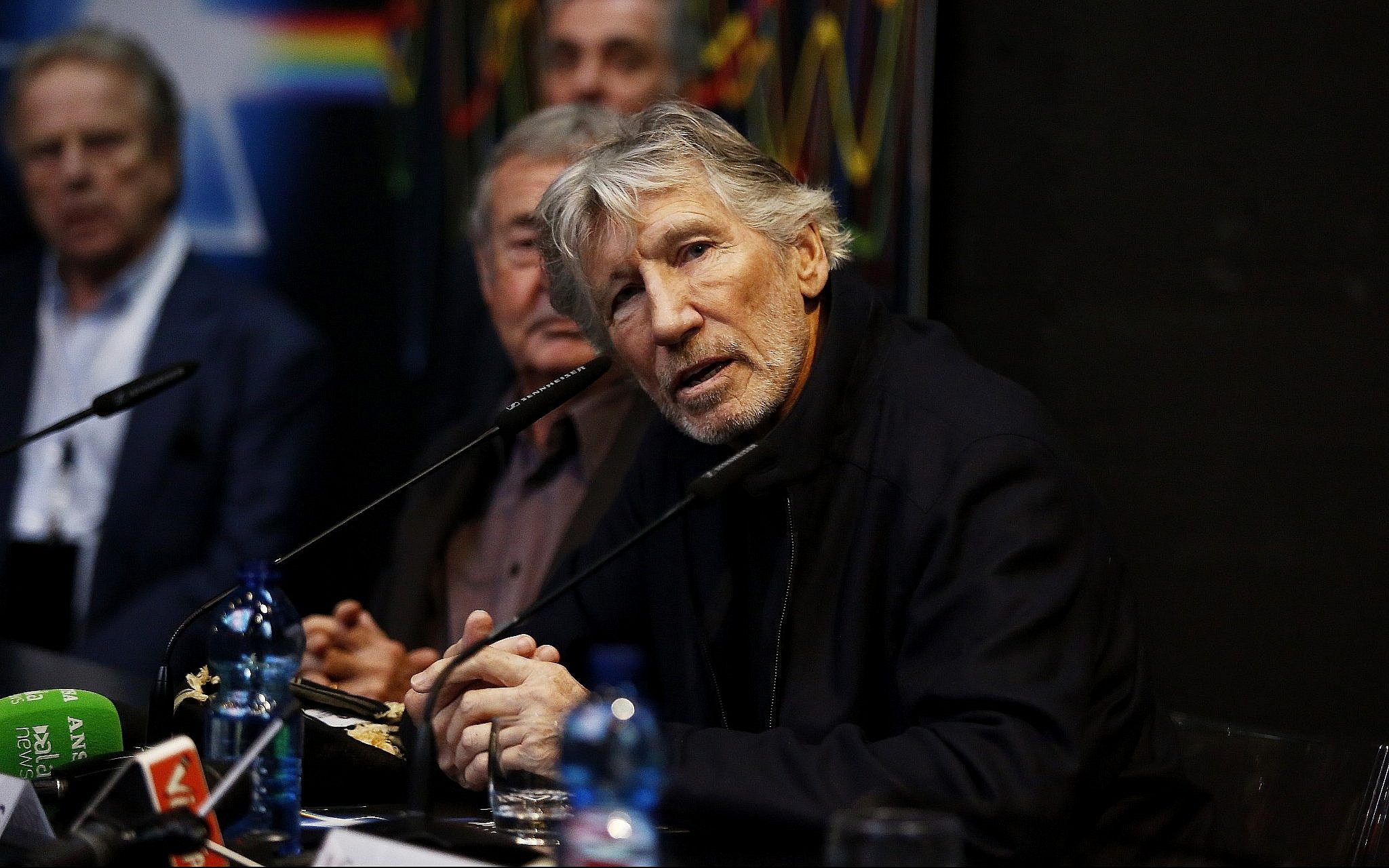
Roger Waters at a press conference for 'The Pink Floyd Exhibition: Their Mortal Remains' in Rome, Italy, January 16, 2018. He is a leading celebrity in the Boycott, Divestment and Sanctions movement against Israel. (Ernesto S. Ruscio/Getty Images)

Roger Waters at a press conference for ‘The Pink Floyd Exhibition: Their Mortal Remains’ in Rome, Italy, January 16, 2018. He is a leading celebrity in the Boycott, Divestment and Sanctions movement against Israel. (Ernesto S. Ruscio/Getty Images)

Roger Waters on Wednesday called on Madonna to cancel her rumored performance at the Eurovision Song Contest finals in Tel Aviv on May 18, claiming that it “normalizes the occupation, the apartheid, the ethnic cleansing, the incarceration of children, the slaughter of unarmed protesters.”

Madonna has been booked to perform at the finals of the competition next month, but her participation has not yet been officially announced by the event organizers.

“I am routinely accused of being anti-Semitic,” Waters wrote in an open letter published by The Guardian. “That accusation can be used as a smokescreen to divert attention and discredit those who shine a light on Israel’s crimes against humanity.

“I should point out that I support the fight for human rights for all oppressed peoples everywhere. The religion of the oppressor is neither here nor there,” he said.

Waters, best known as a former member of Pink Floyd who conceived the rock opera “The Wall,” has long been a passionate supporter of the Palestinian cause and has angered Israelis by leading calls for a cultural boycott of the Jewish state.

Madonna poses for photographers upon arrival at the world premiere of the film ‘The Beatles, Eight Days a Week,’ in London, September 15, 2016. (AP Photo/Kirsty Wigglesworth)

He is also is known for publicly harassing artists scheduled to visit Israel or perform there as part of a campaign by the BDS — Boycott, Divestment and Sanctions — movement, which calls on musicians to shun Israel as a way to press the Jewish state to change its treatment of the Palestinians.

In September, some 140 artists, including Waters, called for a boycott of the song contest.

Having previously defended Waters from accusations of anti-Semitism, the Anti-Defamation League in 2013 said “anti-Semitic conspiracy theories” have “seeped into the totality” of the former Pink Floyd frontman’s views.

Nearly every large act to book a show in Israel has come under pressure from pro-Palestinian activists as part of the BDS campaign. While some, like Lorde, Elvis Costello and Cat Power, have canceled gigs, most have resisted the boycott effort.

Israel’s defenders have denounced the boycott campaign as hypocritical, saying the democratic country has been singled out when some prominent musicians are willing to play in dictatorships.


New Palestinian Authority PM declares Trump peace plan ‘born dead’

Posted April 17, 2019 by Joseph Wouk
Categories: Uncategorized

Source: New Palestinian Authority PM declares Trump peace plan ‘born dead’ | The Times of Israel

Mohammad Shtayyeh sa

( Brilliant !  Proof positive that their rejection of  a negotiated settlement was predetermined. – JW )

Mohammad Shtaeh says US waging ‘financial war’ on Palestinians in bid to force their surrender without independent state; insists: ‘There are no partners in Palestine for Trump’

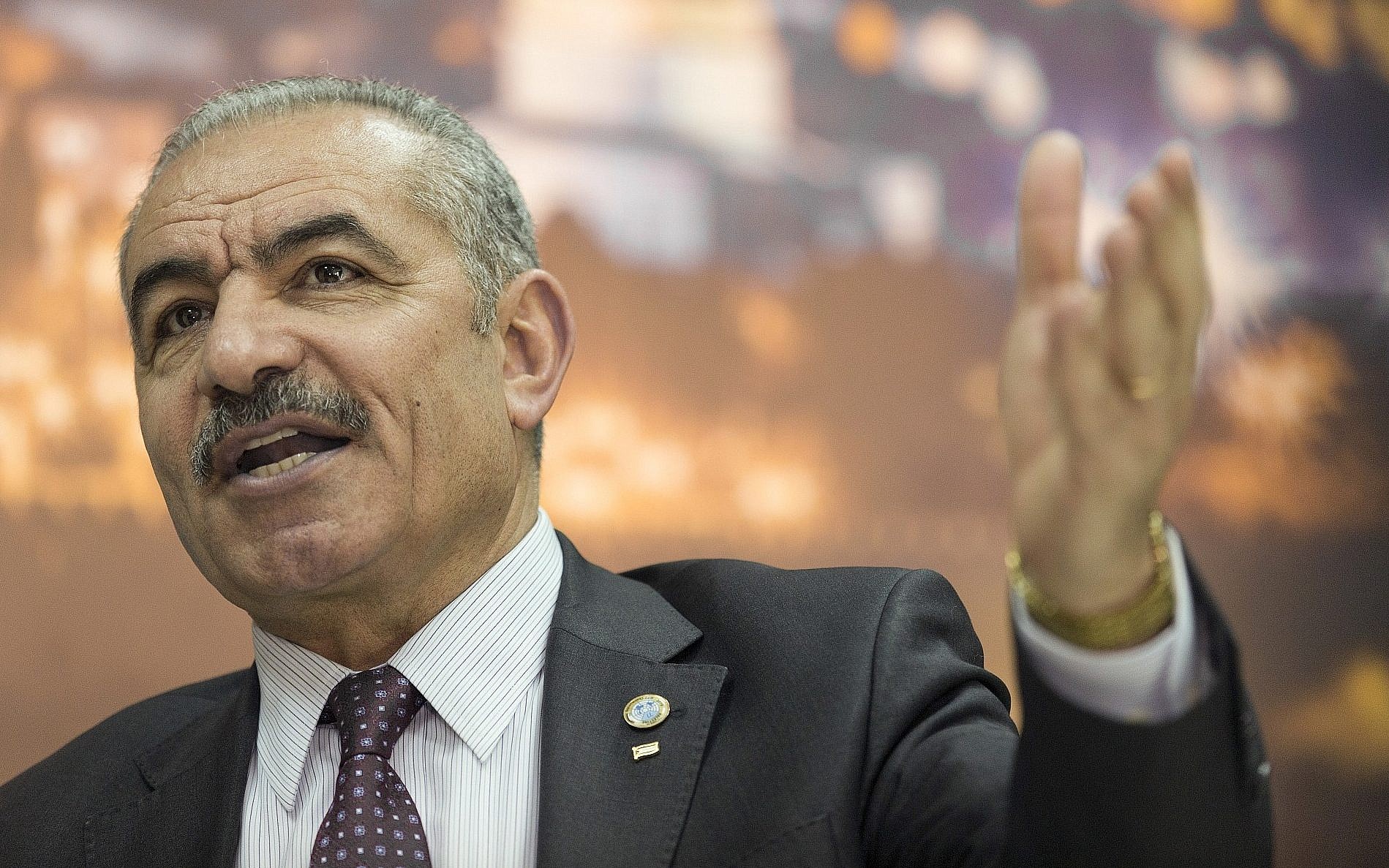
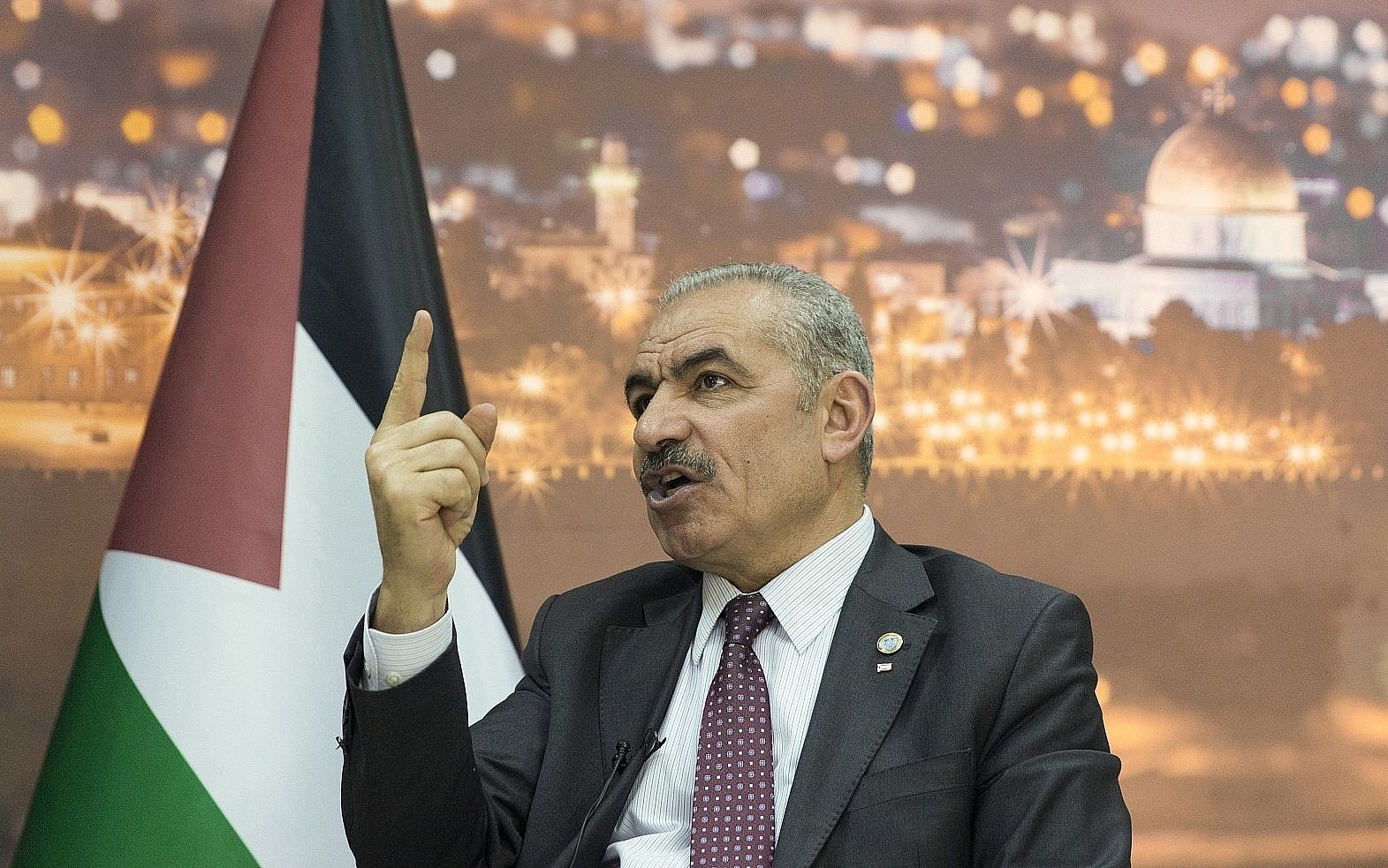
Palestinian Authority Prime Minister Mohammad Shtayyeh talks during an interview with The Associated Press, at his office in the West Bank city of Ramallah, Tuesday, April 16, 2019. (AP Photo/Nasser Nasser)

The new Palestinian Authority prime minister on Tuesday accused the United States of declaring “financial war” on his people and said an American peace plan purported to be in the works will be “born dead.”

In his first interview with the international media since taking office over the weekend, Mohammad Shtayyeh laid out plans to get through the financial crisis he has inherited and predicted that the international community, including US allies in the Arab world, would join the Palestinians in rejecting President Donald Trump’s expected peace plan.

“There are no partners in Palestine for Trump. There are no Arab partners for Trump and there are no European partners for Trump,” Shtayyeh said during a wide-ranging hour-long interview.

Shtayyeh, a British-educated economist, takes office at a difficult time for the Palestinians, with his government, the Palestinian Authority, mired in a dire financial crisis. The PA administers autonomous zones in the West Bank.

The Trump administration has slashed hundreds of millions of dollars of aid, including all of its support for the UN agency for Palestinian refugees.

Israel has also withheld tens of millions of dollars of tax transfers to punish the Palestinians for their “martyrs’ fund,” a program that provides stipends to the families of Palestinians imprisoned or killed as a result of fighting with Israel, including many who have carried out terror attacks.

The Israelis say the fund rewards and encourages violence, while the Palestinians say the payments are a national duty to families affected by decades of violence. Furious about the withholding, the Palestinians have in turn refused to accept partial tax transfers from Israel.

Palestinian Authority Prime Minister Mohammad Shtayyeh talks during an interview with The Associated Press, at his office in the West Bank city of Ramallah, Tuesday, April 16, 2019. (AP Photo/Nasser Nasser)

Without its key sources of revenue, the Palestinian Authority has begun paying only half salaries to tens of thousands of civil servants, reduced services and increased borrowing. In a new report being released Wednesday, the World Bank said the Palestinian deficit will grow from $400 million last year to over $1 billion this year.

“Israel is part of the financial war that has been declared upon us by the United States. The whole system is to try to push us to surrender” and agree to an unacceptable peace proposal, Shtayyeh said. “This a financial blackmail, which we reject.”

Shtayyeh laid out a number of proposals for weathering the storm. He said he has imposed spending cuts by reducing perks for his cabinet ministers.

A Palestinian pupil walks past United Nations Relief and Works Agency, (UNRWA), and USAID, humanitarian aid on June 6, 2010 in the Shatie refugee camp, in Gaza City. (AP Photo/Lefteris Pitarakis, File)

He said he would seek to develop the Palestinian agricultural, economic and education sectors and seek ways to reduce the Palestinian economy’s dependence on Israel. For example, he proposed importing fuel from neighboring Jordan, instead of from Israel, and even floating a Palestinian currency. He also said the Palestinians would seek financial backing from Arab and European donors.

Despite the tensions with Israel and the US, Shtayyeh said the Palestinians remain committed to the establishment of an independent Palestinian state on areas captured by Israel in the 1967 war. That includes establishing a capital in East Jerusalem, which Israel has annexed and claims as part of its eternal capital.

The two-state solution has enjoyed overwhelming international support for the past two decades. But Prime Minister Benjamin Netanyahu and his hard-line political allies reject Palestinian independence.

Netanyahu secured another term in office in elections last week and is expected to form a new coalition with religious and nationalist parties that oppose the two-state solution. On the campaign trail, Netanyahu even raised the possibility of annexing Israeli settlements in the West Bank, a step that could extinguish any remaining hopes for an independent Palestine.

Netanyahu has received a boost from Trump, who has given Netanyahu a number of diplomatic gifts since taking office. Trump has recognized Jerusalem as Israel’s capital and moved the US Embassy to the holy city, slashed aid to the Palestinians and shuttered the Palestinian diplomatic office in Washington.

Prime Minister Benjamin Netanyahu (L) and US President Donald Trump speak at Ben Gurion International Airport prior to the latter’s departure from Israel on May 23, 2017. (Koby Gideon/GPO)

In a departure from Republican and Democratic predecessors, Trump also has notably refused to endorse the two-state solution. His peace team, led by son-in-law Jared Kushner, has repeatedly pushed back the release of a peace plan it says it is preparing, and it remains unclear if or when it will be released.

Kushner’s team has said little about their proposal. But their limited public statements have indicated it will call for large amounts of economic investment in the Palestinians, but given no sign that it will include their demand for independence.

Shtayyeh said that after all of the US moves in favor of Israel, particularly the recognition of Jerusalem, there is nothing left to negotiate.

He said any proposal that ignores key Palestinian demands will be rejected by the international community. The European Union this week reiterated its call for peace talks aimed at establishing a Palestinian state.

“Where are we going to have the Palestinian state?” he asked. “We are not looking for an entity. We are looking for a sovereign state.”

“Palestinians are not interested in economic peace. We are interested in ending occupation,” he said. “Life cannot be enjoyed under occupation.”

PA foreign minister: Abbas ready to meet Netanyahu if Russia plays host 

Posted April 16, 2019 by Joseph Wouk
Categories: Uncategorized

Source: PA foreign minister: Abbas ready to meet Netanyahu if Russia plays host | The Times of Israel

Riyad al-Malki tells Russian news outlet Palestinians will reject any peace proposal that ‘does not acknowledge the State of Palestine’s independence’

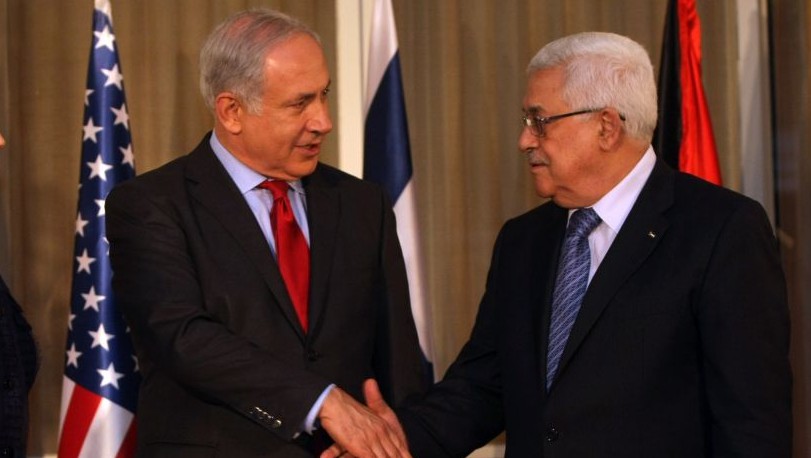
Prime Minister Benjamin Netanyahu (left) with Palestinian Authority President Mahmoud Abbas in Jerusalem, September 15, 2010. (Kobi Gideon/Flash90)

Prime Minister Benjamin Netanyahu (left) with Palestinian Authority President Mahmoud Abbas in Jerusalem, September 15, 2010. (Kobi Gideon/Flash90)

Palestinian Authority President Mahmoud Abbas is prepared to meet Prime Minister Benjamin Netanyahu if Russia hosts the gathering, PA Foreign Minister Riyad al-Malki told Sputnik, a Russian state-run news site.

Palestinian officials have said that Abbas agreed to accept a Russian suggestion to meet Netanyahu in Moscow last year, but the prime minister turned it down.

The last known encounter between Abbas and Netanyahu was at the funeral of former prime minister Shimon Peres in September 2016, where the two briefly exchanged pleasantries.

The last known time Abbas and Netanyahu met formally for negotiations was in September 2010 in Jerusalem.

“Abbas is ready to meet Netanyahu without preconditions, if Moscow hosts this meeting,” PA Foreign Minister Riyad al-Malki said in an interview with Sputnik published on Tuesday.

Malki met Russian Foreign Minister Sergey Lavrov in Moscow on Monday.

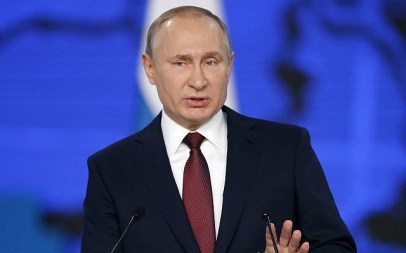
Russian President Vladimir Putin delivers a state-of-the-nation address in Moscow, Russia, February 20, 2019. (Photo/Alexander Zemlianichenko/AP)

Abbas has previously demanded that Israel freeze settlement construction as a precondition to the resumption of negotiations between the Jewish state and the Palestinians.

Asked whether Netanyahu would be willing to meet Abbas in Moscow, a spokesman for the Prime Minister’s Office did not immediately respond.

Malki added that the Palestinians will reject any proposal to resolve the conflict “that does not acknowledge the State of Palestine’s independence.”

US President Donald Trump’s administration has said it intends to release a plan to resolve the conflict, but has not publicized the date it plans to do so.

While Trump has said he thinks the two-state solution, including the creation of a Palestinian state, “works best,” he has not committed to it.

The Washington Post reported on Monday that while the US administration’s apparently forthcoming plan “promises practical improvements in the lives of Palestinians,” it “is likely to stop short of ensuring a separate, fully sovereign Palestinians state,” citing people knowledgeable of its “main elements.”

The PA foreign minister also said that Abbas may visit Moscow in the next two to three months.

Abbas last visited Moscow in July 2018, when he met Russian President Vladimir Putin and attended the World Cup.


PA foreign minister: Abbas ready to meet Netanyahu if Russia plays host 

Posted April 16, 2019 by Joseph Wouk
Categories: Uncategorized

Source: PA foreign minister: Abbas ready to meet Netanyahu if Russia plays host | The Times of Israel

Riyad al-Malki tells Russian news outlet Palestinians will reject any peace proposal that ‘does not acknowledge the State of Palestine’s independence’

Prime Minister Benjamin Netanyahu (left) with Palestinian Authority President Mahmoud Abbas in Jerusalem, September 15, 2010. (Kobi Gideon/Flash90)

Prime Minister Benjamin Netanyahu (left) with Palestinian Authority President Mahmoud Abbas in Jerusalem, September 15, 2010. (Kobi Gideon/Flash90)

Palestinian Authority President Mahmoud Abbas is prepared to meet Prime Minister Benjamin Netanyahu if Russia hosts the gathering, PA Foreign Minister Riyad al-Malki told Sputnik, a Russian state-run news site.

Palestinian officials have said that Abbas agreed to accept a Russian suggestion to meet Netanyahu in Moscow last year, but the prime minister turned it down.

The last known encounter between Abbas and Netanyahu was at the funeral of former prime minister Shimon Peres in September 2016, where the two briefly exchanged pleasantries.

The last known time Abbas and Netanyahu met formally for negotiations was in September 2010 in Jerusalem.

“Abbas is ready to meet Netanyahu without preconditions, if Moscow hosts this meeting,” PA Foreign Minister Riyad al-Malki said in an interview with Sputnik published on Tuesday.

Malki met Russian Foreign Minister Sergey Lavrov in Moscow on Monday.

Russian President Vladimir Putin delivers a state-of-the-nation address in Moscow, Russia, February 20, 2019. (Photo/Alexander Zemlianichenko/AP)

Abbas has previously demanded that Israel freeze settlement construction as a precondition to the resumption of negotiations between the Jewish state and the Palestinians.

Asked whether Netanyahu would be willing to meet Abbas in Moscow, a spokesman for the Prime Minister’s Office did not immediately respond.

Malki added that the Palestinians will reject any proposal to resolve the conflict “that does not acknowledge the State of Palestine’s independence.”

US President Donald Trump’s administration has said it intends to release a plan to resolve the conflict, but has not publicized the date it plans to do so.

While Trump has said he thinks the two-state solution, including the creation of a Palestinian state, “works best,” he has not committed to it.

The Washington Post reported on Monday that while the US administration’s apparently forthcoming plan “promises practical improvements in the lives of Palestinians,” it “is likely to stop short of ensuring a separate, fully sovereign Palestinians state,” citing people knowledgeable of its “main elements.”

The PA foreign minister also said that Abbas may visit Moscow in the next two to three months.

Abbas last visited Moscow in July 2018, when he met Russian President Vladimir Putin and attended the World Cup.


Trump wishes a happy Passover 2019 

Posted April 16, 2019 by Joseph Wouk
Categories: Uncategorized


Trump wishes a happy Passover 2019

Trump defends and protects Israel from International Criminal Court

Posted April 16, 2019 by Joseph Wouk
Categories: Uncategorized

Source: Trump defends and protects Israel from International Criminal Court – www.israelhayom.com

U.S. administration includes the Jewish state in its efforts to block the International Criminal Court at The Hague from investigating war-crimes allegations. White House: “Any attempt to target American, Israeli or allied personnel for prosecution will be met with a swift and vigorous response.”

In what can be seen as an incredible show of support for Israel, the U.S. administration has included the Jewish state in its efforts to block the International Criminal Court at The Hague from investigating war-crimes allegations.

In a statement attributed to Trump, the White House said: “Since the creation of the ICC, the United States has consistently declined to join the court because of its broad, unaccountable prosecutorial powers; the threat it poses to American national sovereignty; and other deficiencies that render it illegitimate. Any attempt to target American, Israeli or allied personnel for prosecution will be met with a swift and vigorous response.”

While some have decried the administration’s response to be an expression of what they perceive as American exceptionalism, U.S. President Donald Trump views it as the opposite – unfair, exceptional focus on democracies. And so does Israel, which is consistently singled out and unfairly held to a higher standard in the international arena.

In response to the ICC investigation into alleged war crimes by U.S. forces and allies in Afghanistan, last week the United States revoked ICC Prosecutor Fatou Bensouda’s entry visa. National Security Advisor John Bolton has now threatened ICC judges with sanctions if they charge any American who served in Afghanistan with war crimes. The United States under Trump has made it clear that no international court, especially those led by human-rights violators, would threaten it or its military personnel. And, thanks to Trump, the United States has also made clear that Israel sits safely under American protection.

Professor Eugene Kontorovich, director of International Law at the Jerusalem-based Kohelet Policy Forum, testified on the ICC in Congress, and advised senior American and Israeli officials on the court and its jurisdiction.

“President Trump has taken an extraordinary step in defense of Israel, promising to impose sanctions such as travel bans on ICC officials if they pursue their biased investigation of Israel,” Kontorovich said.

He added that when the ICC “threw out its long-pending investigation into crimes committed by U.S. and other forces in Afghanistan, the Trump administration’s hardball approach to fighting prosecutions of U.S. soldiers by the Hague-based ICC was totally vindicated.”

“Now,” Kontorovich said, “the U.S. is promising to also impose sanctions on the court if it proceeds with an investigation into Israel about settlements in the West Bank. Israel, like the U.S., did not join the court’s treaty. This is an extraordinary show of support from America and may help deter a biased and unjust investigation.”

During the weekly government cabinet meeting on Sunday, Prime Minister Benjamin Netanyahu thanked Trump. He said, “They’re picking on the United States and Israel – two democracies which, by the way, are not members of the international court, but there’s no doubt that we have the best judicial systems in the world.”

“To come and make the soldiers of America stand trial, or the soldiers of Israel, or the State of Israel or the United States is absurd. It’s a reversal of the whole original point of the ICC,” Netanyahu added.

“Therefore, what we have here is a correction of injustice, and it is an act that has far-reaching influence with regard to the conduct of the international system in relation to the State of Israel,” he continued. “I congratulate the United States, President Trump and the Trump administration for their steadfast position on the side of the citizens of Israel and the soldiers of the IDF. As in previous times, it is proven that Israel has no better friend than the United States, and we very much appreciate this support in other areas as well.”

An effective response to the abuses of international law

Eytan Gilboa, professor of international relations and international communication, and a senior research associate at BESA Center for Strategic Studies at Bar-Ilan University in Ramat Gan, said the decision is “compatible with Trump’s strategy to attack and undermine the activities of international organizations which are abusing their mission, and are targeting democratic countries such as the U.S. and Israel.”

He added that the American position is that “democratic countries are capable of dealing with war crimes or any other crimes.”

Gilboa also said that “it is very important that Trump said any attempt by that court to investigate Israel would trigger a similar response since it undermines the Palestinian strategy of attacking Israel in international organizations, where they have almost automatic support.”

In recent years, Israel has been working to prevent the entry of people who represent hostile organizations.

Referring to Trump’s threats against the ICC, Gilboa said: “This is a legitimate measure that Israel can take against those who are undermining it.”

Gilboa concluded by saying that “this is a very important step toward an effective response to the abuses of international law and international organizations that the Palestinians, the Arabs and the enemies of the people of Israel have been pursuing in the last decade.”

Konotorovich was reassuring as well, saying that “now Israel has been pulled into America’s protective umbrella.”

This article is reprinted with permission from JNS.org.