Source: Source: White House adviser says peace plan to be unveiled by early June

Kushner, one of the main architects of the peace proposal and who is married to Trump daughter Ivanka, spoke to about 100 ambassadors from around the world at Blair House, the presidential guest home across the street from the White House. He spoke as part of a State Department series of speeches.
The proposal has two major components: A political piece that addresses core political issues as the status of Jerusalem, and an economic part that aims to help the Palestinians strengthen their economy.
Unclear is whether the plan will propose outright the creation of a Palestinian state, the Palestinians’ core demand.

During his remarks, Kushner pushed back on the idea that the Trump peace plan was mostly about centered around the economic package, saying the political component is “very detailed,” the source said.
“He said the plan will require concessions from both sides but won’t jeopardize the security of Israel,” the source said. “It requires everybody approaching the plan with an open mind.”
The White House had no comment.

Iranian President Hassan Rouhani (up center) attends a military parade during a ceremony marking the country’s annual army day in Tehran, on April 18, 2019. – Iran’s President Hassan Rouhani called on Middle East states on April 18 to “drive back Zionism”, in an Army Day tirade against the Islamic republic’s archfoe Israel. (STRINGER/AFP/Getty Images)
In urging neighbouring countries to “drive back Zionism”, the Islamic republic’s leader said the U.S. and its ally Israel were the root cause of all the troubled region’s problems.
“The region’s nations have lived alongside each other for centuries and never had a problem… If there is a problem, it is caused by others,” he said in the speech broadcast live on state television. “Let us stand together, be together and rid the region of the aggressor’s presence.”
Rouhani assured neighbouring countries that Iran’s armed forces are “never against you or your national interests” but are “standing against the aggressors.”
“The power of our armed forces is the power of the region’s countries, the Islamic world”, he said. “If we have a problem in the region today, its roots are either with Zionism or America’s arrogance.”
Rouhani said Muslim nations must band together and “restore the historical right of the nation of Palestine,” saying that “Zionism … has been committing crimes in the region for the past 70 years”,
“The final victory will surely be with the righteous,” he said.
Stirring exhortations against Israel are standard fare of official speeches in Iran, although some, such as a call by Rouhani’s predecessor Mahmoud Ahmadinejad for Israel to be “wiped off the map”, have triggered international condemnation.
For his part, Rouhani has previously called Israel a “cancerous tumour”, and urged Muslim governments to unite against it and its U.S. ally.
Last month he urged Iranians to put a curse on the U.S., Israel and Saudi Arabia, reiterating his long-standing charge that the U.S. and its allies are solely responsible for the country’s ailing economy.
“Put all your curses on those who created the current situation,” Rouhani said, adding that “the United States, the Zionists” and Saudi Arabia were to blame for the country’s ills. He didn’t say what kind of curses the Iranians should invoke.
The U.S. plan, Rouhani claimed, was to “dominate” the Iranian nation, “something Washington will not achieve.”
Last week, Washington placed Iran’s Islamic Revolutionary Guards on its blacklist of “foreign terrorist organisations,” the first time it had imposed the sanction on a military arm of a foreign government.
“Today, I am formally announcing my Administration’s plan to designate Iran’s Islamic Revolutionary Guard Corps (IRGC), including its Qods Force, as a Foreign Terrorist Organization (FTO) under Section 219 of the Immigration and Nationality Act,” says @POTUS in statement. pic.twitter.com/ovitdZq5Fi
— Steve Herman (@W7VOA) April 8, 2019
AFP contributed to this report
“The roots of our problems are the Zionist regime and American imperialism,” Iranian president Hassan Rouhani declared during a military ceremony.

Israel has long noted that Iran threatens not only them but other regional states, but Iranian President Hassan Rouhani announced Thursday his Islamic Revolutionary Guard Corps will merely be used against “Zionists” and “American imperialists” and not other Middle Eastern states, Reuters reported.
“The roots of our problems are the Zionist regime and American imperialism,” Rouhani declared during a military ceremony in ceremony in Tehran where missiles, submarines, armored vehicles and other army equipment were displayed.
Blaming Israel for the US support of Saudi Arabia’s war in Yemen represents a new stretch, even for the Iranian regime.
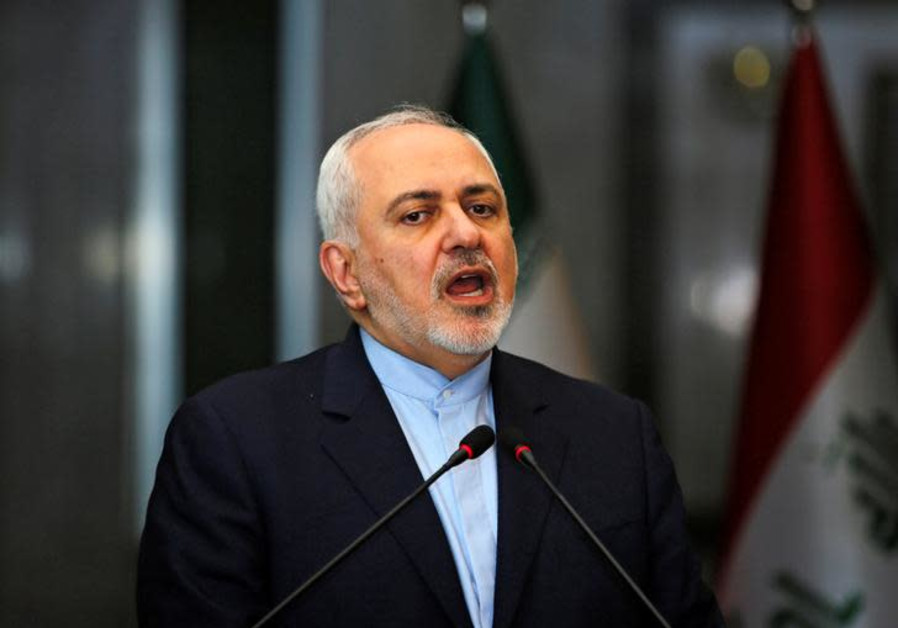
Iranian Foreign Minister Javad Zarif has a new term for US policy in the Middle East: “Netanyahu Firsters,” he writes on Twitter. In his latest claim he alleges that even though the US Congress wants to stop blaming Israel for the US support of Saudi Arabia’s war in Yemen, this charge represents a new stretch, even for the Iranian regime. “US support for the Saudi-led war in Yemen, the “petrofinanced #NetanyahuFirsters and their enabler in the White House will continue – with American lives and against US interests – to push for forever wars.”
Zarif coined the hashtag in order to play into recent controversial antisemitic innuendos in the US that attempt to blame Israel for US policies. For instance, on April 13 he wrote: “it’s not about the money: [US President] Donald Trump confessed US has spent $7 trillion here, only to worsen the situation, it’s Netanyahu Firsters always making the wrong choice in his service.” The “not about the money” quote is supposed to conjure up memories of US Congresswoman Ilhan Omar’s controversial “it’s about the Benjamins” tweet.
In a April 8 tweet, Zarif blamed the US decision to label Iran’s Islamic Revolutionary Guard Corps a terrorist group on “Netanyahu Firsters who have long agitated for FTO [Foreign Terrorist Organization] designation of the IRGC.” Zarif showed a photo of Trump with Sheldon Adelson, a well-known pro-Israel philanthropist.
The Zarif term doesn’t seem to be catching on yet, at least in part because it is difficult to pronounce and not particularly easy to remember or write. Nevertheless, it illustrates the Iranian regime’s careful study of US politics and its attempt to design its messaging mostly for a US audience. Posting photos of Adelson and referencing the “all about the Benjamins” tweet doesn’t resonate anywhere else in the world except in the US. This shows that Iran must be concerned about the Trump administration’s recent moves. It also shows that the Islamic republic hopes it can find support in Congress, particularly in its latest tweet alleging that while Congress wants to end the war in Yemen, Trump and his “Netanyahu first” policy want to continue it.
Blaming Israel for the US support of Saudi Arabia’s war in Yemen represents a new stretch, even for the Iranian regime. It shows how Tehran no longer even wants to pretend to blame those directly involved, such as the Iranian-backed Houthi rebels in Yemen. Iran has supplied missile technology to the Houthis who target Saudi Arabia. But it wants to distract from this by blaming the war on Israel backers. It thinks that Israel is such a toxic issue in US politics that blaming the Jewish state for everything will resonate. So far few have bought into the Zarif line, but Iran is clearly studying the US political landscape and hoping to become part of US partisan politics.
Source: Lebanese FM meets with senior Israeli officials in Moscow – report – Middle East – Jerusalem Post
Saudi newspaper ‘Elaph’ reported that the two “discussed borders” and mutual interests including Syria and Iran.
Lebanese Foreign Minister Gebran Bassil has reportedly met with a senior official in Moscow and “discussed borders,” Saudi Arabian newspaper Elaph reported.
The source told Elaph that the meeting lasted about two hours under the auspices of Russia. The two sides discussed issues of mutual interest, including the Syrian issue, the Assad regime and the issue of Iranian weapons factories in Lebanon.
The report also claimed that the Lebanese minister had asked the Israeli’s “to stop threatening Lebanon because of Hezbollah, saying that Hezbollah is part of the components of Lebanon and the Lebanese state will know how to accommodate all parties and groups under its sovereign.”
The source also told Elpah that the Lebanese minister discussed the issue of US sanctions on Lebanon with the Israeli official and asked him to mediate with the Americans about sanctions imposed on Lebanon, and asked the official to mediate with the American side and not to rush with the imposition of the sanctions, and to give Lebanon time to prepare for it.
In February, Prime Minister Benjamin Netanyahu told a group of UN ambassadors that “Iran has proxies…One of them is Hezbollah.”
“Hezbollah just joined the government of Lebanon. That’s a misnomer; they actually control the government of Lebanon,” Netanyahu said. “It means that Iran controls the government of Lebanon.”
Late last year, Israel launched a short operation named Northern Shield to neutralize cross-border Hezbollah attack tunnels.
At the time of the operations launch, Netanyahu made it clear that Hezbollah would
In September, during his speech to the UN, Netanyahu revealed that Hezbollah, together with Iran, had set up a number of precision missile factories in Beirut. “In Lebanon, Iran supports Hezbollah in building secret facilities and precision missiles capable of hitting deep inside Israel, with missiles with a precision of 10 meters,” Netanyahu said, adding that “Hezbollah uses innocent people in Beirut as shields.”
Netanyahu made it clear in his speech that “Israel knows what you are doing and where you are doing, and will not let you get away with it.”
Maariv contributed to this report.
Israel allegedly struck an Iranian missile factory in Syria’s Masyaf on Saturday.
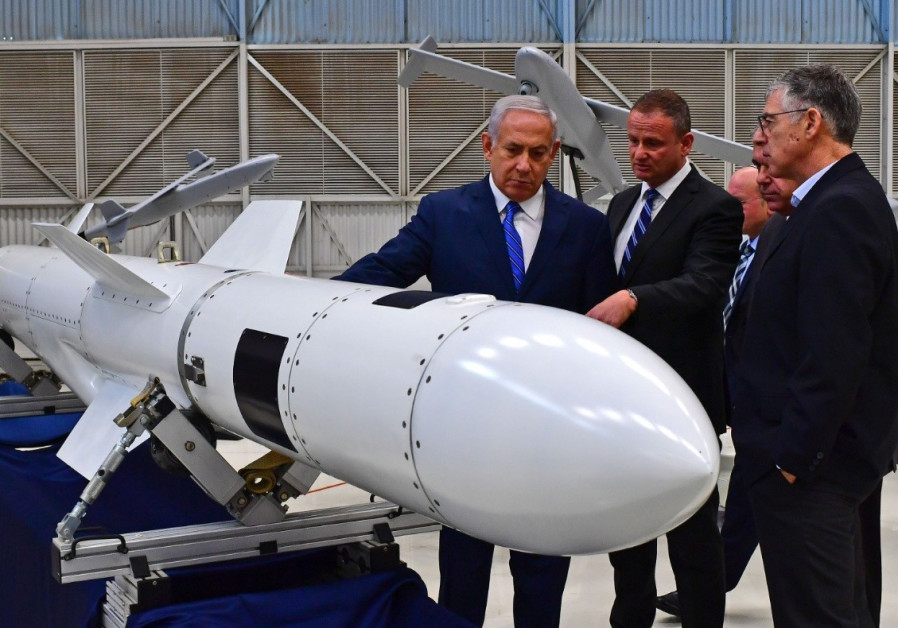
Source: ‘Readiness and Change’: Kohavi reveals his expensive plans for the IDF | The Times of Israel
Three months into his term, army chief proposes multi-year program for improving the military, including greater use of artificial intelligence and merging combat units
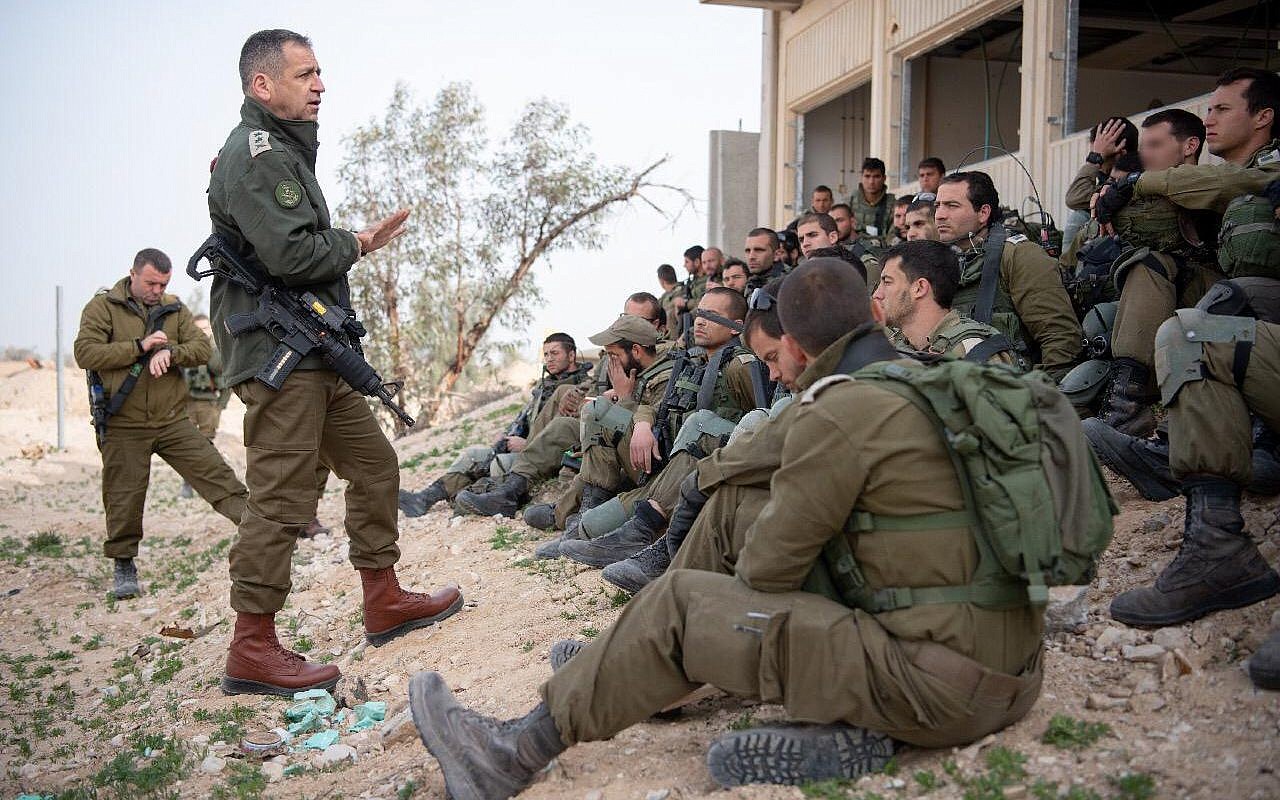
Three months into his tenure as chief of staff, Lt. Gen. Aviv Kohavi set out the framework for his multi-year plan to improve the Israel Defense Forces, some parts of which will be rolled out shortly, while others will require budgetary and legislative approvals before they can be implemented.
According to the IDF, Kohavi’s plan, known as “Readiness and Change,” focuses on continuing and strengthening two existing trends within the military: greater distribution of technology and intelligence throughout the military and better cooperation between its various different branches and units.
“Readiness and Change” appears to be concerned with shorter-term changes to the military that are designed to quickly boost efficacy — what the military typically refers to as “lethality” — whereas the previous chief of staff Lt. Gen. (res.) Gadi Eisenkot’s multi-year Gideon plan was aimed at longer-term, structural changes within the IDF.
Kohavi’s plan will also include the creation of a unit within the IDF Planning Directorate, headed by a brigadier general, to be known as “Fighting methods and modernity” — or by its Hebrew acronym Shiluah — that will focus on integrating new techniques and technology into the IDF, the army said.
A new target-picking task force will also be established, bringing together Military Intelligence, the Israeli Air Force and the three regional commands. The task force will comprise existing elements of those units and will also expand the use of technology — namely artificial intelligence and big data — in identifying potential targets for military strikes.
“This will improve the number and quality of the targets in the different regions,” the military said Thursday.
While Kohavi’s plans are meant to affect the entire military, the main beneficiaries of the proposals are the IDF’s ground forces — infantry, tanks, artillery, and combat engineering — which have been at the center of both public and internal military debate in the past year concerning their preparedness for war.
In order to increase the ground forces capabilities, the military plans to provide them additional resources, particularly in the form of anti-tank guided missiles and greater access to air power.
“This will strengthen the fighting force of the combat soldier, will defeat the enemy and will very powerfully and very quickly deny [the enemy] of its capabilities,” the military said.
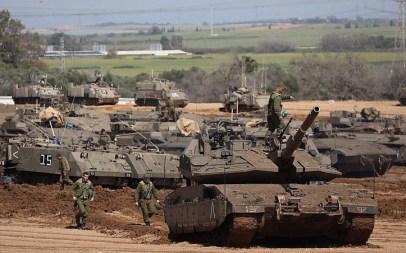
These additional, expensive resources will require budgetary approval from the government.
Another potentially costly proposal from “Readiness and Change” is a plan to connect nearly all branches and units of the military to an IDF intranet, allowing intelligence and operational information to be shared far more quickly than today.
A task force within the IDF General Staff will lead the project, the army said.
“This comes from an understanding that advancing this issue will allow better collaboration and connectivity throughout the military and will connect all the troops and platforms on the battlefield to one another,” the IDF said.

Kohavi also called for the implementation of an existing planwithin the military to form a combined unit made up of infantry, combat engineering, artillery, air force and intelligence. Currently, the various units regularly collaborate with one another but are kept structurally separate; under the plan, which was first proposed under Eisenkot, the elements will be brought under one roof.
“This will be the model for the future changes in the maneuvering units,” the military said, using its term for ground forces.
Toward the end of his first year as IDF chief, in late 2015, Eisenkot began rolling out his Gideon Plan, which was aimed at increasing the military’s efficiency and cutting waste.
The Gideon Plan came under significant criticism in recent years, chiefly by former military ombudsman Maj. Gen. (res.) Yitzhak Brick, who claimed that it was contributing to a decline in the IDF’s preparedness for war and in the quality of its officers.
Source: IDF shoots down targets in test of Patriot, Iron Dome air defense systems | The Times of Israel
Military declares exercise a success, saying it checked the preparedness of aerial defense soldiers and missile batteries
The Israeli Air Force conducted successful live-fire tests of its Patriot and Iron Dome missile defense systems on Tuesday, the military said.
The exercise had been subjected to the military censor until Wednesday evening.
“Air defense soldiers from the Israeli Air Force conducted successful interceptions of targets at various heights and ranges,” the Israel Defense Forces said in a statement.
The Patriot air defense system is meant to intercept both incoming aircraft and long-range ballistic missiles, while the Iron Dome is designed to shoot down short-range rocket and mortar attacks, as well as some aircraft.

The Air Force said the exercise, which was conducted in central Israel, was meant to test the preparedness of its air defense and technical units, as well as the air defense batteries themselves.
The IDF said the exercise was part of its annual training schedule.
Two foreign military delegations visited the exercise, the military said, refusing to specify the two countries.
“The delegations came to watch the exercise and to study its results. The delegations will take part in a panel discussion that will focus on professional matters and inter-military cooperation,” the IDF said.
Israel maintains a multi-tiered air defense system that is designed to protect the country’s strategic assets from aerial attack.

The lowest layer is the Iron Dome system, capable of intercepting short-range rockets, small unmanned aerial vehicles and mortar shells like those that have been fired at Israel from the Gaza Strip or from southern Lebanon.
The middle tier is made up of David’s Sling, which is meant to defend against missiles like the Iranian Fateh 110 and its Syrian equivalent, the M600, both of which have seen extensive use in the Syrian civil war and are known to be in the Hezbollah terrorist group’s arsenal.
At the top are the Patriot, Arrow 2 and Arrow 3 systems, which are intended to engage long-range ballistic missiles. The Patriot has also been used on a number of occasions against incoming aircraft.
Last July, the Patriot system shot down a Syrian fighter jet that traveled two kilometers into Israeli airspace, the military said.




 anneinpt
 artaxes
 danmillerinpanama
 davidking1530
 Peter Hofman
 Joseph Wouk
 Peter
Peter Louisiana Steve


Recent Comments