The IDF and the intelligence community are preparing for a variety of scenarios along the Syrian border and beyond.
Source: What will be the regional implications of the fall of Assad?
As Iran Falls, Who Will Rise in the Middle East w David Wurmser – The Caroline Glick Show
Clever to target an undeclared nuke site. Mutes the criticism from Iran.
Full article from Nov 15 copied below. Just before that is a link to an article from 18 Nov in which Netanyahu confirms the strike on the nuke target.
Netanyahu says Israel’s retaliatory strike on Iran hit component of its nuke program
18 Nov 24
https://www.timesofisrael.com/liveblog_entry/netanyahu-says-israels-retaliatory-strike-on-iran-hit-component-of-its-nuke-program/
Israel hit nuke weapons research site in Iran last month, set back program — report
15 Nov 24
https://www.timesofisrael.com/israel-targeted-secret-nuclear-weapons-research-in-iran-strikes-last-month-report/
Strike destroyed equipment used to design explosives for bomb; will have to be replaced if regime seeks to press ahead. IAEA chief tours nuclear sites. Iran ‘won’t try to kill Trump’

Israel’s airstrikes in Iran last month destroyed an active nuclear weapons research facility in Parchin, the Axios news site reported Friday, citing three US officials, one current Israeli official and one former Israeli official.
The report came as the UN nuclear watchdog prepares to vote on censuring Iran for refusing to cooperate with its inspectors, and amid a report that the Islamic Republic told the Biden administration last month it would not seek to assassinate US president-elect Donald Trump.
According to Axios, an Israeli strike on Parchin — part of an hours-long operation on October 26, which came in response to an earlier Iranian attack on Israel — destroyed sophisticated equipment used to design the explosives that could surround uranium in a nuclear device, significantly damaging Iran’s efforts to resume its nuclear weapons research.
The Israeli strike “will make it much harder for Iran to develop a nuclear explosive device if it chooses to do so,” Axios cited two Israeli officials saying.
Iran would need to “replace the equipment that was destroyed” if it wants to produce nuclear weapons, the report cited the Israeli officials saying, “and if Iran tries to procure it, they believe they will be able to track it,” Axios said.
The “Taleghan 2” complex was already known to have been targeted in the strikes — as testified by satellite imagery — and was already recognized as having been a site of Iran’s earlier nuclear program which officially shut down in 2003.
US and Israeli intelligence reportedly began to detect new activity at the site earlier this year, including computer modeling, metallurgy and research on explosives, that would be relevant to creating a nuclear device.
“They conducted scientific activity that could lay the ground for the production of a weapon. It was a top-secret thing. A small part of the Iranian government knew about this, but most of the Iranian government didn’t,” a US official told Axios.
Knowledge of the research at Taleghan 2 reportedly prompted the US Director of National Intelligence to change its official assessment of Iran’s nuclear program in August, which had previously noted Iran was “not currently undertaking” the activities necessary to produce a testable nuclear device.
Israel is not known to have hit other nuclear sites in the October 26 airstrikes, when dozens of Israeli aircraft took out air drone and ballistic missile manufacturing and launch sites, as well as air defense batteries.
The US urged Israel to refrain from hitting nuclear sites in the attack, to avoid triggering a major escalation with Iran, though it endorsed Israel’s move in responding to Iran’s October 1 attack on Israel, when the Islamic Republic shot 181 ballistic missiles at Israel, its second such direct attack since April.
According to Axios, Israel made an exception for Taleghan 2, because the site was not part of Iran’s declared nuclear program — which the Islamic Republic denies has a military component, but acknowledges as a supposedly civilian enterprise.
Had Iran acknowledged the significance of the attack, it would have in the process admitted its own violation of the nuclear non-proliferation treaty.
“The strike was a not-so-subtle message that the Israelis have significant insight into the Iranian system even when it comes to things that were kept top secret and known to a very small group of people in the Iranian government,” a US official told Axios.
The news site also quoted Israeli officials who said the strike would make it much harder for Tehran to develop a nuclear weapon if it chooses to do so.
“This equipment is a bottleneck. Without it the Iranians are stuck,” a senior Israeli official said.
“This is equipment the Iranians would need in the future if they want to make progress towards a nuclear bomb. Now they don’t have it anymore and it is not trivial. They will need to find another solution and we will see it,” the official added.
The report came the same day as the head of the UN nuclear watchdog visited two Iranian nuclear sites as part of a visit to Iran.
During the visit, Iran’s foreign minister told International Atomic Energy Agency chief Rafael Grossi that Tehran is willing to resolve outstanding disputes over its nuclear program but won’t succumb to pressure.
Grossi visited the Natanz nuclear plant and the Fordow enrichment site, which is dug into a mountain around 100 km (60 miles) south of the capital Tehran, state media reported, without giving details.
Relations between Tehran and the IAEA have soured over several long-standing issues including Iran barring the agency’s uranium-enrichment experts from the country and its failure to explain uranium traces found at undeclared sites.
“The ball is in the EU/E3 court,” Iranian Foreign Minister Abbas Araqchi wrote on X following talks in Tehran with Grossi on Thursday, referring to three European countries — France, Britain and Germany — which represent the West alongside the United States at nuclear talks.
“Willing to negotiate based on our national interest and inalienable rights, but not ready to negotiate under pressure and intimidation,” Araqchi said.
France’s foreign ministry spokesman told reporters the three European powers would wait to see the results of Grossi’s visit before deciding how to respond.
“We are fully mobilized with our E3 partners and the United States to bring Iran to the full implementation of its international obligations and commitments as well as cooperation in good faith with the agency,” he said.
“That mobilization comes in different ways, including through resolutions…so we expect that these messages are passed during Rafael Grossi’s visit and we will adapt our reaction accordingly.”
Trump’s return to office as US president in January upends nuclear diplomacy with Iran, which had stalled under the outgoing administration of Joe Biden after months of indirect talks.
During Trump’s previous tenure, Washington ditched a 2015 nuclear deal between Iran and six world powers that curbed Tehran’s nuclear work in exchange for relief from international sanctions.
Trump has not fully spelled out whether he will resume his “maximum pressure” policy on Iran when he takes office.
Also Friday, The Wall Street Journal reported that an Iranian message, delivered in writing on October 14, assured the Biden administration that it would not seek to kill Trump.
The message came in response to a written warning sent by the US to Tehran in September, over alleged plots to kill the former president, who has since won election to a second, non-consecutive term.
American officials have reported ongoing efforts by Iran to assassinate Trump administration members — including, but not limited to, Trump himself — who were behind a 2020 US airstrike that killed Qassem Soleimani, who led the Quds Force in Iran’s Islamic Revolutionary Guards Corps, a proscribed terror organization.
Over the summer, the US Secret Service moved to increase then-candidate Trump’s security detail, amid intelligence of an Iranian plot on his life.
Several attempts were made on the candidate’s life after the change, though neither was linked to Iran.
Last week, US prosecutors announced charges in an alleged IRGC-directed plot to kill Trump, which was to be carried out by an Afghan national who is at large and believed to be in Iran.
The Afghan suspect and two other men were charged separately with plotting to kill an Iranian-American dissident in New York.
As the Islamic Republic ratchets up its bellicose rhetoric following Israel’s retaliatory strikes on Iranian military sites, US president-elect Donald Trump has a golden opportunity to deliver a reset that can reshape the Middle East.
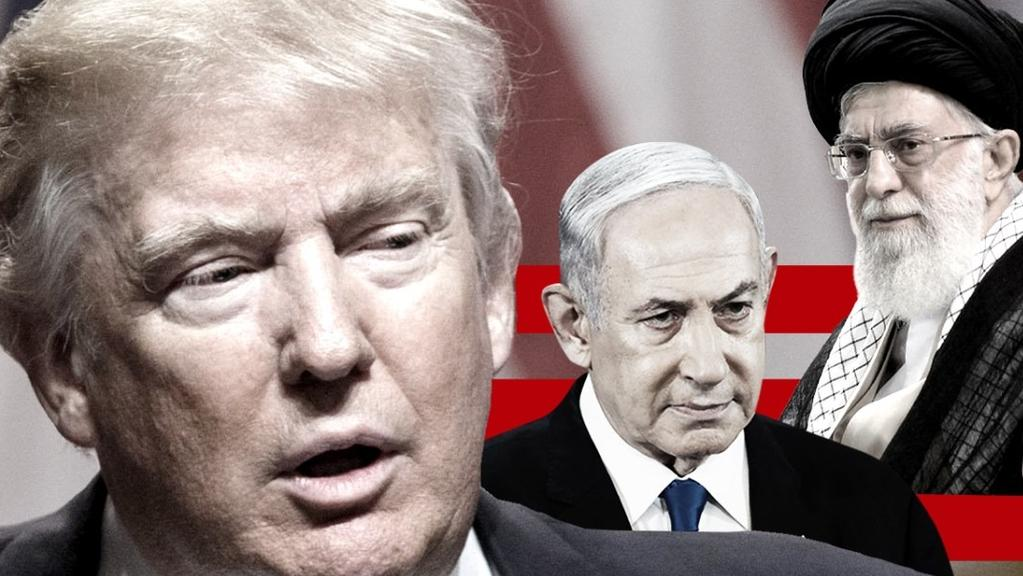
In seeking a more active role in degrading Iran’s ability to sow violence and discord throughout the region, the new Trump administration should resist the temptation of military intervention, whether originating from Washington or Jerusalem.
Military action would only play into the hands of Iran’s hardliners, whose schtick of part victim, part revolutionary purist and occasional nationalist is little more than an attempt to divert attention from their basic shortcomings, where incompetence is underpinned by brutality.
Worse, attacking Iran runs the real risk of embroiling the region in another cycle of devastating violence whose outcome may end up being worse for the US than the status quo ante.
The new administration’s focus should be on degrading the Islamic Republic’s ability to finance domestic repression and regional terrorism, as well as strengthening support for the Iranian people so that when the timing is right they can effect change from within.
Unwinding Biden’s failed Iran policies
Trump will move swiftly to cast off the Obama-era officials who regained influence under Joe Biden’s administration and pushed a strategy that offered economic and diplomatic inducements to Iran to return to the 2015 Joint Comprehensive Plan of Action nuclear deal.
Regardless of the merits of Trump’s exit from that deal in 2018, the failure of the Biden administration to re-engage the regime, marred by the influence-peddling of the so-called Iran Experts Initiative and sidelining of key personnel involved in Iran policy, has emboldened regime hardliners.
The seismic shifts in the strategic landscape following the October 7 atrocities last year and the two unprecedented Iranian missile and rocket attacks on Israel exposed the chaotic nature of Biden’s Iran policy. Despite offering sanctions relief and diplomatic rapprochement since taking office in 2021, Tehran’s hardliners have shown little to no interest in moderating their belligerency.
In unwinding the first Trump administration’s hard-hitting economic sanctions, the Biden administration effectively gave the regime a free pass to ramp up its support for regional terror proxies Hezbollah, Hamas, the Houthis and assorted Iraqi and Syrian Shi’ite militias.
Not even the unprecedented nationwide protest movement that erupted in 2022 following the death in custody of Mahsa Jina Amini, who had been arrested for improper hijab, was enough to precipitate an end to the inertia, leading to accusations that Biden lacked an Iran policy altogether.
Squandering an opportunity to bolster those who sought to topple the Islamic Republic’s regime from within, the Biden administration continued to turn a blind eye to the enforcement of sanctions, allowing Iran’s oil exports to increase by 50 per cent last year, with the bulk going to China. Sanctions waivers totalling $US10bn were approved for countries such as Iraq, and in September last year the US greenlit a controversial hostage deal that gave Iran access to $US6bn in frozen assets in exchange for five detained US citizens. The new Republican administration now has a mandate to change course.
Tehran is vulnerable right now
In the 13 months since Hamas’s October 7 attacks, Israel has invaded Gaza and Lebanon and wrought profound destruction on the capabilities of two of Iran’s most important proxies, including the core player in its axis of resistance, Hezbollah. Israel’s demonstrated capacity to hit anything or anyone inside Iran underscores the extent to which the Islamic Republic’s adversaries and even the regime itself have likely underestimated the country’s vulnerabilities.
Iran has long feared a second Trump presidency and sought to use its sophisticated cyber and hacking capabilities to interfere in the US elections to shift the scales in favour of Kamala Harris. The CIA even had uncovered a plot to assassinate Trump allegedly directed from Tehran.
In a move perhaps designed to pre-empt a Trump victory, last week Iran executed Jamshid Sharmahd, a prominent dissident who had resided in the US for two decades and was also a citizen of Germany. While the Biden administration had declined to get involved in Sharmahd’s case, an Iranian court indicted the US government alongside Sharmahd earlier this year and ruled that both must pay compensation to Iran of $US2.5bn ($3.8bn).
It is possible Iran feared that a future president Trump might take a harder line than Biden on its hostage-taking of Americans and that killing Sharmahd in the final months of Biden’s presidency would be less likely to provoke a response.
Maximum pressure 2.0?
The new Trump administration is likely to discover that a weakened Iran will be harder to predict, deter and dissuade than one secure in its position as a regional heavyweight. Stopping short of military intervention, Trump should revert to his earlier strategy of maximum pressure to strangle Iran’s ability to fund its network of proxies and discourage hardliners within the country from doubling down on their quest for nuclear weapons.
Decades of mismanagement and rampant corruption have left Iran’s domestic economy in a moribund state. Chronic unemployment and inflation have hollowed out what remains of the middle class, with many Iranians grappling with rising shortages of basic staples, including food and energy.
The new administration should compound Iran’s economic malaise by expanding Trump’s 2018 sanctions regime, which targeted a broad sweep of companies and industries, irrespective of national origin, and effectively made them choose between doing business with Iran and the US – unsurprisingly, the vast majority chose the latter.
In particular, a new maximum pressure campaign should sanction the Islamic Revolutionary Guard Corps’ economic interests, including the “charitable foundations” (bonyads) that dominate significant parts of the economy.
Targeted sanctions also should be applied to key members of the regime’s elite and their immediate families, many of whom reside in North America and Europe. Restricting the elites’ ability to travel and access funds will create internal tensions within the regime in the same way the crackdown on oligarchs following Russia’s invasion of Ukraine provoked significant recriminations inside Russia. Expropriating interest on seized Russian assets to aid Ukraine’s war effort is an innovative measure that could similarly be adopted in the case of Iran.
Death of the Ayatollah
There is a strong likelihood that during Trump’s second presidency Iran’s 85-year old Supreme Leader Ayatollah Ali Khamenei will die. There is a significant chance that his death will spark a further inflection point in the ever-deepening schism between the Iranian people and their authoritarian rulers, promising a precipitous moment of great vulnerability for the regime.
One of two likely successors to Khamenei, former president Ebrahim Raisi died in a helicopter crash in May.
The second is Khamenei’s son Mojtaba, a shadowy figure, disliked by some factions of the regime and the public more broadly. Notwithstanding the obvious challenges inherent in installing familial succession in a regime opposed to hereditary rule, Mojtaba Khamenei lacks religious credentials and the political stature of his father, who was a key figure in the revolution’s early days under the Islamic Republic’s founder, Ayatollah Ruhollah Khomeini.
The prospect of a succession struggle at the top of the Iranian regime offers the US and its allies an unparalleled opportunity to consider what a post-Khamenei Iran could look like and to plan for what can be done to support the Iranian people should they once again choose to rise up.
Middle East policy was one of the few foreign policy areas in which Trump achieved meaningful success. Rather than be caught on the hop, as Barack Obama was in 2009 and Biden was again in 2022, Trump should build on this legacy and prepare in advance for how the US can harness Iran’s next mass popular uprising to help transform the regime from within.
Kylie Moore-Gilbert is a scholar of the Middle East based at Macquarie University. She is the bestselling author of The Uncaged Sky: My 804 Days in an Iranian Prison. Patrick Gibbons is a former diplomat who served in the Australian embassy in Tehran. He is a partner at corporate advisory firm Orizontas.
Intelligence services have begun intensifying intelligence sharing and situational assessments with the US military to prevent overlooking critical developments.
Source: Israel boosts defense over Iran threats before Donald Trump’s return
Stefanik has been openly supportive of Israel and the fight against Hamas and antisemitism.
Source: Donald Trump confirms Elise Stefanik US ambassador to UN role




 anneinpt
 artaxes
 danmillerinpanama
 davidking1530
 Peter Hofman
 Joseph Wouk
 Peter
Peter Louisiana Steve
 WarSclerotic
Recent Comments