War: What Israel talks about when it talks about striking Iran’s nuclear program | The Times of Israel

Posted December 3, 2021 by Joseph Wouk
Categories: Uncategorized

Israeli officials have regularly called for a ‘credible military threat’ against Tehran’s nuclear facilities, but less discussed is the major conflict that’s almost sure to follow

By JUDAH ARI GROSSToday, 6:40 am  
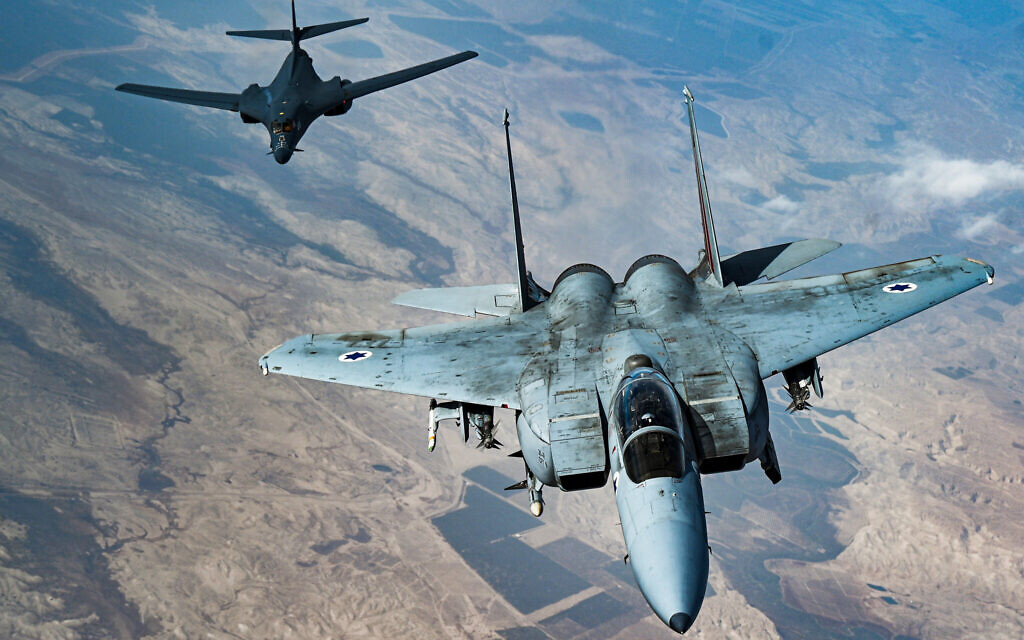
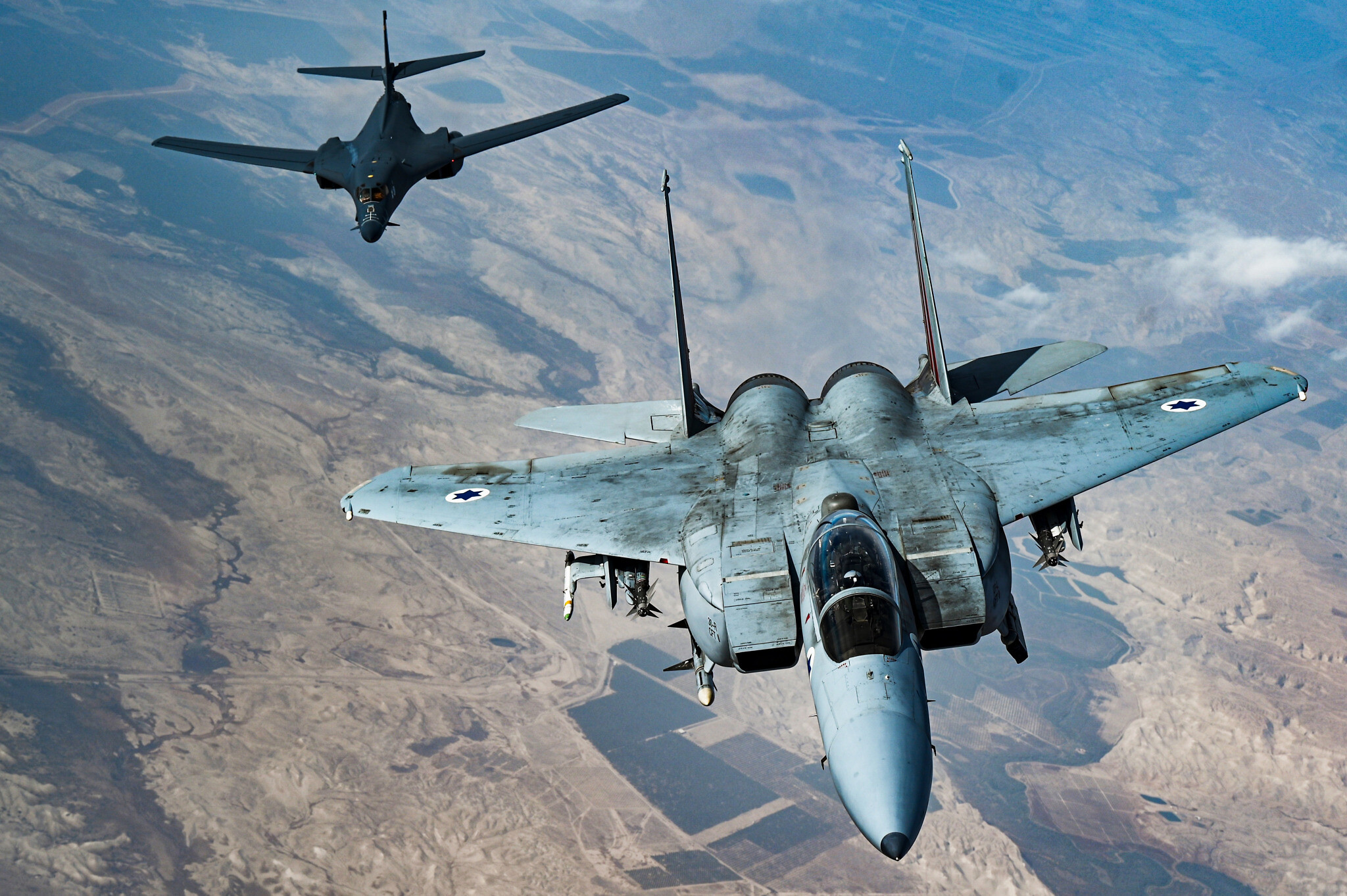
In this photo released by the US Air Force, an Israeli Air Force F-15 Strike Eagle flies in formation with a US Air Force B-1B Lancer over Israel as part of a deterrence flight Saturday, Oct. 30, 2021. (US Air Force/Senior Airman Jerreht Harris via AP)

In this photo released by the US Air Force, an Israeli Air Force F-15 Strike Eagle flies in formation with a US Air Force B-1B Lancer over Israel as part of a deterrence flight Saturday, Oct. 30, 2021. (US Air Force/Senior Airman Jerreht Harris via AP)

Nearly one year ago, IDF chief Aviv Kohavi stood on stage at an Institute for National Security Studies conference in Tel Aviv and announced that he had ordered the military to begin preparing renewed plans for a strike on Iran’s nuclear program.

“Iran can decide that it wants to advance to a bomb, either covertly or in a provocative way. In light of this basic analysis, I have ordered the IDF to prepare a number of operational plans, in addition to the existing ones. We are studying these plans and we will develop them over the next year,” Kohavi said.

He added: “The government will of course be the one to decide if they should be used. But these plans must be on the table, in existence and trained for.”

Since then, the IDF has done just that, with the air force and Military Intelligence, in particular, preparing themselves for such an operation, stepping up training exercises and focusing tremendous resources on intelligence collection. Billions of additional shekels have been poured into the defense budget specifically to prepare for strikes against Iran’s nuclear facilities.

And over the past year, Israeli officials have regularly repeated calls for what they describe as a “credible military threat” against Iran’s nuclear program, in speeches, press conferences, media interviews and private meetings with allies, arguing that it is necessary in order to gain leverage in the ongoing negotiations with the Islamic Republic over its nuclear program.Get The Times of Israel’s Daily Editionby email and never miss our top storiesNewsletter email addressGET ITBy signing up, you agree to the terms

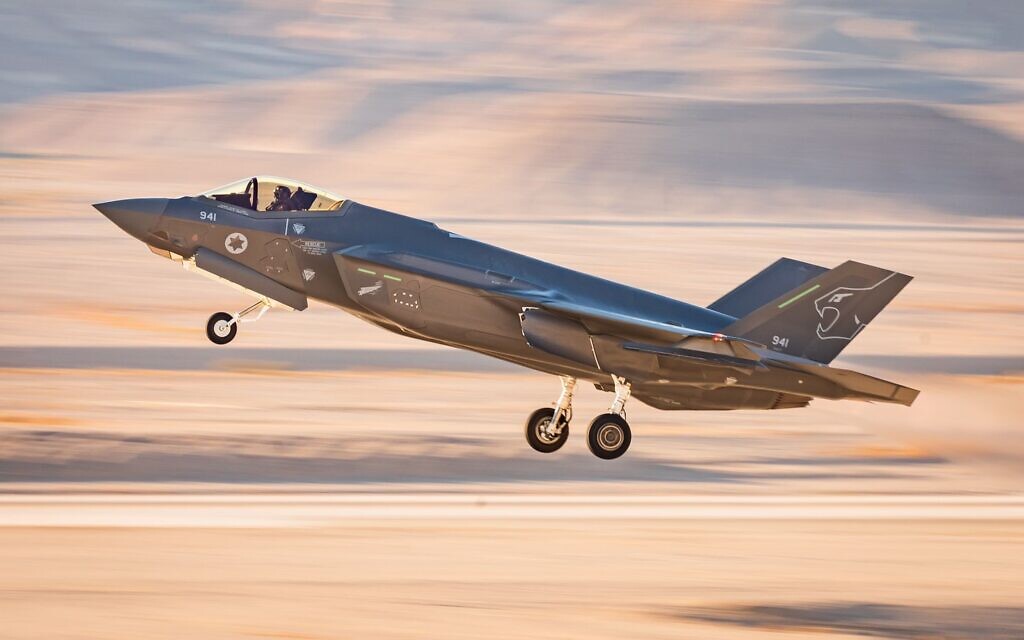
By its own estimates, the IDF is still at least months away from being fully prepared to conduct such a strike, though officials say that a more limited version of its plans could be carried out sooner.An Israeli F-35 fighter jet takes off during the military’s Blue Flag exercise in October 2021. (Israel Defense Forces)
But the focus of these discussions has generally been on the strike itself against Iran’s nuclear facilities, an operation that would indeed be far, far more complicated and difficult than any other the IDF has conducted, including its raids to target Iraq’s nuclear reactor in 1981 and Syria’s in 2007.

In each of those missions — Operation Opera and Operation Outside the Box — a single sortie containing a relatively small number of fighter jets conducted the bombing. But unlike in both of those cases, Iran does not have one nuclear facility that one group of planes could take out in a single strike, but many that are spread throughout the country, which would therefore require extraordinary levels of coordination to ensure that all of the sites were hit at the same time.

Making this more difficult is the fact that many of the facilities are buried deep underground, making them all but impenetrable to attacks from the air, particularly the Fordo reactor, where Iran recently began enriching uranium to 20 percent levels of purity with advanced centrifuges, in the latest breach of the 2015 nuclear deal.

The United States does have the massive bunker-busting ordnances needed to strike such facilities — the 13,600-kilogram (30,000-pound) GBU-57 Massive Ordnance Penetrator (MOP) — but Washington has so far refused to provide them to Israel, not that selling the incredibly heavy bomb to Jerusalem would do much good as the Israeli Air Force does not have an aircraft capable of carrying it, nor does it even have the airfield infrastructure needed to support the aircraft that could carry it.

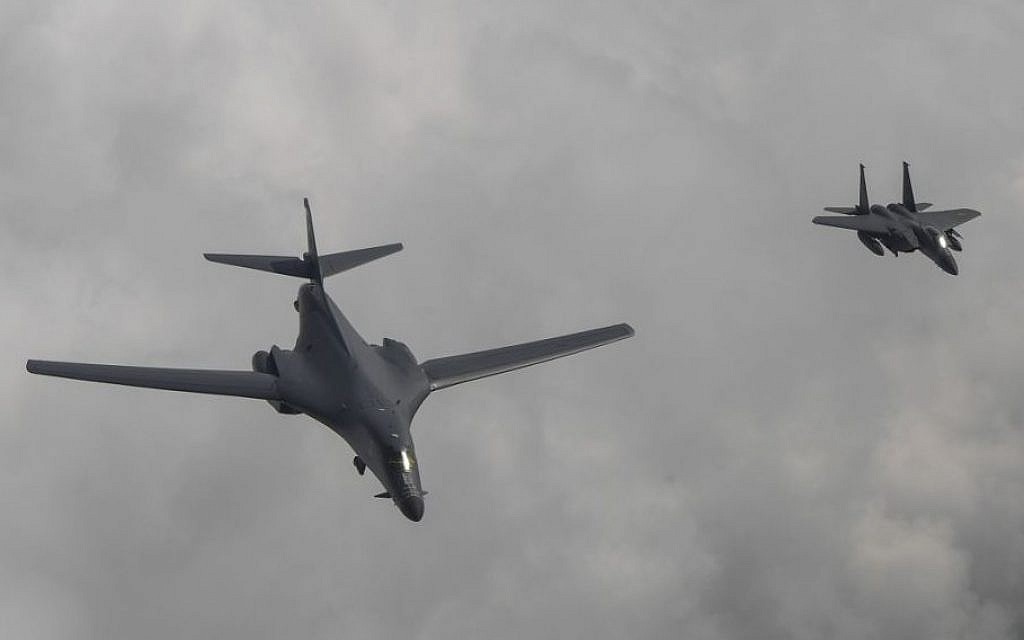
(To circumvent these limitations and to demonstrate the seriousness of an Israeli threat of attack, some current and former officials in the US have floated the idea of selling or leasing to Israel one of the three American heavy bombers capable of carrying the MOP — the B-52, B-1, or B-2 — though doing so faces a number of legal and logistical challenges, as the B-52 and B-2 are both effectively barred from sale under America’s New START treaty with Russia and the B-1 may also not be fully capable of containing the MOP within its bomb bays.)Illustrative: A US Air Force B-1B bomber, left, flies with a South Korean fighter jet F-15K over the Korean Peninsula, South Korea, Sunday, July 30, 2017 (South Korea Defense Ministry via AP)
Iran has also invested heavily in its air defenses, both purchasing advanced systems from Russia and developing its own domestically produced capabilities.

But while the complexities of such an operation should not be overstated, they are ultimately problems that can be resolved with enough time and resources.

Though Israeli officials are willing to discuss the efforts to overcome these challenges and develop the capabilities needed to conduct such a strike, typically left unmentioned is what happens afterward, which is of far greater significance.

In 1981 and in 2007, there was effectively no immediate retaliation by Iraq and Syria, respectively, though Baghdad’s response did come a decade later — to a certain extent — with its Scud missile attacks on Israel during the First Gulf War. This is not expected to be the case with Iran, several Israeli defense officials have told The Times of Israel.

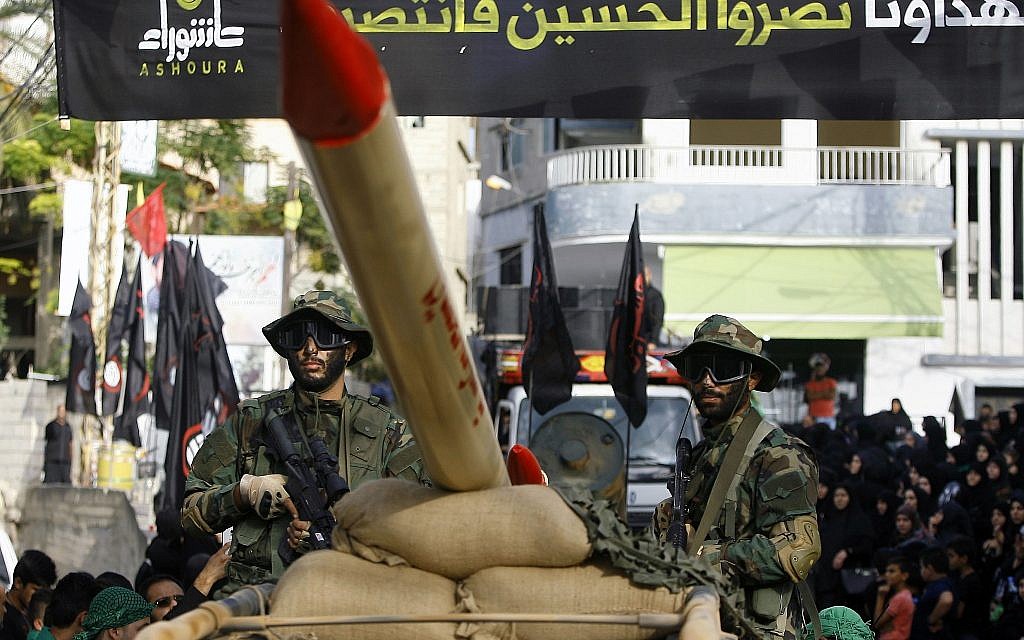
For decades, Tehran has been building up a number of proxies throughout the region, the most formidable of which is Lebanon’s Hezbollah, a terrorist group with an arsenal of rockets, missiles and mortar shells that matches and even surpasses many Western states. These foreign proxies are meant to insulate Iran from attack from its enemies. To wit: Israel can’t attack Iran if it is busy fighting off rocket fire and invasion attempts by Hezbollah from Lebanon, and Saudi Arabia similarly couldn’t attack Iran if it were facing the Houthis in Yemen.Hezbollah fighters stand atop a car mounted with a mock rocket, as they parade during a rally to mark the seventh day of Ashoura, in the southern village of Seksakiyeh, Lebanon, in this October 9, 2016 photo. (Mohammed Zaatari/AP)
The Israeli military firmly believes that this network of proxies would be brought to bear against Israel if it conducts a strike on Iran’s nuclear facilities. And Israeli projections for what a war against Hezbollah and allied militias in the region would look like are unnerving: thousands of projectiles raining down on Israeli population centers, hundreds killed, severe damage to infrastructure and major utilities knocked out of service.

That is not to say that Israel would never conduct a strike on Iran for fear of attack from its proxies, but that any decision to do so would have to be weighed not against the military’s ability to carry out the operation, but against the potentially devastating prospects of what would follow the raid.

“The military option needs to be on the table. It is, of course, the last thing that we want to use, but we don’t have the luxury of not preparing ourselves for the options,” Defense Minister Benny Gantz said Thursday, in an on-camera interview with the Ynet news site.

Jerusalem’s concern is that a nuclear-armed or even nuclear threshold Iran would be able to act with even greater impunity in the region, arming its proxies and more deeply entrenching itself in Syria, Lebanon, Yemen and Iraq.

But Israeli officials have been loath to set a specific condition under which it would conduct a strike. This is due, in part, to the fact that the considerations lie not only in Iran’s capabilities, but to the balance between the threats facing Israel and Israel’s ability to counter them.

Asked if uranium enrichment to the level of 90 percent purity — generally regarded as “weapons-grade” — would prompt an Israeli attack, Gantz refused to comment on Thursday.From left to right: IDF Chief of Staff Aviv Kohavi, Prime Minister Naftali Bennett and Defense Minister Benny Gantz attend a military drill in northern Israel on November 16, 2021. (Amos Ben-Gershom/GPO)
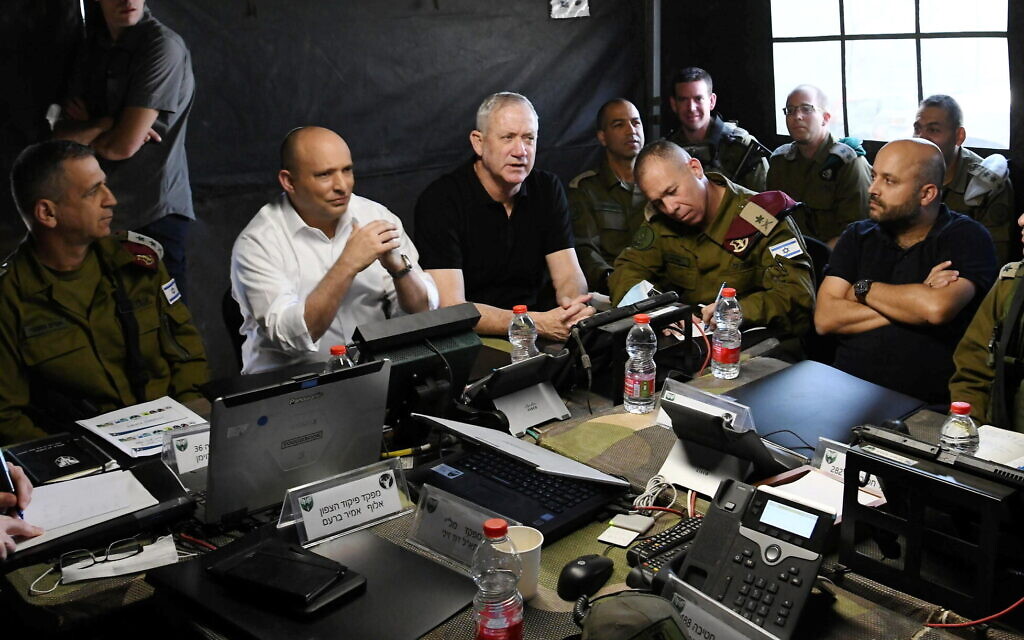
“I don’t like setting red lines that afterward I’d have to come and explain myself [if I didn’t uphold them]. We are tracking the Iranian process every day. There will be a point in time when the world, the region, and the State of Israel will have no choice but to act,” he said.

The Israel Defense Forces have been making strides to prepare itself for the multi-front war that is liable to follow a strike on Iran, holding a number of large-scale exercises simulating such a conflict in recent months and investing roughly NIS 1 billion ($315 million) toward training for next year. The military is also working to improve its air defenses, particularly in northern Israel, in an effort to prevent the worst of the damage from rocket barrages and drone strikes in a future conflict.

But the propensity of Israeli officials to discuss the technical aspects of an attack on Iran’s nuclear facilities belies the true calculus at play in deciding whether to carry it out: it’s not about the strike, but the war that follows.
Iran — the gamble, the original sin, and the unthinkable current consequence

Posted December 2, 2021 by Joseph Wouk
Categories: Uncategorized

Nothing short of a credible military threat — and certainly not negotiations with a US leadership anxious to revive a failed accord — will deter the ayatollahs’ nuclear drive now

By DAVID HOROVITZToday, 6:03 am  

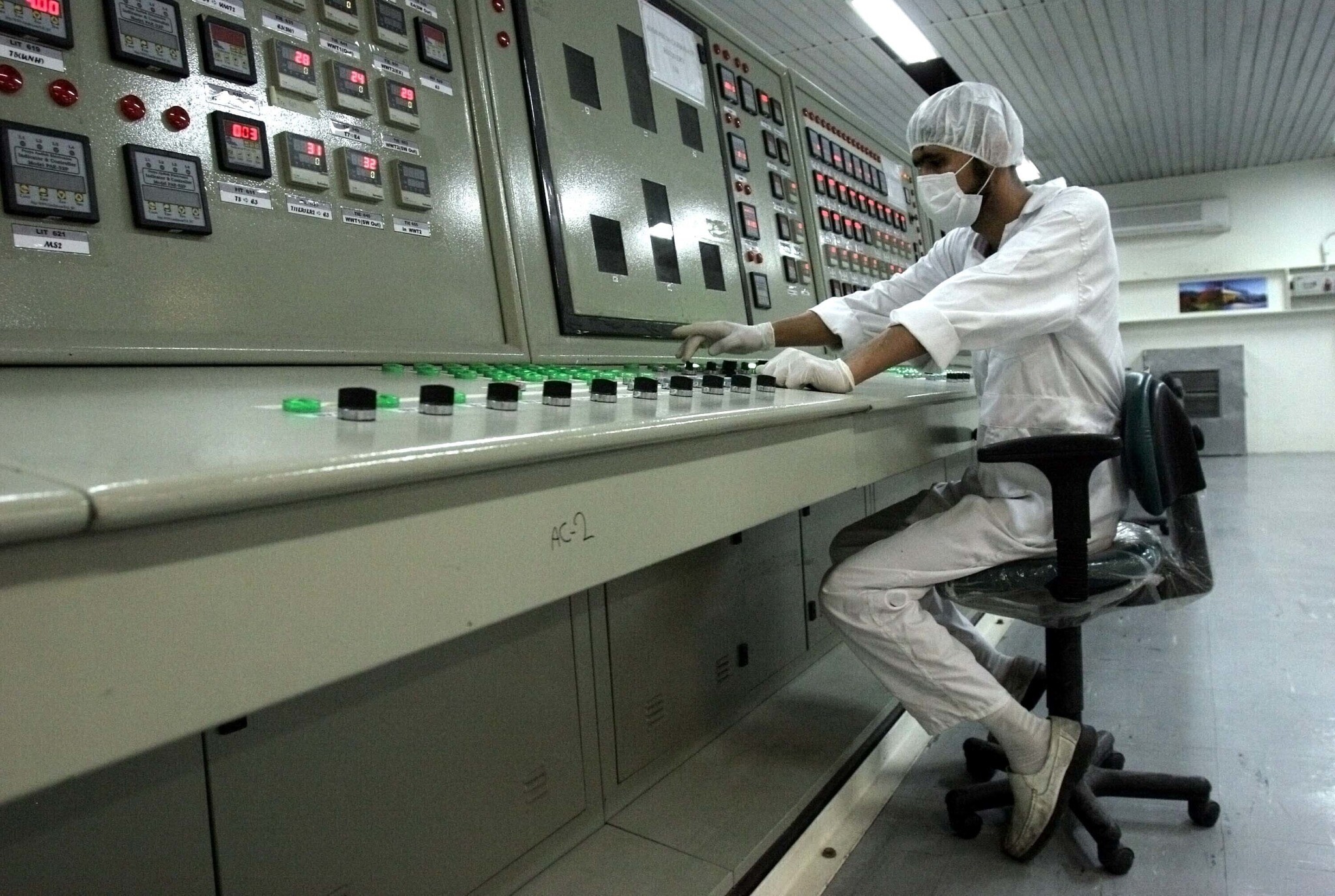
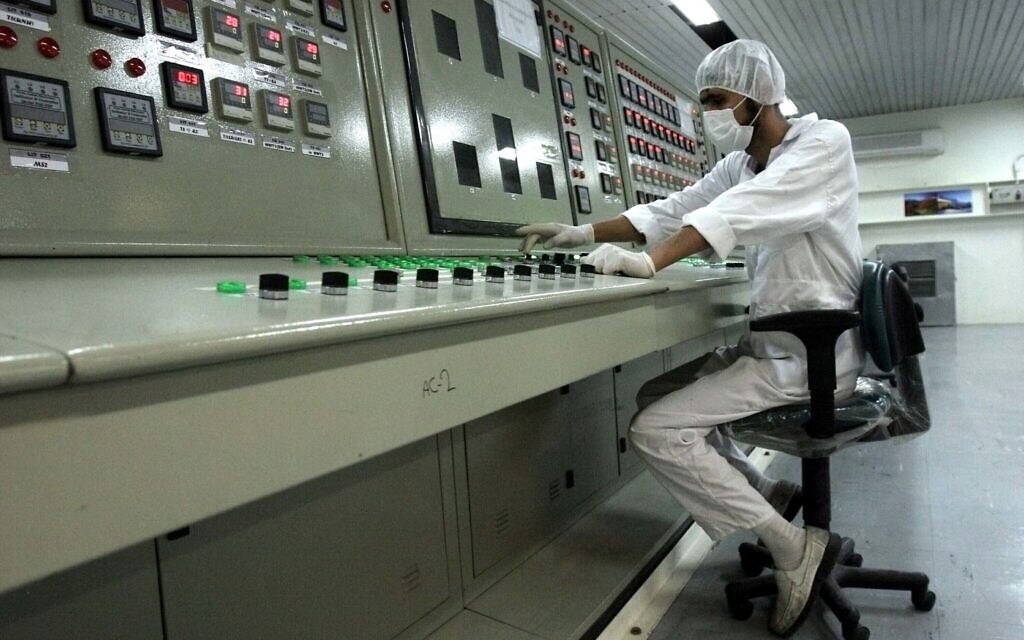
A technician works at the Uranium Conversion Facility just outside the city of Isfahan, Iran, 255 miles (410 kilometers) south of the capital Tehran, Iran, Feb. 3, 2007. (AP Photo/Vahid Salemi, file)

A technician works at the Uranium Conversion Facility just outside the city of Isfahan, Iran, 255 miles (410 kilometers) south of the capital Tehran, Iran, Feb. 3, 2007. (AP Photo/Vahid Salemi, file)

Having failed in his high-profile efforts to dissuade the Obama administration from sealing the radically inadequate 2015 deal with Iran, prime minister Benjamin Netanyahu’s subsequent strategy for thwarting the ayatollahs’ nuclear weapons drive relied on a series of calculated judgments or, perhaps more accurately, gambles.

First, Netanyahu encouraged the Trump administration’s withdrawal from the accord, and its imposition of “maximum pressure” sanctions, in the belief or hope that a combination of economic pressure, consequent domestic unrest, and the threat of US-led military action might compel the regime to set aside its bid for the bomb.

Second, he relied on the Trump administration being prepared to take military action, or support and help facilitate Israeli military action, if the point arrived where nothing else could halt Tehran’s military nuclear program — and if, in the curt, graphic summation of the late Mossad chief Meir Dagan, the sword was at our throat.

And self-evidently, by extension, Netanyahu bet on Donald Trump retaining the presidency, rather than losing out to a Democratic rival likely to seek to reinstate the 2015 JCPOA (Joint Comprehensive Plan of Action).

Needless to say, the strategy failed. A regime indifferent to the well-being of its citizenry so long as its hold on power was secure resisted the sanctions pressure and, predictably, began openly breaching the already lax parameters of the JCPOA. Allowed under the terms of the deal to keep many of its centrifuges and continue research on more effective models, it developed and installed some of those more efficient designs, and has gradually enriched increasing quantities of uranium to increasingly high levels — now a short hop away from weapons-grade.Get The Times of Israel’s Daily Editionby email and never miss our top storiesNewsletter email addressGET ITBy signing up, you agree to the terms

Breaching the deal’s porous clauses on UN inspections, Tehran has also restricted and even booted the International Atomic Energy Agency’s teams from some of the facilities that would have been dismantled under an effective agreement. Now nobody knows what the regime is up to in facilities that we are aware of, much less what progress it may be making on weaponization and delivery in facilities we know little or nothing about.US President Donald Trump, left, and Prime Minister Benjamin Netanyahu walk to a meeting in the Oval Office of the White House, January 27, 2020. (AP Photo/ Evan Vucci)

Netanyahu’s high-risk strategy was founded on the debatable but not untenable conviction that the bad 2015 deal was worse than no deal at all. What was untenable, but is acknowledged at the most senior levels of the Israeli security establishment, is that after the deal was signed, Israel failed to continually update its planning and training for a possible resort to force. And worse, that the political leadership did not allocate sufficient funding, and the security establishment did not mount sufficient pressure on its political masters, to ensure Israel was as ready and able as possible to militarily counter Iran’s ongoing march to the bomb after Trump withdrew from the deal in 2018 and the Iranians began openly breaching its terms.

Thus Israel today finds itself playing frantic military catch-up, rushing to develop fresh operational plans for thwarting an Iran that is widely assessed to be capable of enriching sufficient quantities of weapons-grade uranium for a bomb within weeks if it so chooses, and whose timescale for finalizing weaponization and delivery is anybody’s guess.US Vice President Joe Biden listens as President Barack Obama delivers remarks in the East Room of the White House in Washington, July 14, 2015, after an Iran nuclear deal is reached. (AP Photo/Andrew Harnik, Pool)

There should be no forgetting: The original sin, in the dismal saga of a genocidal regime’s march to the bomb and a feckless free world’s inability to thwart it, was that 2015 accord — whose incomplete provisions and sunset clauses failed to meet the vital objective: dismantling the rogue nuclear weapons program of a predatory regime that openly and relentlessly seeks the elimination of the State of Israel and threatens the free world, and ensuring that this program could not be resurrected.

The challenge now, as a consequence, is to thwart an emboldened and much-advanced, almost-nuclear Iran, starting from a far less promising negotiating position than was the case in 2015. But as the US and Iran resumed indirect negotiations in Vienna this week, there was no sign that the Biden administration — which has indicated a profound desire to return to that deficient accord — is willing to galvanize the kind of pressure that might give the ayatollahs pause.

For all its warm promises of solidarity with its great ally Israel, and Biden’s public commitment to Prime Minister Naftali Bennett in the Oval Office in August “to ensure Iran never develops a nuclear weapon,” the president and his team prefer to not even talk about a military option if diplomacy fails, choosing instead to speak vaguely of “other options.”Iran’s Supreme Leader Ayatollah Ali Khamenei, left, gives his official seal of approval to newly elected President Ebrahim Raisi in an endorsement ceremony in Tehran, Iran, August 3, 2021. (Office of the Iranian Supreme Leader via AP)

That goes to the root of the US-led refusal to fully internalize the nature of the enemy regime in Tehran and the dangers it poses. The regime halted much of its nuclear program in 2003, after the US invaded Iraq, fearing that it might be the Americans’ next target. Halted, not dismantled, as the Mossad’s breathtaking 2018 plunder of its Tehran nuclear weapons archive underlined.

Nothing short of a credible military threat — not maximum economic pressure, and certainly not indirect negotiations with a US administration that has its heart set on a deal — is going to deter the ideologically and territorially rapacious ayatollahs now.

And thus we lurch ever closer to the unthinkable denouement that Israel has tried for so long to warn the world against: the stark choice between a nuclear Iran and a desperate resort to military force to try to stop it.

Tehran is not looking for a new nuclear accord. Its enrichment is on fast forward – DEBKAfile

Posted December 1, 2021 by Joseph Wouk
Categories: Uncategorized

Iran nuclearuranium enrichmentVienna nuclear talks

Three days into the Vienna negotiations with world powers, Iran is plainly not after a new or revamped nuclear accord, DEBKAfile’s Iranian sources confirm – notwithstanding the large delegation in attendance. Tehran has made its intentions plain by three actions:

  1. Abandoning the ambiguity surrounding its nuclear program and frankly admitting for the first time that Tehran is intent on building a nuclear bomb.
  2. Iran’s 2022-2023 state budget provides for another two years of international sanctions, thereby taking aboard the economic consequences of weaponizing its nuclear program. Tehran is therefore not holding its breath for the prospect of sanctions relief.
  3. Extra-fast centrifuges are being pressed into service for the rapid accumulation of sufficient 60pc pure enriched uranium to fuel a number of nuclear warheads.

Tehran’s final admission of its true intent, after years of claiming that Islam only allows nuclear power for peaceful purposes, came from the highly authoritative Fereydun Abbasi-Davani, Chairman of Iran’s Atomic Agency. In a comment on the new round of nuclear talks launched in Vienna on Monday, he revealed that the late Mohsen Fakhrizadeh, the father of the national nuclear program, who was assassinated last year, “had created a nuclear weapons ‘system’ for offensive purposes.”  That was the cause of his death at Israel’s hands, the official added.

Sources close to Iran’s Revolutionary Guards enlarged on this statement, by saying: “Enemy sabotage, assassinations should be stopped by Iran cross[ing] several scientific lines as soon as possible, to show our capability and defend our people.” The “scientific lines” to be crossed refer to the nuclear threshold.

While most of the local media agree that the Vienna talks are likely to go nowhere, most have failed to cite these groundbreaking admissions by Iranian officials. They have instead highlighted the optimism voiced by the world powers facing Iran (Germany, UK, France, Russia, China – at the table and the US in a separate room) in the light of Iran’s willingness to start the talks from the point broken off in June.
This mood ignored the telling statement coming on Tuesday, Nov. 30 from another high-ranking Iranian official. Masud Mirkazemi, head of Iran’s national planning center. During his presentation of Iran’s new state budget to foreign minister Hossein Amir-Abdollahian, the planning expert explained that “given the reputation of Western countries, we’re not gong to keep the country waiting for another eight years of negotiations.” In other words, Tehran is pressing on with its plans regardless of the nuclear negotiations, on the assumption that they will drag on inconclusively for the foreseeable future.
There is every indication that Iran has embarked single mindedly on a crash program to improve and speed up uranium enrichment at the Natanz and Fordow plants. Due to this all-out effort, inspectors of the nuclear watchdog, the International Atomic Agency, are denied access to the Karaj site, where the extra-fast centrifuges are manufactured.

Countering Europeans, Iran makes maximalist demands as Vienna nuclear talks open

Posted November 30, 2021 by Joseph Wouk
Categories: Uncategorized

Iran’s top negotiator and civilian nuclear chief both indicate nothing has been agreed on, previous rounds of nuclear talks can be renegotiated

By NASSER KARIMIToday, 11:26 am  

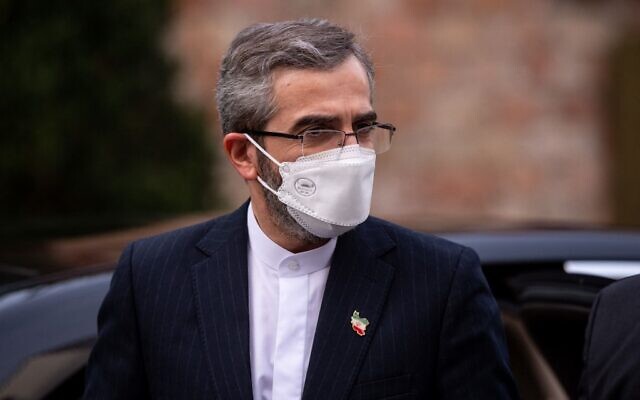
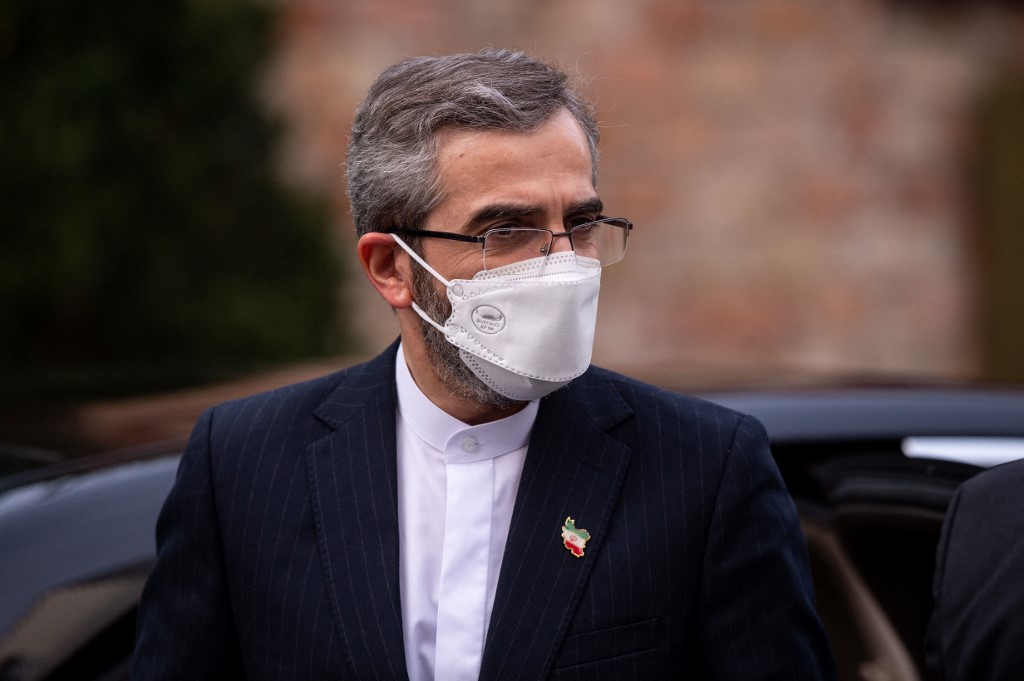
Iran's chief nuclear negotiator Ali Bagheri Kani arrives at the Coburg Palais, the venue of the Joint Comprehensive Plan of Action (JCPOA) meeting, in Vienna on November 29, 2021. (VLADIMIR SIMICEK / AFP)

Iran’s chief nuclear negotiator Ali Bagheri Kani arrives at the Coburg Palais, the venue of the Joint Comprehensive Plan of Action (JCPOA) meeting, in Vienna on November 29, 2021. (VLADIMIR SIMICEK / AFP)

TEHRAN, Iran (AP) — Iran struck a maximalist tone Tuesday after just one day of restarted talks in Vienna over its tattered nuclear deal, suggesting everything discussed in previous rounds of diplomacy could be renegotiated.

Iranian state media reported the comments by Ali Bagheri, Iran’s top nuclear negotiator, and Mohammad Eslami, the country’s civilian nuclear chief. It remained unclear, however, whether this represented an opening gambit by Iran’s new hardline president or signaled serious trouble for those hoping to restore the 2015 deal that saw Tehran strictly limit its enrichment of uranium in exchange for the lifting of economic sanctions.

The United States left the deal under then-US president Donald Trump’s “maximum pressure” campaign against Tehran in 2018. Since the deal’s collapse, Iran now enriches small amounts of uranium up to 60% purity — a short step from weapons-grade levels of 90%. Iran also spins advanced centrifuges barred by the accord, and its uranium stockpile now far exceeds the accord’s limits.

US President Joe Biden has said America is willing to re-enter the deal, though the negotiations continue with US officials not in the room as in previous rounds of talks since Washington’s withdrawal.

Speaking to Iranian state television, Bagheri referred to the previous rounds of talks only as a “draft.”Get The Times of Israel’s Daily Editionby email and never miss our top storiesNewsletter email addressGET ITBy signing up, you agree to the terms

“Drafts are subject to negotiation. Therefore nothing is agreed on unless everything has been agreed on,” he said. “On that basis, all discussions that took place in the six rounds are summarized and are subject to negotiations. This was admitted by all parties in today’s meeting as well.”

That directly contradicted comments Monday by the European Union diplomat leading the talks.

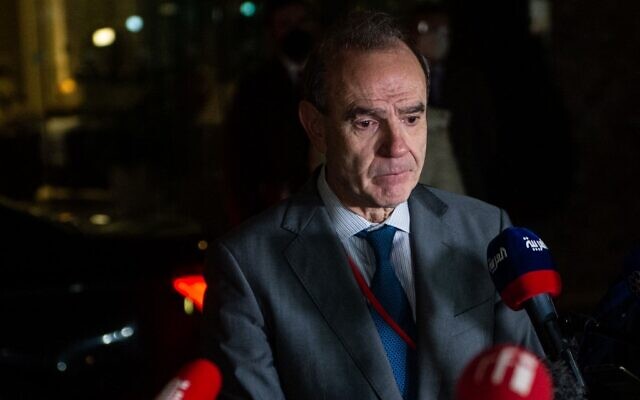
“The Iranian delegation represents a new administration in Tehran with new understandable political sensibilities, but they have accepted that the work done over the six first rounds is a good basis to build our work ahead, so no point in going back,” Enrique Mora said then.Deputy Secretary General of the European External Action Service (EEAS) Enrique Mora speaks to journalists in front of the Coburg palace after a meeting of the Joint Comprehensive Plan of Action (JCPOA) in Vienna, Austria on November 29, 2021. ( VLADIMIR SIMICEK / AFP)
Another state TV segment saw Bagheri in Vienna also saying Iran demanded a “guarantee by American not to impose new sanctions” or not re-impose previously lifted sanctions.

Eslami, speaking to Iran’s state-run IRNA news agency, reiterated that demand.

“The talks (in Vienna) are about return of the US to the deal and they have to lift all sanctions and this should be in practice and verifiable,” he said. He did not elaborate.

Talks in Vienna resumed Monday after an over five-month hiatus as hardline Iranian President Ebrahim Raisi took power. Raisi, a protégé of Supreme Leader Ayatollah Ali Khamenei, campaigned on getting sanctions lifted. However, fellow hard-liners within Iran’s theocracy long have criticized the nuclear deal as giving too much away to the West.

Mikhail Ulyanov, Russia’s top representative to the talks, tweeted Tuesday that the resumption of negotiations was “quite successful.”

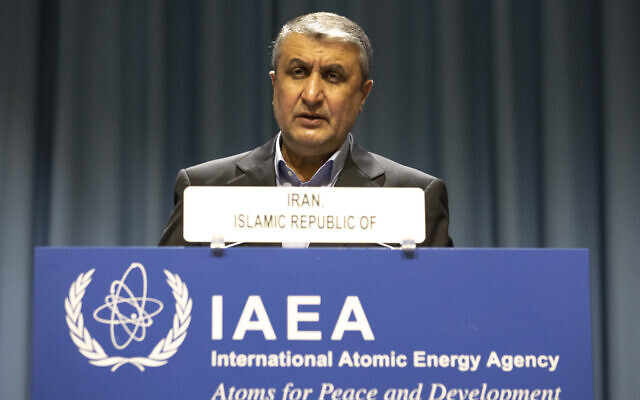
“Participants decided to continue without delay the drafting process in two working groups – on sanctions lifting and nuclear issues,” he wrote. “This work starts immediately.”Mohammad Eslami, head of Iran’s nuclear agency (AEOI) talks on stage at the International Atomic Energy’s (IAEA) General Conference in Vienna, Austria, September 20, 2021. (Lisa Leutner/AP)
Israel, Iran’s regional, nuclear-armed rival, kept up its own pressure amid the negotiations. Israeli Prime Minister Naftali Bennett, in a video address delivered to nations negotiating in Vienna, warned that he saw Iran trying to “end sanctions in exchange for almost nothing.”

“Iran deserves no rewards, no bargain deals, and no sanctions relief in return for their brutality,” Bennett said in the video that he later posted to Twitter. “I call upon our allies around the world: Do not give in to Iran’s nuclear blackmail.”

Iran maintains its atomic program is peaceful. However, US intelligence agencies and international inspectors say Iran had an organized nuclear weapons program up until 2003. Nonproliferation experts fear the brinkmanship could push Tehran toward even more extreme measures to try to force the West to lift sanctions.

Making matters more difficult, United Nations nuclear inspectors remain unable to fully monitor Iran’s program after Tehran limited their access. A trip to Iran last week by the head of the International Atomic Energy Agency, Rafael Grossi, failed to make any progress on that issue.

In seventh round of nuclear talks, Iran’s intentions will finally become clear

Posted November 29, 2021 by Joseph Wouk
Categories: Uncategorized

Khamenei had plenty of reasons to stall, but if there’s no change in Tehran’s stance, the West needs a Plan B — with options ranging from a military strike to capitulation

Lazar Berman

By LAZAR BERMANToday, 3:45 am  

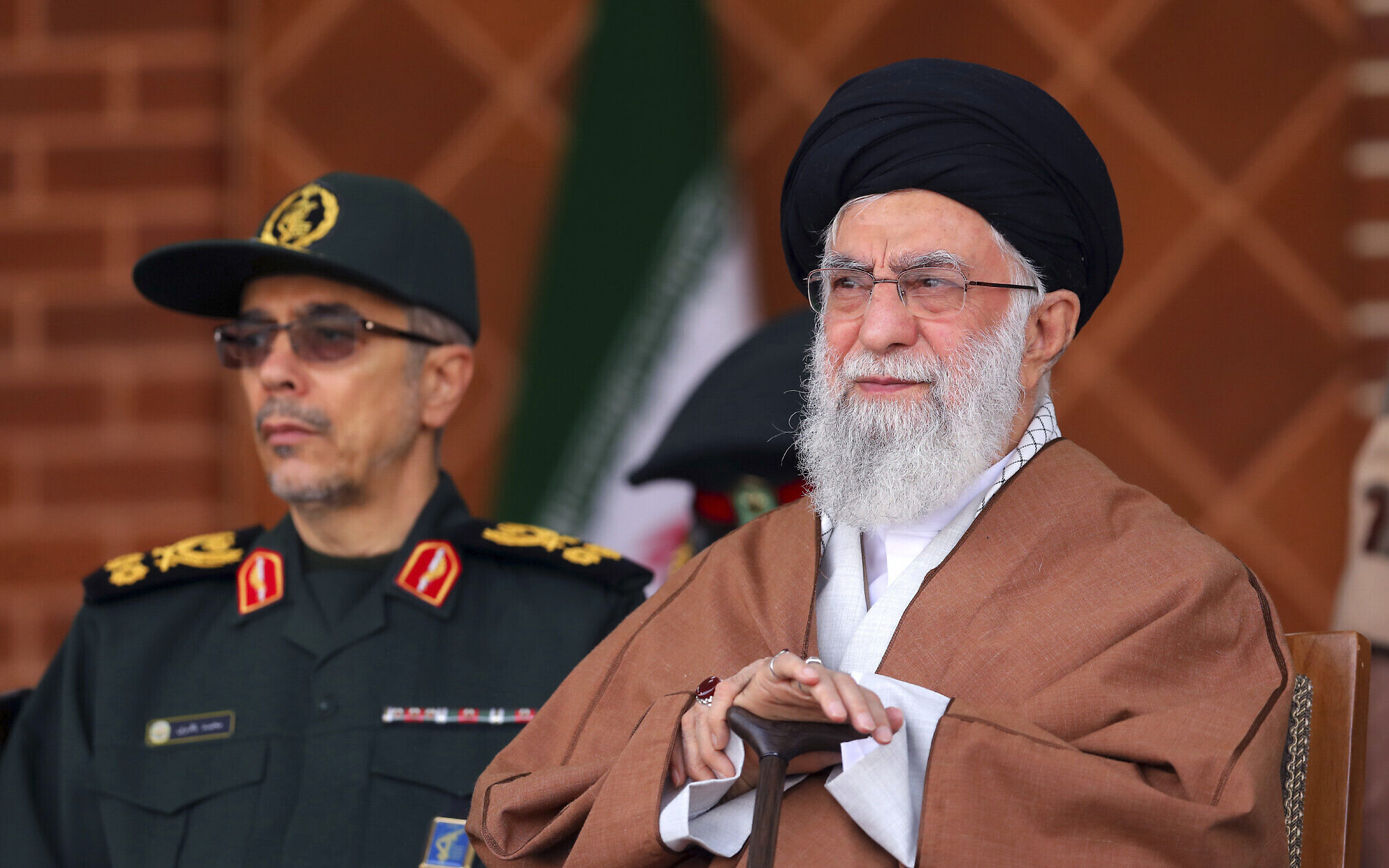
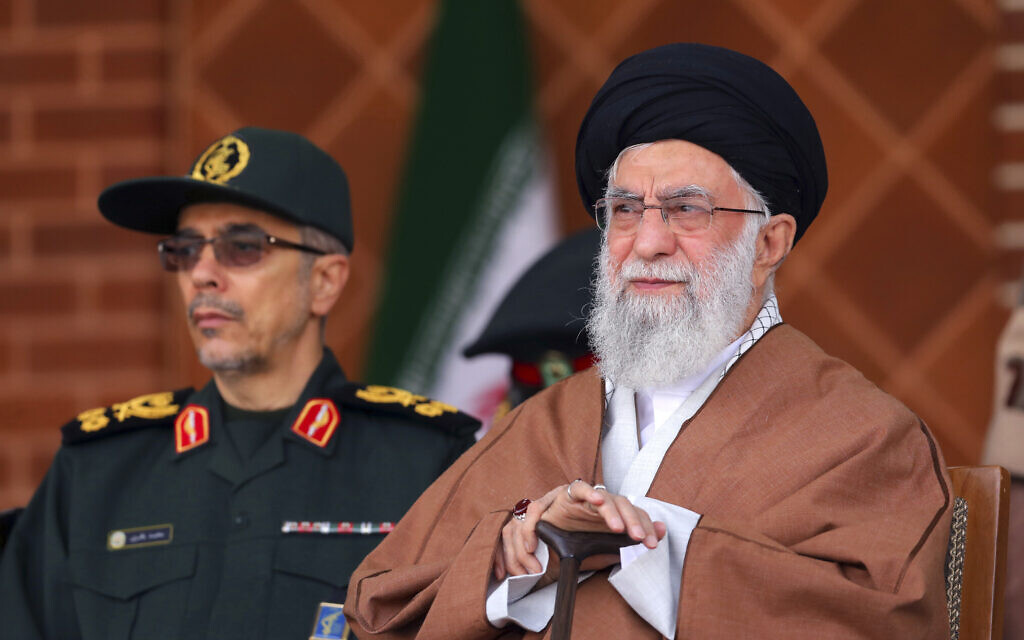
In this picture released by an official website of the office of the Iranian supreme leader, Supreme Leader Ayatollah Ali Khamenei, right, reviews armed forces with Chief of the General Staff of the Armed Forces Gen. Mohammad Hossein Bagheri, during a graduation ceremony at Iran's Air Defense Academy, in Tehran, Iran, October 30, 2019. (Office of the Iranian Supreme Leader via AP)

In this picture released by an official website of the office of the Iranian supreme leader, Supreme Leader Ayatollah Ali Khamenei, right, reviews armed forces with Chief of the General Staff of the Armed Forces Gen. Mohammad Hossein Bagheri, during a graduation ceremony at Iran’s Air Defense Academy, in Tehran, Iran, October 30, 2019. (Office of the Iranian Supreme Leader via AP)

Negotiators will meet in Vienna on Monday for the first indirect nuclear talks between Iran and the US in nearly six months. The hiatus was much longer than originally anticipated, and in the interim, an agreement continues to look ever more unlikely.

Some, like Israel, believe Iran is deliberately stalling on talks to give itself time to build up its nuclear capacity. However, others believe that that Iranians themselves do not yet know if they want to return to the original nuclear deal, or how to get there.

Senior diplomats from Britain, China, France, Germany and Russia plan to meet Iranian officials in Vienna on Monday to discuss bringing Tehran back into compliance with the 2015 deal known as the Joint Comprehensive Plan of Action, which eased sanctions on Iran in return for curbs on its nuclear program. The talks could pave the way for the US to rejoin the accord.

The United States pulled out under former President Donald Trump and reimposed sanctions on Iran, prompting Tehran to abandon all the limits the deal placed on it. That has raised tensions across the wider Mideast as Israel has warned it won’t allow Iran to be able to obtain a nuclear weapon

As summer turned into fall, Iran pressed on toward nuclear weapons capability. The International Atomic Energy Agency reported earlier this month that Tehran had significantly increased its stockpile of highly enriched uranium in recent weeks, reaching 113.8 kg (251 lbs) enriched to 20 percent, up from 84.3 (186 lbs) in September, and 17.7 kg (39 lbs) enriched up to 60%, up from 10 kg (22 lbs).Get The Times of Israel’s Daily Editionby email and never miss our top storiesNewsletter email addressGET ITBy signing up, you agree to the terms

“Every three months we wake up and discover that they’ve advanced,” said Raz Zimmt, an Iran scholar at the Institute for National Security Studies.”What did we expect?”

“Regarding fissile material, they are very close,” said Zimmt, estimating that it would take 3-4 weeks to enrich enough uranium for a nuclear weapon. They would still have to build a detonator and a delivery system, which could take up to two years.

What’s more, it remains unclear whether Iran even wants a deal, or whether it is stalling for time, as Israel argues, to continue to enrich.

“Iran wants to appear interested in negotiation and agreement,” said Eytan Gilboa of the Jerusalem Institute for Strategy and Security. “But it’s not clear at all they are willing to make the concessions necessary to achieve an agreement.”In this photo released Novenber 4, 2019 by the Atomic Energy Organization of Iran, its head Ali Akbar Salehi speaks with the media while visiting the Natanz enrichment facility in central Iran. (Atomic Energy Organization of Iran via AP)
The Islamic Republic is after a full removal of sanctions and immunity from a military strike, said Gilboa, goals that it is unlikely to achieve.

Others argue that Iran’s leadership, especially Supreme Leader Ali Khamenei, has not yet decided what course to take.

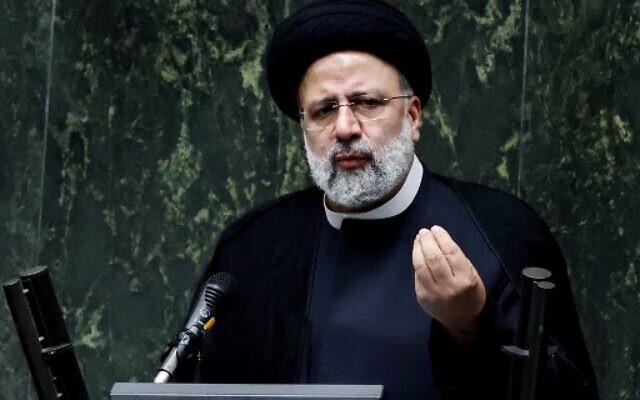
“What has happened over the last year, year and a half at least, is that Iran is mistrustful,” explained Ori Goldberg of Reichman University’s Lauder School of Government. “I don’t think Iran considers the US and the West approaching these negotiations in good faith. I think a lot of what they’re doing is trying to figure out if this is genuine, and not just dallying for the purpose of increasing their fissionable material stockpile.”Iran’s President Ebrahim Raisi speaks before parliament in the capital Tehran, on August 25, 2021. (Atta Kenare/AFP)
Even if Khamenei does decide he wants to cut a deal, hardline President Ebrahim Raisi is not going to be an easy negotiating partner.

“For Raisi, it is politically difficult to be perceived as being as open and welcoming, which wasn’t the case for Rouhani,” said Goldberg.

Raisi has to take into consideration the sentiments of his supporters, and the more intransigent members of his administration, he argued. “They’re going to be a little difficult and ornery about the whole thing, but they still very much want to be there.”

The fight over the banks

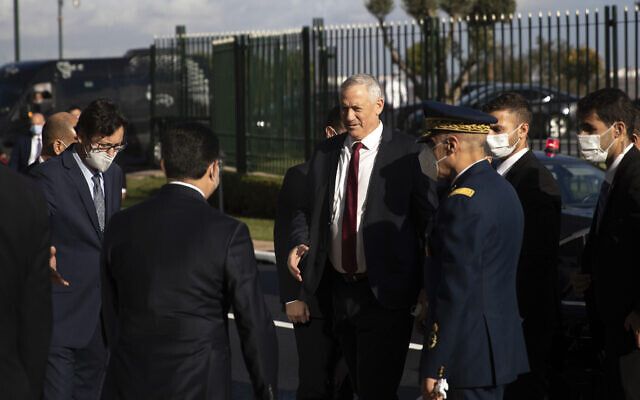
Iran is not the only country with unreasonable expectations from the talks. While in Morocco last week, Defense Minister Benny Gantz said that in the “best-case scenario,” a deal would address not only the issue of uranium enrichment but with missiles and Iran’s activities in the region, namely its support for proxies throughout the Middle East.Benny Gantz, center, is welcomed by Morocco’s Foreign Minister Nasser Bourita, in Rabat, Morocco, Wednesday, Nov. 24, 2021. (AP/Mosa’ab Elshamy)
“A good deal would be a deal that sealed the holes of the current deal in terms of nuclear enrichment, launch systems, the deal’s duration, and what Iran is doing in the region,” he said.

That is not at all on the table. Though US officials have been stressing that time is running out, they are still eager to reach some sort of deal with Iran on the nuclear issue alone. If a narrow agreement on enrichment and inspections is there for the taking, the Biden Administration is not about to gum up the works by bringing up new sensitive issues that will take months to discuss.

Foreign Minister Yair Lapid, in London and Paris this week for talks on the Vienna negotiations, seems to be taking a more modest approach. In his talks with Boris Johnson and Emmanuel Macron, Lapid will seek to ensure that banking sanctions against Iran remain in place, Channel 13 reported.

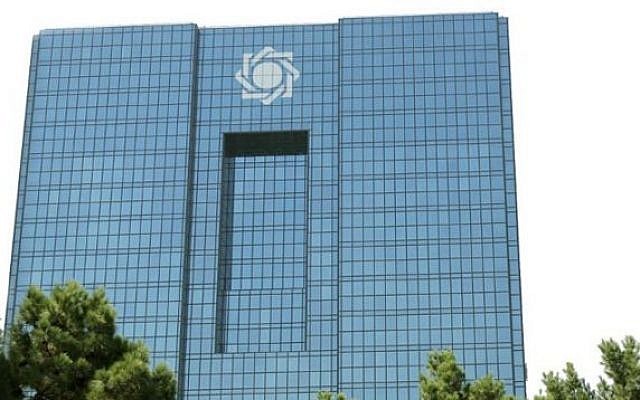
But Iran is coming to Vienna determined first and foremost to have those very sanctions removed. It is no coincidence that Iran’s negotiating team includes the deputy governor of Iran’s Central Bank, and senior officials from the trade and economy ministries.The Central Bank of Iran (Courtesy)

Making Israel’s position even weaker, US officials seem to be sending messages to Israel not to get in the way of talks.

Last week, US officials warned Israel that its attacks against the Iranian nuclear program are counterproductive and have enabled Tehran to rebuild an even more efficient enrichment system,  then leaked those warnings to the New York Times.

Over the weekend, US defense officials also outed Israel for carrying out a covert operation, telling the New York Times that Israel was responsible for a cyberattack against Iran’s nationwide fuel system last month.

Time is running out

Though expectations are low for significant movement for a deal during this round, there is likely to be one important outcome.

In the previous six rounds of talks, Iran’s unreasonable demands could be explained by Iran wanting to simply play for time as it worked toward a bomb, or by the opposite position — that Iran sought a deal, but was simply trying to squeeze more concessions out of the US.

Now, with the US fast running out of patience, Iran’s true intentions will become apparent.President Barack Obama, standing with Vice President Joe Biden, delivers remarks in the East Room of the White House in Washington, Tuesday, July 14, 2015, after an Iran nuclear deal is reached. (AP Photo/Andrew Harnik, Pool)
“If we don’t see after this round some sort of flexibility in the Iranian positions, then there is no choice but to come to final conclusion that they don’t want to come back to the agreement,” said Zimmt.

And if that turns out to be the case, then what?

There is probably no one in the region who actually thinks Joe Biden would ever order a military strike on Iran’s nuclear program. Senior US officials aren’t even trying to go through the motions of trying to make Iran fear an attack. They almost always speak of “other options” — and not “all options” — being on the table should diplomacy fail.

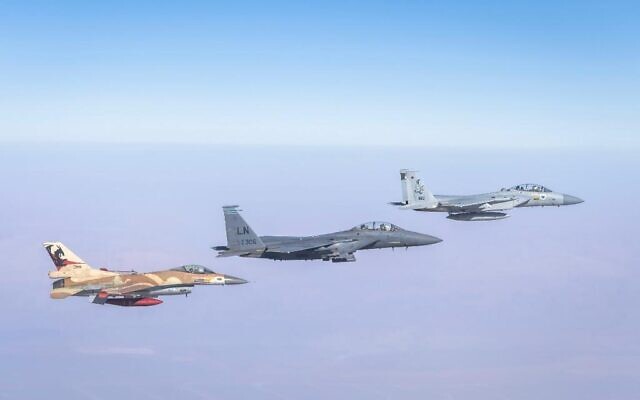
Prime Minister Naftali Bennett and his ministers have been trying to convince Iran that a military strike is a possibility, but that too is unlikely. The IDF let its capabilities for such an operation erode, and is scrambling to get its operational plans and munitions back in order.IAF and AFCENT F-15 and F-16 jets are seen over southern Israel during the ‘Desert Eagle’ drill, August 10, 2021. (Israel Defense Forces)

But even when the military is ready, Israel’s political and diplomatic reality won’t be. Bennett’s ideologically unwieldy coalition would likely be torn apart by a strike. Israel’s US and European allies — which Bennett and Lapid have been working hard to win over — will be furious that Israel is pulling them into a seething Middle East when they’d rather be dealing with COVID, energy prices, and the economy.

If a military strike is not Plan B, the other options aren’t likely to change Iranian behavior. The US could try to add more sanctions with Chinese and Russian support, and it can try to increase pressure through UN Security Council resolutions. It could also agree to a limited “less-for-less” deal with Iran that only deals with specific aspects of Tehran’s nuclear program.

Or the Biden Administration will lose its nerve, and try to break the diplomatic logjam by removing sanctions upfront.

“The US will pay in cash, and get checks in return,” predicted Gilboa.

US warns Israel attacks on Iran nuclear program are counterproductive — NYT

Posted November 22, 2021 by Joseph Wouk
Categories: Uncategorized

Despite killing of nuclear scientist and explosions at enrichment facilities, Iran building faster and more efficient nuke program that puts it in position to have bomb in weeks

By TOI STAFF and AGENCIESToday, 5:17 amUpdated at 7:16 am  

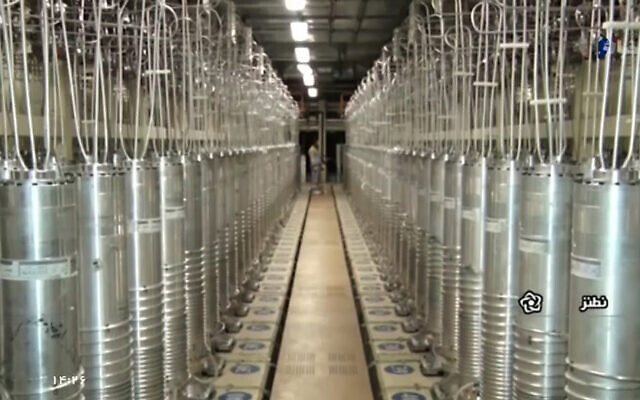
In this image made from April 17, 2021, video released by the Islamic Republic Iran Broadcasting, IRIB, state-run TV, various centrifuge machines line the hall damaged on Sunday, April 11, 2021, at the Natanz Uranium Enrichment Facility, some 200 miles (322 km) south of the capital Tehran. (IRIB via AP, File)

In this image made from April 17, 2021, video released by the Islamic Republic Iran Broadcasting, IRIB, state-run TV, various centrifuge machines line the hall damaged on Sunday, April 11, 2021, at the Natanz Uranium Enrichment Facility, some 200 miles (322 km) south of the capital Tehran. (IRIB via AP, File)

US officials have warned Israel that attacks against the Iranian nuclear program are counterproductive and have caused Tehran to rebuild an even more efficient enrichment system, the New York Times reported Sunday.

Citing officials familiar with the behind-the-scenes discussion between Washington and Jerusalem, as the US continues to try and bring Iran back into the nuclear deal, the report said that Israeli officials have dismissed the warnings.

Noting that in the last 20 months there have been four explosions at Iranian nuclear facilities attributed to Israel, along with the killing of Iran’s top nuclear scientist, the report said that US officials cautioned that while such efforts may be “tactically satisfying,” they are “ultimately counterproductive.”

In the wake of the explosions, which took uranium enrichments plants offline and destroyed dozens of centrifuges, the Americans noted that Iran has managed to resume enrichment within months, often installing newer machines that can enrich uranium far faster.

However, the officials said Israel appeared unmoved by the arguments and this was one of the many areas the US and Israel disagreed with how to approach efforts to contain Tehran’s drive to build nuclear weapons.Get The Times of Israel’s Daily Editionby email and never miss our top storiesNewsletter email addressGET ITBy signing up, you agree to the terms

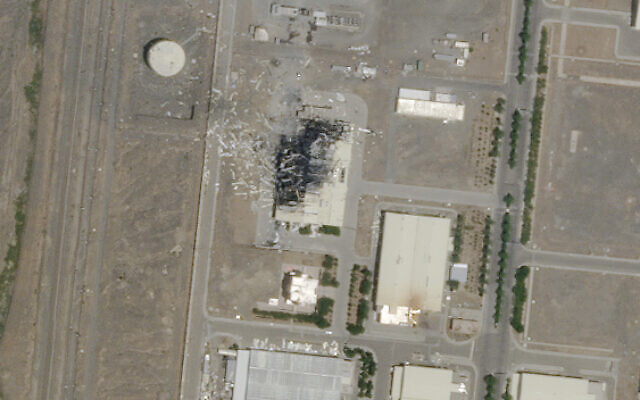
Further complicating matters was the fact that Iran has apparently managed to improve its defenses, particularly in the cyber field, the report said, meaning that launching cyber attacks like the Stuxnet attack that crippled centrifuges at the Natanz nuclear enrichment site for more than a year, an attack widely reported to be a joint US-Israeli effort, was no longer as effective.The aftermath of an explosion and a fire at an advanced centrifuge assembly plant at Iran’s Natanz nuclear site, July 5, 2020. (Planet Labs Inc. via AP)
The major concern now was how close Iran has come to being able to build a nuclear weapon since then-US president Donald Trump withdrew the US from the deal in 2018.

This week, with Iran set for talks with world powers in Vienna on November 29, the International Atomic Energy Agency said Tehran had again increased its stockpile of highly enriched uranium.

Iran’s stockpile, as of November 6, was many times in excess of the limit laid down in the agreement with world powers, said the IAEA report. Such highly enriched uranium can be easily refined to make atomic weapons, which is why world powers have sought to contain Tehran’s nuclear program.

The Vienna-based agency told members that it is still not able to verify Iran’s exact stockpile of enriched uranium due to the limitations Tehran imposed on UN inspectors earlier this year.

The IAEA has been unable to access surveillance footage of Iranian nuclear sites or of online enrichment monitors and electronic seals since February. The agency’s chief, Rafael Mariano Grossi, told The Associated Press this month that the situation was like “flying in a heavily clouded sky.”In this image, made from an April 17, 2021 video released by the state-run TV station Islamic Republic Iran Broadcasting, various centrifuge machines line a hall at the Natanz Uranium Enrichment Facility. (IRIB via AP)
Sunday’s NYT report said that since abandoning the agreement, Iran had managed to reduce its breakout time to a bomb from about a year to just several weeks.

“Before Mr. Trump decided to scrap the deal, Iran had adhered to the limits of the 2015 agreement — which by most estimates kept it about a year from ‘breakout,’ the point where it has enough material for a bomb. While estimates vary, that buffer is now down to somewhere between three weeks and a few months, which would change the geopolitical calculation throughout the Middle East,” the report said.

US officials have publicly warned Iran’s violations are making it increasingly unlikely that there can be a return to the 2015 deal as it was.

The US envoy for Iran Robert Malley warned Friday that Tehran was approaching the point of no return for reviving a nuclear deal after it boosted its stocks of enriched uranium before talks resume this month.

“The time will come if Iran continues at this pace with the advancements they’ve made, [it] will make it impossible even if we were going to go back to the JCPOA to recapture the benefits,” Malley told the Manama Dialogue conference in Bahrain, referring to the deal by its official name, the Joint Comprehensive Plan of Action.

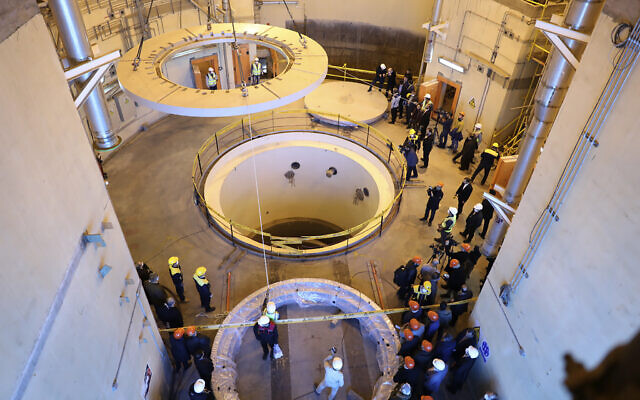
“Iran’s advances are spreading alarm across the region… that’s what’s making the clock tick faster and making all of us say that the time is short for a return to the JCPOA,” Malley said.Technicians work at the Arak heavy water reactor’s secondary circuit, as officials and media visit the site, near Arak, 150 miles (250 kilometers) southwest of the capital Tehran, Iran, Monday, Dec. 23, 2019. (Atomic Energy Organization of Iran via AP)

“And I want to be clear, because there’s no ambiguity about what they seem to be doing now, which is to drag their feet on the nuclear talks and accelerate the progress in their nuclear program,” he added.

The US envoy said he was not encouraged by the statements from the new Iranian government of President Ebrahim Raisi, which earlier on Friday accused Washington of conducting a “propaganda campaign” against the country.

With the possibility of a return to the 2015 deal fading, the US was examining the possibility of hammering out an interim deal with Iran, the New York Times report said, confirming a separate report last week.

US National Security Adviser Jake Sullivan raised the prospect of an interim agreement with Iran to allow more time for nuclear negotiations, in talks with his Israeli counterpart, Eyal Hulata, the Axios news site reported.

A pair of American sources said Sullivan and Hulata were just “brainstorming,” and that the proposal was suggested by an unspecified European ally of the US.

The US sources said the proposal was for Iran to suspend a disallowed nuclear activity such as enriching uranium to 60 percent, in exchange for the US and allied countries releasing some frozen Iranian money, or issuing sanctions waivers on humanitarian goods.

An unnamed Israeli official cited in the report said Hulata told Sullivan he was against the idea and Israel’s concern was that any interim agreement could become permanent, allowing Iran to maintain its nuclear infrastructure and supply of uranium it has built up.

The mounting doubts has seen the US trying to reassure its allies in recent days that if diplomacy fails, other options were available.

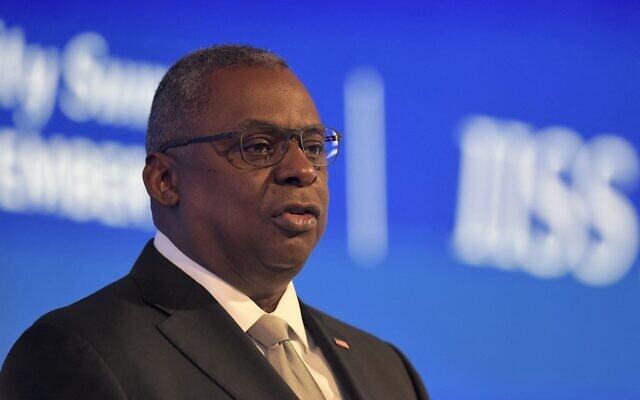
“The United States remains committed to preventing Iran from gaining a nuclear weapon. And we remain committed to a diplomatic outcome of the nuclear issue,” US Defense Secretary Lloyd Austin told an event put on by the International Institute for Strategic Studies.

“But if Iran isn’t willing to engage seriously, then we will look at all of the options necessary to keep the United States secure,” he said.

Israel has been more direct, repeatedly warning it will attack Iran’s nuclear program and allocating billions of dollars to the military to prepare and train for a potential strike.

PA on Verge of Financial Collapse as Fewer Donors Honor Commitments

Posted November 21, 2021 by davidking1530
Categories: Uncategorized

What can I say but…

Nelson Muntz ... HA HA ... ;-) - via @TOPLAR | Nelson muntz, Nelson simpsons,  The simpsons

From The Media Line, 27 October 2021.

EU, Gulf and US have all cut aid to the Palestinians, whose financial difficulties have been exacerbated by the coronavirus pandemic

The Palestinian Authority is experiencing the worst fiscal difficulties it has ever had since its establishment more than a quarter century ago. The treasury is facing a severe cash crunch, and this could soon reflect on its ability to pay government salaries and conduct daily business, top officials say.

An adviser to PA Prime Minister Mohammad Shtayyeh told a local radio station that the PA is experiencing its worst financial situation in years.

Stephen Salameh said in an interview on Ajyal Radio this week that the cessation of European support comes on top of a massive reduction in financial aid from Arab countries and the United States.

In the past, when faced with financial crises, the PA turned to wealthy Arab governments in the Gulf for assistance, but that support has declined.

The Media Line has learned that, of the $100 million that the Arab League member countries had committed to the PA as part of a financial “security net,” less than $2 million (!!!) has been forthcoming, according to a top official at the PA Ministry of Finance.

The donors’ share of the PA budget has dropped by a whopping 58% in the past few years, forcing the government to scramble for ways to make up the difference. This has left the PA with limited options; it raised taxes, implemented austerity measures and looked to local banks for loans.

But with the emergence of the coronavirus and an economy on the ropes, citizens cannot afford to pay higher taxes and banks are increasingly wary of continuing to raise the PA’s borrowing limit. The government is now trying to resurrect old moves from its playbook.

President Mahmoud Abbas dispatched Shtayyeh to Brussels this week, in hopes of persuading the Europeans to restore financial aid. The PA government has received no aid from the European Union this year.

An example of how serious the financial situation is: Gas stations in the West Bank city of Bethlehem have refused to service PA cars, including security vehicles, because the government hasn’t paid its bills.

Nizar al-Jabari, a member of the Administrative Board of the Gas Station Owners Syndicate, told The Media Line on Wednesday that the PA Ministry of Finance paid 3 million shekels, or $940,000, to the gas stations the previous day.

Jabari estimates the government debt to gas stations at “between 50 million and 60 million shekels,” or $16 million-$19 million.

Abbas is battling both domestic and external crises, in what observers describe as the worst political and financial troubles since he took the helm of the PA more than 16 years ago.

The problems are serious enough that they threaten the authority’s very existence.

On the political front, Abbas is facing growing challenges within his own Fatah party and popular turmoil because of his crackdown on civil liberties and cancellation of presidential and parliamentary elections that has been scheduled for the summer. And the lack of progress on the negotiations track with Israel has had a major impact on the PA’s standing locally, regionally and internationally.

The Palestinian street is growing impatient with the PA government.

“Prices are rising, incomes are either stagnant or there’s no work,” said Ameen Khairi, a shop owner in Nablus, in the northern West Bank. “They overburdened us with taxes that we can’t afford. The PA needs to live within its means.”

The economy in the Palestinian territories is teetering on the verge of collapse and the internal divide is growing ever deeper.

“The Palestinian economy continues to suffer under the occupation. Now, couple that with the bad management of the coronavirus policy that added to the troubles,” says Jamal Nimer, chairman of the Board of Directors at the Carmel Hotel in Ramallah.

He told The Media Line that the Palestinian economy is failing, especially the tourist sector, which has been hit hard because of the closures and restrictions as part of the government policy to contain the COVID-19 pandemic.

“Our economy is struggling, unemployment is soaring and poverty levels are skyrocketing. The outlook for the Palestinian economy is gloomy,” Nimer said.

More than a quarter of Palestinians lived in poverty before the pandemic.

Dr. Nasr Abdel Karim, a professor of finance and economics in the College of Graduate Studies at the Arab American University in Ramallah, says there is no doubt that the PA is going through a “real and suffocating financial crisis. Its manifestations are evident. There is a budget deficit, an accumulation of debt and delays in paying its obligations. It’s undeniable that there’s a clear decline in aid.”

Abdel Karim told The Media Line, however, that this crisis is “not new and has been repeated for years.”

But he argues that what makes the current financial hardship different is “essentially the position of the European Union. European aid, which was between $400 million and $500 million [annually], is not present now.”

Last week, one of the PA’s biggest European backers criticized the Palestinian government for widespread graft. A Swedish radio station quoted Foreign Minister Ann Linde as saying: “The corruption that pervades Palestine is an obstacle to providing economic support.”

Eighty-three percent of Palestinians believe there is corruption in PA institutions, according to a recent poll by the Ramallah-based Palestinian Center for Policy and Survey Research (PCPSR).

Abdel Karim adds that Palestinians had great expectations following the election of US President Joe Biden and the change in administration that the flow of American aid would soon resume, after the Trump White House cut it off.

“This isn’t happening yet, leaving the PA disappointed with the US administration,” he said.

One of Abbas’ advisers confirmed to The Media Line that the president and his inner circle are “concerned” about the financial and political state of the PA.

“There is a feeling in the Mukataa that we have been abandoned by everyone,” he said, referring to the presidential compound in Ramallah, the seat of the PA government.

According to the London-based, pan-Arab Al-Araby Al-Jadeed newspaper, during a meeting with Palestinian leadership in Ramallah last week, Abbas became furious at the Biden administration, describing US officials as “liars for not keeping the promises they made to us.”

Those promises include reopening the Palestine Liberation Organization office in Washington, providing financial support to the PA, and reopening the US consulate in East Jerusalem.

The Palestinians were counting on renewed US support, politically and financially, that would encourage wealthy Arab states to restore their financial support. However, according to the same unnamed source, there is “a clear American truancy about directly returning financial support to the PA, especially as the United States accuses the PA of corruption.”

“This has affected the Gulf’s response to the requests from the PA,” the source said.

Abdul Karim says the PA leadership is living in a “political and financial bubble,” and that this week’s visit of the head of the Palestinian General Intelligence Service, Majid Faraj, to Dubai, although it is under the cover of a visit to the Palestine pavilion at Expo 2020, “is an attempt to placate the United Arab Emirates and restore ties.”

Faraj, one of Abbas’ closest and most trusted confidants, met with the ruler of Dubai, Sheikh Mohammed bin Rashid Al Maktoum, amid intensive official Palestinian media coverage. It was the first time Mohammed bin Rashid met with a senior Palestinian official since relations between the PA and the UAE became strained.

“The [Palestinian] Authority is also concerned about the diplomatic crisis, because if conditions improve diplomatically, it will have positive repercussions for financial aid,” Abdul Karim said.

Guards’ Publication Says Israel Attacked Research Center In September

Posted November 21, 2021 by davidking1530
Categories: Uncategorized

Relates to the incident in the previous post.

https://www.iranintl.com/en/20211109462747

A weekly publication in Iran says an incident reported as a fire in a military research center in September was an “attack” by Israel to exert pressure on Iran.

The little-known Sobh Sadegh publication of the Islamic Revolutionary Guard Corps (IRGC) mentioned Tuesday that a “self-reliance research center” west of Tehran was in targeted by Israel in an operation similar to other attacks since July 2020, including two explosions in the Natanz uranium enrichment facility.

The IRGC reported on September 26 that a fire damaged one of its research facilities and three personnel were injured. Hours later, the announcement was deleted from its website and another version appeared saying that the fire was in the depot of the facility. Later, IRGC said that two of its personnel died in the incident.

Days later, ImageSat International published images saying that an explosion had taken place in a secret IRGC missile center west of Tehran. The images showed that one-quarter of the building was destroyed.

Several mysterious fires and explosion have hit Iran’s nuclear, military and industrial sites since July 2020, generally ascribed to operation by Israel. A top nuclear official, Mohsen Fakhrizadeh, was also killed last November in an elaborate assassination.

Satellite images show alleged Iranian missile factory seriously damaged in blast

Posted November 21, 2021 by davidking1530
Categories: Uncategorized

From 30 September.

https://www.timesofisrael.com/satellite-images-show-alleged-iranian-missile-factory-seriously-damaged-in-blast/

Before and after photographs from an explosion at an alleged Iranian missile base, on September 27, 2021. (ImageSat International)

Private Israeli intelligence firm releases photographs of facility outside Tehran, where at least two members of the Iranian military were killed earlier this week

A private Israeli intelligence firm released satellite photographs of an alleged Iranian missile production facility outside Tehran on Thursday, showing the damage at the site after an explosion there earlier in the week.

In the images, taken on Monday shortly after the blast, at least a quarter of the building — a “secret missile base” belonging to the Islamic Revolutionary Guard Corps, according to the company — can be seen completely destroyed, while additional damage can be seen on the roof along the entire structure.

The photographs were released by ImageSat International, a satellite image analysis firm. The company identified the site as the Shahid Hemmat Industrial Group.

The IRGC said that at least two members of the organization were killed in the explosion at the center outside Tehran, which it said was a “research self-sufficiency center.”

That appeared to refer to the Research and Self-Sufficiency Jihad Organization, which was sanctioned by the United States Treasury in 2017 over its work “researching and developing ballistic missiles.”

Missile facilities and other sensitive sites in Iran have seen fires before.

The most notable came in 2011, when a blast at a missile base near Tehran killed Revolutionary Guard commander Hassan Tehrani Moghaddam, who led the paramilitary force’s missile program, and 16 others.

Initially, authorities described the 2011 blast as an accident, though a former prisoner later said that the Guard interrogated him on the suspicion that Israel was behind the explosion.

US defense chief: If Iran not serious about nuclear talks, we’ll look at all options

Posted November 21, 2021 by Joseph Wouk
Categories: Uncategorized


Pentagon head vows to prevent Tehran getting nukes, says Washington committed to diplomatic outcome but will examine alternatives if Tehran isn’t willing to engage

By AGENCIES and TOI STAFF20 November 2021, 12:34 pm  

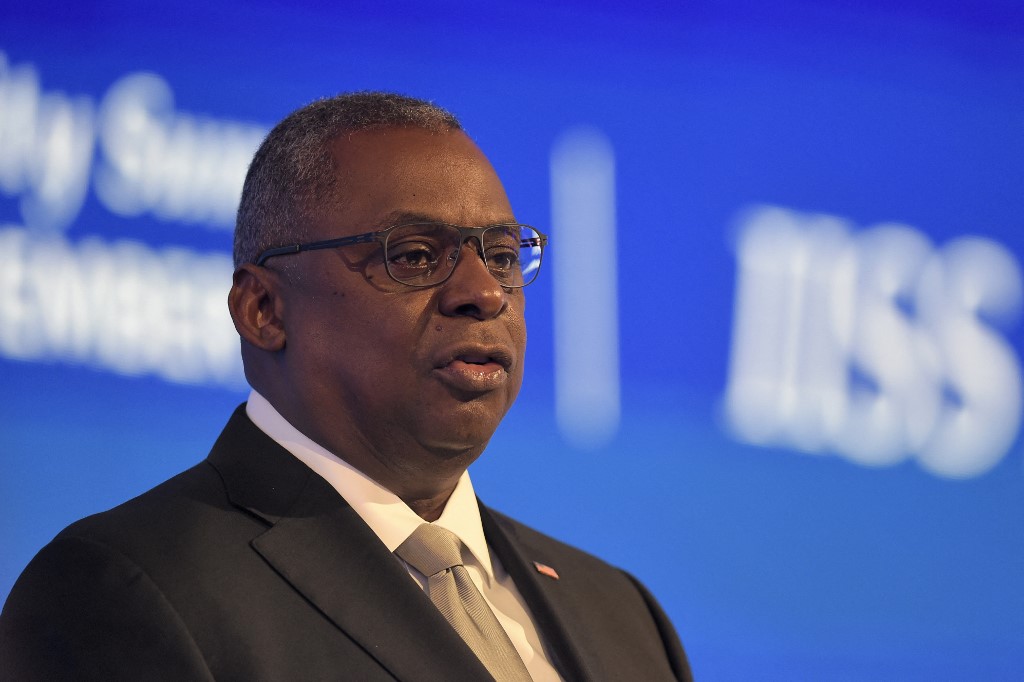
US Secretary of Defense Lloyd Austin speaks during the 17th IISS Manama Dialogue in the Bahraini capital Manama, on November 20, 2021 (Mazen Mahdi/AFP)

US Secretary of Defense Lloyd Austin speaks during the 17th IISS Manama Dialogue in the Bahraini capital Manama, on November 20, 2021 (Mazen Mahdi/AFP)

America’s top defense official vowed Saturday to prevent Iran from obtaining a nuclear weapon and to counter its “dangerous use” of suicide drones in the Mideast, as negotiations remain stalled over Tehran’s tattered atomic deal with world powers.

United States Defense Secretary Lloyd Austin’s comments in Bahrain at the annual Manama Dialogue appeared aimed at reassuring America’s Gulf Arab allies and Israel, as the Biden administration tries to revive the nuclear deal which limited Iran’s enrichment of uranium in exchange for the lifting of economic sanctions.

“The United States remains committed to preventing Iran from gaining a nuclear weapon. And we remain committed to a diplomatic outcome of the nuclear issue,” Austin told an event put on by the International Institute for Strategic Studies.

“But if Iran isn’t willing to engage seriously, then we will look at all of the options necessary to keep the United States secure,” he said.

“Iran should be under no illusion that it will manage to undermine the relationship between the US and other countries in the region,” Austin said, according to the Walla news site.Get The Times of Israel’s Daily Editionby email and never miss our top storiesNewsletter email addressGET ITBy signing up, you agree to the terms

Austin’s remarks come after the US’ chaotic withdrawal from Afghanistan raised concerns about America’s commitment to the Middle East, as defense officials say they want to pivot forces to counter perceived challenges from China and Russia.In this image, made from an April 17, 2021 video released by the state-run TV station Islamic Republic Iran Broadcasting, various centrifuge machines line a hall at the Natanz Uranium Enrichment Facility. (IRIB via AP)

“Let’s be clear: America’s commitment to security in the Middle East is strong and sure,” Austin said, according to Reuters. “But Iran’s actions in recent months have not been encouraging — especially because of the expansion of their nuclear program.”

The defense chief reiterated that in the opinion of the Biden administration, diplomacy is “the tool of first resort.”

Since then-US president Donald Trump unilaterally withdrew America from the Iran nuclear deal in 2018, a series of escalating incidents have struck the wider Mideast. That includes drone and mine attacks targeting vessels at sea, as well as assaults blamed on Iran and its proxies in Iraq and Syria.

The US also killed Iranian al-Quds Force commander General Qassem Soleimani in early 2020, which then saw Iran target American troops in Iraq with ballistic missiles.

In addition, a number of attacks on Iranian nuclear facilities have been blamed on Israel, and since February, Iran and Israel have been engaged in a “shadow war” in which vessels linked to each country have come under attack in waters around the Gulf.

Israel has said it will not allow Iran to get nuclear weapons, and its military has begun drawing up fresh attack plans for a potential strike on Iranian facilities. Last month the government reportedly allocated billions of shekels toward making those plans viable.

The Pentagon chief was asked why Washington did not respond to last month’s drone attack on a base used by the US-led coalition fighting the Islamic State terror group in Syria. The New York Times said Friday the attack was Iranian retaliation for Israeli airstrikes in Syria.

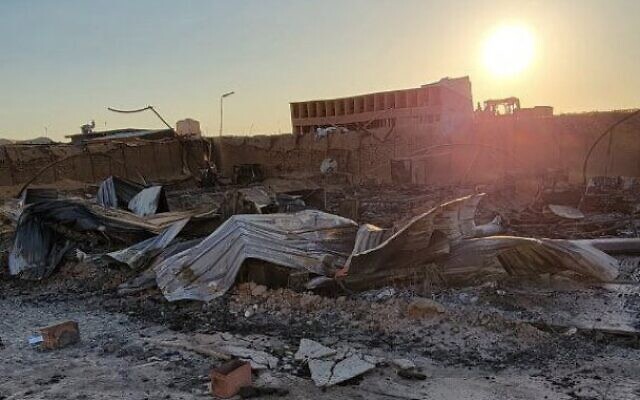
“The United States of America maintains the right to defend itself. And we will defend ourselves and our interests, no matter what, at the time and place of our choosing,” Austin replied.The damaged al-Tanf base in southern Syria is seen a day after it was apparently struck by Iranian drones, on October 20, 2021. (Courtesy, via Aurora Intel)

Under US President Joe Biden, military officials are looking at a wider reshuffling of forces from the Mideast to other areas, though it still maintains a large presence at bases across the region.

Austin hinted at that in his remarks, saying: “Our potential punch includes what our friends can contribute and what we have prepositioned and what we can rapidly flow in.”

“Our friends and foes both know that the United States can deploy overwhelming force at the time and place of our choosing,” Austin said.

Austin’s comments also touched on the ongoing war in Yemen, for which the Biden administration halted its offensive support.

Saudi Arabia has led a military campaign since 2015 against the Iranian-backed Houthi rebels who hold Yemen’s capital, Sanaa. The Houthis have launched drone and ballistic missile attacks on the kingdom to retaliate for a punishing aerial bombing campaign that also has killed civilians.Illustrative: Tribesmen loyal to Houthi rebels raise their weapons during a gathering against the agreement to establish diplomatic relations between Israel and the United Arab Emirates in Sanaa, Yemen, on August 22, 2020. (AP Photo/Hani Mohammed)



But while the kingdom constantly refers to every drone and missile fired by the Houthis as successfully intercepted by its defenses, Austin put the rate, instead, at “nearly 90 percent.” The US also withdrew its THAAD air defenses and Patriot missile batteries from Prince Sultan Air Base several months ago.

“We’ll work with them until it’s 100%,” he said.

The Manama Dialogue takes place each year in Bahrain, a small island kingdom off the coast of Saudi Arabia that’s home to the US Navy’s 5th Fleet. Bahrain also has engaged in a years-long campaign crushing dissent. Activists wrote to Austin before his trip, urging him to raise the detention of prisoners on the island and Bahrain’s involvement in the Yemen war.