As Gantz heads to Washington and negotiations falter in Vienna, American official tells Reuters military chiefs will talk exercises for possible attack on Iran nuclear facilities
By TOI STAFF and AGENCIESToday, 5:35 am
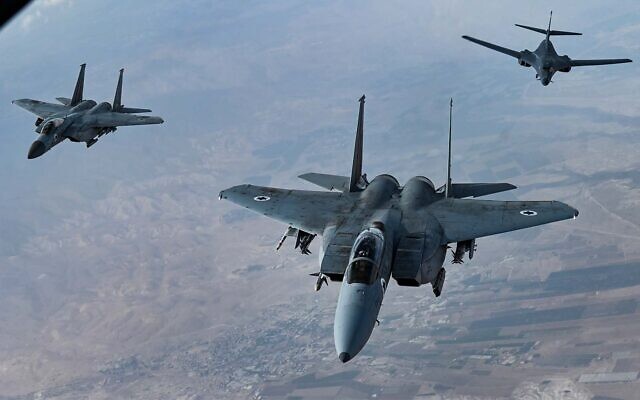
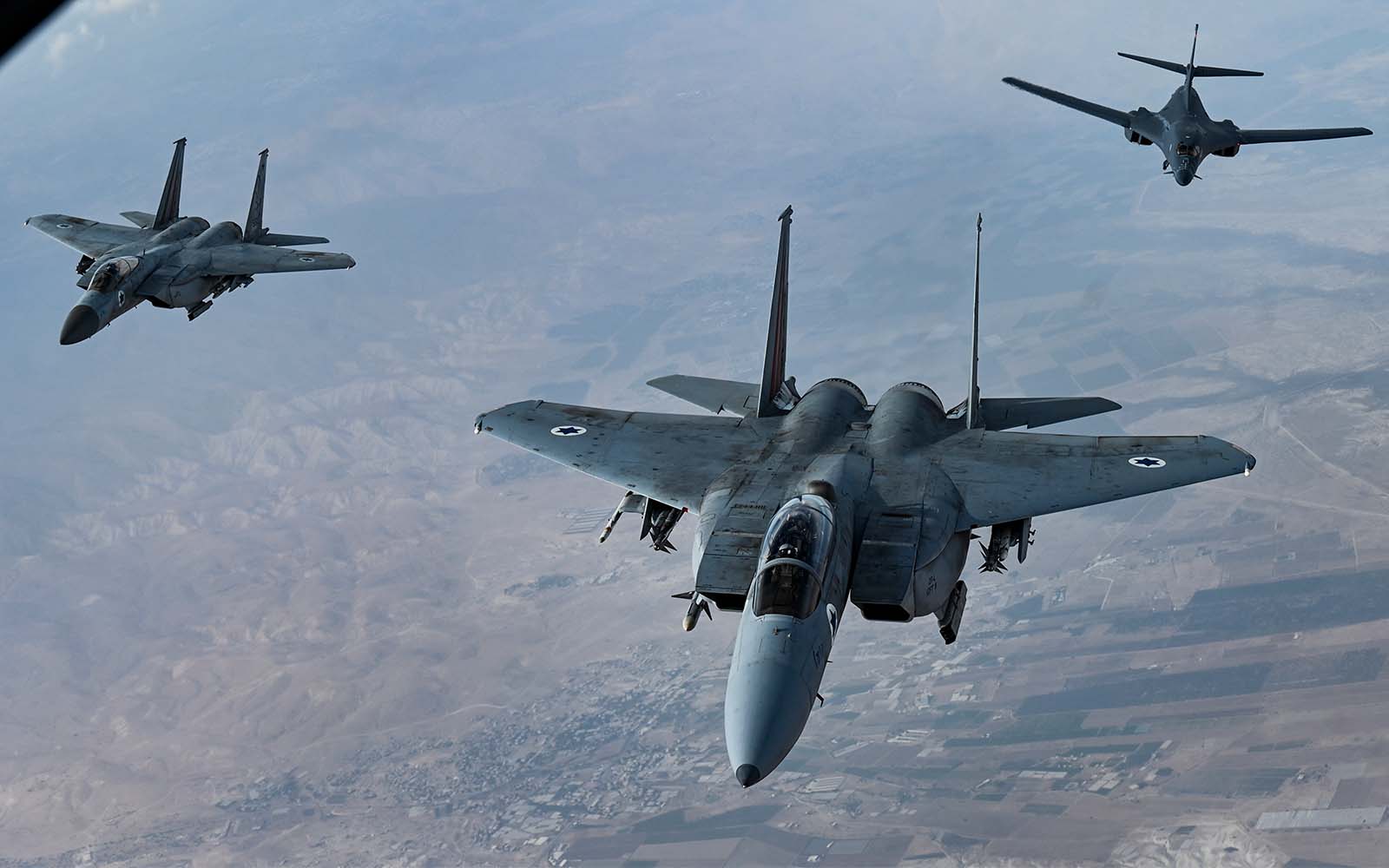
Israeli F-15s accompany a US B-1B Lancer over Israel as part of a presence patrol above the US Central Command’s area of responsibility, October 30, 2021. (US Air Force/Senior Airman Jerreht Harris)
Israeli and American military leaders are set to discuss possible military drills to practice destroying Iranian nuclear facilities in a potential worst-case scenario, a senior US official said on Wednesday.
The comment came as the faltering nuclear talks were set to resume on Thursday in Vienna, and as Defense Minister Benny Gantz flew to Washington for meetings with top US military leaders.
US and European representatives at the nuclear talks voiced pessimism and frustration over Iran’s demands last week.
The possible military drills would prepare for a scenario with Iran in which negotiations fail and US and Israeli leaders request a military strike, the US official told the Reuters news agency.
Ahead of takeoff for the US, Gantz said, “Iran is a threat to world peace and seeks to become an existential threat to Israel.”Get The Times of Israel’s Daily Editionby email and never miss our top storiesNewsletter email addressGET ITBy signing up, you agree to the terms
“At the meetings, we will discuss possible courses of action to ensure that it stops its attempt to reach the nuclear arena and expand its activities in the region,” he said.
Gantz said he will meet with US Secretary of Defense Lloyd Austin and Secretary of State Antony Blinken.
The US official did not give details about the potential preparations.
“We’re in this pickle because Iran’s nuclear program is advancing to a point beyond which it has any conventional rationale,” the official told Reuters.
In October, US military leaders briefed White House national security adviser Jake Sullivan on military options for halting Iran’s nuclear program, the report said.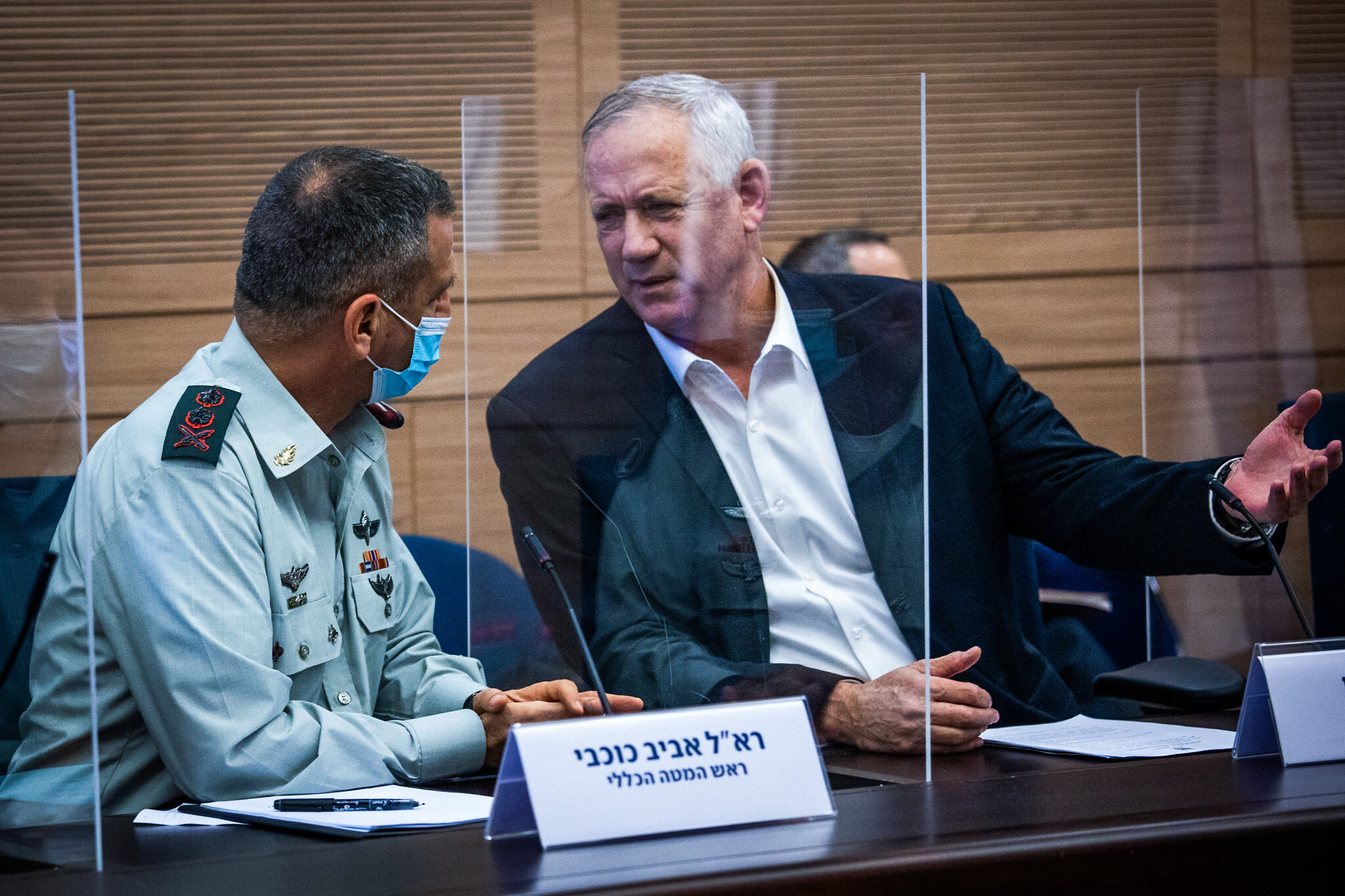 IDF Chief of Staff Aviv Kohavi, left, and Defense Minister Benny Gantz attend a Defense and Foreign Affairs Committee meeting at the Knesset, on October 19, 2021. (Yonatan Sindel/Flash90)
A Wednesday report said the Israel Defense Forces will hold a large-scale exercise over the Mediterranean in the spring with dozens of aircraft simulating a strike against Iran’s nuclear program.
In January, army chief Aviv Kohavi announced that he was instructing the military to draw up fresh plans for a strike against Iran’s nuclear program. The IDF received billions of shekels of additional funding to prepare for such an attack as part of the recently passed national budget.
Last month, Kohavi told the Knesset’s Foreign Affairs and Defense Committee that the army “is accelerating operational planning and preparedness to deal with Iran and the military nuclear threat.”
Though Israeli officials have stressed that Israel could carry out a strike without coordinating with the United States, some analysts have cast doubts on the IDF’s ability to do so, as several Iranian facilities are buried deep enough underground that it would require particularly powerful munitions, which currently only the US possesses.
Reports in recent weeks have indicated that the army is unprepared for dealing with Iran and months or more away from an actionable plan.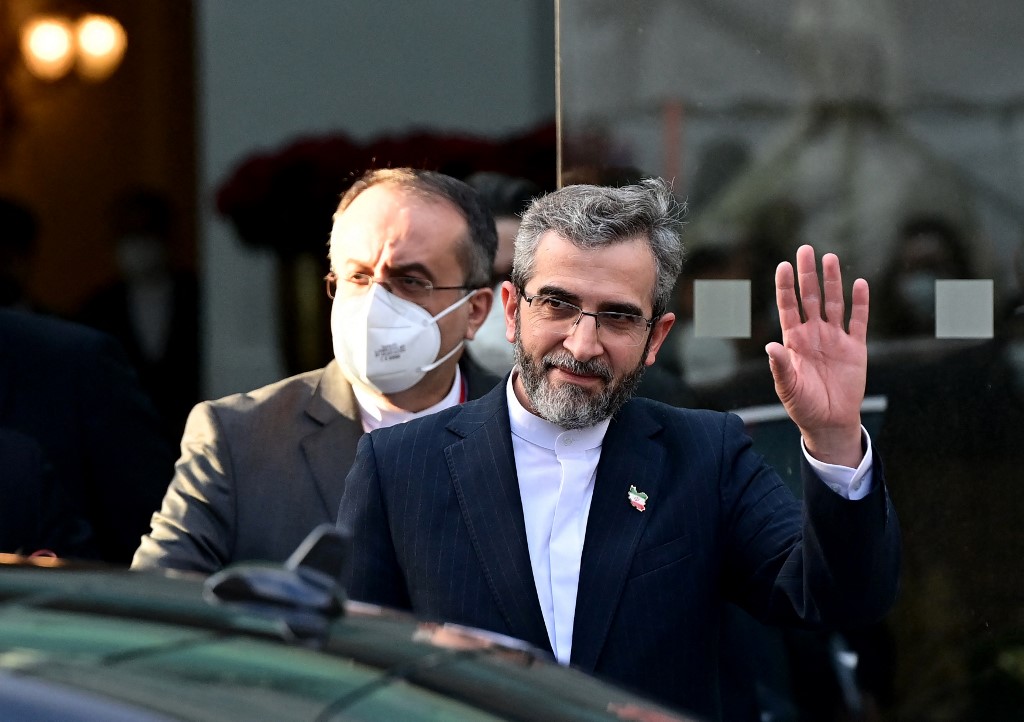 Iran’s chief nuclear negotiator Ali Bagheri Kani is seen leaving the Coburg Palais, venue of the Joint Comprehensive Plan of Action (JCPOA) meeting aimed at reviving the Iran nuclear deal, in Vienna, on December 3, 2021. (Joe Klamar/AFP)
Talks set to resume in Vienna
The European Union, which is coordinating the indirect talks between Washington and Tehran, confirmed they would resume Thursday in Vienna after a break of a few days.
A US State Department spokesman said Wednesday that the US will swiftly determine whether Tehran is serious about the negotiations.
“We should know in pretty short order if the Iranians are going… to negotiate in good faith,” said the spokesman, Ned Price, warning that “the runway is getting very, very short for negotiations.”
The talks began in April but were suspended in June due to the election of a new Iranian president, only to resume last week.
After five days of talks, the United States said Iran did not appear to be serious about making progress. American and European representatives both accused the Iranians of having backtracked on previous agreements since the spring.
European diplomats urged Tehran to come back with “realistic proposals” after Iran’s delegation last week made numerous demands that were deemed unacceptable by the other parties to the accord — Britain, China, France, Germany and Russia. Even Russia, which has stronger relations with Iran, questioned Iran’s commitment to the process.
Washington has warned it will not let Tehran block negotiations for much longer while developing its nuclear program at the same time, but has not yet laid out an ultimatum.
The next few days look set to see a last-chance diplomatic push, although it appears ever more unlikely that the talks will lead to any breakthrough.
“It will not always be in our interest to seek a return to the JCPOA,” Price said, using the formal title of the landmark 2015 accord, the Joint Comprehensive Plan of Action.
The deal aimed to curb Iran’s nuclear program to ensure it could not develop an atomic weapon, in exchange for sanctions relief for Tehran.
It began unraveling in 2018 when then US president Donald Trump pulled out and reimposed sanctions, prompting Iran to start exceeding limits on its nuclear program the following year.
Iran has ramped up its nuclear program again in recent months by enriching uranium beyond the thresholds allowed in the agreement. Tehran has also restricted monitors from the UN atomic watchdog from accessing its nuclear facilities, raising concerns about what the country is doing behind closed doors.
US President Joe Biden has indicated that Washington is willing to return to the deal.
Iran has always insisted that its nuclear program is peaceful.
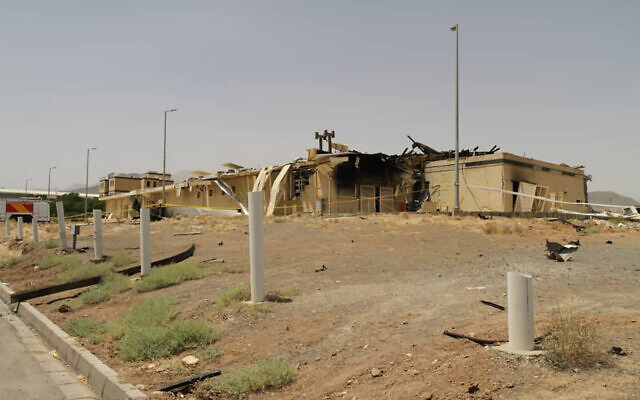 This photo released July 2, 2020, by the Atomic Energy Organization of Iran, shows a building after it was damaged by a fire, at the Natanz uranium enrichment facility some 200 miles (322 kilometers) south of the capital Tehran, Iran. (Atomic Energy Organization of Iran via AP)
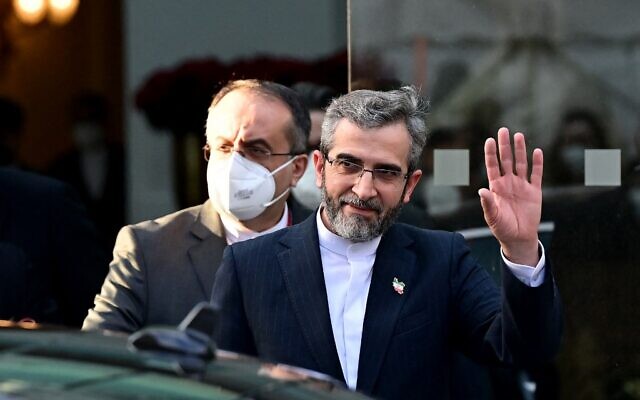 Iran’s chief nuclear negotiator Ali Bagheri Kani is seen leaving the Coburg Palais, venue of the Joint Comprehensive Plan of Action (JCPOA) meeting aimed at reviving the Iran nuclear deal, in Vienna, on December 3, 2021 (Joe Klamar/AFP)
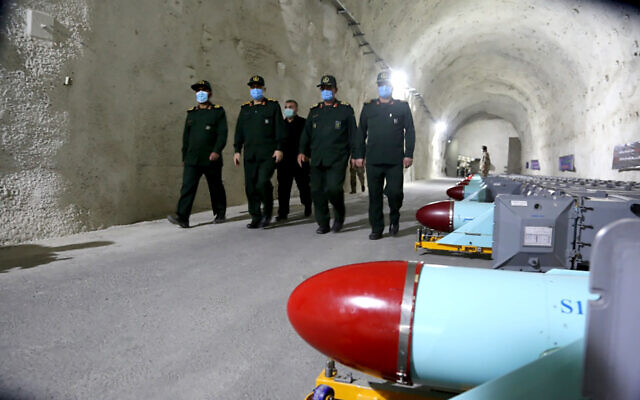 In this photo released Jan. 8, 2021, commanders of Iran’s paramilitary Islamic Revolutionary Guard Corps walk past missiles during a visit to a new military base in an undisclosed location. (Sepahnews via AP)
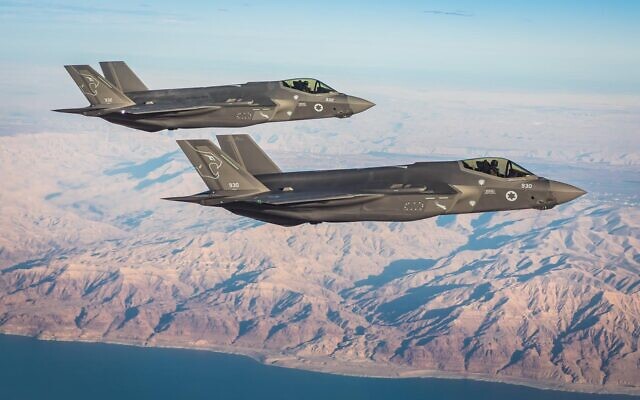 Illustrative: Fighter jets from the IAF’s second F-35 squadron, the Lions of the South, fly over southern Israel. (Israel Defense Forces)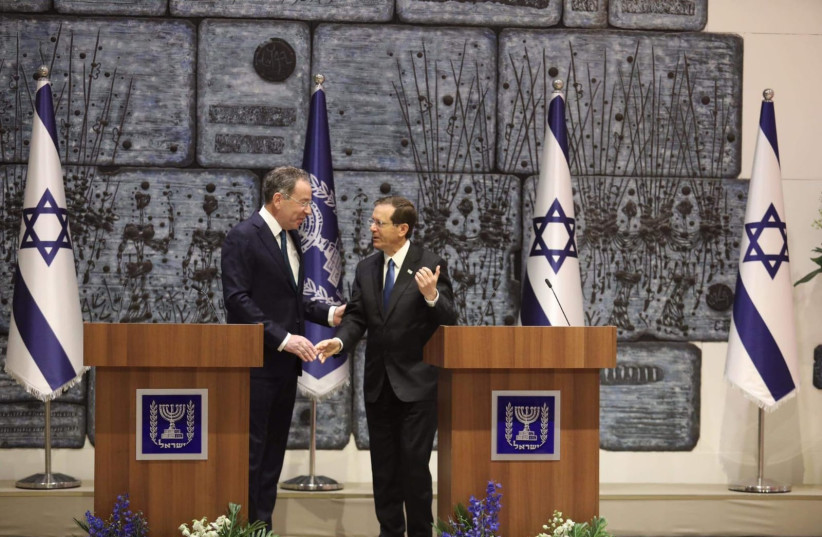
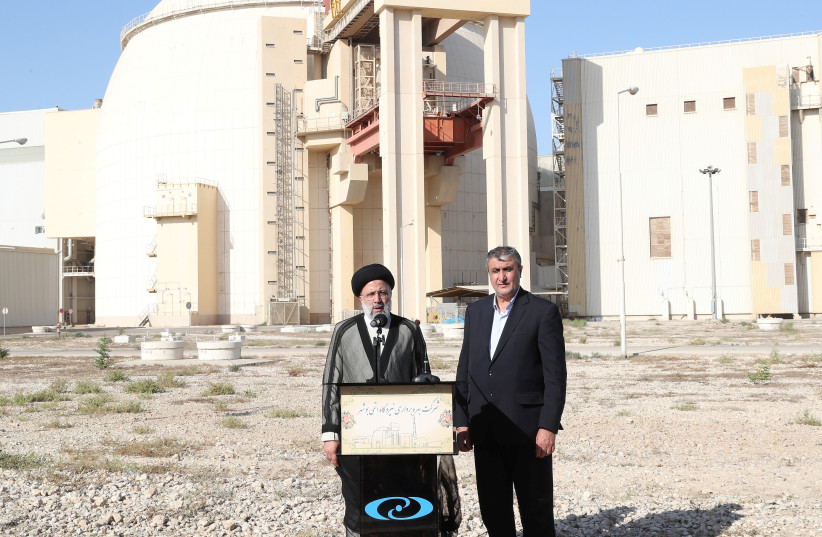 IRANIAN PRESIDENT Ebrahim Raisi visits the Bushehr nuclear power plant, October 8 (credit: Official Presidential Website/Handout via Reuters)Israel has opposed the deal and warned the US to halt the talks. Herzog clarified that Israel would “welcome a comprehensive, diplomatic solution which permanently solves the Iranian nuclear threat.”He stressed, however, “In the case of a failure to achieve such a solution, Israel is keeping all options on the table.”Nides told Herzog the US was committed to preventing Iran from obtaining nuclear weapons.“We will continue to collaborate closely to advance peace and stability, and to counter the threat Iran poses to Israel and the region,” Nides said.“As President [Joe] Biden has made it very, very, clear, the United States is committed to ensuring that Iran never develops a nuclear weapon,” he added.Israel and the US are at odds over the Iran talks, with Israel opposing a return to the 2015 nuclear deal and the Biden administration supporting it.Mossad chief David Barnea is slated to leave late Sunday for Washington, followed by Defense Minister Benny Gantz on Thursday, where they will discuss Iran with US officials.Last week Barnea echoed a statement similar to Herzog’s when he pledged that the Mossad would not allow Iran to possess nuclear weapons.Israel wants to utilize the pause in the talks to influence US policy on the matter.Prime Minister Naftali Bennett called on world powers to pressure Tehran to halt its enrichment of uranium prior to the resumption of another round of indirect talks in Vienna.“I call on every country negotiating with Iran in Vienna to take a strong line and make it clear to Iran that they cannot enrich uranium and negotiate at the same time,” Bennett told his weekly cabinet.“Our goal is to utilize the window of opportunity that has opened between the rounds in order to tell our friends in the US: This is precisely the time to use a different toolkit against Iran’s galloping forward in the enrichment sphere,” he said.“There is a time for everything. A time to keep silent and a time to speak up. Now is the time to speak up,” Bennett added.The Trump administration exited the Iran deal in 2018, and reimposed sanctions that had been lifted as a result of the deal.Biden has sought to revive the deal, which had also been signed by Germany, France, Great Britain, Russia and China.The European Union brokered six rounds of indirect talks between the US and Iran prior to the election of a new Iranian government in June led by President Ebrahim Raisi.European and US officials have said that during the seventh round of talks last week, the first with the new Iranian government, representatives of the Islamic Republic put new demands on the table and walked back the progress that had been made earlier in the year.Iran halted its compliance with the deal in 2019 and has inched toward the production of weapons-grade uranium.In his remarks to the weekly cabinet, Bennett accused Iran of taking an “aggressive and bullying approach” to “blackmail” the US into removing existing sanctions so it can fund its global terrorist activity through its pursuit of uranium enrichment.“We are holding an intensive dialogue on this matter with the Americans, the British, the French, Russia and others,” Bennett said.He pointed to a report released last week by the International Atomic Energy Agency that Iran “had begun to enrich up to 20% purity in advanced centrifuges at Fordow.” He added, “This is a very serious step,” and that “Iran must start paying for its violations.”He warned the US and the world power that a “bad deal with the Iranians will have implications for our national security.”Former prime minister Ehud Barak struck the opposite tone on Sunday in an opinion piece he published in the Hebrew website Ynet, in which he said that Israel should have supported the 2015 deal from the start and used the time to build a military “Plan B” that would have allowed it to attack Iran.A military plan would take years to prepare and would require massive US assistance, he said, as he cast doubt on whether Israel at present has such a plan.Barak urged Israeli leaders to resist empty threats, particularly with Iran just months away from becoming a nuclear threshold state.“This new reality calls for a sober evaluation and practical decisions, not empty rhetoric that may impress some in Israel but will carry no weight in Iran or among the world powers eager on reaching a deal with the Islamic Republic,” Barak wrote in his Ynet opinion piece.In the aftermath of the talks in Vienna that ended on Friday, both the US and Iran traded barbs over the collapse of the talks.The Biden administration wants Iran to commit to abide by the terms of the 2015 deal, which allowed it to enrich uranium only to 3.7%, instead of its current enrichment level that has reached 60%.Iran wants the US to lift its sanction prior to such an agreement, a move the US has refused.Iran’s Foreign Ministry on Sunday charged that the failure to lift sanctions had doomed last week’s indirect talks in Vienna.“It is crystal clear that the US reluctance to fully drop the sanctions is the main challenge for the progress of negotiations,” a senior Iranian Foreign Ministry official told reporters on Sunday.“We believe that anytime the US administration abandons the maximum-pressure campaign, and Europeans demonstrate necessary political determination, the way will be opened for the swift attainment of an agreement,” the official said.“They are not willing in the first place to give such concessions which are clearly asserted by the #JCPOA,” the official said, adding that they are also “not willing to “re-negotiate” the matters that were propounded in last drafts.The Iranian Foreign Ministry official took note of Republican congressional threats that the US would once again renege on the deal, should their party gain the White House in 2024.Actions of the “Zionist regime” have also harmed the talks, the official said, refusing to refer to Israel by name.“We cautioned,” the official said, “that some external actors that are not pleased with the progress of the negotiations should not be allowed to include the progress of the talks by propagating lies and distorted reports.“It is quite normal that the Zionist regime is not pleased with the status quo,” the Iranian Foreign Ministry official said. Its media has “fabricated unfounded rumors and tried to negatively influence the atmosphere of the talks,” the Iranian official said.The official explained that in Vienna, the Iranian delegation had presented two draft proposals; one that dealt with the issue of sanctions and the second with its nuclear program. These drafts were based on the JCPOA and past rounds of negotiations, the official said.A senior US official told reporters on Saturday, “We’ve made clear that we’re prepared to lift all of the sanctions that are in consistence with the deal, but if Iran wants us to go beyond that, then of course, we’re talking about a different deal, and Iran would have to go beyond what it did at the time of the JCPOA. So that’s after that question.”The official said the US was “preparing for a world in which there is no return to the JCPOA,” but added, “It is not our preference.”Iran’s uranium enrichment, the US official said, has “troubling implications for whether the JCPOA can be revived. Our view is it still can be today; that’s President Biden’s view. That’s why we were in Vienna trying to work to get – to make sure that we could return to mutual compliance, but that can’t last forever.”Richard Goldberg, a senior adviser at the Foundation for Defense of Democracies in Washington, suggested that in order to pressure Iran, the Biden administration should “work with the UK, France and Germany to reimpose UN sanctions and restrictions on Iran at the Security Council.”The administration, he said, should also “press censure resolutions at the International Atomic Energy Agency, fully enforce economic sanctions and threaten military force if Iran moves closer to the threshold of nuclear weapons.”Goldberg added, however, that he feared that instead, the US would allow Iran to hold onto the nuclear gains it made in 2021, while providing it with sanctions relief.Former US ambassador Dennis Ross, who served as a special adviser to the Obama administration and a distinguished fellow at the Washington Institute for Near East Policy, also weighed in on the matter.Ross questioned how effective “additional pressure” might be unless the US has support from other signatories to the deal.“The key would be whether China goes along and no longer buys Iranian oil. That would truly build pressure.”In addition, he said, “The question will remain whether the administration will develop military options and rehearse them in a way that the Iranians see and therefore have reason to fear.”
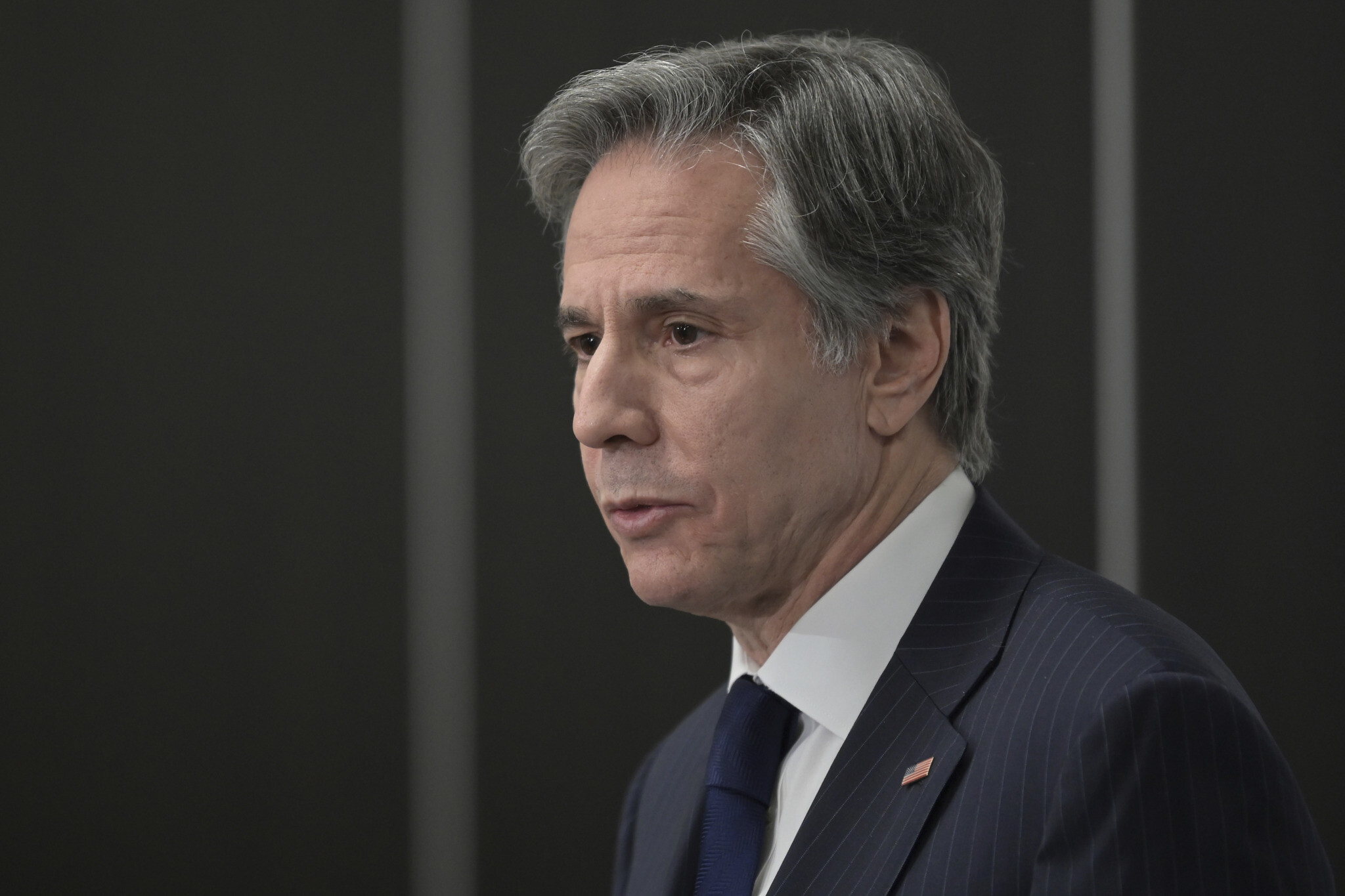
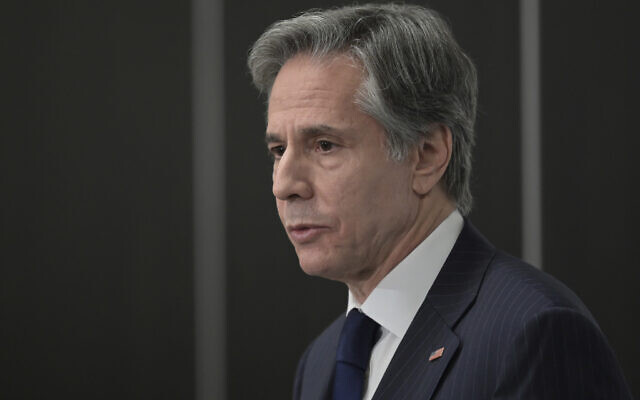 US Secretary of State Antony Blinken attends a press conference during an Organization for Security and Co-operation in Europe (OSCE) meeting, in Stockholm, Sweden, Thursday, Dec. 2, 2021. (Jonathan Nackstrand/Pool Photo via AP)
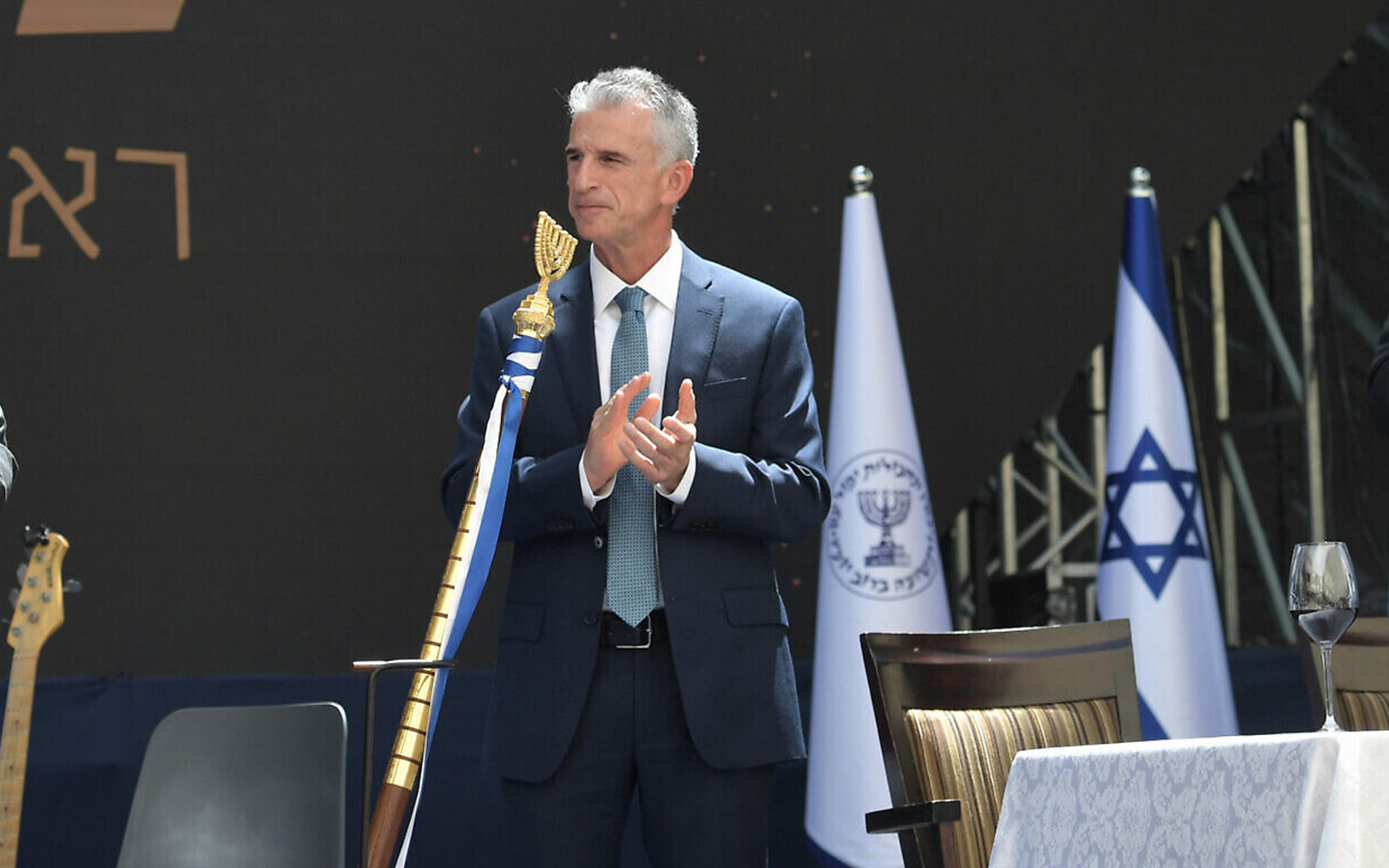
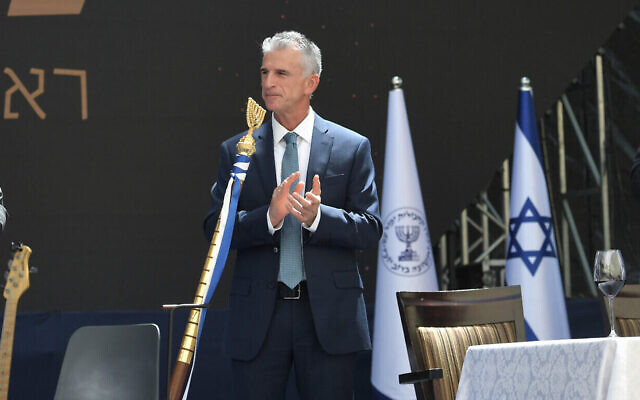 Mossad chief David Barnea at a ceremony marking his taking the helm of the agency, on June 1, 2021. (Kobi Gideon/GPO)
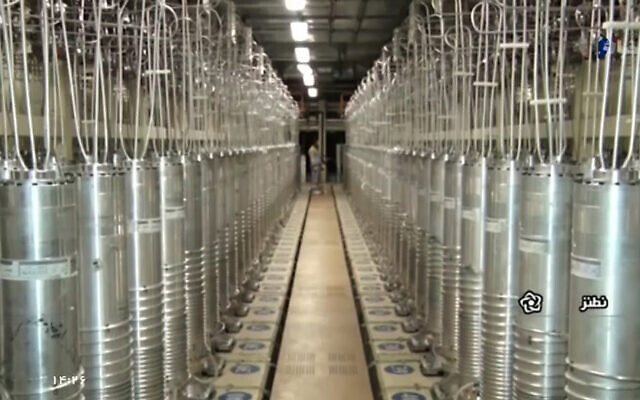 Various centrifuge machines line a hall at the Natanz Uranium Enrichment Facility, on April 17, 2021. (screenshot, Islamic Republic Iran Broadcasting – IRIB, via AP)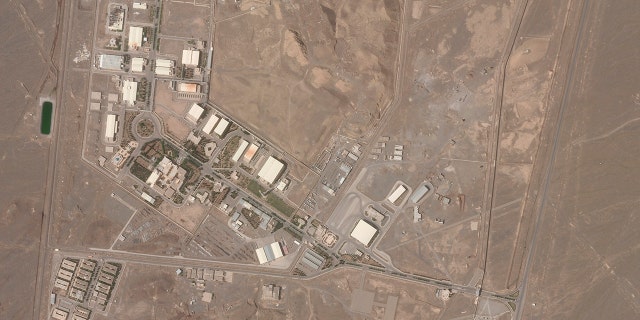
 The Coburg Palais, the venue of the Joint Comprehensive Plan of Action (JCPOA) revival talks, in Vienna on November 29, 2021. (VLADIMIR SIMICEK / AFP)
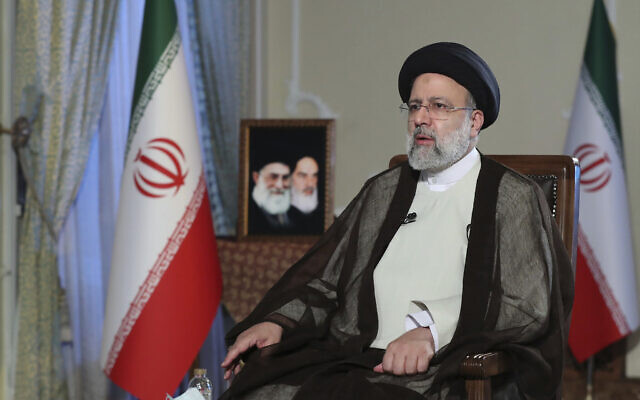 In this photo released by the office of the Iranian Presidency, Iranian President Ebrahim Raisi speaks during a live interview in Tehran, Iran, broadcast on state-run TV, on Monday, October 18, 2021. (Iranian Presidency Office via AP)
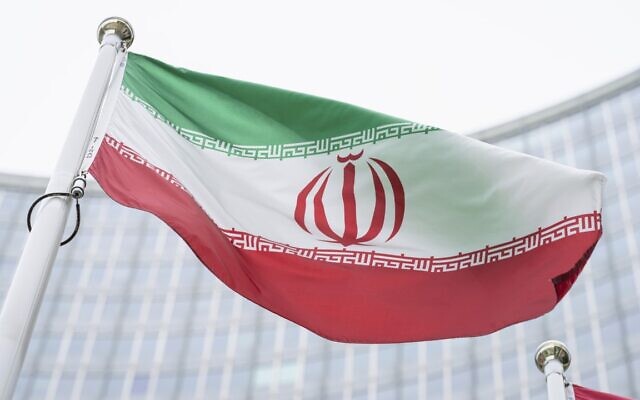 The flag of Iran waves in front of the International Center building with the headquarters of the International Atomic Energy Agency, IAEA, in Vienna, Austria, on May 24, 2021 (AP Photo/Florian Schroetter, File)
 The Coburg Palais, the venue of the Iran nuclear talks, is pictured in Vienna, on November 29, 2021. (Vladimir Simicek/AFP)
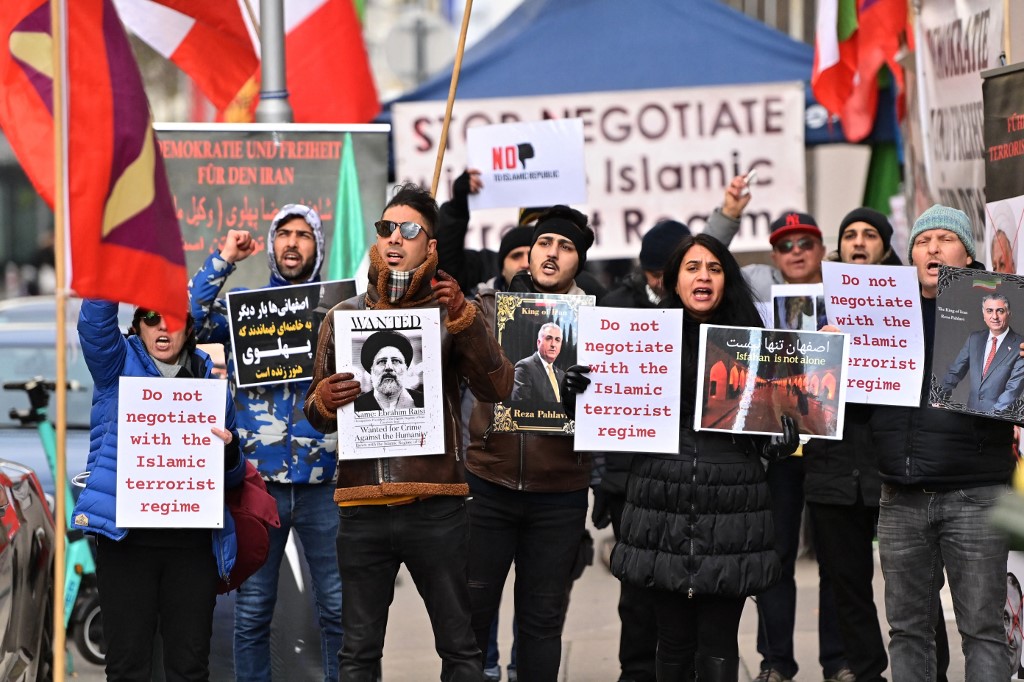
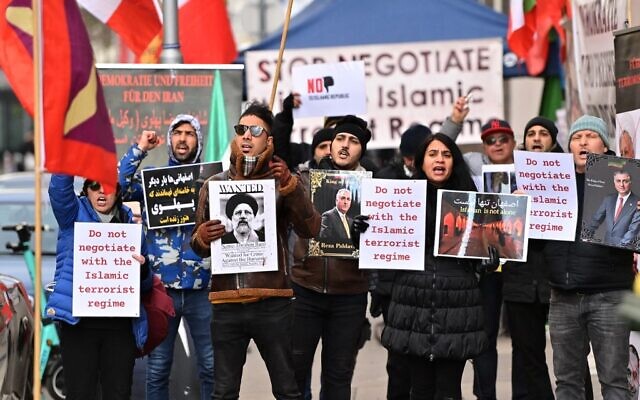 Iranian exiles and supporters of monarchy shout slogans during a demonstration near the Coburg palace during a meeting of the Joint Comprehensive Plan of Action (JCPOA) in Vienna, on December 3, 2021. (Joe Klamar/AFP)
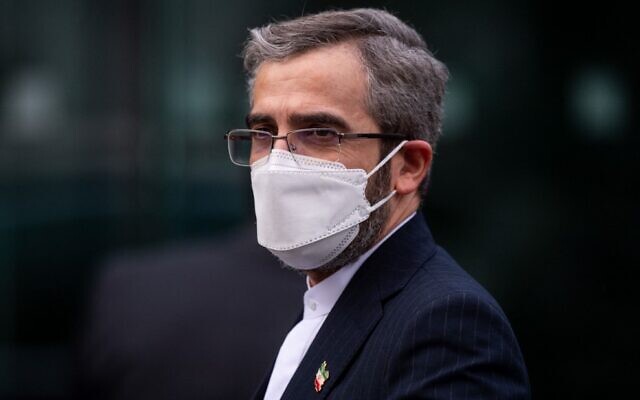 Iran’s chief nuclear negotiator, Ali Bagheri, arrives at the Coburg Palais in Vienna for nuclear talks, on November 29, 2021. (Vladimir Simicek/AFP)
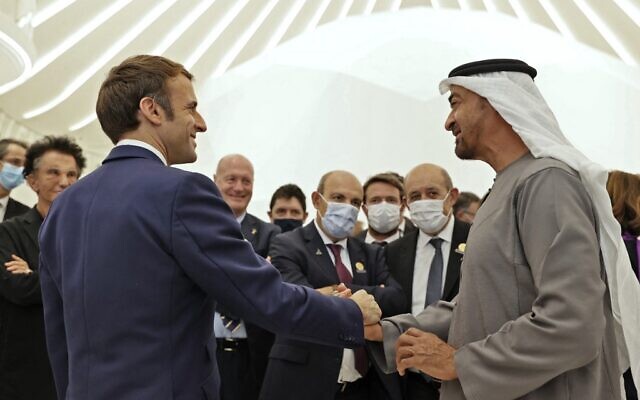 French President Emmanuel Macron (L) is greeted by Abu Dhabi’s Crown Prince Mohammed bin Zayed al-Nahyan during his tour of the French pavillion at the Dubai Expo on the first day of his Gulf tour, on December 3, 2021. (Thomas Samson/AFP)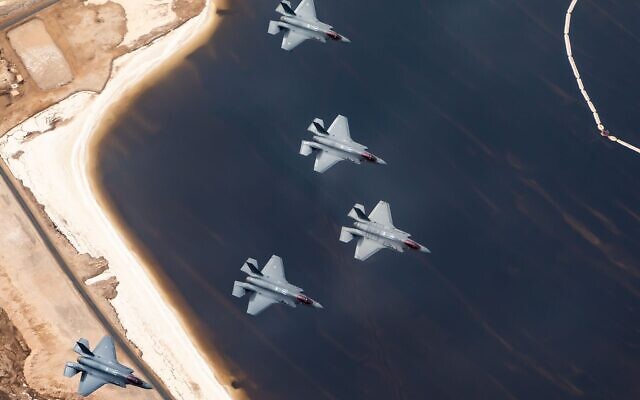
 In this image made from April 17, 2021, video released by the Islamic Republic Iran Broadcasting, IRIB, state-run TV, various centrifuge machines line the hall damaged on April 11, 2021, at the Natanz Uranium Enrichment Facility, some 200 miles (322 km) south of the capital Tehran. (IRIB via AP, File)



 anneinpt
 artaxes
 danmillerinpanama
 davidking1530
 Peter Hofman
 Joseph Wouk
 Peter
Peter Louisiana Steve
 WarSclerotic

Recent Comments