Source: Gulf tanker attack puts Trump in a bind on Iran – analysis – Middle East – Jerusalem Post
US Secretary of State Mike Pompeo flew to Iraq where he reportedly showed the Iraqis intelligence on the threats.
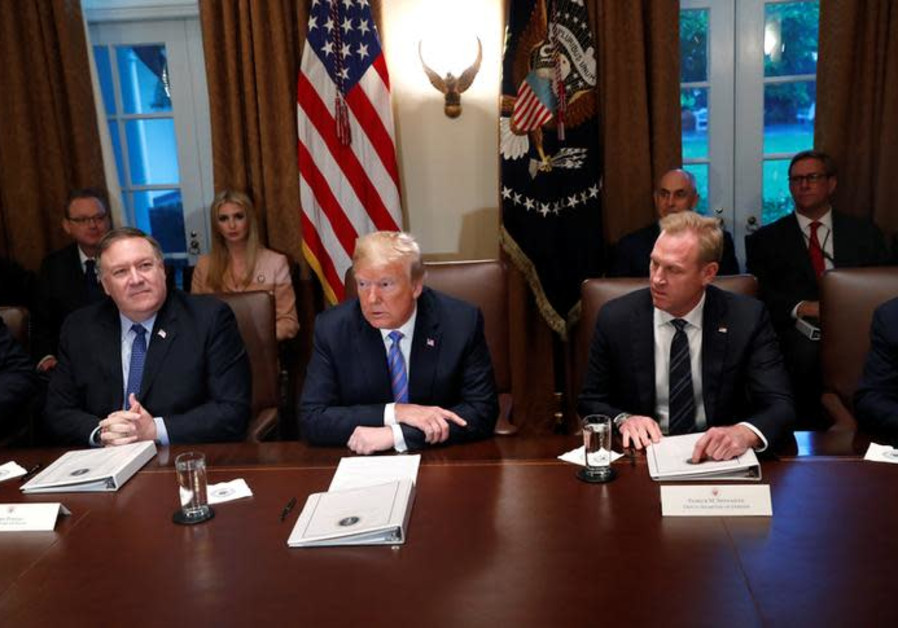
Burning oil tankers off the coast of Iran, allegedly attacked in the early hours of Thursday morning, have put the Trump administration in a bind over what to do about rising tensions with Tehran.
Oil priced jumped as news emerged that more than forty sailors had to be rescued and images showed a tanker ablaze.
US Secretary of State Mike Pompeo flew to Iraq where he reportedly showed the Iraqis intelligence on the threats. These might be threats from pro-Iranian militias, the US indicated.
It didn’t take long for the threats to emerge. Days later four tankers were sabotaged off the UAE port of Fujairah in the Gulf of Oman. Then, eleven days after Pompeo flew to Iraq, a rocket fell near the US embassy.
Now the US was in a bind. It had threatened to act, but Washington didn’t want a major conflict with Iran. Although US officials spoke privately about Iran behind behind the May 12th tanker sabotage, the US waited until May 29 to say that Iran was “almost certainly” the culprit.
US National Security Advisor John Bolton said that the US carrier strike group and warning had deterred Iran. But the threat persists, he said on May 30.
Iran, meanwhile, has been on a winning streak. The German Foreign Minister was in Iran this week and so was the Japanese Prime Minister. Not bad for the Iranian regime that is supposed to be isolated. Iran has claimed the June 13 attack on the oil tankers just miles off the coast of its naval base at Jask is “suspicious.”
The Trump administration is now in a bind on how to respond. With the Bahrain summit coming up on January 25 it must consider what to do next. First of all someone has to make a determination what caused the harm to the tankers. The fire on the Front Altair and images show a seriously damaged ship.
This isn’t the small sabotage of last month. With such a massive incident, the US will have to show that its threats are not empty, and that it can guarantee the safety of ships in the Straits of Hormuz and Gulf of Oman. Even if someone alleges that the attack was not carried out by Iran, then it was carried out by someone else, which still endangers shipping.
Is it suspicious that the attack happened with the Japanese leader was in Iran? Or was his visit cover for the attack? Perhaps having him there makes Iran appear less likely to have done something so brazen.
This will inevitably feed the conspiracies of “false flags” and “the new Gulf of Tonkin,” a reference to an incident that helped lay the groundwork for deeper US involvement in Vietnam.
But Iran’s media doesn’t seem to shy away from pushing this incident. It was Iranian media that first reported the attacks and it is Iranian media that has put up images of one of the damaged ships.
In addition, Iranian social media accounts have pushed a 2017 video of a Houthi attack on a Saudi ship as if it is the June 13 attack.
Why would Iran be so enthusiastic about showing off the attack? Wouldn’t they prefer to downplay it, knowing the tensions are high? Wouldn’t they seek to deny it immediately or spread information about others being responsible.
Iran has boasted of saving the crew members of the ships. This may also be part of Tehran’s attempts to gain favor abroad by appearing responsible.
Online some have pointed out that the ship was targeted not from the Iranian side, but from the side facing international waters. That would require a submarine or attacker to have gone around the ship to shoot at it from the side facing the Gulf.
The Trump administration is focused on China, Mexico and other issues at the moment. Iran is not in the president’s main agenda, at least not at the moment.
The tanker attack will change that and will require both Pompeo and Bolton to look closely at what happened. Pompeo last announced new “maximum pressure” on June 7.
Six days later he may have a crises on his hands. Countries in the region will be watching to see how the US handles it.
Source: Khamenei: Iran doesn’t want nuclear bomb, but US couldn’t stop us if we did | The Times of Israel
Amid US-Iran tensions, Tehran’s leader tells visiting Japanese PM that Trump is not ‘deserving’ of a response
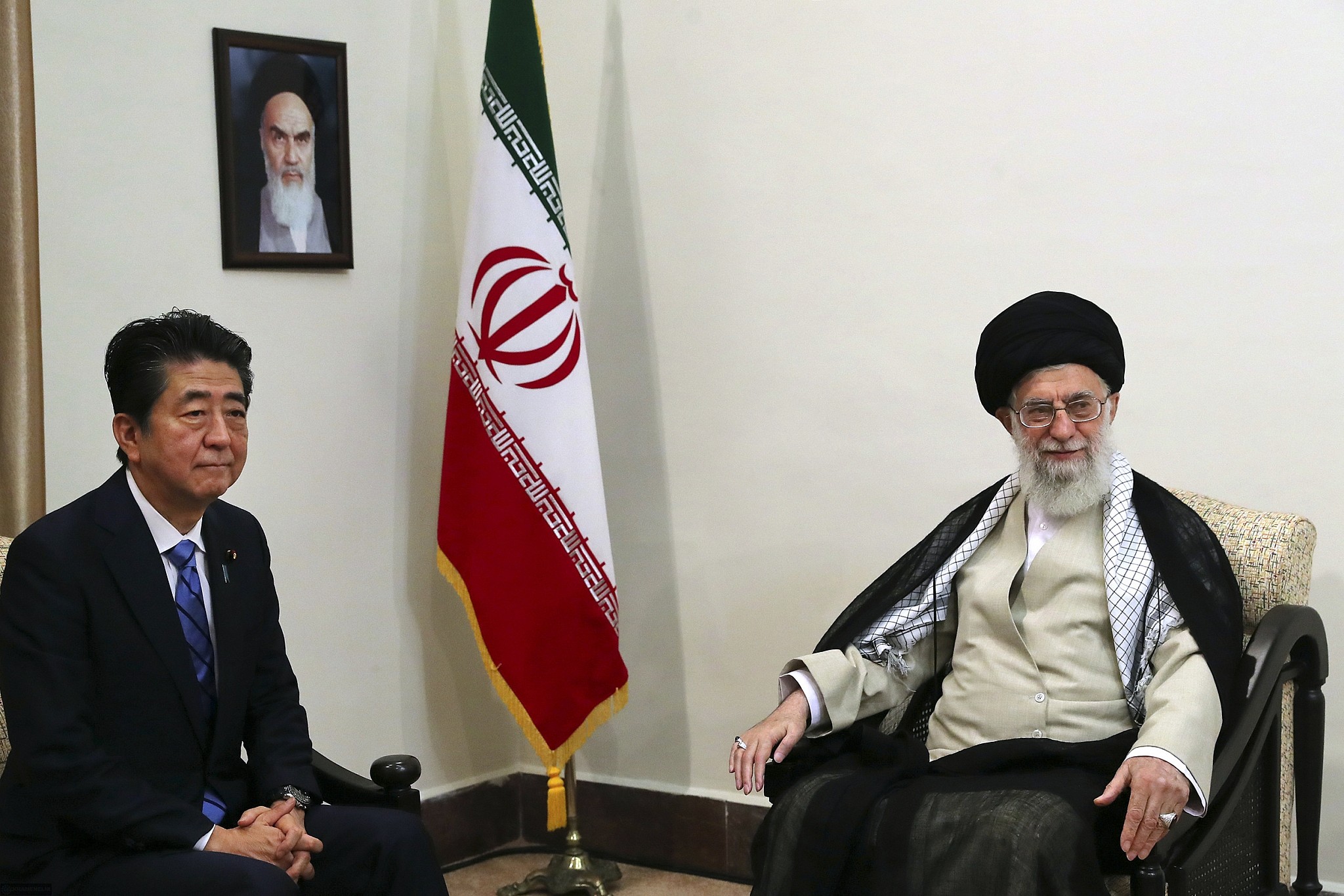
Iran’s Supreme Leader Ayatollah Ali Khameneni said Thursday that while Tehran doesn’t want an atomic bomb, “America could not do anything” to stop it if it did, just days after the UN’s nuclear watchdog did not explicitly report that Iran was implementing its nuclear-related commitments and said that its rate of uranium enrichment was increasing.
Khamenei made the comment during a meeting with Japanese Prime Minister Shinzo Abe, who came to Tehran as an interlocutor for US President Donald Trump to ease tensions between Washington and Tehran.
His visit may not have succeeded, however. Khamenei earlier was quoted as saying Iran “will in no way repeat” negotiations with the US amid tensions over its unraveling nuclear deal with world powers.
Khamenei’s official website quoted him as telling Abe: “I don’t regard Trump as deserving any exchange of messages and have no response for him and will give no response.”
Abe is the first sitting Japanese prime minister to visit Tehran since Iran’s 1979 Islamic Revolution.
Earlier Thursday, Japan’s top government spokesman said Abe’s high-stakes trip was intended to help de-escalate tensions in the region — and not specifically mediate between Tehran and Washington. The remarks by Chief Cabinet Secretary Yoshihide Suga to reporters were apparently meant to lower expectations amid uncertain prospects for Abe’s mission.
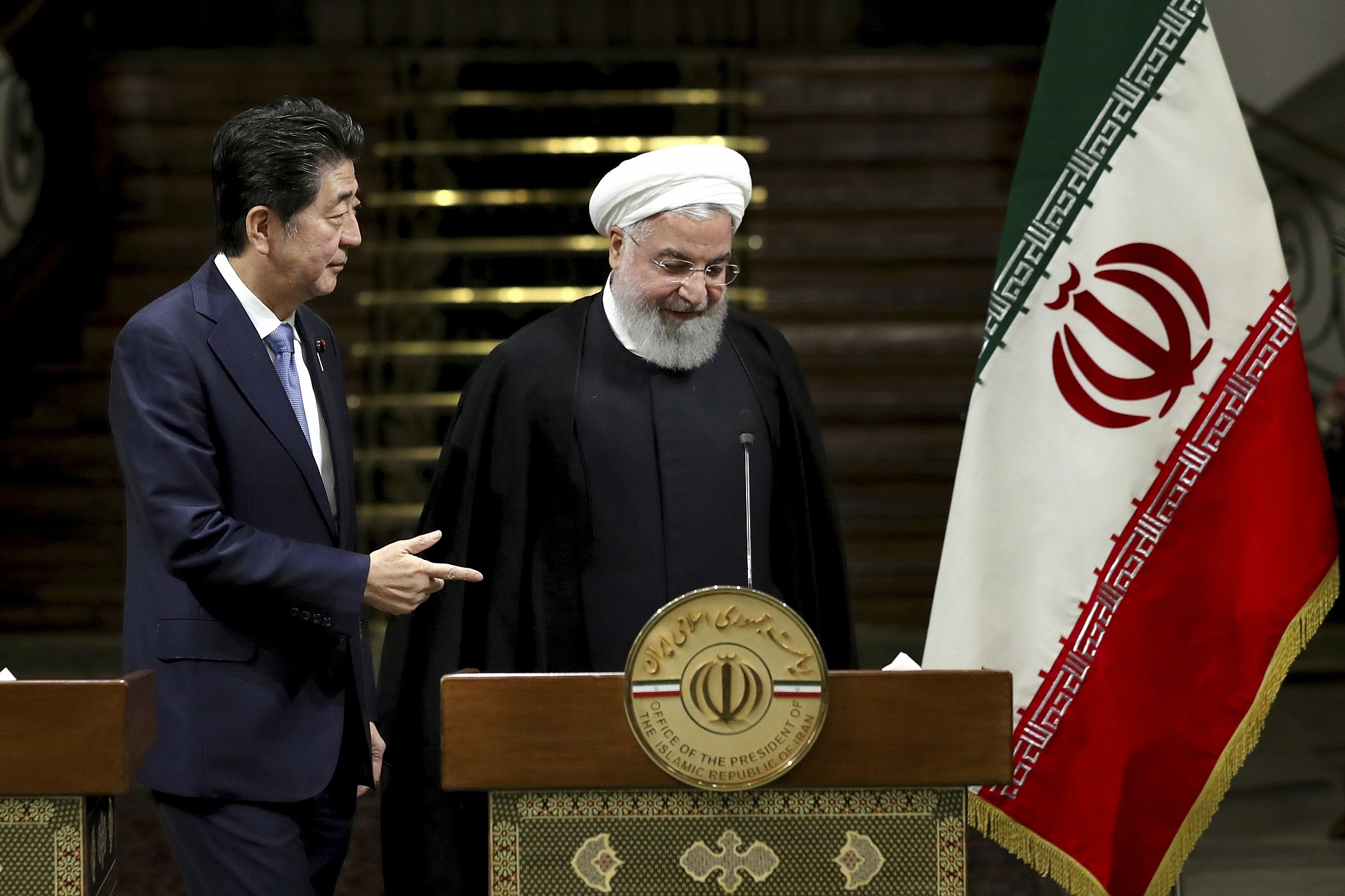
On Wednesday, after talks with Iranian President Hassan Rouhani, Abe warned of the possibility of “accidental conflict” that could be sparked amid heightened US-Iran tensions.
Iran has been locked in a bitter standoff with the United States since Trump withdrew from a 2015 nuclear deal in May last year.
Washington has since reimposed crippling sanctions — which have forced Tokyo to halt its once-substantial purchases of Iranian oil — and launched a military buildup in the Gulf amid reports that Iran was planning attacks on US forces in the region.
The Trump administration said its sanctions came over Iran’s ballistic missile program, support for Hezbollah and other activities.
The Abe-Khamenei meeting came amid reports Thursday that two oil tankers were attacked near the Strait of Hormuz.
No one has claimed responsibility or explained how the tankers were attacked. However, the US previously blamed Iran for an attack last month on four oil tankers close to the nearby Emirati port of Fujairah.
A day earlier, Abe called for Iran to play a “constructive role” in bringing peace to the region.
“It is essential that Iran plays a constructive role in building solid peace and stability in the Middle East,” Abe told a joint news conference in Tehran with Iran’s President Hassan Rouhani.
“Today, tension is rising in the Middle East. Some experts point out that the conflict might be triggered accidentally,” said Abe. An armed clash “must be avoided by all means,” the premier stressed.
He added that Japan “wishes to play an utmost role in its capacity to ease the tension. This is the one single thought that brought me to Iran.”
Addressing the same news conference, Rouhani said if the US stopped pressuring Iran through sanctions, it would bring a “very positive change” to the Middle East and the world.
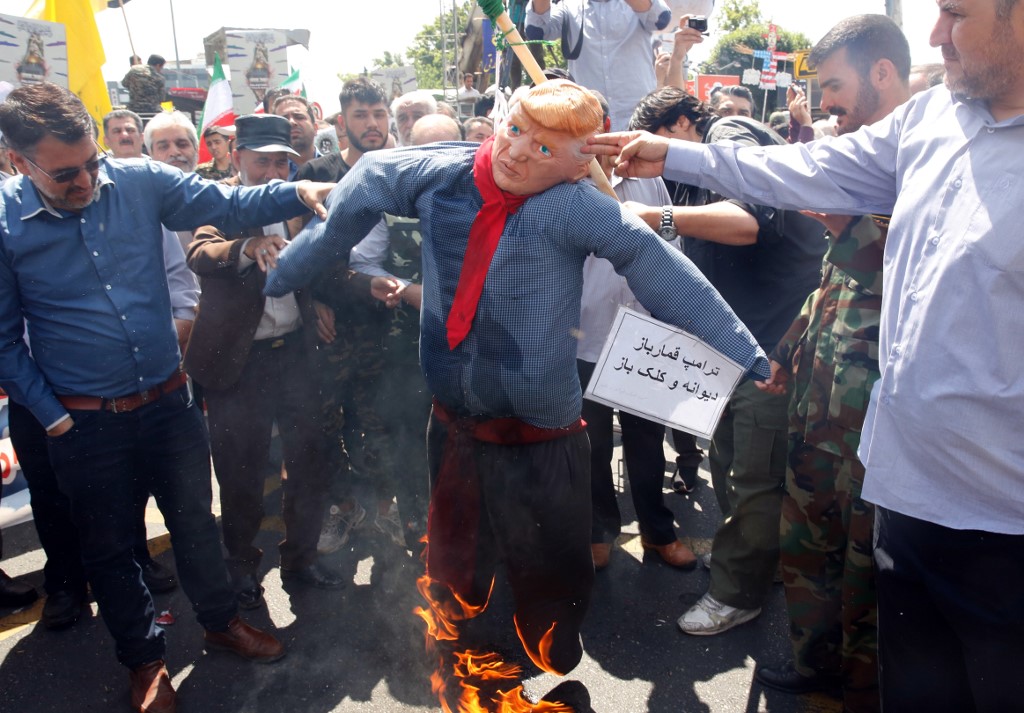
“If there are some tensions, (their) roots stem from America’s economic war against Iran. Whenever it stops we will witness a very positive change in the region and the world,” Rouhani said. “We will not initiate a conflict in the region, even against the US, but if a war starts against us we will then give a crushing response,” the Iranian president added.
The Iranian president also underlined a convergence of views with his visitor on the issue of nuclear weapons, which he said “both of us are against.”
Abe, for his part, expressed his “deep respect to the fact that the supreme leader Ayatollah Khamenei reiterates the fatwa which says ‘nuclear weapons and other weapons of mass destruction are against Islam.’”
Abe discussed “the situation in Iran” in a telephone call with Trump on Tuesday, a Japanese government spokesman said. The Japanese prime minister won Trump’s blessing for the mediation mission when the US president visited Tokyo last month.
“We believe it is extremely important that, at the leadership level, we call on Iran as a major regional power to ease tension, to adhere to the nuclear agreement and to play a constructive role for the region’s stability,” Japanese Chief Cabinet Secretary Suga said.
Source: Hezbollah is sweating under the collar – www.israelhayom.com
The Lebanon-based Shiite terrorist group is under increasing pressure from all sides, and while Israel has operational leeway in the northern sector, it must remember that no one is infallible and that the enemy is watching, learning and evolving in ways that may prove highly challenging.

Under pressure. Hezbollah leader Hassan Nasrallah | Photo: Reuters/Khalil Hassan
Little public attention, if any, has been paid to the drama taking place on Israel’s northern borders. But these developments are nothing short of dramatic and will shape the sector for years to come.
Much of this drama is unfolding in plain sight: from the IDF’s discovery and demolition of a grid of cross-border tunnels dug by the Iranian-backed Shiite terrorist group Hezbollah, strikes on Iranian assets in Syria, to diplomatic moves by the US and Russia opposite the Lebanese government. All of these also include intensive intelligence, operational, economic and diplomatic efforts that take place behind the scenes and, in fact, constitute the lion’s share of Israel’s security operations.
The IDF is spearheading this effort and its main objectives are preventing Iran from entrenching itself militarily in Syria, curtailing arms smuggling into Lebanon, and preventing Hezbollah from operating in the Golan Heights.
The latter was also the objective of Wednesday’s airstrike near Syria’s Tal al-Hara, a site that houses some of the Syrian military’s intelligence apparatus and which has been targeted in the past.
The strike was independent of another security incident on Wednesday, during which a Lebanese drone breached Israeli airspace. This was not the first incident of its kind, and likely it won’t be the last. This incident was, however, made public by the IDF because, unlike in previous cases, the drone was spotted by civilians, who alerted the media. It is possible the IDF also sought to embarrass Hezbollah, in one of the most difficult periods in its history.
These two events obscure a much larger picture.
Hezbollah is under pressure – the result of years of fighting in Lebanon and Syria and the significant cut in its budget as a result of the US economic sanctions imposed on Iran – and it shows.
Hezbollah leader Hassan Nasrallah’s anxiety is becoming increasingly palpable: from his nervous speech and threats against Israel two weeks ago, through Hezbollah’s conspicuous disregard for the IDF’s construction of a barrier in contested areas on the Israel-Lebanon border, to its acquiescence over the fact that Beirut’s government will hold direct, US-mediated talks with Israel over the two countries’ disputed maritime border.
These talks will take place against the backdrop of a tripartite meeting set to take place later this month in Jerusalem between the national security advisers of the United States, Russia, and Israel. Syria’s problems may not be resolved in this meeting, but it places Israel squarely alongside the “good guys,” who happen to represent the superpowers.
This sends a clear signal to Iran and its allies in Lebanon and Syria and also serves as a green light for Israel’s defense policies in the northern sector.
It appears that Israel will be able to continue – albeit cautiously – with these policies, which include striking Iranian assets in Syria and Lebanon, as long as its actions do not embarrass the Russians or provoke a direct conflict with Syria or Hezbollah.
Still, we must remember that no one is infallible and that the enemy is watching, learning and evolving in ways that may challenge Israel in the future in a multitude of ways.
Source: Escalation in Gulf of Oman: Tankers hit in suspected attacks – www.israelhayom.com
US Navy’s 5th Fleet says it assisted the damaged ships. Tanker company denies Iranian reports that its ship, the Front Altair, has sunk. Iranian vessels reportedly picked up 44 sailors from the Front Altair and another damaged tanker. Oil prices jump as much as 4%.
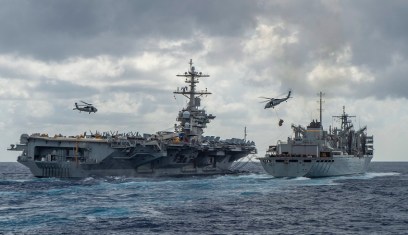
US Navy’s 5th Fleet vessels in the Gulf of Oman | Illustration: EPA/US NAVY
An oil tanker damaged in a suspected attack in the Gulf of Oman sunk on Thursday afternoon, Iranian news agency IRNA reported.
Earlier reports had said the tanker, named the Front Altair, was carrying 75,000 tons of naphtha, a flammable liquid hydrocarbon.
Meanwhile, a Frontline company spokesman denied the Iranian reports, saying the Front Altair was still afloat.
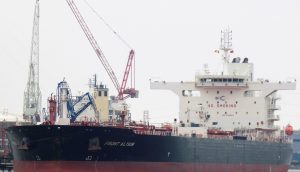
“There are pictures from a salvage vessel that is circling the ship, and the vessel hasn’t sunk,” said company spokesman Pat Adamson, citing the most recent information received from the ship’s technical management.
Iranian search and rescue teams reportedly picked up 44 sailors from the Front Altair and another damaged tanker, the Islamic Republic News Agency reported, citing an unnamed informed source.
The sailors were taken to the Iranian port of Jask, IRNA reported.
Twenty-three crew on the Front Altair, a Marshall Islands-flagged tanker heading from Qatar to Taiwan, abandoned ship when a fire broke out approximately 25 miles from Jask.
The second tanker was a Panama-flagged ship, named Kokuka Courageous, heading from a port in Saudi Arabia toward Singapore when a fire broke out approximately 28 miles from Jask.
Twenty-one crewmen abandoned that ship and were picked up by Iranian search and rescue teams, IRNA reported.
Oil prices jumped as much as 4% on Thursday after the suspected attack.
Iranian Foreign Minister Mohammad Javad Zarif called the suspected attacks “suspicious” and called for regional dialogue to avoid tensions.
Zarif tweeted that “reported attacks on Japan-related” oil tankers in the Gulf of Oman had taken place while Japanese Prime Minister Shinzo Abe was meeting Iran’s Supreme Leader Ayatollah Khamenei “for extensive and friendly talks”.
“Suspicious doesn’t begin to describe what likely transpired this morning,” he tweeted. “Iran’s proposed Regional Dialogue Forum is imperative.”
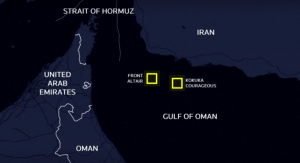
The US Navy’s 5th Fleet said earlier that it was assisting the Front Altair and Kokuka Courageous, as they were under apparent attack in the Gulf, which connects the Arabian Sea with the Strait of Hormuz, a major strategic waterway through which a fifth of global oil consumption passes from Middle East producers.
The United Kingdom Maritime Trade Operations, part of the Royal Navy, said it was aware of an incident in the Gulf of Oman.
“The UK and its partners are currently investigating,” the group said without elaborating.
One shipping broker said there had been an explosion “suspected from an outside attack” that may have involved a magnetic mine on the Kokuka.
Another source said the Front Altair reported a fire caused by a “surface attack” and that the crew had been picked up by nearby vessel Hyundai Dubai.
There was no immediate confirmation of the incident from authorities in Oman or the United Arab Emirates, in whose territorial waters four tankers were hit last month.
The UAE had said that the May 12 attacks on four vessels off the coast of Fujairah, a main bunkering hub, were likely caused by limpet mines and bore the hallmarks of an operation, most likely by a state actor.
Saudi Arabia’s envoy to the United Nations blamed Iran. Tehran has denied any involvement.
Source: Explosions on two supertankers carrying Gulf oil. Crews evacuated – DEBKAfile
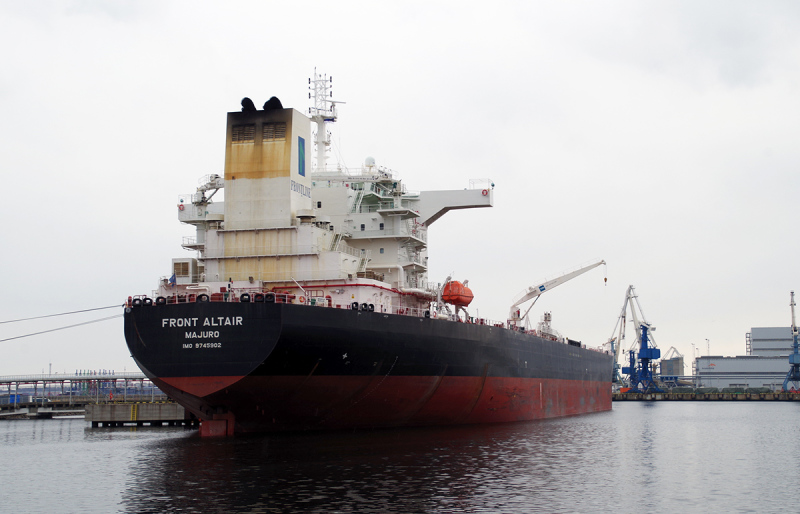
The crews were evacuated from two burning super oil tankers in the Gulf of Oman after they were hit by explosions on Thursday, June 13. Both captains sent distress calls to ports in Oman and Pakistan. Iranian news sources cited local sources in Oman as saying that the explosions were caused by attacks on the tankers.
The vessels were flagged to the Marshal Islands and Panama but there was no immediate word on the ownership of the oil cargoes or their destination.
The British navy’s Maritime Trade Operations initially put out an alert for an “unspecified incident” in the Gulf of Oman and urged “extreme caution.”. The US Navy’s Bahrain based 5th Fleet responded it was aware of the incident and investigating. Meanwhile, the US Navy was extending assistance to the damaged vessels following distress calls.
The explosions come a few weeks after four other oil tankers were sabotaged off the port city of Fujairah in the United Arab Emirates, in an attack widely attributed to Iran.
DEBKAfile: After the first round of low-key attacks by Iran on the oil of America’s Gulf allies, its embassy in Baghdad and Israel’s Hermon posts failed to provoke the Trump administration into easing sanctions, Tehran launched a second, ramped-up round of aggression on Thursday.
Details are still awaited on the form of the attacks on the two supertankers. The four tankers sabotaged at Fujairah had remote-controlled limpet mines attached to their hulls by frogmen. The successive explosions in the Gulf of Oman also point to the use of some form of remotely-controlled explosive device.
Source: After alleged Syria strike, PM says Israel acting against ‘enemy in vicinity’ | The Times of Israel
In apparent acknowledgment of missile attack on sites in southern Syria, Netanyahu says IDF is constantly working to prevent foes from establishing bases along the border
Prime Minister Benjamin Netanyahu on Wednesday said Israel was carrying out pre-emptive attacks to prevent its “enemy” from establishing military bases “in our vicinity,” in an apparent acknowledgment of a strike earlier in the day on alleged Hezbollah facilities across the border in Syria.
“We respond with attacks and force to every attack against us. But we are not only taking action after the fact, we are also denying the enemy capabilities before the fact. In a systematic and consistent way, we are working to prevent our enemy from establishing attack bases against us and in our vicinity,” Netanyahu said.
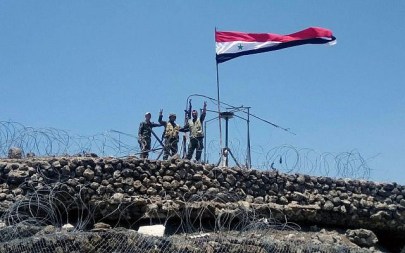
In the predawn hours of Wednesday morning, Syrian state media reported that Israel fired several missiles toward a mountain near the Golan border.
According to Syrian and Lebanese reports, the target of the strikes was infrastructure set up by the Iran-backed Hezbollah terror group and its allies in recent months.
Israel has not officially commented on the alleged strike.
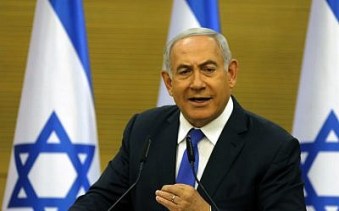
Netanyahu made his remarks at a state memorial service for former president Ephraim Katzir, who died 10 years ago.
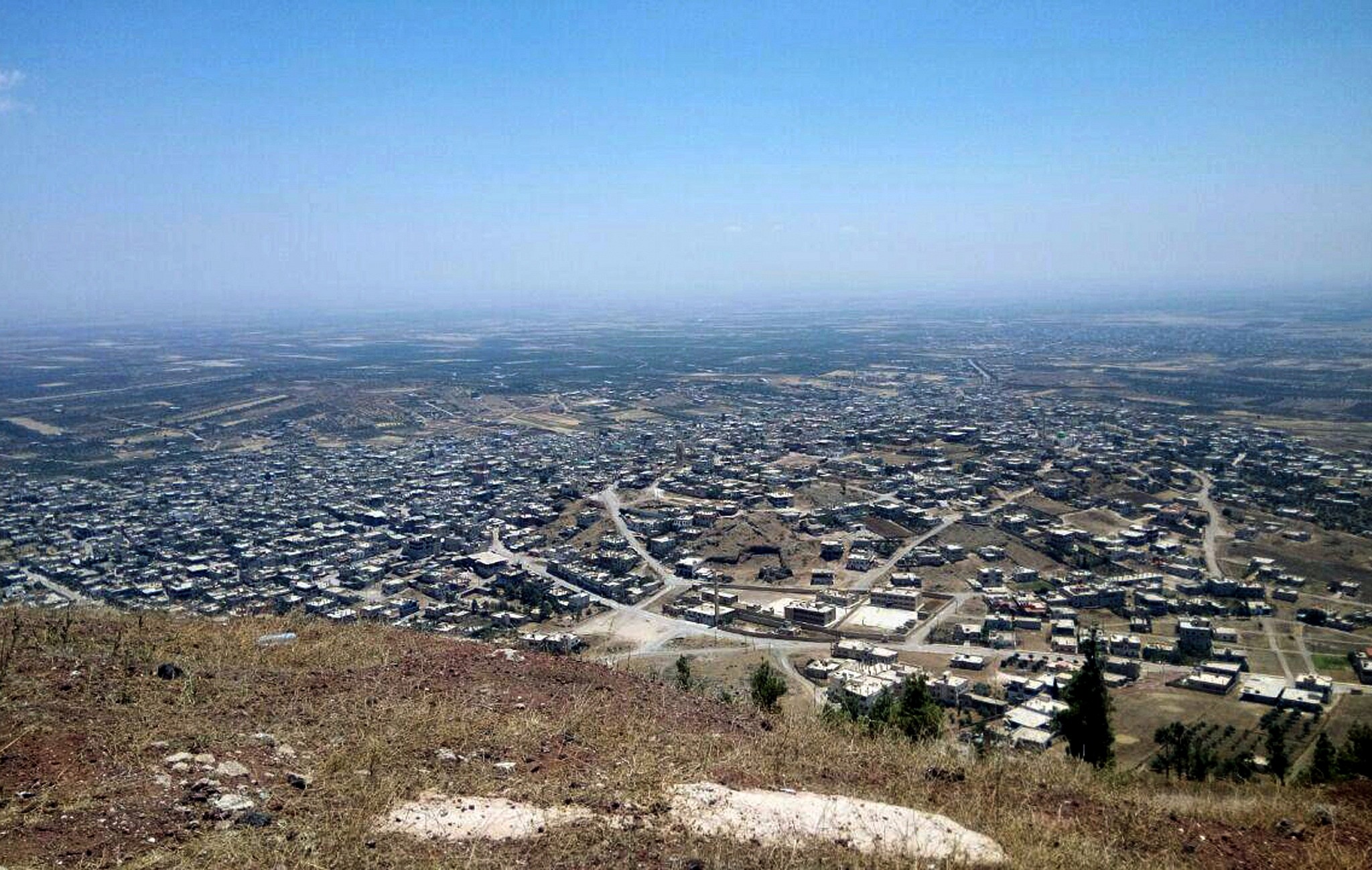
According to Syria’s official SANA news outlet, the strike targeted sites around Tel al-Harra, an area that Hezbollah has previously identified as being of “great strategic importance” because of the visibility it offers of the surrounding area.
There were no reports of injuries.
SANA also reported Israel had jammed Syrian air defense radars in the area, in what it called an act of electronic warfare.
Lebanese media reported earlier that Israel conducted reconnaissance flights around the Syrian-Lebanese border.
Hours after the alleged strike, a small drone penetrated Israeli airspace from Lebanon before turning back over the border, the Israeli military said.
Shortly after Syrian President Bashar Assad’s return to the Syrian Golan Heights, in July 2018, Hezbollah published a map identifying Tel al-Harra, the highest point in southern Syria, as \of “great strategic importance” because of the visibility it offers of the surrounding area.
In April, the Lebanese al-Modon news outlet reported that the terror group had been in talks with the Syrian military about establishing observation posts on Tel al-Harra.
While Israel has carried out hundreds of strikes in Syria in recent years, they have usually targeted bases linked with Iran. In the rare occasions that Israel has targeted villages and towns along the Golan Heights border, it has been after identifying Iranian and Hezbollah attempts to establish cells and infrastructure in the area.
Earlier this month, two rockets were fired from Syria toward Israel’s Mount Hermon in the Golan Heights. There were no reports of injuries or damage.
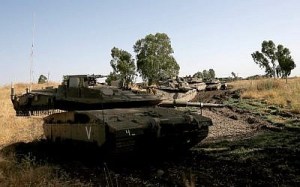
Toward the start of the Syrian civil war, the Israeli military established a number of “red lines” that if violated would result in a retaliatory strike, including any attacks — intentional or otherwise — against Israel.
They also included Iranian efforts to establish a permanent military presence in Syria and attempts to transfer advanced munitions to the Lebanon-based Hezbollah terrorist group.
In recent years, Israel has acknowledged conducting hundreds of airstrikes in Syria in response to these “red line” violations.
Times of Israel staff contributed to this report.
Israeli intel official says vast ammonium nitrate cache found in 2015 in London, as reported this week, was part of terror group’s planned ‘revenge’ against Israel in case of war
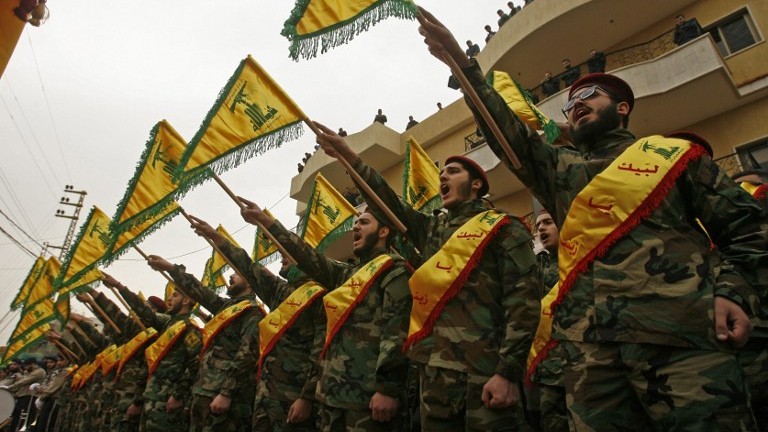
For three and a half years, Israel’s Mossad intelligence agency played a cat-and-mouse game with the Hezbollah terror group to stymie its efforts to establish explosives storehouses from Thailand to New York, an Israeli intelligence official confirmed this week.
The largest cache, containing some three tons of ammonium nitrate, a key ingredient for some types of explosives, was found at four locations in north London, sites raided by the Metropolitan Police in September 2015. Other caches planted by Hezbollah cells were discovered in Cyprus, Thailand and as-yet unnamed European countries, according to reports.
The Hezbollah plot to establish infrastructure in London in preparation for future attacks was revealed Sunday in the UK’s Daily Telegraph newspaper.
That report, based on sources in Britain, the US and Cyprus, noted that a foreign intelligence agency, unnamed, had tipped off Britain’s MI5 and the Metropolitan Police about the explosives.
On Monday, an unnamed senior Israeli official told Israel’s Kan public broadcaster the warning had come from the Mossad.
On Wednesday, a report in the Yedioth Ahronoth daily expanded on the revelation, citing unnamed Israeli intelligence officials offering new details about the Israeli effort to stymie Hezbollah’s activities — which police in London, Cyprus and Thailand have concluded were ultimately directed at Israeli assets in those countries.
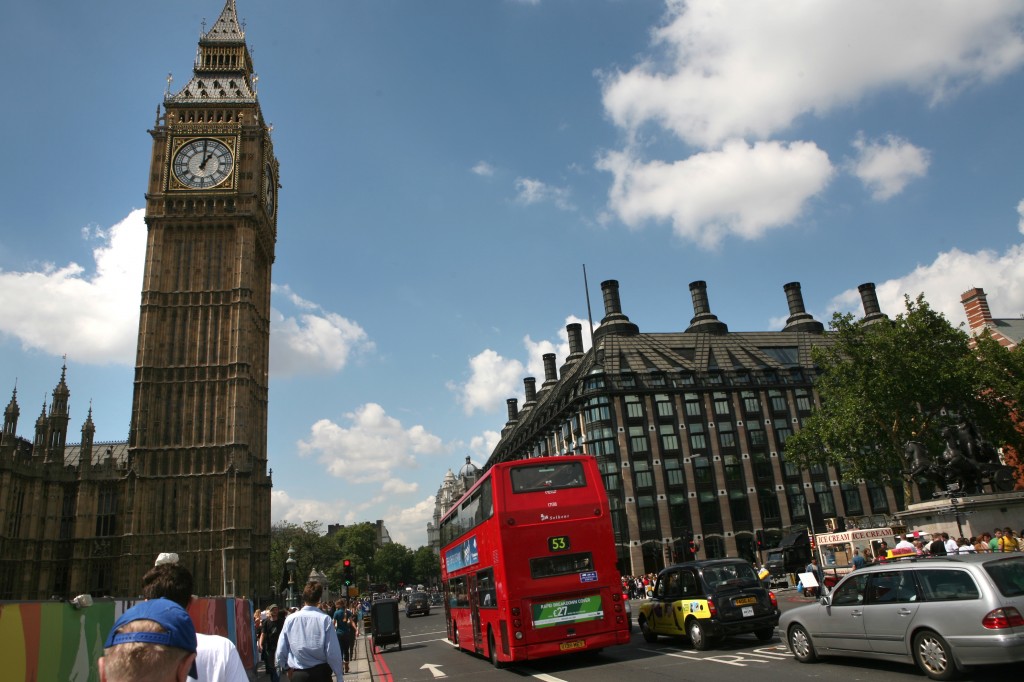
“Hezbollah is preparing for a situation in which it will decide to seek revenge, whether for something taking place between Israel and Lebanon or for an attack on Iran’s nuclear sites, and has established a network of enormous caches of advanced explosive materials” for that purpose, Yedioth quoted an Israeli intelligence official as saying.
The Mossad learned in 2014 of the plan by Hezbollah’s Unit 910, responsible for the group’s foreign operations, to develop the ability to launch massive terror attacks at will around the world.
Mossad information enabled Thai authorities to nab a cell in the country in early 2015, followed in April of that year by the arrest of Hezbollah operative Hussein Abdullah in Cyprus after his cellar was found to contain a ton of ammonium nitrate.
The Israeli source told Yedioth that the effort by the Lebanese terror group involved “long-term planning for immense, game-changing terror attacks. Luckily, someone was in the right place at the right time to issue a warning, to pass on the information and to prevent the establishment of this infrastructure.”




 anneinpt
 artaxes
 danmillerinpanama
 davidking1530
 Peter Hofman
 Joseph Wouk
 Peter
Peter Louisiana Steve

Recent Comments