US, Iran already at war, Tehran’s foreign minister proclaims 

Posted June 28, 2019 by Joseph Wouk
Categories: Uncategorized

Source: US, Iran already at war, Tehran’s foreign minister proclaims – www.israelhayom.com

“Sanctions aren’t alternatives to war,” Zarif says, “they ARE war.” Acting US defense secretary appeals to NATO allies to publicly denounce Iranian hostility, help safeguard strategic waterways around Strait of Hormuz.
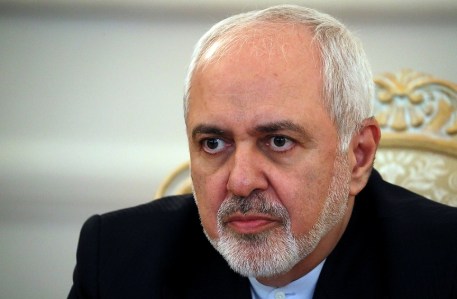
The concept of a ‘short war’ with Iran is an illusion, Zarif told Trump.

Iranian Foreign Minister Mohammad Javad Zarif took to Twitter to rebuke claims made by Donald Trump on Wednesday about the likelihood of the two countries going to war.

“Sanctions aren’t alternatives to war,” Zarif said in the tweet addressed to the US President, “they ARE war.”

He added that, unlike the White House’s assessment, a “short war” between Washington and Tehran was an “illusion.”

This is the latest instance of the war of words that has taken place between the two powers, with each day bringing a harvest of declarations, ranging from gung-ho, all out demands for regime change, to invitations to talk.

At the moment, much seems to be happening behind closed doors, with the effectiveness of further sanctions that were called for earlier this week yet to be determined.

Iran’s economy is flagging, but the country has yet to see the popular uprisings that seemed to be an integral part of the US strategy. Trump went to great lengths to say that the conflict was with the regime alone, and not with regular Iranians.

Earlier this week, Zarif also praised Iran’s greatest resource, the “Iranian people” and their “ability for sacrifice and martyrdom.”

Despite heightened tensions, many in the region do not seem to believe there will be an actual armed confrontation between the US and Iran, with Iran’s regional clout and complex financial networks a difficult target for US pressure.

Acting US Defense Secretary Mark Esper appealed to NATO allies on Thursday to publicly denounce Iran’s hostile actions and consider participating in a still-evolving plan to better safeguard strategic waterways around the Strait of Hormuz.

Esper, at NATO headquarters in his international debut as Pentagon chief, also called for help moving tensions with Iran away from a military path – which included Iran’s downing of a US drone last week and an aborted US military response – toward a more diplomatic one.

“I discussed the need to internationalize this issue by encouraging NATO allies and regional partners to voice their opposition to Iran’s bad behavior and to help us deter further provocative acts by improving maritime security,” Esper told reporters after the closed-door discussions.

US President Donald Trump’s last-minute decision to call off planned strikes on Iran last week was the culmination of weeks of building military tensions. Washington also said that Iran was behind attacks on oil tankers in the Persian Gulf, which Tehran vehemently denies.

Washington’s European allies, critical of Trump’s decision to withdraw from a 2015 nuclear deal with Iran, have reacted with alarm in recent weeks, repeatedly warning both sides that a small mistake could lead to war.

The European allies told the gathering they wanted to see the US and Iran de-escalate tensions, adding they would support all diplomatic efforts to do so, diplomats said.

On Tuesday, Trump threatened the “obliteration” of parts of Iran if it struck US interests. President Hassan Rouhani called White House policy “mentally retarded.”

Esper said Washington was not looking for a war and instead sought European support for diplomacy.

“We do not seek armed conflict with Iran but we are ready to defend US forces and interests in the region. No one should mistake restraint for weakness,” Esper told reporters.

A NATO role in crisis?

Many allies supported Esper’s overall message at the NATO gathering, a US official said, speaking on condition of anonymity.

But France voiced concerns in the closed-door session about any possibility of a formal NATO role in the Iran crisis, a NATO diplomat said. French officials could not be immediately reached for comment.

Germany underscored the importance of Iran’s 2015 nuclear deal with major world partners, calling it “the only thing we have,” the diplomat said.

Reuters reported earlier on Thursday that Iran was on course to breach a threshold in its nuclear agreement with world powers within days by accumulating more enriched uranium than permitted, although it has not done so yet, diplomats said, citing the latest data from UN inspectors.

Esper said no NATO allies made any contributions on Thursday but noted that it was still “early days” as the United States develops options to deter potential attacks on commercial shipping. A NATO diplomat said no specific requests were made.

Washington was looking at options including broader maritime surveillance, as well as setting up a “picket-line of ships” to protect the international waterways, Esper told reporters. Escorts for ships also are an option.

“We have to flesh that out on our end and we’ll see what makes most sense,” Esper said.
 

Zarif accuses Trump of threatening ‘genocide’ of Iranians

Posted June 28, 2019 by Joseph Wouk
Categories: Uncategorized

Source: Zarif accuses Trump of threatening ‘genocide’ of Iranians | The Times of Israel

Foreign minister rejects US president’s notion of a short war as ‘illusion,’ says Washington ‘not in a position to obliterate Iran,’ as war of words escalates

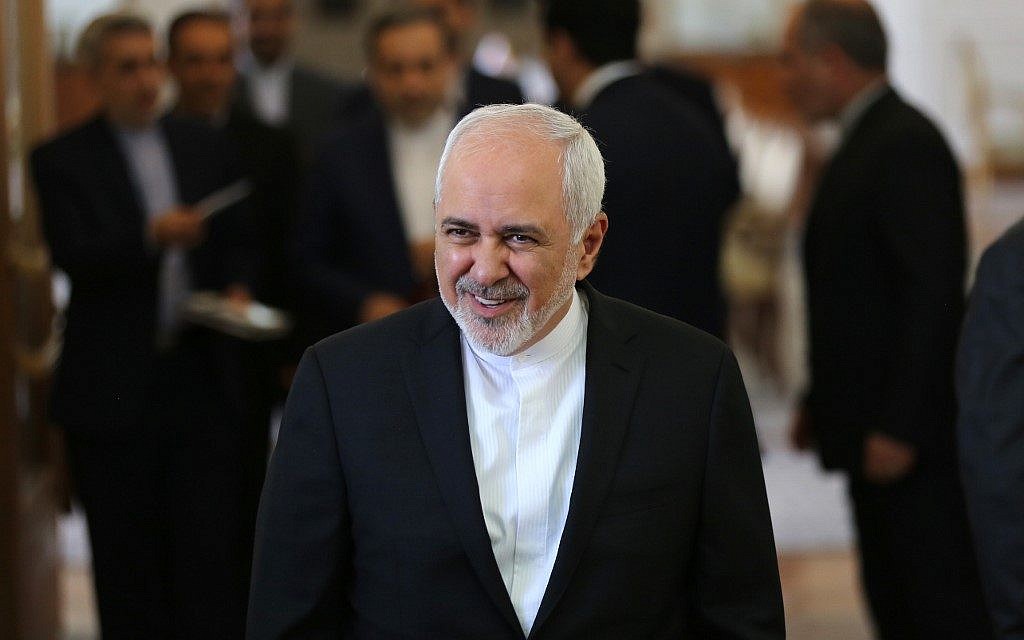
Iranian Foreign Minister Mohammad Javad Zarif arrives to meet his Japanese counterpart in Tehran on June 12, 2019. (Atta Kenare/AFP)

Iranian Foreign Minister Mohammad Javad Zarif arrives to meet his Japanese counterpart in Tehran on June 12, 2019. (Atta Kenare/AFP)

Iran’s Foreign Minister Mohammad Javad Zarif hit back against US President Donald Trump Thursday for escalating the war of words with Tehran and threatening to “obliterate” parts of the Islamic Republic.

In a tweet, Zarif warned that Trump was mistaken in thinking a war between their countries would not last long and accused him of planning a war crime by threatening to strike the country.

“‘Short war’ with Iran is an illusion,” he said, a day after Trump said he does not want a war with Iran but warned that if fighting did break out, it “wouldn’t last very long.”

“Whoever begins war will not be the one ending it,” he warned.

The foreign minister also tweeted that the threat of obliteration was an admission that the US planned “genocide” and a “war crime.”

Javad Zarif

@JZarif

– Sanctions aren’t alternative to war; they ARE war
– “Obliteration”=genocide=war crime
– “Short war” with Iran is an illusion
– Whoever begins war will not be the one ending it
– Negotiations and threats are mutually exclusive

On Wednesday, Zarif told CNN that Washington “is not in a position to obliterate Iran.”

“I think President Trump should remember that we don’t live in the 18th century. There is a United Nations charter, and threat of wars is illegal,” he told the US network.

On Wednesday, Trump hinted that any conflict would be waged with airstrikes, saying there would be no US boots on the ground.

In an interview on Fox Business Network, Trump was asked if the US was going to go to war with Iran.

“Well, I hope we don’t but we’re in a very strong position if something should happen. We’re in a very strong position,” Trump said.

“It wouldn’t last very long, I can tell you that. And I’m not talking boots on the ground.”

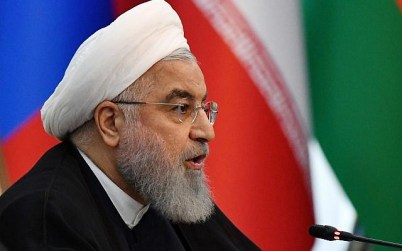
Iranian President Hassan Rouhani speaks during a session of the Shanghai Cooperation Organization summit in Bishkek, Kyrgyzstan, June 14, 2019. (AP Photo/Vladimir Voronin)

His remarks came after Iranian President Hassan Rouhani tried to rein in the crisis between the arch-foes, saying that Tehran “never seeks war” with Washington.

Tehran and Washington have engaged in an escalating war of words following Iran’s shooting down of a US surveillance drone over the Persian Gulf last week. Tehran claims the sophisticated $100 million unmanned American aircraft was in its airspace, which Washington vehemently denies.

Trump pulled back from plans to retaliate with military strikes on Iranian targets for downing the drone, saying the response — and the collateral damage — would not be “proportionate.”

But on Monday, he slapped a fresh round of tough sanctions on Iran, including on its supreme leader Ayatollah Ali Khamenei and top military chiefs.

The new US measures are the latest against Tehran since Trump last year pulled out of the nuclear accord between Iran and world powers.

On Tuesday, Iran warned that the latest US sanctions targeting Khamenei and other officials meant “closing the doors of diplomacy” with Washington.

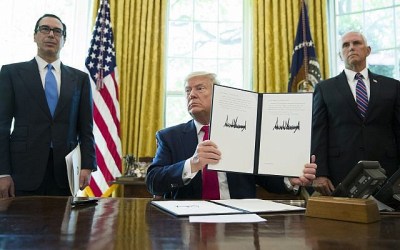
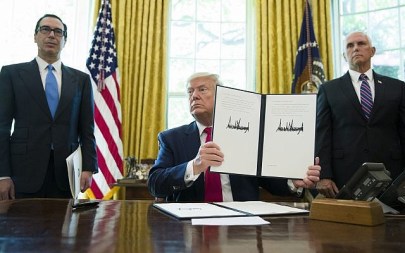
US President Donald Trump holds up a signed executive order to increase sanctions on Iran, in the Oval Office of the White House, June 24, 2019, in Washington. Trump is accompanied by Treasury Secretary Steve Mnuchin, left, and Vice President Mike Pence. (AP Photo/Alex Brandon)

Rouhani derided the White House as being “afflicted by mental retardation.”

He blamed the US for regional tensions and said if Washington had stuck to the deal “we would have witnessed positive developments in the region.”

Iran announced in May it would suspend two of its pledges under the 2015 nuclear deal, giving the agreement’s remaining supporters two months to help it circumvent US sanctions.

European countries that are still a part of the nuclear accord face a July 7 deadline imposed by Tehran to offer a better deal and long-promised relief from US sanctions, or Iran will also begin enriching its uranium closer to weapons-grade levels.

The United Nations says Iran has so far respected the deal’s terms. But Iran has said this week that by Thursday it would have over 300 kilograms (660 pounds) of low-enriched uranium in its possession, which would mean it had broken out of the atomic accord.


US envoy says war with Iran ‘unnecessary,’ but military buildup going ahead

Posted June 28, 2019 by Joseph Wouk
Categories: Uncategorized

Source: US envoy says war with Iran ‘unnecessary,’ but military buildup going ahead | The Times of Israel

Brian Hook calls for international naval force to protect ships in Persian Gulf, as tensions soar and Tehran readies to breach key provision of nuclear deal

Brian Hook , the US special envoy for Iran, gestures during an interview in Paris, June 27, 2019. (AP Photo/Nicolas Garriga)

Brian Hook , the US special envoy for Iran, gestures during an interview in Paris, June 27, 2019. (AP Photo/Nicolas Garriga)

PARIS, France (AP) — The United States does not want a full-blown war with Iran, although it still is seeking to build up international defenses in the region just in case of a conflict, US President Donald Trump’s special envoy to the country said Thursday.

The big question is whether other countries are ready to join with Washington. So far, Europe is favoring diplomacy instead.

Iran is poised to surpass a key uranium stockpile threshold, threatening an accord it reached in 2015 with world powers aimed at curbing its nuclear activity. Tehran made no immediate announcement Thursday that it had done so, perhaps waiting to hear what Europe can offer at a meeting Friday to keep the deal alive.

French President Emmanuel Macron is trying to dial back tensions, saying he hopes to convince Trump to open talks with Iran and avoid a war that would engulf the Middle East. The two men are to meet Friday at a Group of 20 summit in Japan.

“There is no brief war,” Macron warned. “We know when it’s starting, but not when it’s finishing.”

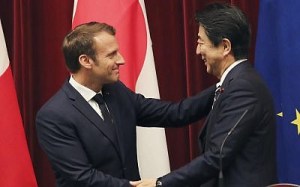
French President Emmanuel Macron, left, shakes hands with Japanese Prime Minister Shinzo Abe after their joint press conference at Abe’s official residence in Tokyo, June 26, 2019. (AP Photo/Koji Sasahara, pool)

Special Representative for Iran Brian Hook met with top European diplomats Thursday in Paris, and he told The Associated Press that he wants to get tougher on Iran, instead of clinging to the nuclear deal that the US pulled out of last year.

War with Iran is “not necessary,” Hook said in an interview.

“We are not looking for any conflict in the region,” he said. But if the US is attacked, “we will respond with military force.”

To that end, the US is trying to drum up support for an international naval force in Persian Gulf, notably to protect shipping.

“The president would like to see an international response of like-minded countries who could come together and contribute assets that could be used to enhance maritime security in the region,” Hook said.

US President Donald Trump holds up a signed executive order to increase sanctions on Iran, in the Oval Office of the White House, June 24, 2019, in Washington. Trump is accompanied by Treasury Secretary Steve Mnuchin, left, and Vice President Mike Pence. (AP Photo/Alex Brandon)

But acting US Defense Secretary Mark Esper, at his first NATO meeting this week, left Brussels with no firm commitments after discussing the idea with US allies.

Tensions have been rising in the Middle East after the US imposed new sanctions on Iran to cripple its economy. Citing unspecified Iranian threats, the US has sent an aircraft carrier to the region and deployed additional troops alongside the tens of thousands already there.

The US has been worried about international shipping through the Strait of Hormuz since tankers were damaged in May and June in what Washington has blamed on limpet mines from Iran, although Tehran denies any involvement. Last week, Iran shot down a US Navy surveillance drone, saying it violated its territory; Washington said it was in international airspace.

Iran recently quadrupled its production of low-enriched uranium as it slowly steps away from the nuclear deal. Even though Trump pulled the US out of it, Britain, France, Germany, Russia and China are still part of the pact.

Iran previously said it would surpass a 300-kilogram stockpile limit set by the accord by Thursday. Tehran made no statements about it, possibly because it was a holiday weekend in the country, but also because it could be waiting for the outcome of a key meeting Friday in Vienna by European officials on the nuclear deal.

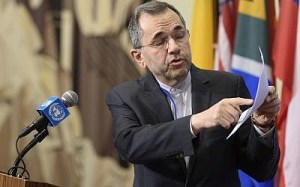
Iranian envoy to the UN Majid Takht Ravanchi briefs journalists outside the Security Council on June 24, 2019. (Loey Felipe/UN)

Majid Takht Ravanchi, Iran’s ambassador at the UN, told reporters he didn’t have “any exact information” on whether the limit has been breached.

If his country exceeded limits on low-enriched uranium under the deal, it could be quickly reversed as soon as Tehran sees recovery in its oil and banking sectors, he said, adding that he hopes “tangible results can be achieved” in Vienna “so that we can reverse our decision.”

Ravanchi said Iran isn’t planning to get out of the 2015 agreement.

Hook wouldn’t comment on whether Iran had surpassed the limit, but he estimated that Iran is still at least a year away from building a nuclear weapon. Iran denies that it seeks nuclear weapons.

“That is the standard of the Iran nuclear deal, that Iran should never be able to get to a nuclear weapon in less than a year. This is relevant because Iran still is they still hold the title of the world’s leading state sponsor of terrorism,” he said.

Iranian Foreign Minister Mohammad Javad Zarif sent a letter urging European signatories to the accord to implement their commitments, saying that Iran’s next steps depend on that, Iranian state TV reported Thursday.

Britain, France and Germany are finalizing a complicated barter-type system known as INSTEX to maintain trade with Iran and avoid US sanctions, as part of efforts to keep the nuclear deal afloat.

Hook dismissed those efforts, suggesting that no companies will use such a system because they’d rather trade with the US than Iran.

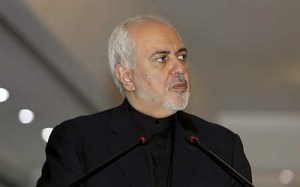
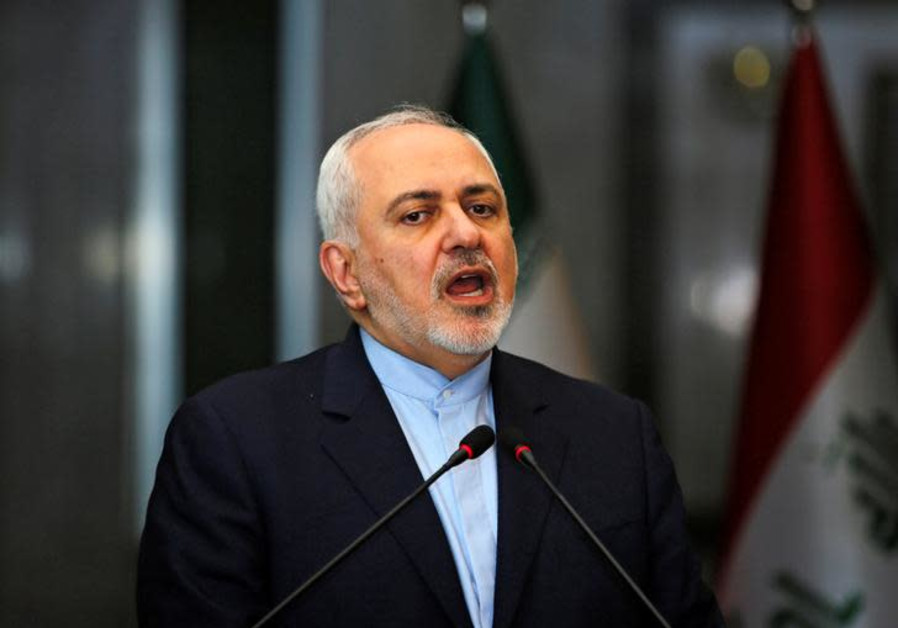
Iran’s Foreign Minister Mohammad Javad Zarif attends a presser with Iraqi Foreign Minister in the capital Baghdad on May 26, 2019. (SABAH ARAR / AFP)

Instead, he said, “We would like to see the European Union impose sanctions on those people and organizations that are facilitating Iran’s missile program…. If you don’t do sanctions, it also sends a signal of sort of tacit approval.”

He suggested frustration that France has not been more outspoken about Iran recently but played down any “trans-Atlantic rift.”

France is among those seeking to play a mediating role. Macron sent his diplomatic adviser to Tehran last week and spoke to Iranian President Hassan Rouhani this week.

Many in Europe are relieved that Trump did not order military retaliation against Iran last week for the drone shoot-down, but they are rattled that he was close to doing so. It is not clear whether the Trump administration discussed the operation with any European allies ahead of time.

The US announced additional sanctions Monday on Iranian leaders over the drone attack.

Iran’s Zarif criticized Trump on Thursday, tweeting that “sanctions aren’t (an) alternative to war; they ARE war.”

The US has said it may also sanction Zarif, who helped negotiate the 2015 nuclear deal.


Uranium limit breach wouldn’t end nuclear deal, Iran says 

Posted June 28, 2019 by Joseph Wouk
Categories: Uncategorized

Source: Uranium limit breach wouldn’t end nuclear deal, Iran says | The Times of Israel

Tehran’s UN envoy says even if Islamic Republic violates key provision of 2015 pact, it could reverse move quickly; up to Europe to show ‘tangible results’

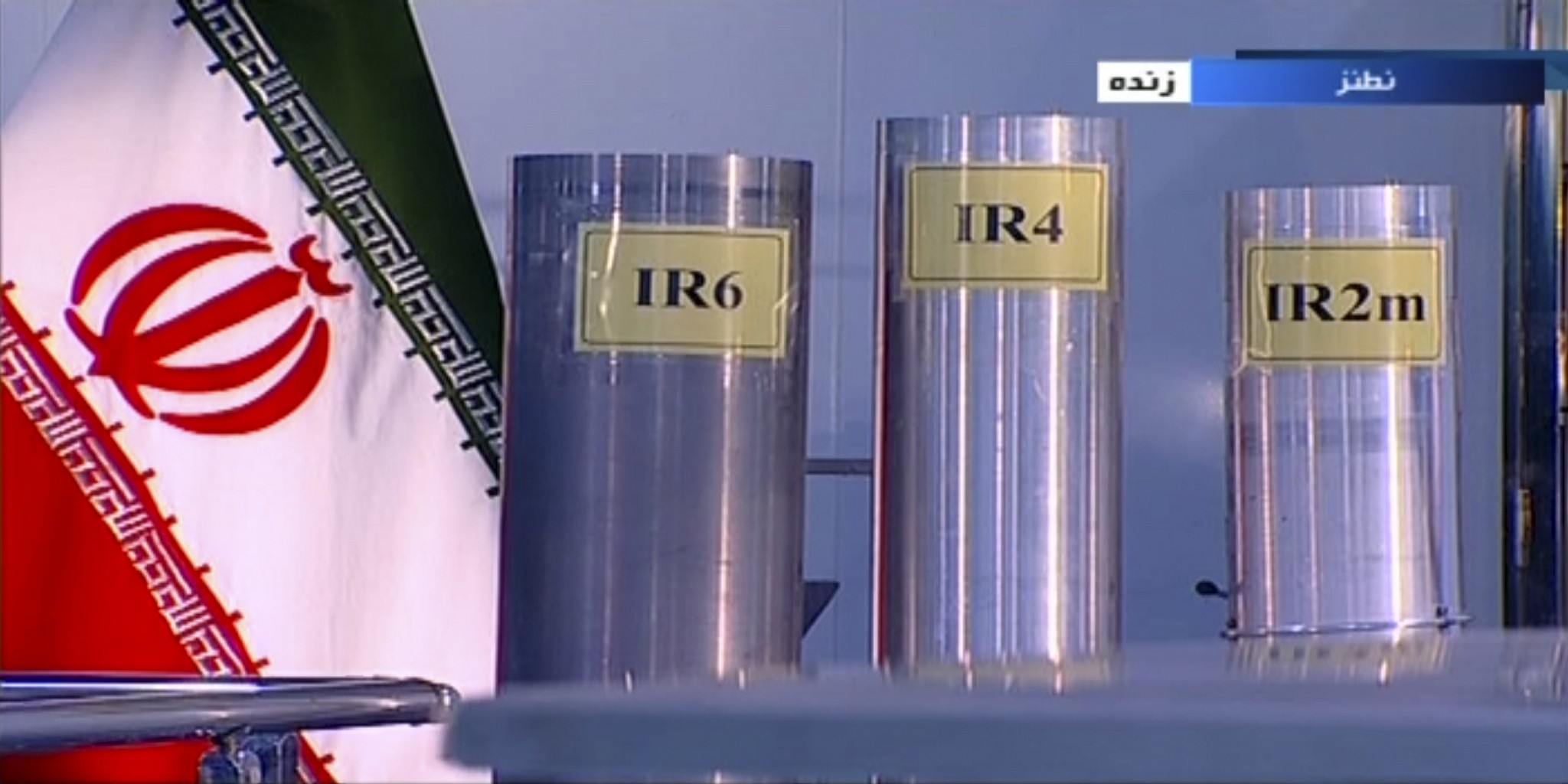
In this frame grab from Islamic Republic Iran Broadcasting, IRIB, state-run TV, three versions of domestically-built centrifuges are shown in a live TV program from Natanz, an Iranian uranium enrichment plant, in Iran, June 6, 2018. (IRIB via AP)

In this frame grab from Islamic Republic Iran Broadcasting, IRIB, state-run TV, three versions of domestically-built centrifuges are shown in a live TV program from Natanz, an Iranian uranium enrichment plant, in Iran, June 6, 2018. (IRIB via AP)

Iran said Thursday that its plans to enrich more uranium than allowed under the 2015 nuclear deal should not be regarded as Iran leaving the accord and rendering it void.

UN Ambassador Majid Takht Ravanchi told reporters at a briefing Thursday that if his country exceeds limits on low-enriched uranium, the step can be quickly reversed as soon as Tehran sees recovery in its oil and banking sectors, which have been decimated by US-led sanctions.

Iran said earlier this month it would breach the limit on Thursday in response to the sanctions and an intensifying round of brinkmanship with the US that has set the region on edge.

Ravanchi said he didn’t have “any exact information” on whether the 300-kilogram limit has been breached, although multiple unnamed diplomats have said Iran is poised to surpass the key uranium stockpile threshold by the weekend, threatening the agreement it reached with world powers aimed at curbing its nuclear activity.

Diplomats told the Reuters news agency Thursday that the UN nuclear watchdog had verified Iran has roughly 200 kilograms of low-enriched uranium, and is producing it at a rate of roughly 1 kilogram (2.2 pounds) a day, meaning it will hit the limit of 202.8 kilograms in the coming days.

The nuclear deal caps Iran’s stock of low-enriched uranium at 300 kilograms of uranium hexafluoride, which corresponds to 202.8 kilograms of uranium, according to the UN watchdog, International Atomic Energy Agency.

He also said he hoped that at Friday’s meeting in Vienna of the five parties remaining in the nuclear deal, “tangible results can be achieved so that we can reverse our decision.”

Iranian envoy to the UN Majid Takht Ravanchi briefs journalists outside the Security Council on June 24, 2019. (Loey Felipe/UN)

Ravanchi said Iran wasn’t planning to get out of the 2015 agreement, which the United States left last year.

But he said Iran was “not happy with the Europeans” who are supporting the agreement — Britain, France and Germany — because it has taken so much time to put in operation a program to allow Iran to trade. The three countries said Wednesday they were finalizing a “special purpose vehicle” called INSTEX to facilitate trade while avoiding US sanctions.

US President Donald Trump’s administration has called for dialogue with Iran even as tensions have ratcheted up and it has slapped new financial penalties on the Islamic Republic.

Ravanchi rejected talks and said the US “maximum pressure policy is not designed to prepare for dialogue.”

“They want to act like the older brother telling the younger brother how to behave,” he said. “The right atmosphere” is needed, and right now “it’s an atmosphere of animosity.”

“Sanctions and dialogue are mutually exclusive,” he said.

In this April 9, 2018 file photo, released by an official website of the office of the Iranian Presidency, President Hassan Rouhani listens to explanations on new nuclear achievements at a ceremony to mark “National Nuclear Day,” in Tehran, Iran. (Iranian Presidency Office via AP, File)

Iran’s move to rev up its enrichment has raised alarm among the other signatories — Britain, France, Germany, Russia and China — which have urged it to stick to its commitments.

On Wednesday, Ravanchi told the UN Security Council that Iran cannot “alone” save the nuclear deal.

“Iran alone cannot, shall not and will not take all of the burdens anymore to preserve the JCPOA,” he said, referring to the Joint Comprehensive Plan of Action, as the deal is formally known.

But the Iranian ambassador argued that the US exit from the nuclear deal and the re-imposition of sanctions had rendered the JCPOA “almost fully ineffective.”

Ravanchi insisted that the other signatories, namely Britain, France and Germany, must find a way to compensate Iran.


Iran, nuclear deal partners to meet as accord under threat

Posted June 28, 2019 by Joseph Wouk
Categories: Uncategorized

Source: Iran, nuclear deal partners to meet as accord under threat | The Times of Israel

Regular quarterly meeting in Vienna comes with Tehran poised to exceed uranium enrichment caps in wake of US pullout and skyrocketing tensions

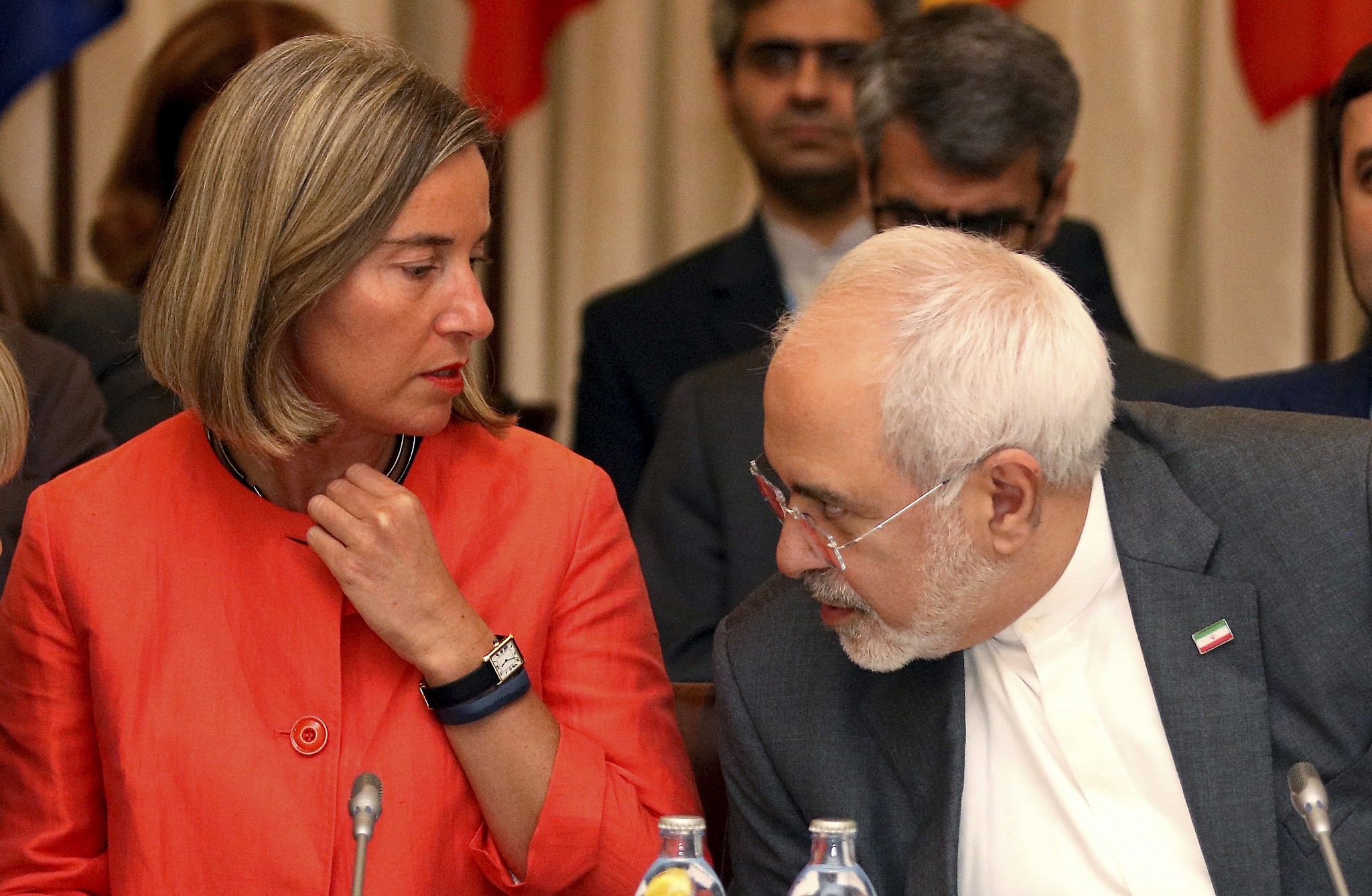
European Union High Representative for Foreign Affairs Federica Mogherini and Iranian Foreign Minister Mohammad Javad Zarif, from left, wait for the start of prior to a bilateral meeting as part of the closed-door nuclear talks with Iran at a hotel in Vienna, Austria, Friday, July 6, 2018. (AP Photo/Ronald Zak)

European Union High Representative for Foreign Affairs Federica Mogherini and Iranian Foreign Minister Mohammad Javad Zarif, from left, wait for the start of prior to a bilateral meeting as part of the closed-door nuclear talks with Iran at a hotel in Vienna, Austria, Friday, July 6, 2018. (AP Photo/Ronald Zak)

VIENNA — Senior officials from Iran and the remaining signatories to its 2015 nuclear deal with world powers were gathering in Vienna Friday as tensions in the Persian Gulf simmer and Tehran is poised to surpass a uranium stockpile threshold, posing a threat to the accord.

The regular quarterly meeting of the accord’s so-called joint commission, which brings together senior officials from Iran, France, Germany, Britain, Russia, China and the European Union, is meant to discuss implementation of the deal.

Iran is insisting that it wants to save the agreement and has urged Europeans to start buying Iranian oil or give Iran a credit line.

The 2015 agreement was aimed at curbing Iran’s nuclear ambitions in exchange for relief from economic sanctions. The United States withdrew from the accord last year and has imposed new sanctions on Iran to cripple its economy.

Iran recently quadrupled its production of low-enriched uranium. It previously said it would surpass a 300-kilogram stockpile limit set by the accord by Thursday, but an Iranian official said that it was 2.8 kilograms below that limit Wednesday and there would be no new assessment until “after the weekend.” It is currently a holiday weekend in Iran.

European countries are pressing for Iran to comply in full with the accord. But Iranian officials maintain that even if it surpasses the limit, it would not be breaching the deal, and say such a move could be reversed quickly.

On Thursday, Iranian state television reported that Foreign Minister Mohammad Javad Zarif sent a letter urging European signatories to the accord to implement their commitments, saying Iran’s next steps depend on that.

Britain, France and Germany are finalizing a complicated barter-type system known as INSTEX to maintain trade with Iran and avoid U.S. sanctions, as part of efforts to keep the nuclear deal afloat.


Islamic Jihad hints it may strike Israel in case of US-Iran war

Posted June 28, 2019 by Joseph Wouk
Categories: Uncategorized

Source: Islamic Jihad hints it may strike Israel in case of US-Iran war | The Times of Israel

Member of Gaza-based terror group vows not to ‘abandon’ Tehran if there’s a conflict; Hamas: ‘We don’t have to be dragged into a war with Israel’ if Iran attacked

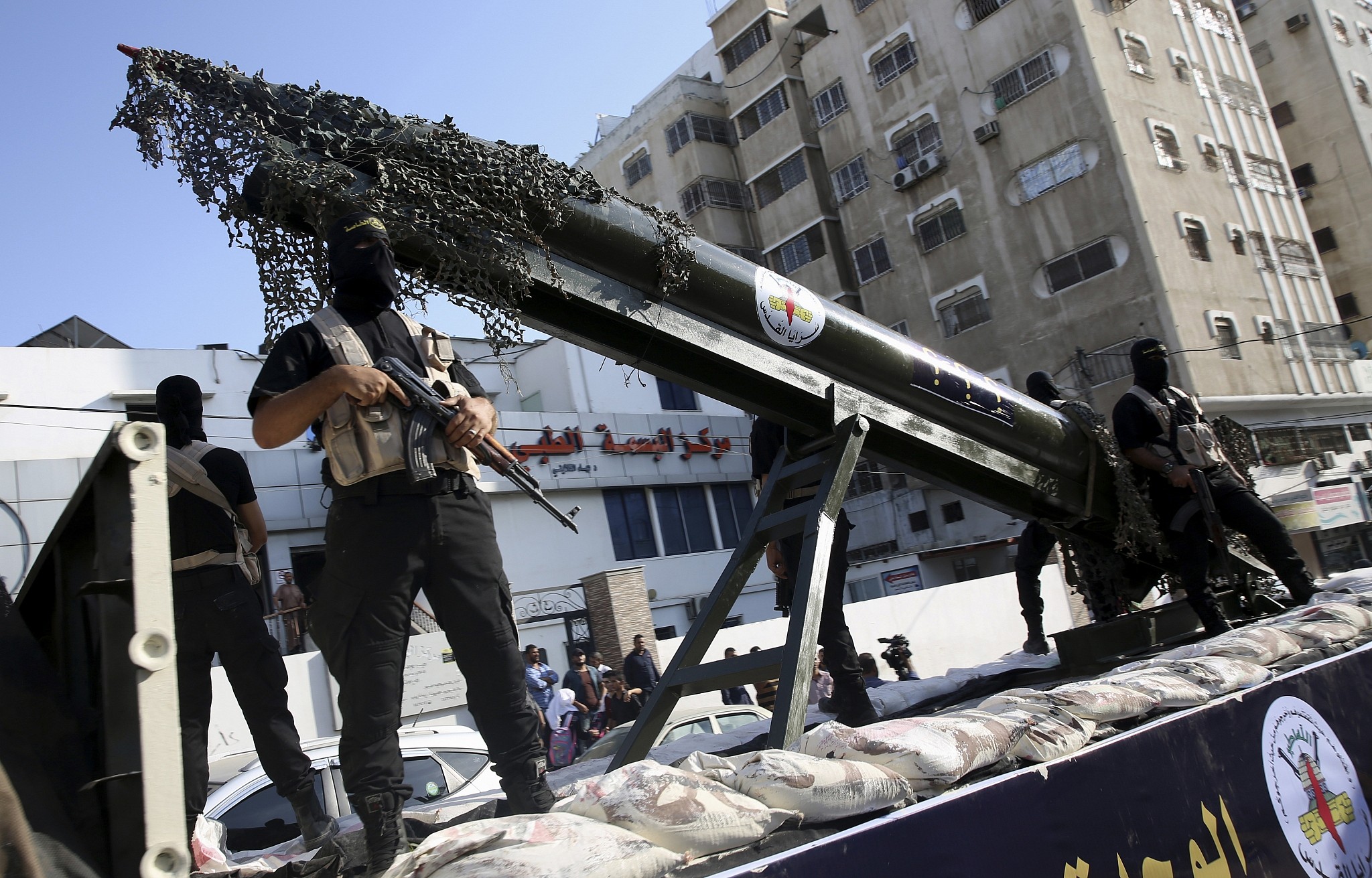
Palestinian members of the Al-Quds Brigades, the military wing of the Islamic Jihad terror group, parade with a replica rocket on a truck during a march on Oct. 4, 2018. (AP Photo/Adel Hana)

Palestinian members of the Al-Quds Brigades, the military wing of the Islamic Jihad terror group, parade with a replica rocket on a truck during a march on Oct. 4, 2018. (AP Photo/Adel Hana)

The Iranian-backed Palestinian Islamic Jihad terror group suggested Friday it could attack Israel if a war breaks out between the United States and Iran.

Tensions have spiked recently between the US and Iran amid the deepening impact of sanctions tied to US President Donald Trump’s withdrawal from the 2015 international deal meant to curb the Iranian nuclear program.

Since the deployment to the Persian Gulf last month of an American aircraft carrier strike group, the US has accused Iran of orchestrating attacks on tankers sailing in the area, raising concerns over the possibility of a military conflict in the region.

Iran also downed a US military drone last week it said was in its airspace. The US has denied that claim, saying the drone was in international skies, and Trump ultimately decided against launching retaliatory strikes.

“Our action against Israel will remain limited to restituting Palestinian rights like the return of Palestinian refugees, getting Jerusalem back, freeing the detainees and liberating the occupied Palestinian territories,” Al-Monitor quoted an unnamed “prominent leader” in the Gaza-based PIJ as saying.

“But if Israel decides to ally with the US to engage in a military confrontation against Iran, we will take a different stand, which we will reveal in good time.”

The PIJ member said the terror group, which is the second-largest in the Strip, “will not abandon the country that supported it [Iran] in fighting Israel, if that party faces an attack.”

Iranian Foreign Minister Mohammad Javad Zarif (center right) meets with senior Hamas officials in Tehran on August 7, 2017. (screen capture)

Hamas, meanwhile, indicated it was unlikely to intervene in the case of a war between Iran and the US.

“Iran and Hamas have an old political alliance based on Iranian bias to Palestinian rights, but this alliance does not entail Hamas engaging in a war for Iran’s sake,” Yahya Moussa, a member of the Gaza-ruling terror group, told Al-Monitor.

“No military confrontation between Israel and the resistance has ever had foreign goals,” he added. “We don’t have to be dragged into a war with Israel if Iran faces a military attack.”

Since the start of protests on the Gaza border last year, Israel has engaged in numerous rounds of fighting with Hamas and PIJ that have included heavy rocket fire from the Palestinian enclave and retaliatory Israeli strikes.

Last month, the leader of Hamas in Gaza thanked Iran for providing his terror group with rockets it used to strike deep into Israel.

“Had it not been for Iran, the resistance in Palestine would not have possessed its current capabilities,” Yahya Sinwar said at the time.

Israel has long charged Iran with trying to arm Palestinian terror groups in Gaza and maintains a blockade of the Strip to try and stop the import of sophisticated weapons systems.

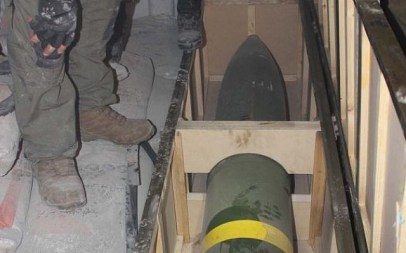
IDF soldiers inspect a missile found on board the Klos-C in a commando operation on Wednesday, March 5, 2014. The military says the ship was carrying an Iranian arms shipment headed for Gaza. (IDF)

Earlier this month, the chief of Israel’s Military Intelligence addressed the prospect of war in the Gaza Strip, saying that Hamas is not interested in a large-scale conflict. But he added that the PIJ had far fewer responsibilities toward Gaza residents and thus less to lose in a war, making it a far likelier instigator of violence.

“Hamas is quite deterred from war and is deeply interested in staying the course of a ceasefire in which they expect to receive certain concessions — and therefore they really don’t want a war,” he said.

“The Islamic Jihad has a high potential of volatility. This group does not have the duties of a sovereign and so there is a potential for it to initiate [war],” Maj Gen. Tamir Hayman said.

Hezbollah, an Iranian-backed terror group in Lebanon, has also indicated it could get involved if there is a war between the US and Iran.


Failed US cyber strike on Shiite rocket control systems in Lebanon stirs war fears in Israel – DEBKAfile

Posted June 28, 2019 by Joseph Wouk
Categories: Uncategorized

Source: Failed US cyber strike on Shiite rocket control systems in Lebanon stirs war fears in Israel – DEBKAfile

The US Cyber Command on Sunday, June 23, conducted a cyberattack on the Lebanon-based logistical command centers of the Iraqi Shiite Kata’ib Hezbollah militia, one of Tehran’s key proxies.

Not much is known about this first US strike of this kind in Lebanon on a militia allied with the local Hizballah. Deferring directly to Al Qods chief Gen. Qassem Soleimani, the Kata’ib’s troops fight for Iran in Iraq and Syria.

DEBKAfile’s military sources reveal that this Iraqi Shiite militia has for the past two years been busy establishing a command and control center in Lebanon, for attachment to Hizballah’s general staff. Both have readied themselves for the intake of combat forces from Iraq and Syria in a Hizballah war against Israel. The Iraqi militia has been assigned sectors and set up positions along the Lebanese Israeli border.

According to some Middle East intelligence sources, the US cyberattack specifically targeted the communications networks that link Kata’ib Hezballah’s rocket commands to its launchers. This was a test to find out whether a cyberattack could disable Hizballah rocket attacks on Israel. No word on the attack has come from Iraqi militia or its host and ally Hizballah. However, some Middle East military sources claim that the American operation failed to achieve its objective,which was to incapacitate the militia’s command and communications rocket system.

Since the US has wrapped the operation in total security, it is hard to ascertain whether it was a total failure or managed to disable parts of the targeted system. Even partial success has set alarm bells ringing in Israel. The US cyber warriors went into action straight after the IDF staged a comprehensive war game against Hizballah. The drill practiced IDF special forces taking the war over to enemy oil after a large-scale Hizballah attack and takeover of Israeli territory, that was carried out in reprisal for US sanctions against Iran.

The US Cyber Command hoped to set the pattern for aiding Israel by crippling the Iranian proxies’ ability to subject Israel to a massive rocket barrage. If the US operation against the Iraqi militia missed its mark, it would indicate that Iran and Hizballah have acquired superior systems for countering hostile cyberattack.


Iran Will No Longer Accept Burden of Nuclear Deal – TV7 Israel News

Posted June 28, 2019 by Joseph Wouk
Categories: Uncategorized


Iran said to be short of uranium limit but expected to reach it by weekend 

Posted June 27, 2019 by Joseph Wouk
Categories: Uncategorized

Source: Iran said to be short of uranium limit but expected to reach it by weekend | The Times of IsraelAnonymous diplo

mats say Tehran will not cross threshold on Thursday as Islamic Republic claimed, but with production rate of roughly a kilo a day, will get there in coming days

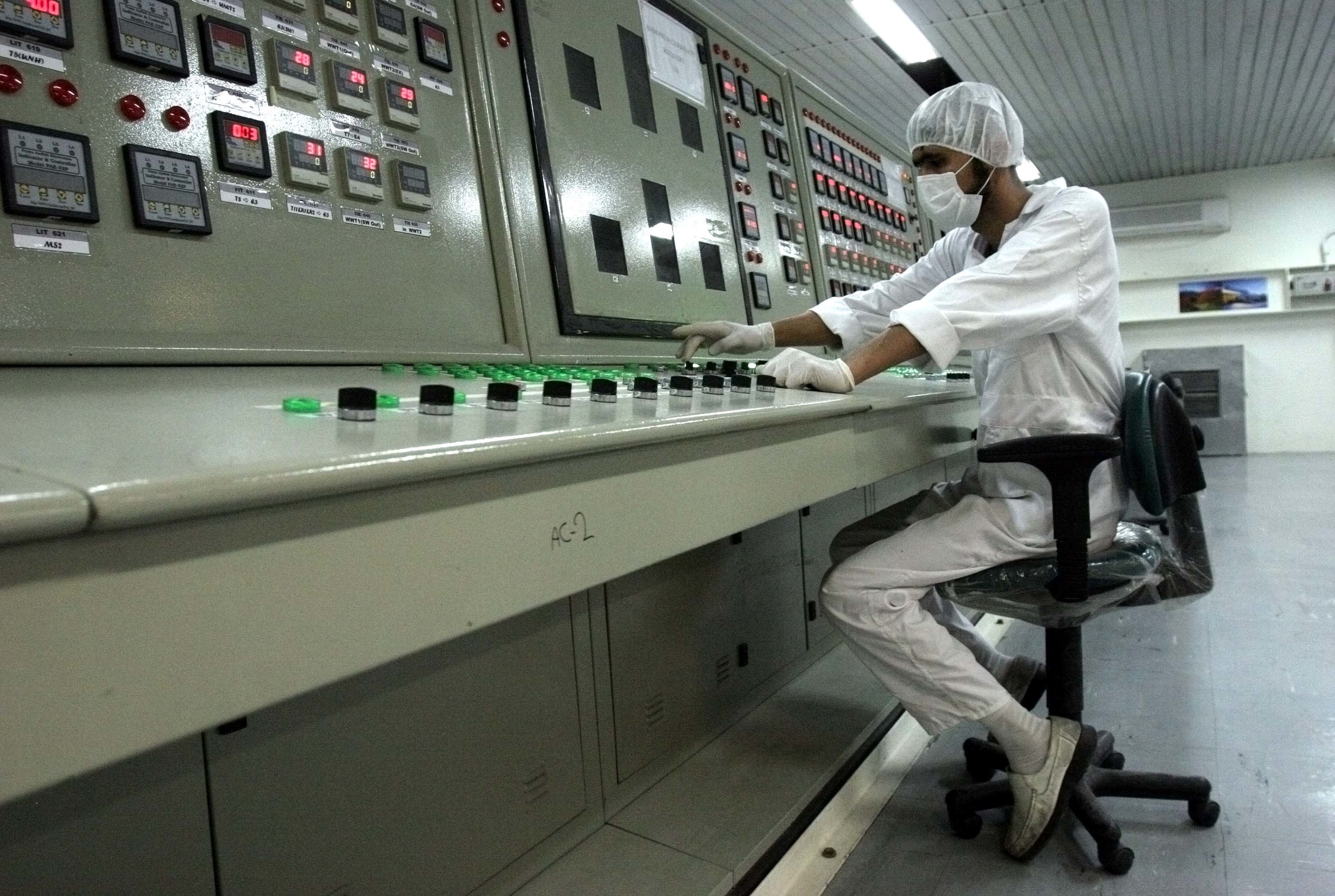
A technician at the Uranium Conversion Facility just outside the city of Isfahan, Iran, 255 miles (410 kilometers) south of the capital Tehran, February 3, 2007. (AP/Vahid Salemi/File)

A technician at the Uranium Conversion Facility just outside the city of Isfahan, Iran, 255 miles (410 kilometers) south of the capital Tehran, February 3, 2007. (AP/Vahid Salemi/File)

Three anonymous diplomats say that although Iran has not reached the maximum amount of enriched uranium it is permitted under the nuclear deal, it is on track to reach that limit this weekend, the Reuters news agency reported Thursday.

The diplomats said that the UN nuclear watchdog verified Iran had roughly 200 kilograms of low-enriched uranium, and is producing it at a rate of roughly 1 kilogram (2.2 pounds) a day, meaning it will hit the limit of 202.8 kilograms in the coming days.

Iran, which has been revving up its nuclear program since the United States pulled out of the deal last year and reimposed economic sanctions, said that as of June 27, it will have more than the 300 kilograms (660 pounds) of enriched uranium that it was allowed to have under the 2015 deal. The nuclear deal caps Iran’s stock of low-enriched uranium at 300 kilograms of uranium hexafluoride, which corresponds to 202.8 kilograms of uranium, according to the International Atomic Energy Agency.

Iran’s move has raised alarm among the other signatories — Britain, France, Germany, Russia and China — which have urged it to stick to its commitments.

Iranian envoy to the UN Majid Takht Ravanchi briefs journalists outside the Security Council on June 24, 2019. (Loey Felipe/UN)

Iran told the UN Security Council on Wednesday that it cannot “alone” save the nuclear deal, turning up pressure on the Europeans, Russia and China as it moved toward a possible breach of its commitments to limit its nuclear activities.

“Iran has done a lot and much more than its fair share to preserve the nuclear deal,” Iranian Ambassador Majid Takht Ravanchi told a Security Council meeting.

“Iran alone cannot, shall not and will not take all of the burdens anymore to preserve the JCPOA,” he said, referring to the Joint Comprehensive Plan of Action, as the deal is formally known.

But the Iranian ambassador argued that the US exit from the nuclear deal and the re-imposition of sanctions have rendered the JCPOA “almost fully ineffective.”

Ravanchi insisted that the other signatories, namely Britain, France and Germany, must find a way to compensate Iran.

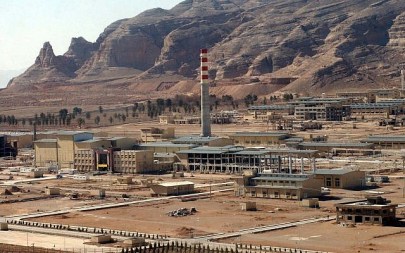
Iran’s uranium conversion facility near Isfahan, which reprocesses uranium ore concentrate into uranium hexafluoride gas, which is then taken to Natanz and fed into the centrifuges for enrichment, March 30, 2005. (AP/Vahid Salemi)

Iran’s decision to scrap limits imposed by the nuclear deal on its uranium enrichment “may not help preserve” the landmark agreement, UN political chief Rosemary DiCarlo told the Security Council.

Six European countries separately released a joint statement saying they were “extremely concerned” by Iran’s latest move.

“We strongly urge Iran to continue to implement its commitments under JCPOA in full and to refrain from escalatory steps,” said the statement from Britain, France, Germany, Poland, Belgium and Estonia.

Under the 2015 deal, Iran pledged to reduce its nuclear capacities for several years and allow in inspectors in exchange for sanctions relief.


Iran’s Zarif: Sanctions aren’t alternative to war, they are war 

Posted June 27, 2019 by Joseph Wouk
Categories: Uncategorized

Source: Iran’s Zarif: Sanctions aren’t alternative to war, they are war – Middle East – Jerusalem Post

The Iranian Foreign Minister has been very outspoken on Twitter.

BY JERUSALEM POST STAFF
 JUNE 27, 2019 17:01
Iranian Foreign Minister Mohammad Javad Zarif

Iranian Foreign Minister Javad Zarif posted on Twitter a list of “misconceptions” that “endanger peace,” making sure to tag US President Donald Trump.

The first of those misconceptions was that “sanctions aren’t alternatie to war; they ARE war.”

The next was that the word “obliteration” refers to genocide, which is a war crime.

Javad Zarif

@JZarif

– Sanctions aren’t alternative to war; they ARE war

– “Obliteration”=genocide=war crime

– “Short war” with Iran is an illusion

– Whoever begins war will not be the one ending it

– Negotiations and threats are mutually exclusive

The third one is that it is an illusion to claim that a war with Iran would be short. The next is that whoever begins said war will not be the one to end it, as well.

He lastly claimed that negotiations and threats “are mutually exclusive.”