Iran warns any country that attacks it will become the ‘main battlefield’ 

Posted September 21, 2019 by Joseph Wouk
Categories: Uncategorized

Source: Iran warns any country that attacks it will become the ‘main battlefield’ | The Times of Israel

As US blames Tehran for attack on Saudi oil facilities, Revolutionary Guards commander says his forces are ready for ‘any type of scenario’
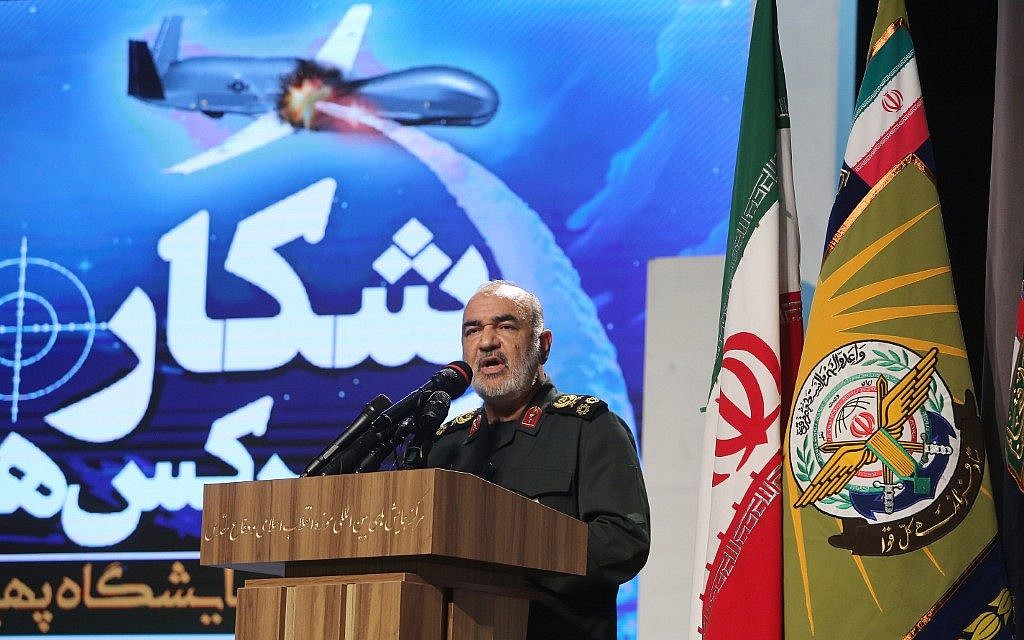
Islamic Revolutionary Guard Corps commander Maj. Gen. Hossein Salami at Tehran’s Islamic Revolution and Holy Defense museum during the unveiling of an exhibition of what Iran says are US and other drones captured in its territory, in the capital Tehran on September 21, 2019. (Atta Kenare/AFP)

TEHRAN, Iran — Any country that attacks Iran will become the “main battlefield,” the Islamic Revolutionary Guard Crops warned Saturday after Washington ordered reinforcements to the Gulf following attacks on Saudi oil installations it blames on Tehran.

Tensions escalated between arch-foes Iran and the United States after last weekend’s attacks on Saudi energy giant Aramco’s Abqaiq processing plant and Khurais oilfield halved the kingdom’s oil output.

Yemen’s Houthi rebels have claimed responsibility for the strikes but the US says it has concluded the attacks involved cruise missiles from Iran and amounted to “an act of war.”

Washington approved the deployment of troops to Saudi Arabia at “the kingdom’s request,” US Defense Secretary Mark Esper said, noting the forces would be “defensive in nature” and focused on air and missile defense.

But IRGC commander Major General Hossein Salami said Iran was “ready for any type of scenario.”
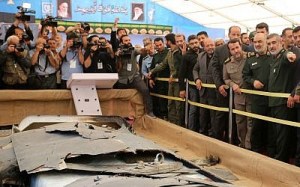
Iranian Revolutionary Guards commander Maj. Gen. Hossein Salami (2nd-R) and Gen. Amir Ali Hajizadeh (R), head of Iran’s Revolutionary Guards aerospace division, looks at debris from what Iran presented as a downed US drone reportedly recovered within Iran’s territorial waters, at Tehran’s Islamic Revolution and Holy Defense museum, during the unveiling of an exhibition of what Iran says are US and other drones captured in its territory, on September 21, 2019. (Atta Kenare/AFP)

“Whoever wants their land to become the main battlefield, go ahead,” he told a news conference in Tehran.

“We will never allow any war to encroach upon Iran’s territory.

“We hope that they don’t make a strategic mistake,” he said, listing past US military “adventures” against Iran.

Salami was speaking at Tehran’s Islamic Revolution and Holy Defense museum during the unveiling of an exhibition of what Iran says are US and other drones captured in its territory.

It featured a badly damaged drone with US military markings said to be an RQ-4 Global Hawk that Iran downed in June, as well as an RQ-170 Sentinel captured in 2011 and still intact.

‘Act of war’

The Guards also displayed the domestically manufactured Khordad 3 air defense battery they say was used to shoot down the Global Hawk.

“What are your drones doing in our airspace? We will shoot them down, shoot anything that encroaches on our airspace,” said Salami, noting Iran had defeated “America’s technological dominance” in air defense and drone manufacture.
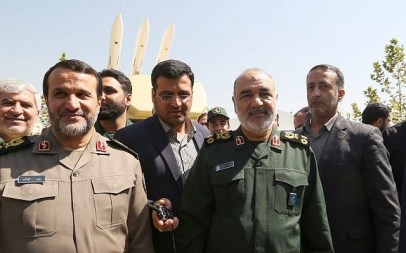
Iranian Revolutionary Guards commander Maj. Gen. Hossein Salami (2nd-R) walks past a Khordad-3 air defense system during a visit to see an exhibition at the Islamic Revolution and Holy Defense museum in the capital Tehran on September 21, 2019. (Atta Kenare/AFP)

His remarks came only days after strikes on Saudi oil facilities claimed by Yemen’s Houthis, but the US says it has concluded the attack involved cruise missiles from Iran and amounted to “an act of war.”

Saudi Arabia, which has been bogged down in a five-year war across its southern border in Yemen, has said Iran “unquestionably sponsored” the attacks.

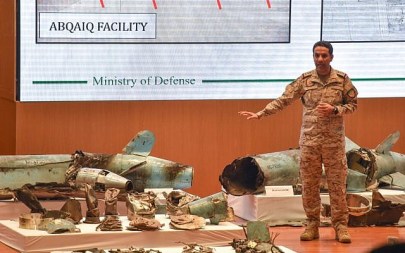
The Saudi military displays what they say are an Iranian cruise missile and drones used in recent attack on its oil industry at Saudi Aramco’s facilities in Abqaiq and Khurais, during a press conference in Riyadh, Saudi Arabia, September 18, 2019. (Amr Nabil/AP)

The kingdom says the weapons used in the attacks were Iranian-made, but it stopped short of directly blaming its regional rival.

“Sometimes they talk of military options,” Salami said, apparently referring to the Americans.

Yet he warned that “a limited aggression will not remain limited” as Iran was determined to respond and would “not rest until the aggressor’s collapse.”

‘Crushing response’

The IRGC aerospace commander said the US ought to learn from its past failures and abandon its hostile rhetoric.

“We’ve stood tall for the past 40 years and if the enemy makes a mistake, it will certainly receive a crushing response,” Brigadier General Amirali Hajizadeh said.

The United States upped the ante on Friday by announcing new sanctions against Iran’s central bank, with US President Donald Trump calling the measures the toughest America has ever imposed on another country.

Washington has imposed a series of sanctions against Tehran since unilaterally pulling out of a landmark 2015 nuclear deal in May last year.

It already maintains sweeping sanctions on Iran’s central bank, but the US Treasury said Friday’s designation was over the regulator’s work in funding terrorism.
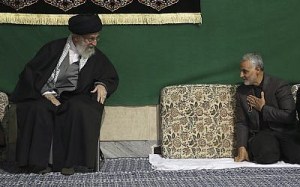
Commander of Iran’s Quds Force, Qassem Soleimani, right, greets Supreme Leader Ayatollah Ali Khamenei while attending a religious ceremony in a mosque at his residence in Tehran, Iran, March 27, 2015. (Office of the Iranian Supreme Leader via AP)

The “action targets a crucial funding mechanism that the Iranian regime uses to support its terrorist network, including the Quds Force, Hezbollah and other militants that spread terror and destabilize the region,” said US Treasury Secretary Steven Mnuchin.

The Quds Force is the IRGC’s foreign operations arm, while Hezbollah is a Lebanese terror group closely allied with Iran.

Iran’s Foreign Minister Mohammad Javad Zarif said the new sanctions meant the United States was “trying to block the Iranian people’s access to food and medicine.”

It showed the US was in “despair” and that “the maximum pressure policy has reached its end,” semi-official news agency ISNA quoted him as saying from New York.

 

First Israeli-Saudi air force collaboration for demolishing Iran’s Abu Kamal complex – DEBKAfile

Posted September 20, 2019 by Joseph Wouk
Categories: Uncategorized

Source: First Israeli-Saudi air force collaboration for demolishing Iran’s Abu Kamal complex – DEBKAfile

The latest round of attacks on Iran’s military complex in Syria’s Abu Kamal region are a joint operation by the Israeli and Saudi air forces, DEBKAfile and Gulf military sources reported on Friday, Sept. 20.

Their targets are the al Qods Brigades bases, command centers, missile and ammo stores which Iran has set up close to the Syrian-Iraqi border, as well as Iraqi Shiite militia and Lebanese Hizballah forces. An estimated 100 Iranian and militia combatants were reported killed in the joint operation and several hundred injured.

Western military sources report that the “unidentified” UAVs sighted lately flying over Iranian concentrations in Syria belong to Saudi Arabia.  One was shot down on Thursday. Those sources add that the US is providing air cover, as well as running intelligence, but not otherwise intervening in the first Saudi-Israel military collaboration ever to be revealed.

It was part of President Donald Trump’s rationale when he decided to hold off from direct US military action in retaliation for Iran’s crippling missile-cum-drone assault on the Saudi oil procession plant at Abqaiq and the Kurais oilfield last Saturday. Trump appears to be waiting to see how the still ongoing Israeli-Saudi offensive against Iran turns out.


Airstrike on Iran-backed militia near Iraq-Syria border said to kill at least 5 

Posted September 20, 2019 by Joseph Wouk
Categories: Uncategorized

Source: Airstrike on Iran-backed militia near Iraq-Syria border said to kill at least 5 | The Times of Israel

Reports say strike hits base belonging to Popular Mobilization Force for second time in two days; some have blamed Israel for attacks

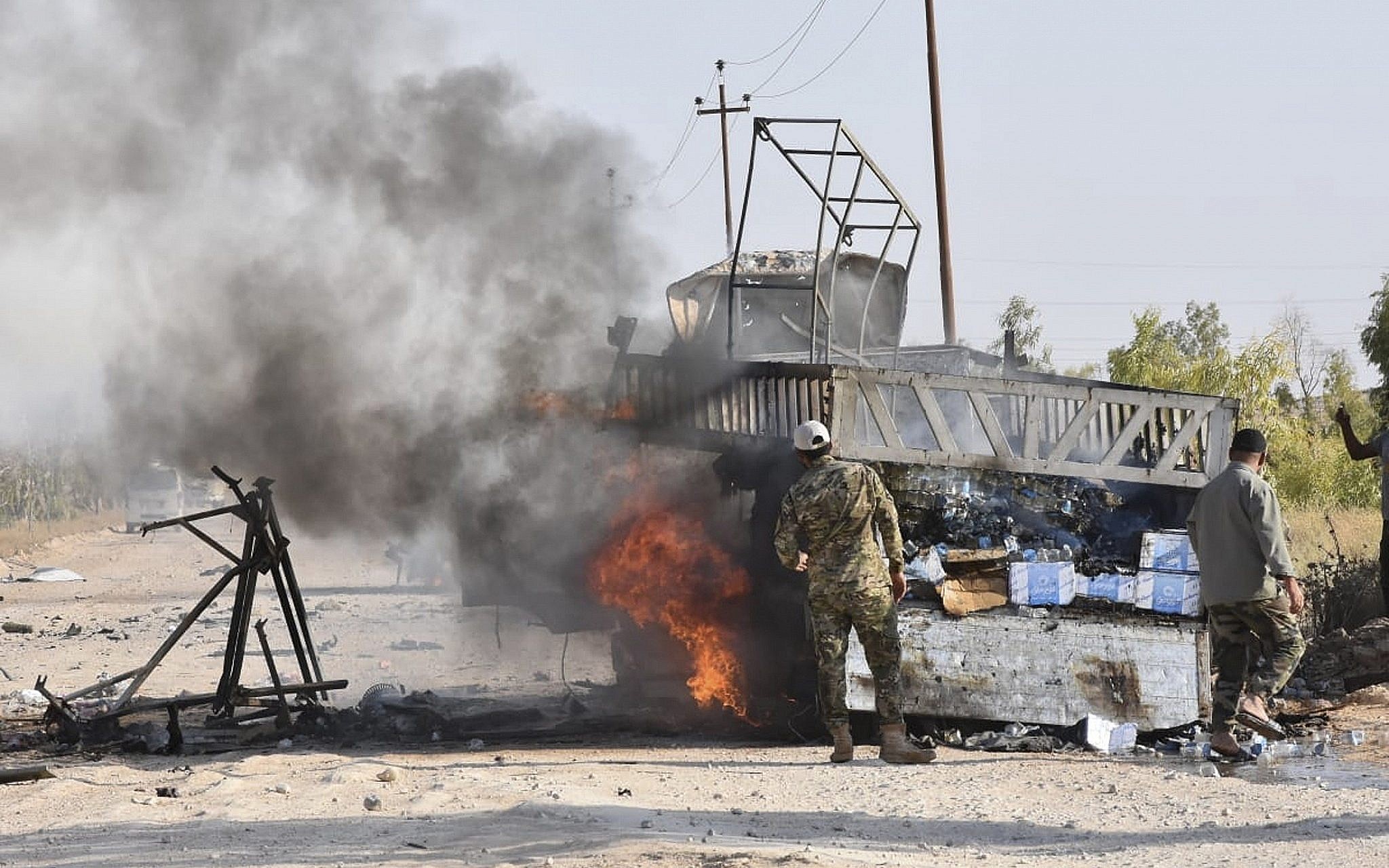
Illustrative: Popular Mobilization Forces members stand by a burning truck after a drone attack blamed on Israel near Qaim border crossing, in Anbar province, Iraq, August 25, 2019. (AP Photo)

Illustrative: Popular Mobilization Forces members stand by a burning truck after a drone attack blamed on Israel near Qaim border crossing, in Anbar province, Iraq, August 25, 2019. (AP Photo)

Unknown aircraft attacked posts of Iranian-backed fighters in eastern Syria, near the Iraqi border, in the predawn hours of Thursday morning, killing at least five people, according to Arabic media reports.

Sky News Arabia, citing Iraqi security officials, said the strikes targeted a base belonging to the Popular Mobilization Force, an umbrella group of largely Iran-backed militias, killing five and wounding nine.

It was the second strike on positions controlled by Shiite militias in the Boukamal region of Syria in as many days, and the third in a month. Some Syrian and Iraqi outlets said Israel was suspected of being behind the strikes. There were no such public allegations by Syrian or Iraqi officials.

According to the Britain-based Syrian Observatory for Human Rights, at least 10 pro-Iranian fighters were killed in an airstrike Tuesday by unmanned aerial vehicles, which reportedly targeted a training camp and ammunition storehouse.

The Observatory and activist collective Deir Ezzor 24 said the strikes occurred near a newly constructed, but not yet operational Syrian border crossing with Iraq. The opening of the crossing, planned by Iraq and Syria, had been postponed several times in recent weeks.

On September 9, aircraft targeted an arms depot and posts of Iranian-backed militias in the Boukamal region, killing at least 18 fighters and destroying at least eight storehouses. A Syrian security official said at the time that Israeli jets were behind the attack but denied there were casualties.

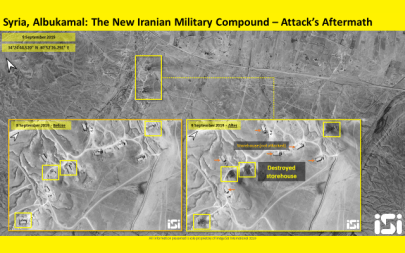
Satellite image showing the aftermath of an overnight airstrike on an alleged Iranian military base in Syria’s Boukamal region, near the Iraqi border, on September 9, 2019. (ImageSat International)

Since mid-July, seven arms depots and training camps belonging to the Popular Mobilization Forces have been targeted in apparent attacks.

The Saudi-owned Al Arabiya network has reported that the Lebanese Hezbollah terror group also maintains a presence in the Boukamal region.

The PMF has blamed both Israel and the US for the string of blasts and drone sightings at its bases. Israeli officials have not publicly commented on these allegations.


In first, Israeli planes take part in British aerial exercise Cobra Warrior 

Posted September 20, 2019 by Joseph Wouk
Categories: Uncategorized

Source: In first, Israeli planes take part in British aerial exercise Cobra Warrior | The Times of Israel

IAF fighter jets, cargo planes join UK, German, Italian and US aircraft in combat simulations over eastern England

The Israeli Air Force took part in its first aerial exercise in the United Kingdom this month, sending fighter jets and transport planes to simulate dog fights, airstrikes and refueling flights over enemy territory, the army said.

In addition to Israel and the UK, the United States, Germany and Italy participated in the nearly three-week-long exercise, known as Cobra Warrior, according to the British Royal Air Force.

This was Israel’s first time participating in an aerial drill in the UK, marking a shift toward a more open relationship between the two nations’ air forces. The RAF and IAF have worked together extensively over the years, but they typically keep this cooperation quiet.

The Israeli planes traveled to the United Kingdom late last month ahead of the exercise, which ended on Thursday.

“This was the Israeli Air Force’s first deployment in Britain, and the first exercise of this size in which the Israeli Air Force and British air force took part,” the Israel Defense Forces said in a statement.

An Israeli fighter jet takes off as part of the Royal Air Force’s Cobra Warrior exercise in the United Kingdom in September 2019. (Israel Defense Forces)

The head of IAF training, Brig. Gen. Amnon Ein-Dar, noted the historical ties between the two militaries, namely that Israel’s air force was largely created with British aircraft, specifically World War Two-era Spitfires.

“This is a very special and important exercise for us — foremost on a historical level. The Israeli Air Force was formed from within the British Air Force, so this was a special opportunity to come full circle,” Ein-Dar said.

Israeli and British pilots shake hands during the Royal Air Force’s Cobra Warrior exercise in the United Kingdom in September 2019. (Israel Defense Forces)

Israel sent several F-15 fighter jets, as well as Boeing 707 refueling planes and C-130 and C-130J cargo planes to the exercise.

RAF F-35 stealth fighter jets also took part in the drill, according to the IDF.

The exercise, which was held over Lincolnshire, was designed to replicate real-world scenarios for the participating pilots.

The IDF said that for the F-15 fighter jets this included air-to-air combat, air-to-ground strikes and other types of fighting over enemy territory.

The cargo planes “simulated different scenarios of aerial refueling under fire,” the IDF said.

“This gave us an opportunity to carry out tactical flights against an advanced enemy in new and unknown terrain,” the army said.

An Israeli Boeing 707 refuels an Israeli fighter jet in mid-air as part of the Royal Air Force’s Cobra Warrior exercise in the United Kingdom in September 2019. (Israel Defense Forces)

Cobra Warrior, once known as the Combined Qualified Weapons Instructor exercise, serves as the culminating drill before pilots and navigators can be certified as a qualified weapons instructor, an expert in their field.

RAF pilots took part in Israel’s Blue Flag international exercise in 2017, but as spectators, not with their own aircraft. The British air force may fully participate in the upcoming Blue Flag exercise in 2020, which would be the first time RAF pilots openly fly in Israeli airspace — save for the cases of the RAF ferrying British dignitaries to the Jewish state for visits.

The Israeli military, and the air force in particular, is seen as a useful tool in expanding the Jewish state’s ties to foreign countries.

The air force often refers to this as “aerial diplomacy.”

Under the banner of military drills, Israeli pilots are able to do what Israeli politicians and diplomats cannot. The IAF, for instance, has participated in air exercises with the United Arab Emirates and Pakistan, two countries that do not formally recognize the State of Israel.


US military presenting range of options to Trump on Iran 

Posted September 20, 2019 by Joseph Wouk
Categories: Uncategorized

Source: US military presenting range of options to Trump on Iran | The Times of Israel

Investigators still trying to determine if Tehran behind attacks on Saudi oil; Lawmaker urges president to go to Congress as strikes could lead to ‘a medium to large-scale war’

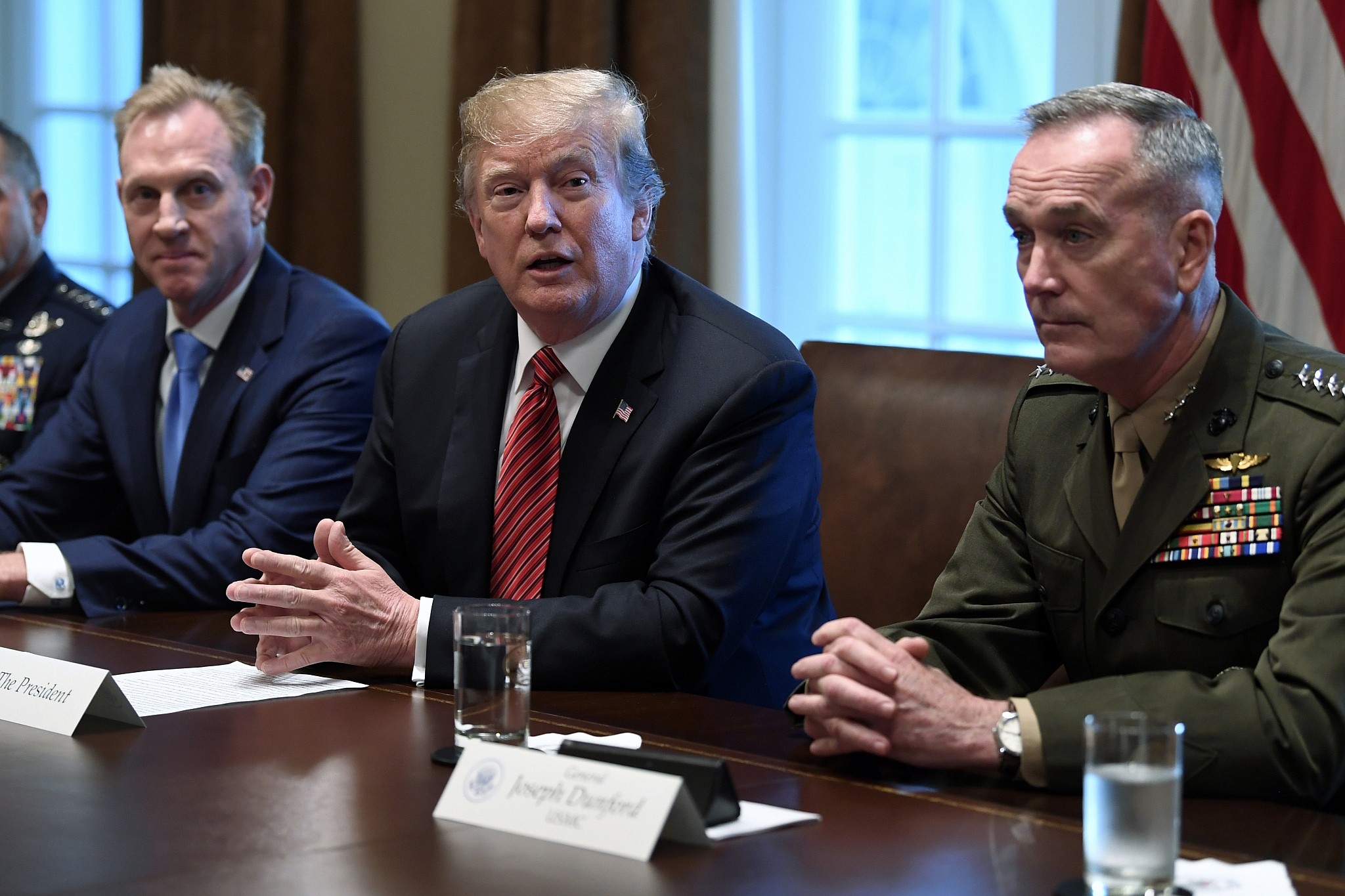
Illustrative: US President Donald Trump, center, flanked by acting Defense Secretary Patrick Shanahan, left, and Chairman of the Joint Chiefs of Staff Gen. Joseph Dunford, right, speaks during a meeting with military leaders in the Cabinet Room of the White House in Washington, Wednesday, April 3, 2019. (AP Photo/Susan Walsh)

Illustrative: US President Donald Trump, center, flanked by acting Defense Secretary Patrick Shanahan, left, and Chairman of the Joint Chiefs of Staff Gen. Joseph Dunford, right, speaks during a meeting with military leaders in the Cabinet Room of the White House in Washington, Wednesday, April 3, 2019. (AP Photo/Susan Walsh)

WASHINGTON (AP) — The Pentagon will present a broad range of military options to US President Donald Trump on Friday as he considers how to respond to what administration officials say was an unprecedented Iranian attack on Saudi Arabia’s oil industry.

In a White House meeting, the president will be presented with a list of potential airstrike targets inside Iran, among other possible responses, and he also will be warned that military action against the Islamic Republic could escalate into war, according to US officials familiar with the discussions who spoke on condition of anonymity.

The national security meeting will likely be the first opportunity for a decision on how the US should respond to the attack on a key Middle East ally. Any decision may depend on what kind of evidence the US and Saudi investigators are able to provide proving that the cruise missile and drone strike was launched by Iran, as a number of officials, including Secretary of State Mike Pompeo, have asserted.

Iran has denied involvement and warned the US that any attack will spark an “all-out war” with immediate retaliation from Tehran.

Saudi Colonel Turki bin Saleh al-Malki displays pieces of what he said were Iranian cruise missiles and drones recovered from the attack site that targeted Saudi Aramco’s facilities, during a press conference in Riyadh, on September 18, 2019. (Fayez Nureldine/AFP)

Both Pompeo and Vice President Mike Pence have condemned the attack on Saudi oil facilities as “an act of war.” Pence said Trump will “review the facts, and he’ll make a decision about next steps. But the American people can be confident that the United States of America is going to defend our interest in the region, and we’re going to stand with our allies.”

The US response could involve military, political and economic actions, and the military options could range from no action at all to airstrikes or less visible moves such as cyberattacks. One likely move would be for the US to provide additional military support to help Saudi Arabia defend itself from attacks from the north, since most of its defenses have focused on threats from Houthis in Yemen to the south.

Gen. Joseph Dunford, chairman of the Joint Chiefs of Staff, emphasized to a small number of journalists traveling with him Monday that the question of whether the US responds is a “political judgment” and not for the military.

In this image provided by the U.S. Navy, the guided-missile destroyer USS Porter (DDG 78) launches a tomahawk land attack missile in the Mediterranean Sea, Friday, April 7, 2017. (Mass Communication Specialist 3rd Class Ford Williams/U.S. Navy via AP)

“It is my job to provide military options to the president should he decide to respond with military force,” Dunford said.

Trump will want “a full range of options,” he said. “In the Middle East, of course, we have military forces there and we do a lot of planning and we have a lot of options.”

US Rep. Elissa Slotkin, D-Mich., said in an interview Thursday that if Trump “chooses an option that involves a significant military strike on Iran that, given the current climate between the US and Iran, there is a possibility that it could escalate into a medium to large-scale war, I believe the president should come to Congress.”

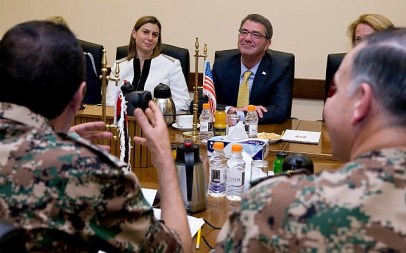
US Defense Secretary Ash Carter, joined by Alice Wells, UUS Ambassador to Jordan, right, and Elissa Slotkin, Acting Assistant Secretary of Defense for International Security Affairs, left, meets with Jordanian armed forces at the Jordan Armed Forces General Headquarters in Amman, July 22, 2015.(AP Photo/Carolyn Kaster, Pool)

Slotkin, a former top Middle East policy adviser for the Pentagon, said she hopes Trump considers a broad range of options, including the most basic choice, which would be to place more forces and defensive military equipment in and around Saudi Arabia to help increase security.

A forensic team from US Central Command is pouring over evidence from cruise missile and drone debris, but the Pentagon said the assessment is not finished. Officials are trying to determine if they can get navigational information from the debris that could provide hard evidence that the strikes came from Iran.

Pentagon spokesman Jonathan Hoffman said Thursday that the US has a high level of confidence that officials will be able to accurately determine exactly who launched the attacks last weekend.

US officials were unwilling to predict what kind of response Trump will choose. In June, after Iran shot down an American surveillance drone, Trump initially endorsed a retaliatory military strike then abruptly called it off because he said it would have killed dozens of Iranians. The decision underscores the president’s long-held reluctance to embroil the country in another war in the Middle East.

Instead, Trump opted to have US military cyber forces carry out a strike against military computer systems used by Iran’s Revolutionary Guard to control rocket and missile launchers, according to US officials.

The Pentagon said the US military is working with Saudi Arabia to find ways to provide more protection for the northern part of the country.

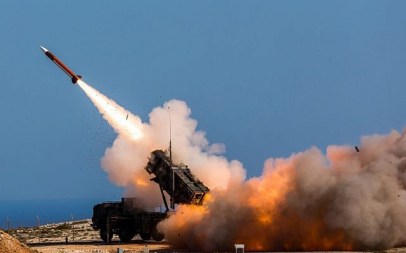
In this Nov. 8, 2017 photo provided by the US Department of Defense, German soldiers assigned to Surface Air and Missile Defense Wing 1, fire the Patriot weapons system at the NATO Missile Firing Installation, in Chania, Greece (Sebastian Apel/U.S. Department of Defense, via AP)

Air Force Col. Pat Ryder, spokesman for the Joint Chiefs of Staff, told Pentagon reporters Wednesday that US Central Command is talking with the Saudis about ways to mitigate future attacks. He would not speculate on what types of support could be provided.

Other US officials have said adding Patriot missile batteries and enhanced radar systems could be options, but no decisions have been made.


German intel: Iran sought to acquire weapons of mass destruction in 2018 

Posted September 19, 2019 by Joseph Wouk
Categories: Uncategorized

Source: German intel: Iran sought to acquire weapons of mass destruction in 2018 – Middle East – Jerusalem Post

Iran is suspected of attempting to secure know-how for uranium enrichment.

BY BENJAMIN WEINTHAL
 SEPTEMBER 19, 2019 04:04
M302 rockets found aboard the Klos C ship are displayed at an Israeli navy base in the Red Sea resor

The Hesse report noted that, “Against this background [of proliferation], weapons of mass destruction continued to be a powerful political instrument during the reporting period, which could shake the stability of an entire state structure in both regional and international crisis situations. In particular, states such as Iran, North Korea, Pakistan and Syria attempted to acquire and redistribute such weapons in the context of proliferation, for example by concealing transport routes via third countries.”

The Jerusalem Post reviewed the 312-page document that details threats to the democratic state in Hesse.

The intelligence agents said that foreign academics seek to obtain knowledge about the uranium enrichment process.

According to the intelligence agency, visiting professors from such states such Iran, North Korea and Pakistan are connected to “proliferation conduct” that is coordinated with intelligence services from those countries. “An example of this is the field of electrical engineering combined with the use of centrifuges in the process of uranium enrichment. Here, again and again, there are suspicions that foreign intelligence services put pressure on their own visiting scientists to obtain the desired technical know-how.”

The Hesse domestic intelligence agency findings have not been previously reported.

When asked if Iranian academics and students in Germany were involved in exploiting electrical engineering and uranium enrichment knowledge, a spokesman from the Hesse intelligence agency did not immediately respond late Wednesday evening.

According to the report, “Another example of intelligence control is the exchange of research among university institutes in the chemical-biological process sector.”

The intelligence report noted that academic and student exchanges, as well as training of specialists between universities and research institutes, is both economically and politically desired and meaningful. However, the document noted that this “frequently occurs with knowledge of  respective intelligence agencies.” The report said with respect to cyber espionage that “Iranian and Chinese cyber activities, in particular, indicate a continuing interest in economic and scientific goals.”

The report’s findings mirrored the conclusions from German state intelligence reports in the states of Bavaria and Mecklenburg-Vorpommern.

In May, The Bavaria intelligence report said that Iran’s regime is “making efforts to expand its conventional arsenal of weapons with weapons of mass destruction.”

The German intelligence agency for the northern state of Mecklenburg-Vorpommern wrote in its May report that: “The fight against the illegal proliferation of nuclear, biological or chemical weapons of mass destruction and the materials needed for their manufacture, as well as the corresponding delivery systems [e.g. rockets], including the necessary knowledge, in cooperation with other authorities, is also the responsibility of counterintelligence.”

The intelligence report continued, “From these points of view, it is essentially the Islamic Republic of Pakistan, the Islamic Republic of Iran, the Democratic People’s Republic of Korea [North Korea] and the Syrian Arab Republic that need to be mentioned. The intelligence services of these countries, in many ways, are involved in unlawful procurement activities in the field of proliferation, using globally oriented, conspiratorial business and commercial structures.”

Each of the 16 German states has its own intelligence agency. The state-level intelligence agency is comparable to the Shin Bet, Israel’s security service.


Soleimani in Baghdad confers with Shiite proxies on strikes against US forces in Iraq, also Israel – DEBKAfile

Posted September 19, 2019 by Joseph Wouk
Categories: Uncategorized

Source: Soleimani in Baghdad confers with Shiite proxies on strikes against US forces in Iraq, also Israel – DEBKAfile

Exclusive: Al Qods chief Qassem Soleimani arrived in Baghdad on Monday, Sept. 16, two days after Iran’s cruise-missile drone attack on Saudi oil, DEBKAfile’s military and intelligence sources report. Accompanied by his operational staff, the IRGC general was quickly closeted with three heads of pro-Iranian Iraqi Shiite militias and former Iraqi prime minister Nuri al-Maliki.

Our sources reveal their two subjects of discussion:

  1. The Iraqi militias’ response in the event of a US and/or Saudi assault on Iran in retaliation for its attacks on major Saudi oil facilities on Saturday.
  2. The military action the Iraqi militias would take against Israel as payback for its constant air and missile strikes against Iran’s bases in Syria and Iraq.

Our sources name the militia leaders in talks with Soleimani as Hadi al-Amiri, former chief of the Badr Brigades, Falah al-Fayyad, supreme commander of the Popular Mobilization Units (PMU) and his deputy Abu Mahdi Muhandis. Al Maliki, a highly influential figure in Iraq’s Shiite south, warned Israel in late August that of “a strong response” if it continued to attack Iranian targets.

Soleimani’s consultations in Baghdad continue at present. They run parallel to US Secretary of State Mike Pompeo’s talks in Jeddah with Saudi royal leaders on how to respond to the crippling attacks on their oil infrastructure.


Iran warns US of response to any action over attack on Saudi Arabia 

Posted September 18, 2019 by Joseph Wouk
Categories: Uncategorized

Source: Iran warns US of response to any action over attack on Saudi Arabia | The Times of Israel

State-run media says Tehran’s retaliation won’t be limited to the source of the threat, without elaborating; Rouhani, Zarif may skip UN meeting since US hasn’t issued visas

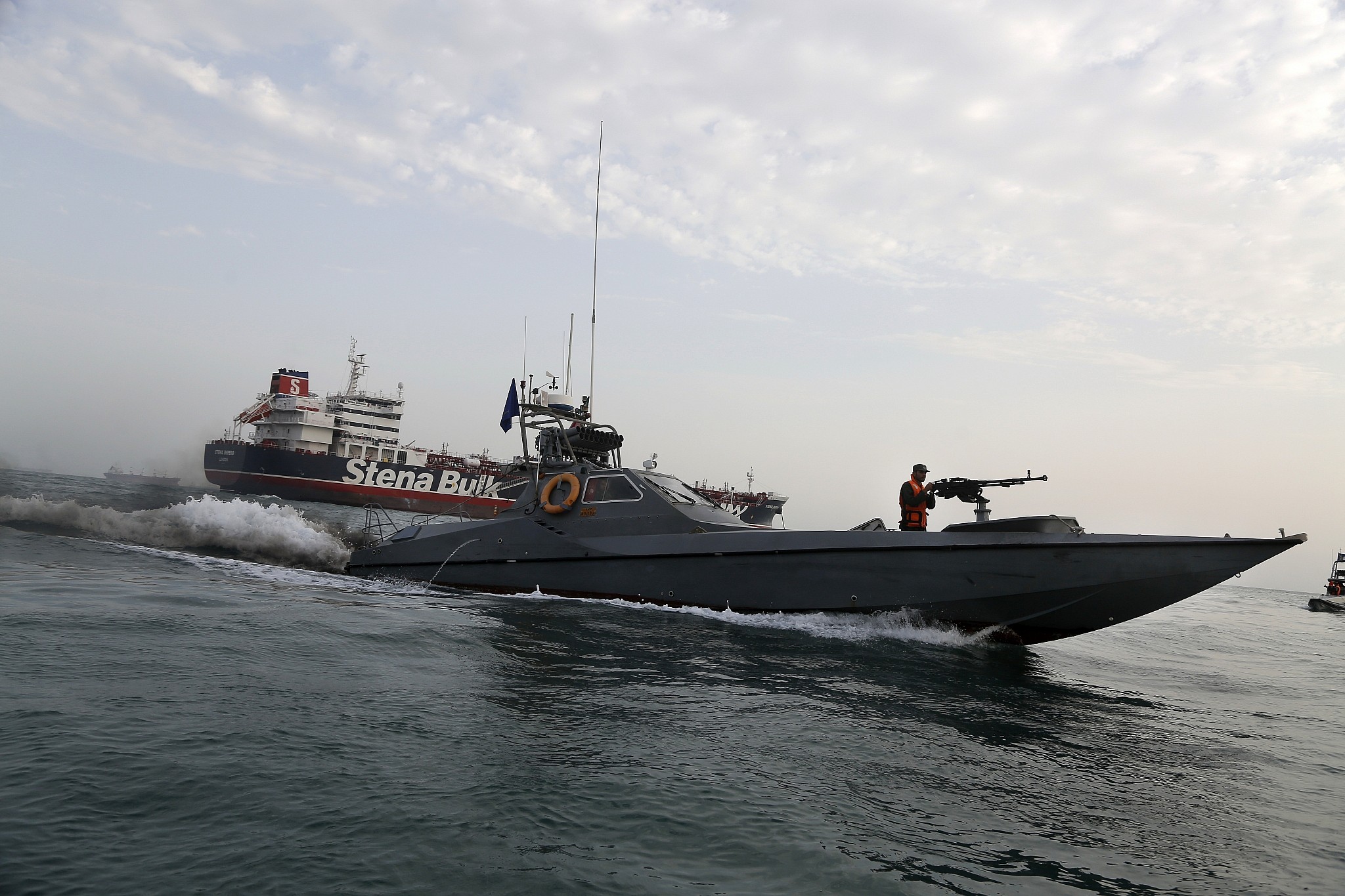
In this July 21, 2019 file photo, a speedboat of Iran’s Revolutionary Guard moves around a British-flagged oil tanker, the Stena Impero, which was seized by the Guard, in the Iranian port of Bandar Abbas. (Hasan Shirvani/Mizan News Agency via AP, File)

TEHRAN, Iran (AP) — Iran warned the US that any action taken against it following an attack on Saudi oil installations will “immediately” be met with a response from Tehran, its state-run news agency reported Wednesday, further raising Mideast tensions.

Iran’s president and foreign minister also may skip next week’s high-level meetings at the United Nations as the US has yet to issue them visas, IRNA reported.

The UN meeting had been considered as an opportunity for direct talks between Iranian President Hassan Rouhani and US President Donald Trump amid a summer of heightened tensions and attacks in the wake of America’s unilateral withdraw from Iran’s nuclear deal with world powers a year ago.

However, the recent attack in Saudi Arabia and hardening comments from Iran suggest such talks are increasingly unlikely.

Iran sent a note through Swiss diplomats in Tehran on Monday, reiterating that Tehran denies being involved in the Saudi attack, IRNA reported. The Swiss have looked after American interests in Tehran for decades.

“If any action takes place against Iran, the action will be faced by Iran’s answer immediately,” IRNA quoted the note as saying. It added that Iran’s response wouldn’t be limited to the source of the threat, without elaborating.

Iranian President Hassan Rouhani, right, listens to his Foreign Minister Mohammad Javad Zarif prior to a meeting in Tehran, Iran, November 24, 2015. (Vahid Salemi/AP)

IRNA separately reported Wednesday that Iran’s first delegation for the annual UN event had not left Iran due to not having visas. Foreign Minister Mohammad Javad Zarif was to travel to New York on Friday, with Rouhani following behind Monday, according to the agency.

As the host of the UN’s headquarters, the US is mandated to offer world leaders and diplomats visas to attend meetings there. But as tensions have risen, the US has put increasing restrictions on Iranians like Zarif.

The US State Department did not immediately respond to a request for comment Wednesday.

US Secretary of State Mike Pompeo is traveling to Saudi Arabia for meetings after Saturday’s attack on a Saudi oil field and the world’s largest crude oil processing plant. Saudi officials separately planned to share information about the weapons used in the attack they allege are Iranian.

Saudi Arabia also said on Wednesday that it joined a US-led coalition to secure the Mideast’s waterways amid threats from Iran after an attack targeting its crucial oil industry, while Rouhani told the kingdom it should see the attack as a warning to end its years-long war in Yemen.

Yemen’s Iranian-backed Houthi rebels have claimed the attack. The US accuses Iran of being behind the assault, while Saudi Arabia already has said “Iranian weaponry” was used. Iran denies that.

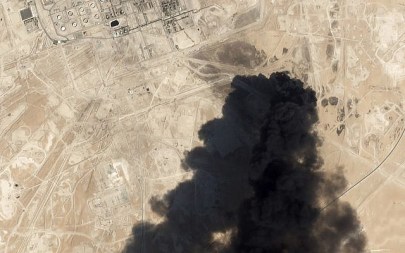
Satellite image from Planet Labs Inc. shows thick black smoke rising from Saudi Aramco’s Abqaiq oil processing facility in Buqyaq, Saudi Arabia, September 14, 2019. (Planet Labs Inc via AP)

“Almost certainly it’s Iranian-backed,” Prince Khalid bin Bandar, Saudi Arabia’s ambassador to the United Kingdom, told the BBC. “We are trying not to react too quickly because the last thing we need is more conflict in the region.”

The state-run Saudi Press Agency carried a statement Wednesday morning quoting an unnamed official saying the kingdom had joined the International Maritime Security Construct.

Australia, Bahrain and the United Kingdom already have joined the mission.

“The kingdom’s accession to this international alliance comes in support of regional and international efforts to deter and counter threats to maritime navigation and global trade,” the news agency said.

Cmdr. Joshua Frey, a spokesman for the US Navy’s 5th Fleet, declined to comment on the Saudi announcement, saying it “would be inappropriate to comment on the status of individual nations and the nature of any potential support.”

The coalition aims to secure the broader Persian Gulf region. It includes surveillance of the Strait of Hormuz, the narrow mouth of the Persian Gulf through which a fifth of the world’s oil travels, and the Bab el-Mandeb, another narrow strait that connects the Red Sea and the Gulf of Aden off Yemen and East Africa. Smaller patrol boats and other craft will be available for rapid response. The plan also allows for nations to escort their own ships through the region.

The US blames Iran for the apparent limpet mine explosions on four vessels in May and another two in June sailing in the Gulf of Oman near the Strait of Hormuz, something Iran denies being behind. Iran also seized a British-flagged oil tanker and another based in the United Arab Emirates.

US President Donald Trump listens to a reporter’s question in the Oval Office of the White House, in Washington, September 16, 2019. (Alex Brandon/AP)

In Tehran, Rouhani told his Cabinet that Saudi Arabia should see the attack as a warning to end its war in Yemen, where it has fought the Houthi rebels since 2015 and sought to restore the internationally recognized government.

Rouhani said Yemenis “did not hit hospitals, they did not hit schools or the Sanaa bazaar,” mentioning the Saudi-led coalition’s widely criticized airstrikes.

He added that Iran does not want conflict in the region, but it was the Saudi-led coalition that “waged the war in the region and ruined Yemen.”

“They attacked an industrial center to warn you. Learn the lesson from the warning,” he said, portraying the Houthis as responsible for the drone strikes.

Wednesday’s announcements comes after Saudi Arabia’s energy minister said late Tuesday that more than half of the country’s daily crude oil production that was knocked out by an attack had been recovered and that production capacity at its targeted plants would be fully restored by the end of the month.

Pompeo was due to land in the Red Sea city of Jiddah, where he was scheduled to meet with Saudi Crown Prince Mohammed bin Salman. Pompeo later will travel to the United Arab Emirates on Thursday to meet with Abu Dhabi’s powerful crown prince, Sheikh Mohammed bin Zayed Al Nahyan. Both nations are US allies and have been fighting against the Houthis in Yemen since March 2015.

The Saudi military planned to speak to journalists Wednesday in Riyadh to discuss the investigation into Saturday’s attack “and present material evidence and Iranian weapons proving the Iranian regime’s involvement.” It did not elaborate.

Marine Gen. Joseph Dunford, chairman of the Joint Chiefs of Staff, said Tuesday that US military experts were in Saudi Arabia working with their counterparts to “do the forensics on the attack” — gleaning evidence that could help build a convincing case for where the weapons originated.

On Wednesday, French President Emmanuel Macron’s office announced experts from his nation would be traveling to Saudi Arabia to help the kingdom shed light ” on the origin and methods” of the attacks. France has been trying to find a diplomatic solution to the tensions between Iran and the US, so any conclusion they draw could be used to show what a third-party assessed happened.


Wary of conflict, Trump takes go-slow approach to attack on Saudi oil 

Posted September 18, 2019 by Joseph Wouk
Categories: Uncategorized

Source: Wary of conflict, Trump takes go-slow approach to attack on Saudi oil – Middle East – Jerusalem Post

Known for acting on impulse, President Donald Trump has adopted an uncharacteristically go-slow approach over whether to hold Iran responsible for attacks on Saudi oil facilities.

BY REUTERS
 SEPTEMBER 18, 2019 05:52
Wary of conflict, Trump takes go-slow approach to attack on Saudi oil

WASHINGTON – Known for acting on impulse, President Donald Trump has adopted an uncharacteristically go-slow approach over whether to hold Iran responsible for attacks on Saudi oil facilities, showing little enthusiasm for confrontation as he seeks re-election next year.

After state-owned Saudi Aramco’s plants were struck on Saturday, Trump did not wait long to fire off a tweet that the United States was “locked and loaded” to respond, and Secretary of State Mike Pompeo blamed Iran.

But four days later, Trump has no timetable for action. Instead, he wants to wait and see the results of investigations into what happened and is sending Pompeo to consult counterparts in Saudi Arabia and the United Arab Emirates this week.

“There’s plenty of time,” Trump told reporters on Monday. “You know, there’s no rush. We’ll all be here a long time. There’s no rush.”

Two U.S. officials told Reuters on Tuesday that Washington believes the attack was launched from Iran, with one of them saying it originated in Iran’s southwest.

U.S. officials say Trump, who is famously skeptical of his intelligence community, wants to ensure the culprit is positively identified in a way that will pass muster not only with him but with the American people.

“In responding to the greatest attack on the global oil markets in history, I think not rushing to respond and ensuring everybody is on the same page is where we should be,” said a U.S. official, who spoke on condition of anonymity.
Trump’s stance today is in stark contrast to 2017, less than three months into his presidency, when he waited only two days before launching air strikes to punish Syrian President Bashar al-Assad’s forces for a chemical weapons attack.

AMERICA FIRST

Trump’s caution reflects the “America First” world view that found support with his base in the 2016 presidential campaign and that he is trying to promote again as he seeks a second term in 2020.

Pillars of that view are that the Iraq war was a waste of blood and money, that the end of the war in Afghanistan is long overdue, and that Washington should be reimbursed for deployment of U.S. troops abroad, from South Korea to Germany.

Jon Alterman, a Middle East expert at the Center for Strategic and International Studies and a former State Department official, said Trump also “has grown increasingly cautious as the reality of any military actions increased.”

“There’s a large constituency the president has that thinks it would be lunacy to go to war against Iran,” he said. “There’s a large part of his base that thinks the craziest thing we could do is committing ourselves to endless wars in the Middle East.”

The attacks on Saudi targets have stymied for now what had been an effort to open talks with Iranian leaders to try to get a sense of whether they were ready to strike a deal on their nuclear and ballistic missile programs in response to economic sanctions that have taken a toll on Iran’s economy.

Trump’s willingness to consider easing sanctions on Iran alarmed his national security adviser, John Bolton, when the president raised the idea at a meeting last Monday, a source close to Bolton said. By the next day, Bolton was out.

Bolton’s departure removed a central anti-Iran voice from the president’s inner circle. A well-known foreign policy hawk, Bolton was said to be furious in June when Trump abruptly called off air strikes in response to Iran’s shooting down of a U.S. drone.

“If Bolton were there, he would be saying it was definitely Iran, and we need to strike right now,” said a former senior administration official.

Trump rebuked Lindsey Graham, one of his staunchest supporters in the U.S. Senate, after the Republican senator said in a tweet on Tuesday that Iran had seen Trump’s response to the drone downing as a sign of weakness.

“No Lindsey, it was a sign of strength that some people just don’t understand!” Trump said on Twitter.

In Venezuela, despite repeated vows that all options were on the table, Trump also resisted Bolton’s suggestions for a stronger focus on military planning in the country, where a U.S.-led campaign of sanctions and diplomatic pressure has failed to push socialist president Nicolas Maduro from power.

Barring a major escalation, future U.S. measures are expected to continue to stop short of military action due to a lack of support from U.S. voters but also because of opposition from allies in Latin America.

“We have to be realistic,” a Venezuela opposition source said. “Trump will not be sending in the Marines to rescue us.”


Iran Hits Saudi Arabia: Will Trump Hit Back? 

Posted September 17, 2019 by Joseph Wouk
Categories: Uncategorized