Source: PM: Israel ‘actively countering Iranian aggression’ – Jerusalem Post
Arabic news outlets report explosion of IRGC arms depot on Syria-Iraq border
Source: PM: Israel ‘actively countering Iranian aggression’ – Jerusalem Post
Arabic news outlets report explosion of IRGC arms depot on Syria-Iraq border
Source: Rouhani says some protesters should be freed, open to talks with US | The Times of Israel
Iranian president says his country is still ready for talks if US lifts sanctions, which he claims were incited by Israel
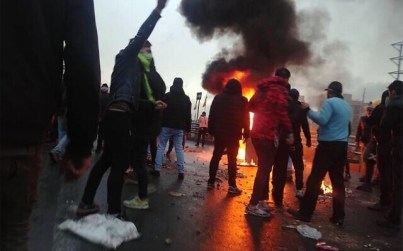
Iranian President Hassan Rouhani on Wednesday called for the release of any unarmed, innocent people detained during widespread protests over fuel prices, in which hundreds have been killed by authorities, and accused Israel of “inciting” sanctions that have crippled the country’s economy.
“Religious and Islamic clemency should be shown and those innocent people who protested against petrol price hikes and were not armed… should be released,” Rouhani said on state TV, according to the Reuters news agency.
He added that Iran was still ready for nuclear talks on condition the United States first lifts “unlawful” sanctions.
“If they are prepared to put aside the sanctions, we are ready to talk and negotiate, even at the level of heads of the 5+1 countries,” Rouhani said, in remarks aired live on state television.
Rouhani has long demanded the lifting of US sanctions for Iran’s return to talks under the auspices of the so-called P5+1 that reached a 2015 nuclear deal — the five veto-wielding permanent members of the UN Security Council plus Germany.
“We are under sanctions. This situation… is (because of) incitement by the Zionists and the region’s reactionary,” he said, referring to Israel and Saudi Arabia.
“This situation… is a cruel act by the White House. We have no choice but to resist and persevere against those imposers of sanctions.
“At the same time, we have not closed the window for negotiations,” Rouhani said.
“I tell the nation of Iran that any time America is prepared to lift and put aside its wrong, cruel, unlawful, incorrect, terrorist sanctions, immediately the heads of 5+1 can meet, and we have no problem.”
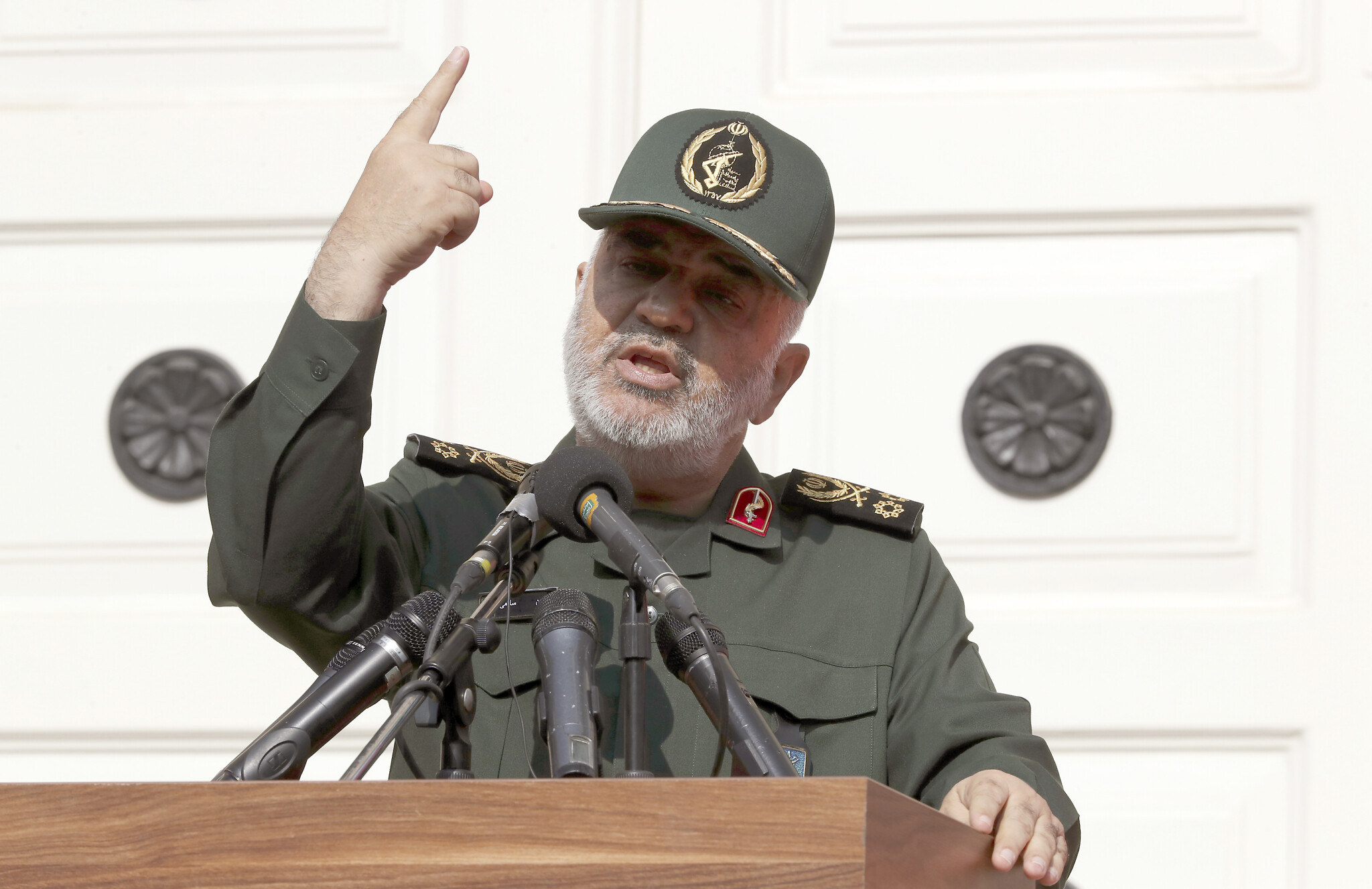
Reuters quoted Hossein Salami, chief commander of the Islamic Revolutionary Guard Corps, as saying in a televised speech that “the aim of our enemies was to endanger the existence of the Islamic Republic by igniting riots in Iran… But America and the Zionist regime lack political wisdom about Iran and Iranians.”
The landmark 2015 deal gave Iran relief from economic sanctions in return for curbs on its nuclear program.
It has been at risk of falling apart since US President Donald Trump unilaterally withdrew from it in May last year, and reimposed sanctions on Iran.
Known formally as the Joint Comprehensive Plan of Action (JCPOA), it was agreed between Britain, China, France, Russia, and the United States, plus Germany.
Twelve months on from the US pullout, Iran began reducing its commitments to the deal hoping to win concessions from those still party to the accord.
Its latest step back came last month, when engineers began feeding uranium hexafluoride gas into mothballed enrichment centrifuges at the underground Fordo plant south of Tehran.
Source: US officials said to warn of potential new Iran threat to forces, interests | The Times of Israel
Defense, administration sources say CNN intelligence gathered over past month showed Iranian military units, weapons on the move; believe no decision to attack as yet
Several US defense and administration officials have warned of a renewed Iranian threat against US forces and interests in the Middle East, based on intelligence gathered over the last month, according to a report Wednesday.
The intelligence found evidence that Iran has moved forces and weapons, according to the report, which did not specify what weapons were involved.
“There has been consistent intelligence in the last several weeks,” one official told the station, while another said the information was gathered throughout November.
The officials said there are concerns that the movements could put forces in position for a potential attack. However, the officials noted that there is no indication that Iran has made a decision to attack the US.
Without commenting on the recent intelligence, Pentagon spokeswoman Cmdr. Rebecca Rebarich told CNN, “We continue to closely monitor the activities of the regime in Iran, its military and its proxies, and we are well postured to defend US forces and interests as needed.”
The report came amid a series of recent developments including bellicose statements from senior Iranian military figures threatening the US and Israel, an alleged Iranian missile attack on Israel launched from Syria, and a news report detailing how Iran allegedly ordered a damaging cruise missile and drone strike on a Saudi oil facility.
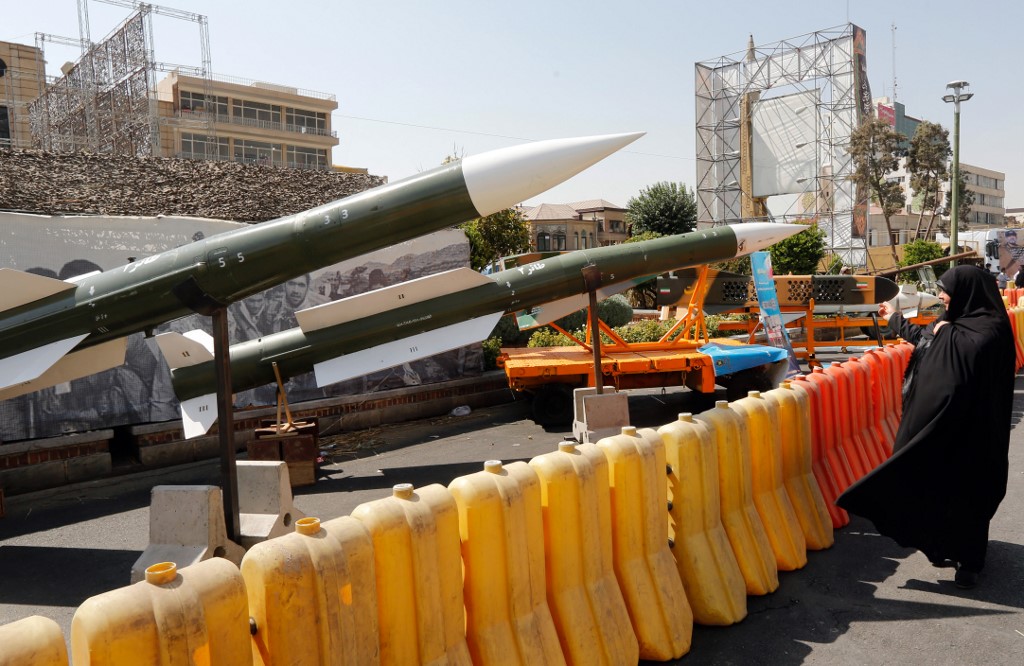
Last week, Iranian Gen. Allahnoor Noorollahi warned that Iran’s missile arsenals are aimed at 21 American military bases in the Middle East and the country is prepared for “the greatest war against the greatest enemy.”
In the November 29 speech, Noorollahi also said that Iran had the ability to raze Haifa and Tel Aviv to the ground.
Noorollahi serves as a top adviser to the commander of the Islamic Revolutionary Guard Corps Officers College. His speech was broadcast on Bushehr TV, and was reported on and translated by the Middle East Media Research Institute.
Noorollahi’s comments came just days after the Iran’s Islamic Revolutionary Guard’s top commander, Gen. Hossein Salami, threatened to destroy Israel, the US and other countries, as he addressed a pro-government demonstration denouncing last month’s violent protests in Iran over a fuel price hike.
Salami accused the US, Britain, Israel and Saudi Arabia of stoking the unrest.
“If you cross our red line, we will destroy you,” he said. “We will not leave any move unanswered.”
On November 19, Iran’s Quds Force, a branch of the Revolutionary Guards, fired four missiles at Israel from Syria, according to the Israel Defense Forces. All four were shot down, and Israel responded a day later with a punishing round of airstrikes against Iranian and Syrian targets.
At least 23 combatants were killed, 16 of them likely Iranians, according to a Syrian war monitor.
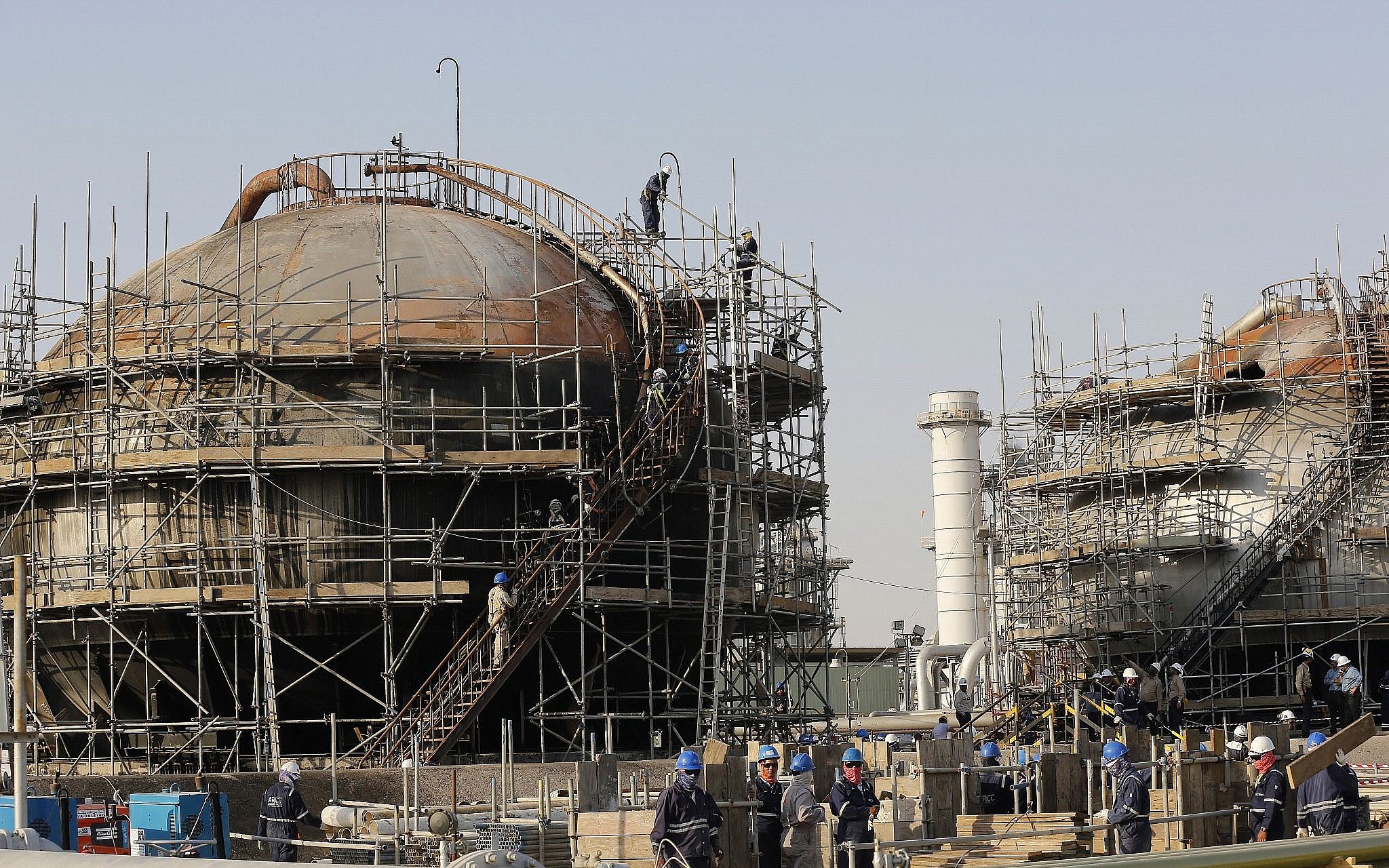
A devastating September 14 combined drone and cruise missile barrage on two Saudi facilities knocked out half of the kingdom’s oil production/
Although Yemen’s Iranian-backed Houthi rebels claimed responsibility, Israel, the US, Britain, France, Germany, and Saudi Arabia have accused Iran of being behind the attack. Tehran denies the allegation.
Last month, Reuters reported that Iran’s Supreme Leader Ayatollah Ali Khamenei personally approved the attack on condition the strike did not target civilians or Americans.
In an interview published last month, Gen. Kenneth F. McKenzie, the head of the US military’s Central Command told the New York Times said that Iran remains on track to carry out a large-scale attack in the region.
“My judgment is that it is very possible they will attack again,” McKenzie assessed.
The lack of serious consequences to the attack on Saudi Arabia has led Israeli officials to warn an emboldened Tehran could seek a major attack on the Jewish state soon.
Israel has repeatedly said that it will not accept Iranian military entrenchment in Syria and that it will retaliate for any attack on the Jewish state from Syria.
Tensions have risen in the Persian Gulf since May last year when US President Donald Trump unilaterally abandoned the nuclear deal between major powers and Iran and began reimposing crippling sanctions in a campaign of “maximum pressure.”
They flared again this May when Iran began reducing its own commitments under the deal and the US deployed military assets to the region.
Since then, ships have also been attacked, drones downed, and oil tankers seized.
Source: Iran is reeling from protests, Netanyahu says ahead of Pompeo meet in Portugal | The Times of Israel
Prime minister urges more pressure on Tehran, admonishes Europeans for giving regime an out with INSTEX mechanism; Jordan Valley annexation and defense pact also on table in Lisbon
Prime Minister Benjamin Netanyahu called for increased pressure on Iran and lambasted Europe for being soft on Tehran, as he headed to Portugal on Wednesday for a meeting with US Secretary of State Mike Pompeo to discuss the Islamic Republic and controversial West Bank annexation plans.
Speaking on the tarmac at Ben Gurion Airport before leaving for Lisbon, Netanyahu praised the US administration for putting “tremendous pressures and sanctions on Iran,” which he said was leading to instability that could cripple the ayatollah regime.
“We’re seeing the Iranian empire totter,” he said, citing protests in Iran, Iraq, and Lebanon, in which some demonstrators have expressed anger at Iran’s influence. “I think that it’s important to increase this pressure against Iranian aggression.”
At the center of Netanyahu’s two-day trip to Lisbon is a planned working dinner with Pompeo, a pro-Israel stalwart and key architect of Washington’s so-called maximum pressure campaign against Iran, which includes tough economic sanctions.
The prime minister is also slated to meet with Portuguese Prime Minister Antonio Costa and Foreign Minister Augusto Santos Silva.
Speaking to reporters before taking off, Netanyahu said the conversation with Pompeo would “focus first of all on Iran, and two additional matters: the defense pact with the US that I seek to advance, and also a future American recognition of Israel applying sovereignty over the Jordan Valley. These are very important issues, we are dealing with them all the time. And there are also other issues, that I will not detail now.”
Talks are expected to revolve around the Iranian regime’s efforts to entrench itself militarily in Syria, as well as its increasing violations of the 2015 nuclear deal, including its recent decision to resume enrichment of uranium at the Fordo nuclear facility.
The prime minister also repeated his harsh criticism of European countries who recently joined the INSTEX financial mechanism, which is meant to allow Iran to continue to sell its oil despite the punishing US sanctions.

“They should be ashamed of themselves,” Netanyahu said angrily. “While people are risking their lives and dying on the streets of Tehran, they’re giving sustenance and support to this tyrannical regime. The tyrants of Tehran should not be supported now; they should be pressured.”
Pompeo and Netanyahu last met in October in Jerusalem. According to reports, Netanyahu had originally planned to meet Pompeo in London, where world leaders, including US President Donald Trump are gathering for a NATO summit this week.
Netanyahu spoke with Trump over the phone on Sunday. According to the White House, the two discussed Iran and other unspecified bilateral issues.
Netanyahu later said that the proposed defense alliance and annexation of the Jordan Valley were discussed as well in the call, which he termed “a very important conversation for the security of Israel.”
“These are things that we could only dream about, but we have the possibility of implementing them,” he said.
On November 18, Pompeo appeared to pave the way for an Israeli annexation of the Jordan Valley, and possibly other parts of the West Bank, when he declared that the administration would no longer consider Israeli settlements as necessarily illegal under international law.
“We think the decision that was made that permits the possibility of legal settlements, that they are not illegal per se, is both the correct one and the one that is in the best interest of the security situation in Israel, as well as the situation between Israel and the Palestinian people,” Pompeo told the Israel Hayom newspaper last week.
After leaving Portugal, Pompeo is slated to travel to Morocco, where he is expected to push normalization with Israel with King Mohammed IV in Rabat.
“Morocco plays a great role across the region as an important partner in promoting tolerance (and) has these quiet ties and relationship with Israel as well,” a State Department official said last week.
Morocco is one of several Arab states in the Middle East being pushed by the US to sign non-belligerence agreements with Israel, as a step toward normalizing relations with the Jewish state, according to a Tuesday report by Axios.
The trip marks the first visit to Portugal of an Israeli prime minister since 2000, when Ehud Barak went to Lisbon to meet then-US president Bill Clinton.
Netanyahu himself last traveled to Lisbon in December 1996, during his first term as prime minister, when he attended a European Council for Security and Cooperation summit there.
On Tuesday, the top US diplomat made headlines for an entirely different matter, as reports emerged claiming he started preparing for a possible run for an open Senate seat in Kansas next year.
Times of Israel staff and AFP contributed to this report.
AUTOPLAY
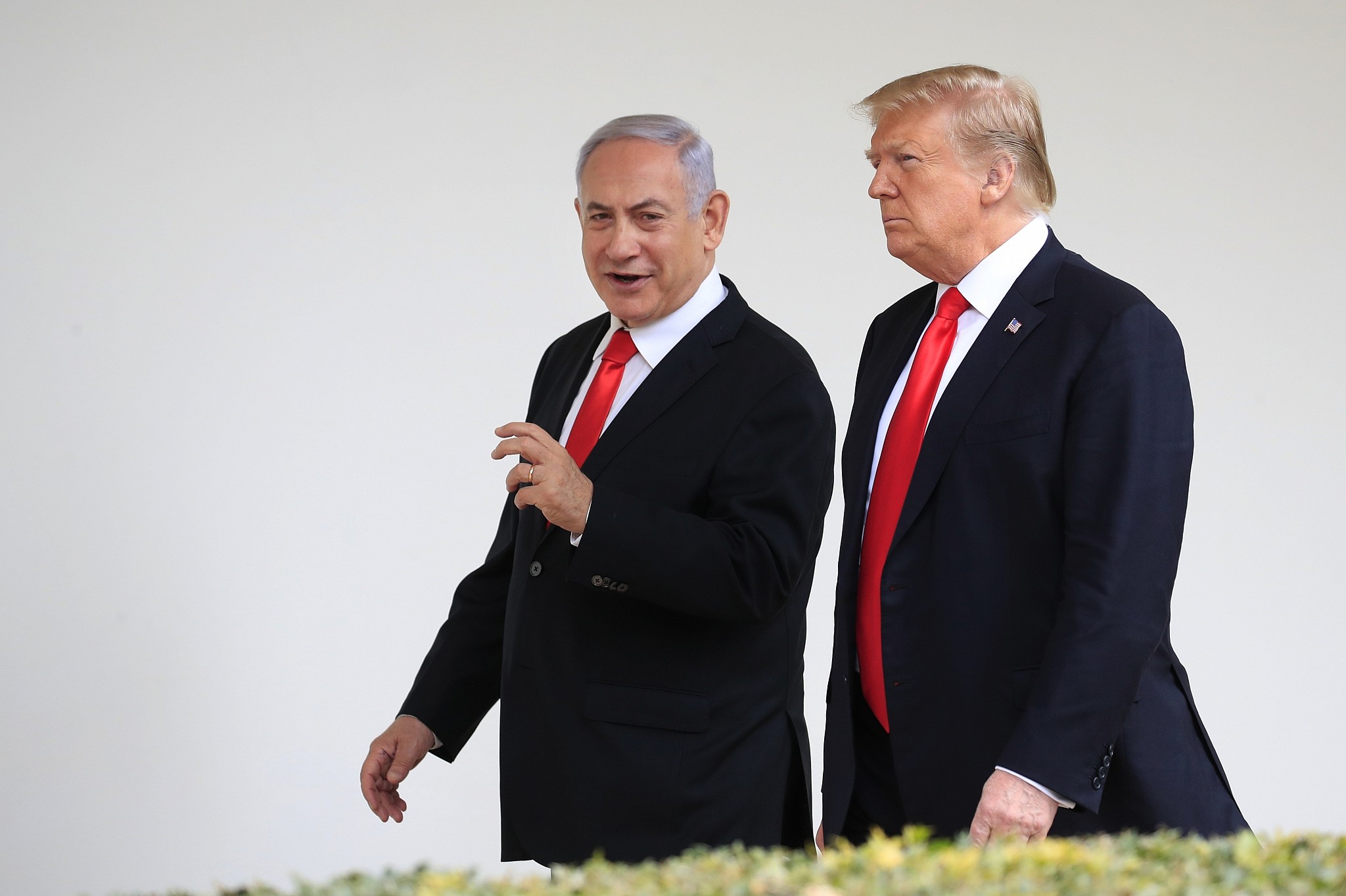
The Trump-Netanyahu conversation on Sunday night, Dec. 1, finalized the arrangements for military coordination against Iran that were set up during recent US generals’ talks in visits to Israel, DEBKAfile reports.
The exchange between the US President and Israeli Prime Minister, covering “the threat from Iran” and “other critical bilateral and region issues,” took place ahead of the NATO summit in London this week and against the background of fresh threats from Tehran against the US and Israel.
DEBKAfile’s military sources note that senior US generals have been in and out of Israel in recent weeks. They included Gen. David Goldfien, head of the US Air Force, Gen. Jeffrey Harrigan, head of US Air Forces in Europe-Air Forces Africa, and Gen. Kenneth McKenzie, commander of US forces in the Middle East. Finally, Gen. Mark Milley, Chairman of the US chiefs of Staff, arrived last week to put the final cap on the program of operational cooperation against Iran drafted by the US and Israeli generals.
No details were released from Gen. Milley’s conversation with IDF Chief of Staff Lt. Gen. Aviv Kochavi, except for a terse statement: “The two generals discussed operational questions and regional developments.”
All these tense talks were accompanied by a significant movement: The USS Abraham Lincoln Carrier Strike Group sailed from the northern Arabian Sea into the Gulf for the first time since June. It passed through the Strait of Hormuz to take up position opposite central Iran.
On Nov. 23, Gen. McKenzie said in reference to Iran’s Sept. 14 missile attack on Saudi oil: “My judgement is that it is very possible they will attack again.” He made it clear that Tehran will be aiming at US and/or allied targets, including Israel.
This threat was spelled out on Friday, Nov. 29, in a speech by Gen. General Allahnoor Noorollahi, adviser to the commander of the Iranian Revolutionary Guards (IRGC) Officers College. He said that 21 of the US bases in the region are in the sights of Iran’s missiles and “Iran has prepared itself for the greatest war against the greatest enemy.”
President Trump goes into NATO summit meetings this week after America and Israel have wound up their estimates and military preparations for a showdown, in an effort to deter Iran from going through with its planned offensive – or else to be ready for counter-attack.
Source: During protests, Iran Guards said to massacre up to 100 people hiding in marsh | The Times of Israel
NY Times reports forces open fire without warning on demonstrators in city of Mahshahr and then machine gun those who fled to nearby marsh to take cover, tanks deployed in city
During recent protests in Iran over fuel prices, Islamic Revolutionary Guards Corps forces massacred between 40 to 100 mostly unarmed young men, when they opened fire with machine guns on a marsh near the city of Mahshahr where demonstrators had taken refuge, the New York Times reported Sunday.
The report comes a day after Iran disputed death tolls issued abroad for bloodshed that erupted during protests two weeks ago, after a rights group said over 160 demonstrators were killed across the country.
The demonstrations flared in mid-November, after the price of gasoline in the Islamic republic went up overnight by as much as 200 percent.
According the Times, it was able to gather testimony and evidence as Iran slowly lifted an almost complete internet blackout that had been imposed as the protests were brutally crushed. The internet was still off in Mahshahr in Iran’s southwest.
The New York Times said it had interviewed six residents of Mahshahr, including “a protest leader who had witnessed the violence; a reporter based in the city who works for Iranian media, and had investigated the violence but was banned from reporting it; and a nurse at the hospital where casualties were treated.”
Mahshahr is in a region with an ethnic Arab majority with a long history of opposition to the central government.
The witness described how the Revolutionary Guards deployed a large force to Mahshahr on Monday, Nov. 18, to crush the protests after demonstrators gained control of the city and roads leading to a nearby major industrial petrochemical complex.
The guard immediately opened fire on protesters manning one intersection, without giving warning and killed several people, residents said.
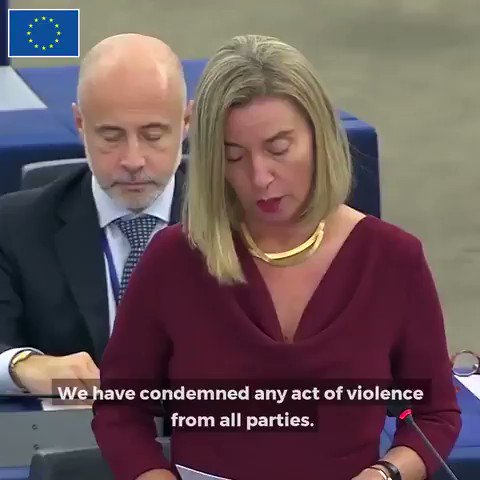
Peymaneh Shafi@peymaneh123“ALL PARTIES” Reminds me of how disgusting the EU is getting its policies close to Hitler’s era with no shame @FedericaMog https://twitter.com/baghdadpostplus/status/1200788888580755456 …
The Baghdad Post@BaghdadPostPlusWhile rgm in #Iran& #Iraq are brutally killing protesters, @FedericaMog condemns “violence from all parties”& calls for “dialogue”#BaghdadPost #IraqProtests #saveIraqipeople #FreeIraq
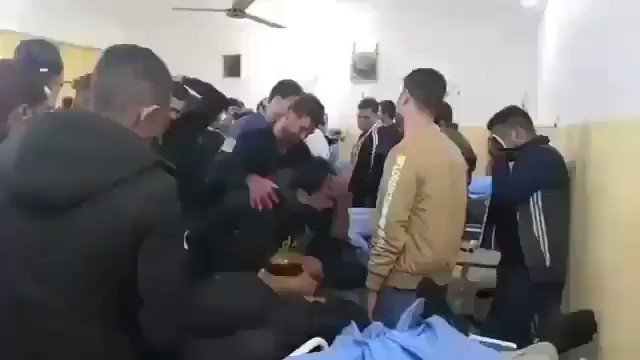
In Iran Mahshahr’s Naft Hospital: Iranian protesters morn their loved one who were shot directly by the regime’s criminal snipers! #AllParties! #IranProtests @FedericaMog
Residents put the death toll between 40 and 100, saying the Guards put the dead on the back of a truck and took them away, while relatives took the wounded to a nearby hospital.
A nurse said many of the wounded had bullet wounds to the head and chest.
One protester, who said two of cousins were killed, described how families were given the bodies back five days later only after they had signed paperwork promising not to hold funerals or memorial services and not to give interviews to media.
He said they also had bullet wounds in the head and chest.
After the massacre, a gun battle erupted between the Guards and local residents, many of whom have guns kept for hunting, one witness said. the report quoted Iranian state media and witnesses saying that a senior Guards commander had been killed in a Mahshahr clash.
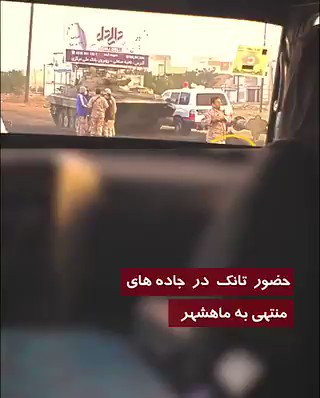
Internet footage also suggested that the Guards deployed tanks in the city.
A crippling regime considers Iranians as its big threat and enemy.Last week regime performed full fledged war against unarmed people. Here you can see Tanks in Mahshahr. The internet still is off there, all we hear is that a bloody massacre took place in Mahshahr. #IranProtest
Iran’s interior minister confirmed that the protesters had gotten control over Mahshahr and its roads in a televised interview last week, but the Iranian government did not respond to specific questions in recent days about the mass killings in the city, the report said.
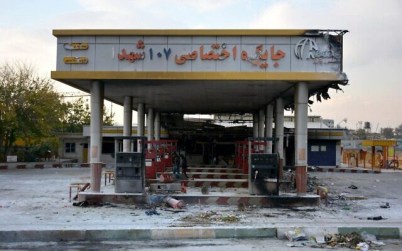
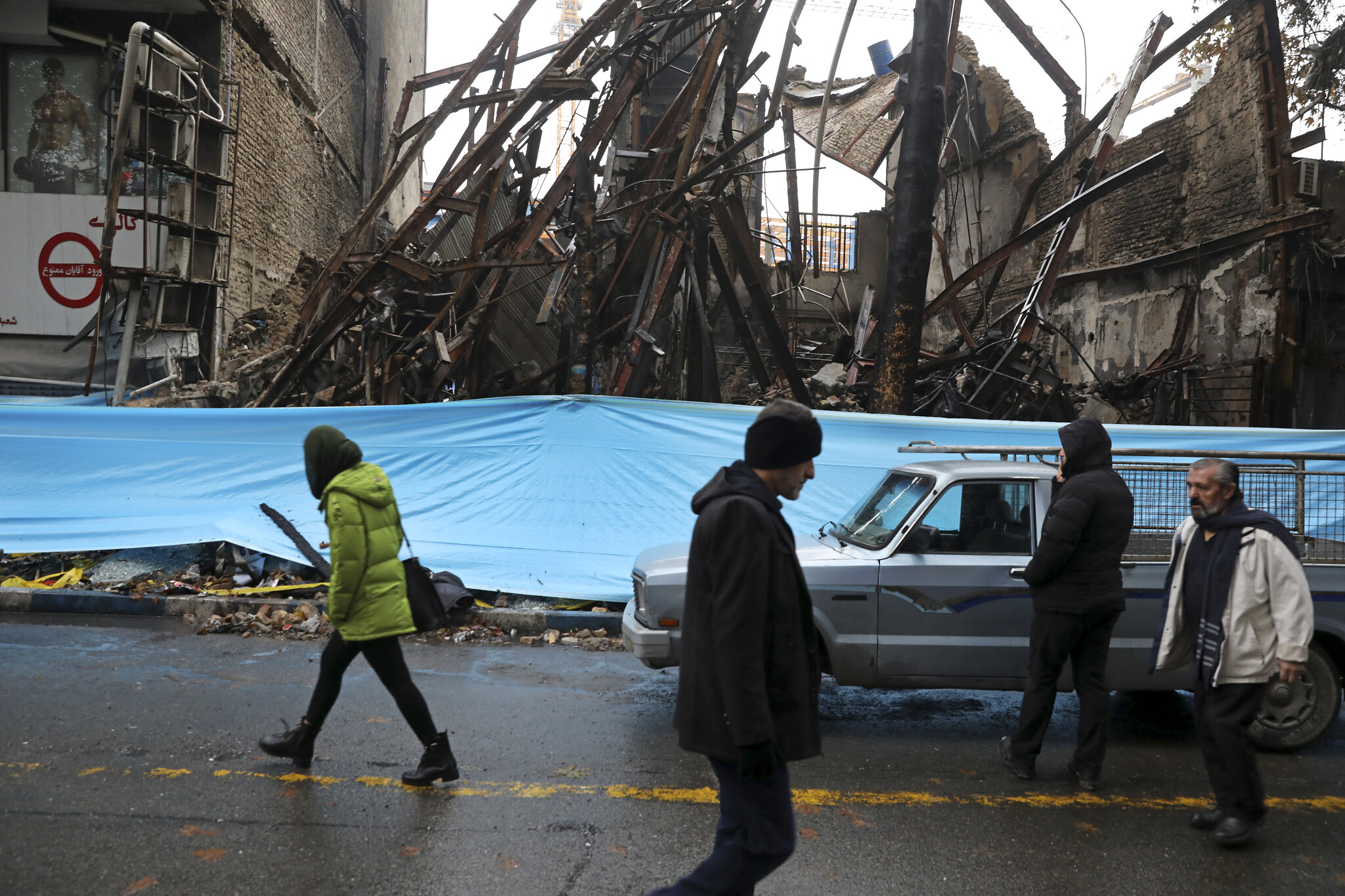
Officials in Iran have yet to say how many people died in the ensuing violence that saw banks, petrol pumps and police stations set on fire.
The New York Times put the death toll across the country at between 180 and 450. The London-based human rights group Amnesty International said in a tweet on Friday that the crackdown claimed the lives of at least 161 demonstrators.
But Iran’s deputy interior minister, Jamal Orf, disputed such figures.
“Statistics by international organizations on those killed in the recent incidents are not credible,” he was quoted as saying by state news agency IRNA.
Orf accused the sources that reported the figures of “exaggerating” them.
The prosecution service, he added, was set to announce the figures based on those it receives from the coroner’s office.
Prior to its latest tweet, Amnesty International said on Monday that 143 demonstrators had been killed in the crackdown, citing what it called “credible reports.”
The governments of the United States, France and Germany have condemned Iran over the bloodshed.
The unrest broke out on November 15, hours after it was announced that the price of gas would rise to 15,000 rials per liter (12 US cents) from 10,000 for the first 60 liters, and to 30,000 rials for any extra fuel bought after that each month.
Iran’s economy has been battered since last year, when President Donald Trump unilaterally withdrew the United States from a 2015 nuclear agreement and reimposed crippling sanctions on the Islamic republic.
The government in Tehran said proceeds from the fuel price hike would go to the most needy people in the country.
According to IRNA, the payments have since been made in three installations between November 18 and 23.
This week an Iranian lawmaker said authorities arrested more than 7,000 people in the wake of the protests.
Source: Trump and Netanyahu discuss ‘threat from Iran’ in second call in weeks | The Times of Israel
Terse statement from White House says leaders also talk about ‘other critical bilateral and regional issues,’ but gives no details
US President Donald Trump spoke Sunday with Prime Minister Benjamin Netanyahu, with the two leaders focusing talks on “the threat from Iran,” the White House said.
“The leaders discussed the threat from Iran, as well as other critical bilateral and regional issues,” a terse statement said late Sunday.
There was no immediate readout on the call from Israel.
The two last spoke on November 19, when Netanyahu thanked the president for Washington’s decision to repudiate a State Department legal opinion that said West Bank settlements were illegal.
Though Netanyahu and Trump were once close allies who touted their friendship to their respective bases, ties between the two have been seen as cooling in recent months as the Israeli premier has struggled to cling to power.
Netanyahu has also reportedly become uneasy with what he perceives as Trump’s unwillingness to stand up to Iranian aggression.
The two leaders will both be in London later this week at a NATO summit. While Netanyahu is reportedly planning on meeting several European heads of state, no plans for a sit down with Trump have been announced.
The call came hours after Netanyahu lambasted European nations for seeking to circumvent circumvent US sanctions on Iran.
“While the Iranian regime is killing its own people, European countries rush to support that very murderous regime,” Netanyahu said in a video released Sunday, castigating the six new European members of the INSTEX barter mechanism.
In a separate statement, Israel’s Foreign Ministry said “Belgium, Denmark, Finland, the Netherlands, Norway, and Sweden could not have picked worse timing. The hundreds of innocent Iranians murdered during the latest round of protests are rolling in their graves.”
Protests broke out across sanctions-hit Iran on November 15, hours after a sharp fuel price hike was announced.
Reports of deaths and arrests emerged as security forces were deployed to rein in demonstrations which turned violent in some areas, with dozens of banks, gas stations and police stations torched.
The London-based human rights group Amnesty International has said that 161 demonstrators were killed.
Late Sunday, the New York Times reported that Guards forces had massacred up to 100 people hiding in a marsh in a single incident.
A 2015 international agreement set out restrictions on Iran’s nuclear program in exchange for the lifting of Western sanctions. The deal was opposed by Israel, which argued that Iran’s regime would find ways to violate the agreement, and would use the breathing room to expand its ballistic missile program and support for terror groups throughout the region.
Last year, the US unilaterally withdrew from the deal and reinstated crippling sanctions against Tehran. The INSTEX system is designed to sidestep the sanctions and keep the deal afloat.
Israel has praised the Trump administration’s “maximum pressure” campaign against the Islamic Republic. But Netanyahu lamented on Sunday that European nations were in a “rush to appease” Tehran.
Pointing to mass protests against Iran-backed regimes and groups throughout the region, from Iraq to Lebanon to Iran itself, Netanyahu said the people of the region were “fed up. They’re fed up with corruption. They’re fed up with failing economies. They’re fed [up] with the siphoning off of their treasure and their lives to Iran’s wars of aggression in the region.
“And while the people of the Middle East bravely stand up to Iran and its henchmen, here’s the absurd thing: While all of this is happening, countries in Europe are working to bypass US sanctions against Iran…. While Iran bombs Saudi Arabia’s oil installations, while Iran rushes to enrich uranium for nuclear weapons, European countries rush to appease Iran with even more concessions.”
In an apparent reference to World War II, the Israeli leader added: “These European countries should be ashamed of themselves. Have they learned nothing from history? Well, apparently not.
“They are enabling a fanatic terrorist state to develop nuclear weapons and ballistic missiles, thereby bringing disaster to themselves and upon everyone else.”
The Paris-based INSTEX functions as a clearing house allowing Iran to continue to sell oil and import other products or services in exchange. The system has not yet enabled any transactions.
Iran has gradually increased enrichment and the stockpiling of nuclear material in contravention of the 2005 agreement, as a means of pressuring Europe to bolster the INSTEX system. European countries have expressed alarm at Iran’s moves, but say they remain committed to the nuclear accord.
The accession of the six new members “further strengthens INSTEX and demonstrates European efforts to facilitate legitimate trade between Europe and Iran,” France, Germany, and Britain said.
It represents “a clear expression of our continuing commitment to the Joint Comprehensive Plan of Action” — the 2015 Iranian nuclear deal — the trio added.
They insisted Iran must return to full compliance with its commitments under the deal “without delay.”
Adel Abdel-Mahdi’s resignation as Iraq’s prime minister on Saturday, Nov. 30, confirmed that Iraq’s 22 million Shiites (out of a 39 million population) are being torn apart by a potential internal Shiite war. More than 400 people were killed in three months of protest and 16,000 injured. At least 40 died on Friday, most from gunfire.
The protest against corruption and failure of government sweeping the Shiite south and parts of Baghdad is pitting opponents of Iranian influence against the Shiite militias loyal to Iran which defer to Al Qods chief Gen. Qassem Soleimani. By stepping down, the prime minister responded to the demand of Iraq’s top Shiite cleric, Grand Ayatollah Ali al-Sistani, who condemned the use of force against protesters and called for a new government.
DEBKAfile analyses the root- causes leading up to the current crisis.
Recent Comments