IAF Commander Norkin: US airstrikes in Iraq a potential game changer 

Posted December 31, 2019 by Joseph Wouk
Categories: Uncategorized

Source: IAF Commander Norkin: US airstrikes in Iraq a potential game changer – The Jerusalem Post

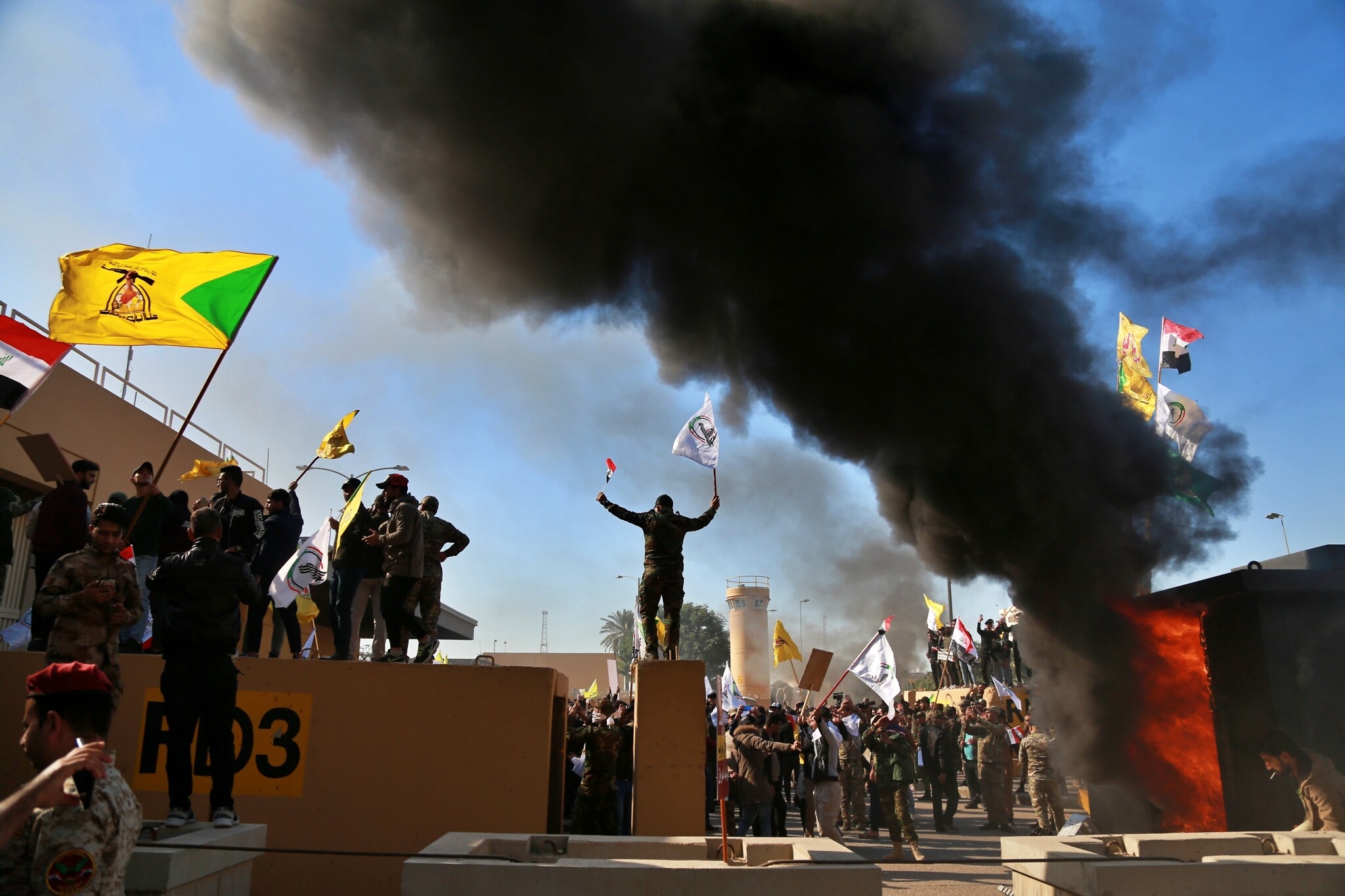
Thousands of paramilitary members march on US Embassy in Baghdad following deadly strikes.
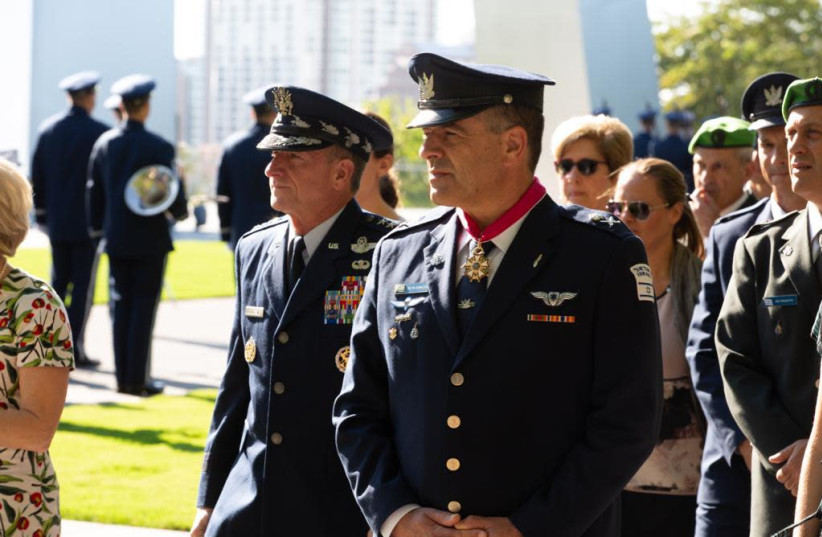
Israeli Air Force Commander Maj.-Gen. Amikam Norkin stands alongside senior US Air Force officers in Washington (photo credit: IDF SPOKESPERSON'S UNIT)
Israeli Air Force Commander Maj.-Gen. Amikam Norkin stands alongside senior US Air Force officers in Washington
(photo credit: IDF SPOKESPERSON’S UNIT)
The strikes against an Iranian proxy group in Iraq are a potential game changer, the Commander of Israel’s Air Force said Tuesday as thousands of members of Shiite militias marched on the US embassy in Baghdad in response to the deadly strikes.

“The attack by the United States Air Force are a potential game changer,” Maj.-Gen. Amikam Norkin said at a conference held by Calcalist of the American strikes on Kata’ib Hezbollah locations in Syria and Iraq which killed some 25 paramilitary fighters.

The strikes came two days after a barrage of over 30 rockets were fired by the Iranian-backed militia towards the K1 Iraqi military base in Kirkuk, killing a US civilian contractor and wounded dozens of Iraqi and American troops.

In a statement on Sunday, outgoing Iraqi Prime Minister Adel Abdul Mahdi called the strikes a “dangerous escalation that threatens the security of Iraq and the region.”

According to Abdul Mahdi, US Secretary of Defense Mark Esper called him close to 30 minutes before to inform him of the coming strikes. During the call Abdul Mahdi demanded that Esper call off the strikes as they would lead to a further escalation.

Both Israel and the US have warned that Iran and it’s proxy militias are the biggest threats to peace in the region and hope to weaken Tehran’s growing influence across the Middle East and the Persian Gulf.

During the conference on Tuesday Norkin said that the connection between the Israeli Air Force and the Americans is an asset that strengthens Israel’s aerial superiority.Israel’s aerial supremacy, he said is the “key to regional stability.”

“We are in a time of turmoil in which the Iranian threat is known to everyone, including the nuclear one,” Norkin continued.

“In the northern arena, we face a series of the world’s most advanced ground-to-air systems like the S-300 and S-400. The Middle East that was when I joined [the military] is not the same Middle East that I see today. There are states have changed and some will never return to what they once were.”

Israeli officials have warned that Iran is also attempting to entrench itself in Iraq, a mainly Shia country, as it did in Syria, where it has established and consolidated a parallel security structure.

Iran has for years been trying to establish a 1,200 km. length land bridge from Tehran to the Mediterranean, a major concern for Israel which since 2013 has been carrying out a “war-between-wars” campaign aimed at preventing Iran from reaching its goal.

Last week Israel’s top military chief IDF Chief of Staff Lt.-Gen. Aviv Kochavi publicly admitted to IAF airstrikes in Iraq, stating that Iran’s Quds force is smuggling advanced weapons in the country on a monthly basis “and we can’t allow that.”

 

Trump sets ‘red line’ for Iran amid mounting risks 

Posted December 31, 2019 by Joseph Wouk
Categories: Uncategorized

Source: Trump sets ‘red line’ for Iran amid mounting risks | The Times of Israel

Some fear that by making American deaths the threshold for response, Washington may be signaling to Tehran that it can continue other provocations

Fighters from the Kataeb Hezbollah, or Hezbollah Brigades militia, inspect the destruction of their headquarters in the aftermath of a US airstrike in Qaim, Iraq, December 30, 2019. (AP Photo)

Fighters from the Kataeb Hezbollah, or Hezbollah Brigades militia, inspect the destruction of their headquarters in the aftermath of a US airstrike in Qaim, Iraq, December 30, 2019. (AP Photo)

WASHINGTON, United States (AFP) — US President Donald Trump’s order for airstrikes on a Tehran-backed Iraqi militia group, after resisting retaliating against Iran for months, sent a clear message Sunday that killing Americans was his red line.

But experts warned that, far from being deterred, Iran might find that line signals there is space for them to continue the kind of provocative activities that fired up tensions across the Gulf region throughout 2019.

And with Trump facing a re-election fight in 2020, some said Tehran could even step up its actions to challenge the president’s promise to pull US troops out of the Middle East.

US officials said Monday that Trump had exercised “strategic patience” during the past year in the face of Iran’s stepped-up military activities in the region challenging the US and its allies.

But they said that the death Friday of a US civilian contractor in Kirkuk in a rocket attack by Kateb Hezbollah, or the Hezbollah Brigades, an Iran-supported militia, forced Trump’s hand.

At least 25 members of the group were killed in retaliatory US strikes Sunday on five of their bases in Iraq and Syria.

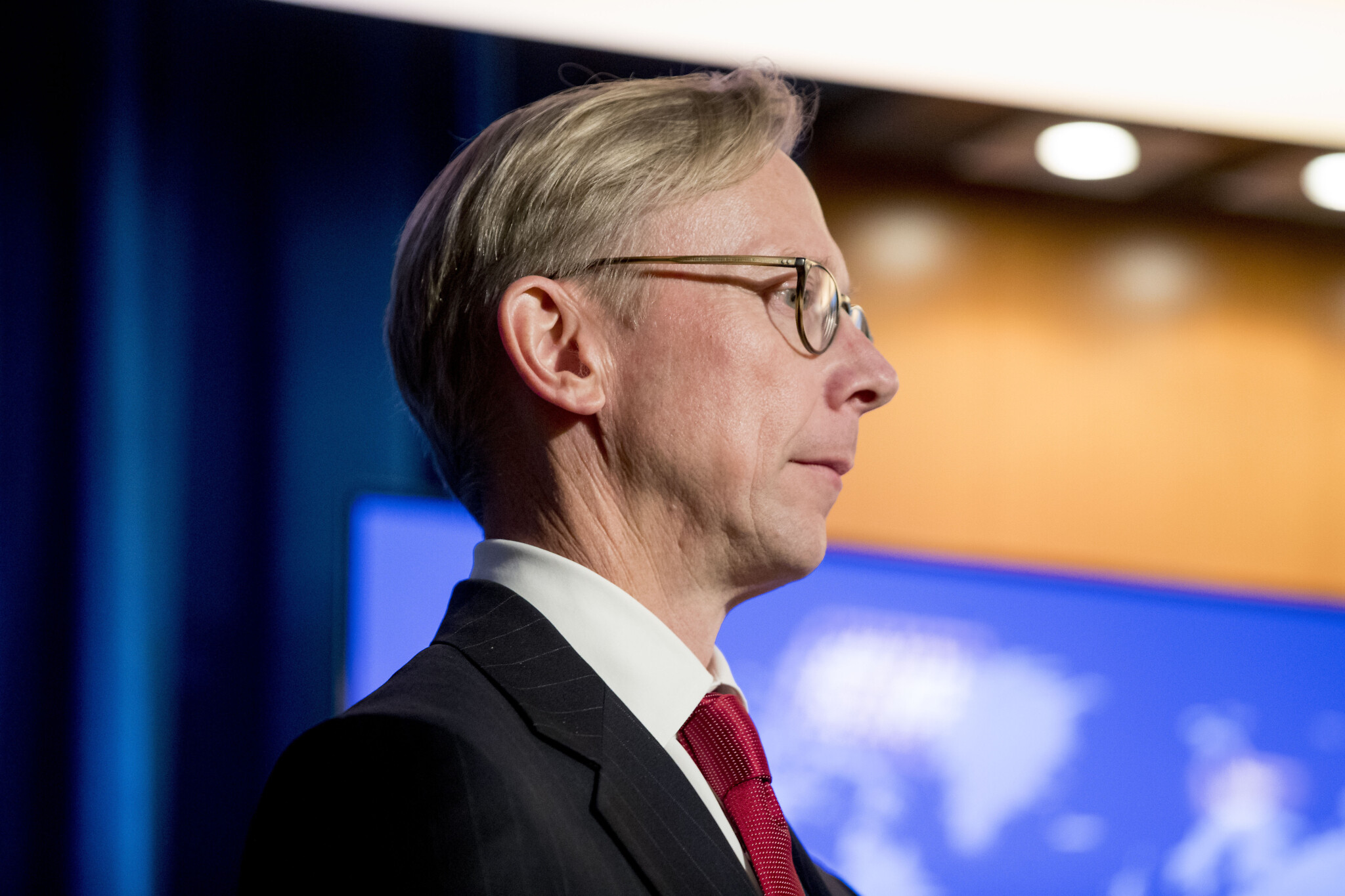
US special representative on Iran Brian Hook at a news conference at the State Department in Washington, November 18, 2019. (Andrew Harnik/AP)

“The president has shown a lot of restraint,” Brian Hook, the State Department’s Special Representative for Iran, told reporters Monday.

“We very much hoped that Iran would not miscalculate and confuse our restraint for weakness. But after so many attacks, it was important for the president to direct our armed forces to respond in a way that the Iranian regime will understand.”

Iran ‘pushed the envelope’

Trump mulled and then deferred retaliation against Iran several times this year over its attacks on foreign oil tankers, the downing of a US drone and the brash September drone-and-missile assault on oil plants in Saudi Arabia, which took out nearly half of Riyadh’s oil output.

Each time, the US leader fell back on more economic sanctions, despite them having had little visible impact on Tehran’s expansive regional military operations.

Since October, the Hezbollah Brigades, which the Pentagon said are supported by the Iranian Revolutionary Guard Corps, carried out some 11 rocket attacks on installations in Iraq where US and coalition forces are present.

But until this weekend the response has been minimal.

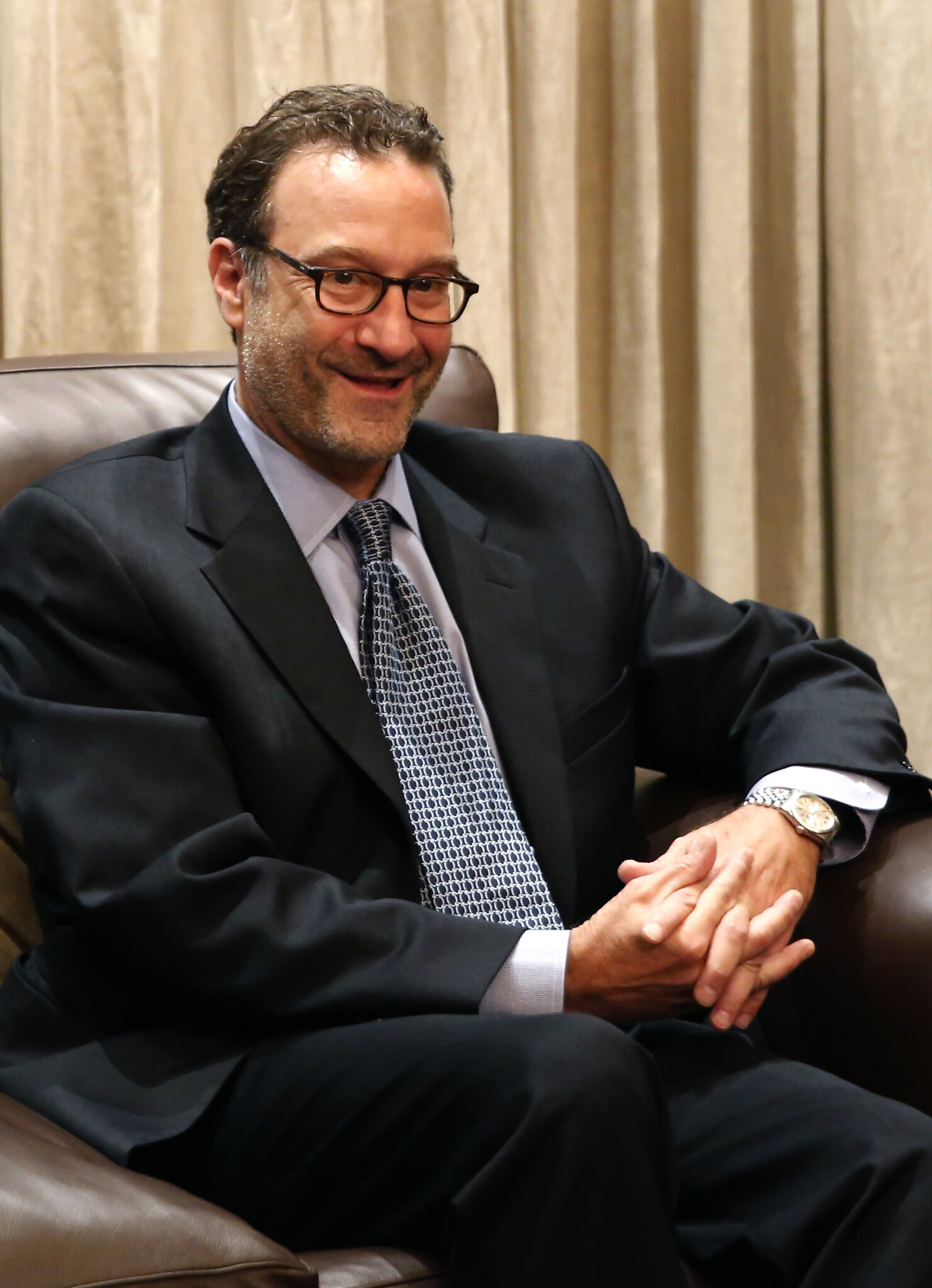
David Schenker, Assistant Secretary of State for Near Eastern Affairs, in Beirut, Lebanon, September 9, 2019. (Hussein Malla/AP)

What changed was the death of an American, which “pushed the envelope,” State Department Assistant Secretary David Schenker said Monday.

“We thought it important to hit a significant target set to send a very clear message to them about how serious we take American lives,” he said.

“This was a defensive action designed to protect American forces and American citizens in Iraq, and it was aimed also at deterring Iran,” Secretary of State Mike Pompeo told Fox news.

“President Trump has been pretty darn patient, and he’s made clear, at the same time, that when Americans’ lives were at risk we would respond.”

‘Invidious choice’

With Sunday’s airstrikes, Schenker stressed that Washington aims to deter Iran, but does not seek to escalate the conflict between the two countries.

But experts warned that Tehran could receive a different message: that, as long as Americans aren’t directly injured, it could boost its covert activities.

Richard Haass, president of the Council on Foreign Relations, said that Iran’s growing political weight in Iraq and Trump’s aim to reduce the Pentagon’s footprint in the Middle East could well result in Baghdad pressuring the United States to pull out.

Martin Indyk, a former US ambassador to Israel, said Iran could sense an opportunity to further provoke Washington, knowing where Trump’s red line is.

“The consequences of strikes against Iranian proxies going into a US election year is that the Iranians now believe they own the higher rungs of the escalation ladder,” he said on Twitter.

“If US troops in Iraq come under attack Trump will have an invidious choice: another [Middle East] war or backing down.”


Trump accuses Iran of ‘orchestrating’ Baghdad embassy breach and violence

Posted December 31, 2019 by Joseph Wouk
Categories: Uncategorized

Source: Trump accuses Iran of ‘orchestrating’ Baghdad embassy breach and violence | The Times of Israel

US president tells Iraqis they should use force to secure complex, where angry protesters broke through the outer wall and burned property following US airstrike on local militia

Protesters burn property in front of the US embassy compound, in Baghdad, Iraq, Dec. 31, 2019. (Khalid Mohammed/AP)

Protesters burn property in front of the US embassy compound, in Baghdad, Iraq, Dec. 31, 2019. (Khalid Mohammed/AP)

US President Donald Trump on Tuesday blamed Iran for an attack hours earlier by militia supporters who broke into the US Embassy compound in Baghdad and damaged property, along with previous Iraqi Shiite militia attacks on US interests.

“Iran killed an American contractor, wounding many. We strongly responded, and always will. Now Iran is orchestrating an attack on the US Embassy in Iraq. They will be held fully responsible,” he tweeted.

“In addition, we expect Iraq to use its forces to protect the Embassy, and so notified!” Trump added.

The US military said its airstrikes were in retaliation for last week’s killing of an American contractor in a rocket attack on an Iraqi military base that it blamed on the Kataeb Hezbollah militia.

Trump tweeted from his estate in Palm Beach, Florida, where he is in the midst of two-week-plus vacation. He’s been largely out of sight and the tweet marked his first comment on the weekend US airstrikes in Iraq and Syria that killed 25 member of the Iran-backed group.

US President Donald Trump makes a video call to the troops stationed worldwide at the Mar-a-Lago estate in Palm Beach, Florida, December 24, 2019. (Nicholas Kamm / AFP)

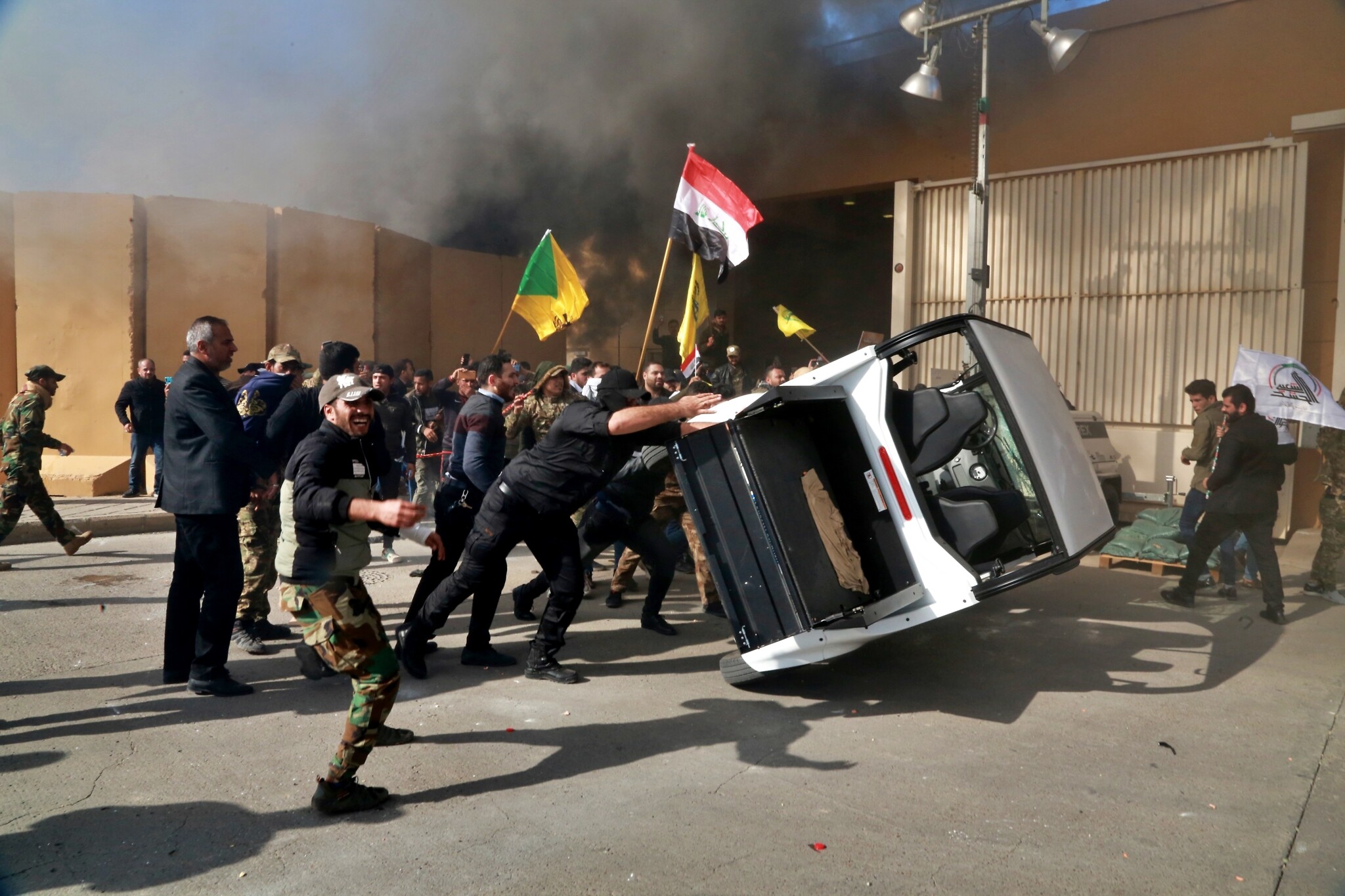
Dozens of Iraqi Shiite militiamen and their supporters broke into the US Embassy compound in Baghdad on Tuesday, smashing a main door and setting fire to a reception area, angered over the deadly US airstrikes. Tear gas and sounds of gunfire ensued.

The US ambassador and his staff were evacuated, Reuters reported.

An Associated Press reporter at the scene saw flames rising from inside the compound and at least three US soldiers on the roof of the main embassy building. There was a fire at the reception area near the parking lot of the compound but it was unclear what had caused it. A man on a loudspeaker urged the mob not to enter the compound, saying: “The message was delivered.”

Iraqi security forces made no effort to stop the protesters as they marched to the heavily fortified Green Zone after a funeral held for those killed in the US airstrikes, letting them pass through a security checkpoint leading to the area.

The protesters, many in militia uniform, stopped in a corridor after about 5 meters (16 feet), and were only about 200 meters away from the main building.

Protesters damage property inside the US embassy compound, in Baghdad, Iraq, December 31, 2019. (Khalid Mohammed/AP)

Smoke from the tear gas rose in the area, and at least three of the protesters appeared to have difficulty breathing. It wasn’t immediately known whether the embassy staff had remained inside the main building or were evacuated at some point.

There was no immediate comment from the Pentagon and the State Department on the breach of the US Embassy in Baghdad.

Yassine al-Yasseri, Iraq’s interior minister, appeared outside the embassy at one point and walked around to inspect the scene. He told the AP that the prime minister had warned that the US strikes on the Shiite militiamen would have serious consequences.

“This is one of the implications,” al-Yasseri said. “This is a problem and is embarrassing to the government.”

He said more security will be deployed to separate the protesters from the embassy, an indication the Iraqi troops would not move in to break up the crowd by force.

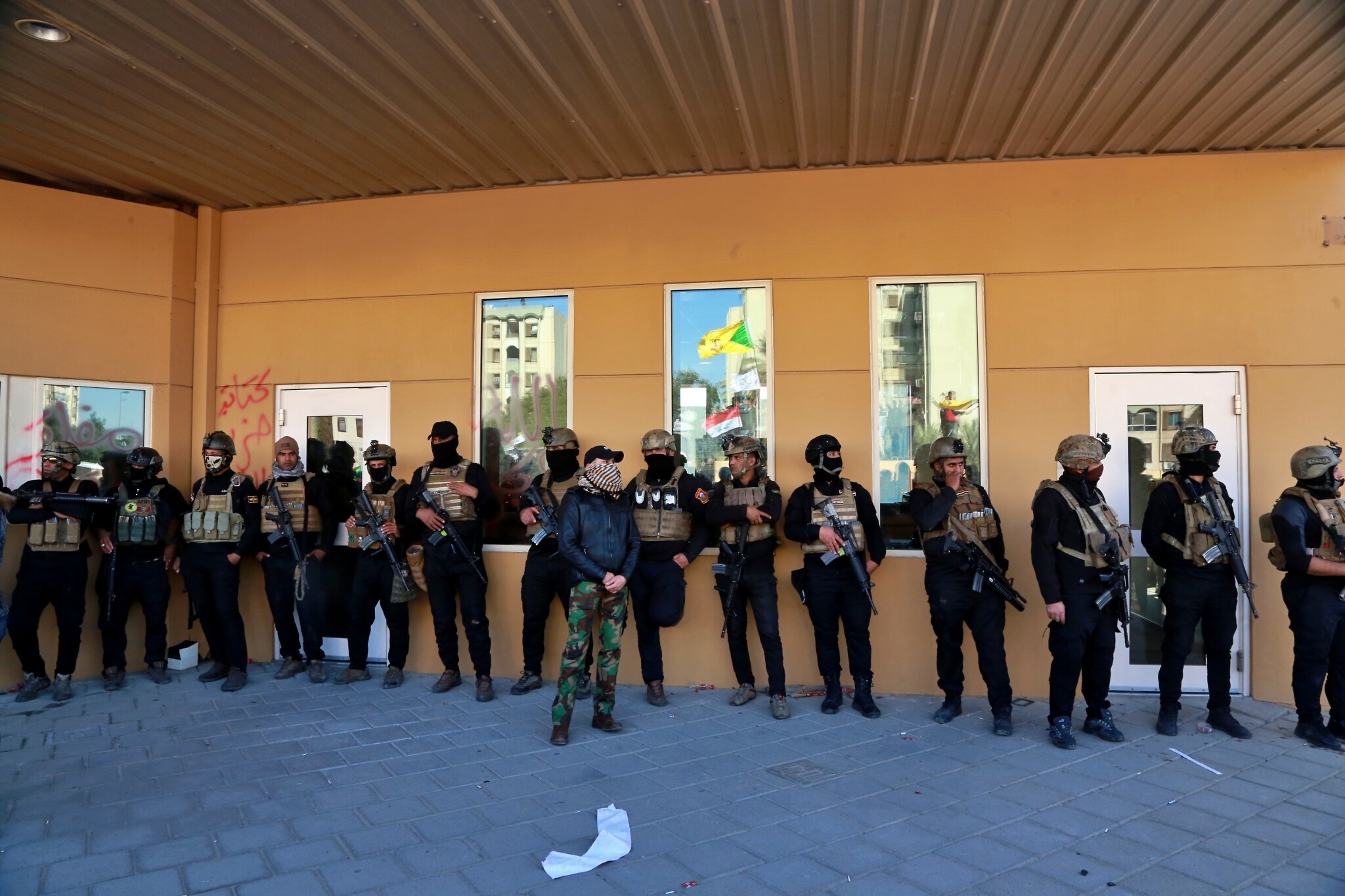
Iraqi security forces stand guard in front of the US embassy in Baghdad, Iraq, December 31, 2019. (Khalid Mohammed/AP)

Seven armored vehicles with about 30 Iraqi soldiers arrived near the embassy hours after the violence erupted, deploying near the embassy walls but not close to the breached area. Four vehicles carrying riot police approached the embassy later but were forced back by protesters who blocked their path.

There were no reports of casualties, but the unprecedented breach was one of the worst attacks on the embassy in recent memory.

The developments represent a major downturn in Iraq-US relations that could further undermine US influence in the region and also weaken Washington’s hand in its maximum pressure campaign against Iran.

Iraq has long struggled to balance its ties with the US and Iran, both allies of the Iraqi government. But the government’s angry reaction to the US airstrikes and its apparent decision not to prevent the protesters from reaching the embassy signaled a sharp deterioration of its ties with the US.


Ex-IDF intel chief: Now that US engaged Iran, Israel must be careful 

Posted December 30, 2019 by Joseph Wouk
Categories: Uncategorized

Source: Ex-IDF intel chief: Now that US engaged Iran, Israel must be careful – The Jerusalem Post

Israel must now be more careful about its own airstrikes in Iraq, former IDF intelligence chief Amos Yadlin tweeted on Monday.

By YONAH JEREMY BOB

Destroyed headquarters of Kataib Hezbollah militia group are seen after in an air strike in Qaim, Iraq, December 30, 2019 (photo credit: REUTERS/STRINGER)
Destroyed headquarters of Kataib Hezbollah militia group are seen after in an air strike in Qaim, Iraq, December 30, 2019
(photo credit: REUTERS/STRINGER)
Following Sunday’s US airstrikes on Iranian-affiliated militias in Iraq, Israel must now be more careful about its own airstrikes in Iraq, former IDF intelligence chief Amos Yadlin tweeted on Monday.

Yadlin said that the US decision to directly engage Iran and its proxies with kinetic force was “the crossing of a rubicon” in which the US set down a red-line for Iran that it will respond with military force if the Islamic republic kills Americans.

This past weekend a missile attack from an Iran-affiliated militia killed a US contractor and wounded US soldiers at a base in Iraq.

Iranian-affiliated militias had launched missile attacks on US forces for several weeks, but this was the first attack in which an American was killed.

Until now, many Israeli officials had criticized the Trump administration for failing to use force to respond to Iran’s shooting down of a US drone, to an Islamic republic attack on Saudi oil fields and to the missile attacks on US bases.

In contrast, Israel has carried out airstrikes on Iranian militias in Iraq for between several months to even a year.

Last week, IDF Chief-of-Staff Lt. Gen. Aviv Kochavi even discussed the attacks in a more public and detailed manner than ever before.Yadlin’s point was that Israel had more freedom of action in Iraq against Iranians as long as the US was not acting.

However, now that the US is taking action against Iran, Israel must be more careful about such airstrikes in Iraq and coordinate them more closely with the overall US strategy.

Yadlin noted the risk that Iraq could force US forces out of the country and that Israel does not want to be the cause of such a scenario.


Off Topic:  Trump condemns ‘horrific’ Monsey attack, blames ‘evil scourge of anti-Semitism’ 

Posted December 30, 2019 by Joseph Wouk
Categories: Uncategorized

Source: Trump condemns ‘horrific’ Monsey attack, blames ‘evil scourge of anti-Semitism’ | The Times of Israel

Canada’s Trudeau calls incident a ‘sad reminder of the rising numbers of such heinous acts’; Bahrain denounces ‘terrorist’ knife assault, without mentioning Jewish victims

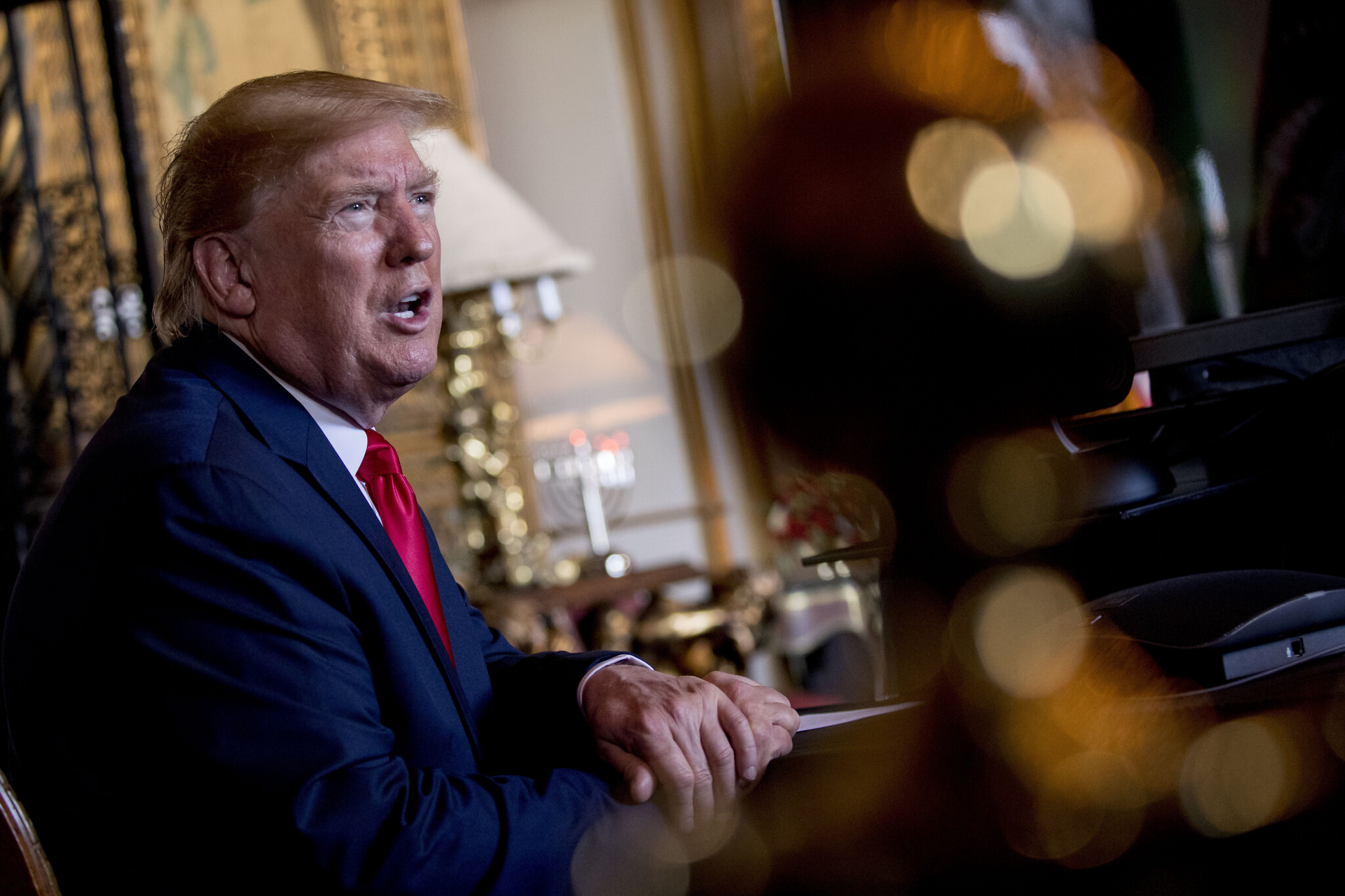
US President Donald Trump speaks to members of the media following a Christmas Eve video teleconference with members of the military at his Mar-a-Lago estate in Palm Beach, Florida, December 24, 2019. (Andrew Harnik/AP)

US President Donald Trump speaks to members of the media following a Christmas Eve video teleconference with members of the military at his Mar-a-Lago estate in Palm Beach, Florida, December 24, 2019. (Andrew Harnik/AP)

After almost a day of silence, US President Donald Trump commented Sunday on the stabbing spree at a rabbi’s home in Monsey, New York, the night before that left five injured, calling it “horrific” and wishing the victims a full recovery.

“The anti-Semitic attack in Monsey, New York, on the 7th night of Hanukkah last night is horrific,” Trump tweeted.

“We must all come together to fight, confront, and eradicate the evil scourge of anti-Semitism,” Trump said. “Melania and I wish the victims a quick and full recovery.”

Earlier, Canadian Prime Minister Justin Trudeau responded to the stabbings by urging action against anti-Semitism.

“Antisemitism and hate have no place anywhere in our world and we must continue to stand together against them,” Trudeau tweeted. “Last night’s attack on Jews celebrating Hanukkah in New York is a sad reminder of the rising numbers of such heinous acts. We must all come together to end them.”

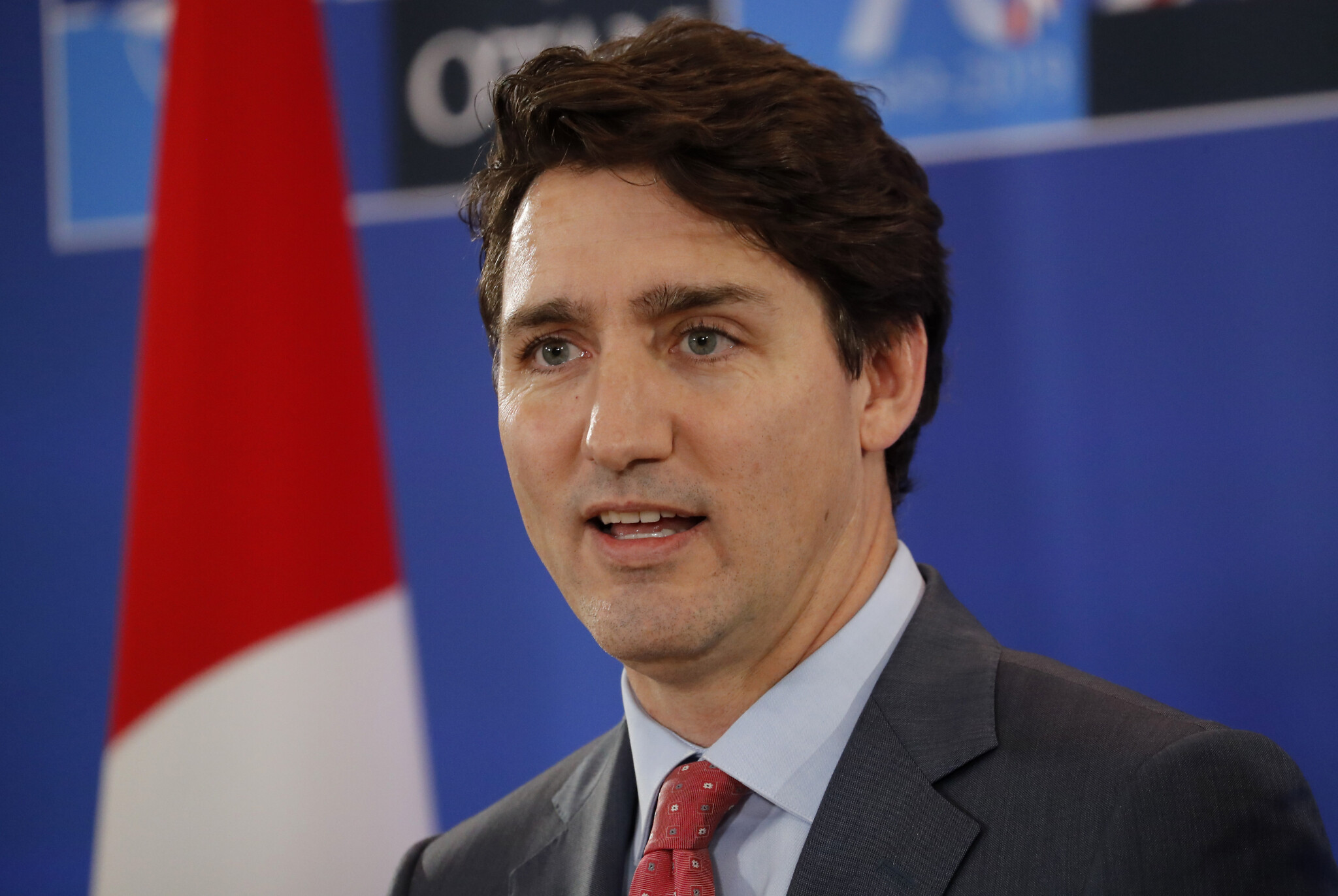
Canadian Prime Minister Justin Trudeau speaks during a media conference at the conclusion of a NATO leaders meeting at The Grove hotel and resort in Watford, Hertfordshire, England, December 4, 2019. (Frank Augstein/AP)

Of those injured at least two were seriously hurt in the Saturday night attack and a suspect, Grafton Thomas, 37, was later arrested after fleeing the scene.

Thomas allegedly entered the home of Rabbi Chaim Leibish Rottenberg, who was hosting a Hanukkah gathering, and began wildly stabbing those inside. He is facing charges of five counts of attempted murder.

Britain’s opposition Labour party leader Jeremy Corbyn also tweeted about the New York stabbing, along with a rash of anti-Semitic graffiti that appeared overnight Saturday in northern London neighborhoods.

“How terrible that Hanukkah started with a message of hope and on this last day we face antisemitic graffiti in London and horrific stabbings at a party in New York,” wrote Corbyn, who last week tweeted a Hanukkah message that highlighted the idea of hope as expressed by the eight-day festival. “We stand with all our communities facing hate.

“We send love and solidarity to Jewish communities around the world,” he wrote.

Corbyn earlier this month lost a general election to incumbent UK Prime Minister Boris Johnson and his conservative party. Corbyn’s campaign was dogged with accusations that as Labour leader he has not done enough to root out anti-Semitism in the party.

The Bahraini Foreign Ministry put out a statement condemning the Monsey stabbing — but without mentioning that Jews were the target and victims, or that it happened at a Hanukkah event.

The ministry said it “condemns the terrorist knife attack that took place near New York City in the United States of America, which resulted in the injury of a number of people, wishing them a speedy recovery.”

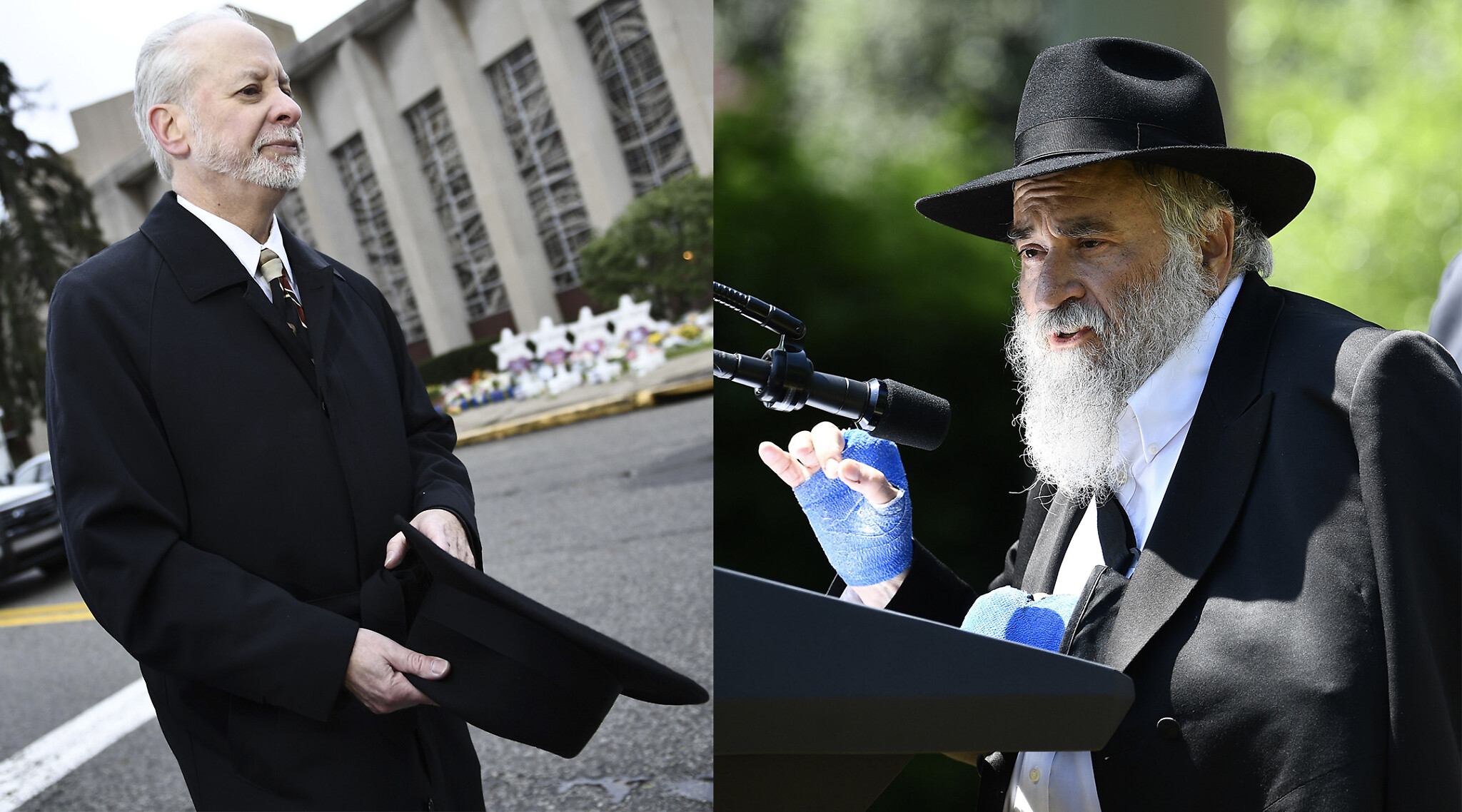
Rabbi Jeffrey Myers, left, outside the Tree of Life building in Pittsburgh, October 29, 2019, and Rabbi Yisroel Goldstein in the Rose Garden of the White House, May 2, 2019. (Getty Images/via JTA)

Bahrain stressed “the solidarity of the Kingdom with the United States of America in the face against terrorism, reiterating the unwavering position of the Kingdom of Bahrain in rejecting violence, extremism and terrorism regardless of its forms and motives.”

Trudeau’s remarks, apparently the first response to the stabbing by a world leader, came as Trump began to draw criticism for continuing to remain mum about the incident.

Trump was active on Twitter during the morning, to share a post that gave the alleged name of the anonymous whistleblower whose complaint ultimately led to Trump’s impeachment by the House, and to attack House Speaker Nanacy Pelosi, who, he wrote, “should spend more time in her decaying city and less time on the Impeachment Hoax!”

Yair Rosenbeg, a senior writer at Tablet Magazine, shared Trump’s Pelosi tweet and commented: “Five Jews are in the hospital after being chopped up at a menorah lighting, following a spree of anti-Semitic assaults in NY all Hanukkah. Fortunately, President Tweet is doing presidential things, reassuring the Jewish community and confronting the issue. Haha, who am I kidding.”

Trump’s daughter and senior adviser Ivanka Trump, who is Jewish, commented earlier on the stabbing assault, tweeting, “The vicious attack of a rabbi in Monsey, NY last night was an act of pure evil.

“As we pray for the victims, may the candles of Chanukah burn bright through this darkness,” she wrote.

Suspect in Hanukkah celebration stabbings Grafton Thomas, 37, from Greenwood Lake, leaves the Ramapo Town Hall in Airmont, New York after being arrested on December 29, 2019. (Photo by Kena Betancur / AFP)

Speaking at the scene of the attack on Sunday morning, New York Governor Andrew Cuomo called the rampage “an act of domestic terrorism,” adding that the state stood “in solidarity with all members of the Jewish community.”

President Reuven Rivlin said Sunday on Twitter that he was “shocked and devastated by the terrible terror attack in New York.”

Prime Minister Benjamin Netanyahu also denounced the rampage.

“Israel strongly condemns the latest expressions of anti-Semitism and the cruel attack in the middle of Hanukkah at the home of the rabbi in Monsey,” he said at the opening of the weekly cabinet meeting on Sunday.


Iran condemns US strikes against Iraqi proxy group as ‘terrorism’ 

Posted December 30, 2019 by Joseph Wouk
Categories: Uncategorized

Source: Iran condemns US strikes against Iraqi proxy group as ‘terrorism’ | The Times of Israel

Foreign Minister Katz lauds attacks, calling them a ‘turning point in the regional response to Iran & its proxies’

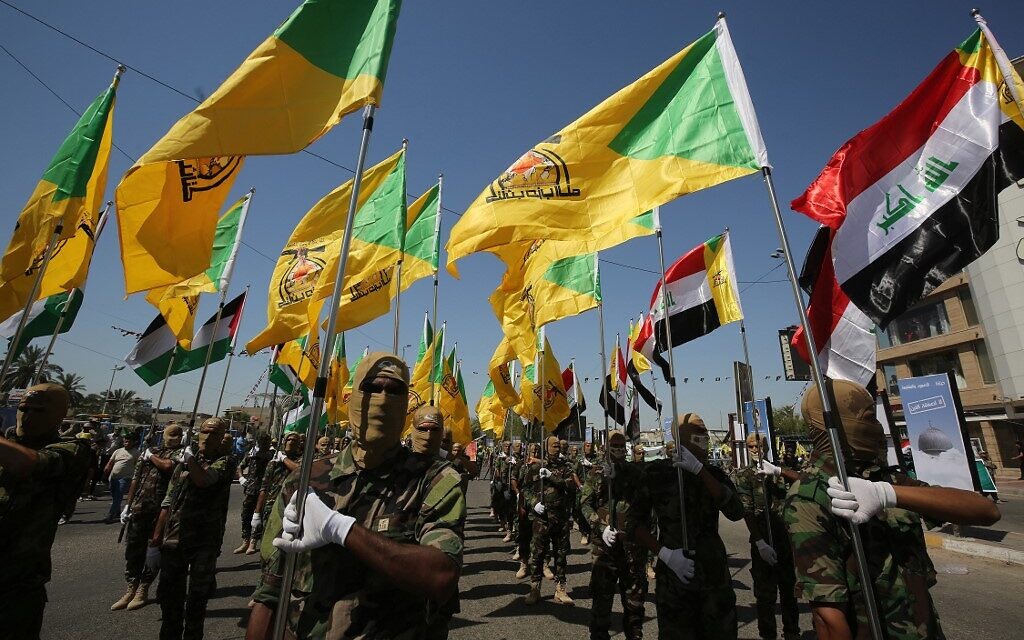
Iraqi Shiite fighters from the Iran-backed Hezbollah brigades march during a military parade in Baghdad on May 31, 2019. (Photo by AHMAD AL-RUBAYE / AFP)

Iraqi Shiite fighters from the Iran-backed Hezbollah brigades march during a military parade in Baghdad on May 31, 2019. (Photo by AHMAD AL-RUBAYE / AFP)

Tehran “strongly condemned” the United States on Monday for engaging in what it described as a clear example of terrorism, following a series of airstrikes against an Iranian proxy group that had carried out an attack on US forces in Iraq.

It was the first known US attack on an Iranian proxy in Iraq since 2011.

“With these attacks, the United States has shown its strong support for terrorism, disregarding the independence and sovereignty of countries, and must accept responsibility for the consequences of this illegal act,” state news agency IRNA quoted Foreign Ministry spokesman Abbas Mousavi as saying.

The US carried out airstrikes against Kataeb Hezbollah (Hezbollah Battalion) in Iraq and Syria on Sunday, killing 19 fighters, two days after a barrage of 30 or more rockets was fired at the K1 Iraqi military base in Kirkuk, an oil-rich region north of Baghdad, killing a US civilian contractor and wounding four US service members as well as Iraqi security forces.

The US on Monday released what it said was video footage of the attacks.

Israel praised the strikes, with Foreign Minister Israel Katz tweeting that they were a “turning point in the regional response to Iran & its proxies” and asserting that “if Iran fails to understand the power of the US they will be making a big mistake.”

“In response to repeated Kata’ib Hizbollah (KH) attacks on Iraqi bases that host… coalition forces, US forces have conducted precision defensive strikes against five KH facilities in Iraq and Syria,” a Pentagon spokesman said in a statement on Sunday.

Foreign Minister Israel Katz at a Likud election campaign stop in Jerusalem, September 16, 2019. (Yonatan Sindel/Flash90)

The strikes against three locations in Iraq and two in Syria “will degrade KH’s ability to conduct future attacks” against coalition forces, the statement added.

“KH has a strong linkage with Iran’s Quds Force and has repeatedly received lethal aid and other support from Iran that it has used to attack” coalition forces, the Pentagon said, referring to the external arm of Iran’s Revolutionary Guards.

Kataeb Hezbollah is led by Abu Mahdi al-Muhandis, one of Iraq’s most powerful men. In 2009, the State Department linked him to the elite Quds Force of Iran’s Revolutionary Guard, designated a foreign terrorist organization by President Donald Trump earlier this year.

The Lebanon-based Hezbollah movement also denounced the US strikes, calling them a “foolish decision” and stating that those responsible will “bear the consequences.”

“We strongly condemn the brutal and obscene American aggression against Kataeb Hezbollah positions in Iraq,” the group said Monday. “Those who made the decision to attack will soon discover the stupidity of this criminal decision, its consequences and its ramifications.”

Iraqi army units are deployed during military operations of the Iraqi Army’s Seventh Brigade in Anbar, Iraq on December 29, 2019. (AP Photo/Nasser Nasser)

While the two groups share a name they are not connected, although both are backed by Tehran.

Speaking in Florida on Sunday, US Defense Secretary Mark Esper said that he, Secretary of State Mike Pompeo and Joint Chiefs chairman General Mark Milley had discussed “other options that are available” to respond to Iran with US President Donald Trump.

“We will take additional actions as necessary to ensure that we act in our own self-defense and we deter further bad behavior from militia groups or from Iran,” he declared.

Pompeo said the “decisive response” made clear that the US ”will not stand for the Islamic Republic of Iran to take actions that put American men and women in jeopardy.”

The military spokesman for Iraq’s outgoing prime minister Abel Abdel Mahdi decried “a violation of Iraqi sovereignty.”

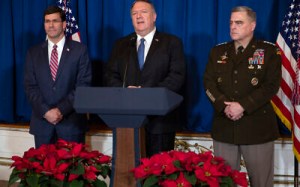
US Secretary of Defense Mark Esper (left) and Chairman of the Joint Chiefs of Staff General Mark Milley (right) listen as Secretary of State Mike Pompeo delivers a statement on Iraq and Syria, December 29, 2019. (AP Photo/ Evan Vucci)

Another powerful pro-Iran faction, Assaib Ahl al-Haq — whose leaders were recently hit with US sanctions — called for Americans to withdraw from Iraq.

“The American military presence has become a burden for the Iraqi state and a source of threat against our forces,” it said in a statement. “It is therefore imperative for all of us to do everything to expel them by all legitimate means.”

The US maintains some 5,000 troops in Iraq. They are there based on an invitation by the Iraqi government to assist and train in the fight against the Islamic State group.

The militia strike and US counterstrike come as months of political turmoil roil Iraq. About 500 people have died in anti-government protests in recent months, most of them demonstrators killed by Iraqi security forces.


US strikes 5 Iranian Al Qods/militia bases in Syria and Iraq. Iranian casualties – DEBKAfile

Posted December 30, 2019 by Joseph Wouk
Categories: Uncategorized

Source: US strikes 5 Iranian Al Qods/militia bases in Syria and Iraq. Iranian casualties – DEBKAfile

DEBKAfile Exclusive:  The five targets struck by the US air force on Monday, Dec. 29, on both sides of the Syrian-Iraqi border, were centers of the Iran-supported Iraqi Kata’ib Hezbollah Shiite militia and Revolutionary Guards Al Qods – at al Qaim, Iraq and the Abu Kamal region in Syria. At least 25 were reported killed and 55 injured, including Iranian officers.

The assault came 24 hours after 30 rockets fired at the US K-1 base near Kirkuk killed an American civilian contractor and injured four US soldiers. This was the first US direct military assault on Iranian Revolutionary Guards forces. It began shortly after US Secretary of State Mike Pompeo paid a quick, unannounced visit to the US Ain al-Assad airbase with orders for the base commanders, following a decision reached in Washington that the K-1 attack by an Iranian-backed militia must not go unanswered. Pompeo flew out of Iraq shortly after his conference at Ain al-Assad airbase.

Earlier, an Iraqi interior ministry official informed Arab media of intelligence received that Al Qods chief Gen. Qassem Soleimani had ordered the Hezballah militia in Baghdad to withdraw the Iran-supplied rockets from storage and transfer them to residential areas as a means of deterring a US attack. The militia was also told to reserve those rockets exclusively for use against US forces. This disclosure strongly indicated that the Hezballah militia was in the direct sights of the impending US assault.


The Modern Day Miracle of Hanukkah 

Posted December 29, 2019 by Joseph Wouk
Categories: Uncategorized


Iran hopes naval drill with Russia, China will show US not a global power 

Posted December 29, 2019 by Joseph Wouk
Categories: Uncategorized

Source: Iran hopes naval drill with Russia, China will show US not a global power – The Jerusalem Post

“Iran befriends the powerful because it has strategic ambition.”

Iran, China and Russia participate in naval drills in the Gulf of Oman (photo credit: WANA NEWS AGENCY/REUTERS)
Iran, China and Russia participate in naval drills in the Gulf of Oman
(photo credit: WANA NEWS AGENCY/REUTERS)
It wasn’t exactly the largest naval exercise in the world, or even a very significant one in terms of firepower. But when Iran, Russia and China gathered ships at Chabahar in southeastern Iran on Friday, they were sending a message to the world.

Iranian photographers were on hand to capture the moment that ships from the three countries readied to go to sea. It was a big moment for Tehran in which it showed that US sanctions and attempts to isolate Iran are not working.

Acting-US Navy Secretary Thomas Modly said on Friday, in a statement that appeared timed to coincide with the naval drill, that Iran could conduct provocative actions in that region.

Since May, tensions have risen in the Gulf between the US and Iran. According to US assessments, Iran has attacked six oil tankers, as well as Saudi Arabia and downed a US drone. Iran continues to harass ships and even took control of a UK-flagged vessel in July. Islamic Revolutionary Guard Corps fast boats continue to be a threat.

Iran says the drill is covering 17,000 sq. km. Several ships are involved – including Iran’s Sahand and Alborz destroyers, two Iranian logistic ships and the Neyzeh missile boat. Iran sent a hospital ship as well.

Iran’s R. Adm. Hossein Khanzadi said the drill is important for security.

On Saturday, the navies continued to work together for the second day. It is a four-day drill that will span the Indian Ocean and Gulf of Oman. Iran and India recently agreed to increase economic relations via Chabahar Port. The US has said it won’t block funding for this initiative.At the same time reports indicated the Chinese Xining guided-missile destroyer arrived at Chabahar for the joint exercise. Iran said Russia sent three ships from its Baltic Fleet, including the Yaroslav Mudry frigate, the Yevgeniy Khorov tanker and Yel’nya rescue boat.

Iran has refitted its destroyers and considers them among its most advanced ships. Xining is also a very modern ship and Russia’s Mudry was commissioned a decade ago.

Iranian media has played up this major success, while it has gone mostly unnoticed in Russia and China. Iran’s Press TV aired footage along with other channels.

Iranian Foreign Minister Javad Zarif highlighted the joint drills. Iran is pushing a maritime security initiative called HOPE (“Hormuz Peace”) and it wants to show off its responsible behavior.

“Our joint military drills in the Sea of Oman and Indian Ocean with our Russian and Chinese partners make clear our broader commitment to secure vital waterways,” he said. Zarif has made recent diplomatic initiatives to Oman, and Iran’s president has gone to Malaysia and Japan. Iran also hosted a major Indian delegation. This comes as Iran is under criticism for cracking down on protests.

The Iranian Embassy in China shared a tweet arguing this was a transitional era that shows not everything is done by the West. “We are living in a post-Western world.”

The message is that this joint work brings stability. Iran’s Tasnim News had a similar message, saying the joint work reduces US hegemony. “Iran befriends the powerful because it has strategic ambition.”

As usual, Iran is not secretive about what it wants. It wants friends in India, China and Russia and to displace the role of the US. It accomplishes this through official initiatives like this naval drill but also through other means, such as its clandestine activities to sabotage ships in the Gulf, to have proxies fire rockets at US personnel in Iraq, by showing it can down a US drone or that it can fire rockets at Israel, a key US ally.

Iran is pushing the diplomatic envelope in Turkey, Malaysia, Japan, Oman and elsewhere. It wants to show it can multitask while the US is merely pushing sanctions. At the same time Iran continues to reduce adherence to the Iran nuclear deal.

Iran’s navy is no match for the US, but its purpose behind these drills is not to show it can confront the US. It is to show that it can partner with other countries that also want to challenge US power in the long term.

US defense strategy today is to focus on confronting Russia and China. Sea power is key to this. Yet the US Navy has been unclear as to what kind of ships it will build, scrapping ideas for littoral combat ships and a stealth-like DD-21 program, which also appears to have been a multi-decade failure.

While the US searches for a policy and future combat vessels, the message from Tehran is that symbolically the US is no longer a global hegemon.


Photos show rockets used against the US were also shipped to Hezbollah 

Posted December 29, 2019 by Joseph Wouk
Categories: Uncategorized

Source: Photos show rockets used against the US were also shipped to Hezbollah – The Jerusalem Post

Rockets used against US forces in Iraq were same type Israel found in 2009 being shipped to Hezbollah

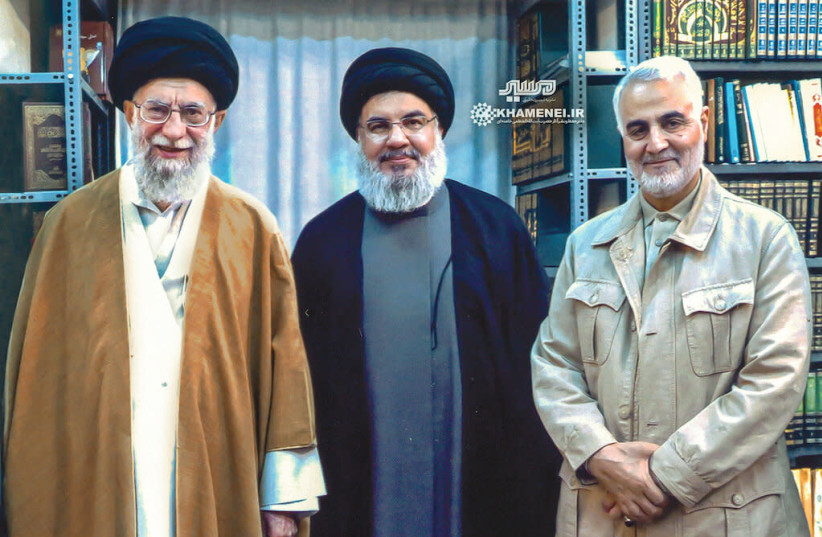
Iran Supreme Leader Ayatollah Ali Khamenei with Hezbollah Secretary General Hassan Nasrallah and IRGC Quds Force Commander Qasem Soleimani (photo credit: KHAMENEI.IR)
Iran Supreme Leader Ayatollah Ali Khamenei with Hezbollah Secretary General Hassan Nasrallah and IRGC Quds Force Commander Qasem Soleimani
(photo credit: KHAMENEI.IR)

In 2009 Israel intercepted a shipment of rockets destined for Hezbollah. The crates of rockets were a similar 107mm type as were found near a base in Iraq where a US contractor was killed and several US forces injured on Friday.

Photos posted online on Saturday show that the rockets used in the attack on the K-1 base northwest of Kirkuk were 107mm rockets that weighed 18 kg. They were manufactured in 2016. A Bongo truck with an improvised rocket launched in the back was used to fire them. A total of three rows of 12 tubes was used. Four of the rockets were found intact. 32 others were fired at K-1 base, setting off munitions in a storage facility there on Friday night and killing one US contractor. This is the most serious incident since May when rockets have been fired at bases in Iraq where US forces are present. The US has blamed Iranian-backed proxies for the past attacks. In a November attack on Qayyarah a similar salvo of 107mm rockets was fired.

In 2009 Israel intercepted the MV Francop. According to the Ministry of Foreign Affairs website and the IDF Spokesperson at the time, the ship included munitions hidden in containers. Israel put photos online in 2009 from the ship that showed rockets. These were 107 mm rockets with the same style logo and lettering on them. The rockets say “107mm rocket” and “Lot, Date, N.W and R.No” printed on them. In 2009 the rockets had been made in 2007 and were lot number 6 and weighed 19.25 kg. They had an “R.NO” of 8872 that was hand printed. The K-1 rockets were also 107 mm, had lot number 570, made in 2016. They were 18kg and in hand written notes their “R No.” was 3965.

In 2009 Israel noted that it had intercepted 500 tons of arms en route to Syria on the MV Francop. This included 3,000 Katyusha rockets. The consignment was “en route via Syria to the Hizbullah terrorist organization,” the MFA wrote at the time.

More recent photos of these types of Iranian rockets have turned up. These include 2016 production numbers from lots 524 to 526. It appeared these were used by the Syrian regime in Eastern Ghouta in February 2017. More turned up in January 2018 in fighting in Syria near Damascus. This means that these types of rockets were frequently sent to Syria but that they also likely ended up in the hands of other pro-Iranian allies, including Hezbollah and likely in the hands of pro-Iranian members of the Popular Mobilization Units in Iraq. These include groups such as Kataib Hezbollah and Asaib Ahl al-Haq which US officials have accused in the past of threatening US forces. The US sanctioned the head of Asaib Ahl al-Haq in early December.

That means these PMU groups had the motive, means and opportunity to carry out the attack. What is missing is information on where precisely this lot number of 2016 rockets of the 107mm type were exported by Iran. Reports earlier this month indicated Iran was sending ballistic missiles to Syria. It is known that 107mm rockets have been sent to the PMU in the past according to the Center for Strategic and International Studies.