Archive for the ‘Voice of America’ category

Iranian Dissidents Demand Investigation Into Islamic Regime’s Secret U.S. Lobbying Network

February 20, 2017

Iranian Dissidents Demand Investigation Into Islamic Regime’s Secret U.S. Lobbying Network, Washington Free Beacon, , February 20, 2017

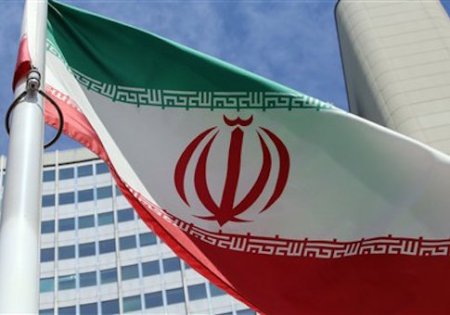
An Iranian flag flies in front of the building where closed-door nuclear talks take place in Vienna, Austria, Wednesday, July 2, 2014. (AP Photo/Ronald Zak)

An Iranian flag flies in front of the building where closed-door nuclear talks take place in Vienna, Austria, Wednesday, July 2, 2014. (AP Photo/Ronald Zak)

A group of nearly 100 prominent Iranian dissidents is demanding that Congress launch investigations into clandestine efforts by the Islamic Republic to influence U.S. policy using a network of lobbyists and propaganda pieces placed in Voice of America’s Persian service, according to a letter sent to leading lawmakers and obtained by the Washington Free Beacon.

The group of dissidents, composed of prominent Iranian voices that oppose the hardline regime in Tehran, says that Congress is not doing enough to expose the Iranian regime’s lobbying efforts in D.C. and propaganda network, which is said to include some at VOA Persia.

Iranian-American groups claiming to represent American interests are said to be carrying water for the Islamic regime inside the White House and on Capitol Hill, according to these dissident voices.

The letter cites VOA’s Persian service as a source of pro-Iran corruption. The Free Beacon has reported multiple times on claims that VOA has been infiltrated by Iran regime loyalists who seek to spin coverage in a favorable way for Tehran. In one instance, an Iranian dissident was barred from appearing on VOA Persia for voicing critical opinions about the regime.

The letter comes at a time when the Trump administration is seeking a tougher approach on Iran for its repeated violations of international accords governing the nuclear deal. The dissidents maintain that U.S. officials have been too soft on the regime and ignored its surreptitious efforts to make American diplomacy more generous to Tehran.

“We write to request a congressional hearing on the efforts of Tehran’s theocratic regime to influence U.S. policy and public diplomacy toward Iran,” the dissidents write to Sen. Bob Corker (R., Tenn.) and Rep. Ed Royce (R., Calif.), the heads of Congress’ foreign affair committees, according to copies of the letter obtained by the Free Beacon.

“We ask that you launch an investigation into any and all lobbying activities of Iranian-American groups, which ostensibly promote the interests of our community but whose real goal is to undermine long-term U.S. national security interests in Iran and its neighborhood,” the dissidents write.

Organizations such as the National Iranian American Council, or NIAC, which played a key role in championing the Iran nuclear agreement and worked closely with the Obama administration, have long operated under a cloud of suspicion. Dissident voices maintain that NIAC in particular serves as a mouthpiece for Iran’s regime in the United States.

The group of dissidents—which includes foreign policy experts, university professors, interfaith leaders, prominent real estate developers, and human rights activists, among others—also requested that Congress shine a light on VOA Persia’s activities.

“We also ask that you launch an inquiry into the Voice of America’s Persian service, whose bloated budget is the largest of all language services under the VOA,” they write.

“There have been numerous instances of editorials by the VOA’s Persian service that have been lenient or favorable to Iran’s clerical despots. We consider this to be totally unacceptable and demoralizing for pro-democracy Iranians who watch these broadcasts.”

Such hearings would compliment past efforts by Congress to investigate corruption at VOA, including what many describe as its pro-Tehran bent.

Peter Kohanloo, a chief architect of the letter and president of the Iranian American Majority, told the Free Beacon that the missive represents an unprecedented effort by Iranian dissidents to expose the Iranian regime’s “influence-peddling agenda.”

“Never before have so many Iranian dissidents of different political persuasions and backgrounds come together to speak with one unified voice,” Kohanloo told the Free Beacon. “This historic letter is a clear and unmistakable message to Tehran that we will no longer tolerate their influence-peddling agenda, which divides our community and demoralizes pro-democracy activists in Iran.”

The group of dissidents informed lawmakers that they are all willing to testify publicly at congressional hearings on both of these matters.


Congress Calls for Investigation into VOA for Pro-Iran Corruption

October 18, 2014

Congress Calls for Investigation into VOA for Pro-Iran Corruption, Washington Free Beacon, October 17, 2014

(Surprise! Not. — DM)

Hassan RouhaniHassan Rouhani / AP

“Regrettably, while VOA-PNN has given voice to the pro-Tehran crowd inside the Beltway, it has censored the views of those who seek a democratic, secular, and non-nuclear republic in Iran,” Sadeghpour said in a statement provided to the Free Beacon.

*****************

Congress is calling for an investigation into Voice of America’s (VOA) Persian language news service as a result of what they say is the station’s systemic pro-Iran bias and cozy ties to the anti-American ruling regime, according to a letter sent recently to Secretary of State John Kerry.

Lawmakers and Iranian dissidents have long accused VOA’s Persian News Network (PNN) of producing sympathetic coverage of the Iranian regime and blacklisting prominent Iranian opposition voices from appearing on the air.

The call from Congress for an investigation into these alleged practices comes just a month after the Washington Free Beacon revealed that PNN had banned from the network a prominent Iranian opposition member and placed him on a so-called “black list” after he attacked Iran’s ruling regime for sponsoring terrorism.

Nine House lawmakers from both sides of the aisle are now demanding that the State Department launch a formal investigation into potential mismanagement at PNN, according to a letter sent to Kerry on Wednesday and obtained by the Free Beacon.

“We request that you [Kerry] look into this matter and investigate any possible mismanagement and slanted coverage of news by VOA-PNN, including the oversight of management, staffing, and content,” the lawmakers wrote.

Those members concerned about PNN’s coverage include Reps. Steve Cohen (D., Tenn.), Dana Rohrabacher (R., Calif.), Steve Stockman (R., Texas), Trent Franks (R., Ariz.), Howard Coble (R., N.C.), and several others.

The lawmakers say that their Iranian-American constituents have been complaining about PNN’s failure to cover Iran’s human rights abuses and other matters that are potentially embarrassing to the ruling regime.

“We have received complaints from our Iranian-American constituents that VOA-PNN programs have neglected to adequately cover the abysmal situation of human rights violations in Iran, particularly the alarming and dramatic rise in executions,” they write in the letter.

“During [Iranian] President Hassan Rouhani’s first term in office, nearly 900 hangings have been ordered with very few of these executions receiving VOA-PNN coverage,” they say. “In our efforts to protect and give voice to vulnerable populations, we must ensure that VOA-PNN upholds its mission to provide truthful news and does not suppress the voices of those Iranians seeking human rights protections and Democratic change in their country.”

In addition to a significant rise in executions, including one scheduled for a female rape victim who spoke out against her attacker, Iran has continued its pursuit of nuclear weapons and support for terrorism in the Middle East.

PNN critics, including former staffers and guests, have discussed systematic corruption at the network that includes a policy of censoring those who criticize the regime and those who may reveal information damaging to the network’s senior officials, some of whom have had ties to the Iranian regime.

“We are concerned that this network, which is meant to promote freedom and democracy through objective news and information, may have harmed instead of helped the plight of Iranians seeking to claim their human rights,” the lawmakers state in their letter.

Iranian-American community leaders welcomed Congress’ call to investigate PNN.

Majid Sadeghpour, political director of the Organization of Iranian-American Communities-US (OIAC), said that U.S. taxpayers expect better of VOA.

“Regrettably, while VOA-PNN has given voice to the pro-Tehran crowd inside the Beltway, it has censored the views of those who seek a democratic, secular, and non-nuclear republic in Iran,” Sadeghpour said in a statement provided to the Free Beacon.

Regime opponents who have been invited onto PNN say that their comments have been censored, and in some cases they have been thrown off the air.

Nikahang Kowsar, an Iranian cartoonist, journalist, and regime critic, told the Free Beacon that he was booted off PNN’s airwaves in March in the midst of an interview for discussing corruption in Iran’s oil industry that could be traced back to high-level officials.

Kowsar was being interviewed on VOA Persian’s Last Page program when the host was apparently ordered to cease the interview.

“I was waiting for the second round of questions” when a PNN host claimed that “he was told and ordered not to ask any more questions to me,” recalled Kowsar. “Then a gentleman from the studio came and disconnected my microphone.”

Kowsar said he was shocked by the experience. He later petitioned the Broadcasting Board of Governors (BBG), which oversees VOA and PNN, about the incident.

“When I was in Iran I went to prison for drawing a cartoon, I was cut off from national TV … I was censored in Iran, so somebody who has been censored inside the Islamic republic is not news. But being in the VOA studios in the U.S., the land of the free, and then learning that I have to be censored is … news.”

“If VOA is the channel that wants to talk about American values and freedom of speech and is run by people who have the Islamic republic mindset, that’s not nice,” Kowsar said.  “In a way you see that the Islamic republic has exported its values to the heart of Washington and I can’t tolerate that.”

In September—a few months after Kowsar was booted off air—Majid Mohammadi, an Iranian-American academic and critic of Tehran’s hardline regime, was purportedly placed on the station’s “black list” for comparing the Islamic Republic to the terror group Islamic State (IS, ISIS, or ISIL).

“After the program, I was called and one of the staff members of PNN (Mr. Homan Bakhtiar) told me that Mr. Mohammad Manzarpour, the editor, has put me in the black list and PNN will no longer contact me for providing my expertise on Middle East issues in VOA Persian programs,” Mohammadi later wrote in a letter to the BBG.

PNN editor Manzarpour has been singled out for particular criticism by several of the station’s critics and even former employees who have worked with him.

Manzarpour, they allege, has had ties to the Iranian regime and uses his platform at PNN to censor information he finds objectionable.

Manzarpour, his critics note, has previously worked for Iran’s Atieh Bahar Consulting company, which helps foreign companies invest in Iran’s oil sector and “acts as intermediary between them and the government,” according to the Iranian American Forum.

Manzarpour’s previous ties to Atieh Bahar could influence his editorial decisions at PNN, Kowsar said.

“There is something wrong over there, a virus,” Kowsar explained. “You feel there is a sort of conflict of interest over there. Why should somebody coming from Atieh Bahar be in charge of the editorial staff over there?”

“When he cuts me off from a program relating somehow to the oil [industry] … you feel something sketchy over there,” he said.

Setareh Derakhshesh, the director of the VOA-PNN, admitted to the Free Beacon last month that the network has had issues and that she is working to rectify the appearance of a pro-Iran bias.

“We are very well aware [of the issues] that VOA Persian had,” she said at the time. “We have actually rebranded” in recent years and are “aware of the bad press and infighting and the one sidedness.”

However, VOA Persian has “turned a corner and made changes,” she said. “We still have a long way to go but we know we are improving.”

