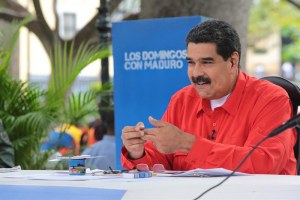
To take one example, Venezuela’s attorney general declared a Constitutional Court sentence unconstitutional, and thus ruptured the country’s long constitutional tradition. After that usurpation of power, the constitution was effectively rewritten on President Nicolas Maduro’s intervention, putting an end to the separation of powers that has always been integral to rule of law in Venezuela.
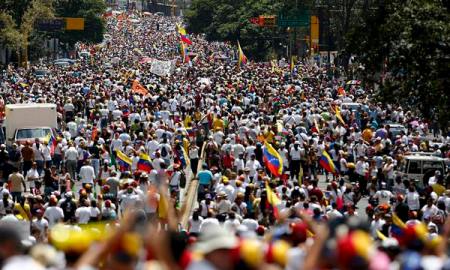
For that alone, Venezuelans are protesting, and Maduro finds himself rejected by 80% of Venezuelans according to polls.
But the constitutional crisis has more than one dimension. Despite the judicial meddling described above, Maduro also proposed drafting an entirely new constitution even though a simple reading of three of the articles of the present one do not let him do it unauthorized. But, Venezuela’s Constitutional Chamber of the Supreme Court confirmed he can do it on the grounds that “he is the people.”
It shows that Venezuela’s constitutional crisis has come a long way from its orgins as an apparently normal document. How did it come to this?
It happened when the late President Hugo Chávez in 1999 first asked Venezuelans if they wanted a new constitution and held a referendum about it. In that vote, the people said ‘yes’ and after it was drafted there was an Approval Referendum. Because the people said ‘yes’ again, that is how the current constitution came to be. Then in 2007, when Chávez submitted changes to the 1999 Constitution, in another approval referendum, the people said ‘no’ to his proposal. Whatever its merits, it worked tolerably well institutionally.
There are three constitutional articles at stake in this current crisis: Article 5 that says the power belongs to the people by their votes and it’s not transferable. Article 348 says the president has the initiative to ask people if they want a new constitution accompanied by basic considerations such as how many people are going to be elected to the Constitutional Assembly, or the time they are going to be deliberating among other matters. Then a third article, number 347, says the people are the ones who decide if they want a new constitution. Only after people say ‘yes’ to a Consultation Referendum, can the process continue.
The president changed all of these norms when he said he did not need to ask people if they wanted a new constitution. After the Electoral Board’s silence, the seven Magistrates of the Constitutional Chamber of the Supreme Court, the judges who interpret the constitution, sided with the president, ruling that the president represents the people so there is no need to ask. After this decision, the attorney general asked the magistrates to clarify and explain how they interpret the constitution so as to transfer the power of the people’s voting rights to decide to draft a new constitution to the president. There is little chance the magistrates are going to respond because they are not obligated.
The two constitutional breaches described are so ridiculous that even fifth-grade elementary textbooks, which currently say that to have a new constitution there must be two referenda, one to ask the people if they want a new one and another to get their approval with the draft, will need to be rewritten.
Maduro’s route was to go directly to the Electoral Board, which is in theory an independent branch although it has significant ties to the government, asking them to go ahead with his proposal. The board said ‘yes, Mr. President let’s do it,’ failing to use their criteria and powers to block the president’s wish because he wasn’t asking the people first, just as any fifth grader would have been taught.
Making things worse, Maduro said that after he got the changes he wanted, there would be a Consultation Referendum instead of an Approval Referendum, the difference being that the first is not binding in case people say ‘no.’
People are not dumb. They know Maduro is backed by a bought-and-paid-for military directed by Cubans and another army of seven magistrates of whom nobody knows how they got their law diplomas, their masters’ degrees, and their doctorates.
This is why at least 50% of the 80% of the people that are against Maduro have gone out at least one day during the last two months to protest in the streets and many have gone out much more. What’s at stake now is the last chance to keep Venezuelans’ freedom and not be another Cuba or communist-style country. Venezuela’s protestors don’t want a country whose contitutions can be manipulated and changed at will, and where the only solid reality is that the country’s rulers are chosen by Cubanized party elite inside the government. That is a privilege that belongs to the people alone, and by their marching, the Venezuelans are showing that they know it.
Javier Caceres is the editor of notiven.com, a leading opposition Internet site located in Caracas, Venezuela.




 anneinpt
 artaxes
 danmillerinpanama
 davidking1530
 Peter Hofman
 Joseph Wouk
 Peter
Peter Louisiana Steve
 WarSclerotic
Recent Comments