Archive for the ‘U.S. Congress’ category

The U.S. President is Not Omnipotent

December 28, 2014

The U.S. President is Not Omnipotent, Algemeiner, December 28, 2014. This article was originally published by Israel Hayom.

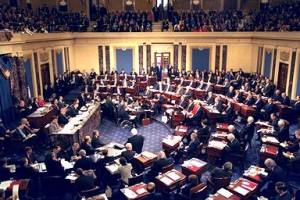
full-senate-300x200The United States Senate.

Will the 114th Congress follow in his footsteps, or will it abdicate its constitutional responsibilities?

Congress has often abdicated its constitutional power in the area of foreign policy, failing to fully leverage the power of the purse: funding, defunding and “fencing.”

***************

White House and State Department officials contend that, irrespective of Congress, President Barack Obama can apply effective diplomatic, commercial and national security pressure and coerce Israel to partition Jerusalem and retreat from Judea and Samaria to the 9-15 mile-wide pre-1967 sliver, surrounded by the violently turbulent and unpredictable Arab street.

U.S. Ambassador to Israel Dan Shapiro recently voiced this inaccurate underestimation of the power of Congress — which has traditionally opposed pressure on Israel, echoing the sentiments of most constituents — saying, “What is unmistakable about our foreign policy system is that the Constitution provides the president with the largest share of power.”

The assertion that U.S. foreign policy and national security are shaped by presidential omnipotence can be refuted by the U.S. Constitution as well as recent precedents. The Constitution was created by the Founding Fathers, who were determined to limit the power of government and preclude the possibility of executive dictatorship. They were apprehensive of potential presidential excesses and encroachment, and therefore assigned the formulation of foreign policy and national security to both Congress and the president. Obviously, the coalescing of policy between 535 legislators constitutes a severe disadvantage for the legislature.

According to the Congressional Quarterly, the U.S. Constitution rectified the mistakes of its predecessor, the Articles of Confederation, upgrading the role of Congress to the primary branch of the U.S. government. “Hence, the first article of the Constitution is dedicated to Congress. The powers, structure, and procedures of the national legislature are outlined in considerable detail in the Constitution, unlike those of the presidency and the judiciary.”

Unlike all other Western democracies — where the executive branch of government dominates the legislature, especially in the area of international relations and defense — the U.S. Constitution laid the foundation for the world’s most powerful legislature, and for an inherent power struggle over the making of foreign policy between the legislature and the executive, two independent, co-equal and co-determining branches of government. Moreover, while the president is the commander in chief, presidential clout depends largely on congressional authorization and appropriation in a system of separation of powers and checks and balances, especially in the areas of sanctions, foreign aid, military assistance, trade agreements, treaty ratification, appointment confirmation and all spending.

Congressional power has been dramatically bolstered since the Vietnam War, Watergate, the Iran-Contra affair and globalization, which have enhanced the involvement of most legislators in international issues, upgraded the oversight capabilities of Congress, dramatically elevated the quality and quantity of some 15,000(!) Capitol Hill staffers and have restrained the presidency.

However, Congress has often abdicated its constitutional power in the area of foreign policy, failing to fully leverage the power of the purse: funding, defunding and “fencing.” Legislators prefer to focus on domestic issues, which represent their constituents’ primary concerns and therefore determine their re-electability. Hence, they usually allow the president to take the lead in the initiation and implementation of foreign and national security policies, unless the president abuses their trust, outrageously usurping power, violating the law, assuming an overly imperial posture, pursuing strikingly failed policies, or dramatically departing from national consensus (e.g., the deeply rooted, bipartisan commitment to the Jewish state). Then, Congress reveals impressive muscle as befits a legislature, which is the most authentic reflection of the American people, unrestrained by design, deriving its power from the constituent and not from party leadership or the president, true to the notion that “the president proposes, Congress disposes.”

For example:

  • On August 1, 2014, Democratic senators forced Obama to separate the $225 million funding of Iron Dome batteries from the highly controversial $2.7 billion immigration and border security bill.
  • Since 1982 the Senate has repeatedly refused to ratify the Convention on the Law of the Sea, and since 1999 it has rejected ratification of the Comprehensive Test Ban Treaty.
  • The January 2013 defense authorization bill tightened restrictions on the transfer of terrorists from Guantanamo to the U.S. In May 2009, Majority Leader Harry Reid foiled Obama’s attempt to close down the detention camp.
  • On February 17, 2011, Obama reluctantly vetoed a U.N. Security Council condemnation of Israel’s settlement policy, due to bipartisan congressional pressure.
  • In September 2012, a $450 million cash transfer to the Muslim Brotherhood regime in Egypt was blocked by Congress.
  • The 2012 budget cut into Obama’s foreign aid spending request by more than $8 billion.
  • In 2009, bipartisan congressional opposition prevented the appointment of Charles Freeman to chair the National Intelligence Council.
  • In 1990-1992, Congress approved a series of amendments, expanding U.S.-Israel strategic cooperation to unprecedented levels despite presidential opposition.
  • In 1990, President George H. W. Bush failed in his attempt to cut Israel’s foreign aid by 5 percent due to congressional opposition.
  • In January 1975, the Jackson-Vanik Amendment was signed into law, in defiance of the president.
  • Congress ended U.S. military involvement in Vietnam (the 1973 Eagleton, Cooper and Church Amendments), Angola (the 1976 Clark Amendment) and Nicaragua (the 1982-1984 Boland Amendments).
  • In 1991, Senator Daniel Inouye fended off administration pressure to withdraw an amendment to upgrade the port of Haifa facilities for the Sixth Fleet: “According to the U.S. Constitution, the legislature supervises the executive, not vice versa.”

Will the 114th Congress follow in his footsteps, or will it abdicate its constitutional responsibilities?

Obama set on obstructing Netanyahu’s re-election

December 4, 2014

Obama set on obstructing Netanyahu’s re-election, DEBKAfile, December 4, 2014

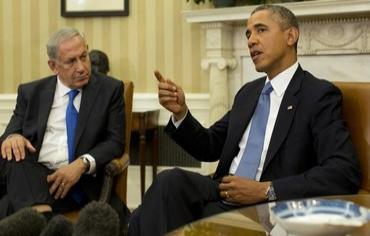
Obama Netanyahu 2013

The White House is still working on a detailed plan of action, but has lost no time in setting up appointments for the president to receive heads of the parties sworn to overthrow Netanyahu – among others, ex-minister Lapid, opposition leader Yitzhak Herzog of Labor and Tzipi Livni (The Movement), who was fired this week as Justice Minister along with Lapid.

******************

President Barack Obama and his White House National Security team headed by Susan Rice have decided to seize on the political crisis besetting the Israeli government and the upcoming general election on March 17 for action to bar Binyamin Netanyahu’s reelection to a fourth term as prime minister.

This decision reverberated through Future party leader Yair Lapid’s assertion Wednesday night, Dec. 3, after he was sacked as finance minister, that Binyamin Netanyahu would not be next prime minister. He laid claim to the premiership himself.

The Obama administration has maintained close ties with Lapid during the foreshortened 22 month-life of the departing Israeli government.

The White House is still working on a detailed plan of action, but has lost no time in setting up appointments for the president to receive heads of the parties sworn to overthrow Netanyahu – among others, ex-minister Lapid, opposition leader Yitzhak Herzog of Labor and Tzipi Livni (The Movement), who was fired this week as Justice Minister along with Lapid.

They will be accorded attractive photo-ops with Obama and joint communiqués designed to signify to the Israeli voter that the US president would favor their election to the future government and the country as a whole would gain tangibly from a different government to the incumbent one.

This White House campaign would be accompanied by leaks from Washington for putting Netanyahu and his policies in a derogatory light. Messages to this effect were transmitted to a number of serving political figures as an incentive to jump the Likud-led ship to opposition ranks. The US administration has begun hinting that it may emulate the Europeans by turning the screws on Israel as punishment for the prime minister’s signature policy of developing West Bank and Jerusalem development construction.

Accounts reaching DEBKAfile speak of an outburst of joy in the White House over news of the Netanyahu government’s breakup. It was seen as an opportunity to finally get rid of Binyamin Netanyahu and a golden opportunity to bring Israel back to negotiations with the Palestinians with the Obama administration finally chalking up a success.

At the same time, some senior sources in the US capital confided to DEBKAfile that administration joy over political developments in Israel could quickly prove premature – either in view of another round of violence overtaking the Middle East, or by once again misreading Israel’s political map before stepping in and so failing in its object. But for now the circles around the US president are “highly optimistic” about their chances of forcing Netanyahu’s exit, comparing them to the former success of the first President George Bush in forcing the ouster of the late Yitzhak Shamir as Israeli prime minister in the 90s.

Meanwhile, on Wednesday night, Dec. 3, US Congress passed the US.-Israel Strategic Partnership Act that raises by $200 million the value of emergency US weapons stocked in Israel to a total of $1.8 billion, and guarantees Israel’s qualitative military edge over its neighbors and foes. The motion, passed by a voice vote in the House after clearing the Senate unanimously last September, also promotes closer links in energy, water, homeland security, alternative fuel technology and cyber-security. The bill now goes to President Obama for his signature.

The new Congress will not kill a bad nuke deal with Iran

November 16, 2014

The new Congress  will not kill a bad nuke deal with Iran, Dan Miller’s Blog, November 16, 2014

(I wrote this article in response to an article posted today at Warsclerotic titled GOP poised to dash Obama’s Iran hopes | TheHill. — DM)

A bad nuke deal with Iran seems likely to be approved by the P5+1 negotiators under Obama’s guidance. It will be disastrous. However, if it is signed and Obama tries to implement it, there will be little if anything the Congress can do about it, even if it wants to, until January of 2017 — which will likely be too late. Even if it is not too late in 2017 it may or may not happen, depending on who is our President and who controls Congress.

I have written extensively about the Iran Scam and Obama’s untruths and obfuscations concerning it. I did so most recently in a semi-satirical article titled To get a nuke deal with Iran Obama and the Islamist world demonize Israel. Please read at least the Iran Scam article; to repeat here the points made there would make this post far too long.

According to an article titled GOP poised to dash Obama’s Iran hopes,

Sen. Lindsey Graham (R-S.C.) took to the Senate floor on Thursday to ask for unanimous consent to schedule a vote on a bill that would give Congress final approval over any deal, or else reinstate tough sanctions on Iran.

Democratic Sen. Chris Murphy (Conn.) quickly rejected the request, arguing that scheduling a vote on the deal would be “premature at this point.” He said it would “send a fairly chilling message” that U.S. officials at the table with Iran did not have full authority to negotiate an agreement.

But when Republicans take control of the Senate, they could move to pass that bill, or push legislation from Senate Foreign Relations Chairman Bob Menendez (D-N.J.) and Sen. Mark Kirk (R-Ill.) which would reinstate sanctions if Iran violates any deal.

Their bill also pledges military support for Israel if it decides to strike Iran’s nuclear facilities, which it has threatened to do.

. . . .

The president has already threatened to veto the legislation, but doing so would be politically risky. The bill already enjoys the support of 60 senators, including 16 Democrats, and there is sweeping support for a similar bill in the House.

A deal that’s not supported by Congress or seen as weak could also hurt the 2016 Democratic presidential nominee, especially if it fails to prevent Iran from obtaining nuclear weapons capabilities.

Obama has displayed utter disdain for the Congress and constitutional processes. He will most likely continue to do so, in spades, when the new Republican dominated Congress is seated in January. The perceptions of the author of the linked article are excessively optimistic, as suggested below.

As a lame duck President, Obama has little if anything to lose. Any impact on the 2016 elections of a bad nuke deal with Iran may well not be of substantial importance to Obama and, to the extent that it is, He will probably use His ample opportunities to “Gruber” – to obfuscate and lie effectively — about the facts and their consequences substantially to diminish any adverse impact of His actions on those elections.

There’s more here about Obama, Gruber and Grubering, which Obama continues to do with at least modest success.

As the Obama administration did from the beginning and continues to do with the ObamaCare debacle, it will “Gruber” the facts and  consequences of a nuke deal in presenting it to the Congress and the public. Should the next Congress nevertheless pass a bill which He does not like, He will veto it as He has promised to do. To override a veto requires the affirmative vote of two thirds of both houses under Article 1, Section 7, of the Constitution. Even in the unlikely event that an Obama veto is overridden, there is no reason to assume that He will apply the new law as Congress intends.

Congressional attempts to defund administration efforts to implement an agreement with Iran seem unlikely to work: multiple other governmental functions, facially unconnected with the matter, would still have to be funded. The parameters of their funding would have to be extraordinarily tight to avoid fund shifting. Even then, the Obama administration has shown itself to be extraordinarily adept at fund shifting regardless of congressional intent as reflected in seemingly clear statutory language.

Even were U.S. Sanctions – the only sanctions on which the Congress has any significant impact – to be reinstated, their enforcement would be up to the Obama administration, not the Congress. The administration would likely refuse to enforce them, as it has multiple times with other Federal laws of which Obama does not approve. Were the Congress or other interested parties to succeed in getting judicial review, the process would be long and the results uncertain until the Supreme Court granted and exercised review. That process could easily take years. In addition, it remains questionable whether the Congress, its representatives or anyone else would even have standing to initiate judicial action.

At the Federal level, legal actions cannot be brought simply on the ground that an individual or group is displeased with a government action or law. Federal courts only have constitutional authority to resolve actual disputes (see Case or Controversy). Only those with enough direct stake in an action or law have “standing” to challenge it. A decision that a party does not have sufficient stake to sue will commonly be put in terms of the party’s lacking “standing”. For Supreme Court decisions focusing on the “standing” issue, see, e.g., County of Riverside v. McLaughlin, 500 U.S. 44 (1991),Northeastern Fla. Chapter of the Associated Gen. Contractors v. City of Jacksonville, 508 U.S. 656 (1993) and Lujan v. Defenders of Wildlife, 504 U.S. 555 (1992). [Emphasis added.]

In any event Germany, Iran’s most substantial commercial partner and others who now deal with Iran, as well as Iran itself, have enjoyed substantial sanctions relief for long enough that the process is broken to the point that U.S. efforts to revive useful sanctions would likely be ineffective. According to an article at FARS News Agency, an Iranian source, posted on November 16th,

Chairman of the Iranian parliament’s National Security and Foreign Policy Commission Alaeddin Boroujerdi said imposing sanctions against Tehran is an already failed policy.

“The sanctions imposed on Iran are a failed policy; the sanctions tool has never been able to make the Iranian nation withdraw from its righteous positions,” Boroujerdi said in a meeting with new Italian Ambassador to Tehran Mauro Conciatori on Sunday. [Emphasis added.]

Sanctions have only resulted in ample financial loss for the European industrial and trade companies,” he added. [Emphasis added.]

The article claiming that a Republican controlled Congress can dash Obama’s hopes for a nuke deal with Iran also suggests that it can pledge “military support for Israel if it decides to strike Iran’s nuclear facilities.” It can certainly do that. However, just as the Obama administration has refused to enforce or simply ignored aspects of other legislation, it can refuse to enforce or simply ignore that pledge as well.

With the exception of a possible — but far from certain — prompt and effective Israeli military attack on Iran’s nuke facilities, the mess has gone too far for effective action. Israel, which rarely brags about what she can or intends to do, has quite properly been rather coy about the resources she can use against Iran. So have possible allies in the Middle East concerning such help as they may be willing and able to provide. However, Israel probably has substantial electromagnetic pulse (EMP) capabilities which could be used to damage Iran’s command and control facilities substantially.

The attack could be carried out using a nuclear warhead detonated after launch by one of Israel’s Jericho III missiles at high-altitude over north central Iran.

EMP affects computers and other electronics and would disrupt critical infrastructure that relies on electronics and electricity, such as communications, transportation, and other networks.

The burst would create “no blast or radiation effects on the ground,” the article stated.

“Coupled with cyber-attacks, Iranians would not know it happened except for a massive shutdown of the electric power grid, oil refineries, and a transportation gridlock,” the article said.

“Food supply would be exhausted and communication would be largely impossible, leading to economic collapse. Similarly, the uranium enrichment centrifuges in Fordo, Natanz, and widely scattered elsewhere, would freeze for decades.”

Iran more than likely also has substantial EMP capabilities, so unless Israel uses her own first, and sooner than Iran anticipates, it will be too late.

Summary and Conclusions

Sanctions may well have prompted Iran to agree to discuss a nuke deal with P5+1. However, the negotiations have done little beyond diminishing those sanctions to the point of ineffectiveness, while giving Iran ample time, incentive and opportunity to continue research on, and implementation of, its nuke plans. If preventing Iran from continuing its development of nukes had been the objective, or even a substantial  objective, Iran’s military facilities and advances on nuke development would have been central to any “interim agreement.” Far from being central, they were not even peripheral.

Obama and Iran nukes

From the beginning, as contended herehere, here and elsewhere, the “Grubered” interim agreement and White House Summary of it have given Iran every possible advantage and shielded its military facilities from effective scrutiny.

Some elections have consequences. Obama’s 2012 election had very unfortunate consequences. However, the 2014 elections will probably have few if any beneficial consequences with respect to the Iran Scam and come January 2017 it will probably be too late should effective action then be attempted.

If, as seems likely, a nuke deal with Iran, good for Iran and bad for the most of the rest of world is signed, it now appears that the only possible effective solution with a decent chance of success will be prompt military action by Israel, in conjunction with her temporary and therefore uncertain allies in the Middle East which are opposed to Iranian nukes.

I am well aware of the possible adverse consequences of such a strike, including extreme actions that Russia and her allies might take in response. However, the possibility of mutually assured destruction worked in the past and should work again. Russia, et al, unlike Iran, are not compelled by a barbaric religion to bring to the world Armageddon and the arrival of the Twelfth Imam. They want power, not death. If they and their enemies are obliterated, their current power and hopes of increasing it would be destroyed along with them.

Iran’s Ideological Camp Fears The Possibility Of A Nuclear Agreement Between Iran And The P5+1, Warns Rohani Government

November 7, 2014

Iran’s Ideological Camp Fears The Possibility Of A Nuclear Agreement Between Iran And The P5+1, Warns Rohani Government, MEMRI, A. Savyon, Y. Mansharof, and E. Kharrazi, November 6, 2014

(What might Obama and Kerry give the “ideologues” to encourage them to board their ship of State, the BHO Titanic? — DM)

Kayhan: “In Negotiations That Could Take Place In 2024, Iran Will Undoubtedly Come To The Negotiating Table With Tens Of Thousands Of Centrifuges That Are More Advanced Than Those It Has Today”; The Nuclear Mushroom Yields Results Once In A Decade

“Under Section 125 of our constitution, international commitments must be approved by the Majlis. But unfortunately, the Majlis members are not being updated at all in the nuclear negotiations issue… Government actions that disregard Majlis opinion will cause future problems, and will cause [the Majlis] to reject agreements that are against the interest of the people – which will have direct repercussions for the negotiating team.”

Democrats in the White House will try to turn their defeat in the elections to their diplomatic advantage. Obama is like a gambler who has lost everything, and he is sending his representatives to the [negotiating] table with empty pockets…

****************

Introduction

Both the U.S. administration and Iran’s pragmatic camp were last week preparing public opinion in their respective countries for the possibility that a nuclear agreement will be reached between Iran and the P5+1 by the November 24, 2014 deadline.[1] According to the emerging contours of the agreement, Tehran will apparently be allowed to operate 4,000 to 6,000 first-generation centrifuges,[2] and in return, in a move that will not require Congressional approval, the U.S. administration will suspend American sanctions.

The pragmatic camp in Iran, headed by Hashemi Rafsanjani and his proxy President Hassan Rohani, is pressuring the White House to reach an agreement with Iran right now, and identifying President Obama as “the weakest American president.”[3] At the same time, this camp’s leaders are laying the groundwork for obtaining Iranian approval for an agreement.

On October 22, 2014, President Rohani emphasized the need for engaging and negotiating with the enemy, framing doing so as the lesson that should be taken from the Shi’ite legend of Karbala – in contrast to the interpretation of these events commonly accepted in Iran.[4] On October 27, the pragmatic camp’s main organ, the Jomhouri-ye Eslami daily, called on the ideological camp not to sabotage the emerging agreement, stressed that the agreement was within the red lines set out by Iranian Supreme Leader Ali Khamenei, and warned the Khamenei camp that it must not cause Iran to miss this golden opportunity.

Furthermore, on November 2, 2014, two days before the nation marked the anniversary of the 1979 seizure of the U.S. Embassy and capture of its staff in Tehran, which this year coincides with Iran’s Ashura rituals, Ali Khorram, senior advisor to Iranian Foreign Minister Javad Zarif, told the reformist pro-Rohani newspaper Shargh that U.S.-Iran relations are now no longer hostile, and are even “friendly.” He claimed there had been a change for the better in U.S. policy, that the two countries need not wait for Judgment Day to trust each other, and that the time had come for them to end the hostility between them. He also said that they had common interests in Iraq and Syria, and that the Americans considered the U.S. Embassy takeover an “old wound.”[5]

In contrast, the ideological camp is alarmed at the prospect of an imminent nuclear deal, voicing its apprehensions that the national interests of the regime would be damaged and that there would be a U.S.-Iran rapprochement. On October 28, 2014, the day after Jomhouri-ye Eslami called on the ideological camp to refrain from sabotaging the agreement, Majlis member Ali Reza Zakani urged the Iranian security apparatuses to intervene, and warned the negotiating team that it would bear responsibility for a “bad agreement” that both crossed the regime’s red lines and failed to completely lift the sanctions.

At the same time, the daily Kayhan, which is close to Khamenei, attacked the emerging agreement from two angles: First, the agreement crosses Khamenei’s red lines and fails to immediately lift all anti-Iran sanctions, and second, following the defeat for U.S. President Barack Obama in the November 4 midterm elections, Iran could, in another decade, according to the newspaper, come to a possible negotiating table as a nuclear power with tens of thousands of advanced-generation centrifuges. It urged the negotiating team not only to not be deterred by White House threats that once the newly elected Republicans take office the sanctions will be increased and thus Iran should sign an agreement now, but also that Iran must give the U.S. an ultimatum. The newspaper also warned of plots and of an organized scheme led by “the men of fitna” past and present – hinting at collaboration among pragmatic camp leaders Rafsanjani and Rohani and Green Movement leaders and former presidential candidates Mir Hossein Mousavi and Mehdi Karroubi, both of whom have been under house arrest for several years for what the regime alleges was their role in the unrest of the 2009 presidential election. He was also hinting at coordination between them and the West, in order to anesthetize the public and Iran’s elites into inaction so that a nuclear agreement could be attained “no matter what the cost.” The paper also warned President Rohani to follow the orders issued by Khamenei on the nuclear negotiations, and even to refrain from talking with the U.S.

The website Afsaran, which is close to security circles, also expressed fears that Iranian negotiating team chief and Foreign Minister Mohammad Javad Zarif – and by allusion his entire camp – is seeking to depose Khamenei by securing a nuclear deal with the U.S.

This paper will review the reaction of Iran’s ideological camp to the possibility of an Iran-P5+1 nuclear agreement:

The Pragmatic Camp: Laying The Groundwork For An Agreement, Urging Ideologues To Accept It

Rohani: From Imam Hussein And The Legend Of Karbala, We Learn We Must Engage And Negotiate

In his October 22, 2014 speech in Zanjan, in northwest Iran, Rohani called on the ideological camp to accept his camp’s policy of engaging the U.S., depicting the legend of Imam Hussein’s martyrdom at Karbala as a paradigm justifying negotiating with the enemy, rather than its customary interpretation of promoting martydom. He said: “The lesson and message of Imam Hussein is brotherhood, unity, forgiveness, [and] accepting the other’s side’s repentance. The lesson of Karbala is one of constructive engagement and negotiation, as part of the logic and the instructions [of the religion or the leader].”[6]

This statement provoked considerable criticism from the ideological camp, especially from Khamenei’s close associate and the editor of Kayhan, Hossein Shariatmadari. Shariatmadari accused Rohani of distorting the Karbala legend, stressing that that the only way to follow its example was to hold fast and to resist the oppressive enemies, even at the price of martyrdom in following God’s path.[7]

Jomhouri-ye Eslami: The Agreement’s Opponents Must Not Make Iran Miss This Chance To Resolve The Nuclear Issue

On October 27, 2014, Jomhouri-ye Eslami wrote: “For over a week, there have been positive reports from both within and without [Iran] about the progress in the Iran-P5+1 nuclear negotiations – within Iran, from statements [by officials from] President Rohani himself to the foreign minister and members of the negotiating team, and outside Iran from senior Russian, Chinese, German, French and American officials. All have emphasized the imminence of a comprehensive nuclear agreement signed by November 25…

“While it is true that there may be some changes in the decision before all members of the P5+1 sign the agreement, it is clear – and this must be noted – that there is practically zero disagreement [among the parties]. Thus, in contrast to what is depicted in the Iranian media, all the parties are more optimistic than ever that the agreement will be signed by November 25. Under the agreement, Iran is satisfied with regard to [what is agreed about] the sanctions, the centrifuges, the [uranium] enrichment, and the nuclear facilities; according to some conservative leaders, the agreement is a victory for Iran…

“Those within [Iran] who oppose the nuclear agreement must be aware of reality – this opportunity to resolve the issue must not be missed. This is because the agreement was drafted within the framework of [Iran’s] national interests and is within the red lines that were set out; also, as senior members of the negotiating team and President Rohani himself have emphasized several times, Iran will not back down one single inch from its [nuclear] right. Additionally, the entire Iranian nation desires to reach an agreement that [both] includes the nation’s right and conclusively resolves the nuclear issue. Therefore, everyone must work for the success of the negotiating team and must refrain from taking measures and from [disseminating] propaganda that will cause problems on this path.[8]

In Ideological Camp, Great Fear Of The Emerging Agreement

Majlis Member Zakani: The Agreement Crosses The Regime’s Red Lines; I Am Asking The Security Apparatuses To Act; The Negotiating Team Will Be Held Responsible

In an October 28, 2014 Majlis speech, Majlis member Ali Reza Zakani warned: “News is coming in that an agreement has been reached between Iran and America. According to this information, red lines set out by the Islamic regime are crossed in it. I hereby warn the foreign minister on the issue of the nuclear boundaries [i.e. red lines]…

“The silence of the country’s diplomatic apparatus in the face of the babbling of the American negotiation representative [Wendy Sherman] – [babbling that] constitutes a reiteration of their exaggerated declarations – is leading to impudence, greed, and nonsensical statements on the part of ‘the Great Satan,’ America.

“I see the campaign promoted by those connected to the nuclear dossier [i.e. Foreign Minister Zarif] that is called ‘any bad agreement is preferable to none at all’ as a humiliation, and I vigorously condemn it. I am asking the security apparatuses to clarify to the Iranian nation what is behind this.

“The news coming in attests that the red lines set out by the Islamic regime have been crossed in the agreement; this will undoubtedly lead to the loss of the Iranian nation’s rights and to the trampling of its nuclear achievements. Accepting the oppressive demands of the American side regarding cutbacks in our [uranium] enrichment, transforming the very essence of parts of our nuclear industry, in return for the lifting of a small part of the sanctions, is unacceptable to the Iranian nation, and will harm the national interests and the interests of the Islamic Revolution.

“Under Section 125 of our constitution, international commitments must be approved by the Majlis. But unfortunately, the Majlis members are not being updated at all in the nuclear negotiations issue… Government actions that disregard Majlis opinion will cause future problems, and will cause [the Majlis] to reject agreements that are against the interest of the people – which will have direct repercussions for the negotiating team.”[9]
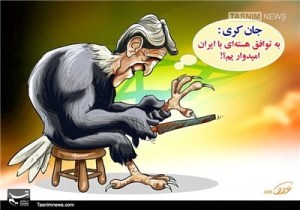
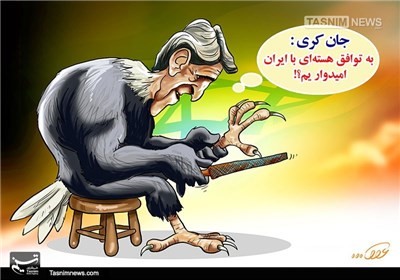
21114November 2, 2014 on Tasnimnews.com, which is close to Iran’s Islamic Revolutionary Guards Corps (IRGC): “Kerry’s Greedy Declarations.” U.S. Secretary of State Kerry the eagle, who is sharpening his talons against the backdrop of an Israeli flag, says: “I am optimistic with regard to the nuclear agreement with Iran.”

Kayhan: “In Negotiations That Could Take Place In 2024, Iran Will Undoubtedly Come To The Negotiating Table With Tens Of Thousands Of Centrifuges That Are More Advanced Than Those It Has Today”; The Nuclear Mushroom Yields Results Once In A Decade

On November 6, 2014, two days after the Republicans swept the U.S. midterm elections, Kayhan wrote: “Obama is now at his lowest point of popularity since he was elected… At the last nuclear negotiating venue [in Oman, at the level of Foreign Minister Zarif, U.S. Secretary of State Kerry, and EU High Representative on Foreign Policy Catherine Ashton, November 9-10, 2014], the Democrats in the White House will try to turn their defeat in the elections to their diplomatic advantage. Obama is like a gambler who has lost everything, and he is sending his representatives to the [negotiating] table with empty pockets… Apparently, the White House emissaries will recommend to the Iranian team to sign the nuclear agreement as soon as possible, since if they do not, Congress will enter the arena with a stick, threats, and sanctions…

“The [negotiating] venue in Oman must be the place where the [Iranian team] gives the Americans a final ultimatum, instead of listening to their boasts… Recently, American negotiating team leader Wendy Sherman quoted former U.S. secretary of state Madeleine Albright as saying that negotiations are ‘like a mushroom that grows best in the dark.’ Soon the result of the[se] negotiations, which have been conducted in the dark for over a year, will become clear.

“The last time that Western [officials] tried to feed Iran this poison mushroom and to force it to submit to the American greed was a decade ago. Undoubtedly, the 2014 mushroom will contain poison that was concocted in 2003. This is because at that point in the negotiations [i.e. in 2003], Iran was operating very few centrifuges, while today it has some 20,000 centrifuges. The Americans need to know that in the most optimal situation [for them], the nuclear mushroom yields results once in a decade… In negotiations that could take place in 2024, Iran will undoubtedly come to the negotiating table with tens of thousands of centrifuges that are more advanced than those it has today.”[10]

Kayhan: Rafsanjani And Rohani Are Bringing Up Various Issues To Distract The Elites From The Upcoming Agreement

On October 28, 2014, Kayhan wrote: “In the Geneva agreements, we put on the table [i.e. we were forced to give up] the product of three years of [uranium] enrichment to 20%, and [agreed to accept] a freeze on activity at the Fordow [enrichment facility] and a halt to the operations to complete the Arak [heavy water] facility, in return for the release of some $7 billion in Iranian funds…

“During the four-month extension [of the Geneva document] we expanded this give-and-take – and now America covets another part of Iran’s assets, saying ‘close Fordow or turn it into a research center; cut back your reserves of enriched [material] to 3.5%, to a quantity that we will tell [you], and remove [it] from Iran; [and] shut down 5,400 of your9,400 operating centrifuges, etc., etc. In return, we will examine your intentions for a period of seven to 20 years, [so that we can ascertain] whether or not we can trust you, or for example, [in return for] our promise not to impose new sanctions.’ This is truly a win-win game and constructive engagement [a jibe at President Rohani].

“The question is, to what point and from what assets does the government intend to pay for this extension of the negotiations and the incremental freeze [on Iran’s nuclear activity]?… When [Iran’s] nuclear technology peaked, Rafsanjani, Rohani, and even [Mir Hossein] Mousavi, and others, saw themselves as major shareholders in this progress. However when the [P5+1] began to impose its impediments, a green light was given for [Iranian] concessions based on a freeze on a small or large part of the [nuclear] program. Rafsanjani even announced his satisfaction with the Geneva negotiations, [saying], ‘Thanks to the negotiations, the taboo [on engagement] with America has been broken.’

“The negotiations apparently had two objectives: The first was to preserve the nuclear program, from the standpoint of [Iran’s right to] enrich [uranium]; the second was to get the sanctions lifted. If some political figures do not attach the requisite importance to the first, they undoubtedly need to explain the second. Therefore, [they must be asked] why not a single sanction was lifted after [Iran] made all these concessions [in the negotiations] – but the sanctions were only made harsher?…

“The acceptance of the West’s demands is the same mistake in judgment that has repeatedly led to an impasse, to the squandering [of Iran’s] strategic assets, [and] to defaming and labelling the critics [of the government] who support [the regime] in an effort to render them passive. The storm surrounding the law to preserve the hijab and modesty, the support for the modesty police, the accusations that the Majlis removed the science minister due to the scholarships scandal[11]… the exploitation of the crime of the acid attacks [against women in Isfahan by claiming that the ideological camp was behind them] – all these are taken from the script and from the organized attempt by the men of fitna and their supporters outside [Iran], with the aim of stirring up marginal scandals within Iran so that [the main issues] are ignored.

“The West sees that Iran’s irreplaceable role has redrawn the map of western Asia and the Middle East, [adding] the qualities of resistance and Islamic awakening in Iraq, Syria, Lebanon, Yemen,l and Bahrain, [and says] ‘Iran must be stopped from playing this role.’

“The men of fitna and the bankrupt extremists… believe that the only way to rebuild their organizations is by dealing with marginal issues and [news-grabbing] explosions that make a huge splash. A group of them… is operating based on a plan given to them, and their media and statesmen are moving ahead in coordination with the Western scheme.

“This hypocritical combination stands out clearly in the government [of Rohani] – revolutionary national enthusiasm [combined with] whispers aimed at trapping critics of the government into dealing with marginal issues to render them passive… to the point where neither the elites nor the people will ask why the negotiations are at an impasse, so that in the atmosphere of passivity and obliviousness it will be possible to reach an agreement, no matter what the cost. [Therefore], by the time the elites and the people wake up and ask what happened, what we gave, and what we got, it will be all over [that is, the deal will be signed]. Most statesmen oppose this harmful approach.

“The government and the president have already learned from the experience acquired in their 14 months in office. They are now at a point of evaluation and course correction. It is always beneficial to prevent damage and dangerous conduct. The leader [Khamenei]… said that the American regime, which stands with Israel, is the exception to Iran’s foreign policy of engagement. The accuracy of his declaration [that we cannot talk to either the U.S. or Israel] was revealed to all over time. Obeying this instruction is the path that will benefit the government and bring it honor. Otherwise, [the Rohani government] will owe a debt to the arrogant ones outside [Iran] and to the seekers of fitna within [Iran], who are skilled in this matter; in this way [i.e. if it talks to the U.S., Iran] will gain  no victory and no prestige…”[12]

Website Affiliated With Ideological Camp: The Pragmatists Are Trying To Remove Khamenei

On October 29, 2014, Afsaran.ir, which is close to Iranian security circles, published an article titled “What Is The Real Objective Of The Line Of Obliviousness [i.e. the pragmatic camp] – Taking The Majlis Or Replacing The Supreme Leader?” The article hinted that Foreign Minister Zarif is party to a Western plot to depose Khamenei, using the pragmatic camp’s strategy for dealing with the Americans, saying that if no agreement is reached, then the ideological stream that opposes rapprochement with the West will seize key political positions in Iran.[13]

The article stated: “Although America’s hostility towards the leader of the revolution [Khamenei] is nothing new, and they have acknowledged this a number of times… the [Americans’] attacks [against Iran] since the New York negotiations… [including] Under Secretary of State Wendy Sherman’s interview on the Voice of America in Persian and [Foreign Minister Javad Zarif’s] entreaties before America’s Council of Foreign Relations have colored it a different hue. Besides the abovementioned incidents, [the Iranian-American academic] Vali Nasr and other American senior officials and influential figures have mentioned Iranian leader Khamenei as the main reason why no agreement has been reached, going so far as to consider replacing him.

“Nasr said: In December 2015, elections will be held in Iran for the Iranian Assembly of Experts, which will appoint Iran’s next leader. He also said: The next [Assembly of Experts] election can change the political direction in Iran.’

“Therefore, it must be asked: Who are the people [in Iran] who directed the policymakers of the enemy [i.e. the U.S.] towards supporting this strategy of deposing the leader Khamenei during direct negotiations with America?

“After consulting with which Iranians does America now consider the nuclear negotiations as an obstacle to its realization of its objectives, and as fertile ground for changing the course of the [Islamic] Revolution [i.e. the regime]?

“In all honesty, is the foreign minister really aiming, in his request to the American Congress to cooperate with the line of obliviousness [i.e. the pragmatic camp], to [obtain American] help so that they [i.e. the pragmatic camp] can win the Majlis elections? Or is he, like Nasr, really referring to a change in the makeup of the Iranian Assembly of Experts [so that it will remove or replace Khamenei]?

“Maybe some within Iran are not yet speaking as frankly as Nasr.”[14]

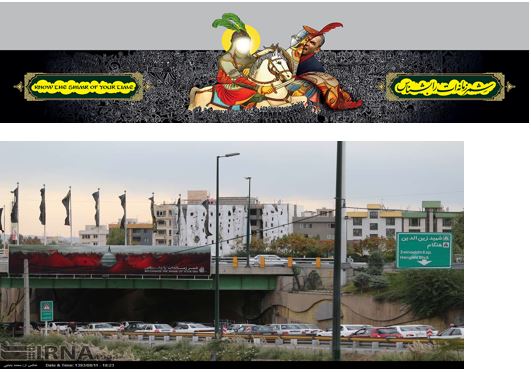
Basij Posts Signs In Iranian Cities Saying ‘Know The Shimr Of Our Time’

Also, the Basij has recently posted signs in Tehran and Shiraz stating, “Know The Shimr [who in Shi’ite legend murdered Imam Hussein] Of Our Time”; the signs clearly depict President Obama and the dome of the U.S. Capitol.[15]
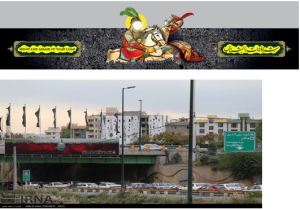
21115

Endnotes:

[1] See October 23, 2014 statement by U.S. Under Secretary for Political Affairs Wendy Sherman, State.gov/p/us/rm/2014/233306.htm.

[2] Most reports refer to 4,000; however, two Iranian sources have referred to at least 6,000. Majlis Nuclear Committee head Ebrahim Karkhanehi reported that P5+1 had agreed to approve the operation of 6,000 to 9,000 centrifuges. Tasnim, Iran, November 2, 2014.

[3] See MEMRI Inquiry & Analysis No. 1127, Iran’s Pragmatic Camp Calls For Exploiting Obama’s Weakness To Attain Comprehensive Nuclear Agreement On Tehran’s Terms, October 26, 2014.

[4]  The Shi’ite legend of Karbala underpins Iranian culture, particularly political culture, in post-Islamic Revolution Iran; it tells of the first Shi’ite martyr, Imam Hussein Ibn Ali, the grandson of the Prophet, at Karbala in 680 CE, after he demanded power and refused to accept the authority of Umayyad caliph Yazid ibn Mu’awiyah.

[5] Shargh (Iran), November 2, 2014. An anonymous party familiar with dealings in the Foreign Ministry told Tabnak in an interview that Khorram is not an advisor to Foreign Minister Zarif, and that his views do not represent the negotiating team or the foreign ministry. Tabnak, Iran, November 4, 2014.

[6] President.ir, October 22, 2014.

[7] Kayhan (Iran), October 23, 2014.

[8] Jomhouri-ye Eslami, (Iran), October 27, 2014.

[9] Tasnim (Iran), October 28, 2014.

[10] Kayhan (Iran), November 6, 2014.

[11] Recently, the ideological camp succeeded in removing Rohani’s science minister for having a record as a reformist.

[12] Kayhan (Iran), October 28, 2014.

[13] See MEMRI Inquiry & Analysis No. 1127, Iran’s Pragmatic Camp Calls For Exploiting Obama’s Weakness To Attain Comprehensive Nuclear Agreement On Tehran’s Terms, October 26, 2014.

[14] Afsaran.ir, October 29, 2014.

[15] IRNA (Iran) November 2, 2014; Tasnim, October 30, 2014.
Losses in Midterms for Candidates Who Supported Islamists

November 5, 2014

Losses in Midterms for Candidates Who Supported Islamists, Clarion ProjectRyan Mauro, November 5, 2014

(That’s good, but is there a significant causal relationship and will it impact Obama’s foreign policy? I doubt it. — DM)

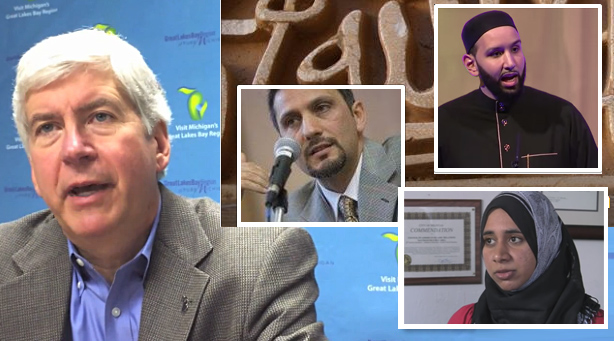
Rick-Snyder-Opposed-by-Islamists-HP_1Michigan Governor Rick Snyder (l) was opposed by prominent Islamists Omar Suleiman (upper right), Zahra Billoo (bottom right) and Hatem Bazian for comments the governor made at an Islamists conference in support of Israel.

Yesterday’s congressional elections resulted in losses for numerous candidates who have supported American Islamists. The biggest defeat came in the form of the re-election of Michigan Governor Rick Snyder, who became the Islamists’ top target after he briefly endorsed Israel’s right-to-exist at a major Islamist conference.


Failure to Stop Michigan Governor’s Re-Election

In August, the Clarion Project reported on Governor Snyder’s decision to speak at the annual conference of the Islamic Society of North America (ISNA), a U.S. Muslim Brotherhood entity whose events are full of radical speakers.

Snyder had resisted pressure to drop his speaking engagement and his office unbelievably defended ISNA as a moderate organization that accepts Israel’s existence. At the event, Snyder praised the Islamist-filled speaker lineup.

However, one sentence the governor uttered triggered a ferocious blowback: “I’m a strong supporter of Israel and believe in its right to exist.” Islamists close to ISNA blasted him as anti-Muslim and disrespectful. ISNA itself then issued an action alert calling on Muslims to contact his office.

Despite the Islamist backlash against him, Snyder was re-elected.


Illinois Governor’s Re-Election Bid Fails

A second blow to Islamist political influence was delivered with the defeat of Illinois Governor Pat Quinn.

Quinn had praised the Chicago chapter of the Council on American-Islamic Relations (CAIR), a U.S. Muslim Brotherhood entity with documented links to Hamas. CAIR’s executive director recentlyendorsed sharia governance and rebuilding a caliphate.

In December 2013, Quinn was the keynote speaker for the radical convention of the Islamic Circle of North America and the Muslim American Society, two groups with extensive histories of radicalism.

When Quinn was introduced, the speaker recalled meeting him at the Hamas-linked Mosque Foundation and declared, “This is the kind of governor that we support and that we like.”


Race for Maryland Governorship

A third defeat for the Islamists was the loss by of Lieutenant-Governor Anthony Brown in his bid to be Maryland’governor.

Brown spoke for a CAIR event in May even though official FBI policy prohibits participation in CAIR fundraisers due to its Hamas links.

Maryland’s current governor, Martin O’Malley, is a possible presidential candidate and CAIR has used O’Malley/Brown officialsfor fundraising, including even their attorney general.

The O’Malley-Brown administration also endorsed a $100-million mega-mosque project in Maryland supported by the Islamist government of Turkey. The project is also backed by ICNA and ISNA leaders.

O’Malley was also the chairman of the Department of Homeland Security’s Working Group on Violent Extremism that reviewed counter-terrorism training. The committee included officials from these same Islamist groups and produced Islamist-friendly guidelines.


Scott Brown Fails to Win Senate Seat

Former Massachusetts Senator Scott Brown failed to win his race for senator in New Hampshire.

In the summer of 2012, Brown was one of the Republican leaders who questioned the integrity of the five members of Congress who asked for investigations into the influence on the U.S. government of Muslim Brotherhood-linked individuals and activists.

At the time, Brown said accusations about Huma Abedin, who has documented Islamist ties and was then Secretary of State Clinton’s Deputy Chief of Staff, were “out-of-line” and have “no place in our public discourse.”


Crist Loses Bid for Florida Governorship

Charlie Crist, who was the governor of Florida from 2007-2011, failed yesterday in a very tight race to return to that office.

As reported by counter-terrorism expert Patrick Poole, an Islamist cleric, Muhammad Musri of the Islamic Society of Central Florida, was on Governor Crist’s Faith-Based and Communications Advisory Council and on his 2010 Sunshine Consensus Committee.

Musri helped fundraise for the Hamas-linked Viva Palestina group, which is led by anti-American British activist George Galloway.

Crist also received $1,404 from three CAIR sources in 2010 for his failed Senate bid.


Possible Defeat of Virginia Senator Mark Warner

At press time, Virginia Senator Mark Warner leads by about half of one percent in a race that was written off as a shoe-in for him. There will almost certainly be a recount and a legal battle that will decide the election’s result.

In September 2011, Senator Warner sent a videotaped message of support to an event in Virginia that honored prominent Islamist Jamal Barinji, who was instrumental in setting up the U.S. Muslim Brotherhood network.

Barzinji was identified as a Muslim Brotherhood member by an FBI informant in 1987. He was a leader of the Brotherhood’s main American fronts. He was the president of the Muslim Students Association in 1972, a founder of the North American Islamic Trustand a senior leader of ISNA.

He was also the vice president of the International Institute of Islamic Thought and helped establish the radical Dar al-Hijrah Islamic Center. In 2003, Barzinji’s home was raided as part of a terrorism-financing investigation.

Special Agent David Kane said in a sworn affidavit that Barzinji is closely linked to the Palestinian Islamic Jihad and Hamas terrorist groups. The affidavit  says he held seven positions in other organizations under investigation and is close to Sami al-Arian, who was convicted of being a secret Palestinian Islamic Jihad leader.

The planned prosecution of Barzinji was dropped under the Obama Administration.


Recipients of Islamist Donations

The Clarion Project listed 11 candidates who received donations from Islamists this election cycle based on data compiled by the Islamist Money in Politics project.

The candidates mentioned have not all supported CAIR or other Islamists, nor is there proof of each one’s knowledge of the transaction or source. Nonetheless, the small donations are relevant facts that must be mentioned because Islamists don’t donate to every candidate. These donations had a purpose.

As we previously wrote, four candidates that received donations from Islamist officials lost in their primaries.

The candidates who received small donations from Islamists and lost yesterday were:

  • Arkansas Senator Mark Pryor;
  • Michigan candidate Terri Lynn Land (whose opponent also had Islamist donations);
  • Michigan candidate Bobby McKenzie;
  • Minnesota candidate Mike Obermueller;
  • West Virginia Rep. Nick Rahall;
  • Florida Rep. Joe Garcia

The candidates who received Islamist donations and were victorious yesterday include:

  • Minnesota Rep. Keith Ellison;
  • Indiana Rep. Andre Carson;
  • Virginia Rep. Gerry Connolly;
  • New York Rep. Charles Rangel;
  • Michigan Rep. Gary Peters (for Senate);
  • Florida Rep. Gwen Graham;
  • New Jersey Rep. Bill Pascrell;
  • Arizona Rep. Kyrsten Sinema;
  • Maryland Rep. Chris Van Hollen;
  • Michigan Rep. Daniel Kildee;
  • Pennsylvania Rep. Mike Doyle;
  • Illinois Rep. Adam Kinzinger;
  • Kansas Senator Pat Roberts;
  • Minnesota Senator Al Franken
  • New Jersey Senator Cory Booker.

At press time, it was unknown if California Rep. Mike Honda has won re-election, but victory is anticipated.


Conclusion

Candidates do not need to be Islamists themselves to be influenced by them. In some cases, they may not even know the extremist backgrounds of the Islamists courting them.

By appearing as “moderates” only interested in responsible civic activism, leaders from groups like CAIR are able to fly under the officials’ radar and influence policy and arrange mutually beneficial praises and photo-ops.

Of course, promises of donations, political support or positive media coverage add extra incentives.

It is our responsibility to inform these officials and candidates of their backgrounds. Those who don’t change course must be shown that that there is a political price to pay for their inattentiveness, selfishness and narrow-mindedness.

Is There a Tacit Obama-Iran Alliance?

November 2, 2014

Is There a Tacit Obama-Iran Alliance? Commentary Magazine, November 2, 2014

[T]his administration isn’t interested in an accommodation with Israel on key issues. Rather it seeks to crush Israel’s efforts to resist détente with Iran as well as to muscle it on the peace process with the Palestinians even though the latter have frustrated the administration by steadfastly refusing to make peace on even the most favorable of terms on a diplomatic playing field tilted in their direction by the White House.

Having thrown away its previous positions on stopping Iran’s nuclear enrichment or dismantling its nuclear program (as President Obama vowed in his foreign-policy debate with Mitt Romney in 2012), it will clear[ly] stop at nothing to get a deal if one is to be had.

*****************

One of the most important sidebars to the furor over the decision of two “senior administration officials” to tell columnist Jeffrey Goldberg that Israeli Prime Minister Benjamin Netanyahu was a “chickenshit” coward was their boast that he had missed his chance to prevent them from making a weak deal allowing Iran to become a threshold nuclear state. Aside from the general discussion about an administration that is diffident about criticizing actual enemies of the United States choosing to lob outrageous insults at America’s sole democratic ally is the question whether this was a part of an effort to pre-empt Israeli criticism of a weak Iran nuclear deal or was merely just another instance of the Obama foreign policy team’s lack of discipline and incompetence. TheWashington Post editorial page has weighed in on behalf of the latter point of view. But unfortunately there is good reason to think this latest administration attack on Israel was part of a calculated strategy on Iran.

That President Obama has considered engagement with Iran as one of his foreign-policy priorities since coming to office is no secret. But that assumption was given further credence on Friday when the Washington Free Beacon reported on a tape of a talk given by Deputy National Security Advisor Ben Rhodes (one of those suspected of being one of the sources for Goldberg’s infamous column) in which he declared that an Iran deal would be the most important objective of the president’s second term and the moral equivalent of ObamaCare as an administration priority.

But we didn’t need Rhodes to tell us that. In signing an interim nuclear deal last year with Tehran that did nothing to force it to give up its nuclear infrastructure or long-term hopes of a weapon, he threw away the West’s considerable economic and military leverage and began a process of unraveling sanctions. But in order to seal a final deal with Iran—assuming, that is, that the Islamist regime deigns to sign one rather than merely keep running out the clock as Obama vainly pursues them—he must do two things: overcome considerable bipartisan opposition from Congress and make sure that Israel and/or moderate Arab regimes equally scared by the Iranians aren’t able to scuttle an agreement.

The president’s formula for achieving this dubious goal is clear.

On the one hand, he will try to forge an agreement that will not require congressional approval. That will be no easy task as the Constitution requires the Senate to approve any treaty with a foreign power and only Congress can repeal the economic sanctions it passed in recent years. But as we already know this isn’t a president that is troubled much by having to trod on the Constitution or violate the law. He will, as has already been reported, attempt to portray an Iran deal as something other than a new treaty. He will also use his executive power to suspend enforcement of sanctions, perhaps indefinitely, in order to render existing laws null and void.

As for Israel, as Goldberg’s column indicated, the administration thinks they’ve already won since Netanyahu failed to order an attack on Iran’s nuclear facilities during the president’s first term.

So where does this leave us?

According to the Washington Post editorial, Goldberg’s column was merely an indication of the loose tongues that operate in the West Wing. Assuming that the assault on Netanyahu’s character and the gloating about Israel’s inability to stop U.S. efforts to appease Iran was, in its view, giving the “White House too much credit for calculation” since the insults would make it harder for the U.S. to “reach an accommodation with Israel on Iran and settlements.”

But as the record of the last six years and Rhodes’s indiscreet talk verifies, this administration isn’t interested in an accommodation with Israel on key issues. Rather it seeks to crush Israel’s efforts to resist détente with Iran as well as to muscle it on the peace process with the Palestinians even though the latter have frustrated the administration by steadfastly refusing to make peace on even the most favorable of terms on a diplomatic playing field tilted in their direction by the White House.

Goals often dictate not only tactics employed but also the character of the conflict. Having set reconciliation with Iran as one of his chief objectives—something that was made clear in the president’s first inaugural address and reaffirmed by his subsequent decisions on the long running diplomatic engagement he has pursued—Obama has determined that achieving it is worth sacrificing the United States’ close relations with Israel as well as enraging Arab states that have, to their surprise, found themselves aligned with Israel on this issue rather than the Americans.

Though the administration has been rightly criticized for its habit of equivocation on foreign-policy crises, its single-minded determination to outmaneuver the Israelis on Iran while never giving up on efforts to appease the Islamist regime has been impressive. Having thrown away its previous positions on stopping Iran’s nuclear enrichment or dismantling its nuclear program (as President Obama vowed in his foreign-policy debate with Mitt Romney in 2012), it will clear stop at nothing to get a deal if one is to be had.

Rather than a reset with Israel as the Post advises, Obama has something else in mind. While it may be going too far to say that the administration thinks of itself as entering into an alliance with the Iranians, the bottom line here is that the new Middle East that it envisions after an Iran deal is one in which traditional U.S. allies will be marginalized and endangered while Tehran and its terrorist allies will be immeasurably strengthened. The administration can only achieve that dubious goal by working assiduously against Israel and the bipartisan coalition that backs the alliance with the Jewish state in Congress.

It remains to be seen whether the next Congress will sit back and allow the administration to achieve a détente with the Islamic Republic that will amount to a new tacit U.S.-Iran alliance at the expense of the Jewish state. But whether Congress acts or not (and if the Senate is controlled by the Republicans it is far more likely to be able to thwart the president’s objectives), let no one say that we haven’t been warned about what was about to unfold.

Obama Sees an Iran Deal That Could Avoid Congress

October 20, 2014

Obama Sees an Iran Deal That Could Avoid Congress, New York Times, David Sanger, October 19, 2014

(I.A.E.A. verification that Iran will not get (or keep) nukes seems to be less important in getting a deal than maintaining the fiction that effective sanctions can be restored in several years if appropriate. However, they have already been extended, breached and enjoyed by Iran’s many trading partners to the degree that restoring them successfully even now would be virtually impossible. — DM)

“We have been clear that initially there would be suspension of any of the U.S. and international sanctions regime, and that the lifting of sanctions will only come when the I.A.E.A. verifies that Iran has met serious and substantive benchmarks . . . ”

************************

WASHINGTON — No one knows if the Obama administration will manage in the next five weeks to strike what many in the White House consider the most important foreign policy deal of his presidency: an accord with Iran that would forestall its ability to make a nuclear weapon. But the White House has made one significant decision: If agreement is reached, President Obama will do everything in his power to avoid letting Congress vote on it.