Archive for the ‘Trump and Saudi Arabia’ category

ISIS’s real target: Saudi Arabia

May 20, 2017

ISIS’s real target: Saudi Arabia, Fox News OpinionAli Shihabi, May 19, 2017

(An old Scotts proverb states that many a mickle makes a muckle — much little stuff makes lots.  A Chinese proverb states that a journey of a thousand miles begins with one step. Rather than taking one step forward, President Obama took several leaps backward, and not only by bowing to the King of Saudi Arabia. President Trump took a step forward by not bowing and therefore meeting the King on an equal basis. First Lady Melania helped by not wearing a head covering. Apparently, Saudi Arabia is already moving in, or at least toward, the right direction. 

Saudi Arabia will not reject Islam, but there are signs that efforts are underway to temper it. The trip will take longer than we might wish, but with perserverence and good will we will get closer and closer and perhaps even arrive. — DM)

As custodian of Islam’s holiest sites, Mecca and Medina, and as leader of the 41-nation Islamic coalition established to combat terror, Saudi Arabia is on the front line of the global fight against radical jihadi terrorism. It is also the ultimate target of terrorist organizations that dream of controlling the center of the Islamic world and the nation’s vast oil wealth. President Trump, in making Riyadh his first overseas stop, is demonstrating this weekend that the U.S.-Saudi strategic relationship is a vital one, and that the kingdom is an essential partner in countering and crushing violent jihadi extremism.

And yet, some critics in the West continue to ridicule any Saudi role in fighting terrorism. They accuse the kingdom of promoting “Wahhabism,” the conservative Islam practiced in Saudi Arabia, arguing that its teachings are a precursor to terrorism. This, despite the fact that the kingdom is itself in the crosshairs of ISIS, al-Qaeda and a revolutionary and belligerent Iran and has seen multiple terror attacks since 1995. 

In truth, the Saudi government understands that it has a problem, and it is working to temper the intolerance and rigid thinking of its clerics, a process that will be durable only if done gradually. Part of reforming its reactionary, conservative religious establishment involves utilizing it as a force that, while still not liberal by Western standards, can leverage its considerable stature, prestige and influence in the Muslim world to outlaw all forms of terrorism and ostracize those who promote them.

Saudi Arabia’s progress in the fight against extremism will be also be marked by Mr. Trump when he attends the opening of a center in Riyadh intended to fight radicalism.

“By establishing and operating this center, our Muslim friends, including Saudi Arabia, are taking a firm stand against extremism and those who adopt a perverted interpretation of religion to advance their criminal and political agendas,” National Security Adviser H.R. McMaster told journalists earlier this week.

The kingdom is well-versed and battle-tested in this fight. The Saudi government has built a world-class anti-terrorism capability that uses intelligence, community outreach, rehabilitation and, when necessary, brute force to fight terrorism, perhaps more effectively than any other country facing such militancy in its homeland.

Saudi Arabia’s commitment to the fight against terrorism may be hard to fathom for many Americans. After all, in the confusion following the terror attacks of Sept. 11, 2001, a narrative developed that the terrorists attacked America because they wanted to change the American way of life.

In fact, Al Qaeda – a strain of which became ISIS – has never held illusions about its capacity to spread its ideology in the United States. Instead, the 9/11 attacks were highly strategic, designed with one goal: to sever the strong Saudi–U.S. alliance. There is a reason Al Qaeda deliberately chose 15 Saudis among the hijackers. It was not because of “Wahhabism” or because of a secret Saudi hatred of the Western way of life. It was because Al Qaeda’s goal has been, and remains, the provocation of a U.S.-Saudi divorce.

Al Qaeda then, and ISIS today, hope to use terror to push the U.S. into withdrawing from the Gulf region, because they perceive the American presence as essential to preserving the existing political order in the Arabian Peninsula. Iran shares this strategy with ISIS, which is why it funds and arms destabilizing terror groups in the region, from Hezbollah in Syria to the Houthis in Yemen. Without an American presence in the region, jihadi leaders believe they could overthrow the Gulf monarchies.

Meanwhile, campaigns of terror have only brought the U.S. and Saudi Arabia closer together, deepening a relationship that has endured for three-quarters of a century. Trump’s decision to visit Riyadh first is evidence of that.

This bilateral bond and strengthening alliance against terrorism between the U.S. and Saudi Arabia will ensure that neither Mecca nor Main Street, USA, will fall to the perverted and murderous ideology of radical jihadis. The Trump administration is signaling its strong understanding of the critical value Saudi Arabia brings to the table in its partnership against terror. Now that’s an idea worth spreading in the U.S.

Ali Shihabi is the executive director of the Arabia Foundation (www.ArabiaFoundation.org), a Washington, DC-based think tank focused on the geopolitics of the Arabian Peninsula.

 

Reflections on Trump’s First State Visit to the Middle East

May 19, 2017

Reflections on Trump’s First State Visit to the Middle East, The National InterestAhmed Charai, May 19, 2017

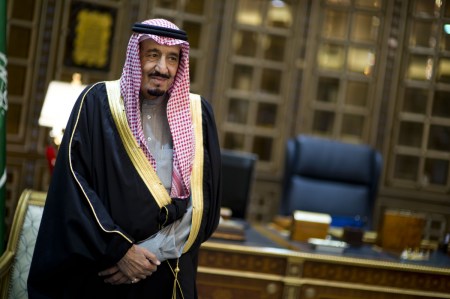
King Salman of Saudi Arabia in 2013. Flickr/Secretary of Defense

The Trump administration, working alongside its Arab allies, should promote moderate or quietist forms of Islam, and not remain neutral on religious matters. This means working with Islamic leaders, many of whom are state-funded imams, to challenge jihad on a religious basis and offer a form of faith shorn of violence.

These strategic insights come together in Morocco, where King Mohammed VI has used his religious role as commander of the faithful to inspire religious leaders to combat jihadism and urge tolerance and peace.

******************************

President Trump is visiting the Middle East. He will travel to Saudi Arabia and Israel, then visit the Vatican. Given the sequence of the first two, some observers speculated that he will attempt to revive the Israeli-Palestinian peace process, perhaps within a broader, regional framework. But different potential outcomes for Arab-Israeli relations, short of a peace settlement, may also be in the offing.

Both Saudi Arabia and Israel have proven themselves to be invaluable partners to the United States in the struggle against ISIS. An American-brokered framework whereby direct cooperation between the two is formalized—rather than a reliance on the United States as an intermediary—may create a framework to broaden the cooperation. Heightened partnership to counter the shared threat of Iran would be an obvious next step. The Trump administration’s new strategy is the creation of a regional alliance, focused on the Gulf countries but also including countries such as Egypt, Jordan and Morocco. A multilateral approach in which Israel plays a more direct and visible role in the coalition would signify a breakthrough. It would bolster confidence among Arab publics that broader cooperation and conflict resolution are warranted.

Donald Trump made the eradication of the Islamic State a priority during his campaign. He has been criticized for his more muscular strategy, as well as the desire to augment intelligence, economic and communications measures to put the screw to the organization.

It seems possible that the president is making a clean break with the Obama administration’s policy of disengagement from the Middle East. For Trump, the rubric of a “war on terrorism” seems to be appealing. Arabs appreciate the fact that, unlikely his predecessor, Trump appears to be recognizing the Shia extremist terror threat as represented by Iran and its proxy militias alongside the widely recognized Sunni jihadist threat.

In the view of this administration, this alliance should function like NATO, as an alliance (perhaps supported by the West) with multiple objectives. The eradication of Islamic State is the main objective, but the containment of Iranian influence in the region is also on the menu.

The use of a massively powerful bomb against the Islamic State in Afghanistan provided a mighty demonstration of strength, but may also have been intended to send a message about the president’s commitment to confront his adversaries with some of the most powerful tools in his arsenal.

But of course, matters are not so simple.

At the geostrategic level, Russia and the pro-Iranian Shia arc cannot be ignored politically. The alliance between the two poses layers of complexity, whereby American and Russian accounts in the Baltic states and vis à vis NATO may be dragged into the diplomatic mix. Moscow cannot be excluded from the equation in any prospective political resolution in Syria. As for Iran, Russia wields heavy influence on its government and its security sector. Trump faces a Twister-like game of challenges in navigating the array of alliances, rivalries and hostilities among the players. Yet his aspiration to eradicate the Islamic State and block Iranian expansion in the region depends on his effective management of these quandaries.

Nor do Trump’s aspirations allow for neglect of the broader counterterrorism challenge beyond military action, intelligence work and even diplomacy. He must wage an ideological war, and challenge extremist strands within Arab and Islamic societies that guarantee the perpetuation of conflict—whatever the outcomes on the battlefield—unless they are addressed.

The Trump administration, working alongside its Arab allies, should promote moderate or quietist forms of Islam, and not remain neutral on religious matters. This means working with Islamic leaders, many of whom are state-funded imams, to challenge jihad on a religious basis and offer a form of faith shorn of violence.

These strategic insights come together in Morocco, where King Mohammed VI has used his religious role as commander of the faithful to inspire religious leaders to combat jihadism and urge tolerance and peace.

King Mohammed VI has demonstrated his commitment to deeper cooperation with neighboring countries by embarking on several state visits and signing an unprecedented number of economic-partnership conventions. He has also expressed support for joint efforts to combat radicalization, and officials from Cote d’Ivoire, Niger, Tunisia, and Guinea have indicated a willingness to train their imams in Morocco.

If Trump is looking for a healthy example of Muslim leaders bringing peace through Islam, Morocco is a good place to start.

A new age of diplomacy

April 5, 2017

A new age of diplomacy, Israel Hayom, Prof. Abraham Ben-Zv, April 5, 2017

The character of the new American diplomacy is slowly becoming clear, both in terms of style and essence, and especially as it pertains to the Middle East. We are being given the impression that U.S. President Donald Trump is trying to adopt the management style of late U.S. President Franklin D. Roosevelt, who tended to bypass his secretary of state.

Preliminary signs indicate that Trump sees his current wandering adviser and envoy, Jared Kushner, as a confidant and trustworthy emissary for sensitive diplomatic missions. This is clear from his mission to Baghdad at the beginning of the week and in his ongoing involvement in advancing the peace process in the Palestinian arena. Kushner is also expected to take part in the U.S.-China summit (set to take place in Florida this week), reflecting his role as moderating figure in the charged relationship between Trump and the Chinese leadership and indicating his growing power.

While a young and energetic Kushner hops between continents as the president’s representative, U.S. Secretary of State Rex Tillerson lags behind him, excluded and disconnected from the big decision-makers.

This gives a good idea of style. As for the essence — when it comes to the Middle East in particular, we are seeing a sort of diplomacy that is radically different than former U.S. President Barack Obama’s approach. This is especially true regarding the Trump administration’s efforts to establish a Sunni anti-Iranian axis led by Cairo and Riyadh. While the Obama administration abandoned the United States’ traditional partners on this front, and instead, worked tirelessly to reconcile with Iran, the current White House is signalling unequivocally that it is determined to at least turn over a new leaf in its relationship with these regional powers and to upgrade strategic cooperation with them in order to uproot terrorism.

While Obama’s relationship with Egyptian President Abdel-Fattah el-Sissi was characterized by coldness (in contrast to the warmth he showed to Egypt’s previous leader, Muslim Brotherhood member and sworn Hamas supporter Mohammed Morsi), Trump’s approach is quite different. El-Sissi’s state visit to Washington this week was marked by extraordinary warmth and cordiality on the part of the American president. This was an effort to erase the remnants of the recent past — especially the memory of punitive and alienating policy led by Obama against the Egyptian leader — from the Egyptian consciousness.

A similarly dramatic improvement can be seen in U.S.-Saudi relations, wherein strategic cooperation has also been upgraded recently, especially (but not only) regarding fighting on the Syrian front and in the struggle against the Houthi militias operating in Yemen with Iran’s help and support (against al-Qaida forces in the field). This follows the deep ebb in their relationship due to Obama’s tireless efforts to appease the Ayatollah regime in Iran, the sworn enemy of the Saudi royalty. Regarding Syria, in 2013, Obama abandoned the civilian population there to its fate, remaining, despite his declarations, completely passive even after Syrian President Bashar Assad crossed all the red lines by using murderous chemical weapons against masses of civilians. On Tuesday, too, Assad’s forces carried out a major chemical attack, harming many civilians, in the country’s destroyed and divided north. Based on the growing military involvement and the Trump administration’s determination to deal with the “axis of evil” there too, we can assume that the White House will have a different response to this war crime.

Finally, regarding U.S.-Israeli relations, we are witnessing the expression of exceptional support and identification, reminiscent of the golden age of late U.S. President Lyndon B. Johnson (during which time then-U.S. Ambassador to the U.N. Arthur Goldberg’s speeches reflected the strength and resilience of the “special relationship”). While the Obama administration focused on efforts to settle the conflict, which it defined as a core issue of utmost local and regional importance, the Trump administration is demonstrating a much more relaxed and relevant approach to the complex situation. On this front too, there is real change in the form and style of American diplomacy in the Trump era.

A new foundation for Saudi-US relations

March 18, 2017

A new foundation for Saudi-US relations, Al ArabiyaDr. Theodore Karasik, March 18, 2017

(A Saudi perspective on Trump and his policies. Saudi Arabia is a fierce opponent of Iran. To the extent that our interests align, we should cooperate. — DM)

Saudi Arabia’s support for Trump Administration’s Executive Orders is significant. Mohammed bin Salman supports Trump’s extreme vetting program calling it a “vital and urgent precaution” that Saudi Arabia does not see as discriminatory. The Deputy Crown Prince also vouched for the president himself, remarking that Trump “expressed his deep respect for the religion of Islam.” He called Trump “a true friend of Muslims” whose commitment to achieving the Muslim world’s interests is “unprecedented.” He also described negative portrayals of Trump’s posture toward Muslims as insulting.

************************

Saudi Arabia’s Deputy Crown Prince Mohammed bin Salman’s visit to meet with US President Donald Trump and his top advisors establishes a new foundation for US-Saudi relations. The visit occurred in extraordinary settings with participants from the White House to the Pentagon. The US State Department was, however, nowhere to be seen.

The visit to Washington is occurring during a full court press for Saudi Arabia’s Vision 2030 and the drivers to bring that vision, mainly next year’s Aramco IPO and the growth of the Kingdom’s Public Investment Fund (PIF), to fruition in a logical and timely manner. While King Salman is on a momentous trip to Asia focusing on energy, investment, counter-terrorism, and religion, and with Crown Prince Mohammed bin Nayef coordinating with allies against a number of internal and external extremist and state threats, the Saudi defense minister is cementing with the Trump administration a robust binary relationship to not only counter Iran and extremism but to see both Trump’s America First and MBS’s Vision 2030 succeed.

The US and Saudi Arabia agreed that the new foundation with Riyadh could create up to one million American jobs, as well as millions more indirect American jobs, and an unspecified number of jobs in the Kingdom. The Trump administration and the Saudis voiced support for creating joint working groups on energy, industry, infrastructure, and technology, with the goal of generating $200 billion in new investments by the end of Trump’s term. 2020, of course, is the end date for the National Transformation Program (NTP) so Riyadh’s investments, in theory, will boost popularity for Trump’s economic plans.

To be sure, this new US-Saudi basis is notable. The Deputy Crown Prince said that the White House meetings were a “historical turning point in relations between both countries … which had passed through a period of divergence of views on many issues.” MBS of course was referring to the wreckage of the Obama Administration’s policies towards the Middle East. Now, the Saudi Deputy Crown Prince argues, that the US and Saudi Arabia “restored issues to their right path” and signal a “change in relations” between Riyadh and Washington D.C. when it comes to “political, military, security and economic issues.”

Clearly, the Trump Administration and Saudi Arabia see that they need each other now more than ever.

Dr. Theodore Karasik

To this point, the Saudi Deputy Crown Prince, when asked about Saudi sending troops to Syria, replied: “We are ready to do anything that will eradicate terrorism without limits.”
Mohammed bin Salman’s visit to the Pentagon for a three-hour meeting between Saudi officials and a mix of Pentagon and Strategic Initiative Group (SIG) leadership was remarkable on a number of fronts. Secretary of Defense James Mattis’ comment to Saudi Foreign Minister Adel Al-Jubeir regarding his “survivability” from an Iranian assassination plot set the tone for the Pentagon meeting.

Deputy Crown Prince Mohammed bin Salman told his opposites across the table, including Senior Presidential Advisor Stephen Bannon and Jared Kuchner, thatthe Kingdom faces hostile activities as the Iranian regime supports extremists and terrorists in the region and around the world, and challenges posed by terrorist organizations. Mohammed bin Salman asserted “That’s why we need to work and cooperate with our allies. On top of the list comes the United States, the leader of the world. Today we are very optimistic under the leadership of President Trump and we believe these challenges will be easy to tackle under the leadership of the president.” The Saudi Deputy Crown Prince made very clear to his audience the view from Riyadh: Iran and its proxies, combined with terrorism, threatens the very core of the Kingdom.

The presence of both Bannon and Kushner at the Pentagon meeting with Mohammed bin Salman deserves special attention. Both senior presidential advisors represent the Strategic Initiatives Group (SIG) within the White House. The SIG is generating Executive Orders (EOs) for President Trump to sign as well as working on grand strategic vision for “American First” but also how the United States will partner with Arab allies to push back Iran and destroy ISIS. We do not know if other issues came up in the meeting such as Syria and Yemen safe zones or actual discussion on Saudi contributions to any future US-led force in the Levant. Nevertheless, for Bannon and Kushner to listen to MBS directly helps them to better understand where Saudi Arabia fits into Trump Administration’s plans and goals not only in the Middle East but also in terms of American economic nationalism and revival.

To be sure, Saudi Arabia’s support for Trump Administration’s Executive Orders is significant. Mohammed bin Salman supports Trump’s extreme vetting program calling it a “vital and urgent precaution” that Saudi Arabia does not see as discriminatory. The Deputy Crown Prince also vouched for the president himself, remarking that Trump “expressed his deep respect for the religion of Islam.” He called Trump “a true friend of Muslims” whose commitment to achieving the Muslim world’s interests is “unprecedented.” He also described negative portrayals of Trump’s posture toward Muslims as insulting.

Consequently, there is no doubt that Justice Against Sponsors of Terrorism Act (JASTA) is likely to be dismantled as a hold-over from the Obama Administration and being too litigious. Pending US congressional action on the Muslim Brotherhood and IRGC terrorist designations may now accelerate.

Clearly, the Trump Administration and Saudi Arabia see that they need each other now more than ever. From Riyadh’s perspective, the Trump administration is the perfect strategic business partner. The two meetings illustrate that both sides succeeded in a “meeting of the minds” on strategic issues affecting both countries. There is much more binary cooperation in development between Washington and Riyadh on the way.

