Archive for the ‘Trump and Putin’ category

Russian Roulette

March 6, 2017

Russian Roulette, PJ MediaRoger Kimball, March 6, 2017

(Rex Features via AP Images)

It may be about time to add a new chapter to Charles Mackay’s Extraordinary Popular Delusions and the Madness of Crowds. Mackey dilated on scams like the South Sea Bubble and wild speculations like Tulipmania in 17th century Holland, when a single tulip bulb could sell for more than a mansion.

There was the distinct aroma of fraudulence, abetted by naïveté, about most of the enterprises Mackay described. And so it is with the new chapter I am proposing. It might be called “Russian Roulette.” I am thinking not of the messy game with a revolver, but rather the insinuation sweepstakes currently being deployed against Donald Trump by the Democrats and their pets in the media.

Since the game is still in process, we cannot quite finish the chapter. But we know how it starts. It starts with groundless accusations that Donald Trump and/or his surrogates somehow “colluded,” had illicit ties with, the Russians. Maybe he helped them “hack the election.” Maybe he is Putin’s puppet. We don’t quite know. But this calls for a “special prosecutor” (even though such a thing doesn’t exist), a criminal investigation, the impeachment or at least the delegitimization of Donald Trump and all his works.

Last week, Holman Jenkins had an excellent, sobering-up piece on the Left’s “Putin Fantasies.” He quickly dispatches all the usual suspects: Paul Manafort, Roger Cohen, Carter Page, et al. He quotes “veteran foreign correspondent Susan B. Glasser,” who treats readers of the New York Times to this breathless animadversion:

Mr. Trump’s rhetoric and actions as president bear more than a passing resemblance to those of Mr. Putin during his first years consolidating power. The similarities are striking enough that they should not be easily dismissed.

Oh, yes: “The similarities are indeed striking,” Jenkins observes. “Mr. Putin and Mr. Trump both have arms and legs. When it comes to distinguishing noise from signal, however, two men could not be less alike”:

Russia was a country in chaos. Its president was a drunk seeking a successor to protect his daughter and friends from corruption investigations. Mr. Putin, a former KGB agent and head of the secret police, ran one of the few, after a fashion, functioning institutions in Russia, albeit arm in arm with organized crime.

Mr. Trump’s rise couldn’t be more different. He’s a reality TV star and brand manager. To an unusual degree, he’s a president who lacks even a party. Meanwhile, the courts, the bureaucracy, the media, the political parties all continue to function as they always have.

“Striking similarities” underwritten by categorical differences.

No, when it comes to this new game of Russian Roulette, Ted Cruz got it right: it is a “nothingburger.”

Well, not quite nothing. So far, there is no evidence of malfeasance, of anything improper or illegal. But there is plenty of anchorless animus directed at Trump by the Democrats and their media pets. So far, it amounts to what William Jacobson at Legal Insurrection has called “The fact-free Intelligence Community-Media trial of Trump by innuendo.”

Here’s how it works.  You start with a lurid — but totally unsubstantiated — allegation. To wit: Senator Chris Coons (D., natch) to Dem. pet Andrea Mitchell March 3:

There are transcripts that provide very helpful, very critical insight into whether or not Russian intelligence and Senior Russian leaders, including Vladimir Putin, um, were cooperating, were colluding, with the Trump campaign at the highest levels to influence our election.

Yikes! Transcripts and evidence of collusion at the highest levels to influence our election. Andrea Mitchell sure liked that:

Actually, it’s holy smoke and mirrors.

On March 3 it was “transcripts,” Russians “colluding” with the Trump campaign “at the highest levels to influence our election.” But by March 5 it was “I have no hard evidence of collusion.

No “hard” evidence, of course, means no evidence of any kind.

I adduce the example of Chris Coons, but remarks by Nancy Pelosi, Chuck Schumer, et al. — not to mention the yapping of any of the pack of chihuahuas that is the Democratic pocket press — would do just as well.

Take a damaging allegation: the infamous “dossier” against Trump, for example. It doesn’t make any difference that it is totally unsubstantiated. Just run with it.

All Democratic outlets — CNN, MSNBC, Washington Post, New York Times — echo it. Is it untrue? Doesn’t matter. It might still have the desired effect of undermining public confidence in Trump even if it is eventually exploded.

But what if you are Donald Trump? Well, that’s different. Let’s say you make allegations that the Obama administration conducted surveillance against you in the final months and weeks of the election.

Not so fast! Where’s your proof?

Actually, there’s plenty of proof. Andy McCarthy noted a few days ago:

[T]he Obama Justice Department and the FBI sought FISA warrants against Trump insiders, and potentially against Donald Trump himself, during the last months and weeks of the presidential campaign.

Even the New York Times admitted as much, if inadvertently, in a story about various investigations in Trump’s alleged “Russia ties”:

The investigators have accelerated their efforts in recent weeks buthave found no conclusive evidence of wrongdoing, the officials said. One official said intelligence reports based on some of the wiretapped communications had been provided to the White House.

Just to parse that a bit: by “no conclusive evidence” the Times means the same thing that Senator Coons meant by “no hard evidence,” i.e., no evidence at all.

And although Nancy Pelosi responded to Trump’s allegation that Trump Tower had been secretly wiretapped by saying “We don’t do that,” it turns out, as the Times acknowledges, that they do.

Holman Jenkins noted in passing that Donald Trump is “a reality TV star and brand manager.” That’s right. He’s cut from a different bolt of cloth than the Democratic (and most of the Republican) confraternity. That’s one reason they so despise him.

Another, and deeper, reason is this: If Donald Trump is successful in draining the swamp of Washington, D.C., if he can effectively take on the unions, secure our Southern border, cut wasteful regulation, neuter the EPA, substantially dismantle the administrative state, and achieve 3-4% growth, all of those swamp creatures will be out of a habitat.

In other words, Trump represents an existential threat to their way of life. Hence their angry and hysterical war against him. Mostly, it is true, their attacks are self-refuting. But make no mistake. The Left is out to cripple Trump.

As I said in this space Saturday, he needs to fight back, and hard. The Left has declared war on Donald Trump. I am glad to see that he has woken up to that fact and is responding in kind.

Farage on Trump: The EU Is ‘Absolutely Terrified of Him – Good’

February 24, 2017

Farage on Trump: The EU Is ‘Absolutely Terrified of Him – Good’, PJ MediaNicholas Ballasy, February 24, 2017

farageatcpacNigel Farage at the UKIP spring conference Feb. 17, 2017, in Bolton, UK. (Rex Features via AP Images)

“You know, with 34 days in I think that he clearly has the intention of a man who intends to put into place the ticket on which he was elected, and how refreshing is that in a democracy? We are not used to it,” he said. “My guess is he’ll be feeling a bit frustrated with the judges and other people; I would just like to see him to stock to what he’s doing. I mean, maybe he is going to have to box clever to get some of his stuff through, but basically don’t change.”

**********************************

NATIONAL HARBOR, Md. – Nigel Farage, former leader of the UK Independence Party, told PJM that there is “nothing to be lost” with President Trump meeting Russian President Vladimir Putin, saying that Trump has to show he’s “not going to be a pushover.”

“Well, he has to show he wants to have a better relationship with Russia. He believes we have shared common interests in dealing with Islamic terrorism and issues like that but he’s not going to be a pushover — that’s what you’ve got to show,” Farage said during an interview Thursday at the Conservative Political Action Conference outside Washington.

“He’s going to say, ‘Look, you’ve behaved badly but we want to form a grown-up relationship with you.’ One thing is for certain, there’s nothing to be lost with him meeting Putin. Nothing at all,” he added.

Farage rejected the notion that the U.S. cannot make a good deal with Russia.

“They are small-minded, very silly people who don’t understand there is a thing in life called human chemistry. Trump himself said ‘I may not get along with him,’ but the very fact he is prepared to meet is grown-up policy. The great Winston Churchill said jaw-jaw is better than war-war and I’m with that,” he said.

Farage told PJM that Trump should “stick” to what he has been doing in office and not change anything.

“You know, with 34 days in I think that he clearly has the intention of a man who intends to put into place the ticket on which he was elected, and how refreshing is that in a democracy? We are not used to it,” he said. “My guess is he’ll be feeling a bit frustrated with the judges and other people; I would just like to see him to stick to what he’s doing. I mean, maybe he is going to have to box clever to get some of his stuff through, but basically don’t change.”

British lawmakers recently debated whether they should withdraw a state visit invitation to Trump. Some European leaders have voiced opposition to Trump’s travel ban that covers seven Muslim-majority countries. Farage was asked if Trump should tweak any of his policy positions given the criticism he has faced from some world leaders.

“Obviously, the world is watching on the Russian stuff to see exactly where this goes. On issues like that people will be looking for a bit more clarity because he wants to have better relations – what exactly does that mean?” he said. “And the world will be looking for that and the European Union are terrified of him, absolutely terrified of him. Good.”

During the interview, Farage shared his reaction to far-right French presidential candidate Marine Le Pen recently refusing to wear a headscarf in Lebanon in order to meet with the Grand Mufti.

“Listen, good for her. You know, she’s a strong woman. It remains to be seen what the runoff is going to be, it’s going to be fascinating. France is where the action is going to be. The global revolution of ’16 could keep rolling,” said the leader of the 2016 Brexit movement.

Off Topic | Wayne Barrett, Donald Trump, and the Death of the American Press

February 23, 2017

Wayne Barrett, Donald Trump, and the Death of the American Press, Tablet MagazineLee Smith, February 23, 2017

(Please see also, Off Topic:  A Purblind Press, Unable To Admit Error, Boycotts the President. — DM)

How did we get from ‘Village Voice’ reporters digging up everything there is to know about a flashy New York real estate salesman to not knowing anything about the President of the United States and his ties to Russia?

So when does the other shoe drop? Who’s going to break the story proving beyond a shadow of a doubt that the president of the United States is so deeply connected to Russian President Vladimir Putin that the White House has become a Muscovite colony in all but name?

Time to use some common sense—it’s not going to happen, there is no story. The narrative that Donald Trump is effectively Putin’s prison wife is an information operation orchestrated by Democratic hands, many of whom served in the Obama administration, sectors of the intelligence community, and much of the American press. The purpose of the campaign is to delegitimize Trump’s presidency by continuing to hit on themes drawn from the narrative that Russia “hacked” the election and stole it away from Clinton.

The narrative is contorted because it’s not journalism. It’s a story that could only make sense in a profoundly corrupted public sphere, one in which, for instance, Graydon Carter is celebrated for speaking truth to power with an editor’s letter critical of Trump in a magazine that has no other ontological ground in the universe except to celebrate power.

Oh, sure, there are regular hints that there’s still more to come on Trump and his staff’s ties to Russia—the big one is about to hit. But the steady sound of drip-drip-drip is the telltale sign of a political campaign, where items are leaked bit by bit to paralyze the target. Journalists, on the other hand, have to get their story out there as quickly, and as fully, as possible because they’re always worried the competition is going to beat them to it.

No, if Trump really was in bed with the Russians, the story would already be out there, and I’m pretty sure it would have had a Wayne Barrett byline.

When I worked at the Village Voice in the mid-1990s, my office was right around the corner from Barrett’s and his bullpen of interns, a team that kept the heat on local politicians like Rudy Giuliani, Ed Koch, and others. Barrett was the first journalist who wrote at length about Trump, starting in the mid-1970s. His biography, Trump: The Deals and the Downfall, was published in 1992, and reissued in 2016 as Trump: The Greatest Show on Earth: The Deals, the Downfall, the Reinvention.

When Trump won the nomination and the pace of Trump stories picked up, Barrett became something of an official archivist, with reporters visiting his Brooklyn house to go through his files in the basement. Anyone who wanted to know what Trump’s deal with Russia was, for instance, would want to talk to Barrett because either he or his team of interns, 40 years’ worth, would have it. After all, New York City is the world capital for information on Russians, even better than Israel—because even though the city got a smaller number of post-Cold War immigrants, New York got a higher percentage of mobsters.

Let’s compare the institution of Wayne Barrett, a subset of the institution of journalism, to the so-called Russia dossier, the document placing Trump in a shady underworld governed by Putin and other Russian thugs. The former includes not only Barrett’s body of work over nearly half a century, but that of the hundreds of journalists he trained, and many thousands of sources whose information is, therefore, able to be cross-checked.

The latter, a congeries of preadolescent pornographic fantasy and spy tales, was authored by a British intelligence officer who has gone to ground since the dossier was made public. The dossier started as work made for hire, first paid for by Republican opponents of Trump and then the Clinton camp, and is sourced to Russian “contacts” who are clearly using the document as an opportunity to proliferate an information operation for perhaps various and as yet unknown purposes. The former is journalism. The latter, part oppo research and part intelligence dump, is garbage. Clearly, it is also the new standard in the field, which is why journalists on both sides of the political spectrum are boasting about their willingness to let their bylines be used as bulletin boards for spy services and call it a “scoop.”

Barrett had Trump on a whole variety of issues, but check the records yourself—up until the day of his death, the day before Trump’s inauguration, there’s nothing on Trump and Putin. Does this mean Trump is totally clean? Who knows? But the journalists now clamoring like maniacs about Trump’s ties sure aren’t going to find it. They’re thin-skinned hacks outraged that Trump dared violate the inherent dignity of that most important of American political institutions, the presidential press conference. And as we all know, this is the apex of real journalism, where esteemed members of the press sit side by side with other masters of the craft to see who gets their question televised.

Does Trump really believe the media are “an enemy of the people”? Please. Let’s remember how he rode his wave to fame on the back of the New York Post’s Page Six (and Graydon Carter’s Spy magazine). He still speaks regularly to the head of CNN (aka “Fake News”), Jeff Zucker, who put him on The Apprentice and Celebrity Apprentice at NBC, where Trump sat atop the Nielsens for 13 years. Trump uses his Twitter feed to boost his replacement Arnold Schwarzenegger’s ratings because the president still has a credit as executive producer. No, Trump, doesn’t hate the media. Like Howard Stern, he sees himself as the king of all media. What he’s doing here is playing gladiator in front of an audience that wants to see the lions slain.

Maybe Trump deserves the heat with the fake Russia stories. He backed the Obama birth certificate story, and what goes around comes around. But the American public sure doesn’t deserve a press like this.

Trump adviser Steve Bannon calls the media the opposition party, but that’s misleading. Everyone knows that the press typically tilts left, and no one is surprised, for instance, that The New York Times has not endorsed a Republican candidate since 1956. But that’s not what we’re seeing now—rather, the media has become an instrument in a campaign of political warfare. What was once an American political institution and a central part of the public sphere became something more like state-owned media used to advance the ruling party’s agenda and bully the opposition into silence. Russia’s RT network, the emir of Qatar’s Al Jazeera network—indeed, all of the Arab press—and media typically furnished by Third World regimes became the American press’ new paradigm; not journalism, but information operation.

How did this happen? It’s not about a few journalists, many of whom still do honor to the profession, or a few papers or networks. It’s a structural issue. Much of it is because of the wounds the media inflicted on itself, but it was also partly due to something like a natural catastrophe that no one could have predicted, or controlled.

***

I was at the Voice when the meteor hit. Like many papers back then, dailies and weeklies, the Voice made its money on classified advertising. The New York Times, for instance, had three important classifieds sections—employment, automotive, and housing—but if New Yorkers really wanted to find a great apartment, they’d line up at the newsstand on 42nd Street to get a copy of the Voice hot off the press.

And then the internet came along, and it was all there in one place—for free. The press panicked. The Voice’s publisher at the time, David Schneiderman, announced to the staff that the paper was going free. It made no sense, he argued, to keep charging $1 for what consumers could get on the internet for nothing.

Here’s how the staff heard it: Who would want to pay $1 a week to read Nat Hentoff on civil liberties, Robert Christgau on music, Michael Musto on New York nightlife—or Wayne Barrett on the follies of real-estate mogul Donald Trump? That is, who would want to pay $1 a week to feel themselves a part of what the Village Voice had made them feel part of for decades? But at the time, devaluing content was in fashion—which meant, as few saw back then, the profession was digging its own grave.

The American press’ new paradigm: not journalism, but information operation.

In midtown, Tina Brown had taken The New Yorker, a notoriously sleepy rag that entry-level assistants stacked in a corner of their studio apartments to spend a rainy Saturday with a 10,000-word Ved Mehta article, and turned it into a hot book that everyone from Bill and Hillary Clinton to Harvey and Bob Weinstein was talking about. “Buzz” was Tina’s catchword, and she made her writers stars. But something else was happening on the business side that wasn’t good for the content providers.

Before Brown, The New Yorker made its money by selling the magazine to readers who wanted to feel like a part of the world only The New Yorker made available, a cozy world reflected by the modest, but very profitable, number of subscriptions, which hovered around 340,000. Advertising was an afterthought. It may have been the only magazine in history at which the business side held ads because there wasn’t space for them, or because, well, Mr. Shawn might not like them.

Condé Nast owner Si Newhouse, who bought The New Yorker in 1985, and publisher Steve Florio turned the business model on its head when Brown came on in 1992. Forget about making readers pay for content; instead, bill advertisers for access to your readers—charge them for eyeballs. They slashed the subscription price dramatically and readership swelled by many hundreds of thousands. This enabled the sales team to bump up ad rates to levels on par with other Condé Nast glossies, essentially fashion catalogs, that enjoyed much larger readerships, like Vogue, GQ, and Glamour.

The paradox was that The New Yorker lost money because each of the new subscriptions was costly. Paper, printing, and postage are expensive, and even the new ad rates couldn’t cover the costs now that circulation had grown to something like 800,000—not monthly like Vogue, but weekly.

Instead of paying for the cost of high-level reporting and editing, subscribers now cost The New Yorker money. In Brown’s last year at the magazine, The New Yorker lost $10 million—a giant black hole that her successor would endeavor mightily to fill while retaining the magazine’s new subscribers, who had little knowledge of or attachment to the magazine’s prior mix of literary reporting and sophisticated whimsy. If the subscribers didn’t feel interested and flattered, the magazine was sunk.

With a new media model that devalued content, no one had a very clear picture of the problems ahead. The future was further obscured by what seemed to be an astonishing reflorescence of the press, with tiny internet startups throwing lavish parties in Manhattan bistros and paying writers Condé Nast-level fees. The internet was the messiah, everything was great—until the IT bubble burst and media giants like TimeWarner stopped throwing money at a platform they didn’t understand. So now who was going to pay?

For the next decade, the media couldn’t decide which slogan of the moment carried more weight—“content is king” or “information wants to be free.” Sure, you can give away “information,” but someone has to find some way to cover expenses, and yet no one had figured out how to make internet advertising work. Maybe you really could charge for content. Of course you could—The New Yorker had done it for decades.

Even if you bring your own glass to a lemonade stand, there is no 8-year-old entrepreneur who is not going to charge you for his product. Why didn’t media grandees get it? When they saw their ad-based business model collapse, why didn’t they do the logical thing and raise the price on consumers? Sure, they’d lose some readers and have to cut some staff and departments, but they’d have established a fundamental defense of the product, the industry, and the institution itself—news is worth paying for.

As the old Chinese saying has it, the first generation builds the business, the second generation expands it, and the third spends it all on Italian shoes, houses in the Hamptons, and divorces. For the most part, the people inheriting these media properties didn’t know what they were doing. It took The New York Times more than a decade to settle on billing consumers for its product—after giving it away, charging for it, giving it away again, then billing for “premium content,” etc. By then, it was too late. Entire papers went under, and even at places that survived, the costliest enterprises, like foreign bureaus and investigative teams, were cut. An entire generation’s worth of expertise, experience, and journalistic ethics evaporated into thin air.

In January, Bannon told the Times that the press doesn’t “understand this country. They still do not understand why Donald Trump is the president of the United States.” But the Times had already acknowledged its blunder in a letter to its readers after the election. However, neither Bannon nor the Times seemed to grasp the logistical reasons for the failure—it wasn’t because the paper of record slants left, or because it was too caught up in its own narrative. It’s in large part because it had long ago cut the regional bureaus in the South, the Midwest, etc., that would’ve forced reporters to speak to Americans outside the urban bubble and thereby explain to readers what the world looks like once you wander off the F train.

By the time two planes brought down the World Trade Center towers in September of 2001, everyone in the industry knew the media was in big trouble. The Iraq War partially hid and then later amplified that fact. The media spent millions it didn’t have for coverage it gave away free of a war that the press first supported and then turned against. If journalists prided themselves on their courageous about-faces, to much of their audience it further discredited a press whose main brief is not to advocate for or against, but to report facts.

This is the media environment that Barack Obama walked into—where Post columnist David Ignatius was no more important a media figure than Zach Galifianakis, on whose precious and often funny internet show Between Two Ferns the president marketed the Affordable Care Act. I suspect the Obama White House was a little sad that the press we’d all grown up with was basically dead. As Ben Rhodes, former national security adviser for strategic communications, told The New York Times Magazine, “I’d prefer a sober, reasoned public debate, after which members of Congress reflect and take a vote. But that’s impossible.”

He was right. What was once known as the prestige media became indistinguishable from the other stuff that Facebook gives away. Was it The New York Times or BuzzFeed that published that video about cats terrorized by cucumbers? Or was it Fake News because, in fact, cats aren’t scared of vegetables? It doesn’t matter where it came from, because there is no longer any hierarchy in the press. The media, as Thomas Friedman might say, is flat.

Obama didn’t kill journalism, but he took advantage of it in its weakness, because he knew the press would do anything to feel relevant again. All those 27-year-olds at the Times, the Washington Post and others hired as bloggers—“who literally know nothing,” as Rhodes told the Times Magazine—when the foreign and national bureaus were closed, they didn’t know it wasn’t OK to be a journalist and a political operative at the same time. They thought it made them more valuable, even patriotic, to put themselves in the service of a historic presidency. And they’d replaced for pennies on the dollar all the adults who could have taught them otherwise.

That’s the raw material out of which the Obama administration built its echo chamber, the purpose of which was to drown out the few remaining vestiges of journalism in order to sell the president’s policies. And there really were real journalists still putting in the hours, still doing the work, but the echo chamber, a relentless, frenzied chorus of incoherent and nearly illiterate prose, shouted them down.

Yes, it would have been nice if the American public had a chance to discuss a policy of vital importance to our national security, like the Iran nuclear deal, but the press congratulated itself for silencing those who dissented from Obama’s signature foreign-policy initiative. These weren’t simply critics or opponents of the White House, they weren’t just wrong; no, they were warmongers, beholden to donors and moneyed interests and lobbies, they were dual loyalists.

But it was all OK for the press to humiliate and threaten Obama’s opponents in accordance with the talking points provided by Obama administration officials—they were helping the president prevent another senseless war. That’s for history to decide. What everyone saw at the time was that the press had put itself in the service of executive power. This was no longer simply tilting left, rather, it was turning an American political institution against the American public.

Now with Trump in the White House, commentators on the right are critical of those angry with the press for calling out Trump on the same stuff that Obama got away with. Let’s be above it, they argue. Just because Obama did it doesn’t make it OK for Trump to do it. Fine, obviously, call out Trump—but this isn’t about playing gotcha. It’s about a self-aggrandizing press corps gaslighting the electorate. The public is astonished and appalled that the media has now returned after an eight-year absence to arrogate to itself the role of conscience of the nation.

It’s not working out very well.

Consider the Washington Post, whose new motto is “Democracy Dies in Darkness,” which presumably was OK’d by owner Jeff Bezos, the man who closed virtually every independent bookstore in America. Here’s a recent story about riots in Sweden:

Just two days after President Trump provoked widespread consternation by seeming to imply, incorrectly, that immigrants had perpetrated a recent spate of violence in Sweden, riots broke out in a predominantly immigrant neighborhood in the northern suburbs of the country’s capital, Stockholm.

You’ve probably never seen the phrase “seeming to imply” in the lede of a story in a major American newspaper before—a news story. So did Trump imply, or seem to imply? How are readers supposed to parse “incorrectly” if the story is about the reality of riots in a place where Trump “seemingly” “implied” there was violence? So what’s the point—that Trump is a racist? Or that Trump can see the future?

The press at present is incapable of reconstituting itself because it lacks the muscle memory to do so. Look at the poor New Yorker. During the eight years of the Obama administration, it was best known not for reported stories, but for providing a rostrum for a man to address the class that revered him as a Caesar. Now that the magazine is cut off from the power that made it relevant, is it any wonder that when it surveys the post-Obama landscape it looks like Rome is burning—or is that the Reichstag in flames?

The Russia story is evidence that top reporters are are still feeding from the same trough—political operatives, intelligence agencies, etc.—because they don’t know how to do anything else, and their editors don’t dare let the competition get out ahead. Why would the Post, for instance, let the Times carve out a bigger market share of the anti-Trump resistance? And what’s the alternative? Report the story honestly? Don’t publish questionably sourced innuendo as news?

And still, you ask, how could the Russia story be nonsense? All the major media outlets are on it. Better to cover yourself—maybe it’s true, because the press can’t really be this inept and corrupt, so there’s got to be something to it.

I say this not only out of respect for a late colleague, but in the hope that journalism may once again merit the trust of the American public. Wayne Barrett had this file for 40 years, and if neither he nor the reporters he trained got this story, it’s not a story.

Is a Trump-Putin Detente Dead?

February 21, 2017

Is a Trump-Putin Detente Dead? Rasmussen Reports, Patrick J. Buchanan, February 21, 2017

(Please see also, Highly Classified National Security Information Must Not be Leaked. — DM)

America’s elites still praise FDR for partnering with one of the great mass murderers of human history, Stalin, to defeat Hitler. They still applaud Nixon for going to China to achieve a rapprochement with the greatest mass murderer of the 20th century, Mao Zedong.

Yet Trump is not to be allowed to achieve a partnership with Putin, whose great crime was a bloodless retrieval of a Crimea that had belonged to Russia since the 18th century.

The anti-Putin paranoia here is astonishing.

***************************

Among the reasons Donald Trump is president is that he read the nation and the world better than his rivals.

He saw the surging power of American nationalism at home, and of ethnonationalism in Europe. And he embraced Brexit.

While our bipartisan establishment worships diversity, Trump saw Middle America recoiling from the demographic change brought about by Third World invasions. And he promised to curb them.

While our corporatists burn incense at the shrine of the global economy, Trump went to visit the working-class casualties. And those forgotten Americans in Pennsylvania, Ohio, Michigan and Wisconsin, responded.

And while Bush II and President Obama plunged us into Afghanistan, Iraq, Libya, Yemen, Syria, Trump saw that his countrymen wanted to be rid of the endless wars, and start putting America first.

He offered a new foreign policy. Mitt Romney notwithstanding, said Trump, Putin’s Russia is not “our number one geopolitical foe.”

Moreover, that 67-year-old NATO alliance that commits us to go to war to defend two dozen nations, not one of whom contributes the same share of GDP as do we to national defense, is “obsolete.”

Many of these folks are freeloaders, said Trump. He hopes to work with Russia against our real enemies, al-Qaida and ISIS.

This was the agenda Americans voted for. But what raises doubt about whether Trump can follow through on his commitments is the size and virulence of the anti-Trump forces in this city.

Consider his plan to pursue a rapprochement with Russia such as Ike, JFK at American University, Nixon and Reagan all pursued in a Cold War with a far more menacing Soviet Empire.

America’s elites still praise FDR for partnering with one of the great mass murderers of human history, Stalin, to defeat Hitler. They still applaud Nixon for going to China to achieve a rapprochement with the greatest mass murderer of the 20th century, Mao Zedong.

Yet Trump is not to be allowed to achieve a partnership with Putin, whose great crime was a bloodless retrieval of a Crimea that had belonged to Russia since the 18th century.

The anti-Putin paranoia here is astonishing.

That he is a killer, a KGB thug, a murderer, is part of the daily rant of John McCain. At the Munich Security Conference this last weekend, Sen. Lindsey Graham promised, “2017 is going to be a year of kicking Russia in the ass in Congress.” How’s that for statesmanship.

But how does a president negotiate a modus vivendi with a rival great power when the leaders of his own party are sabotaging him and his efforts?

As for the mainstream media, they appear bent upon the ruin of Trump, and the stick with which they mean to beat him to death is this narrative:

Trump is the Siberian Candidate, the creature of Putin and the Kremlin. His ties to the Russians are old and deep. It was to help Trump that Russia hacked the DNC and the computer of Clinton campaign chief John Podesta, and saw to it WikiLeaks got the emails out to the American people during the campaign. Trump’s people secretly collaborated with Russian agents.

Believing Putin robbed Hillary Clinton of the presidency, Democrats are bent on revenge — on Putin and Trump.

And the epidemic of Russophobia makes it almost impossible to pursue normal relations. Indeed, in reaction to the constant attacks on them as poodles of Putin, the White House seems to be toughening up toward Russia.

Thus we see U.S. troops headed for Poland, Bulgaria, Romania, NATO troops being sent into the Baltic States, and new tough rhetoric from the White House about Russia having to restore Crimea to Ukraine. We read of Russian spy ships off the coast, Russian planes buzzing U.S. warships in the Black Sea, Russians deploying missiles outlawed by the arms control agreement of 1987.

An Ohio-class U.S. sub just test-fired four Trident missiles, which carry thermonuclear warheads, off the Pacific coast.

Any hope of cutting a deal for a truce in east Ukraine, a lifting of sanctions, and bringing Russia back into Europe seems to be fading.

Where Russians saw hope with Trump’s election, they are now apparently yielding to disillusionment and despair.

The question arises: If not toward better relations with Russia, where are we going with this bellicosity?

Russia is not going to give up Crimea. Not only would Putin not do it, the Russian people would abandon him if he did.

What then is the end goal of this bristling Beltway hostility to Putin and Russia, and the U.S.-NATO buildup in the Baltic and Black Sea regions? Is a Cold War II with Russia now an accepted and acceptable reality?

Where are the voices among Trump’s advisers who will tell him to hold firm against the Russophobic tide and work out a deal with the Russian president?

For a second cold war with Russia, its back up against a wall, may not end quite so happily as the first.

Highly Classified National Security Information Must Not be Leaked

February 20, 2017

Highly Classified National Security Information Must Not be Leaked, Dan Miller’s Blog, February 20, 2017

(The views expressed in this article are mine and do not necessarily reflect those of Warsclerotic or its other editors. — DM)

Evidence of political corruption should be.

It has been obvious since the early Republican primaries that most media coverage of a Trump presidency would be adverse and presented out of context. Perhaps a recent editorial at The Week Magazine explains why, albeit inadvertently. Or maybe this cartoon better explains the media view:

Trump and Putin as seen by the lamebrain media

Trump and Putin as seen by the lamebrain media

According to The Week Magazineall leaks are equal. However, we approve of those which fit our politics and disapprove of those which don’t.

Live by the leak, die by the leak. When WikiLeaks was releasing a steady stream of embarrassing emails hacked from Democratic officials during the presidential campaign, Hillary Clinton and her supporters cried foul, and urged the press not to report their contents. Donald Trump applauded every new revelation, saying the leaks provided voters with important information, and gleefully invited the Russians to find and publish emails she had deleted. “Boy, that WikiLeaks has done a job on her, hasn’t it?” Trump exulted. Now that it’s Trump who is being tortured by leaks, he’s complaining they’re illegal and “un-American.” Democrats, meanwhile, are welcoming the torrent like a rainstorm after a long drought. (See Main Stories.) When it comes to leaks, everyone is a hypocrite. “Good” leaks are ones that damage our opponents. “Bad” leaks are those that hurt Our Side. [Emphasis added.]

But let’s set partisanship aside for a moment. Is it always in the public interest for government officials to leak, and for the media to publish leaked material? Crusading journalist Glenn Greenwald—who angered the Obama administration by publishing Edward Snowden’s trove of stolen NSA documents—argues in TheIntercept.com this week that all leaks exposing “wrong-doing” are good ones, regardless of the leaker’s motives. “Leaks are illegal and hated by those in power (and their followers),” Greenwald says, “precisely because political officials want to be able to lie to the public with impunity and without detection.” The implication of this argument, of course, is that governments, politicians, and organizations should not keep any secrets—that when people in power conceal documents, emails, or information that could embarrass them, they are by definition deceiving the public. Radical transparency certainly sounds noble—but I suspect it’s a standard no public official, or indeed most of us, could survive. It’s so much more convenient to have a double standard: Transparency for thee, but not for me.

I disagree. Leaks of unclassified materials demonstrating corruption of the political process by either party are necessary for an effectively functioning democracy. Leaks of highly classified national security information — particularly in the area of foreign policy — endanger our democracy, are crimes and the perpetrators should be dealt with accordingly. When the media sensationalize leaks of the latter type, they are complicit and must be criticized vigorously.

The press has long served as an objective fail-safe to protect the public from the powers-that-be. That objectivity is now absent and the media’s role in our democratic society is in jeopardy. Rather than self-reflect as to how they got off course, the press have opted to label the man who exposed this derailment as un-American.

What’s un-American is the belief that the press should be unaccountable for its actions. What’s un-American is the belief that any attempt to criticize the press should be viewed as heresy. What’s un-American is the belief that the press is akin to a golden calf that compels Americans, presidents included, to worship the press.

Two very different types of leaks

a. DNC and Podesta e-mails:

The DNC and Podesta e-mails were released as written and posted by DNC officials and Podesta for transmission on unsecured servers easily hacked by modestly competent teenage hackers. I have seen no suggestion that the e-mails were classified. The intelligence community opined that Russian agents had done the hacking, but offered no significant proof beyond that the methods used by the hacker(s) were comparable to those used by Russian hackers in the past.

They found no discrepancies between the original e-mails and those posted by WikiLeaks (which denied that Russia had been the source). The e-mail leaks damaged the Clinton campaign because they portrayed, accurately — and in their own words —  dishonest efforts of high-level DNC and Clinton campaign personnel to skew the Democrat primary process in Ms. Clinton’s favor. They did not involve American foreign policy until Obama — who had previously done nothing of significance to halt Russia’s hacking of highly classified information from our intelligence establishment beyond asking, “pretty please, stop” — decided that Russia must be punished for Hillary’s loss of the general election through sanctions and by the expulsion of thirty-five of its diplomats.

Russian president Vladimir Putin had been expected to respond in kind, with the expulsion of US diplomats from its territory.

However, he later said he would not “stoop” to “irresponsible diplomacy”, but rather attempt to repair relations once Donald Trump takes office.

Mr Trump praised the decision as “very smart.”

b. Flynn telephone conversations:

Neither transcripts nor audio recordings of the Flynn telephone conversations were released. Instead, conclusions of the leakers were released. According to House Intelligence Chair Devin Nunes,

“I think there is a lot of innuendo out there that the intelligence agencies have a problem with Donald Trump. The rank and file people that are out doing jobs across the world — very difficult places — they don’t pay attention to what is going on in Washington,” the California representative told CBS “Face the Nation” host John Dickerson.

“What we have is we do have people in the last administration, people who are burrowed in, perhaps all throughout the government, who clearly are leaking to the press,” Nunes added. “And it is against the law. Major laws have been broken. If you believe the Washington Post story that said there were nine people who said this, these are nine people who broke the law.” [Emphasis added.]

Nunes said the FBI and other intelligence agencies ought to investigate who has leaked information to the press because so few people in the administration knew these secrets, that it would have had to have been someone at the “highest levels of the Obama administration” who is an acting official until Trump replaces him or her.

Did the leaker(s) try to present the conversations honestly, or to damage President Trump’s efforts to deal with Russia in matters of foreign policy where American and Russian interests coincide? To disrupt America’s badly needed “reset” with Russia which seemed likely to succeed under President Trump after Clinton’s and Obama’s efforts had failed?

resetbutton

Remember the Obama – Romney debate when Romney characterized Russia as America’s greatest geopolitical threat and Obama responded that the cold war was over and that “the 1980’s are calling and want their foreign policy back”?

https://www.youtube.com/watch?v=QS2a44F5TgM

The position now asserted by the Democrats and the media seems rather like the position that Obama rejected. If the position(s) of the Democrats and the media are now correct and Russia is again our enemy, might it be due to actions which Obama took or failed to take over the past eight years?

It is unfortunate that there has been a resurgence of Democrat (and some Republican) Russophobia when Russia is reassessing her relationship with Iran and America.

On January 22, 2017, the Russian media outlet Pravda.ru published an analysis on Russia-Iran relations. According to the article’s author, Dmitri Nersesov, Iran is becoming a problem for Russian interests. Nersesov also added that Iran wants Russia to choose between Iran and Washington. “Iran wants Russia to recognize that Teheran holds the key to the regulation of the Syrian crisis. Should Russia decide that the real strategy is built on the cooperation between Moscow and Washington, rather than Moscow and Teheran; the Islamic Republic will be extremely disappointed,” Nersesov wrote. [Emphasis added.]

An American – Russian realignment in areas of mutual concern — which as suggested below had seemed to be progressing well until General Flynn ceased to be involved — would be good, not bad. We have many areas of mutual concern, and Iran is one of them. The war in Syria is another. When were Russians last directed to yell Death to America? Or to refer to America as the “Great Satan?”

c. General Flynn, Russia and Iran

General Flynn had, at President Trump’s request, been dealing with Russia concerning the future roles of Iran, Russia and America in the Syria debacle:

Overlaying US President Donald Trump’s extraordinary, hour-long skirmish with reporters Thursday, Feb. 16, was bitter frustration over the domestic obstacles locking him out from his top security and foreign policy goals. [Emphasis added.]

Even before his inauguration four weeks ago, he had arranged to reach those goals by means of an understanding with President Vladimir Putin for military and intelligence cooperation in Syria, both for the war on the Islamic State and for the removal of Iran and its Lebanese surrogate Hizballah from that country. [Emphasis added.]

But his antagonists, including elements of the US intelligence community, were turning his strategy into a blunderbuss for hitting him on the head, with the help of hostile media.

Thursday, in a highly unconventional meeting with the world media, he tried to hit back, and possibly save his strategy.

That won’t be easy. The exit of National Security Adviser Mike Flynn, the prime mover in the US-Russian détente, sent the Kremlin a negative signal. The Russians began unsheathing their claws when they began to suspect that the US president was being forced back from their understanding. The SSV 175 Viktor Leonov spy ship was ordered to move into position opposite Delaware on the East Coast of America; Su-24 warplanes buzzed the USS Porter destroyer in the Black Sea.

Before these events, Washington and Moscow wre moving briskly towards an understandingdebkafile’s intelligence sources disclose that the Kremlin had sent positive messages to the White House on their joint strategy in Syria, clarifying that Moscow was not locked in on Bashar Assad staying on as president. [Emphasis added.]

They also promised to table at the Geneva conference on Syria taking place later this month a demand for the all “foreign forces” to leave Syria. This would apply first and foremost to the pro-Iranian Iraqi, Pakistani and Afghan militias brought in by Tehran to fight for Assad under the command of Revolutionary Guards officers, as well as Hizballah. [Emphasis added.]

Deeply troubled by this prospect, Tehran sent Iran’s supreme commander in the Middle East, the Al Qods chief Gen. Qassem Soleimani, to Moscow this week to find out what was going on.

Flynn’s departure put the lid on this progress. Then came the damaging leak to the Wall Street Journal, that quoted an “intelligence official” as saying that his agencies hesitated to reveal to the president the “sources and methods” they use to collect information, due to “possible links between Trump associates and Russia.. Those links, he said “could potentially compromise the security of such classified information.”

A first-year student knows that this claim is nonsense, since no agency ever share its sources and methods with any outsider, however high-placed.

What the leak did reveal was that some Washington insiders were determined at all costs to torpedo the evolving understanding between the American and Russian presidents. The first scapegoat was the strategy the two were developing for working together in Syria. [Emphasis added.]

Defending his policy of warming relations with Moscow, Trump protested that “getting along with Russia is not a bad thing.” He even warned there would be a “nuclear holocaust like no other” if relations between the two superpowers were allowed to deteriorate further.

It is too soon to say whether his Russian policy is finally in shreds or can still be repaired. Trump indicated more than once in his press briefing that he would try and get the relations back on track.

Asked how he would react to Russia’s latest provocative moves, he said: “I’m not going to tell you anything about what responses I do. I don’t talk about military responses. I don’t have to tell you what I’m going to do in North Korea,” he stressed.

At all events, his administration seems to be at a crossroads between whether to try and salvage the partnership with Russia for Syria, or treat it as a write-off. If the latter, then Trump must decide whether to send American troops to the war-torn country to achieve his goals, or revert to Barack Obama’s policy of military non-intervention in the conflict. [Emphasis added.]

Substantially more is generally involved in matters of foreign policy than is facially apparent or than government officials should discuss publicly, particularly while negotiations with foreign powers are underway. Leaks by held-over members of the intelligence community did much to reveal the opinions of the leakers but little to reveal what General Flynn had been doing, while upsetting the chances of better American – Russian relations in areas of mutual concern.

Conclusions — The Administrative State

The Federal Government has grown far too big for its britches, giving the unelected “administrative state” substantially more authority, and hence power, than is consistent with a properly functioning democracy. As they have been demonstrating in recent months, holdovers from one administration can succeed, at least partially, in paralyzing a new and democratically elected president. Holdovers with political appointee status can generally be fired. Few others who should be can be.

Getting rid of the obstructionist “civil servants” who have become our masters should rank very high on President Trump’s “to do” list and should be accomplished before it’s too late. The task may be difficult but is not impossible. Perhaps some particularly obnoxious Federal agencies (or departments within those agencies) can be relocated to places less congenial than Washington. Inner City Chicago comes to mind. So do otherwise pleasant cities in California, where housing prices are much higher than in the Washington, D.C. area. How many Federal employees faced with the choice of relocating or resigning would choose the latter option?

There are likely other and probably better ways to get rid of the fatheads. President Trump’s administration should devise them.

The Russian Conspiracy Theory Boils Over

February 17, 2017

The Russian Conspiracy Theory Boils Over, Front Page MagazineMatthew Vadum, February 17, 2017

rty_1

The so-called scandal involving former National Security Advisor Mike Flynn is 9/11, Pearl Harbor, Iran-Contra, Watergate, proof of presidential fascism, a cynical money-making scheme, and a pro-Russian spy thriller all rolled into one, according to the increasingly deranged rants of howling left-wingers and their truth-adverse confederates in the mainstream media.

Despite this relentless barrage of fake news and smears, President Donald Trump pushed back against the orchestrated campaign against him yesterday at what is sure to go down in history as The Best Presidential Press Conference of All Time as he gave the mainstream media the beat-down it deserves. (See transcript.)

“To give you an idea how Trump’s press conference went, afterwards, the press corps demanded a safe space,” Ann Coulter tweeted of the 77-minute long White House event, Trump’s first solo presser as president. “I wish this press conference could go on all day.”

“The public doesn’t believe you people anymore,” a ferocious, animated Trump told the assembled press corps. “Maybe I had something to do with that. I don’t know. But they don’t believe you.”

“This whole Russia scam that you guys” are pushing on people is “so you don’t talk about the real subject which is illegal leaks.”

“The public sees it,” he said. “They see it. They see it’s not fair. You take a look at some of your shows and you see the bias and the hatred. And the public is smart. They understand it.”

“I didn’t do anything for Russia,” he said. “I have done nothing for Russia. Hillary Clinton gave them 20 percent of our uranium. Hillary Clinton did a reset, remember with the stupid plastic button that made us look like a bunch of jerks.”

A mewling Chuck Todd of NBC was offended by the president’s conduct at the press conference and tweeted, “This [is] not a laughing matter. I’m sorry, delegitimizing the press is un-American[.]”

Perhaps he shouldn’t have signed on to the effort to delegitimize President Trump.

Todd, of course, is one the members of the media out to get Trump.

He recently said the invented Flynn-Russia crisis is “arguably the biggest presidential scandal involving a foreign government since Iran-Contra.”

Disgraced former anchorman Dan Rather, the poster child for journalistic malfeasance who humiliated himself a decade ago with his proven lies about George W. Bush’s military service record, couldn’t resist hopping on the bandwagon in order to create the illusion he is relevant.

He gravely pontificated that “Watergate is the biggest political scandal of my lifetime, until maybe now. It was the closest we came to a debilitating Constitutional crisis, until maybe now.”

This manufactured mass hysteria directed against Trump, a democratically elected president, in order to drive him from office continues. It feeds on itself. It infects. It multiplies. It smothers.

This un-American mobocracy threatens to snuff out American democracy itself if not contained.

Calls for President Trump’s impeachment, removal from office by the Senate or by military coup, and assassination are growing on the Left as it comes to grips with the fact that the Chief Executive is deadly serious about protecting America and rolling back President Obama’s poisonous legacy.

No claim or statement is too crazy, lawless, undemocratic, or barbaric for the Left as it desperately tries to keep the borders open to Muslim terrorists, Americans groaning under the chains of Obamacare, businesses buried in red tape, and the welfare state ballooning.

Exhibit “A” from the magical land of fairy dust and unicorns is communist mockumentary director Michael Moore.

In the complete absence of evidence, Moore called Trump a “Russian traitor” and said he should vacate the White House. “We can do this the easy way (you resign), or the hard way (impeachment).” He also called for Trump to be arrested.

Todd, Rather, and Moore are far from alone.

On Fox News Channel, Sean Hannity held up an interview CNN’s Wolf Blitzer did with Rep. Seth Moulton (D-Mass.) as an example of the media’s “abusively biased coverage, this false narrative.”

“If members of the administration are essentially conspiring with Russia either through the campaign earlier or now in the administration itself, I mean, look, Wolf, that’s the definition of treason,” Moulton said. “This is a very, very serious affair.”

From his perch at a glossy, content-free fashion magazine, MSNBC reject Keith Olbermann huffed and puffed. “I call for the immediate indictment of Michael Thomas Flynn on charges of and his immediate arrest on suspicion of violation of the Logan Act,” he said invoking a long-forgotten statute from 1799 under which no one has ever been convicted. Trump should be named as Flynn’s “unindicted co-conspirator,” he added.

Sen. Ed Markey (D-Mass.) conspiracy-theorized that Trump is using the Flynn saga to privatize intelligence-gathering and help his friends on Wall Street make money off it. Trump plans to ask Stephen A. Feinberg, a co-founder of Cerberus Capital Management, to conduct “a broad review of American intelligence agencies,” the New York Times has reported.

“Now what he’s doing is naming another Wall Streeter to go in like a corporate takeover of the intelligence community, clearly with the intent of creating a chilling effect upon these intelligence professionals, who are trying to help America to understand how our security may have been compromised in our relationship with Russia,” Markey said.

Riot-cheerleading Rep. Maxine Waters (D-Calif.), who claims the Reagan administration flooded the nation’s inner cities with crack cocaine, was overjoyed at Flynn’s ouster, describing him as “a liar and someone who cannot be trusted.”

“I’ve always believed that there has been collusion between the Trump outfit here, and Russia and the Kremlin. So I believe this is the tip of the iceberg … the strategy and the plot, to defend Russia and to work with Russia, is part of who Trump and his organization is,” Waters said.

New York Times columnist and hyperbole junkie Thomas Friedman accused Flynn and Trump of participating in some weird, ill-defined international conspiracy. “After the Russians did not respond harshly to the eviction of their spies and diplomats, Trump actually tweeted out some positive encouragement of this. Did the two of them cook this up all along?”

“And it gets … to two other issues,” Friedman continued. “The first is, we have never taken seriously from the very beginning Russia hacked our election. That was a 9/11-scale event. They attacked the core of our very democracy. That was a Pearl Harbor-scale event.”

Radical kook Chauncey DeVega, who calls Trump a “fascist authoritarian,” hyperventilated at Salon that the president is “a traitor to the United States” and so are all who back him.

Trump’s “voters and other supporters who do not denounce him are also traitors, and any Republican officials who continue to back Trump are traitors as well,” he wrote, as visions of sending patriotic Americans to die in forced labor camps danced in his head.

PJMedia’s Michael Walsh calls what’s happening in the country “a rolling coup attempt” and he’s right.

Make no mistake about what’s happening here: this is a rolling coup attempt, organized by elements of the intelligence community, particularly CIA and NSA, abetted by Obama-era holdovers in the understaffed Justice Department (Sally Yates, take a bow) and the lickspittles of the leftist media, all of whom have signed on with the “Resistance” in order to overturn the results of the November election.

This escalating offensive against Trump kicked up a few notches after Flynn, an arch foe of Islamofascism, was forced out of his critically important advisory role Monday night by what is shaping up to be an East German-style Ben Rhodes-centered deep state cabal.

Flynn, a retired lieutenant general in the U.S. Army, fell on his sword reportedly for allegedly making contact with a Russian envoy. The White House claims Flynn resigned after admitting he lied to Vice President Mike Pence about his conversations with the Russian ambassador to the U.S. Sergey Kislyak.

It’s not as if we know what actually happened with Flynn and the Russian or Russians at this point, or if there was any contact at all. News reports don’t quote any on-the-record sources.

And despite the lunatic ravings of NBC, ABC, CBS, CNN, the New York Times, the Washington Post, Bill Kristol, David Frum, Sally Kohn, Joan Walsh, Hollywood celebrities, and many others, there is no credible evidence whatsoever that Trump had anything to do with the hacking of the Hillary Clinton campaign and the Democratic National Committee or that Trump colluded with Russia in whatever may or may not have transpired.

Without proof all of this screaming about Flynn and Trump and their supposedly nefarious connections to Vladimir Putin is just noise.

It could be (and likely is) completely made up.

Fiction is, after all, what Ben Rhodes, now identified as a major player in the plot against the president, specialized in when he worked in the Obama White House. Rhodes bragged to the New York Times about duping Americans by creating a media “echo chamber” to promote the botched, unenforceable nuclear nonproliferation agreement with the Islamic Republic of Iran that will actually end up helping the mad mullahs who want to kill us all get the bomb. Rhodes became a misinformation-manufacturing servant of a hostile power while betraying his fellow Americans to help an Islam-loving president cozy up to the world’s worst state sponsor of terrorism.

But as we keep learning more and more about Rhodes and Obama’s post-presidential sabotage apparatus, there was a small victory for common sense as the FBI announced it sees no reason to do anything about the Flynn case because there’s nothing there.

The FBI is still investigating the Russian saga but won’t pursue charges against Flynn “barring new information that changes what they know,” CNN reported last night. Although Flynn stumbled at times during FBI interviews, investigators believe Flynn was “cooperative and provided truthful answers.”

And that can’t be bad.

In Russia, hunkering down over Flynn affair

February 14, 2017

In Russia, hunkering down over Flynn affair, American ThinkerMonica Showalter, February 14, 2017

(Russia has become disenchanted with Iran and wants to have better ties with America, particularly in fighting terrorism. Please see, Pro-Kremlin Pravda.ru: ‘ Iran Is Becoming A Major Problem, First And Foremost For Russia’s Interests’. What’s wrong with having strong ties with Russia in areas where our interests coincide?– DM)

The political backbiting behind the sudden ouster of retired general Michael T. Flynn from the National Security Council is worth watching.

So is the reaction from Russia.  Kicking Flynn out as a security risk – complete with unsubstantiated claims of his supposed vulnerability to Russian blackmail – seems to be a calculated move to trash President Trump’s effort to improve relations with Russia to fight terrorists.  It has a look of the Cold War status quo reasserting itself.

For Russia, which is tired of constant conflict with the West, it’s a huge disappointment.  The initial response has been to lash out.  Back in Moscow, one Russian politician was not pleased:

“The resignation of Michael Flynn was probably the speediest for a national security advisor in all history. But the target is not Flynn, but rather relations with Russia,” Senator Aleksey Pushkov tweeted.

Russians like that, with domestic constituencies, have no reason not to tell it like it is.  Higher up, the response from the Kremlin has been to hunker down into a defensive crouch.  State-owned RT News reports that rather than swing back as the Russian politician did, Russia at the federal state level is suddenly going quiet.  The hilariously peppery, out-there Twitter site of Russia’s London embassy has flatlined, with only a couple of sarcastic recent tweets about Russian hackers – nothing about Flynn.  And up until now, they’ve commented about what they want to comment about, not just London-related doings.  According to RT News, Russia’s foreign ministry now says it considers the Flynn affair none of its business and plans to say nothing about it.

Foreign Policy reports the same strategic retreat. In its latest analysis, its writers, one of whom is Eastern European, pointed out that Trump and his interest in improving ties with Russia are immensely popular in Russia, with even the dissidents wild about Trump.  Such a broad sentiment means high hopes – and likely a lot of disappointment as the Washington status quo reasserts itself.  It also should give domestic political cover for the Putin government to swing back and defend the right of its ambassador to talk to Flynn.  Because if you can’t talk to the ambassador, whom can you talk to?  Yet the Kremlin is showing every sign of pulling back as it finds itself playing the unwanted role of the bogeyman in the Trump-CIA-Justice Department infighting.

A Russian media source I talked to inside Russia just now cautiously says she really, truly hopes the situation will be resolved amicably.  On background, of course, speaking only for herself.  That’s pretty funny behavior, as it shouldn’t be that hard to go on the record to express such a pablummy statement.

Meanwhile, a gander at the untranslated Russian pages of TASS, the state government news agency, which chiefly serves to keep the Kremlin informed, quite unlike RT, which seeks to influence the West, shows that the story – of this magnitude, with Russia at the center of the action – was last night covered from its New York, not its Washington, office.  It seems as though they didn’t want to risk or perhaps sacrifice their longtime correspondents in the capital by having them ask questions about the matter that involves their ambassador.  As Obama showed in his last weeks in office, anyone can be thrown out for “espionage” with no evidence to back it these days.  To make peace with the CIA, Trump’s hand could be forced.  And once again, they will be the bogeyman.

The whole thing is disturbing to me because it represents a wasted opportunity to forge better ties with Russia.  Should it really be “poison” for Russians and Americans to talk to each other and say what we think?  Why is it so taboo to talk freely with them?  Flynn was ousted for that, and now the Russians are exhibiting their old paranoid behaviors and avoiding talk, too, probably with good reason.

With that the case, it signals that Russia being held hostage by the establishment, and it knows it, and it’s all because the Beltway can’t quite get control of Trump.


US-Russian steps vs Iran await new NSC chief

February 14, 2017

US-Russian steps vs Iran await new NSC chief, DEBKAfile, February 14, 2016

flynnout_eng_480

Michael Flynn’s abrupt resignation as National Security Adviser Monday night, Feb. 13, was a crippling blow to Donald Trump’s foreign policy strategy, less than a month after he entered the White House. Flynn was the architect and prime mover of the president’s plans for close cooperation with Russian President Vladimir Putin. He was brought down by misinforming Vice President Mike Pence – and very likely the president too – on the content of the conversation he held with the Russian ambassador before Trump’s inauguration.

Although retired Lt. Gen. Keith Kellogg takes over as acting NSA, the White House is urgently considering a permanent replacement to fill Flynn’s large shoes. Former CIA Director David Petraeus’ name has come up, but his indiscretions over state secrets still count against him. Vice Admiral Robert Harward, a former Navy SEAL, is a strong contender, although more may emerge.

Even before picking his next national security adviser, Trump will need to determine how to proceed with his détente with Putin, the highly sensitive details of which were managed personally and confidentially by Mike Flynn as the centerpiece of the new administration’s foreign policy.

His contacts with Moscow were under heavy fire from the president’s friends and foes alike, both before and after the November election. It was defended stalwartly by Trump himself, Pence and Flynn. However, neither the president nor the vice president can tell exactly what Flynn promised the Russians and to what deals he committed them. Therefore, his successor will be required to start building Washington’s ties with Moscow from scratch.

While Flynn’s departure has caused havoc in the Trump administration, it is a catastrophe for the Middle East, because a core objective of the US-Russian partnership, which he shaped as a model for other regions, was to have been to clip Iran’s wings and cut down its standing down as premier Middle East power conferred by Barack Obama.

(How the Flynn mechanism was to work plus detailed analysis of the fallout from his departure will be covered exclusively in the coming issue of DEBKA Weekly out next Friday).

Flynn alone was privy to arrangements concluded with Saudi King Salman in Riyadh, Jordan’s King Abdullah in Amman, President Putin in Moscow, Tayyip Erdogan in Ankara, Abdel-Fatteh El-Sisis in Cairo and Prime Minister Binyamin Netanyahu in Jerusalem.

Some of his output began taking shape on the day he stepped down, when Syrian rebel groups led by Jordanian special operations officers attacked Syrian army positions in the southern town of Daraa. This was the start of an operation to drive Syrian government forces and their Iranian and Hizballah allies from the lands bordering on Jordan and Israel.

In Cairo, too, President Michel Aoun of Lebanon and his host, El-Sisi were hashing out a plan for the Egyptian army and Gulf forces to go into action against Hizballah in Syria and Lebanon.

Wednesday, Feb. 15, Prime Minister Binyamin Netanyahu is to visit the White House for his first meeting with Trump as president. They too were scheduled to discuss US operations against Hizballah and the role Israel would play.

In the coming hours, Trump will have to decide whether to go ahead with these initiatives in the absence of Flynn and his detailed knowledge of how they should go forward, or simply put them on hold until his successor is in place and has time for a full study of their complicated ins and outs. At the same time, a different national security adviser in the White house might have different plans to those laid out by his predecessor.

Beautiful Friendship

February 10, 2017

Beautiful Friendship, Front Page MagazineCaroline Glick, February 10, 2017

flags-1

Originally published by the Jerusalem Post

On Sunday, Trump restated his desire to develop ties with Russian President Vladimir Putin. Netanyahu must present Trump with a viable plan to reconstitute US-Russian ties in exchange for Russian abandonment of its alliance with Tehran and its cooperation with Iran and Hezbollah in Syria.

Next week can be the beginning of a new era in Israel’s relations with the US. But to make the most of this unprecedented opportunity, Israel needs to recognize its role as America’s ally. It must take the necessary steps to perform that role, and it must free the administration from the shackles of the PLO while securing its long-term interests in Judea and Samaria unilaterally, and quietly.

********************

Less than a week after he was inaugurated into office, President Donald Trump announced that he had repaired the US’s fractured ties with Israel. “It got repaired as soon as I took the oath of office,” he said.

Not only does Israel now enjoy warm relations with the White House. When Prime Minister Benjamin Netanyahu arrives in the US capital next week, he will be greeted by the most supportive political climate Israel has ever seen in Washington.

It is true that dangers to Israel’s ties with America lurk in the background. The radical Left is taking control of the Democratic Party.

But the forces now hijacking the party on a whole host of issues have yet to transform their hatred of Israel into the position of most Democratic lawmakers in Congress.

Democrats in both houses of Congress joined with their Republican counterparts in condemning UN Security Council Resolution 2334 that criminalized Israel. A significant number of Democratic lawmakers support Trump’s decision to slap new sanctions on Iran.

Similarly, radical Jewish groups have been unsuccessful in rallying the more moderate leftist Jewish leadership to their cause. Case in point is the widespread support Trump’s appointment of David Friedman to serve as his ambassador to Israel is receiving from the community.

Whereas J Street and T’ruah are circulating a petition calling for people to oppose his Senate confirmation, sources close to the issue in Washington say that AIPAC supports it.

Given this political climate, Netanyahu must use his meeting with Trump to develop a working alliance to secure Israel’s long-term strategic interests both on issues of joint concern and on issues that concern Israel alone.

The first issue on the agenda must be Iran.

Since taking office, Trump has signaled that unlike his predecessors, he is willing to lead a campaign against Iran. Trump has placed Iran on notice that its continued aggression will not go unanswered and he has harshly criticized Obama’s nuclear deal with the mullahs.

In the lead-up to his meeting with Trump, Netanyahu has said that he will present the new president with five options for scaling back Tehran’s nuclear program. No time can be wasted in addressing this problem.

Iran continues spinning its advanced centrifuges.

The mullahs are still on schedule to field the means to deploy nuclear warheads at will within a decade. Netanyahu’s task is to work with Trump to significantly set back Iran’s nuclear program as quickly as possible.

Then there is Syria. And Russia.

On Sunday, Trump restated his desire to develop ties with Russian President Vladimir Putin. Netanyahu must present Trump with a viable plan to reconstitute US-Russian ties in exchange for Russian abandonment of its alliance with Tehran and its cooperation with Iran and Hezbollah in Syria.

Here, too, time is of the essence.

According to news reports this week, President Bashar Assad is redeploying his forces to the Syrian border with Israel. Almost since the outset of the war in Syria six years ago, Assad’s forces have been under Iranian and Hezbollah control. If Syrian forces deploy to the border, then Iran and Hezbollah will control the border.

Israel cannot permit such a development. It’s not just that such a deployment greatly expands the risk of war. As long as Russia is acting in strategic alliance with Iran and Hezbollah in Syria, the deployment of Iranian-controlled forces to the border raises the real possibility that Israel will find itself at war with Russia in Syria.

Then there are the Sunnis. For the past six years, Netanyahu successfully withstood Obama’s pressure by developing an informal alliance with Sunni regimes that share its opposition to Iran and to the Muslim Brotherhood.

According to sources aware of the Trump administration’s strategic plans, the administration wishes to integrate Israel more strongly into Washington’s alliance structure with Sunni regimes. Israel, of course, has good reason to support this plan, particularly if it involves extending the US military’s Central Command to include Israel.

There are, however, significant limitations on the potential of Israel’s ties to Sunni regimes. First, there is the fact that all of these regimes are threatened by Islamist forces operating in their territory and on their borders.

As Israel Air Force commander Maj.-Gen. Amir Eshel warned this week, Israel is concerned that in the event any of these regimes is overthrown, the advanced US weapons it fields will fall under the control of Islamist forces.

Then there is the fact that in exchange for taking their relations with Israel out of the proverbial closet, the Arabs will demand that Israel make concessions to the PLO.

This then brings us to the only subject the media is discussing in relation to Netanyahu’s upcoming meeting with Trump: Will Trump push Israel to make concessions to the PLO or won’t he? The short answer is that it doesn’t appear that Trump has the slightest intention of doing so.

Over the past week, the administration has made three statements about the Palestinians.

First, of course, was the White House’s statement about the so-called Israeli settlements that came out last Thursday.

Although nearly all media reports on the statement claimed it aligned Trump with his predecessors in opposition to Israel’s civilian presence in Judea and Samaria, the fact is that the statement was the most supportive statement any US administration has ever made about those communities.

Obama, of course rejected Israel’s right to any civilian presence beyond the 1949 armistice lines, including in Jerusalem. In his final weeks in office, Obama joined the international mob in falsely castigating Israeli communities in these areas as illegal.

George W. Bush for his part, made a distinction between the so-called settlement blocs and the more isolated Israeli villages in Judea and Samaria. He gave grudging and limited support for Israel’s right to respect the property rights of Jews in the former. He rejected Jewish property rights in the latter.

Trump repudiated both of these positions.

In its statement on Thursday, the administration made no distinction between Jewish property rights in any of the areas. Moreover, the statement did not even reject the construction of new Israeli communities.

According to the text of the statement, “the construction of new settlements or the expansion of existing settlements beyond their current borders may not be helpful in achieving” the goal of peace.

But, then again, they may be helpful. And then again, they may have no impact whatsoever on the chance of achieving peace.

Not only did the administration’s statement not reject Israel’s right to build new communities, it rejected completely the position of Trump’s predecessors that Israeli communities are an obstacle to peace.

In the administration’s words, “We don’t believe the existence of settlements is an impediment to peace.”

After renouncing the positions of its predecessors on Israeli communities in Judea and Samaria, the administration then refused to say whether its vision for peace includes a Palestinian state.

In line with the Republican Party’s platform that makes no mention of support for Palestinian statehood, the Trump administration continues to question the rationale for supporting a policy that has failed for the past 95 years.

Finally, the administration said it had no comment on the regulations law this week regarding Jewish construction rights in Judea and Samaria.

All White House spokesman Sean Spicer would say was that it would be discussed in Trump’s meeting with Netanyahu.

This brings us back to that meeting, and how Netanyahu should broach the Palestinian issue.

Both from statements by administration sources since the election and from the administration’s refusal to speak with Palestinian Authority officials since Trump’s electoral victory, Trump and his top advisers have made clear that they see no upside to US support for the PLO.

They do not want to support the PLO and they do not want to be dragged into fruitless discussions between Israel and the PLO. For the past 24 years, US mediation of those discussions has weakened America’s position in the region, has weakened Israel and has empowered the PLO and anti-American forces worldwide.

According to sources with knowledge of the administration’s position, Trump views the Israeli- Palestinian conflict as an internal Israeli issue.

He expects Israel to deal with it and do so in a way that stabilizes the region and keeps the Palestinians out of the headlines, to the extent possible.

In this vein, sources with knowledge of administration considerations claim that last Thursday’s White House statement on Israeli communities in Judea and Samaria was in part the result of exasperation with Israel’s inability to keep quiet on the issue. Had Netanyahu and Defense Minister Avigdor Liberman not announced that they were issuing permits for thousands of building starts in Judea and Samaria, the White House wouldn’t have felt compelled to issue a statement on the matter.

The administration’s desire to disengage from the PLO is well aligned with Israel’s strategic interests. No good has ever come to Israel from US support for the PLO. Moreover, Israel has achieved its greatest strategic successes in relation to determining its borders when it has kept its moves as low key as possible.

For instance, in 1981, when then-prime minister Menachem Begin applied Israeli law to the Golan Heights, he did so with no fanfare. Rather than loudly announcing Israel’s right to sovereignty over the area, Begin insisted that the move was done to satisfy administrative imperatives and that Israel would be willing to consider border corrections in the event that Syria became serious about peace at some later date.

Begin’s example should inform Netanyahu’s preparations for his meeting with Trump.

Unfortunately, Netanyahu does not seem to realize the implications of Trump’s lack of interest in following in his predecessors’ footsteps in relation to the PLO.

Over the past few weeks, Netanyahu has insisted that he wishes to coordinate his positions on the Palestinians with the administration. While he should take any concerns Trump voices to him on the issue into consideration, he should also make clear that the administration’s belief that no good has come to the US from its support for the PLO is well-founded. He should also explain Israel’s need to control Area C in perpetuity, and the problem with maintaining military administration of the area. Finally, he should assure Trump that Israel intends to secure its interests in Judea and Samaria in a way than does not impinge on US priorities.

Next week can be the beginning of a new era in Israel’s relations with the US. But to make the most of this unprecedented opportunity, Israel needs to recognize its role as America’s ally. It must take the necessary steps to perform that role, and it must free the administration from the shackles of the PLO while securing its long-term interests in Judea and Samaria unilaterally, and quietly.

Renowned Scholar Valery Solovei: ‘Our Elite Was Lucky With Obama. He Was A Rather Weak President… Trump Could Apply Very Strong Pressure… And Within A Very Short Time’

February 10, 2017

Renowned Scholar Valery Solovei: ‘Our Elite Was Lucky With Obama. He Was A Rather Weak President… Trump Could Apply Very Strong Pressure… And Within A Very Short Time’, MEMRI, February 10, 2017

The Russian media outlet Fotanka.ru published a long interview by Irina Tumakova on events Russian lawmakers should anticipate in 2017 with one of the most influential and highly quoted intellectuals, Professor Valery Solovei.[1]In the interview, Solovei stated that Russia will witness “the start” of a “very serious political crisis in 2017,” which will last for about three years. He further explained that the political crisis will be characterized by the “growing incapacity of the state power to make decisions”, and implement them. “And at the same time it’s the increase of mass discontent; the society refuses to trust this power. And the refusal gathers strength. I think this process will take two or three years. But it will start in 2017. And the presidential election of 2018 will be an important, maybe even critical, stage of this crisis,” Solovei stated.

According to the Russian intellectual, Russian President Vladimir Putin may for run for the presidency in 2018. However, a constitutional reform would allow Putin to retire from the presidency but retain control. In a previous interview with Russia’s daily newspaper Moskovsky Komsomolets, Solovei reported about a large-scale constitutional reform in the works that will reduce the Russian presidency to implementing primarily ritualistic and representative functions, but will confide real power to the hands of the head of the State Council. “A post that Putin, naturally, will assume,” Solovei added. At the moment, the State Council is a consultative and extra-constitutional organ, this is the reason why a constitutional reform would be needed.[2]

Commenting on U.S.-Russia relations, Solovei said that Moscow can offer Washington to “to untie the Syrian knot”, and to put pressure on North Korea. However, he added that “Americans don’t care about Russia,” since “they are busy with their own problems.” Solovei stressed: “And if they decide that we are their problem, they will exercise pressure. In the meantime, we are trying to pretend that we are not a problem for them.” Solovei also warned that contrary to U.S. former president Barack Obama, who “was a rather weak president in the sphere of foreign policy,” U.S. President Donald Trump could apply “very strong pressure” on the Russian elite, within “a very short time.”

Below are excerpts from the interview with Solovei:[3]

znakcom-709673-890x591-1Valery Solovei (Source: znak.com)

Solovei: ‘The [Russian] Authorities Cannot Offer… The Society Any Positive Prospect, In Any Sphere Of Life’

Q: “What political events of 2016 do you consider important enough to impact 2017?”

Solovei: “Last year was not very rich in political events. One cannot claim that the State Duma election, especially in the way it was conducted and its results, was important or in any way fateful. More memorable are the events of the end of the year. Such as minister [Alexey] Ulyukaev’s arrest[4] or Alexei Navalny’s declaration that he was planning to run for the office of president of the Russian Federation.[5] That’s why I think that when historians evaluate 2016, they will not measure its abundance in events but rather the trends that were formed during this year. First and foremost, it is the start of gradual politicization of the Russian society. It is not clearly seen to the naked eye, but I think that it in 2017 it will already be quite clear.”

Q: “How does this politicization manifest itself?”

Solovei: “Our state interferes in all spheres of life, including private life. It is even interested in who sleeps with whom and in what way. When it starts intruding everywhere, it produces growing resentment. The resentment will sooner or later spread into the area of politics. Because any matter where the authorities interfere becomes a matter of politics by definition.  It is not unique to Russia, but is a worldwide phenomenon: any issue where the powers interfere immediately becomes a political issue. If the authorities interfere everywhere, they are the ones turning any issue into politics.”

Q: “Why do they do that?”

Solovei: “Out of fear. They want to control everything. They think that if they are in total control, there will be fewer unexpected developments. But in this way, they provoke mounting resentment and aggression in people.”

Q: “That is, the opposite effect is achieved?”

Solovei: “Precisely. And some people are even beginning to realize that. Characteristically there are already attempts to call [Culture] Minister [Vladimir] Medinsky to order, to try and avoid politicization of culture. Because we used to have culture. For example, you didn’t want to know anything about politics, it was all esthetically disagreeable to you. Suddenly, you realize you cannot visit an exhibition or go to a concert anymore, because there are some church banner waving, anti-Maidan militia units there. Because minister Medinsky starts telling you how to evaluate certain historical events. And the minister is a state official. And this causes strong resentment.”

Q: “The second half of 2016 was relatively quiet. Putin, in his address to the Federal Assembly was peacefulness itself.[6] Is this a manifestation of the fact that certain things have gotten through to the authorities?”

Solovei: “No, it’s a manifestation of the fact that [first deputy chief of chief of the Presidential Administration, Sergey] Kiriyenko has received an instruction to patch up relations with masters of culture.[7] But the machine has been put in motion. It has strong momentum, you cannot just stop it. What is the easiest job for the law (or lawlessness) enforcement bodies? Catching those who like or repost social network posts. They will register a crime solved, and they don’t even have to sweat for it, it’s enough to join [the Russian social network] VKontakte.”

Q: “Politicization of society is one trend. What are others?”

Solovei: “The authorities cannot offer the people, the society any positive prospect, in any sphere of life. This ‘peacefulness’ you’ve noticed in the presidential address is easily explained: he has nothing to say. Simply nothing about what is actually troubling people.”

Q: “Previously, when those in power had nothing to say, they explained to us that it was all the fault of ‘our Western partners’.”

Solovei: “No, earlier, from 2003 to 2014, Putin had something to say because the economic situation was not bad, despite the crisis of 2008-2009. People had hopes for the future. And they would invent and construct what was missing in their heads. They knew that we were in the upward trend. And as long as we are in the uptrend, those in power may be forgiven many things.”

Q: “But I meant the explanations after 2013.”

Solovei:Then, for two years, from 2014 to 2015, the authorities kept explaining to us that greatness comes with a price. But the problem is that you can’t feed people with greatness. And this propaganda of greatness stopped being effective long before now – a year ago, at the turn of 2015-2016. And now the president has nothing to say. When will we see the light at the end of the tunnel? He cannot even tell people when the tunnel will end. This creates apprehensions in people – even those who don’t think about it (and those are the majority). People get the feeling that this crisis is here for a long time that the authorities cannot offer any solution. Accordingly, they cannot feed us the stability spiel any longer. What kind of stability is it when life gets worse and worse? Incomes decrease. Two years ago the president said: you need to be patient for two years – and then everything will be OK.”

Solovei: ‘The Official Forecasts Predict 15-20 Years Of Poverty’

Q: “Two years have passed, and the situation is not as dire as it seemed.”

Solovei: “Yes, but the official forecasts predict 15-20 years of poverty.”

Q: “How many of the 86% of the population see these forecasts?”

Solovei: “They don’t have to see them. People feel. Many things that people are unaware of, that they don’t reflect upon, they sense instinctively. And they react by their behavior. Why do people spend less money? Not only because their income has decreased. They have some savings. But they feel instinctively – this crisis is serious. And the state sees this. And it says: so, you don’t want to give your money to us – then we’ll take it from you. We will introduce entry fee into the city, entry fee into courtyards, we will pull the money out of your pockets.”

Q: “This is definitely something people don’t like at all.”

Solovei: “That’s what I’m talking about: the state offers nothing, gives no hope, and wants to take from you. This produces resentment. And it all started to become apparent in 2016.”

Q: “In what way will this discontent and this politicization manifest themselves?”

Solovei: “They are already apparent. For example, the so-called urban activism is on the rise. There are more and more organizations in Moscow that defend the rights of hoodwinked stakeholders and car owners and protest against infill construction. I know that the same is happening in other large cities. This movement is not political in and of itself. It pursues no political goals. It just says: let us live normally, let us have a say in the decisions on issues that are relevant to us. People are just protecting their interests.”

Q: “Has this reached the level where people don’t care what to protest against as long as they can give vent to their frustration?”

Solovei: “No, people are not making a stand against anything. They say: we don’t want this or that because it decreases our income, makes our lives worse, negatively affects the urban environment. They do not make any political demands; they do not say it’s all because of Putin or United Russia. But sooner or later, it will come to that.

Q: “How can this happen? There are those who understand this, but most people, as I understand from my talks with them, have to have this connection explained to them.”

Solovei: “There’s no need to explain anything! Or to raise political consciousness. People will get to it themselves. They cannot change anything because such is the nature of power. And if such is the nature of power, sooner or later you find yourself faced with a dilemma: either I go on suffering or I make a stand against this power. And there are always 3-4 percent of people who say: we will no longer tolerate this. This is quite enough. You don’t need 86 percent. These figures – 86%, 14% – mean nothing for politics. They matter in voting only, not in mass public politics. Because 86% always sit at home, whereas 14% may actually take to the streets.”

Q: “But the people in power are no fools, they must be aware of this.”

Solovei: “Firstly, let’s not overestimate their intellectual capabilities. The power in Russia, like everyone else, acts on the principle of ‘as long as everything’s quiet – thank God’, the people have swallowed this until now, so they’ll continue to do so, and somehow it will go away. And if it does not – we have law enforcement agencies. But the problem is that there are no law enforcement agencies. It’s all a giant sham.”

Q: “What about the National Guard?”

Solovei: “What about it? There is no National Guard. It was meant to be some sort of elite unit. But as it turned out, it was not elite at all. Moreover, the efficiency of police has decreased abruptly. The National Guard consists of the same former policemen whose lives have become much worse. When they joined the National Guard, they lost some of their income. They are taxpayers, just like everybody else, but the authorities demand more from them, and the people are not very fond of them. Their lives are no picnic. So it all hangs by a thread.”

Q: “What happens if this thread snaps?”

Solovei: “It can still hold on. You know, it’s always like that in Russia: there is nothing temporary that could not be turned into a permanent fixture. A building is about to fall down – let’s reinforce it with piles. There is a crack in the wall – let’s put some wallpaper on it, it’ll hold the wall together.”

Q: “The appointment of Kiriyenko to the post of deputy head of the presidential administration, in charge of domestic policy, is it one of those ‘patches’?”

Solovei: “No, there are other reasons behind it. And not only political ones. Simply put, a certain group wanted to remove Kiriyenko from Rosatom [State Atomic Energy Corporation], take Rosatom under its own control. And Kiriyenko did not want to leave. Nevertheless, Putin trusts him personally and values him highly. Kiriyenko was picked, firstly, for the election campaign, and, secondly, for the constitutional reform. And there are several versions of this constitutional reform that are being prepared under his supervision.”

Q: “What do they want to change in the Constitution?”

Solovei: “To redistribute authority in state government bodies and create new government bodies. The most well-known part of what they discussed is the establishment of the State Council, a competent state authority. It is not the only variant, there are several of them, but it does not mean all of them will be implemented. Or any of them. Because the National Guard experiment has turned out to be most unsuccessful, and this curtails the implementation of the reform. There are preparations for it, to be sure; maybe the preparations are over already. In the same way, the economic reform is being prepared. Putin gave the assignment– and it’s under preparation. First, it was [former Minister of Finance Alexey] Kudrin who was responsible. Now they are speaking about some integrated governmental program, into which Kudrin’s ideas will be incorporated. There are already several versions of reform lying in the basements of the [Russian Prime Minister’s] White House, but it does not mean anything.”

Q: “Political protests, constitutional and economic reforms – how come everything grows, ripens, but does not actually come to fruition?”

Solovei: “It can all go on for quite a long time at a slow pace. And then, one day at an ugly moment and for someone else perhaps a gorgeous moment it can all explode.  A weak spot will reveal itself, and – after all, a chain is only as strong as its weakest link.”

Solovei: ‘I Do Not Rule Out The Possibility That [Putin] Will Not Run [For The Presidency In 2018]’

Q: “Should we fear it in 2017?”

Solovei: “Nobody can tell you that. I believe that we will see the start of a very serious political crisis in 2017. I’d like to emphasize – only its start. The crisis itself will last for about three years.”

Q: “What do you mean by the words ‘political crisis’? What will it look like?”

Solovei: “It is a growing incapacity of the state power to make decisions, and what’s more – to implement them. And at the same time it’s the increase of mass discontent; the society refuses to trust this power. And the refusal gathers strength. I think this process will take two or three years. But it will start in 2017. And the presidential election of 2018 will be an important, maybe even critical, stage of this crisis.”

Q: “Can you already tell who will run for presidency in 2018?”

Solovei: “I can’t even tell whether Putin is going to be a candidate. He is getting ready for the elections, but it has not been finally decided yet.”

Q: “He said recently that he was very tired and that he would like to travel but the president’s job does not let him.”

Solovei: “He said it twice over the past two months, which is not typical of him. So, I do not exclude the possibility that he will not run.”

Q: “I will ask the pet question: if not Putin – who then?”

Solovei: “Dmitry Medvedev. He is the most suitable candidate.”

Q: “And how do you evaluate Navalny’s chances?”

Solovei: “If he can work out the right message to give to the country, he could have a good chance. He has the social networks, the population of large cities that he can win over… I think his chances are underappreciated. If he approaches it in a competent and sensible way, he can challenge Putin. And even defeat him.”

Q: “Medvedev or even Navalny – will Putin simply retire and travel?”

Solovei: “I don’t think so. This is what the constitutional reform is about: to let him retire but retain control. But nothing is decided yet. Any decision in Russia, especially now, is put off till the last moment.”

Q: “What do you mean by the ‘last’ moment?”

Solovei: “When you can no longer delay the decision, you have to make it. That is, you had to make it yesterday, so you’ll make it today. Because you always count on the chance that the circumstances will change for the better. By the way, it was Putin who started it. This hope that fate may throw you a surprise: oil prices will go up, Brexit, Trump will be elected president, etc.”

Q: “How can Trump’s election affect Russia? Watching the news, one gets the impression that his victory in the U.S. is Russia’s new national holiday, as if a new ‘good supervisor’ was appointed instead of evil Obama.”

Solovei:Such is the Russocentric character of our propaganda; it shows that the entire world revolves around Russia. Everybody thinks only about how to do it harm, all that’s going on should be seen from our point of view. Of course, it is not so. But there is a chance to come to an agreement and weaken the sanctions. There’s a chance – it does not mean everything is settled, but it is possible. With Hillary Clinton it would hardly be possible. But with Trump you can talk, which is good for Russia. Or, more precisely, for its authorities.”

Q: “Why for the authorities?”

Solovei: “Because, firstly, it would relax the grip of the economic vise. Secondly, it would remove the American pressure on the elite – which is what it is really afraid of. By the way, our elite was lucky with Obama. He was a rather weak president in the sphere of foreign policy. Any strong American president, like Ronald Reagan, or even Trump, could apply very strong pressure on our elite – much more powerful than the pressure it is experiencing now. And within a very short time.

Q: “Maybe, this is what Trump will do? Contrary to all the rejoicing in the Russian press, the team he has formed could not be described as great lovers of Russia.”

Solovei: “That is true. But that depends on whether we can come to an agreement. Americans don’t care about Russia; they are busy with their own problems. And if they decide that we are their problem, they will apply pressure. In the meantime, we are trying to pretend that we are not a problem for them.”

Q: “It is clear what we want from America. But Trump is a businessman. What can we offer in return, in what can we interest him?”

Solovei: “We can’t offer much, but we do have something. We can offer to untie the Syrian knot, we can participate in it together. We can offer to put pressure on North Korea, although here we are not as strong as, say, China.”

Q: “And that’s it?”

Solovei: “I think so, yes.”

Q: “Isn’t it too little to exchange for Crimea and sanctions?”

Solovei: “Nobody in Russia can possibly hope that the Crimea issue will be resolved! And after all, the most serious sanctions were applied against us not because of Crimea, but because of Donbass. Especially since the sanctions can be, in fact, watered down without announcing their removal. Which is what we hope for: that if we reach an agreement on Syria, we will then be able to come to an agreement on sanctions.”

Q: “In the beginning of our conversation you mentioned Ulyukaev’s arrest as an important event of 2016. In what way can it draw attention to itself in 2017?”

Solovei: “Actually, Ulyukaev’s arrest is the third trend what was formed in 2016. Not an event, but a trend. And a very important one: transformation of punitive measures into a mechanism for controlling the economy and politics. This is the meaning of repressive crackdowns: they must be illogical. So that people would be afraid. Imagine: you are under threat, but you don’t understand the logic behind it. Will you be eager to work? You will hardly try very hard if you know that any initiative on your part serve as the basis for launching a criminal investigation.”

Q: “Are they trying very hard now?”

Solovei: “At least they work. But the risk of persecution decreases their efficiency. It gets harder and harder to make decisions and ensure their implementation. That’s why it is yet another trend that will bring about the political crisis.”

Q: “I believe there were conversations similar to ours in early 1916; at that time, Lenin said that there would be no revolution in his generation.”

Solovei: “To be precise, he said it in January 1917. Three weeks before the revolution in Russia started. But no revolution in the world history has ever been predicted. I wrote an entire book about revolution [titled ‘Revolution! The Fundamentals of Revolutionary Struggle in Modern Times’], which is very popular, especially in the State Duma. You can spend an evening telling people that ‘everything is peaceful in Baghdad’ [reference to a popular movie and song], and the next day you’ll find yourself in a revolutionary country.”

_______________________

[1] The conversation was conducted by journalist Irina Tumakova.

[2] See MEMRI Special Dispatch No. 6698, Russian Daily Mk.ru Removed Interview With Renowned Scholar Valery Solovei Predicting That ‘It Is Not Unlikely That [Putin] Will Have To Be Absent From The Public Spotlight For A Few Months’, December 2, 2016.
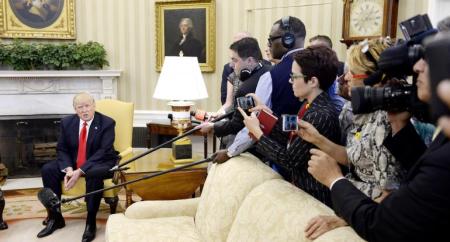
[3] Fotanka.ru, January 4, 2017.

[4] See MEMRI Special Dispatch No. 6685, Russia This Week – November 13-20, 2016, November 20, 2016.

[5] See MEMRI Special Dispatch No. 6756, Echo Of Moscow Interviews Russia’s Anti-Corruption Crusader Navalny Following His Announcement That He Will Run For President In 2018, January 26, 2017. This week a Russian court in a retrial found Navalny guilty of corruption charges, and the guilty verdict, even it does not involve jail time, will disqualify him from running. Themoscowtimes.com, February 8, 2017.

[6] See MEMRI Special Dispatch No. 6704, Russia This Week – November 27-December 8, 2016, December 8, 2016.

[7] See MEMRI Special Dispatch No. 6698, Russian Daily Mk.ru Removed Interview With Renowned Scholar Valery Solovei Predicting That ‘It Is Not Unlikely That [Putin] Will Have To Be Absent From The Public Spotlight For A Few Months’, December 2, 2016.