Archive for the ‘Trump and Putin’ category

Putin & Trump discuss Iranians on Israel’s border

May 3, 2017

Putin & Trump discuss Iranians on Israel’s border, DEBKAfile, May 3, 2017

(President Trump’s influence with Putin seems to have diminished substantially in the absence of General Flynn. — DM)

Israel was seriously dismayed Wednesday, May 3, when first reports reached Jerusalem about the telephone conversation between Presidents Donald Trump and Vladimir Putin Tuesday, during which Trump agreed to consider Putin’s plan for “de-escalation zones” in Syria, in place of the American security zones proposal. The Russian president’s plan includes the posting of Iranian military officers as co-monitors for those zones, one of which is to be located on the Syrian-Israeli border.

President Trump described the conversation as “Very good.”

The four “de-escalation zones” proposed would be situated at:

1. The northwestern province of Idlib up to the Turkish border;

2. The central Syrian province of Homs (where also the Al-Shariat air base hit by US Tomahawks last month is located);

3. The East Ghouta suburb of Damascus (including also a big military airfield);

4. The Southern region along Syria’s borders with Jordan and Syria.

The Russian president explained that the “guarantor countries” – i.e. Russia, Turkey and Iran – would appoint the monitors for the de-escalation zones.

DEBKAfile’s military and intelligence sources report that Israel was deeply concerned to discover that President Trump had nodded to Putin going forward with his plan, despite Iran’s active involvement. He was even ready to send a US official for the first time to the fourth round of the Syrian peace talks between the Syrian government and opposition in Astana Wednesday, although this process is jointly sponsored by Russia, Turkey and Iran. Stuart Jones, acting assistant Secretary of State, was sent to attend the meeting in the Kazakh capital as an observer, thereby elevating the former American representation from ambassador..

This development caused Israeli disquiet on a number of grounds:

a) The Iranian monitors for the new zones will sit directly opposite the Israeli border. Notice has gone out to Washington and Moscow that the Israeli government will on no account countenance an Iran military presence along its border.

b)  Israel also eyes with mistrust the possible deployment of Russian and Turkish offices along its border with Syria.

c)  Declaring eastern Damascus a protected zone would obstruct Israel aerial operations for keeping Iranian air shipments of advanced weapons via Syria out of Hizballah’s hands. Iran would be able to renew its shipments under full protection.

You can read more about the Russian and American “zones” for Syria in the coming issue of DEBKA Weekly out Friday, May 5. To subscribe to this publication, click here.

d)  There were also some misgivings in Israel about the way National Security Adviser H.R. McMaster characterized President Trump’s approach to foreign policy, shortly before Palestinian leader Mahmoud Abbas arrived at the White House on Wednesday.

“The president is not a super-patient man,” he said. He does not have time to “debate over doctrine, and instead seeks to challenge failed policies of the past with a businessman’s results-oriented approach,” McMaster said.

The trouble is that Middle East issues, such as the Syrian conflict and Israeli security, demand patience and rather more than a businessman’s results-oriented approach, else they may lead to such potentially disastrous consequences as an Iranian military presence that is far too near and dangerous for Israel to countenance.

Trump’s Strategy for Dividing the Enemy Alliance

April 15, 2017

Trump’s Strategy for Dividing the Enemy Alliance, Iran News Update, April 14, 2017


Russia and Iran still needed to be dealt with, so Tillerson met with Putin Wednesday, and Buckley writes, “…from our perspective the possibility of a rapprochement with Russia is greater now than it was before the attack on the Syrian air base: Trump no longer has to worry about critics who say he’s soft on Russia.”

He continues, “As for the Russians, they’re the ultimate realists. We’ve signaled to them that we’re not going to try to dislodge them from Syria. But everything else is on the table. We’re telling them they can move in more civilized company if they want. Only it’s going to cost them, if we’re to accept them as civilized players.”

***********************

The past few weeks were a triumph for America.

“Now what?” asks F.H. Buckley, Scalia Law School professor, and author of “The Way Back: Restoring the Promise of America.”

In an article for the New York Post Buckley writes, “When facing three opponents, as America is with Russia, Syria and Iran, the most obvious response is to try to break them up through a side deal with one of them. That’s the signal Secretary of State Rex Tillerson and UN Ambassador Nicki Haley sent to Syrian strongman Bashar al-Assad on March 30 in saying we’d be prepared to live with him.”

In essence, the message was, “Be nice, Assad, distance yourself from Iran and we’ll accept a solution to the Syrian civil war that leaves you in power,” writes Buckley. The offer’s chance of being accepted was slight. Syria, under Assad, is dependent on Iran. More fighters take orders from Tehran than there are members of Assad’s army, including members of Iran’s Revolutionary Guards.

No one has asked is why Assad ordered the Sarin attack, but Buckley assumes that it “…had simply been ordered to employ chemical weapons by Tehran, as a means of turning down the American overture. It signaled that the Iranian-Syrian alliance could not be broken.”

Next came our attack on the Syrian Shayrat airbase last week.

However, Russia and Iran still needed to be dealt with, so Tillerson met with Putin Wednesday, and Buckley writes, “…from our perspective the possibility of a rapprochement with Russia is greater now than it was before the attack on the Syrian air base: Trump no longer has to worry about critics who say he’s soft on Russia.”

He continues, “As for the Russians, they’re the ultimate realists. We’ve signaled to them that we’re not going to try to dislodge them from Syria. But everything else is on the table. We’re telling them they can move in more civilized company if they want. Only it’s going to cost them, if we’re to accept them as civilized players.”

Finally, Buckley talks about Iran. He writes, “Of the three countries, only Iran under the mullahs is America’s implacable enemy, one with whom a peaceful resolution of differences is entirely impossible. More than that, the mullahs take our willingness to reach out to them as a sign of weakness they can exploit. They constantly test our resolve, and when we fail to respond, they take it one level further.”

Some options remain, and one of them is to push back when pushed. The Iranian regime’s legitimacy is threatened by liberal opposition groups, particularly the National Council of Resistance of Iran (NCRI). The National Council revealed Iran’s nuclear program in 2002, and it’s been praised by Elie Wiesel, Rudy Giuliani and Michael Mukasey.

Support for the NCRI and other Iranian dissident groups is a good place to begin change, and end the years of acquiescence to Iran.

Trump Calls Putin’s Bluff, In Syria and Beyond

April 14, 2017

Trump Calls Putin’s Bluff, In Syria and Beyond, PJ MediaMichael Ledeen, April 14, 2017

(“Putin’s puppy” does not wag his tail; he bites. — DM)

(Sergey Guneev/Sputnik via AP)

[A]ll those pundits who belittled the Tomahawk attack have missed a very important point. Over the past eight years, Russia’s effective power in the world had grown far beyond its real power. That has now changed, and you can expect our actual and would-be allies, and our global enemies, to change their recent tunes.

***************************

You may have noticed that Vladimir Putin is distinctly annoyed with us, and he is right to be. For we have deprived him of his great dream to join, and perhaps even lead, the ranks of the world’s most important leaders. Today, following the attack on the Syrian air base, Putin is just one more dictator.

During the Obama years, the Russian tyrant had grown accustomed to getting his way most everywhere. Invade Crimea? Fine. Grab slices of eastern Ukraine? No problem. Open military bases in Syria and Libya? You bet. We wouldn’t challenge him.

Along with these actions was a kind of implied Brezhnev Doctrine (according to which, once a country joined the Soviet bloc, it would never leave it): If you allied with Putin, he’d protect you. Nobody would invade, and Russian antiaircraft missiles would defend against air attack.

As Richard Perle has said, Putin’s Russia is not a major military power.

“The appearance that Vladimir Putin is strong is largely the result of weakness displayed by the United States in the [Barack] Obama years. Russia is not a very strong country.

“Its military is relatively weak and ineffective, even though they spend a lot of money. It’s true they have nuclear weapons, but no one can quite imagine those being brought to play.”

So Putin’s posture as the leader of a major power was blown up in Syria, along with the airplanes and jet fuel storage tanks, and you can be sure that the Russian antiaircraft systems do not seem to have functioned at all.

Thus, all those pundits who belittled the Tomahawk attack have missed a very important point. Over the past eight years, Russia’s effective power in the world had grown far beyond its real power. That has now changed, and you can expect our actual and would-be allies, and our global enemies, to change their recent tunes.

When America moves decisively, the whole world changes. It is now likely that countries like Egypt, which had taken out insurance against American weakness by buying Russian weapons and permitting Russian special forces to operate on Cairo’s side of the Egyptian/Libyan border, will find it easier to support the United States. And you can see the same effect in recent declarations from NATO, bragging about the increases in defense spending throughout the alliance.

On the other side of the global war, the Iranians have of course enlisted in Putin’s disinformation campaign, accusing Trump of falsifying the evidence of Syrian chemical weapons, and thumping their chests, warning of dire consequences if the United States dares to move against Tehran.

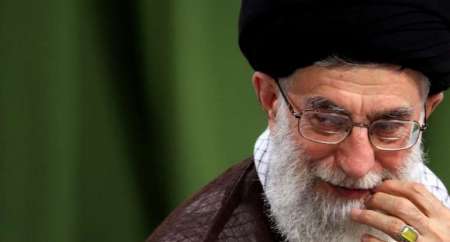
But if you think Russia’s not a credible military threat to us, Iran is much more toothless, and Khamenei faces a far greater internal threat than Putin does. All Iranians understand that if Trump is willing to strike Syria, he is likely willing to strike Iran, without whose fighters and weapons the Syrian dictatorship would be doomed. They are also impressed with the deployment of the Mother Of All Bombs in Afghanistan. That sort of thing resonates with the Persians. If they had such power, they’d certainly use that sort of language. Thankfully, they don’t have the power, and so they resort to fantasies.

Exciting times, and not nearly so bad as the old Chinese curse would have you believe. As I’ve said for years, we’re in the midst of a paradigm shift. Nobody knows how it will turn out, but the news is certainly not all bad.

America is back, and Russia is listening

April 13, 2017

America is back, and Russia is listening, Israel Hayom, Boaz Bismuth, April 13, 2017

Trump knows what Obama refused to acknowledge — that the U.S. cannot shirk its duty as the world’s policeman and the region’s sheriff. Obama hoped that he could just ignore this region or let others lead.

*****************************

In September 2013, Russian President Vladimir Putin hosted the G-20 summit in St. Petersburg. This was just days after then-U.S. President Barack Obama effectively decided not to take military action against Syrian President Bashar Assad, who had just used chemical weapons against his people. Two years later, having realized that the U.S. left a vacuum in the region, Russia returned with a force not seen since the end of the Cold War.

U.S. President Donald Trump, who was sworn in less than 100 days ago, has decided to change the political equation the Russians have created. Surprisingly, the Russians are willing to listen, despite their repeated mention of the sorry state of relations between Moscow and Washington.

The U.S. media is fond of reporting on Trump’s so-called illicit ties to the Russian government. But the truth of the matter is that it was Obama, in 2013, who tried to cozy up to the Russians, because he wanted to reach a nuclear deal with Iran — which he considered the most important part of his legacy, much more than an intervention in Syria.

Russian-American relations reached “a low point,” as Secretary of State Rex Tillerson said this week, as a result of the situation in Syria. But both superpowers are still determined to fight terrorism together and support an international inquiry of the chemical attack in Syria’s Idlib province last week.

The joint press conference Tillerson held with his counterpart Sergey Lavrov on Wednesday underscored the fact that superpowers have their own language, and when the U.S. talks like the superpower that it is, Russia has no choice but to play along, even if the Russians made sure Tillerson had to wait until the very last moment before he was told he could meet Putin in Moscow (and the meeting was only two hours long).

Despite all that has been said on Russia-U.S. relations, it is important to note that relations between two big powers are by definition different than any other forms of bilateral relations. Moreover, the current escalation is a plus for Russia because it puts it on equal footing with the U.S. That is why Russia made sure Tillerson’s visit had all the hallmarks of a summit in which the world’s leading superpowers determine how the world is going to run. As far as the Russians are concerned, this is the main accomplishment of the meeting. In the grand scheme of things, it is a win-win for both sides: Trump can distance himself from Russia, and Putin can prove that he can stand up to the Americans.

Despite what most people think, Trump actually acted strategically when he ordered the missile strike last week on a Syrian airbase in retaliation for Assad’s use of chemical weapons. The strike was designed to send a much wider and strategic message, that would resonate well beyond Syria — in Iran, in North Korea and in Russia. It was designed to make sure people think twice before they mess with the U.S.

Trump knows what Obama refused to acknowledge — that the U.S. cannot shirk its duty as the world’s policeman and the region’s sheriff. Obama hoped that he could just ignore this region or let others lead.

Yours truly predicted Trump would be tested in his first months in office, just like President Ronald Reagan was tested in his first year in office. Back then Reagan had to respond to air traffic controllers who went on strike at federal airports; now Trump has to deal with the Russians and Assad. Trump has no qualms about doing an about-face, even on issues that he is not supposed to care about. Both Reagan and Trump changed the rules of the game when they responded to those early tests. Such behavior creates the element of surprise and proves that a president is willing to act like a madman.

Mission accomplished in Syria

April 12, 2017

Mission accomplished in Syria, Israel Hayom, Clifford D. May. April 12, 2017

(Accomplished or just begun? — DM)

Congress should send Trump the legislation it is now considering, seeking to impose new sanctions on Iran in reprisal for its continuing support of terrorists, its missile tests and its maintenance of more than 35,000 troops in Syria, including its own, those of its Lebanese proxy, Hezbollah, and Shiite fighters recruited from Iraq and Afghanistan. Suspending Iran’s deal with Boeing/Airbus would be useful, too. Only the willfully credulous believe that Iran’s theocrats won’t use such aircraft for illicit military purposes.

************************

If you’re still unsure about whether U.S. President Donald Trump did the right thing when he launched 59 cruise missiles at Syria’s Shayrat Air Base last week, consider the alternative.

He knew that Syrian dictator Bashar Assad had yet again used chemical weapons to murder Syrian civilians, women and children prominent among them. He knew that Iran and Russia had enabled this atrocity, as they have many others. He knew he had two choices.

He could shrug, instruct his U.N. ambassador to deliver a tearful speech calling on the “international community” to do something, and then go play a round of golf. Or he could demonstrate that the United States still has the power and the grit to stand up to tyrants and terrorists, thereby beginning to re-establish America’s deterrent capability.

In other words, this was what Sun Tzu and Carl von Clausewitz would call a no-brainer. (Well, loosely translated.) A mission was accomplished. Do harder missions lie ahead? Yes, of course. But I suspect Defense Secretary James Mattis and National Security Adviser H.R. McMaster have made that abundantly clear to the new president.

We now know for certain that Russia failed to live up to its 2013 commitment to ensure that Assad surrendered all his illegal chemical weapons under the deal it brokered. Secretary of State Rex Tillerson acerbically questioned whether that was the result of complicity or incompetence or whether Russia allowed itself to be duped by Assad.

The strike ordered by President Trump was not “unbelievably small” — then-Secretary of State John Kerry’s description of the punishment then-President Barack Obama decided not to impose in response to Assad’s earlier use of chemical weapons. It was big enough to make clear that American diplomats are again carrying big sticks. (For Obama to insist that diplomacy and force are alternatives was patently absurd.)

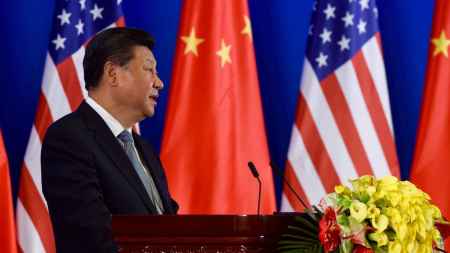
Conveniently, Trump was dining with Chinese President Xi Jinping when the strikes occurred. It’s fair to speculate that Xi is today thinking harder about American requests to rein in Kim Jong Un, the North Korean dictator whose drive to acquire nuclear-tipped missiles that can reach the American mainland has become what Tillerson called an “imminent” threat.

Having passed his first major national security test, Trump is now obliged to demonstrate firmness and consistency. What plans might the Pentagon have on the shelf to respond to further provocations? The next round of Tomahawk missiles could permanently ground Assad’s air force. That would make it easier to then establish no-fly zones. If such measures do not alter the calculations of Assad and his Iranian and Russian patrons, consideration could be given to leveling his defense, intelligence and command-and-control centers as well.

Another idea under discussion: setting up safe havens, or, to use a better term, “self-protection zones,” for those fleeing the Syrian regime and various jihadist forces, Sunni and Shiite alike. Israel and Jordan could help the inhabitants of such areas adjacent to their borders defend themselves. The Saudis, Emiratis and Bahrainis could contribute to the cost. Might this lead to the partition of Syria? Most likely, but it’s difficult to imagine a “political solution” that would not include such readjustments.

All this, while useful and perhaps even necessary, should be seen as insufficient. Syria is a major humanitarian catastrophe but only one piece in a much larger geopolitical puzzle. Sooner rather than later, the Trump administration needs to develop what Obama refused to contemplate: a comprehensive and coherent strategy to counter the belligerent, imperialist and supremacist forces that have emerged from the Middle East and are now spreading like weeds around the world.

The Islamic State group will of course need to be driven off the lands on which it has attempted to establish a caliphate. After that, its terrorists will have to be hunted, along with those of al-Qaida, wherever they hide (e.g., Egypt where, over the weekend, they bombed two Coptic Christian churches).

But — and this is crucial — accomplishing these missions must not serve to further empower Iran’s jihadist rulers, who dream of establishing an expanding imamate, the Shiite version of a caliphate.

Most immediately, Congress should send Trump the legislation it is now considering, seeking to impose new sanctions on Iran in reprisal for its continuing support of terrorists, its missile tests and its maintenance of more than 35,000 troops in Syria, including its own, those of its Lebanese proxy, Hezbollah, and Shiite fighters recruited from Iraq and Afghanistan. Suspending Iran’s deal with Boeing/Airbus would be useful, too. Only the willfully credulous believe that Iran’s theocrats won’t use such aircraft for illicit military purposes.

That the United States cannot solve all the world’s problems was one of Trump’s campaign themes. But the implication is not necessarily, as some of his supporters hoped, that he would turn a blind eye to all atrocities and threats not already within America’s borders.

In the last century, most Americans recognized, in some cases with enormous reluctance, that there was no good alternative to doing whatever was necessary to rout the Nazis and communists, enemies whose goal was to kill off the democratic experiment.

In this century, jihadists and Islamists harbor the same ambition. We can attempt to appease them. We can try to make ourselves inoffensive to them. We can keep our hand extended, hoping that in time they will unclench their fists. Or we can decide instead to plan for a long war that will end with the defeat of these latest enemies of America and the rest of the civilized world. If Trump has grasped that within his first 100 days, he’s not off to such a bad start.

Official: U.S. Concludes Russia Had Advanced Knowledge of Syrian Chemical Weapons Attack

April 11, 2017

Official: U.S. Concludes Russia Had Advanced Knowledge of Syrian Chemical Weapons Attack, Washington Free Beacon, April 10, 2017

(Russia took all of the Syrian chemical stuff away, just as Saint Barack told us. Saint Bashar wouldn’t use chemical weapons on Syrians even if he had some, and Saint Vlad wouldn’t condone it for a minute if he did. It just a strange coincidence and it must have been a false flag attack, probably by wicked Christians, Jews or Hindus. Evil Trump must have glommed onto it to appear strong and good. Right? — DM.) 

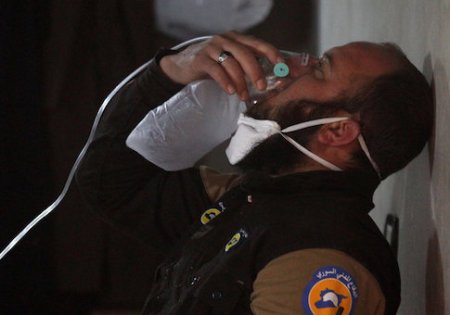
A civil defence member breathes through an oxygen mask, after what rescue workers described as a suspected gas attack in the town of Khan Sheikhoun in rebel-held Idlib, Syria April 4, 2017. REUTERS/Ammar Abdullah

The United States has concluded Russia knew in advance that the Syrian regime would employ chemical weapons in a large-scale attack last week, according to the Associated Press.

Syrian President Bashar al-Assad’s regime reportedly ordered the chemical bombings that hit a rebel-held town in the Idlib Province on April 4. At least 80 people were killed, and video footage of women and children fighting to draw breath because of lethal chemical gas spread around the world.

BREAKING: Senior U.S. official says U.S. has concluded that Russia knew in advance of Syria’s chemical weapons attack last week.

According to a senior official, a Russian-operated drone flew over a Syrian hospital while victims sought treatment, and later a Russian-made fighter jet bombed the hospital. The official said the drone’s presence revealed that Russia knew the attack was coming:

Hours after the drone left, a Russian-made fighter jet bombed the hospital in what American officials believe was an attempt to cover up the usage of chemical weapons.

Until Monday, U.S. officials had said they weren’t sure if the drone was operated by Russia or Syria. The senior official said it still wasn’t clear who was flying the jet that bombed the hospital.

The official said the presence of the drone couldn’t have been a coincidence, and that Russia must have known the chemical weapons attack was coming and that victims were seeking treatment.

President Donald Trump responded to the chemical attack on Thursday, when he ordered the firing of 59 Tomahawk cruise missiles at the Al Shayrat airfield in western Syria, where the chemical attack originated.

The Trump administration has stepped up its rhetoric against Russia in the wake of the Syria attack.

Secretary of State Rex Tillerson spoke Monday at a World War II memorial in Italy to issue a warning against countries that “commit crimes against the innocents.”

“We rededicate ourselves to holding to account any and all who commit crimes against the innocents anywhere in the world,” he said.

United Nations Ambassador Nikki Haley said on Sunday that the administration would not let Russia “cover for this regime anymore.”

“This is something to let Russia know, ‘You know what? We’re not going to have you cover for this regime anymore. And we’re not going to allow things like this to happen to innocent people,'” Haley said on “Meet The Press.”

Trump Sends a Message to China Through Syria

April 10, 2017

Trump Sends a Message to China Through Syria, Front Page Magazine, Daniel Greenfield, April 10, 2017

On Thursday evening, President Trump met with China’s President Xi and bombed Syria. The decision came as Trump traveled on Air Force One to meet with Xi at Mar-a-Lago. An hour into their dinner, 59 Tomahawk cruise missiles launched and pounded an airbase in Syria. The message wasn’t just for Assad and Putin. It was for Xi and his North Korean client state. The era of a weak America was over.

Xi had come to America expecting an easy photo op visit. President Trump would urge action on North Korea and Xi would smile coldly and shoot him down. Talk of fairer trade would be similarly dismissed.

And then Xi would go home and laugh that the bold new American leader was another paper tiger.

Except that President Trump had a different plan. Instead of Xi showing how tough he could be, Trump gave him a front row seat to a display of American power. The message was both obvious and subtle.

And President Xi, along with Russia’s Vladimir Putin, North Korea’s Kim Jong-un and Iran’s Supreme Leader Khamenei, aren’t laughing.

The obvious part was as blatant as a 1,000 pound explosive warhead slamming into concrete and steel, and as obvious as upstaging Xi’s efforts to stonewall Trump while warning that North Korea could be next if the Chinese leader continues to be obstinate.

Trump had warned throughout the campaign that he would not be laying his military plans on the table. “You’re telling the enemy everything you want to do!” he had mocked Clinton.

His address to the nation came an hour after the missiles had struck. The element of surprise had held.

And Xi came away with a very different message. The Obama era was over. The new guy was bold, dangerous and unpredictable. Like many of Trump’s American opponents, Xi understood now that the jovial man sitting next to him could and would violate the rules of the game without prior warning.

China would have to be careful. There was a cowboy in the White House again.

And that was the subtle part. Trump does not care very much about Assad. What he truly cares about is American power. Left-wing critics quickly pounced on Trump’s past opposition to strikes on Syria and his criticisms of Obama for not enforcing his own “red line”.

There is no contradiction.

Trump didn’t believe that strikes on Syria were a good idea. But once we had committed to a red line, then we had to follow through if we were going to be taken seriously.

And so Trump enforced Obama’s red line. Not because of Obama or Syria. But because of America.

“When he didn’t cross that line after making the threat, I think that set us back a long ways, not only in Syria, but in many other parts of the world because it was a blank threat,” President Trump said.

President Trump intends to get things done. And he knows it won’t happen with “blank” threats.

Asked about whether the strikes represented a message to Xi and North Korea, Secretary of State Tillerson replied, “It does demonstrate that President Trump is willing to act when governments and actors cross the line and cross the line on violating commitments they have made.”

“President Trump has made that statement to the world tonight,” he added.

The message is more subtle than a 1,000 pound warhead. But not by that much.

President Trump’s move bewildered leftist critics who had to shift from accusing him of having a secret relationship with Russia to accusing him of ruining our relationship with Russia. It also enraged some supporters who maintained a dogmatic non-interventionist position. But Trump doesn’t make decisions based on ideology. He measures policies against real world objectives, not abstract philosophies.

What he has always wanted to do is solve real problems.

The problem he was solving on Thursday wasn’t Assad. President Trump recognizes that Syria is an unsolvable problem and that little good can come of extended engagement with it. There are no good guys in Syria. Only Sunni and Shiite Jihadis and their victims. Syria is and will always be a dead end.

The problem is that Obama thoroughly wrecked American prestige and power over eight years. And that makes it painfully difficult to get anything done when no one in the world will take us seriously.

President Trump sees North Korea’s nuclear weapons as a major threat. But he also sees the crisis as a way to leverage our military might to achieve better trade deals with both partners and rivals. He is not wedded to a globalist or anti-globalist ideology. Instead he sees every problem as an opportunity.

He is not committed to any international coalition, globalist or anti-globalist, except where it temporarily serves American purposes. That is what being a true nationalist actually means.

That is what makes him so unpredictable and so dangerous.

President Trump made a point in Syria. He timed that point for maximum effect. The point isn’t that Assad is a bad man. Though he is. It’s not that he isn’t a Russian puppet, though only the lunatic left could have believed that. The point is that he is determined that America will be taken seriously.

Cruise missile diplomacy isn’t new. Bill Clinton fired over 500 cruise missiles into Iraq. Not to mention Sudan. Bush fired cruise missiles into Somalia. Obama signed off on firing cruise missiles into Yemen and Syria at terrorist targets. The difference is that Trump isn’t just saving face with cruise missile diplomacy.

President Trump’s real objective isn’t the Middle East. It’s Asia. He doesn’t see Russia as our leading geopolitical foe, but China. Syria was the opening shot in a staring contest with the People’s Republic. The moves in this chess game will sometimes be obvious and sometimes subtle. And Trump is usually at his most subtle when he’s being obvious. That’s what his enemies usually miss.

President Trump’s first step in Syria was to reestablish physical and moral authority on the international stage while the President of China had to sit there and watch. He humiliated Democrats and their media operation at the peak of their Russia frenzy. And he sent the message that America is back.

It’s not a bad return on a $60 million investment. We’ve spent much more in the field with less to show for it.

The Obama era in international affairs ended with whimper and a hollow Nobel Peace Prize as a trophy. The Trump era in international affairs began with 59 cruise missiles and a big bang.

The Real Winner in the Russia Investigations Is Iran

March 31, 2017

The Real Winner in the Russia Investigations Is Iran, PJ MediaRoger L Simon, March 30, 2017

The best interests of the United States would be to woo Russia away from these maniacs — and we very well could have.  We are, at least for now, still the world’s biggest GNP and control a great deal of the global economy.  Greedy despots like Putin know that as well as anybody.  They may not feel good about it, but to some degree they might play with us.  And if they wanted to enough, if we sweetened the pot enough, they’d even disengage from the mullahs, leaving them with no ally of value, no substantial defender.

Trump — or some people close to him — may have had this in mind when they started speaking with the Russians way back in the Paleolithic Era of the transition days.  They’d have been fools not to.  They wouldn’t have been doing their duty to the United States or to the civilized world for that matter.

Now Trump or his people can no longer even consider making such inroads. They would be accused immediately of treason or something close. The possibility of separating the Russians from Iran has been destroyed by these investigations — first by the House, now by the Senate, and always by the media.

*****************************

While the Evil Party and the Stupid Party continue to bludgeon each other into extinction over whether Putin was manipulating our election, the real winner from our politicians’ current endless Russia-fixation is the Islamic Republic of Iran.

Sound like a stretch? Not at all. The reasons should be evident.

Russia is not rich. It currently ranks 12th  in overall GNP, about even with Australia, which has roughly one-seventh Russia’s population. It’s a dismal 47th in per capita GNP — unimpressive, to say the least, for the world’s largest country with immense natural resources spread over 11 time zones.

And things have not been looking up. Their population has been declining since 1991.  The price of oil — by far their largest export -0 is down.  Making matters worse, Donald Trump, allegedly Putin’s best friend, has opened the U.S. energy spigots, threatening to drive that price even lower. (Putin would have done a lot better with Hillary’s anti-fracking position, assuming that wasn’t a phony.)

Yes, they have a powerful nuclear arsenal with potent missiles to deliver them, but Russia needs friends, badly — especially to shore up its forces in the seemingly never-ending civil war in Syria. Enter Iran.  From Reuters Monday:

Iran’s president met Russia’s prime minister on Monday in a bid to develop a warming relationship that has been greatly strengthened by both sides’ involvement on the same side of the war in Syria.

Beginning a visit to Moscow, President Hassan Rouhani told Prime Minister Dmitry Medvedev: “I hope that a new turning-point in the development of our relations will be reached.”

Iranian arms purchases and Russian investment in the Iranian energy sector are likely talking points for Rouhani, less than two months before Iran’s May 19 presidential election.

Iranian media say he will discuss several economic agreements – potentially valuable prizes for the moderate leader [sic], who is keen to show his people that Iran is benefiting from its 2015 deal with world powers to rein back its nuclear programme in returning for an easing of international sanctions.

Aside from Reuters’ credulous nonsense that Rouhani is in any way moderate, where did all the mullahs’ new deal-making money come from in the first place?  Well, we know.  Iran, for reasons still unfathomable, received huge amounts — sometimes in cold, hard cash — from the Obama administration after the Iran deal and later apparently to preserve it. (The contents of that deal, unknown to all but a few, are what really deserve a congressional investigation, not the present kangaroo court.) What did the mullahs do with the cash? Help their impoverished citizens or buy $10 billion worth of modern weapons from the Russians? Well, we know that too. Obama’s deal helped create a match made in Hell.

And the worse part of this Hellish match is Iran, not Russia (although she’s no picnic).  Vladimir Putin is obviously a dictatorial plutocrat with massive ambitions, but he’s more or less sane.  The mullahs of Iran are also dictatorial plutocrats, but they’re not (sane).  Some of them believe absolutely delusional theories dreamed up in the seventh century and have set out to prove them true — in Iran, in Syria, in Yemen, in North Korea, in South America,  and on and on.  They are as crazy as ISIS and far more dangerous because they already have a large country from which to enact their imperialist/millennialist fantasies.

The best interests of the United States would be to woo Russia away from these maniacs — and we very well could have.  We are, at least for now, still the world’s biggest GNP and control a great deal of the global economy.  Greedy despots like Putin know that as well as anybody.  They may not feel good about it, but to some degree they might play with us.  And if they wanted to enough, if we sweetened the pot enough, they’d even disengage from the mullahs, leaving them with no ally of value, no substantial defender.

Trump — or some people close to him — may have had this in mind when they started speaking with the Russians way back in the Paleolithic Era of the transition days.  They’d have been fools not to.  They wouldn’t have been doing their duty to the United States or to the civilized world for that matter.

Now Trump or his people can no longer even consider making such inroads. They would be accused immediately of treason or something close. The possibility of separating the Russians from Iran has been destroyed by these investigations — first by the House, now by the Senate, and always by the media. They go on and on even though there has been no genuine evidence of collusion between the Trump team and the Russians. By now it’s like a bad mini-series that somehow wound its way onto your Netflix queue and you can’t get rid of it. Eventually, I suppose, someone, somewhere will be caught with his or her hand in the cookie jar.  It will be highly ambiguous and most likely for minor personal gain, but nevertheless he or she will will be endlessly excoriated in the press, ever anxious to prove themselves right.  But it will all be a meaningless waste of time in the end.

Meanwhile, Iran has won big.

Still, there has been one valuable piece of information to emerge from this pointless muddle.  Which leads me to a last question.  Who, in the final analysis, spied more on our government — Putin or Obama?  I bloviate. You decide.

Trump’s Greatest Deal

March 24, 2017

Trump’s Greatest Deal, Front Page MagazineCaroline Glick, March 24, 2017

(Before the Flynn debacle, Trump’s efforts to get Russia to divorce itself from Iran appeared to be proceeding well. Please see, Highly Classified National Security Information Must Not be Leaked. Part b of the article is titled “Flynn telephone conversations.” Part c is titled “General Flynn, Russia and Iran.” Flynn’s departure from the Trump administration and America’s current Russophobia do not augur well for future success in pushing for the divorce. — DM)

Originally published by the Jerusalem Post

If Trump can convince Russia to ditch Iran, then he has a chance of dismantling the regime in Tehran and so defusing the Iranian nuclear program and destroying Hezbollah without having to fight a major war.

The payoff to Russia for agreeing to such a deal would be significant. But if Trump were to adopt this policy, the US has a lot of bargaining chips that it can use to convince Putin to walk away from the ayatollahs long enough for the US to defuse the threat they pose to its interests.

The problem with the Russia strategy is that since Trump defeated Hillary Clinton in the presidential race, the Democrats, their allied media outlets and powerful forces in the US intelligence community have been beset by a Russia hysteria unseen since the Red scares in the 1920s and 1950s.

The fact that Obama bent over backward to cater to Putin’s interests for eight years has been pushed down the memory hole.

***************************************

What can be done about Iran? In Israel, a dispute is reportedly raging between the IDF and the Mossad about the greatest threat facing Israel. IDF Chief of General Staff Lt.-Gen. Gadi Eisenkot thinks that Hezbollah is the greatest threat facing Israel. Mossad Director Yossi Cohen thinks Iran’s nuclear program is the greatest danger facing the Jewish state.

While the media highlight the two men’s disagreement, the underlying truth about their concerns has been ignored.

Hezbollah and Iran’s nuclear program are two aspects of the same threat: the regime in Tehran.

Hezbollah is a wholly owned subsidiary of the regime. If the regime disappeared, Hezbollah would fall apart. As for the nuclear installations, in the hands of less fanatical leaders, they would represent a far less acute danger to global security.

So if you undermine the Iranian regime, you defeat Hezbollah and defuse the nuclear threat.

If you fail to deal with the regime in Tehran, both threats will continue to grow no matter what you do, until they become all but insurmountable.

So what can be done about Tehran? With each passing day we discover new ways Iran endangers Israel and the rest of the region.

This week we learned Iran has built underground weapons factories in Lebanon. The facilities are reportedly capable of building missiles, drones, small arms and ammunition. Their underground location protects them from aerial bombardment.

Then there is Hezbollah’s relationship to the Lebanese Armed Forces (LAF).

For more than a decade, the Americans have been selling themselves the implausible claim that the LAF is a responsible fighting force capable and willing to rein in Hezbollah. Never an easy claim – the LAF provided targeting information to Hezbollah missile crews attacking Israel in 2006 – after Hezbollah domesticated the Lebanese government in 2008, the claim became downright silly. And yet, over the past decade, the US has provided the LAF with weapons worth in excess of $1 billion. In 2016 alone the US gave the LAF jets, helicopters, armored personnel carriers and missiles worth more than $220 million.

In recent months, showing that Iran no longer feels the need to hide its control over Lebanon, the LAF has openly stated that it is working hand in glove with Hezbollah.

Last November, Hezbollah showcased US M113 armored personnel carriers with roof-mounted Russian anti-aircraft guns, at a military parade in Syria. The next month the Americans gave the LAF a Hellfire missile-equipped Cessna aircraft with day and night targeting systems.

Lebanon’s President Michel Aoun is a Hezbollah ally. So is Defense Minister Yaacoub Sarraf and LAF commander Gen. Joseph Aoun.

Last month President Aoun told Sen. Bob Corker, the chairman of the US Senate Foreign Affairs Committee, that Hezbollah serves “a complementary role to the Lebanese army.”

And yet the Americans insist that it continues to make sense – and to be lawful – to arm the LAF.

You can hardly blame them. Denial is an attractive option, given the alternatives.

For the past eight years, the Obama administration did everything in its power to empower Iran. To make Iran happy, Obama did nothing as hundreds of thousands of Syrians were killed and millions more were forced to flee their homes by Iran and its puppet Bashar Assad.

Obama allowed Iran to take over the Iraqi government and the Iraqi military. He sat back as Iran’s Houthi proxy overthrew the pro-US regime in Yemen.

And of course, the crowning achievement of Obama’s foreign policy was his nuclear deal with the mullahs. Obama’s deal gives Iran an open path to a nuclear arsenal in a bit more than a decade and enriches the regime beyond Ayatollah Khamenei’s wildest dreams.

Obama empowered Iran at the expense of the US’s Sunni allies and Israel, and indeed, at the expense of the US’s own superpower status in the region, to enable the former president to withdraw the US from the Middle East.

Power of course, doesn’t suffer a vacuum, and the one that Obama created was quickly filled.

For decades, Russia has been Iran’s major arms supplier. It has assisted Iran with its nuclear program and with its ballistic missile program. Russia serves as Iran’s loyal protector at the UN Security Council.

But for all the help it provided Tehran through the years, Moscow never presented itself as Iran’s military defender.

That all changed in September 2015. Two months after Obama cut his nuclear deal with the ayatollahs, Russia deployed its forces to Syria on behalf of Iran and its Syrian and Lebanese proxies.

In so doing, Russia became the leading member and the protector of the Iranian axis.

Russia’s deployment of forces had an immediate impact not only on the war in Syria, but on the regional power balance as a whole. With Russia serving as the air force for Iran and its Syrian and Hezbollah proxies, the Assad regime’s chances of survival increased dramatically. So did Iran’s prospects for regional hegemony.

For Obama, this situation was not without its advantages.

In his final year in office, Obama’s greatest concern was ensuring that his nuclear deal with Iran would outlive his presidency. Russia’s deployment in Syria as the protector of Iran and its proxies was a means of achieving this end.

Russia’s alliance with Iran made attacking Iran’s nuclear program or its Hezbollah proxy a much more dangerous prospect than it had been before.

After all, in 2006, Russia supported Iran and Hezbollah in their war against Israel. But Russia’s support for Iran and its Lebanese legion didn’t diminish Israel’s operational freedom. Israel was able to wage war without any fear that its operations would place it in a direct confrontation with the Russian military.

This changed in September 2015.

The first person to grasp the strategic implications of the Russian move was Prime Minister Benjamin Netanyahu. Netanyahu recognized that with Russian forces on the ground in Syria, the only way for Israel to take even remedial measures to protect itself from Iran and its proxies was to drive a wedge between President Vladimir Putin and the ayatollahs wide enough to enable Israel to continue its raids against weapons convoys to Hezbollah and other targets without risking a confrontation with Russia. This is the reason that Netanyahu boarded a flight to Moscow to speak to Putin almost immediately after the Russian leader deployed his forces to Syria.

Israel’s ability to continue to strike targets in Syria, whether along the border on the Golan Heights or deep within Syrian territory, is a function of Netanyahu’s success in convincing Putin to limit his commitment to his Iranian allies.

Since President Donald Trump entered the White House, Iran has been his most urgent foreign policy challenge. Unlike Obama, Trump recognizes that Iran’s nuclear program and its threats to US economic and strategic interests in the Persian Gulf and the Levant cannot be wished away.

And so he has decided to deal with Iran.

The question is, what is he supposed to do? Trump has three basic options.

He can cut a deal with Russia. He can act against Iran without cutting a deal with Russia. And he can do nothing, or anemically maintain Obama’s pro-Iran policies.

The first option has the greatest potential strategic payoff. If Trump can convince Russia to ditch Iran, then he has a chance of dismantling the regime in Tehran and so defusing the Iranian nuclear program and destroying Hezbollah without having to fight a major war.

The payoff to Russia for agreeing to such a deal would be significant. But if Trump were to adopt this policy, the US has a lot of bargaining chips that it can use to convince Putin to walk away from the ayatollahs long enough for the US to defuse the threat they pose to its interests.

The problem with the Russia strategy is that since Trump defeated Hillary Clinton in the presidential race, the Democrats, their allied media outlets and powerful forces in the US intelligence community have been beset by a Russia hysteria unseen since the Red scares in the 1920s and 1950s.

The fact that Obama bent over backward to cater to Putin’s interests for eight years has been pushed down the memory hole.

Also ignored is the fact that during her tenure as secretary of state, Clinton approved deals with the Russians that were arguably antithetical to US interests while the Clinton Foundation received millions of dollars in contributions from Russian businessmen and companies closely allied with Putin.

Since November 8, the Democrats and their clapping seals in the media and allies in the US intelligence community have banged the war drums against Russia, accusing Trump and his advisers of serving as Russian patsies at best, and Russian agents at worst.

In this climate, it would be politically costly for Trump to implement a Russian-based strategy for dismantling the Iranian threat.

This brings us to the second option, which is to confront Iran and Russia. Under this option, US action against Iran could easily cause hostilities to break out between the US and Russia. It goes without saying that the political fallout from making a deal with Russia would be nothing compared to the political consequences if Trump were to take the US down a path that led to war with Russia.

Obviously, the economic and human costs of such a confrontation would be prohibitive regardless of the political consequences.

This leaves us with the final option of doing nothing, or anemically continuing to implement Obama’s policies, as the Americans are doing today.

Although tempting, the hard truth is that this is the most dangerous policy of all.

You need only look to North Korea to understand why this is so.

Seemingly on a daily basis, Pyongyang threatens to nuke America. And the US has no good options for dealing with the threat.

As Secretary of State Rex Tillerson acknowledged during his recent trip to Asia, decades of US diplomacy regarding North Korea’s nuclear program did nothing to diminish or delay the threat.

North Korea has been able to develop nuclear weapons and intercontinental ballistic missiles while threatening the US with destruction because North Korea enjoys the protection of China. If not for the Chinese, the US would long ago have dealt a death blow to the regime.

Israel has moved Russia as far away from Iran as it can on its own. It is enough to stop convoys of North Korean weapons from crossing into Lebanon.

But it isn’t enough to cause serious harm to Tehran or its clients.

The only government that can do that is the American government.

Trump built his career by mastering the art of deal making. And he recognized that Obama’s deal with Iran is not the masterpiece Obama and his allies claim but a catastrophe.

The Iran deal Trump needs to make with the Russians is clear. The only question is whether he is willing to pay the political price it requires.
Report: Trump putting potential diplomatic deal with Russia on the back burner

March 7, 2017

Report: Trump putting potential diplomatic deal with Russia on the back burner, Hot Air, Allahpundit, March 7, 2017

Needless to say, here’s another motive for why anti-Trumpers inside the federal bureaucracy may be leaking at politically inconvenient times for Trump. Reminding the public that some of his aides are under suspicion because of their contacts with Russia is a clever way to force Trump to postpone any planned diplomatic outreach to Russia at moments when he feels his political capital cresting. Trump might eventually be in a position to swing a deal with Moscow, but so long as Russia hawks within the administration are dribbling out material from the investigation that puts a cloud over the White House, it’ll look suspicious for him to make nice with Putin.

And so, inevitably, Trump is reportedly backing away from any “grand bargain” for now.

President Donald Trump is telling advisers and allies that he may shelve, at least temporarily, his plan to pursue a deal with Moscow on the Islamic State group and other national security matters, according to administration officials and Western diplomats…

Trump’s new skepticism about brokering a deal with Moscow also suggests the rising influence of a new set of advisers who have taken a tougher stance on Russia, including Defense Secretary Jim Mattis and new national security adviser H.R. McMaster. During his first meeting with National Security Council staff, McMaster described Russia — as well as China — as a country that wants to upend the current world order, according to an administration official who attended the meeting…

European allies also have been pushing the Trump administration not to make any early concessions to Russia. To bolster their case, European officials have tailored their rhetoric to appeal to Trump’s business background, including emphasizing the risks of negotiating a bad deal, rather than more nuanced arguments, according to one Western diplomat. Given Trump’s “America First” mantra, foreign officials emphasize how U.S. standing in the world could be diminished by making concessions to Russia instead of focusing on the importance of the U.S. and Europe sticking together to counter Moscow.

The most interesting detail in the AP story: In talks with his staff, Trump supposedly singled out Russia’s violation of the 1987 INF Treaty as making a deal “tougher and tougher to achieve,” a message that’s been relayed to U.S. allies in Europe too. I wrote about that here. It’s genuinely confounding. If Russia wants a compliant Washington, why would it choose to violate the treaty by deploying intermediate-range missiles aimed at Europe when it surely knows that Trump hates being seen as “weak” and won’t look the other way? Putin seemed to understand how to deal with him late last year when he refused to retaliate against the sanctions imposed on Russia by Obama for trying to interfere in the presidential campaign. That was Moscow signaling to the world that it expected those sanctions to be lifted by the new administration unilaterally. (Which was a damning sign of how conciliatory they expected Trump to be, but whatever.) Putin could have responded in kind but instead chose to preserve the status quo on its end as a goodwill gesture to Trump. And Trump appreciated it.

They didn’t preserve the status quo in deploying their missiles, though, a much more provocative way of challenging Trump than reciprocal sanctions would have been. You can cook up a scenario in which Putin violated the treaty in the expectation that he’d use the missiles as a bargaining chip during negotiations to come with the White House. E.g., maybe he thought Trump might bite on a deal that would trade decommissioning the missiles for the lifting of all U.S. sanctions against Russia, including the 2014 measures imposed to punish them over Ukraine. The problem with that theory, though, is that once the missiles are in the field, as they are now, then Trump has already lost face, and regaining it requires a show of strength. The White House may well end up demanding that the missiles be withdrawn as a precondition of negotiations rather than as something to be haggled over during the process. The smart play, it seems, would have been for Putin to roll out the missiles last fall, to defy Obama, and then withdraw them voluntarily after Trump took office as a goodwill gesture, to invite further negotiations. The better behaved Putin seems during Trump’s early presidency, the more Americans might be willing to let Trump negotiate with him to see what else he can get from Russia. Instead, Russia has engaged in various petty provocations, culminating in the more serious escalation of violating the INF Treaty. Why? If it’s true that they were hoping Trump would win the election, how does it make sense to box him in politically so that he can’t make concessions to Moscow without looking horribly weak and corrupt even if he wanted to?

If you want to go full cloak-and-dagger, you could theorize that the missiles were deployed because Russia wants to give Trump a chance to stand up to them. Putin may have concluded that the Kremlin’s interference in the election worked too well insofar as many Americans now suspect that Russia has influence over the president. That makes negotiations hard, even if preceded by unilateral concessions by Moscow. The only way to really create political space for diplomacy under this theory is to manufacture a minor diplomatic confrontation like the INF violation, have Trump demand that the missiles be withdrawn, and then comply in the hope that it’ll convince Americans Trump is being “tough” on Moscow and driving a hard bargain. Once Trump has earned the trust of his own doubters here at home, he’ll be free to make a sweetheart deal with Putin. That theory’s hard to buy, though: Putin needs to look tough to Russians even more so than Trump needs to look tough to Americans, and toughness typically doesn’t involve backing down in a (manufactured) confrontation. Plus, given the shift in Russian media lately, it seems as though the Kremlin is sincerely warier of Trump lately than it used to be. If they’ve already decided that Trump will be more of an enemy than a friend, it’ll be the quickest reassessment by a foreign power in modern history.

If you want a glimpse of what Europe’s future might look like if Trump doesn’t get Putin to withdraw those missiles, go read this. Exit question: If you subscribe to the theory that Russia was/is all-in for Trump as president, how do you explain the fact that Trump now feels unable, however temporarily, to approach Moscow for a deal? Did the Russian interference succeed so well that it’s made cooperation impossible? On what planet does that constitute “success”?